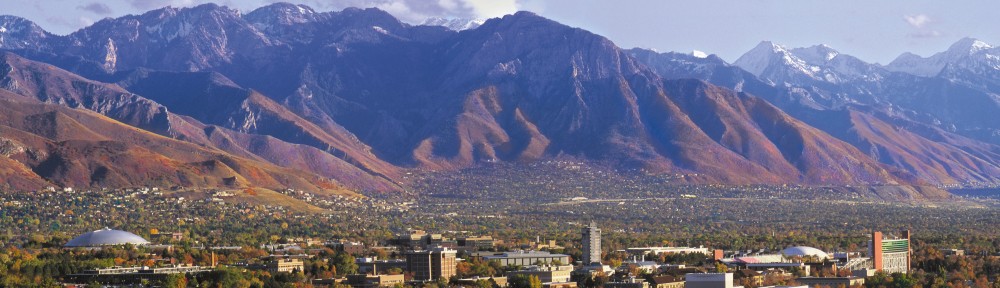
University of Utah Sophomore student. Majoring in Communications and Psychology with a minor in Linguistics. My Intro to news writing communications class started me on this page to write what come to mind!
Monthly Archives: July 2016
Putting heads in the sand
By: Dustyn Burt
As children in the dark when our minds would tell us there was a monster under the bed or in the closet, many of us would pretend it’s not there and eventually we would fall asleep believing the monster wasn’t there. This same metaphor could be said about the topic of sex education here in the United States. It is no surprise that sex is a very hush hush subject in America and could even be said more so in this state of Utah.
Condom demonstrations and consent lessons are nonexistent in lesson plans today. It takes two to have intercourse, not just a “yes” but a “hell yes”; without both consenting then that is rape. With so many more rape accusation and convictions most would think change and discussion on how to lead change in order to educate to keep rape from happening in the future. However, efforts are aimed at dismantling resource centers (Planned Parenthood) and telling students not to have sex but rather these have nothing to do with educating or preparing students.
Education systems used to talk about contraceptives such as birth control and condom use as well as giving the information on how to use the products to stay safe and healthy, in order for students to be prepared. Such as STIs (sexually transmitted infections), relationships and pregnancy as well as the options with pregnancy (abortions, adoptions and child care) are all good things to have a little background knowledge on.
There is a popular belief that if a child isn’t asking about sex and not exposed to the topic of sex they will not have sex. There is the unspoken thought among more conservative people that their kids wouldn’t have sex, or talk about sex. With that the minimal Sexual Education in the late 90s was explicitly telling students to abstain until marriage but still nothing about having a healthy sexual relationship with someone. There are more efforts put into scaring students and the public about sex rather that teach how to be healthily if one chooses to have sex.
This thought has been argued many times that teenagers and young adults are going to have sex if they want to or not despite if their parents agree or not. A 2010 national survey showed that more than 7 out of 10 teens hide what they do the internet from their parents.
Professionals in family psychology, sociology and resources such as Planned Parenthood that talking to their kids about sex is the best choice. This way teens aren’t turning to strangers on the internet, relying on the pornography industry as the basis to answer sex questions; even if awkward at least it is awkward with someone they trust.
The rise in pornography usage has been attributed to adolescent children looking up the sex questions they have online because their parents won’t talk to them and they don’t know who to ask at home or school. This is not shocking if we step back and look at it, that if a child can’t go to their parents in this era anyone turns to the internet to find the answers. What can start as a simple question that could be answered in a blog, the same question could pop up a link to porn videos, sexual photos or chat rooms.
Porn is like any other drug really and is addictive like any drug. Sex releases hormones that make us feel good; that’s why people have sex. It’s easy to see how an early to mid-teen going through puberty that already has huge amounts of hormones, can get addicted easily to something exciting.
When I asked a fellow millennial classmate and roommate of mine if he ever turned to the internet for sex questions. Parker Gibbons now 19 years old gave a slight chuckle at his response of “I googled how pregnancy works and how birth works when I was 12. I didn’t want a kid or to have sex I just wanted to know how the process worked”.
As I mentioned earlier it is just human nature to be curious and find answers. Which adds to concern with older generations because the younger generations are very good with technology. The best advice most professionals give is to be an open family by talking to each other judgement free and willing to listen to each other.
University of Utah: An Academic Melting Pot
By Angel Cortes
The University of Utah draws a lot of international students and is a kind of the melting pot in the state of Utah. There are approximately 2,600 to 3,000 international students pursuing a degree at the U. According to Steven Burnett, International Student Advisor at the University of Utah, international students are welcome and are an essential part of the campus’s community.The University of Utah offers several programs to international students to help them to adjust academically such as, orientation and advising.
Cecilia Fernandez is an international student from Lima, Peru. She has been living in the United States for 15 years. Currently she is attending the University of Utah and working on her master’s degree in Health Promotions. Fernandez finds that the benefits of studying in the United States include greater opportunities for future employment and expansion of networking with individuals with the same career. She believes that to be bilingual helps people to have better chances of success in her employment field. She also finds that meeting people with diverse backgrounds has engaged her to have better experiences studying at the U.
Fernandez took advantage of the University’s resources to help her prepare for graduate studies, including deciding what field she wanted to study. She says the Marriott Library at the U has also been a great tool for research. One of the difficulties she faced coming to the educational system in the US. was the language barrier, “learning how to write in another language was a challenge, “she said. Another challenge that she found was the university’s expenses. She says that there are some scholarship for international students, but not enough.
Despite all the advantages and programs that the U offers to international students, they still face significant challenges since the first day that they arrive to the US. Burnett says, “It is [also] very challenging to go to the US. Embassy to get a student visa.” According to Burnett, many international students face cultural shocks when coming to the United States to pursue an education. Besides the language barrier and getting a student visa, international students need to follow guidelines to keep studying at the U.
Adapting to the US. educational system was not easy for Fernandez in the beginning. She mentions that studying and learning English was the first step. Studying to take and to pass the TEOFL was her priority and she devoted much time preparing for it. In contrast to taking classes in Peru, where the size of the classrooms was relatively small, Fernandez says that in the US, “The classroom were bigger in size and it was difficult to ask questions to the Professors.” She adds, “It was hard to feel part of a class because it was very big.” Fernandez also says that the classroom’s rules where stricter in Peru. She says, “In Peru you could not step out of the classroom.” In the United States she found more flexibility in classroom’s rules.
The University of Utah has a program for international students called International Student Ambassadors. Ambassador’s helps new international students to adjust to the life on campus and assist in orientations. Also giving support to these students with their first semester. According to Burnett ambassadors helps new international students to integrate here at the U. This promotes an environment of union between all the students that participates in this program. Burnett says, “Internationals students come to the U and later become ambassadors.” The U, in an effort to help international students integrate to the new and different environment, has created programs that gathers together these students and embrace them in one community.
For all the challenges that international students face in the US, the U provides programs and classes to help them out so that these students can integrate to the US. educational system. Fernandez enjoys working and studying at the U. In her experience working as a research assistant on campus Fernandez says, “They help me out to accommodate my class schedule with my work schedule.” Her goals are to finish a PhD and encourage Latino women to pursue an education. As an educational melting pot in the state of Utah, the U prepares international students to work and be successful like Cecilia Fernandez.
Resources for U of U International Students:
International Students and Scholar Services: The International Students and Scholar Services helps students and their families adjust to living in a new and different environment. http://internationalcenter.utah.edu/
International Students Ambassadors: This program engage globally –minded international students who are familiar with the Campus and Salt Lake City with incoming international students. http://internationalcenter.utah.edu/students/leadershipopportunities/ambassadors.php
International Students Resources: There are several resources that the U offers to international students to help them become acquainted with the community, meet local families, improve their English skills, and find a welcoming social environment. http://internationalcenter.utah.edu/students/life-at-the-u/resource
When “The Big One” Strikes
According to studies highlighted on Live Science natural disasters have been rising in number and severity over the past few decades. On the other hand, the Federal Emergency Management Agency (FEMA) has found the overall trends towards personal preparedness are decreasing. In other words, with the increase of disasters, there is a decrease in people who are prepared to respond to them. These surveys haven’t gone unnoticed, however, as multiple agencies both private and public are working to fix the problem.

The state of Utah’s emergency management division is hard at work trying to help its citizens prepare for a disaster, specifically earthquakes. The trend of decreasing preparedness is frightening for people such as Susan Collier who works with the Salt Lake City Emergency Management Division. Collier pointed out that FEMA has shown its response time to be about 10 days. With such a long time before the federal government can bring in aid, it’s no wonder the state is pushing so hard to get its citizens better prepared.
Getting started with preparedness is easier than some may think. The state government’s preparedness website, ready.gov, says people should be doing these three things, “get informed, make a plan and build a kit.” Another expert in the field of preparedness, Scott Stallings the CEO of PrepperCon, the largest preparedness expo in the United States, agrees with this. He added through an email conversation that, “the most important thing is to put together an emergency plan for everything from a house fire to an earthquake.” By knowing the disasters, or emergencies that you or your family are in danger of encountering you can best prepare a plan to overcome them.
Building a kit tends to be the first thing people want to do when getting prepared. It is something that should not be taken lightly, however. Stallings explains that FEMA has recently adjusted its recommendations from having a 72-hour kit to a 96-hour kit. This is due to the slower response time from FEMA and The Red Cross. An emergency kit should also conform to your plans and contain the items you’ll need to complete the plan.

Collier says that simply having a plan isn’t enough. She stresses that those who feel they are prepared ought to “be ready to evacuate in 20 minutes or less.” This highlights the need to practice a plan regularly, much like a person should change the batteries in their smoke detectors regularly. For people with children this may be more difficult, as parents never want to scare children. A great piece of advice is to turn it into a game of sorts; teach the children how to get out of the house if there is a fire by crawling low, or teach them ways out of the house if there are obstacles.
There are many reasons why practicing a plan is important. For one it can show any flaws in the plan that may need to be adjusted. It can also create muscle memory that will kick in once an emergency happens.
Some of these steps seem simple to follow from a glance, however, the decrease in people becoming prepared shows that even the simplest of instructions may often go unanswered. When Collier was asked what she thought would happen if a serious earthquake hit Salt Lake City she directed attention to a video prepared by the California Division of Emergency Management that projected the statistics of loss after an 7.8 magnitude earthquake including: lives lost, fires started and cost of reparations. Much like the state of Utah, California is overdue for a large earthquake along the San Andreas Fault.
In the event of an earthquake, electricity and other utilities will stop working, we may be separated from our families, and hospitals and other key locations may be overrun or even shut down.
Stallings and Collier agree on a lot of things, the most resounding of which is their plea for citizens to start preparing now. Professionals all over the field have echoed this plea; some, including the Centers for Disease Control and Prevention (CDC), have even turned to zombies to get their message across.
No family should be driven to fear or desperation during an emergency. That is why so many people are turning to emergency preparedness, and urging others to join them.
Is Donald Trump’s mass deportation plan a bad idea?
By: Samuel Barros
Quick facts on Trump’s mass deportation plan:
- Deporting 11 million immigrants would cost around $400 billion dollars.
- Trump’s mass deportation plan would separate 4.5 million children born in the U.S.
- Trump’s mass deportation plan would take 20 years to complete.
In the current presidential election, candidates have shown many different positions on the issue of immigration in the U.S. It seems like none of them has presented an immigration reform that would benefit both immigrants and Americans. In fact, what the republican nominee Donald Trump said he would do to undocumented immigration might be harmful to both immigrants and Americans.
Trump has a plan of deporting 11 million illegal immigrants. He has also made many negative statements on immigrants. According to the Newsday, on June 16, 2015, as Trump announced his run for the Republican nomination for President at the Trump Tower Atrium in Manhattan, he said, “When Mexico sends its people, they’re not sending their best. They’re not sending you. They’re not sending you. They’re sending people that have lots of problems, and they’re bringing those problems with us. They’re bringing drugs. They’re bringing crime. They’re rapists. And some, I assume, are good people.” Immigration to the Unites States is often the subject of significant public and political debate.
How many immigrants reside in the United States?
According to the Migration Policy Institute, the Unites States has more than 42.4 million immigrants, which represent 13.3 percent of the total population. Of the 42.4 million immigrants, 11 million are undocumented. Immigrants account for 17 percent of the total labor force in the country. In states like California, immigrants represent 58 percent of the agriculture work force. According to the Gallup’s 2015 Minority Rights and Relations Poll, 65.5 percent of Americans favor path to citizenship for illegal immigrants. Deporting 11 million people means losing 25 percent of all immigrants in the United States. It means losing people that are working and helping the economy grow. The point is that mass deportation would basically destroy the American economy.
What do people think about Trump’s mass deportation plan?
Garon Dayley is currently a real state investor who lives in Salt Lake City. Dayley has also worked many years in the construction industry in Utah and for many years he worked with undocumented immigrants here in the state. Even though he believes that most immigrants are hard working people that come to America looking for a better life, he believes that an immigration reform is needed, and Trump is the only candidate that will do something about it. He believes we need to control who comes into the country. “Some cultures bring bad habits to America and I don’t like that,” said Dayley. When asked about the mass deportation plan presented by Trump, Dayley said, “I don’t think he is going to do it the way he says, he is just going to make the rules of immigration more strict and he might deport some people, but not 11 million.’’ Dayley also mentioned that this mass deportation plan would probably tear many families apart, and that’s the negative side of Trump’s immigration plan.
Kyle Rehn is a senior at the University of Utah majoring in Economics. Renh thinks that mass deportation is a terrible idea. “Far too many immigrants play a critical role in our country, whether it is in their work, or helping support other jobs,” said Rehn. He also mentioned how immigrants bring a culture dynamic that enriches our country. “Whether it is new languages, food, or other cultural dynamics, we would be seriously missing on some great new things to learn from and grow,” said Rehn. It is unknown whether or not Trump will win the white house and deport 11 million immigrants, but some people believe that that all the negative statements that Trump has made about immigrants as well as his mass deportation plan have already created a strong anti-immigration feeling in the Unites States.
Mutsumi Yamasaki is an international student at the University of Utah, she is from Japan and she is majoring in communication. Yamasaki believes that even though the majority of people in the U.S are very nice and friendly to immigrants, she feels that there is an increasing hostile feeling towards immigrants in the U.S. “It is very sad that some people believe that all immigrants are a threat to the country,” said Yamasaki. Yamasaki agrees that some immigrants commit crime, but the majority of them, even them ones that come here illegally come motivated to work and benefit the American society.
Further information on Trump’s mass deportation plan:
https://www.donaldjtrump.com/positions/immigration-reform
http://www.nytimes.com/2016/05/20/us/politics/donald-trump-immigration.html?_r=0
http://www.newsweek.com/trumps-mass-deportation-plan-means-making-us-police-state-397250
http://www.newsweek.com/how-much-would-it-cost-deport-all-undocumented-immigrants-364316
Rags to Riches to Rags: Why Pro Athletes Go for Broke
Aside
Story and photo by: Ray Stowers
Have you ever wondered what it would be like to be a millionaire pro athlete? How easy would life be if you could earn a large lump sum of money doing what you love to do? By being a professional athlete, life can be pretty grand. For star athletes like Terrell Owens and Hall of Famer Lawrence Taylor, money seems to flow in like water through a faucet. The average person could make the assumption that these pro athletes are set for life and have nothing to worry about now that they’ve made their millions. But things aren’t always what they seem when it comes to the glitz and glamour of a professional athlete’s lifestyle. Often times, having more money brings more problems. Even the highest paid athletes like Owens and Taylor have hit rock bottom.
Koa Misi, current linebacker for the Miami Dolphins, says, “We become an instant target because our salaries are made public, and there’s nothing we can do about it.” For Misi, who is on a four-year contract worth $17 million, being a millionaire brings just as much pressure as it does him good. “I am happy I get to take care of my family, bought my mom a house, bought my dad and his wife a house, few cars, got me and my wife a house, got my little sis a house, and everything has been good so far,” he says. However, it’s his spending habits and having to say “no” that he has a hard time with. “I feel obligated to take care of a lot of my extended families as well, you know cousins, uncles, aunts, friends, etcetera,” he explains. “All of that adds up, so I kind of learned to remove myself from those situations because everybody automatically assumes that I’ll step in and take care of them.”
Today, there are programs for pro athletes “where we have mentors come and educate us on why athletes go broke,” Misi says. “Pretty much they teach us how to say no and what groups or situations to avoid.” Saving money is the new mantra for today’s generation of athletes. Misi said that going broke is the “shame on you for not knowing” tag that athletes will get labeled with if they have to file for bankruptcy. An article published by Sports Illustrated in 2009 reported that a shocking 78% of NFL football players have filed for bankruptcy within two years of retirement. ESPN did a special as part of its 30 for 30 short film series called “Broke,” which documented how several athletes blew through millions, portraying the same challenges and difficulties almost all pro athletes go through when losing their money. Many of the male athletes lost a chunk of their money on divorces. Child support was another big expense. Bad investment planning such as restaurants, car washes, gyms, car dealerships, bars, clubs and overseas ventures were all too familiar when it came to the list of bad investments.
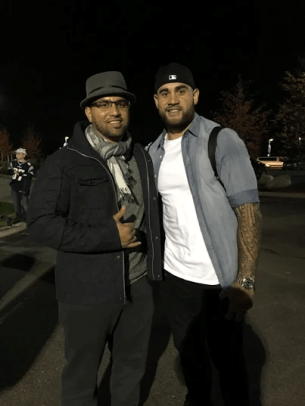
Ray and Koa at post-game of Dolphins vs. Patriots in Foxborough, Mass. 10/29/2015.
Another factor that chips away at the pro athlete’s bank account is tax deduction. The more money a player made, the higher the tax bracket, and this is where athletes did not comprehend that they do not get the full amount that they signed for on the contract.
Being so competitive on the playing field might be a recipe for disaster off the field. Now that they are able to afford the luxury, many wealthy athletes go out and get the most expensive cars, the biggest homes, and extras such as yachts, jewelry, bikes, even private planes. Jewelry has been one of the most surprising expenses pro athletes spend a lot of money on. Dallas Cowboys star wide receiver Dez Bryant has spent over $1 million on jewelry alone. It becomes a competition between these athletes on who can show off their wealth the best, also known as “stunting.”
It seems that the bigger they get, the harder they fall. Professional athletes don’t usually expect to become victims of their success. They have an enormous pressure to take care of everyone in their circle. They also have an enormous pressure to perform in the spotlight. Therefore, being a multi-millionaire athlete is hard as it is and spending money seems to provide the comfort.
NOTABLE NFL ATHLETES WHO WENT BROKE
- Terrell Owens was worth about $80 million. He was in a reality show and is currently on a modeling contract.
- Warren Sapp made around $60 million. He was an NFL analyst on ESPN and the NFL network but got fired. Sapp owns over 240 pairs of sneakers.
- Mark Brunell made $50 million. He is currently a high school football coach. Brunell lost chunks of cash on investments with franchise Whataburger.
- Tiki Barber made around $35 million. He became a broadcaster after his playing career which didn’t do so well. He left his wife, while pregnant, for his 23-year old intern. This broke the morality clause that was on his contract with NBC.
- Lawrence Taylor made over $16 million in his career. He is considered one of the best defenders ever to come out of the NFL. Taylor played back in the 80’s which explains the drop in millions compared to today’s athletes.
Sources:
Koa Misi Phone Interview – reference http://www.pro-football-reference.com/players/M/MisiKo99.htm
Callahan (June 14, 2015) How Pro Athletes Lose Everything. Retrieved from http://nypost.com/2015/06/14/how-pro-athletes-lose-everything-buying-cars-jewels-and-pet-tigers/
MoneyTips (August 13, 2015) 1 in 6 NFL players go bankrupt. Retrieved from http://www.cbsnews.com/news/1-in-6-nfl-players-go-bankrupt/
Gladych (September 26, 2012) NFL financial advisor program helps pro athletes make the most of their money. Retrieved from http://www.benefitspro.com/2012/09/26/nfl-financial-advisor-program-helps-pro-athletes-m
Torre (March 23, 2009) How (and Why) Athletes Go Broke. Retrieved from http://www.si.com/vault/2009/03/23/105789480/how-and-why-athletes-go-broke
Florios (March 28, 2011) Dez Bryant sued for $246,000 in jewelry. Retrieved from http://profootballtalk.nbcsports.com/2011/03/28/dez-bryant-sued-for-246000-in-jewelry/
Shondell (July 15, 2015) Top 15 Retired NFL Players that went broke and had to find regular jobs. Retrieved from http://www.thesportster.com/football/top-15-retired-nfl-players-that-went-broke-and-had-to-find-regular-jobs/
Are You a Skimpy Tipper?
Going out to dine-in restaurants is a pleasure for many people, but when the meal comes to an end you have to pay the bill. Not only do you have to pay the bill, but you have to consider how much of a tip to include— is it necessary or is it an extra? Many Americans are not aware of what it’s like to be a server, so a few servers shared their thoughts and experiences on what it’s like to rely on tips as an income.
“The restaurant industry is the second largest employer in the U.S., providing jobs for nearly 11 million Americans,” Saru Jayaraman, Co-director of the Restaurant Opportunities Centers United, wrote in a recent article in Time Magazine. What many may not know is that servers only make a minimum of $2.13 an hour in almost all , including Utah. According to U.S. Department of Labor, “The tipped minimum wage has been $2.13 an hour since 1991.”
Trip Advisor says, “While tipping is not mandatory in most of the United States, it is customary in many circumstances for service, especially at almost all sit-down restaurants which offer table service and many food servers depend on tips as an essential part of their wage.”
Brio Tuscan Grille at City Creek is an Italian restaurant that has been open since the summer of 2013. The servers say even when the food and service are excellent, the tips that the guests leave can be rather disappointing..
Javier Chavarin has been working at Brio for over three years. The thing that he loves

Suggested gratuity is usually included at the bottom of the receipt.
about his job is getting to be part of the guest experience. Guests come in to celebrate their birthdays and Chavarin is glad to share that moment with them and always hopes to get good tips from his efforts. As a server he says that he gets paid $2.13 an hour and relies on tips to make up the difference. Chavarin said, “Anything below 10% is a slap in the face.” Most restaurants include suggested gratuity at the bottom of the receipt. The average tip is usually between 15% to 20% of the bill.
Tina Knowlton, a server at Brio, said that she recently served a group of ladies who were in town for a hand bag convention. After the ladies paid she looked inside the check book and saw a disappointing tip—but they did leave Knowlton a pamphlet for their hand bags. Knowlton joked, “How do they expect me to even buy their hand bags if they don’t even tip me enough?”
The reality of working for tips is hard because although a server might get really good tips at times, there’s no consistency. One week you may make good money and the next week you may only make half of what you did the week before. Another server, Mikelle Poulson, says that she has been serving for over 10 years and likes it because she can make decent money without having to work a full time job. “The only thing that sucks is the inconsistent money you make.”
According to Trip Advisor, “In most larger restaurants in the USA, the server has to pay back a portion of their tips to the bartender, busser, hostess, and food runners.” Once the shift is over, the servers at Brio tip 15-20% of what they made in tips to the server assistants and bartender. The $2.13 an hour the servers never get because it all goes to taxes. At the end of the year servers still have to pay taxes on the tips that they made for the year.
Servers say that guests can be rude and under tip, but when someone leaves a generous tip everything seems to be rosy again. Restaurant goers might want to remember to consider the tip when looking at the menu prices and factor that in rather than thinking of it as extra. Although tipping isn’t required it is expected at almost every dine-in restaurant. So the next time you go out to eat don’t be a skimpy tipper.
Hannah Broady
 I am a Strategic Communications major at the University of Utah. I was born in Noblesville, Indiana and moved to Salt Lake City, Utah to further my education.
I am aspiring to have a career in the advertising or marketing industry after I finish my degree. I hope to be able to incorporate my love of art and design into my future career.
The Abandoned Gateway
Story by Hannah Broady
How does a popular place of business go from crowded to dead? Why do faithful customers decide that they no longer want to go and visit their usual spots? This can happen anywhere and it’s happened right here in Salt Lake City.
The Gateway Mall, located at 18 North Rio Grande Street, West of downtown, has seen a significant decline of traffic and business. The decline of steady business has become such an issue for the mall that stores have been forced to close down and either relocate or go out of business. Just a few years ago, this area was bubbling with families and frenzy. Now the Gateway is all but deserted.
One of the main reasons for the decline in business is the opening of the City Creek Center. This mall is larger, up to date and located at the heart of downtown Salt Lake. City Creek also offered its vendors two years rent-free. With all of these business perks, it’s easy to see why popular vendors such as the Apple Store and Forever 21 decided to move to City Creek.
Aubrey Farnes, manager at Urban Wear at Gateway, stated that City Creek has caused all of the big name brands to move and has left many open vendor slots throughout the Gateway mall. Sara Senior, manager at Francesca’s, stated that because of the lack of stores, the mall cannot attract enough customers and stores are being forced to close. Both of these manager’s stores are closing or will be relocating by the end of the year due to lack of profits.
Another huge problem Gateway faces is the location of the mall. The area around it has developed to be a less desirable neighborhood and has the homeless shelter located just across the street. Some of the homeless come and sit within the mall along with panhandlers and drug users. Farnes said, “Security had to be increased because of people using mall bathrooms and entering stores and causing trouble.” She recalled how security would constantly be finding drug addicts using in the restrooms and had to be arrested.
Farnes also said how frequent theft had gotten in stores, making it more difficult to obtain a profit. Senior said, “The South side of the mall has way more problems because of how close that side is to the homeless shelter.” All of these piling issues make it even harder to create that safe family feeling that the Gateway once held.
Despite all of these issues, the Gateway security is taking measures to fix these reoccurring problems. They took action against drug users and made the restrooms only available to Gateway shoppers. Non-customers are escorted out. The security also increased its staff by 30 percent to help monitor the mall more consistently.
The mall is also going to add its own unique flair to help compete with the new modern City Creek. Farnes said that the Gateway would be getting a face lift and would have a more retro feel such as one of a kind stores and more colorful décor to attract customers to something different that they can’t find anywhere else.
Farnes also said that giving people a reason to come to the Gateway such as getting those big name vendors or making the Gateway and outlet mall could help bring the Gateway back to life. Senior said that they should make the Gateway an entertainment area or adding more unique stores related to Utah to help create an exclusive feel to the mall.
Whatever the solution to this slump may be, the Gateway staff and vendors will likely need to think of a plan and put it into action soon. The Gateway area should be a proud place local Utah residents suggests to incoming tourists, not a place they shy away from and try to forget it exists. This area should be a reflection of everything Salt Lake City has to offer, alongside City Creek. Both malls should add to the experience of Salt Lake and create the fun, unique and family friendly atmosphere that this city holds.
Heilala Potesio
I am currently a journalism student majoring in Communications and Business Administration at University of Utah. I have always had a passion for journalism, public relations and marketing.
I am heavily involved in public relations for a few organizations such as Evidence2Success in Kearns and Utah Pacific Islander Civic Engagement Coalition. I am also a board member of Utah Pacific Islander Health Coalition. I have always pursued my interest to help the underprivileged especially in the Pacific Islander Community.
As a first generation student in my family, I upheld the values of hard work and determination to become successful in academia. My goal is to help empower members in the Pacific Islanders to raise their pens and share their stories to help our communities.
Mike Tuiasoa and Watchtower Cafe: The powers of caffeine and comics unite
Ray Stowers
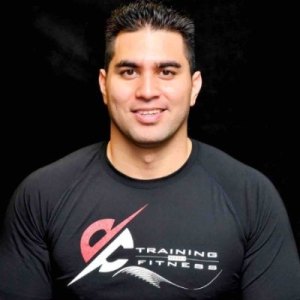
Ray is a full-time student at the U double majoring in Economics and Communication. He is a former football player that played for the Utes back in 2004 to 2009. Ray was born and raised in Honolulu, Hawaii and is happily married with 4 daughters under the age of 5. He is currently a personal trainer and a high school football coach at Viewmont High School. Ray is planning on attending grad school in the fall and hopes to one day become a college football coach. His passion is turning young student-athletes into competitors and helping them be a positive contributor to their community.
Angel Cortes

I am originally from Cayey, Puerto Rico. Currently I am studying at the University of Utah majoring in Communications. I been living in Utah for 14 years and I really enjoy it. For fun I like to play baseball and volleyball.
Stories by me:
Malibu Jack’s: bringing fun Hollywood-style to Kentucky
Falande Swain
 I’m an aspiring marketing and communications student at The University of Utah. I was born and raised in South Florida and moved to Utah to pursue my education.
I hope to have a career in the marketing or advertising industry in the near future. I love beauty and health wellness and would love to do marketing and advertising for beauty and health companies, but very open to trying new things.
Stories by me:
Samuel Knuth – A Brief History
Speak truth to power! Speak power to truth! I write from the hip and shoot from the mouth. I like stories with legs that take me for long walks off of short piers. I have written for the world-renowned Daily Utah Chronicle publishing my straight-talkin’-style opinion pieces. I’ve tried my tired hands at all kinds of stories, but I’ll always go back to well for a foreign affairs piece.
Samuel Damiani de Barros
I’m double majoring in Economics and Communication. I always want to develop my skills and I’m always looking forward to new experiences that will help me learn and grown. I was born and raised in Sao Paulo, Brazil, but I had the opportunity to live in many places of the world. Living in all these places helped me become more diverse and understand people’s culture better. I strongly believe that you can always learn something good about every culture and apply that into your life.

Stories by me:
Why Donald Trump’s mass deportation plan is a bad idea?
Spencer Schwendiman
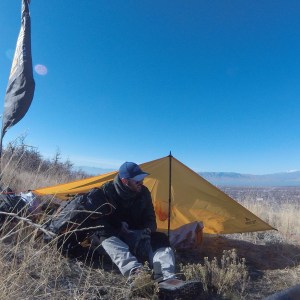 I was born and raised in the Salt Lake City area of Utah. I am studying journalism at the University of Utah to increase my abilities and credibility as an emergency preparedness blogger and podcaster. You can find more of my stuff at everymanpreparedness.com or by checking out “Are We Prepared, Yet?” on podbash.com
Stories by me:
Adam Fondren
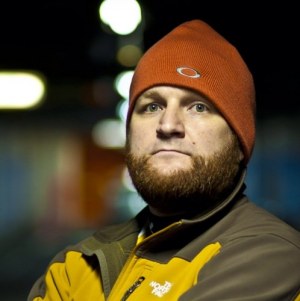
Angry photojournalist, studying journalism in order to improve my palatability for the mass media. I am a lover of images and words that portray the closet approximation of the truth possible.
Stories by me:
Meet Chevron’s Spokesperson, Mikal Byrd
Mikal Byrd loves the opposition and challenges life brings her. A native from Maryland, Byrd works in the oil industry which gets a lot of criticism. She is the spokesperson for Chevron and has been with the company for about four and a half years now. She moved to Utah almost two years ago and is now the Policy, Government and Public Affairs Representative at the Chevron Salt Lake Refinery.
Since moving to Utah, her lifestyle changed as she realized how much she loved the outdoors and hiking, perhaps even working out and staying fit. Her passion is helping give back to the community any way she can. It comes natural for her to lead and take on multiple responsibilities which is evident why Chevron has her in charge.
With Chevron, “My job is to protect the brand, engage the community and represent Chevron the best way possible.” Byrd appreciates the variety of challenges she gets to face with her job. One night she could be having dinner with the Governor, the next day she would be out at the refinery working with the guys, and the next morning she would be on a field trip to a conservation site with a group of 4th graders. “I really do have the best job in the world, I get a little bit of it all” she replies.
What are some things that make you proud of Chevron? “I am proud to say that Chevron really cares about the community and is always looking for ways to help out in any way through donations, scholarships, services and special projects.” On the Chevron website it states, “We contribute to the economic and social well-being of the communities where we operate by creating jobs, supporting local businesses and training the work force of the future.” In the past 3 years, Chevron has invested more than $170 million in education and programs to help further improve the quality of learning and hopefully in return improve the company itself. Wherever there is a Chevron dealership, the company strives to build lasting relationships with that community and aim to create prosperity for the future.
Some of the challenges Chevron face on a daily basis are “Making the community understand what we do. Where ignorance tends to be, people will fill in the gaps if they don’t know.” Her main focus is to educate the community on what Chevron is all about. Whether it’s through newspapers, social media, television, or the internet, Byrd’s job is to shed light on any grey areas or concerns that people may have on the company. Some of the problems that Chevron has been working on are air pollution and water usage. They’ve invested a lot of money to help find the best possible solutions. She says, “In the last 10 years we invested hundreds of millions of dollars to get air pollution down 90%.” Along with the environment, Chevron is passionate about community service. “The public should know how much Chevron really cares about the community and is always looking for ways to help out in any way through donations, scholarships, services and special projects. We are always looking out for the public’s safety as well and want everyone to know that we are the best at what we do by keeping our gas as clean and safe as possible, which separates us from all others.”
Byrd certainly sees herself retiring with Chevron. In 10 years from now she hopes to be working overseas for the company and do international projects. She is always optimistic about the future and she has no doubt Chevron will continue to flourish because of the high standards and ethic morals they stand by.
From Beauty Queen to Banker
Article and Photo by Adam Fondren

Fabiola Boscan at her desk
“When I feel the ceiling on my head my mind starts thinking, okay, what is the next step? What is your next adventure?” Fabiola Boscan says this with bracelets jangling as she taps the top of her head with the palm of her hand. Boscan is the manager of the US Bank branch inside Smith’s Food and Drug in Rose Park, Utah. She is much more than just a woman from Venezuela who runs a small bank branch inside of a grocery store. She has become pillar for the community of Rose Park.
Boscan was born in the coastal town Maracaibo, Venezuela, just outside of the capital city of Caracas, where she attended university. Interestingly enough most students in the business administration field where guided towards work in the banking industry, but she was told that she would never work in banking because of her poor English, which is a mix of rasp and melody with the rolling “r” of Spanish thrown in for added flavor. Much like everything else in her life, struggling with English has never stopped her. She attended two different intensive English as a Second Language (ESL) courses to improve her spoken English. As Boscan says, “I’m going to be the best at one thing at that time,” whether the activity is speaking English or opening new bank accounts.
In Venezuela feminine beauty is a matter of national identity. In the last 10 years there have been three Miss Universe winners and one Miss World winner from Venezuela. Beauty has become a form of national currency. One in five women get plastic surgery. There are state run modeling academies. While Boscan considers herself outside of that world, she grew up being teased for being short chubby wearing glasses and having fairly bad acne. However, she has definitely taken many of the values from her country and made them her own. She is always clad in jewelry has immaculately manicured nails and six inch heels. She has perfect hair with highlights and is always fiddling with it. She clearly has a keen sense of current fashion. She came to the interview with a black blouse with perfectly matched black leggings and a high waist gold buckled belt. Her jewelry was loud and perfectly matched to her belt and stiletto heels.
Boscan is an extrovert with both her fashion and her technical knowledge, she is serious about what she does, who she serves and how she does it. She goes out of her way to create a sense of family for her customers. She is quite knowledgeable about banking, personal savings and credit management. But, she views being the manager of a branch as much more than giving accurate information. Her aim is to make their banking experience exceptional and an overtly pleasant and personal experience, a place where an underrepresented cross section of society can come and interact with a friendly knowledgeable ever present person. She is family to many and a friend to many more. She has wept with customers over the deaths of family members. She has become a guiding voice to many more. She views her role of not only helping people do banking but that of family and giving her customers a remarkable experience every single visit.
Boscan describes herself as a hungry person, someone always looking for the next phase. “I don’t want to be a branch manager for the rest of my life,” She says. Her mother always taught her to not be a quitter always pushing her to be a better person. She is feeling the ceiling right now and is eagerly looking for her next adventure.
Building the Boaz Brand
By Samuel Knuth
How many kazoos do you own? Probably not as many as Boaz Frankel. He says that he has “between 100 and 200 kazoos” in an upbeat, excited tone, and “about 60 or 70 are on display at the museum” at any given point in time. You read that correctly. Frankel owns and curates a kazoo museum in Beaufort, South Carolina.
For some, this may seem out of the ordinary. For Frankel, however, kazoo collecting is only one of several unconventional projects he is working on. Frankel is a media personality who has cultivated his brand and internet presence through enterprises that, while not setting out to specifically buck convention, definitely do not fall under the usual definition of particularly “normal.”
Frankel cut his teeth in media while he was a student of dramatic writing at New York University. On the Cusp, a late night talk show style program that Frankel produced, broke viewing records for NYU-TV, NYU’s internal television station. He then gained more experience in media by interning at another talk show, Last Call with Carson Daily.
Since moving home to Portland, Frankel has continues putting out content. “I’ve never really liked driving,” he says. He instead operates a scooter to get around his hometown of Portland. His apathy towards cars was the inspiration behind his “Un-Road Trip” documentary series. On his not-quite-so-road-bound adventure, Frankel crossed America over 10 weeks aboard 101 different modes of transportation, none of which were cars. Notably, these included a couch bike, a camel and a “motorized cooler.”
Between his early experiences with talk shows and his experiences with modes of transportation, Frankel’s preeminent new media project should come as no surprise: The Pedal Powered Talk Show. It’s exactly what you’re thinking: Frankel, on a bike, interviewing celebrities. Among other things, Frankel realized there had been no real innovations in the quintessential news van. It is big, bulky, and cumbersome as transportation. Frankel got together with his friend, an expert in building bikes, and between the two of them they came up with a unique design: a polished, executive-style wooden desk which houses Frankel and the recording equipment situated on top of a long bike with a low center of gravity. The desk-bike hybrid comes equipped with stands so that Frankel and his companion do not have to balance their way through an interview with the likes of Bruce Campbell.
The project that Frankel is currently working on is true his style. Podcasts are typically lengthy broadcasts, some upwards of four hours an episode. So, of course, Frankel had to spin that around. His upcoming podcast, “What’s Your Favorite Sandwich?” addresses exactly that question. He asks people to describe their favorite sandwich in as many or few words as the respondent would like.
Frankel attributes his particular brand of unique creative output in large part to his Portland heritage. According to him, people in Portland are always willing to support new, creative, and weird things. When asked about the divide between old and new media and his transition, he simply put it “I like doing fun and weird things wherever they’ll have me.”
Boaz Frankel is both man and brand. You can find out more about him and his exploits at http://stuffbyboaz.com/. There you will learn great facts about him and his projects, such as that three of his high school teachers all thought that he was a “pleasure to have in class.” His website and exploits are just like him: interesting, funny, and a little weird in all the right ways.
The life of a student athlete
Lauren McCluskey loves being a student athlete at the University of Utah. McCluskey has being doing Track and Field since she was 8 years old. She has faced many challenges until she was recruited to do Track and Field for the U, such as injuries, but never got discouraged. McCluskey is always trying to improve herself.
Track and Field involves running, jumping for height and distance, and throwing for distance. “When I was 9 years old I started competing nationally,” said McCluskey. She has received many awards and she was a state champion during her freshman year in high school. “I got injured in high school and that was a challenge for me,” said McCluskey. Her mom has been her biggest support during the difficult times. She said that her mom would take her to different parts of the country to help her gain more experience. Even though she did not always win, her mom was always very optimistic about her potential.
The University of Utah is known for having a very prestigious sports program. Many high school kids from Utah and other states compete to be recruited and receive scholarships here. McCluskey’s success during high school got the attention of many schools. The U and five other schools contacted McCluskey in order to recruit her. She visited them all, but “when I visited the U I was very impressed with the facilities that they had and the coaches, I really liked the environment here,” said McCluskey. She also mentioned that she felt that the U had a good program for her major: strategic communication. She knew that coming to the Utah would be the right decision to make. McCluskey is from Washington State and Utah has become home for her.
Adjusting to being a student athlete in college was very hard for McCluskey. “The training is very intense and a lot harder than high school,” said McCluskey. She also thinks that college is a lot more competitive than high school. “I was very stressed out my first year here,” said McCluskey. At the same time she loves the university and the classes here. She has made many friends since she came to Utah. She is on her second year at the U, and her goal now is to relax more and enjoy more her experience. When I asked her about the hardest thing about living in Utah McCluskey was quick to respond, “I miss my family, but overall it’s a good experience.
McCluskey has many goals in her life. ‘’My biggest goal is to always improve myself, said McCluskey. Even though she is always busy with her classes, she always finds some extra time to go practice by herself. Her practice often lasts three hours and she mainly focuses on doing specific workouts that will help her prepare her body for future competitions. She believes that you can achieve anything in life if you work hard. Even though she has been very focused on her athlete life since she was 8, she has more goals for her life after graduating. “I want to find a career that I am passionate about, I also want to travel to new places,” said McCluskey. She has not been outside the United Stated and looks forward into that. She is not very sure about her career after graduating, but she has some interest on working with public relations. Despite the challenges of living away from her family, McCluskey is a true example of a person who works very hard to achieve her goals in life.
Mike Tuiasoa and Watchtower Café: The powers of caffeine and comics unite
Heilala Potesio
SALT LAKE CITY—The smell of fresh brewed teas, coffee, and the cafe is adorned with nostalgic memorabilia of comic book superheroes like Batman and Spiderman brings the inner child of any customer that walks through its doors. Watchtower Café is not a typical cafe but it’s inspiration from the childhood and personality of the owner Mike Tuiasoa, aka Tui the human.
Watchtower Café was established in October of 2015. It is a brand new cafe that replaced Coffee Connection on 1500 South and State Street. The coffee shop has attracted customers of diverse backgrounds mainly individuals who have a love for comics.
One customer on Facebook shared, “The atmosphere is wonderful and they have a wide selection of games to play. They have ample seating, so it never feels crowded and stuffy. And everyone is so nice here.”
Customers can enjoy weekly events such as board game nights, open mic displaying local talents within comedy and poetry, drink specials on Wednesdays, latte art night as latte masters dress up your cup of latte, live music, art galleries and geek hangouts to meet new geeky friends.
Initially Mike Tuiasoa was not interested in the food services industry. He wanted to do something different that was based on his childhood pleasure of comic books, action figures and Saturday morning cartoons.
Tuiasoa always knew that he was different from his own family but his conversation with his cousin who had similar interests inspired both of them to start a business involving their childhood interests.
“We both hated our jobs, we wanted something fun to do but it would be really cool to run a comic book shop,” said Tuiasoa.
He also realized the challenges of owning a comic book shop and then decided that they should run a cafe in which people can grab their favorite comic book and also enjoy a cup of coffee.
Since the age of 13, Tuiasoa has always kept his interests in comic books hidden from his peers and later on, even his wife. He always thought he was too old to enjoy them or too geeky that he would lose friendships and relationships. But he realized that reading comics has always been a hobby that brought him happiness.
Even in the darkest moments in his life he would find his happy place. Tuiasoa shared, “I grabbed onto the one time that I was happy in my life and that was reading comics, playing with action figures, watching superheroes and cartoons to bring me out of the darkness.”
Many have wondered how a Polynesian man would own a coffee shop based on comics. Reading comic books or owning a comic book shop is not common among the Polynesian community. Tuiasoa shared, “I grew up in Hawaii, I couldn’t find anyone else that was into comics or playing action figures.”
How has Tuiasoa been able to navigate his personal ethnic identity and also balance with his own personality? “I refer myself as a day walker like Blade in which I can be in both the geeky world and also be with my Tongan culture,” he said.
Tuiasoa’s love for comics and portraying his geeky personality has influenced the cafe. The place has transformed into his personality as if customers can understand his story. The cafe has been running successfully and has a strong social media presence that has raving fans. One fan shared on Facebook that, “It has quickly become my favorite place for coffee, and to meet up with friends over geeky interests, like card trading. The baristas make a fabulous cup of liquid heaven!”
From Vietnam to Salt Lake City Salon Owner

In 1984, a young women left her home, family and culture in hopes of a better future. At the time, Vietnam, her home, was a corrupt country where people couldn’t do what they wanted. The government was known for taking people’s money and opportunities for education were limited. Cindy Tran left her country to join her sister in America for freedom and to pursue her education. That was over 30 years ago, and today Tran is the proud owner of Sixth Avenue Salon in Salt Lake City, Utah.
Tran welcomed me with a warm smile as I walked in and asked me in her strong Vietnamese accent, “How are you today?” I was always curious what it was about the beauty industry that interested her. This was a great opportunity for me to learn about her culture and how she was able to start her own business.
Going into the beauty industry was the last thing Tran thought she would do, since she moved to the U.S. to pursue her education. After high school, a friend suggested they go to beauty school. The idea wasn’t appealing to Tran at all at the time, but her friend told her that she should try it and if she didn’t like it she could drop out. After a month of beauty school Tran’s friend ironically dropped out and Tran stayed because she was actually loving the experience.
Learning English was by far one of the most difficult things for Tran. “I cried all the time when I went to school. You read and write and when people speak, it’s so different,” she said. She learned English from her niece and nephew but doing nails is what truly helped her. “I learn a lot when I do nail because my clients teach me a lot.” She said that Americans are really nice and always help her pronounce words the right way.
After her 1-year program of beauty school, Tran worked at a nail salon called Nail Master where she was able to shadow others and become better at her job. After four years of working at Nail Master, she was able to start her own business through the help of her clients. “They don’t help you with the money, but they help you to know where to go and how to open my own business,” Tran said. Her clients guided her to the places she needed to go to start her salon.
Sixth Avenue Salon is located on 480 East Sixth Avenue. The building was recently remodeled and has a beautiful dark blue exterior with big glass windows and doors. Tran opened Sixth Avenue Salon about 14 years ago. In addition to manicures and pedicures, she also does facials, waxing and body massages. She owns and runs the place by herself. If she ever gets busy she has a niece and a friend who she calls to come help her.
Tran has built a clientele over the years and provides services to regulars each week. She said that her clients have become her second family because she sees them so often. “I love when I make people look beautiful and making others feel good about themselves,” she said. Other than doing nails, Tran loves cooking with her husband. Tran says that people from Vietnam are really good with their hands and going into the beauty industry was a great way for her to start her own business. However, she hopes to open her own restaurant someday and her ultimate dream is to open a day spa.
How Teton Sports is getting more people outdoors
The world of advertising has been completely changed by the Internet. A company would spend large amounts of money for billboard space or airtime on the TV or radio. Now, the Internet and social media provide opportunities for free or cheap advertising that reaches a larger audience. A great example of this evolution is the Utah-based outdoor gear retailer: Teton Sports.
Teton Sports is a small company based out of a single warehouse on the industrial side of Salt Lake City. They started with making backpacks that were a high quality product that people could purchase for cheaper than most products of equal quality. From there they moved to sleeping bags, tents, sleeping pads and cots.
Shawn Perry, the head of product design and marketing at Teton, spent years doing print marketing has helped Teton to avoid this dying system. In his opinion, using social media is a more beneficial system of marketing because it “brings people together.” Once he saw that Twitter was a way to bring a community of people together he helped Teton Sports co-create a twitter chat known as “Hikerchat” which is the largest outdoor chat on Twitter and trends quite often on Friday’s when it is held. The other perk of using social media for marketing, according to Parry, was the “instant feedback we can receive from customers.” He finds it is much easier to keep customers happy when he hears directly from them about a problem.
From Twitter they adopted a form of marketing many companies use known as an ambassador program. This program makes it possible for people from all over the country to get their hands on a product and share that on their own social media or with friends. Ambassadors are selected based on their ability to teach others about enjoying the outdoors or staying safe. Once selected, the ambassadors develop a strong relationship with the people at Teton Sports.
In order to do that, Teton decided that they would take their ambassadors on an adventure, hiking throughout Colorado, Washington, Oregon and other surrounding states. This helped to create a fun new idea to send the ambassadors throughout the country advertising Teton Gear.
The idea grew into a program that would send ambassadors all over the country. This is known as the Your Lead Van.
The van is handed from ambassador to ambassador and will be driven all across the country, even up into Alaska. They will stop at Sportsman’s Warehouse stores along the way and educate the store associates, as well as the general public on products from Teton Sports, Goal Zero, Merrell and Camp Chef.
This is part of their three-part system for the van, Parry explained, first is education, second is a thank you to the ambassadors and the third is a “trade-up program”.
The trade-up program is a way to say thank you to people who have helped them to grow as a company and help people who want to share in a passion for the outdoors. People can send their old, worn out gear to Teton via the ambassadors, and Teton will send them new gear that matches what they sent and then repair the old gear to give it to someone else. The best part according to Parry is when they “connect the two people through social media” that way, the person who donated sees the gear that they loved being used by someone else and bringing them joy.
Teton Sports’ motto has always been “get outdoors”. Now, according to Parry, using a mixture of social media and the “Your Lead” van they encourage people to do just that. To see where the van is going next, visit: http://www.tetonsports.com/yourlead.htm or follow the van on Instagram and Twitter by following @yourlead_van.
Malibu Jack’s: bringing fun Hollywood-style to Kentucky
The ocean, palms trees, and entertainment as seen in Hollywood inspire the creators of a fun center, Malibu Jack’s to come up with an idea to bring a piece of California to Lexington and Louisville in Kentucky. Malibu Jack’s started as an idea when owners Terry Hatton, his son Bryan and his brother Steve sat together thinking what was going to be their next successful business. Bryan said that before Malibu Jack’s there was a scarcity of family entertainment in Kentucky. He mentions that there were movies theaters, ice cream places, but nothing that involved fun for all ages.
Hatton said, that “we are looking for ways that the community could embrace fun that will pass on generations to generations.” Hatton reflects that he wanted to open a business where families could enjoyed a time together and convert Malibu Jack’s into a cultural center. Where fathers could bring their children to Malibu Jack’s and create a place that has the perfect setting for gathering the community together. “Malibu Jack’s is successful and great when customers and their families are able to enjoy time spent together,” he said.
They faced some challenges before they could open a business of such magnitude. The most challenging was finding the right building. They wanted to find a place that was accessible to the people in the community that could comfortably fit the attraction they had in mind, and close to the interstate in a growing metropolis. In Lexington the Hattons found a building of 50,000 square feet that was essential to the creative ideas that they had in mind.
One of the things that Hatton mentions is that they wanted to open the business as soon as possible. However, they had some step backs because they had to repair some things in the building. Once they had done the repairs in the building they moved forward to build the first Malibu Jack’s in Lexington, Kentucky. The first business attractions were miniature golf, go karts, and arcade. The miniature golf is one of the main attractions. The miniature golf course include palm trees, waterfalls, and a big giant shark. One of the newer attractions is the Xrider. Is a 4d motion simulator with hydraulic seats that make it feel as if were really on a roller coaster with great graphics and wind “The success of Malibu Jack’s is making the customers happy and this is demonstrated by the returning of its clients,” Hatton said.
The Hattons employ a good code of ethics. They make sure that each individual is treated fairly, both customers and employees. What business skills did it take to make Malibu Jack’s successful? Bryan said it was hard work, communication with people to make good deals, and his motivation to be able to help the community are the most important to him.. One of their goals is to open more businesses and continue to franchise, expand their business. Another of his goals with Malibu Jack’s is to make a certain amount of money per business quarter. Malibu Jack’s have customers anywhere from 100 to 2,000 per day. Because of the success of the first Malibu Jack’s in Lexington they opened another one in Louisville, Kentucky.
“Our company loves offering a place where friends and family members of all ages can come together and have a great time and make memories together while having fun at Malibu Jack’s,”
Bryan Hatton said. “When this continues to happen is when Malibu Jack’s is the most successful.”
 U NewsWriting