Careful of The Birds, the electric scooters might hurt you 

Story and photos by RANDALL WHITMORE

As the days get shorter and the temperatures begin cooling off one thing remains constant at the University of Utah, electric scooters are still parked on nearly every intersection around campus. 

As the school year continues, many scooters are being used on campus by students and faculty as a means of transportation. Electric scooters have become extremely accessible as they are often left all over campus. Students can easily access these electric scooters using their designated apps, which can be downloaded onto any smartphone.

Despite innovative transportation, some students and faculty believe that the scooters are endangering users and other bystanders. Recent U graduate Elan Maj calls the scooters “extremely dangerous.” According to Elan, the scooters are not properly repaired and present potential risks to users. “About a year ago I was using a scooter to get home from class. As I was close to my house the handlebars had fallen out of the scooter while I was riding and I crashed.” 

Elan was not injured enough to go to the hospital but he did file a complaint with Bird, the electric scooter company he rented from. He explained that there is a designated area for reporting damage in the Bird app. Even though Elan provided pictures and a written statement, he could not prove that the damage was due to misuse. Bird refused to take further action or refund his ride. 

Users sign a waiver of liability before being able to access the scooters. The waiver states that users must be 18 years or older to ride and are required to wear a helmet before using the scooter. Elan explained that the waiver of liability makes users responsible for any injuries or damage while using the scooters. The app does not provide any incentives for reporting damaged scooters.

The app provides an incentive program for charging electric scooters in which anyone can participate. There are simple instructions on how to get paid by collecting and charging scooters. However, these individuals may not be qualified to determine what mechanical issues may have occurred to a scooter. Elan believes that there are a large number of scooters that are unfit to ride; however, Bird scooters continue to circulate Salt Lake City and the U. 

A May 2019 story in the Salt Lake Tribune stated each company is only allowed to have 500 scooters in the city at one time. With four separate companies renting scooters in Salt Lake, there are upwards of 2,000 scooters.

The Tribune reported the results of a comprehensive nationwide study of 2018 electric scooter injuries. The article explained, “Of the 249 patients who received treatment for scooter-related injuries, nearly 28 percent suffered contusions, sprains and lacerations. About 30 percent had fractures, and just over 40 percent were treated for head injuries.” In addition, “94.3% of observed riders in our community were not wearing a helmet.” Electric scooter accidents accounted for more injuries than bicycle accidents and pedestrian injuries during the study period. 

Just how safe are these electric scooters? Abigail Yensen, a nurse at the University Hospital, stated, “We have seen a number of patients in the ER as a result of electric scooter accidents. We have treated patients with injuries to collarbones, wrists, shoulders, ankles, and severe scrapes.” 

There have been no reported accidents related to electric scooters since their debut in 2018, according to officer Ryan Speers at the Department of Public Safety of the U. Public Safety had received calls from other large universities around the country also conducting similar surveys to accidents relating to electric scooters. Speers explained that other institutions are having issues with electric scooter accidents to both users and pedestrians on their campuses. 

The U has strategically placed bicycle paths where faster moving traffic can efficiently move around campus. Speers said, “We pride ourselves on our designated bike paths which most universities around the country do not have. We believe this is why we have yet to see any accidents involving electric scooters on campus.” Speers said he is excited that no one has been hurt by electric scooters on campus yet. He believes that the scooters are relieving the parking lots and easing traffic during the busiest hours on campus. 

Perhaps students are not reporting these incidents to Public Safety and instead taking matters into their own hands. Student Oscar Augustine who uses Bird scooters as a form of transportation admitted to being scared of other users of the electric scooters. He believes the scooters create a lot of fast moving traffic on campus with inexperienced riders who are not wearing protective gear. “I recently saw two girls riding one scooter who crashed as they exited a sidewalk near the stadium,” he said. Luckily neither woman was injured but Augustine said he fears that the scooters, which reach speeds up to 20 mph, could really inflict some damage.

Perhaps electric scooters are an efficient and green source of transportation for students around the U. As long as rules and university guidelines are followed users will continue using electric scooters at the U. The electric scooters will remain on campus throughout the winter and will remain a viable source of transportation.


Tanner Faust

MY STORY:

MY BLOG:

I could say that my story started when I first traveled to Peru with my dad. He is a health and safety auditor for mines all over the world. When I was with him I saw massive environmental damage being done. At the time I just internalized it. However, when I heard about the reduction to Bears Ears, I immediately thought of a similar thing happening to Peru. This piqued my interest in the conservation effort of Bears Ears National Monument. IMG-1436 (2)

Two of my sources came about because of my research into the area. I reached out to both organizations for their input on the topic. My third interviewee was Daniel Tso. I met Tso through my grandma. She lived very close to the Four Corners National Park and Tso was a friend of a friend of hers. I met him at a gathering near Four Corners about a year and a half ago. Recently, I thought he would be a perfect person to interview regarding the harms of industrialization of sacred lands. 

The biggest moral dilemma I faced was bias. I wanted to create a story that outlines the entire political happening of Bears Ears National Monument. However, it was very hard to find facts and quotes that were not slanted one way or the other. Many times, I had to break down the information and then interpret it myself.

At first, I was overwhelmed by the information. There was a ton of it and it all said a million different things. I decided to focus on the political argument going on around the Monument as that seemed to be what most people were interested in. I decided to do a sort of back and forth between the two arguments as there is truth in both sides. I started simple with a hard news lead. Once I got past the initial information I began to lay out the controversy in a more spelled out manner.  

One thing I was surprised about was the validity of arguments for reduction to the monument. I still believe we should favor the environment over the economy. However, the benefits that these operations bring are undisputable. Power and electricity are provided to many more homes than before. Mines and other operations bring jobs and work to the local economies. There is an honest and good argument as to how the reduction can help thousands of people. 

I found myself questioning my predispositions toward this monument controversy. My ideals were challenged. I wanted to translate that for everybody to read and experience. Like many issues nowadays, there is often truth in every argument, it is just a matter of bringing it out.

ABOUT ME: 

Tanner Faust grew up in Johnstown, Colorado, a small farming community in the front range of the Rocky Mountains. Before moving to Salt Lake City to attend the University of Utah, he took an interest in business. He started to create small businesses in his small town selling anything from painting services to programming help. 

After moving to Salt Lake, Tanner took an interest in entrepreneurship. He pitched business ideas all over campus to different organizations. Some were sponsored by the U, such as GetSeeded, while others were private and nationwide. 

Tanner also took an interest in marketing. After leaving the business school due to a distaste in its degree, he transferred to the Department of Communication. Strategic communication provided him with a more sound degree in the topics that interested him. 

He began to create marketing campaigns for fellow entrepreneurs in Utah and back home in Colorado. This was the beginning of his professional career. He always found passion in helping others create their dream while also creating the dream for himself. 

Taneon Rood

MY STORY:

MY BLOG:

I was inspired to write about Zions Bank Real Academy because of the soccer culture that surrounds Utah. I wanted people to read my article, and be able to open their minds more than they have before and really see how much soccer means to Utah. 

I was born and raised in Utah, and I was on a few youth soccer teams when I was younger. That was one of the key elements that also inspired me to write this story. 

Dell Loy Hansen, the owner of Real Salt Lake, spent over $60 million on soccer facilities to ensure that Utah could become one of the greatest places in the country to develop soccer talent for the future. It’s been in Herriman, Utah, for less than two years, yet I still don’t see enough people giving it acknowledgment.  

The writing process for my piece was extremely simple since I follow Real Salt Lake heavily already. I already had an idea for what I wanted to tell my readers, I just needed the sources to help add credibility and accuracy to what I said in the article. 

I emailed Taran Meyer, senior manager of communications for Real Salt Lake, and he helped me find the other two people I interviewed for my article. 

Academy Goalkeeper Coach Mirza Harambasic and Zions Bank Real Academy President Jacob Haueter were the other two people I chose to interview. I feel like I did a very good job at finding credible people to interview for this article. My second option that I had in mind if I couldn’t find three people who worked or were associated with the academy was to ask somebody from a Real Salt Lake supporters group about how they felt about the soccer academy. However, this unfortunately never ended up being implemented into my story, but could’ve been useful since it gave a point of view from a fan. 

I encountered zero obstacles when putting my article together and I credit this a lot to the people I was interviewing. They cooperated very nicely and made the experience have no stress whatsoever. Gaining access to the facilities to take photos for my article came easy since they gave me a tour around the facilities. 

There is definitely a lot of information that I gave to the reader in my article, and it might be really confusing at first. However, my goal was to help everybody understand what the soccer academy does and what its purpose is. I feel like I truly did my best when it came to explaining everything. I admit that I covered a lot of themes but this is because I wanted people to fully be informed. 

I had recorded over 22 minutes of interview audio, and it was really difficult for me at first to choose what quotes I would use. But after time passed and I gave things more thought, I eventually found what quotes deserved to be in my article over others. 

What surprised me was how successful my article ended up being. I don’t mean this in a bad way, either. I just thought that it would be much more difficult to get people to interview when it comes to covering a story on professional sports. I definitely feel like I was very fortunate in this aspect of my experience, and the fact that I’m a diehard soccer fan made it even better. 

I personally hope that the Zions Bank Real Academy continues to develop the best soccer talent in North America and that one day there will be more people who will give the academy the credit it rightfully deserves. The academy is definitely taking the right procedures to become one of the best going forward. 

ABOUT ME:

Taneon Steven Rood is an aspiring young writer, looking to make a significant impact on how we view soccer in the United States through his storytelling. He was born and raised in Salt Lake City and grew up playing soccer and basketball. His interest in writing grew when he would stay up late at night and write poetry and diaries based on how he was feeling during his high school years.

TaneonRoodHe enjoys traveling to other countries around the world as a form of leisure and his favorite place to go is Mexico. Taneon has been learning the Spanish language since he was 6 years old and has been practicing the language ever since, although he says he isn’t fluent yet. In 2015, Taneon became an Eagle Scout in the Boy Scouts of America.
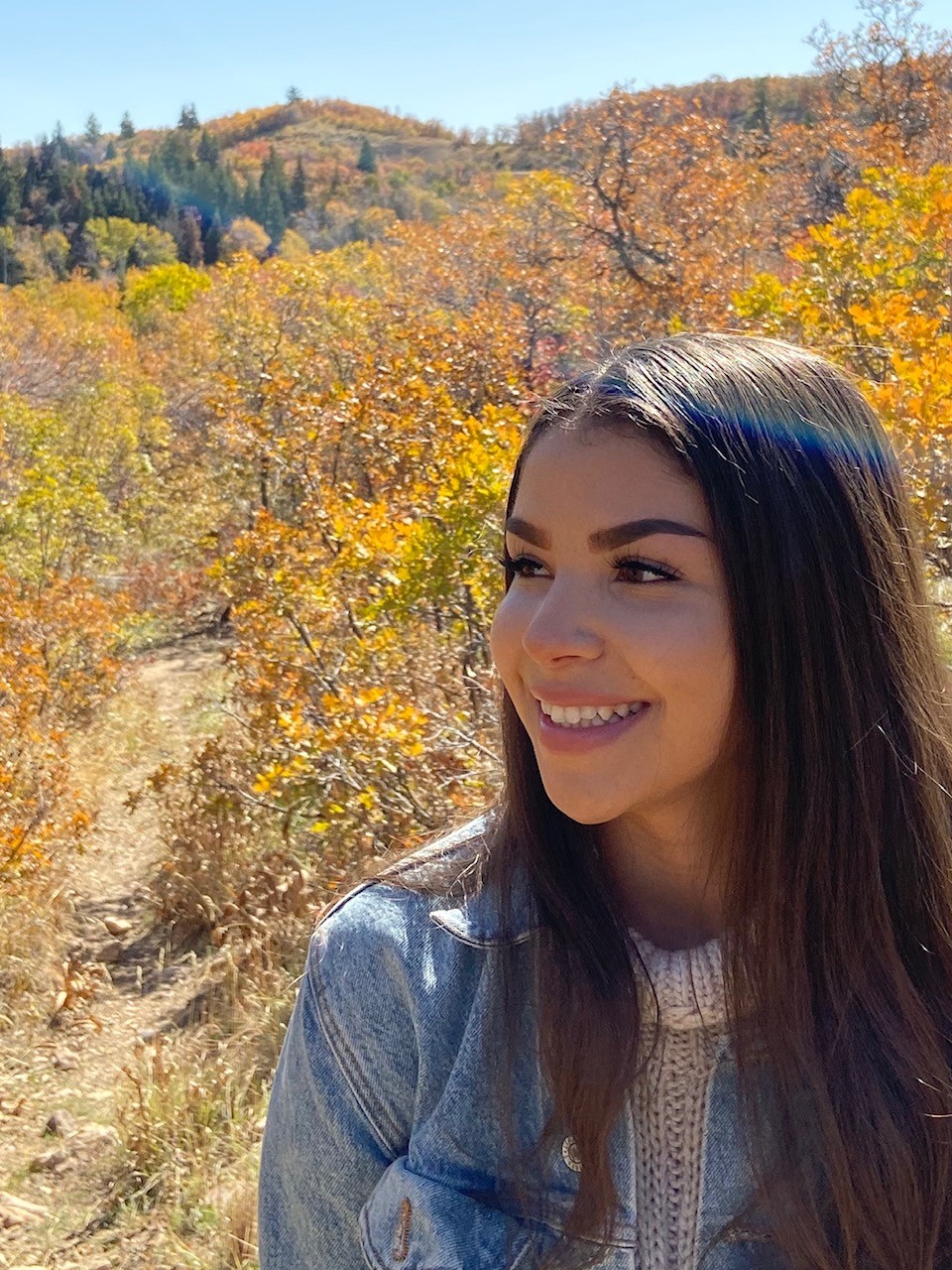
After becoming the youngest person to graduate from Salt Lake Community College in 2019 at the age of 17, Taneon decided to transfer to the University of Utah for his bachelor’s degree.  In the summer of 2019, Taneon did a one-month internship with the Harvard Business School start up company called Zubale in Mexico City. One day he wants to open youth soccer leagues for children in communities that are underdeveloped around the world.

Madisen Gates

MY STORY:

MY BLOG:

This story was initially very intimidating. When I started thinking of topics for my enterprise story, I first spoke with my friends, classmates, and professors to get an idea for what to write on. After speaking with one of my classmates, I quickly found a great, and somewhat shocking, story idea. However, the day before story pitches were due, my main source decided she did not necessarily want her name attached to this story and backed out. I really needed to find an alternative, and fast. I began browsing local events on the University of Utah campus to get started. Shortly into this endeavor I found a link to an event called, “Inspired!”

At first, I did not think much of the event. The description only mentioned artwork on display at the Huntsman Cancer Institute. It caught my eye and, through research, I found out how truly incredible the staff and artists are at HCI. The event turned out to be much more than artwork. The Artists-in-Residence program aims to heal patients, caregivers, and staff members through expressive painting, drawing, and many other creative projects.

Following the link on the events page, I found the email for Donna Beluchi who is one of the staff members on the project. She referred me to my main source, Shelly White, the program director. White then suggested going to one of the art sessions to meet the current artist and speak with the attendees.

I was inspired by White’s passion for the program and dedication to continue these programs. It did not take long for me to find a patient, Caren Pinson, at the art session who was very excited to share her experience on attending this program. These three sources gave me detailed perspectives on what it takes to implement a large program like this, continue to run it, and what it feels like to experience it.

During this project, I was able to meet with so many creative and caring individuals who truly helped my story progress. Once I had completed interviews, an article that was very challenging at first become rewarding and fun to finish. I was so inspired by this experience that I did not need to do an outline to start writing. My sources really guided my writing as I tried my best to stay true to their experiences, feedback, and hopes for the program. They also became my motivation to make my story excellent — to do justice to the wonderful people and programs I was lucky enough to experience.

ABOUT ME:

I am a storyteller.

For as long as I can remember, I have enjoyed telling, reading, and writing stories. Originally from Ogden, Utah, I eventually moved to San Diego, where I graduated high school and entered the International Baccalaureate or IB program.

photo

During my time in California, I really began my journey as a writer. The IB program helped me develop my own writing style by studying authors such as Toni Morrison, Gabriel Garcia Marquez, Naguib Mahfouz, and many more.

In addition to this, the beautiful scenery and the diverse environment of people made me much more inspired to create stories. I remember lying on the beach, laughing with my friends, experiencing so many different things that inspired at least a hundred stories.

My journey continues in Utah where I am a Strategic Communication major expecting to graduate in Spring 2021. I hope to then help build businesses with my technical writing skills and creative perspectives. Most of all, my greatest hope is to one day grace the “New York Times Best Sellers” list.

Willow Galvan

MY STORY:

MY BLOG:

When I began searching for topics to write my enterprise story on, I was greatly inspired by an acquaintance of mine, Dallin Wilkins. Wilkins suffers from severe hearing loss and has worn hearing aids since he was 18. From what I knew before interviewing him, he had lost a significant amount of hearing due to not using ear protection. At the time, I had never spoken to Wilkins about his hearing loss. After reaching out to him, he was more than happy to let me interview him and learn more about his hearing journey.

Wilkins was truly the driving force in my story. He shared with me how his hearing loss journey began, what his daily struggles entail, and how he advocates to other young people how devastating hearing loss is, and how it can happen to anyone. Not just your grandparents.

After I learned more about Wilkins’ story, it was like I fell down a rabbit hole. I spent hours researching hearing loss and how many young people it affects. I learned more about the topic than I would have ever imagined. But I was still missing my other sources. It was then that I reached out to my grandpa’s audiologist, Dr. Liz Hankins.

Luckily, she was quick to accept an interview with me. It was through her that I got most of the factual information used in my story. She gave me statistics that would do a great deal in my story. She also told me a plethora of ways that people damage their hearing and warned others that it isn’t just older people who are affected.

She was also kind enough to connect me to another source, her husband and hearing care specialist, Josh Hankins. He provided me with all the final information my story needed. He gave his advice on what people should and should not be doing when it comes to protecting their ears. He was also the person who informed me about the new Apple iOS 13 update, which includes the Health app having a new hearing health section. This became a large part of my story.

I would be lying if I said that I was not immediately overwhelmed with the information I had retained from my interviews. However, when I began writing, it all started to piece itself together. I guess it is true what they say, starting is the hardest part.

I quickly realized my story was becoming more of a service piece than I had originally thought. The focus of my story went from being about Wilkins and his personal hearing loss journey, to being a piece about warning and informing others about what they can do to protect their ears and hearing health. Through writing this story I learned a lot, and I can only hope that readers will too.

ABOUT ME:

IMG_4102I’m a Utah girl, born and raised. My entire family, extended and all, have always resided here. I grew up closer to my family than most. They are my everything, and up until a few years ago, I could get to any of them in a five-minute drive. Then, my life changed.

Everything I knew was uprooted when most of my family moved to North Carolina. Originally, I was going to head out there too, that was until I got accepted at the University of Utah.

Making the decision to stay in Utah, when most of my heart moved across the country, was one of the hardest choices I have ever made. I make the trip out there as frequently as I can.

Utah also has some of my heart. Everything I grew up loving is here. Including the University of Utah. Currently, I am a junior and am majoring in strategic communication. 

After graduation, whether it be here or on the East Coast, I hope to go into a career in marketing or public relations. 


Hailey Danielson

MY STORY: The Writing Center at the University of Utah

MY BLOG:

I became interested in the Writing Center because I was recently brought on as a new tutor there. During my training, a lot of questions started to come to mind. Why don’t a lot of students at the University of Utah make use of this free resource?

I had to start looking inward, and I realized that I never wanted to visit the center because I was afraid that people would think that I was a bad writer. So I wanted to know if other people shared this fear and if there was some sort of a stigma against visiting the Writing Center.

So I decided to start my story by asking some fellow students about their thoughts on the Writing Center. To my surprise, the students I interviewed didn’t feel that there was a stigma per se, but rather there couldn’t even be a stigma because not enough students even knew that the university had a writing center.

I had to shift gears, I went to the director and coordinator of the center to ask them about what they believe that the student body thinks about the center. Anne McMurtrey and Abby Christensen were great sources because they had first-hand details about how they market the center and data that I could get on student visits.

But during my writing and interviewing, I did find some moral and ethical hurdles when it came to the fact that I am a paid tutor at the Writing Center. I had trouble ensuring that no bias came through in the article. In the end, I think I was able to keep a level head while I was writing, without adding in my own opinions and thoughts.

As I began writing, I found it difficult to make sense of all the information that I had gathered, I just wrote everything down in the way that my mind made sense of the order, answering the questions that came to my mind in the order that they appeared to make the story come across the most logically. But it is true that that style mostly relies on the basis that everyone else’s brain functions the same way mine does, which is a bit of a gamble.

At first, I had no idea what I was doing. But after a few very rough drafts, the flow of the paper really started to come to me. Suddenly I was writing, paragraph after paragraph, in a voice that was true to me, while also making the points I wanted to make.

I suppose what I learned from this story is that even if you are struggling don’t stop writing, because as long as you persevere, the story will come to you eventually. I learned a lot about my writing throughout this process. I had to separate the English major part of my brain and explore the journalist part. I ended up really enjoying writing this piece, even though it was incredibly difficult. The voice that I discovered within myself was very exciting, and I’m very proud of all the growth that I have made while working on this project.

ABOUT ME:

Hailey Danielson was born in Pocatello, Idaho, and moved around the state a lot in her childhood. When she was 13 she moved to Santa Barbara, California, where she finished off high school at San Marcos Senior High. When she started college she came to the University of Utah to pursue a degree in English with the Honors College. Danielson is a photojournalist for the University of Utah Daily Utah Chronicle and is debating whether or not to pursue a double major in journalism.

Danielson just completed her first course in journalism — Comm 1610, Introduction to News Writing — with her very first journalistic piece, “The Writing Center at the University of Utah.”

She wants to pursue a career in publishing, either books or print journalism and is considering a career in television news as well. Danielson is planning on graduating from the University of Utah in the spring of 2022.