When Morals and Laws Collide

Story by Scott Stuart

 
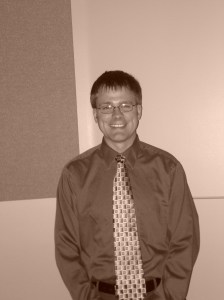
Former Tribune Editor Jim Fisher, now an Associate Professor of Communication at the University of Utah, spoke about ethics in journalism to newswriting students at the U. of U. last month.

Fisher’s speech covered:
•    The differences between the law, morals and ethics
•    How they relate to the Code of Ethics
•    His own experiences as an editor

“There’s a big difference between ethics, law and morality,” said Fisher..
According to Fisher, they lie on a continuum with the law at one end and morals at the other.

“Morality is defined by culture within a set of rules,” said Fisher. “Ethics is a decision making process.”

Fisher described that this decision-making process involves which morals one should confine to within the realm of legality.

The Code of Ethics created by the Society of Professional Journalists guides this decision-process.

 
“Reporting the truth is what you have to do,” said Brenda Manjuano, a student in the class.

 
This is in accordance to the first of four standards in the Code of Ethics – “seek truth and report it.” The other three standards are: “minimize harm,” “act independently” and “be accountable.”

“Journalism ethics is about to publish or not to publish, to name or not to name,” said Fisher.

 
Fisher followed by discussing decisions he was forced to make as an editor.


“It was helpful to hear examples of how these ethical decisions are made,” said Montana Peterson, another student in attendance. “Sometimes you can’t avoid hurting someone.”

National poll reveals public’s preferable sources for news

Story by Shannon Hunter

Have new communication technologies, such as the Internet, made the world a better place? Recent reports show that most people, including almost half of nonusers, believe they have.
According to polls, 66 percent of Internet users and 49.3 percent of nonusers believe that new communication technologies have benefited the world.
More than half of the people polled also believe that stories are often inaccurate, with 63 percent of people preferring that their news does not come from a source with a political point of view.
“Reading news on the Internet is always a good way to kill time, but I usually only believe a story once I’ve seen it from multiple sources,” said Hannah Skarsten, a third-year student at the University of Utah.
Her father, Mike Skarsten, also said that the convenience of the new communication technologies does not out weigh his doubt that sources are offering non-biased news. However, he said he is thankful that he has multiple options to go to.
“It may be silly, but I rarely believe a story until I see it reported in a reputable newspaper, but the different technologies let me pick where I look for it,” said Matthew Yessick, a second-year student at the University of Utah.
Out of the people polled, 21 percent, the largest number of people, go to Google to search for news. The largest percentage of people who depend on broadcasts or reporting sources for their news is 13 percent, who go to CNN for their news.
While some people hesitate to believe what they read on the Internet, there is a dominant trend of people who turn to the web for news before reading or watching news from reporters.

Family-Friendly Natural History Museum Opens

Story by Elysia Yuen
The new Natural History Museum of Utah is a place of interactive learning and growth for people of all ages.
The museum opened on Nov. 18, 2011. It displays 10 new galleries including three learning labs to enhance learning opportunities for its visitors.
“This is a place where we can inspire that curiosity early on and get kids trying their hand at observation, at study, at really trying to figure things out on their own,” said Becky Menlove, exhibit director for the museum.
Randy Irmis, curator of paleontology emphasized that a goal of the museum was to encourage families to enjoy the experience together.
“In each area you’ll find something to look at, something to listen to, something to smell and something to do,” said Irmis.
The museum connects visitors to several branches of science instead of focusing on only one subject. It also focuses on informing patrons of Utah’s natural surroundings and Native people.
The new exhibits include: Utah Sky and View Terrace, Native Voice, Life, Land, First Peoples, Lake (Great Salt Lake), Past Worlds, Utah Futures, Minerals and Our Backyard. Each display emphasizes the unique characteristics and history of the Utah area.
The design of the building also reflects Utah’s history. Todd Schliemann, the building’s architect, spent many years studying the geography of Utah.
Schliemann said he wanted the space to “symbolize the beauty and magnitude of the state’s unique landscapes.”
All of the displays and architecture are an integrated effort to enhance learning and interactivity among its visitors.
For those on a budget wanting to visit the museum, free admission days will be offered during the 2012 season. The dates are as follows: Jan. 9, April 9, July 9 and Sep. 22. More information can also be found on the museum website, http://nhmu.utah.edu/.

Word Count: 256

The Changing of the Guard

The evolution of technology is changing the roles of journalism

Story by Elizabeth Briggs

As a cop mercilessly pepper sprays a peaceful protestor at the Occupy Wall Street movement, a passerby films what will soon become a YouTube phenomenon. Exposing how quickly a police officer overstepped his boundaries, an average person recorded a newsworthy video with a mediocre camera phone.

Today, not only do people want their news and want it fast, they also want to participate and report for the news. Martin Tolchin coined this new media trend as civilian journalism at the University of Utah’s 15th annual Siciliano Forum.

The colossal impact of new technology has left many to think that the future of journalism is dead. Despite the significant decrease of newspaper readership, Tolchin, drawing on experience as the founder of The Hill newspaper and Politico and over 40 years with the New York Times has an optimistic view about journalism’s fate.

In a time where print journalism is struggling to earn a profit, Tolchin keeps what some deem an eccentric outlook. He spoke about how before online media, mainstream print media was the gatekeeper of information, publishing only the things it reasoned newsworthy. Pronouncing the end of an era, Tolchin expressed an undeniable enthusiasm to the challenge online social media has incurred to this role of authority. Unlike twenty years ago, journalists now look to the Internet, in order to find leads from the common citizen.

Tolchin is a fan of the upcoming civilian journalism and likes how technological advancements have brought new opportunities. He added to this saying, “At each stage of technology, people can begin to deliver more information and access it easier. Until now, information has never been greater needed and essential to democracy.”

However, with the abundance of information and media, Tolchin mentioned how American’s attention has shifted from hard to sensational news, outlining how priorities have changed. In one of his very few discouraging remarks he said, “I think that if you surveyed, Americans would better identify a liquor company than a news organization.”  Cody Salrin, a student at Utah said, “ I think that even with the new wealth of information, people need to work harder to be informed.”

While it is great that social media has allowed people to express their opinions and expose political scandals, people have stopped checking credibility and rushed to conclusions based on illegitimate evidence.

Nick Dunn, the political reporter for the Daily Utah Chronicle, added to this conflict saying, “The fact that citizens cannot discern good journalism from bad journalism is one of the biggest problems with our society. It means that people do not know how to consume good information, which is important when going into the voting booth.”

So instead of succumbing to Kim Kardashian’s divorce drama this week, empower the mind with global information and the things that will actually affect America’s future. Make a difference in the voting booth by being an active and participatory citizen. Pay attention to the things happening in the world, partake in the news and make the decisions that count.

Breaking Through Universals to Experience Variability

Story by Spencer Peters

Malcolm Gladwell’s speech on the American pursuit to discover the perfect spaghetti sauce transcends the food industry but makes a larger argument about the nature of choice and happiness.
What message Gladwell argued for was not meant to revolve around spaghetti sauce and the specific flavor that we enjoy the most but was to express the movement from search for universals to the understanding of variability. He described this movement as “the great revolution in science of the last 10, 15 years.”
The person he accredited much credit to was to a psychophysicist named Howard Moskowitz, who helped people realize the true importance of horizontal segmentation. He helped people realize that everything exists on this horizontal plane.
He described this plane as having no hierarchy between the different types of spaghetti sauce or mustard offered in stores. There is no good or bad, perfect or imperfect. There are only different types of mustard or other foods that suit different types of people.
Through the use of variability, society can now rid itself of the preconceived notion of how things ought to be and experiment with finding happiness through the use of variety.
Gladwell described this theory as, “the Platonic dish,” where people were afraid to challenge what was thought to be the ideal way that something ought to be.  Being able to have a variety in everyday life can help find the greatest level of pleasure or happiness.

Brewvies manager, U professor weigh in on DABC fine

Story and slideshow by JACOB W. MAXWELL

The Utah Department of Alcoholic Beverage Control fined Brewvies Cinema Pub, a locally owned and operated restaurant/movie theater in Salt Lake City, during the summer of 2011.

Andrew Murphy, the pub’s general manager, said Brewvies quietly paid a $1,627 fine for screening “The Hangover Part II,” a movie that the DABC thought violated a section of the Utah Alcoholic Beverage Control Act.

This was Brewvies’ first DABC violation since opening its doors in 1997.

Murphy, speaking for the first time about the fine, the law and how they have affected the theater, said Brewvies attracts a variety of customers.

“You don’t have to partake in alcohol to come. So we get LDS people that come in to enjoy a nice meal and a movie. That’s kinda the beauty of the place,” he said.

Murphy said Brewvies screens popular PG, PG-13, R- and G-rated films based upon what the owners think their clientele, 21 years and older, wants.

He said many Brewvies patrons and concerned citizens were outraged to hear about the fine. “We’ve had tons of support. We made national news and have had people writing in from all over the country. Mostly curious because they don’t understand why Brewvies was fined and they think that the issue was deeper than it really is,” Murphy said.

He said many people also questioned why the DABC sent undercover Utah Highway Patrol officers into Brewvies to watch the film at the taxpayers’ expense.

Why was Brewvies fined for showing a summer blockbuster that simultaneously premiered with other local theatres?

Francine Giani, interim director of the DABC, said in a letter that Brewvies was fined because “The Hangover Part II” ran afoul of a Utah law “prohibiting films or pictures depicting sex acts on premises that sell alcohol.”

Giani said Utah’s law is modeled after a similar law in California that was upheld in a 1972 decision by the U.S. Supreme Court.

The only case seen before the Supreme Court regarding sexually oriented entertainment during the time period was Miller v. California (1973), in which a business owner conducted a mass-mail campaign to advertise pornographic material.

In a 5-to-4 decision, the Supreme Court ruled in favor of the state and held that material considered obscene was not protected by the First Amendment. The court developed the Miller Test, a legal standard where four qualifications have to be met in order for speech to be considered obscene.

David Vergobbi, an associate professor in the University of Utah’s Department of Communication, said he hasn’t seen the movie, but he doesn’t believe the film depicts sex acts in the same manner that the Miller obscenity test would apply to.

There are parts of “The Hangover Part II” that depict full frontal male nudity. During the end credits of the movie, the character portrayed by Ed Helms is seen having sex with a transsexual.

“If [Giani] is indeed referring to Miller v. California, the Miller obscenity test, it’s moot anyhow because the film isn’t rated obscene,” Vergobbi said. “The R-rating is nowhere near reaching the level of obscene speech and indecent speech is protected under the First Amendment. Obscene speech is not.”

The DABC has the ability to financially force Brewvies to censor movies that violate the section concerning films in the Alcoholic Beverage Control Act, despite the content being protected under the First Amendment.

The act allows the DABC to regulate the content of any film depicting the act or simulated acts of sexual intercourse, masturbation, oral copulation, whipping, etc. in an establishment that serves alcohol. Also, if characters in a film fondle or show their genitals, breasts or anus, it is in violation of the law.

After reading the act, Vergobbi said, “Heck, this [law] could cover almost anything,” in reference to what Brewvies is legally allowed to screen.

Vergobbi received a Ph.D. in Mass Communication Law, Ethics and History. He teaches U students about media ethics and mass communication law.

He said the DABC could make a claim that they are only carrying out the law as written. The problem Vergobbi sees is that Brewvies would have to sue the department that holds its liquor license in order to get the law changed. But, he said this scenario could prevent Brewvies from taking legal action.

Brewvies has thought about fighting back but Murphy said the cinema pub doesn’t have the money to do so.

“It’s a considerable amount of money to get the proper lawyer and paperwork filed. And what would it really gain us?” he said. “The law could get changed or we could get back our fine.”

Vergobbi believes the law could be challenged on vagueness and over-breadth, which is the standard test for whether a statute is constitutional.

“I’m sure they were referring to pornographic films,” Vergobbi said regarding why the law was written. “But by just saying ‘showing a film’ it opens it up for this kind of application.”

Giani said Brewvies, upon receiving its alcohol license, was cautioned by a licensing and compliance officer about the law and urged to prescreen movies to avoid any possibility of a violation.

Brewvies had the opportunity to screen “The Hangover Part II” because other Warner Bros. films like “Super Bad” and “Knocked Up” had done well at the theater. The owners had to agree to premier the film before they knew about the content. And to Murphy’s knowledge, the film wasn’t prescreened in Utah.

“We were selling out shows to the first ‘Hangover’ six weeks into the run, which gave us the opportunity to premier more films,” Murphy said.

In the 14 years since Brewvies has been open, it has only premiered a small handful of films.

Murphy said Brewvies has always taken every precaution to not violate DABC regulations, Utah State laws and Salt Lake City and County mandates. Yet he is not sure where to draw the line as far as what films the theater can screen in the future.

“Film is art and as soon as you start regulating what people can put in their art then you are really having a heavy hand on the culture,” Murphy said.

This slideshow requires JavaScript.
Salt Lake Valley schools and shops adapt to changes in the photo industry

Story and slideshow by RIKKI ALLIE

Digital photography has taken the photo scene by storm and is changing the dynamic of both classrooms and photo shops in the Salt Lake City Valley.

Frank Langheinrich, East High School film photography teacher, talked about how the increase in digital photography has changed the dynamic of his classroom.

Students are coming in to his classes without the knowledge of how to use simple point-and-shoot cameras. Students do not know how to adjust the outcome of a picture from a point-and-shoot, including how to change the shutter-speed for action shots.

Langheinrich learned photography during family road trips. His dad would take him and his brother on weekend trips and would stop the car when he saw a good photo subject. Langheinrich would get tired of sitting in the back seat with his brother, so his dad bought him a small 35mm camera and showed him how to use it.

Langheinrich said he chooses to still teach analog photography because photo galleries prefer silver gelatin prints. They are more archival and last many years. Digital photography can be printed but the ink used is not proven to last for many years; it fades easily and can be smeared.

But it is so expensive to operate the film lab because of  the chemicals used for both developing film and printing the pictures, the school district is remodeling East High photo lab to have more computers. The photo lab would only have three to four enlargers — a projector used to enlarge a negative onto photographic paper — instead of the eight to 10 that the school has now.

According to National Geographic, photography dates back to the early 1800s. The first known photograph was taken with an obscura camera. This camera is different than a 35mm camera because instead of a negative film strip there is a piece of photo paper behind a covered pinhole. When the hole is uncovered the light is let into the box and a picture is imprinted on the photo paper. Once the photo paper is developed in chemicals a picture is revealed.

The first camera was released in 1888. The camera had a strip of film that could take 100 pictures. When a roll of film was full with pictures, photographers would send the entire camera and the film to be developed, according the website. Once the pictures were developed, the camera, along with a whole new roll of film, would be delivered back to the camera owner.

The 35mm camera was developed in 1913-1914. The camera gets its name from its reduced film size. Photographers would then enlarge the photo once the negatives were developed, according to National Geographic.

The first digital camera came out in the mid-1970s once Kodak scientists invented the world’s first megapixel sensor. This meant that light could be converted to digital photography, according to the website.

With all this advancement it isn’t surprising that people are starting to depend on the preprogrammed settings to take care of the technical part of the photo. This includes both the shutter speed and lighting.

Genna Boss-Barney, a student at Salt Lake Community College, took an introduction to photography class in spring of 2011. She said the class covered the basic information about both film and digital photography.

Once the class was over she realized she had known nothing about her digital camera. She hadn’t even known how to change the settings on her camera to make the pictures look better before it was taken.

“We learned about how to work the controls [aperture and shutter speed] on both cameras,” Boss-Barney said.

Unlike East High, which is being remodeled for a smaller wet lab — the workspace that uses chemicals to develop film — SLCC will be moving the wet lab from the Redwood extension to the South Jordan extension to expand the lab space.

“Sadly our wet lab was under construction, so we weren’t able to learn that part of the developing,” Boss-Barney said.

Students were advised to take their film to Inkley’s Camera. It was not recommended to go to Walgreens or Walmart. Boss-Barney said her professor told his students that the quality of those mass-produced prints would not be as good as the prints from Inkley’s.

Like Langheinrich, Boss-Barney’s teacher focused a majority of the term on digital photography.

“I don’t know if it was because we had no wet lab, so it was just a hassle to get the film developed or because he was more passionate about the digital aspect,” Boss-Barney said.

She said that even though the class has been moved to the South Jordan extension, it would be worth the drive to take it again. It was an interesting class and has helped with her digital photography hobby.

Though classes for analog photography are still in Salt Lake Valley, over the past few years it has become less popular. Borge Anderson, local owner of Borge Anderson Photo Digital in Salt Lake City, said on average, they are only using the wet lab about 10 percent of the time.

“We are completely digital,” Anderson said.

Once the film is developed it is digitally scanned to digitize the negatives onto the computer. The prints are then made from those scans. Anderson and his employees do not use enlargers to create photos anymore.

Not only has the developing and printing process changed, but Anderson’s business has changed too. He has gone from 33 employees to only eight in the past five years. Anderson is planning on retiring and the shop will be closing down.

“Unless the employees want to keep it running,” Anderson said. “But that hasn’t been decided at this moment.”

If his shop closes, there will be fewer than 10 shops in the Salt Lake City area that develop film on site.

This slideshow requires JavaScript.

Raquel Cook’s new method of teaching

Story by MARISSA HUNTSMAN

“International experience is not a luxury anymore. It’s a necessity,” said Raquel Cook, a wild-child turned world traveler who has morphed into a professor who teaches at Utah Valley University and has a unique method of teaching English to her students.

Raquel Cook holding a miniature of a Terra Cotta Warrior from China. Photo courtesy of Raquel Cook

Cook claims to have been a nerd during high school, finding interests in debate and the school newspaper rather than cheerleading like her sisters. “I never even attended a high school football game,” Cook said.

After graduating from American Fork High School, Cook began her journey of self-discovery. She attended Brigham Young University choosing a degree in English.

A week after graduation, Cook, 21, set her sights outside of the small Utah community she had spent her life in. “When I first left it wasn’t because I wanted to go anywhere necessarily,” she said. “I just wanted to get out of here (Utah).”

With $100 in her pocket and a one-way ticket to Asia, Cook set out on a journey in a foreign country. The first stop on her grand world tour was South Korea, a country not known for its peaceful political culture, but one that contains hidden treasures of generation that Cook found a niche.

In South Korea she worked as an instructor of American culture and college life for police graduates to prepare for the way of life in America. She also taught English on the side, which paid her very well. Her other jobs included: a staff writer for the entertainment section of an English newspaper and radio host for a “really cheesy program but college students loved it.”

Cook gained minor stardom with countrywide TV appearances. This job enabled Cook to travel all over the country making new friends during her TV appearances, which funded her travels to other countries.

Cook spent the next few years traveling from country to country. Occasionally she got on wrong buses and had misunderstandings with the locals, but these events did her no harm. Instead she grew to feel empowered and limitless in her feature endeavors.

Bonnie Cook, Cook’s mother, said, “I constantly worried for my daughter’s safety while she spent years in foreign countries. There were no cell phones during that time but I knew we had a strong daughter who we taught well.”

Years later, Cook found her path in Manhattan and working in the financial district. She worked out of the South Tower of the Twin Towers.

The morning of Sept. 11, Cook recalls feeling that she shouldn’t have gone into work that day. But, she said, “I’m not the type of person who doesn’t go to work based on a feeling.”

Cook exited the South Tower at the time when the second plane made contact, killing her friends on the 83rd floor. That day is a blur in her mind; she even remembers that a stranger had to remind her to call her parents.

The suicide and a murder of two fellow 9/11 survivors motivated Cook to reevaluate her stance on the aftermath of that day in American history. Furthermore, America’s reaction to these events greatly upset her.

This caused Cook to realize that change could not occur by building walls between nations, or by increasing airport security checks or visa restrictions. Instead the answer could be found in education.

Cook packed up her daughter and moved back to American Fork High School and began teaching at the local high school she had graduated from.

Cook recalls that she wasn’t sure what she was expecting on her first day but remembers that she felt frustrated by the lack of interest the students had in the outside world. This frustration was fueled further by the rigorous rubric she had to follow according to the district’s standards.

However, the second year of her teaching began with the opportunity to create her own class, with its own goals. A class that would educate the senior students of the purpose of the English language and its usages in the world, both formal and informal. Using her experiences from over 40 countries, Cook fashioned a class that many first believed looked more like a history class than an English class.

Cook told her students that she spent a week in a Tibetan monastery in the Himalayas, a silent week, learning to pray. But this experience demonstrates that many people seek the same answers through similar meanings.

Cook’s entire message for the world tour-themed class could be illustrated by a single picture. A picture featuring the events of Tiananmen Square where a single student stood in front of the approaching tanks.

The message is that language, English or otherwise, is a tool used to convey a person’s thoughts and beliefs to the world. Her message championed for her students to use words and language instead of bombs to resolve conflict. To embrace different perspectives and see them as they are a person’s life.

Cook did not travel the world in the American style of guided tours and continental breakfasts. She rode on cramped buses and held everyday jobs. She was able to witness many events including uprisings in Tibet and the World Cup in Paris.

“I want my students to get out of the country,” she said. “To learn what other countries have to offer and realize the people in a different country in a hut are working towards the same goals they are.”

After all, there is too much beauty in the world for American students to fear it. Cook encourages all students to “Get out! You’re cheating yourself if you’re not.”

Elysia Yuen

MY STORIES:

MY RESUME:
Elysia Yuen
3688 Buckeroo Cir. Magna, UT 84044
Home: (801) 250-4448    Cell: (801) 860-6729
Email: elysiayuen@gmail.com

EDUCATION
University of Utah, SLC, UT
Expected Graduation December 2012
Bachelor of Arts in Mass Communications
Salt Lake Community College, SLC,UT Dec 2007
Associate of Science in General Studies, GPA: 3.88

SKILLS
Microsoft Office: Word, Outlook, Excel, PowerPoint, Publisher
Type 70 Words Per Minute
Adobe Reader, Photoshop
Strong Interpersonal & Customer Service Skills

LEADERSHIP EXPERIENCE
International Student Ambassador University of Utah, SLC, UT
Aug 2011 – present
SLCCSA Board Member, SLC, UT
Aug 2006-May 2008
(Salt Lake Community College Student Association)
Duties: Implement and organize Public Relations Program to
design multi-media projects for student organizations,
provide technical resources for other team members,
advertise for community educational activities
SLCC Constitution Revision Representative, SLC, UT
March 2008-April 2008
Duties: Propose amendments for government elections and student
organizations
Computer Synergy Club Vice President, SLC, UT
Sept 2007-May 2008
Duties: Organize program to provide computer tutoring for students

EXTRA-CURRICULAR ACTIVITIES
Global Health Scholars Participant and Volunteer
Sept 2009-present
Utah Legal Services Family Law Clinic Volunteer, SLC, UT
Sept 2008-Dec 2008
Duties: Oversee event details and instructions
Salt Lake Community College, SLC, UT
Aug 2006-Jan 2008
Student Government Leadership Conference Participant
NASCO Conference Participant, San Francisco, CA
Oct 2007
National Association for Student Clubs and Organizations for
organization management, activism, and diverse relations
Utah Cultural Celebration Volunteer, SLC, UT
Jan 2008-April 2008
Duties: Assist in implementing community events

ACCOMPLISHMENTS
Church of Jesus Christ of Latter-Day Saints Missionary
July 2009-Feb 2011
University of Utah College of Social and Behavioral Science Honor Roll
2008-2009
University of Utah Honors Student
2008
BACCHUS Network Certificate, Denver, CO                             
Sept 2007
(Certified Peer Educator Program for Leadership & Communication)
President’s List Salt Lake Community College Honor Roll      
2006-2008

WORK EXPERIENCE
Concession Stand Lead, Levy Restaurants, Sandy, UT                  
June 2011 – present
Computer Sales Representative, University Bookstore, SLC, UT          
Aug 2008-June 2009
Receptionist, Physician Office, SLC, UT                 
May 2008-Aug 2008
Office Specialist, Thayne Center, SLC, UT                      
Sept 2007-May 2008
Community School Teacher, Salt Lake City School District, SLC, UT     
Jan 2007-Sept 2007
Customer Service Agent, Alorica Inc., Magna, UT                    
Aug 2006-Nov 2006

ABOUT ME:

I am working towards a Bachelor of Art in mass communication at the University of Utah and am pursuing a career in the public relations sector.  My ambition is to work for a non-profit organization after graduation in December 2012.

Being an outgoing and friendly person has enabled me to work independently and in a team environment to accomplish tasks in an organizational manner. Evidence of these skills are portrayed by obtaining an Associate of Science degree, serving a mission for the Church of Jesus Christ of Latter-Day Saints, consistently gaining honors recognition for academics and being involved with student government, the Global Health Scholars at the U. of U., the Girl Scouts of Utah and various community organizations.

I will be writing for ‘Lessons’ magazine for the Center for Teaching and Learning Excellence at the U.

Survival Guide: Roomies 101

Janell Hann offers tips for living with roommates. Photo courtesy of Hann.

Story by KELLY WOLFE

“Hell is living with other people.”

That expression may particularly be true for college students, who often find that living with roommates can be a challenging experience.

Just ask Janell Hann, who moved to Salt Lake City from New York in 2003. During her undergraduate years at the University of Utah, she says, “I experienced everything from goody two-shoes to the downright odd and unexplainable.”

After having lived with 19 different “roomies,” she knows a few tricks of the trade that will help you cope with whatever living situation you are currently in.

“The first thing you’ve got to know,” Hann says, “[is that] communication is huge. It’s pretty much everything. If you can’t communicate with others … your living situation will be unbearable, [especially] if you can’t express yourself in a constructive way.”

To help facilitate communication Hann suggests having a house meeting once a month. At these meetings problems are presented and everyone tries to give a solution. This turns a confrontation between two people into a house issue. Hann says these meetings “can create a sense of peace in the home.”

She explains that roommates should express thoughtfully the things that are going well in the apartment in addition to the things that need improvement. “No one wants to [be] singled out or attacked,” she says. “Just don’t forget to let people know how you feel.”

Hann believes that telling your roommates how you are feeling in a calm, non-threatening way will make everyone happier, because it won’t feel like a war zone every single time you come home. “If there is any contention in your home, it will cause stress in all aspects of your life,” she says.

Second, Hann suggests that roommates write things such as birthdays, concerts, vacations and when bills are due on a jumbo whiteboard calendar. She says that writing things down for everyone in the apartment to see creates a sense of unity.

The third thing Hann recommends doing is making a cleaning chart. In her apartment it was called “Club Cindersoot,” in honor of Cinderella. Every month she and her roommates would rotate responsibilities.

“Put each person in charge of one room in the house,” she says. “Make clear rules as to what each person is to do, such as doing your own dishes, or who’s mopping the floors and scrubbing the toilet.”

But what happens when you’re living with a Gremlin?

Don’t worry, you are not alone.

Hann recalls having a roommate who never did her dishes. So Hann made a sign to post above their kitchen sink that read, “Contention is of the devil, not doing your dishes causes contention, don’t be the devil’s advocate.” But the problem continued.

Frustrated, Hann and her roommates took it to the next level. “One afternoon … we took her empty laundry basket and filled it up with all [of] her nasty dishes, then put them on her bed,” she said.

Katherine Veeder, a resident advisor at the University of Utah, says it is the small things that can flare up and cause problems, such as differences in schedules, or one person coming home late and turning on all the lights while the other person is sleeping.

She says it is vital to be upfront about different problems, while not being passive-aggressive or angry.

Many people may find it scary to talk to a roommate about a particular problem.

Veeder, who acts as a mediator for her residents, says it helps to find a neutral, common space to discuss conflicts. “It can be really intimidating to approach someone, especially if you’re in their space, for instance, their bedroom.”

When confronting your roommate about a particular issue, she says “it’s really important to understand where [they] are coming from before you … accuse them of … doing [something] terrible.”

Veeder says sometimes it can be hard to adjust to living with a roommate, especially for freshmen, because they tend to go from the “it’s all about me” mentality to having to be conscientious of other people’s lifestyles.

She recommends doing things that will create a sense of community. Students in her house are required to take part in formal activities such as group dinners and a monthly educational program. However, Veeder and her residents end up doing a lot of other things, including watching movies and going out to dinner. They have even gone laser tagging, because it helps residents in her house get to know one another better.

Veeder says that for people who have never lived with a roommate, it can be a difficult transition. Things will work out better when picking a roommate if you know about their living style: what their schedule is, when they wake up and go to bed, and even when they like to shower. “It’s [the] little things like that that can make all the difference,” she says.

University of Utah alumnus finds path to desired career proves difficult

Chris Jex supporting the Utes at the 2010 Maaco Bowl in Las Vegas, Nev.

Story and photo by JACOB W. MAXWELL

Chris Jex, 28, a 2011 graduate of the University of Utah, has had difficulty transitioning from student into his desired career path.

One week before he graduated in August, he was hired by Fanzz online apparel stores, Larry H. Miller Corporation’s online sports apparel and merchandise retail company.

“Working in online and new media marketing is something I enjoy,” Jex said.

But it isn’t his dream job.

For Jex, his formative years were spent mastering the guitar, online gaming and skipping school. In 2001, he decided to pursue higher education. He received his GED diploma later that year, and started at Salt Lake Community College in 2002. He graduated in 2006 with his associate degree in general studies.

He entered the University of Utah in 2007 knowing that he wanted to major in political science.

In the summer before graduating with a Bachelor of Arts in both political science and economics, Jex decided he would start working toward his career path and forego graduate school for the time being.

Unemployed and with graduation approaching, Jex began to feel the burden of repaying his student loan debt, affording his living expenses and finding a well-paying job during this recession. This forced Jex to put his career plans to work in finance or the public sector on hold, and look for a job he knew that he could get quickly.

He had worked for five years for Mrs. Fields, an online retailer for baked goods. When he saw a job listing for the Larry H. Miller Corp. that was relevant to his prior work experience, Jex jumped at the opportunity to apply.

He adds descriptive captions to online items such as jerseys, hats and key chains for the website. He was quickly promoted after only a few weeks on the job to run an online marketing team.

Jex said his promotion came with only a slight increase in pay and the responsibility of managing a team of five people in which he is still paid hourly.

Many graduates, like Jex, hope those four years of schooling and thousands of dollars will reap them the financial rewards of a well-paying job in the field that they had studied.

A study of 571 men and women who graduated between 2006 and 2010 from four-year colleges found that 53 percent were employed full-time, 14 percent were still looking for full-time employment and almost half were working in jobs that don’t require a degree.

The report, published in May 2011, measured how prepared college graduates were to enter the job market. Graduates also were asked how much of their education was financed. Researchers at the Edward J. Bloustein School of Planning and Public Policy at Rutgers University concluded that this generation exhibits a “diminished expectation of financial success.”

Dana Sowby, associate director for the Career Services at the U, said that “a degree doesn’t get you a job. It’s a foundation you base your career on.”

For example, Sowby feels that Jex’s education provided him with that foundation by teaching him critical thinking skills.

Sowby is a firm believer that there are plenty of jobs out there waiting for U students to fill. Over the past 20 years, she has made sure that U students who seek the center’s help are prepared to enter the workforce.

The center helps students and alumni choose a career path, write resumes and find internships. The staff also hold mock interviews to help individuals prepare for a real-life situation.

Sowby recommends that current students take advantage of internships to explore career options and determine whether they are on the right course. “Take internships during school. Internships are critical, but not required,” she said.

The Rutgers report found that students who took advantage of internships during school saw a median income of $34,680, which was $6,680 more than those who chose to not participate in them.

“Internships give students a chance to implement their knowledge, gain real-world experience, network and add to a resume,” Sowby said.

Jex never took an internship while in school.

He is still strongly considering graduate school to further his education and hasn’t yet taken advantage of the Career Services to help jump-start his career path.

But Sowby suggested that Jex find relevant work experience first. “Not finding a job isn’t the right reason to enter graduate school,” she said.

She said both political science and economics are great majors. However, she feels that having a degree alone isn’t enough.

“You need to take it a step further and apply your knowledge,” Sowby said.

Jex feels that there already have been many opportunities to apply his university training with his current job at Fanzz. He is grateful to the Larry H. Miller Corp. for employment in this rough economy, even though it’s not his dream job.

So what’s next for Jex?

“My long-term goals are to have the flexibility and options to pursue an eventful and fulfilling career in an increasingly diverse job market,” Jex said.

Jakob Jensen: Swim instructor to strategic communication professor

Story and photo by TOM CROWELL

Jakob Jensen, an assistant professor of strategic and health communication at the University of Utah, never imagined himself in the classroom.

Jensen was born and raised in the tiny copper mining town of Circle, Mont. He remained there until it was time to pursue higher education at Concordia College in Morehouse, Minn., since there were no colleges or universities anywhere near his hometown.

After receiving his bachelor’s degree in political science and East Asian studies, Jensen earned his master’s degree in communication at the University of Illinois. He received his doctorate in communication from the same university in 2007.

Like most college students, Jensen had a job while going to school. He first worked for Sprint as a communications specialist. His primary responsibility was to retain the business of Sprint’s corporate clients and make sure they were happy with the services they were being offered. Following his time at Sprint, he went to work for grocery distributor Supervalu in its human resources division and eventually became the director of HR for the entire company.

Jensen did not plan on remaining in corporate employment, though. While he was working on his doctorate, he was offered an assistant professor position in 2007 with Purdue University teaching health communications. Teaching wasn’t his first choice of employment, but someone noticed it might be a good fit for him while he was a swimming instructor in his hometown. He remained at Purdue until 2011, when he and his wife decided it was time to move west.

Professor Jakob Jensen.

David Vergobbi, an associate professor of communication at the U who chaired Jensen’s search committee, shed some light on the process of hiring new faculty members. To be considered for tenure-track positions at the U, a candidate needs a doctorate and to be adept in three specific areas: teaching, service and research. A secondary specialty is also required for employment; Jensen’s is health communication. Pointing out Jensen’s qualifications, Vergobbi said, “He is the complete package.”

Jensen was driven toward academia by a desire to help people, especially his students. It is not uncommon for him to point out certain items during lectures that students will be tested on and reemphasize those items throughout the unit of focus. He will also give his students bits of advice on how to become successful in strategic communication, including getting involved in the community, joining the PRSSA chapter on campus and applying for and participating in internships. As Jensen puts it, “I want you to succeed, I want you to do well.”

In addition to his responsibilities at the university, Jensen is also a family man. He has been married to his wife, Robin, also an assistant professor at the U, since 2001 and together they have a 5-month-old son, Jor.

University of Utah alumnus takes his talents to New York City law firm

Story by MATT ELLIS

Photo taken by Shanna Richmond

When James Clegg graduated from the University of Utah in 2006 he had a career plan. But he had no idea that, in a few short years, he would be working as a lawyer in New York City.

After the U, James spent years at two more universities before he ended up at Mayer-Brown, one of the leading corporate law firms in downtown New York City.

James, or “Jace” as he is known to family and close friends, was born in Farmington, Utah, in 1981 but spent three years in England while his parents fulfilled religious duties for the Church of Jesus Christ of Latter-day Saints. He graduated from Davis High School in 2000 and then served his LDS mission in Hong Kong.

James met his wife, Christy, after he got back from his mission. They had both spent time overseas while growing up, and having that in common led to almost immediate chemistry. They were married in August 2004, about eight months after they had started dating.

After earning a degree in English from the U, James attended law school at Cornell University in Ithaca, N.Y. Even as early as 7th grade, he knew he wanted to be a lawyer; at the time, though, he was partial to Yale.

“Growing up, I always thought that I wanted to be a lawyer,” James said. “People told me they felt like I had an aptitude for it because I like to argue.”

He decided to go to Cornell because it had the best international law program of all the schools he was accepted to. James learned one form of Chinese, Cantonese, on his mission in Hong Kong, and took six classes at the U learning Mandarin Chinese. He had originally hoped to return to China to practice law.

“When I was interviewing at different firms, that’s why I picked Mayer-Brown. … They have a large Hong Kong office,” James said. Along the way, however, he discovered that he might want to take a different path. “As I went through law school, I found that I had an aptitude for tax,” he said.

“In the legal world, if you want to do tax law, you have to have a specialization,” James said. So, after graduating with honors from Cornell in 2010, James decided to enroll at the tax law program at New York University, which is widely regarded as the “gold standard” of tax specialization. Tax law was something that really resonated with James, and he enjoys his current duties with Mayer-Brown. The firm handles contracts for loans, mergers and securitizations for multiple large companies, including BlackBerry.

He finished the program at NYU in 2011 and now works full time at Mayer-Brown. “I really like that it’s very cutting edge, very high-level legal work,” James said. “It’s really scary when you think about, ‘If I screw this up I could literally cost this person millions of dollars.’”

James’ wife Christy, also a University of Utah alumna, does social work in New York City. She does adoption work with adoptive parents, as well as counseling for adults. Though both are very serious about their career paths, things are not all business all the time.
Asked for one word to describe James, Christy responded, “He’s a jokester. He is kind of silly.”

James did concede that he tries to be funny, and that includes having a little fun with friends who are not very familiar with his Mormon faith. He once told a friend that Mormons believe that it is sacrilegious to eat turkey on Thanksgiving.

James is an avid follower of the U’s football team, and so far has been disappointed by the first season in the Pac-12 conference.

“I think that it’s pretty evident that we don’t have Pac-12 talent just yet,” James said. He misses going to football games in Rice-Eccles stadium, and was glad he could attend the Utah-Washington game on Oct. 1, 2011, while he was in town for the weekend.

While in New York, he catches the Utah games in the Flat Iron area of the city at a bar that is the official sports bar of the local chapter of the U’s alumni association. On any given game night, James said, between 70 and 80 Utah alumni show up to enjoy the game.

James has always had a plan for his next four or five years, but says that right now he is not sure where he wants to go. One option he has considered is going to work for a private equity firm, an area where he does have some experience from an internship he did while he was studying tax law at NYU. Although James would be open to opportunities overseas, both he and Christy plan on being in New York for some time to come. Christy even said she would like to start a family sometime soon.

International graduate student at the U inspires pursuit of language studies

Story and photos by JAVAN RIVERA

Natalya Sergeyevna Nizkaya has been interested in foreign languages and their mechanics since her childhood.

Growing up in the Amur region of Russia that borders China, she harbored a desire to work with languages from around the world.

“I’ve wanted to connect my future life with languages since I was in the fifth grade,” Nizkaya said.

Nizkaya, 30, has studied five languages and currently is a teaching assistant in the University of Utah Department of Languages and Literature and is also a graduate student. She speaks English and Russian fluently and has experience in both Turkish and Chinese. She also has just begun studying Arabic.

Nizkaya’s master’s program work is based in the university’s Comparative Literary and Cultural Studies program (CLCS), and focuses on the Russian translation of African American literature. A paper she wrote in her first fall semester about a Toni Morrison novel inspired her work.

The time Nizkaya has been able to study and help teach in Utah has provided her with the opportunity to further her own linguistic knowledge and to inspire the same love for foreign languages in her students. She has accomplished this through the classes she teaches and a conversational group that she founded at the university.

Natalya Sergeyevna Nizkaya inspires her students through her classes.

In an interview Nizkaya talked about the impact she’s had on some students who have taken her Russian-language courses, citing one student who changed his major from mathematics to linguistics.

“When I heard about this, I thought ‘wow.’ It was very rewarding for me,” Nizkaya said. “Part of it was probably the Russian class that inspired him.”

Nizkaya was interested in creating a language-based activity on campus and was given an idea by her supervisor, Rimma Garn, who has a doctorate in Slavic languages and literature. This brought about the creation of the Russian Table.

The Russian Table consists of students from all Russian-language classes ranging from first- to third-year fluency. The group has eight to 10 regular attendees this semester, but that’s not how it began.

Nizkaya said that when the group began it was extremely large, but it quickly dwindled to only four students. They would meet and talk about random subjects in Russian. She said the whole idea of the group was to “break class walls.”

“It was great to see first-year students participating when they could hear and understand words,” said Maria Fedorovna Rezunenko during a Skype interview. She was one of Nizkaya’s colleagues and was also placed in Utah as a foreign-language teaching assistant.

Both Nizkaya and Rezunenko were placed at the U through the Fulbright Institute of International Education. One of Fulbright’s programs works to match foreign-language speakers with universities where they can help teach. For Nizkaya, it was a perfect fit.

“She tried to deepen her knowledge of foreign language,” Rezunenko said.

Nizkaya described how the Russian school system differs from its American counterpart and said she spent five years mastering English while also studying German. The system now mirrors the American degree system, but during Nizkaya’s time at Amur State University it was under the old system that revolved around five-year specialties.

By the time she graduated in 2004, she was qualified as both an interpreter and translator in English and Russian and had a specialty, the American equivalent to a major, in linguistics and intercultural communication.

Nizkaya is also studying as a graduate student in the CLCS program at the U.

Nizkaya wanted to apply this knowledge somewhere. An opportunity presented itself in 2007 when she participated in an exchange program between her university in Blagoveshchensk and Jackson State University in Mississippi.

The program consisted of teaching English as a second language and helping students to prepare for the Test of English as a Foreign Language (TOEFL). The program offered Nizkaya a chance to practice the skills she had learned in her schooling in Russia, and created a desire to do more work in America.

“When I came home, I was already thinking of what other ways I could go to the States,” Nizkaya said.

This led to her eventually teaching Russian at the University of Utah in fall 2009. It was here that she first met Rezunenko in person, though they had been in communication online for some time.

“It was amazing,” Rezunenko said, describing the program. “It was teaching us to teach.”

She said the forms of teaching in the Russian school system are different, and that their supervisor wanted them to teach the classes in a more “American style.” She feels this benefited both herself and Nizkaya.

While the work has allowed Nizkaya to impact her students, she now looks to her future, both in finishing her master’s degree at the U as well as her career path outside of academia.

Yet even as these studies come to a close, Nizkaya said how proud she is of everything she has accomplished thus far in her academic career both as a student and a teacher.

“That I’m here now,” Nizkaya said. “That’s already an achievement and I’m proud of it.”