Natalie Mumm

IMG_2470

Born and raised in Southern California, I moved to Utah in 2015 to pursue a Communication degree, focusing on the Strategic Communication sequence, with a minor in Arts and Technology at the University of Utah. I am a part of the Delta Gamma Sorority, which allows me to involve myself with the community, and the campus, in various volunteer opportunities. After graduation, my goal is to work as a social media manager for a company.

Through the course of the Arts and Technology minor, I have taken Intro to Digital Photography. This class is what initially introduced me to The Salt Lake Gallery Stroll. An assignment allowed students to attend the event, and visit a minimum of two galleries. Talking with an artist or representative of the gallery, as well as documenting your attendance with various photos was required.

I found The Salt Lake Gallery Stroll to be very amusing. I carried a goal to introduce the event to college students and young adults through my story. Hoping to enlighten individuals, and increase attendance at future gallery strolls.

Enterprise Story

Reflection Blog 

Reflection Blog – Faye Barnhurst

I began brainstorming ideas by thinking about current events in Salt Lake and on campus. As a student-activist, I considered different political issues in Utah, such as Operation Rio Grande, police brutality, etc. I thought of the Ben Shapiro event, as it had been the biggest activist action on campus in a while. I knew that the event was not current enough to suit the story, but the group who put it together, Black Live Matter Utah, had not gotten much coverage. Black Lives Matter seemed to be a new group in Utah, so I tried to consider what the public might be wondering about them, like who they are, why they started, what their goals are, etc.

I already knew some local activists, so I was able to use them as sources or connections. I also was able to schedule an interview with Lex Scott, the founder, which was fantastic. Lex Scott was a great source. I felt that it was very valuable to learn about the group directly from the source. I was also able to interview TK Flory, one of the first BLM activists in the country, which was really interesting. I’m thankful that these individuals were willing to be interviewed by me, especially as both of them are black, and I didn’t want to speak for them or their movement.

I had some difficulty contacting Lex Scott because she is involved with so many organizations, which makes her very busy. I had somewhat of an ethical dilemma because the only people I was able to contact from BLM Utah’s media team were white people, and like I said before, this is a black movement, so it’s important to prioritize black voices and not speak over them. I would have felt unethical to only interview white people from the organization. I continued to reach out to other people to get in contact with Lex, and luckily I was able to get the interview just in time.

When beginning the first draft of my story, I definitely had a different idea in my head than what I ended up with. I was planning on starting out by explaining the national BLM movement and some recent cases of police brutality in the US, but it just didn’t flow well. It took the focus away from the Utah Chapter, which was supposed to be the point of the article, so I made an outline and focused much more on the local issues BLM had been focusing on.

I learned that outlines are crucial. If you try to write an article start to finish, with no outline, it will take at least five times longer. I also learned that I like writing about activism. Lex Scott thanked me specifically for choosing to write about them and giving them a voice, which made what I was doing much more meaningful. It’s important to give a voice to those who are often silenced by the general public.

I’m thankful I had the opportunity to interview activists I admire, like Lex Scott, TK Flory, and Jacob Jensen. I hope to be able to cover more activist events in the future and to give a voice to those who are silenced.

Bio

Black Lives Matter has taken to the streets of Utah and they’re here to stay

Reflections on Interviews with DACA recipients

By Citlali Jauregui

I decided to write about DACA recipients because I wanted others to know about some of their struggles for a better life. Some people don’t take the time to read these types of articles since DACA doesn’t affect them, but it could affect someone who they are very close to.

Recipients of DACA whose permits expired before March of 2018 had until Oct 5, 2017 to renew their permits. No new applications were accepted after October 5. The Mexican Consulate located in Salt Lake City provided financial assistance for those who couldn’t afford the application fee of $499. They also provided services in which DACA recipients could attend and meet with a lawyer, free of charge, to get their application going before the October deadline. Every two years DACA recipients would go to the U.S. Citizenship and Immigration Services to get their bio-metrics taken after their applications were approved. In the September issue of The New York Times stated that there are 800,000 DACA recipients who are affected by the removal of DACA.

I have a few friends who have DACA and were willing to share their story with me. I also wanted to get the views of a few parents of DACA recipients and their reasons for bringing their children to a different country. They were the best sources for my story because their journey on coming to the U.S. wasn’t easy and they all faced struggles in different ways coming from different countries.

I did encounter some obstacles while developing my story, especially during the interview process. Immigration is a sensitive topic to talk about and both parents I interviewed preferred not to include their full name in order to keep their identity safe. I decided to focus on their whys for coming to the U.S, their struggles, and their hopes. I also decided to focus on Lopez’s story specifically, just because he decided to come to the U.S. alone to be reunited with his parents. During my writing process I became stuck a few times, because I wanted to include the full story of each DACA recipient I interviewed. Each person I interviewed had a very unique story and I wanted to include their whole story with more detail, but due to space I had to leave some things out. Another struggle that I encountered was trying to leave my bias out and be more transparent. I am an immigrant as well and I have experienced some of the same struggles as the individuals I interviewed. I tried writing this story by putting myself on the outside, which was hard, but I believe I accomplished it. It’s not easy starting a new life in a country that is very different from our own, but we adapt ourselves and with commitment and dedication anything can be possible.

Story: An opportunity for Success is taken away

Citlali Jauregui

About Me

Bioam Junior at the University of Utah majoring in Strategic Communication. I am not sure what specific career I want, but I can’t wait to explore and see what the future has in store for me.

I was born in Jalisco, Mexico and grew up in a small pueblo called Zapotlan Del Rey until age seven. Coming to a new country, facing obstacles, and learning a completely new language really shaped me. I developed dedication and commitment that helped me to become the person I am today.

I am a motivated and ambitious Hispanic woman who wants to acquire more knowledge and to explore the world by learning about other cultures and sharing other people’s stories. For me, writing was never easy, but I’ve always liked it. Trying to express my thoughts and ideas on paper always seemed difficult, but writing has given me a pathway into thoughtful expression.

Linkedin

Reflection Blog on developing story

Story: An opportunity for success is taken away


Holly Vasic

About Me

Writing1

I am a student at the University of Utah seeking a degree in Communications, the journalism sequence. I write for the Arts and Entertainment section of the student newspaper, The Daily Utah Chronicle, and for the South Salt Lake City Journals. I have always been a writer and I am finally pursuing my dreams. I have learned a lot about news writing in class as well as from experience through the student newspaper. The more I learn and write the more I love the journalism process. My favorite part is meeting new people and interviewing them. The writing part is probably my least favorite, ironically.

Check out my story on Operation Rio Grande by clicking here.

Read my reflection blog on writing the Rio Grande story by clicking here. 

See my LinkedIn by clicking here.

Have a look at my portfolio by clicking here.

Operation Rio Grande may not be prepared, or be the answer, for homeless addicts

Story and Photos by HOLLY VASIC

SALT LAKE CITY – Operation Rio Grande is ready to begin helping homeless addicts as part of its “Phase 2.” Law enforcement agencies are well into the first phase of pursuing active criminals from the area. As part of Phase 2, certain treatment centers have received funding to expand, but clinicians in the addiction field say this is not the answer and infrastructure does not exist to support the client load.

Sit in on any Salt Lake Area 12-step meeting and sooner or later references to “The Block” will be heard. The Block is the nickname for the area between 200 S. and 400 S. on Rio Grande St. in Salt Lake City’s downtown, where illegal substances pass fluidly from dealers to users. Operation Rio Grande is currently attempting to eradicate the drug trade from The Block and the questionable activities that seem to come with it.

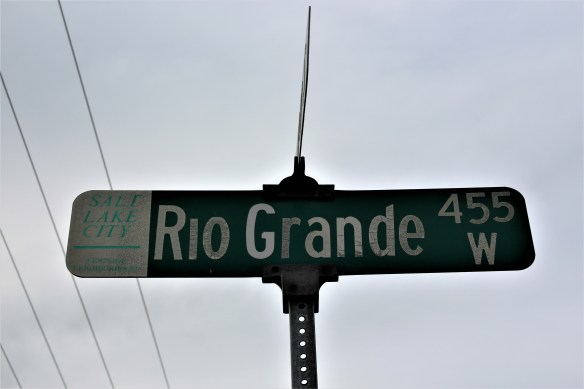
Rio Grande

The Rio Grande street sign on a grey Sunday, November 26, 2017, in Salt Lake City.

Salt Lake City District 6 Vice Chair, Charlie Luke, explained that the city, county, and state of Utah are working together on the operation, SLC is largely responsible for the “on the ground” efforts. “We can fund law enforcement, we can fund cleanup down there, we can do a lot with the zoning. That’s within our jurisdiction,” Luke said. “The county is the one who started moving money into treatment and things.” Law enforcement is arresting people who have felonies and those who sell illegal drugs, “we are not trying to arrest homeless, we are not trying to arrest addicts, we’re trying to arrest those who are preying on the homeless and the addicts,” Luke said. Cleaning up the block contributes to Phase 2’s goal of getting people help, however Phase 1 won’t officially end until June 19, 2019 according to the Operation Rio Grande website.

Odyssey House is one of the treatment facilities receiving funds from the county. It has multiple locations with inpatient and outpatient options. Odyssey House also offers “sober living” – transitional housing to help clients get back on their feet. Director of Operations at 7th Street Treatment Center and former support staff at Odyssey House, Melissa Welsh, has experienced Phase 2 first hand when people from Rio Grande first started coming in to Odyssey House. “We didn’t have enough employees to even keep up with everybody” Welsh said.

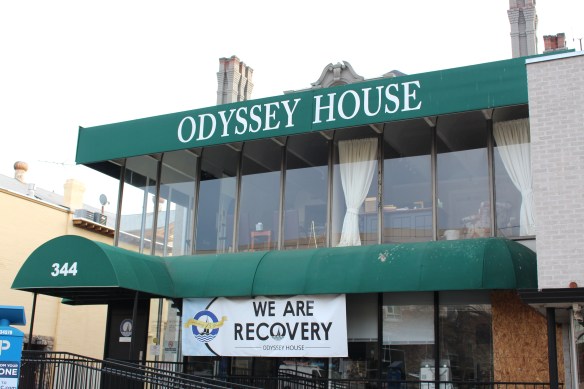
Odyssey House office building

Odyssey House office building on Sunday, November 26, 2017 in Salt Lake City.

Mary Jo McMillen, Executive Director of Utah Support Advocates for Recovery Awareness, has expressed similar concerns. “The homeless shelters are still experiencing drug use and intoxication.  The complaints I have heard are that there is not enough support staff for help with the complexities that people are dealing with.” McMillen said Operation Rio Grande was not prepared for the second phase.

Addiction has many dynamics and dimensions, Welsh said people who aren’t in treatment by their own choice are known as “compliance-based.” “They’re just trying not to go to jail,” she said. These clients are different than those in treatment by choice. “They go in there and they just bring the street into treatment, they bring the hustle into treatment, not necessarily the drug hustle but their hustle,” she said. Emily Abeyta, a Marriage and Family Therapy Master’s Degree student who is currently working on her practicum hours at Youth Care  – an adolescent inpatient treatment center – agreed with Welsh’s description. “I think that taking people off the street and dumping them in rehab is only going to be effective if that’s what they want for themselves,” Abeyta said. “The point is that you take them to treatment when they’re ready for treatment.” She knows this from being in recovery herself – with just over two years sober – and from her work and education. Since joining Youth Care she has experienced these situations repeatedly, parent’s put their kids in rehab but the child does not want to be there.

Yet, there are anomalies. A low percentage of compliance-based clients do succeed. “Some people, they don’t even know that there was help, and it’s like wow, there’s help, and then they rock it,” Welsh said. Licensed Clinical Social Worker, Lindsey MacFarlane, has also experienced this, she now works at a private practice but spent years at Wasatch outpatient. “I wish I knew what it was. If we figured it out, it would be like okay we solved addiction,” McFarlane said. McFarlane doesn’t know if what is happening downtown is the answer though she remains hopeful, “I think that there’s maybe people who will have the change that needs to occur and that they’ll get the opportunity to get help,” she said.

It is too early to tell if Operation Rio Grande’s Phase 2 will be a success or if addicts from The Block will receive and accept the help they so desperately need. Regardless, implementation of this phase was not as well thought out as addiction advocates would have liked. “There is not one size, or model, or approach, or intervention that fits for all individuals,” McMillen said. The importance of individualizing addition treatment may be something that Operation Rio Grande is only now discovering.

This slideshow requires JavaScript.

Holly Vasic Reflection Blog on “Operation Rio Grande may not be prepared, or be the answer, for homeless addicts”

The Operation Rio Grande story, “Operation Rio Grande may not be prepared, or be the answer, for homeless addicts“, idea stemmed from a discussion I overheard with a girl who worked at one of the treatment centers receiving financial disbursement from Operation Rio Grande. She was saying how awful it was because the place was not prepared when people began to come in and it negatively affected other clients. Originally I was planning to focus on the clients who were negatively affected.

I located sources by asking people that were too close to me to interview, to refer me to someone else. In an attempt to tell every side I tried to speak with someone that was an advocate for addicts, someone in government, and an addict themselves.  The biggest ethical issue and moral dilemma I faced was I am a drug addict and alcoholic myself and inherently bias. By finding sources from a variety of places I hoped to counteract that bias.  

As I interviewed people the focus of the story changed so I re-directed and was able to “make sense” of the new focus by listening to what my interviewees were telling me. The writing process consisted of me typing out all the conversations I recorded, reading through them, then I found the story. I was able to figure out an order to the story that made sense and kept it interesting by giving information upfront the reader would need to know, to understand the context, and breaking it down from there. I did not end up including an interview from a drug addict in recovery who was homeless on The Block because the one I spoke with spent time there prior to Operation Rio Grande. I felt like he couldn’t represent that side. I could not find a source who had been a success or failure from Operation Rio Grande sending them to rehab because the program is so new, but I still wanted that side represented. After reading the story I felt that because one of the clinical people is in recovery themselves that was represented without needing a separate person.

What surprised me is that the story ended up being about something else then I originally thought. At first I wanted to focus on everyone else in treatment and how they were affected by people who didn’t want to be there but then it turned into really the homeless addicts being swept up in Operation Rio Grande themselves.

I learned a lot from this experience. Being a writer at the student newspaper I found it hard to have such a long time to prepare and ended up doing my last interview about ten hours before the actual assignment was due. I discovered I do better writing on the fly and that adrenaline kicking in really motivates me, like I said I’m an addict… we do that. The other newspaper I write for, The City Journals, is a monthly paper and this experience has prepared me for future writing with them in that I can anticipate a further out deadline, letting some of that adrenaline rush go, and taking my time to get the full story.

By: Holly Vasic


Eva-Marie Putze

About Me

IMG_2002

I am a fourth year University of Utah student majoring in strategic communication with a minor in business administration. Originally from Las Vegas, I moved to Salt Lake City for my undergraduate degree. In the near future I have plans to peruse a Masters of Business Administration in Germany, where my family is from. In the past I have interned for Harper’s Bazaar, InStyle and ELLE Magazine Germany as a digital marketing strategist. As of recently I have a fashion column in Home and Table Magazine, where I update readers seasonally on the latest trends. My interests include snowboarding, painting and playing classical piano.

Click to read my story Coffee shops- reaching the minds of college students. Learn more about my writing process reflections on coffee shops and student customers.

Visit my LinkedIn here.


Girls club soccer and the advantages learnt in and throughout the game

By TIFFANY HUYETTE

SALT LAKE CITY-  There are those people in life that are special, something about them is intriguing and admirable, and you can tell that whatever their craft, they pour their heart and soul into it. One of these people is Bruce Cuppett, originally from Pipestone, Minnesota, Cuppett is a retired military veteran, soccer coach, and an important person in the development of Utah Youth Soccer Association.

“My dad worked for American Oil Company so about every two years we would move,” says Cuppett.  “I went to three elementaries, two junior highs, and three high schools.” It wasn’t always easy. “I was a trouble maker when I was in school,” Cuppett says, adding that he “walking the thin line, on the good side and the bad side,” always trying to balance the fun. Occasionally, he’d “get slapped, and then get back in line,” he says.

Cuppett finished high school in Detroit in 1964, where he began junior college and building muscle cars. He then enlisted in the army in 1966, and was on active duty until 1972. Cuppett finished college, with a degree in business management, and rejoined the military until 1999 where he retired after thirty years.

“I never played soccer when I was growing up, when I went into the service is when I learned to play soccer,” Cuppett says. After moving to Utah in 1991, Cuppett’s son Andrew tried every sport but fell in love with soccer and started playing for the American Youth Soccer Organization. Andrew had a great first year coach said Cuppett, but his second-year coach was a “flake.” Concerned, the team parents nominated Cuppett as the new coach because he was the parent who knew the most about soccer. He was unlicensed for a short time, but he soon began moving through his first licensure on his way to becoming a better coach and to understanding the youth game.

So how is it he began coaching girls? Cuppett got a call from Sparta founder Ben Vandenhazel asking him to come and coach a girls’ team. “I don’t know anything about girls” Cuppett said, but he decided to take on the challenge. Years later, Cuppett is still coaching girls soccer, “It’s a much different game, to me it’s a game that I appreciate more than the boys game. I think the girls game is about working, about possessing the ball, looking for a seem in the defense and attacking the goal. Where boys typically are win the ball, and go to the goal all the time.” He described it as a prettier game, but harder to coach. “What I tell the older girls when I work with them was ‘you wanna get into college using your brains, because if you get hurt and you’re on academic scholarship your scholarship its still there’. It doesn’t matter if you’re on crutches or whatever, if you get there going the other way, and something happens you’re usually going to lose your scholarship.”

It can be hard to persevere in the sport. “Because you’re going to lose at some point,” says Anthony Frost, Marketer at UYSA. “You’re going to have the hard days at some point, you’re going to have hard times and ya gotta keep going.”

The key is that “ya gotta love it and ya gotta work it,” says Cuppett. “I believe athletes, when they train properly become very good in society because they are good at hitting bench marks along the way, which helps develop their skills to have in life.” An athlete needs to dedicate their own time to the game, he says.

Cuppett tries to teach his players to problem-solve and to be resilient. “If you’re in the real world and ya got a great job, and ya get a new boss, and the new boss is an absolute idiot, are ya gonna throw everything away? Or are ya gonna try figure out how to work with this person and how to continue. Because you’re on a good path right now and you don’t want to go back out and start all over again.”

Friend and Administrative Director of Coaching at UYSA, Holly Gundred, commented “as a team learning how to deal with heartbreak, you learn to take that and what do you do? You apply it and move on.”

Sports, much like life, is like a roller coaster, says Cuppett. “I think sports teaches you that every day it’s a win lose situation. How well you did in practice? How well you did in a match, ya know? how well did ya feel going into it?” If he can teach his players to be introspective, that’s when Cuppett will feel like he’s done his job.


This slideshow requires JavaScript.


If your interested in reading the reflections on my story click here .
 

Reflection blog on girls club soccer and the advantages learnt in and throughout the game

In the beginning of pitching ideas for my enterprise story, I knew I wanted my story to be centered around athletics because that is where much of my knowledge and passion are found. I knew it would be easier to invest myself in a topic that I knew a lot about or had the motivation to learn more about. I decided to write about UYSA because growing up in Utah Youth Soccer was extremely beneficial in teaching me life skills and in teaching me how to deal with adversity.

Upon gathering information for my story from previous coaches and the Utah Youth Soccer website, I was able to get in touch with individuals from the admin side of UYSA, and eventually able to go to the new UYSA headquarters and interview a few different people. Upon meeting different people, I reconnected with a previous soccer trainer from my youth days who had both coached girls and worked on the admin side of UYSA.

I started my interviews asking each person what their specific job title was and how they had got the position they now obtained. I then asked about previous jobs and positions, and about their families. Then I went further into depth on the benefits of sports for adolescence. After the interviews I reviewed all my notes and was able to create a story. The best source for my story ended up being the man who had trained my team and other girls teams, and who also worked admin for UYSA.

The struggles I faced were mostly within getting to interview the people I was hoping to interview and within keeping my story within the word limit required. I had to find a way to both include the details I wanted and the details I needed, while also having to distinguish between what I could keep in my story and what I needed to take out. All while trying to tell a story well, intrigue readers, and fit within the word limit.

I was able to choose the focus of my story when I listened over my interviews and had to decide what would be interesting to readers of all types, and what wouldn’t be interesting. I also really wanted to tell a good story, so I had to find a point of view where I could story tell, while still being able to keep inline with my story topic. The writing process was lengthy, and the story ended up extensively exceeding the word limit. I then had to delete any parts that were not necessary, or that did not point back to the story pitch. It was a process of writing a story that would be both interesting and informative to readers, while at the same time telling a story well. I learned that I am much more of a story writer than a news writer but that it is beneficial to add brevity to whatever I’m writing.

Looking back, I am very surprised with where my story ended up going. It ended up being a feature story about a specific person and an organization. I learned much about UYSA through my interview with Bruce but also about Bruce as a person. I was able to attain life wisdom as well as coaching wisdom for young athletes and the parents of athletes.

Link to my story here and my bio here.

Faye Barnhurst

IMG_9532

Faye Barnhurst lives in Salt Lake City, UT. She is a sophomore at the University of Utah, currently studying Communications, Journalism, and Studio Art. She plans to graduate with her BA in Communications in 2020.

Ms. Barnhurst has worked at LUSH Fresh Handmade Cosmetics in Murray, Utah, as a Senior Sales Ambassador and Visual Merchandising Ambassador, for the last two years. She has also done volunteer work with Vague Space, a local non-profit focusing on arts and education, as their social media coordinator.

Ms. Barnhurst is also a student-activist with the Students for a Democratic Society, a progressive student-activist group on the U’s campus. She has assisted in organizing events, hosting fundraisers, and running social media accounts for the group.

Her passions include art, music, activism, travel, and politics.


Black Lives Matter has taken to the streets of Utah and they’re here to stay

Reflection Blog

LinkedIn

Vaofua Kaili

About Me

 Vaofua Kaili is in her third year at the University of Utah majoring in Strategic Communications with a minor in Political Science. She plans on going to law school for her graduate degree to become a prosecutor for special victims. Vaofua wants to help be a voice for those who have been assaulted and hopes to change the way the justice system unfairly treats victims. She hopes to use her skills as a writer to help educate and inform others about sexual assault and trauma. Her passion for traveling around the world has helped her to see the mistreatment of women and children in different countries. She hopes to one day expand her services to specifically help women and children receive the basic needs they deserve. Vaofua volunteers at women’s health clinics and special needs homes for the elderly in her free time. She will be interning this upcoming summer at Fox 13 News and at a legal clinic for special victims.

To read the story click the link: Victim Advocates – behind the scene hero

To read more about the making of this story click the link: Reflection Blog

Click here for Vaofua Kaili’s LinkedIn Profile