The most sustainable and ethical diet for people and the planet

Story and photo gallery by CAMILLE AGLAURE

With so much talk concerning diet in the media, many people find it difficult to know what to eat. What foods are ethically sourced and grown? What foods truly promote human health? What foods support the health of the planet? These are all questions that are fogging up the minds of so many people.  

One thing that Thunder Jalili, Ph.D., and a professor of nutrition and integrative physiology, and Anne Pesek Taylor, registered dietitian, at the University of Utah can both agree on is that, generally speaking, a healthier plate is one with more plants and less overly processed foods and added sugar. 

Pesek Taylor said in an email interview that balanced nutrition needs to account for individual food preferences, lifestyle factors, and include a variety of food groups so it can be maintained long-term. Pesek Taylor referred to the University of Utah’s Healthy Eating Plate, an adaptation of the government’s MyPlate created in 2011, as a useful guide to good health.

What does this mean for meat and dairy, though?

Studies like the popular health book “The China Study” and documentaries like “What the Health” and “Cowspiracy”detail the harmful effects to humans and the environment that come with the consumption of animal-based foods. Jalili said he believes that the absolute exclusion of animal-based foods is not necessarily vital. However, regarding meat, “a little still means a little,” he said. 

Jalili said the maximum recommended intake of red meat is 100 grams per day while the maximum for processed meat is 50 grams. “Once a day is still a lot,” he said, and as far as human health is concerned, many studies indicate that there is, in fact, a decrease in mortality rate among those who maintain a vegan and vegetarian diet. When considering environmental health, there is slightly more to be taken into account when writing out your grocery list.

As more media attention surrounds the question of climate change versus animal agriculture, many organizations and communities are reevaluating the importance of animal-based foods, particularly meat, in a standard, western diet. 

“Raising cows is an environmental disaster,” Jalili said. With animal agriculture accounting for 91 percent of rainforest deforestation, according to The World Bank, and more greenhouse gas emissions than the entire transportation sector, according to the United Nations, Jalili said he believes that it is time for groups of people, like nutritionists, to not focus on health alone, but the bigger picture. “It’s just responsible,” he said. 

So, is a universal vegan diet the solution?

In the opinion of Christy Clay, Ph.D., an associate professor at Westminster College who teaches courses on subjects including biology, ecology, and environmental studies, “a homogenous, universal diet is exactly what has caused so many problems in our current food system.”

Clay said she believes that the current food system has created a monster of unequal distribution of foods, the elimination of native crops and variation, and potentially the loss of culture and professions. 

“We’re not understanding the limitations and values of local resources,” Clay said, as she explained the harms in seeking mainstream foods that do not naturally occur locally. Clay used the example of quinoa, a grain that grows in the Andes that is now exported to Western countries more than it is provided for locals who have depended on the grain in their diets for centuries. To be truly sustainable and ethical, Clay maintained that “diets should be bio-regional.”

For Clay, the ethical question of which foods to eat is not as simple as drastically lowering our consumption of meat. Rather, “there’s a whole dismantling of a current food system that needs to happen,” Clay said as she painted a picture of just how disrupted our way of eating has become. 

So, where do we begin?

Clay suggested that the first action to take is having the conversation about “how broken our food system is.” This consists of poor income for those in the agriculture industry, the cost and precarious nature of leasing land to farmers, a decline in community gardens, and loss of interest in crops that have fallen out of the mainstream.

“What does it look like to say we actually value this profession?” wondered Clay as she additionally suggested encouraging communities to be a space for local gardening. Already, there are a number of organizations working to do just that, including Green Urban Lunch Box, which goes from school to school, educating children on the value of local gardening while furthermore educating local farmers. 

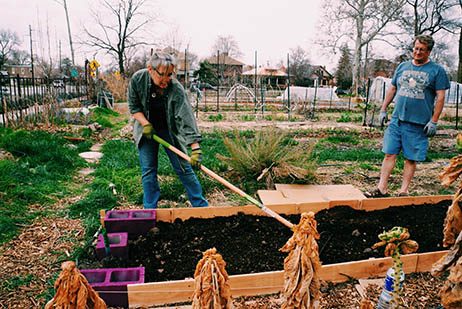
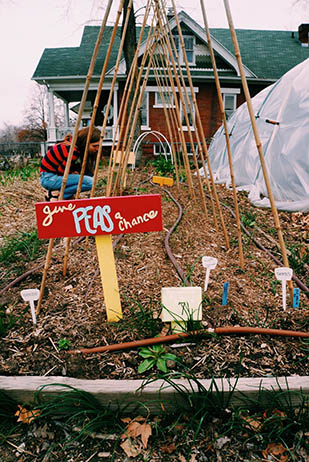
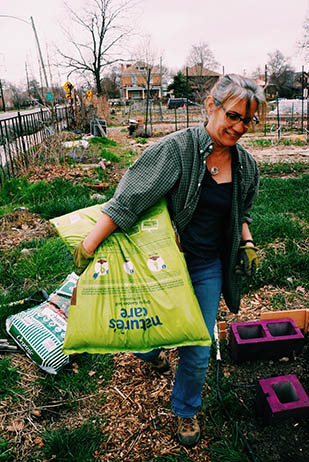
Making a difference in your community requires collective action to encourage local agriculture and farming. Clay suggested gardening out of your own backyard. If you live in an apartment complex, ask your landlord or property owner about creating a roof garden. Clay also suggested engaging with other community gardens and protecting land to be used for local farming. Getting back in touch with a farm-to-table way of eating is imperative for a sustainable diet. Rekindling a healthy and community-based relationship with food is the best way for individuals to eat ethically, healthily, and in an environmentally friendly way. 

Instagram taking the advertising world by storm

Story and gallery by RILEY SPEAR

Instagram is the largest social media and advertising platform in the world and it continues to grow its users daily by the thousands. Organizations and businesses have taken advantage of the Instagram platform to advertise their products, target their audiences and create awareness for their cause, all for free.

Salt Lake City is a hub for startup companies that don’t have the funds in their marketing departments to pay for advertisements.

Individuals from three local companies, The Hut Group, Beauty Industry, and STEM, have worked closely with Instagram, and have accepted the large role it plays in their marketing techniques.

Beauty Industry specializes in hair, lashes and fashion. Paige Johnson is a member of the social media team who works with Instagram to promote a product.

She uses Instagram analytics to track following, and gauge when good times are to post in order receive the most engagement.

“Marketing is always changing, and shifting. With present digital age, social media is most of what marketing entails,” Johnson said.

Beauty Industry mainly targets young women because they are the majority of the company’s customers, which is ideal for Instagram because according to OMNICORE 59 percent of its users are individuals in the age groups of 19-29.

Johnson said Beauty Industry’s main objective through the Instagram account is to make customers feel as if they are a part of their community. Beauty Industry sticks to its content and theme to best emphasize its products in the market.

“Working in this industry I have become aware of others’ marketing techniques, whether it be competitors or my own time on Instagram. I often find myself taking bits of other techniques, and forming it to ours,” Johnson said.

Beauty Industry has tried to focus on what the big marketing brands are doing, and then tailor it to the company’s own theme. The social media world is extremely competitive, and it’s crucial to notice the likes, comments and following ratio in order to receive the most positive feedback and response.

Beauty Industry is a company that is familiar with the positive impacts Instagram can make. There are very few restrictions, no wrong outlook and is more about finding a strategy that works well with your company.

“Customer service is a big thing specifically on Instagram, because a lot of people currently if they have a complaint or question, it is a lot easier to do this through messages. We try to really be interactive with our following, and our customers who reach out to us on these platforms,” Johnson said.

Instagram is Beauty Industry’s main tool to advertise because it has the highest success rate in selling their products.

Instagram has the ability to capture so many eyes, and create global awareness. STEM, a program that targets schools in the Salt Lake City district, does just this.

Molly Vroom helps run, and plan their social media campaigns in order to educate, and promote STEM research.

“There isn’t much competition in this field of work. It’s more about receiving attention that could possibly lead to funding,” Vroom said.

In order to achieve this STEM uses demonstration videos giving a more hands on approach to the followers. “Instagram gives the ability to educate, and give knowledge, and that is another one of our main goals,” Vroom said.

STEM uses several social media platforms, but targets millennials through Instagram because they are the individuals who use it the most.

The world is constantly changing and growing, adapting to new trends of life. In order to be impactful on Instagram it’s crucial to put out content that ignites your target audience.

The Hut Group, a global company centered around health, beauty and fitness, sometimes can spend up to a month planning a post. This organization opened a small office in Salt Lake City and will grow in the years come.

Jasmyne Reynolds, a manager for their acquisition companies’ social accounts, works daily with Instagram.

Her days are spent brainstorming concepts, working with photographers and videographers in their creative studio, and collaborating with the content director and Search Engine Optimization managers.

Every one of The Hut Group’s Instagram posts is extremely evaluated, and calculated before posting. “Working with Instagram helps us achieve our goal of reaching consumers and getting them to click over to our online platform and ultimately drive purchases,” Reynolds said.

As the social media account manager, Reynolds also spends hours working with other brands doing Q and A’s, giveaways and questionnaires in order to bring in more followers, and gain positive feedback.

Reynolds believes Instagram is a platform that has allowed businesses to create a personal connection with consumers.

“It’s important now more than ever to showcase products as a part of a consumer’s life,” Reynolds said.

Instagram marketing is used in an assortment of aspects, whether it is to bring awareness of a cause, or to advertise and sell products. It has drastically changed the game from billboards and TV commercials to a free platform being used by billions. Instagram is the new outlet for inspiration.

Exemplary Service Through the Bennion Center

by Kyle Lanterman

SALT LAKE CITY─ Since 1987, the Lowell Bennion Community Service Center has been a valuable resource by aiding the Salt Lake Community. The Bennion Center provides service to others living in the region, with many University of Utah students involved in the process. The mission statement of the Bennion Center reflects that there are strong values rooted within the center such as integrity, collaboration, diversity, engagement, and optimism to name a few. Six office spaces, a conference room, and a few couches constitute the space where students make items for the homeless or construct sustainable gardens. The center itself is extremely small compared to the impact it has on the Salt Lake Community.

The Bennion Center delivers service to address a variety of issues in the community including hunger, homelessness, illiteracy, sustainability, and health care. The people that work to make these areas in the Salt Lake Community better have bought into the mission of the Bennion Center and the work that comes along with it. Not only does the Bennion Center extend its outreach in Utah, but students and staff have done service work in many other areas in the Country. In addition, there are two service trips that are located in Cuba and Costa Rica. The outreach to these areas are inspired by a spirit of wanting to help communities that have people and environments in need. The community of the Bennion Center draws students who have want to take action in service.

unnamed

An infographic depicting the locations of service projects by students and staff from the Bennion Center from the past year. Service projects have dominated the western United States and have gone outside the country in Cuba and Costa Rica. Graphic creation credit to nationalgeoraphic.com

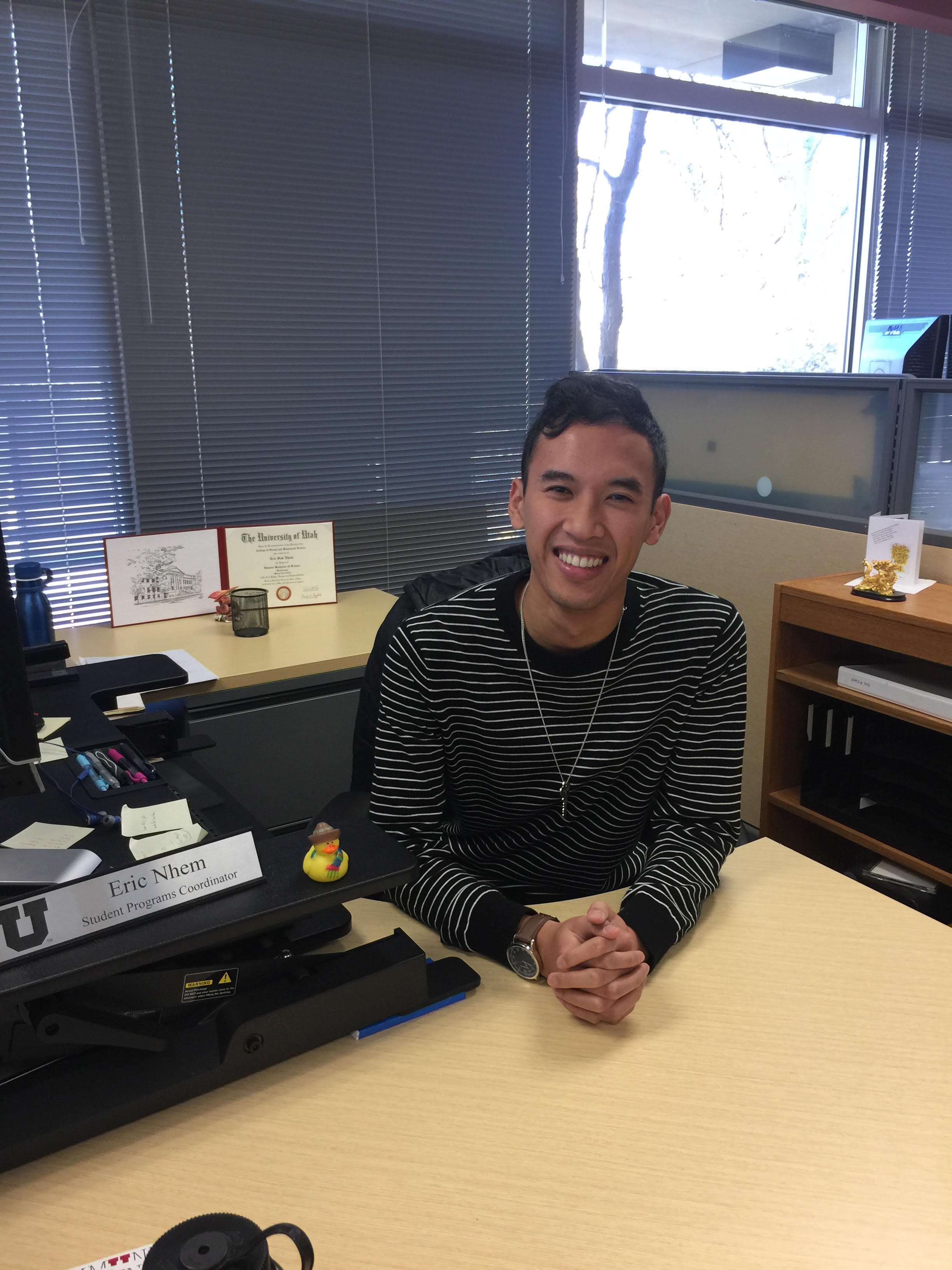
“So I was kind of involved with volunteer work in high school and wanted to continue doing volunteer work in college,” says Eric Nhem, a 22-year-old University student from West Valley City and Bennion Center volunteer. “My friend texted me one day and sheasked if I wanted to do this thing through the Bennion center,” Nhem continued, “I said what the heck is the Bennion Center?”

Eric

Eric Nhem, 22, a student programs coordinator the Lowell Bennion Community Service Center. Nhem hails from West Valley City and works with students to fulfill their needs for service projects. Photo courtesy; Bennion center website.

That “thing” turned out to be a once a month assignment with Project Youth, which helped Title I students learn about higher education. Nhem eventually became the director of Project Youth after two consecutive years of volunteering with them which lead him to become a student programs coordinator with the Bennion Center. Nhem’s role is vital for the Bennion Center and the work that is done there.

“Basically, my job is to coordinate with students about service projects they wish to participate in and then guide them about what needs to be done. For example, what resources they might need or who they need to take talk to,” says Nehm. “Those two areas are usually what needs to be tackled first in order for the projects to get going.”

Regardless of who needs to talk to who or what the students need, there needs to be a level of optimism brought to the table. This sense of optimism is needed for student run projects to flourish and along with enthusiasm for the service to continue. The students  display optimism in their work and and are enthusiastic about it every day and those elements are what brought Nhem to the Bennion Center originally. 

Bennion Center

The bulletin board located outside the Bennion Center, with the main sign in the background. The Bennion center is located in room 105 in the Union building on the campus of the University of Utah. The center specializes in volunteer work in areas such as hunger, sustainability, homelessness, literacy, and healthcare. Photo credit: Bennion center staff.

“I fell in love with one program that had a mission I believed in,” Nhem stated.

Believing is something that holds the Bennion Center together, as communications specialist, Jennifer Jones, will attest. As the communications specialist, it is Jones responsibility to make other aware of the great work being done at the Center.

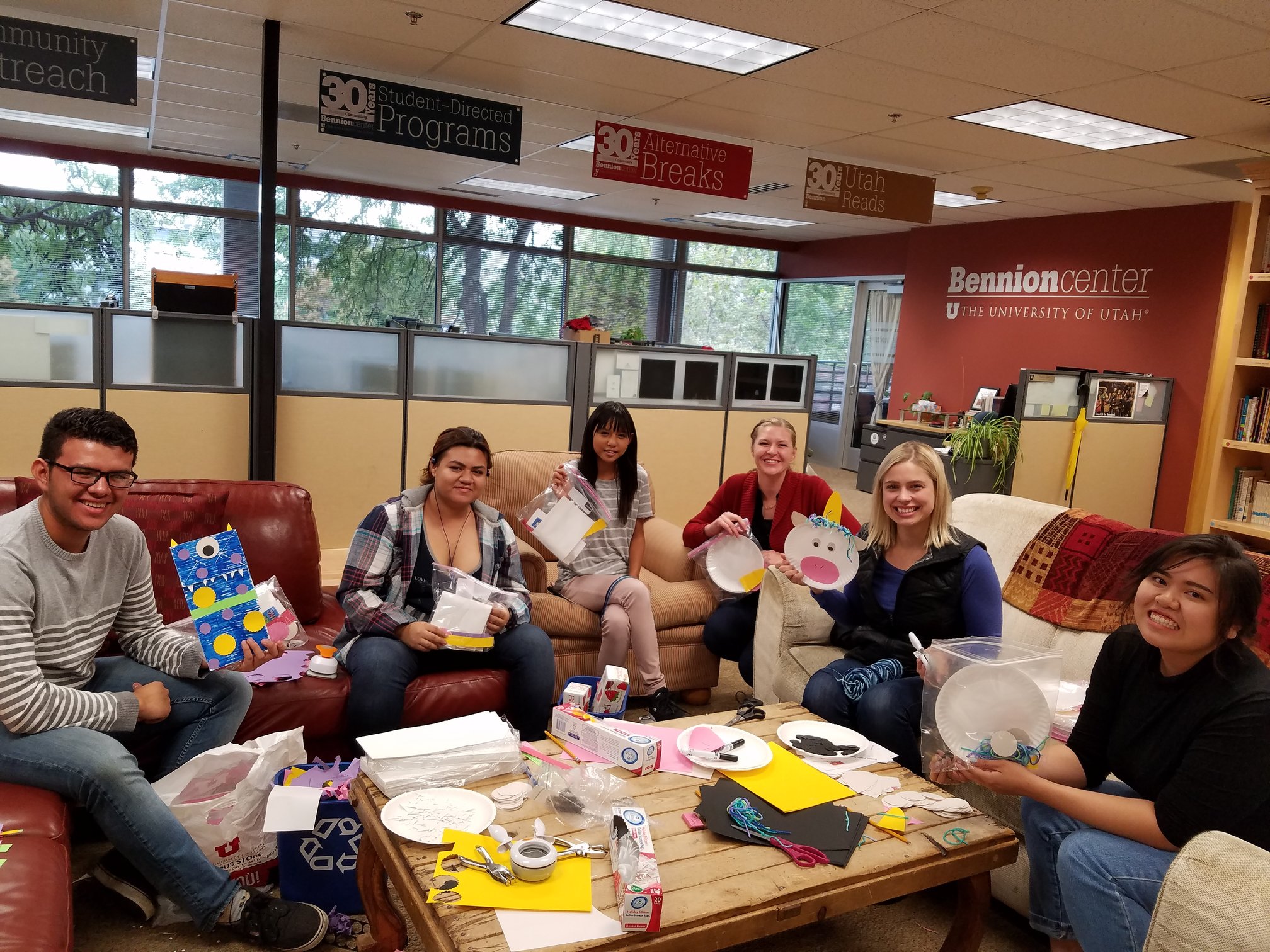
“My job is awesome because I get to brag about all the fantastic things students are doing here!” says Jones, and there is no shortage of work to be discussed. “Just the other day we had a group of students ironing plastic bags to make beanies for hospitalized infants and sleeping mats for the homeless. That is the kind of stuff that tends to take place in the Bennion Center on a day to day basis.”

Jones is particular proud of the people she works with. “What motivates me to do my work is everyone who is involved with the Bennion Center. We have so many students from a plethora of backgrounds who are passionate about their work,” she says.

rsz_more_primary

Students collaborate as they construct arts and crafts for the Primary Children’s Hospital in the Bennion Center. The center specializes in volunteer work in areas such as hunger, sustainability, homelessness, literacy, and healthcare. Photo credit: Bennion center online blog.

On a given evening, the Bennion Center is bustling with activity. This night, students sit on couches and huddle around a coffee table discussing their current work and planning out future projects. Nhem and Jones have their own workspaces where they speak to students or other parties about current or future projects. What goes on in the Bennion Center on a day to day basis continues to change the Salt Lake Community in a positive way.

The mission of the Bennion Center is “to foster lifelong service and civic participation by engaging the university with the greater community in action, change and learning.” This mission is being accomplished routinely through the meaningful work by students at the U with the help of staff members such as Nhem and Jones. Lifelong service is being given and will continue to be given as long as the belief in projects exists along with the drive to help others and make the local community of Salt Lake City a better place.


This slideshow requires JavaScript.

Curing homelessness with a focus on the individual

Story and Photos By Clara Welch

SALT LAKE CITY — Salt Lake City has been striving to relieve the burden of homelessness and make downtown safe. A 2017 study found 2,876 homeless people across Utah — 1,804 people in Salt Lake County alone.


IMG_0896

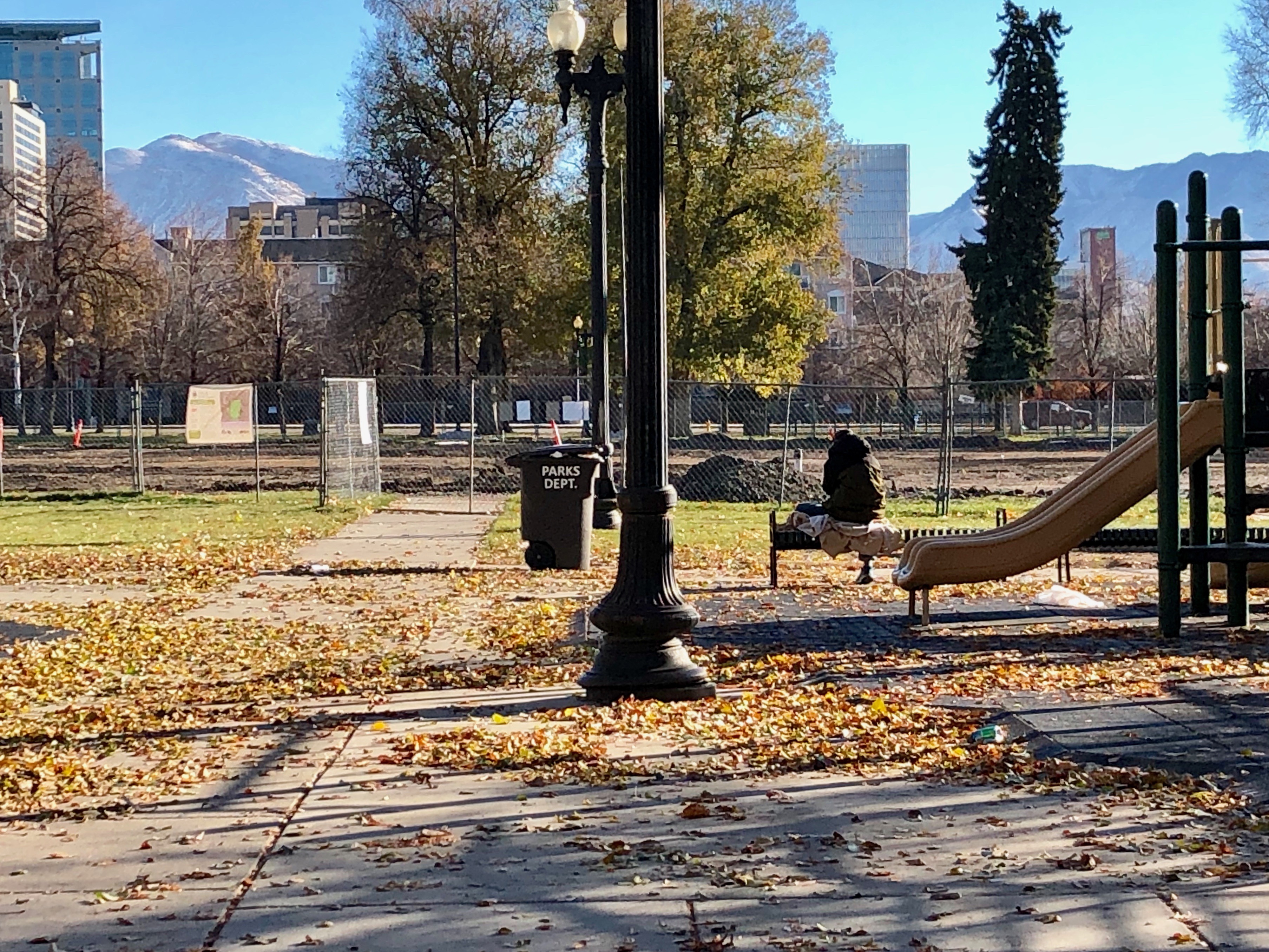
Rio Grande area has a high population of homeless and has been the center focus of efforts to combat these numbers in Salt Lake City. (Photo by Clara Welch)

Operation Rio Grande — Salt Lake City’s initiative to address homelessness along the Wasatch Front — has three phases focused on reducing crime, helping those with mental illness or addictions, and finding employment and housing for individuals. Improvements have been seen from these efforts and are expected to continue.

IMG_0900

A homeless man sits on a bench trying to stay warm on a chilly morning. Other people were walking around or sleeping. (Photo by Clara Welch)

Utah has been using a Housing First model since 2015.  Housing First departs from the traditional ideas that people need to be sober and employed before they can be given a basic human necessity. Finland and Japan have adopted this method and have very low numbers of homelessness. The success rates vary, depending on how you analyze it, from 40-80 percent of those being housed remaining housed. They are encouraging numbers from a tactic that focuses on the person as a human being, not as a burden.

Organizations all across the Salt Lake Valley are striving towards the same goal as Operation Rio Grande, providing multidimensional help from medical to social needs. Community efforts are changing the care that is provided, bringing the humanity back into relieving the burden of homelessness.

IMG_0913

Maliheh Clinic is a free clinic serving those who earn less than 150 percent of the federal poverty standard. They offer multiple services, focused on providing quality healthcare no matter the ethnicity, religion, gender, or sexual orientation. (Photo by Clara Welch)

Maliheh Clinic

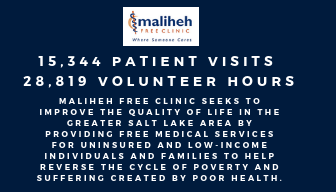
Maliheh Clinic’s mission statement and numbers for 2016. (Photo by Clara Welch)

Collin Hoggard, a student at the University of Utah, volunteers at the Maliheh Clinic. Hoggard explained how the Maliheh Clinic, “started as a way to reach out to the uninsured people in Utah.” It’s been serving patients who earn less than 150 percent of the federal poverty guidelines since 2005.

In 2016, Maliheh had 15,344 patient visits and 28,819 volunteer hours served. Providing preventative care, the Maliheh clinic reduces the burden that emergency rooms and hospitals experience with patients coming in with easily prevented emergencies.

Hoggard is a Spanish interpreter and accompanies patients on routine visits to therapy sessions. “It’s been amazing to connect with the patients,” says Hoggard, who sees real people with real needs. It has changed the way he sees those in different circumstances than himself. 

IMG_0902

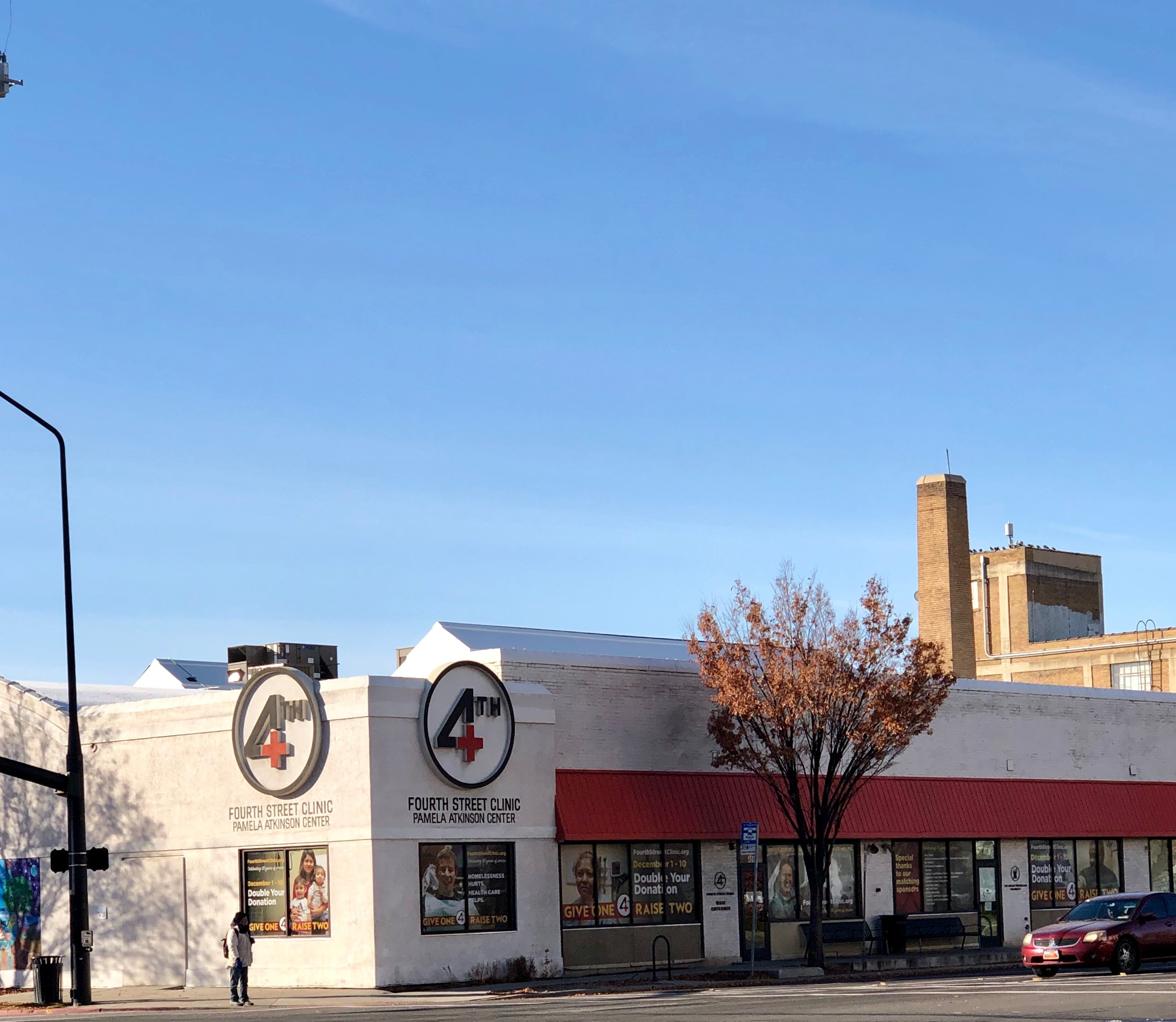
Fourth Street Clinic has been serving homeless patients since 1988 and was moved to this location in the early 90s. (Photo by Clara Welch)


4th Street Clinic

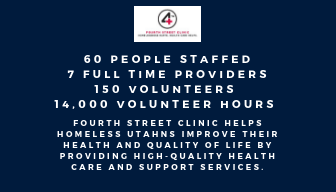
Fourth Street Clinic’s mission statement with their number reports for 2017. (Photo by Clara Welch)

Like the Maliheh Clinic, the Fourth Street Clinic provides free healthcare and is located near Rio Grande. It’s a convenient location for many of the homeless people located downtown. The Fourth Street Clinic has a staff of over 60 people, including 7 full-time healthcare providers, and 150 volunteers providing over 14,000 hours of volunteer service. James Jarrad, Development and Communication Manager at Fourth Street Clinic, explained that the network of donors, volunteers, and staff bring quality healthcare to 5,000 yearly patients, who otherwise, would have none.

Jarrad visits with real patients who share their stories for the clinic website. “Becoming homeless can happen to anyone and for almost any reason,” he says. “There are so many different things to get to where you are in life and they can add up to either completely build your life up or tear it down,” Jarrad explains. “Sometimes you have no control, sometimes it’s within your control.”  

 Jarrad emphasized that, “homelessness is so much more complex”, than what the general public might think.

Connect2Health

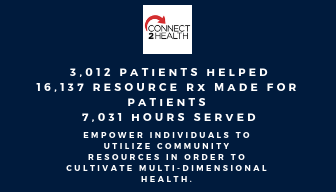
Connect2Health’s mission statement with their number reports for 2017. (Photo by Clara Welch)

Connect2Health is a non-profit, student-run organization with a mission to “empower individuals to utilize community resources in order to cultivate multi-dimensional health.” By enlisting eager students, Connect2Health strives to connect patients with the resources they need to get back on their feet.

Focusing on needs other than medical, Connect2Health volunteers work one-on-one with patients at multiple locations. Volunteers can be found at Fourth Street Clinic, University Hospital, Primary Children’s, and the Wellness Bus. Connect2Health is creating a new norm by sending patients out with not only prescriptions, but resources including food, clothing, child care, and degrees.

Knowing that help is available is empowering to homeless and low-income individuals, but volunteers are impacted in a powerful way as well.  “It really helps to break down bias, develop cultural sensitivity, and develop empathy,” say Alexis Lee, Director of Connect2Health.

Volunteers work with individuals, who right now, happens to be homeless, says Lee, but it is important to see these people outside of their immediate circumstances. Connect2Health engenders empathy and understanding for these individuals, Lee says. 

Helping the homeless is more than just making downtown safer, it’s about seeing people for who they are. Operation Rio Grande addresses part of the issue of fixing homelessness, but it is organizations like Maliheh, the Fourth Street Clinic, and Connect2Health that fulfill the bigger picture and long-term needs.

What keeps these organization going are the volunteer hours. Donating time and spare items can make a difference in another human’s life. Homelessness is a multi-dimensional issue. A combined effort from the state, city, organizations, and individuals will help lift people from the burden of homelessness and be seen as fellow human beings with just a different set of challenges than you.


This slideshow requires JavaScript.

Come support esports at the University of Utah

Story and gallery by HOLLIS LEJA

Esports and video games in general are starting to become a bigger part of our culture. In a 2018 report by the Entertainment Software Association, 60 percent of Americans play video games daily, and in 2017 Americans spent over $29 billion on video games. The report also said “56% of the most frequent gamers play multiplayer games.”

The University of Utah is one of the first universities in the nation to have a college esports team. This is something to be excited about because it is likely you may be a video game fan too. Entertainment Arts & Engineering (EAE) is the name of the department leading this change and it has created the first varsity esports team in the U’s conference.

The university’s EAE program is one of the top programs in the world for video game development. It is rated no. 3 in the nation for its undergraduate and graduate programs and has published over 100 student-made video games. The U’s esports team was the first varsity esports team in the U.S. and currently offers this unique experience across four different game titles: “Rocket League,” “Hearthstone,” “Overwatch,” and “League of Legends.”

“League of Legends” is one of the most watched third-person Multiplayer Online Battle Arena (MOBA) games in the world. Two teams of five players battle champions with various roles and abilities to be the first to destroy the other team’s nexus — a structure that is well-defended in the middle of each team’s base.

“League of Legends” was the first game to become part of this program back in 2017 and it boasts one of the largest followings in the esports industry. According to Riot Games, the creator of “League of Legends,” over 80 million people tuned in to watch the World Championship in 2017 and Riot expects that number to only continue growing. The 2018 World Championship concluded at the end of October and was hosted by South Korea. North America, represented by the U.S. team Cloud 9, took fourth. This is the first time an American team has placed in the top-4 since 2012 during the first Worlds Championship.

Riot sees the potential in esports just like the University of Utah does. Riot said it has over 500 university League of Legends Clubs on campuses across the U.S. For the 2019 college season Riot will be offering scholarships to both players and staff of the teams that compete. The 2019 collegiate season will start Jan. 15, just in time for spring semester.

In spring 2018, the University of Utah League of Legends Team was in the top spot for the collegiate tournaments played. AJ Dimmic, the esports director at the U, said the team was able to get over 300,000 views on Twitch last season and created over 350 hours of content. Dimmic is working hard to help the team and program continue to grow while creating a place where fans of gaming can come watch and support some of the university’s best players.

Kenny Green works as game studio relations for the University’s EAE program and volunteers his time as the head coach for the League of Legends Team on campus. He is also a student pursuing his master’s degree in game production. He’s been playing “League of Legends” since it came out on beta for PC in 2009.

Green said he tries to instill a “culture of being a family” with his players. The team works on building trust with one another and practices up to 20 hours a week, helping each other improve at the game as they prepare for the 2019 season.

The U currently has 11 students on scholarship for the League of Legends team, each pursuing different degrees varying from organic chemistry to pre-med. Green said his players are just like any other student-athlete on campus and are held to the same standards. Students in the program must be enrolled as full-time students, maintain a 2.5 GPA, and progress through 20 percent of their degree with each season.

Like most of the players and coaches in the program at the U, Green is very passionate about his role with the team and video games in general. He said some of the biggest challenges they face right now are space and budget. The program is on campus in building 72 located at 332 S. 1400 East, Suite 240, formerly used by the College of Law. Green said he is working on making a bigger area for teams to practice and so people can come watch the team play local games in the old mock courtroom in building 73 located at the same address.

The U and EAE are invested in esports on campus and in improving the program. The student-athletes and staff have worked hard to represent the best the U has to offer. Dimmic, Green and the team said the best way students can support the team and program is to come watch the games on campus and subscribe to the university esports Twitch channel. With student support the U can continue to be a leader in innovation and invest in programs like the ones in EAE.

Cool Runnings 2.0: Ghana and Skeleton in the Olympics

by KATIE ANDRESS

SALT LAKE CITY— Ghanaian skeleton athlete, Akwasi Frimpong, became the first skeleton athlete from Ghana to compete in the Winter Olympics in 2018. Today he, along with several former U.S. skeleton coaches and athletes, is forming Ghana’s first Bobsled and Skeleton Federation. Just like the Jamaican bobsled team before him, Akwasi Frimpong is pushing the boundaries of the Olympic status quo.

Frimpong’s goal is the modern-day version of the 1988 Jamaican bobsled team memorialized in “Cool Runnings,” a 1993 movie about the Jamaican team’s road to qualifying and competing in the 1988 Winter Olympics. Thirty years later, Akwasi Frimpong is walking down the same path.

A sprinter on the Dutch 4×100 team, Frimpong had aspirations of being an Olympian since he was 17-years-old. Unfortunately, he missed qualifying for the 2012 Summer Olympics in London. Later, the Netherlands bobsled team recruited him due to his sprinting ability. After making the bobsled team in 2012, he competed and narrowly missed qualifying for the 2014 Winter Olympics in Sochi, being named as the alternate brakeman. In November 2016, his coach convinced him to try skeleton.

IMG_2104 2.JPG

A scenic view from the top of the Lake Placid, N.Y. track in the fall. AP Photo/Katie Andress

Similar to bobsled, skeleton athletes slide on their stomach, headfirst on a large, lunch-tray style sled. Top athletes reach speeds of over 80 m.p.h., sliding through approximately 15 curves on a mile-long ice track.

After deciding to become a competitive skeleton slider, Frimpong then had to decide what nation to represent; The Netherlands, where he began his track and bobsled career, or his birth country, Ghana. “I was 30 and realized that I had not done anything for the country where I was born and this was a huge opportunity for me to go after my dreams of becoming an Olympian.” The only logical choice would be to compete for his birth country, Frimpong concluded. He also hoped that by doing so, he would inspire the youth of Ghana to venture beyond the comfortable and dare to dream.

Frimpong qualified for the 2018 Winter Olympics in PyeongChang, South Korea; making him the first athlete from Ghana to represent skeleton in the Winter Olympics. There, he was aided by Lauri Bausch, a coach for the U.S. team who occasionally helped coach athletes from smaller nations on the side. Bausch has been a coach for the U.S. team since 2015, after a hamstring injury ended her own six-year skeleton career.

“Akwasi has a charm about him that is attention-getting which aided him in sharing his unique upbringing and efforts to represent his birth country and continent,” says Bausch. “He is positive and hardworking, and does much to stay connected especially to the youth of Ghana and is not just focused on himself.”

Frimpong ended up being an unexpected hit among the fans. He didn’t really expect to receive as much attention as he did. “I was honored to touch the hearts of millions of people all over the world to dare to dream and to go after their wildest dreams,” he says.

After returning to Utah, where he currently lives with his family, Frimpong set out to accomplish his next goal: start the Ghana Bobsled and Skeleton Federation and bring Ghanaian athletes to the Winter Olympics.

Frimpong has hosted multiple skeleton clinics in Ghana to introduce and inspire Ghanaian youth. He hopes they’ll be inspired to try the sport. Meanwhile, he held a combine event in Salt Lake City to recruit potential skeleton athletes with Ghanaian roots.

Recently, the developing Federation appointed former U.S. skeleton coach, Zach Lund, as the head performance director. Lund competed for 11 years on the U.S. skeleton team before switching over to coaching for the last eight.

Lund decided to join Ghana after philosophical differences with the U.S. program and is excited for the burgeoning Ghanaian Federation. “Akwasi came to me with his vision for the Ghana program. His vision was inspiring and felt like something that was bigger than just skeleton,” Lund says.

Lund hopes to turn Ghana into a sliding sports “powerhouse,” which is not out of the realm of possibility. Not only was Lund an Olympian, he also coached U.S. athletes to three Olympic medals. Moreover, he intends to do more than just go fast.

Lund and Frimpong both want to make history, and that’s what he likes most about Akwasi. “Instead of trying to inspire a continent, we are trying to bring diversity into a sport and Olympic movement that lacks.” There are not nearly enough African nations involved in the Winter Olympics, he says.

IMG_7384.jpeg

Zach Lund and Akwasi Frimpong are standing at the starting line preparing for a run. Frimpong was competing in his first race of the season on November 7, 2018 in Whistler, Canada. AP Photo/Akwasi Frimpong

That’s what special about the Olympics, bringing nations together, big and small, on one stage to compete. “It’s not about the nation winning medals,” Lund said in an interview with GhanaWeb, a website all about Ghana. “It’s about being with people who are there for the right reasons. The Olympics are about bringing people together.”

The number of countries that have competed in the Winter Olympics have steadily been on the rise. According to olympic.org., the 1972 Olympics in Sapporo, Japan,  had 35 competing countries, growing to 92 now in the most recent 2018 PyeongChang Winter Olympic Games. These figures however, don’t compete with the Summer Olympics. During the 1972 Summer Games in Munich, 121 countries competed, which increased to 207 during the Rio Olympics in 2016.

Lund hopes the creation of the Ghanaian Bobsled and Skeleton Federation will be the beginning of other African countries competing. “It’s about the small nations being on the same playing field with the larger nations, competing against them,” says Lund. “That’s what I love about the Olympics.”

This slideshow requires JavaScript.

Chi Omega Sorority Promotes Make-a-Wish

Story and gallery by VIRGINIA HILL 

As a college student, it can be hard to get involved with service or even think about anything other than yourself and school. But an unlikely group is encouraging students to get involved in philanthropy and making it fun. Chi Omega, or Chio, is hosting a service-oriented week to raise money for the Make-A-Wish Foundation.

Chi Omega is a national sorority with the local chapter being part of the University of Utah campus. Chio attracts hundred of women every year and encourages friendship and sisterhood. According to the Chio’s mission statement, it strives to promote friendship, personal integrity, service to others, academic excellence, community, campus involvement, and personal development. While sororities throughout the country may get a reputation contrary to this mission statement, the annual efforts of the local Chio chapter to host a Wish Week in service to the Make-A-Wish Foundation demonstrate its devotion to the sorority’s mission.

Savanna Dubell, president of the local chapter of Chi Omega, made it clear how important service is to her and the members. She explained Chio’s history with Make-A-Wish and the dedication to service. “For almost 30 years Chio has had a national philanthropy, it is a cause that the sorority believes in and that all chapters would work to raise money for. A while ago they made a partnership with Make-A-Wish and that is who we continue to work with today,” she said.

From Sept. 24-27, Chio hosts Wish Week, a week completely devoted to planned, paid admission events that attract peers to come and participate in philanthropic efforts. This annual event changes from year to year depending on plans made by the director of philanthropy.

Eliza Parkin, the 2018 director, gave a brief summary of the week she planned: “Monday was dessert night, where girls bake or buy treats and other students come and buy them, Tuesday we partnered with Buffalo Wild Wings to bring wings to our house where boys or girls can compete in a wing eating contest, Wednesday we partnered with Chipotle so they will give us a portion of all profits made at one of their locations, and Thursday we hosted a big soccer tournament for anyone who wants to watch or participate.”

With all these events there is some sort of purchase or buy-in, and Parkin explained that 100 percent of the money went toward Make-A-Wish to help one particular child.

This child is an important one and the focus of all of Chio’s efforts. With the philanthropic efforts each year, Chio is able to donate the money to a particular child through Make-A-Wish. Both Parkin and Dubell feel that this personal approach to donation and philanthropy “incentivizes the girls to work towards something meaningful and feel that their efforts and money are going toward something real.”

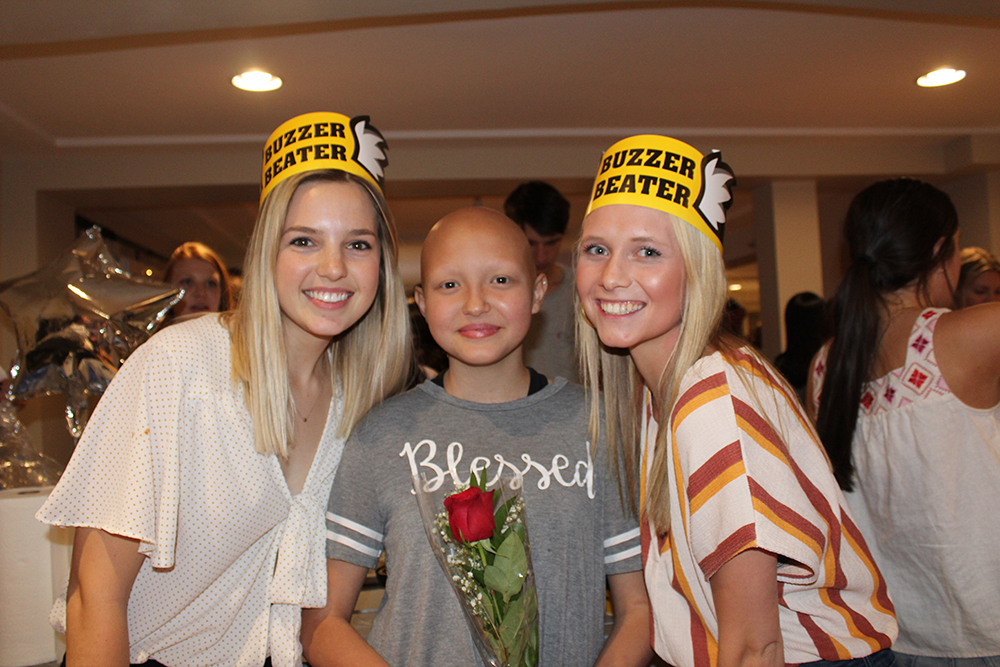
This year’s 2018 Wish Girl is Mackenzie, a 13-year-old who has been battling cancer. According to Chios interviewed for this story, Mackenzie has a bubbly personality that has not been diminished by her personal health struggles. Mackenzie has a wish to go to Disney World and with the efforts of Chio, they hope to reach this goal by the end of the year. The women have all been able to meet Mackenzie and are touched by her story.

Meggie Nelson, a sister of Chi Omega, said, “Mackenzie and Make-A-Wish are very close to my heart and our chapter wants to do everything it can to raise money for her.”

Chios are pushing to completely fulfill her wish and are on track to do so. The Chio women’s efforts to do just that are tremendous, they worked tirelessly to plan and orchestrate great events, they posted announcements and calls to action on social media to encourage friends to come and participate. These events turned out to be packed with students and peers enjoying themselves and contributing what they could to this cause.

The women’s devotion to this has been encouraging and sets an example to others about service. This devotion seems to be a national effort as well. According to the national Chi Omega website, chapters have raised “more than 20 million dollars and have volunteered over a million hours for Make-A-Wish.” But Wish Week is just the beginning of Chio’s philanthropic efforts this 2018 school year. According to Parkin, the chapter will continue to host events and find ways to raise money for Mackenzie through the end of the school year. There is even talk of hosting a masquerade ball to further their efforts. The work of Chio and its leaders has made for a successful Wish Week.


IMG_4756

Sorority members flashing the Chi Omega sign at Dessert Night.

IMG_9046

Sorority members and their peers showing support for the week’s events.

IMG_4754

Gearing up for the wing contest.

IMG_4751

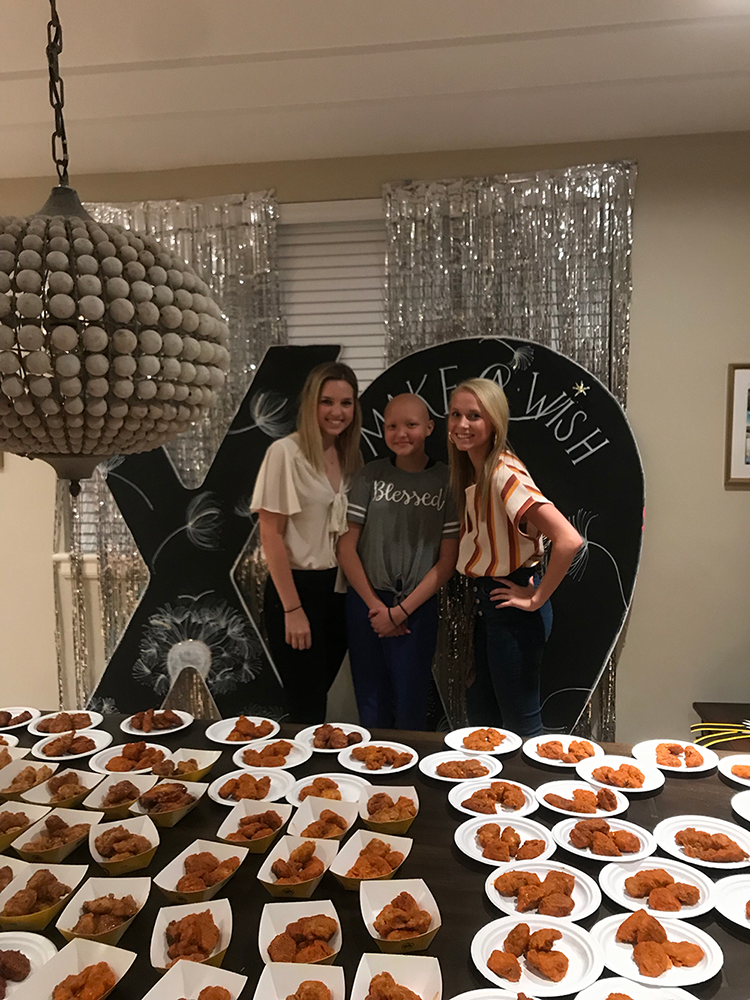
Sorority girls posing with Wish Girl Mackenzie.

IMG_4753

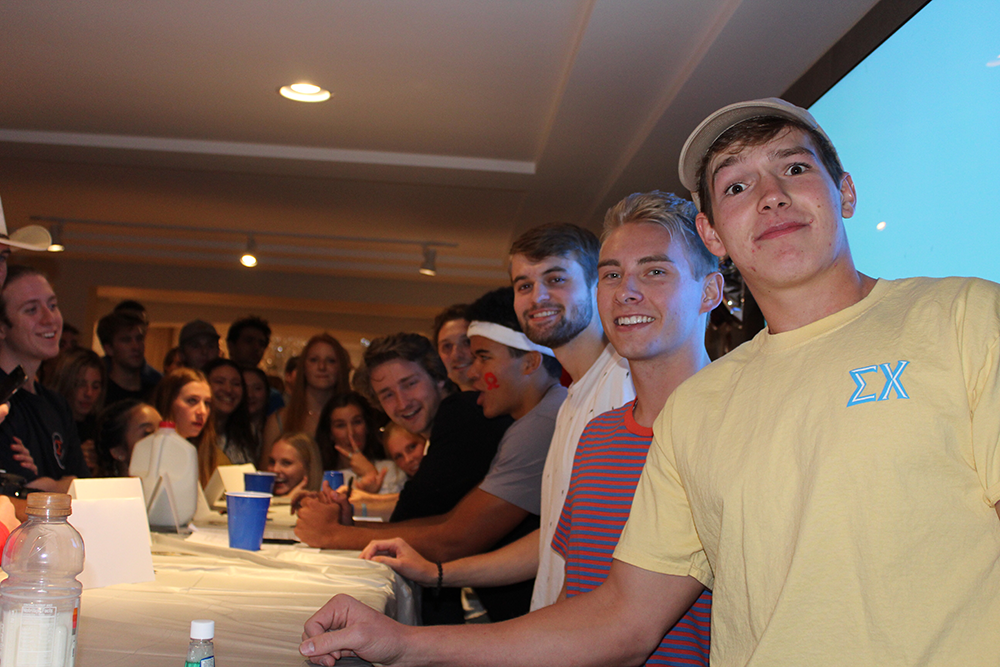
Rows of college students prepare for the wing competition.

IMG_4755

Mackenzie is introduced to the group of students.


Reaching out to China’s past

Story and gallery by PORTER L. ANDERSON

The Family History Library in downtown Salt Lake City has for many years been a free and open facility where visitors can come and conduct research about their ancestors. The library is the largest genealogical library in the world and attracts people from all walks of life to travel to Utah just to take part in the work that takes place there.

Recently the library has implemented a new interactive activity for those visitors who come from China. “The Genealogical Society of Utah and the Family History Library have always been working to build an open and informative experience for visitors of our great state,” said Yvonne Sorenson, the library’s administrative representative.

The Family History Library is located on Temple Square, which is the most visited tourist site in all of Utah. Temple Square is a large plot of land with many different facilities that are owned by The Church of Jesus Christ of Latter-day Saints, a Christian church that has a strong following in Utah.

The interactive experience that can be found on the main floor of the Family History Library is meant to be the first look into genealogical work for those who haven’t had much experience before. Visitors are guided by the volunteers that work in the library to several different stations where they are able to learn about famous relatives, facts about their birth, interesting stories about ancestors, and so much more.

The newly remodeled main floor has been open for almost two years but just recently the administration decided to create an experience specifically for Chinese guests who couldn’t take part in the regular activities due to lack of Chinese records in the library.

“We realized that so many international visitors would come to visit Temple Square but, we would often have to turn them away from our interactive activities. We wanted to help reach out to these people in any simple way we could to help the guests get excited about family history work while making them feel welcome to our facilities,” Sorenson said.

The Chinese experience has been in place for almost three months and the results have been nothing short of amazing. One of the translators for the library, Charles Garrett, said, “It is so amazing to see these wonderful people come to the library and be so excited to see that they can learn simple things like the origin of their last name. They just seem to light up and get excited to learn more about their families.”

While the program is still in the testing phases it remains very simple but, with the results that have been observed over the past few months, the administration of the library is really excited to continue building on the experience. “I would love to see the experiment we have created grow to a more substantial point,” Garrett said when asked how he felt about the future of the program.

While the future of the program seems bright, no concrete plans have been made to improve the activities or even keep them up and running after the test period is over at the end of the year. The patrons of the library are very inspired by the activity and seem genuinely excited to revisit the library if they were to visit Utah again.

“This was very interesting for me because it taught me a lot of information about myself that I didn’t know. I only wish the building had the materials for me to do more searching into my past,” said Li-Wei Chen, a visitor who is traveling from Shanghai.

This is the exact result that the library administration was hoping to see from these visitors. “We were hoping that we could build the excitement that we see the locals get when visiting but, we’re a little short on resources to do it. I think the team in charge of the program has done a wonderful job creating this experience and I hope that we decided to put more effort and keep the program for the long-term,” Sorenson said.

The library has access to thousands of genealogical resources but few of those are Chinese, which makes the program that much more impressive. The program being added for the long-term would be a great addition to the library but would also help the state of Utah as well. Creating global attractions like the Family History Library builds the state’s reputation as a place that welcomes all visitors.

With the inclusion of the Chinese experience in the Family History Library, it shows that the LDS church is aware of the importance it holds in building tourism and attending to the growing international attention that Utah is getting.

Sorenson added, “We want to continue to create a global experience here that can be enjoyed by all. The journey may be difficult and we may struggle to find a way but, we are determined to help all find the joys that genealogical work can bring to an individual.”

Bags to Beds program makes a lasting impact upon the homeless community in Salt Lake City

Story, photos, and video by SPENCER K. GREGORY

A local student has created a service project that has impacted the homeless community in Salt Lake City.

Kaitlin Mclean, creator and director of the Bags to Beds program.

Kaitlin McLean, a fifth-year student at the University of Utah, has created a system in which the participant recycles plastic bags, creates plastic yarn, and produces mats that she said can then be used to “help our homeless neighbors.” This service project has been referred to as Bags to Beds.

“Bags to Beds is a community service project that’s looking to reduce waste for our community by breaking down plastic bags that can’t be recycled,” McLean said.

She organized this student-directed service project through the Bennion Center. The Bennion Center is a nonprofit organization on the U’s campus that serves the local community.

Since then, McLean is now the director of the program and has made a tremendous impact upon sustainability within the Salt Lake Valley.

She said that it averages about 40-50 hours of service per mat.

Students can get involved with however much time they want to spend.

One U student, Megan Peterson, said, “The project itself was really easy, and not hard to understand.”

Peterson is currently a third-year student who is studying communication with an emphasis in strategic communication. She specifically loves to help out the Bennion Center Scholars program.

Peterson mentions how she was first introduced to Bags to Beds at a Scholars social where they just ate pizza. In the meeting they casually discussed goal setting with students pursuing their work for their personal engagement within the community.

Afterward, the Scholars were unified in their efforts to cut plastic bags into objects that would later be used into “plarn.”

U students hard at work with “plarn.”

“Plarn” is the term that Bags to Beds has adopted to describe the unique process of creating the service phenomenon.

Bryan Luu offers insight as to the process and functionality of plarn making. He said, “Plarn is a form of plastic yarn. It’s what wove together these giant mats. All of it’s made from plastic bags that have just been cut into strips and tied together to resemble the yarn.”

Once the mats are made from the plarn, they are immediately distributed to a local resource center or to Project Homeless Connect.

Homeless Connect is a one-day event that helps provide services and outlets for those who are homeless. People can learn how to get involved in this project by visiting the website.

The program has a tremendous connection to the Project Homeless Connect happening in downtown Salt Lake City. “We’ll have all the mats we’ve finished throughout the year for those that are anticipating they’ll be outside this year,” McLean said.

McLean said they expect to help more than 600 individuals during 2018.
“It also gives us an opportunity to work with other people who work with this population, and also get to know the people we are serving,” she said.

This program has made a great impact upon a tremendous social issue.
Peterson said, “Even though homelessness itself is such a huge issue, they’re just trying to help a little bit by taking waste that can’t even be recycled, and then re-using them for something useful.”

Peterson added, “It also helped me focus in on an issue that I’m not thinking about all the time.”

Bryan Luu - FIXED_Moment2

Bryan Luu shares his experience with Bags to Beds.

Luu, a fifth-year student at the U studying civil engineering and urban ecology, said, “My time with Bags to Beds really has shaped a lot of my community involvement because I feel as if I can continue making a difference. Just having that knowledge, is just really important. Then I can be able to still give back to my community.”

Students or other patrons can visit Bags to Beds to get actively involved. Visitors can then fill out a volunteer interest form.

Bags to Beds has trained organizations and individuals to work independently on the service project at the Bennion Center or even at home.

Bags to Beds Website2 - Copy_Moment

Bags to Beds was founded by University of Utah student Kaitlin McLean.

So if you’re a community member, student, or local citizen in the community there are many ways for you to get engaged in this great organization. According to McLean, Bags to Beds can even personally deliver plarn right at your door.

Peterson said it’s an “easy way to get involved.”

Paige Remington, another student at the U, said, “Although I am not directly helping people who are experiencing homelessness, I am using my hands and my time to create something that will hopefully alleviate a small amount of suffering.”

Debbie Hair, the administrative assistant for the Bennion Center.

Debbie Hair is the administrative assistant for the Bennion Center. She has helped the founder of Bags to Beds from the beginning. She said, “This project went off miraculously with a lot of attention.”

Hair added, “There’s a couple of different reaches this program has, one is environment. We’re not just reaching out to the homeless to give them comfort, but we’re also repurposing those bags.”

According to Bags to Beds, the program has collected over 12,000 plastic bags for active sustainable use in the community.

Bags to Beds has a plan to prepare a model that is sustainable moving forward. McLean said, “The project will continue to flourish no matter how many students there are.”

Students through the Bennion Center and community members in the Salt Lake Valley have been the main community engagement resource, providing service hours for the program. However, the organization plans to spread to other cities.

Since the early years of the program, it has now officially become an incorporated business outside of the Bennion Center.

McLean said, “Bags to Beds is now in the process of becoming a tax-deductible nonprofit organization.” Bags to Beds has made a tremendous impact upon the homeless society in the Salt Lake Valley and will continue to change countless future lives.

YouTube video:

The plant revolution: anti-inflammatory, anti-meat

Story and gallery by JEN CHUN

Plant Based Utah, a collaborative organization that utilizes specialists to educate people about a plant-based lifestyle, held the 2nd Annual Plant Based Nutrition Symposium on Oct. 13, 2018, at the Salt Palace Convention Center in Salt Lake City. Doctors and health experts were invited to give lectures about a plant-based diet.

Annually, many Americans die because of chronic diseases such as cancer, stroke, heart disease, and diabetes. According to 2017 data of the Centers for Disease Control and Prevention, 635,260 people died because of heart disease and 598,038 died of cancer. These two are the most fatal chronic diseases that threaten Americans’ health.

The problem is people do not know how to make healthy meals for themselves. Nutritious food is easily available, but consumers are having a tough time selecting ingredients for a healthy diet.

“One option is a plant-based diet,” said Patrick Olson, an orthopedic surgeon at the Rosenberg Cooley Metcalf Clinic in Utah.

Plant-Based Diet (PBD) is a diet that consists of minimally processed food. It focuses on consuming natural products that people can grow such as vegetables, fruits, whole grains, nuts, seeds, and herbs. PBD does not include any animal products, which is eco-friendly to the earth as well.

“PBD is the most anti-inflammatory diet you can get,” Olson said.

He said plants are the primary source of anti-inflammatory phytonutrients. Not only do plants lower cholesterol and blood pressure, but they also change gene expression and lengthen telomeres. Maintaining a plant-based dietary pattern is helpful for lowering obesity rates.

Lucy Mower, a second-year graduate student at the University of Utah’s Department of Nutrition and Integrative Physiology, said PBD promotes good health. She said PBD emphasizes the consumption of certain foods that are associated with heart benefits. “Eating vegetables, whole grains, and legumes are beneficial to the heart,” she said. Mower explains that “a lot of them have fiber which maintains or lowers the cholesterol level.” She added that components of vitamins and minerals control high blood pressure and bad cholesterol, known as LDL. “Having a PBD is helpful to break the vicious cycle of” America’s daily diet, Mower said.

Additionally, Mower emphasized the importance of research before starting PBD. She said PBD is challenging because it can be a big transition of one’s diet pattern. She said she won’t recommend specific PBD to people unless they do prior research or have background knowledge of plant-based nutrition. She emphasized the importance of discipline in building one’s PBD by researching, planning, and reading a nutrition label.

“To do a healthy PBD, it is significant to know one’s needs,” she said. She recommends considering the food groups seriously when looking for alternatives — replacing animal oil to vegetable oil — which should provide enough carbohydrate, protein, and fat to the body.

Zuri Vasquez, 18, and a student at the U has been doing PBD for five years. Her natural environment and family history — diabetes — influenced her to start PBD. “I don’t consume any animal product because I grew up with chickens and cattle in Idaho and I could not even imagine to harm them,” she said. She supports local farmers’ markets as well.

Meat-based diets stimulate climate change. According to the website PETA, making one hamburger needs as much fossil fuel as it takes to drive a small car 20 miles. Meat-based diet requires massive water, fossil fuel, and trees, which cause drought, air pollution — methane gas — and depletion of the ozone layer — carbon dioxide.

On the other hand, PBD is sustainable and has a lower environmental impact because it does not contain any animal product. “Having a PBD is promoting a huge impact on not only our planet’s health but also all its inhabitants,” Olson said.

Vasquez said having PBD is realistic and inspiring. She said it has become more accessible and sustainable since the increase of markets featuring whole food and grains. By eating healthy vegetables, fruits and nuts, she has gained more energy and improved cognitive abilities. “I feel strong and motivated because of the belief that I am doing something good,” she said.

She advised beginners of PBD to “start little by little.” Rather than changing the whole diet at once, gradually eliminating one thing a time, such as limiting animal products once a day, will be beneficial in adjusting to the plant-based meal. “It is a good investment to think about a longer period for my body and the earth,” Vasquez said.

Heber Rivera has been a chef for 15 years and has done PBD for four years now. He runs a business based on whole food and plant-based meals called “Chef Heber.” Before he started the business, he was in charge of catering to 23 different hospitals for Intermountain Healthcare. “Chef Heber” provides catering, artisan bread, and personalized meal delivery, services in which all the food is cooked by plant-based nutrition.

“Our catering is unique because it is built to the needs of customers,” he said. The artisan bread is made from 100 percent whole wheat and five other plant-based ingredients without any preservatives or sweeteners. He crafts pre-cooked plant-based meals to meet every dietary need. He delivers the food twice a week, which makes it easier for people to access and maintain the PBD.

Rivera aims to offer natural and nutrient-based meals without oil, sugar, or any chemical seasonings. “Ideally, we wanted to help people live better,” he said. He said it is hard for modern people to access healthy meals. He is trying to help as many people as possible by collaborating with different retail stores at reasonable prices.

According to the website, Plant Based Utah’s mission is, “We strive to advance our health and lifestyle culture through the sharing of evidence-based information and initiatives promoting whole food, plant-based nutrition.” This organization is helpful for learning about PBD.

At the symposium, the professionals emphasized that changing habits is crucial in PBD. Nowadays, people are too used to consuming processed and fast foods. Ayesha Sherzai and Dean Sherzai, who are neurologists and co-directors of the Alzheimer’s Prevention Program at Loma Linda University, described the habit pathway as a cycle that continues toward mindfulness, which brings healthy behavior and eventually, success. They pointed out that the “mindfulness” is the most important stage to form a good eating habit. The website Healthy Minds Initiative shows a lot of helpful resources and programs for a healthy lifestyle.

In addition, Dr. Brooke Goldner, who is an expert in healing chronic disease with Plant-Based Nutrition, suggested making a green plant-based smoothie daily. Her book “Green Smoothie Recipes to Kick-Start Your Health & Healing” and the website called smoohieshred.com  contains various delicious and healthy recipes of green smoothies. Moreover, she runs the website called Goodbye Lupus for further information and tips for healthy eating and wellbeing.

One of the greatest scientists, Albert Einstein, said, “Nothing will benefit human health and increase the chances for survival of life on Earth as much as the evolution to a vegetarian diet.” The plant-based diet could be the revolution of health needed for every individual.


An nonprofit’s initiative to educate Utah about child abuse

Story and images by ALLISON PFERDNER

The statistic — one in five Utah kids will be sexually abused before they turn 18 — is one of the first things you’ll see when you visit Prevent Child Abuse Utah’s website. Prevent Child Abuse Utah, or PCAU, is a nonprofit organization that seeks to educate children and parents throughout the state in hopes of lowering Utah’s child abuse rate, which is three times the national average.

Child abuse statistics are framed and hung in the organization’s offices in Salt Lake City.

PCAU has developed an age-appropriate curriculum and staff go into K-12 schools to teach children how to recognize abuse and empower them to report it.

As the community outreach program administrator for PCAU, Gwen Knight trains adults to recognize abuse, understand the reporting laws in Utah, and support the students once they report. Knight said that according to research, once adults are taught to recognize abuse and report it, they are more likely to want their children to learn about it as well.

This is Gwen Knight in her office at PCAU’s headquarters in Salt Lake City.

This brings up the topic of how PCAU brings awareness to its organization and how it gets into schools to teach its curriculum. Through community outreach programs, booths at the PTA Convention, and the many presentations PCAU does throughout the state, schools will reach out to PCAU to learn more about having the nonprofit come teach its curriculum in specific schools.

While many schools want the organization to teach its curriculum, other schools are difficult to get into. Knight provides a few counterpoints for some of the common reasons why schools say no. First, schools use the excuse of not having time for the classes. Knight said, “It only takes 30 minutes and if a child is dealing with abuse, they aren’t focusing anyway.” Second, schools don’t want their communities to perceive that their schools have children being abused in them. However, research shows that abuse happens in every demographic.

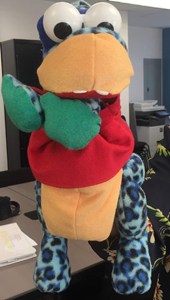
This is Safetysaurus, the puppet mascot, which is used to teach children in schools.

Parents have the opportunity to review the curriculum before it is taught and if they don’t approve, they are able to indicate that they don’t want their child to participate. The age-appropriate curriculum covers every kind of abuse including sexual, emotional, neglect, and physical abuse. It teaches children that their bodies belong to them.

PCAU is a statewide organization with community partners in Box Elder, Cedar City, the Uintah Basin, Tooele, Park City, and the Wasatch area. It trains people in each of these areas on its curriculum. This helps the nonprofit reach more people.

This organization also provides a program called Parents as Teachers in Davis County. Staff go directly to the homes of pregnant women and families with kids up to the age of 5. They provide instruction on how to raise healthy children by teaching about nutrition, sleep, safety, and discipline.

PCAU’s Certificate of Charter is displayed on the front desk in the Salt Lake office.

Rebecca Virgo, the Parents As Teachers Program administrator, says that other than reaching out to households, the program gets referrals from hospitals as well as families contacting them. The program has a list of stressors that staff pay attention to in order to know who they should reach out to. Some of these stressors are: military families, incarcerated parents, teen parents, and any type of illness present in the home.

Virgo said the biggest challenge of going into homes and working with the families is the observation that “helping is not always helpful.” When some parents receive help, they often don’t feel like they are seen as capable or trustworthy. It is more important for the visiting staff to connect the family with resources that will assist them rather than doing all the work for the parents.

A pinwheel is the symbol for preventing child abuse in America.

The staff’s main goals when they work with families are to facilitate connection, help them achieve goals, and to supply them with a wide range of parenting skills. “Your story that you grew up with doesn’t have to be your story for your children,” Virgo said.

The program is helping 120 families right now and is looking to expand to help 45 more in the near future. Due to the labor-intensive nature of this program, it can’t expand too far but Virgo suggests an alternative to families who want the extra help.

If you text utfamily to 27448, you can subscribe to Bright by Text, which sends out messages to parents of children prenatal to 5 years old. The messages contain helpful information based on the age of the child on things like child development, health and safety, and tips.

In both of these programs, Community Outreach and Parents as Teachers, Prevent Child Abuse Utah is spreading awareness and making a difference in children’s lives around the state.

As the assistant to the executive director, Ashley Workman urges everyone “not to underestimate the importance of what we do.”

“You can never teach this information too much,” Workman said.

So much growth has already happened in PCAU and the communities it works with and so much more can happen, Workman said. She wants parents to “not be surprised by the fact that the majority of abusers are people the child trusts because it’s unfortunately common.”

Workman’s plea to parents is: “If they run into a child that’s been abused, beg them to support the child.”

Prevent Child Abuse Utah’s logo on the main wall in the office.

Goalkeeping done right, from TIP Goalkeeping

Story and gallery by JOSH LUDLOW

The first Saturday of October at 8 a.m. was cold. According to the car’s outdoor temperature gauge it was in the high 40s. Freedom Hills Park in Centerville, Utah, sits just under the east mountain side. With rain falling the night before, the grass was spongy and wet. Feet were soaked within a few steps on the soggy surface. At this time, and place, goalkeepers from across the Salt Lake Valley gathered to hone their skills.

Brian Simmons, the head of TIP (technique, insight, power) Goalkeeping, is the man running the training program. As the young high school goalkeepers arrive, subtle moans are heard about the hour of day, temperatures, and lack of sleep. Simmons quickly gets them into action to start the morning training session with a few warm-up routines.

Soon enough the goalkeepers are diving on the ground, in the air, and even forward attacking the ball. Simmons directs the efforts of these young players in a positive direction. He provides needed correction but also positive reinforcement when a player correctly executes a save.

The session runs about an hour with much of the allotted time at an intensive work rate. At the end, footprints and cut marks are visible from where the goalkeepers worked as the grass is torn to shreds. Final comments are made by Simmons and then everyone departs till next week’s session.

Simmons discussed TIP and what the inspiration was behind the idea by saying that, “There was a lot of demand for goalkeeper training where I am based in Davis County, Utah. I was asked over and over about what training I could offer, so after holding training sessions sporadically I decided to formalize TIP so that I could be a consistent resource for the goalkeeping community as well as the average coach.”

TIP Goalkeeping provides young goalkeepers the opportunity to train at a higher level than a typical club team practice would provide. The high intensity, demand for excellence, and positive feedback make these trainings invaluable for the goalkeepers.

“TIP was officially founded in 2017, though TIP trainers have been active for about a decade,” Simmons said.

Another TIP trainer, Cole Palmer, also said, “I am not sure of the exact time I started with TIP but I believe the first camp that Brian and I did was in the summer of 2017.”

As a relatively new company in a heavily concentrated soccer playing community, TIP found its niche. The opportunity to work with parents and athletes away from the club teams has given the young goalkeepers formalized training. Whereas at the club levels, goalkeepers are treated as just another field player.

Craig Waldron, a parent of one of the athletes, described the training TIP provides. “I think TIP is different from other trainings because of how personal they make it for each keeper. They also have a very good trainer to athlete ratio so there is a lot of personal help with each of the athletes. And trainers that truly want to make better goalkeepers.”

The success of TIP, when broken down, is about the values it represents. Simmons said, “Our aim is to help keepers learn and develop the skills necessary to become great goalkeepers and people…. So many goalkeeping principles can be applied to life, and at the end of the day, we care very much that our athletes develop as people in all facets of life.” TIP goes further than teaching athletes how to properly be a goalkeeper. It instills values that these young players will one day look back on and realize they were already developing by attending these training sessions.

Ideally, the training sessions are there to assist in bringing a sense of accomplishment and improvement. Specific instruction is delivered from Simmons and Palmer on how to execute a desired movement, perform the technique correctly, and how to improve what the athlete already knows.

Palmer said, “I think the biggest difference that I have seen is getting kids genuinely excited about training. I have never seen kids show up to training and say they also have a game or even two after but at TIP I see that all the time. It seems like they show up excited and ready to go.”

TIP is also giving back to the community. Once a year, TIP hosts a training session for free to anyone. All that is asked from those who attend is a donation, which will be given to someone or a place in need. This past summer of 2018 TIP was able to raise “$330 to support Eumer, a boy living in Ethiopia,” Simmons said. The next year TIP is hoping to raise even more money to benefit someone or something.

TIP brings goalkeeping to a completely different level. With multiple trainers, athletes, and philosophies involved, these young players are receiving the skills necessary to enhance their playing abilities and life. Simmons said it best: “I want TIP to be THE authority on goalkeeping in the state of Utah.”


The Women Behind the Silver Screen

SALT LAKE CITY, (April 24, 2018) — In light of recent allegations against Harvey Weinstein and movements like #MeToo and #TimesUp finally bringing public attention to the marginalization of women in the film industry, institutions like the Sundance Institute are creating programs to help even the playing field for female filmmakers.

While these initiatives are presenting new opportunities for women, there is some concern that this reactionary response will become a band-aid solution to the broader issue of sexism in the film industry. The women leading these movements are determined that this will not end with a conversation, it must evolve into action. They acknowledge that change on such a large scale, especially when it is so institutionalized, demands time, conscientiousness, and ongoing effort. “I am hopeful, I have a lot of hope in the #Metoo and #TimesUp movements,” says Dr. Sarah Sinwell, a professor at the University of Utah. “I believe with celebrities coming out and telling their stories it enables other people to tell their stories. I believe that by putting money and funding and resources behind these kinds of institutions and what, for instance, McDormand talked about with inclusion riders and all those sorts of things that the general public is aware, not just the movie going public or not just the women, female film directing interested–people public. So many people are aware of this and I think that the constant publicity and the constant discussion and the way it’s entering schools and non-profit spaces and the way it’s kind of not just about those celebrity experiences but that it’s framing all these other contexts. I think that is why it may move into a space beyond this present one.”

Solutions must go beyond simply honoring the women who are already making films, and must take into account the inequality in resources and opportunities women face in making films in the first place. A study released by Women In Film in collaboration with Sundance found that even with the recent shift to more progressive attitudes toward female filmmakers very little actual change in the film industry has taken place.


“Currently, the presence of women behind the camera in popular films is infrequent at best. Assessing 250 of the top-grossing U.S. movies of 2011, one study found that only 5% of directors, 14% of writers, and 25% of producers were female. These statistics have fluctuated very little since 1998, seeming to suggest that the traditional Hollywood economic model or power-structure is a leading impediment to access for women filmmakers.”

-Exploring the Barriers and Opportunities for Independent Women Filmmakers Phase I and II Research By: Stacy L. Smith, Ph.D., Katherine Pieper, Ph.D. & Marc Choueiti

This slideshow requires JavaScript.


The nominations at the Sundance Film Festival this year reflect their efforts for greater representation but, while higher than mainstream Hollywood representation, only 37% of the 122 films presented at the Sundance Film Festival were made by women. “What that says to me is that they are working harder to try to be more inclusive of women but we’re still not even at the 40 percent,” says Sinwell. “So, the numbers are growing, but they’re still not high enough, and I think that’s an issue not just of Sundance but I think it’s across the board that there’s not enough women directors, there’s not enough women directors getting high budgets like male directors, there’s not enough women directors working in a variety of locations and a variety of production companies.”

Sundance Stat Image

37% of the 122 films at the 2018 Sundance Film Festival were made by women.

­­One often proposed solution to the problem of unequal representation of women in film festivals is the creation of separate categories for women and there are festivals created specifically to honor women in film, however some believe that this could lead to further marginalization or othering of women in film. “I think we need to value both, I think we need to value festivals that are specifically focused on women, that talk about the ways they value women, that incorporate women and that are inclusive of women and I think we need to promote quality filmmaking and make sure that women are a part of that narrative, of the general quality filmmaking or Sundance independent filmmaking narrative as well,” says Sinwell. “This is actually something that comes up a lot when people hear I’m teaching the Women Directors class, they say ‘why do we need a Women Directors class, isn’t that excluding all these other categories right?’ But I always remind people the reason we need it is because there are so few women that are talked about in general film history classes or intro to film classes, that the class is made necessary because the lack of women in our history textbooks and cinema kind of classes general classes.” Lois Brady

Is Social Media Reality Ruining our Actual Reality?

Story By EMILIE NIELSEN 

As cellphones become central to modern living, cyberbullying has replaced spitballs and hallway taunting as the torture-du-jour for students and teenagers.

With social media sharing the “best version” of yourself some have taken it to an extreme and started using editing apps to change the shape or look of an image.

The federal Centers for Disease Control and Prevention have reported a large rise in mental health issues, including anxiety, stemming from teenagers’ use of social media. This anxiety can be substantial enough to create everyday issues such as absence from school or the ability to complete basic tasks.

“I don’t feel comfortable going to school. I don’t feel as welcome or that I don’t have enough friends as the others,” Estelle Andreasen, 13, said.” Everyone I know has at least 500 followers. I don’t even have 100.”

Her anxiety was manageable until she got social media and now she skips school at least twice a week.

That anxiety is part of a larger issue of teenage insecurity and low self-esteem that some suggest is caused by Instagram and other social media.

Debbie Perry, a high school counselor who has been a high school counselor for 25 years, said one of the saddest parts of social media and smartphones she’s seen over the years is the risk that anyone and everyone can be bullied online.

“There has been such a large amount of people coming in over the last few years talking about the online bullying they have been receiving,” she said. “As a Counselor, we work on trying to make it a safe place at school with less use of phones to lower the ability of online bullying for our students.”

Another thing she said that she sees as a counselor is people bullying themselves because they aren’t thin enough or they didn’t go on fun spring or fall breaks like all their friends or classmates. There is also the fact that students go along with peer pressure more often due to social media.

This spurs anxiety in teenagers that they don’t have as exciting or interesting lives as their peers and they shouldn’t post to their social media accounts, even if they’re just sharing their “best face.”

Annie and Emma Black are 13-year-old twins in seventh grade. They just got their first phones for their birthday.

“I was so excited to have a phone,” said Annie. “I wanted so badly to be able to talk to my friends and be able to use Instagram!”

Their mom Amber Black is worried about Annie’s use of her phone. She and her husband feel as though they are constantly taking it away to get her to work on homework. Emma, however, won’t go on her phone until she is done with her homework.

“Annie is a little more troublesome, she wants to be on her phone all day and ignore her responsibilities,” said Amber.

“Emma, on the other hand, could care less about what is going on, on her phone. She rarely even gets on her phone when she is home and doesn’t want to ruin her grades due to her phone,” Amber added.

There are educational benefits of having access to cell phones in schools, including research and communicating with teachers and classmates.  But it can also be a huge distraction.

Multi-tasking while working on homework and looking at social media may distract teenagers, prolonging the time to complete assignments or not retaining the information they’re learning.

Deanne Kapetanov, principal at Mueller Park Jr. High in Bountiful, said multiple teachers take away phones from students every day. Students also sneak into the bathroom to respond to texts, look at Instagram or Snapchat their friends.

“It is hard to see the students be more focused on their phones walking to and from classes and spending their free time looking at social media or texting friends instead of actually spending time with each other,” Kapetanov said.

Developing social skills have also lagged in teenagers because they don’t spend time face to face. The teens and pre-teens are having a harder time making friends with others, Kapetanov said. This is creating a major risk factor for depression, suicide and other mental health issues – all issues that come along with social media.

This slideshow requires JavaScript.


Best Friends Animal Society hopes to ‘Save Them All’ through NKUT initiatives

Story and gallery by KEATON SHIRK

The well-known scenery of Utah red rock complements the vast, open landscape that is home to 1,600 rescue animals in Kanab, Utah. Tucked away between national parks, these animals are living the good life.

The Best Friends Animal Society is a nonprofit organization providing a safe shelter for rescued animals brought in from around the world. Its strict policy as a no-kill animal organization aims to bring to the public’s attention solutions to help reduce the number of sheltered animals.

At the Best Friends Animal Society’s sanctuary, high-spirited and irresistibly lovable dogs greet you with wet kisses and the eagerness to tell their rescue story. They long for the right companion to come along with the willingness to lend an ear (maybe even a gentle belly rub too), while they grab your heart and prove why their life is valuable.

Pigs, bunnies, and parrots live at the sanctuary too and leave people impacted in unfamiliar yet awe-inspiring ways.

The Best Friends Animal Society was founded in the 1980s by a passionate group of individuals determined to save the lives of animals.

Despite the lack of public support and funding, Best Friends built the nation’s largest no-kill animal sanctuary in Kanab in 1984. The sanctuary encompasses 3,700 acres of land.

“We had no visible means of support. We were hung out to dry. We were all in it together,” said Francis Battista, co-founder of Best Friends, on the website.

Euthanasia is the chosen method for population control in most animal shelters. In the 1980s, Best Friends Animal Society reported, “17 million animals were being killed each year in U.S Shelters.” Particularly, cats and dogs suffer from the highest kill rates among all sheltered animals.

Best Friends has initiated a campaign to make Utah a no-kill state. The initiative is called No-Kill Utah and it is hope to be reached by 2019.

The NKUT initiative began after the originators of Best Friends found themselves disturbed by the staggering statistic of cats and dogs killed yearly.

Best Friends has been working closely with animal shelters around Utah in an effort to break the rising trend of overpopulation in animal shelters. Overpopulation causes shelters to defer to euthanasia to reduce financial costs of caring for animals and maximizing space.

Right now Best Friends has partnered with 58 animal shelters in Utah. This number is growing as the campaign reaches new audiences.

All animals at Best Friends are given second chances, the kind of second chances that quite literally change their lives.

The slogan, “Save Them All,” is an anthem for employees and volunteers. It also serves as a compelling reminder, that killing homeless animals is an unnecessary solution to an issue that can be changed.

The sanctuary welcomes animals that have been neglected, treated unjustly or suffered life threatening physical conditions. The founders hoped, “to give homeless animals the chance to live a fulfilling life.” 

Their hopes still reign true today. Every year, data is collected and shows more animals successfully leaving shelters alive to live in homes with welcoming hearts. 

Because of the impact Best Friends had on the community of Utah animals, expansion is taking place in other cities in the United States. Best Friends adoption facilities are open in Atlanta, New York and two in Los Angeles. 

Joan Filla, from Wisconsin, has been coming to Best Friends for nine years. She visits only three times each year.

She has witnessed the physical growth at Best Friend’s sanctuary. Filla said in an interview that there are more buildings available to care for animals.

Not only has Best Friends grown physically, Filla also said that awareness for sheltered animals is extending farther than Utah boundaries. She found the best way for her to advocate about the mission of Best Friends is to simply wear her volunteer T-shirt.

Filla said people consistently approach her and ask what Best Friends Animal Society is. She uses this interaction as a way to promote and advocate for the organization and the no-kill initiatives currently in effect.

Best Friends has initiated a campaign to make Utah a no-kill state. The initiative is called No-Kill Utah and it is hoped to be achieved by 2019.

This would mean all animals in the state of Utah are guaranteed their life, regardless if physical space in animal shelters is not available. If space is unavailable, animals are transported to partnering NKUT shelters that can accommodate them.

Best Friends encourages the type of community involvement, like that of Filla, to help spread the word about NKUT.

To successfully achieve NKUT by 2019, Utah must have a “combined save rate of 90 percent” in all animal shelters.

In other words, 90 percent of animals that enter shelters must leave alive. The remaining 10 percent takes into consideration natural deaths and terminal illnesses of animals.

Deb Parker, a previous volunteer who now works full time at Best Friends, moved from upstate New York to join the community and support the work of Best Friend’s sanctuary.

In an interview, Parker said, “In fiscal year 2017, we had an 87 percent save rate in the entire state of Utah, had close to 2,000 adoptions and did over 37,000 spays and neuters in the state alone.”

Parker added, “Yes, we are on track for both No-Kill Utah 2019 and No Kill 2025. Spread the word, the more people helping to achieve this, the better.” Best Friends plans to make all U.S. cities no-kill by 2025.

The NKUT initiative began after the originators of Best Friends found themselves disturbed by the staggering statistic of cats and dogs killed yearly.

In 2000, “nearly 38,000 healthy and adoptable animals were being killed in Utah every year,” reported Best Friends in an online news release. 

That’s when NKUT was initiated. It was an aggressive attempt to reduce the rising yearly deaths among sheltered cats and dogs.

As of 2017, the number is down to roughly 2,400. Nearly half a million dogs and cats have been saved from 2000 to 2017.

Best Friend’s aspirations have been manifested by its work within Utah. Resources are available so Utah communities have the ability to promote NKUT and make the campaign a success by 2019.

Best Friends offers legislative empowerment to those who wish to take action through lobbying elected officials. Reaching out to elected officials is an efficient way to take action on pertinent bills regarding Best Friends and animal welfare.

Advocacy enables people to speak directly with lawmakers and become a voice for animals that have no representation. You can sign up online to join the legislative action network, receive emails, and connect with other Utahns. 

Fighting breed-discrimination is another initiative of Best Friends that educates the public about breeds that are viewed as aggressive. Unfortunately, the media has given negative attention to pit bull terriers and other alike breeds because of their reputation in illegal dogfighting and aggressive behavior.

Eliminating breed-discrimination practices reduces the amount of dogs entering shelters that would be brought in from public enforcement and animal control groups.

BSL, which stands for breed-specific legislation, is a body of laws that aims to regulate breeds or dogs who resemble certain breeds, that are potentially dangerous. On Best Friend’s website, it said, “breed discriminatory legislation force many people to give up their beloved pets.” After such force, dogs are put into animal shelters and not adopted. 

Best Friends refers to BSL as a “misconception” and usually enacted “to ease fears over public safety, but these laws are ineffective and very costly.” 

In Utah, House Bill 97, signed by Gov. Gary Herbert, “protects pet owner property rights and allows responsible citizens to own any breed of dog they choose.” House Bill 97 was effective Jan. 1, 2015.

Events are held annually in Utah to offer community members the chance to get involved and show support for NKUT. Strut Your Mutt, NKUT Super Adoption, and training workshops and classes are happenings that occur throughout the year. 

Best Friends provides spaying and neutering as another resource to reach NKUT. All animals admitted to shelters have the procedure. This procedure is routinely done and requires minimal downtime for pets. Low cost and potentially free spays or neuters are offered to community members’ pets too, courtesy of Best Friends

Best Friends reports, spaying and neutering, “is one of the greatest gifts you can provide your pet, your family and your community” because it reduces the number of animals that initially enter shelters.

NKUT reported services will be provided “where they are needed most so that fewer animals go into shelters, and increase adoptions so that more animals are placed into new homes.” 

NKUT strives to ensure that all sheltered animals are given the gift of life. Communities in Utah are being called to action.

Now is the time to spread the word and “Save Them All.”

The University of Utah brings benefits to local students through Piano Outreach Program

Story and gallery by KATYA WAGSTAFF

When school ends, many kids race out as fast as they can. But others stay to play music written hundreds of years ago. While they wait, some are doing cartwheels or chatting with other students about book fair and recess. Some eat a snack or run around the room. All are waiting for piano lessons.

Faculty, graduate and undergraduate students studying piano at the University of Utah School of Music extend group piano lessons to five local elementary schools through the Piano Outreach Program. Three of the schools are Title I, which means that a large percentage of students come from low-income families. Students at these schools participate in the Piano Outreach Program for free.

According to the program’s website, “The program not only helps them learn a life-long skill, but also seeks to improve their performance in core academic subjects, like math and reading, and to prevent behavior and truancy problems.”

The program’s website further states that the program benefits School of Music piano majors by providing teaching opportunities and the chance to “learn valuable life lessons through service, preparing them for future careers.”

Mio Cowden, coordinator of the Piano Outreach Program, has a short break between private piano lesson instruction. She holds a Doctorate of Musical Arts in piano performance and music history. She teaches at Salt Lake Community College, University of Utah Preparatory Division, and the Piano Outreach Program.

Her piano studio is a small, insulated room holding two sleek, black baby grand pianos side by side. In the corner is a small desk covered with music files. She relaxes on a piano bench with her back leaning against the wall.

Cowden’s role as coordinator entails training graduate student assistants, organizing fundraising and donations, scheduling assignments, observing each school once a month to check students’ progress, contacting principals and answering parents’ questions. “Basically I do a lot of stuff,” she said, laughing.

The program currently teaches approximately 200 students in five schools. These piano lessons expose elementary-aged students to the “joy of music,” Cowden said.

“There are so many kids, not just at Title I schools, who have never had the opportunity to learn piano,” she said.

“When a child walks into my classroom, the circumstances under which they live don’t really matter. That’s what I love about music, it is universal to anyone, no matter their situation. If anything, these children in tough circumstances are more grateful for an opportunity to do something new.”

– Claire Thueson, graduate instructor at Washington Elementary


When students begin piano lessons “they find another talent that they didn’t know they had and they get so excited,” she said.

Cowden explained that not only kids, but their parents also get excited. For example, a father told Cowden about his daughter, a third-grader from Afghanistan who attended one of the Piano Outreach Program elementary schools. Her older brother participated in the piano classes. She wanted to participate, too. However, in her family’s culture and religion, girls don’t learn to play instruments.

This girl still wanted to learn and asked her dad, “Why did you come to America?”

He responded, “To give you more opportunities.”

“Then give me the opportunity to learn the piano!” she cried.

“Let me think about it,” her dad replied.

The next day he decided his daughter was right and gave her permission to attend piano classes after school.

She was very dedicated, Cowden said, and learned Mozart’s “Turkish March” in just one year.

Cowden turns to the piano and plays the first few seconds of the fast-paced piece. This piece is generally for intermediate, not beginner students.

The young girl played this piece at the final concert, held at the School of Music’s Thompson Chamber Hall. Her parents and siblings attended the performance and were thrilled. Her dad realized that girls should also learn what they want to.

Shortly after, her dad called Cowden and relayed their story. He added that after the concert, he bought his daughter a keyboard as a present.

“I’m glad I got her a keyboard,” he says, “but I almost regret it because she’s unstoppable. She practices from morning to night!”

Her brother dropped out of the program, but she never misses a class.

“I’m not trying to change anyone’s culture,” Cowden adds, “because it’s really up to them. But it’s very exciting to see a girl take this opportunity and find a new talent.”

Claire Thueson is a doctoral student who also is currently a graduate instructor at Washington Elementary, a local Title I school.

She spends about 12 hours every week preparing for and teaching 24 students at the elementary school.

“I have students of all ages and backgrounds that come to piano class, anywhere from first-graders to sixth-graders,” Thueson said via email.

The kids are split into groups: one plays musical games or worksheets with an undergraduate assistant, while the other group practices on the keyboards for their recital. Thueson rotates the groups, “giving assistance and offering encouragement and correction when needed.”

Similar to Cowden, Thueson believes some of the strengths of the program are that it is  “able to offer exposure to music to a large number of children that otherwise may not get the opportunity.”

Some of the challenges she faces include making sure each child is getting “personalized education and attention,” despite their various ages and abilities.

Although she teaches at a Title I school with a high percentage of students from lower socioeconomic backgrounds, Thueson said, “I honestly don’t notice a huge amount of difference. When a child walks into my classroom, the circumstances under which they live don’t really matter. That’s what I love about music, it is universal to anyone, no matter their situation. If anything, these children in tough circumstances are more grateful for an opportunity to do something new.”

Another graduate instructor, Cheney Doane, teaches at Uintah Elementary. This school does not have Title I status, so the class is fee-based, though group class tuition is cheaper than private piano lessons.

His classes also include a range of students from first to fourth grade. Although it’s a challenge to keep them engaged despite different levels, Doane also considers the age range a benefit.

“It’s an asset to have this group of students together because they can learn from each other.”

Not all of these kids will continue studying music, but that’s OK, Doane said. If they want to continue, the Piano Outreach Program provides a “stable foundation” in music. If they don’t, it’s still a “positive, brain-healthy way to spend time after school.”

Doane wants his students to have fun and look forward to this class.

“I want their association with music to be positive, not filled with dread,” he said.

Doane’s most rewarding moments are at the end of lessons when parents come to pick up their children. A student will run up and say, “Mom or Dad, come listen to this piece that I can play!”

The Piano Outreach Program takes a lot of commitment and time. “There are days when you walk in thinking, ‘I don’t want to do this today,’” Doane said, “and you walk out thinking, ‘Man, I’m really glad I had Outreach today.’”


University of Utah fraternity partners with Rape Recovery Center

Story and slideshow by MADDY HOWARD

Don’t walk to your car alone. Don’t go on a run without pepper spray. Don’t make eye contact too long. Don’t dress like you’re asking for it.

All of these are “rules” young people have been told in hope of avoiding sexual assault.

Sexual assault is an epidemic that has affected campuses nationwide. Universities such as Stanford, Brown and Baylor all have an extensive history of sexual assault on campus. Many people do not believe universities are doing enough to keep students safe.

Well, what if someone told you a fraternity was speaking out against sexual assault?

At the University of Utah, Beta Theta Pi is dedicated to making a change. Beta is a fraternity which brands itself as men of principle.

These men excel in academics with an overall average GPA of 3.4. Additionally, they have the highest GPA out of any organization, club, or team at the University of Utah, according to the office of the Dean of Students. “These men hold themselves to the highest standard possible which makes them one of the most respected fraternities on campus,” said Josie Karren, a U student and Delta Gamma member.

Beta is partnered with the Rape Recovery Center in hopes of changing sexual assault not only at the U, but across the nation.

The Rape Recovery Center is a nonprofit organization in Salt Lake City. Services include support, testing and providing hope for victims from every walk of life. RRC helps people understand they are not alone, and understand that their attack does not define them.
Beta has been working with RRC for almost five years. Stereotypes tell the world fraternity men are part of the problem and are nothing but partiers. In 2014, the U’s chapter of Beta Theta Pi was featured on the Dr. Phil show. Phil McGraw’s wife, Robin McGraw, was in awe of what these men are trying to accomplish.

Philanthropy Week is full of fundraising for the RRC and happens every fall and spring. For Beta members, it’s a time to raise money for victims. Taking place from Feb. 26-March 3, spring 2018 Philanthropy Week was a huge success, according to Noah Carr. He is the current vice president of internal programming. His duties include planning events throughout the week. Many of these events take place at the recently renovated $2.3 million chapter house.

Beta planned fun events that brought all of Greek row, and even some non-Greeks out to support. From designing hoodies to creating pop sockets as a unique way to raise money, Carr was dedicated to finding ways to raise money.

“Handling the Philanthropy Week for Beta was an unbelievable and humbling experience. Working so close with the RRC and proactively doing things for the community is what makes all the work worth it. We raised $14,000 for this great organization in less than six days and it’s an awesome feeling to know you’re making a difference,” Carr said.

In addition to raising funds for RRC, many of the fraternity members spend time volunteering. Many of these men help however they can at the RRC in their free time.

Volunteering requires 40 hours of extensive training. Many Betas are hotline counselors. This means they act as an over-the-phone counselor to victims. These volunteers have saved lives by talking to victims.

“I started picking up shifts every week. I like the idea that I am there if someone needs me,” Ravi Sharma said in a recent recruitment video. Sharma has been a member of Beta for two years and is passionate about the partnership with the RRC.

On campus, Beta started organizing sexual assault forums once every semester. These are open discussions about sexual assault that are open to anybody. The forums are designed to be a relaxed environment to talk about intense subjects.

Members of Beta Theta Pi believe men need to do more to stand up against sexual violence. During an interview, there was a clear theme. They want victims to know they are not alone. These men want to speak out on an issue that has been swept under the rug for far too long.

Anthony Panuzio, 20, the current president of Beta, said the partnership with RRC is a main reason why he even chose Beta in the first place.

“I am honored to represent a group of men that are dedicated to change. Sexual violence is something many people just don’t want to talk about. Talking about it is the only way we are going to make a difference. It makes me proud that Beta’s aren’t afraid to be the ones who speak out,” Panuzio said.

In America, someone is sexually assaulted every 98 seconds. One in three women and one in five men will experience sexual assault in their lifetime, according to RAINN.

It is time for serious change.

Everyone knows someone who has been affected by sexual assault. In a recent video Beta Theta Pi released, John Moffitt, vice president of recruitment for Beta at the U, says, “The slogan we came up with is: to the brave survivors of sexual assault we believe you.”

This slideshow requires JavaScript.


Their brothers’ keeper — Utah charity targets refugee men

Story and slideshow by PETER JOHNSTON

Leul Mengistu hits the gas pedal of his company van. The light has turned green and he is late for an appointment with Julia, a female refugee from South Sudan. A banner with a blue, yellow and red logo that reads, “Catholic Community Services,” has been slapped onto the van’s side.  

Though Mengistu helps female refugees like Julia at Catholic Community Services (CCS) he has a new focus demographic: refugee men.

“I don’t want them to fall between the cracks,” he says, one hand on the steering wheel. There are programs for women and children and youth, but men are often forgotten in refugee assistance efforts.

The International Rescue Committee reports that “refugee men, a category not prioritized by the humanitarian system for support, are often not able to access support that they need and, even more often, feel themselves to be excluded from it.”

According to CARE International, a relief organization that primarily targets women, “among humanitarian actors, donors and government agencies, there is a common perception that men are best able to look after themselves and negotiate the complexities of displacement unaided.”

The report says this perception leads to less attention for the problems of male refugees.

Mengistu acknowledges that women and children are often the most disadvantaged groups fleeing conflict in their home countries. However, he also says he deals with many refugee men who have not received needed support from other organizations because of the common belief that men are “best able to look after themselves.”

Mengistu has responded to widespread ignorance toward male refugees with the Men’s Wellness Support Group — a program that will bring together 10 to 15 refugee men for weekly classes. Each “cohort” of men will learn about topics ranging from building a budget to coping with post-traumatic stress disorder.

Weekly instruction will be led by men: Mengistu, a couple of class facilitators, and guest speakers specially tapped because of their area of expertise. David Harris is one such guest speaker. He is slated to teach the class on physical health and comes from a background of pediatrics and insurance management.

Harris says he sees cultural adjustment as the greatest priority of the Men’s Wellness Support Group. “They [the refugee men] need to protect their own culture,” he says, but they also “need to understand how stuff works [in the U.S.] so that they can get along.”

Mengistu once directed a support group for women that focused primarily on health. However, he too says the new support group’s objectives go beyond just physical wellness. “I want them [the refugee men] to be very competitive,” he says. “Everybody’s smart, but now it’s camouflaged!”

That intellectual camouflage refers to the invalidation of refugees’ prior work experience and professional talent in the United States.

Mengistu’s boss, Aden Batar, is the director of Immigration and Refugee Resettlement at CCS. He explains the “camouflage” problem from his own perspective.

Batar left Somalia with his family in the mid 1990s with a law degree from his home country. He says that degree and legal experience went unrecognized in the U.S.

“Can you imagine how frustrating that would be?” Batar asks. Today, he says, refugees can more easily get college degrees that match the ones they earned previously because NGOs and governmental agencies provide financial help. However, “back then [he] was lost in the middle because [he] didn’t have those systems.”

Even with revamped nonprofit and governmental aid, Batar says the Men’s Wellness Support Group “fills a gap.”

Eighty percent of CCS cases are women and children, Batar says. Men aren’t seen later unless they have a demonstrated problem.

Despite widespread apathy on the issue, Utah’s history with refugees makes it an appropriate birthplace for the program. In 2015, when 30 governors called for the cessation of Syrian refugee resettlement, Gov. Gary R. Herbert announced Utah’s continued commitment to assist refugees.

Batar also highlights the strong public-private relationship among CCS and local religious organizations as a positive sign of Utah’s tolerance of refugees. “The most welcoming state in the U.S. is Utah,” he says.

While the Men’s Wellness Support Group has public backing, it faces significant challenges.

For one, cultural conflicts between refugees’ old way of life and their new one in America could foster misunderstanding and resentment. David Harris, the guest speaker who will handle the physical health section, underlines that the program’s facilitators and guest speakers may not understand all cultural nuances of refugees’ backgrounds. “We may say something that we feel strongly about or think is obvious when they disagree or don’t think it’s obvious,” Harris says.

The key, he says, will be for facilitators to “listen really closely to what [the refugees] have to say and what their concerns are rather than being very dogmatic.”

Participating refugees will come from more than three countries. Mengistu has recruited men from Burma, Somalia and Democratic Republic of the Congo for the support group so far. His proposed solution to bridge cultural divides is to recruit participants who speak one of only two languages — Karen (a language spoken in Burma) and Swahili.

Logistics also pose a problem. Mengistu will need to resolve the scheduling conflicts of refugee men who work night and day shifts and CCS interpreters who work business hours. The program director says he and the guest speakers will adapt to the schedules of the refugees.

Regardless of the program’s potential problems, Mengistu envisions far-reaching implications for the Salt Lake City community. He says refugee men will integrate with the larger community, enjoy more family unity and become more self-sufficient fathers.

The first of the weekly classes launched April 5 with a cohort of seven participants — two from Burma, five from East Africa. If all goes well, these seven men will walk away from the CCS classroom on May 24 with the skills to start a career and find daily joy. A tall order — but like Mengistu says, “I don’t want them to fall through the cracks.”


This slideshow requires JavaScript.

Can a Mormon be a feminist?

Story and photos by MEGAN CHRISTINE

When members of The Church of Jesus Christ of Latter-day Saints are excommunicated, they are stripped of their membership, much of their personal identity, and the chance to see their loved ones in heaven after death.

This is what happened to Margaret Toscano, 69, when she wrote and spoke about issues regarding women’s place in the Mormon church and related topics such as the priesthood.

Many people like Toscano have been raising their voices against the inequities they feel women experience in the Mormon church, whether that be through research and writing or making small changes in their home churches.

Toscano conducted research as an undergraduate student at Brigham Young University on church history and found that “the women that received their temple endowments through Joseph Smith all knew that they had priesthood.” Toscano believes that in the 1800s, Smith ordained women with the priesthood through religious ordinances called temple endowments.

According to the Mormon church, the temple endowments are considered “a gift from God whereby He bestows sacred blessings upon you.” Today, these gifts do not include priesthood.

The priesthood is a power given to males in the Mormon church. It is believed to be “the eternal power and authority of our Heavenly Father.” Through the priesthood, various ordinances can be administered, such as baby blessing, baptisms, temple marriages, and more. For many leadership positions in the Mormon church, it is a requirement to hold the priesthood. This excludes women from these positions.

“If there’s going to be any equality for women, then you have to question the notion of priesthood,” Toscano said.

To Toscano, women need to be granted the priesthood again in order to be equal to men in the church. She has found that church leaders disagree with this.

Toscano spoke out about her beliefs and church leaders claimed she was in opposition to the teachings of the church. She was summoned to a religious court, conducted by local church leaders. She was told that she could either denounce everything she had written, apologize for the testimonies she had destroyed, and never speak out on these issues again, or be excommunicated. She chose the latter.

Marjorie Smith, 35, and Joseph Peterson, 35, are a married couple located in Salt Lake City who have similar views to Toscano. Smith is a member of the Aspiring Mormon Women group on Facebook.

Smith views the priesthood as an “entry between you and God.” To her, it seems unfair that women have to go through another person just to achieve that connection.

Peterson agreed. He has the ability to give his son and wife blessings when they are sick, but realized that when he is sick he cannot receive this same blessing from his wife.

“As rooted in selfishness as that was, it was a light switch that opened my eyes to a lot of other things. Women are not visible in this church,” Peterson said.

Smith and Peterson made the decision together to give their son a baby blessing after he was born. Smith felt excluded from this important moment, because according to church doctrine “only worthy men who hold the Melchizedek Priesthood may participate in naming and blessing children.”

Peterson included Smith by naming her as a blessing giver by stating that the act was “our blessing to you.” This small but meaningful act received positive feedback from fellow churchgoers.

Smith also taught lessons to young women in the church. She had to teach lessons on the law of chastity, which “prohibits all sexual relations outside marriage.” While teaching, Smith reconstructed these values to be moral instead of religious. She also taught the importance of education whenever possible. Smith avoided the subject of marriage, which is often the focus of many of these lessons.

Small steps can be taken to further the feminist movement in the Mormon church. Smith and Peterson believe visibility for women is crucial. Smith also values hands-on fathers and hopes the church will honor women’s need for education and women’s skills by utilizing them.

“If we mean what we say about women, they need to be visible,” Peterson said. “It’s that sort of over-syrupy, benevolent praise that is used as a tool to keep the structure the same and to defend the status quo.”

Peterson is referring to a 2018 article by Salt Lake Tribune reporter Peggy Fletcher Stack. While interviewing the new all-male leadership about women’s roles in the church, Russell M. Nelson began by saying “We love ’em.” Leadership continued to praise women as mothers and daughters, but did not mention steps the church is making toward gender equality or “even hint at the word ‘feminist.’”

Similarly, Toscano said that feminism in the Mormon church comes in waves, and at the end of each wave a woman is excommunicated to subdue the movement. In the 1970s, it was Sonia Johnson, Equal Rights Amendment advocate. In the 1990s, it was Toscano herself. In 2014, it was Kate Kelly, co-founder of Ordain Women.

Toscano firmly believes that the movement will resurface again soon. “You can’t keep women down.”


Arts Pass benefits University of Utah students, staff, faculty

Story and photos by MADELEINE M. PORTER

The University of Utah Arts Pass provides funding to programs, enables students to be in touch with their creativity, and gives the U community the ability to explore beyond their comfort zones.

The Arts Pass is “open to all students and faculty members at the U and includes screenings, performances, concerts, and exhibitions.” It is programmed into a person’s campus identification card, and permits them to attend some fine-arts events at a discounted rate and others free of charge.

When Bryan West Kilpatrick was in his second year of college, 2012, the Arts Pass was released. “It gives students access to discounts and anything in the performing arts, including the Pioneer Theatre which is the only professional theater on a Pac-12 campus,” Kilpatrick said in a phone interview. He is a logistics manager for the West Coast and was a theater major for four years.

Discounts are  particularly beneficial to U students. Many are on a college budget and don’t want to spend money on entertainment.

Some students still refrain from going to a wide array of the fine-arts events available, for the fear of having to attend alone. After speaking with multiple students, this fear is a driving factor as to why they do not attend.

Ali Lorenz is a dance major in the School of Dance, which is part of the College of Fine Arts. “It can be really intimidating to attend events, especially in the arts. That is a very unfamiliar field for a lot of people,” Lorenz said.

Pioneer Theatre Company advertises that “current University of Utah students may take advantage of student discounts through the Student Arts Pass to attend performances at discounted rates. With a valid University of Utah UCard, students may receive up to two tickets.”

Students with a valid UCard receive two discounted tickets per performance. Two tickets is intended to inspire students to involve their peers in the arts. Immersing themselves in a field that may be unfamiliar is a challenge that can be overcome.

Kilpatrick added, “There are some shows and exhibits that I wouldn’t end up going to because I didn’t want to attend alone.”

The fear of attending alone affects the number of attendees at the many different productions available. Lorenz noticed this very early on in her experience within her modern dance productions.

“The Arts Pass in our (modern dance) community is so blatantly obvious because we use it to attend productions required for class,” Lorenz said. “However, there is a gap between us, students in the College of Fine Arts, and the rest of the University as a whole.”

The University of Utah has an array of different fields that students are involved in. Students can enjoy the fine arts at a discounted rate while the Arts Pass is still available to them.

Saige Miller, a double major in communication and sociology, believes that fine arts are crucial in any form of education.

“The fine arts are a prerequisite to many different branches of education. You need creative writing or fine arts in engineering or in STEM education. I think it is so central to learning and people should want to learn more about it,” Miller said.

Kilpatrick also commented on the importance of fine arts. “If you are in a major that doesn’t do anything artistic or creative, it is still nice to go explore something out of your comfort zone. We have some pretty amazing student-run shows that are going on and some are even produced by students.”

Not only does the Arts Pass give students the opportunity to explore different types of fine arts but it also aids in the funding that is given to the College of Fine Arts.

The Arts Pass helps the College of Fine Arts keep track of how many students tickets have been used each year, which helps the budget manager determine the budget amount for the semester.

Lorenz said that when the modern dance program merged with the ballet program in summer 2017, it also merged the two separate budgets. Cole Adams, her production class professor, explained that the Arts Pass affects the amount of funding each program receives.

“We get funding through the Arts Pass based on how many students are using the Arts Pass. The budget manager for that year looks at the amount of students who have used the pass. The greater the number of attendees the more funding our program receives because that means people are interested and want to keep attending,” Lorenz said.

The funds that are available to the College of Fine Arts are used for the resources it takes to produce the event.

University of Utah students have the opportunity to immerse themselves in many different forms of fine arts. Attending events helps the College of Fine Arts’ budget grow so more intricate shows can be produced.


Abuzz on campus: the University of Utah Beekeepers’ Association

Story by HENRY ALLEN

SALT LAKE CITY – It’s a quiet fall evening on the University of Utah campus, that is, aside from the constant buzzing. Resting underneath the windowsill of a dorm room in Shoreline 829 is a flat glass case filled with thousands of Apis mellifera, the European honeybee.

The glass case is an observation hive, and it is used by education-eager beekeepers to demonstrate the workings of a beehive. Behind the glass panels, sturdy wooden frame, and fine mesh, is a hive that writhes and squirms; a colony of constant churn. Frankly, it’s unnerving to have nearby for more than an hour, the low thrum of the hive rising and falling just enough so as not to become background noise. I was holding the case as a favor for Quaid Harding, president of the U’s Beekeepers’ Association, while he went to dinner.

Actual beekeepers don’t have a problem with the buzzing – Harding sleeps soundly with the hive next to his bed. “I like it,” he says, “it’s calming, kind of tranquil.” A senior at the U majoring in biology, Harding joined the club last fall, after completing his Global Environmental Issues community service hours with the club. Upon finishing, Harding wanted to do more – “I went up and talked to the club’s advisor, and asked ‘how do I get more involved?’” Harding says. “There wasn’t anybody taking initiative to set up meetings or recruit, so I offered to take on the leader’s position. We really needed more members.”

Harding has an infectious enthusiasm for bees, and has been an active and capable recruiter for the club. The observation hive was a boon: nothing attracts interest quite like walking around with several thousand bees.“The bees do the recruiting for me,” he says. Leota Coyne, a new member of the club, says the observation hive caught her interest immediately. “I saw the hive at Plaza Fest, I couldn’t just walk past that.”

The Association maintains four sets of hives on campus: one on the fourth-floor of the Union; another outside the Health Sciences Library; and two in the Marriott Library.  The hives are nestled in easily-seen but unobtrusive outdoor locations, carefully placed for both bee and human safety. “There are roughly four beehives at each spot, and each hive can house anywhere between 20,000 and 60,000 bees,” says Harding. The hives need regular inspections for bee health and maintenance checks, which Harding uses as field trips for the Association.

It begins with proper clothing – a full body beekeeping suit. The white canvas outfits look like space suits made out of leftover painters’ smocks, but thicker and with mesh face masks instead of helmets. Once suited up, the inspectors use coffee-tin-like smokers to puff smoke onto the hives. “The smoke simulates a forest fire” Harding says, and “the bees’ response is to gorge themselves on honey to protect it, which makes them docile and sleepy. It’s kinda like how people are tired after stuffing themselves on Thanksgiving dinner.”

Some weeks later I attended a honey-extraction event, where I met Amy Sibul, the club’s faculty advisor. “We use the honey to help fund the club,” says Sibul. “We sell bottles of honey, as well as tubes of lip balm made with the beeswax.” The events are open to the public, which the Beekeepers’ Association uses to teach people, both about the club and the bees. “The main importance is the awareness it raises,” Sibul says, “we need to be aware of the impacts humans have on honeybees.”

Beekeepers around the world have reported precipitous decline in their hive populations – a loss of around 30 percent annually. This phenomenon is referred to as Colony Collapse Disorder (CCD), and the full cause is still being investigated. What we know for sure, however, is that humans play a big part in the disorder through their use of pesticides. Some countries are making strides to curb their impact on bees – such as the European Union’s push to ban various bee-harming chemicals – but other countries are lagging behind. CCD is in an odd position: people acknowledge that it is a problem, but don’t understand the gravity of the issue.

One reason why CCD is so alarming is that bees are more than honey-makers – they play a huge role in pollinating the world’s agricultural industry: “One in every three of our bites of food depends on honeybees” says Sibul. The loss of honeybees would be a huge hit to the global food supply, and losing millions of agricultural jobs would be economically devastating.

Clubs like the Beekeepers’ Association are important for combating CCD.  The Association does its part to help stabilize the bee population by maintaining healthy hives and raising public awareness.  Every bit of progress, from the local level to the global level, helps keep the bees – and the world – buzzing.

This slideshow requires JavaScript.

Zane Law

zane

Originally from Newport Beach, CA, I decided to leave home and pursue a college degree. I am a third year student at the University of Utah, majoring in Strategic Communications. I currently maintain a GPA above 3.5 and plan to graduate in the Spring of 2019, heading into the field of marketing/advertising. This field has always held my interest because analyzing and appealing to the minds of consumers has felt like a game to me. I have enjoyed finding different ways to sell clothes online, pawn off my crappy lemonade as a kid, and make/sell stickers, so pursuing this on a more professional scale seemed like the right fit. Work should be something I enjoy, and I plan on doing just that!

While I do not mean to write for a career, I am still proud of the content I have produced thus far. Besides the Greek life piece, my portfolio contains a marketing campaign pitch that was accepted and used by All Seasons Resort Lodging, an article that analyses the top-grossing Korean film and its relationship to Japanese-South Korean tensions, and a story about college athletes’ battle for compensation.

In my free time I enjoy all things sports. I do not know whether I am proud of or disappointed in the fact that I have only missed the viewing of one NFL game this 2017 season. I was the running back at University High School in Irvine, CA, so football is a passion of mine. I also ran two years of track and was named MVP both years. I was extremely disappointed when I discovered that the U does not have a collegiate team. These two high school teams have shown me what teamwork and perseverance are, so using those in the workplace is something I look forward to.

Fraternities are a valuable resource for many college men

Reflection Blog

LinkedIn Profile


Zane Law- Enterprise Story

Fraternities are a valuable resource for many college men
Story by ZANE LAW

SALT LAKE CITY— College campuses across North America are hosts to hundreds of men’s fraternities. These fraternities are seen by many as misogynistic and cruel, while others view them as places to build character, a resume, and a social network. With over 6,000 chapter houses and millions of Greek members across North America, the benefits outweigh the negative image for the many joining the Greek system.

For generations, fraternities have been linked to the cultivation and development of successful men. Forty three of the United States’ 50 largest companies are run by fraternity men, with 85 percent of all Fortune 500 companies having a fraternity member CEO. According to the New Jersey Institute of Technology, Greek men also account for all but two United States presidents born since the formation of the first fraternity in 1825, 76 percent of all U.S. Congressmen and U.S. Senators, and all of the Apollo 11 astronauts.

University of Utah’s Interfraternity Council President, James Morrell, explained why he thinks this is far from coincidence. Morrell says Greek life has helped him in three core areas: networking, leadership, and academics. The people he has met through his fraternity, “have served as an invaluable resource in my life, helping me further my career options and improve my academics,” he says. A current member of Beta Theta Pi at the U, Morell says several alumni remain actively involved. Through alumni he has received several job opportunities and plenty of guidance.

Dillon Clark, recruitment chair of Phi Delta Theta and president of the Young Americans for Freedom organization at the U, also praised his relationships with alumni. While Clark has received internship opportunities from active alumni, he credited one event in particular to the help of his older “Phis”. “I would not have been able to bring Ben Shapiro to the U without the help of alumni,” he says. The Ben Shapiro event that Clark hosted in Salt Lake City received significant media attention and hundreds of attendees. With donations from alumni that believed in his efforts, Clark was able to pool together the tens of thousands of dollars needed for the event.

Both Clark’s and Morrell’s achievements are significant in terms of resume-building, but are only a few of the things that they believe their organizations can help people achieve. Both are happy that they have support from their fellow Greeks and feel as though these people and opportunities give them an edge.

Fraternities help to hone interpersonal skills, time management, and team-building techniques, but are expensive and are not financially accessible to many. According to USA Today, the average cost per semester in a fraternity is $605, not including additional costs such as fines for absences, tardies, and other penalties. A national survey taken in 2014 by the Journal of Behavioral and Experimental Economics indicated that fraternity members are more likely to graduate on time, however, potentially saving thousands of dollars on tuition. Staff members at the U’s Fraternity and Sorority Life office even reported that that in 2016, 80 percent of all Greek life students had gone on to graduate, whereas 57 percent of non-Greek students had been able to do the same. Graduating at a faster rate translates to less tuition money spent, therefore negating much, if not all, of the per semester costs.

The North-American Interfraternity Conference also reports slightly higher Greek GPA’s than their non-Greek counterparts. Many fraternities and sororities require a minimum GPA to join and remain an active member, with chapters on the U’s campus requiring anywhere from 2.5 to 3.0. Fraternities even gather alumni donations to fund tutoring and “Chegg” accounts. Chegg is an online resource to help students with homework, rent textbooks, offers tutoring, and helps to identify scholarship and internship opportunities.

While such resources and encouragement are important, others benefit purely from having an organization that keeps them in check. “Our scholarship chairman is really on us about getting our big assignments in on time, constantly reminding us in meeting,” says Elliot Ansari, a third-year member of the Greek system. He and his fraternity brothers feel obligated to perform academically because one of their fraternity’s founding principles is “Sound Learning.”

Although personal development and social network expansion compose a large part of the good arising from Greek organizations, Greek members also participate in community service and philanthropic events. In the academic year of 2013-2014 alone, the North-American Interfraternity Conference reported four million hours of community service contributed by fraternity men. Making blankets for the homeless, writing letters to military personnel, and sorting goods at the local food bank are some of the events that the U’s fraternities and sororities do together, knocking out good deeds and creating fun memories with each other.

In terms of philanthropy, most fraternities “have two events per year and the money raised goes to a charity organization of our choice,” says Elliot Ansari. The University of Utah’s Sigma Chi chapter frequently makes the news, with the Huntsman Cancer Institute’s website praising them for raising $66,806.65 during the 2015/2016 school year.


To see the author’s thought process whilst writing this piece click here

For more about the author click here


You can be the “somebody” who can help make a difference in animal rescue transportation

Story and slideshow by LORI KUNZ

Trachelle “Chelle” Hilton-King founded Rescue Animals Needing Transportation (RANT) in September 2017 with support from her husband Berk King. RANT is the first animal rescue organization in Utah specifically for the transportation of animals from shelters to rescue centers and foster homes.

The idea came to her when she was taking a dog to a rescue center. Chelle realized there were no such organized services and saw a critical need for transportation in rural areas such as Roosevelt and Vernal and along the Wasatch Front. She proposed the idea to Berk and immediately started the approval process with the State of Utah. It is a 501(c)(3) foundation group.

RANT, based in Syracuse, Utah, is a natural outgrowth of Chelle’s passion for helping animals. She and Berk foster hospice care dogs, which is end-of-life care. They currently have a 14- or 15-year-old foster they named Dixie Denver who is a lab-mix with dementia. Families don’t want old dogs – they want puppies, she said. There is no better person than Chelle to take in an elderly dog to love until its last day because she understands that the simplest act of kindness can change a life. Because her love of animals is immense she started volunteering with groups that distribute pet supplies to individuals with pets who are experiencing homelessness and to low-income pet owners.

Chelle is the owner and operator of “Chelle’s Floral and Gift” located in Clearfield, Utah. While she runs her business she will also run RANT. Most animal rescue volunteers and founders have jobs outside their organization. “RANT isn’t a project, it’s a calling,” she said. Her motto for RANT is “Saved In Time” (SIT).

Saving an animal can be a complicated process involving rescue centers, animal control officers, animal shelters, animal-foster homes and volunteers.

Rescue centers are organizations that help find homes for misplaced, abandoned and unwanted animals by posting images of them on their website and on social media. Centers rescue animals from shelters and put them into foster homes and up for adoption.

Reputable centers will make a lifetime commitment to the animals they rescue. The process they follow is to pay for the animals’ care, including immunization shots and spaying or neutering. If an animal is returned to a shelter or not wanted the center will take it back.

Some centers have relationships with animal control officers and shelter workers who monitor animals’ “due-out” dates, the date they need to exit the shelter or face possible euthanasia. This gives centers the heads-up to rescue the animal before their due-out date. Rescue centers never euthanize.

Centers have their dedicated foster homes they rely on to step in and help with the placement of animals. Centers need more people to open their homes as a foster home for animals.

Chelle said every time a foster steps up, they save two animals’ lives, the animal that was taken and the replacement animal at the shelter.

Anyone interested in adopting can visit animals in an animal foster home, rescue center and at adoption events in places like PetSmart and Petco, which donate space each week to centers to hold adoption events.

Shelters are establishments run by cities and counties that take in strays and owner-surrendered animals. They adopt out as many animals as possible, but when they are full they have to euthanize for space.

A lot of the shelter workers are pro-life and pro-rescue. They network their own animals when they start to reach capacity and will reach out to centers for assistance. Some shelter workers aren’t pro-life or pro-rescue, for those shelters there are volunteers.

“Volunteers are the lifeline of all rescues,” Chelle said. There is a network of volunteers that monitors a shelter’s capacity, post animals’ needs such as “due-out” dates, injuries and special needs.

Social media play a role in animal rescue. Shelter workers, rescue centers and foster homes all post online on their respective website and Facebook page.

One of the biggest parts of rescue is someone seeing an animal on Facebook from pages such as Utah Shelter and Rescue Network, Animal Rescue Networking Group of Utah, Utah Animals ONLY or petfinder and wanting to foster or adopt, except they live hundreds of miles from the shelter where the animal is being held.

The next step is transport for the animal(s) to the area where the rescue center and foster home are located. This is when RANT will get involved, giving them 48-72 hours, depending on the shelter, to get the animal(s) out and transported.

Most transports are arranged on Facebook via posts and Messenger, it is the quickest and easiest way for multiple people to respond and offer to help said Chelle.

RANT will help free up more space in shelters by arranging a driver and a vehicle equipped with items that will be needed for transportation i.e., leash, animal carrier, food.

Some transports can be short, between a shelter and a rescue in the valley. Others can be long and can be broken up in relays or legs. In November 2017 a dog was posted on The Bridge needing a ride from West Jordan Animal Shelter to Meridian Canine Rescue in Idaho by Nov. 18. Volunteers stepped up and had the dog delivered on time.

There are two main websites for posting animals who need transporting: The Bridge and Utah Transport. There are also national organization groups: Pilots-N-Paws, Operation Roger and Kindred Hearts Transportation Connection.

Ogden resident Michelle Holbrook started The Bridge, an animal transportation page, on Facebook in 2015. It has over 700 members. Holbrook met Chelle in November 2015 while helping to transport dogs to a rescue center in Idaho. She now serves on RANT’s five-person board of directors.

“RANT is a fabulous idea because it will give us the opportunity to pull large numbers of [animals] from overcrowded or rural shelters and get them somewhere where they have a better chance at adoption,” she said in an email interview. “RANT will be a great addition [to The Bridge] because a lot of the time we have drivers to move the [animals] but they may not have large enough vehicles or the gas money.”

Holbrook said that a lot of the time when a transport occurs the costs add up by renting a van, paying mileage and finding a driver.

The Kings started fundraising for RANT in November 2017 and anticipate raising enough money to buy a couple of vans. They have transported several animals for RANT using their personal vehicles.

Their goal is to transport between Clearfield and Southern Utah, a distance of over 300 miles, once a week to move as many animals as possible. When they have vehicles available all transportation from rural areas will also be weekly, with distances averaging 100 miles.

They will train volunteers on how to transport an animal while keeping the animal safe. They are looking for volunteers who are available to transport and who love animals.

Chelle said there are all kinds of groups who work together to rescue animals, but there is not a transport group for Utah where one is needed. “I’m somebody,” she says.


This slideshow requires JavaScript.

Stop the silence, end the violence: a spotlight on the Utah Domestic Violence Coalition

Story and gallery by RACHEL BEUS

Domestic violence is an extensive problem in the U.S., but most people may not know that the problem is even more prevalent here in Utah. In the U.S., 1 in 4 women will become a victim of domestic violence in their lifetime, while 1 in 3 women in Utah will become a victim of domestic violence. This statistic helps expose how serious of a problem this is in Utah.

The Utah Domestic Violence Coalition is an organization that raises money and allocates those funds to various shelters and organizations all across Utah to provide goods and resources to victims of domestic violence. The UDVC has a motto that summarizes what it does: advocate, collaborate and educate.

Christopher Davies, the current associate director of UDVC, has been involved with the organization for approximately two and a half years. Davies decided to join UDVC because he has a 15 -year-old daughter and he worried about the culture that surrounds women and how dangerous domestic violence is. “I wanted to help women, however I could,” Davies said.

With his background in business, most of his duties and responsibilities as the associate director pertain to logistics that keep UDVC running properly. Davies said, “I do things like grant management, administration support, work with the board of directors, make sure we are stable and have permits.” He likes to refer to the UDVC team as the “watchdogs” when it comes to domestic violence.

Samantha Candland is the volunteer coordinator at the Utah Domestic Violence Coalition. She has been involved with UDVC for almost two years. Her primary responsibility is to manage the LINKLine, which is a 24/7 anonymous and confidential crisis hotline where volunteers answer calls to help anyone experiencing domestic violence. All volunteers participate in an extensive 32-hour training before they take any calls because they are dealing with dangerous and highly sensitive situations. Volunteers help callers with everything from information, safety planning, advocacy and referrals to services.

Candland said UDVC is an “umbrella organization” that works to provide information to the community and provide referrals to services that any victims may need. Candland said there are three levels that organizations and services fall into the micro level, mezzo, level and macro level. The UDVC falls under the macro category because it works at the state level.

The Utah Domestic Violence Coalition doesn’t make all of these important strides all by itself. One of its biggest tactics toward fighting domestic violence is collaboration. The UDVC works with a variety of different organizations to help support and aid survivors of domestic violence and abuse. UDVC collaborates with a variety of other organizations including Soroptimist Women’s Organization, Allstate Insurance and Alpha Chi Omega women’s fraternity. Davies said Alpha Chi Omega Beta Nu chapter is one of the UDVC’s biggest private supporters and collaborators.

Mackenzie Turner is the current vice president of philanthropy for Alpha Chi Omega. She works very closely with the Utah Domestic Violence Coalition and acts as a liaison between AXO and UDVC. With her position, Turner is in charge of organizing and running Alpha Chi Omega’s philanthropy events that raise money to help fund UDVC. “We put on events like our walk-a-mile in their shoes and doughnut let love hurt campaign events,” Turner said. She mentioned the Purple Ribbon Benefit AXO put on in the spring of 2017 that raised over $13,000 for the UDVC.

Turner said she and Alpha Chi Omega love working with UDVC and Candland, Davies and the whole UDVC team because they are hardworking and kind. She said that all of the women of Alpha Chi Omega are very passionate about the awareness and prevention of domestic violence and are glad that UDVC is just as enthusiastic as they are about what they believe to be a very important and crucial cause.

Davies said the Utah Domestic Violence Coalition’s mission is “to make domestic violence in Utah intolerable.” If we do not make it clear that domestic violence is not only illegal but also unacceptable and educate our community and really the whole world, then it becomes an obstacle that we cannot conquer. The UDVC knows that this problem with domestic violence will not go away overnight and that as far as it has come, there is still farther to go. But, by continuing education on this topic and spreading awareness, it will continue its goal of preventing future cases of domestic violence and abuse.

If you would like to volunteer to help UDVC, you may complete an online volunteer application.