Nicholas Gruet

MY STORY:

Nick Portrait

Nicholas Gruet, 21, junior, from Ogden, Utah. Currently pursuing a degree in Strategic Communication with a minor in Business.

MY BLOG: Earning easy side cash. 

ABOUT ME: I am a junior at the University of Utah majoring in Strategic Communication and minoring in business. I currently have an internship with the Utah Athletics office working with their sports information directors (S.I.D.). In this I cover Utah cross country and track and field, as well as write player features for the mens football team, basketball team, and women’s basketball team. I am an avid sports lover who loves to be active and outdoors. My favorite sports are basketball, baseball, and golf. I played all three of these sports in high school at the varsity level. Basically, my world revolves around sports and I wouldn’t want it any other way.

LinkedIn

Shane Bryan

IMG_7297My Story: Biking into the Future with Bike Utah

My Blog: Reflection Blog

About Me: Originally from New Hampshire and now a Senior at the University of Utah studying Strategic Communication. Currently Marketing Director for the University’s mountain and road bike team. Always on the move and seeking new challenges. In the future, a dream job would be marketing in the mountain bike or auto industry.

Check out my LinkedIn here

Biking into the Future with Bike Utah

Article and Photos by Shane Bryan

SALT LAKE CITY — Biking on city streets can be intimidating for new bicycle commuters. The rush of traffic, distracted drivers and the difficulty of using a map can easily deter people from riding bikes instead of getting into a car. Bike Utah, a bicycle advocacy organization, is here to help residents all over Utah get on a bike and feel safe while doing so. They work to make cities and towns all over the state more bike friendly.

Based in Salt Lake City, Bike Utah operates as a non-profit organization. The organization started ten years ago after a road cyclist was hit and killed on the Utah

IMG_7518 (1)

Simon Harris demonstrating proper road riding techniques (Photo by Shane Bryan)

roads. The founders quickly became aware that there needed to be some serious advocacy for safety between drivers and cyclists. The mission of Bike Utah is to “integrate bicycling into the everyday culture of the state,” says Simon Harris, Bike Utah’s Youth Program Manager. “We envision Utah as the most bicycle friendly state in the country.”

Bike Utah carries out their plan via city planning—putting traffic plans into action, and working with local governments to make the roads a safe haven for cyclists.  

Throughout the city, there are extra wide bike lanes with more room for riders and marked lines so drivers can steer clear. There are large signs specifically identifying bike lanes, and paint on the roads to show where the lane is and where bike riders have a right-of-way. Popular destinations are also clearly marked with nearby street

IMG_7512

Wide bike lane Eastbound on 300s (Photo by Shane Bryan)

signs, eliminating the need to use a map or phone while you ride, all in an effort to keep bikers safe.

Bike Utah has been chosen as the non-profit sponsor for the new Thousand Mile campaign, an effort to revamp old bike paths and add new ones totaling 1,000 miles. Introduced by Utah Gov. Gary Herbert, the Thousand Mile campaign is intended to make Utah one of the best cycling and active transportation states in the country.

Bike Utah’s role is to “provide strategic planning, technical assistance, and financial resources so communities can begin or continue developing bicycling in their area,” according to Bike Utah, they help, “communities to advance their bicycle-related goals.” This means advancements in local bike routes to get kids to school, people to work and riders out enjoying the roads and trails. 

Multi-use pathways and mountain bike trails are also laid out in the Thousand Miles plan. Salt Lake City also has protected bike lanes, similar to ones found in Europe, in which there is a physical concrete barrier separating the bike lane and the car lane, reducing the probability of a car merging into the bike lane. Through their work, Bike 

IMG_7514

Concrete barrier separating the road from the bike lane Westbound on 300s (Photo by Shane Bryan)

Utah would like to inspire people to ride bikes instead of driving, to help keep our air clean and reveal the health benefits of pedaling to your destinations. Active transportation is healthy for you and the community. Riley Peterson of Salt Lake City, commutes around the city all the time whether it’s to school or to work. “I always have lights on which makes it safe and I have never had an issue with any cars,” says Peterson. “Plus, it is just more fun to ride.”

There are things you can be doing to further increase your safety on the road. For starters, follow the rules of the road. Stop at stop signs, use hand signals, and stay in your lane. Also, wear bright colors. Brighter colors will pop and grab the attention of drivers. Standing out from the line of traffic on a bike will separate you from the crowd. Having a front and rear light is also a good way to do this. Many people think that only having a front and rear light at night is important; however, Adam Olson, Manager of Trek Bike, encourages riders to use 

IMG_7507

LED lights can keep you safe day and night (Photo by Shane Bryan)

lights at all times. “Using lights in the day time increases your chances of being seen,” says Olson. “Drivers are more likely to see a flashing object over a cyclist with no safety warnings attached.”

Drivers are always subliminally looking for objects that they are accustomed to seeing on the road (street lights, street signs, parked cars, etc.), the flashing of a light makes it apparent to drivers that there is something else to watch out for. 

Bike Utah also hosts an amazing kids program teaching kids from an early age about bike education and safety by visiting schools statewide.  Over 250 kids have learned how to ride a bike while increasing overall bike knowledge by 67 percent. You can support Bike Utah and follow upcoming events by clicking here for more information. Next time, consider throwing a leg over a bike before you step into a car.

This slideshow requires JavaScript.

Shane Bryan Reflection Blog

By: Shane Bryan

IMG_7515

Photo by: Shane Bryan

I felt the need to write, “Biking into the Future with Bike Utah,” because it was a topic that I cared a great deal about. Coming from a small town on the East Coast and moving to Salt Lake opened my eyes for the need of safe ways for people to travel via bicycle. Where I come from, there were no such thing as commuting by bike so I was never exposed to all the things required to do so safely. I personally never wanted to ride on the roads with cars, however, in the last few years I have grown increasingly confident due to the infrastructure around Utah’s cities.

I decided to write this piece to educate both cyclists and car drivers that riding bikes is a form of transportation as well as to shed light on the work organizations do to put infrastructure in place to make it a safe environment for everyone. I contacted Bike Utah, an advocacy group for cycling, to understand how they help educate cyclists as well as take part in advancing cities and towns to better promote bicycle riding. After I spoke to one of the organizers of Bike Utah, I sought out a cyclist using one of the bike paths to see his opinion of the current bike lanes, traffic patterns and maybe what he does to stay safe on the road.  Lastly, I wanted to end the piece with some tips for people who commute or plan to commute by bike, and present ideas that could help them stay safe on their daily ride.

I hope this piece shows that bicycle commuting can be awesome, safe and rewarding if done right. People opposed to sharing the road with cyclists hopefully can see that bike riders are not lawless and abide by rules of the road. With the current and  future improving infrastructure, bikes and cars will be able to peacefully co-exist. 

A little side hustle never hurt nobody

By Nicholas Gruet

SALT LAKE CITY – College students normally don’t have a lot of money, and what money they do make goes straight to paying for college tuition. With a side hustle, students can make the money to go out and enjoy themselves during college.

Introducing the world of reselling — fashion, hype, and trendy products — the “side hustle.” It may sound silly at first, but the people doing it, known as “hypebeasts,” are smart, savvy, and can talk a customer into buying almost anything. It is so simple that kids from high school are making thousands of dollars a month reselling trendy items.

Initially, it wasn’t all about Supreme, Bape, Yeezy’s, and all of those other trendy brands that have taken over the reselling business. Air Jordan sneakers were among the first products to resell. Why? Because Jordan changed the game of basketball and brought a new swagger to the game. He was fly and tons of people wanted to be like him … like Mike. Over time Jordan grew into a lifestyle and eventually into a business. Demand for Jordan sneakers was at an all-time high. Every time there was a new pair 

afd08f34754ae7cd4c9f13e123f8ada1

White cement retro 4 Jordan’s. One of the most coveted shoes on the market.

 that dropped everyone had to have them. There was a limited supply at each store, so they would tend to sell out fast. Some recognized an opportunity in the demand and began selling the sneakers for three times their original price. Why would anyone buy those sneakers for that outrageous price? These shoes represented a lifestyle that brought a community of people together. They represented memories and in some cases, they determined whether or not you had some extra cash.

See, many people couldn’t afford to buy shoes or even buy them for the resale price, but because they were so special, people saved up to make sure they could grab a pair of fresh Jordan’s.

 Mike O’Brien has first-hand experience with reselling and is a manager at a sneaker store named Finish Line. For O’Brien, sneakers have been a way of life. They are what makes him happy and what he likes to spend his money on. Sneakers are a big part of who he is and has grown to be.

Mike

Mike O’Brien holding a pair of Space Jam retro 11 Jordan’s.

“When I was little I loved the game of basketball,” says O’Brien. “Jordan was like my idol and I wanted to be like him. I always thought the shoes were cool looking and I wanted to have every single pair.”

As he grew up, he saw the opportunity at a young age to make a little money with his passion for sneakers.

“I used to camp out all night back in high school for a pair of some fresh Jordan’s,” he says. “It didn’t matter if it was a school night or if I had a test the next morning if there was some fresh Jordan’s about to drop then you already know I was going to be there.”

Today, reselling has shifted more to the fashion side of things. With brands like Supreme, Bape, Off-White, and many more, these companies are creating products that are desirable to people. The hype of these products and what it means to own them, drives the resale price sky high. Especially when these companies team up with a high fashion brands like Louis Vuitton — those resale prices are insane, and the profits, impressive. 

Supreme X LV

Supreme x Louis Vuitton backpack.

Just like a business, it takes dedication and time to build credibility as a reseller. It requires a clientele, research to avoid wasteful products that won’t resell at a high value, and some finesse. Finesse, is perhaps the most important of them all — the skill to use words in a way that convinces people to buy, what to buy and who to buy from. Jack Zhang, is interested in fashion and has become a successful local reseller.

Jack Zhang

“Fashion is one of my passions. I love looking and feeling fresh with some of the most exclusive clothing items on the market,” say Zhang. “Once I learned more about the business of reselling I was hooked. Buying these hyped up products and selling them for double, triple, and sometimes even quadruple the price is something you can’t pass up.”

The side hustle is easy; show up, buy it, and then resell it once all of the items have sold out. Soon there could be a nice little cash flow. Sometimes, a patient buyer who holds onto items for a year or so can make even more money. With Supreme products, a buyer who purchased 25 percent of the 149 items released in a year could pocket a profit of $10,000. Now that, is some serious cash, especially for a side hustle.

Reflection Blog

This slideshow requires JavaScript.

Curing homelessness with a focus on the individual

Story and Photos By Clara Welch

SALT LAKE CITY — Salt Lake City has been striving to relieve the burden of homelessness and make downtown safe. A 2017 study found 2,876 homeless people across Utah — 1,804 people in Salt Lake County alone.


IMG_0896

Rio Grande area has a high population of homeless and has been the center focus of efforts to combat these numbers in Salt Lake City. (Photo by Clara Welch)

Operation Rio Grande — Salt Lake City’s initiative to address homelessness along the Wasatch Front — has three phases focused on reducing crime, helping those with mental illness or addictions, and finding employment and housing for individuals. Improvements have been seen from these efforts and are expected to continue.
IMG_0900

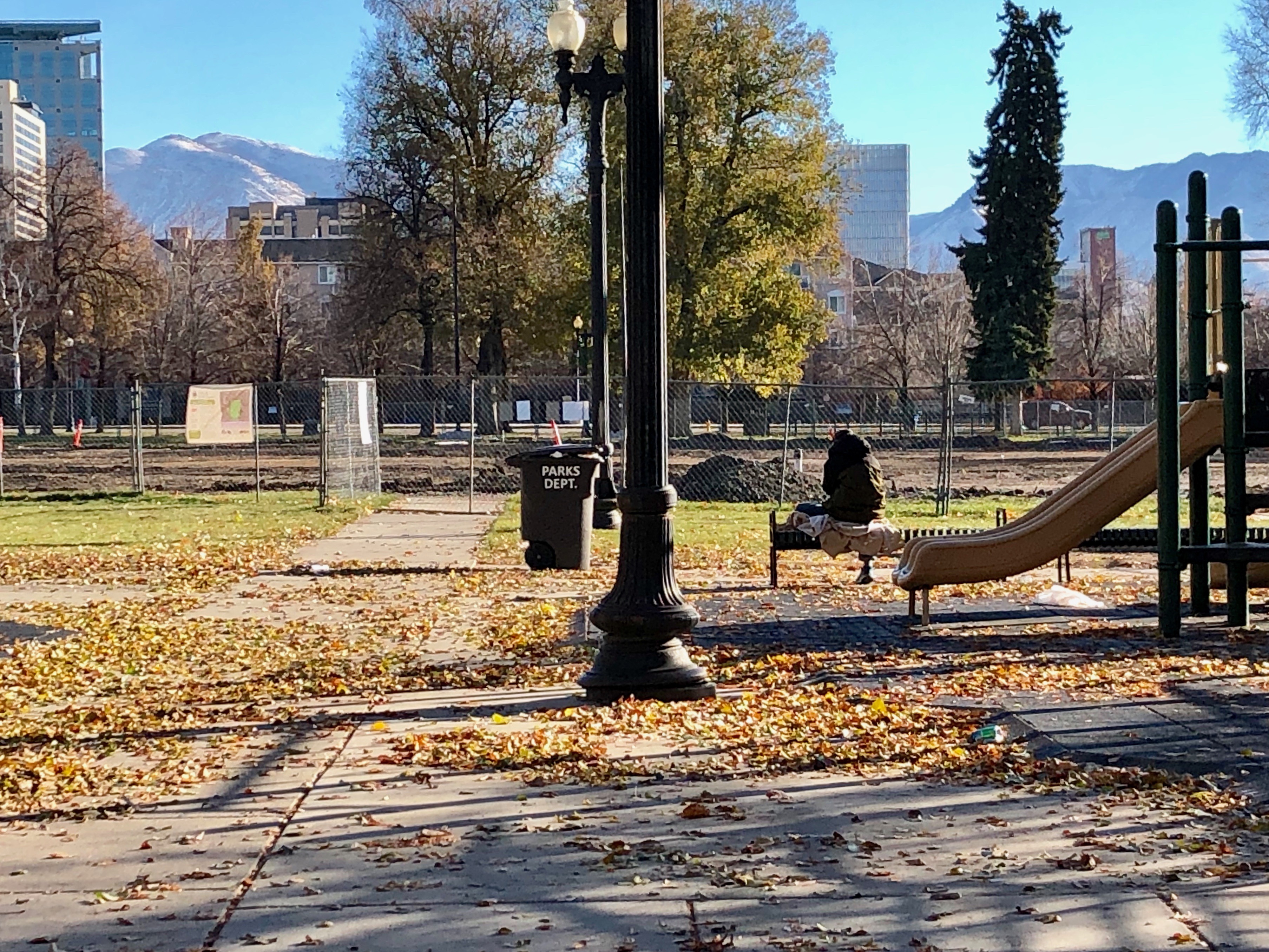
A homeless man sits on a bench trying to stay warm on a chilly morning. Other people were walking around or sleeping. (Photo by Clara Welch)

Utah has been using a Housing First model since 2015.  Housing First departs from the traditional ideas that people need to be sober and employed before they can be given a basic human necessity. Finland and Japan have adopted this method and have very low numbers of homelessness. The success rates vary, depending on how you analyze it, from 40-80 percent of those being housed remaining housed. They are encouraging numbers from a tactic that focuses on the person as a human being, not as a burden.

Organizations all across the Salt Lake Valley are striving towards the same goal as Operation Rio Grande, providing multidimensional help from medical to social needs. Community efforts are changing the care that is provided, bringing the humanity back into relieving the burden of homelessness.
IMG_0913

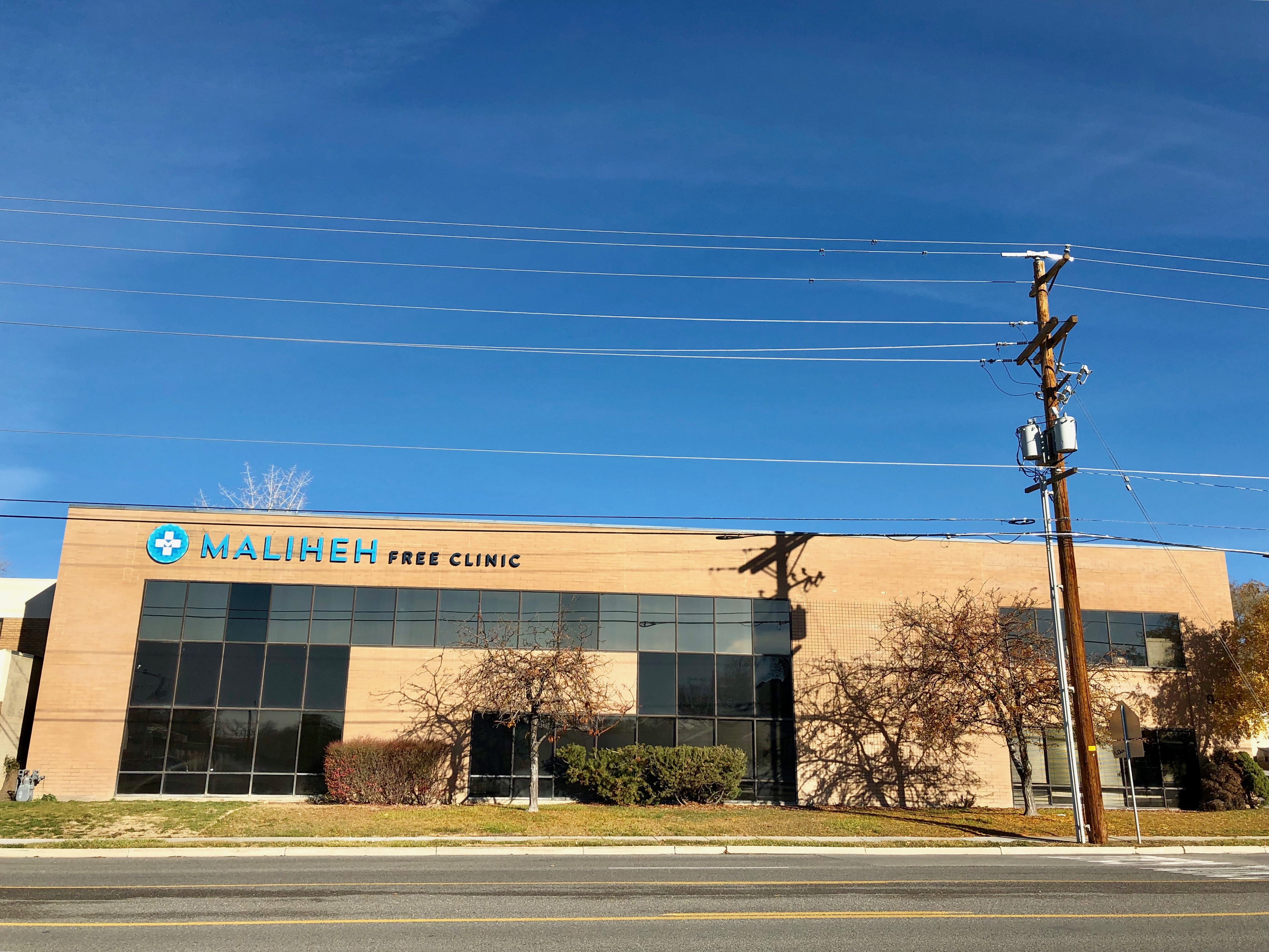
Maliheh Clinic is a free clinic serving those who earn less than 150 percent of the federal poverty standard. They offer multiple services, focused on providing quality healthcare no matter the ethnicity, religion, gender, or sexual orientation. (Photo by Clara Welch)
Maliheh Clinic

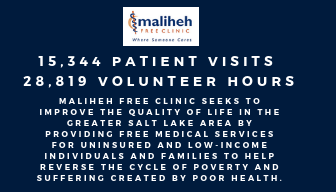
Maliheh Clinic’s mission statement and numbers for 2016. (Photo by Clara Welch)

Collin Hoggard, a student at the University of Utah, volunteers at the Maliheh Clinic. Hoggard explained how the Maliheh Clinic, “started as a way to reach out to the uninsured people in Utah.” It’s been serving patients who earn less than 150 percent of the federal poverty guidelines since 2005.

In 2016, Maliheh had 15,344 patient visits and 28,819 volunteer hours served. Providing preventative care, the Maliheh clinic reduces the burden that emergency rooms and hospitals experience with patients coming in with easily prevented emergencies.

Hoggard is a Spanish interpreter and accompanies patients on routine visits to therapy sessions. “It’s been amazing to connect with the patients,” says Hoggard, who sees real people with real needs. It has changed the way he sees those in different circumstances than himself. 
IMG_0902

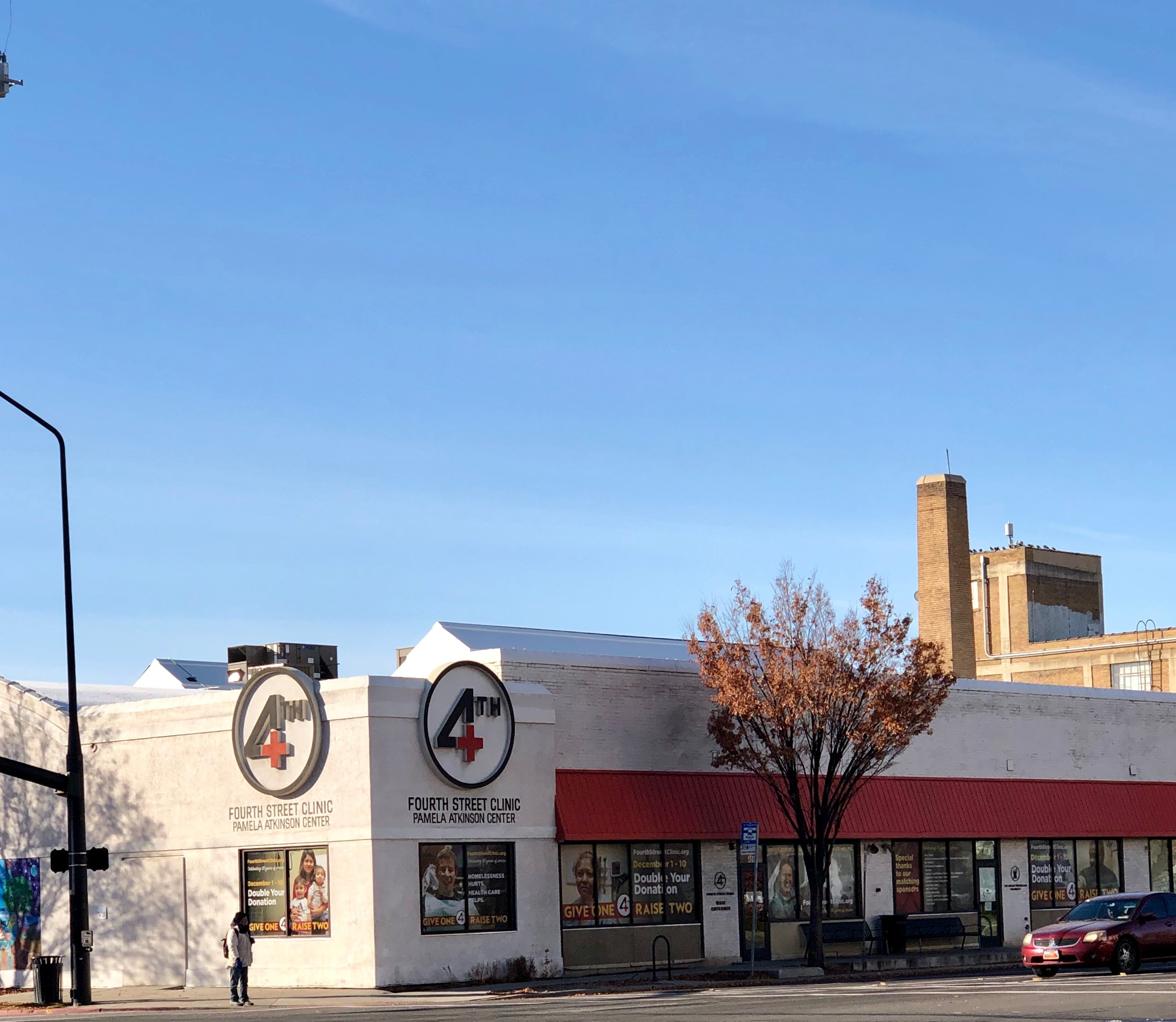
Fourth Street Clinic has been serving homeless patients since 1988 and was moved to this location in the early 90s. (Photo by Clara Welch)
 

4th Street Clinic

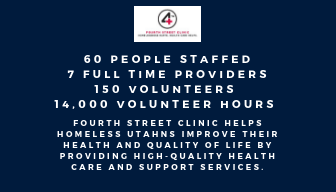
Fourth Street Clinic’s mission statement with their number reports for 2017. (Photo by Clara Welch)

Like the Maliheh Clinic, the Fourth Street Clinic provides free healthcare and is located near Rio Grande. It’s a convenient location for many of the homeless people located downtown. The Fourth Street Clinic has a staff of over 60 people, including 7 full-time healthcare providers, and 150 volunteers providing over 14,000 hours of volunteer service. James Jarrad, Development and Communication Manager at Fourth Street Clinic, explained that the network of donors, volunteers, and staff bring quality healthcare to 5,000 yearly patients, who otherwise, would have none.

Jarrad visits with real patients who share their stories for the clinic website. “Becoming homeless can happen to anyone and for almost any reason,” he says. “There are so many different things to get to where you are in life and they can add up to either completely build your life up or tear it down,” Jarrad explains. “Sometimes you have no control, sometimes it’s within your control.”  

 Jarrad emphasized that, “homelessness is so much more complex”, than what the general public might think.

Connect2Health

Connect2Health’s mission statement with their number reports for 2017. (Photo by Clara Welch)

Connect2Health is a non-profit, student-run organization with a mission to “empower individuals to utilize community resources in order to cultivate multi-dimensional health.” By enlisting eager students, Connect2Health strives to connect patients with the resources they need to get back on their feet.

Focusing on needs other than medical, Connect2Health volunteers work one-on-one with patients at multiple locations. Volunteers can be found at Fourth Street Clinic, University Hospital, Primary Children’s, and the Wellness Bus. Connect2Health is creating a new norm by sending patients out with not only prescriptions, but resources including food, clothing, child care, and degrees.

Knowing that help is available is empowering to homeless and low-income individuals, but volunteers are impacted in a powerful way as well.  “It really helps to break down bias, develop cultural sensitivity, and develop empathy,” say Alexis Lee, Director of Connect2Health.

Volunteers work with individuals, who right now, happens to be homeless, says Lee, but it is important to see these people outside of their immediate circumstances. Connect2Health engenders empathy and understanding for these individuals, Lee says. 

Helping the homeless is more than just making downtown safer, it’s about seeing people for who they are. Operation Rio Grande addresses part of the issue of fixing homelessness, but it is organizations like Maliheh, the Fourth Street Clinic, and Connect2Health that fulfill the bigger picture and long-term needs.

What keeps these organization going are the volunteer hours. Donating time and spare items can make a difference in another human’s life. Homelessness is a multi-dimensional issue. A combined effort from the state, city, organizations, and individuals will help lift people from the burden of homelessness and be seen as fellow human beings with just a different set of challenges than you.


This slideshow requires JavaScript.
Araceli Haslam

Processed with VSCO with kk1 preset

MY STORY: The aftermath of passing Proposition 2 in Utah.

MY BLOG

ABOUT ME: I’m currently a student double majoring in Strategic Communications and Fine Arts with an emphasis in photography at the University of Utah. I have an extensive background in media including video, film photography, editing, and alternative photo processes. I have directed and produced several short films. My short documentary, A Wealthy Diagnosis, won Best Student Documentary at the IFF in Burbank, California. During the 2017 legislative session, I worked with Senator Jim Dabakis, producing short videos for him on different legislature topics.  I spent a month and a half in Costa Rica volunteering in a cultural immersion program called Amigos de las Americas. Salt Lake City is my home and I’ve embraced our beautiful nature since I was a child. I learned to ski the second I learned how to walk.

Linkedin Profile

Trevor Hofer

Wedding picture

My Story: Poor air quality continues to be an issue for residents of Salt Lake City

My Blog: Trevor Hofer-Blog

About Me: Trevor Hofer was born and raised in Salt Lake City, Utah. Trevor is a student at the University of Utah. He is currently studying at the College of Humanities he is majoring in Strategic Communications and as well will be minoring in Business Administration. His goal after college is to pursue a career in marketing. Some of Trevor’s hobbies and activities that he enjoys participating in are photography, watching and playing sports.

 LinkedIn

Clara Welch’s Reflection Blog

Clara Welch

I spent a full year volunteering 10 hours a week with homeless and low-income populations at the University Hospital and Fourth Street Clinic. The concerns, realities, and needs of these people became very real to me. Trying to figure out a story for this project was hard and I went through a few ideas for it. This idea wasn’t even one of the two stories I pitched earlier in the semester. The idea came from another student. When she was talking about her idea to look at Operation Rio Grande, it hit me that I have a lot of personal experiences and feelings towards the things going on.

Figuring out that this is what I wanted to write about was easy, but it was hard to know what direction I wanted to go. My research began with learning more about Operation Rio Grande. Utah actually has done some things in the past that have brought national recognition when it comes to helping homeless. One of those thing is “housing first”, which I talk about in the article. Then I needed to get my interviews done, but was still unsure the direction.

My interviews were all exactly what I needed. The questions asked were general questions, but the conversations went to places that formed my story for me. It reminded me of the things that I had learned when I volunteered with these people that I came to really know.

Sitting down to write Curing homelessness with a focus on the individual, the ideas came once I had everything that I needed. It’s a cause that means a lot to me and ideas that I believe are most important in everything that you do.

Kate Pekuri: Reflection Blog

MY BLOG: 

For my enterprise story, I chose to write about the University of Utah Alumni Association after becoming more involved over the course of the past semester. As I became more involved, I was exposed to a plethora of opportunities and resources for current students that I had no idea about, so I thought I’d share some of the things I’d found.

Since the Alumni Association is located right on campus and part of the University of Utah, it was very easy to find sources from the office. I feel like when people already work for the U, they feel the need to give back and help students further their education. As for finding alumni sources, I just asked friends if they knew anybody that could help me out, which turned out successful. I feel that these were the best sources for my story because they demonstrate each step of the transition from student to alumni.

After gathering information, I tried to put it in perspective to write a story that the audience would be interested in. As a current student, I felt as though other students would be most intere

sted in the AlumniFire program, since we all have the constant fear of finding a job looming over our heads.

While writing this story, I really saw how tight knit the University of Utah community is and how students and alumni are constantly willing to help each other out. It’s been really cool to be a part of something so much bigger than myself.

MY STORY

ABOUT KATE PEKURI


Kennedee Webb

2015-09-29 17.54.34 (1)My Story:

My Blog: 

About me: 

Hello readers, my name is Kennedee Webb. I am a junior at the University of Utah, majoring in Strategic Communications. I am 22 years old and am from North Ogden, Utah. I have been attending the University of Utah for around 4 years and am looking forward to graduating. Some of my interests and hobbies include: boating, wake boarding, snowboarding, hiking, and photography. I am looking forward to share my experiences of learning about the bluebird and lime scooters with the readers.

LinkedIn:

https://www.linkedin.com/in/kennedee-webb-b67953138/

Scooting around Salt Lake City, the debate over the Lime and Bird scooters

This slideshow requires JavaScript.

Scooting around Salt Lake City, the debate over Lime and Bird scooters

https://unewswriting.wordpress.com/wp-admin/post.php?post=9014&action=edit

By Kennedee Webb

SALT LAKE CITY — Have you seen riders zipping around corners of streets on Lime or Bird scooters around downtown Salt Lake City? It seems like everywhere you go in the city, you are bound to see  someone “scooting” and enjoying the cool breeze as they ride along the streets and sidewalks. These scooters were introduced to the city in early summer of 2018, and have quickly become a hit with people downtown and on local college campuses. While riders seem to love this new form of transportation, some are debating the safety of these scooters on our streets and sidewalks.

The rentable Bird and Lime scooters are very similar, both are dockless and powered electronically. The scooters can be accessed through each of the companies’ downloadable apps. The rider is able to locate a scooter near their current location, pay for the ride and activate the scooter, all through the app.

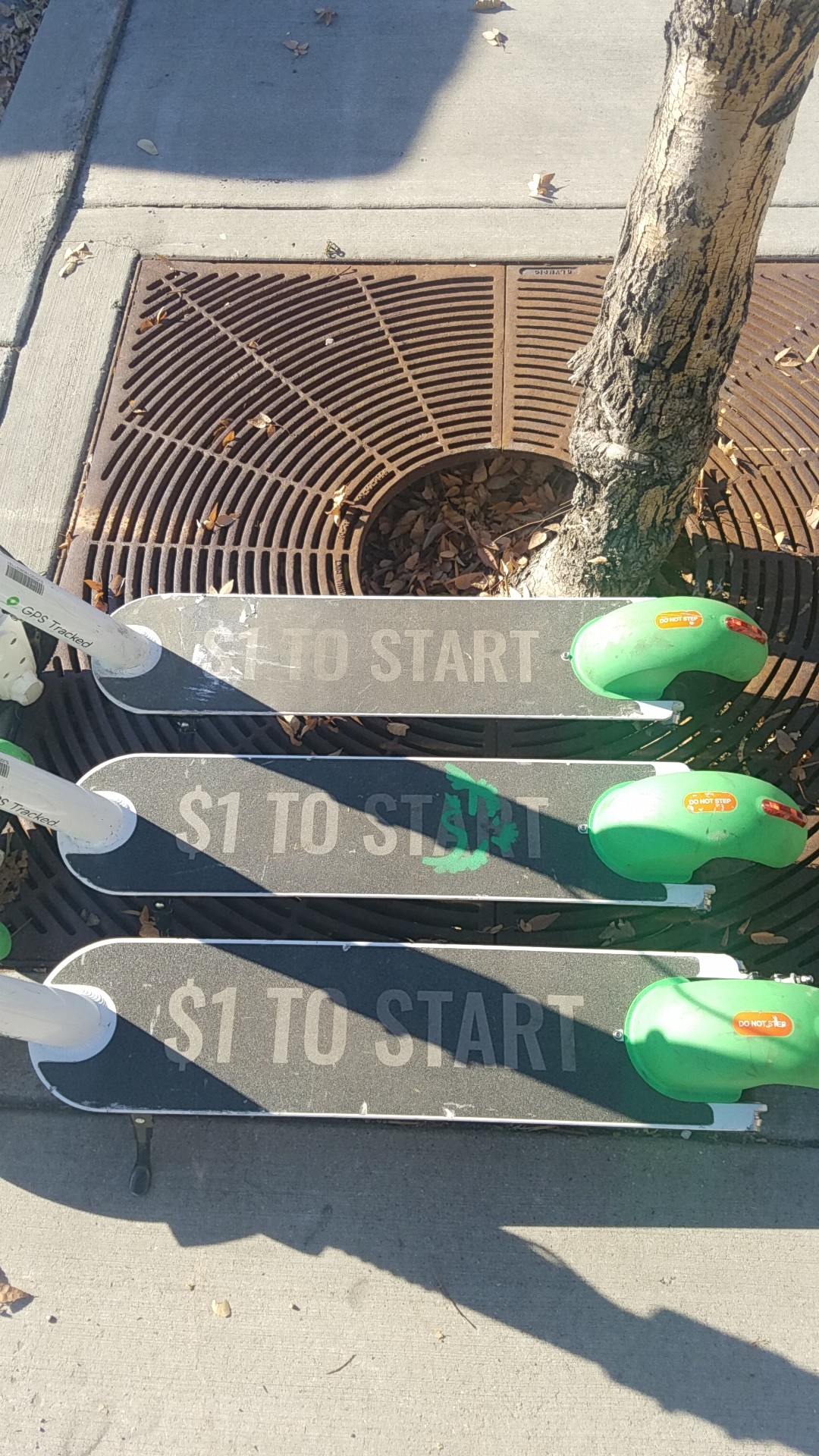
The starting amount for each scooter is $1.00 and then the app charges the rider 15 cents for each additional minute. The riders must 18 or over and have a valid driver’s license.  After riders reach their destinations they may set down the scooter in a safe location and leave. At the end of the night, scooters are located, recharged, then returned to their “nests.”

On the one hand, these scooters seem like a wonderful idea. Not only do they provide easy and fast transportation, they are fun, “cool,” and budget- and environmentally-friendly. They’re a great alternative for those in a rush, or for those who don’t like to walk. And the scooters go up to a 14 miles per hour.

“I really love having the scooters up here on campus,” says Shaylee Anderson, a 21-year-old student at the University of Utah. “They are so easy to access through the app and pretty cheap for students like me who are broke. The scooters provide me a quick way to get to class, if I’m running a little late. When riding, I do make sure to be very aware of my surroundings so I don’t have a chance of hitting other students.” However, for every positive of a new fad, there seems to be a negative as well.

Safety issues have been a concern for schools and the city ever since the scooters popped up in early summer. These concerns include riding along the sidewalks and the possibility of injuring pedestrians or other riders. Riders must ride in the street and in bicycle lanes or travel lanes, they are prohibited from riding on the sidewalk. Also parking scooters has been a safety issue.

[According to city regulations?] riders should park scooters safely between the sidewalk and curb, taking care that the scooter is not adjacent to a lamp post or other street pole, UTA bus stop sign, bike rack, or on the sidewalk where it will impede ADA access and the general flow of people. Also, a rider cannot park their scooter within 50 feet of a GREENbike station, at a UTA bus or TRAX station, or in parking spots dedicated to cars.

Jon Larsen, director of the Transportation Division Department of Communities? and Neighborhoods of the Salt Lake City Corporation talked about Salt Lake City’s view on the scooters and what they are planning for future improvements. “Generally, I would say that we are supportive of the scooters, because of the potential air quality and mobility benefits. We, of course, want everyone to be safe, and have worked with the vendors on outreach and education of users.

According to Larsen, permanent regulations for scooters are not yet in place. “We are also working on expanding our network of bike lanes throughout the city so that people have a safe place to ride. We created a temporary operating agreement that allows vendors to operate in the city and sets the ground rules for them to operate. We will likely adopt a permanent ordinance that governs the operation of shared scooters sometime in 2019.”

Many working professionals still have their doubts. Ian Welch, 43, works downtown at the Wells Fargo building. “I don’t know how I feel about these scooters,” he says. “I have almost been hit a couple times by riders who are unaware of their surroundings. I can see the benefits the scooters can have on downtown, however there really needs to be an outreach on the safety uses of these scooters so I don’t get stomped down to the ground.”

The scooters debate is bound to continue downtown Salt Lake City and on local campuses. Whether you’re pro scooters or ready to see them scoot away from the city, they have been a focal point of transportation over the past year. It seems like most people have accepted the scooters, and the city has adapted well; however, there will always be safety concerns. The city and riders are aware of these concerns and are taking actions to ensure that safety is the number one priority. For now, it looks like the scooters are here to stay.

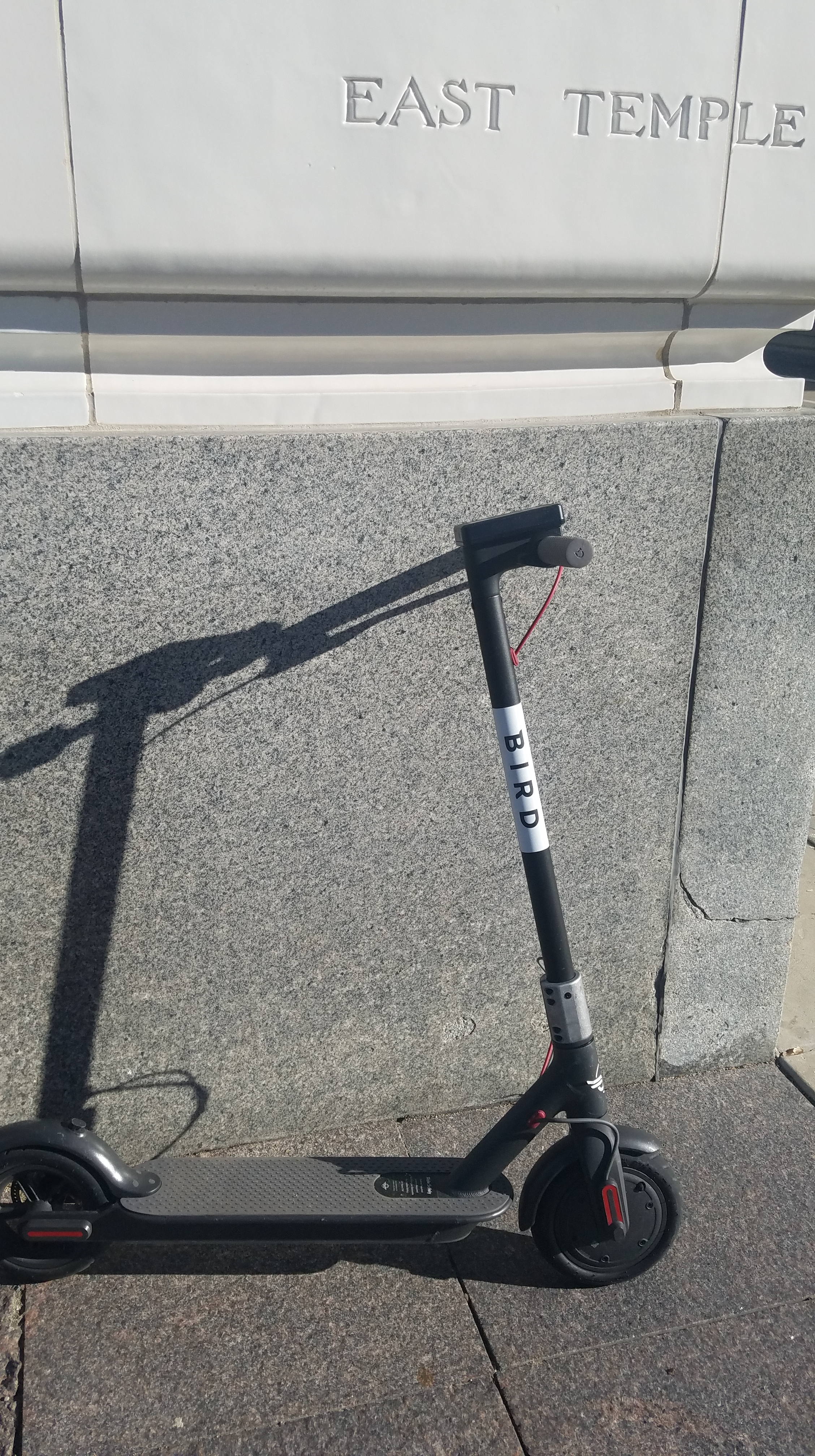
20181126_134912

Bird Scooter located in downtown Salt Lake City

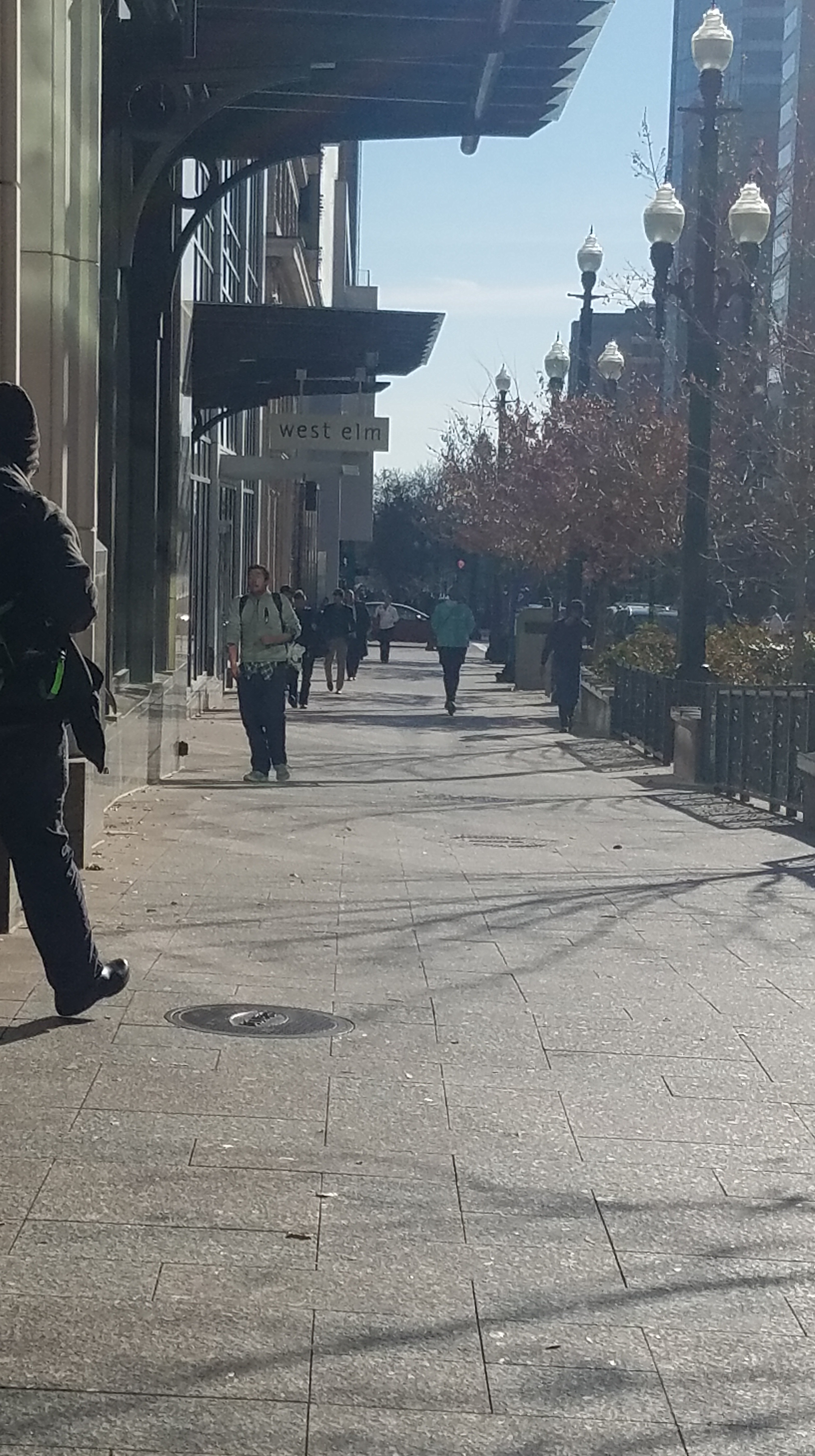
20181126_135318 (1)

Laurie Glover riding a Bird scooter in downtown Salt Lake City

Snapchat-669200472

$1 to ride a Lime scooter

Michael Sanchez – Reflection Blog

I have to deal with parking issues most days when I come to the University of Utah. I park my car on campus because I have to be at work immediately after class. I have small daily annoyances when it comes to parking at the U. This is what sparked my interest in parking.

My sources were easy to find. My first interview was Alma Allred, who is the Executive Director of Commuter Services. He was easy to schedule an interview with, I made contact with his secretary and scheduled a meeting within the week. My other interviews were found by walking around parking lots and asking people if I could talk to them. The insight I received varied from someone with parking concerns to someone on staff who never worries about parking because he comes to campus very early.

What surprised me personally was that employees of Commuter Services have to pay for their own parking. No employees of the University of Utah receives free parking. This surprised me because before starting my story on parking, I believed that faculty is allowed to park for free. Also, Commuter Services receives no money from student fees or from the state. The department is run purely on money collected from parket permits and tickets.  

At first I believed parking to be sort of a dull subject. As I compiled my interviews and wrote my story it became apparent that there are many interesting aspects when it comes to parking.

MY STORY

Araceli Haslam: Reflection Blog

The Aftermath of passing Proposition 2 in Utah

By Araceli Haslam

I decided to write this story on Proposition 2 because I found it fascinating that in such a conservative state medical marijuana made it onto the ballot. I chose the topic before it passed, thinking it wouldn’t pass. My story was going to be about how it made it onto the ballot and what might influence people to vote yes or no. However, when it was voted in and the aftermath with the compromise bill and the lawsuit, I chose to follow that story. From there, I was introduced to my sources who are both educated and close to the topic and they taught me things about Prop 2 that I didn’t initially know. Their opinions were polar opposites, which allowed me to eliminate biases.

This story took a good amount of research on my part. I wanted to understand Prop 2 and the compromise bill in full effect so I could productively report on the topics. I also wanted my readers to understand both bills so I chose to summarize them through a timelined structure, which allowed me to feed into what is happening today.

The main thing I struggled with writing this story was avoiding biases because I feel strongly about my political opinions and have a hard time not expressing them. I’m still slightly worried that there are some biases. Even though this was the hardest part, it was also my favorite part because I haven’t written a non argumentative paper in my entire college career. I enjoyed the challenge and change.

Michael Sanchez – Bio

MY STORY 

MY BLOG

ABOUT ME   

Michael Sanchez is a transfer student from Salt Lake Community College, where he received his associates degree in communication studies. Currently, he is pursuing his bachelor’s degree in strategic communication at the University of Utah. He plans to explore a career in public relations when he graduates.

Photography is his passion. In the summer, you can find him exploring the wilderness and documenting his adventures. When he has free time he loves to volunteer, whether it be at the Sundance Film Festival or at the local food bank handing out food, he loves human interaction and getting to know people.

As of now, the fast-paced environment of broadcast news is where he works as a photojournalist for ABC4. No matter what the assignment, Michael is up to the task. Getting that perfect shot is something that fills him with pride.


This slideshow requires JavaScript.


Kate Pekuri

MY STORY

MY BLOG 

LinkedIn

ABOUT ME:

0998F3E3-6856-40FC-AF21-D83951629CAA.jpg

Kate Pekuri is a 21 year old student pursuing a degree in Strategic Communication and a minor in Business. She currently works as the Wings Team Captain for Red Bull and serves on Alpha Phi’s executive council as Vice President of Membership Recruitment.

Kate is from Boise, Idaho and came to the University of Utah 3 years ago. When she’s not in school or working, Kate enjoys spending time with her friends, skiing, and traveling.


University of Utah Alumni Association works to connect current students with alumni

By Kate Pekuri

SALT LAKE CITY–The University of Utah boasts nearly 280,000 alumni, and the Alumni Association has the massive task of managing this group of people. On their website, the Alumni Association claims they are “dedicated to forging and preserving lifelong relationships with alumni, students and the community.” Through their efforts, they work to create a sense of loyalty to the U, give to philanthropy, as well as be a central hub of campus activity. 

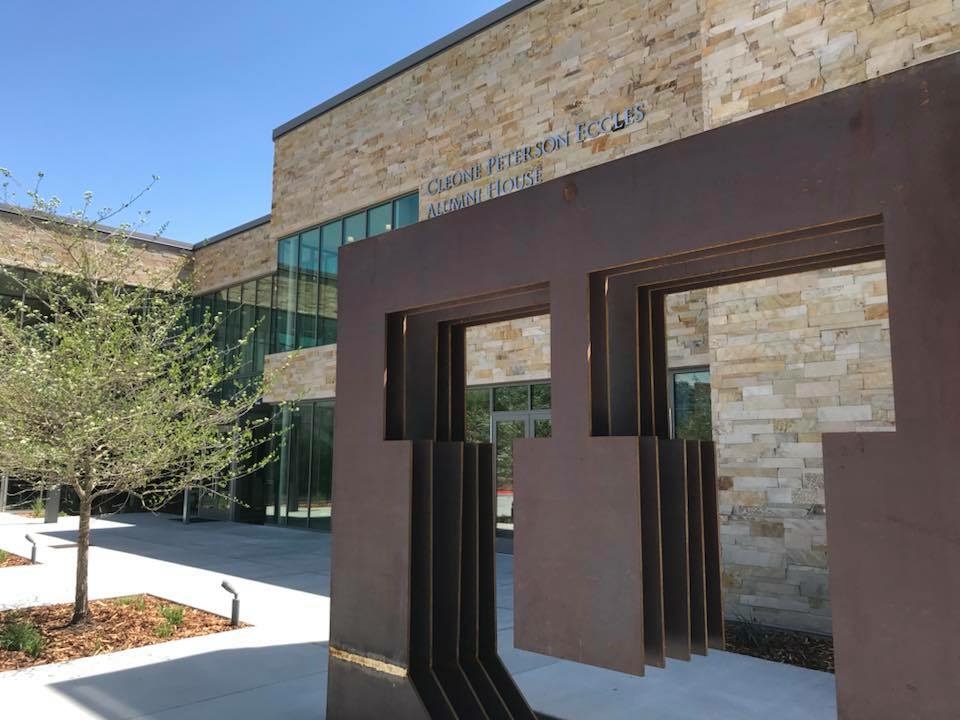
IMG_1880

This past year, the Alumni House has undergone a complete renovation, resulting in the opening of the Cleone Peterson Eccles Alumni House. The building features ballrooms, meeting rooms, and beautiful outdoor spaces, located at the center of campus. It is often used as an activity hub, always hosting different organizations’ events. Anyone can reserve a room in the Alumni House, from a club meeting to a wedding.

Despite being a brand-new building, students often have no interaction with the Alumni House aside from picking up their MUSS passes. The Alumni Association has numerous leadership opportunities for University students such as the Student Alumni Board and the MUSS Board. The MUSS Board even has their own room in the new building complete with couches and ping pong tables where members of the board can spend their free time between classes. Students can also reap the benefits of the Alumni Association. Here, students can forge connections with professionals within the Alumni Association as well as build their own resumes.

IMG_1889

University of Utah Alumni Zac Williams served time in many organizations during his time at the U. This included ASUU, Inter-Fraternal Council, and the MUSS Board. He was also a part of homecoming royalty in 2016. “It’s been a huge part in shaping the leader I am today,” says Williams. Not only did he gain leadership skills and professional connections, but he was also a recipient of one of the Alumni Association scholarships. Williams is now in graduate school at the Southern California Institute of Architecture studying for his Masters of Architecture after receiving his undergraduate degree at the U.

One of the associations main incentives is to connect U Alumni with current U students. The main avenue of doing this is known as AlumniFire. This is a grassroots network where current students can connect with young alumni in order to find jobs, internships, or just get career advice. Karen Ashton, Manager of Marketing and Membership at the Alumni Association, is a member of AlumniFire as a mentor. Ashton says she is a believer in AlumniFire because “I can put in as little or as much time as I’d like, I can look at a couple resumes or do a full-blown mock interview with a student.” Campaigns such as this one reinforce the Alumni Association’s mission to connect students with young alumni in a natural, simple way and gives mentors a sense of making a difference.

Screen Shot 2018-11-28 at 10.31.18 AM

If alumni would rather not give up their time, there are currently eight different scholarship funds they can donate toward. These scholarships are awarded to students achievement based as well as need based.

IMG_2142

Kelsy Patrick, a University of Utah graduate in Anthropology with a health emphasis, landed a job in the healthcare field with the help of alumni. “I would not have the job I do right now if it weren’t for the connections the University has brought me” says Patrick. She explains the loyalty of the University’s alumni and their inherent desire to give back. Patrick now works at the Granger Medical Clinic while applying to Physicians Assistant schools. With the help of alumni, she now looks forward to giving back to future students.

Like many organizations on campus, the resources are there just waiting to be used. As students, it is imperative for the college experience to get out and seek new opportunities as well as focus on creating a future beyond college. The resources of the Alumni Association are just a few of thousands of resources provided to students by the University.  The University of Utah Alumni Association aids students in seeing beyond the diploma and promoting lifelong Ute pride amongst its graduates.

This slideshow requires JavaScript.

ABOUT KATE PEKURI

Parking at the U: Is is worth it?

By Michael Sanchez

SALT LAKE CITY — For students and faculty at the University of Utah, parking on campus can be a sore subject. With construction shutting down parking lots and the stressful morning rush to find available spaces, students may find themselves asking, “is parking on campus worth it?”IMG_1917

The sluggish speeds on Foothill Drive, construction blocking regular routes, the cost of parking both legally and illegally, the long walk to class after finding a spot—all of these are issues facing a person commuting to the University of Utah. The problems are easy to identify. The causes and solutions can be more elusive.  

“I think parking spots are going further and further away from the main buildings that I go to because of the amount buildings that are under construction,” says Tamara Oniani, a design student at the University of Utah. Oniani’s walk back to her car is around 10 minutes. Closer parking would make her feel safer on days when she gets out of class in the evening, she says.

Safety has been a concern at the U recently. Walking to and from class, especially at night can be a concern. According to Commuter Services, some of the A parking becomes U parking after a certain time of day. Also, there are escorts available throughout the day for students who feel uncomfortable walking to their car.

An annual parking pass for students at the University of Utah costs around $260. After paying for tuition, housing and books, students can often feel overwhelmed by the added cost of parking at the U. Additionally, employees who receive benefits from the university are allowed to purchase parking with the “A” designation. Parking in “A” designated parking will cost a faculty member around $580 a year. While this pricing may seem unfair at first glance, there are reasons why commuters pay so much to park.

“The only money that we are able to spend is what we are able to generate from fees that we impose,” says Alma Allred, Executive Director of Commuter Services. Commuter Services sets the price of parking, and collects fees to build and maintain parking across the University of Utah campus. Unlike other departments at the U, Commuter services does not receive any tax revenue or money from tuition. The department is run like a business, and it must generate money in order to operate. “We’re supposed to bring in more than we absolutely need, to fund additional construction projects,” Allred says.

The peak hours, when most people park on campus, is around 10 am — which is when the majority of classes are taken by students. This creates a problem for students with morning classes. The dash to find parking is a regular occurrence at the U.

“From my perspective it works fine,” says Raymond Olsen, a U of U staff member who commutes to campus from Logan about four times a week. “It works well for me, I get here early enough, and my secretary provides me with a day pass.”

Olsen is an anomaly when it comes to parking, but he also offered some insight on how to get better parking. “If I were trying to find parking after 8 am, it would be awful.” he says. For some students showing up to school earlier than everybody can be a good solution to finding parking. This practice can also facilitate early morning study time, or perhaps more realistically, a nap before class.

Construction projects on campus have also impacted how many parking spaces are available on campus. “We are sort of in a continual crisis mode, trying to replace parking that is taken by construction of other facilities.”  says Allred. These construction projects take months, and without a backup plan they can cause a high number of parking spaces to disappear. “On Monday we are going to lose 400 spaces,” he says. This is because of the construction of new student housing, due to our growth of the university according to Allred. 

Commuter Services must also consider their impact when they build new parking. A typical parking space in a garage cost on average $22,000 per space. Which, from the stance of Commuter Services, is not a good return on investment.

One solution Commuter Services wants to encourage is the use of public transit. Currently there are 8,000-12,000 people a day who use mass transit to commute to campus. “We want to get as many people as we can on mass transit,” says Allredy. “Every person who rides mass transit saves a parking space for somebody who has to take their car.” This solution is the most obvious answer to avoid parking on campus, but in some cases it is not the most practical.

wc: 806

This slideshow requires JavaScript.

Infographic of how many people for every one parking spot on campus for the University of Utah and surrounding states. 

The aftermath of passing Proposition 2 in Utah

CBD Oil bottled for medical use. CBD Oil was legal in Utah before Proposition 2 . Taken on January 1, 2018. (420 LightGuide)

By Araceli Haslam

SALT LAKE CITY––During the 2018 midterm elections, Utahns voted “yes” on Proposition 2. Despite a five year effort to put the bill on the ballot, however, critics of proposition 2 expressed concerns with the initiative and  began the process of a legislative solution. On December 3, a compromise bill prepared by the Office of Governor Gary Herbert and legislative leaders is expected pass in a special session of the Utah Legislature. Now, Rocky Anderson, a former mayor of Salt Lake City, has threatened to file a lawsuit to stop the compromise bill from passing.

Prior to the election, the Utah legislature passed a bill to allow for legalized possession and use of THC/CBD oil for patients suffering from intractable epilepsy. The bill didn’t include a provision for patients to acquire the drug in the State of Utah, however, until the legislature passed HB197, which authorized the regulated sale of CBD oil.

During the 2018 legislative session, the Right to Try bill — which grants access to marijuana for terminally ill patients expected to live no more than six months — was passed. HB197 calls for the Utah Department of Agriculture and Food to begin growing marijuana in Utah by January 1, 2019. The marijuana may be sold to research institutions or terminally ill patients. 

Proposition 2 is a broader bill, which makes medical marijuana available to more patients in Utah. The bill allows patients 18 and over with epilepsy, cancer, chronic pain, Crohn’s disease, autism, PTSD, Multiple Sclerosis, HIV/AIDS, Alzheimer’s disease and ALS, access to medical marijuana with a physician’s recommendation. If a patient doesn’t have one of the listed diseases they must provide evidence to a five-member board of physicians that indicates their need for medical marijuana. Under Proposition 2, the marijuana will be grown by un-taxed private facilities.

The compromise bill calls for patients under 21 years old to obtain approval from their doctor and a state appointed-panel of medical professionals, according to a report from KSL news.

Walt Plumb Jr., a local land developer and opponent of Proposition 2, expressed his concern that younger patients might have access to marijuana. “We know that someone’s brain hasn’t developed until the age of 25,” says Plumb. “We restrict tobacco use, we restrict alcohol use. It just seems insane to me that all of a sudden we would let someone as young as 18 years old go into these dispensaries and try and cure these illnesses.”  

c37ee41475

May 5, 2015 Legal marijuana growing in greenhouses in Minnesota. This shows what medical marijuana could look like growing in Utah. (Glenn Stubbe/ Star Tribune via The Salt Lake Tribune)

The compromise bill will further regulate the growth and distribution of the marijuana. “One of the problems with the substitute is you get rid of the privately-owned businesses,” said former Utah Legislator Steve Urquhart. Without private businesses the state will be in charge of running drugs, which is a violation of federal law. “It’s one thing to say ‘okay citizens if you do this, we the state won’t prosecute you.’ It’s a much different thing for the state to tell our state employees to deal drugs in violation of federal law.”

Rocky Anderson, the former mayor of Salt Lake City, has introduced yet another twist into the medical marijuana saga, threatening a lawsuit. According to Deseret News, the complaint is based upon the involvement of the Church Jesus Christ of Latter Day Saints in crafting the compromise bill. Urquhart maintains that Marty Stephens, Director of Community and Government Relations for the LDS Church, sent an email initiating the drafting of a compromise bill. 

2514910297_dcd836b19b_b

Utah State Capitol where Propostion 2 will be implemented or replaced by the compromise bill. Taken on May 22, 2008. (Soupstance/ Flickr)

Recently, Speaker of the House Greg Hughes sat down with the anti-Prop 2 side — the LDS Church and the Utah Medical Association — and the pro-Prop 2 side — the Utah Patients Coalition (who got Prop 2 on the ballot) and the Libertas Institute — to draft the compromise bill on common ground. All parties agreed to support the compromise bill, according to Deseret News. However, Urquhart believes that the church being represented in these private government negotiations, raises suspicions of the church’s influence over the new bill.  

In the wake of the agreement, Anderson sent out letters to each party involved informing them of his intent to sue if the compromise bill is pursued. Anderson’s letter claims that the church’s involvement in creating the bill violates the constitution, according to a Deseret News Report. “The Mormon Church is controlling the issue,” says Urquhart. “The Mormon Church is telling them through speakers what they’re going to pass.”

Subsequently, the Church issued a statement in response to the pending lawsuit.  “Broad community engagement was the reason a workable, beneficial and safer medical cannabis program was put together at the direction of state leadership. We stand behind and look forward to the safe, responsible and compassionate solution that will be considered by the state Legislature.” The Church reiterated that it is allowed to have political standpoints, and that their involvement comes from a place of concern for the Utah populous, the Deseret News reported. 

Anderson told the Deseret News that the lawsuit’s goal would be “stopping the session, stopping any move toward gutting the initiative.”

This slideshow requires JavaScript.
 

Come support esports at the University of Utah

Story and gallery by HOLLIS LEJA

Esports and video games in general are starting to become a bigger part of our culture. In a 2018 report by the Entertainment Software Association, 60 percent of Americans play video games daily, and in 2017 Americans spent over $29 billion on video games. The report also said “56% of the most frequent gamers play multiplayer games.”

The University of Utah is one of the first universities in the nation to have a college esports team. This is something to be excited about because it is likely you may be a video game fan too. Entertainment Arts & Engineering (EAE) is the name of the department leading this change and it has created the first varsity esports team in the U’s conference.

The university’s EAE program is one of the top programs in the world for video game development. It is rated no. 3 in the nation for its undergraduate and graduate programs and has published over 100 student-made video games. The U’s esports team was the first varsity esports team in the U.S. and currently offers this unique experience across four different game titles: “Rocket League,” “Hearthstone,” “Overwatch,” and “League of Legends.”

“League of Legends” is one of the most watched third-person Multiplayer Online Battle Arena (MOBA) games in the world. Two teams of five players battle champions with various roles and abilities to be the first to destroy the other team’s nexus — a structure that is well-defended in the middle of each team’s base.

“League of Legends” was the first game to become part of this program back in 2017 and it boasts one of the largest followings in the esports industry. According to Riot Games, the creator of “League of Legends,” over 80 million people tuned in to watch the World Championship in 2017 and Riot expects that number to only continue growing. The 2018 World Championship concluded at the end of October and was hosted by South Korea. North America, represented by the U.S. team Cloud 9, took fourth. This is the first time an American team has placed in the top-4 since 2012 during the first Worlds Championship.

Riot sees the potential in esports just like the University of Utah does. Riot said it has over 500 university League of Legends Clubs on campuses across the U.S. For the 2019 college season Riot will be offering scholarships to both players and staff of the teams that compete. The 2019 collegiate season will start Jan. 15, just in time for spring semester.

In spring 2018, the University of Utah League of Legends Team was in the top spot for the collegiate tournaments played. AJ Dimmic, the esports director at the U, said the team was able to get over 300,000 views on Twitch last season and created over 350 hours of content. Dimmic is working hard to help the team and program continue to grow while creating a place where fans of gaming can come watch and support some of the university’s best players.

Kenny Green works as game studio relations for the University’s EAE program and volunteers his time as the head coach for the League of Legends Team on campus. He is also a student pursuing his master’s degree in game production. He’s been playing “League of Legends” since it came out on beta for PC in 2009.

Green said he tries to instill a “culture of being a family” with his players. The team works on building trust with one another and practices up to 20 hours a week, helping each other improve at the game as they prepare for the 2019 season.

The U currently has 11 students on scholarship for the League of Legends team, each pursuing different degrees varying from organic chemistry to pre-med. Green said his players are just like any other student-athlete on campus and are held to the same standards. Students in the program must be enrolled as full-time students, maintain a 2.5 GPA, and progress through 20 percent of their degree with each season.

Like most of the players and coaches in the program at the U, Green is very passionate about his role with the team and video games in general. He said some of the biggest challenges they face right now are space and budget. The program is on campus in building 72 located at 332 S. 1400 East, Suite 240, formerly used by the College of Law. Green said he is working on making a bigger area for teams to practice and so people can come watch the team play local games in the old mock courtroom in building 73 located at the same address.

The U and EAE are invested in esports on campus and in improving the program. The student-athletes and staff have worked hard to represent the best the U has to offer. Dimmic, Green and the team said the best way students can support the team and program is to come watch the games on campus and subscribe to the university esports Twitch channel. With student support the U can continue to be a leader in innovation and invest in programs like the ones in EAE.

Reflection Blog: Katie Andress

by KATIE ANDRESS

Brainstorming what I wanted to cover for my enterprise story was pretty simple. A topic that I’m very passionate about immediately came to mind, as it seems to always do when I need to write or speak about something I’m interested in.

Skeleton, the sport I have competed in for the past five years and have had the best, most unique experiences in my life. Along the way, I met some great people, athletes, teammates and friends. Even though I no longer compete in skeleton, this is a community full of friendly faces that are always happy to see you succeed and to catch up with you.

So, for my story I decided to choose one of my friends, Akwasi Frimpong. I found his story inspirational because I think he was seen as the underdog in most competitions and he ended up going to the Olympics and even after, is continuing to make a name for himself and leave his mark on the skeleton community.

When thinking about sources for my story, obviously I thought about Akwasi, but I had to think about who else is associated with him and his story, so that’s where Zach Lund and Lauri Bausch came in. These are the best people to contact because I’m talking to the founder of the program, the head performance director/coach and Akwasi’s coach during the Olympics.

After interviews, I made sense of all the information I gathered by putting it into categories based on the questions asked and the answers given, also in order of the story line I was going for. Once I did that, it all came together how I wanted my story to be read.

The writing process came in bursts. Once I gathered and organized my information, I still didn’t know what I wanted to do with it or how I wanted to articulate it to the reader. So I set it aside and came back to it. Once inspiration hit, that’s when I’d write. I’d write until it became a struggle to think of something and then I’d take a break and do it all again. After it was roughly written. I went back over it to finalize the product. And I learned that’s the way I like to write as opposed to forcing it.

Overall, I think writing this story was a good experience. It not only taught me the process of writing a news story and how to conduct interviews and form a story, but it also allowed me to connect back with the skeleton community that I’ve missed a lot.


Zac Fox Reflection Blog

Not a Master Procrastinator

I developed this idea because of the recent traction most ski resorts have been getting during the summer with activities and events, and wanted to dive deeper. Writing this enterprise story was no small task. I typically pride myself on being a master procrastinator. This was not something that could have been procrastinated, here’s why.

First, you’re interviewing at least three people for one story. Sounds easy, right? Wrong. With a typical essay or story you have to write, you’re usually on your own schedule — at midnight with a cup of coffee in hand and a steady 50 words per minute. Whoever you choose to interview most likely has a life, an agenda, and a schedule of their own that probably doesn’t coincide with your own.

For example, I had just finished up a lunch interview with J.P. Goulet, the Marketing Coordinator for Powder Mountain. I interned last year under him at Powder Mountain, and knew he’d be a perfect fit for the story. After a long drive down Ogden Canyon and food properly settled in my stomach, it was very much time for a nap. I set my alarm for an hour, or so, until about 20 minutes in I get a call from Theresa Foxley, the CEO of the Economic Development Corporation of Utah. That was definitely not conducive to a great nap. I instantly shot out of bed, grabbed my notebook and began some vocal warmups to get rid of the tiredness in my voice — a nap-voice, if you will. She helped me get a view at the bigger picture, and statewide presence that the ski resort shift allows.

Despite being startled from a food-coma induced nap, talking to J.P. and Theresa was loads of fun. Writing this story taught me a lot. You would think a couple years in college would teach you not to procrastinate a huge assignment like this — and you would be right. Never procrastinate when you’re on other people’s schedules.

WC: 328

Read more about the author here.


How Ski Resorts Stay Profitable During the Off Season

Story and Photos by Zac Fox

SALT LAKE CITY — For a business model that profits entirely off of cold weather and snow, how do you maintain profitability without either of the two? Ski resorts across Utah have found ways to stay in the green, and retain profits during the greenest months of the year.

Artboard 1Utah is a mecca for year-round outdoor activity. If you’re in the state, look out your window and you’ll see mountains. No? Drive 30 minutes in any direction and you’ll most likely find yourself in one of the many canyons the Wasatch Front offers. Utah’s five national parks and 14 ski resorts are the major driving force of the state’s tourism industry.

According to the 2017 Economic Report to the Governor, there were roughly 4.5 million skier visits to the state in the winter alone. In order to maintain and maximize profitability, resorts in Utah need to maintain the same number of visitors year-round – not just during the winter. Most resorts are already taking a step in the right direction offering some sort of summer events, but few have completely capitalized on the season.

Whistler-Blackcomb in British Columbia, Canada has primarily been a winter ski resort since 1966, offering minimal summer activities like fishing or hiking. It wasn’t until 1999 when they opened mountain biking trails and offered more summer-focused activities. Sixteen years later, the resort reported 1.6 million visitors in the summer, and 1.1 million visitors in the winter, according to an article from the Vancouver Sun in 2015. Similarly, Winter Park in Colorado pivoted to offer summer activities, despite their namesake.

11282017-6Resorts, like Powder Mountain, are following in the footsteps of Whistler and Winter Park with a shift to a year-round resort. “I think a lot of people saw the success that Winter Park and Whistler were having. Whistler is now making more money on their summer activities than they do in the winter,” explains J.P. Goulet, Marketing Coordinator for Powder Mountain since 2008.

For the past ten years now, Goulet has been leading the charge for a better, more profitable resort. Since 2009, Powder Mountain has been offering more and more summer activities to get people up on the mountain. “We’re a ski resort, but just a resort in general,” says Goulet. “We can offer a bunch [of] activities – people want to get in the mountains and enjoy fresh air.”

Artboard 2 copyUtah resorts have a combined total of over 29,000 skiable acres — roughly the size of 200 Disneyland’s — that cover some of the most beautiful parts of the state. “The biggest asset a resort has is its land,” explains Theresa Foxley, the Chief Executive Officer of the Economic Development Corporation of Utah, “maximize the land and you’ll maximize the profits.”

It seems like common sense to make the switch to a year-round resort, especially when you tally the numbers.

“In the summer, there’s a lot more people that are into outdoor activities,” says Goulet. “There’s only about 6 percent of the Utah population that ski’s more than, I think, three days a year.” From a marketing standpoint, the winter audience in Utah is limited to the 6 percent that actually chooses to ski, but the audience for summer activities jumps significantly.

The resorts, themselves, benefit significantly from being open year-round. For Goulet, it’s “obviously to have some revenues in the summer.” However, it goes beyond profits. In order to implement summer activities, resorts like Powder Mountain have to go over feasibility studies for the entire activity to find out how much they’ll spend or make. A resort has to think of everything from the beginning to the end.

“Bike school programs, rental programs, food and beverage, how much it costs for you to run the lift, how much it costs for staff and patrol,” Goulet says. Additionally, the resorts save time and money by retaining staff around the resort, instead of training new staff every year. Overall, the “more people you have on the mountain the better it is,” Goulet says, “it’s pretty great to be able to offer that.”

Operating a ski resort year round provide a massive benefit, and not just for the resort but for the state as well. “Corporations are looking for talent,” says Foxley, “and talent is drawn to places with great amenities.” Most corporations and employees look for the three A’s:  availability, affordability, and accessibility.

The three A’s are what brought professional snowboarder, Jack Wiley, to Utah. Wiley is originally from Seattle, Washington, and moved here to attend high school at the Winter Sports School in Park City. “I came here because there are seven world-class resorts in your backyard,” Wiley says. “Denver is not as accessible to resorts as you’d think, but Salt Lake City is.” Today, the development of off-season amenities means Wiley, and others living along the Wasatch Front, can leverage those resorts the rest of the year.

This slideshow requires JavaScript.

WC: 852