
Natural remedies to reduce stress and anxiety

Story and images by  CLAIRE HILLARD

Take a long run or sit still with a glass of tea and feel the weight of stress drift away.

In the United States, a majority of people with anxiety either neglect their troubles or use pharmaceuticals to dull their anxious feelings. People do not have to suffer through anxiety nor do they have to use medications with negative side effects.

For some, natural remedies may be the answer.

Dr. Uli Knorr is a naturopathic doctor who practices in Salt Lake City. He received an education from the National College of Naturopathic Medicine in Oregon.

Knorr said something that many people with anxiety may like to hear — that anxiety has little to do with an individual’s personality. Most commonly, stress is caused by some hormonal imbalance in the body.

rowing small

Knorr recommended physical activity as well as spending time outdoors to help reduce stress.

To some extent, humans need stress. However, too much stress can be detrimental. If the body is experiencing constant stress, it continues to act in a fight-or-flight state. “People who are very stressed are surviving, but they’re also perceiving life as life during war time,” Knorr said. This is not a healthy state to remain in long-term.

The method of stress relief that Knorr recommends above others is exercise. The many health benefits of exercise are well documented. Additionally, while exercise releases stress, it is also a type of stress itself. Knorr says that because exercise is a type of stress, it can help the body adapt to other types of stress in the future.

Mia Gallardo has found a passion in aerial — a type of acrobatics done while hanging from fabric. For her, this combination of physical demand and artistic expression is a major relief for stress.
ashwagandha small

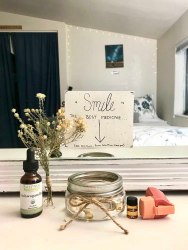
A personal health routine including various vitamins and ashwagandha.

Gallardo is an avid believer in natural medicines. Throughout her personal journey, she has used a number of natural techniques to reduce her stress. Many of her favorite stress-relieving techniques perfectly exemplify the practices that the two professionals recommend.

Knorr’s advice to anyone who struggles with stress is to not ignore their feelings of anxiousness, to participate in some form of exercise, consider taking a complete B vitamin and vitamin C, and consider herbs that may help. And if none of those things help, book an appointment with a health-care professional.

Tea edit small

Upon sitting for the interview, Josh Williams poured each of us a cup of warm tea.

Over a piping cup of local, Native American tea, Josh Williams shared some of his thoughts on stress and ways to address it. Williams is a clinical herbalist who received his education from East West — an herbal medicine program in Sarasota, Florida. He currently owns an herbal shop in Salt Lake City called Greenthread Herbs.

Williams believes that the key to reducing stress lies somewhere in self-care. Whatever that means to each individual, self-care is a good way to approach good health.

For Gallardo, self-care is a big part of her stress-relieving practices. To reduce stress she is known to meditate, bake, spend time with loved ones, or read “Harry Potter” books. Taking time just to do something that makes a person happy can be incredibly therapeutic.

For Williams, he sees taking herbal medicines as a form of self-care. For example, he shared his love for tea. “Tea taught me how to slow down,” he said. Simply being able to sit in peace can do wonders for a person’s mental state.

coffee small

Acts of self care can be as simple as taking time to sip a cup of coffee and read a good book.

While herbal medicine is less commonly used in the United States, the practices are used worldwide and throughout history. There are many herbs that for centuries have been used to help people manage stress.

Interestingly enough, Knorr, Williams, and Gallardo all mentioned “ashwagandha” in their interviews. Knorr suggested it, Gallardo takes it every night, and Williams said it is his “spirit plant.” Ashwagandha is a plant that is known for its many medicinal benefits — especially for soothing anxiety.

Jars edit small

A wall inside Greenthread Herbs displaying just a few of the available herbs.

Plants like ashwagandha will not take the pain away. Instead, they aid the body in overcoming the stress it is under. While many people want a quick fix to their anxiety, using natural products may be beneficial in the long run by helping someone improve their ability to handle stress.

Using herbs helps the body get better at responding to stress, as opposed to simply ignoring or medicating for it. When referring to common pharmaceuticals for anxiety, Williams said, “Instead of learning how to deal with these stresses and learn from them, we numb out.”

In the same way that lifting weights helps people gain muscle mass, individuals can train their body to overcome stress. By experiencing stress in a calm manner, the body begins to adjust and approach it differently. Over time, individuals can feel calmer in the face of stress and train the body to respond accordingly.

This means overcoming anxiety as opposed to relying on numbing medication.

Many people struggle with high levels of stress every day and use different methods of dealing — or not dealing — with it. Wanting to make a change and knowing your options are two steps in the right direction.

Whether it be exercising, drinking tea, or adding a touch of herbal medicine to your daily routine, there are ways to reduce stress. Finding what works best for you is part of the journey.

Tea Sign small

A sign in Greenthread Herbs offering customers the opportunity to create custom tea blends.

Tinker’s Cat Café, a coffee bar with a twist

Story and gallery by JOLIE BELL

Coffee. Conversation. Cats. What do they have in common? They are integral to a new local small business.

Tinker’s Cat Café is the first of its kind in Salt Lake City. A novelty in the United States, cat cafés are popular in other parts of the world, particularly Asia. In fact, the very first cat café opened in Taipei, Taiwan, and soon turned into a sensation in Japan. Cat cafés are a twist on a traditional coffee shop. In addition to coffee, tea and goodies, people also pay to socialize with felines.

Lisa Boone is the owner of Tinker’s Cat Café, located at 302 E. 900 South. Boone saw her first cat café while watching late night television. The idea intrigued her and soon she developed plans to open an establishment of her own. She decided to name her café after her childhood pet, Tinker, who lived to be 22.

“It was all from Tinker, he shaped how I thought about cats,” Boone said. Along with petting cute kitties, the café serves a variety of specialty drinks including coffee, hot chocolate, Italian soda, and tea. It also sells pastries from other local businesses.

The cats themselves come from Salt Lake County Animal Services and are spayed/neutered and vaccinated. One aspect that is unique about Tinker’s is many of the cats may be adopted. In fact, more than 80 adoptions have occurred since it first opened the doors in 2017.

The adoption process is simple. If someone decides to adopt, an employee meets with them and discusses their history with cats. If it is the person’s first time ever owning a cat or if they have other animals in their home, the employees explain what the future pet owner needs and how to care for the cat. There is a $40 adoption fee per cat.

Adoption isn’t for everyone. Boone understands not everyone has the funds or a suitable home for pets. The café fills the need for those who love animals and she feels the café is a positive experience for both the people and felines.

“It’s a win-win,” Boone said. “Especially for the timid cats because they can socialize and get used to an environment.” The cat room, adjacent to the café, is open and without cages. This allows patrons to show them affection while they are living at Tinker’s, which can help the cats come out of their shell.

Not every cat is up for adoption. For some, Tinker’s becomes home. One cat has been at Tinker’s since it opened. He stays to help the new cats acclimate to the surroundings by sitting with the newly acquired timid cats.

“We are not sure what cat magic he has,” Boone said with a laugh.

Throughout the year, Tinker’s acquired several regular customers. Sarah Murtagh is one. Murtagh said she loves the calm environment and has made friends with other kindred spirits.

“When I was going through a rough time in my life, the café was where I found therapy,” Murtagh said. She bought an unlimited pass for the cat room to visit her furry friends as often as she could. Eventually her living situation changed and allowed her to own a pet. Once Obsidian (Obi for short) crawled into her lap at the café, she knew they were a perfect match.

Not everyone is looking to adopt. Some are interested in something new and fun to do. Ally Jelitto, a University of Utah student, visited the shop on a whim after noticing the café driving through town.

“I felt fancy drinking a latte while petting a cat in my lap,” she said in a phone interview. “I’d go back more, but if I do I might go home with five cats,” she said, chuckling.

Recently Boone began organizing special events at Tinker’s such as Cat & Paint, Yoga, and Crochet with Cats. Boone has more event ideas on the horizon, such as trivia or game nights.

The paint and crochet classes offer a coffee, hot chocolate or tea and an hour in the cat room with an instructor. The yoga class is an hour and allows an extra half hour to play with the felines. The curious cats will sit on the yoga mats, play with people’s hair and bat around the balls of yarn.

Reservation spots fill up quickly to spend time with the cats. Or, customers may walk in (if there’s room). The cost is $8 an hour and $4 a half hour in the cat room. Tinker’s offers an unlimited monthly pass for $50 or an unlimited annual pass for $600. The café also provides a children’s hour for kids 8 and under from 5 to 6 p.m. on Wednesdays. It is $6 each for children and parents.

The café hours are 9 a.m. to 7 p.m. Tuesday-Thursday, 9 a.m. to 7 p.m. Friday- Saturday, 11 a.m. to 8 p.m. Sunday. Tinker’s is closed on Mondays. The cat room opens at 11 a.m. and closes the same time as the café does.

Boone is looking forward to another year of business and to continuing to foster a community location where people can connect. Success has its price, however. As the felines leave for their forever homes, it can be difficult for Boone and her employees who become attached to them.

“It’s bittersweet,” Boone said. “However, I’m happy they are going to good homes.”

This slideshow requires JavaScript.


The plant revolution: anti-inflammatory, anti-meat

Story and gallery by JEN CHUN

Plant Based Utah, a collaborative organization that utilizes specialists to educate people about a plant-based lifestyle, held the 2nd Annual Plant Based Nutrition Symposium on Oct. 13, 2018, at the Salt Palace Convention Center in Salt Lake City. Doctors and health experts were invited to give lectures about a plant-based diet.

Annually, many Americans die because of chronic diseases such as cancer, stroke, heart disease, and diabetes. According to 2017 data of the Centers for Disease Control and Prevention, 635,260 people died because of heart disease and 598,038 died of cancer. These two are the most fatal chronic diseases that threaten Americans’ health.

The problem is people do not know how to make healthy meals for themselves. Nutritious food is easily available, but consumers are having a tough time selecting ingredients for a healthy diet.

“One option is a plant-based diet,” said Patrick Olson, an orthopedic surgeon at the Rosenberg Cooley Metcalf Clinic in Utah.

Plant-Based Diet (PBD) is a diet that consists of minimally processed food. It focuses on consuming natural products that people can grow such as vegetables, fruits, whole grains, nuts, seeds, and herbs. PBD does not include any animal products, which is eco-friendly to the earth as well.

“PBD is the most anti-inflammatory diet you can get,” Olson said.

He said plants are the primary source of anti-inflammatory phytonutrients. Not only do plants lower cholesterol and blood pressure, but they also change gene expression and lengthen telomeres. Maintaining a plant-based dietary pattern is helpful for lowering obesity rates.

Lucy Mower, a second-year graduate student at the University of Utah’s Department of Nutrition and Integrative Physiology, said PBD promotes good health. She said PBD emphasizes the consumption of certain foods that are associated with heart benefits. “Eating vegetables, whole grains, and legumes are beneficial to the heart,” she said. Mower explains that “a lot of them have fiber which maintains or lowers the cholesterol level.” She added that components of vitamins and minerals control high blood pressure and bad cholesterol, known as LDL. “Having a PBD is helpful to break the vicious cycle of” America’s daily diet, Mower said.

Additionally, Mower emphasized the importance of research before starting PBD. She said PBD is challenging because it can be a big transition of one’s diet pattern. She said she won’t recommend specific PBD to people unless they do prior research or have background knowledge of plant-based nutrition. She emphasized the importance of discipline in building one’s PBD by researching, planning, and reading a nutrition label.

“To do a healthy PBD, it is significant to know one’s needs,” she said. She recommends considering the food groups seriously when looking for alternatives — replacing animal oil to vegetable oil — which should provide enough carbohydrate, protein, and fat to the body.

Zuri Vasquez, 18, and a student at the U has been doing PBD for five years. Her natural environment and family history — diabetes — influenced her to start PBD. “I don’t consume any animal product because I grew up with chickens and cattle in Idaho and I could not even imagine to harm them,” she said. She supports local farmers’ markets as well.

Meat-based diets stimulate climate change. According to the website PETA, making one hamburger needs as much fossil fuel as it takes to drive a small car 20 miles. Meat-based diet requires massive water, fossil fuel, and trees, which cause drought, air pollution — methane gas — and depletion of the ozone layer — carbon dioxide.

On the other hand, PBD is sustainable and has a lower environmental impact because it does not contain any animal product. “Having a PBD is promoting a huge impact on not only our planet’s health but also all its inhabitants,” Olson said.

Vasquez said having PBD is realistic and inspiring. She said it has become more accessible and sustainable since the increase of markets featuring whole food and grains. By eating healthy vegetables, fruits and nuts, she has gained more energy and improved cognitive abilities. “I feel strong and motivated because of the belief that I am doing something good,” she said.

She advised beginners of PBD to “start little by little.” Rather than changing the whole diet at once, gradually eliminating one thing a time, such as limiting animal products once a day, will be beneficial in adjusting to the plant-based meal. “It is a good investment to think about a longer period for my body and the earth,” Vasquez said.

Heber Rivera has been a chef for 15 years and has done PBD for four years now. He runs a business based on whole food and plant-based meals called “Chef Heber.” Before he started the business, he was in charge of catering to 23 different hospitals for Intermountain Healthcare. “Chef Heber” provides catering, artisan bread, and personalized meal delivery, services in which all the food is cooked by plant-based nutrition.

“Our catering is unique because it is built to the needs of customers,” he said. The artisan bread is made from 100 percent whole wheat and five other plant-based ingredients without any preservatives or sweeteners. He crafts pre-cooked plant-based meals to meet every dietary need. He delivers the food twice a week, which makes it easier for people to access and maintain the PBD.

Rivera aims to offer natural and nutrient-based meals without oil, sugar, or any chemical seasonings. “Ideally, we wanted to help people live better,” he said. He said it is hard for modern people to access healthy meals. He is trying to help as many people as possible by collaborating with different retail stores at reasonable prices.

According to the website, Plant Based Utah’s mission is, “We strive to advance our health and lifestyle culture through the sharing of evidence-based information and initiatives promoting whole food, plant-based nutrition.” This organization is helpful for learning about PBD.

At the symposium, the professionals emphasized that changing habits is crucial in PBD. Nowadays, people are too used to consuming processed and fast foods. Ayesha Sherzai and Dean Sherzai, who are neurologists and co-directors of the Alzheimer’s Prevention Program at Loma Linda University, described the habit pathway as a cycle that continues toward mindfulness, which brings healthy behavior and eventually, success. They pointed out that the “mindfulness” is the most important stage to form a good eating habit. The website Healthy Minds Initiative shows a lot of helpful resources and programs for a healthy lifestyle.

In addition, Dr. Brooke Goldner, who is an expert in healing chronic disease with Plant-Based Nutrition, suggested making a green plant-based smoothie daily. Her book “Green Smoothie Recipes to Kick-Start Your Health & Healing” and the website called smoohieshred.com  contains various delicious and healthy recipes of green smoothies. Moreover, she runs the website called Goodbye Lupus for further information and tips for healthy eating and wellbeing.

One of the greatest scientists, Albert Einstein, said, “Nothing will benefit human health and increase the chances for survival of life on Earth as much as the evolution to a vegetarian diet.” The plant-based diet could be the revolution of health needed for every individual.


Local rock climbers are inspired by Alex Honnold’s mental toughness

Story and photos by McKENZIE NICOL

Ascending 3,000 feet of sheer granite is no easy task. Most would deem it impossible.

Rock climber Alex Honnold proved the impossible to be possible as he ascended El Capitan in Yosemite National Park without safety ropes on June 3, 2017. His triumph, depicted in a 2018 documentary, is impacting the sport of rock climbing by pushing the limit of where risk lies.

Climbing up the Free Rider route in just under four hours, Honnold has achieved one of the greatest physical tasks conceived in the human mind.

Fellow climber Tommy Caldwell was the first to free climb (a style of climbing with ropes only for safety, not aid) the Dawn Wall of El Capitan in 2015. In a National Geographic story published in October 2018, he called Honnold’s ascent the “moon landing” of free soloing.

Honnold’s “moon landing” is quite possibly the most incredible physical performance of humankind​, and the physical achievement is just the beginning of the victory. Honnold holds an astounding ability to control fear and remain determined and clear headed.

National Geographic quoted Honnold as saying, “[Fear is] only hindering my performance, so I just set it aside and leave it be.”

Honnold’s ascension is helping local climbers to see an obvious representation of what it means to really compartmentalize fear and overcome difficulty and stress through grit and mental toughness.

In the heart of Salt Lake City, the climbing team at the University of Utah is training to compete in the collegiate national climbing tournament April 27 and 28, 2019. Ben Roa is in his fourth year at the U and is president of the team. He expressed his amazement and admiration of what Honnold has achieved.

“It is the single most impressive athletic feat that any human has ever done,” Roa said. “The fact that Honnold has done it is astounding.”

He explained that climbing is 80 percent mental and 20 percent physical. It is all in the head. “He compartmentalizes fear and fatigue and it is really impressive,” Roa said.

Roa said he enjoys the constant challenges that rock climbing presents mentally and physically. He said he has several “projects” – or routes – that he is working on in Big Cottonwood Canyon that require “great mental effort.”

“The cooler stuff is always the harder stuff,” Roa said. “It might be a little dangerous because people can be like, ‘Oh wow, I can do it.’” He described that setting goals and knowing your limits is an important part of getting better.

“The goals never stop. That’s one of my favorite things,” Roa said.

Joel Zerr, another climber and employee at Momentum Climbing Gym in Salt Lake City, gave some insight on Honnold’s accomplishment. He said, “[The] level that he’s pushing is on the edge of the risk. Mistakes can happen. It’s a different thing and it’s really impressive.”

Zerr recognizes the immense psychological control that is required to rock climb and why many people, rock climber or not, are drawn to what Honnold has done.

“People can relate to him because you can obviously see the anomaly of what he did. It draws attention and it inspires,” Zerr said.

Zerr explained that he does not feel that pushing those boundaries of risk is completely necessary. It is possible to push oneself in any aspect, not just rock climbing, and it does not need to have such dire consequences. He said he challenges himself mentally and physically, but not in the same way Honnold does.

Managing stress, pressure, and fear are factors of Zerr’s daily climbing life. Whether in the gym or on a wall outside, it feels “real” to be up there and trying to work out the best way to maneuver to the top. Mental sharpness and control are essential.

Isaac Baker, a rock climber from Bountiful, Utah, suggested the idea that rock climbing brings a new edge to life.

“Being on the wall not only gives you a new perspective of life, but a new way of living. Climbing is not a hobby, it’s a lifestyle,” he said.

Baker has been rock climbing for seven years and can see the effects of needing to be mentally sharp on the wall in his everyday life. He said he loves challenges and tackling any sort of project with the mindset of pushing himself to his limits.

Rock climbers all around can add their story to that of Baker’s in saying that the sport has changed their life. Following Honnold’s journey and studying his mental game shows us that his is no exception.

Being the first to free solo a beast like El Capitan, Alex Honnold has set the stage for pushing the limits of what humans can do physically and mentally.

This slideshow requires JavaScript.

Healthcare: what’s in the price when you’re seen by a provider?

Story and images by BRADEN ROLLINS

Whether you go to the doctor to ensure your health shouldn’t be a decision you have to make. Unfortunately, rising healthcare costs are forcing individuals to choose between other expenses and healthcare.

Many face the daunting prospect of healthcare cost. But what contributes to the cost and why are some at a disadvantage as compared to others?

Stories of healthcare costs frequent the news and media attribute one of the causes of high costs to doctors offices themselves.

Trying to decipher why healthcare costs are so high can be difficult. However, speaking with employees at a local doctor’s office and their experience with rising cost may shed light on the subject for some.

Jordan Meadows, a small family practice located in West Jordan, provides services such as physicals, blood draws, weight checks, vaccinations and other basic medical services.

Debra Bowen, the general manager of the clinic, discussed factors that contribute to the price of healthcare in the office such as payroll, collections, supplies, utilities, and other miscellaneous expenses.

Keeping quality employees is difficult in today’s economy due to the unemployment rate being so low. And with major corporations offering higher pay for similar jobs, Bowen said it is difficult for smaller clinics to compete for labor.

Bowen said more than half of the expenses to the clinic is for payroll and if they were to significantly raise wages the patient prices would increase significantly as a result. So keeping the balance between quality employees and wages is a constant problem.

Another problem faced by the clinic is outstanding balances on patients’ accounts, which are usually sent to collections. Some patients receive treatment but delay paying for it at the time of service for various reasons. Many of these unpaid accounts can come from patients who have been treated and have since felt better and no longer feel payment is necessary, Bowen said.

Medical supplies are a major cost to the clinic. Bowen said most of the cost comes from sterile equipment for examination, followed by supplies and tests to diagnose different ailments. The most expensive of the supplies are vaccinations. The use of supplies is carefully monitored so only things that are needed are ordered to reduce waste and overstock of unneeded supplies.

While rising costs are affecting most Americans, Bowen acknowledged low-income individuals and families without insurance are particularly impacted. Jordan Meadows offers cash patients a reduced price for their care while barely breaking even on the cost to the clinic.

These individuals are faced with the decision to pay a high insurance deductible or pay out of pocket. Some coverage is minimal due to the plan selected by the patient.

Bowen said these policies, known as catastrophic insurance, have high deductibles such as $5,000, which most patients would not meet in their plan year, so they choose to pay out of pocket. 

This makes treating these patients difficult, especially those who have chronic care needs such as diabetes. Some patients will come in for their initial visit, but don’t return for follow-up appointments due to the price, which can sometimes cost over $100.

Though prices can still be considered high for cash-only patients, Bowen said they are negligibly higher than the prices set by government Medicare programs. Legally the clinic cannot charge lower prices than Medicare without it being considered fraud.

John Neilsen, a family nurse practitioner, said he and the clinic assist patients by reducing prices whenever possible for cash patients, and suggesting alternatives treatments and helping them find discounts on medications.

Neilsen said it is difficult at times when the patient cannot afford their care, but it’s even more difficult when the patient has the ability to pay but chooses not to afford their healthcare due to extravagances in their lives.

A main focus of the clinic is putting people first and doing what it can to help individuals struggling to pay for services by working with each one on a individual basis.

Mariana Alvarado, the receptionist who was assisting patients, said she has dealt with many patients who can’t afford the healthcare.

Many of the patients who have no insurance or poor insurance are notified before they are seen by the provider of the price of the visit. She says it’s difficult when patients are agitated by prices. But she said she does her best to calm them and explain why services are priced as they are.

Alvarado agreed with one of her co-workers. “Being a smaller clinic we develop relationships with our patients,” she said, “and do what we can to help each patient with staying healthy while helping them afford treatment.”

Jordan Meadows provides healthcare at prices that are manageable for the majority of its patients who have good insurance. But the clinic is willing to work with those who are in positions of financial stress or have poor insurance.

While basic healthcare could be considered relatively expensive as compared to other necessities, the breakdown of expenses to your doctor’s office, especially those of smaller practices, add up to and contribute to the final price of the service provided.

This slideshow requires JavaScript.

Goalkeeping done right, from TIP Goalkeeping

Story and gallery by JOSH LUDLOW

The first Saturday of October at 8 a.m. was cold. According to the car’s outdoor temperature gauge it was in the high 40s. Freedom Hills Park in Centerville, Utah, sits just under the east mountain side. With rain falling the night before, the grass was spongy and wet. Feet were soaked within a few steps on the soggy surface. At this time, and place, goalkeepers from across the Salt Lake Valley gathered to hone their skills.

Brian Simmons, the head of TIP (technique, insight, power) Goalkeeping, is the man running the training program. As the young high school goalkeepers arrive, subtle moans are heard about the hour of day, temperatures, and lack of sleep. Simmons quickly gets them into action to start the morning training session with a few warm-up routines.

Soon enough the goalkeepers are diving on the ground, in the air, and even forward attacking the ball. Simmons directs the efforts of these young players in a positive direction. He provides needed correction but also positive reinforcement when a player correctly executes a save.

The session runs about an hour with much of the allotted time at an intensive work rate. At the end, footprints and cut marks are visible from where the goalkeepers worked as the grass is torn to shreds. Final comments are made by Simmons and then everyone departs till next week’s session.

Simmons discussed TIP and what the inspiration was behind the idea by saying that, “There was a lot of demand for goalkeeper training where I am based in Davis County, Utah. I was asked over and over about what training I could offer, so after holding training sessions sporadically I decided to formalize TIP so that I could be a consistent resource for the goalkeeping community as well as the average coach.”

TIP Goalkeeping provides young goalkeepers the opportunity to train at a higher level than a typical club team practice would provide. The high intensity, demand for excellence, and positive feedback make these trainings invaluable for the goalkeepers.

“TIP was officially founded in 2017, though TIP trainers have been active for about a decade,” Simmons said.

Another TIP trainer, Cole Palmer, also said, “I am not sure of the exact time I started with TIP but I believe the first camp that Brian and I did was in the summer of 2017.”

As a relatively new company in a heavily concentrated soccer playing community, TIP found its niche. The opportunity to work with parents and athletes away from the club teams has given the young goalkeepers formalized training. Whereas at the club levels, goalkeepers are treated as just another field player.

Craig Waldron, a parent of one of the athletes, described the training TIP provides. “I think TIP is different from other trainings because of how personal they make it for each keeper. They also have a very good trainer to athlete ratio so there is a lot of personal help with each of the athletes. And trainers that truly want to make better goalkeepers.”

The success of TIP, when broken down, is about the values it represents. Simmons said, “Our aim is to help keepers learn and develop the skills necessary to become great goalkeepers and people…. So many goalkeeping principles can be applied to life, and at the end of the day, we care very much that our athletes develop as people in all facets of life.” TIP goes further than teaching athletes how to properly be a goalkeeper. It instills values that these young players will one day look back on and realize they were already developing by attending these training sessions.

Ideally, the training sessions are there to assist in bringing a sense of accomplishment and improvement. Specific instruction is delivered from Simmons and Palmer on how to execute a desired movement, perform the technique correctly, and how to improve what the athlete already knows.

Palmer said, “I think the biggest difference that I have seen is getting kids genuinely excited about training. I have never seen kids show up to training and say they also have a game or even two after but at TIP I see that all the time. It seems like they show up excited and ready to go.”

TIP is also giving back to the community. Once a year, TIP hosts a training session for free to anyone. All that is asked from those who attend is a donation, which will be given to someone or a place in need. This past summer of 2018 TIP was able to raise “$330 to support Eumer, a boy living in Ethiopia,” Simmons said. The next year TIP is hoping to raise even more money to benefit someone or something.

TIP brings goalkeeping to a completely different level. With multiple trainers, athletes, and philosophies involved, these young players are receiving the skills necessary to enhance their playing abilities and life. Simmons said it best: “I want TIP to be THE authority on goalkeeping in the state of Utah.”


Redefine beauty with positive body image

Story and gallery by MORGAN STEWART

“In the last decade, there was a 446 percent increase in the number of cosmetic procedures in the U.S., with 92 percent performed on women. The majority being liposuction,” according to Beauty Redefined.

Today more than ever women and young girls are facing unrealistic ideals about beauty and body image. Coming from every media outlet, these beauty standards are becoming extremely harmful to the thoughts and minds of young girls and women all over the world.

Identical twins Lexie and Lindsay Kite recognized this issue and established the nonprofit organization Beauty Redefined in 2013 after obtaining their doctoral degrees from the University of Utah. After great research and study the twins have made it their mission to shine light on the effects of the beauty standards that are portrayed in the media and to start a different conversation about body image.

Their Story

As young girls, the twins were avid competitive swimmers starting at just 6 years old. The girls loved to swim until their attention moved from their actual performance to the way they looked in their swimsuits, Lindsay writes on the organization’s website. This started the girls’ “preoccupation with weight loss” that consumed so much of their thoughts and actions during their developmental years.

But the girls were not alone. Many of their friends were experiencing the same thoughts and emotions toward their bodies and appearances. The common factor that the girls believe attributed to some of these thoughts was the “easy access to media our entire lives,” Lindsay wrote.

Movies, television, social media and magazines all portray a certain standard for beauty. What is cool, what is not cool, what is thin, what is fat, and even what it means to be successful. And the list goes on.

Today

Today, Beauty Redefined has become a successful tool for spreading awareness of the damaging cultural standards that are portrayed in the media. Lexie and Lindsay travel the world teaching about positive body image and their strategies for developing what they call “body image resilience.”

In an online interview with the women they described body image resilience as “the ability to become stronger because of the difficulties and objectification women experience living in their bodies, not just in spite of those hard things.”

Through their speeches, website, blog, social media accounts and eight-week body image resilience program the twins are helping women and girls all around the world to shut down these ideals and to build positive body image from within.

The Beauty Redefined “Body Image Resilience Program” is an eight-unit online program. The program is designed to teach women how to recognize harmful messages in the media and how to reflect on the ways in which those messages impact their daily lives. Furthermore, the program guides women through the process of redefining beauty and how we think about beauty, health and self-worth.

Though there are many “well-intentioned” people who promote positive body image by telling women to embrace their beauty and bodies, Beauty Redefined takes a different approach. “Beauty Redefined is changing the conversation about body image by telling girls and women they are MORE than beautiful,” Lexie told me. “We assert positive body image is about feeling positively toward your body overall, not just what it looks like.”

The Beauty Redefined mantra is: “Women are more than just bodies. See more. Be more.”

Because media in all forms are becoming increasingly easy to access, the popularity of various social media platforms has skyrocketed in the past few years as well as the negative effects that accompany them.

I asked the women how they felt the rise of social media has been affecting women today. “As image-based social media content like Instagram and Pinterest have soared in popularity, so has the endless self-comparison so many girls and women engage in. That self-comparison is a trap, a ‘thief of joy,’ and leads to unhappiness,” they said.

To avoid the harm of self-comparison and the other dangerous messages portrayed in the media the sisters recommend going on a “media fast.” Avoid the use of any and all forms of media for a few days to “give your mind the opportunity to become more sensitive to the messages that don’t look like or feel like the truths you experience in real life, face to face with real fit people and your own health choices,” Lexie suggested. By eliminating media for a period of time you allow yourself to become more aware of these messages and the way they truly make you feel.

Another tip the women shared with me is to “stay away from mirrors while exercising.” Research has shown that women who work out in front of mirrors are less likely to perform to the best of their ability because their focus is on how they look rather than what their bodies are able to do.

Finally, “use your body as an instrument, not an ornament: When women learn to value their bodies for what they can do rather than what they look like, they improve their body image and gain a more powerful sense of control,” Lexie said. This is the mantra that much of the organization’s content stems from.

Moving Forward

Though there are many issues concerning female body image and the way women’s bodies are portrayed in the media, the biggest issues are that “women’s bodies are valued more than women themselves,” Lexie said.

Objectification is the root of these issues and both men and women must fight to stop it.

The sisters believe that “progress for all of society requires valuing women for more than our parts, not simply expanding the definition of which parts are valuable.”


University of Utah students discuss their passion for medicine and science

What university students are enduring now to be successful later on.

Story and slideshow by Ryan Matthew Thurston

It’s late on a Saturday night, and while most students are sleeping, partying or hanging out with friends, Ben Battistone, a freshman from Salt Lake City, is busy studying.

“I spend 15 to 20 hours a week on homework, conservatively. If it’s a test week I spend probably about 30,” he said.

He has a good reason to study. Although Battistone is only 19, he has big plans for the future: He wants to be a doctor.

“My dad is a doctor, so I grew up around it,” he said. “I’ve always been a quantitative person, so the sciences come naturally.”

Battistone has been studying at the University of Utah for almost a year. He’s not entirely sure what kind of doctor he wants to be, but whatever his specialty, his primary focus is helping people.

“I want to make a positive difference,” he said. “I really hope people don’t do it for money or job security. You’re sacrificing quality of care. If someone’s in it for the money, they won’t be as passionate and motivated as if they’re in it for the people.”

Helping patients is an essential part of any medical profession. As one doctor told Battistone, “They don’t treat patients, they treat people.” But he says the extra workload is worth it.

“Students in general are under a lot of pressure,” Battistone said. “You have to balance a lot of things in class while being asked to somehow take extracurricular activities. It’s crazy sometimes.”

The tremendous workload is a common theme among science, technology, engineering and math (STEM) majors. Ben Adams, a biomedical engineering major from Salt Lake City, has experienced similar trials in his pursuit of going to medical school.

“I don’t know that the major is the most important part of it,” Adams explained. “I’ve been considering changing my major to biochemistry or kinesiology.”

Between taking classes and studying, Adams also plays defense for the No. 1 ranked lacrosse team in the nation. Participating in sports has also influenced his career path.

“This summer I had a hip surgery done,” he said. “That doctor was incredible. He did such a great job that it made me think this is maybe something I want to look into.”

Like Battistone, Adams only takes four classes a semester, but considers his workload to be significantly more. Each class requires more work outside of it and contains harder concepts within.

“I’m in 12 credit hours, and it’s supposed to be a lighter load,” he explained. “But I probably spend upwards of four hours a day on calculus and bioengineering.”

Such a workload might seem unfamiliar to students with different majors. But for STEM majors and pre-med students, it’s a common thread that binds them together.

“I think about how the workload differs between majors a lot,” Adams said. “Some kids have 16 credit hours and have more free time whereas I’m swamped the whole day.”

Adams isn’t complaining though. He understands the work he has to put in might be more than someone else, comparatively.

“The end goal is very desirable,” he said. “Helping other people is something I want to do. It’s challenging but worth it.”

Helping people is a consistent theme across STEM majors, even for those who don’t want to go to medical school. Stella Ray is a chemistry major from Park City, Utah, but says she eventually wants to teach the subject in high school.

“I took chemistry all three years in high school,” she said. “I was a teaching assistant and tutor for it as well, and that’s how I decided I wanted to teach it at the high school level.”

Although Ray is only 19, education has always been something she’s wanted to work in. She explained that while chemistry can be challenging, having to work hard to understand the material has given her a greater appreciation for it.

“I like the challenge that chemistry poses,” she said. “Physics makes like no sense to me, but chemistry poses enough of a challenge that I had to work at it, and because of that I ended up liking it more.”

Ray also puts a lot into her studies, but often does so with friends to make things easier.

“The classes that require the most effort are my calculus and chemistry classes for sure,” she said. “It doesn’t feel like a ton of work though, since I have such a good support group of friends.”

Interaction with others is something Ray anticipates as she pursues her career.

“I think maybe more so than the subject of chemistry I love teaching,” she said. “That is my No. 1 priority, to become a teacher.”

Ray explained that in high school, she was amazed how different teachers led to different experiences for students.

“A lot of my peers have had different teachers,” she said. “Usually if they didn’t like chemistry it was because of the teacher they had. If you have a good teacher, even if the subject doesn’t come naturally, you’re still going to enjoy it more. I want to be the teacher that makes this subject accessible to everyone.”

Whether they are studying anatomy, chemistry or biology, the students at the University of Utah all seem to be tied together by more than just their workloads. Those who really work at it all seem to have one goal in common: helping others.


Two single moms open medical spa in Salt Lake City

Story and gallery by ASHLEIGH ZAELIT

Devynne Toote wakes up in the morning and takes her 3-year-old daughter Grei to her mother’s house. She grabs her morning coffee, and gets ready for work. When Devynne gets off around 7 p.m. she picks up her daughter to go home and make dinner together. She gives Grei a bath, they read a bedtime story, and then it’s time for bed.

Toote referred to her life as “work and mom.”

Yet Toote, who is a single mom, doesn’t mind this exhausting schedule because she is turning her dreams of owning a medical spa into a reality. She owns Bye Bye Med Spa with friend Kaeci Durfey, who is also a single mother.

Toote met Durfey seven years ago at the Mandalyn Academy, the beauty school they both attended. They became best friends and moved in together.

“We had always wanted to open up a med spa, it was our dream,” Toote said.

After school Toote started doing eyelash extensions. She later started training where she taught students the ins and outs of lash extensions, and even started her own lash company.

Toote was 20 years old when she got pregnant with Grei, and has been working to show her daughter that she can do anything.

“I just want to be a great example for my daughter,” Toote said. “Being a single mom and working full time is not easy but it’s fulfilling at the end of the day when you start accomplishing things. We don’t have time to waste. It’s hard to do alone but both my parents have helped me along the way. What makes the biggest difference is having a support system.”

She said it can be very difficult to balance the need to work to earn a living with the desire to spend time with her daughter.

Toote said it can be daunting to be a single parent and entrepreneur. But she advised other women, “Don’t let the fear of it all stop you. As long as you’re working hard and remember who it’s for, it will all be worth it.”

Kaeci Durfey is a medical esthetician. A medical esthetician specializes in advanced skin care treatments to develop and maintain healthy, beautiful skin.

Durfey provides the service of microneedling. This is a treatment that improves the look of scars, fine lines, wrinkles, stretch marks, and minimizes pores.

She starts the microneedling treatment by cleansing the face. Then she uses a device that stimulates the production of collagen, uses different kinds of light therapy, and removes impurities. Next she applies a topical numbing cream on the face followed by going over the face with a microneedling tool.

Both Durfey and Toote loved their jobs, but they wanted to expand. Opening Bye Bye Med Spa was the first step in their 20-year plan.

Bye Bye Med Spa is located at 4698 S. Highland Drive in Millcreek. Services include Injections like Botox, microdermabrasion to lighten and tighten the skin, eyelash extensions, microblading, waxing, airbrush spray tanning, and even weight loss programs. The spa also gives clients a great selection of everyday skin care as well as supplements.

Toote and Durfey would love to help others accomplish their goals and are leasing out rooms to anyone, even those who aren’t estheticians. Rent starts at $650 a month and includes social media marketing, business financial services, and web design.

Kendall Robbs is a 21-year-old single mom who rents out a room at Bye Bye Med Spa. She provides facial waxing and eyebrow tinting, and she specializes in microblading.

Microblading is a type of permanent makeup applied to your eyebrow. Robbs uses a special blade to tattoo individual hair strokes giving a fuller, natural looking brow.

Kendall moved from Salt Lake City to Orem two years ago for an internship where she learned microblading. She decided to move to Bye Bye Med Spa because the location would better accommodate her clients.

“The location is great, and everyone offers something different vs. other places where everybody just does one thing. Since there are individual rooms each client gets a more comfortable experience,” Robbs said.

Robbs related with Toote and Durfey, saying, “They are young single moms trying to build a career and I just really connected with them being a single mom as well. We just get each other.”

Toote and Durfey have a lot of plans for Bye Bye Med Spa, including offering cool sculpting. Cool sculpting is a device that dissolves fat cells in the area of choice.

They just recently got a laser to provide skin-resurfacing, laser hair removal, and tattoo removal for their clients. Kybella was also recently added, which is an injection that completely paralyzes fat. They would like to partner with a plastic surgeon in the future.

Bye Bye Med Spa is planning a grand opening this upcoming summer but anyone is currently welcome to set up an appointment for a skin care treatment, eyelash extensions, microblading, or spray tanning session.

The confidence of their customers is their top priority. All women and men are welcome, regardless of their color, shape, or size.


Medical marijuana versus the opioid epidemic in Utah

Story and gallery by CHANDLEY CHYNOWETH

Utah has the seventh highest drug overdose rate in the United States. Six people in Utah die every day from opioid overdoses, according to Opidemic. Taking opioids prescribed from a doctor can be harmful and cause addiction. It’s important that people are informed about this issue in order to prevent it from happening.

According to Opidemic, opioids release chemicals in the brain that stop the perception of pain. The brain can become accustomed to the pills and demand unnatural levels to dull pain and feel pleasure.

One individual, a neurologist, who has been practicing in Provo, Utah, for 28 years, believes that medical marijuana can be an answer to this opioid problem. He asked not to be identified because medical marijuana isn’t legal in Utah, so he will be referred to as Dr. R. He said, “There are over 200,000 new opioid addicts in the United States every year.”

Dr. R mentioned that many of the illicit drug addictions stem from prescription opioids. Oxycodone is the most commonly abused medication. He believes heroine is the most popular illicit drug that opioid abuse leads to because of the falling prices for it in Utah.

In his clinic he only prescribes opioids if the patient is in immense pain. When he does prescribe them it is in low quantities for a short period of time. He will try every other option of medication before he tries opioids because of their negative effects.

If the patient is looking for long-term opioid prescriptions he sends them to a pain clinic that can better manage their pain and medication intake.

When prescribing an opioid Dr. R has three rules: 1. The patient must sign a contract agreeing that he is the only provider for this drug; 2. The patient has to agree to stay within the parameters he supplies; 3. His office checks the patient out on DOPL, which stands for The Division of Occupational and Professional Licensing. This program indicates what other medications the patient is prescribed. He takes these measures to prevent patient addiction.

“I prefer medical marijuana to opioids, and anecdotally multiple patients have told me medical marijuana works better than their opioids,” Dr. R said. He explained marijuana is known to be a “culture drug,” which is the cause for difficulty in legalization.

Michelle C., a medical assistant who has been practicing in Draper, Utah, for eight years, said opioid addiction is a significant problem. Many patients come to her clinic seeking an opioid prescription.

“It doesn’t matter about your age, gender, or profession, anyone can become addicted and we see all different types of people that are struggling,” said Michelle, who asked not to be identified. If a patient wants an opioid prescription and is in pain, the clinic will prescribe one as a last resort and only for three months at most.

In most cases, Michelle said medical marijuana is a better alternative than opioids. She said it can benefit children who suffer from seizures and birth defects because it has been proven to help them. Cancer patients can also find great relief from it.

Michelle’s sister suffers from LAM disease, which attacks the lungs and is fatal. “My sister lives in Idaho so she doesn’t have access to medical marijuana. I wish that she did because it would benefit her a lot more than the pain pills she is prescribed,” Michelle said. Her sister is in constant pain and she believes that in cases like that, medical marijuana is the way to go.

Michelle does not recommend smoking medical marijuana for health reasons, and says taking the pill form of it is best.

Lee Barry, who lives in California and uses medical marijuana for his back pain, said he used to be prescribed pain pills and began to worry when he started depending on them too much. He increased his dosage because his body became used to the medication. Soon he realized that he couldn’t continue taking them because he was on the road to addiction.

He turned to medical marijuana and said it was a much better solution for him. “When taking my pain pills I felt groggy and in a daze all the time. When I switched over to medical marijuana I felt so much better and didn’t have to worry about addiction,” Barry explained in a Skype interview.

Barry believes medical marijuana is a perfect alternative to pain pills and would never go back to taking them again. It helps his back pain and he feels more like himself than when he was using opioids. He doesn’t know where he would be in his life without it.

Barry, Michelle, and Dr. R all agree that medical marijuana is the better alternative to opioid medications. They all believe that the opioid epidemic is very serious and caution people to avoid taking them at any cost.

If you or a loved one is suffering from opioid addiction you can call 1-800-622-HELP to reach Substance Abuse and Mental Health Services Administration’s national helpline that is free and confidential.

RELATED: Listen to The Politics of Medical Marijuana, a May 2018 episode of KUER’s “RadioWest” that explored “the politics, popular opinion, and policies surrounding legalizing cannabis” in the U.S. and Utah.


Plant-based dining takes root downtown

Story and photos by Allison Oligschlaeger

SALT LAKE CITY — To any unsuspecting omnivore, the new Cinnaholic on 700 East looks like any other bakery. The only hint to the contrary is the two-inch tall, health-department mandated “V” in the corner of the glass serving case, discretely indicating the restaurant’s open secret.

Everything at Cinnaholic, from its custom cinnamon rolls to its coffee offerings, is egg-, dairy- and gluten-free. The franchise’s menu is extensive, boasting 20 flavors of frosting and even more toppings. Each option is entirely vegan.

Not that their marketing strategy reflects that — “the whole franchise, we don’t lead with ‘vegan,’” says Kurtis Nielsen, owner of the recently-opened Salt Lake City location. “The concept plays to everyone.”

Nielsen, a veteran of the health food industry and recent adopter of the plant-based diet, attributes the strategy to the business’s reliance on walk-in customers.

“The vegans are going to come — they have limited options, as we all know,” Nielsen jokes.

Those with little exposure to vegan food may pass it up as less appealing, “substitute” fare, requiring a more tailored marketing approach than the store’s vegan customers.

Cinnaholic’s approach isn’t unique in the fast-growing industry of vegan and vegetarian restaurants. In fact, much of the sector’s recent growth can be attributed to a new focus on acquiring omnivorous customers.

“You don’t have to be vegan to appreciate the food,” says Joslyn Pust, duty manager at Zest Kitchen and Bar. “It’s more than salad, it’s more than fake meats. That’s the biggest thing we try to convey to people.”

Since opening in 2012, Zest has enticed brunchers and barhoppers of all dietary persuasions with upscale vegetarian entrees and a zany cocktail menu. Rather than pushing the meat-free angle, Zest’s marketing strategy focuses on the food’s organic sourcing and health benefits. In fact, Pust estimates only a third of the restaurant’s staff is vegetarian or vegan.

“I think that honestly speaks to how accessible our food is, and our drinks as well,” Pust says.

While Salt Lake City’s vegan establishments of yore — like Sage’s Cafe and Vertical Diner, opened by veteran restaurateur Ian Brandt in 1999 and 2007, respectively — focused on meeting existing demand for plant-based food, their newer counterparts are committed to extending it. The last five years have seen a veritable explosion of vegan and vegetarian restaurants, nearly all of which practice some degree of “omnivore outreach.”


This slideshow requires JavaScript.

Buds, a vegan sandwich shop popular with University of Utah students, was founded in 2012 in hopes of rehabilitating the meat-eating public’s opinions on veganism and vegan food.

“They just wanted to show people that you can get good food and it doesn’t have to contain animals or byproducts of animals,” says Buds employee Emma Broadbent. “It doesn’t have to suck, you know? Vegans don’t just eat salad.”

Buds founders Alex and Roxy expanded their cruelty-free restaurant network in September with BoltCutter, a South-American inspired restaurant and bar, and MONKEYWRENCH, an adjacent dairy-free ice cream and espresso shop. MONKEYWRENCH barista Molly Jager, a senior at the U, said the shop is rebounding from a quiet opening as Gallivan Avenue-area professionals discover MONKEYWRENCH’s morning coffee offerings. The store’s variety of dairy-free milk and cream options make it particularly popular with lactose-intolerant customers, Jager said.

Unlike the staff at Zest, the crews at both MONKEYWRENCH and Buds are made up entirely of herbivores. Jager is the only vegetarian employee at MONKEYWRENCH; the rest of her coworkers are vegan.

“It’s interesting and cool being around a group of people who are really passionate about what they work with,” Jager says. “Everyone is very dedicated to it and very vocal about it and it’s cool to see that excitement.”

Additional recent newcomers include dinner restaurants Seasons Plant Based Bistro and Veggie House, both 100% vegan. Seasons positions itself as upscale Italian dining, while Veggie House purports to meld the best of “fast” Chinese, Thai and Vietnamese food.

“We’re proud to watch our city’s taste buds continually expand,” said Nick Como, Director of Communication for the Downtown Alliance. “The opening of several new vegan restaurants downtown proves downtown is truly for everyone and has something for every taste.”

While the recent crush of such establishments may seem sudden, Pust says it’s been a long time coming.

“The community has grown exponentially just since I’ve worked at Zest,” she says. “In the past two years it’s exploded.”

Jager attributes some of the community’s rapid growth to trendiness — “It’s kind of an Instagram thing now,” she says — as well as to an increased cultural focus on physical and environmental health, which she says “goes hand-in-hand” with eating less meat.

Nielsen says the rate at which people are adopting veganism and vegetarianism is perfect for entrepreneurs looking to capitalize on the craze. While flashier food trends like gluten-free and low-carb were quickly adopted by corporate giants, the relative slow burn of plant-based diets allows smaller producers and restaurateurs to dominate the scene, he says.

While Nielsen does believe the mainstreaming of veganism is inevitable, he hopes it’s a while off.

“It’s going to happen, but I hope it happens slow, because it’s fun as a smaller player to be able to get into something like this and be successful,” he says. “For example, if Cinnabon was doing this, I wouldn’t have the opportunity.”

Nielsen is optimistic about Cinnaholic’s future in Salt Lake City.

“I think it’s a great market for it,” he says. “We’re off to a roaring start.”


(Read Allison’s reflection blog about this story here.)

University of Utah students have many mental health options available to them

This slideshow requires JavaScript.

Story and photos by KAYLEE ANDERSON

There’s a rising epidemic on college campus and it’s not what you would expect.

Mental health is becoming a problem and it reaches new heights with young adults between the ages of 19-25, the typical demographic of college students. With so many new stresses coming into play, 49.5 percent of adolescents are affected by some kind of mental health disorder, according to youth.gov.

The University of Utah understands these problems and has many resources for students who need help. For example, the Counseling Center is located on the fourth floor of the Student Services Building. Most students aren’t aware of the services that are provided to them.

Steve Lucero is the center’s associate director. He encourages students to come check out the center and everything it has to offer. Lucero says that depression in college is a normal thing that can happen because of major life transitions, and for most students, college is the first big event that occurs in their lives.

“The magnitude of changes and lifestyles can be a difficult adjustment that triggers depression and anxiety,” Lucero says.

Lucero and the rest of the counselors at the center say that process is quite easy to follow. Students can call or come into the center Monday through Friday from 8 a.m. to 5 p.m. Once they are there, they take a survey with a series of questions to determine the measure of distress the students are in.

If the students are in crisis, a crisis center is available at all time for them. Being in crisis is when you are in a time of intense difficulty, trouble, or danger. If they aren’t in crisis mode but still want to get help, they will be assigned a counselor and an appointment time. Group counseling, yoga, workshops, or individual counseling is available. The intake appointment, crisis center and workshops are all free for students. The group counseling is only $5 and the individual sessions are $12. These are very reasonable prices Lucero says.

The counseling center has two advanced practice registered nurses who can prescribe medication, which can be the next step after talk therapy.

Lucero wants more students to be aware of the services provided on campus.

Ashley Nagel is a sophomore at the University of Utah. She says her depression was very much heightened when she first went to college. Nagel says that moving away from her parents in Draper, was very hard and she didn’t realize how big of an impact it was going to have on her mental health and body. Going from a family house setting to a dorm room can be hard for young adults without them even realizing it. Nagel also says that she thought she had to have everything figured out when she first got to college, which heightened her anxiety.

Nagel hasn’t used the services on campus, but she wishes they were a bit more advertised because she feels like many students don’t know they exist. That is what Lucero is trying to accomplish by using social media and presenting to classes and other university groups about the center and all it has to offer.

Nagel says, “My depression is mostly socially related, so when I found a solid group of people that I felt genuinely comfortable with, my depression became a lot less of an issue.”

According to Self Magazine, 30 percent of people who suffer from mental illness never seek treatment.

Devin Johnson, a sophomore at Salt Lake Community College, says drugs and alcohol may have something to do with it. “Everyone just wants to party so they become distant from their real friends and befriend people who just like to use drugs and alcohol because they are so caught up in the having the college experience,” Johnson says.

Salt Lake Community College has a counseling center as well as the University of Utah, but Johnson says he has never been aware of that and doesn’t know where it is located. It is called the Center for Health and Counseling. It provides massage therapy as an option for students, which is very unique, as well and group and individual counseling.

If university counseling centers don’t work out for students there are so many other  psychiatrists around the Salt Lake Valley who are accepting new patients.

Jessica Arbogast is a family nurse practitioner who practices at the Martindale Clinic, which is located in downtown Salt Lake City on 340 E. 200 South, only five minutes from the University of Utah campus. She is willing to take new patients at this time and is very good with adolescents.

The Martindale Clinic is also a part of the Odyssey House, which helps people who are addicted to drugs and alcohol. This can be another problem for college students and can increase depression and anxiety.

People who start taking an antidepressant to help with mental illness should avoid drugs and alcohol because it may mess with the medication, Arbogast says. 

She sees a large rise in the number of patients between the ages of 19-25, especially 19-21. “There are so many new stresses that come in play that people in high school did not deal with,” Arbogast says. Some of these newfound stresses include living without a parent, high stress classes, work, lack of sleep and meeting new people.

The Martindale Clinic and the Odyssey House are very affordable options for college students who can’t afford treatment or advising. They also are good options for students who attend other schools, colleges, or just live around the area and want to get help.

Mental illness is a huge problem for students, but there is no more need to hide behind it. So many people are dealing with the disorder and help can be found easily. No battle is too big to overcome.

The time to act is now.

Developing mindful awareness as a proactive approach to ending the stigma on mental illness

Story and gallery by SAVANNAH BERNARDO

As humans, each one of us is unique.

Just as our bones grow, our thoughts grow. Just as our bones develop muscles, our thoughts develop emotions. And just as our bones and muscles have developed the structure that our body is today, our thoughts and emotions have developed the structure that our mind is today.

We all have a different design that makes up how we see ourselves and how other people see us. But this is only half of what makes us unique.

The distinct way that each mind reacts and responds to different circumstances is what makes each human an individual. Each thought and emotion created is a response to a variety of different circumstances that we experience. However, the difference is how each mind will react.

Our perceptions and reactions to other people’s emotions is the reason for the stigma surrounding mental illness. Because we are unique, we all have a different story comprised of thoughts and emotions. But how often are we mindful of the details in this story? Once they come into awareness, we as a society become mindful. And only when we are mindful will we be able to stop reacting — and start being proactive.

ZOOMED OUT  

Stigma occurs when we are unsure of how to react. Instead of trying to empathize, our lack of understanding causes a shameful judgement. This is stigma. And its mark of disgrace is left on those diagnosed with a mental illness. For many generations, stereotypes and misconceptions have caused stigmatization against people who have been diagnosed. But if we are all humans with these unique minds, why is our first reaction to judge what we don’t understand?

Mayumi Shill, 22, programs coordinator at National Alliance on Mental Illness (NAMI), describes this as a “zoomed out view.” While zoomed out, many people diagnosed with a mental illness are blamed for their disorder. There is a common curiosity as to why someone cannot just choose to be happy. This concern implies that they must be doing something wrong, and that there is a simple fix to the problem.

Just be happy.

If only life were that simple. However, simplicity does not always amount to happiness. Along with finding happiness comes facing adversity.

Andrew Smith, 35, a psychologist at the University of Utah Hospital, said, “Many people will experience some kind of mental difficulty in their life span.” But this is normal. This is what makes us human. “We’re all in this human experience together,” he said, and it’s important that we “help normalize that experience, together.”

EVERYONE HAS A STORY

That human experience is our story. Shill, with NAMI, said, “Everyone has a story, everyone has a different journey, and just because you don’t struggle with a mental illness, doesn’t mean that the person next to you isn’t.”

So let’s zoom in. If we take a moment to listen to the details, we will be able to hear the real story. And most importantly — accept it.

Samantha Shaw, 20, a junior at the U, said sharing her story was the best decision she ever made. Shaw was diagnosed with depression during her sophomore year of high school, but still had the thought, “This can’t be real. I can just choose to be happy.”

Even her boyfriend at the time advised her to smile more and be grateful she didn’t have something more serious like cancer.

Shaw said she felt like she had become trapped inside of her mental illness. “I felt very defined by it,” she said.

But little did she know, this was just part of her human experience.

After high school, she found her outlet in creativity and consistently wrote down her thoughts and emotions through poetry and short stories.

Her mindful awareness allowed her to accept her emotional state, rather than react to it. She was being proactive. This acceptance led her to talk about her mental illness more openly and no longer be defined by it.

PROACTIVE RATHER THAN REACTIVE

The Counseling Center at the U, supports this proactive approach. Staff are actively educating students through presentations on campus about their services. Lauren Weitzman, director of the University Counseling Center, said their underlying goal is to normalize everybody’s mental health.

It also provides an important service called the Mindfulness Center. Free workshops are held on the third floor of the student services building. Students may drop in for meditation to learn mindfulness strategies to help manage stress and anxiety and check in with their overall mental health. “Everybody can benefit from it, and it can help everyone’s well-being,” Weitzman said.

And while being on campus is convenient for students, the Counseling Center also refers people to a variety of additional resources around the Wasatch Front, including NAMI.

NAMI is a national nonprofit advocacy organization that provides help and hope in relation to mental illness. It has a range of peer taught support, education and school programs that are available to the public.

Along with these programs, it offers everybody the chance to stand together and pledge to be stigma free.

By taking this pledge we are joining together as a society.

We are recognizing that we are all humans with a unique story. But as Andrew Smith, the psychologist at the University Hospital, said, we are in that human experience together. And as we bring awareness and acceptance into our mentality, we are practicing mindfulness. Only when we are mindful, Smith said, will we be able to “do a better job at supporting each other.”

Stigma Against College Students With Mental Illness

Story by Shaelyn Barber

Diagnosed mental illness is on the rise, particularly for college students, according to the American Psychiatric Association. BestColleges.com says that 25 percent of college students have a diagnosable mental illness. This means that one in four students have a mental illness that has been previously diagnosed or would be possible to diagnose if they chose to seek professional help.

PsychCentral says that some of the more common mental illnesses include depression, anxiety, schizophrenia, bipolar, addiction, ADHD, and eating disorders. Each disease varies in severity and different people can be affected in very different ways. Cases where multiple disorders are present add to the complexity of the illnesses.

Mental illness is often overlooked because it is less visible than a physical disorder. It is impossible to tell if someone has a mental illness just by looking at them. Furthermore, there is a negative stigma surrounding mental illness. Because of these factors, many people do not seek professional help even if they are exhibiting symptoms.

As the conversation surrounding mental illness grows, students are becoming more aware of the many different aspects of mental illness. A lot of students feel that mental illness is an epidemic that isn’t taken very seriously.

“I have many friends and some family who suffer from a variety of mental issues,” Briana McLaren, a student at the University of Utah, said. “I know that mental illness is a serious issue that is not taken as seriously as it should within society.”

McLaren is diagnosed with Asperger’s, clinical depression, anxiety, and excoriation disorder (which is a disorder where one compulsively picks their skin). “When I was diagnosed with Asperger’s it seemed to answer a lot of questions I didn’t even know I had,” McLaren commented. After her diagnosis she was able to make connections between Asperger’s and her symptoms, such as difficulty with eye contact and social skills.

Mental illnesses and its symptoms can make everyday tasks very difficult at times. Madison Adams-Young is a student at the U who has OCD, body dysmorphia, and depression.  She described the paradox of living with both OCD and depression. “OCD is like an alarm blaring in my mind of all of the things I need to be doing, both real things such as homework and cleaning and ritualized things like hand washing and checking the locks,” she said. “The depression is the opposite in that it makes it so difficult to get everything done.” Lately it has been hard for her to complete schoolwork. “I usually do very well in school, but as of late it has been hard,” Adams-Young commented. “I don’t feel comfortable telling people, especially professors, as it makes me feel like I’m making excuses. I lie about being sick or having an appointment in order to cover up for a missed class or a late assignment.” Many students have similar experiences, especially when professors downplay mental illness and the impact it can have on a person’s life.

Jake Hanson is a student at the U who is diagnosed with Bipolar 1 with a mild form of psychosis. He started experiencing symptoms when he was sixteen. “I had unexplainable amounts of energy, never sleeping, and doing really risky stuff like running away for 5 days, stealing neighbor’s dogs, jumping out of my bedroom window thinking I could fly,” Hanson said. “Then after a few weeks of all this energy would come my down swing, staying in bed all day long for a whole week maybe two. I’d be so depressed for no reason, not wanting to talk or listen to my parents or good friends, no motivation to do anything.” Hanson recounted that people sometimes treat him differently after learning that he has Bipolar 1. “I don’t really care what people think about it, but I feel it’s safer not to share that part of me.  People act like themselves around me if they don’t know I’m bipolar, which is what I want, so I tend not to tell people.”

Atticus Edwards goes to the U and spoke to me about his experiences with Purely Obsessive OCD and anxiety. He commented that the stigma surrounding OCD is very different from that of mental illnesses with more visibly symptoms, like anxiety attacks. “OCD is kind of joked about a lot,” Edwards said.

Most of the students that I spoke to felt that there was a negative stigma surrounding mental illness and those who have mental illnesses. “I know beyond the shadow of a doubt that there is a stigma against those who have mental illnesses,” Adams-Young said.

Mental illness can be treated with disdain, disbelief, or even fear. Many do not understand it, and this misunderstanding makes it difficult for people who do not live with mental illness to imagine what it is like to have one. While the family and friends of Adams-Young do not treat her differently, she said “those who don’t experience the same things don’t really understand.”

Some do not believe that mental illnesses are ‘real’ and only exist in a person’s head. “I hear of people talking about mental illness as an “excuse” to slack off or to sleep or stay home,” Adams-Young said.

Hanson said, “people will associate any mental illness with ‘being crazy,’ which is a negative stigma in itself.”

Kris Glad has Bipolar 2, generalized anxiety, and social anxiety. Glad does believe that there is a negative stigma around mental illness, but has a unique way of combating it. “I make a lot of self deprecating jokes about being crazy and unable to function that people are never quite sure if they’re supposed to laugh or not. This might be a little counter-intuitive, but it kind of gives me some measure of control over how people view me, or at least in the sense that I have control over how they find out and when they form opinions of it,” Glad said.

Susan Chamberlain is a licensed psychologist and outreach coordinator for the University of Utah’s Counseling Center. She is hopeful that the thoughts and stigma surrounding mental illness are changing. She commented that in the baby boomer generation, going to a therapist was seen only as something for crazy people. “The stigma is kind of on the flip side as far as what I see, which is my problems aren’t bad enough for me to see a therapist, and so people will wait and wait and wait until they reach a crisis point,” Chamberlain says. She encourages people to speak out about their mental illnesses, as well as to seek help if they are experiencing symptoms or difficulties.

The Counseling Center at the U offers group, individual, and couples therapy sessions. Students can have up to twelve sessions in a calendar year, and each session is only 12 dollars. For more information, visit http://counselingcenter.utah.edu/

Organic Farmer Speaks to University Students

By Colton Stanger

David Bell, a certified organic farmer from Salt Lake City gave a talk at the University of Utah annex building last Tuesday on the process, as well as the challenges and benefits of organic gardening.

Bell Organic Farm, run by Bell and his family is located inside the Salt Lake City limits.  Along with growing many of the typical vegetables that can be found in a grocery store, David grows 35 variations of carrot, tomato, pepper, beats and peppers.

“I cut one open, and I feel like I’m holding a sunrise in one hand and a sunset in the other,” Bell said, referring to one of eight types of heirloom tomatoes he grows on his farm.

Bell grows everything naturally.  That means no pesticides or chemical treatments like nitrogen and growth hormone.  The food is all harvested by hand, and the land, which they lease is maintained to certified organic standards.

To be certified organic requires 50 to 80 hours of paperwork, constant essay writing on the planting, cultivating and harvesting process and personal inspection as mandated by Food and Drug Administration.  The fees required also take up about two percent of Bell’s annual revenue.

“I’m proud to be certified organic,” Bell said, grinning over his folded hands.

The organic process does require more labor, and Bell manages to get all he needs by letting people come out and work, paying them with portions of the food they help to grow.

“It’s amazing how many highly educated people we get who are either tired of being in an office, or don’t want to fill out another unanswered job application who come out and work under the sun, for food,” Bell said.

David sells most of his produce through his website http://bellorganic.com and a system called a CSA (Community Supported Agriculture).  Basically a customer pays an annual fee, a little over four hundred dollars and during the summer and fall months customers go to a local delivery point and pick up fresh produce.

“We pick in the morning and deliver in the afternoon. I don’t see it getting any fresher than that,” Bell said.

Most of the attendees of the lecture were members of the university’s student organization SPEAK (Students Promoting Eating disorder Awareness Knowledge).  SPEAK is an organization dedicated to a healthier more environmentally friendly way of life and works to spread awareness about things like local farming and organic living.

“It’s amazing that such fresh produce is available at such reasonable prices,” said Allison Steward after the lecture, a grad student in health science and a member of SPEAK.  “With a lot of stuff at the store you can’t know what you’re eating but here you do.  And if you have any doubts you can go there and grow it yourself.”

“I think it’s a cool way to get healthy food and a good sense of community,” said Megan Madsen, a social work major at the university and also a member of SPEAK.

“Farming is hard, but its worth it when you look at a piece of food and say, ‘I made that.’  It makes me feel like I contribute,” Bell said.

Bell Organic delivers from late March, early April all of the way into November.  They have pick up locations in Salt Lake City, Park City and many more between there and South Jordan.  For more information on the farm and its process, or to sign up for the CSA go to http://bellorganic.com.

Healthy living starts much sooner than your graduation luncheons

Sunflower Market Weekly Flyer, advertising their consistently low prices on produce.

By Rebekah-Anne Gebler

SALT LAKE CITY—Equipped with energy drinks and sleeves of Hot Pockets©, many of today’s graduates are entering the real world unprepared.

With graduation only a week away, the students at the University of Utah would do well to learn about proper nutrition before tossing their caps.

“Their lifestyle now dictates their lifestyle in the future,” said Dr. Beverly Bradshaw, a registered dietician and a faculty member of the nutrition department at the U. of U.

Learning to eat healthy as a college student will allow you to teach your children good eating habits, said Bradshaw.

“Habits and routines don’t change that much once you leave college,” said Bradshaw.

If students understand how to manage their health, stress, and nutrition in college, they will be more successful when they graduate, said Bradshaw.

Bradshaw explained that every student at the university should take a nutrition class. Even the most basic ones at the U. give students the information they need to make healthy choices.

These classes also help students understand the “why” of choosing healthy foods. A nutrition class also explains how these foods function in one’s body.

“The digestion part of this is key,” said Bradshaw.

Food is the thing that determines if you have good or poor digestion. Digestion will dictate how good or bad you feel during the day.

“Portion control and selection of food is very critical,” said Bradshaw.

Packing lean protein, fruit, vegetables and/or complex carbohydrates helps students from giving in to the temptation of a vending machine.

Exercising regularly will also deliver positive results to students, both now and later in their lives.

Studies have shown that students who enroll in physical activities “have higher GPA’s, graduate at higher rates, and take more credit hours than those who don’t participate,” said Mary Bohlig, the Campus Recreation Services Director.

Ms. Bohlig discussed how scheduling daily exercise “reduces stress, improves sleep, and has a cause-effect on work production.”

Mary Ungricht, a piano performance graduate from the U., is currently enrolled in a Zumba class and has taken gymnastics and spinning in past semesters.

Even with her busy schedule, Ungricht felt the need to stay active as an undergraduate.

“College age is one of the most active and hopefully healthful times in life.  By eating better, you are taking the initiative to be healthy for life, not just for the moment,” said Ungricht.

Ungricht learned about nutrition content and portion control at a young age because she is a type-1 diabetic. Her awareness carried over to her life in college and as such, she is finishing her pre-requisites for the nutrition graduate program at the U.

Though many students may have awareness like Ungricht, they face the problems of preparation time and money issues when choosing to purchase healthy food.

It’s much faster—and falsely—cheaper to go to fast food restaurants or even heat up frozen meals instead of taking the time to prepare food by hand.

As students enter the last week of school, choosing between an apple and apple pie should not be a light decision. Making nutrition and exercise a priority now will not only assist students during college but in the many years to follow.

University program works to educate students on the importance of nutrition

By: Meisha Christensen

SALT LAKE CITY – Nutrition for many college students is a low priority especially during finals week according to the Union Programming Council (UPC).

In an effort to combat this, the UPC is providing students with a healthy breakfast on Wednesday, April 24 in the Union at the event Food for Finals.

The UPC is a program with seven student directors that work with the A. Ray Olpin Union to create a friendly home away from home environment for students.  Together these two boards plan activities and events geared toward helping students feel comfortable in The Union throughout their time at the U of U.

One board within the UPC is the Community Service board which has taken on the task of educating students about healthy nutrition in college.

When the To-Do lists get too long healthy eating can get pushed aside, and breakfast is often the first meal to take a hit.

Skipping breakfast has a negative effect on the body for multiple reasons.  One reason being that when breakfast is skipped the body goes into starvation mode and metabolism slows.  Another reason is that without fuel the brain has a more difficult time functioning and focusing.

The UPC provides Food for Finals at the end of every semester.  Heather McElroy is the UPC Director over Food for Finals and has enjoyed providing a free breakfast for students during finals week.

“Finding time for breakfast in the morning can often be a hassle, and we hope this event can take away that burden,” said McElroy.

Chartwells, a food supplier for schools, prepares the food for the event.  There are also items donated from Coke and Einstein Brothers.  The menu for this year’s event includes eggs, bacon, bagels, breakfast potatoes juice and coffee.  UPC anticipates feeding approximately 450 students this semester at Food for Finals.

In the past, the response to Food for Finals has been phenomenal; students eat it up, literally.

“It is such a neat idea because everyone is living at school during that week anyway so eating breakfast at school is convenient.  Also it makes you feel like the school does cares about you,” said Marie Davies a senior studying elementary education.

Alyx Williams is a member of the UPC Service Committee and is one of the directors working to help with student education on nutrition.  Students are busy and in the midst of everything the average university student is involved in, Williams noted that nutrition often gets pushed aside.

“A lot of students get used to eating poorly because it’s cheap and easy to make.  What students don’t realize is that eating Top Roman everyday is eventually going to have a really big toll on their body. I think it’s important for students to realize that it matters what they take into their body,” said Williams.

There may be many students who want to be healthy but feel that healthy eating habits require money and time.  Often the lack of appropriate knowledge on healthy meals that are available and how to prepare them is what keeps students from better nutrition.

This year the UPC started an innovations board on their website titled, Feed U Corner. Recipes are provided for meals that are simple to make as well as frugal friendly. Each week this board offers a different healthy meal option for students. Williams is the creator of this program and hopes to help students understand that healthy options are available.

“We’re trying to change the perception that it’s impossible to eat healthy unless you’re rich and have a lot of time on your hands,” said Williams.

Feed U Corner also literally feeds students for free once a month by showcasing recipes featured on the innovations board. This was the inaugural year of Feed U Corner and Williams felt that it was a good start but they still have many students to feed and educate.

To learn more about the UPC’s effort to increase awareness of nutrition on the U of U campus visit their website at http://www.upc.utah.edu/communityservice.

Holly, Russell & Veganism

by RYAN LITTLEFIELD

Russell and Holly Nix were married on August 19, 2011, a union exemplified by their passion for and belief in veganism.  A couple fairly new to the vegan lifestyle, the inspiration that influenced their diet change were simply videos and books.  Veganism has changed this couple’s lives, although it took time to implement the strict regimen.  Follow the journey Holly and Russell took as they started the transformation that changed their lives for the better with a culture that is quickly becoming a trend.

Inspiration That Started it All

It all began with a video on YouTube concerning animal cruelty.  Holly said the video was about, “How cruelly animals are treated . . . by taking their meat into your body you are also taking in all of their pain, fear and suffering.”  This visual ignited an impression that really stuck with her and she became a vegetarian the very next day.  More research into factory farming and animal cruelty ensued and two years following the shift into vegetarianism, the transition into veganism began.

It took about one year for Holly to fully convert to eating vegan.  For the beginning of her transition, “I started removing animal products from my diet and replacing them with vegan substitutions,” she said.  “I learned to cook vegan recipes and to be vigilant about checking ingredient lists. I started paying attention to cosmetics and other products I buy that test on animals or contain animal products.”  Since her transition, Holly has been fully vegan for two years.  Her influence inspired her partner, Russell, to begin a similar journey.

Russell had read books in the past such as The Jungle by Upton Sinclair and Fast Food Nation: The Dark Side of the All-American Meal by Eric Schlosser, but they didn’t have enough of a lasting impression to cause a change in his lifestyle or diet.  Vegetarian friends also positively influenced him, but didn’t force a change.  It wasn’t until Russell met Holly that an alteration began – he read Eating Animals by Jonathan Safron Foer and experienced, “The accumulated knowledge just suddenly hit and I stopped eating meat.”

The transition for Russell into veganism began after watching a video exemplifying the conditions many cows are kept in: Conklin Dairy Farm by Mercy For Animals.  Russell said, “I couldn’t eat cheese without seeing pictures of animal abuse in my head. So in the same way that meat symbolized suffering, dairy did too. I just gave it up cold turkey and I haven’t been tempted to go back.”

For Russell, the transition from vegetarian to vegan took a split second, “I ate cheese before I watched the Conklin Dairy Farm video; I stopped immediately after.”  He attributes the immediate change to his firm belief in his actions.  He truly believes in what he is doing as he has been fully vegan since September of 2011.

Veganism Changed Their Lives

“Since going vegan, I’ve lost about thirty pounds. I feel healthier and more mentally alert,” said Holly.  Russell has also seen physical changes, losing about 40 pounds since giving up meat, 30 of which resulted from the transition to vegan.

Not only has their physical health been drastically affected, their social health has reaped the benefits as well.  Holly said, “I’ve found a wonderful community of vegan friends in Salt Lake and Provo who are strong and interesting and I look up to them a great deal.”  Even those who do not share her vegan lifestyle are kind and supportive of what she believes.  Russell said, “It’s made me feel closer to Holly because we share this important belief system . . . Veganism has helped us connect in a way that we wouldn’t if we were both omnivore.”  Holly agrees, “Veganism is a little bit like religion for Russell and I. It brings us together. Having a vegan partner makes living a vegan lifestyle so much easier.”  As the couple mature and change through their vegan lifestyle, aspects surrounding their diet modification have also been affected.

Holly has been motivated into animal activism, encouraging other types of activism including feminism, fighting racism and politics.  The biggest change Holly has seen has been through family interaction.  Food is the center of most of her family’s gatherings, “I get a lot of jokes directed my way because I’m now the weird girl that brings her own food to Thanksgiving dinner.”

She has also seen a change in her mother, “She makes a concerted effort to cook vegan food when I come over and she is always interested in learning new recipes.”  The change Holly has seen warms her heart as it not only shows the compassion she has for her daughter, but also encourages her to think more about her own diet and health.

For Russell, “Cooking is easily the first thing that changes,” when transitioning into a vegan diet.  He began cooking more than ever when he became vegan.  Russell also immediately noticed how important food is in social gatherings and holidays.  “When I went vegetarian, I separated myself from the culture of omnivores; when I went vegan I stepped even further away,” he said.

Russell relates how he used to play Dungeons and Dragons with a few friends that would rotate who brought dinner every game-night.  After giving up meat, he felt alienated – there always had to be two pizzas, one of which was vegetarian.  Then he turned vegan and he couldn’t participate in dinner-sharing at all, “It was too much of a hassle for everyone involved.”

“When I went vegan, it wasn’t something I was just trying out.  It’s how I will eat forever,” explains Russell.

It Takes Time to Be Vegan

The transition for anyone to vegetarian or vegan takes time and preparation.  “Being vegan just takes time,” said Holly, “time to research foods, recipes, restaurants and to plan and cook meals. I’ve learned to simplify those processes and there are lots of resources to help. I’ve also learned how to deal with parties and gatherings and it all becomes very natural feeling.”  Some of those resources included local bloggers like meggieandben.blogspot.com and amanda-eats-slc.blogspot.com who review vegan options regularly throughout Utah’s restaurants.

Forgetting to pack a lunch usually leads to starvation, according to Russell, when there are very few fast food places that serve vegan foods.  Holly said, “It’s easier, faster and cheaper to grab a hamburger from McDonalds or heat up some Top Ramen than it is to buy fresh fruits, vegetables, grains and legumes and devote the time it takes to learn to cook them and make them delicious.” Russell supposes his beliefs are what keep him vegan, also relating that the temptation to cheat and eat a cheeseburger may be too much for someone who doesn’t truly believe in the foundation of their diet. Holly believes those without motivation, a low income or who is limited in food choices from eating restrictions would struggle with a vegan lifestyle.

It isn’t easy either, Russell said, “The biggest problem is giving up all the food routines. Anytime we eat out, we have to ask a bunch of questions. People don’t always know what vegan means, so we have to be very specific or end up getting inedible foods. Servers are often uninformed or just lying.”  The transition to veganism for Russell was easy, a split-second decision; for Holly, it took almost a year to change.  Together, the couple progress with their veganism lifestyle and beliefs.

Everyday Vegan Meals

For Holly breakfast is usually a variation of oatmeal, with blueberries, bananas, peanut butter, raisins or almond milk.  With more time, “I’ll make pancakes, french toast, or tofu omelets with fake sausage,” she said.  Snacking on fruit helps to curb her major sweet tooth before or after meals.  Russell usually begins his day with coffee and cinnamon raisin oatmeal with bananas.

Lunch consists of leftovers or a sandwich with veggies, tofurkey, hummus or peanut butter and jelly on whole wheat bread.  Snacking on almonds is a regular occurrence for Russell.

There are many recipes for dinner dishes such as chili, pizza, soups, casseroles, pasta, salads, curries, lentils, marinated tofu and roasted vegetables; one of the couples’ favorites is vegan pho.  “I would say about half of our dinners are vegan versions of stuff we’ve been eating our whole lives.  The other half is from vegan cookbooks or blogs.  We use a lot of spices in our cooking because it’s a low-fat way of adding a bunch of flavor,” said Russell.  Holly deems, “I firmly believe I can veganize any recipe and make it delicious.”

Holly and Russell

The reality is the veganism lifestyle Holly and Russell live by has affected their lives in a variety of positive ways.  Holly said, “The things that make veganism great are the food, the vegan community and the friends I’ve made! I have also loved the opportunities I have gotten to work with animals because they are definitely the reason I do this.” Russell’s favorite part is the food.  He loves to cook new foods, try eating new foods and discovering new recipes.  “It’s also a treat to find out what junk food is vegan.  I will eat a thousand Oreos and not feel any regret,” he stated.

Russell and Holly are continually adding to their vegan lifestyle with creative recipes and a growing community.  According to this couple, joining the vegan lifestyle is simple: it just requires a change of heart.

Historian says rock climbing culture has lost social aspect

story by ELLEN LEWIS

“Climbers’ tales cast light on themselves and the central themes of their time, nature, technology, ect,” said an environmental historian during his guest lecture March 5 at the University of Utah Marriot Library.

“Climbing Alone: The Estranging Trend in Outdoor Sports” focused on how climbing, once a social sport, has evolved to be individualized through changes in technology and society’s attitudes toward nature.

“I would have never expected climbing to have such a interesting history,” said Courtney Gaylord. She attended the lecture because of her affiliation with Mountain Hardware and their sponsorship of professional climbers.  “It went from being ‘us’ to ‘me’, it says a lot about climbers, but also about sports in general.”

The problem today is we only focus on the story of heroes said Joseph E. Taylor, a published history professor at Simon Fraser University. Beginning his presentation with a film clip of the 1963 Everest Expedition, Taylor said the sport of climbing has not always been about individuals celebrating risk and pushing boundaries.

Up until the 1960s climbing was a collection of friends out to have fun, environmental clubs with a social focus including dinner parties and often times dating.

“What they did in nature was deeply related to what they did outside,” Taylor said. These “middle class white playgrounds” focused on relationships rather than the individual approach climbing takes today.

Starting in the 1960s, as standards of living were raised and technology increased, the social way of climbing began to die out. Climbers began to separate themselves as heroes Taylor said, and became less collective.

Athletes had their own cars and equipment so the clubs became less necessary. Climbers aimed to separate themselves as heroes. The sport became more of a lifestyle than an activity.

“The ‘us’ had been lost in climbing culture,” Taylor said. Climbers went as far as breaking laws and living in Yosemite Park so they could climb full time.

Taylor’s lecture was based on his most recent book “Pilgrims of the Vertical: Yosemite Rock Climbers and Nature at Risk,” which won the National Outdoor Book Award for History.

Tall and clean cut, Taylor is a climber himself, and the historian in him drew him to find deeper themes within the climbing culture.

“[Utah] is the epicenter of the climbing and industry,” said Taylor. The lecture was hosted by the American West Center and Utah Humanities Council. Matt Bass, director of the American West Center brought Taylor here because of the local interest Utahans have in climbing.


LATEST NATIONAL GALLUP POLL PRETTY REPRESENTATIVE OF LOCAL STUDENT’S OPINIONS

by Andrew S. Jones

SALT LAKE CITY – The majority of American voters share consensus on what the most influential issues regarding their vote will be in the upcoming November elections. The best candidate for the job, however, is still a toss up according to the latest Gallup poll.

The topic of healthcare received the highest ratings of either extremely or very important followed by unemployment and the federal budget.

While putting some voice to the numbers, people on campus show a broad set of opinions, but show no signs of a committed vote.

“I consider myself more moderate, however in [Utah] I just take that to mean I am a democrat,” said campus advisor Charlotte Hansenterry who felt that healthcare and unemployment would be her two biggest factors to consider for the upcoming elections.

Hansenterry made it clear she was worried about the Tea Party’s influence in the GOP and how it seemingly is splitting the party.

“I feel the lesser to two evils would be voting for Obama at this point,” she said, “but my opinion could change at any moment.”

Strategic communications major, Joel McAllister added that he puts a lot of weight behind the candidate’s plan to support research.

“I would like to hear what the debates will bring out from the candidates on that issue as well before I decide. “

McAllister also stated that he is paying attention to track records. When asked who is more convincing, he assured he still wasn’t absolute.

“Obama is always very convincing, but he hasn’t delivered yet. That being said, I’m leaning more towards Mitt Romney and his record at this point.”

Freshmen Wilma Lazaro-Urcinole admits she first needs to get up to speed.

“This is my first election to vote in, but all I know is the a lot of people don’t like Romney.”

STUDENTS LEARN ABOUT ORGANIC FARMING FOR LOVE YOUR BODY WEEK

by Andrew S. Jones

SALT LAKE CITY – A local organic-certified farmer stressed food quality and color when considering nutrition to a group of students at the University of Utah annex building Tuesday, Feb. 28 in commemoration of Love Your Body week.

David Bell is the co-owner of Bell Organic, a local organic farm that has been situated in Draper, Utah for the last fourteen years. Wearing a light dress hat and exposing his chest through an opened plaid shirt, Bell shared how his lifestyle and food appetites have changed since being a famer and the impact simple things can have on students.

Bell was invited as a keynote speaker in a week’s worth of events called Love Your Body, Love Your Land week, presented by a student committee that collectively identifies themselves as SPEAK. SPEAK is an acronym that stands for Students Promoting Eating Disorder Awareness and Knowledge.

“Guess what, fresh-everything tastes better,” Bell said while passing around a tray of two large Spanish tortillas made only of freshly-grown produce from his farm. He said his rule-of-thumb centers around fresh ingredients and that freshness equates to better nutrition and taste.

While the ambient sounds of crunching and hearty swallows filled the room, Bell spoke openly about his experience becoming a farmer and the impact it has played on his and his family’s lives. What started out as a small 4-by-8 foot all organic garden in the backyard of Bell’s Sugar House area home, turned into a half-acre plot he and his wife Jill purchased when they decided to go into the business of farming together. The plot used to be an old dairy farm in Draper, Utah. These decisions came about while Bell was between jobs and without any prior farming experience.

“I had heard that a half billion people in China were being fed by one-half acre farms,” Bell said, before explaining how he felt Salt Lake County could sustain something similar just fine with the available resources, population, and perceived demand. The venture has since become a success. Now just over 25 acres in size, the farm also hosts a community supported agriculture program (CSA) that feeds more than 150 households every week during the farming season, all while following federal regulations to maintain an all-organic crop.

Bell also shared that there are plenty of side benefits to farming that he enjoys besides just the fresh food. He particularly enjoys being in shape and staying tan throughout the season while admitting that his weight fluctuates by as much as 20 pounds offseason.

“In the offseason I work as a real estate agent,” Bell said, just before jokingly stating “I have both the most overcompensated and undercompensated jobs in America.”

“While SPEAK is focused on body, this year we also wanted to include your land; hence the title and Mr. Bell,” said Brittany Badger, a graduate student studying health promotion and education under Reel. This is Badger’s third year being involved with SPEAK and Love Your Body week. While taking a sigh of relief after the day’s event and presentation, when asked what she thought of the tortilla, there was no hesitation. “It was amazing,” she said, “It may have been the best thing I’ve eaten.”

“This is the tenth anniversary of SPEAK and Love Your Body week,” said SPEAK founder and faculty advisor Justine Reel, Ph.D and assistant professor in the Department of Health at the University of Utah. “It started off with just four students who wanted to get involved,” she said while elaborating on how she feels the endeavor has evolved into a successful medium to reach out to students struggling with eating disorders. Reel also explained that the Love your body, love your land events share the same week as the National Eating Disorders Awareness week and therefore makes the events even more significant and in-line with the group’s mission.

According to the SPEAK homepage, the group is made up of many diverse students who promote self-esteem, self-efficacy, healthy body image, and healthy eating habits. Their mission is to promote awareness of eating disorders and body image issues through educating diverse populations, developing strategies for prevention, providing resources for treatment, and conducting relevant research.

For more information about SPEAK, visit http://web.utah.edu/speak.html

The NBA Lockouts Impact on Salt Lake City Businesses

By Steven Blomquist

The NBA Lockouts Impact on Salt Lake City Businesses

The labor disagreement between the NBA and its players not only put the NBA season in jeopardy, but also raised concern in many small market areas about potential decline in revenue.
“The NBA lockout is not only affecting the players on the court but Salt Lake City businesses who rely on the Jazz fans for business” said local business and Jazz fan Mark Maybee.
Energy Solutions Arena can hold more than 19,911 fans. With the great influx of people coming downtown, many come early on game night to go to local restaurants, shop at stores and ride TRAX. All of which will see the effects.
Vincent V. Fonua, who has worked for the downtown Crown Burger for 3 years, said, “Crown burger and other restaurants will be for sure be affected by no Jazz season. It’s a usually are busiest part of the year.”
“Around 5 p.m. for about 2 hours we get a major rush,” right before the game starts around the corner from the arena. “It is great business for us. We do very well during Jazz season,” Fonua added.
“I have been a Jazz fan all my life. Going to games is a tradition I have with my brothers. We would always go Crown Burger to eat before the games and since the lockout I haven’t been to there,” said Jazz fan Mike Plant.
It’s not only the restaurants who suffer; it’s all those who rely on people coming downtown for games to make their business go.
Torry Austin, a local cab driver, said, “It’s not just restaurants that are seeing the effects. It’s parking revenue, it’s transportation revenues, it’s taxi cab rides.” Austin who has been a cab driver for over 20 years said, “Jazz season really allows me to make ends meet through the winter.”
Salt Lake is not the only city that has seen the effects of the lockout on the local economy. Fourteen other small market cities such as the Indianapolis, Memphis and Portland have also seen effects.
Salt Lake City Mayor Ralph Becker was one of 14 mayors in October who sent an open letter to league owners and players pleading their case for a season to take place for the sake of the local economies.
“It has created a huge strain,” Becker said. “I’m sure there are people who these part-time jobs at the arena make a difference in their ability to make end’s meet.” He added, “There are going to be economic casualties.”
On Nov. 26, the NBA and its players agreed on terms of a new collective bargain agreement. After missing all the preseason games and first 6 weeks of 2011-2012 play has been slated to start on Dec. 25.
While the NBA players celebrate their new deal they are not the only ones jumping for joy.  Local businesses also celebrate the end of the lockout, with the hope to make up for the lost profits

Mixed Reviews on Safety of New Paths

By Stephanie Graves

Mixed Reviews on Safety of New Paths

With the completion of the HPER bicycle path at the University of Utah, some students and faculty view this as a progressive step towards the future for transportation at the University.  Others believe that the hilly terrain of the University’s campus make these paths a recipe for disaster.

“I have never been hit by bikers, but I have seen a couple of close calls,” said Chris Bond, a business student at the University of Utah.

Bond frequently treks across campus and especially on the new bike path created along the HPER highway.

“I have noticed that the majority of the time when there is a close call, it is often due to lack of communication from the cyclist or reckless driving,” said Bond.

With the implementation of the new bicycle paths, there is an opportunity to reduce the number of cyclist/pedestrians accidents.

The new bike path, which is located along HPER Mall and University Street had been “in the works” for 3 years and was completed early last year.

“The HPER Mall bicycle path was the only path on campus constructed last year. Salt Lake City Transportation reduced University Street to one lane each way and installed bicycle lanes,” said Chad Larsen, University Commuter Services Manager.

The new bike path was constructed to ease campus traffic and create a safer environment for pedestrians and cyclists to maneuver around campus. Many students are not observing the signs designating the paths as “bicycles only.”

After witnessing a cyclist skid to the ground on approaching the newly constructed path, architecture student Kaleb Larsen said, “You don’t realize there is a dangerous situation until something like this happens.”

Even though there was a campus-wide release informing students that the cyclist/boarder/scooter speed limit is 10 mph, there is rarely enough numbers among the campus police to constantly monitor these paths and cite offenders.

“Many bicycle incidents and crashes are underreported to the (campus) police department,” said Chad Larsen.

And while it is those involved in the accidents duty to report these incidents, they rarely do.

With the development of this new bike path, Chad Larsen believes that the path will reduce bicycle and pedestrian conflicts and allow the cyclists to ride to their destination more efficiently.

Even though this new bicycle path along the HPER highway is less than a year old, there are already plans to expand the bicycle network across campus.

“Currently the University is completing a Bicycle Master Plan. The bicycle network is organized in short term, medium term and long term projects,” said Chad Larsen.

With the addition of the new path along HPER highway and future plans for more bicycle paths, it is important for all students to be aware of their surroundings and each other.

Chad Larsen said, “Bicyclists and pedestrians need to be aware of their surroundings on shared sidewalks and Trax stations. “

If students and faculties are more aware of their surroundings and each other on and near these paths, these paths will create a huge impact on the efficiency and traffic flow around campus.

Plastic surgery on the rise

Story and slideshow by MIA MICIC

As today’s society becomes more and more concerned with their looks, the amount of people getting plastic surgery is increasing drastically even though many risks come with it.  According to an article posted on the Plastic Surgery Portal, “there were 39% more people who had breast augmentations in 2010 versus 2000.”

Roya Fargam, who works for Dr. Kimball M. Crofts, said, “I definitely think that in these past couple of years plastic surgery has gotten more popular and more people are getting procedures done.”

Crofts owns AESTHETICA medical spa in Lindon, Utah. He graduated from the University of Utah Medical School in 1989 and now works as a plastic and reconstructive surgeon.

“The challenge of taking normal and enhancing it to a super normal state, or to take severely injured or disfigured individuals and restoring that person to near-normal state was conceivably invigorating, I had to be part of that,” Crofts said.

AESTHETICA offers many plastic surgery procedures, including breast augmentation, breast lift, breast reduction, liposuction, lower body lift, laser skin resurfacing, ear surgery, facelift, eyelid surgery, and much more.

“Breast augmentation is by far the most popular type of surgery that patients want,” Crofts said. This number for this surgery continues to grow more and more every year. An individual who has this procedure done can end up spending more than $10,000 once they are done paying for the surgery, implants, medical fees and prescriptions.

When it comes to plastic surgery there are many risks involved such as scarring, bleeding, infection and nerve damage. Patients go into these procedures knowing the risks, yet they still continue on with the surgery.  Also depending what kind of procedure is done the recovery stage can sometimes take up to a couple of months.

“I don’t think many patients really realize how many risks can come with plastic surgery procedures, but it is a risk they take and will have to deal with any consequences after,” Fargam said.

Crofts added: “Yes, of course there are risks with every procedure, but if it is done right there is nothing to worry about.”

Patient Sadey Hall agreed to share some details about her surgery that she just had done recently. Hall got liposuction done on her legs  because she thought they were a “little too big.”

“I felt insecure about my legs and figured that was my only solution,” Hall said.

“The recovery stage was definitely not fun, and if I could go back in time I would have probably held off on this procedure just because there are other solutions besides plastic surgery,” Hall said.

In the end patients who go through plastic surgery get affected in different ways. According to the American Psychological Association, “people report increased satisfaction with the body part they had surgery on.”

On the other hand other individuals who have had plastic surgery refuse to get more done. “My liposuction was my first and last surgery that I will have, it was not necessary for me to get it,” Hall said.

Another source that has a huge effect on the rise of plastic surgery is the mass media. The media portray what women should supposedly look like and if they don’t look a certain way the media encourage individuals to get plastic surgery.

“Women always bring in pictures of celebrities and say they want their breasts or legs to look like the picture,” Fargam said.

Having plastic surgery is a very big life changing decision, and when something is changed on the body there is no undoing it. Before having any type of surgery individuals need to think it through and decide if that’s what they really want.

“When someone comes for a consultation about a certain procedure, I always make sure and ask them if this is what they really want, because once the surgery is done there is no turning back,” Crofts said.

Anyone who has plastic surgery needs to remember while they are having these procedures done that their life is in the hands of someone else. If plastic surgery is not needed but only “wanted” then the patient should rethink all the complications and decide if it is really worth it in the end.

This slideshow requires JavaScript.

Junior League of Salt Lake City: Tradition in the 21st century

Story and multimedia by MEGAN SWEENEY

In 1901 Mary Harriman founded the women’s society called the Junior League. Her selfless efforts were focused on the immigrant children living on the Lower East Side of Manhattan. She wanted to improve the health, nutrition and literacy of those who had recently come to America.

Since 1934 the Junior League of Salt Lake City (JLSLC) has been an active chapter. It is currently comprised of 555 members. According to the JLSLC website, the focus of the league has shifted from the arts, social welfare, child welfare and criminal justice system education to the critical environmental issues, women and substance abuse, mentally ill adults, and health care issues.

The name “Junior League” is derived from the 80 original members who were recruited by Harriman.She was just 19 at the time.In the beginning Harriman herself was only 19-years-old at the time but gathered about 80 other “juniors” to aid in her mission.

In 1903, Eleanor Roosevelt became inspired by Harriman and decided to join the League. Her contribution was teaching calisthenics and dancing at the College Settlement House for girls.

Roosevelt is just one of many famous women to join the League over the years. The alumni consist of people such as Barbara and Laura Bush, Betty Ford, Shirley Temple Black, and Katharine Hepburn.

The Junior League became an international society in 1912 when the first Junior League of Canada was founded in Montreal. The organization’s mission was becoming cross-cultural.

With 292 sectors, the needs of the community from London, England, differ from those of Mexico City or Greenwich, Conn.

In Utah there are two separate leagues that focus on the community needs in their respective areas. One league is located in Ogden while the other is in the Salt Lake valley.
Both Utah leagues are focused on nonprofit work and fundraising but in different ways to be more specific to the community needs.

The League creates networks among women who are both members and non-members. The Junior League is also more than events and fundraising for the community. It is a training organization.

There is an education and training committee that focuses on recognizing the members’ skills and setting up workshops to help educate women and children on things such as computers, marketing, public relations, etc.

Lindsay Stahl sorting mass amounts of clothes.

The efforts to help better the community along with the League’s active members is what enticed Lindsay Stahl to start becoming involved.

The initiation process for new members can take a couple months. According to the website, during this process they are called “Provisionals.” New members start with a hands-on introduction and overviews of the fundraising events hosted by the JLSLC. At the end, they will be voted into active membership.

Stahl, who is now special events director at the Junior League of Salt Lake City, first joined the League because she was interested in giving back to the community. She said she “liked how the league was different from the normal Utah society” that she had grown up in.

Before she joined the League Stahl had no idea about its history but soon found out the significant impact the organization has made over the years. After getting to know other members she realized how important the League is and how long members have been involved.

Members such as Wendy Warner has been with the League for eight years. Warner is a Preferred Active. That means she isn’t on a specific committee but rather volunteers her time on various events. Her love of cookbooks was how Warner was initially introduced to the League.

Over the years, she has acquired 11 Junior League cookbooks from all around the United States. Her excitement is focused now on the newest release of SLC’s “Salt and Honey,” which will be released in early 2012.

What Warner has realized about the League is how it balances her life. “There are a lot of people, even here in Salt Lake, that don’t have a fraction of what we have,” she says. “It is also a great way to network.”

Both Stahl and Warner realize there a lot of misconceptions surrounding the League.

Warner says non-members would describe the members and functions of the league using  terms such as hoighty-toighty, party, elitist group of women. In reality, they are focusing on the community and pulling together events for Kids in the Kitchen or Women Helping Women.

Kids in the Kitchen focuses on tackling the increasingly alarming issue of childhood obesity and malnutrition. In Salt Lake City there are over 250 children in grades 3-5 who are taught various aspects of maintaining a healthy diet. There is an emphasis on how important exercise is along with portion control for your overall health.

Women Helping Women is a boutique founded in 1996 at 526 East and 300 South. Since then it has helped professionally clothe more than 12,000 women in the Salt Lake community.

The recipients of the clothing are transitioning into a self-sufficient lifestyle.The initial steps in this process start with first impressions. To a potential employer their appearance is extremely important.

Example of what to find at the boutique.

Jennifer Kelsey, president of the Junior League of Salt lake City, says that her favorite job is working in the Women Helping Women boutique.

Kelsey describes the League as “a nice place to link up and join other women who are likeminded and have something in common.” She knows each woman joins the league for different reasons but the common bond that the women share is the focus on helping women and children in the community.
Since 1901 the Junior League has brought together women from all over the world to help make the community a better place and to encourage a better future for the children. This was the initial dream when Mary Harriman started with just 80 people almost 110 years ago.

Since then the League has grown to more than 155,000 members in 292 countries because of the success and the message that the League shares throughout the world. That message, the outstanding members and what Warner calls “getting the fuzzies” from volunteering is what makes the League timeless.

This slideshow requires JavaScript.