Kevin Thole was in St. Louis in April 2019, about to get onto the plane that would bring him to Salt Lake City. From Salt Lake, he was then supposed to go to Cirque Lodge, an exclusive drug and alcohol recovery retreat in Sundance, Utah.
As he walked down the aisle to his seat, he saw a woman, most likely in her 20s or early 30s, sitting in the seat next to his.
Thole sat down, sweating and shaking uncontrollably, and looked over at the woman who was opening up what appeared to be a bible of sorts. “I’m like, oh my god, I don’t want to hear any of this crap, here I am going to Utah, she’s probably Mormon, God knows what she’s going to try and tell me,” Thole said in a phone interview.
Thole said his thoughts were interrupted as the young woman looked over at him and said, “Are you OK?” Thole said he told the woman, “No, I’m not. I ruined my entire life and I am about to lose everything.” The woman simply responded by asking, “Can I pray for you real quick?”
The woman prayed for him, and then Thole said she did something pretty incredible. “There was a 50-50 chance that I was actually going to go to treatment. There was still very much the possibility that I would get off of that plane, go somewhere else, and ruin my life completely,” he said.
At this point, the flight attendant was making her way down the aisle with the refreshment cart, which Thole said he was aware had alcohol. “All I needed was three drinks to feel better,” he said. The flight attendant stopped and asked, “What can I get for you?” Before Thole could respond, the young woman said, “He doesn’t need anything, just water.” That was the story Thole told about the woman who saved his life.
Thole started abusing drugs and alcohol at a relatively young age. “It started as medicine to numb my anxiety and uncomfortable feelings I had,” Thole said. However, it quickly escalated to a point where he was gambling, drinking and using drugs every day.
Thole said it finally got to a point where one day three people who loved him — his wife, a business partner and a former pastor — had an intervention for him. In short, they gave him an ultimatum: Get sober or risk losing these people who loved him forever. He chose to get sober.
James Pehkonen works as a life architect in Salt Lake City for his primary income. This job requires him to talk to his clients as a therapist would and act as their coach through life. He said he is a life architect in the way he helps people rebuild their lives after experiencing trauma or hardship.
Pehkonen has dealt with trauma as well. “Life happens to everybody,” he said. He has experienced the deaths of loved ones and sexual assault, which led to his own struggles with drug and alcohol abuse. “I have lived a life that has not always been easy,” Pehkonen said. However, he said it is this trauma that has best prepared him to coach others through difficult times now.
Pehkonen also works for Cirque Lodge, where he does workshops and meditations in group and one-on-one sessions.
The Meeting
Thole had a roommate at Cirque Lodge for a short time, who told him, “Hey, you’re really going to like this Jim guy. He’s kind of new age and has an unusual approach, but give him a chance.”
With that in mind, Thole said he went to a couple of workshops with Jim Pehkonen and then decided he wanted to do some one-on-one sessions with him. “I had some pretty major trauma in my childhood, sexual trauma, that I had never dealt with, but when I met with him, I threw it all out there, telling Jim things I had never told anyone in my life,” Thole said.
Thole pretty quickly had what he called a “radical acceptance moment.” He didn’t know if it was the things Pehkonen was saying to him, but he said there was a moment where he was able to accept his life for where and what it was. “At that moment I realized this is not God’s fault, not my fault, it just is. It happened and now I have the choice to feel relief and accept my life for what it is,” Thole said.
Since Thole and Pehkonen met through the recovery retreat, there were very strict rules about when they could be in contact afterward.
It wasn’t until leaving the recovery retreat that Thole said he decided to look up Pehkonen and reach out. Once the time was appropriate, they began working with each other. Pehkonen acted as Thole’s life coach and friend, which led them to start their podcast, “Sobriety Elevated.”
The Podcast
James Pehkonen, left, and Kevin Thole working on their podcast over a Zoom meeting. Courtesy of James Pehkonen
Pehkonen initially proposed the idea of a podcast. However, Thole said at first he felt that people wouldn’t want to hear what he had to say because he isn’t an expert. However, he said he quickly realized it would be a waste of his recovery to stay silent. Both he and Pehkonen said the most significant goal behind this podcast is to give people hope and empower them in their sobriety.
One of the perks of making a podcast from home is James Pehkonen gets to hang out with his dog Sola. Courtesy of James Pehkonen
The podcast is a way for Pehkonen and Thole to tackle different topics related to sobriety and the recovery process in a way that is easily accessible for people. This podcast was ultimately created in the hopes that it could act as a support system for others going through the same thing, Pehkonen said.
In October 2021, the podcast had 802 downloads, averaging 200 downloads a week. The men said they hope the podcast will only continue to grow and reach the people who need it. The podcast can be found on a multitude of platforms, including Apple, Spotify, Stitcher, Amazon Music, Google Podcasts, RadioPublic and Reason.
The Conclusions
Both Pehkonen and Thole said they feel empowered due to their own recovery and sobriety. Their recovery from past trauma has freed them from any shame or guilt they once felt.
They have both found ways to move on with their lives. Pehkonen has created his own business centered around helping others and Thole is a successful businessman who owns five Servpro franchises, a company that cleans up after disasters. Now they said they hope to help others feel this same empowerment in their lives. This is what “Sobriety Elevated” is all about.
Just as the woman on the plane saved Thole, he and Pehkonen hope to save many other people as well.
When I was introduced to the enterprise story assignment, I knew that I would write about music in some capacity. Having a degree in music, I felt that it was only right to use my previous knowledge of music from Jacksonville University to try to educate the students at the University of Utah.
At first, I wanted to speak on music in public schools and how music should be viewed as an important part of a child’s education rather than an elective that can be replaced. As I started reaching out to multiple sources and conducting further research on the subject, it seemed as it would be difficult to write on this topic since the results varied from state to state.
The sources that I managed to contact all have a background in music — all have degrees in music from different institutions (Florida State University, University of Tennessee, and University of North Carolina at Greensboro). Though each source has a degree in music, each of them has taken their education and applied it in different ways. Sherry Blevins is a student advisor at Appalachian State University while composing music. Julian Bryson teaches choral studies at Jacksonville University while composing original music. Diana Galeano works as an office assistant while performing for two A Capella groups in her spare time.
My change in topic came at what I assumed was a bad time since I made the change the day of my first interview over Zoom with Galeano. I decided to keep the questions that I had originally prepared and try to have a fluid conversation to see what additional questions may come up during the interview process. While speaking with Galeano, she spoke a lot about how music has influenced her life even outside of performing. After hearing her passion for music, I knew that my article needed to focus on passion rather than a call for change.
My next two interviews with Bryson and Blevins had each of them speaking on their passions before I could dive into the questions I had prepared. Bryson spoke about his sexuality and how an openly gay man on campus inspired Bryson to be open about his sexual orientation and use music as a safe space. For Blevins, her wife helped her reach out to her students and prepare for competitions through music posters they developed together.
Knowing my article had a serious approach that led to a heartwarming conversation, one that was emotionally intriguing, was a weight off my shoulders. With the amount of notes I ended up taking, it was difficult to try to cut out any information. Between the three audio files being about an hour each, plus around 40 Post-it notes of information, there was a lot of information to go through.
Going through all of those notes I had gathered, it was difficult to decide what must be left on the chopping board. Going back to the audio recordings of all three interviews really helped me decide what physical notes I decided to negate. Some of the topics felt special to each specific individual, yet each managed to touch on similar topics without being gestured in that direction.
After two weeks of creating the rough draft, I felt comfortable with submitting my article. With this article being my first, I’m excited and nervous waiting to see what the people think and hopefully the readers will be able to connect with my piece.
ABOUT ME:
Alma Bean, after his final music performance at Jacksonville University in Jacksonville, Florida. Photo by Mali Evans.
My name is Alma Bean. I am currently a student at the University of Utah working toward my second bachelor’s degree, this time in communication with an emphasis in journalism. I currently have a bachelor’s degree in music from Jacksonville University in Jacksonville, Florida. As I pursue a degree in communication, I dream to bring this emphasis of journalism to the world of sports.
Ever since I was a child, I have been fascinated with sports varying from football, basketball, baseball, and even swimming. My mother constantly would joke about how I am a walking, talking sports almanac.
A few months before receiving my degree from Jacksonville University, I had a lot of internal conflict on the next chapter of my life. After some self-reflecting, I decided that writing about athletes and their lives was a career change that I needed to make. Now that I have relocated to Salt Lake City, I’ve been able to do personal analysis about the Utah Jazz. Utah Sports Corner is my way of creating a portfolio while being able to track my progress as I work my way toward my degree in communication.
Across the country, many music programs are for nonprofit and are surviving from community support and one’s love for music. Music can be discovered by listening on the radio or platforms such as Spotify or iTunes, or even out in public.
Many individuals use music other than performance, whether it be for leisure, study methods, or to fill the void of silence. For these individuals, music is an inspiration in their lives.
Diana Galeano, former music educator and former assistant director of A Capella Academy and current member of Blacklight and Soundoff, made it very clear that music has played a crucial role in her life.
Diana Galeano, second from the right, posing with members of Blacklight. Photo courtesy of Diana Galeano.
Galeano knew she had a “love for music” by the time she was in the fourth grade. As she progressed through middle school and high school, Galeano changed her musical focus from instrumental to vocal when she auditioned for her high school choir. While Galeano elaborated on her passion for music during a Zoom interview, she said her family provided emotional and moral support when she committed to Florida State University for vocal performance. After her first year at FSU, Galeano changed her degree emphasis to music education.
This change to music education came from the embrace that she felt not only from her family, but also from her mentor, Marcia Porter. Galeano was able to land a teaching job at Atlantic Coast High School in Jacksonville, Florida, after graduation. With fresh eyes into the real world of teaching, Galeano felt working at Atlantic Coast was great for her style “as someone who gives direction, not just musical [and] breaks things down.”
As Galeano described her teaching experience, a smile developed when she described an unexpected opportunity. After her brief time at Atlantic Coast, Galeano pursued other teaching opportunities such as working for Somerville Public Schools in Somerville, Massachusetts.
Though her stint at Somerville was brief, working with a group of students from kindergarten through eighth grade brought her joy. Her experience at Somerville made Galeano a firm believer that music should be introduced to children as soon as possible and be “used unintentionally.” She then elaborated that subconsciously people will use music from rocking their baby to teaching their children in a rhythmic format.
Julian Bryson, director of choral studies at Jacksonville University, relates to learning music unintentionally.
As a child, Bryson said he found his passion for music through church. He wanted to be able to touch the foot pedals of the piano. His parents made him a deal that he would be allowed to take piano lessons once he was able to reach the pedals.
Julian Bryson, raising his hands before conducting. Photo courtesy of Julian Bryson.
Even with the support of his mother to pursue music, Bryson said through Zoom that he almost quit music altogether because he felt bored. His interest was reignited when he saw Gloria Estefan performing “Conga” during a televised pageant. The piano solo near the end of the song was the spark that he needed. To this day, Bryson said he still hasn’t learned to play that solo.
Once Bryson pursued higher education, he chose to study pre-law at the University of Tennessee. His decision wasn’t based on credentials or professors, it was based on the culture of the university. Being a fan of the university’s football team was a big influence in his decision as well. Bryson said he changed his major to music after taking lessons from one of the piano professors on campus. Bryson then made his degree emphasis in music composition.
Two of Bryson’s mentors, Jefferson Johnson of the University of Kentucky, and Angela Batey of the University of Tennessee, both preach servant leadership. A piece of advice about servant leadership that stuck with Bryson was when he returned to Kentucky and was told by Jefferson, “It’s not about you, it’s about what we accomplish.”
Whether music influences come from a community or an individual, there is always a team behind the music that has grasped the listener’s attention. Though a single name may be listed for a song, there’s a group behind the scenes. This group is doing things including recording, mixing, promoting, and finding a studio to showcase the talent of the individual. Both Galeano and Bryson found their calling in music through group efforts.
This mentality is shared with Sherry Blevins as well. Blevins, a composer and supervisor of student teachers for Appalachian State University, said her love for music started at a young age. Her passion developed when she began her involvement with choirs. Since her passion developed in children’s choir, she said she loved working with those groups. “Music is not just a job,” Blevins said in a Zoom interview, “it’s healing.”
Sherry Blevins has over 40 music compositions to her name. Photo courtesy of Sherry Blevins.
A choir can be seen as a safe space and with this sense of community, individuals can be comfortable and open in these spaces. Developing this passion for music at a young age, these children can create emotional connections. Also, the children can work toward the success of a team rather than an individual. This is made apparent in Blevins’ award-winning composition “A Tapestry of Music” with examples of unisons and harmonies throughout the piece. Having the unisons creating a sense of unity among the choir then contrast of harmonies among different voice parts.
Though Blevins composes music for a living, music played a crucial part in her life when she suffered a brain stem stroke at the age of 26. The stroke left Blevins with a limited vocal range and limited motor function on the left side of her body. After just receiving a new teaching position before the stroke, Blevins said her employer was kind enough to keep her employed. With this newfound opportunity, Blevins gave herself a goal to persevere through the adversity. Teaching music to her students allowed her to show that the stroke would not define her. Instead, she said she wanted to be defined by how she would overcome this next chapter in her life.
Each of us has different motives and goals as we progress through life. Music can be seen as a life changing aspect in one’s life. Whether music is seen as a filler or inspirational, that is up to the beholder.
Julian Bryson, who changed his major from pre-law to music composition, tells his general music course students, “Music gives us the opportunity to practice without the risk of dying.”
I originally wanted to write a story on how social media has shaped our generation. I wanted to find a way to show how social media has affected us and analyze how it would continue to play a pivotal role in our lives moving forward. Over the years we have seen race-related issues captured on our phones and then later shared on social media. Seeing how social media has shaped society and played a role in many historical events, I wanted to explore how diversity and inclusion has become a topic of debate.
I originally came up with writing about diversity and inclusion at the David Eccles School of Business through everything that has happened over the last couple of years. Seeing all of the protests and injustices that were going on made me feel upset and I was emotionally drained. I don’t think the business school takes into consideration how the stigma of being a business student and a person of color affects one’s mind and educational career.
Having been at the business school for a year, I have experienced many different types of microaggressions. These microaggressions have come in many forms such as being asked where I’m really from, the origin of my name, being mask-shamed, and being called many different rude and offensive names. There are not many students of color who go to business school, which makes it hard for one to connect and feel safe while training to learn and grow as a student and person. My main goal was to think of ideas the business school and I could start doing to make students feel like they belong.
I located my sources through my scholarship. I am part of First Ascent Scholars, which is a program through the business school. First Ascent Scholars has provided many different resources such as tutoring, professional mentors, therapists, and financial help. I interviewed a fellow First Ascent Scholar, Julie Paredes-Pozas, who was able to explain how she genuinely felt about the business school. This helped my story gain another voice and perspective on this important and timely issue.
I also created a simple, anonymous Google survey that I sent out over my Instagram. I wanted to gain insight from students of color who were attending the business school and see how they felt about their feelings and inclusiveness of the business school.
My last resource came from a representative from the business school itself. Bethany Crowell helped me gain insight into the business school’s demographics. The numbers were not surprising but it was still startling and interesting to look at in comparison to other departments.
I felt like these were the best sources because they were the most timely and relevant. Paredes-Pozas’ voice was very helpful in adding a student perspective, as well as the anonymous Google survey. The graph added an important element to the story because it helps the reader see what I was trying to tell. Without the graphs, I don’t think my story would be the same.
I didn’t encounter any obstacles but I did have to scale back some of my writing in my draft because I felt like I went into too much detail. In some of my Google surveys, there were some names that students had been called which I decided not to put in my story. I decided not to because the words are very hurtful and not nice to say. I don’t think I’ll include it in my blog because of how derogatory and mean those words are.
The pandemic did not pose any problems for me but I felt that it was easier to conduct one of my interviews on Zoom. This was easier because it allowed me to be remote and it was convenient for my interviewee.
I initially wanted to focus the story around myself and explain how I felt about the business school. I wanted to explain my true feelings and hopefully take some sort of action. I then thought it would be better to capture the audience’s attention by deciding to focus on how the business school is helping students of color and how it is meeting the diversity and inclusion needs.
Something that I learned about myself during this process and was surprised about was there are a lot more students who feel the same way that I do than I initially thought. Aside from being a part of First Ascent Scholars, I’ve never felt like I was included or felt like I belonged at the business school. Moving forward, I would like to have a conversation about improving services and the atmosphere so students like myself could feel safe and accounted for. I also learned that I write best when I write without making any revisions. I write everything down, which helps me retain information and keep a nice, steady flow.
Overall, I enjoyed this process of interviewing and collecting resources to write a story on an issue that is important to me. There were many times throughout the writing process where I got stuck and it taught me how to be patient and let the story come to me. Writing has always been something I love to do but when I bring in a sense of reality and can relate to my topic, I connect with the story on a different level.
ABOUT ME:
Hello! My name is Jhareil Hutchinson, currently I am a second-year student at the University of Utah. I plan to major in Marketing and pursue a journalism emphasis. I am a first-generation African American student, learning and applying my knowledge to the ever-evolving world around me. At the U, I am a part of the First Ascent Scholars Program, which has helped me continue my education and gain professional experience.
I have always loved writing; it brings a sense of relaxation and voice to my mind. One of my favorite topics to write about is mental health and racial justice. I am passionate about uplifting voices that may be undermined and also learning about what I can do to help those who are helpless.
One of my biggest inspirations is Kobe Bryant who said, “The moment you give up, is the moment you let someone else win.” This quote is very special to me because I look back on this quote when I feel stuck or lost in terms of an assignment for class or for life.
As for the future, I am not sure what it holds but I hope it will come with a lot of success and growth opportunities. I hope to graduate in the spring of May 2024 and find a career that is not only thrilling and fulfilling but full of success and growth opportunities!
When Julie Paredes-Pozas first came to the David Eccles School of Business at the University of Utah, she was expecting to be in a warm and welcoming environment. Coming from East High School in Salt Lake City, she was surrounded by people from different backgrounds and cultures. Paredes-Pozas is a first-generation Latina student, in her second year. Starting her freshman year of college in the middle of the pandemic, she would be attending classes in person in the fall, but she was in for a big change.
Julie Paredes-Pozas, a David Eccles School of Business Ambassador. Courtesy of Paredes-Pozas.
“The first few days were overwhelming,” Paredes-Pozas said, because she was one of two women in the classroom. “As a woman of color, I keep expecting the business school to address diversity and inclusion or the lack therefore of at the business school. Every time I attend a panel or discussion about diversity, I am disappointed by the results because the topics are merely tiptoed around,” Paredes-Pozas said.
This story seems to have been the case for far too long. According to a simple Google survey of student involvement and engagement at the business school, 63 students said it is lacking in terms of diversity and inclusion. However, 37 students said they don’t see a problem with diversity within the business school.
While the school says it fosters an environment for inclusion and increasing culture, many students have said they don’t feel safe or feel like they belong because of their skin color. “There have been many times where I have been the center of attention for wearing my [face] mask and being put into a group of students who did not want to help or associate with me because I was wearing one,” Paredes-Pozas said.
Bethany Crowell, the director of business intelligence at the David Eccles School of Business, said she was unable to provide more information about certain groups and identities. She did, however, supply aggregate data, saying that it could help paint a general picture
The graph shows a breakdown of students’ ethnicities from 2003-2019 at the David Eccles School of Business. The brown bar represents white students, the teal bar represents Hispanic students, and the red bar represents international students. African American students, depicted in salmon, comprise less than 1% of enrollees.
The business school began tracking ethnicity in 2003. The bars in the graph represents the disproportionate ratio between white students and students of color. Although the college prides itself on diversity, equity and inclusion, it is still lacking in that area. Over the years, the percentage of white students enrolled in the business school has gone down but has had consistent numbers since 2012.
In 2014, the University of Utah opened a campus in Asia, located in Songdo, Incheon, South Korea. While international students are not all from the Asia campus, it has a great deal to do with these numbers. Students who live on the Asia campus are required to spend two years at the Salt Lake City campus and can finish their degree in Salt Lake. From 2012 to 2016, the U’s international student enrollment percentage was above 10%.
While white and international student percentages are leveling, the Hispanic enrollment has continued to rise, while Black enrollment has been less than or equal to 1%.
The business school did not begin keeping track of gender until 2003. It has been dominated by male enrollment, with a steady 70% over the last 17 years. With the current and consistent trend that is shown in the graph, the numbers may stay the same moving forward.
The graph shows a breakdown of genders enrolled in the David Eccles School of Business from 2003-2019. The black bar represents male enrollment, while the red bar represents female students.
While one could look at these numbers and not be surprised, one could also beg to differ. In recent years the business school has tried to increase diversity, showing improvement to equity and inclusion, especially after the death of George Floyd and the events that followed.
According to the David Eccles School of Business website, under Equity Diversity and Inclusion, it says, “The David Eccles School of Business is committed to fostering an inclusive culture by embracing diversity and equity in all its forms.”
In 2021, the business school hosted many workshops and panel discussions about diversity, equity and inclusion. The workshops were an opportunity to have uncomfortable conversations for those who are looking to learn more about what they can do to not only help those who feel misrepresented, but also help students feel like they belong. With the panels, the business school also has resources such as counseling and peer mentors available to students of color.
The business school offers many scholarships and professional mentors to those who come from underrepresented communities. Opportunity Scholars and First Ascent Scholars both play a big role in helping many students of color continue their education. These scholarships allow students to also be paired with a professional mentor, to help them learn the ropes of college life and society as a whole.
The U also requires students to complete training modules on areas such as diversity and inclusion, mental health, sexual assault and alcohol. Some students report that it is easy to skip past the material and earn the credit needed to pass the modules. The courses are roughly 20-45 minutes and feature a pre and post training quiz.
“I think they’re pointless because of how easy you can bypass them. You don’t actually have to work or read to actually get the credit so people just put it off and don’t pay attention to the topics covered,” Paredes-Pozas said about the modules. The modules have videos and questions relating to personal feelings and experiences, which can be triggering.
The business school as a whole could have more meaningful workshops on looking to provide a safer space for those who feel underrepresented in their field, Paredes-Pozas said. The university and business school host “inclusion week,” where students and staff both learn about safe ways to engage, respect and find an aspect of community.
“When you voice a problem, there are many resources and people available for help and support but, when it comes to solving the problem and getting rid of it, the resources and people begin to lesson because of institutional rules such as professors being on tenure,”Paredes-Pozas said. One of the problems the business school has is not directly addressing the obvious race and diversity issues that many students face when in class.
Paredes-Pozas has one piece of advice for the business school. “I just wish students and faculty would listen. I’m silent on certain issues because many of the students wouldn’t understand because they don’t have the same experiences as me. Moving forward, I hope we can have better conversations about diversity and look to improve the atmosphere, where students feel valued and important.”
As I was drafting ideas on a newsworthy and exciting story, I concluded that locality and women were of the utmost importance.
With the pandemic still being a prominent issue, I decided to turn the viewpoint on a devasting time into a success story for incredible businesses in the Salt Lake City community.
With this idea in mind, I reached out to some local businesses that all shared the common trait of being women-owned and ethically practiced.
As I began crafting my story, I learned that connection was so important to me in how I write. After developing personal stories and triumphs from these incredible women, I knew I needed to showcase their business now more than ever.
Sorting through the information was a challenge at first, mainly because of these women’s extraordinary detail. However, connecting it all to the focus of women in business during a pandemic and, more specifically, how they grew from that made the most sense.
I was genuinely so surprised by how much the pandemic grew these local businesses’ sales. I went into these interviews with a completely different story in mind. Thus, I was ultimately thrown for a loop when the information favored a success story rather than a sorrowful one.
Going through this story journey connected me to these women in a way I have never connected to anyone! I got to see a different side of business owners and it without a doubt increased my appreciation for local shops in my community.
Piggybacking off that growth, I now choose only to shop locally and sustainably. These women truly shifted my thinking, and I only spoke to three! Imagine the impact of hundreds; maybe I’ll find out in another story.
ABOUT ME:
Raegan Zitting (she/her) is an aspiring journalist studying communication at the University of Utah. Participating in the world-renowned HER campus Raegan loves writing about local and community matters. With a passion for fashion, Raegan hopes to one day work for a fashion magazine in New York City. Growing up in a small town has inspired Raegan to report the little details rather than the big ones, while still loving the big cities. Working at Nordstrom for a year and a half Raegan has now taken a leap and started a job at the Boys and Girls Clubs of America.
Before realizing her passion for writing Raegan took an interest in cheerleading for four years. Working her way up to the position of captain Raegan learned the trials and tribulations of leadership and its importance. Cheerleading was a big part of the reasoning for Raegan’s interest in community writing.
With a projected bachelor’s degree in communication and a master’s in design Raegan has big educational dreams. Some of Raegan’s interests include cooking, exercising, reading, and of course writing.
Throughout the devastating and isolating year, the pandemic has suppressed companies worldwide. Numerous articles have discussed the tragedies and downfalls of multimillion-dollar corporations. However, these three local companies proved otherwise.
Prominent consumers wandering around downtown Salt Lake City relish incredible women and their successful business stories throughout the pandemic. They represent the triumphs rather than the trials of the unknown era.
Abbey Muse, owner of Animalia in downtown Salt Lake City, shared how her positive outlook and creativity ultimately fueled her small shop and promoted greater success than she could’ve imagined.
Abbey Muse, owner of Animalia and sustainability enthusiast. She graduated with a degree in communication from the University of Utah in 2017.
Muse created Animalia, located at 280 E. 900 South, in 2018 with sustainability and connections in mind.
After the World Health Organization declared the COVID-19 outbreak a pandemic, Muse was forced to let her employees go and worked alone supporting her shop for six months. She turned her brick-and-mortar store into an online-only presence.
Implementing social media practices was a crucial asset in the marketing of the newly online shop. Promoting self-deliveries, pick-ups, and bidets for the customers who were condemned to their houses as well.
Self-deliveries done throughout the months of March through April 2020 sustained the business and kept it going. Allowing personal connection through an online presence restored loyal customers’ faith and boosted sales when buying non-essential goods was not a high priority.
Muse said bidets were a popular item on Animalia’s online presence.
Due to the shortage of toilet paper, not only loyal customers but also people seeking an alternative to their habitual cotton square leapt to Muse’s site.
With habits changing throughout the population, sustainability became a very popularized new way of living.
The mission statement of Abbey Muse’s small business in Salt Lake City features hand-painted local artistry.
Getting back to nature and healing our planet was a big growth factor for Animalia. Muse said that throughout the pandemic her community grew largely in part due to fear but also due to loyal patrons.
Speaking of our local communities The Lady Bag had much success creating an online presence along with Animalia.
Anna Madsen, co-owner of The Lady Bag, said, “Small business had to work even smarter and harder to survive.”
Text messaging campaigns and email chains promoted used goods to women in need of an escape, Madsen said in a phone interview. Finance plans and purchasing of individual luxury items allowed relief for the community along with impactful business growth.
Informational facts to support Animalia and its drive for sustainability, including the process of recycling glass bottles and pictures from the National Geographic.
In a time where human connection was sought after, The Lady Bag created live video streams and personal meetings to provide the utmost support for its loyal customers.
The customer base grew significantly throughout the pandemic after the interactive and personal relation allowing for even more growth today, Madsen said.
With more than 100 new customers and a booming social media platform, The Lady Bag has never been more successful.
Production costs and manufacturing issues created hardships. However, rather than focusing on those unpredictable moments, these businesses are proving that challenges can lead to the utmost success.
“My dad always taught me that if you follow your passion the money will follow,” Madsen said when asked about the personal stressors the pandemic had on herself.
Jennifer Johnson, founder of Pro Do Blow-dry bar, had to shift her customer service practices completely to accommodate her business’s new virtual presence.
Creating environment through hands-free communication consisted of drones delivering gift cards to loyal customers. The cameras recorded joyful reactions, which were uploaded to social media and uplifted others by promoting the company’s efforts.
Pro Do Blow dry bar pairs the desires of entrepreneurship with the passion of making women in the community feel beautiful in their own skin.
For Johnson, customer service has always been the top priority for her clients. “It’s not about money or hair, it’s about creating an experience for the customer.”
During the pandemic customer service has grown far more than Johnson could have imagined. Employees stuck by her side and implemented the new practices to create an even better environment.
The efforts of Johnson’s employees and marketing paid off. Customers of Pro Do Blow-dry bar requested a continuance of their monthly memberships just to support the business through its hard time, even though they couldn’t reap the benefits of the program.
Community becomes the entire business model in a time of uncertainty such as the pandemic companies went through last year.
Even in such an unknown time we still manage to pull through, Muse said. There’s a 1% chance that we will ever know what happens or comes our way, she said, but we still have optimism and make it work no matter what.
With busier days, mass markets, and elevated numbers these three shops are now more than ever thanking the pandemic for a new perspective and booming business.
Art and art history are my long-standing interests. Being inspired by an art museum is one of the best ways to spend my time meaningfully. When I first toured the University of Utah campus in August 2021, the place that caught my eye the most was the Utah Museum of Fine Arts. The UMFA’s website confidently presented its educational philosophy and outreach, and I found it to have credible value with a long history and a variety of projects. That was the reason for me to decide that UMFA as an institution was what I wanted to explore for my story.
UMFA’s Learning and Engagement Department has been contemplating and researching various educational programs in addition to exhibitions and gallery tours to communicate with diverse community members across the state. To delve deeper into the institution’s current activities, I contacted the department’s staff members, all of whom readily accepted my request for an interview.
All interviews went very smoothly, even though it was my first experience interviewing someone with a Zoom meeting. In the first interview with Ashley Farmer, the co-director of adult and university programs, I was able to get interesting information about the exchange between UMFA and the U. Since UMFA is the state’s fine arts museum but at the same time an institution affiliated with the U, what Farmer told me was informative for me as a student at the U, and furthermore, for my story to be published in U NewsWriting.
The second interview with Mindy Wilson, the director of marketing and communication, was also helpful to get information about the UMFA’s ongoing activities. Most of all, I was impressed that Wilson said she was happy to have a conversation with me, a student at the U, as UMFA prioritizes communication with students on an educational level. The interview with her made it meaningful for me to explore a new institution.
Unlike the other three interviews, the interview with Annie Burbidge Ream, the co-director of K-12 and family programs, was the only one conducted in person. We were able to meet and have a chat at the UMFA cafe. Faced with Ream’s trustful tone of voice and her confident facial expression, I could feel that she took great pride in her own work as an educator.
The last Zoom interview with Virginia Catherall, the curator of education, family programs, visitor experience, and community outreach, was also meaningful. She explained about the different events taking place off-campus. What impressed me the most was hearing about the growth process of UMFA from her perspective. Since Catherall has been working at UMFA for 27 years, listening to her about the history and growth of the institution has been a huge help in developing my story.
It was important and beneficial for my story to get specific information from the practitioners hosting direct activities for the museum to fulfill its net function as an educational institution. However, it was not an easy task to put the large amount of information and program lists received from each interviewee in writing. It was a challenge not only to find only the essential points of my writing among various pieces of information, but also to determine the order in which to arrange them.
Nevertheless, I was able to enjoy having pleasant conversations with people I have never met before and writing about them. Most of all, the fact that the interviewees enjoyed communicating with me and actively responding to my interview gave me a lot of confidence in writing the story. Exploring the UMFA, an institution with close ties to my university and at the same time a place where I personally love to go, has in the end enriched my story as a whole and allowed me to enjoy writing about it.
ABOUT ME:
Marketing and public relations are essential to keeping up with current trends. No matter how great a product or service you have, if it is not promoted, no one will know.
The reason I am studying Strategic Communication at the University of Utah is to become a public relations specialist who can quickly understand market changes and recognize the needs of the public.
To utilize the diverse approaches for marketing and communication, I have learned and mastered talents and skills in different fields. I not only have computer literacy skills for social media use, such as video editing, Photoshop, illustration, and digital calligraphy, but also can use software programs for data analysis and statistics. I also have talents in taking pictures, analyzing films, and discussing current social affairs.
From a young age, I like to introduce myself to people and enjoy expressing my thoughts in writing. Taking advantage of those strengths, as a student aspiring to become a public relations professional, I am currently learning how to connect with, inform, and persuade people to meet public concerns.
It will always be fun and exciting for me to communicate with different people in the world.
Art museums in general not only perform the basic functions of collecting, exhibiting, researching, and preserving artworks, but also open them up to the public through active educational programs, thus playing an important role as a cultural institution.
As art education in modern society has become an essential component to develop human sensibility and thinking ability, the communication of artistic language within the society is ultimately reaching the educational goal pursued by the museums.
“Walking the Unknown Path” by University of Utah professor Beth Krensky, describing the current pandemic.
Several staff members with the Utah Museum of Fine Arts confidently spoke about the educational outreach they have done to help UMFA become a beneficial leader in shaping the place of artistic communication in the local society.
According to the website, UMFA’s mission is “to inspire critical dialogue and illuminate the role of art in our lives.”
To fulfill the mission, staff have conducted a variety of educational activities for members of different age groups. Annie Burbidge Ream, the co-director of K-12 and family programs, first introduced the institution’s historical programs for the younger generation.
“Two of our longest running programs here at the museum in K-12 and family programs are ‘pARTners’ and ‘Third Saturday,’” Ream said.
pARTners is a program for all fourth-grade students in the Salt Lake County and Salt Lake City school districts. They visit the museum twice a year and participate in a variety of integrated art works.
Despite the pandemic, UMFA has continued the program as a virtual tour, and this is the 38th year to run it.
Third Saturday is a family-based program held on the third Saturday of each month, where everyone can enter the museum for free, browse the galleries and participate in different projects. “It’s meant to be for not just kids making art but the whole family and whatever you see as a family whether it’s your friends or others,” Ream said.
“Our goal is for students to know that they are creative,” Ream said. “It’s important for people to know their creativity as a life skill. We also hope that our programs make students be good critical thinkers so that they can look at the work of art and ask questions.”
Because UMFA is not only the state’s fine arts museum, but is also an institution affiliated with and located on the University of Utah campus, it offers a variety of educational projects to engage with the students and faculty at the U.
Ashley Farmer, the co-director of adult and university programs, described a visual art project she is working on with medical and nursing students at the U. “It is a program where students in small groups look at the same piece of art for about 20 minutes or more for just one painting,” Farmer said in a Zoom interview. “That is for encouraging slow and close looking when they read medical imagery like diagnostic images, EKGs, X-rays, and such.”
In many fields, the visual arts play an important role in conducting research and work. Among them, this program, which tries to relate the medical professions’ process of analyzing the visual evidence to the arts, is a unique way of artistic communication.
UMFA has also focused on different wellness programs that apply the visual arts to everyday life. “We have a yoga program partnering with PEAK Health and Fitness on our campus. … The instructor Jendar Marie Morales incorporates art into a practice and discussion about yoga, which is amazing to connect yoga practice to art images,” Farmer said.
Another wellness program is the mindfulness class by Charlotte Bell, the author and instructor of meditation. “She uses art images as a method of contemplation and conversation, which connect mindfulness practice to art,” Farmer said.
This is the entrance to “Space Maker,” which features art by faculty members.
Art is also linked to music. Mindy Wilson, the director of marketing and communications, said about UMFA’s Sight & Sound that “it’s always been about bringing live music into the galleries to enhance the viewer’s experience on looking at art. … The idea is not that you sit, listen, and watch the musicians, but you walk around to look at the art while you are listening to the music.”
Among the exhibitions currently ongoing at the UMFA is “Space Maker,” a show of works by faculty artists from the Department of Art and Art History at the U. “That’s a wonderful example of our creative shows that recognize the specific talent of the artists who teach on our campus,” Wilson said in a Zoom interview.
This is the UMFA’s Great Hall, which is now exhibiting “2020: Here on Out.”
“2020: From Here on Out” is another ongoing exhibition, featuring murals by artists responding to the global pandemic and racial injustice. “Murals are so good in conveying messages. That’s been really important especially over the past year and a half,” Wilson said.
Virginia Catherall, the curator of education, family programs, visitor experience, and community outreach, expressed her anticipation for the upcoming project called UMFA in the Wild, which will start again in person in the summer of 2022.
“It’s a really fun community program to link nature in art. … I collaborate with state parks in the area and do art with people who are in there. We draw, watercolor, or print anything around us. … Giving the idea of how nature and art intertwined, you can get inspiration from nature to create art,” Catherall said in a Zoom interview.
“There will be an exhibit called ‘Confluence’ that explores water and all the different perspectives of water,” Catherall said. “We work with the natural history museum on campus to give scientific environmental perspective to that project. We also work with a professor on campus who is recording and documenting indigenous lands, waterways, and mountains.”
This is part of the exhibition “Confluence.”
The UMFA’s way of educational communication, which introduces the value of art integrated with various fields to the public in an intimate way, makes it grow into a successful institution.
UMFA hopes to connect with more people in the community and bring them to the museum.
“Our hope is that someone comes into the museum as a small child. I hope that they keep coming. Maybe the small children will grow up as students at the U, those who are in arts creative fields, or their families. We hope that by working with lots of different ages, we can get them into the museum,” Ream said.
Wilson, who handles communication for UMFA, said, “Bringing people in is also about hearing from them what they want. It is important to be more aware of what our visitors want and to be more open to shaping ourselves to fit into it.”
Even the pandemic cannot stop their enthusiasm as educators.
“Seeing something in person is really important. However, we can’t sacrifice people’s opportunities to learn just because we can’t get them into the museum,” Catherall said. “Being able to do this online or virtually has freed us from that constraint of only doing things in person.”
I developed my story after my first idea, centered around Utah sports and preventing the coronavirus, fell through. I still wanted to talk about the virus because there is so much information regarding that subject and it also has played such a big part of our lives the last two years. I decided to shift my focus from Utah sports to the Student Life Center on campus because it is such a nice gym that so many Utahns use.
I located sources by walking around the gym finding people who didn’t mind stepping away from their workout for a few minutes to be interviewed. I also tried to interview people from different facilities in the Student Life Center. I talked to one person lifting weights, one person playing court sports and one person climbing the rock wall.
I deemed my sources the best to fit my topic because I didn’t want to focus on just the coronavirus regulations in place but also what the gym environment is like with the regulations. All the COVID-19 safety information and advice about the Student Life Center is available online for anyone to read. That is why I decided to talk to students rather than some sort of official position at the gym.
I would say that my biggest obstacle happened when I was forced to switch stories. The Student Life Center story wasn’t easy, but it was straightforward. Considering my story was centered around COVID protocols and trends, I wouldn’t say the pandemic negatively affected my story in any way. In fact, my story wouldn’t exist without the pandemic.
After all my interviews took place, I organized all the information by person from most important to least important. I followed this structure later to decide what parts would make it into my full story. The writing process went smoothly. Organizing all the content beforehand made writing more like putting a puzzle together rather than starting from scratch.
I tried talking to a gym official about the coronavirus regulations and trends, but it didn’t go as planned. At one point, I was questioning my choice of sources so I made a second effort to interview a gym official. The person I got in contact with just told me all the regulations that I could’ve read online, and they wouldn’t speak on any trends that they saw in the gym regarding COVID safety.
The biggest surprise to me was the extremely low mask use percentage even though the CDC recommended mask use by vaccinated and un-vaccinated individuals due to the period of high transmission rates. I was also surprised that one of the interviewees admitted to feeling discouraged to wear a mask due to others not wearing a mask around them.
I would say that I am happier with my story now than I was while drafting it. Despite all the road bumps that occurred and the concerns I had, I’m happy that I could pull all the content together to make the informational article that resulted from my writing process.
ABOUT ME:
I am a 19-year-old Communication major with a journalism focus at the University of Utah. I was born in Anaheim, California, but have lived in Seattle almost my entire life. I aspire to be a sports journalist or sports analyst once I graduate from the U. I love basketball, the great outdoors, and spending time with friends and family. My biggest goal is to be in a position to give back to my family and my community.
The George S. Eccles Student Life Center, on the University of Utah campus, is a four-story building complete with a gym, basketball courts, an Olympic size swimming pool, a rock-climbing wall and many other features. Students, staff and Utahns alike are all welcome to use the gym and its facilities. The 180,000-square-foot gym can have hundreds of people inside at once. With the COVID-19 virus still running rampant in 2021, one could think that there should be concerns raised about the safety or practicality of gym usage at the Student Life Center. The U had these concerns in mind while setting the regulations regarding coronavirus, but do gym-goers follow these regulations as tightly as the U would have hoped?
The George S. Eccles Student Life Center located on the east side of the University of Utah campus.
According to the Campus Recreation Services website, the U has been “following state health guidelines and other federal directives” to keep those who use the gym safe. In regard to mask use, the same page reads that masks are not required in the facilities, but the U encourages gym-goers to follow the guidelines established by the Centers for Disease Control and Prevention when deciding whether they will wear a face covering at the Student Life Center.
Sebastian Myers, a U student and avid gym-goer, loves spending his time at the gym playing court sports and lifting weights. Myers said he feels safe in the gym, but he doesn’t like to get caught up thinking about others’ coronavirus safety steps since he can only control himself. Myers also said that he thinks only about 10% or 15% of people in the Student Life Center wear a mask regularly. Since only a little over half of Utah residents are vaccinated, it is hard to believe that everyone not vaccinated is also wearing a mask.
The high courts in the Student Life Center where basketball, badminton and volleyball are played.
Jackson Knaphus, a U student and weightlifting enthusiast, also said that he feels safe in the gym. He then quickly admitted that if a sickness came about, he would suspect he got it from the gym at some point. He also estimated that around 10% of people wear masks in the gym. Knaphus was unsure how much confidence he held in his peers’ ability to stay safe with coronavirus in 2021-22, he added that there is a potential “stalemate” between vaccine rates and case numbers.
Slater Mead, a U student and rock-climbing advocate, agreed with Myers and Knaphus in saying he felt safe in the gym environment. Mead also guessed that around 10% to 20% of people wear a mask at the gym. Despite being vaccinated, he said that he still feels more comfortable wearing a mask, so he continues to wear his face covering at the gym. Mead admitted that he had little to no confidence in his peers’ ability to stay safe with the coronavirus in 2021-22. He said that people are reckless and tend to value entertainment over safety.
Even though all three students agreed on the fact that there are coronavirus-related and mask-encouraging signs everywhere throughout the gym, only Myers and Mead agreed they felt encouraged to wear a mask. Mead said it was hard not to be encouraged just due to the sheer number of signs that give the reasons one should practice COVID safety. Knaphus, after pointing out the fact that the COVID safety signs were plentiful, still admitted to feeling discouraged from wearing a mask due to the small percentage of others who wear masks.
The three students all declared that they had never and would never go to the gym while sick. They also all agreed that if masks were to become mandatory again, they would comply for the good and safety of themselves and also those around them. Mead said he thinks mask use should be much higher than it currently is considering that Salt Lake County is in a period of high transmission. Knaphus added that he doesn’t think another mask mandate would be received well by Utahns.
The Olympic size swimming pool located on the very bottom floor in the Student Life Center.
The Campus Recreation Services website also has a list of guidelines that it encourages all gym users to adhere to. Some of these guidelines are, “Follow all posted COVID-19 signage and policies, please stay home if you have any flu-like symptoms (no matter how mild), please wash and sanitize your hands often, avoid touching your face, and wipe down your equipment before and after use with provided sanitizing spray.”
All these guidelines, if followed correctly, would greatly increase one’s odds of staying safe from COVID-19 while also being able to enjoy the Student Life Center and its facilities. With all the coronavirus safety information a person could ever want available online, people who go to the Student Life Center have the necessary information available to keep themselves and others safe. If everyone does their part, the coronavirus can become a worry from the past. Steps can be taken in the right direction, and it isn’t completely dependent on if an individual wears a face covering or gets a vaccination. Even though those two things may help the most, every small step matters.
In the early stages of deciding what I wanted to write about, I had a friend ask me about becoming a football fan and what it really meant. It really stuck with me and I decided to expand and see what it was truly like. I think a big thing that really made it difficult for me to write this story was the ability to stay out of the story. I am a fan of football myself and I feel like I used my own examples in the story rather than expanding on what was given to me.
Expanding on my sources, I feel my sources had the right mindset for this story. They have been fans of football their whole lives and I feel like they were perfect interviews for me. They really understood exactly what I was asking.
I think the pandemic made it difficult to write this because, as we all know, we were at home for most of 2020, and there were no fans in attendance for the games during the pandemic. Something that I wanted to include in my story was how did you adapt during the pandemic being a fan, knowing you couldn’t be there.
The writing process was actually fairly easy once I got everything organized and constructed how I wanted to write it. I find that once I get writing, I actually really love it, and that is something that I have to remember for my future. I was surprised with how easy it came to me, I felt like when I sat down and got into it, it came naturally.
I really enjoyed writing this story because it let me explore something that I am very passionate about but never thought of before. The whole process was interesting, coming up with ideas, and I had a lot of fun.
ABOUT ME:
Caleb Strange is a Communication major at the University of Utah. He grew up in Concord, California, but in 2014 his family moved to Park City, Utah. Caleb grew up watching the Warriors, 49ers, and San Francisco Giants, so his love for sports started at a young age. This inspired him to want to explore more of what sports had to offer.
Caleb began his college life at Westminster in Salt Lake City, as a vocal major. After that first semester, he was starting to question if he should continue in vocal or maybe look a different route. He settled on communication focused on journalism, because he thought that would help him achieve his dreams of sports broadcasting. After studying communication at Westminster for a semester, Caleb transferred to the University of Utah to continue his studies. This was right around the beginning of the pandemic.
Something that Caleb also loves and another reason he wanted to pursue journalism, was Marvel and DC movies. As well as sports broadcasting, Caleb hopes that one day he can cover the newest superhero movies and write about them.
This might be important to mention, but Caleb is actually moving to Orlando in January to take part in the Disney College Program at Walt Disney World.
When thinking about football, some people immediately name specific players and teams. What makes a great football team is the fans. If the team doesn’t have great fans, it will not be a great football team.
There are so many great fan bases to choose from, but the question is, what makes them great? Fans will show their support in many different ways that is extremely unique. While there is a lot of upside to being a fan, there is, however, some downside.
When your team loses a big game, it breaks the fans’ hearts. Fans can either be one of two things — happy or sad. There is no in between.
The main question is what it truly means to be a fan of football. According to the Bleacher Report, “A true fan is one who supports the team through thick and thin, good calls and bad calls, good plays and terrible plays.”
So being a fan of a team is being loyal to your team no matter what ups and downs it faces. Think of being a fan as like being in a relationship. You are loyal to one another, you would never cheat/root for another team, and you always support the players no matter what.
Zach Robinson was a wide receiver for the Park City High Miners. Photo courtesy of Zach Robinson.
Zach Robinson is a 19-year-old student at the University of Utah. Robinson supports the college’s team, the Utes, as well as the Denver Broncos.
“The worst part [of being a fan] is always crying over a big loss, or when your teams sucks, you just want your team to be good,” he said in a Zoom interview. Robinson grew up in a football family in Utah. He will often attend Ute games, but has never been to a Broncos game.
“It really just depends on the person. Also make sure to ask friends for help if you want to get into this type of stuff. Do not be afraid of meeting people at the tailgates and other things,” he said.
Jesse Wier (right) is seen here at a Texas A&M football game with one of his friends. Photo courtesy of Jesse Wier.
Jesse Wier, 21, is transferring from Lonestar College to Texas A&M University in College Station in spring 2022. His favorite teams are the Dallas Cowboys, Houston Texans, Texas A&M Aggies and Oklahoma Boomer Sooners.
Wier discussed in a Zoom interview what he loves most about being a fan. “The ups and downs, because you can’t appreciate the highs without experiencing the lows.”
He is a very passionate fan who loves the game. He explained what he thinks is the most misunderstood thing about being a fan. “I think that it’s got to be passion for sure, when people see someone who’s very passionate usually, they don’t understand it, so I would have to say passion.”
Matthew Hinrichs is a 22-year-old student at Weber State University. Hinrichs supports the Weber State Wildcats and the Denver Broncos.
Matthew Hinrichs is seen on the sideline of the Utah vs. Weber State preseason football game, showing the W for Weber State in front of the Utah Utes logo. Photo courtesy of Matthew Hinrichs.
Hinrichs described what it meant to be a fan. “What’s something that you really care about and that you want to give your heart and soul for, that is what it means to truly be a fan,” he said in a Zoom interview.
He grew up in a football house, always going to Weber State games and Denver Broncos games. “I think the biggest thing for me is having an appreciation of the game, like understanding everything that is involved. It also allows me to have a great connection with my dad,” he said.
But Hinrichs said there are drawbacks to being a fan. “Heartbreak, and how you have to sit there and know there is nothing that you can do to change the outcome.”
He said some people just don’t understand fandom. “It gives you something to live for and show emotion with. You also get an appreciation for something you didn’t know you needed.”
Football teams wouldn’t be as successful without the fans. Fans have always had an impact on the game, no matter how you look at it. But this is a topic that hasn’t been talked about for a long time because some people still don’t understand what it truly means to be a fan.
“Being a fan of a football team,” Matthew Hinrichs said, “is like a romantic Dumpster fire.”
When I was trying to decide on a topic for my story, I came up mostly blank. Leaning back on my passions led me in the right direction, though. I had been looking into volunteer work around Salt Lake County, and realized that a great story could be spawned from talking about animal shelters during the pandemic. A cursory search showed that it was underreported, and I knew that I could create a great resource for those in my area.
Reaching out to animal shelters in the area was relatively easy, as they are businesses that have marketing teams and publicly available emails. All of the shelters I reached out to were friendly. However, not all were willing to interview.
Guinnevere Shuster, the associate director of marketing and communications at the Utah Humane Society, reached out to me very quickly, and I was able to coordinate a Zoom interview with her as well as visit the shelter and take a few photos. This would be the core of my story, and provide the general narrative I wanted to share.
I also reached out to Temma Martin at the Best Friends Animal Society, who provided valuable information that would show how supportive and necessary its operation was during the pandemic. I did make an error and ended up missing an email from her. However, the timing still worked out and I was able to include that information in my article.
My final source was Abby Buttars, someone I knew growing up who had adopted a cat, Henry, during June 2020. They provided a first-person perspective on how the adoption process worked and how Henry improved their experience. I had been struggling to find someone to interview and ended up putting out a call for anyone who had adopted a pet during the pandemic. Buttars answered the call and I loved their addition to the story.
Martin and Shuster had shared similar situations, and I realized that the story I was going to be writing was slightly altered from the story I had planned. I had almost preemptively decided what information I was going to receive, and much of it ended up being incorrect assumptions that my sources overturned quickly.
After my interviews, it was all a matter of organization, as things seemed to be aligning as I pulled out strong quotes and began outlining. Although it turned out differently than planned, I’m glad I can now correct assumptions and share the story of what happened in Salt Lake County’s animal shelters during the last year.
ABOUT ME:
I am currently a full-time student at the University of Utah, studying communication with a journalism emphasis. I aspire to be a journalist and explore the lesser-seen areas of life. I’m passionate about people and firmly believe that everyone is one conversation away from being interesting.
In May 2021, I graduated from Utah Valley University with an associate degree in university studies shortly before receiving my high school diploma from Utah County Academy of Sciences.
I always knew that I wanted to write when I grew up, but choosing a reason was the hard part. After taking an editing class during my senior year, I knew that I would love being a journalist. When I’m not writing, I like to spoil my niece, re-dye my hair pink, and read niche Wikipedia articles.
“When push comes to shove, if there’s a major emergency, the community is willing to step up, especially here in Salt Lake,” Guinnevere Shuster said.
But what do you do with homeless animals in a pandemic?
Shuster is the associate director of marketing and communications at the Utah Humane Society located at 4242 S. 300 West in Murray, Utah. In an interview over Zoom, she described its experience during the pandemic.
“We put a call out for foster families to just come take all of our animals, and we had a great response to that,” Shuster said. “We were able to place many of our animals into foster homes.”
According to Shelter Animal Counts, there was a downtrend of adoptions in Utah during March and April 2020, followed by a large spike during the subsequent months. Shuster was able to explain this.
After fostering, many families “did end up keeping the dogs or the cats and a big part of that was, you know, it gave them an opportunity to kind of foster to adopt,” Shuster said. “They got to know the animal.”
Temma Martin, the public relations specialist at Best Friends Animal Society Utah, located at 2005 S. 1100 East in Salt Lake City, shared its experience placing animals in foster homes as well.
“In 2020, through Dec. 24, nearly 5,000 animals were placed in foster homes, and 3,050 were adopted, compared to 2,740 foster placements and 2,514 adoptions in 2019,” Martin said in an email interview.
There was not a large amount of surrenders during the pandemic, which may come as a surprise. This was in part due to the Utah Humane Society’s Pet Retention Program and Best Friends Animal Society Utah’s donations.
The outdoor clinic check-in at the Utah Humane Society in Murray, Utah. Photo by Sorina Trauntvein.
The Utah Humane Society asked those considering surrender to consider other options. Its program offered “resources to keep the pet, whether that be food or some basic vet care,” Shuster explained.
Both the Utah Humane Society and Best Friends Animal Society Utah offer adoption clinics, spay and neuter and a pet food pantry. These programs promote pet retention and helped Salt Lake County citizens during the pandemic.
Best Friends Animal Society Utah requested donations during March 2020 in order to keep up with the high demand for animal necessities.
“We receive a lot of our animals through transfer programs from other organizations. Some of them are local, some of them are in rural parts of Utah. And then we also receive animals from states that are just overburdened with their homeless pet population problem,” Shuster said.
Transfers from other shelters had been temporarily suspended during part of 2020, which meant “it was a little tough for some people to find, you know, the animals they wanted to adopt during the pandemic,” Shuster said.
Abby Buttars with their cat, Henry; he loves cuddling and reminding people to wear their masks. Photo courtesy of Abby Buttars.
Abby Buttars adopted their cat, Henry, from the Utah Humane Society in June 2020. The process had changed, but shelters were still doing everything in their power to put the right pets with the right people.
“I decided to just look on the humane society website and I saw his picture and had to have him,” Buttars said in an interview over Instagram. “So they had me do a phone interview to kinda see if I would be a responsible owner, and then they had me do a Zoom with him and his foster family. Then they set me up with a time for me to come pick him up!”
Appointment-based adoptions were an early change after March 2020, and they’re still in effect now. If you’re interested in adoption, you can make an appointment for Best Friends Animal Society Utah here or Utah Humane Society here.
“Making appointments for certain things has really worked out for the better for our staff and the flow of the animals as they come in through our shelter,” Shuster said.
During quarantine, many people adopted pets because they were home more often and needed to combat loneliness.
The check-in table at the Utah Humane Society, requesting visitors to wear a mask and sanitize their hands before interacting with any animals. Photo by Sorina Trauntvein.
“He definitely changed my life for the better. He’s helped me feel less alone during the pandemic,” Buttars said.
Adoption and fostering went somewhat smoothly during the pandemic, but it was not shelters’ only concerns.
The majority of publicly available purchases were donated to the shelters, such as food, bowls and beds. Necessary items for the clinics were in short supply, such as personal protective equipment (PPE), medication and pet-specialized first aid supplies.
“Especially we saw this in our clinic, where PPE, and that kind of stuff was all going to the hospitals, making sure that our hospitals had enough to take care of their human population, which is just as important,” Shuster said. “So we did have to slow some of our services that we offer to the community, which in our clinic is spay and neuter and vaccinations.”
Those services are running again now, but the supply chain shortage was difficult at the beginning. Utah Humane Society expects that to continue in the foreseeable future.
“There’s also things that we don’t receive as donations, like drugs that we use in our clinic. And we’ve seen supply shortages on those too, in some of these drugs. While there’s other options that we can use, there’s a big cost difference between some of them,” Shuster explained.
As coronavirus continues to wind down, there are still needs that can be filled by those living in Salt Lake County.
“Individuals can help by choosing to adopt pets from shelters or rescue groups,” said Martin, with Best Friends Animal Society Utah. “Other important ways to help are by fostering, choosing to spay/neuter pets, donating, volunteering and spreading the word about animal welfare needs.
The state faces mounting rates of mental illness following the pandemic caused by the coronavirus. The CDC reported a jump of 15-19% to 31% in Utah adults reporting anxiety and depression from 2019. A 2021 study performed by the Huntsman Mental Health Institute Occupational Trauma Clinic showed more than half of respondents were at risk of developing depression, PTSD, substance abuse and insomnia.
People under 24 are even more severely affected. Dr. Kristin Francis of the University of Utah said in an interview with ABC4 Utah, “Young people are reporting twice as high of rates in substance abuse disorders and recent suicidal thoughts when compared to adults. We also know from the CDC that emergency room visits for mental health concerns for young people has increased almost 50%.”
To combat the growing feelings of uncertainty, many young Utahns are turning to the arts. Three Salt Lake City-based artists under 30 have used their craft to work through social issues and share their experiences.
Brooklynn Meldrum uses paints to tell stories she couldn’t otherwise say. Although she painted regularly when she was younger, she took a long hiatus until the pressures of quarantine brought her back to it. “I started painting again as a way to express my depression non-verbally,” she said. “I just needed to get it out.”
Artist Brooklynn Meldrum paints symbolic representations of the fight against mental illness, like this piece titled “Depression.” Photo by Chris Loftus.
Her abstract paintings are drawn in bold strokes with bright colors, and each one can be read like an allegory. About a work titled “Depression,” she said, “The bright colors are my true self, and the black over it is the depression I was feeling at the time. See how they spear out? It’s a sunset. Or a sunrise. I’m not sure.”
Kaysville-based artist Madison Stenquist uses Japanese crochet techniques to create tiny figures she shares as gifts. Photo courtesy of Madison Stenquist.
Madison Stenquist makes figures out of yarn to strengthen her relationships. She specializes in “amigurumi,” a style of crochet from Japan that creates miniature creatures. “It’s usually pretty random what I make,” she said in a phone interview. “But usually it’s for other people in my life so I look for favorite animals, characters, etc. Or anything that is cute.”
Stenquist first learned crochet from her grandmother, and uses it to maintain her mental wellness. “Crocheting for me is really helpful to calm my mind down from anxiety,” she said. A crucial part of that calm comes from gifting her art when it’s finished. “It’s always fun seeing people’s reactions to the things I make for them.” Her work can be found on her Etsy page under the name YarnQueenByMadie.
Amelia Epperson started making stickers out of economic necessity. “It was quarantine, and I was broke,” she said in a text interview. “Who wasn’t broke?” She used her experience with vinyl to start selling funny designs online. But her growing interest in the Black Lives Matter movement soon led her into creating protest wear. Her digital shop, Millie Vinylli Custom Tees and Vinyl Creations, churned out designs with intentionally provocative imagery with the intention of attacking racist ideology.
Local artist Amelia Epperson engages her community by creating politically charged protest wear. Photo courtesy of Amelia Epperson.
Epperson considers her work as an activist key to maintaining her mental health in the current political climate. “The only way I can be healthy,” she said, “is if I know that I’m not making things worse for other people. So, I attack the problem where I live.” She encourages others to consider promoting equality through her art. “The goal is to help people. I have to believe that if we get enough people talking, we can change some minds.”
Struggle during the pandemic isn’t unique — every sphere of both public and private life has been impacted by COVID-19. But when it came to choosing a topic for my enterprise story, I knew it was important, now more than ever, to bring attention to local businesses and artists.
With that in mind, it wasn’t hard to find the Utah Arts Alliance.
UAA is a nonprofit arts organization that provides services and programs, enabling the community to experience and access art, and allowing people to pursue their creative goals. From there, I discovered its immersive arts program, Dreamscapes.
Not only is Dreamscapes unique in respect to the way in which the exhibit utilizes a blend of physical and digital art to create a complete immersive experience, it is also Utah’s first permanent environmentally sustainable art exhibition. This is when I knew it was important to highlight this local business, one that relies on volunteers.
I reached out to the Dreamscapes manager, Suzanne Raia, and immediately heard back.
In our interview, I learned that she was connected to Dreamscapes through UAA and had been with the exhibit since its conception. Raia expressed passion for the green initiative and spoke highly of the difference she felt the exhibit makes, not only for the environment, but also for the artists.
Through Raia, I was connected to Ashley Brown and Bo Dean. Brown is the assistant manager at Dreamscapes and a creative lead. She was a great resource because she provided insight into what it is like to work as an artist within the exhibit and to collaborate with volunteers. Brown and I walked through the installation during the end of our interview, and she was able share anecdotes about the process of building the exhibit and point out pieces I wouldn’t have noticed otherwise.
Bo Dean is a builder for UAA, so he provided a unique perspective on the types of opportunities community collaboration can result in and how we can affect change. This interview made me realize the importance of connections and having a network within the community. Dean described his work with organizations such as Dreamscapes, Burning Man, Illumination, UAA, and others.
In all my interviews, we talked about the importance of volunteers and sustainability, which is how I found the focus of my story. In the coming days, Dreamscapes will be moving to a larger location to rebuild, and volunteers will be more important than ever — so I structured my story by introducing the sustainability component of the exhibit and ended with a call for volunteers.
During the writing process, I learned a lot about constructing a story based on the information from the interviews and then fact checking. I immediately pulled the quotes I wanted to include in my story. Then I started organizing the useable information into one document in the order in which I would include it.
In this story, I hope the theme of community involvement really comes through and encourages people to support local art.
ABOUT ME:
I am a firm believer in lifelong education and have an associate degree in communication from Northwest College in northern Wyoming. I am currently a full-time student at the University of Utah pursuing a bachelor’s degree in strategic communication.
I am an avid reader of all genres, like to start my morning with a New York Times article, and even have a Book of the Month subscription. I hope to work with a publishing company someday and help authors get their work to the public. Some of my hobbies include walking around Salt Lake City, attempting to cook, exploring different art scenes, and participating on the debate team at the U.
Under the Utah Arts Alliance (UAA), Dreamscapes is Utah’s first permanent environmentally sustainable art exhibition.
After moving locations and rebuilding, Dreamscapes reopened its doors on Feb. 6, 2021, at the Gateway, 111 S. Rio Grande St. It is an immersive art attraction that utilizes a blend of physical and digital art, creating a unique experience for the observer as they wander through the labyrinth.
Suzanne Raia, the manager of Dreamscapes, described the exhibition as an opportunity for artists who were used to working in two-dimensional mediums to pull their work off the canvas. She said the goal was to create something that people could walk through, experience, and transport themselves in.
Greg Smith kisses the fish in the “Sunken Temple of Atlantis” by Ashley Brown (lead artist), Chelsea Harbert, Darren Gonzol, Tara Mlyenek, and Natalie Bird.
As visitors weave through the network of curiosities, mushrooms and reimagined woodland creatures, they are transported to the ultimate dreamland.
“I am of the mentality that everyone is an artist,” Raia said. “We all have opportunities to create new experiences, from the clothes we put on our back, to the words that come out of our mouth.”
Raia was connected to Dreamscapes through UAA. She said UAA is a nonprofit arts organization that has been around for 15 years. Its mission is to foster the arts in all forms to create an aware, empowered and connected community.
Dreamscapes was initially supposed to be a three-month pop-up in 2017. Raia jokingly said that it was constructed out of cardboard, hopes and dreams. But she said the installation was such a great model and attracted so many people to the Gateway, that Dreamscapes was able to establish a permanent presence and rebuild in 2021.
Raia said while developing the concept of Dreamscapes, UAA reached out to its network. One of its biggest donors is the Salt Palace Convention Center. Its green initiative coordinator, Nick Zaccheo, saw the considerable waste generated by numerous temporary arts installations. Raia explained that Zaccheo collaborated with the UAA to create a green art exhibit.
Raia said this exhibition has met its sustainability goals by creating a niche way in which it creates art; it accepts as many donations and usable materials as possible.
Not only that, but Raia said the space is able to utilize projection mapping and digital art to make physical pieces come alive. This is a process in which multiple projectors reflect on a surface to enhance an art experience using light and movement over previously static objects.
Lorna Gage investigates a flower to see “Fairy Houses” by Derek Green.
As Ashley Brown, an assistant manager and creative lead at Dreamscapes, watched patrons filter in and out of the exhibit, she said, “I hope they see the way we take everyday items and turn them into something new. It doesn’t cost a million dollars to make cool art.”
Since 2017, Dreamscapes has been dedicated to diverting material away from the landfill for the purpose of creating new installations. In that time, it has helped the Salt Palace Convention Center divert over 50,000 pounds of event materials from going to a landfill.
It has also been able to reduce its carbon footprint by almost 180,000 pounds of carbon dioxide — which is equivalent to 200,000 car miles coming off Salt Lake City roads.
“We’re trying to save the world through art,” Brown said. “That’s really important to us. Hopefully they get that feeling when they’re leaving.”
While being the first environmentally sustainable art exhibition in Utah, Dreamscapes is constantly changing and creating new, interactive experiences for the observer. Bo Dean, a builder at Dreamscapes and member of UAA, said, “We have an ongoing joke that the space is never really finished.”
Dean added that in the process of reusing and upcycling materials, it’s important to free up areas in the exhibit for new artists.
A couch waits for guests in the “Flower Room,” decorated by Katia Racine (lead artist), Andrea Racine, Cami Chatterton, and Kezia Nakagawa.
This wouldn’t be possible without volunteers.
Kaycee Lane is the volunteer coordinator at Dreamscapes. Anyone can get involved through the Dreamscapes website.
Raia said many of the artists started out as volunteers and have created a collaborative atmosphere that inspires creativity.
Furthermore, volunteering leads to other opportunities, connections, and experiences. Raia said Dreamscapes volunteers get the unique opportunity to see and practice the ins and outs of production. This includes stage managing, working with performers, stocking greenrooms, painting, and working with an extensive range of materials.
Volunteers were especially important in November, when people helped pack Dreamscapes to rebuild in a new location in 2022.
Dreamscapes began the process of packing on Nov. 14. Dreamscapes will be moving to an undecided location in 2022 and still needs help unpacking, reimagining and rebuilding the installation after the new year.
Brown, the assistant manager, said the future of Dreamscapes is to reconstruct the installation in a space that allows it to incorporate more immersive elements, to create a bigger network of artists and to work in tandem with the community. Brown invites the public to discover the secrets of the labyrinth as either a patron or as a volunteer. She said, “It’s a running joke that at the center of the dream universe is a candy covered core.”
“My body feels like it’s vibrating all over. A feeling like all the cells in my body were dancing.” These were the notes I had typed on my phone as soon as the interview was over.
I wanted to remember the sensation after I had interviewed Jude Higgins, a death doula based out of Salt Lake City.
Looking back, I would have never imagined that interviewing people could be so exciting and rewarding. “This is cool. I can do this,” I thought to myself.
Alfonso Belloso enjoyed the arts at the Van Gogh exhibit and was inspired to create an expressionistic self-portrait.
The catalyst that developed this story idea came after I had begun writing a screenplay about a death doula. I wanted to get more background on the profession so I thought interviewing one would be helpful for my screenplay. I located my source through a Google search, and I was fortunate enough to interview the first person who came up in the search results for “Death Doula Salt Lake City.”
The results led me to Jude Higgins, who was a great focus for this story because not only is she the first to appear in searches, but she is also knowledgeable and experienced in the field. She along with the other death doula I interviewed, Katrina Klinge, were very cooperative for an interview and helpful to answer any questions I had.
The biggest obstacle I faced was following up with my sources and maintaining the connection after the interview had passed. I was so grateful for their time, that any additional requests seemed like I was taking advantage of them. This was something that I had to overcome and with some words of encouragement from Professor Mangun, I was able to overcome this fear.
The pandemic did not pose any problems conducting the interviews. Two of my sources did not live in Utah so our interviews took place over the phone or email. The source who lived in Utah was able to meet me at a coffee shop to conduct the interview.
I always knew that I wanted Jude to be the focus of the story. The challenge was finding a way to have my two sources fit into her story. I think they contributed well to the focus while also giving them a chance to be a part of their own story.
I have pages and pages of quotable lines from all three of my sources and If I could make a larger story, I would have loved to include the stories they had to share. Jude Higgins had a story about working as a death doula in a hospital during the peak of COVID.
The thing that surprised me the most was how much I enjoyed every step of the process. Even the parts that made me nervous were still exciting and I would really enjoy writing more stories for fun. Because it is fun for me. I don’t know if I’ll ever be a great writer or journalist, but I do know that I’ll try my best to get better and make engaging content for readers.
To conclude, this experience has given me the realization that even stories that don’t include me, have a piece of me in the writing. This was the first time I’ve had to write a story objectively. All my writing prior to this story has been deeply personal and influenced by my own experiences. The challenge to write a story without expressing how I was feeling, or what I was thinking was an interesting challenge and one that I feel I learned a lot from.
I hope to write many more stories in my life. It was fun and I would say my favorite part of the entire process is the interview. Meeting people and getting to know who they are, where they’ve been, and what they’ve experienced is a wonderful way to connect. I want to connect with more people and if I could make my ability to connect a career, I will be happy.
ABOUT ME:
Alfonso Belloso is a filmmaker, photographer, music producer and novice journalist living in Salt Lake City. Alfonso Belloso is originally from Los Angeles, where they studied audio engineering at the Musicians Institute. Alfonso is a Latinx music producer who has worked with Grammy Award-winning engineers in the recording industry, composed music for films, and produced records for independent artists.
Growing up in LA, Alfonso always had a love for movies and music. Their father was a DJ and would take them to work at parties in LA.
Alfonso’s family moved away from LA after their uncle was murdered in their own home. A bullet that was meant for Alfonso’s father. Their family ended up in Salt Lake City, where Alfonso started a punk band. This band would lead to Alfonso recording multiple studio albums and living in a van traveling North America to play music for strangers.
After some time playing live music on the road, the cold and hungry nights were difficult to find exciting. Alfonso left Utah and their band to try to find success in different cities. However, much like the treasure in Paulo Coelho’s novel “The Alchemist,” the treasure was always right under their nose the whole time. Back home in Utah.
Alfonso now studies journalism at the University of Utah. They aspire to be a filmmaker with an interest in cultural journalism writing about stories such as their own or other people’s. Stories that drive connection and make people feel seen and less alone. A strong influence from enlightened mystics such as Ram Dass or Eckhart Tolle, Alfonso believes that we are all one and brought into this life to honor the present moment. Alfonso hopes to encapsulate this feeling in everything they do.
Alfonso said, “I only aim to make a positive and memorable experience for the people of the planet. I hope that I can inspire my community and the next generation of disenfranchised creators.”
A view of the Salt Lake Valley from the historic Salt Lake City Cemetery.
The only certainty in life is death. Before a person’s essence returns to the source, some may choose to leave their final moments in the care of a death doula.
“A death doula is similar to a midwife,” said Katrina Klinge, a volunteer at Hudson Valley Hospital in New York, and a certified death doula. “The birth midwife and the birth doula get everything set up, help prepare, and can be there to bring life into the world. Well, a death doula is doing the same thing on the other end.”
Klinge works with those nearing the end of their life. She said she starts with an open dialogue between her clients discussing particulars such as: What do you want to leave behind? What do you want to be remembered for? When it comes to dying, what do you want it to look like? Do you want to be outside? Do you want to be alone? Windows opened or closed? “It sounds like little things,” Klinge said in a phone interview. “But if you’re lying in a bed and you’re dying, and you can have whatever you want, then you should be able to have it.”
Working with families of the dying has made Klinge passionate about promoting a society in which we can be open to discussing death and dying with one another. She hosts a Death Café through Zoom which differs from a grief support group because it is primarily a space for people all around the world to meet and talk about death in a safe space. “If we have a healthier relationship with our impending death, then we can probably have a better relationship with our life,” Klinge said.
The transition from life to death is an inevitability everyone will eventually have to confront. “It is one of the toughest, if not the toughest thing people will face,” Klinge said. With the support of a certified death doula, these challenges do not have to be faced alone.
To be present and hold the space with someone who is passing on can be a difficult yet fulfilling experience. The path of becoming a doula for the dying is no different.
Jude Higgins’ journey to becoming a death doula began as she was pursuing a doctorate in education at the University of Utah.
Jude Higgins, a death doula and founder of HELD, discusses her meaningful work at a local coffee shop.
Higgins, a first-generation college student, at the time taught anthropology as a tenured professor for 12 years at Salt Lake Community College. During her time as a professor, her father became ill and went to live with Higgins. She cared for her father for three years. “That was the hardest thing I’ve ever done in my life.” Higgins said at a local coffee shop. “Afterwards, it was such a transformational experience.”
After witnessing how helpful the people were who came to assist her father, Higgins volunteered at a hospice thereafter. Once her work began, the hospice volunteer coordinator suggested Higgins take a class in death doula work.
Higgins then began training under the College of Pastoral Supervision and Psychotherapy. She completed a Spiritual Care Residency at Kaiser Permanente Hospital in Vallejo and Vacaville, California.
She hadn’t imagined that her life would lead in this direction. “My first career was in dance,” she said. “A very dear mentor of mine reached out to me. I started with her when I was 17. I ended up dancing in her company and teaching at her studio. She called me and said, ‘I want you to be my death doula.’”
She had just completed the training and her only prior experience was with her own father. “So, I worked with her. I worked with her every day for six months,” Higgins said as tears began to collect in her eyes. “She taught me. She was amazing.”
Higgins would go on to work with more families and become the founder of HELD, a death doula training program located in Salt Lake City. In addition to teaching, she also works in hospice, is a spiritual care provider at Primary Children’s Hospital, and continues to assist families through the end-of-life process.
She worked with Sarah J. Jackson when Jackson’s mother received an unexpected terminal diagnosis. “Choosing to be so present and practicing ritual to help my mom transition peacefully helped me to really understand the profound magic of the work death doulas do,” said Jackson, who is a presidential associate professor at the Annenberg School for Communication at the University of Pennsylvania.
“I knew death was not something to fear but experiencing it in the context of hospice in particular and with the loving support of Jude and others who offer end of life care drove this home,” Jackson said in an email interview. “Death certainly is not something to fear, even when it is surrounded by terrible feelings of loss and grief, it is a part of our humanity, and it makes us more human to bear witness to it.”
The Salt Lake City Cemetery, the largest municipally-owned cemetery in the country.
Higgins, along with many others around the world, is making a profound impact on how people experience the end of their life by making the end of life a meaningful and transformative experience. “It’s grieving, and it’s difficult. It’s hard,” Higgins said. “Birth is hard. I think it’s a cycle. We need death doulas, like we need birth doulas.”
All that begins will inevitably end. Planning for death does not need to be a formidable task. This universal truth can be confronted in spaces of comfort.
“People can run away from it as much as they want. But she’ll get ya!” Higgins said with a laugh. “She’ll get all of us in the end.”
It is 5:45 a.m. and Timothy Horton Jr. has just started his day. He wakes up his daughters, 2 and 4, and gets them ready for school. After dropping the 4-year-old off, he then heads back home, toddler in tow, and starts to create.
A Chicago native and University of Utah alumnus, this father of two is the CEO and founder of Koda’Fe, a luxury streetwear brand based in Salt Lake City.
An assortment of new products from Koda’Fe. Photo courtesy of Timothy Horton Jr.
Horton came up with the name Koda’Fe back in 2009, but didn’t really start putting his ideas down on paper until 2016, when he legalized it as a limited liability company (LLC). Koda’Fe is actually an acronym for “Keeping Our Dreams Alive For Eternity,” and with “fe” being the Latin word for “faith.” Horton notes that “a lot of positive energy went into creating this name.”
This idea of positivity and growth is the base of Koda’Fe. It’s all about “bringing everyone together,” Horton said over Zoom. “Koda’Fe is a brand for every culture. … Koda’Fe will be focused on uniting everybody and ending racism in general. … I say it every time, Koda’Fe is bigger than a fashion brand and I stand on that.”
Koda’Fe boasts a substantial Instagram following, with big names such as Rayjon Tucker of the Philadelphia 76ers and Derrick Rose of the New York Knicks being seen wearing the brand’s clothing.
However, the support hasn’t always been there.
Growing up, Horton said his mom “didn’t really understand.” Having been in and out of fashion since he was eighteen, Horton always knew what he wanted. His mom, however, was strict about having a stable job that paid well. He has since earned a degree in economics. While certainly useful in the long run, Horton repeatedly pushes the concept of listening to “nobody but yourself.”
Koda’Fe is part of a growing number of Black-owned businesses in Salt Lake City. Minorities make up 22.3% of Utah’s population, yet a little under 7% of Utah startups are minority-owned. While that statistic looks bleak, as of 2013, three areas in Utah (Ogden-Clearfield, Salt Lake City, and Provo-Orem) experienced a growth of at least 40% in minority-owned businesses.
Mikell (far right) and Stephanie Brown (left) and their kids wearing T-shirts from Edify Collective. Mikell is the vice chairman and events committee lead for the Utah Black Chamber. Photo courtesy of Tabarri Hamilton.
Across the city, Tariq Staton puts in a nine-hour work day before going into his garage to get started on orders. Staton, the founder and co-owner of Utah-based clothing brand Edify Collective, juggles a full-time job to support his family on top of running a company that isn’t yet profitable.
“We haven’t taken any money out of the company. Everything that we make is either donated or put back into marketing or apparel or new designs and things like that,” Staton said in a Zoom interview. “Our goal is to just put out good product and put money back into the community and things we believe in.”
Edify Collective donates 15% of its profits back to the community through providing youth therapy sessions and supporting nonviolent movements fighting social inequality. Incorporating this message of positivity and unity was something the brand had wanted to do from the beginning.
Within the first trial week, the company raised $1,000 for the NAACP. Six months after that, Edify Collective donated over $2,000 to the Utah Black Chamber.
Moving his toddler out of view of the screen, Staton said, “When I was a minority youth, it was hard for me to express anything I was going through at that time to either my family or my friends. … Just speaking for the Black community, I know that it’s taken as a sign of weakness if you talk about … struggling with depression or talking about suicide and things like that … they’re shown as weak. So a lot of people don’t talk about it, but we want to bring that forward and say that it is OK.”
Edify Collective got its start in June 2020 after George Floyd and Breonna Taylor were thrust into the limelight, having been killed by police. Staton’s wife wanted to do a photoshoot wearing shirts that were meaningful, with graphics depicting themes of unity and togetherness. After that initial photoshoot, Staton said, “We got a lot of people asking, you know, like where do we get the shirts and where can they get them.” So, the Statons turned it into a business. Since then, Edify Collective has put out numerous T-shirts and hoodies, as well as beanies, the latter with a little help from a company called Embrogo.
The Embrogo trailer camper at Ironsmith Coffee in Encinitas, California. Quinell Dixon (left) hands an item to a customer. Photo courtesy of Jenna McKay.
It’s a snowy evening in Salt Lake City and Quinnel Dixon has logged onto Zoom from his phone. “Can you hear me? My son busted my phone,” he says. Dixon sports a dark blue cap with the words “EMBROGO BRAND” stitched in bold lettering.
Quinell and Adrienne Dixon are the owners of Embrogo, a business founded in 2017 that curates “personal embroidery on the go.” Embrogo boasts small batches of personalized baseball caps, beanies, tees, patches, and even shoe tongues. It was an idea for a “side hustle,” Quinell said, not intending to be much of anything. However, the Dixons realized there was a market for this type of embroidery, whether it be for a small business or an individual wanting items for themselves.
Adrienne is the one sitting behind the embroidery machine, while Quinell is out in the community promoting the business. Their company saw a really positive impact once the Black Lives Matter movement took the spotlight, both in sales and customer support.
“People wanted to speak about what was going on, right, and they put it on their apparel,” Quinell says. “Another thing that happened, too, is people started to realize that, hey, we may not be able to do things right now when it comes to police brutality, when it comes to unfairness and injustice. But what we can do is support the people who are still around, who are people of color.”
The community has really embraced Embrogo, says Quinell, who adds, “We’re also glad that people are starting to really realize that small Black businesses is very far and few in between.”
Buying from small businesses has become a trend since the pandemic hit, one with gratifying results for many company owners.
Within the United States, there has been a tangible shift toward supporting local businesses, especially those owned by people of color and women. The U.S. Small Business Administration reports in 2020, the number of small businesses in the U.S. reached 31.7 million, which is 99.9% of all U.S. businesses. However minority-owned businesses make up only 18% of that, according to the U.S. Senate Committee on Small Business and Entrepreneurship.
Supporting small businesses is essential, Quinell says. “You put the money back into your own economy and your ecosystem thrives. Not necessarily with revenue, but thrive in areas of being able to take care of their families. … Small business is bigger than just another ticket or another dollar or another revenue. [The owners] support their families on it.”
As the weather warms up, tents are beginning to line the downtown streets of Salt Lake City.
Tents lining streets, garbage in flower beds, needles scattered across public parks. This is the picture that is painted in most individuals’ minds when thinking about homeless people.
Stripping down any perception of a human living in these conditions, all the public sees is unshaven men sleeping on sidewalks and drug addicts pushing stolen shopping carts full of personal belongings.
While this stigma surrounds low income Utahns, there is work happening behind the scenes actively trying to help individuals get off the streets and back into the community.
Kat Kahn, director of development at The Road Home, has had ample experience helping the homeless population of Salt Lake City.
“Our No. one goal is to move people out of emergency shelter and into housing as quick as possible,” Kahn said in a Zoom interview. “The majority of the people we serve stay under six months.”
The Road Home is one of the oldest homeless centers in Salt Lake City, established in 1923. It has grown to having three emergency shelters across the Salt Lake area, not including overflow shelters used during the winter.
The Road Home stresses housing first. Each emergency shelter is tailored to the individual in need, and there are three options to choose from:
The Men’s Resource Center in South Salt Lake is located at 3380 S. 1000 West and houses 300 single men.
In Midvale, another shelter is located at 529 W. 9th Ave.,where 300 beds are provided for families.
Finally, the Gail Miller Resource Center is located at 242 W. Paramount Ave.and is a 200-bed split shelter for both men and women.
The public perception of the homeless community is one of the most challenging factors that Kahn deals with on a daily basis. Upward of 100 children facing homelessness at a time may have to jump through extra hoops to not feel the embarrassment that comes from lack of housing. School buses in Salt Lake City pick up the children at the shelters first on their way to school, and drop them off last so that their peers don’t see their living conditions.
The Road Home helps families and individuals pay their first months’ rent so that they can get their feet under them and start providing for themselves again. Kahn explained, however, that for about 13% of homeless people that won’t work. Those who face disabilities, have substance abuse disorders, or who are chronically homeless might not make it out of the shelters in that six-month period.
Homeless shelters in Salt Lake City work with each other, as well as apartment companies, food banks, and mental health facilities to create a healthy environment for those who come to seek help.
Volunteers of America, Utah, is a nonprofit that works with homeless shelters in the area, including The Road Home.
Andrew Johnston, chief strategy leader at Volunteers of America, said in a Zoom interview, “We’ve been doing street outreach for a number of years … there are a lot of folks who are outside all year round who don’t have housing, and we are just offering basic needs and services to them … and trying to get them housing.”
These basic needs are things like getting homeless people IDs so that they can get medical help and subsidized housing. Volunteers of America also helps people get into detox centers and off substances they might be abusing.
While lots of work is happening out in the city, there is another, smaller, community that is making great strides in helping people experiencing homelessness as well.
The basement of the student union at the University of Utah is in the process of building a new basic needs office to help students facing financial hardship and homelessness.
The University of Utah, home to 25,000 undergraduates, works daily to help find affordable housing for its students. The Student Affairs Division acts as an umbrella to multiple departments and centers on campus, including those focused on student diversity and inclusion.
Kimberly Hall, an associate director of development for Student Development and Inclusion, explained in a Zoom interview that the U helps students facing food scarcity and financial problems, and experiencing homelessness.
“We want to take that concept and ideally help students learn to negotiate the university system as well as community resources to address their needs,” Hall said.
Student Affairs is creating a new office in the student union basement. It will be located next to the Feed U Pantry with the goal that more students will start to utilize the resources that they are paying for.
The renovated area will be child friendly for parenting students, and will contain a financial wellness office to help with issues ranging from rent assistance to domestic violence situations. Because of its close proximity to the Feed U Pantry, students will also have access to food if they don’t have the money to cover that extra expense.
All across Salt Lake Valley the community is getting involved and making a difference in curbing homelessness.
Kat Kahn, director of development at the Road Home, is one of those individuals who is working hard every day to help people experiencing homelessness. Kahn believes that, “Anyone that wants to be housed should be able to be housed without it being really problematic.”
Authoritarian governments are sinking their claws into every corner of the globe. Creeping command of complete control in Orban’s Hungary, Erdogan’s Turkey, Maduro’s Venezuela, is ripping their populations asunder. Upending citizens stable lives for pursuit of fleeting power via relentless institutional dismemberment. In the United States, citizens grip to a belief that its institutions are infallible. That its system of governance upholds the bulwark between freedom and tyranny.
Yet tyranny is only ever one generation away from usurping power. In the U.S. many believe that the nation is slowly careening toward this disaster. That a government will be elected that will ignore, or even tear down our safeguards. To prevent this from becoming a reality it is imperative we identify these forces before they overwhelm our governing institutions.
Many point to populism as the root cause of this decline. Populism — an obscure term, one too often applied to disparate concepts in the mind of the American citizenry. Until Jan. 6, 2021, when the concept crashed to the center of American politics during The Capitol Hill Siege. The actions perpetrated that day are often attributed to former President Donald Trump’s speech prior to the riots. This would be an oversimplification, a fundamental confusion of addressing symptoms rather than the underlying disease.
In his speech, Trump highlighted the uncertainty of the election, the political uncertainty of a volatile democratic process, and the uncertainty of a globalized society. Uncertainty makes people susceptible to populism. Politicians who claim they can manifest certainty in an uncertain world apply appeals to the most basic senses of human stability – shelter, food, money.
“Psychologically none of us like the experience of uncertainty,” said Ethan Busby, an assistant professor of political science at Brigham Young University. During a Zoom interview, he emphatically motions toward his head with rolling wrists in an act to mimic the chaos one can feel via these forces in one’s mind.
Ethan Busby is an assistant professor of Political Science at Brigham Young University, specializing in political psychology, extremism, public opinion, racial and ethnic politics, and quantitative methods. Busby studies extremism in democracies, and the factors that encourage and discourage extremism both at the public as well as at the elite levels. Busby’s research relies on lab experiments, quasi-experiments, survey experiments, text-as-data, surveys, artificial intelligence, and big data from Google and Twitter. Photo courtesy of Ethan Busby.
Yet, the United States possesses some of the highest rates of uncertainty in the western world according to FRED Economic Data. This is concerning, especially when one looks at the cultural uncertainty currently facing the U.S. People cite concerns over immigration, high rates of job loss due to globalization, and wealth gaps.
But Busby noted people yearn for certainty in their lives and will pursue it in any way they see fit. The use of populist rhetoric clearly defines and separates the world into tangible right and wrong. Strategic political actors can then exploit this perceived certainty, and through the use of their rhetoric provide their supporters with a feeling of moral righteousness, Busby said.
“I don’t fundamentally believe that extremists are a different kind of people than the rest of us,” Busby said. As a specialist in political psychology, he focuses on the forces that cause individuals to become susceptible to populist rhetoric. The same people you stand in line with at groceries stores, wait behind in traffic, and pass by on the street every day. These are not enigmatic boogeymen, they are our fellow citizens — fathers, aunts, cousins, and neighbors.
Everyone can be susceptible to this form of rhetoric. Populism isn’t an ideology that is reserved for a select group of people, it is an ideology built from the supposed “common people”. Attempting to project an individual — or movement — as the legitimate voice of all the people. Asserting that one person, or a particular group of people, can save the country from the elites and those who wish to dispossess them of the American Dream. Populists point to supposed oppressive forces that keep the American public subjugated, claiming the country can shed these chains and rise into prominence once again by following their vision, Busby said.
In American governance one of the bulwarks to curb this rise of deceptive rhetoric that cements populist power is through freedom of the press. Our Constitution enshrines the right to criticize the government and share ideas openly in the marketplace of ideas. Thus, our media structure has taken the form of being a crucial institution within our democratic society.
For a populist, institutions are synonymous with the ruling elite. This places a large red bullseye on the back of our media establishment for populist politicians. By discrediting the media structure, the populist politician not only scores points with their base by attacking the elites, they can begin to structure the narrative around themselves. With the rise of the digital age the threat of these institutions being worn away rises every day.
The speed at which information and misinformation flows in the digital age is unlike anything that we have seen before in human history. The proliferation and broad acceptance of social media and fake news are fracturing society, increasing uncertainty. For RonNell Anderson Jones, a law professor at S.J. Quinney College of Law at the University of Utah, “It is one of the most significant challenges facing American democracy today.”
RonNell Anderson Jones researches the critical intersection of media, law, and the press. She strives to address press access and transparency, the role of the press as a check on government, newsgathering rights, reporter’s privilege, and the increasingly important and emerging role of social media law. Jones’ scholarly work has been published in a variety of books and journals from across the country including the Northwestern Law Review and Harvard Law Review Forum. Photo courtesy of RonNell Anderson Jones.
Jones specializes in media law, and particularly the newly emergent space of social media law. The rise of fake news within American society is nothing new. We have combatted its rise multiple times throughout the nation’s history, she said in a Zoom interview. However, the nation is not just seeing the rise of another wave of yellow journalism, in which salacious stories were spun by specious salesmen. We are facing something altogether new.
The fake news that proliferates today typically has a severely specific partisan point of view, purposely intended to maximize the interactions that these stories will receive via social media. Intended to inflame passions and prejudices for a precise outcome dictated by those who benefit, and even profit, from these outcomes. Jones said this resurgence of fake news in an online environment is exceedingly dangerous. Through these new avenues Americans are receiving a hyperinflated sense of reality, truly fixed within their echo chambers.
Heightened partisan tensions can only spell inevitable disaster for the United States. Through this degenerative process Americans are beginning to lose the shared common ground between themselves. “All good democracies throughout history have had some shared baseline of objective truth in their society,” Jones said. Sitting up from her chair she leaned toward the camera, emphasizing with her raised eyebrows and meticulous diction the point that we may be straying too far from this ideal.
So, with the degradation of our shared baseline, citizens are more likely to believe charismatic leaders who are professing to be telling their truth, the truth of the average citizen. This places enormous power within the hands of populist politicians since many see them as the arbiters of truth. With instant communication, Jones reiterated, this raises even more concern and speculation from followers about what truth really is. Is truth what your community tells you, what leadership tells you, what you believe, is it objective?
A populist will capitalize on this uncertainty, presenting a truth that appeals to a broad base of people. Yet, lies told big enough and loud enough, with enough uncertainty present, begin to chip away at the foundational tenets of objective truth, Jones said. Dismantling our shared common grounds, destroying our trust in each other, and devouring our relationships. This is where power for the populist snowballs.
The centralization of power within the hands of powerful charismatic leaders is dangerous, since it will perpetuate the forces of populism. A positive feedback loop is obtained through the cycle of certainty constantly being just on the horizon. The populist will strive to maintain this loop. Populism must be addressed prior to gaining any form of traction with our system of governance, for once a populist politician has obtained enough power to begin influencing a democratic process, it may already be too late.
“The populist sees an election not as an exercise of fair competition, but as an expression of the will of the people,” said Kirk Hawkins, a professor of political science at Brigham Young University. He furrowed his brow, eyes closed, accentuating each word so that it hung in the air for just a moment longer.
Kirk Hawkins is a professor of political science at Brigham Young University, specializing in comparative politics with an emphasis in Latin America. Hawkins’ current research focuses on political organizations and populism. This includes being a director of the global scholarly network Team Populism. His current projects include the creation of a global populism dataset, experimental research on populism’s rhetorical mechanisms, and the mitigation of populism’s negative consequences for society. Photo courtesy of Kirk Hawkins.
If a populist has already accumulated enough power to be democratically elected to government, it is hard to oust them from that position. They emphatically believe themselves to be the personification of the will of the people, and thus anything that contradicts this belief cannot be true, Hawkins said. With a degraded perception of the truth already in place this narrative begins to propagate.
The effective implementation of misinformation was witnessed in full by the American public in the final days of Trump’s presidency. Neither Trump, nor fanatical sections of his base, could accept the electoral loss since it violated this perception of the supposed will of the people. The will of the people — or at least a specific segment of the people — was on full display in the form of mob mentality. This was seen in stark reality the day of the riots on Capitol Hill. As Hawkins put it, “Populism is a response to the very things the rhetoric invokes.”
Hawkins is a director of Team Populism — a global project intended to bring together scholars from across the world to share their research on the causes and consequences of populism — of which Busby is also a member. Hawkins’ research focuses on populism’s effect on large systems, such as a democratic society. Through the knowledge he has gained from research Hawkins said assuredly, “Americans are not real cool with populist rhetoric; they think it’s strange and unnecessarily provocative.”
Major news agencies, polling sites, and Americans themselves repeat this sentiment. According to Reuters, The Hill, and Forbes — in addition to others — more than half of Americans believed Trump should not have completed his term following the events that transpired.
This is undoubtedly a hopeful sign for the present, but what about the future? We are only at the beginning of the age of social media, the American people are still fumbling their way through this new medium of interaction. There are a few things that can be done at the governmental and individual level to combat the rise of populist rhetoric in the future, Hawkins said.
Education is the future. Through reinvigorating the spirit of the Enlightenment, whose ideals our government was founded upon, we can combat not only the rise of extremist rhetoric but the proliferation of misinformation. The American public needs to find its passion once again for critical thought and critical literacy, Busby said.
As a society we must repair our degrading shared baseline of ideals, facts, and direction, said Jones, the law professor. By holding each other accountable for the preservation of our way of life we eliminate the driving force of us versus them, and we reenter into a community minded future.
Through the restoration of our shared common ground, we will begin to drive out misinformation, thus eliminating another force that drives populist rhetoric. However, Jones said, none of this manages to address the problem of uncertainty in American society. Arguably the basal source of this issue in the first place.
Life may never be free of uncertainty. But if the American public can begin listening to each other again we can begin taking the first steps in the right direction. The American people need to once again recognize that people who think differently are not inherently bad or immoral people, Busby said. This sentiment destroys the bonds that hold us together.
The American public ought to stop believing that we must dominate each other to profess our particular viewpoint. To value other voices and opinions is the only way to create a more perfect solution to any given problem. No one person can be the will of the people. No individual has every answer to every problem. For Kirk Hawkins, the professor at BYU, “The way you correct prejudice is by helping people get better informed about things they don’t like.”
The development of tech start-ups within Utah over the last decade has accelerated both innovation and the creation of high-paying technical jobs. The growth of the tech sector has been so impressive that the area, which houses a long stretch of companies ranging between Salt Lake City, and Provo, Utah, has been dubbed Silicon Slopes, with the epicenter being located in Lehi.
The term “Silicon Slopes” was coined by Josh James of DOMO, who also founded a widely successful company called Omniture that was acquired by Adobe Systems in 2009 for $1.8 billion. James created this term as a reference to the original Silicon Valley located in the San Francisco Bay Area, which is legendary for its creation of some of the first high-tech companies dating back to the 1970s.
Silicon Slopes in Lehi, Utah.
Since the beginning of the COVID-19 pandemic, many companies have reached a point of stagnation in which they are no longer growing, largely due to a halt in economic expansion. E-commerce, however, has exploded and continues to build and innovate due to an influx of business as citizens have turned to online shopping.
Route App Inc., the foremost e-commerce company in Utah, more than doubled in size in 2020. Starting with only eight employees upon opening in 2018, Route now has upward of 350 employees, and the mobile application is number 35 on the list of most downloaded apps in the App Store.
While the COVID-19 pandemic has caused many businesses to close their doors to the public, Route is helping customers stay connected and maintain a positive shopping experience. As the name suggests, Route allows users to accurately track all of their packages in a single application, as well as provides its customers shipping insurance to ensure the safe delivery of packages. Route not only enables single users to track their packages, but provides a format for businesses to provide streamlined tracking for customers with this platform.
Steph Black, head of talent and culture at Route, said in a Zoom interview that she was one of the first 50 employees at the company. Route has now outgrown several office spaces as the company continues to expand, currently occupying a very large office space at Innovation Pointe in Lehi.
Innovation Pointe offices in Lehi, Utah.
Route plans to create more than 3,000 high-paying technical jobs in Utah in the next 10 years. This expansion will greatly stimulate the local economy, and is also an exciting opportunity for local graduating university students.
This rapid expansion and success is in large part due to the unique customer experience that Route aims for, and there are no other competing e-commerce companies in Silicon Slopes. The other part, Black explained, is Route’s value of unique, creative, and innovative employees. “Culture at Route is incredibly organic,” Black said. “We focus on hiring the right people.”
Black also stated, “E-commerce has been on a steady growth path for 10-plus years. What happened during the pandemic kind of catapulted e-commerce forward at least an additional five to eight years. Demand for individuals to purchase what they need online, and also for businesses to transform their offerings to this growing space. A lot of businesses had to pivot very quickly in order to offer and meet their e-commerce demands.”
Route is revolutionizing and changing how consumers view e-commerce. Route has recently released a unique feature, the Discover page, on the app. This feature allows brands to directly communicate with consumers using targeted advertising.
University of Utah alumnus Nick Lloyd is one of five software engineering managers at Route. He said about the development of the Discovery feature, “Our latest large scale initiative was around a feature set that we call ‘Discover,’ allowing people to see new things in the app from different merchants.”
After exploring the Discover product, a Route customer will find that Discover is helping unearth interesting brands some may not ordinarily purchase from. There is very engaging content to showcase the brands, and customers can even shop directly within the app.
Over time, Lloyd said in a Zoom interview, the aim of the Discover product is to analyze the purchasing behaviors of customers and connect them with unique and relevant brands, both local and international. Both the shopping and purchasing will remain in Route’s app, essentially creating a new e-commerce marketplace.
It is this kind of innovation from this local e-commerce company that has led to Route’s rapid growth and exciting expansion.
Lloyd said Route has created many student internships since expanding, and has interacted with the University of Utah to get students involved in the company. Though Lloyd was hired on directly as an engineer, he has participated in recruiting events targeted toward U students, specifically in the engineering field. Route is also very active in reaching out to students at the U through the Handshake portal.
Lloyd personally reflects on his University of Utah experience as having been full of passionate people like himself when he was in the Computer Science program. “One of the things I really felt like I got from the University of Utah was a strong sense of community,” Lloyd said. At Route, he feels that there is the same kind of important community.
Since the U puts such huge emphasis on innovation and helping to build creative minds, employment at Route is a great opportunity to capitalize and build on that innovation and creativity.
“It’s really interesting to be a part of e-commerce in a time like this,” Black said. “So many companies closed their doors unfortunately during these times, and e-commerce has only opened theirs wider.”
Dealing with COVID-19 has been no easy feat for institutions and organizations across the globe this past year, and each has experienced hectic changes, including college Greek life. University of Utah’s Greek life is doing its best to smoothly transition to the world of virtual living and social distancing. Though this “new normal” is not ideal, keeping the community alive and strong is a priority for all sororities and fraternities across campus.
This year has been unlike any that the Office of Fraternity & Sorority Life has encountered before, and many challenges have arisen. The greatest being that all events are required to be virtual, and a large aspect of Greek life is having a connected community. It is hard to create a close-knit community when people never get an opportunity to see one another face to face.
This challenge has been especially hard on freshmen. Any previous year attending the University of Utah and going through the recruitment process guarantees meeting new people and making new friends. Whereas this year, when the opportunity to hang out with the people in your fraternity or sorority is limited, it is much more difficult to bond.
Alpha Phi President Katya Benedict enjoys a socially distanced and masked bid day event in September 2020. Photo courtesy of Katya Benedict.
Alpha Phi President Katya Benedict said in a Zoom interview that the Panhellenic Council was “worried about the number of women who would attend recruitment this year.” They believed that it would be a very scarce group of women. Yet, this year went better than they could have expected, and more women signed up for recruitment than in any past year at 550 compared to the usual 400.
Yet, many questioned if joining Greek life and paying the dues was worth it this year, when in-person events were very limited. Matt Economos, the freshman vice president of programming for Sigma Phi Epsilon, said his decision to rush this year was worth it because he now has “a solid group of mentors and a support system to rely on.”
Recruitment was fully virtual for both fraternities and sororities, according to the University of Utah Greek life homepage. Only very small and limited groups of people can meet together, and events need to be approved by the Panhellenic & Interfraternity Council offices. Although the houses of each chapter are not owned by the university, the members are still required to follow the rules of all students as if they were living in university-owned housing.
Though most events are required to be virtual, certain smaller events are allowed to be in person with many safety guidelines being established. Economos conducts small and safe events, such as pairing together older members with new members in masks and socially distanced. He wants each event to present an environment all parties feel safe in. Also, outdoor activities such as snowboarding and hikes can allow for active members to still engage with one another and remain healthy.
Matt Economos stands with other members of the Sigma Phi Epsilon executive board as they participate in a philanthropy event. Photo courtesy of Matt Economos.
A big part of Greek life is the concept of traditions. Traditions that have been passed down for decades through each chapter. Benedict, the Alpha Phi president, expressed the difficulty this year because “many of the events are ritual based, so when members cannot be personally involved it feels less special.”
Despite this difficulty, the executive boards of each chapter are putting in their best effort to keep all members engaged and excited. Benedict believes that “individually the community has stayed strong within each chapter,” but as a greater Greek community she feels they have lost strength. This year everyone was more focused on themselves and figuring out their own plans, rather than supporting all chapters’ endeavors. She believes next year the community as a whole will regain the strength they once possessed.
Tracey Mai, Panhellenic vice president of membership, says her main responsibility is to “foster and build relationships between chapters and a good environment all around.” She said it is easier to hold certain events virtually, such as the alumni panel, because more people can attend. Yet, the greater challenge is encouraging active members to attend events virtually.
A main reason that virtual events this year had a low attendance was due to communication and marketing. Mai said in a Zoom interview that she is “learning how important marketing is and taking that into account next year.” Oftentimes members don’t know what is going on until it is too late.
Benedict said if she could go back and change anything about the past few months, she would “open a greater stream of communication between active members and executive members.” She believes every participant of Greek life deserves to know all the information regarding COVID-19 and be a part of the process of safety measures at every step of the way.
One of the many images that is posted to encourage Greek life members to practice healthy COVID-19 precautions and safety measures. Photo courtesy of UofUsororities Instagram.
The Instagram pages of the different sororities and fraternities are one of the main forms of marketing that each chapter uses. Not only do they post about upcoming virtual events, they also are very informative about COVID-19 procedures. They each encourage wearing masks and social distancing, and even have “challenges” different weeks where members show on their Instagram page how they are being proactive in staying healthy with COVID-19 precautions. This might entail wearing masks along with wearing chapter letters and taking a photograph.
Just as this virus has been extremely unpredictable these past months, so has planning for next year. Greek life executive boards have no idea what next fall will hold yet, but they are hoping for the chance to have more in-person events. Regardless, they plan to follow all city and state guidelines. If in-person activities are not possible though, they feel more prepared to better function next semester after having experienced this previous year.
Greek life has experienced a year like no other, but has pushed through better than anyone had expected. Mai said the main goal continues to be “keeping up morale and safety within the community.”



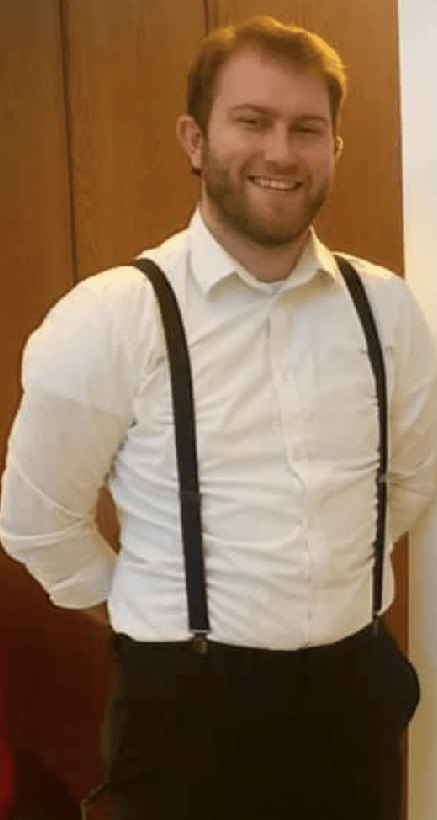




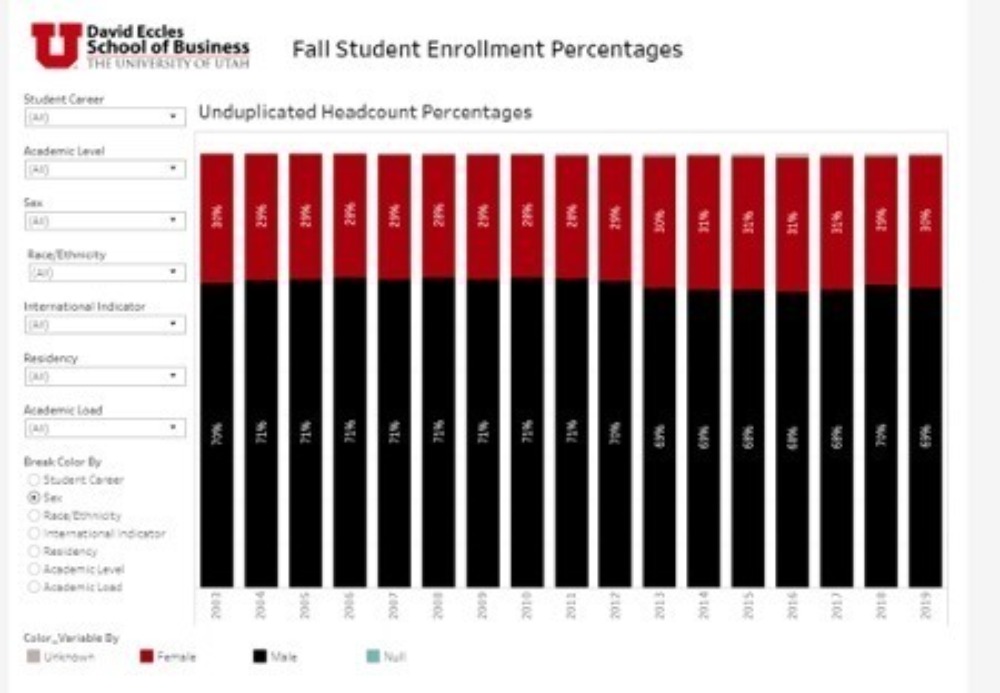


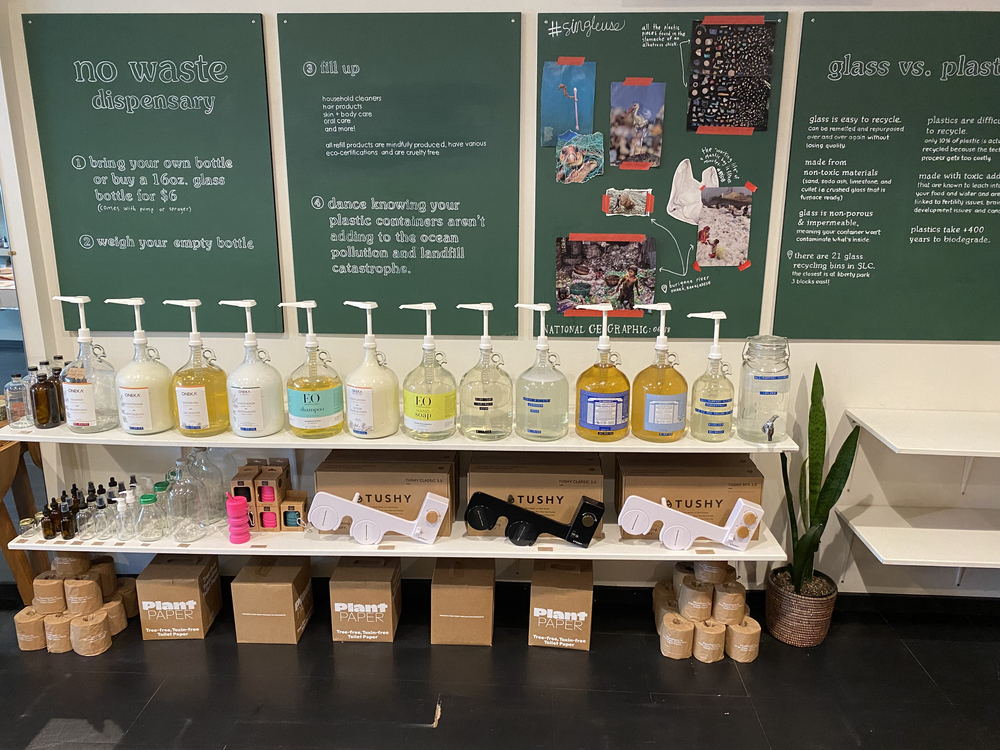

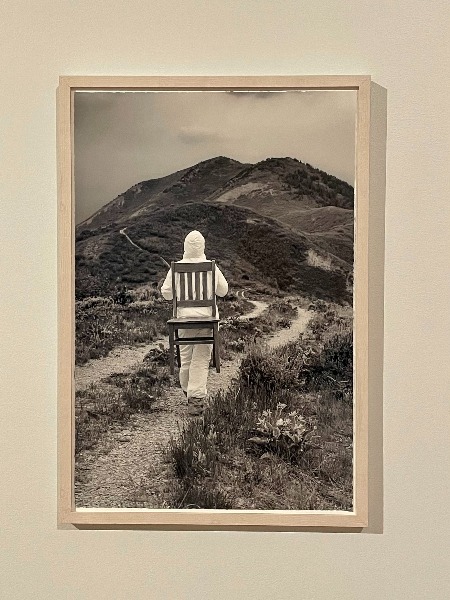
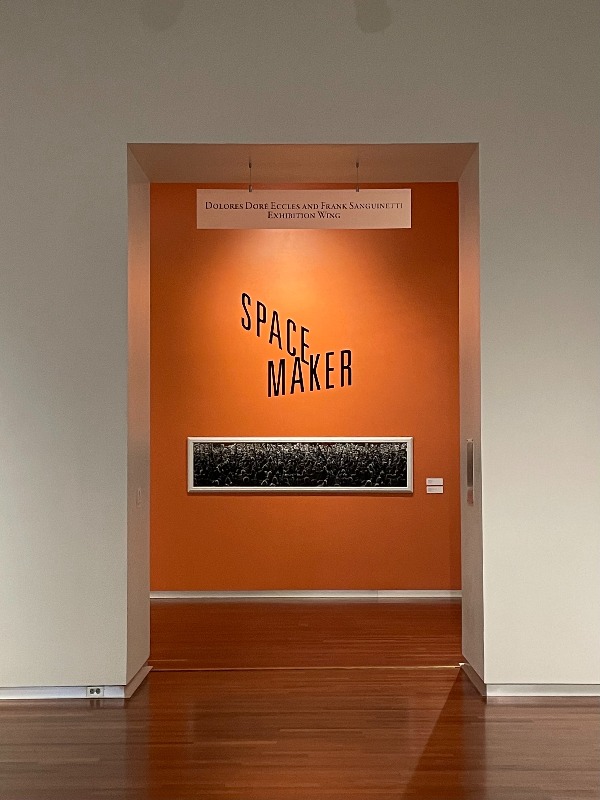
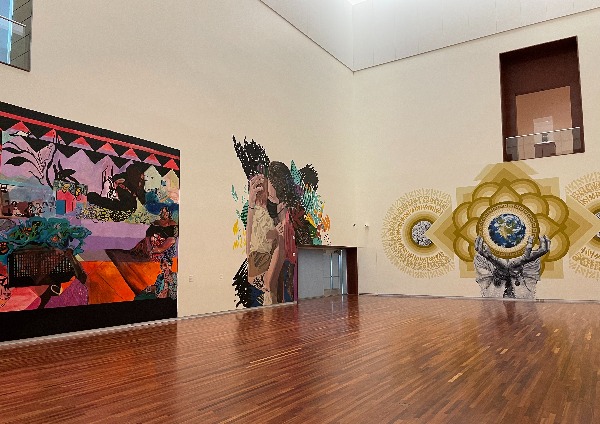
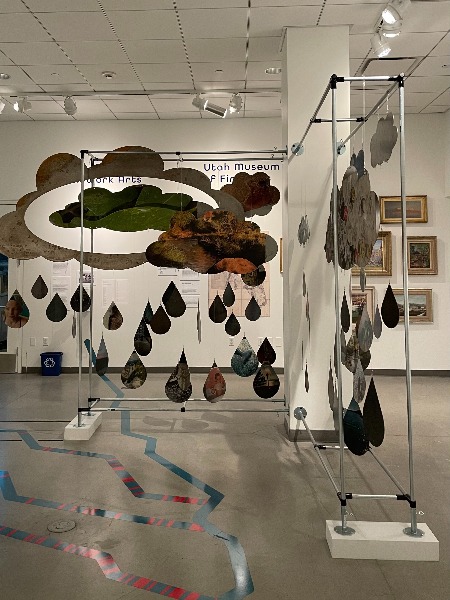

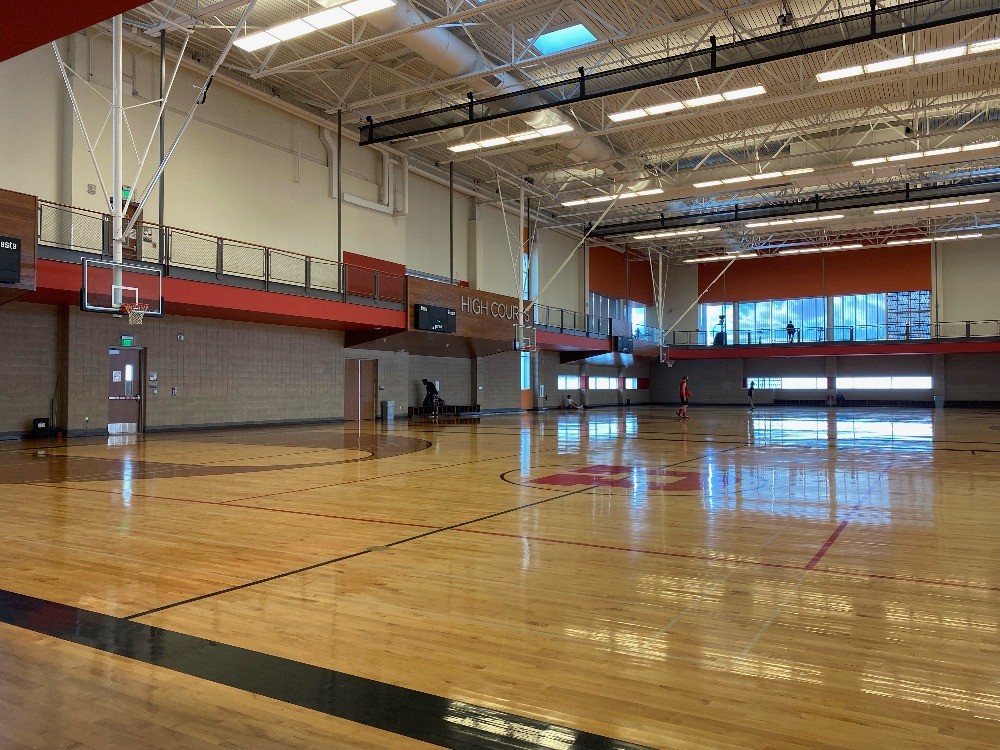



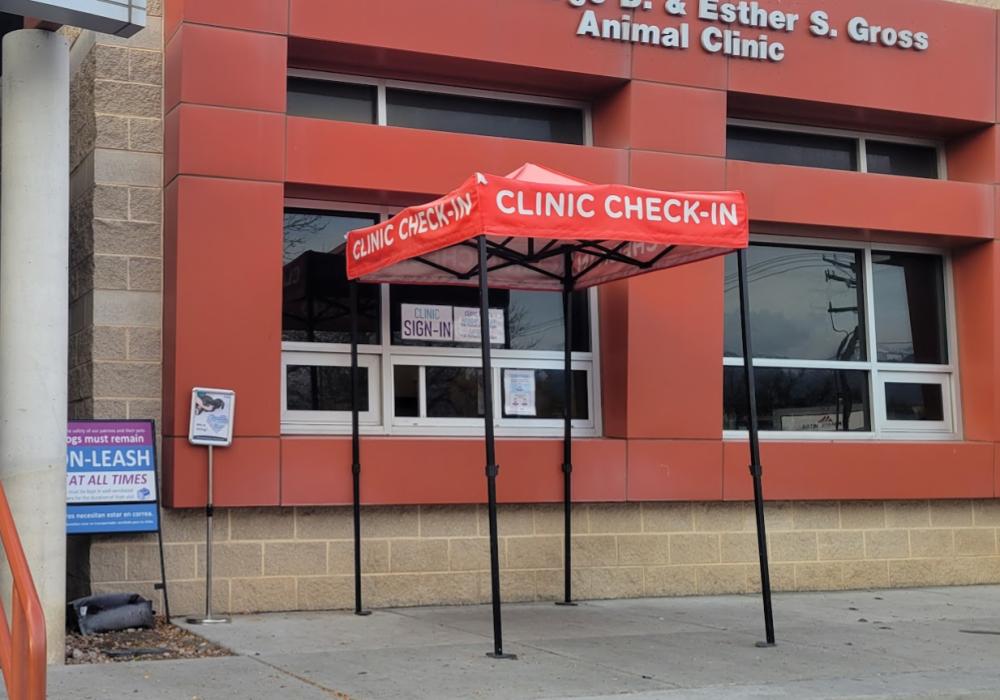
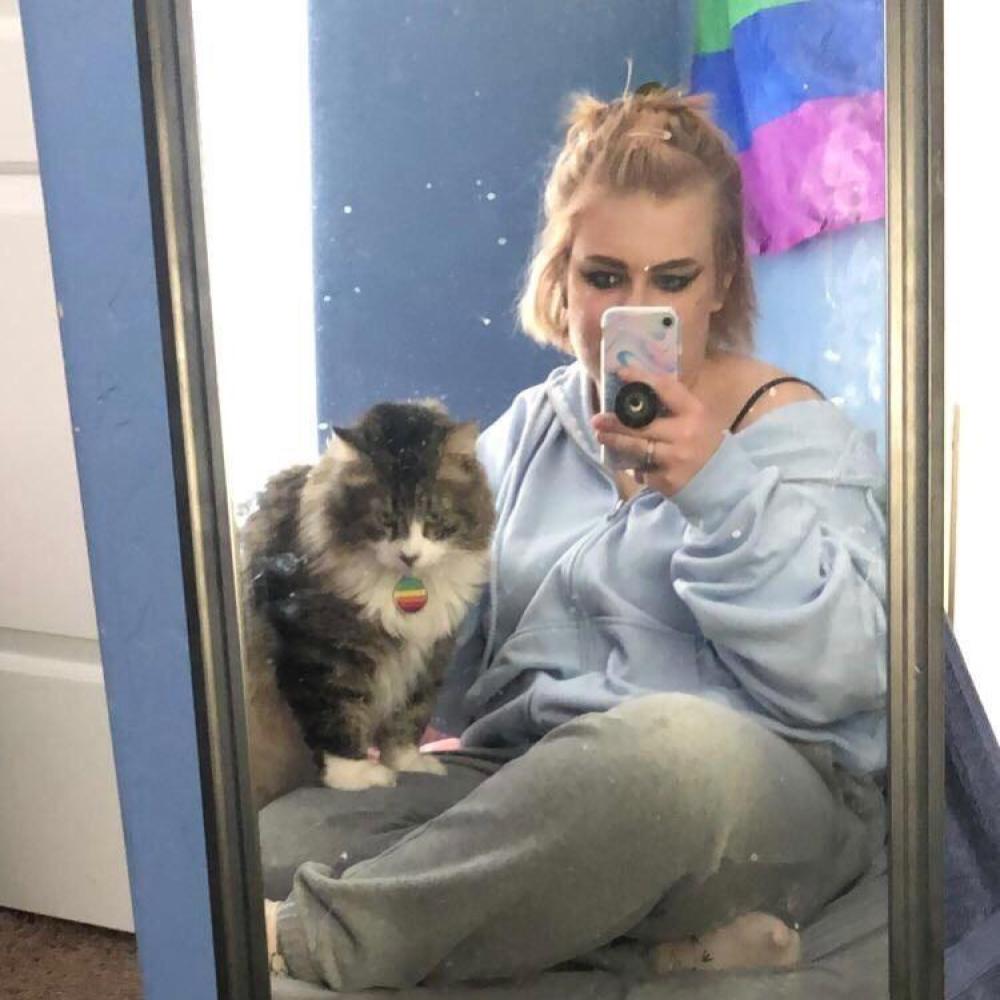
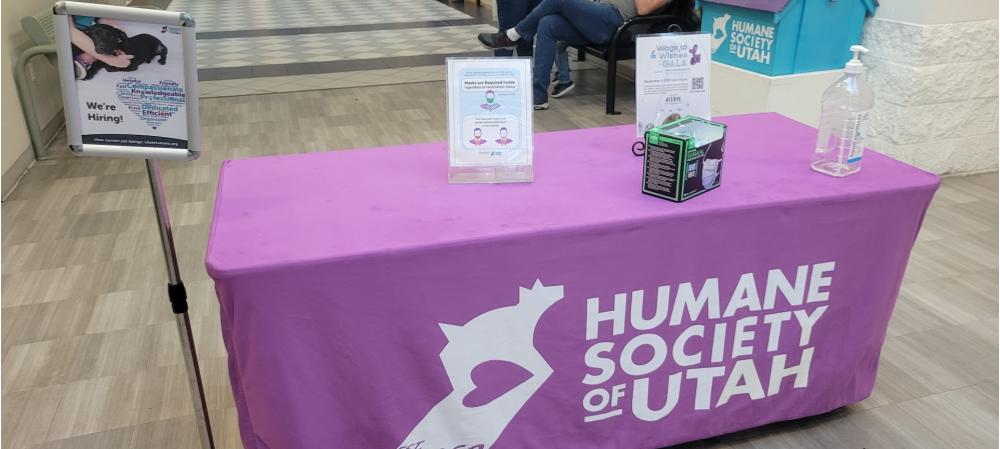
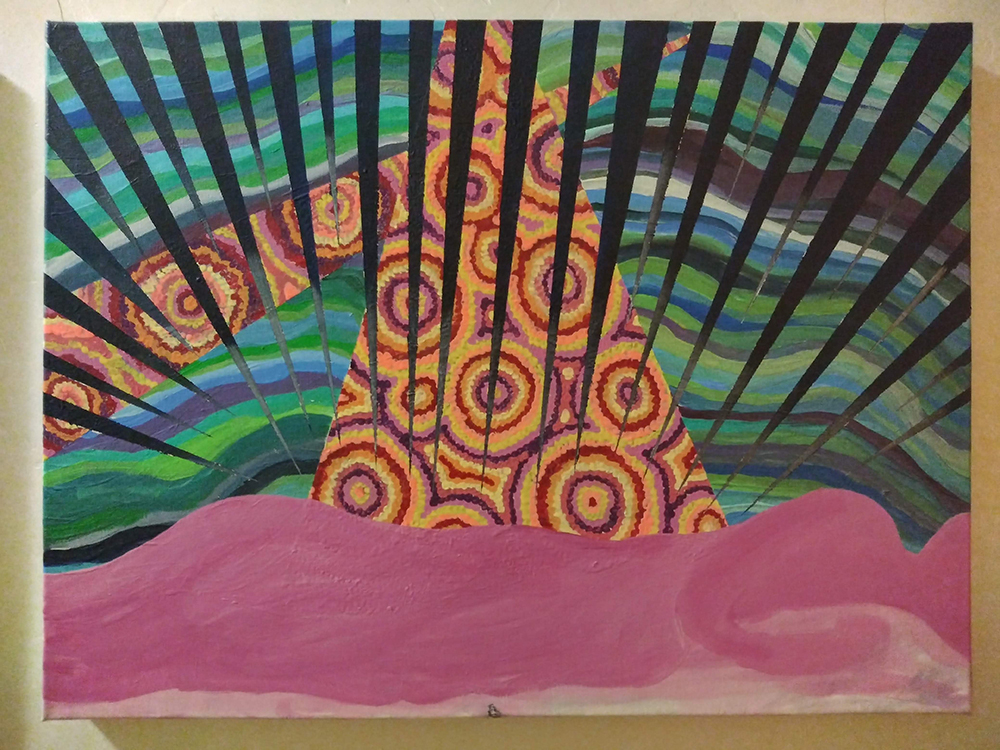
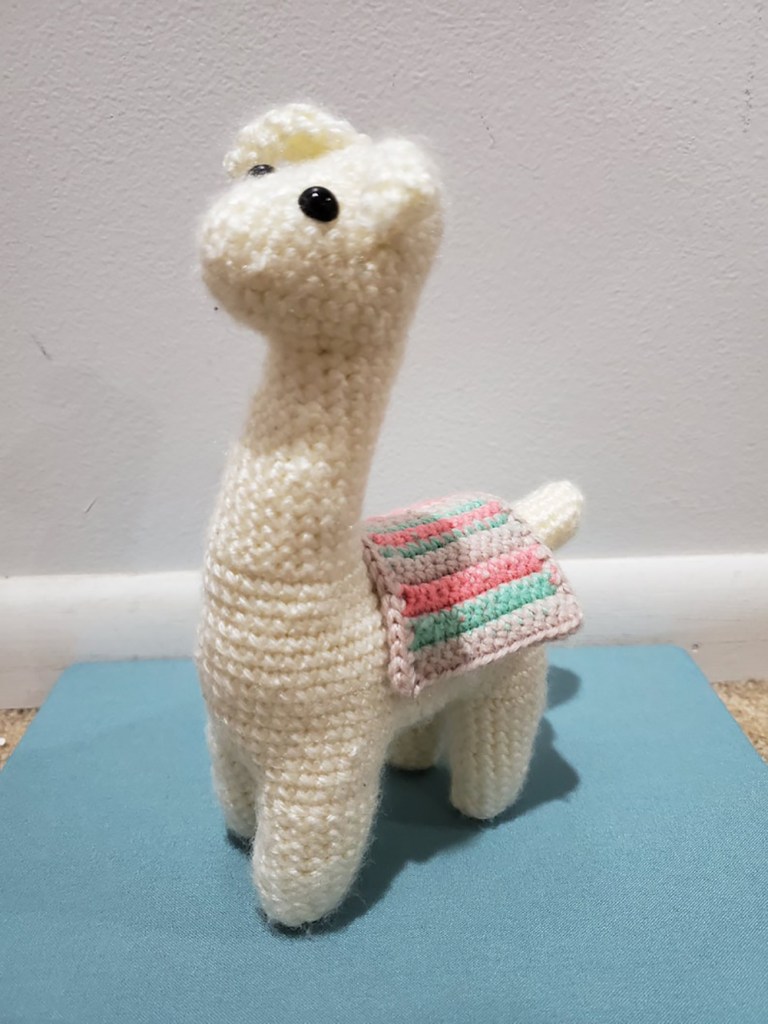
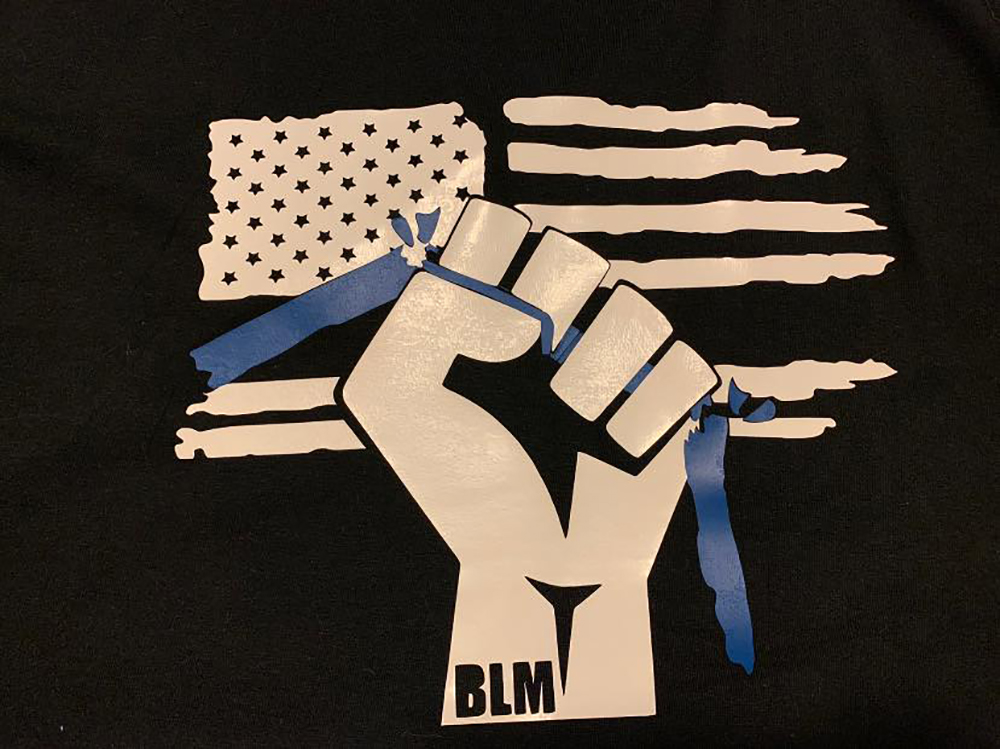



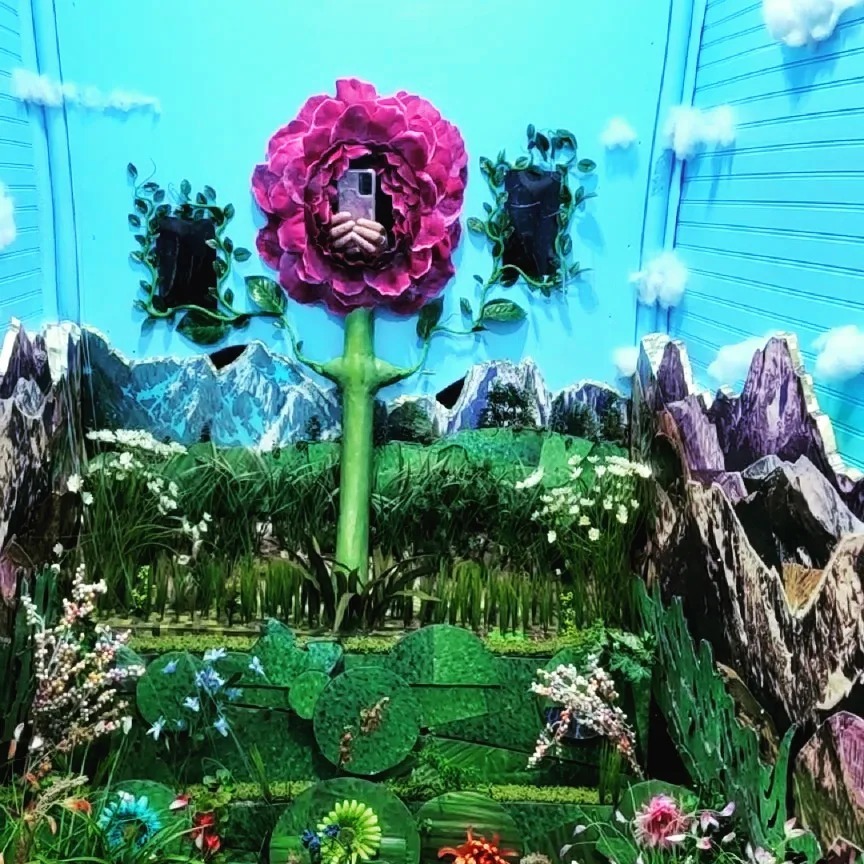
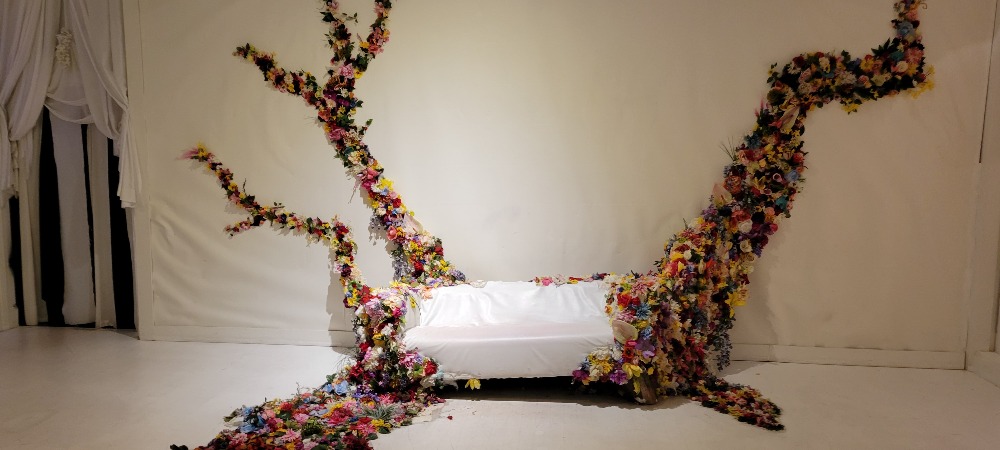


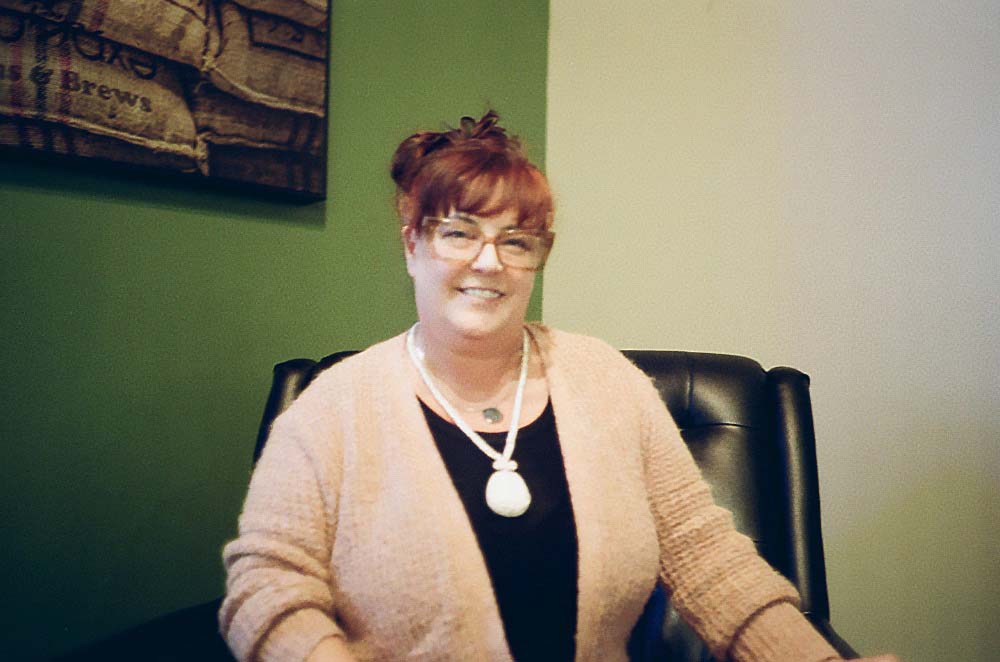





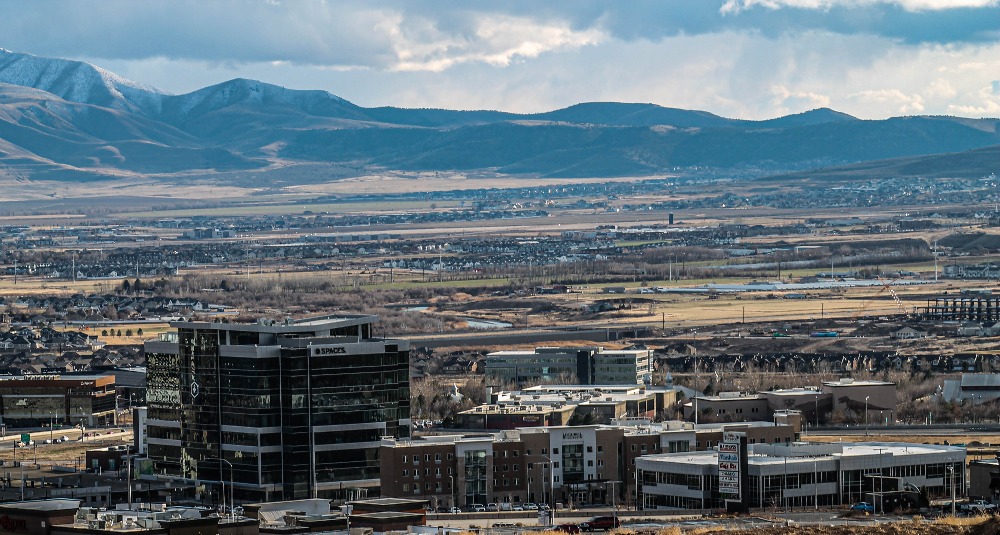



 U NewsWriting