University of Utah fraternity partners with Rape Recovery Center

Story and slideshow by MADDY HOWARD

Don’t walk to your car alone. Don’t go on a run without pepper spray. Don’t make eye contact too long. Don’t dress like you’re asking for it.

All of these are “rules” young people have been told in hope of avoiding sexual assault.

Sexual assault is an epidemic that has affected campuses nationwide. Universities such as Stanford, Brown and Baylor all have an extensive history of sexual assault on campus. Many people do not believe universities are doing enough to keep students safe.

Well, what if someone told you a fraternity was speaking out against sexual assault?

At the University of Utah, Beta Theta Pi is dedicated to making a change. Beta is a fraternity which brands itself as men of principle.

These men excel in academics with an overall average GPA of 3.4. Additionally, they have the highest GPA out of any organization, club, or team at the University of Utah, according to the office of the Dean of Students. “These men hold themselves to the highest standard possible which makes them one of the most respected fraternities on campus,” said Josie Karren, a U student and Delta Gamma member.

Beta is partnered with the Rape Recovery Center in hopes of changing sexual assault not only at the U, but across the nation.

The Rape Recovery Center is a nonprofit organization in Salt Lake City. Services include support, testing and providing hope for victims from every walk of life. RRC helps people understand they are not alone, and understand that their attack does not define them.

Beta has been working with RRC for almost five years. Stereotypes tell the world fraternity men are part of the problem and are nothing but partiers. In 2014, the U’s chapter of Beta Theta Pi was featured on the Dr. Phil show. Phil McGraw’s wife, Robin McGraw, was in awe of what these men are trying to accomplish.

Philanthropy Week is full of fundraising for the RRC and happens every fall and spring. For Beta members, it’s a time to raise money for victims. Taking place from Feb. 26-March 3, spring 2018 Philanthropy Week was a huge success, according to Noah Carr. He is the current vice president of internal programming. His duties include planning events throughout the week. Many of these events take place at the recently renovated $2.3 million chapter house.

Beta planned fun events that brought all of Greek row, and even some non-Greeks out to support. From designing hoodies to creating pop sockets as a unique way to raise money, Carr was dedicated to finding ways to raise money.

“Handling the Philanthropy Week for Beta was an unbelievable and humbling experience. Working so close with the RRC and proactively doing things for the community is what makes all the work worth it. We raised $14,000 for this great organization in less than six days and it’s an awesome feeling to know you’re making a difference,” Carr said.

In addition to raising funds for RRC, many of the fraternity members spend time volunteering. Many of these men help however they can at the RRC in their free time.

Volunteering requires 40 hours of extensive training. Many Betas are hotline counselors. This means they act as an over-the-phone counselor to victims. These volunteers have saved lives by talking to victims.

“I started picking up shifts every week. I like the idea that I am there if someone needs me,” Ravi Sharma said in a recent recruitment video. Sharma has been a member of Beta for two years and is passionate about the partnership with the RRC.

On campus, Beta started organizing sexual assault forums once every semester. These are open discussions about sexual assault that are open to anybody. The forums are designed to be a relaxed environment to talk about intense subjects.

Members of Beta Theta Pi believe men need to do more to stand up against sexual violence. During an interview, there was a clear theme. They want victims to know they are not alone. These men want to speak out on an issue that has been swept under the rug for far too long.

Anthony Panuzio, 20, the current president of Beta, said the partnership with RRC is a main reason why he even chose Beta in the first place.

“I am honored to represent a group of men that are dedicated to change. Sexual violence is something many people just don’t want to talk about. Talking about it is the only way we are going to make a difference. It makes me proud that Beta’s aren’t afraid to be the ones who speak out,” Panuzio said.

In America, someone is sexually assaulted every 98 seconds. One in three women and one in five men will experience sexual assault in their lifetime, according to RAINN.

It is time for serious change.

Everyone knows someone who has been affected by sexual assault. In a recent video Beta Theta Pi released, John Moffitt, vice president of recruitment for Beta at the U, says, “The slogan we came up with is: to the brave survivors of sexual assault we believe you.”

This slideshow requires JavaScript.


Branding The Leonardo

Story and gallery by CHARLES BUCK

The front desk of the Leonardo Museum was bustling as employees were answering phones and signing for deliveries on Monday, March 12. A new exhibit was opening in three days and the activities formed the perfect backdrop as the museum’s Chief Development Officer, Deb Peterson, described the challenges of creating a brand.

According to The Leonardo’s website, the museum opened in 2011 with the personality behind Leonardo da Vinci as a brand strategy that would define a museum dedicated to inspiring “creativity and innovation in people of all ages and background.”

Sitting just inside the main exhibition space, Peterson explained that da Vinci’s curiosity perfectly defined an interactive museum dedicated to learning about art, science and technology. The goal was to align the museum with the STEM disciplines of science, technology, engineering and mathematics.

It allowed The Leonardo, located at 209 E. 500 South, to be a place where visitors could explore exhibits with the same sense of curiosity and wonder as da Vinci himself. However, creating such a unique space also created unique branding challenges.

“Phase one was to get the doors open,” Peterson explained. Phase two was to spark interest in the community by hosting famous exhibits like “Bodyworlds” and the “Dead Sea Scrolls.” While successful, these exhibits didn’t clinch The Leonardo’s brand identity in Utah.

“We had to reeducate the public,” Peterson said. The museum had developed a reputation for being a venue for traveling exhibits, and the public forgot that The Leonardo had the unique distinction of being a place of discovery and wonder in the world around us.

This reeducation process involved all the traditional media: print, radio, television and billboards. Social media was starting to play a role, but “wasn’t what it is today,” Peterson explained. The board of directors assumed the challenge was merely to explain why the museum became da Vinci’s namesake. However, they quickly discovered that not everyone was familiar with the painter, architect and inventor Leonardo da Vinci. “We just assumed everyone knew,” Peterson said.

This branding challenge continues today, with social media playing an ever-changing role. “@theLeo,” “#theLeonardo,” and “#attheLeonardo” have all been attempts at increasing public engagement through various social media platforms like Twitter and Instagram. While describing a successful social media strategy Peterson explained that the challenge in going viral is having content critically relevant to the current social climate. To go viral the right message has to be shared with the right audience at the right time.

The focus on relevance has led The Leonardo to partner with Pictureline to create a drone exhibit, and with the LEGO brand to create an interactive exhibit focused on da Vinci’s fascination with architecture and city planning.

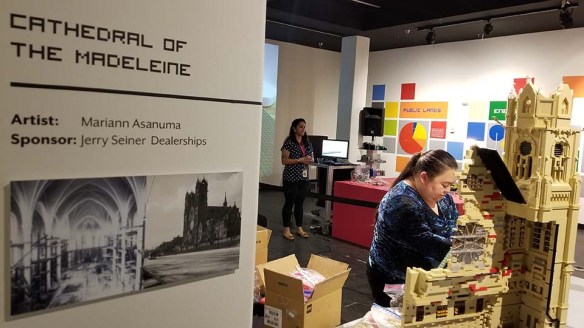
Mariann Asanuma is a LEGO master builder commissioned by The Leonardo to build a replica of the Cathedral of the Madeleine, a Salt Lake City landmark completed in 1909. She started working for LEGO in 2003, and eventually realized her dream of turning her passion for the building blocks into a career.

LEGO fans describe the years between when they stop playing with LEGOs in their teens and start playing with them again in their 20s as “dark years.” Asanuma explained, “I never had dark years.” Her Instagram page describes Asanuma as the “World’s First Female LEGO Artist specializing in #marketing #custommodels #teambuildingevents #customkits.”

Her latest posts highlight the progress that Asanuma is making on her model, which she is building on-site at The Leonardo. Asanuma described the constant popularity of Lego as the result of children invigorating their parents’ passion for the blocks, and not always the parents introducing their children to their own childhood toys.

“The LEGO Movie” and “The LEGO Batman Movie” helped the brand resonate with a new generation. Social media and the internet have also helped lifelong fans of the brand, like Asanuma, create online communities where people remain engaged and passionate about LEGO.

This relevance in popular culture is what makes the LEGO brand such a good match for The Leonardo. Leonardo da Vinci’s exploits with architecture and city planning allow the museum to host a LEGO exhibit without diluting its brand identity, and the popularity of the building blocks brings in a new generation of museumgoers who engage with the exhibit in creative ways.

The exhibit opened March 15, 2018, and between the displays were areas where children could act out the inspiration they found while watching Asanuma in action.

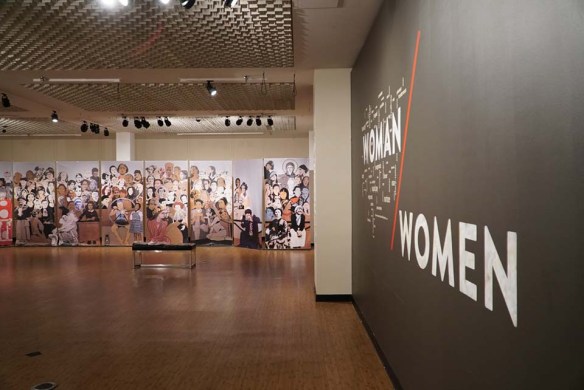
The Leonardo also hosts programs like the “FIRST LEGO League.” The league launched in September 2017 and workshops are scheduled until May 2018. These programs draw in the younger generation, while exhibits like “FLIGHT,” “FANTASTIC FORGERIES,” and “WOMAN/WOMEN” help adults identify with the museum’s brand of discovery and curiosity.

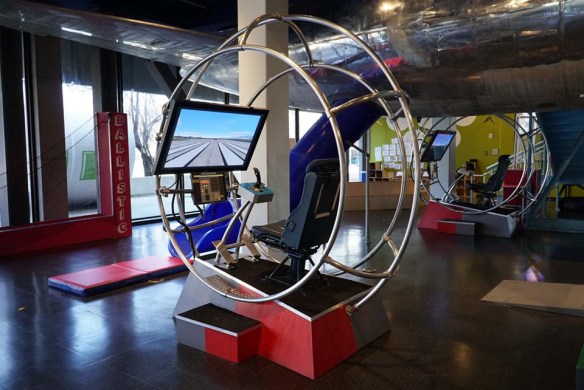
Many of the exhibits adhere to the “Hands on @ The Leo” strategy, and encourage patrons to engage with The Leonardo in person, just as they can in social media. The museum’s website invites visitors to come and discover the “forces behind engineering by tinkering, designing, and problem solving.”

Partnering with companies that brand themselves around the processes of technology or discovery will keep the museum relevant. Peterson described the essence of The Leonardo’s brand strategy: “If guests leave our museum with more questions than answers, I’ve done my job.”

Their brothers’ keeper — Utah charity targets refugee men

Story and slideshow by PETER JOHNSTON

Leul Mengistu hits the gas pedal of his company van. The light has turned green and he is late for an appointment with Julia, a female refugee from South Sudan. A banner with a blue, yellow and red logo that reads, “Catholic Community Services,” has been slapped onto the van’s side.  

Though Mengistu helps female refugees like Julia at Catholic Community Services (CCS) he has a new focus demographic: refugee men.

“I don’t want them to fall between the cracks,” he says, one hand on the steering wheel. There are programs for women and children and youth, but men are often forgotten in refugee assistance efforts.

The International Rescue Committee reports that “refugee men, a category not prioritized by the humanitarian system for support, are often not able to access support that they need and, even more often, feel themselves to be excluded from it.”

According to CARE International, a relief organization that primarily targets women, “among humanitarian actors, donors and government agencies, there is a common perception that men are best able to look after themselves and negotiate the complexities of displacement unaided.”

The report says this perception leads to less attention for the problems of male refugees.

Mengistu acknowledges that women and children are often the most disadvantaged groups fleeing conflict in their home countries. However, he also says he deals with many refugee men who have not received needed support from other organizations because of the common belief that men are “best able to look after themselves.”

Mengistu has responded to widespread ignorance toward male refugees with the Men’s Wellness Support Group — a program that will bring together 10 to 15 refugee men for weekly classes. Each “cohort” of men will learn about topics ranging from building a budget to coping with post-traumatic stress disorder.

Weekly instruction will be led by men: Mengistu, a couple of class facilitators, and guest speakers specially tapped because of their area of expertise. David Harris is one such guest speaker. He is slated to teach the class on physical health and comes from a background of pediatrics and insurance management.

Harris says he sees cultural adjustment as the greatest priority of the Men’s Wellness Support Group. “They [the refugee men] need to protect their own culture,” he says, but they also “need to understand how stuff works [in the U.S.] so that they can get along.”

Mengistu once directed a support group for women that focused primarily on health. However, he too says the new support group’s objectives go beyond just physical wellness. “I want them [the refugee men] to be very competitive,” he says. “Everybody’s smart, but now it’s camouflaged!”

That intellectual camouflage refers to the invalidation of refugees’ prior work experience and professional talent in the United States.

Mengistu’s boss, Aden Batar, is the director of Immigration and Refugee Resettlement at CCS. He explains the “camouflage” problem from his own perspective.

Batar left Somalia with his family in the mid 1990s with a law degree from his home country. He says that degree and legal experience went unrecognized in the U.S.

“Can you imagine how frustrating that would be?” Batar asks. Today, he says, refugees can more easily get college degrees that match the ones they earned previously because NGOs and governmental agencies provide financial help. However, “back then [he] was lost in the middle because [he] didn’t have those systems.”

Even with revamped nonprofit and governmental aid, Batar says the Men’s Wellness Support Group “fills a gap.”

Eighty percent of CCS cases are women and children, Batar says. Men aren’t seen later unless they have a demonstrated problem.

Despite widespread apathy on the issue, Utah’s history with refugees makes it an appropriate birthplace for the program. In 2015, when 30 governors called for the cessation of Syrian refugee resettlement, Gov. Gary R. Herbert announced Utah’s continued commitment to assist refugees.

Batar also highlights the strong public-private relationship among CCS and local religious organizations as a positive sign of Utah’s tolerance of refugees. “The most welcoming state in the U.S. is Utah,” he says.

While the Men’s Wellness Support Group has public backing, it faces significant challenges.

For one, cultural conflicts between refugees’ old way of life and their new one in America could foster misunderstanding and resentment. David Harris, the guest speaker who will handle the physical health section, underlines that the program’s facilitators and guest speakers may not understand all cultural nuances of refugees’ backgrounds. “We may say something that we feel strongly about or think is obvious when they disagree or don’t think it’s obvious,” Harris says.

The key, he says, will be for facilitators to “listen really closely to what [the refugees] have to say and what their concerns are rather than being very dogmatic.”

Participating refugees will come from more than three countries. Mengistu has recruited men from Burma, Somalia and Democratic Republic of the Congo for the support group so far. His proposed solution to bridge cultural divides is to recruit participants who speak one of only two languages — Karen (a language spoken in Burma) and Swahili.

Logistics also pose a problem. Mengistu will need to resolve the scheduling conflicts of refugee men who work night and day shifts and CCS interpreters who work business hours. The program director says he and the guest speakers will adapt to the schedules of the refugees.

Regardless of the program’s potential problems, Mengistu envisions far-reaching implications for the Salt Lake City community. He says refugee men will integrate with the larger community, enjoy more family unity and become more self-sufficient fathers.

The first of the weekly classes launched April 5 with a cohort of seven participants — two from Burma, five from East Africa. If all goes well, these seven men will walk away from the CCS classroom on May 24 with the skills to start a career and find daily joy. A tall order — but like Mengistu says, “I don’t want them to fall through the cracks.”


This slideshow requires JavaScript.

You can be the “somebody” who can help make a difference in animal rescue transportation

Story and slideshow by LORI KUNZ

Trachelle “Chelle” Hilton-King founded Rescue Animals Needing Transportation (RANT) in September 2017 with support from her husband Berk King. RANT is the first animal rescue organization in Utah specifically for the transportation of animals from shelters to rescue centers and foster homes.

The idea came to her when she was taking a dog to a rescue center. Chelle realized there were no such organized services and saw a critical need for transportation in rural areas such as Roosevelt and Vernal and along the Wasatch Front. She proposed the idea to Berk and immediately started the approval process with the State of Utah. It is a 501(c)(3) foundation group.

RANT, based in Syracuse, Utah, is a natural outgrowth of Chelle’s passion for helping animals. She and Berk foster hospice care dogs, which is end-of-life care. They currently have a 14- or 15-year-old foster they named Dixie Denver who is a lab-mix with dementia. Families don’t want old dogs – they want puppies, she said. There is no better person than Chelle to take in an elderly dog to love until its last day because she understands that the simplest act of kindness can change a life. Because her love of animals is immense she started volunteering with groups that distribute pet supplies to individuals with pets who are experiencing homelessness and to low-income pet owners.

Chelle is the owner and operator of “Chelle’s Floral and Gift” located in Clearfield, Utah. While she runs her business she will also run RANT. Most animal rescue volunteers and founders have jobs outside their organization. “RANT isn’t a project, it’s a calling,” she said. Her motto for RANT is “Saved In Time” (SIT).

Saving an animal can be a complicated process involving rescue centers, animal control officers, animal shelters, animal-foster homes and volunteers.

Rescue centers are organizations that help find homes for misplaced, abandoned and unwanted animals by posting images of them on their website and on social media. Centers rescue animals from shelters and put them into foster homes and up for adoption.

Reputable centers will make a lifetime commitment to the animals they rescue. The process they follow is to pay for the animals’ care, including immunization shots and spaying or neutering. If an animal is returned to a shelter or not wanted the center will take it back.

Some centers have relationships with animal control officers and shelter workers who monitor animals’ “due-out” dates, the date they need to exit the shelter or face possible euthanasia. This gives centers the heads-up to rescue the animal before their due-out date. Rescue centers never euthanize.

Centers have their dedicated foster homes they rely on to step in and help with the placement of animals. Centers need more people to open their homes as a foster home for animals.

Chelle said every time a foster steps up, they save two animals’ lives, the animal that was taken and the replacement animal at the shelter.

Anyone interested in adopting can visit animals in an animal foster home, rescue center and at adoption events in places like PetSmart and Petco, which donate space each week to centers to hold adoption events.

Shelters are establishments run by cities and counties that take in strays and owner-surrendered animals. They adopt out as many animals as possible, but when they are full they have to euthanize for space.

A lot of the shelter workers are pro-life and pro-rescue. They network their own animals when they start to reach capacity and will reach out to centers for assistance. Some shelter workers aren’t pro-life or pro-rescue, for those shelters there are volunteers.

“Volunteers are the lifeline of all rescues,” Chelle said. There is a network of volunteers that monitors a shelter’s capacity, post animals’ needs such as “due-out” dates, injuries and special needs.

Social media play a role in animal rescue. Shelter workers, rescue centers and foster homes all post online on their respective website and Facebook page.

One of the biggest parts of rescue is someone seeing an animal on Facebook from pages such as Utah Shelter and Rescue Network, Animal Rescue Networking Group of Utah, Utah Animals ONLY or petfinder and wanting to foster or adopt, except they live hundreds of miles from the shelter where the animal is being held.

The next step is transport for the animal(s) to the area where the rescue center and foster home are located. This is when RANT will get involved, giving them 48-72 hours, depending on the shelter, to get the animal(s) out and transported.

Most transports are arranged on Facebook via posts and Messenger, it is the quickest and easiest way for multiple people to respond and offer to help said Chelle.

RANT will help free up more space in shelters by arranging a driver and a vehicle equipped with items that will be needed for transportation i.e., leash, animal carrier, food.

Some transports can be short, between a shelter and a rescue in the valley. Others can be long and can be broken up in relays or legs. In November 2017 a dog was posted on The Bridge needing a ride from West Jordan Animal Shelter to Meridian Canine Rescue in Idaho by Nov. 18. Volunteers stepped up and had the dog delivered on time.

There are two main websites for posting animals who need transporting: The Bridge and Utah Transport. There are also national organization groups: Pilots-N-Paws, Operation Roger and Kindred Hearts Transportation Connection.

Ogden resident Michelle Holbrook started The Bridge, an animal transportation page, on Facebook in 2015. It has over 700 members. Holbrook met Chelle in November 2015 while helping to transport dogs to a rescue center in Idaho. She now serves on RANT’s five-person board of directors.

“RANT is a fabulous idea because it will give us the opportunity to pull large numbers of [animals] from overcrowded or rural shelters and get them somewhere where they have a better chance at adoption,” she said in an email interview. “RANT will be a great addition [to The Bridge] because a lot of the time we have drivers to move the [animals] but they may not have large enough vehicles or the gas money.”

Holbrook said that a lot of the time when a transport occurs the costs add up by renting a van, paying mileage and finding a driver.

The Kings started fundraising for RANT in November 2017 and anticipate raising enough money to buy a couple of vans. They have transported several animals for RANT using their personal vehicles.

Their goal is to transport between Clearfield and Southern Utah, a distance of over 300 miles, once a week to move as many animals as possible. When they have vehicles available all transportation from rural areas will also be weekly, with distances averaging 100 miles.

They will train volunteers on how to transport an animal while keeping the animal safe. They are looking for volunteers who are available to transport and who love animals.

Chelle said there are all kinds of groups who work together to rescue animals, but there is not a transport group for Utah where one is needed. “I’m somebody,” she says.


This slideshow requires JavaScript.

The Mormon mission experience

Story and slideshow by ZACH DAVIS

The tradition of serving a mission for the Church of Jesus Christ of Latter-day Saints (or Mormon church) is rooted in the very beginning of the religion in 1830.

The first Mormon missionary to be called was the Prophet Joseph Smith’s younger brother Samuel Smith.

Following Samuel Smith’s call other leaders of the Mormon church were called, including Oliver Cowdery, Parley P. Pratt, Peter Whitmer Jr. and Ziba Peterson, who were tasked with teaching the American Indians.

Mormon missionaries were the leaders of the church who preached about their religion across North America.

Later the ones serving missions would shift to the younger members who would be called by the leaders of the Mormon church.

The first mission overseas in the British Isles was fulfilled by Heber C. Kimball and Orson Hyde in 1837. This led to many converts to the religion immigrating to the United States during the 1840s.

During the 1850s Mormon missionaries expanded beyond the British Isles to countries such as Chile, France, Germany, India, Italy, South Africa and Switzerland.

During this time men had served as Mormon missionaries.

Then in 1898, the first female missionaries, Inez Knight and Lucy Jane Brimhall, were called to serve.

Now the missionary force is comprised of single men and women between the ages of 18 and 25 serving in 422 missions around the world. Mormon missions are two years for men and one and a half years for women.

Preparing for a Mission

The process of being called as a missionary begins with the individual’s desire to serve a mission. If they so desire, they will meet with their bishop (leader of the congregation) to further assess if they are ready to serve.

Individuals must be physically capable of serving, mentally stable, spiritually prepared (believe in what they are preaching), and be morally clean.

Preparing to Serve in 1965

“As I was growing up, I attended all of the church meetings, and in high school they had a program called release time (seminary) in which a person could leave campus and for one hour study the teachings of their now particular religious beliefs, and get credit towards it being one of the student’s elective studies. I took advantage of this for gaining more knowledge of the LDS Church,” Ron Davis said.

When Ron graduated high school, he was unable to leave directly for his mission. Instead he worked for three years to save up enough money to finance his two-year mission.

After working with his bishop, Ron submitted his application to serve as a missionary. This led to him being assigned to the North Scottish Mission in Scotland.

He left for the Missionary Training Center (MTC) located in Provo, Utah, in February 1965, just a month before his 21st birthday.

Serving in 1997

Throughout her life Ron Davis’s daughter-in-law, Jemela Davis, knew that she wanted to serve a mission for the Mormon church. To prepare to serve she participated in the four-year seminary program and took missionary preparation courses offered by the Mormon church through the institutes of religion program.

Jemela was able to finance her mission by working and saving as much as she could. Her parents and close friends financed the rest.

After successfully completing her application for missionary service in 1997 she was assigned to the Chile Antofagasta Mission.

Serving in 2014

To prepare for her mission, Sam Brady said she attended a mission preparation class each Sunday. She also went to temple preparation classes to prepare her to receive her endowments.

When it came to financing her mission, Sam worked full-time to raise the funds with her parents supplementing where needed. While on her mission Sam also received donations from people from time to time.

Once Sam completed all the necessary paperwork to serve her mission she received her call to the Hungary Budapest Mission, in Hungary.

She left for the MTC in September 2014.

Missionary Training Center (MTC)

Scotland Bound

While at the MTC Ron found that it was a very structured place. His daily schedule began at 6 a.m. He said his personal prayers, dressed, ate breakfast, attended instructional periods, then practiced with other missionaries to lessen the feelings of uncertainty about telling people how he felt about the Mormon church.

One of the things he said he found most interesting while at the MTC was that it “seemed a little like role playing, because at times the teachers would all of sudden take a negative approach and then you had to change their outlook with your knowledge of the truths that you were going to present to the people once in the mission that you would be called to.”

When Ron left the MTC after two weeks he was “excited to be going on [his] first plane ride, and to be going to another country.” The plane stopped in London and then went to Edinburgh, where the mission home was headquartered.

Chile

Jemela’s daily schedule at the MTC was filled from 6:30 a.m. to 10 p.m. From 6:30 to 9 a.m. she would do personal preparation, individual scripture study and eat breakfast. Then from 9 a.m. to 12 p.m. she would participate in morning classes. After lunch, she would do further classes from 1 to 5 p.m. Dinner at 6 p.m. was followed by more evening classes from 7-9 p.m. At 9 p.m. she would return to her dorm for further personal duty until bedtime at 10 p.m.

The classes that Jemela attended focused on learning Spanish, the missionary discussions and cultural lessons regarding Chile.

She spent nine weeks in the MTC. Because she was assigned to a foreign language mission, she needed adequate time to learn the language in order to better teach the people of Chile.

“Hungary” for knowledge

Life at the MTC for Sam wasn’t all fun and games. In fact, it was very strict and rough, but she also found it very spiritually uplifting.

A regular day for her at the MTC consisted of waking at 6:30 a.m. to get ready and eat breakfast in the cafeteria. At 8 a.m. she did personal study in the classroom. This was followed by discussing what she had learned with her companions. At 10 a.m. she engaged in language study with the rest of the day being broken up by Hungarian lessons, devotionals and practice lessons.

Brady also spent nine weeks in the MTC in order to learn Hungarian.

When it came time to leave for Budapest, Brady said she “was extremely nervous and excited all at once.”

Mission Field

Life in Scotland

It was a very cold February when Ron arrived in Edinburgh. For the first time in 50 years the main rivers had frozen.

Ron said it rained often – sometimes daily for weeks at a time. He needed two overcoats: one to wear while the other dripped over the tub so it would be dry to wear the next day.

His normal attire was limited to dark-colored (dark blue, dark brown, or black) suits and pants to match. He wore white shirts, very conservative ties, hats and shoes.

Ron woke early each morning and said a prayer. Then he read and studied the Scriptures before eating breakfast. Then he and his companion left to go tracting (look for people interested in talking about the church). After doing that for a few hours the Mormon companions ate lunch.

When proselytizing Ron and his companion (fellow missionary) were often rejected with doors being slammed in their faces. This was done in the hope of finding someone who was willing to hear what they had to say about the Mormon church.

Occasionally during their tracting they’d set up appointments to talk with people in their home.

At supper time, the missionaries would return to where they were lodging to eat. After eating they would go out once more to meet their appointments and teach them about the Mormon church. When the day finally had finished the missionaries would return to their lodging, study and read the Scriptures some more, get ready for bed, say their prayers and retire for the night to be ready to repeat the cycle the next day.

The reason missionaries travel in pairs is because Scripture discusses going “two by Two” (Mark 6:7). It was safer to have more than one missionary together as it allowed them to keep each other out of trouble.

The biggest thing Ron didn’t like during his mission was knocking on doors to meet people as the process of street meetings and discussions weren’t used when he was serving. And during this time the Mormons weren’t very popular.

On Wednesdays Ron took his shirts to the laundry and washed the rest of his clothes at the cleaners or coin laundry.

When it came time to leave the country, Ron said he was “kind of sad” because he had devoted “two years of [his] life in an effort to bring the joy and happiness of the restored gospel here upon the earth and now it was coming to an end.”

Trials in Chile

Jemela arrived in Chile unaware of the trials and poverty she would be facing.

During her mission, she said she lost over 60 pounds and became frail. She and her companions had to boil their drinking water to avoid getting sick.

Soon after these hardships, Jemela said she was able to “set aside the life [she] knew to develop [her] spiritual self.” Instead of focusing on the hardships she focused on faith, prayer and fasting. When meeting people she and her companions would do anything to help make Chileans’ lives better.

The normal attire for sister missionaries in Chile was skirts and blouses. They “could not wear nylons because the fleas get caught in between the nylon netting and [their] legs, resulting in the fleas biting you repeatedly,” Jemela said.

When Jemela found out that she would be serving in such a poverty-stricken country instead of buying brand new clothes she bought clothes from a second-hand store to use on her mission. The reason for this she said was “[she] did not want to appear wealthy or to send a message that she was better than [the Chilean people].”

At one point, she only had two pairs of socks causing her to have to wash them at noon each day and hang them to dry so they would be ready for the following day.

“With the exception of the clothes on my back, I gave away all of my clothes to the Chilean people,” Jemela said.

The daily routine during Jemela’s mission was to get up at 7 a.m. to get ready, eat breakfast, do personal study and companion study. At 10 a.m. they would leave their apartment to either teach people, search for people to teach, or help reactivate members who were no longer attending. At 1 p.m. the companions would return home for “La Siesta” which is a Chilean practice where everything shuts down for three hours. Everyone goes home to eat a big meal and take a nap. At 4 p.m. everything would reopen and the missionaries would return to teaching until 10 or 11 p.m.

When it came time to return home Jemela said that “she was not disappointed, but saddened to leave the people [she] had grown to love.” While at the airport waiting for her flight home she was surprised by four of the youth she had taught who had hitchhiked a thousand miles to see her off at the airport.

To Budapest

Full of nervous excitement and a fear of the unexpected Brady arrived in Budapest.

Brady’s days consisted of rising at 6:30 a.m. to pray, exercise for 30 minutes and prepare for the day. Then she would eat breakfast from 7:30 to 8 a.m. After breakfast, she would study the Book of Mormon, other scriptures, the missionary library and Preach My Gospel until 9 a.m.

Brady and her companion then studied together and shared what they had learned during personal study.

From 10 a.m. to 6 p.m. they proselytized with an hour taken for lunch and additional study and an hour taken for dinner, which was to be finished no later than 6 p.m. They continued proselytizing until 9 p.m., when they would return home, plan the next day’s activities, write in their journals, prepare for bed, pray, and retire at 10:30 p.m.

The standard attire that Brady wore on her mission wabutton-upn up blouse or a nice shirt tucked into long flowy skirts as well as flat shoes. She would sometimes accessorize with a belt or scarf.

One thing Brady disliked about her mission was tracting but she said that she would “absolutely, without a doubt” serve another mission if she could.

A couple mishaps that occurred on her mission was one of her companions got sick and Brady developed foot problems due to all the walking that was required on her mission.

When it came time to return home after 18 months of being away from home, Brady said she was “sad to go, but excited to return home and become human again.”

This slideshow requires JavaScript.
Salt Lake businesses giving back

Story and slideshow by ABIGAIL SABIR

As consumers, we have the power to influence our community through our consumption. We can contribute to philanthropic efforts that local businesses are making, giving a purpose to our spending. This can make a difference in how we choose to consume, as well as change our perspective on spending hard earned money.  In the Salt Lake Valley there are many companies that are making noteworthy efforts to give back to both local and global charities.

Even Stevens, Cotopaxi and Stonehaven Dental are three companies that give to charity in various ways. Each company strives to make a contribution whether local, statewide or international.

Even Stevens currently has 20 locations throughout six states and for each shop opened it pairs with four different nonprofits. Sara Day, co-founder and cause director for Even Stevens, said in an email interview, “We knew we wanted to open a cool, localized sandwich shop that gave back in some way.” It first started selling sandwiches in Salt Lake City in 2014 and the downtown location at 414 E. 200 South donates to YWCA Utah, Volunteers of America, The Good Samaritan Program and Rescue Mission. Day said that as of December 2017, Even Stevens will have 80 nonprofit partners.

Each month 54 cents of each sandwich sold is put into an account for the chosen nonprofits that each location is partnered with. Those nonprofits then use the funds to buy sandwich ingredients or operational supplies, according to the cause page on the Even Stevens website. The website also provides monthly articles about its current work, and as of November 2017, 2 million sandwiches have been donated, equal to over $1 million allocated to its nonprofit partners.

With a passion for addressing the food insecurity that 1 in 8 Americans face, Day said in an email that the founders “wanted to be more than just another sandwich shop.” She also said, “I see Even Stevens growing and expanding across the entire U.S., right now we are focusing on the West Coast but want to take our product and program everywhere!”

Cotopaxi’s mission is to improve the human condition worldwide. It is an outdoor gear retail company with a location at 74 S. Main St. in Salt Lake City. Cotopaxi, according to its website, is a certified B corporation, which means it is a business that uses its force for making a positive impact on the global social, economic and environmental condition. Its products are also produced sustainably with close attention to detail and with Cotopaxi-exclusive llama fiber insulation in various products.

Loretta Beaty, who runs the impact sector and is the customer experience executive for Cotopaxi, believes it has a “good model for doing good.” Each year, Cotopaxi donates 2 percent of its annual revenue to various nonprofit organizations around the world that make an outstanding impact on humanity.

In 2016, the nonprofits that Cotopaxi donated to were located in Myanmar, Sub-Saharan Africa, India, Latin America, the Middle East and Europe. It has yet to choose all of the grantees for 2017 but the program-tailored donations will make an impact in people’s lives throughout the world based on its past achievements, highlighted on the website.

Cotopaxi’s 2016 impact report gives information on the work done. Among the reports from international grantees, it told of The Global Good Project and the Questival Adventure Race. The Global Good Project works in partnership with the International Rescue Committee (IRC) to satisfy the diverse needs of refugees around Salt Lake. The Questival Adventure Race incorporates all local citizens for an adventure race based on service, teamwork, fitness and adventure.

Stonehaven Dental has also crossed national boundaries and done extensive local charity work. Dr. Eric Tobler, president of and dentist at Stonehaven Dental, and Mary Hegerman, marketing/human Resources director, discussed Stonehaven’s community involvement in an email interview. That involvement includes being a part of a national organization called Dental Care for Children as well as hosting and being a part of local humanitarian efforts.

The dentists, dental assistants, support personnel and even a University of Utah dental student have gone to Mexico for humanitarian trips with the Dental Care for Children organization. Stonehaven has been taking trips for six years but the organization holds monthly trips to Mexico, Haiti and Southern California.

With locations in Salt Lake and Utah County, Stonehaven Dental’s local humanitarian work includes the Stonehaven Smiles event. It gives free dental care to the community each May. Tobler and Hegerman said that it been going for 10 years, serving nearly 1,500 patients. They also noted the effort that each dental office makes to be involved with local school programs, and there have been scholarships given to local high school students in the past.

According to Tobler and Hegerman, the staff at Stonehaven Dental has taken over 20 international trips and have either held or participated in nearly 60 local humanitarian days. As the president of Stonehaven Dental, Tobler stressed how important giving back is to the whole Stonehaven team.  

Each of the local businesses previously mentioned has its own model for doing good, so just by buying a sandwich, a backpack, or even going to the dentist, we can each give back to the local and global community.

Stop the silence, end the violence: a spotlight on the Utah Domestic Violence Coalition

Story and gallery by RACHEL BEUS

Domestic violence is an extensive problem in the U.S., but most people may not know that the problem is even more prevalent here in Utah. In the U.S., 1 in 4 women will become a victim of domestic violence in their lifetime, while 1 in 3 women in Utah will become a victim of domestic violence. This statistic helps expose how serious of a problem this is in Utah.

The Utah Domestic Violence Coalition is an organization that raises money and allocates those funds to various shelters and organizations all across Utah to provide goods and resources to victims of domestic violence. The UDVC has a motto that summarizes what it does: advocate, collaborate and educate.

Christopher Davies, the current associate director of UDVC, has been involved with the organization for approximately two and a half years. Davies decided to join UDVC because he has a 15 -year-old daughter and he worried about the culture that surrounds women and how dangerous domestic violence is. “I wanted to help women, however I could,” Davies said.

With his background in business, most of his duties and responsibilities as the associate director pertain to logistics that keep UDVC running properly. Davies said, “I do things like grant management, administration support, work with the board of directors, make sure we are stable and have permits.” He likes to refer to the UDVC team as the “watchdogs” when it comes to domestic violence.

Samantha Candland is the volunteer coordinator at the Utah Domestic Violence Coalition. She has been involved with UDVC for almost two years. Her primary responsibility is to manage the LINKLine, which is a 24/7 anonymous and confidential crisis hotline where volunteers answer calls to help anyone experiencing domestic violence. All volunteers participate in an extensive 32-hour training before they take any calls because they are dealing with dangerous and highly sensitive situations. Volunteers help callers with everything from information, safety planning, advocacy and referrals to services.

Candland said UDVC is an “umbrella organization” that works to provide information to the community and provide referrals to services that any victims may need. Candland said there are three levels that organizations and services fall into the micro level, mezzo, level and macro level. The UDVC falls under the macro category because it works at the state level.

The Utah Domestic Violence Coalition doesn’t make all of these important strides all by itself. One of its biggest tactics toward fighting domestic violence is collaboration. The UDVC works with a variety of different organizations to help support and aid survivors of domestic violence and abuse. UDVC collaborates with a variety of other organizations including Soroptimist Women’s Organization, Allstate Insurance and Alpha Chi Omega women’s fraternity. Davies said Alpha Chi Omega Beta Nu chapter is one of the UDVC’s biggest private supporters and collaborators.

Mackenzie Turner is the current vice president of philanthropy for Alpha Chi Omega. She works very closely with the Utah Domestic Violence Coalition and acts as a liaison between AXO and UDVC. With her position, Turner is in charge of organizing and running Alpha Chi Omega’s philanthropy events that raise money to help fund UDVC. “We put on events like our walk-a-mile in their shoes and doughnut let love hurt campaign events,” Turner said. She mentioned the Purple Ribbon Benefit AXO put on in the spring of 2017 that raised over $13,000 for the UDVC.

Turner said she and Alpha Chi Omega love working with UDVC and Candland, Davies and the whole UDVC team because they are hardworking and kind. She said that all of the women of Alpha Chi Omega are very passionate about the awareness and prevention of domestic violence and are glad that UDVC is just as enthusiastic as they are about what they believe to be a very important and crucial cause.

Davies said the Utah Domestic Violence Coalition’s mission is “to make domestic violence in Utah intolerable.” If we do not make it clear that domestic violence is not only illegal but also unacceptable and educate our community and really the whole world, then it becomes an obstacle that we cannot conquer. The UDVC knows that this problem with domestic violence will not go away overnight and that as far as it has come, there is still farther to go. But, by continuing education on this topic and spreading awareness, it will continue its goal of preventing future cases of domestic violence and abuse.

If you would like to volunteer to help UDVC, you may complete an online volunteer application.


Sugarhouse slam poets: breaking stereotypes and dropping mics

Story and gallery by SAMANTHA SHAW

Watchtower Cafe sits tucked between a tattoo shop and an art supply store on State Street in Salt Lake City. On the second Thursday of every month, slam poets from all over the city gather to share their art at Sugar Slam.

Slam poetry in its official form has been around since the 1980s and individuals craft poems for the purpose of being performed. Dorothy McGinnis, 19, defined slam poetry as “poetry, but for the masses.” She also described the art as removing poetry from the academic space.

McGinnis was first introduced to the idea of slam poetry by a junior high school English teacher in Salt Lake City who showed her YouTube videos of performances. At age 13, she began going to open mic nights.

In high school, her theater teacher was a nationally acclaimed poet and encouraged her to go to slams and expand her horizons. It was then that she performed her first slam poem and she’s been slamming ever since. McGinnis now serves her community as president of the Wasatch Wordsmiths, the nonprofit organization that holds the monthly Sugar Slam.

In October, McGinnis returned from representing the Sugarhouse neighborhood at the 2017 Individual World Poetry Slam (IWPS) in Washington, where she performed her favorite poem, “Pompeii (In Which I am Mt. Vesuvius).”

In comparing the national slam poetry scene to the one in Salt Lake City, McGinnis said, “We’re very very white.” Although the diversity of the community is something poets love about slam poetry, the demographics of Utah are not in their favor. However, McGinnis went to the IWPS Nationals on an all-woman team, which is rare on a national scale and a first-time occurrence in Utah.

While much of the Utah slam poetry scene is white, one will still see plenty of diversity at the monthly slams. Every gender, sexual orientation, age and socioeconomic class can be found ordering a classic latte or a Watchtower Café special like the Butterbeer. Competing poets and onlookers alike all squeeze around heavy wooden tables, surrounded by blackboards with doodles of video game and anime characters such as Princess Peach, the Avatar and Kirby.

Another prominent local poet is Bryce Wilson, 21, a student at Salt Lake Community College. He came in second place in the Sugar Slam that was held Thursday, Oct. 12, 2017. He started slamming after a breakup when a friend advised him to write down all the things he hated about the relationship. Wilson performed that list at his first poetry slam in Salt Lake City and took first place.

A typical slam starts with an open mic, where anyone can get up and perform anything. “There’s always one open mic that’s really good and you wonder why they aren’t competing,” Wilson said. Every slam has a host, who introduces the poets and keeps the audience engaged.

After the open mic, the host selects five people from the audience to judge the slam. The host attempts to choose judges have never attended a slam before, and they cannot know any of the competing poets.

Before the official slam begins, the audience calls for the “sacrificial poet.” Wilson’s favorite part of a slam, the sacrifice performs a poem for the newly appointed judges so that the competitors can, in Wilson’s words, “gauge the five random weirdos who are going to be giving these ambiguous points.”

After the sacrifice, the first round of the slam begins. Wilson said most poets will kick off the competition with a funny poem in round one and move on to a darker, more introspective piece in round two. In round three, anything goes! Some poets are eliminated after each round, based on the subjective scores. After the scores are announced, the host reminds everyone to “applaud the performer, not the score.” The final round’s scores determine first, second and third place. The only prizes are “bragging rights and experience,” Wilson said.

Both McGinnis and Wilson credit slam poetry with giving them more confidence, a better sense of self and connections within the community that will last a lifetime. They encourage anyone who is interested to get involved, whether that be as an audience member or as a poet.

Two regular events are held in the Salt Lake City area. The Sugar Slam takes place on the second Thursday of every month at Watchtower Café at 1588 State St. while the Salt City Slam is held at Even Stevens on 400 East and 200 South every last Monday. The Wasatch Wordsmiths keep the community updated on events and featured poets via their Facebook page.

Developing mindful awareness as a proactive approach to ending the stigma on mental illness

Story and gallery by SAVANNAH BERNARDO

As humans, each one of us is unique.

Just as our bones grow, our thoughts grow. Just as our bones develop muscles, our thoughts develop emotions. And just as our bones and muscles have developed the structure that our body is today, our thoughts and emotions have developed the structure that our mind is today.

We all have a different design that makes up how we see ourselves and how other people see us. But this is only half of what makes us unique.

The distinct way that each mind reacts and responds to different circumstances is what makes each human an individual. Each thought and emotion created is a response to a variety of different circumstances that we experience. However, the difference is how each mind will react.

Our perceptions and reactions to other people’s emotions is the reason for the stigma surrounding mental illness. Because we are unique, we all have a different story comprised of thoughts and emotions. But how often are we mindful of the details in this story? Once they come into awareness, we as a society become mindful. And only when we are mindful will we be able to stop reacting — and start being proactive.

ZOOMED OUT  

Stigma occurs when we are unsure of how to react. Instead of trying to empathize, our lack of understanding causes a shameful judgement. This is stigma. And its mark of disgrace is left on those diagnosed with a mental illness. For many generations, stereotypes and misconceptions have caused stigmatization against people who have been diagnosed. But if we are all humans with these unique minds, why is our first reaction to judge what we don’t understand?

Mayumi Shill, 22, programs coordinator at National Alliance on Mental Illness (NAMI), describes this as a “zoomed out view.” While zoomed out, many people diagnosed with a mental illness are blamed for their disorder. There is a common curiosity as to why someone cannot just choose to be happy. This concern implies that they must be doing something wrong, and that there is a simple fix to the problem.

Just be happy.

If only life were that simple. However, simplicity does not always amount to happiness. Along with finding happiness comes facing adversity.

Andrew Smith, 35, a psychologist at the University of Utah Hospital, said, “Many people will experience some kind of mental difficulty in their life span.” But this is normal. This is what makes us human. “We’re all in this human experience together,” he said, and it’s important that we “help normalize that experience, together.”

EVERYONE HAS A STORY

That human experience is our story. Shill, with NAMI, said, “Everyone has a story, everyone has a different journey, and just because you don’t struggle with a mental illness, doesn’t mean that the person next to you isn’t.”

So let’s zoom in. If we take a moment to listen to the details, we will be able to hear the real story. And most importantly — accept it.

Samantha Shaw, 20, a junior at the U, said sharing her story was the best decision she ever made. Shaw was diagnosed with depression during her sophomore year of high school, but still had the thought, “This can’t be real. I can just choose to be happy.”

Even her boyfriend at the time advised her to smile more and be grateful she didn’t have something more serious like cancer.

Shaw said she felt like she had become trapped inside of her mental illness. “I felt very defined by it,” she said.

But little did she know, this was just part of her human experience.

After high school, she found her outlet in creativity and consistently wrote down her thoughts and emotions through poetry and short stories.

Her mindful awareness allowed her to accept her emotional state, rather than react to it. She was being proactive. This acceptance led her to talk about her mental illness more openly and no longer be defined by it.

PROACTIVE RATHER THAN REACTIVE

The Counseling Center at the U, supports this proactive approach. Staff are actively educating students through presentations on campus about their services. Lauren Weitzman, director of the University Counseling Center, said their underlying goal is to normalize everybody’s mental health.

It also provides an important service called the Mindfulness Center. Free workshops are held on the third floor of the student services building. Students may drop in for meditation to learn mindfulness strategies to help manage stress and anxiety and check in with their overall mental health. “Everybody can benefit from it, and it can help everyone’s well-being,” Weitzman said.

And while being on campus is convenient for students, the Counseling Center also refers people to a variety of additional resources around the Wasatch Front, including NAMI.

NAMI is a national nonprofit advocacy organization that provides help and hope in relation to mental illness. It has a range of peer taught support, education and school programs that are available to the public.

Along with these programs, it offers everybody the chance to stand together and pledge to be stigma free.

By taking this pledge we are joining together as a society.

We are recognizing that we are all humans with a unique story. But as Andrew Smith, the psychologist at the University Hospital, said, we are in that human experience together. And as we bring awareness and acceptance into our mentality, we are practicing mindfulness. Only when we are mindful, Smith said, will we be able to “do a better job at supporting each other.”

Retired Professor’s Year in Iraq, Sheds new light on Unpopular War

Story by ELLEN LEWIS

Post 9-11, Americans perceived the war in Iraq as generally unsuccessful, and left our nation with a negative opinion about our country’s role in Iraq, but what if we had been there?  Would our opinion change if we really understood?

Dr. James Mayfield is a retired political science professor at the University of Utah and author of “The Enigma of Iraq”. He specializes in local government systems, specifically in Muslim countries, and has spent the last 30 years focusing on training mayors, bureaucrats and other local government officials for better local government planning across the Middle East. Because of his expertise he was selected by the Bush Administration to spend a year in Iraq.

Dr. Mayfield arrived two weeks after the war ended, in May of 2003, his task: to prepare a country in shambles for their first democratic elections after the treacherous regime of Saddam Hussein.

Contrary to the violent, chaotic images Americans were exposed to over and over again in the press, Dr. Mayfield’s headquarters were in a peaceful, picturesque village called Hillah. The site of the ancient city of Babylon, Hillah is located on the bank of the Euphrates River in the South Central region of Iraq.

“I traveled all over Iraq in the countryside, never was shot at, never saw any violence…(the Iraqis) were so happy we were there,” Dr. Mayfield explained, out of the 1500 districts in the whole country, 95 percent of the violence was occurring in less than 10 percent of these districts, mainly in Baghdad.

Of the 14 providences in Iraq, Dr. Mayfield was in charge of five and immediately he set to work to train Iraqi staff and establish a functioning local government. He had a staff of 40 Americans and about 150 Iraqis, all of whom had advanced degrees and half spoke English well.

Once Dr. Mayfield and his staff had divided their providences into voting districts and elected counsels, who then selected members of state parliament­—his next focus was to help local bureaucrats make decisions. They were accustomed to being told what to do, so it was an entirely a new way of thinking Dr. Mayfield said, “That was really a big challenge, they were waiting for Baghdad to tell them what to do.”

The top leaders of Hussein’s regime were let go, but the U.S. government hired many officials who had previously worked under Saddam, they spoke English well and were very competent. The fact that they could communicate was a huge factor; Dr. Mayfield was “saddened by the Americans in Baghdad, where 95 percent of them didn’t speak Arabic,” he gained the trust of many Iraqi’s because he could speak Iraqi-Arabic well, and he understood the Muslim culture.

The third and most challenging task for Dr. Mayfield: Developing and implementing a budget, “this is where we got into trouble because the American leaders in Baghdad felt like the decisions should be made in Baghdad. Terrible mistake,” Dr. Mayfield said.

An official budget was introduced on July 7, 2003 of which 65 percent was designated for Baghdad and only 35 percent to the providences. Dr. Mayfield remarked, that only 22 percent of the population lives in Baghdad and the remaining 78 percent live in the outside providences. By Aug. 7,Dr. Mayfield’s providences hadn’t received any of the funds, and even by the first of September only 10 percent of the designated 35 percent was dispersed.

“That budget problem in my opinion was one of the reasons for the back lash against Americans,” said Dr. Mayfield, the people appreciated that the Americans were there, but the problem was they were relying on the local government. Many of the local ministries still held ties to Saddam, and the Sunni were taking over again because they were whom the Americans were using.

Dr. Mayfield explained the different types of Muslims within Iraq, crucial to understanding the Iraqi people and their attitude towards Americans, as well as our attitudes towards Muslims and the Middle East in general. Like Christians there are different types of Muslims, each distinct.

Of the 25 million Iraqis, 65 percent are Shia Muslims, although they make up the majority of the country, the Sunni Muslims have traditionally had all control, even though they are a mere 15 percent of the population. Saddam Hussein, a Sunni Muslim, only gave positions of power to other Sunnis during his Regime. He persecuted the Shia, as well as the Curds, another Muslim culture in the North that make up the last 15 percent of the population.

The Shia were “ecstatic” when the Americans came, according to Dr. Mayfield they couldn’t wait to destroy the regime and have a new sense of freedom. “What most Americans don’t realize is that the people who were killing Americans were not Shia.” Dr. Mayfield said, “Most of the killing came from the Sunnis.”

The misconception in the states that the whole country of Iraq was anti-American was due to the Sunni extremists, mostly pro Saddam Hussein, who really wanted the American effort to fail so they could take over again.

As Americans, we don’t understand the difference between the Sunni and Shia, because of this we assumed that the Iraqi’s were against the proposed constitution because the Americans imposed it. This wasn’t the case.

Dr. Mayfield explained that many Americans don’t realize that although the majority of Iraqis are Shia Muslims, the rest of the Muslim countries are Sunni. In fact the only other country that has Shia as a majority is Iran. As a result many foreign Sunni extremist were coming across the border killing Shia Muslims and threatening them not to vote for the constitution, in fear they would lose power to the Americans.

Two years later and the constitution passed in 2005.  Although Dr. Mayfield was not there at the time he explained, with a glow of pride, that 97 percent of the people in his town voted in favor of the constitution. Not only that, but of the expected 10 percent turnout: 83 percent of the Curds voted in favor, 70 percent of the Shia, and even 40 percent of the Sunni­­­—all in favor of the constitution.

Today Dr. Mayfield has “ great hope for Iraq,” it has the second largest oil field next to Saudi Arabia, and the rich agriculture which it lacks.  At 76, he is still active in his NGO, Choice Humanitarian. The organization he started 30 years ago, aims to train village leaders how to recognize and identify need, then learn how to network and leverage in order to fulfill those needs.

Dr. Mayfield offers a perspective on the situation in Iraq, which the majority of Americans are blind to, his compassion for the Iraqis and Muslim culture brings new light to the importance of understanding a culture and its people before making stereotypes and generalizations.

“Shakeout” Attempts to Prepare Utahns for the Worst

by Mark LeBaron

SALT LAKE CITY- “The Great Utah ShakeOut” was not an ice cream eating festival. It wasn’t the latest dance craze either. It was a statewide earthquake drill that was held on April 17.

Many people participated throughout the state at exactly 10:15 am at schools, work and home by dropping under the nearest table or desk and holding on for one minute. Others evacuated their building following the drill.

Bradley Hunsaker, an atmospheric science major at the University of Utah participated, but didn’t think it was worth the effort to have the drill.

“I didn’t really see much point to the drill. It seemed like it was just to set a record for people participating.” Said Hunsaker.

Some students were aware of the test, but didn’t participate.

“Our class was scheduled to take a test. We had been told to ignore any firefighters and just take the test. The rest of the department left, so we were alone in our little room,” said Joe Bolke, a material science and engineering major at the University of Utah. “Nobody got under the desk, or went to rendezvous.”

Joe had been receiving the emails leading up to the drill, however, and felt prepared in case a real earthquake occurred.

Jared Evans, who works in downtown Salt Lake, didn’t participate in the drill either, but only because his work didn’t push to do it.

“I didn’t even know about it until right before it took place. I saw it on KSL and that is when I found out it was happening.” Said Jared. “The building we work in is really old, so it would actually be beneficial to have a fire and earthquake drill to make sure we make it out ok.”

Most of Utah’s residents live along the Wasatch Fault, which runs from the bottom to the top of Utah. According to the Utah Geological Survey, an earthquake generated from the fault is 50 to 100 years overdue. They estimate that the fault shifts every 350-400 years, and the last earthquake was 500 years ago.

According to the Utah Seismic Safety Commission, if a magnitude 7.5 earthquake occurred, approximately 7,600 people would die and $18 billion would be lost to physical damage and loss of jobs and economic activity.

Preparation for an earthquake is key to surviving potentially devastating damage. Water, food and gas may be unavailable, as well as cell phones, Internet and electricity.

Be Ready Utah, the State’s emergency preparedness campaign, urges all households to have non-perishable food storage of at least three days per person, in case of emergency. Other things to prepare are implementing an evacuation plan and having an emergency kit. Information for these and other useful tips can be found at http://beready.utah.gov/beready/index.html.

The ShakeOut has been held at other places around the United States and the World, like California, British Columbia, Canada and Tokyo, Japan. The next shakeout is set to occur on September 26th of this year, in New Zealand. To find out more information on the shakeouts, visit http://www.shakeout.org.

The new role of college students

Why they may be the answer to many of the world’s problems

By Rebekah-Anne Gebler

SALT LAKE CITY—“The Story of Stuff” video was created by one person, Annie Leonard, and a small team of co-workers in 2007.

Almost five years and more than 15 million views later, that video “is one of the most watched environmental-themed online movies of all time,” according to the organization’s website, http://www.storyofstuff.com. With its easy-to-follow cartoons and understandable lingo, this is understandable.

Leonard’s efforts were extensive but those by college students don’t need to be.

Why college students’ actions are so integral to helping the planet was the topic of discussion at a lecture conducted by library accountant Carrie Brooks on February 29. The discussion was about a different video by Leonard called “The Story of Broke” and was part of the Green Bag Lunch Series held at the University of Utah’s Marriott Library.

“The Story of Broke” talked about where the majority of the money in the economy is going versus where it could be going.

Leonard said that instead of spending money on fixing problems, that money should be spent on preventing them.

The prime models for this need of priority changes are college students. Many are pressured daily as to where—and on what—they will spend their money.

“It’s just frustrating…There’s money to do it. It’s just a change of priorities,” said attendee David Maxfield, a senior library specialist.

Maxfield refers to the struggle that college students face daily. With consistently new technology from iPads to crackle nail polish, college students are enticed into spending money on things they want while the economy is begging for that money to be spent on preventing problems.

That’s why Brooks said that education is the main focus of lectures like the Green Bag Lunch Series.

“So many people have no idea why or what or how these things happen,” said Brooks, referring to today’s economic problems.

College students are also the influencers in this plan as well. Many students are at a point in their lives where they have to make their own decisions for the first time.

According to the U.S. Department of Education’s National Center for Education Statistics, 30.4 million 18- to 24-year-olds were enrolled in a 2- or 4-year college or university as of 2009.

Even if only 10 percent of those students were living outside of their parents’ home, that is still more than 3 million people who are flying solo in making their own decisions since leaving the nest.

The University of Utah’s Marriott Library recognizes that so many students are at a crossroad with their decisions. They act as the center and the source of sustainability for the campus, said Brooks.

Efforts like “The Paper Project”—a campus-wide recycle effort—and “Just Fill It!” –a water bottle-filling station project—were both started at the Marriott Library and were funded by Sustainable Campus Initiative Fund (or SCIF) Grants to aid students in their sustainability efforts.

The faculty and students involved in the campus’ sustainability efforts have created simple ways to help change many students’ habits.

Students can find resources on simple changes they can make in their lives, what the U. is doing to “Go Green,” and even give suggestions for new ideas to further these efforts on the “Greening the Marriott Library” webpage at http://www.lib.utah.edu/info/green/.

College students may feel pressured by the many different options of where to spend their time and money, but through simple actions, they can be the solution for tomorrow’s problems.

Bell Ringers Brave Cold For Donations

Story By: Kade Sybrowsky

Armed with nothing but a tiny bell and a red tin kettle. Salvation Army bell ringers are out in full force again this holiday season. Receiving spare change donations anywhere from grocery stores to malls.

Bell ringers got their start in the United States with Captain Joseph McFee back in 1891. Mcfee wanted to raise money to feed the poor in San Francisco. He put out a red kettle and a sign that said, “Keep the Pot Boiling.” McFee raised enough money to feed the poor that Christmas and the holiday tradition was born.

Drew Jones, Janet Harris and Malcom Wells are bell ringers that will be out ringing this holiday season. Braving the wintery and cold conditions to receive valuable donations for the Salvation Army.

Jones, 43, originally from California, bell rings in front of the Harmons grocery store on thirteenth east near thirty-third south. This will be his third holiday season of bell ringing in Utah.

“I do it because I enjoy being around people,” Jones Said. “I just wanted to help out in some way…it’s not a lot but still its something.”

For the most part Jones enjoys his job. He doesn’t like to be out in the cold but believes that the cause is worth his body being frozen for hours on end.

“Its freaking cold…(but) seeing the best in people even though its just spare change can mean a lot to other people,” said Jones.

One of those people was Janet Harris, in her fourth year as a bell ringer. She currently bell rings in front of a Wal-Mart store in Murray. She has received first hand the benefits of what these donations can do for someone and that is why she bell rings.

“The salvation army helped me out so I just wanted to help them out,” Harris said. “Everyone likes to give back especially this time of year so it’s nice.”

Harris does not plan on being a bell ringer for life but has enjoyed her time doing it. She like Jones is not particularly fond of the cold because her hands get so cold but doesn’t mind to sacrifice for the cause

After ten years of bell ringing Wells, 53, likes to think he is use to the cold by now. He currently bell rings in front of the Smiths Marketplace in Millcreek.

“I have done it for about ten years and every year I say I am not going to do it the next, but I always end up back here,” Wells said.

Wells, unlike the other bell ringers, gets paid for his duties of bell ringing. Although most bell ringers are volunteers there are some that get paid right around minimum wage.

“I got nothing else to do. I thought I might as well make a little more Christmas money for my family,” said wells.

Whether getting paid or just volunteering, Wells, Harris and Jones are all in aggreeance that seeing the holiday spirit and the good in people makes the job worth doing.

“I love seeing the spirit of the season in everyone,” said wells

The Salvation Army is hoping to capture this spirit during the holiday season by receiving donations.  To donate simply put spare change in the red kettle donate where bell ringers are located or visit http://www.salvationarmyutah.org/ to fill the online red kettle or to volunteer time.

Miracle workers: the selfless service of the Make-A-Wish Foundation

Story and slideshow by TOM CROWELL

A sign of hope for the weary.

If you could have one wish, what would it be? The Make-A-Wish Foundation is the modern-day genie for countless children between the ages of 2½ and 18 who have a life-threatening illness affirmed by their physicians. Whether the wish is simple or complex, this organization is ready and waiting to make wishes come true.

The Make-A-Wish Utah chapter consists of eight full-time and three part-time employees who supervise and direct efforts of nearly 300 volunteers around the state. These miracle workers make every effort they can to provide a little bit of happiness in the sometimes bleak and worrisome life situations of those seeking to have their wishes granted.

Krachel Greenwood, communications manager for the chapter since 2007, is tasked with promoting the mission of the organization, which is: “We grant the wishes of children with life-threatening medical conditions to enrich the human experience with hope, strength and joy.” Greenwood oversees the chapter’s website, Facebook page, Twitter account, YouTube channel, blog and Flickr account. These resources allow stories of wish recipients to be shared outside the organization and let people see its impact in the community.

Jenny Heffner is the chapter’s wish coordinator and her primary responsibilities are to plan all the travel for wish recipients and make arrangements for celebrities such as snowboarder Shaun White and Utah Jazz players to meet the child who has wished to see them. Heffner also supervises the efforts of 150 volunteers. During her time with the organization, she has completed approximately 135 wishes and is currently working on 54.

Heffner has seen conventional wishes, and requests for the unique as well. Her most unique so far has been for a 3-year-old girl named Olivia. Olivia’s wish was to ride a purple horse on a pink beach. In a follow-up email interview, Heffner said Olivia has changed her wish to a family vacation in Maui and a visit to a beach in Hawaii with pink sand.

Another challenging request came from Luke, 12, who wished to serve in the U.S. Coast Guard and participate in rescue swimming exercises. In order to make this wish become a reality, numerous hurdles had to be overcome. The first obstacle was physician authorization. Then came military security clearances and another letter from Luke’s physician listing his physical capabilities. Heffner also worked closely with the Make-A-Wish chapters in Alabama and Georgia to coordinate living arrangements for Luke and his family during their stay.

Heffner said 78 percent of wishes involve travel. The non-travel wishes are handled by Frank Nilson, director of program services. Nilson takes all referrals for wishes and specifically coordinates the efforts for children wishing to visit Pres. Thomas S. Monson of The Church of Jesus Christ of Latter-day Saints. He also makes arrangements for children wishing to visit Uintah County and participate in a dinosaur dig. Nilson said his favorite part of working at Make-A-Wish is its uniqueness.“We’re not like other nonprofits that provide one service to each of their clients. We let the kids decide what is meaningful,” he said.

Hugh Taylor has been volunteering at Make-A-Wish for the last 20 years. A former electronics repairman for Smith’s supermarkets, Taylor has helped grant around 120 wishes. The first wish he granted was for a 10-year-old boy suffering from cancer who wanted a fishing boat.  In addition, members of the Utah Bass Fishing Club took the boy out on the water in his new boat to catch some fish.

Another wish Taylor remembers well was a young girl with leukemia who wished to meet actress Candace Cameron from the TV show “Full House,” and a young man with cystic fibrosis who wanted to be an actor and a model. Even though these wishes took place a number of years ago, Taylor said, “Some wishes you just don’t forget.”

Carri Fergusson started volunteering for Make-A-Wish in 1998 and has helped grant 38 wishes. Two of those wishes are especially memorable for her.

The first wish was for a teenage boy with a rare form of cancer who wanted to meet Dave Matthews of the Dave Matthews Band. The other was for an 8-year-old girl with an inoperable brain tumor who wanted to be a horse veterinarian for a day. The wishes come in all forms, but Fergusson said that her favorite part of being a wish granter is that “there is a rewarding feeling associated with donating your time and helping others.”

The notion that this organization only assists those with terminal illnesses has been a difficult one to overcome, but there are many adults out there who can say they were granted a wish thanks to the selfless service of miracle workers.

This slideshow requires JavaScript.
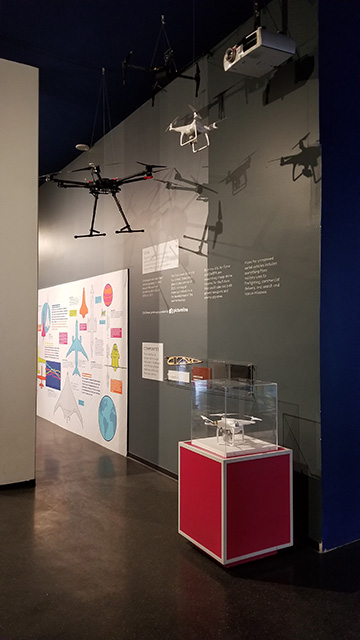
Utah Transit Authority, Salt Lake Arts Council team up to bring artwork to TRAX stations

Story and slideshow by LISA HENDRY

This slideshow requires JavaScript.

The platform is dotted with people. Some wear backpacks, some carry briefcases; other people clutch coffee cups, or push over a bike. The brakes sound on the track. A button is pushed, the doors open.

The automated voice fills the air, “You are on the Red Line train to Daybreak.” The brakes lift, people settle into their seats and TRAX is on its way.

Stop after stop, people come and go. The next station is reached. The doors open onto the TRAX station. More can be found there than just the dull grind of commuters. A flash of color, a crop of shaped metal, a reflection of glass. There is art.

Amid the scattered travelers, signs, schedules and benches that line each TRAX station, there are shapes and designs, colors and murals — art that Utah’s students, children, artists and government have all contributed to bring life to the urban landscape.

To bring about these pieces of art, the Utah Transit Authority (UTA) partnered with the Salt Lake City Arts Council in a project called Art in Transit.

“It is really designed to enhance the character of our transit system,” said Jerry Carpenter, a UTA spokesman, in a phone interview. UTA works with local art commissions of different cities to select artists.

Roni Thomas, project manager at the Salt Lake City Arts Council, has worked with UTA for the Art in Transit program. She is currently involved in the most recent project of developing the North Temple line, which will feature its art pieces in fall 2012.

“When this line is done, we would have worked with the UTA at 20 stations,” Thomas said in a phone interview.

Thomas said the Arts Council is involved in the artist selection process from start to finish. The council presents a call to artists to commission their artwork, based on requests for qualifications and requests for proposal. The Salt Lake design board, made up of  Council members and members of UTA, makes a recommendation to the mayor and CEO of UTA to approve the artwork after it has been proposed.

Each project is commissioned $90,000, an amount split by UTA and the city. After completion, the artwork is owned and maintained by the UTA. Some stations are open to national artists, while others are left exclusively for Utah artists.

“We are supporting local artists,” Thomas said. “When visitors come in town and see ‘oh that’s done locally,’ it is something the community can look at and take pride in.”

The Trolley TRAX station, located at 625 E. 400 South, was one of these stations. It was a project not only done by local artists, but also by children of Salt Lake City. Bad Dog Arts, located in downtown Salt Lake City, undertook the art project and allowed children to create the artwork.

“We’re all about art,” said Victoria Lyons, co-founder and co-director of Bad Dog Arts. The Bad Dog Arts program is a nonprofit organization that works with children ages 5 to 18 and allows them to create art as a positive outlet. The station provided an ideal landscape for the Bad Dog Arts project.

“The imagery is different reflection and action of community from kids’ perspectives.” Lyons said in a phone interview.

The station contains several different elements. Mosaic tiles line the station, both on benches in bright, colorful patterns and outlining the station ramps. Some drawings are engraved into granite pavers. Art and poetry is displayed under the canopies; that artwork resulted from a Bad Dog Arts writing program.

“Art can be life changing,” Lyons said. “It makes a huge difference in kids’ lives and can sometimes be one of the ways to reach kids to communicate and allow them to contribute to the community in a positive way.”

Just like this beneficial project, each piece of art is about speaking to the particular area.

“It’s a way that we enhance the riding experience and give them (the riders) something to look at that is typically reflective of the community,” UTA spokesman Carpenter said.

According to Thomas, it is up to the artists to speak to the area by researching the location, community and history of the area.

For example, the “Flame Figure” by Michael Stutz, located at Rice Eccles Stadium, is representative of the line that was installed just as the 2002 Winter Olympics came to Salt Lake City. The artwork there ties together the theme of the Olympics, blending the human form with the energy of fire.

All future UTA art projects will continue to say something about the rich history of the location and appeal to the area.

Each individual project has goals the Salt Lake City Arts Council wants to accomplish. For example, all six of the stations along the new North Temple line will emphasize the feeling of moving from the downtown area to the more open area surrounding the airport. “We want to create a sense of arrival in the city,” Thomas said.

Other artwork still in progress can be seen at the Midvale Bingham station, which will feature art titled “Utah Bit and Mine.” Carpenter said it is an interactive artwork that uses a great amount of creativity and shows just how neat art can be. The art is designed to highlight and reflect Utah’s deep mining history.

As the TRAX lines expand, the new art that is being proposed will take a different approach in representing the city of Provo. It will be using bright, whimsical figures to give the city that bright, offbeat and dynamic feel. Instead of representing Provo’s history, the art will demonstrate that Provo is a modern, developing city.

“The thing that is interesting about art is what is appealing to some people others might not like. So you want to find something that is part of the community,” Thomas said.

That is exactly what these pieces of art do. In supporting local artists and giving shape to Utah’s history and background, the art at the TRAX stations enriches the experience of those riding public transportation. It is something that the commuters can take pride in, and feel a part of.

“It helps make a more viable and bright community,” Thomas said, “and that’s what public art does.”

Junior League of Salt Lake City: Tradition in the 21st century

Story and multimedia by MEGAN SWEENEY

In 1901 Mary Harriman founded the women’s society called the Junior League. Her selfless efforts were focused on the immigrant children living on the Lower East Side of Manhattan. She wanted to improve the health, nutrition and literacy of those who had recently come to America.

Since 1934 the Junior League of Salt Lake City (JLSLC) has been an active chapter. It is currently comprised of 555 members. According to the JLSLC website, the focus of the league has shifted from the arts, social welfare, child welfare and criminal justice system education to the critical environmental issues, women and substance abuse, mentally ill adults, and health care issues.

The name “Junior League” is derived from the 80 original members who were recruited by Harriman.She was just 19 at the time.In the beginning Harriman herself was only 19-years-old at the time but gathered about 80 other “juniors” to aid in her mission.

In 1903, Eleanor Roosevelt became inspired by Harriman and decided to join the League. Her contribution was teaching calisthenics and dancing at the College Settlement House for girls.

Roosevelt is just one of many famous women to join the League over the years. The alumni consist of people such as Barbara and Laura Bush, Betty Ford, Shirley Temple Black, and Katharine Hepburn.

The Junior League became an international society in 1912 when the first Junior League of Canada was founded in Montreal. The organization’s mission was becoming cross-cultural.

With 292 sectors, the needs of the community from London, England, differ from those of Mexico City or Greenwich, Conn.

In Utah there are two separate leagues that focus on the community needs in their respective areas. One league is located in Ogden while the other is in the Salt Lake valley.
Both Utah leagues are focused on nonprofit work and fundraising but in different ways to be more specific to the community needs.

The League creates networks among women who are both members and non-members. The Junior League is also more than events and fundraising for the community. It is a training organization.

There is an education and training committee that focuses on recognizing the members’ skills and setting up workshops to help educate women and children on things such as computers, marketing, public relations, etc.

Lindsay Stahl sorting mass amounts of clothes.

The efforts to help better the community along with the League’s active members is what enticed Lindsay Stahl to start becoming involved.

The initiation process for new members can take a couple months. According to the website, during this process they are called “Provisionals.” New members start with a hands-on introduction and overviews of the fundraising events hosted by the JLSLC. At the end, they will be voted into active membership.

Stahl, who is now special events director at the Junior League of Salt Lake City, first joined the League because she was interested in giving back to the community. She said she “liked how the league was different from the normal Utah society” that she had grown up in.

Before she joined the League Stahl had no idea about its history but soon found out the significant impact the organization has made over the years. After getting to know other members she realized how important the League is and how long members have been involved.

Members such as Wendy Warner has been with the League for eight years. Warner is a Preferred Active. That means she isn’t on a specific committee but rather volunteers her time on various events. Her love of cookbooks was how Warner was initially introduced to the League.

Over the years, she has acquired 11 Junior League cookbooks from all around the United States. Her excitement is focused now on the newest release of SLC’s “Salt and Honey,” which will be released in early 2012.

What Warner has realized about the League is how it balances her life. “There are a lot of people, even here in Salt Lake, that don’t have a fraction of what we have,” she says. “It is also a great way to network.”

Both Stahl and Warner realize there a lot of misconceptions surrounding the League.

Warner says non-members would describe the members and functions of the league using  terms such as hoighty-toighty, party, elitist group of women. In reality, they are focusing on the community and pulling together events for Kids in the Kitchen or Women Helping Women.

Kids in the Kitchen focuses on tackling the increasingly alarming issue of childhood obesity and malnutrition. In Salt Lake City there are over 250 children in grades 3-5 who are taught various aspects of maintaining a healthy diet. There is an emphasis on how important exercise is along with portion control for your overall health.

Women Helping Women is a boutique founded in 1996 at 526 East and 300 South. Since then it has helped professionally clothe more than 12,000 women in the Salt Lake community.

The recipients of the clothing are transitioning into a self-sufficient lifestyle.The initial steps in this process start with first impressions. To a potential employer their appearance is extremely important.

Example of what to find at the boutique.

Jennifer Kelsey, president of the Junior League of Salt lake City, says that her favorite job is working in the Women Helping Women boutique.

Kelsey describes the League as “a nice place to link up and join other women who are likeminded and have something in common.” She knows each woman joins the league for different reasons but the common bond that the women share is the focus on helping women and children in the community.
Since 1901 the Junior League has brought together women from all over the world to help make the community a better place and to encourage a better future for the children. This was the initial dream when Mary Harriman started with just 80 people almost 110 years ago.

Since then the League has grown to more than 155,000 members in 292 countries because of the success and the message that the League shares throughout the world. That message, the outstanding members and what Warner calls “getting the fuzzies” from volunteering is what makes the League timeless.

This slideshow requires JavaScript.