Crossing the Fence

By Matt Leavitt

The grass always seems greener on the other side of the fence. For many of us living in the United States, the day to day grind of mundane life seems like a limitation for our dreams of crossing that fence. The idea of traveling to a new world seems exotic and tempting. Yet, when we do get the opportunity to travel, we usually end up coming back to the same side of the fence. Why do we do this? While the thrill of crossing the fence lasts for a while, we come to realize that our side was pretty good to begin with. We’ve grown comfortable here.

However, there are a few who take the step to come to the U.S. without looking back. For many people, this isn’t only driven by a dream, but a need to grow and progress. This need to progress is an innate characteristic of humankind, and for some, progression can only continue through the sacrifice of leaving home behind in order to work in what to them is a whole new world. For José Gutiérrez home is almost 4,000 miles away in Trujillo Peru.

Making the transition from school to working full time and starting a family isn’t easy. This is the situation of José, age 23, and his new wife Norma. The two have been married for eight months and have recently emigrated to the U.S.

Speaking for both him and his wife, José said, “this has been a challenge, there have been difficult and joyful times. The whole process from the very beginning took a lot of time, money, planning, conversations, and more planning.” He continued “We had to investigate…do tons of paperwork, ask for help from family and friends, wait for answers, keep motivating ourselves to fight for our dream, and trust in God.”

José and his wife have been through a lot to be where they are now. It all started even before they were engaged with the two of them making plans to someday be married and live in the U.S. “We wanted more opportunities for ourselves and our future family.” explained José, “In our country, it’s almost impossible to find a balance between having a family, studying for a career, and working to provide…but here it’s actually possible.”

This is why so many people take the step and commit themselves to it: possibility. José and Norma made the decision to enter a foreign country sacrificing everything familiar to them in order to provide the possibility of growth and progression for themselves and their future children. What are some of the implications of a decision like this?

José had to take a break from his education, and for a while he and his new wife had to be separated in order to make this dream a reality. After being married for just six months, José had to come from Peru in order to establish residence in the U.S. before it was even possible for his wife to come. He said that because of this, that at times he felt like a failure, but that it has been the hard decisions since the very beginning of the process that have prepared him for life here in the states.

He recounted, “I remember that we cried and hugged while trying to tell each other that everything was going to be okay.” What they thought was going to be a six month process miraculously was over in just one month. José is now working for a young startup company and his wife arrived from Peru a week ago. The two are saving so that they can continue their education and progression towards something better than what they ever could have had.

While it hasn’t been easy, and they still have a long ways to go, José and Norma express gratitude for the opportunity that they have to be here. They believe that this decision will in the end be a blessing for themselves, but more than anything, it will allow for their children to create a different future than they otherwise would have had.

How many people do we interact with on a daily basis with similar backgrounds? How many sacrifices are made behind one success story?

“I was on the waiting list for my VISA for ten years.” stated Ysabel Escalante, another immigrant and coworker of José. “I wanted my children to study in the U.S. and get the benefits of an education here.” Ysabel continued by explaining that she has always had the goal of working in the U.S. She isn’t the only one. Many others dream of coming to enjoy life in the land of opportunity, but sadly, relatively few are able to fulfil that dream.

With the seemingly endless stream of negative comments about immigration in the political arena, it desensitizes us towards these incredible people. Encouraging words for immigrants often go unheard amidst all the negativity. We forget our own desire to cross the fence and feel threatened when others do so entering in on our lush greenery. We ask ourselves if there is enough room for all of us when we should be asking ourselves: Who put up the fences and why are they there?

###

869

Maxwell Johnson

I enjoy long walks on the beach and the occasional virgin daiquiri. You might know me from such things as Katherine Heigl’s Twitter feed or this Intermountain Healthcare commercial on the importance of eating your vegetables. I am a Strategic Communications major at the University of Utah.

Here is an article on an amazing local business in Salt lake City. Give it a read or better yet stop by and see for yourself.

Changing the world, one bangle at a time

Story by Kylie English

Are you more likely to purchase a product if you know a percentage of the price goes back to a charity? Does it make you feel like you’re not only spoiling yourself but also helping others in need? Charity by Design is a branch off of the popular jewelry brand Alex and Ani. It was designed to allow customers a chance to give back to a specific charity while also purchasing something for themselves.

Affectionately referred to as CBD by its employees, Charity by Design retails the classic bangle bracelet with a charm that represents the charity it gives back to. 20% of the sale directly benefits the organization that it coincides with. With every bangle, the consumer receives a small card that explains the meaning behind the bangle’s charm and a bit of information regarding the charity it is associated with.

Currently, CBD has 45 non-profit organizations partnered with its program. Along with the 20% of sales that goes back to the charity, Alex and Ani will donate a fixed amount of money to the cause at the beginning of the partnership. Kate Shaffer, Charity by Design representative in Salt Lake city Utah says, “CBD used to work with organizations that aligned with their three main focus areas: education, conservation and health. They have now expanded this to better meet the needs of our community and the wishes of our clients. We now work with organizations whose mission aligns with empowerment, sustainability, wellness, creativity and action.”

Along with sales donations from the bangles, Alex and Ani storefronts are encouraged to participate in community outreach. They participate in Charity by Design events along with volunteering their time.

Charity by Design events are held in store and specifically highlight a certain charity. “Our in-store events provide a unique way for customers and consumers to give back. Alex and Ani hopes to inspire a new generation of philanthropists that support conscious consumerism. During these events Alex and Ani donates 15% of the total sales to the organization of choice,” says Shaffer. These events can last from a two-hour time span to a full day. 15% of sales throughout that time period go back to the charity.

Events not only highlight charities that are currently partnered with Charity by Design, but non-profits in the community. Some examples of charities in the community that Alex and Ani Salt Lake City hold events for include Light the Night, Labs for Liberty and Big Brothers Big Sisters. These events bring in heavy foot traffic because not only regular customers shop during the time, but supporters of the charity come as well. Since 2011 more than 3,500 events have taken place, providing over 8,400,000 dollars donated through sales and over 1,200,000 dollars donated.

One of the more popular events held each year is for Alex’s Lemonade Stand. The employees all wear yellow and pink and decorate the store according to those colors. Lemonade is offered to customers while they shop and there is a table of sweet treats in the front to lure in potential consumers. Alex’s Lemonade Stand is a popular charity because it supports childhood cancer research. Customers feel better about themselves when they realize they are not only purchasing something for themselves, but also donating to a charity.

Employees are encouraged to donate their time as well. Shaffer explains, “As part of our commitment to the community and our associates, Alex and Ani allows associates to volunteer their time to charitable non-profit organizations during their workday with pay. ” This program not only teaches employees the importance of volunteering, it directly impacts local charities by providing volunteers to help.

Total donations through Charity by Design since 2011 are over 30.5 million, 23.7 million of that coming directly through sales. To put it in perspective, 11% of Alex and Ani’s revenue is donated to charities. Charity by Design also donates on average 100 products monthly to organizations for charity purposes. CBD donates time, money and volunteers to charities all over the world. Charity by Design is quickly fulfilling their aim to make the world a better place and help provide consumers with a simple way to give back. You can purchase these unique bangles on the Alex and Ani website alexandani.com/charity-by-design.


Cedar Gonzalez

cedar3

I’m currently a journalism student at the University of Utah in the communications department. I’d like to become a visual media journalist and documentarian.

I studied art photography for many years before moving into the world of documentary photography and videography for a total of seven years of formal photographic training.

My goal is to help advance both social and environmental justice through objective gathering and sharing of information throughout the world.


Stories by me:

Why Would You Do What You Love?

Homelessness: A social problem in need of a social solution

Reuben Lehr

IMG_4575

About Me: 

I’m a Strategic Communication major and minor in business, hoping to one day go into the industry of video advertising. I’m currently interning at a film studio in Salt Lake, while also working at a taco restaurant for some extra money. After I finish up my degree this summer I plan on moving out of state and pursuing my career in the industry. Although I don’t see myself ever becoming a writer, I have always enjoyed the writing process and look forward to everything this class will bring.

Afro Omega: Utah’s Best Reggae

Story by Lauren Gutierrez

Bronte James and his wife Elisa Sofia are the lead singers in a local Salt Lake City reggae band called Afro Omega which won a spot on City Weekly’s Best of Utah Music 2016.

“I loved music in general,” says James. In college he didn’t care about much else other than football and he credits his Hawaiian roommates with exposing him to a lot of reggae. “When I started listening to reggae that’s when I started collecting tons of music and finding music I liked around 19 or 20 years old.”

The UCLA Jazz Reggae Festival was the first concert James attended that didn’t have the materialism, fighting and shallowness that he’d seen before at rap and pop concerts where everyone kept to themselves. At reggae concerts he met cool and conscious people who were chilling, smoking and wanting to make new friends. He’d never been a part of anything like that.

“At first I didn’t think I could get a band, I didn’t think that would happen,” says James, “I always wanted a reggae band but I couldn’t find the people that wanted to play it in Salt Lake at the time.” So he just played a lot of acoustic guitar. He wanted to play acoustic music like Ben Harper when he formed his first band but he wasn’t happy with the way it was headed. However the more he listened to reggae the more like-minded musicians he met. “When we started there were three reggae bands that I knew of in Salt Lake and now there’s tons.”

Afro Omega was influenced by artists like Linton Kwesi Johnson, Bob Marley and Peter Tosh which made the social activism aspect of their music the main focus from the start. “It was crucial because I’d find myself at places where I felt that people weren’t very conscious,” said James, “I was at a point in my life where I felt that people needed to be more aware, including myself.”FullSizeRender

At first their causes were anti-war, anti-corporation and race matters, but, playing gigs at bars made it difficult to do that because of the party vibes. Not everybody understood and he didn’t want to be a downer so after a while he decided that it wasn’t the right place to deliver those messages. He wanted to be subtle about it and just write music that anybody could dance to.

The band has gone on tour to several cities but James says the best music scene by far is Mexico City because they play instrumentals and the whole dance floor got packed. In his experience they have a much broader spectrum and appreciation for not just reggae but all music. “They appreciate it more because Mexico is a lot like Jamaica,” he said, “It has that third world label in certain areas and I feel like that’s where they can relate a lot more than in the United States. People here just want to have fun at the end of the day.”

“I see a lot of kids and people nowadays unless they’re going to get paid for it or be a pro they don’t always do it. They don’t want to collect the music,” explained James. He wishes people would play and study more musical genres instead of waiting for the next artist to produce it. He points out that in Mexico City if you’re a fan of rock, for example, then you know everything about rock which is something he doesn’t see a lot of in the United States. He said to keep focused through all the distractions.

“Be humble and don’t worry about what other people are doing around you,” says James of new bands in Salt Lake City. He added that if you want to be a serious musician it helps to study how your favorite band records audio. “That’s something that Salt Lake lacks is CD’s and music. There’s so many bands but there’s so few CD’s.”

He suggests not dedicating so much time jamming, rehearsing and playing gigs. Instead he says, “I want to see more production. There are a lot of really talented people here and time flies, it takes a long time to record an album, it’s daunting and it’s intimidating but if that’s something someone could’ve told me … I could’ve gotten things rolling quicker.”


Lauren Gutierrez

12705395_10205364564103963_5304546450862024757_n

Afro Omega: Utah’s Best Reggae

Summertime alternatives for Salt Lake Valley teenagers

About me:

I guess you could say I have roots in different places having been born in Texas, raised in Utah with family from Costa Rica and El Salvador. I want to do a good deal of traveling after graduation to explore different cultures and parts of the world. I’m studying strategic communication and I’m interested in marketing. I like to do yoga, play pool, drink coffee and listen to podcasts.

Vive: cold-pressed juicers with warm hearts

Story by Reuben Lehr

Vive is a loosly translated French word meaning “long life” and that’s exactly what customers get when they visit Vive Juicery.

Cold-pressed juicing, a popular new trend, involves crushing and pressing fresh fruits to maximize juice amount and minimize loss of nutrients because the low heat. Vive Juicery is Salt Lake’s most popular cold-pressed juice shop that was started on just $2,000, a kickstarter campaign and two motivated dreamers. I sat down with Brittany Shimmin, co-founder of Vive, and discussed how the hip and fast-growing company got its start.

It all began when Shimmin and her husband at the time, Bryce Thaxton, took a trip to San Francisco. The couple noticed little juice shops lining every corner and even though they had always imagined opening a coffee shop, the couple realized, “Salt Lake doesn’t need more coffee, they need cold pressed juice.” After their return, they became unhappy with their current jobs as massage therapists, and anxious to finally launch their business and become their own bosses, they took whatever money they had, created a kick starter campaign and Vive was born.

Much of Vive’s success can be attributed to the amazing Salt Lake community, says Shimmin. She described Salt Lake as a city of a bunch of friends, and when those friends all like something they rally behind it. Without the community support helping to build the company, Vive wouldn’t be near what it is today. Shimmin also mentioned the support of the downtown alliance in the creation of Vive saying that their help has been incredible. Social media has also had an impact on the company, Shimmin attributes much of the company’s rapid growth to the ever growing, free marketing tool. Instagram is the most popular social media facet for Vive, allowing customers to interact with the company as well as each other.

It also doesn’t hurt that Vive’s branding is so pleasing to look at and very easy to photograph. Since Vive wanted to focus on the community, they knew they needed locally sourced produce, and an environmentally friendly company as well. This meant that all their juices had to be bottled in glass. At first, they worried this added expense of glass bottling would hinder the sales, but they ingeniously created the bottle-buy-back program in which the customer receives store credit when they return their used bottles. This allowed Vive to cut costs, remain as eco-friendly as possible and give a benefit to their loyal customers.

All this sweet success didn’t come without its trials. From the beginning money was a huge issue, says Shimmin. As briefly mentioned earlier, the couple scrapped up all the money they could find, and then started a kickstarter campaign. Aided by friends, family and juice-loving believers they raised $6,000 and with only $8,000 they started their careers as Juicers. The company was started in early summer of 2013 and by August the couple had quit their other jobs to work full time on Vive. At first, because of money restraints, the couple did everything. While Shimmin juiced Thaxton would nap and while Shimmin napped Thaxton would bottle, she recalled. “It was long, long hours, but we were always having fun, Shimmin said with a chuckle.

As we chatted further, Shimmin revealed that both she and Thaxton did not complete college, but rather wanted to make a point that a formal education is not needed to be successful. Shimmin told me that after high school she enrolled at the University of Utah and after one class she instantly knew it wasn’t for her and she went straight to admissions office and dropped out of all her classes. Shimmin gives this advice for anyone looking to also start their own business, saying that her motivation has always been, “if it scares you, do it.” That was her problem with college, getting a college degree was comfortable and didn’t awaken anything inside of her. Luckily, she was able to realize this early and tap into that motivation.

After just three years Vive has expanded from a stand at a market, to the go-to cold-pressed juice shop in Salt Lake. With three locations, and even more in the works, Shimmin said that the company would also like to renovate an old VW Van and create a Juice Van for markets, concerts and other events within the amazing Salt Lake community.

IMG_2526

Lexie Humphrey

Main prof pic

I am currently a student at the University of Utah, home of the Utes, studying strategic communication with a minor in business. I am dedicated about using the fields of communications and media as platforms for change, as well as sharpening my interpersonal communication skills.  My current passion is teaching indoor cycling at numerous gyms across the Utah valley. Cycling has been an essential part of my life since 2011 when I inherited my first road bike. Sure it was a little rusty and the chain was bone dry, but let’s be honest, it builds character. I was instantly hooked and fell in love with the sport and have been riding ever since. Being a teacher and student I have been able to develop team building skills and strive to exercise empathetic leadership in all endeavors.

Local Radio DJ Strays from the Norm

University’s club sport teams show that success stems from independence

Misty Packer

About me: 

Salt Lake City, UT –> Redlands, CA –> Las Vegas, NV –> Spanish Fork, UT –> Ferndale, WA –> Springville, UT –> Kingman, AZ –> Nashville, TN –> Richmond, VI –> Salt Lake City, UT

I went to Canada once for five minutes.

I mistakenly told a Deaf man in sign language that coconut was my “birthday” instead of my “favorite.” They’re very similar signs.

When I was in kindergarten I told everyone my name was Angelica (from Rugrats) and that I wanted to be an Ice Cream Man when I grew up.

I tried to go blonde once and turned red instead.

I once entered into a scary story contest and won second place. I was in the first grade.

I read a 600 page book in a day. I didn’t sleep.

I almost drowned in a lake and am now afraid of water.

I’m dating a Navy Sailor.

Every time I get chocolate-chip waffles I eat the entire box in one sitting and usually don’t regret it.

Have you ever heard of Challah bread? Google it. It looks delicious right? I know how to make that. And I know how to make it good.

One time I got food poisoning right after playing Mario and now I get a little nauseous every time I see him.

I have a cat, Curie, and she only has one eye and wakes me up at five in the morning every day.

Intan Zakri

timbra1As a lover of writing and art, Intan is currently working on her Communications major at the University of Utah and is also pursuing a Fine Arts degree with an emphasis in graphic design.

Twitter: IAZ_OnThePrize

Profile story: On war’s front line

Enterprise story: Unrest in peace: An interview with the crew behind award-winning film “Peace Officer”

“We are all broken, that’s how the light gets in.” — Ernest Hemingway

The Path of a New York Editor

By Mike Haglund

Ever wonder what it is like to be an editor in the Big Apple? David Haglund is an online literary editor for The New Yorker, a graduate of the University of Chicago, who then moved on to study at Oxford University. For over a decade he has been writing and editing for several different outlets. Before his current job at The New Yorker, he worked for Slate Magazine as the senior editor. David, who happens to be my cousin, was kind enough to take time out of his busy schedule to let me interview him about what it’s like being a big time editor.

What made you want to get into journalism?

David: I always enjoyed reading and writing. In college, I came to really enjoy criticism — writing about books and, later, movies. After I started writing reviews, I began interviewing people from time to time, another part of the job that I’ve come to like.

How did you get to your current position with The New Yorker?

David: My first editing job was with a small literary magazine that came out twice a year. I was the managing editor. While I was there I wrote book reviews for other publications, and every few months I would write a piece for the online magazine Slate, usually about movies. Eventually, a job opened up at Slate running their culture blog — a mix of writing and editing short pieces about movies, TV, music, and so on. I did that for three and a half years before a job with The New Yorker’s website opened up. A friend from Slate told me about the job and put in a good word for me.

Who has been your favorite person you’ve interviewed and why?

David: My favorite story of those I’ve written is about the basketball player Delonte West. I had been a fan of Delonte’s since he was drafted by the Boston Celtics, and I knew that he had struggled with mental health issues. I wanted both to write about Delonte and to better understand how professional sports leagues address mental illness. I first spoke to Delonte in a minor league locker room in Dallas, just for a few minutes. Later we spoke on the phone for about an hour when he was in China playing for a team there. It took another several months before he finally agreed to an interview in person. I spent the afternoon at his house in Maryland and we talked for a long time. I felt as though I had come to understand his point of view, and had also learned something about the larger issues he had dealt with and that his teams faced. It was a very hard story to write but I was happy with it.

Describe your typical day in your current job.

David: I get into the office around 9:45 and try to plan my day — figure out which stories I need to edit, which stories are supposed to be published that day, who I need to email or speak with in person. After that I spend most of the day editing stories and answering emails, with occasional meetings, usually about story ideas or about job candidates when there are positions to fill. Often I’ll have coffee or lunch with a writer or with another editor at the magazine. And I read a lot — to see what other magazines are publishing, to keep up with what we’re publishing, and to find writers who might write for us.

What are some struggles you now face as the literary editor?

David: The biggest struggle for me is finding enough time in the work day. I spend a lot of time on each story I edit, and it can be a challenge to keep up — I usually publish a couple of stories a day on the website, and occasionally write stories myself or do stories for The New Yorker’s weekly radio show. Every story can get better with more time, more editing, more revision — and so figuring out when a piece is good enough is a challenge, too. Sometimes you know something’s good, but often you want to keep working on it, to make it at least a little bit better.

What is your favorite part about being an editor?

David: My favorite part is finishing a story that both the writer and I are happy with — and then publishing it, and seeing readers enjoy it, too. I like helping good writers get recognition, and furthering their careers. I’m especially glad when writers I’ve edited are happy with the stories we’ve worked on together — when they think that I’ve helped make their stories better, and are proud of them. That’s a good feeling.

Bianca Velasquez

I am very hung 12299157_206070143062998_718410302592674857_nover right now. First thing about me, I love to frequent Twilite Bar. Last night I went to said bar. I lost my mail key. It is probably in the booth where I drank that stranger’s forgotten Long Island.
I have a podcast/website. It is called Localmotive. On this website/podcast I travel the country interviewing bands, artist, businesses, and such.
12717777_242846896051989_9067805663991018237_n

1201_257988354537843_2060426897525036464_nI draw cartoons. My cartoons are displayed on instagram, tumblr, and it’s own website. @happybutton_ (Instagram).

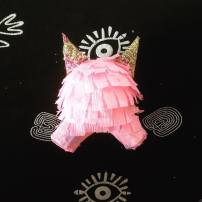
I also model for local vintage shops and promote them on my website and other things. I have a Youtube channel called Pinata TV. On this channel I get together with other comedians and we educate the masses about Latin American culture.

I’m in a band called Dream Slut. I play guitar and sing about boys with my band mate Jessica, who is also my roommate.I also have another site where I make neon lights. It is called Neon Bite. Haha, get it? I also make custom Pinatas on this site.


Matt Leavitt

The Cancer Wellness House

Crossing the Fence

I was born in Salt Lake City, Utah but have lived most of my life away from the mountains.  My childhood years were spent in the rolling hills of New Hampshire, the awkward adolescent stage of my life was lived in the beautiful bay area of California, and the years proceeding my entry into college I found myself in the small country of Uruguay, just south of Brazil.  My interests have changed almost as drastically over the years as has my location.  My desired profession changed from wanting to be a dentist, to a professional tennis player, to a Hollywood producer.  I’ve now come full circle and I find  myself back in Salt Lake City at the University of Utah desperately trying to figure out what to do with my life before it costs me too much in tuition.

Monique Morrison

Business Pic 1 - Color


Currently an international studies and communications major at the University of Utah. I made my first “magazine” when I was five years old and almost 20 years later I now run a mental health blog. An outdoor-enthusiast and adventure-seeker, I want to use my writing skills as a means of telling people what I discover throughout my journeys.

Jamie Gribbin

I am a second year student at the University of Utah.  Originally from Oklahoma, I moved to Utah four years ago and fell in love with the mountains. I am double majoring in Strategic Communications and Gender Studies, hoping to go into law school for social justice and human rights.

I hope you enjoy my story!

If The Leg Fits

A Disabled Campus

IMG_3738

Riley Nielsen

Let’s see here,  I suppose I’m a simple guy that has a mission in life to help as many people as I can.  I have had many experiences that gave me understanding and new knowledge to change lives.  My brother and I created Life Decided to help people who are stuck, stagnate or unhappy because of habit, perspective or lack of knowledge.  I am from Utah with a story similar to most but unique in every way.  I could write for hours about it but for now look in to Life Decided and see for yourself.  Life Begins When It’s Decided.

be happy.

All Killer, No Filler

By Zach Dugdale

As I drove towards the Salt Lake City International Airport, which is neighbors with the KRCL 90.9 FM station, Devon Russell’s song “Jah Will See” blasted through my car’s speakers. The sound of Reggae music is what I have come accustomed to hearing on Saturday afternoon at 4 o’clock after discovering the radio show Smile Jamaica many years ago. Almost every Saturday from 4 to 6 o’clock, I listen to the Jamaican roots reggae and mutant dub spun by Robert Nelson, the host of Smile Jamaica. Driving down the freeway at 75 miles per hour, it became very surreal to me that I was on my way to interview the very deejay who plays music that brings joy to not only me, but hundreds of others who tune in to the show.

Robert and I had exchanged multiple emails after I approached him about an interview. He had seemed excited about the idea, and I, being a huge fan of the show, was even more so. I pulled into the back parking lot of the studio, and Robert let me in the back door while Rita Marley’s “The Beauty of God’s Plan” played for all of those fortunate enough to be listening to 90.9 FM. Robert greeted me with a warm smile and a firm handshake, and then led me into the studio.

In the studio, piled around the multiple turn-tables, CD and cassette players, and microphones were hundreds of vinyl and CD recordings of reggae and dub music. Robert is one of the very few radio deejays who only uses CDs, vinyl records, and cassette tapes to play all of the music on his show, claiming that the enriched personal musical experience is well worth the extra work. As he hurriedly readied the CD containing the next track he was going to play, Robert told me of his vast collection of reggae music, which includes about 20,000 records and CDs. His collection comes mostly from Southern California and Las Vegas, and is constantly growing.

Growing up in a small town in Montana, Robert was not exposed to reggae until he moved to Salt Lake City in 1986 to attend the University of Utah, from which he received a degree in Middle Eastern Studies. After moving to Salt Lake, he heard Smile Jamaica on his radio and has been captivated by reggae since. He first became involved at KRCL by volunteering to be an early morning host of a reggae program, and when Jon, the deejay of Smile Jamaica previous to Robert, left, he asked Robert if he would like to take over the show.

Robert continued to tell me about the history of the show while everything from Bunny Wailer to Peter Tosh played in the background. Originally called Dreadlock Holiday after an old rock song, the show has been playing on KRCL since 1980, and was originally at 1 o’clock on Saturdays, but moved to the time slot it keeps today around 1990. The first deejay of the show was a woman named Margie, who was succeeded by Myron, then followed by John, who finally gave Robert control of the show in 1986 . Since then, Robert has not only been the volunteer deejay of Smile Jamaica, but has previously hosted Radio Active, a left wing politics talk show, and is a Librarian at the University of Utah’s Marriott Library doing sound editing and managing the Digital Scholarship Lab’s audio studio.

Robert concluded the interview by speaking about the changing role of broadcast in the face of digital media. I asked Robert his thoughts on how technological advances such as the internet have influenced broadcast, to which he responded, “It’s helped me because I’ve made it a focus of branching out the show…Here’s a way to get your show out there.” Although Robert does not use any streaming or digital music services to play his show, he records all of his shows and uploads them, commercial free and with a playlist, to the internet. By utilizing digital media to further the station’s reach, Robert has helped people from all over the world, even as far as Japan, listen to his signature “all killer, no filler” Reggae music show. Robert loves to share his music collection with all who will listen, and through his utilization of the internet to help the show grow, he continues to spread positivity and good music.

If The Leg Fits

Jamie Gribbin

“You can treat more people by teaching,” Dr. Laurence Meyer, the Chief of Research at the Salt Lake City, V.A. Hospital, told me as we sat down in his office to discuss the new clinical testing for a new type of prosthetic implanted into veteran soldiers. The inspired music major at the University of San Diego ended up finalizing his college career with a Biochemistry degree.

Planning on going into graduate school for his biochemistry major, “I ended up not liking the bio-chem group quite as much,” so he applied for medical school. He was, unfortunately, not accepted. “So, I lateraled over and got my Ph.D. in Genetics,” at UC Davis, “and then went back and went to medical school. So that was after I had been working for four years, and went back for five years for my Ph.D.”

His primary focus was on genetic research. This led Dr. Meyer to Salt Lake City, Utah, where he practiced internal medicine, clinical genetics, and melanoma research, along with other dermatology research (specifically into geriatrics “because old people get skin cancer”) for approximately eleven years.

“In some way, I’ve always been doing medical genomics,” says Dr. Meyer. Research allows us to make great findings and “treat more people, have fewer side effects, have therapies that work on a higher percentage of people, [and] address the people who don’t have a therapy for them.” Dr. Meyer claims that research allows more benefits to the people because it furthers medical practices, while at the same time moving simultaneously along with ever-changing medical advances. Dr. Meyer also says that, “you know, it’s fun!”

“When I came here eleven-ish years ago, almost twelve years ago now, there was an on-going bone and joint research lab, and they were largely researching the attachment of artificial joints to existing bone,” Dr. Meyer said.

At the time, this was a fairly new idea for medicinal practices. Dr. Meyer estimates around eight to ten years ago “a guy in Sweden started doing some of these and was getting initially horrible infections . . . and then it was getting better, but not good . . . and another group in Germany started doing research on it too.”

These new prosthetic are called Percutaneous Osseointegrated Prosthetics, or POPs. Unlike the socket-fit prosthetic limbs, the POPs are implanted into the remaining femur bone, thus allowing the patient to receive more feeling within the new leg and less chance of tissue deterioration. This prosthesis implantation requires two surgeries, first to place the fixture into the femoral bone, and then to install the attachment for the artificial leg/limb.

Dr. Meyer says that within the next year or two, the goal is to have around ten veterans implanted with a new prosthetic leg. Depending on those results, he is hoping to have spread the clinical testing to other hospitals for more access to the public. He says that there is more than just spreading the medicine and knowledge, but also teaching and re-teaching surgeons on how to properly insert the new attachment.

Dr. Meyer reminds me how rewarding medicine can be, and how quickly ideas can come to life and change people’s lives. “You see somebody in the clinic, you talk to them, and you help them, and that happens every once in a while, not as often as you’d like, but it does happen – but you get this very immediate gratification.”

“We started doing research on it almost ten years ago. So I have a very small part of this,” Dr. Meyer states. “There are orthopedists, and researchers in orthopedics, biomedical engineers, microbiologists, dermatologists, physiologists, P.M.R. physicians, rehab specialists, material specialists, and probably people from other domains,” who have all helped Dr. Meyer and his personal team of researchers to help begin the clinical testing for veterans with upper leg amputations.

He says what is really amazing is watching these two veterans with the new leg implantation start walking. “You can see them tear up as they take their first steps with their new leg.”

Dr. Meyer says, “A mere bump or a little nudge, and the veterans are able to feel their new leg move.” It’s truly amazing what medicine can do; all it takes is that one step forward.

On war’s front line

By INTAN ZAKRI

“I asked him if he wanted to come back with me to my studio so that we [could] have a fight,” artist Yoshua Okón said about a policeman he just met. “And then we took it from there.”

Blending reality, documentation and fantasy is a challenge that Okón seeks to overcome via multimedia art. By addressing unpleasant themes with instances of humor, he invites viewers to reflect on mainstream culture. Wanting each member of his audience to be “an active spectator,” Okón emphasized, “Humor I think can be great because once you’re laughing you are implicated. In a way you are already inside of the piece.”

Okón was born in 1970 in Mexico City where he currently resides. After receiving his BFA in 1994 from Concordia University in Montreal, Canada, he received his MFA from UCLA eight years later. His work has appeared in nearly hundreds of exhibitions for the past 20 years in countries across the globe including Brazil, Germany, Japan and more.

In 1999 while roaming the streets of his youth, camera in hand and no notion of what to film, he came across the aforementioned police officer. When they were in Okón’s studio with the camera rolling, they had their “fight” — a verbal exchange of harsh yet comical insults that highlighted the city’s social issues. “Since there’s no script,” Okón said, “what happened was, in many ways, the unpredictable.” Okón arranged multiple similarly staged pieces featuring other officers, incorporating the video performances in an exhibition titled Oríllese a la Orilla, which roughly translates to “pull over.”

The installation, like many of Okón’s works, was comprised of multichannel projections, immersing the viewer in screens and speakers. Since the beginning of his career, he regarded video as a physical medium, one the viewer must build a relationship with. “I’m interested in creating environments that kind of surround you,” he said, opposing the idea of his spectators “passively watching from a distance.”

Another example of his multichannel work is a 2011 piece filmed in Los Angeles. Having just read the book The Art of Political Murder by Francisco Goldman, the United States invasion of Guatemala was still fresh in his mind. It then occurred to Okón that the Guatemalan Civil War was closer to home than he realized, recalling the time he met a local Home Depot worker who had fought in the same war. With the employee’s help, Okón gathered a group of ex-military men who had also done combat in the civil war, directing them to perform a reenactment in the parking lot of a Home Depot.

Titled Octopus, the looped 18-minute long footage referenced the nickname of the United Fruit Company who had their hands on many corporate interests such as land, ports and railroads during the war. Throughout the video, 14 men of Mayan descent crawled on their bellies, held up imaginary rifles and crouched in their armored vehicles (shopping carts).

Although adept in their roles, Okón noted, “To me the real subjects of this piece are not them but the customers around them” as nearly every passerby ignored the performers, even when they played dead. “That became a very good metaphor for their invisibility.”

The sequel to Octopus, currently on display at the Utah Museum of Contemporary Art until April 30, also relates to historical events. Named Oracle, it references a small town in Arizona where the largest-yet protest against the immigration of unaccompanied minors from Central America occurred.

Installation view of Oracle at the Utah Museum of Contemporary Art

Installation view of Oracle at the Utah Museum of Contemporary Art

The multichannel installation contains a scene where nine Central American children have their backs to the camera, singing a modified U.S. marine hymn that instead narrates the history of the U.S. invading Central America, the key reason for the mass migration north. In contrast, other scenes feature members of the AZ Border Defenders reenacting the protest, holding bright yellow signs that read “Stop Invasion.” Consequently, the piece portrays multiple views on the immigration debate where Okón aims to raise awareness of the topic by giving every side a voice — even if the sides are at war.

“We live in a very violent society but we have the illusion that it’s not violent,” Okón said. “It’s kind of this far removed violence. The clothing that we’re wearing is made by slaves but it’s so far away that we don’t see it. … We are completely desensitized because it’s not happening right here.”


See more of Yoshua Okón’s work: http://yoshuaokon.com/

Jake Glissmeyer

A Man for the People 

Finding refuge for refugees

Bio

Jake Glissmeyer is a student at the University of Utah. He is currently an aspiring to be a broadcast journalist with hopes of being a lead anchor on SportsCenter. He loves anything sports but specifically basketball, having been coached by his dad in his younger years and playing on the varsity team at Juan Diego Catholic High School.

Jake enjoys the warm weather, is a meat and potatoes guy and loves music with a good beat, memorable lyrics and that’s fun to dance to. He also plays the cello and has been doing so for 15 years,


Dangerboy

Dangerboy

By: Riley Nielsen

“If I wasn’t in radio, I’d be jobless” said Patrick Essex also known as Dangerboy from 97.1zht-The Morning Zoo.  Essex and I met for lunch at Hoppers Bar and Grill in Cottonwood Heights on Friday March 18. I arrived stressed out because of how late I was. Not five minutes, not 10 minutes but 25 minutes late.

Sitting down in front of Essex was a relief, especially because of his easy-going, happy and patient demeanor. He was excited to help in any way he could. His cheerful attitude and upbeat tone of voice synced well with me. We hit it off immediately. I began by asking the simple questions about his background.

Essex is a Utah native who attended Taylorsville High School. He is happily married with a son and two dogs to keep them company. His family is everything to him. We shared a love for family and ‘big mean-looking’ dogs. Essex spoke in a very confident voice that projected nicely his fun and energetic personality.

I was having a good time from the beginning. His unique voice mixed with a clear and articulate way of speaking drew me in close to his stories. Although he preferred to speak softly because of his unique voice, he is reserved in public. He expressed his “keep to myself” personality is who he is really, he enjoys his privacy.

I noticed how polite and welcoming he was to the server each time she came to the table. Essex ordered a juicy burger and I was persuaded to order their famous fish n’ chips. I had great food and great company. I was curious to know a lot about this Dangerboy character I hear every morning. He is the same person both on and off the air.

I asked him how he got into radio, his answer was short and sweet, “I accidentally got into it,” Essex said. I didn’t know how that was possible. He then explained how he had to write a paper in school about what his hopes and dreams were. “I had none” he told me, “but I always loved radio, so I went with that.” You can say it was a self-fulfilling prophecy.

His senior year in high school he went to a radio station to look for a job. He started out at the bottom of the line but stayed there ever since. He never left that radio station that was then 94.9 and is now 97.1zht. His description of what it’s really like to be in radio surprised me. “It’s not all that it’s talked up to be” Essex said. It’s full of long hours and difficult situations.

He did get a laugh about the homeless people that would come into the building and on the floor because the door didn’t ever lock. I did hear things that I didn’t know, but sort of expected from this industry. Let’s just say there is a ‘dark side’ of radio.

Essex couldn’t be happier at The Morning Zoo.  He lit up when he talked about how perfect it is for him. I didn’t hear one negative thing about his co-workers, boss, or anything. He believes radio is meant for him “I would be unemployed if I got fired today, I wouldn’t know where to go or what to do” said Essex.

I had to know his favorite and least favorite part about radio. I remember distinctly how he smiled about how great it is to see the positive impact he has on people. He gave some examples of people who recognize his voice and express the happiness and strength he has given them because of the show.

Essex seemed so content with the idea of him changing someone’s life even if it’s just a few hours in the morning. The biggest struggle for him is doing the ad lib radio ads they are required to have for their sponsors. Not much to say about what is the most difficult part about his job. Essex loves every bit of it.  It’s safe to say I walked away from that interview a little less-stressed and a little bit happier. I and many others agree that Patrick Essex is meant for radio.