MY STORY:

MY BLOG:
ABOUT ME:
LINKEDIN:
GALLERY:
MY STORY:
MY BLOG:
ABOUT ME:
LINKEDIN:
GALLERY:
April 10th, 2018
University of Utah Student Relationships with Campus Museums and Galleries
SALT LAKE CITY – The University of Utah has much to offer its students. Whether you are looking for a great education, an involved social community, top-tier sporting events, or annual concerts there is plenty for students to experience. One thing the university provides for its students is a diverse and free set of museums and galleries some of which have been around for almost a century.
The university has three museums and a variety of student galleries. First, the Utah Museum of Fine Arts (UMFA) located in the Marcia and John Price Museum Building, is a hub for “global visual arts” with nearly 20,000 original works ranging from ancient to modern day pieces. Since its inception in 1917, the UMFA has gained traction through its community, educating youth in world culture through art. In 2005, the museum was declared the states representative museum of fine arts. The museum is continuing to grow and recently finished a 19-month redevelopment. The UMFA provides insight into world cultures both ancient and contemporary.
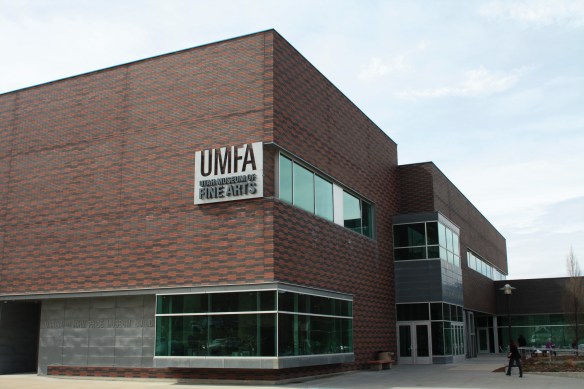
UMFA Marcia and John Price Museum Building – April 10th, 2018
The second, The Natural History Museum of Utah (NHMU) located above research park on campus is devoted to the wonder and education found in the natural world. As Utah is a premier location for fossilization discovery the museum is littered with accurate representations and recreations of the ancient and modern world. According to their website the NHMU aims to “illuminate the natural world and the place of humans within it” tying together the past with the future of humanity.

Natural History Museum of Utah Entrance – April 10th, 2018
The third and institution is the states Arboretum, Red Butte Gardens. Red Butte Gardens is the Botanical collection with over 100 acres of gardens, trails, and picnic area located just North of the NHMU. It was created in 1930 for plant research, however, it wasn’t formally opened to the public until 1985. The garden is community funded and sees over 200,000 visitors a year. According to their website, the gardens provide a sight of approximately “450,000 springtime blooming bulbs.”
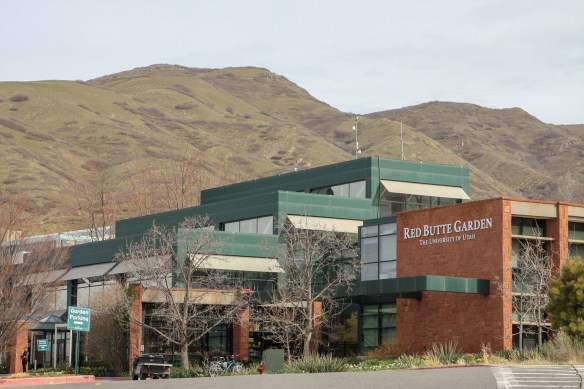
Red Butte Garden Visitor Center – April 10th, 2018
Of all the available experiences on campus, what do students enjoy? Are these commodities being utilized by the student population or are they falling by the wayside? Of the students spoken with, 30% of students said they either intended to but had not yet been to any of these facilities or hadn’t considered going at all. Chris Khauv, currently a Junior at the University of Utah said, “I always thought about going to Red Butte Gardens because I’ve seen photos and it always looked interesting, but when I have free time, it doesn’t really come up as an option.” Then a pause, “Santana played a concert there last year though,” he added, “I wanted to go but it was too expensive.” The Red Butte Garden concerts have been going on for almost two decades in order to bring locals to experience music and the gardens together. However, with a steep price and a majority of bands hosted being jazz, blues, and contemporary rock, it’s clear that students are not the target of these particular shows.
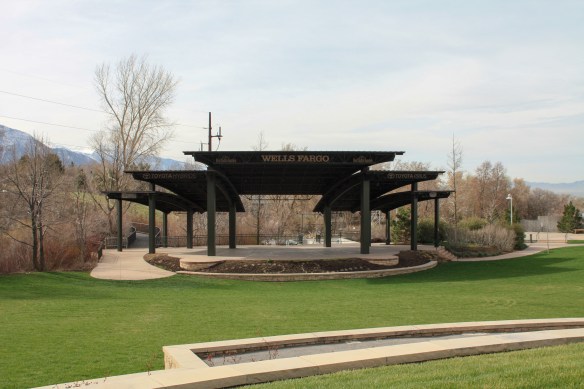
Red Butte Garden Amphitheater – April 10th, 2018
Robert Lusk, another university student had a much different experience with the institutions, “I’ve been to both the Natural History Museum [of Utah] and Red Butte Gardens many times and always enjoyed my time there.” When asked about the use of these facilities by his peers Robert continued, “I think that most students know what is available to them and I’m sure it is used as a selling point on campus tours, and I know a lot of people that have visited one of the museums, I just think it doesn’t interest certain people is all.” Obviously, museums aren’t for everyone, but by providing an assortment of choices whether it is historical, botanical, or artistic, it is more likely that at least of the museums or galleries will appeal to a wide range of students.
The university community is important to these facilities. They’re open to the public but because of proximity and educational origin, students are always encouraged to participate in their programs. When asked about the involvement in the university population, Ariana Trevizo, a volunteer of Red Butte Gardens in the past said “The Red Butte Gardens is a community project, just as the community gives, it gives back. Students are always encouraged to come experience the property in between classes, on weekends, and during events.”
The University of Utah is a diverse community of people from cultures all around the world. Its pride is in the diversification of culture and provides the facilities to experience both Utah and world culture through experiences. Whether it is learning about the traditions of native tribes, ancient Asian sculptures, or about the Penstemon utahensis the desert plant native to Southern Utah. The university gives its student the option to learn outside of the classroom.


For More Info:
Cristian’s Stories:
University of Utah Student Relationships with Campus Museums and Galleries
People are more reluctant than ever to buy cosmetics that are tested on animals
Thanks to the internet, people are more informed about the animal testing side of cosmetics than ever. People all across the United States are opting to use cruelty-free cosmetics instead of cosmetics that have been tested on animals because of all the bad information on animal testing that is on the internet. As people become more aware of the cruelty that happens in the animal testing industry, they tend to opt against products that have been tested on animals.
Lush Cosmetics is a company based out of the United Kingdom that sells products for the whole body from head to toe. The company is growing at an all-time high, and a big part of the reason it is growing is that they are completely cruelty-free. People specifically go into Lush to get cruelty-free cosmetics. Due to this shift in consumer culture, more and more companies are being forced to adapt the practices of companies like Lush. Lots of companies around the world are promoting themselves on the fact that they are cruelty-free. Other companies that previously tested on animals are making the shift to cruelty-free.

According to a report by Market Research Future, the cruelty-free market is expected to grow by 6.1% over the years 2017-2023. Products that were once exclusively marketed to vegans – due to the lack of animal product – are now being marketed to everyone and they are thriving.
To get some more perspectives on the topic, I interviewed a couple of my coworkers at Lush Cosmetics. I talked to Chloe Beus to see how she feels about why the shift in the market is happening. Chloe feels that people are becoming more educated thanks to the internet. People can see videos on YouTube posted by PETA that show the horrors of what happens in farms that use animals for food, but they also post videos that depict the horrors of animal testing in cosmetics labs too. After people see these videos, there is an emotional reaction inside of them that makes them reluctant to purchase things that have caused suffering on animals. Lush has a viral video posted in which a human volunteer/performer positioned themselves in a store window front for an act. In the act, the performer is dressed in a nude bodysuit, appearing naked. There is another performer, which is a lab worker, and the point of the performance is to show people walking by the storefront what it looks like when animals are being used as test subjects in a lab – but on a real live human volunteer. Seeing these things happen to a human also triggers an emotional reaction, and causes people to question why these things are happening to this person. From there, Lush employees would talk to the people with questions and explain to them that the spectacle is to continue the fight against animal testing. Chloe also mentioned that as a Lush employee, she sees a lot of vegan or vegetarian customers come in the door specifically because they eat plant-based diets. They will initially come in, looking for vegan or vegetarian products, but then be informed of the horrors that animals actually go through when they choose to learn a little bit more about Lush. There are many reasons, both logical and emotional that people choose to buy cruelty-free products.

The picture above is a picture of the performance artist, Jacqueline Traide, 24, who did 10 hours of an extreme endurance performance in the window of Lush’s Regent Street shop in London. She was publicly tortured and caused crowds of people to gather to raise awareness about animal testing in the cosmetics industry.
I also spoke with Amy Jones, an ex-employee of Lush but an animal rights activist. She talked about reasons why people may choose to not seek out cruelty-free products. Amy said that before she used Lush products, she was completely unaware of the torture that animals go through for the sake of cosmetics.
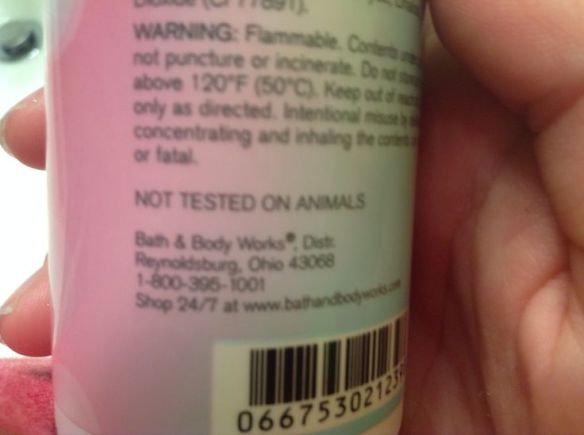
The picture above is of a container from Bath & Body Works. It says NOT TESTED ON ANIMALS on it, which implies that it is a cruelty-free product. Consumers who are uneducated are often tricked by these labels, and think they are purchasing a product that is free of animal testing.
According to Amy, many companies, Bath & Body Works being one of them, label their products as not tested on animals – but – only the final product isn’t tested on animals. Every step of the process before the final product is tested on animals. For some of these companies, if they sell products in China, they are required to test on animals. A lot of these companies will say they don’t test on animals except for when required by law; because of this, Lush Cosmetics does not sell products in China.

The picture above shows bunnies detained in a cosmetics testing lab in China, getting ready to endure the torture of their lives.
A lot of people just don’t know what is going on, and most of the time people who purchase products that are tested on animals don’t understand the evils behind them.

My Story:
My Blog:
I initially had a difficult time gaining inspiration for my enterprise story. I am honestly less than passionate about journalism and found it hard to find an interesting topic which I felt capable of tackling as a student journalist.
I wanted to do a story about the environment but didn’t know where to start. That winter had been especially dry and the inversion had trapped a lot of pollutants in the Salt Lake Valley so I thought that now would be a pertinent time to write a story about the environment.
Inspiration for my story came during a class one evening where my journalism class interviewed Patrick Shea, former director of the Bureau of Land Management. The class was interviewing Shea to practice interviewing subjects and writing profile pieces. While the class was interviewing Shea mentioned that he taught a class about water conservation to fourth graders at Rose Park Elementary.
I decided to write about water conservation education in Salt Lake City. I started my search by calling the city’s Department of Public Utilities, but I did not get a lot of information from officials there. I decided to ask my professor for Patrick Shea’s email so I could try to interview him.
When I contacted Shea he invited me to tag along with him when he went to Rose Park Elementary School to teach his class. I was really excited to be allowed to come and see how Shea was teaching this group of fourth graders about water science and conservation.
Being able to go with Shea to Rose Park Elementary and eventually on a field trip with the class was crucial to me writing my story. Being able to talk to the students in the class and their teacher gave me an interesting perspective on why teaching water conservation to students is important and how the students were reacting.
About Me:
I am originally from Greenville, SC, where I lived for most of my life before moving to Salt Lake City to attend the University of Utah. I am a sophomore at the U where I am studying strategic communication. I began newswriting while taking a required journalism class in the spring of 2018.

My Story:
New Development in Holladay, Utah
My Blog:
For my enterprise story, I chose to write about a possible new development site in my hometown of Holladay, Utah. I was curious to look at all of the different aspects of this new project, which is slated to be built on what has been an empty lot for years. Looking at the benefits and drawbacks of what will come about of Holladay was my goal for the story. I am personally against overdevelopment, which is why this particularly sparked my interest. This lot would be going from an empty lot where nothing occurred to bringing in more than 3,000 extra people into the town.
Finding information about this site was fairly easy considering how many news sources were covering it. I was able to go out and ask citizens of Holladay their opinions of the new development, and I was even put in touch with Cindy Taylor from Ivory Homes. Ivory Homes also has a website specifically for the proposal, including a slideshow attached that explains every little detail of the project. There are signs all over Holladay, an Instagram account against it and a website Holladay citizens created in opposition to the new development proposal. There have been multiple hearings about all the proposals and a time where Holladay citizens have been able to voice their opinion on the development.
After doing this whole project, my vision has shifted about overdevelopment. I still do believe we need to save some forest and not develop everywhere but at the same time, this lot was originally a mall. Holladay was built to accommodate the traffic of the mall and can handle the traffic of this possible new development – not to mention the economic bonus it would bring to Holladay.
About Me:
I am a freshman at the University of Utah studying communications. I plan to graduate with a major in Strategic Communication and minor in Marketing. Upon graduation, I want to work in public relations for a company.
I grew up in Utah and was lucky enough to attend the University of Utah starting in the fall. In high school, I was part of a service group and held a leadership position in my high school dance company. I am interested in singing, dancing, traveling and boating. I work as a nanny for multiple families and absolutely love it. I am currently a Chi Omega at the University of Utah and I am travelling whenever I can get away.
My Blog
The research and style of writing were the two biggest issues that I struggled with during the enterprise story. While writing my enterprise paper I found that I possess a tendency to write in a research style and struggle to write in other styles. The assignment also required a lot of planning and critical thinking to acquire the appropriate primary research. The enterprise story required me to think outside of the traditional college paper writing style to apply a narrative that is entertaining and persuades the reader to continue.
The origination of my topic choice comes from my own personal experience with the judicial system during my arrest in Cache County and Salt Lake County. This has been a subject that I wanted to research since I was a teenager. The issues during this process were collecting data for entertainment instead of information resulting from my intrigue into the subject material. My inability to write in a journalistic narrative caught me off guard because I have been efficient at writing research papers during my enrollment at the University of Utah. This turned out to be an Achilles’ Heel for me and it was difficult to switch gears in my writing styles.
The way I located my sources was by telephone and my tactic was to leave a voicemail a day until they called back. Once the interviewee called back it was easy to persuade them to allow me a little bit of their time for my research. After, I interviewed Pat Kimball, he called Keisa Williams to set up another relevant interview. Once my foot was in the door the primary research was completed surprisingly quickly. They were an enormous advantage for gathering research, being professionals in the subject matter. The two judicial systems determining whether people remain in police custody co-habituating in the same state was intriguing, but disturbing.
I’m also an advocate for judicial reform in the United States, as I volunteered for U.S. Sen. Bernie Sanders’ 2016 presidential campaign, which favored judicial reform. In particular, I’m interested in improving or changing civil forfeiture, municipal violations and the practice of bail bonds. I believe that civil forfeiture is a grotesque practice of the judicial system that stems from a lack of oversight and court procedure. I also believe that municipal violations and the practice of bail bonds are a symbolic revolving door that favors only the wealthy.
About the Author
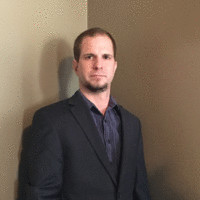
Ryan Finlayson directs his efforts to a solid education and planned career path in communications. Before attending the University of Utah, where he is pursuing a bachelor’s degree in strategic communication and Business Finance, he earned an associate in Business and a certificate in marketing from Salt Lake Community College. He has also produced more than two hundred college papers during his tenure at the University of Utah and Salt Lake Community College. He has been on the Dean’s List twice while attending the University of Utah. He plans to pursue a career in public relations or political communication.
Finlayson has been employed in customer relations for five years and client relations for two years. He has distinguished himself by being able to decipher consumer’s and client’s business needs as well as an ambitious work ethic. He has received awards for customer satisfaction, and customer recruitment and retention in his current position at BiteSize LLC, which produces cell phone applications.
 My Story:
Is Social Media Reality Ruining our Actual Reality?
Blog:
For my enterprise story, I wanted to take on and bring up the issues involving younger generations. For young people, social media is king, queen and court as it literally rules the lives of many.
As this takes on even greater relevance in our lives, particularly with the current focus on Facebook, privacy and what we give up when we share our photos, stories and thoughts, I wanted to talk to some of the people who deal with this issue on a daily basis. I chose the sources whom I knew would have the knowledge of growing up or dealing with the stress of creating the perfect life on Instagram.
I wanted to have both young girls’ thoughts on this and the reflections of administrators and counselors to see what the prevailing view of social media was.
Estelle Andreasen was someone I wanted to bring into this story. I met her in Denmark where, she shared, she would skip class multiple times a week. This piqued my interest so when I decided to write this story I wanted to FaceTime with her and ask her thoughts on why she wasn’t going to school, or what was elevating her anxiety.
Sisters Annie and Emma Black were girls I wanted to talk to, knowing that they are fraternal twins who are different in almost every aspect of life. Annie — the more social media-minded of the two — and Emma, who could never use social media and be content, each had points of view I wanted to include in the story.
Amber Black is their mother. I wanted to ask her about her most interesting insight into her daughters’ social media use. The girls had just gotten their first smartphones and I thought to ask Amber whether a major shift in attitude would make a difference in how her kids use social media and its impact on their anxiety and social stress.
Debbie Perry is a counselor at Woods Cross High School. I thought that she would be an interesting person to ask about social media and phone usage at the school and what are the major generational differences that affect the phone usage.
I also wanted to talk to Deanne Kapetanov, the principal at Mueller Park Junior High School, to see how social media has affected the school dynamic and if its use has caused any problems at the school.
About Me:
I was born and raised in Utah and am now a senior at the University of Utah majoring in strategic communication.
I love photography, traveling and spending time with friends. I have always loved Denmark, and was able to travel there for a study abroad year when I was a college junior. While there I was able to meet many different people from all around the world which broadened my love and desire to travel.
I have had many different jobs, including photographer, model, sales representative at Reynolds Car Wash, baby clothing boutique Over the Moon and Pictureline, which is a camera store. I modeled in Denmark, where I also worked as a photographer for the main newspaper in Aarhus, the country’s second-largest city.
League of Utes: A Look into U of U Esports by Brandon Ong BRANDON’S LINKEDIN

This gallery contains 10 photos.
When writing this story I primarily focused on a topic that was close to home. As someone who suffers from a chronic illness that causes extreme pain, It has interested me in what medical marijuana can do for me. I always … Continue reading
By Ellie Cook
SALT LAKE CITY- The subject of religion influencing politics is a major discussion in Utah particularly concerning the Church of Jesus Christ of Latter Day Saints ( LDS) influence in legislation regarding legalizing medical cannabis. The LDS (Mormon) church, last year, made a statement regarding legalizing medical marijuana saying “We urge a cautious approach to legislatures”. Some Utah voters question if religious views should even be involved on the floor, and if the church should be allowed such influence (verbally); especially when it comes to the well-being of the citizens of the state.
According to the most recent census numbers, sixty percent of Utah citizens are Mormon as are 80 percent of Utah legislators. Medical marijuana (MM) supporters are concerned that LDS legislators are making their decisions based on personal religious views. While the LDS church has made their views regarding the use of cannabis very clear, 75% of Utah voters; still favor medical cannabis and are pushing to have the vote to legalize it on the 2018 ballot. Some argue that the Utah house should be pushing legalization more because the Utah public is expressing interest, and it should be the public choice rather than the senates with possible influence from the church.
“I strongly dispute the narrative regarding poll numbers,” Rep. Brad Daw (R) said when asked about public opinion regarding legalizing medical cannabis. He discussed how under polls he conducted [not scientific] the question asked was “what level of cannabis legalization do you support” and more people, many of those who are LDS, are in favor of carefully supervised legalization rather than a full allowance of medical cannabis,. This past February, the house passed Daw’s bill (197) that requires the state to grow medical marijuana, and allow chronically ill patients to “try it. They also completely legalized cannabinoid with 10% THC for over the counter sales. “This can benefit the people who need it, and for those who need higher THC, the bill will allow research patients under careful supervision to be allowed access”
When asked if the Church had influenced decisions made by legislatures, Daw responded by saying “Removing religious opinions from politics would be hard to do…. the people on the board are elected by Utahan’s and their belief is their belief” stating that politicians would not be elected into office if the public had an issue with their decisions and personal beliefs. While the church is not opposed to limited and monitored medical use, they do make statements that the church would prefer that there be no use of cannabis; thus possibly affecting the opinion of those in Utah Senate. Daw explained, that we don’t want to “stifle the voice of public opinion” and the LDS church has the right to freedom of speech and to represent voters just as any other organization or citizen.
Voter Ann Cook, a non-Mormon who has lived in the state for more than 45 years, sees the idea of religion and its influence on the state differently. “The LDS church really does have control, if they just came out in favor of this, the bills would pass,” she said regarding the issue. Cook is in favor of citizens of Utah voting on this rather than the legislature, believing that the church’s opinion would primarily be removed if done in this manner. “ I myself suffer from chronic arthritic pain and had to retire because of it. I’m limited in what I can do and I deserve the right to legally try out cannabis to alleviate my pain.” Cook also added that she could make the effort to get products in states which have legalized them, but she does not feel comfortable obtaining such until they are legalized here in Utah.
“We regard cannabis medicine as a medical, scientific, and sociological matter,” According to TRUCE (Together For Responsible Use and Cannabis Education) reps said in regard to the influence the church has had on Utah’s position on legalization. “Our LDS TRUCE members are generally of the opinion that medical cannabis use is not a doctrinal issue, and LDS patients in medically legal states are considered members in full good standing… as are members anywhere taking prescribed opioid medications.” TRUCE has been pushing for the decision to be put on the 2018 ballot, rather than putting it the hands of the legislature. This is in belief that voters will support full access to medical marijuana, and will keep religious affiliations away from the decision. TRUCE advocates that the church does not need to be “speaking with representatives” as it grants too much power of the state to the church. They are not advocating for recreational use, and that they simply wish that patients with chronic illnesses have the option to use cannabis to assist with their treatments.
The issue regarding church and state in Utah is easily a debatable subject. While some believe the LDS church has too much influence or control over Utah politics, others see the affiliation only as freedom of speech. With terminally ill patients begging to allow for the public to vote on the subject the legislature is moving slowly towards the idea, and many are concerned if the LDS church’s views regarding cannabis, could be conflicting with progression towards legalizing it for medical purposes.
 ABOUT ME: Ellie Cook is a 20-year-old undergrad studying Communications and Psychology at the University of Utah. She also is a writer for the humanitarian fashion magazine “Trend Prive”. She is also an animal and genocide prevention activist, as well as someone who frequently volunteers with children and animals. Ellie enjoys spending her leisure time participating in community theater and works as a model/actress for NIYA management. Ellie aspires to one day put her love of writing to work by publishing pieces aimed for teen audiences in regards to mental health, in hopes of reaching out and contributing to the well being of troubled teens.

This gallery contains 10 photos.
Story and photos by Tanner Kirk SALT LAKE CITY – On Feb. 6, 2018 Sean Carne, a 19-year-old from Bountiful, Utah took his own life. According to friends, Sean was the “life of the party”, friendly, outgoing, loved by all, … Continue reading
MY STORY: Utah teen suicide on the rise
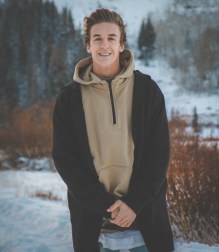
Love yourself.
Reflection Blog: Response to my story
Tanner Kirk is a University of Utah student currently studying Strategic Communications, a budding entrepreneur who constantly seeks ways to challenge the status quo. He has various experience in sales, marketing, and photography, and enjoys interacting with people from all walks of life.
Tanner is the ultimate outdoorsman and can often be found on the motocross racetrack, winding down a mountain trail on his bike, or climbing a summit. He believes that you can achieve anything you set your mind to, and, in the words of Conan O’Brien, “If you work really hard, and you’re kind, amazing things will happen.”
MY STORY: The cruelty-free cosmetics market is booming 
ABOUT ME:
I am a journalism student at University of Utah and a cat mom. I am passionate about feminism, social justice, music, makeup, animals, and blogging. I run a blog called Ask Nicely (https://asknicelyblog.wordpress.com) in which I cover music and lifestyle news. I am of Ecuadorean and Spanish descent.
Instagram: daydreamdoom
My name is Mary Naylor and I am a Junior pursuing a strategic communications degree. I am a Southern California native, however I have lived in Arizona and Utah for a lot of my life. I went to high school in Salt Lake City, and have been at the University of Utah ever since I graduated. I am interested in social media and public relations, and my sophomore year I did an internship at a non-profit organization. I ran their social media accounts and set up seminars with local businesses to educate them about the organization. After I graduate next spring, I plan to move to Phoenix, Arizona to work for a professional sports team as a social media advisor. Since I was little I was always involved in sports and I have always been surrounded by friends and family who were involved in different sports teams. I have a love for all sports and am always interested in learning about the different rules. My favorite sport to watch is baseball, and my favorite team is the Dodgers. I have been to too many games to count and look forward to going to the spring training games at Camelback Ranch in Arizona.
I was inspired to write this story due to the influx of events that occurred on my own college campus at the University of Utah, and other events that were taking place on college campuses nationwide regarding race.
I read an article by the researcher William A. Smith about Racial Battle Fatigue last year, and found it really interesting. After all of these events took place, I found myself thinking about his research quite often. After a little bit of digging I found that his work corroborated with other studies and research as well. I then interviewed students I found around campus about all of the research I found, and asked how they felt about it.
The best source for my story was an African American student that I was able to interview who was familiar with William A. Smith’s work, and had quite a few thoughts about about all of the events that happened on campus and nationwide that regarded race.
I was incredibly surprised to learn that sterotypes, microaggressions and institutional racism can have such a negative impact on a students health. I assumed that it would take a toll on their mental health, but never really considered that it could take a toll on their physical health as well.
After writing this article, and reading all of the research behind it, I am most surprised this isn’t discussed more often, and more widely by everyone who is affiliated with higher education institutions.
Latifa Yaqoobi is a nineteen-year-old student at the University of Utah, and is in her sophomore year. She is majoring in Psychology and Communications (with an emphasis on Journalism). She hopes to graduate from the University of Utah with her degrees, and continue her education by pursuing a Doctoral degree.
I was inspired to write this story due to the influx of events that occurred on my own college campus at the University of Utah, and other events that were taking place on college campuses nationwide regarding race.
I read an article by the researcher William A. Smith about Racial Battle Fatigue last year, and found it really interesting. After all of these events took place, I found myself thinking about his research quite often. After a little bit of digging I found that his work corroborated with other studies and research as well. I then interviewed students I found around campus about all of the research I found, and asked how they felt about it.
The best source for my story was an African American student that I was able to interview who was familiar with William A. Smith’s work, and had quite a few thoughts about about all of the events that happened on campus and nationwide that regarded race.
I was incredibly surprised to learn that sterotypes, microaggressions and institutional racism can have such a negative impact on a students health. I assumed that it would take a toll on their mental health, but never really considered that it could take a toll on their physical health as well.
After writing this article, and reading all of the research behind it, I am most surprised this isn’t discussed more often, and more widely by everyone who is affiliated with higher education institutions.
By Latifa Yaqoobi


SALT LAKE CITY — Research indicates that discrimination at institutions of higher education has negative impacts on the mental health of students of color.
Recently, students of color have led protests at universities across the country. Many are protesting the implicit and explicit racism they are facing on their college campuses. Numerous studies back these claims, that students of color, especially African-American students have a more challenging collegiate experience than their white peers.
William A. Smith, a researcher at the University of Utah, studies how “microagressions” —the casual degradation of any marginalized group— affect African-American students on predominately white campuses. Smith’s research indicates that African-American students have trouble concentrating, worry constantly, develop headaches, and become fatigued when they are in personal and professional spaces that are predominately white, which is how he coined the phrase “racial battle fatigue.” Smith’s work also disproves the notion that once students of color enter institutions of higher learning the playing field levels.
Amaal Sharif, a student at the University of Utah, identifies with Smith’s work. “People are beginning to acknowledge institutional racism, which is great, but that’s only half the battle. What people have yet to grasp is that microaggressions are real, and that after a while it can really take a toll on a person. For example, microaggressions such as ‘I bet you received Diversity Scholarships’ or ‘you must be grateful for Affirmative Action’ make me feel like I have to prove that I belong here at the University of Utah, and that is mentally exhausting.”
A national survey conducted by The Steve Fund & JED Foundation in 2015, asked 1,500 first-year college students about their first-year experience, and the results suggest that African-American students may be struggling at with college when compared to their Caucasian peers. According to the study, only 36 percent of African American students felt prepared both academically and emotionally for college, whereas 50 percent of Caucasian students felt more academically prepared than their peers. African-American students are also more likely to feel that “everyone has college figured out but them.” When asked if they keep their feelings about the difficulty of college to themselves, 75 percent of African-American students responded yes, whereas only 61 percent Caucasian students responded yes. Only 47 percent of Caucasian students claimed college wasn’t “living up to their expectations” compared to the 57 percent of African American students. According to a statement released by The Steve Fund & JED Foundation in 2016, “Research indicates that students of color at American colleges and universities are almost twice as likely not to seek care when they feel depressed or anxious compared to white students.” Additionally, a recent online Harris Poll of 1,000 college students conducted by JED Foundation and the Steve Fund (with equal samples of African-American, Latinx, White and Asian-American students) found that students of color are significantly less likely to describe their campus as inclusive than white students (28 percent to 45 percent) and more likely to indicate that they often feel isolated on campus (46 percent to 30 percent).”
Mariah Henry, a freshmen at Salt Lake Community College, was unsurprised by the findings. “When you enter an institution that already feels like it is going against you, it is hard to feel supported when things start getting hard. I think I am less likely than my white peers to go ask for help, because I don’t want to seem incompetent, or incapable. I think this is where the problem really lies, and is the reason why myself and others from my community struggle within academia.”
Ebony McGee, an assistant professor of diversity and urban schooling at Vanderbilt and David Stovall, an associate professor of African-American studies and educational policy at University of Illinois at Chicago authored a study about how racism affects the ability of high-achieving African-American students to have healthy mental attitudes toward their college experiences. McGee explained in a research blog:
“Weathering the cumulative effects of living in a society characterized by white dominance and privilege produces a kind of physical and mental wear-and-tear that contributes to a host of psychological and physical ailments. We have documented alarming occurrences of anxiety, stress, depression and thoughts of suicide, as well as a host of physical ailments like hair loss, diabetes and heart disease. We have witnessed black students work themselves to the point of extreme illness in attempting to escape the constant threat of perceived intellectual inferiority. The psychological and emotional energy required to manage stress in academic and social contexts as well as systemic and everyday racism can be overwhelming and taxing.”
Tehya Clark, another Sophomore at the University of Utah believes that “higher education institutions need to acknowledge that racism, even microaggressions, can take a toll” on the mental health of students of color. “Perhaps if colleges and Universities recognized this,” Clark says, “they could potentially prevent more protests from occurring on their campuses because they will get to the root of the issue, instead of simply addressing a specific controversy on campus.”
Story by HENRY ALLEN
SALT LAKE CITY – It’s a quiet fall evening on the University of Utah campus, that is, aside from the constant buzzing. Resting underneath the windowsill of a dorm room in Shoreline 829 is a flat glass case filled with thousands of Apis mellifera, the European honeybee.
The glass case is an observation hive, and it is used by education-eager beekeepers to demonstrate the workings of a beehive. Behind the glass panels, sturdy wooden frame, and fine mesh, is a hive that writhes and squirms; a colony of constant churn. Frankly, it’s unnerving to have nearby for more than an hour, the low thrum of the hive rising and falling just enough so as not to become background noise. I was holding the case as a favor for Quaid Harding, president of the U’s Beekeepers’ Association, while he went to dinner.
Actual beekeepers don’t have a problem with the buzzing – Harding sleeps soundly with the hive next to his bed. “I like it,” he says, “it’s calming, kind of tranquil.” A senior at the U majoring in biology, Harding joined the club last fall, after completing his Global Environmental Issues community service hours with the club. Upon finishing, Harding wanted to do more – “I went up and talked to the club’s advisor, and asked ‘how do I get more involved?’” Harding says. “There wasn’t anybody taking initiative to set up meetings or recruit, so I offered to take on the leader’s position. We really needed more members.”
Harding has an infectious enthusiasm for bees, and has been an active and capable recruiter for the club. The observation hive was a boon: nothing attracts interest quite like walking around with several thousand bees.“The bees do the recruiting for me,” he says. Leota Coyne, a new member of the club, says the observation hive caught her interest immediately. “I saw the hive at Plaza Fest, I couldn’t just walk past that.”
The Association maintains four sets of hives on campus: one on the fourth-floor of the Union; another outside the Health Sciences Library; and two in the Marriott Library. The hives are nestled in easily-seen but unobtrusive outdoor locations, carefully placed for both bee and human safety. “There are roughly four beehives at each spot, and each hive can house anywhere between 20,000 and 60,000 bees,” says Harding. The hives need regular inspections for bee health and maintenance checks, which Harding uses as field trips for the Association.
It begins with proper clothing – a full body beekeeping suit. The white canvas outfits look like space suits made out of leftover painters’ smocks, but thicker and with mesh face masks instead of helmets. Once suited up, the inspectors use coffee-tin-like smokers to puff smoke onto the hives. “The smoke simulates a forest fire” Harding says, and “the bees’ response is to gorge themselves on honey to protect it, which makes them docile and sleepy. It’s kinda like how people are tired after stuffing themselves on Thanksgiving dinner.”
Some weeks later I attended a honey-extraction event, where I met Amy Sibul, the club’s faculty advisor. “We use the honey to help fund the club,” says Sibul. “We sell bottles of honey, as well as tubes of lip balm made with the beeswax.” The events are open to the public, which the Beekeepers’ Association uses to teach people, both about the club and the bees. “The main importance is the awareness it raises,” Sibul says, “we need to be aware of the impacts humans have on honeybees.”
Beekeepers around the world have reported precipitous decline in their hive populations – a loss of around 30 percent annually. This phenomenon is referred to as Colony Collapse Disorder (CCD), and the full cause is still being investigated. What we know for sure, however, is that humans play a big part in the disorder through their use of pesticides. Some countries are making strides to curb their impact on bees – such as the European Union’s push to ban various bee-harming chemicals – but other countries are lagging behind. CCD is in an odd position: people acknowledge that it is a problem, but don’t understand the gravity of the issue.
One reason why CCD is so alarming is that bees are more than honey-makers – they play a huge role in pollinating the world’s agricultural industry: “One in every three of our bites of food depends on honeybees” says Sibul. The loss of honeybees would be a huge hit to the global food supply, and losing millions of agricultural jobs would be economically devastating.
Clubs like the Beekeepers’ Association are important for combating CCD. The Association does its part to help stabilize the bee population by maintaining healthy hives and raising public awareness. Every bit of progress, from the local level to the global level, helps keep the bees – and the world – buzzing.
Is living in the dorms good or bad for GPA?
Story by Taylor Lenci
SALT LAKE CITY — Living in the University of Utah dorms is more than just processed food and social interactions. Aside from the fun of living in the dorms, studies show that living on campus can lead to better performance.
The University of Utah has grown rapidly within the last decade, due to growth in state as well as its high regard, affordability, and location. Students from all over the nation apply to the U with hopes of receiving a great college experience, and part of the experience includes living in the dorms. As enrollment and non-resident populations increase, the number of students living in the dorms increases each year.
In 2006, 27,420 students were enrolled at the U. In 2017, that number increased to 31,860, and 15 percent of those students live on campus. The U’s population is growing rapidly each year which results in more students living on campus. Though there has been no increase in capacity of the dorms, Chapel Glen has increased the amount of roommates per room.
The U markets the experience as one that allow students to surround themselves with peers who have similar interests and goals, which guides students to their ultimate academic success, says the Director of Student Living on the U’s website.
“The dorms were helpful in staying on track with academics,” said Leah Farrington, a sophomore at the U who lived in Chapel Glen her freshman year, “Chapel Glen is freshmen only so everyone was in the same boat and it was hard to not stay on track when everyone else was doing the same thing or something similar.”
According to the U’s academic guidelines, every student is required to complete a certain number of general education courses and students typically complete them their freshman year. Subsequently, many freshmen are in the same classes and can work together, which indicates a higher GPA for students who live on campus than those who do not.
San Diego State University’s Office of Residential Living reports that “Residential students averaged a 2.81 GPA while off-campus students averaged a 2.38. Residential students living in one of the many ‘learning communities’ averaged a 2.89.” Said the Director of Student Living at San Diego State University after having done a study on the relationship between GPA and living on campus.
Though data shows that there are significant academic benefits that come with living in the dorms, not all students agree. “It is very easy to get distracted in the dorms. Sometimes I end up in the library just to get away from all the the noise,” said Caroline Eckoff, a freshman at the U who currently lives in Chapel Glen.
Regan Crofts, also a freshman at Chapel Glen, moved out after a few short weeks. “I take my academics very seriously, especially because I’m on the track and field team and have little to no time,” she said. “The dorms were a constant distraction and I was never able to study, let alone sleep.” Students typically live in the dorms to receive the full college experience, but what most students do not realize is that part of the experience includes distractions all day, every day.
Some students are able to remain focused despite distractions such as loud noise and many opportunities for conversation, while others need complete peace and quiet.
Still, being on campus all the time is a great way for students to be as involved in their academics as possible. “My GPA increased while living in the dorms because I had a roommate who was studying the same major as me and we studied together all the time,” said Lauren Gnat, a sophomore at the U who lived in Sage Point her freshman year. “This year, I live off campus and I usually abandon my responsibilities as soon as I get home.”
Ultimately, living on campus motivates students to stay on track with their academic responsibilities, according to Lia Bigano, a writer for The Collegian. Students obtain a stronger drive to complete their studies since they are constantly in an academic setting. “The resident halls are closer to things like the library so a student is more likely to head there since it’s five minutes away as opposed to driving to campus but I think it’s more the shared experience with other students going through the same thing,” reported Chris Baylor, of western Wisconsin’s WEAU 13 News.
A BYU study showed that students living on campus have a higher GPA by an average of a tenth of a point when compared to students who live off campus. Many students who live off-campus dismiss their academic responsibilities as soon as they get home and decide to relax or go have fun after a long day of classes. Living in a learning environment encourages students to focus on their academic responsibilities.
Overall, data collected regarding housing during college shows that the majority of students who live on campus obtain a higher GPA than students who do not live on campus. Living on campus may not be beneficial in every environmental aspect, however students are thriving academically because of their tight-knit relationship to the campus at the U.


I developed my story idea by talking with some freshman I had recently met at the University of Utah. They told me that the dorms are extremely crowded this school year which made me curious as to why. I decided to go online and research exactly why the dorms are so popular now more than ever before.
I located sources by simply researching on google why the dorms are so attractive to students. Some articles discussed the social attraction and the tradition of living on campus during freshman year, while many articles said it is because living on campus can result in a higher GPA for students.
They were the best sources for my story because they lead me to the correlation between high GPA and living on campus, which became the focus of my paper. I had a wide variety of articles that supported my topic which significantly helped my paper.
The obstacle I encountered involved difficulty finding data that reflected poorly on high GPA and students living on campus. I wanted to find some data arguing against living on campus resulting in high GPA since a couple people I had interviewed did/do not enjoy living in the dorms at the U. I addressed this dilemma by including the quotes from the people I had interviewed with negative comments without including data to support their claims.
The information came together very well, since each source supported each other. I decided my focus by figuring out what each article I was reading had in common, which is that students who live on campus do have higher GPAs than students who do not live on campus. Since there were so many supporting articles, it made my decision to discuss the correlation much easier.
The writing process was difficult yet rewarding because I struggled to find some data but since I gathered so much information, I learned a lot about living on campus and the effects it has on students.
One detail that I did not include in my blog is that a huge factor of living in the dorms is the lack of sleep many students experience. Lack of sleep can lead to numerous health issues including a higher chance of getting sick. I was sick multiple times when I lived in the dorms, which made it difficult to stay on top of my academics. I would have included this in my story, however it was not entirely on topic.
Overall, the conclusion that living in the dorms results in a high GPA surprised me because living in the dorms comes with a lot of distractions that can lead to abandonment of academic responsibilities. However, many studies were done to determine whether there is a correlation and many results proved a positive correlation between living on campus and obtaining a high GPA.
About Me

I am a student at the University of Utah and I am studying Strategic Communications with a minor in Psychology. I love to write and learn about different forms of communication. I was born and raised in California and committed to the U with hopes of a greater outdoor experience. I have been very involved in the U and I am an active member of the sorority Chi Omega. I am planning to get my masters degree in Education once I graduate from the U.
Reflections on Living in the Dorms Correlating with GPA
Is living in the dorms good or bad for GPA?
About Me
My name is Chri stian Gonzalez I am currently a student at the University of Utah, majoring in Strategic Communications with a minor in Spanish. I received my A.S. in General Studies from Salt Lake Community College. I have been employed full time with Lexington Law Firm for over five years and currently hold a position in operations.
As I have developed my career I have gained a passion for supporting the Latin community and working with organizations such as “Communidades Unidas” a non-profit that supports Utah Latinos. My family immigrated from Mexico in the early 90’s.
Upon completion of my undergraduate degree I plan to continue my career by attending graduate school in the pursuit of an MBA. Furthermore, I plan to explore career opportunities with organizations that support our communities and strive to influence positive change within them.
https://www.linkedin.com/in/christian-gonzalez-4422a6104/
https://unewswriting.wordpress.com/2017/12/04/reflection
https://unewswriting.wordpress.com/2017/12/04/day-of-the-dead-celebrating-and-remembering-our-dead
Day of the Dead, celebrating and remembering our dead. Reflection blog.
I first took an interest in the day of the dead after traveling to Mexico during the month of October in 2015. While there it was interesting to witness various perspectives on death. I noticed that there were two opposing concepts of death: remembering those who have passed on and a more religious aspect, including the worship of death itself. Although I decided to stick with researching “day of dead,” during my research came to further understand both concepts more fully.
Most of my sources came from attendees at the annual day of dead festival in West Valley City. I also had the opportunity to speak with long-time celebrators of this well-known Mexican holiday. I consider these to be good sources because I was able to gain a better understanding of what people were actually experiencing during this event.
One of the obstacles I encountered came when attempting to interview people who were involved in organizing the event. For whatever reason, the individual I interviewed decided she wanted to remain anonymous.
After gathering all of the details for the story I decided that I wanted the story to emphasize the purpose of this celebration as well provide a context for some of the symbolic artifacts used to better understand the intent behind it. Although I did not include all aspects of symbolism I included those that were most common.
Christian Gonzalez
https://unewswriting.wordpress.com/2017/12/04/day-of-the-dead-celebrating-and-remembering-our-dead
https://unewswriting.wordpress.com/2017/12/04/christian-gonzalez

 U NewsWriting