Spencer Gray

MY STORY:

MY BLOG:

For my enterprise story, I went through an entire process to develop an idea that would draw my audience in from the very start.

IMG_2656

In the beginning, I started thinking too big. I wanted to do interviews with people I’d have no way of getting in contact with. So, I really had to narrow down my thoughts on something more obtainable.

For my story, my sources were very easy to obtain. The Village Baker is a family company, with my uncle being the CEO. For my other sources, I interviewed the managers of both the original location and a new location. My cousin was one of the managers so it was also easy to contact him.

They provided very good insight into what happens behind closed doors. Especially for my uncle, it was easy to see how things worked before they finally franchised the stores because he is the original owner. The manager of the Salt Lake store has also been with the company for years so he has also seen the growth before and after.

My focus was unclear at the beginning, so I started with the interview questions. When I started to develop these questions, I could see a direction that my story could head. I thought it would be fascinating to shed light on how the Village Baker has grown over 25 years running.

While I was writing, I would think back to documentaries I’ve watched or other profile pieces I’ve written, and tried to mimic that style of organization and professionalism. It made my process clear and easy to write after finishing an outline that organized my thoughts.

I want to know more about the Village Baker’s past before they opened. I know that my uncle had a partner who helped start this with him, but he eventually left. I want to know more about him and why he left.

I was surprised by how easy it was to get motivated by a story. Most writing I’ve done in college has always been dry and boring. But my enterprise story was one of the most exciting stories I’ve written.

ABOUT ME:

Spencer Gray, a student at the University of Utah, is heading into his junior year studying strategic communication. His passion for writing has branched to multiple sources including film and directing. Gray hopes to hold a creative team-oriented position after he is graduated from the U in 2020.

Medical marijuana versus the opioid epidemic in Utah

Story and gallery by CHANDLEY CHYNOWETH

Utah has the seventh highest drug overdose rate in the United States. Six people in Utah die every day from opioid overdoses, according to Opidemic. Taking opioids prescribed from a doctor can be harmful and cause addiction. It’s important that people are informed about this issue in order to prevent it from happening.

According to Opidemic, opioids release chemicals in the brain that stop the perception of pain. The brain can become accustomed to the pills and demand unnatural levels to dull pain and feel pleasure.

One individual, a neurologist, who has been practicing in Provo, Utah, for 28 years, believes that medical marijuana can be an answer to this opioid problem. He asked not to be identified because medical marijuana isn’t legal in Utah, so he will be referred to as Dr. R. He said, “There are over 200,000 new opioid addicts in the United States every year.”

Dr. R mentioned that many of the illicit drug addictions stem from prescription opioids. Oxycodone is the most commonly abused medication. He believes heroine is the most popular illicit drug that opioid abuse leads to because of the falling prices for it in Utah.

In his clinic he only prescribes opioids if the patient is in immense pain. When he does prescribe them it is in low quantities for a short period of time. He will try every other option of medication before he tries opioids because of their negative effects.

If the patient is looking for long-term opioid prescriptions he sends them to a pain clinic that can better manage their pain and medication intake.

When prescribing an opioid Dr. R has three rules: 1. The patient must sign a contract agreeing that he is the only provider for this drug; 2. The patient has to agree to stay within the parameters he supplies; 3. His office checks the patient out on DOPL, which stands for The Division of Occupational and Professional Licensing. This program indicates what other medications the patient is prescribed. He takes these measures to prevent patient addiction.

“I prefer medical marijuana to opioids, and anecdotally multiple patients have told me medical marijuana works better than their opioids,” Dr. R said. He explained marijuana is known to be a “culture drug,” which is the cause for difficulty in legalization.

Michelle C., a medical assistant who has been practicing in Draper, Utah, for eight years, said opioid addiction is a significant problem. Many patients come to her clinic seeking an opioid prescription.

“It doesn’t matter about your age, gender, or profession, anyone can become addicted and we see all different types of people that are struggling,” said Michelle, who asked not to be identified. If a patient wants an opioid prescription and is in pain, the clinic will prescribe one as a last resort and only for three months at most.

In most cases, Michelle said medical marijuana is a better alternative than opioids. She said it can benefit children who suffer from seizures and birth defects because it has been proven to help them. Cancer patients can also find great relief from it.

Michelle’s sister suffers from LAM disease, which attacks the lungs and is fatal. “My sister lives in Idaho so she doesn’t have access to medical marijuana. I wish that she did because it would benefit her a lot more than the pain pills she is prescribed,” Michelle said. Her sister is in constant pain and she believes that in cases like that, medical marijuana is the way to go.

Michelle does not recommend smoking medical marijuana for health reasons, and says taking the pill form of it is best.

Lee Barry, who lives in California and uses medical marijuana for his back pain, said he used to be prescribed pain pills and began to worry when he started depending on them too much. He increased his dosage because his body became used to the medication. Soon he realized that he couldn’t continue taking them because he was on the road to addiction.

He turned to medical marijuana and said it was a much better solution for him. “When taking my pain pills I felt groggy and in a daze all the time. When I switched over to medical marijuana I felt so much better and didn’t have to worry about addiction,” Barry explained in a Skype interview.

Barry believes medical marijuana is a perfect alternative to pain pills and would never go back to taking them again. It helps his back pain and he feels more like himself than when he was using opioids. He doesn’t know where he would be in his life without it.

Barry, Michelle, and Dr. R all agree that medical marijuana is the better alternative to opioid medications. They all believe that the opioid epidemic is very serious and caution people to avoid taking them at any cost.

If you or a loved one is suffering from opioid addiction you can call 1-800-622-HELP to reach Substance Abuse and Mental Health Services Administration’s national helpline that is free and confidential.

RELATED: Listen to The Politics of Medical Marijuana, a May 2018 episode of KUER’s “RadioWest” that explored “the politics, popular opinion, and policies surrounding legalizing cannabis” in the U.S. and Utah.


What type of note taker are you?

Story and slideshow by BAILEY CALDWELL

There are two types of college students. One group has a notebook and a pen or pencil at the ready. Another group totes laptops, tablets or phones to their courses. Students know that in order to pass their classes, they need to take notes.

Go into any classroom, lecture room/hall or anywhere students gather to learn and you will see both of these types of students.

Students don’t always use laptops the same way. Some students use their computer for note taking only, while other students use them for note taking and for surfing the web, online shopping, playing games and other activities.

In a number of experiments done by Princeton University and the University of California, students were given either a pen and paper or a laptop to take notes during a lecture.

After the lecture, the students were given a test on the lecture. Those who used laptops did worse than those who hand wrote notes.

While interviewing students about their personal note taking habits, two students were found to have vastly different styles from one another.

Kourtney England, 22, a senior at Utah State University majoring in communications, has tried taking notes with a laptop but ultimately decided on handwritten notes. She was unable to retain the amount of information she normally did when handwriting notes.

“I tried to type notes in a general education class and it did not work out for me. Once I switched back to handwritten notes, I started scoring higher on quizzes and tests,” England said.

England had only switched from handwritten notes to typing notes for a couple of weeks and her scores decreased in her classes.

Laptops can be used for several different things, not just note taking. This can be a distraction for students who use them for note taking.

Ryan Bailey, 25, a senior at Southern Utah University majoring in communications, uses a laptop to take notes. “I have used both handwritten notes and computer notes. I memorize better with computer notes, but pay more attention and learn more with handwritten notes,” Bailey said.

For him the hardest part of taking notes is paying attention. “I struggle at staying in lectures and being engaged,” Bailey said. He keeps a piece of paper to doodle on in class to help him from playing on his laptop.

A study done in Norway at the University of Stavanger in 2011 shows “writing by hand strengthens the learning process. When typing on a keyboard, this process may be impaired.”

According to researchers, when a person takes handwritten notes, their brain receives feedback from the motor actions from the hand and a feeling from the pencil/pen. Those are far different than those from touching a keyboard.

“When writing by hand, the movements involved leave a motor memory in the sensorimotor part of the brain, which helps us recognize letters,” researchers discovered.

Handwritten notes are far better for studying than typing them on a computer and based on an informal poll posted on Facebook and Instagram, most college students would agree with this.

The informal poll of 173 college students showed that 77 percent of students write their notes by hand. Does this mean that students are listening to what the research is showing?

Perhaps, but it also might be because their professor doesn’t give them the option.

Dr. Natasha Seegert teaches in the Department of Communication at the University of Utah. She has taught Principles of Visual Communication for three and a half years. She does not allow any electronic devices during her lectures.

Seegert made this decision after reading an article by Clay Shirky, a professor of media studies and the internet. Shirky took a long time to make the decision to ban the internet and electronic devices in his classes.

In the article, Shirky said he noticed over the years that it was as if “someone has let fresh air into the room. The conversation brightens, and more recently, there is a relief from many of the students.”

Shirky decided to ban electronic devices because multitasking decreases a person’s performance and can have lasting effects on the memory.

Seegert put a lot of thought into banning electronic devices in her own classes after hearing stories from her husband, who also teaches at the U, about how he banned devices and reading articles by scholars such as Clay Shirky.

She said her husband tells his students that when they walk into his class they are walking into what he calls the “magic circle.” Seegert said her husband explains that when playing a board game with others each person understands that there are rules, and if you don’t follow those rules you are out of the game.

When entering the classroom, you are agreeing to be in that space together. “You agree to certain rules that apply there and are focused on the same topic or same concept,” Seegert said.

Seegert’s classroom is her “magic circle” and she does not allow any sort of electronic device during her teaching time. This includes laptops, phones, watches and anything that requires charging.

She advises students “to make sure you are taking notes with not just your head processing things but your whole body doing it as well. So there is not as much as a disconnect between your body and your brain,” she said.

Note taking takes a lot of concentration and by using a laptop, you are cheating your brain out of cognitive learning.

“Your body will process and memorize things that you did not realize just by writing those words,” Seegert said.


This slideshow requires JavaScript.

Branding The Leonardo

Story and gallery by CHARLES BUCK

The front desk of the Leonardo Museum was bustling as employees were answering phones and signing for deliveries on Monday, March 12. A new exhibit was opening in three days and the activities formed the perfect backdrop as the museum’s Chief Development Officer, Deb Peterson, described the challenges of creating a brand.

According to The Leonardo’s website, the museum opened in 2011 with the personality behind Leonardo da Vinci as a brand strategy that would define a museum dedicated to inspiring “creativity and innovation in people of all ages and background.”

Sitting just inside the main exhibition space, Peterson explained that da Vinci’s curiosity perfectly defined an interactive museum dedicated to learning about art, science and technology. The goal was to align the museum with the STEM disciplines of science, technology, engineering and mathematics.

It allowed The Leonardo, located at 209 E. 500 South, to be a place where visitors could explore exhibits with the same sense of curiosity and wonder as da Vinci himself. However, creating such a unique space also created unique branding challenges.

“Phase one was to get the doors open,” Peterson explained. Phase two was to spark interest in the community by hosting famous exhibits like “Bodyworlds” and the “Dead Sea Scrolls.” While successful, these exhibits didn’t clinch The Leonardo’s brand identity in Utah.

“We had to reeducate the public,” Peterson said. The museum had developed a reputation for being a venue for traveling exhibits, and the public forgot that The Leonardo had the unique distinction of being a place of discovery and wonder in the world around us.

This reeducation process involved all the traditional media: print, radio, television and billboards. Social media was starting to play a role, but “wasn’t what it is today,” Peterson explained. The board of directors assumed the challenge was merely to explain why the museum became da Vinci’s namesake. However, they quickly discovered that not everyone was familiar with the painter, architect and inventor Leonardo da Vinci. “We just assumed everyone knew,” Peterson said.

This branding challenge continues today, with social media playing an ever-changing role. “@theLeo,” “#theLeonardo,” and “#attheLeonardo” have all been attempts at increasing public engagement through various social media platforms like Twitter and Instagram. While describing a successful social media strategy Peterson explained that the challenge in going viral is having content critically relevant to the current social climate. To go viral the right message has to be shared with the right audience at the right time.

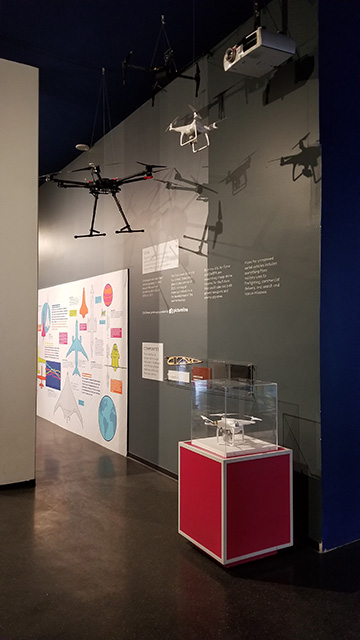
The focus on relevance has led The Leonardo to partner with Pictureline to create a drone exhibit, and with the LEGO brand to create an interactive exhibit focused on da Vinci’s fascination with architecture and city planning.

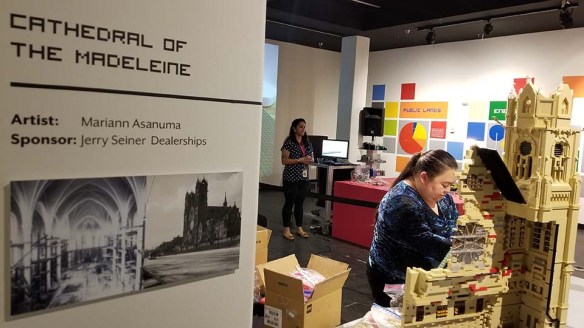
Mariann Asanuma is a LEGO master builder commissioned by The Leonardo to build a replica of the Cathedral of the Madeleine, a Salt Lake City landmark completed in 1909. She started working for LEGO in 2003, and eventually realized her dream of turning her passion for the building blocks into a career.

LEGO fans describe the years between when they stop playing with LEGOs in their teens and start playing with them again in their 20s as “dark years.” Asanuma explained, “I never had dark years.” Her Instagram page describes Asanuma as the “World’s First Female LEGO Artist specializing in #marketing #custommodels #teambuildingevents #customkits.”

Her latest posts highlight the progress that Asanuma is making on her model, which she is building on-site at The Leonardo. Asanuma described the constant popularity of Lego as the result of children invigorating their parents’ passion for the blocks, and not always the parents introducing their children to their own childhood toys.

“The LEGO Movie” and “The LEGO Batman Movie” helped the brand resonate with a new generation. Social media and the internet have also helped lifelong fans of the brand, like Asanuma, create online communities where people remain engaged and passionate about LEGO.

This relevance in popular culture is what makes the LEGO brand such a good match for The Leonardo. Leonardo da Vinci’s exploits with architecture and city planning allow the museum to host a LEGO exhibit without diluting its brand identity, and the popularity of the building blocks brings in a new generation of museumgoers who engage with the exhibit in creative ways.

The exhibit opened March 15, 2018, and between the displays were areas where children could act out the inspiration they found while watching Asanuma in action.

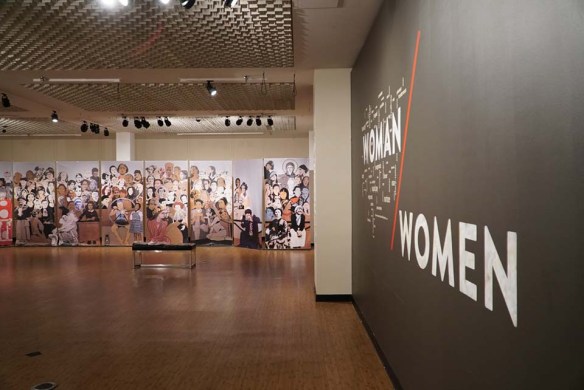
The Leonardo also hosts programs like the “FIRST LEGO League.” The league launched in September 2017 and workshops are scheduled until May 2018. These programs draw in the younger generation, while exhibits like “FLIGHT,” “FANTASTIC FORGERIES,” and “WOMAN/WOMEN” help adults identify with the museum’s brand of discovery and curiosity.

Many of the exhibits adhere to the “Hands on @ The Leo” strategy, and encourage patrons to engage with The Leonardo in person, just as they can in social media. The museum’s website invites visitors to come and discover the “forces behind engineering by tinkering, designing, and problem solving.”

Partnering with companies that brand themselves around the processes of technology or discovery will keep the museum relevant. Peterson described the essence of The Leonardo’s brand strategy: “If guests leave our museum with more questions than answers, I’ve done my job.”

Bailey Caldwell

MY STORY: 

MY BLOG: bio photo

For my story, I wanted to write about something that has to do with students. My first idea was writing about full-time working dads and my second idea was to write about the one thing all students do, and that is note taking. I thought the working dads idea was a fun twist on all the articles about working moms. However, I chose to write about students taking notes in class because that topic hits closer to home.

When I decided to write about note taking in school, I wanted to make it geared more toward communication majors. I chose to use one major because there is such a vast number of majors there would have been too much information to write about. By sticking to one major, I was able to eliminate several obstacles of trying to use different majors.

I chose to interview two students and a professor. Each student attends a different university in the state of Utah and the professor teaches at the University of Utah. I chose to interview students from different schools so that I could eliminate a bias. The bias would have been that all of my sources came from the U and I wanted different viewpoints. I was able to interview students I knew from Utah State University and Southern Utah University. Both of these students came to Salt Lake at different times and I was able to interview them while they were here. For the professor, I had the opportunity to take her class last semester and thought she would be the perfect source for a story on note taking. I chose her because she does not allow electronic devices during her class times.

My focus was on the different ways of note taking and how one type is better than the other, according to research. I wanted to explore whether taking notes by hand is better for students compared to taking notes with a laptop or electronic device. I gathered a lot of information about note taking from the students and chose to use only the parts that they said why they chose the way they do and how it impacted their grades. For the professor, I chose to ask why she doesn’t allow electronic devices and what advice she would give to students about taking notes and studying.

I found this story interesting to write. I have never taken a newswriting class, so I was only used to writing papers/essays in APA style. This was definitely a learning process for me. I found that once I started writing, it became easier for me to write according to news style. Overall, I was able to broaden my writing style and thoroughly enjoyed this assignment.

ABOUT ME:

Bailey Caldwell is a senior strategic communication major at the University of Utah. She started at the U in 2016 after receiving her associate degree from Southern Utah University. Although Bailey loved going to SUU, she chose to move closer to home to finish her schooling. Graduating from the U was always a dream of hers and now she will be able to.

Bailey has worked two part-time jobs throughout college while still being a full-time student. Balancing work and school has been tough at times but Bailey has become a well rounded person because of the time management she had to learn. Keeping busy has always been a lifestyle for Bailey.

After graduation, Bailey plans to start a career in event planning and social media marketing. She has always wanted to plan large-scale events along with learning about social media marketing and advertising.


Ryan Matthew Thurston

MY STORY: 

Processed with VSCO with a6 preset

MY BLOG: 

While doing my research and formulating my story, I was really unsure where my thought process would take me. I figured that it would either turn out really successful and that I would gain valuable insight into the lives of STEM majors, or it would be a flop and I would be left with meaningless interviews and struggling to find an angle.

However, I’m happy to say that this was not the conclusion I came to. My experience was really enjoyable, and I did end up learning a lot about what I was studying. My favorite part was getting to know the people on a more personal level and learning about what motivates them, what they hope to accomplish, and the kinds of impact they hope to have.

The sources I interviewed were my friends and classmates, which is usually a bad demographic to tap into. However, I felt that for this story, it would allow me to access the beat I was looking for best. Interviewing a doctor or former medical student wouldn’t be as effective because they would already be far along in the process of practicing medicine. Instead, I wanted to talk to people who were just starting out and see what their thoughts and experiences were like. This gave me a better grasp on what it’s like to pursue these kinds of majors and helped me answer my questions I had beforehand. I was most surprised by my sources’ insistence on staying dedicated and not straying from their long-term goals.

ABOUT ME: 

Ryan Matthew Thurston is a freelance writer and sports journalist from St. George, Utah, who now resides in Salt Lake City. During high school, Thurston was the captain of the debate team and won the 3A state tournament in 2016. He also swam and played volleyball for Snow Canyon High School. In college, Thurston has worked as an athletics communication intern for Utah Athletics, the Pac-12 conference, and ESPN. Thurston hopes to one day publish articles for ESPN, Vox, or FiveThirtyEight. His favorite sports include basketball and baseball and his favorite teams include the Utah Jazz, Chicago Cubs, and Philadelphia Eagles.

Chandley Chynoweth

MY STORY:

MY BLOG:

For my enterprise story I wanted to make sure I was writing about something really meaningful to people. I thought about what could make a difference in people’s lives and I decided to write about opioid addiction and if medical marijuana could be a better solution.

I wanted to educate people about opioids and let them know the dangers of taking them. I also wanted to find out if there are better alternatives so people can avoid starting them in the first place. A family friend works as a neurologist in Provo, Utah, and I knew he would be a great source to interview. I also know a medical assistant so I interviewed her as well. My final source was a friend who lives in California who currently uses medical marijuana as a replacement forhis pain pills.

Some issues I encountered was that the neurologist wanted to remain anonymous because medical marijuana is not legal in Utah. I asked him what I could refer to him as and he said Dr. R. The medical assistant also wanted to remain somewhat anonymous, so she said I could use her first name and last initial, Michelle C.

After my interviews it became clear that all three of my sources believed medical marijuana was a better alternative than opioid medication. So while writing this I tried to tell each of their stories in an informative way that correctly represented their beliefs. I wanted to interest my readers while giving them the facts about opioid use and the destruction it can cause.

I really enjoyed interviewing Dr. R because he was so knowledgeable about this topic. I learned a lot about opioid addiction and how common it is in Utah. I was surprised by how many patients come to a doctor just seeking opioids, or to try to sell them. It was also surprising that two medical professionals both thought medical marijuana could really help people, and yet it’s not legal in Utah.

I enjoyed writing this story and I am glad I chose this topic. I think it is really important to spread awareness of this opioid epidemic and show people there are other alternatives to these drugs. If anything I hope my story can stop people from taking them because all it takes is one prescription to ruin a life.

New profiel

ABOUT ME:

I am 25 years old and currently attending the University of Utah. I love to read and I’m obsessed with Harry Potter. I love traveling and exploring new places. After I graduate I hope to travel around Europe before starting a career. My family is the most important thing to me, along with my cat named Khaleesi.

I will be graduating from the U in fall 2018 with a degree in communication. I have been planning on applying to law school but I am still keeping my options open. I enjoy working with people and working in the business industry. If I don’t end up going to law school I will hopefully start a career in business.

Peter Johnston

MY STORY: 

MY BLOG:

Every Wednesday and Friday morning, I arrive at the Catholic Community Services of Utah building in Salt Lake City, where a colorful mural depicts likewise colorful people giving and receiving help. I’m an intern there for the Preferred Communities Department, where I assist the star source of my story, Leul Mengistu, with the fledgling Men’s Wellness Support Group.

Peter-JohnsonCan someone say, “conflict of interest?” I in fact reported on the same program I am working to launch. I scratched my head for a bit over whether I was the right person for the feature or some other reporter-in-training should handle it. But then again, I was and am the only student in COMM 1610 with close access to the Men’s Wellness Support Group. So I gave it my scout’s honor to be as unbiased as possible and proceeded to write.

My focus was difficult to drill into. Should I tell the story of a single refugee in the support group? What about a feature story on Mengistu and his program? But there were problems with these: no male refugees were yet recruited and I doubted 850 words could fit a good feature on Mengistu’s past and his program’s future. It was Mengistu who delivered the story’s focus — a local charity was starting something new in the world of refugee resettlement: a curriculum-based program tailored to men. There’s the slice of the ham I wanted!

Leul Mengistu and Aden Batar were the best possible sources for such a story. Both men experienced the difficulty of American integration and were now heading programs to help people like them. I especially loved Mengistu’s quote: “I don’t want them to fall between the cracks.” It proved a good backbone for the story and captured the urgency to help male refugees today.

Batar surprised me when he dropped this bomb of a quote: “The most welcoming state in the U.S. is Utah.” I doubted him and thought, “Really? The beehive state? What about New York or California? Massachusetts or Washington?” But because it came from the man in charge of the Department of Immigration and Refugee Resettlement, it carried some legitimacy.

I intended for the story to shed light on why the Men’s Wellness Support Group is needed and what Mengistu is doing to start it in Salt Lake City. However, certain grandmothers made the valid point that although the story is about refugee men, it fails to include their perspective. The story’s done and submitted, but if I had another go, I would include a lead about one of the very refugees who currently needs help.

ABOUT ME: 

I’ve given up a lot for stories.

My time, money, grades and even eyesight have been swallowed by my voracious appetite for a good story. My eyesight left when I read books by the light of a Happy Meal glow toy when my parents thought I was sleeping. My grades went after I couldn’t put “Fablehaven” down in elementary school.

In high school, I wrote the beginnings of stories about people trying to cheat fate or run futuristic governments. But my dreams of being a novelist took a turn when I went on an LDS mission and discovered the flesh-and-blood face of stories.

I met people all over Louisiana who suffered. Old ladies whose kids never returned home, fathers who raised children in the shells of battered houses. These people had stories that changed my own. My narrative was no longer about Peter Johnston climbing the academic ladder or Lisa and Jeremy’s son wasting time with a book — it became one of Elder Johnston praying with and for the downtrodden in New Orleans and Baton Rouge.

Nearly a year later, I’m an Eccles Scholar with a major in International Studies at the University of Utah. A main focus of mine is my internship at Catholic Community Services, where I’ve developed a support group for refugee men in Salt Lake City. Theirs is an untold story, and I aim to help them write a better one for themselves in this strange land called America.

I doubt the cards hold a job in print journalism for me. But I am still a storyteller and will both write and build the stories of people who need it most.

Stories have given me so much.

Their brothers’ keeper — Utah charity targets refugee men

Story and slideshow by PETER JOHNSTON

Leul Mengistu hits the gas pedal of his company van. The light has turned green and he is late for an appointment with Julia, a female refugee from South Sudan. A banner with a blue, yellow and red logo that reads, “Catholic Community Services,” has been slapped onto the van’s side.  

Though Mengistu helps female refugees like Julia at Catholic Community Services (CCS) he has a new focus demographic: refugee men.

“I don’t want them to fall between the cracks,” he says, one hand on the steering wheel. There are programs for women and children and youth, but men are often forgotten in refugee assistance efforts.

The International Rescue Committee reports that “refugee men, a category not prioritized by the humanitarian system for support, are often not able to access support that they need and, even more often, feel themselves to be excluded from it.”

According to CARE International, a relief organization that primarily targets women, “among humanitarian actors, donors and government agencies, there is a common perception that men are best able to look after themselves and negotiate the complexities of displacement unaided.”

The report says this perception leads to less attention for the problems of male refugees.

Mengistu acknowledges that women and children are often the most disadvantaged groups fleeing conflict in their home countries. However, he also says he deals with many refugee men who have not received needed support from other organizations because of the common belief that men are “best able to look after themselves.”

Mengistu has responded to widespread ignorance toward male refugees with the Men’s Wellness Support Group — a program that will bring together 10 to 15 refugee men for weekly classes. Each “cohort” of men will learn about topics ranging from building a budget to coping with post-traumatic stress disorder.

Weekly instruction will be led by men: Mengistu, a couple of class facilitators, and guest speakers specially tapped because of their area of expertise. David Harris is one such guest speaker. He is slated to teach the class on physical health and comes from a background of pediatrics and insurance management.

Harris says he sees cultural adjustment as the greatest priority of the Men’s Wellness Support Group. “They [the refugee men] need to protect their own culture,” he says, but they also “need to understand how stuff works [in the U.S.] so that they can get along.”

Mengistu once directed a support group for women that focused primarily on health. However, he too says the new support group’s objectives go beyond just physical wellness. “I want them [the refugee men] to be very competitive,” he says. “Everybody’s smart, but now it’s camouflaged!”

That intellectual camouflage refers to the invalidation of refugees’ prior work experience and professional talent in the United States.

Mengistu’s boss, Aden Batar, is the director of Immigration and Refugee Resettlement at CCS. He explains the “camouflage” problem from his own perspective.

Batar left Somalia with his family in the mid 1990s with a law degree from his home country. He says that degree and legal experience went unrecognized in the U.S.

“Can you imagine how frustrating that would be?” Batar asks. Today, he says, refugees can more easily get college degrees that match the ones they earned previously because NGOs and governmental agencies provide financial help. However, “back then [he] was lost in the middle because [he] didn’t have those systems.”

Even with revamped nonprofit and governmental aid, Batar says the Men’s Wellness Support Group “fills a gap.”

Eighty percent of CCS cases are women and children, Batar says. Men aren’t seen later unless they have a demonstrated problem.

Despite widespread apathy on the issue, Utah’s history with refugees makes it an appropriate birthplace for the program. In 2015, when 30 governors called for the cessation of Syrian refugee resettlement, Gov. Gary R. Herbert announced Utah’s continued commitment to assist refugees.

Batar also highlights the strong public-private relationship among CCS and local religious organizations as a positive sign of Utah’s tolerance of refugees. “The most welcoming state in the U.S. is Utah,” he says.

While the Men’s Wellness Support Group has public backing, it faces significant challenges.

For one, cultural conflicts between refugees’ old way of life and their new one in America could foster misunderstanding and resentment. David Harris, the guest speaker who will handle the physical health section, underlines that the program’s facilitators and guest speakers may not understand all cultural nuances of refugees’ backgrounds. “We may say something that we feel strongly about or think is obvious when they disagree or don’t think it’s obvious,” Harris says.

The key, he says, will be for facilitators to “listen really closely to what [the refugees] have to say and what their concerns are rather than being very dogmatic.”

Participating refugees will come from more than three countries. Mengistu has recruited men from Burma, Somalia and Democratic Republic of the Congo for the support group so far. His proposed solution to bridge cultural divides is to recruit participants who speak one of only two languages — Karen (a language spoken in Burma) and Swahili.

Logistics also pose a problem. Mengistu will need to resolve the scheduling conflicts of refugee men who work night and day shifts and CCS interpreters who work business hours. The program director says he and the guest speakers will adapt to the schedules of the refugees.

Regardless of the program’s potential problems, Mengistu envisions far-reaching implications for the Salt Lake City community. He says refugee men will integrate with the larger community, enjoy more family unity and become more self-sufficient fathers.

The first of the weekly classes launched April 5 with a cohort of seven participants — two from Burma, five from East Africa. If all goes well, these seven men will walk away from the CCS classroom on May 24 with the skills to start a career and find daily joy. A tall order — but like Mengistu says, “I don’t want them to fall through the cracks.”


This slideshow requires JavaScript.
Ashleigh Zaelit

MY STORY: 

MY BLOG: COMM1610 BIO

After reading the syllabus for my news writing class for my upcoming spring semester I was terrified. I had never taken a news writing class and have always had a hard time writing papers for school. This was a whole different kind of writing. The AP style rules that you have to follow, the short paragraphs, it was completely different from what I had grown up learning, and after reading about the requirements for the enterprise story. I was very overwhelmed.

When I was thinking of ideas for my enterprise story I really wanted to do something that interests me as well as other people. I am very into skin care and when I heard a new medical spa was opening up in Salt Lake City I had to find out more.

I got the phone number of one of the owners of the medical spa and contacted her about possibly setting up a time I could meet with her and the other owner of the business because I wanted to do a story on the spa they were opening.

I have never met up with someone I didn’t know and having to ask them personal questions about their life was scary. Coming up with questions that I felt comfortable asking was also a battle. But when I met Devynne at her medical spa she was so nice! She answered all of my questions without hesitation. She was an open book. These experiences made making this article fun and enjoyable.

ABOUT ME: 

My name is Ashleigh Zaelit and I am currently working toward a bachelor’s degree at the University of Utah studying communication. I also have an interest in interior design. After getting my bachelor’s degree at the University of Utah I plan to get an interior design degree.

Megan Christine

MY STORY: 

MY BLOG: 

I chose to write about feminism in the Church of Jesus Christ of Latter-day Saints because I was raised in the Mormon church but growing up I always noticed inequalities between women and men, especially when it came to things like leadership. To me, it is important that women are visible leaders. I wanted to see what other people thought.

I located sources in two ways. First, I utilized my contacts and they helped me a lot by pointing me in the right direction. I interviewed Dr. Martha Bradley and Prof. Margaret Toscano because they have both done research on Mormon history and feminism. I also utilized the Facebook group Aspiring Mormon Women to find people who did not have research backgrounds but instead personal experiences with the Mormon church and feminism. This is where I connected with Marjorie Smith and Joseph Peterson.

At first it was difficult to decide on a focus because after the interviews I had gathered a lot of great information. I had a lot of information on the history of feminism in the Mormon church as well as people’s personal experiences. I decided to narrow the focus to personal experiences because I believed this would be more interesting to readers. Also, I wanted to write something that had not been written before, and there has already been quite a bit of writing on the history of Mormon feminism.

The writing process was difficult. It was hard to explain some things related to the Mormon church. Since I was raised LDS, I often forget that some of the things in the religion might not make sense to others outside of it. Also, writing in a news style in which you need to be concise and quick was new to me. Overall, it was a challenging but worthwhile experience in which I got to strengthen my interviewing and writing skills and learn more about a topic I am interested in.

ABOUT ME: 

I am currently a sophomore at the University of Utah studying strategic communication. I work as the campus representative for Universal Pictures and as the social media coordinator at the Bennion Center.

I hope to work in the entertainment industry in the future. I have loved comedy and television for as long as I can remember, and I plan on focusing on these two things throughout my career. I want to create content that is uplifting and funny, while also having honest and accurate representation.

Can a Mormon be a feminist?

Story and photos by MEGAN CHRISTINE

When members of The Church of Jesus Christ of Latter-day Saints are excommunicated, they are stripped of their membership, much of their personal identity, and the chance to see their loved ones in heaven after death.

This is what happened to Margaret Toscano, 69, when she wrote and spoke about issues regarding women’s place in the Mormon church and related topics such as the priesthood.

Many people like Toscano have been raising their voices against the inequities they feel women experience in the Mormon church, whether that be through research and writing or making small changes in their home churches.

Toscano conducted research as an undergraduate student at Brigham Young University on church history and found that “the women that received their temple endowments through Joseph Smith all knew that they had priesthood.” Toscano believes that in the 1800s, Smith ordained women with the priesthood through religious ordinances called temple endowments.

According to the Mormon church, the temple endowments are considered “a gift from God whereby He bestows sacred blessings upon you.” Today, these gifts do not include priesthood.

The priesthood is a power given to males in the Mormon church. It is believed to be “the eternal power and authority of our Heavenly Father.” Through the priesthood, various ordinances can be administered, such as baby blessing, baptisms, temple marriages, and more. For many leadership positions in the Mormon church, it is a requirement to hold the priesthood. This excludes women from these positions.

“If there’s going to be any equality for women, then you have to question the notion of priesthood,” Toscano said.

To Toscano, women need to be granted the priesthood again in order to be equal to men in the church. She has found that church leaders disagree with this.

Toscano spoke out about her beliefs and church leaders claimed she was in opposition to the teachings of the church. She was summoned to a religious court, conducted by local church leaders. She was told that she could either denounce everything she had written, apologize for the testimonies she had destroyed, and never speak out on these issues again, or be excommunicated. She chose the latter.

Marjorie Smith, 35, and Joseph Peterson, 35, are a married couple located in Salt Lake City who have similar views to Toscano. Smith is a member of the Aspiring Mormon Women group on Facebook.

Smith views the priesthood as an “entry between you and God.” To her, it seems unfair that women have to go through another person just to achieve that connection.

Peterson agreed. He has the ability to give his son and wife blessings when they are sick, but realized that when he is sick he cannot receive this same blessing from his wife.

“As rooted in selfishness as that was, it was a light switch that opened my eyes to a lot of other things. Women are not visible in this church,” Peterson said.

Smith and Peterson made the decision together to give their son a baby blessing after he was born. Smith felt excluded from this important moment, because according to church doctrine “only worthy men who hold the Melchizedek Priesthood may participate in naming and blessing children.”

Peterson included Smith by naming her as a blessing giver by stating that the act was “our blessing to you.” This small but meaningful act received positive feedback from fellow churchgoers.

Smith also taught lessons to young women in the church. She had to teach lessons on the law of chastity, which “prohibits all sexual relations outside marriage.” While teaching, Smith reconstructed these values to be moral instead of religious. She also taught the importance of education whenever possible. Smith avoided the subject of marriage, which is often the focus of many of these lessons.

Small steps can be taken to further the feminist movement in the Mormon church. Smith and Peterson believe visibility for women is crucial. Smith also values hands-on fathers and hopes the church will honor women’s need for education and women’s skills by utilizing them.

“If we mean what we say about women, they need to be visible,” Peterson said. “It’s that sort of over-syrupy, benevolent praise that is used as a tool to keep the structure the same and to defend the status quo.”

Peterson is referring to a 2018 article by Salt Lake Tribune reporter Peggy Fletcher Stack. While interviewing the new all-male leadership about women’s roles in the church, Russell M. Nelson began by saying “We love ’em.” Leadership continued to praise women as mothers and daughters, but did not mention steps the church is making toward gender equality or “even hint at the word ‘feminist.’”

Similarly, Toscano said that feminism in the Mormon church comes in waves, and at the end of each wave a woman is excommunicated to subdue the movement. In the 1970s, it was Sonia Johnson, Equal Rights Amendment advocate. In the 1990s, it was Toscano herself. In 2014, it was Kate Kelly, co-founder of Ordain Women.

Toscano firmly believes that the movement will resurface again soon. “You can’t keep women down.”


Erin Marie Sleater

MY STORY: 

MY BLOG: 

I have never been as passionate about an organization as I am when it comes to Girls on the Run Utah, so it was a clear choice to highlight the organization in my enterprise story. The nonprofit has been close to my heart for years, and it is important to me others are able to learn about the work it does and how to become part of it themselves.

I was able to get in touch with Executive Director Heidi Moreton as well as Marissa Ulibarri, who served as a coach through the program. Both provided me great information to utilize throughout my story. Understanding Girls on the Run Utah’s vision, as well as having the best sources for my story, made it easy for me to gather and use all the information with ease, creating an informative and effective story for my audience. I watched my writing style and the flow of my piece improve through each and every draft produced. Additionally, gaining important feedback from others was immensely helpful throughout the process.

Completing this story resulted in a greater appreciation for what the organization stands for and everything that is done behind the scenes, giving me a better understanding and becoming so much more proud of the work it does. I am truly lucky to have gotten such insight into GOTR and attempt to shine a light on it. I can only hope by publishing my story this organization will touch more individuals, continue to grow and succeed, and truly change lives.

ABOUT ME: 

Erin Sleater is currently a sophomore at the University of Utah pursuing a strategic communication degree. Though born and raised in Utah, she has an immense passion for traveling.

Erin is a proud member of both Her Campus Utah and Alpha Phi sorority on campus. She serves as the director of media and marketing for Her Campus Utah, and hopes to continue a career through social media marketing as she is happiest when showcasing her creativity.

IMG_1728 3.jpg

Arts Pass benefits University of Utah students, staff, faculty

Story and photos by MADELEINE M. PORTER

The University of Utah Arts Pass provides funding to programs, enables students to be in touch with their creativity, and gives the U community the ability to explore beyond their comfort zones.

The Arts Pass is “open to all students and faculty members at the U and includes screenings, performances, concerts, and exhibitions.” It is programmed into a person’s campus identification card, and permits them to attend some fine-arts events at a discounted rate and others free of charge.

When Bryan West Kilpatrick was in his second year of college, 2012, the Arts Pass was released. “It gives students access to discounts and anything in the performing arts, including the Pioneer Theatre which is the only professional theater on a Pac-12 campus,” Kilpatrick said in a phone interview. He is a logistics manager for the West Coast and was a theater major for four years.

Discounts are  particularly beneficial to U students. Many are on a college budget and don’t want to spend money on entertainment.

Some students still refrain from going to a wide array of the fine-arts events available, for the fear of having to attend alone. After speaking with multiple students, this fear is a driving factor as to why they do not attend.

Ali Lorenz is a dance major in the School of Dance, which is part of the College of Fine Arts. “It can be really intimidating to attend events, especially in the arts. That is a very unfamiliar field for a lot of people,” Lorenz said.

Pioneer Theatre Company advertises that “current University of Utah students may take advantage of student discounts through the Student Arts Pass to attend performances at discounted rates. With a valid University of Utah UCard, students may receive up to two tickets.”

Students with a valid UCard receive two discounted tickets per performance. Two tickets is intended to inspire students to involve their peers in the arts. Immersing themselves in a field that may be unfamiliar is a challenge that can be overcome.

Kilpatrick added, “There are some shows and exhibits that I wouldn’t end up going to because I didn’t want to attend alone.”

The fear of attending alone affects the number of attendees at the many different productions available. Lorenz noticed this very early on in her experience within her modern dance productions.

“The Arts Pass in our (modern dance) community is so blatantly obvious because we use it to attend productions required for class,” Lorenz said. “However, there is a gap between us, students in the College of Fine Arts, and the rest of the University as a whole.”

The University of Utah has an array of different fields that students are involved in. Students can enjoy the fine arts at a discounted rate while the Arts Pass is still available to them.

Saige Miller, a double major in communication and sociology, believes that fine arts are crucial in any form of education.

“The fine arts are a prerequisite to many different branches of education. You need creative writing or fine arts in engineering or in STEM education. I think it is so central to learning and people should want to learn more about it,” Miller said.

Kilpatrick also commented on the importance of fine arts. “If you are in a major that doesn’t do anything artistic or creative, it is still nice to go explore something out of your comfort zone. We have some pretty amazing student-run shows that are going on and some are even produced by students.”

Not only does the Arts Pass give students the opportunity to explore different types of fine arts but it also aids in the funding that is given to the College of Fine Arts.

The Arts Pass helps the College of Fine Arts keep track of how many students tickets have been used each year, which helps the budget manager determine the budget amount for the semester.

Lorenz said that when the modern dance program merged with the ballet program in summer 2017, it also merged the two separate budgets. Cole Adams, her production class professor, explained that the Arts Pass affects the amount of funding each program receives.

“We get funding through the Arts Pass based on how many students are using the Arts Pass. The budget manager for that year looks at the amount of students who have used the pass. The greater the number of attendees the more funding our program receives because that means people are interested and want to keep attending,” Lorenz said.

The funds that are available to the College of Fine Arts are used for the resources it takes to produce the event.

University of Utah students have the opportunity to immerse themselves in many different forms of fine arts. Attending events helps the College of Fine Arts’ budget grow so more intricate shows can be produced.


All Rhoads lead to the Olympics

Story and photos by JOSEPH PARKER

It’s February in Pyeongchang, South Korea. Twenty-three-year-old ski jumper Will Rhoads sits on top of the hill, waiting for the right moment to begin his descent down the ramp. The cold, crisp breeze brushes his face as he prepares himself for the moment he has dreamed about since he first began ski jumping. After a decade of training and competition, Rhoads has finally earned his opportunity to compete for a spot on the podium at the 2018 Winter Olympics.

Rhoads’ exposure to the Olympics began at a young age when his family moved from Concord, New Hampshire, to Park City, Utah. Rhoads’ father, David, had accepted a job with the Olympic Organizing Committee for the 2002 Salt Lake City games. Unbeknownst to Rhoads at the time, this cross-country move was the first step toward his professional career as a ski jumper.

“I kind of got into the sport by accident,” Rhoads said in a phone interview from Norway while preparing for the final competition of the ski jumping season. “My friend, Colton Kissell, started doing it. I was 5 or 6 years old at the time and he was, like, ‘Hey, I tried this thing called ski jumping, it’s super sweet, you’ve got to try it,’ and we were best friends at the time, so I was like, ‘OK.’”

After his first exposure to the sport, Rhoads was hooked. He began building his skill set at the Utah Olympic Park, located just a short drive from his home in Park City. The Olympic Park had been renovated for the 2002 Olympic Games and provided Rhoads an upper hand to improve his skills on state-of-the-art facilities.

Rhoads continued to progress in the sport throughout his youth, but his career really began to take off as he entered his teenage years. “Growing up, I was always pretty competitive,” Rhoads said. “It wasn’t until I was 12 or so that I realized [ski jumping] was something I could be good at, and that I wanted to be a World Cup-level, or potentially, Olympian ski jumper.”

At the age of 12, Rhoads began working on his professional ski jumping career with guidance from his coach and long-time role model, Clint Jones. “Growing up, [Clint] was the guy I was watching on TV,” Rhoads said. “I wanted to emulate as much of him as I could.”

Throughout his 17-year professional career, Jones was a member of seven World Championship teams and represented the United States during the 2002 and 2006 Winter Olympics. After retiring from competition, Jones began coaching the club team in Park City and would later serve as Rhoads’ head coach on the national ski jumping team. Currently Jones serves as team director for USA Nordic.

“Ski jumping is a pretty unique thing,” Jones said during a phone interview. “We’re looking for guys that are tall and skinny. You also need to have a pretty high strength-to-weight ratio, and most importantly is coordination and athleticism.” Rhoads stands 6-feet-3-inches tall and competes at a weight of 140 pounds, making him a perfect candidate for a sport where genetics play a crucial role in an athlete’s ability.

“Will is a pretty thin guy, but at the same time he’s powerful in the legs and has broad shoulders, which definitely helps him fly through the air,” said Jones. With guidance from his coach, Rhoads began making a name for himself throughout the United States ski jumping community.

After being named to the national ski jumping team, Rhoads was truly able to fly. He has won the Men’s Large Hill U.S. National Championship consecutively since 2015. In addition to his national titles, he has placed top-10 in numerous FIS Cups (International Ski Federation). Rhoads was also a member of the ski jumping team that won the 2015 Junior World Championship in Falun, Sweden. Aside from his official titles and medals, Rhoads became a member of the “200 Club” after jumping 201 meters in Slovenia at the Planica World Cup finals.

However, pursuing a professional athletic career is not always glory and fame; it comes with a few caveats.

During his adolescent years, Rhoads was unable to participate in other sports because so much of his time was dedicated to ski jumping. The time he spent in foreign countries, either for training or competition, kept him away from family and friends for extended periods. Despite the hardships that accompanied his sport, Rhoads has always kept his chin up and mind focused on the next challenge.

After 11 years of hard work, training and competition, Rhoads received the news he had long anticipated. While awaiting a Skype call from the U.S. Olympic Committee, Rhoads received a notification on his phone. He had been tagged in a post by the U.S. Ski Team, congratulating him on being officially named to the Olympic Team.

“To be honest, it was a little anti-climactic to learn I had made the Olympic team via Instagram, but I’ll take it. To see that I had actually made the team was really cool,” he said.

Christine Rhoads, the mother of Will Rhoads, was beyond ecstatic about her son’s Olympic status. “We always knew he could make it,” she said. “He worked so hard to get [to the Olympics] … as a mother there’s nothing more rewarding than seeing your child accomplish their dream.”

Unfortunately, Rhoads did not do as well as he hoped on the Olympic stage. During a qualifying jump, the winds shifted, which caused him to lose valuable distance. As a result, Rhoads placed 51st out of a total 56 competitors in the men’s individual large hill competition. Regardless of his performance, Rhoads takes pride knowing he was finally able to fulfil his long-time dream of competing at the Olympics in the sport to which he had dedicated so much of his life.

As the old saying goes, “All good things must come to an end.” Rhoads is approaching the age where he may need to leave professional jumping behind in order to pursue a life-long career.

Rhoads said he desires to continue working in an athletic environment. He has considered the idea of becoming a physical therapist or even a doctor, specializing in sports medicine. His former coach, Clint Jones, hopes Rhoads will return to the U.S. Nordic Team as a coach himself, helping to inspire and train the next generation of Olympic ski jumpers.


Charles Buck

MY STORY:

PortraitMY BLOG:

For my enterprise story I wanted to write about the struggles behind building a brand, since college students quickly have to develop a successful strategy for marketing themselves. I wanted to focus on something more abstract than branding a product, and looked for a story about the successful strategy behind branding a person or organization.

Deb Peterson, the chief development officer of The Leonardo, offered me the opportunity to see the unique challenge of branding the museum. She offered great insight behind their strategy and the challenges they face, and explained some of the brand partnerships they’ve established.

The Leonardo currently hosts an exhibit featuring LEGO, and I was able to interview Mariann Asanuma, a LEGO master builder, who travels the world, marketing herself as the “first freelance female master builder.” She brought great insight into how LEGO has used the LEGO movies to reinvigorate the brand with a younger generation, and showed me how her social media presence helped build her personal brand.

The main obstacle that I encountered was trying to find the right sources, and gain access to them in the given timeframe. I quickly learned that in any large organization only a few key people developed the brand strategy, and they usually had pretty hectic schedules. I was able to engage with Deb Peterson through professional connections, and she was then able to get me access to any information I needed.

At the end I had a lot of great information about The Leonardo and the challenges of building its brand. The hard part was to distill the information to stay within the boundaries of the story. The Leonardo, LEGO, and the strategies behind branding are all great topics, and when writing about them collectively I had to focus on the common threads in order to not dilute the story.

The biggest lesson I learned was to always ask myself if I’m still focused on the original story, and what can be added or taken away to clarify the message for my readers.

ABOUT ME:

I hope to turn my passion for communication into a career focused on brand strategy. I have a great appreciation for the science behind verbal and visual communication, and I’m passionately interested in how social media ties into this field.

Before coming to the University of Utah I spent some time in the military, and worked in Iraq as a political and foreign influence analyst for the 101st Airborne Division. The work was fascinating and sparked my interest in professional communication and brand strategy.

I’m currently a sophomore student at the U, with a double major in business and strategic communication. When not in class or at work I spend my time at the Lassonde Entrepreneur Institute where I love working with startup companies on their brand identities.

During the next few years I intend to develop my ability to elegantly tell the stories that fascinate me and tie into the industries that I’m focused on, hopefully in ways that reward and fascinate my audience.

Joseph Parker

IMG_2902MY STORY:

MY BLOG:

When initially told about our enterprise story, I was unsure of what I would write about. I thought about the project for a while. My biggest concern was choosing a subject for which sources would be difficult to locate. It was just a few days before our story pitches were due that I decided to write about my friend, Will Rhoads. I had known Rhoads since I was 13 or 14 but had never really gotten in-depth details about his ski jumping career. I wanted to use this project as an opportunity to get to know my friend even better than I had before.

Sources were relatively easy to get in touch with. Rhoads would be my primary source and getting in contact with him was as simple as sending a text message to him. I told him about the project outline and he said that he would be honored to help me out. While I was interviewing Rhoads, he mentioned several other sources for me to explore, one being his former coach and the other being his mother. Since Rhoads knew these two people very well, it was easy for me to reach out and get in touch with them for interviews.

I believe these were the best sources for my story because they were all closely involved with Rhoads and his development in the sport. My primary source, Will Rhoads, was a phenomenal source because the story revolves around him. He is the Olympian and was able to provide firsthand information about his life. My second source, Clint Jones, was another great source because he was the one who shaped Rhoads throughout his youth. Jones had known Rhoads for years and was able to provide insight not many people were privy to. My third source was Rhoads’ mother, Christine. She was able to provide a parent’s point of view in regard to Rhoads’ early developments and struggles in the sport.

I only faced one real obstacle while writing this story, which was timing. When the project was initially assigned, and we needed to begin exploring options, Rhoads was already in South Korea preparing for the Olympics. I was unable to know whether I could write my story about him until a week or so before our first significant due date for the project. Even after I was able to conduct the interview with him, I still needed pictures for the story. After the Olympics, Rhoads needed to travel to Norway to finish the regular ski jumping season. I wasn’t able to meet with him in person to get my story pictures until three days prior to our publishing date. Even though our timing was tight, Rhoads and I were able to complete everything necessary in order to complete my story.

During the interview process I was provided a lot of information. In order to write my story, I decided to write a spotlight on Rhoads and his athletic career rather than focusing on one highlight in particular. Because I was interviewing people directly associated with Rhoads, there were times I was provided with three different perspectives of the same event. It was interesting to see how Rhoads viewed a particular moment of his career as compared to his mother or former coach.

The writing process proved to be somewhat difficult for me. I had never written a journalistic article before which made the transition to AP style a challenge. The only extensive writing I had done were scholastic essays about topics that could be easily researched online. Writing an article and needing to do primary research along with interviews proved to be a new and unique experience. I learned that with practice, like most things, AP style becomes easier. I would say that I am still far from proficient, but I am learning more and more with every passing assignment.

Unfortunately for the readers of my article, there are many hilarious details that I was unable to include in my story. Because I have known Rhoads for so long, there were things he disclosed to me during interviews that needed to remain off the record. Because I was a friend of his, he was able to “be real with me” in a way that he typically couldn’t with a professional reporter. Out of respect to my friend, I am leaving these details out of my story and blog.

Not much surprised me while writing this story. The only thing that surprised me was listening to the lengths competitors are willing to go to in order to maintain their competition weight. I am a foodie and could not imagine having to restrict my diet to the bare minimum in order to maintain a certain body weight.

In conclusion I would say that this article was a good way for me to be introduced to journalistic writing. I was able to cover a story that was interesting and provided me an opportunity to learn even more about a good friend. If anyone out there ever gets the chance to meet Will Rhoads, I would suggest getting to know him as best as you can. He is a unique individual with an incredible charisma and bright sense of humor. I am happy to call him one of my good friends.

ABOUT ME:

“This is your captain speaking. I want to thank you for choosing to fly with us today.”

I have dreamed of saying that sentence for as long as I can remember.

I have always wanted to be an airline pilot. Both my mother and father worked for Delta Airlines and I was fortunate enough to fly for free most of my life. Because of this, I have been able to travel the world and experience things I otherwise would have only been exposed to through BBC or Discovery Channel documentaries. It is my passion for travel and fear of remaining stagnant that fuels my desire to one day fly for a living.

Ever since I was young, I have found enjoyment at altitude. Looking out the window and seeing a sea of clouds, or city lights against an otherwise dark earth brings a sense of peace over me. I have always felt “at home” in the sky. Being able to fly for free has given me the opportunity to visit places like Rome, Paris, Kenya, South Africa and Australia just to name a few. The idea of making a career out of travel is what I find appealing. I cannot imagine spending my life working in the same office, with the same people, at the same location nearly every day until I retire. I want every day at work to have the potential of showing me something new.

Currently, I am finishing my junior year at the University of Utah. Throughout my time at the U, I have gained innumerable experiences and lifelong friendships. I am expecting to graduate in the spring of 2019 with a major in strategic communication. I have always had an interest in videography and hope to work in the field of marketing until I am able to establish myself as a commercial airline pilot.

I am eager to finish my education at the University of Utah so that I can start down the road to a career as an aviation professional.

It’s all about the bread: the history and legacy of the Village Baker

Story and gallery by SPENCER GRAY

Worth McCleery, founder of the Village Baker, has been serving his famous homemade bread to locals for almost 25 years.

“People would travel from all over the valley,” McCleery said in an interview. “Word spread quickly about the bread we were making, and others just had to give it a try.”

The Village Baker has seen tremendous growth over the last few years. McCleery had his main location in West Jordan for almost 15 years before he decided to franchise.

The Village Baker is a place that people go to not just for the sandwiches, pizza and dessert, but also for the environment and feeling they get when they walk through the door.

Keenan Burnett, current manager at the original location in West Jordan, discussed what exactly the Village Baker brand means to him.

“Family, tradition and hard work,” Burnett said. “We’re all friends there, which allows us to have more of a positive environment.”

The Village Baker has been a family-run business from the beginning. McCleery hired a lot of his siblings to work at his original store to maintain that brand of love and family strong in his store.

But since the opening of the store located in West Jordan in 1994, McCleery and his crew soon outgrew their shell.

“Lunch rushes were crazy all day, every day before we opened the dining area in the original location,” McCleery said.

So in 2013, McCleery and his team finally decided to franchise their bakery, opening their second store in Sandy.

Since then, McCleery has opened three more stores in Lehi, Herriman and downtown Salt Lake City to meet their customers’ needs for their well-known bread.

Jordan Watko, general manager of the new Salt Lake City store located at 111 Main St., has been with the Village Baker since the original location in West Jordan.

“I grew up eating at the Village Baker. So for me, the Village Baker brand means family. It’s for families by families,” Watko said.

“I don’t know if anything has really changed since the original location,” Watko said. “But I think it’s not about what’s changed, but more so how do you consistently replicate what the original location did so well.”

With their slogan being, “It’s the Bread,” it’s no wonder why so many people find themselves as another one of their daily customers.

However, with the popularity that comes with the Village Baker’s bread also comes the responsibility to keep their recipe consistent across all franchise stores.

The Village Baker bakes its special, homemade honey bread fresh every morning. Thick slices are used for sandwiches. The bread also is sold by the loaf, attracting flocks of repeat customers daily.

Watko said customers’ favorite bread is honey white, followed closely by honey whole wheat and two types of cinnamon-flavored bread that are baked only on Friday and Saturday. With 13 different flavors, customers definitely have their favorites.

“It’s comfort food,” Watko said about the bread. “At its core, its grandma’s recipe. People love the bread because it’s a good balance between wholesome and nourishment, but at the same time it’s like cheat day.”

When asked about the repeat customers at the original location, Burnett said, “Oh yeah. I usually see my regulars almost every day. They might skip a day or so, but a lot of them I see at least four to five times a week.”

With so many people in love with the brand and the bread, it was scary for McCleery to franchise his stores because it opened the door for that brand to lose its reputation and taste.

“When you know that your customers are depending on your food to taste the same and offer the same experience at all locations, it was a challenge for a small mom and pop store like ours,” Watko said.

In order to provide the same experience to all customers across all locations, it requires the brand to stay consistent as well.

“Our brand represents years of hard work, with a lot of great people demanding a quality experience and taste,” McCleery said.

As far as the future of the Village Baker and their bread goes, McCleery has high hopes for his family-branded bakery.

“I imagine in 10 years, the Village Baker will have grown to more than 20 new stores across multiple states,” McCleery said.

Madeleine M. Porter

MY STORY:

MY BLOG:

News writing is much different from what I had originally expected. I thought it was only about crime, new technology, and the weather channel. I have come to find out that news has to be a story that people want to read and feel they should share with friends and family. The audience wants to gain knowledge in an entertaining light which comes from the style of writing presented.

This style of writing was hard for me to master at first. I had a difficult time trying to find a balance between entertainment and factual evidence. I usually separate the two realms into research papers and writing for popular culture however, I found a way to combine the two for this article.

My first step was to do research on my broad topic of the different advantages of the UCard that is given to faculty staff and students of the University of Utah. After finding there are so many different advantages I narrowed my topic down to the Arts Pass developed by the College of Fine Arts. By researching more into the different aspects of the Arts Pass, I found that I had a great topic to write about.

This research also gave me more insight into how I wanted to shape my article, who I wanted to interview, and how I wanted the outcome to look. However, because I already had an idea of my direction it was hard to conduct my interviews without bias.

During my interviews I was very surprised because even though they all started with the same questions, they all ended with different outcomes. I interviewed people who were both younger and older than I and who are from different majors within the U. This was my favorite part because I was able to learn more about their involvement with the Fine Arts which was much different from my involvement. I liked their different opinions because even though they were different I found their interviews enhanced my story only further.

Overall, this article was very challenging to me because I had to learn many new rules, tactics, and themes. Although incorporating different opinions became difficult at times, I found that I flourished in figuring out a new organizational pattern. This class has taught me to incorporate entertainment with factual evidence to make my article exciting and intriguing for my audience to read.

ABOUT ME:

Blog PhotoRESIZEDWriting was not my original passion in 2014 when I first began at the University of Utah. I wanted to become a physical therapist because I love being able to work with all types of people. However, after a few failed science classes I knew it was time to search for a field of studies that I felt confident in.

I took a few different communication courses to broaden my studies and found that I flourished in the studies of people. The ability to communicate with people and learn to build mutually beneficial relationships excites me. Expanding further beyond person-to-person experiences resulted in my newfound passion for writing and rhetoric.

One of my strongest attributes comes from the vast subjects of my writing pieces I hope to one day publish. I believe that moving from Palos Verdes Estates, California, to Salt Lake City broadened my horizons into learning more about myself and the new community where I now reside. It has also greatly influenced what I choose to write about.

Most of my writings this semester have been closely related to the many writing courses I am enrolled in. From creative storytelling to news writing I have only found room to improve. I found a passion in telling my own life stories because they are personable and true.

These personal stories help me communicate to my audience in hopes of finding a common ground to become relatable. I want my audience to know that I am a person just like them with passions and fears. But, I overcome my fears through research and find passion in my writings as a result of hard work and dedication.

Mary Naylor Bio

My name is Mary Naylor and I am a Junior pursuing a strategic communications degree. I am a Southern California native, however I have lived in Arizona and Utah for a lot of my life. I went to high school in Salt Lake City, and have been at the University of Utah ever since I graduated. I am interested in social media and public relations, and my sophomore year I did an internship at a non-profit organization. I ran their social media accounts and set up seminars with local businesses to educate them about the organization. After I graduate next spring, I plan to move to Phoenix, Arizona to work for a professional sports team as a social media advisor. Since I was little I was always involved in sports and I have always been surrounded by friends and family who were involved in different sports teams. I have a love for all sports and am always interested in learning about the different rules. My favorite sport to watch is baseball, and my favorite team is the Dodgers. I have been to too many games to count and look forward to going to the spring training games at Camelback Ranch in Arizona.

Joseph Coles

Since he was four years old, Joseph Coles has had a passion for sports and writing. In the mornings, Joseph would wake up, make a bowl of cereal and read the sports section. Now 21, Joseph is a writer for the Deseret News and has worked at the News since 2016, covering sporting events ranging from Utah Jazz games, to Utah gymnastics, to the Salt Lake Bees, to rodeos. Joseph is majoring in Communications, with an emphasis in journalism at the University of Utah. He has written for The Daily Utah Chronicle, the Deseret News and various sports blogs. You can follow him on Twitter at @JoeAColes.

Enterprise story

LinkedIn

K9bAIwRB_400x400

Reflection Blog: Latifa Yaqoobi

I was inspired to write this story due to the influx of events that occurred on my own college campus at the University of Utah, and other events that were taking place on college campuses nationwide regarding race.

I read an article by the researcher William A. Smith about Racial Battle Fatigue last year, and found it really interesting. After all of these events took place, I found myself thinking about his research quite often. After a little bit of digging I found that his work corroborated with other studies and research as well. I then interviewed students I found around campus about all of the research I found, and asked how they felt about it.

The best source for my story was an African American student that I was able to interview who was familiar with William A. Smith’s work, and had quite a few thoughts about about all of the events that happened on campus and nationwide that regarded race.

I was incredibly surprised to learn that sterotypes, microaggressions and institutional racism can have such a negative impact on a students health. I assumed that it would take a toll on their mental health, but never really considered that it could take a toll on their physical health as well.

After writing this article, and reading all of the research behind it, I am most surprised this isn’t discussed more often, and more widely by everyone who is affiliated with higher education institutions.

Link to my Bio!

Latifa Yaqoobi

Latifa Yaqoobi is a nineteen-year-old student at the University of Utah, and is in her sophomore year. She is majoring in Psychology and Communications (with an emphasis on Journalism). She hopes to graduate from the University of Utah with her degrees, and continue her education by pursuing a Doctoral degree.

My Linkedin Account17264880_1314748788573096_7258028318145870422_n

Reflection Blog: The Effect of Racism in Academia

I was inspired to write this story due to the influx of events that occurred on my own college campus at the University of Utah, and other events that were taking place on college campuses nationwide regarding race.

I read an article by the researcher William A. Smith about Racial Battle Fatigue last year, and found it really interesting. After all of these events took place, I found myself thinking about his research quite often. After a little bit of digging I found that his work corroborated with other studies and research as well. I then interviewed students I found around campus about all of the research I found, and asked how they felt about it.

The best source for my story was an African American student that I was able to interview who was familiar with William A. Smith’s work, and had quite a few thoughts about about all of the events that happened on campus and nationwide that regarded race.

I was incredibly surprised to learn that sterotypes, microaggressions and institutional racism can have such a negative impact on a students health. I assumed that it would take a toll on their mental health, but never really considered that it could take a toll on their physical health as well.

After writing this article, and reading all of the research behind it, I am most surprised this isn’t discussed more often, and more widely by everyone who is affiliated with higher education institutions.

The Effects of Racism in Academia

By Latifa Yaqoobi

SALT LAKE CITY — Research indicates that discrimination at institutions of higher education has negative impacts on the mental health of students of color.

Recently, students of color have led protests at universities across the country. Many are protesting the implicit and explicit racism they are facing on their college campuses. Numerous studies back these claims, that students of color, especially African-American students have a more challenging collegiate experience than their white peers.

William A. Smith, a researcher at the University of Utah, studies how “microagressions” —the casual degradation of any marginalized group— affect African-American students on predominately white campuses. Smith’s research indicates that African-American students have trouble concentrating, worry constantly, develop headaches, and become fatigued when they are in personal and professional spaces that are predominately white, which is how he coined the phrase “racial battle fatigue.” Smith’s work also disproves the notion that once students of color enter institutions of higher learning the playing field levels.

Amaal Sharif, a student at the University of Utah, identifies with Smith’s work.  “People are beginning to acknowledge institutional racism, which is great, but that’s only half the battle. What people have yet to grasp is that microaggressions are real, and that after a while it can really take a toll on a person. For example, microaggressions such as ‘I bet you received Diversity Scholarships’ or ‘you must be grateful for Affirmative Action’ make me feel like I have to prove that I belong here at the University of Utah, and that is mentally exhausting.”

A national survey conducted by The Steve Fund & JED Foundation in 2015, asked 1,500 first-year college students about their first-year experience, and the results suggest that African-American students may be struggling at with college when compared to their Caucasian peers. According to the study, only 36 percent of African American students felt prepared both academically and emotionally for college, whereas 50 percent of Caucasian students felt more academically prepared than their peers. African-American students are also more likely to feel that “everyone has college figured out but them.” When asked if they keep their feelings about the difficulty of college to themselves, 75 percent of African-American students responded yes, whereas only 61 percent Caucasian students responded yes. Only 47 percent of Caucasian students claimed college wasn’t “living up to their expectations” compared to the 57 percent of African American students. According to a statement released by The Steve Fund & JED Foundation in 2016, “Research indicates that students of color at American colleges and universities are almost twice as likely not to seek care when they feel depressed or anxious compared to white students.” Additionally, a recent online Harris Poll of 1,000 college students conducted by JED Foundation and the Steve Fund (with equal samples of African-American, Latinx, White and Asian-American students) found that students of color are significantly less likely to describe their campus as inclusive than white students (28 percent to 45 percent) and more likely to indicate that they often feel isolated on campus (46 percent to 30 percent).”

Mariah Henry, a freshmen at Salt Lake Community College, was unsurprised by the findings. “When you enter an institution that already feels like it is going against you, it is hard to feel supported when things start getting hard. I think I am less likely than my white peers to go ask for help, because I don’t want to seem incompetent, or incapable. I think this is where the problem really lies, and is the reason why myself and others from my community struggle within academia.”

Ebony McGee, an assistant professor of diversity and urban schooling at Vanderbilt and David Stovall, an associate professor of African-American studies and educational policy at University of Illinois at Chicago authored a study about how racism affects the ability of high-achieving African-American students to have healthy mental attitudes toward their college experiences. McGee explained in a research blog:

“Weathering the cumulative effects of living in a society characterized by white dominance and privilege produces a kind of physical and mental wear-and-tear that contributes to a host of psychological and physical ailments. We have documented alarming occurrences of anxiety, stress, depression and thoughts of suicide, as well as a host of physical ailments like hair loss, diabetes and heart disease. We have witnessed black students work themselves to the point of extreme illness in attempting to escape the constant threat of perceived intellectual inferiority. The psychological and emotional energy required to manage stress in academic and social contexts as well as systemic and everyday racism can be overwhelming and taxing.”

Tehya Clark, another Sophomore at the University of Utah believes that “higher education institutions need to acknowledge that racism, even microaggressions, can take a toll” on the mental health of students of color. “Perhaps if colleges and Universities recognized this,” Clark says, “they could potentially prevent more protests from occurring on their campuses because they will get to the root of the issue, instead of simply addressing a specific controversy on campus.”

Link to my reflection blog!