Veganism finds permanence and thrives in Salt Lake City

Story and slideshow by ZAINA ABUJEBARAH

Salt Lake City is seen as an up-and-coming concrete jungle that houses multiple subcultures in its alternative underground scene. One of the most prominent since the late 1990s has been the vegan community.

By definition, veganism is “a way of living which seeks to exclude, as far as is possible and practicable, all forms of exploitation of, and cruelty to, animals for food, clothing or any other purpose.”

Ian Brandt, owner of two of the city’s vegan staples — Vertical Diner and Sage’s Cafe — was a pioneer for plant-based eating. It all started in 1998 with a food cart. Brandt would set up shop at local farmers markets, concerts and other special events around downtown.

“I always liked the idea of engaging with some sort of business that was connected with people where there was a human element involved,” Brandt said during a phone interview. “There was a need for more plant-based restaurants at the time. A few dishes were available here or there, but there weren’t many options, even in the country, for plant based eating.”

Brandt said the idea caught on quickly here, after bigger states like California and New York established the plant-based trend.

Between 1998, when Vertical Diner opened, and 2010, there was growth in the vegan community. Even so, patrons yearned for more than just kale salads and wheatgrass shots.

Roxy and Alex decided to take their love for animals and apply it to opening their own compassionate sandwich shop, Buds. (Roxy and Alex asked that their last names not be used; they felt that a focus on their identity shifted attention from the vegan movement and their message of compassion.)

It wasn’t until they opened Buds (509 E. 300 South) that they discovered just how big the community was. There was a big demand for food that not only tasted good but also left a positive impact on the environment.

“We really wanted to show people that veganism can be accessible, affordable and approachable. We wanted to make food for people and have them be blown away by their food,” Roxy said during a phone interview. “We are people fighting for the same things they (other vegans) are fighting for. That’s the amazing thing about Buds — it opened up the doors to an entire community.”

The success and popularity of Buds inspired Roxy and Alex to take on another project. In the summer of 2017, the business partners launched two new projects, Boltcutter and Monkeywrench, in the Gallivan Center.

Boltcutter serves classic, comforting, south-of-the-border favorites like carne asada tacos, nachos and “elotes,” while Monkeywrench offers delicious coffees and gourmet ice cream.

“Mexican cuisine has always been my absolute favorite. It lends itself to veganizing those items so easily,” Roxy said.

Alex added, “Ice cream is something that translates easily to non-vegans. It’s a dairy staple but it’s easy to sell for cheap and it makes a bold statement to people that think that they need dairy to have ice cream.”    

Roxy and Alex stress that eating mindfully isn’t just for the vegan community. They both are impressed by the variety of people they see at their establishments.

“I would never guess that certain people were vegan,” Roxy said. “A vegan doesn’t just fit that classic stereotype. Conscious people have realized that their actions directly affect everything around them.”

It’s these compassionate ideals that motivated Alex and Roxy, as well as another Salt Lake City local, to embark on a culinary quest. Andrew Early, owner of the soon-to-be-diner, Mark of the Beastro, has his sights set on catering to the “greasy spoon,” comfort-food niche.  

Early grew up in a household that encouraged hunting and eating meat, but he turned vegetarian in high school. However, it wouldn’t be until he made a few major life adjustments and went through rehab that Early would change his eating habits.

“I decided that if I was going to change my life, why not change it completely?” Early said. That was the beginning of his activism for animal rights.

The Mark of the Beastro, located on 666 S. State St., which started as an idea among three friends, has been in the works for 10 years. “Back then, the vegan restaurants sucked,” Early said. “There was a big lack.”

Though it’s just Early running the Beastro on his own, he still pushes the same ideals he had 10 years ago. He wants to serve good quality comfort food that can fool any non-vegan in the Salt Lake Valley while creating a communal space for the community.

“A lot of what I serve are the things I would want,” Early said. “People want vegan food for two reasons, the commitment to the cause and healthy eating.”

Early tries to accommodate those who want healthier options, but his main focus is to serve those who choose veganism because it is the “right thing to do,” but don’t want to miss out on their favorite foods.

This focus is showcased through his grease-heavy, classic diner-inspired menu that features numerous breakfast items like French toast, breakfast sandwiches and garbage hash, as well as hearty dinner options, soups, salads, desserts and anything a diner-dweller could dream of veganizing.

The vegan community is flourishing in Salt Lake City, and the local business owners want to encourage the well-being of the animals and promote a healthy lifestyle for plant-based eaters and carnivores alike. By working hard every day, these and other restaurateurs provide various options and solutions to support a conscious lifestyle and a diverse community.

This slideshow requires JavaScript.

Natalie Mumm

IMG_2470

Born and raised in Southern California, I moved to Utah in 2015 to pursue a Communication degree, focusing on the Strategic Communication sequence, with a minor in Arts and Technology at the University of Utah. I am a part of the Delta Gamma Sorority, which allows me to involve myself with the community, and the campus, in various volunteer opportunities. After graduation, my goal is to work as a social media manager for a company.

Through the course of the Arts and Technology minor, I have taken Intro to Digital Photography. This class is what initially introduced me to The Salt Lake Gallery Stroll. An assignment allowed students to attend the event, and visit a minimum of two galleries. Talking with an artist or representative of the gallery, as well as documenting your attendance with various photos was required.

I found The Salt Lake Gallery Stroll to be very amusing. I carried a goal to introduce the event to college students and young adults through my story. Hoping to enlighten individuals, and increase attendance at future gallery strolls.

Enterprise Story

Reflection Blog 

University of Utah students have many mental health options available to them

This slideshow requires JavaScript.

Story and photos by KAYLEE ANDERSON

There’s a rising epidemic on college campus and it’s not what you would expect.

Mental health is becoming a problem and it reaches new heights with young adults between the ages of 19-25, the typical demographic of college students. With so many new stresses coming into play, 49.5 percent of adolescents are affected by some kind of mental health disorder, according to youth.gov.

The University of Utah understands these problems and has many resources for students who need help. For example, the Counseling Center is located on the fourth floor of the Student Services Building. Most students aren’t aware of the services that are provided to them.

Steve Lucero is the center’s associate director. He encourages students to come check out the center and everything it has to offer. Lucero says that depression in college is a normal thing that can happen because of major life transitions, and for most students, college is the first big event that occurs in their lives.

“The magnitude of changes and lifestyles can be a difficult adjustment that triggers depression and anxiety,” Lucero says.

Lucero and the rest of the counselors at the center say that process is quite easy to follow. Students can call or come into the center Monday through Friday from 8 a.m. to 5 p.m. Once they are there, they take a survey with a series of questions to determine the measure of distress the students are in.

If the students are in crisis, a crisis center is available at all time for them. Being in crisis is when you are in a time of intense difficulty, trouble, or danger. If they aren’t in crisis mode but still want to get help, they will be assigned a counselor and an appointment time. Group counseling, yoga, workshops, or individual counseling is available. The intake appointment, crisis center and workshops are all free for students. The group counseling is only $5 and the individual sessions are $12. These are very reasonable prices Lucero says.

The counseling center has two advanced practice registered nurses who can prescribe medication, which can be the next step after talk therapy.

Lucero wants more students to be aware of the services provided on campus.

Ashley Nagel is a sophomore at the University of Utah. She says her depression was very much heightened when she first went to college. Nagel says that moving away from her parents in Draper, was very hard and she didn’t realize how big of an impact it was going to have on her mental health and body. Going from a family house setting to a dorm room can be hard for young adults without them even realizing it. Nagel also says that she thought she had to have everything figured out when she first got to college, which heightened her anxiety.

Nagel hasn’t used the services on campus, but she wishes they were a bit more advertised because she feels like many students don’t know they exist. That is what Lucero is trying to accomplish by using social media and presenting to classes and other university groups about the center and all it has to offer.

Nagel says, “My depression is mostly socially related, so when I found a solid group of people that I felt genuinely comfortable with, my depression became a lot less of an issue.”

According to Self Magazine, 30 percent of people who suffer from mental illness never seek treatment.

Devin Johnson, a sophomore at Salt Lake Community College, says drugs and alcohol may have something to do with it. “Everyone just wants to party so they become distant from their real friends and befriend people who just like to use drugs and alcohol because they are so caught up in the having the college experience,” Johnson says.

Salt Lake Community College has a counseling center as well as the University of Utah, but Johnson says he has never been aware of that and doesn’t know where it is located. It is called the Center for Health and Counseling. It provides massage therapy as an option for students, which is very unique, as well and group and individual counseling.

If university counseling centers don’t work out for students there are so many other  psychiatrists around the Salt Lake Valley who are accepting new patients.

Jessica Arbogast is a family nurse practitioner who practices at the Martindale Clinic, which is located in downtown Salt Lake City on 340 E. 200 South, only five minutes from the University of Utah campus. She is willing to take new patients at this time and is very good with adolescents.

The Martindale Clinic is also a part of the Odyssey House, which helps people who are addicted to drugs and alcohol. This can be another problem for college students and can increase depression and anxiety.

People who start taking an antidepressant to help with mental illness should avoid drugs and alcohol because it may mess with the medication, Arbogast says. 

She sees a large rise in the number of patients between the ages of 19-25, especially 19-21. “There are so many new stresses that come in play that people in high school did not deal with,” Arbogast says. Some of these newfound stresses include living without a parent, high stress classes, work, lack of sleep and meeting new people.

The Martindale Clinic and the Odyssey House are very affordable options for college students who can’t afford treatment or advising. They also are good options for students who attend other schools, colleges, or just live around the area and want to get help.

Mental illness is a huge problem for students, but there is no more need to hide behind it. So many people are dealing with the disorder and help can be found easily. No battle is too big to overcome.

The time to act is now.

Developing mindful awareness as a proactive approach to ending the stigma on mental illness

Story and gallery by SAVANNAH BERNARDO

As humans, each one of us is unique.

Just as our bones grow, our thoughts grow. Just as our bones develop muscles, our thoughts develop emotions. And just as our bones and muscles have developed the structure that our body is today, our thoughts and emotions have developed the structure that our mind is today.

We all have a different design that makes up how we see ourselves and how other people see us. But this is only half of what makes us unique.

The distinct way that each mind reacts and responds to different circumstances is what makes each human an individual. Each thought and emotion created is a response to a variety of different circumstances that we experience. However, the difference is how each mind will react.

Our perceptions and reactions to other people’s emotions is the reason for the stigma surrounding mental illness. Because we are unique, we all have a different story comprised of thoughts and emotions. But how often are we mindful of the details in this story? Once they come into awareness, we as a society become mindful. And only when we are mindful will we be able to stop reacting — and start being proactive.

ZOOMED OUT  

Stigma occurs when we are unsure of how to react. Instead of trying to empathize, our lack of understanding causes a shameful judgement. This is stigma. And its mark of disgrace is left on those diagnosed with a mental illness. For many generations, stereotypes and misconceptions have caused stigmatization against people who have been diagnosed. But if we are all humans with these unique minds, why is our first reaction to judge what we don’t understand?

Mayumi Shill, 22, programs coordinator at National Alliance on Mental Illness (NAMI), describes this as a “zoomed out view.” While zoomed out, many people diagnosed with a mental illness are blamed for their disorder. There is a common curiosity as to why someone cannot just choose to be happy. This concern implies that they must be doing something wrong, and that there is a simple fix to the problem.

Just be happy.

If only life were that simple. However, simplicity does not always amount to happiness. Along with finding happiness comes facing adversity.

Andrew Smith, 35, a psychologist at the University of Utah Hospital, said, “Many people will experience some kind of mental difficulty in their life span.” But this is normal. This is what makes us human. “We’re all in this human experience together,” he said, and it’s important that we “help normalize that experience, together.”

EVERYONE HAS A STORY

That human experience is our story. Shill, with NAMI, said, “Everyone has a story, everyone has a different journey, and just because you don’t struggle with a mental illness, doesn’t mean that the person next to you isn’t.”

So let’s zoom in. If we take a moment to listen to the details, we will be able to hear the real story. And most importantly — accept it.

Samantha Shaw, 20, a junior at the U, said sharing her story was the best decision she ever made. Shaw was diagnosed with depression during her sophomore year of high school, but still had the thought, “This can’t be real. I can just choose to be happy.”

Even her boyfriend at the time advised her to smile more and be grateful she didn’t have something more serious like cancer.

Shaw said she felt like she had become trapped inside of her mental illness. “I felt very defined by it,” she said.

But little did she know, this was just part of her human experience.

After high school, she found her outlet in creativity and consistently wrote down her thoughts and emotions through poetry and short stories.

Her mindful awareness allowed her to accept her emotional state, rather than react to it. She was being proactive. This acceptance led her to talk about her mental illness more openly and no longer be defined by it.

PROACTIVE RATHER THAN REACTIVE

The Counseling Center at the U, supports this proactive approach. Staff are actively educating students through presentations on campus about their services. Lauren Weitzman, director of the University Counseling Center, said their underlying goal is to normalize everybody’s mental health.

It also provides an important service called the Mindfulness Center. Free workshops are held on the third floor of the student services building. Students may drop in for meditation to learn mindfulness strategies to help manage stress and anxiety and check in with their overall mental health. “Everybody can benefit from it, and it can help everyone’s well-being,” Weitzman said.

And while being on campus is convenient for students, the Counseling Center also refers people to a variety of additional resources around the Wasatch Front, including NAMI.

NAMI is a national nonprofit advocacy organization that provides help and hope in relation to mental illness. It has a range of peer taught support, education and school programs that are available to the public.

Along with these programs, it offers everybody the chance to stand together and pledge to be stigma free.

By taking this pledge we are joining together as a society.

We are recognizing that we are all humans with a unique story. But as Andrew Smith, the psychologist at the University Hospital, said, we are in that human experience together. And as we bring awareness and acceptance into our mentality, we are practicing mindfulness. Only when we are mindful, Smith said, will we be able to “do a better job at supporting each other.”

Ryker Jackson

MY STORY:

MY BLOG:

My story idea came after mulling over quite a few of them. I knew that the opioid crisis was a heavily discussed one, but I wanted to take a more in-depth look at recovery options and what works.

I did quite a bit of research online, but I also had the benefit of knowing personally multiple sources who were involved in the recovery of those suffering from addiction. These people had first-hand experience and were very beneficial to the story.

While finishing the article, I came across a dilemma in which one of my sources contacted me and explained that he would rather not be named in the story. This was easily solved by using an abbreviation, but it was a strong reminder to me of the seriousness of the issue at hand.

I had quite a bit of information for a while, because I knew that I wanted to get the article right. I did not want to rush through anything and leave out an important detail, or portray opioid addiction and recovery as anything other than what it is. Ultimately, it fell upon the importance of helping people understand recovery, and that became the focal point from where my article grew.

I was surprised at how personal this article became to me. I began looking at it from an outsider’s perspective. I had never dealt with this issue before, but I could sense and understand the pains and joys experienced by those I interviewed. I can say in all honesty that this was the most difficult article I have written, but also by far the most rewarding.

ABOUT ME:

I’ve been writing for a long time — as long as I can remember, actually. I’ve been writing stories and books, or at least attempting to do so, my entire life. I was born in Salt Lake City and I have spent my life here. I served as a missionary for the Church of Jesus Christ of Latter-day Saints for two years in Los Angeles County, and am now studying communication at the University of Utah. News writing is incredibly important — it brings stories to light and informs people of what they need to know. This is my responsibility, and I take it very seriously.


Samantha Shaw

MY STORY:

MY BLOG:

When I was pondering ideas for my enterprise story, I knew I wanted to write about something I was passionate about. After all, how many times are you given the freedom to write passionately in an academic sphere? I’d been attending poetry slams in Salt Lake City for two years and was very aware that the community was under-discussed. With this perfect blend of interest and under-coverage, I had my pitch. My fellow journalists were nothing but supportive of the idea and their enthusiasm spurred my decision to cover the SLC slam poetry scene.
Locating sources was, fortunately, very easy because I had been an attendee at the events for so long. I was also lucky enough to have a connection to the Vice President of Wasatch Wordsmiths through Her Campus Utah. Through these links, I landed interviews with two of Salt Lake City’s most prominent poets: Dorothy McGinnis and Bryce Wilson. They were a great mix of sources because they all had something different to bring to the table. Dorothy having a leadership position in the community was phenomenal and both poets had, at one time, represented the local scene on a national stage.

The biggest obstacle in this process was scheduling. I realize this is very different from working as a journalist because I wouldn’t have two other jobs to work around. However, there is a delicate art to scheduling interviews with subjects in that you have to be persistent but still make them want to give you an interview.

Going into the interviews, I knew I was going to get a huge variety of responses and information. I also knew that my topic was one that few people know a great deal about. With that in mind, I created a rough outline for my story in the sense of which aspects of slam poetry I wanted to address. From that, I asked each poet the same set of questions, with room for deviance and follow-up questions to specific things they said. Once I had all the notes, I assigned each interview a topic in my outline to cover. For example, I used Dorothy’s interview to talk about what slam poetry is and what is unique about the SLC community and I used Bryce’s walkthrough of a typical slam.

The writing process was different than any kind of writing I’ve ever done. Through Her Campus Utah, I’ve done profile writing, but I’ve only ever used one interview. Compiling information from three different sources was an entirely new obstacle to tackle. My organizational skills were definitely put to the test.

Overall, I’ve learned so much about journalism from this project and I’m confident that the skills learned on this story will translate to many aspects in the rest of my life.

ABOUT ME:

I am 20 years old and a junior at the University of Utah studying communication. In my third year at the U, I couldn’t imagine going to school anywhere else. I am heavily involved on campus. I am a proud member of Greek life on campus as an Alpha Phi and I have written for Her Campus Utah for two years. I am also expanding my writing experience as an intern for Studio 200 on campus.

I love writing and hope to take my skills to a career in wildlife conservation, ideally in an editorial position at an organization like the World Wildlife Fund. I would be thrilled to be able to use my words to save our environment and the animals that inhabit it. As of now, I am content to use my on-campus writing positions to spread awareness about wildlife conservation.

When I’m not in class or at one of my two jobs, I enjoy playing video games, painting and writing for my personal blog. I am counting down the days until I can adopt a dog — or five — and move to Washington.

Opioid addiction in Utah: Can the battle be won?

Story and slideshow by RYKER JACKSON

Bradley Hieb had been using drugs since high school. After becoming addicted to opioids, his marriage fell  apart and his children were taken from him twice. The first time was for a month, the second time for seven months. His addiction to opioids escalated. The third time he was found using opioids, his children were taken from him and nearly put up for adoption. That was when he went to detoxification.

Don C. was nearly sentenced to 30 years in federal prison. Don, a young, successful businessman from the Bay Area, had been involved in illegal practices to satisfy his desires for opioids. This landed him in jail a few times, where he would continually ask for opioids, his drug of choice, even from behind bars. This addiction became so all-consuming  that he thought about jumping from the Golden Gate Bridge on more than one occasion. He was given one more chance by a parole officer.

It is no longer a secret that the nation is facing an epidemic: opioid addiction. Utah is among the states hardest hit. The opioid crisis cost the United States $504 billion in 2015.  On Oct. 26, 2017, President Trump declared the opioid epidemic a national public health emergency: “Ending the epidemic will require mobilization of government, local communities, and private organizations. It will require the resolve of our entire country.”

Utah has the seventh highest drug poisoning death rate in the nation, according  to the Utah Department of Health. Utah is also home to a wide array of treatment centers. Cory Markisich, executive director of Wasatch Recovery Treatment Center in Cottonwood Heights, said Utah has some of the best addiction treatment facilities in the country. So, what is the best treatment? What works? Markisich said that group therapy is the best solution.

Group therapy capitalizes on peer support from others who are facing similar trials all while being guided by a professional counselor. The support felt by those who are going through the same situations and struggles is the largest benefit of the program. “The problem is usually something else. They are trying to cover something up,” Markisich said. Group therapy helps counselors and patients both to understand what that personal trial is, and how it can be solved without the use of opioids.

Markisich, who studied finance and social work at the University of Utah, has been with Wasatch Recovery for five years. He is aware of some of the unique struggles faced in the Beehive state.

“In Utah, we have a weird dynamic where we have strong LDS culture and there’s a lot of guilt and a lot of shame, more so than you get in other areas,” Markisich said. “Most of the people that I’m treating, they’re not coming in for alcohol and cocaine. What’s happened is they were given a prescription, and it’s not against the Word of Wisdom to take their prescription, but they are completely abusing that prescription,” he said. The Word of Wisdom  is the health code of the Church of Jesus Christ of Latter-day Saints, which prohibits illegal and harmful substances.

“They’re great people, what’s happened is they’ve just spiraled out of control,” he said. Markisich said that often the substances are abused to treat depression or anxiety. Patients may be taking opioids for their back, only to soon realize that it helps treat their depression. This leads to dependency and addiction.

Markisich and his colleagues do not tell their patients that using drugs is bad. What he tries to do, and what it is massively more successful, is getting to the root of their addiction, whether that be depression, anxiety, or something else entirely.

He said that sometimes people have a hard time understanding recovery. Often, he needs to tell his patient’s husband, wife, or parents that recovery is not like taking a car in to get repaired. Solving an addiction is not like getting an oil change. It requires time and consistent effort to avoid relapse.

Markisich said the addictions affect people mentally and emotionally. They suppress painful memories for people, and provide temporary respite from daily stresses. It is in the resolution of those painful memories and daily stresses that the addiction is more fully overcome, and not only in the physical time one refrains from the substance abuse.

Treatment begins with detoxification, then often moves into a full-time residential program at a recovery center. Such was the case with Hieb. He was in Odyssey House’s residential program for 23 months. Then the patients can move down to part-time treatment, which is usually five hours a day for five days a week. This leads to the patients becoming more independent and attending  meetings such as group therapy sessions. This allows for their environment to slowly get larger until they can handle daily life again.

Hieb said it is critical for patients to detox completely from opiates in a structured environment as quickly as possible. Hieb said recovery is a process, and is most effective when patients move from multiple services to fewer over time, like he did.

Markisich agrees, saying there is no cookie-cutter solution to the problem for every patient.

Hieb’s life has changed a great deal since his initial detox. “If I didn’t burn my last bridge, I don’t know if I would have ever made it,” he said. He was able to retain custody of his children and is now the program director at New Roads Behavioral Health in Cottonwood Heights. “The reason I am a director is because of my passion for the therapeutic community.”

Don C., who asked to remain anonymous because not all of his family knows about his past, has had a similarly remarkable recovery. He came to Wasatch Recovery as a client in November 2016. He now works in detoxification and said he gets to see people at their worst. He said he knows how to help them because he has been in the same situation himself.

Wasatch Recovery’s motto is fitting for anyone seeking treatment options: Instill hope, teach resilience, and achieve recovery.

This slideshow requires JavaScript.

Abigail Sabir

MY STORY: 

MY BLOG: 

After sharing my chosen major of strategic communication at the University of Utah, and hearing the usual response of “communicating is important,” or “What can you even do with that?” I soon found myself also doubting the strength of my desired degree. As I got further into the required courses, I was quickly assured that strategic communication is not only challenging, but also applicable to many real-life skills.

When I started the Intro to News Writing course, I had intentions to breeze through assignments with minimal challenge. However, I was quickly proved wrong. Throughout the semester, the requirement to pitch a story idea, interview sources, write a lengthy story on the chosen topic to then be published was daunting.

As I struggled to choose a relevant topic for my enterprise story, I turned to my interest for community involvement to guide my focus. I work at a local business as a baker, and love to see the interactions between various local businesses and their involvement with the community. That interest guided my choice of topic on local businesses giving back to charity.

I was surprised to find out that many businesses that give back are not as recognized or obvious in the community. It took more effort than expected to choose the most fitting philanthropic businesses for my story. When I chose to write about Even Stevens, Cotopaxi and Stonehaven Dental, I was lucky to have very accessible sources found through the various websites. Those websites led me to be connected with my sources via email, that gave me the in-depth information to develop my story.

I found that after I decided on my main idea, each new interview and the supplemental research done, led me in a more exciting direction. I made sense of the extensive information through narrowing it down to what was the most relevant to my focus of spending money locally to contribute to philanthropic efforts.

Through writing my enterprise story, I found myself in need many of the skills taught in the course. To use all of the AP style rules, correctly make attributions and not stray from the focus of my story was a source of struggle through the writing process. I not only strengthened my writing skills, and gained more interest in the interaction between local businesses and charity in Salt Lake Valley.

ABOUT ME:

I am currently a student at the University of Utah, pursuing a bachelor of science in strategic communication and minoring in health, with an expected graduation date of Spring 2019. I am from the Bay Area in California and have been living in Utah for four years. 

I spent my first year in Utah attending Salt Lake Community College before transferring to the University of Utah. Upon coming to The U, I got involved in the Alpha Phi sorority. Shortly thereafter, I joined the national online magazine called Her Campus as a writer.

I have a passion for connecting with others, writing, traveling and culinary arts. When I am not attending school, I work as a baker at a local bakery called Poppies, and spend my free time with friends and family. 

Reem Ikram

MY STORY:

MY BLOG:

Growing up, I always have had the opportunity to see things first at hand. I was able to see them for what they actually were in reality. My religion and my upbringing in a low socio-economic household is what made me be able to understand and acknowledge issues within the world. I am a Muslim. These characteristics are what has shaped my interests and passions. I tend to develop my stories based off personal experience and what I feel connected to.

Concerning “The New Colossus: A glimpse of the values of Lady Liberty,” I felt that I had to give a voice to those who couldn’t speak. I wanted to bring awareness to the refugee crisis and the agencies that go out of their way to help them. That was my focus.

While writing this piece, I reached out to refugee help centers, immigration attorneys and local work force departments, to see which would be available for an interview. I decided to interview people from those areas because I knew that they dealt with refugees personally. They were the best options since they had multiple insights on the refugee crisis and knew what the refugees were going through on a first-hand basis. Though the season made it really hard for anyone to get back to me, I managed to find one person to speak with from each organization. Each interview ran smoothly and surprisingly there weren’t any obstacles besides actually scheduling an interview.

During the interviews, I made sure I had a list of questions written down, to help me stay on my focus. Being organized helped me make sense of all the information I was being given. When it came to actually writing my story, I had to break down every piece of information I had. I had to organize and re-organize my piece multiple times to make sure it gave off the right emotion and had an appropriate delivery, all while making sure it was interesting to read. I made sure to include everything that I was given, so nothing important was left out.

What surprised me the most was how everyone was so involved and despite setbacks they were still passionate about helping those who are in need. Overall, writing this story helped me realize how important being a humanitarian is and what being a part of a community entails.

ABOUT ME:

Reem Ikram, a long-time advocate for human rights, brings more than an open mind and different perspective when concerning issues that are present within society. Focusing her time on volunteering at the local soup kitchens and setting up fundraisers for those in need, Ikram has gained a compelling outlook on how life should be lived out. Currently living in Salt Lake City, she also attends the University of Utah, majoring in communication with an emphasis in broadcast journalism, she is expected to graduate in 2019.

Ikram grew up in a disoriented family, constantly struggling with being financially unstable and watching her mother be a victim of domestic violence. Though her living situation wasn’t ideal, it allowed her to become more than resilient. It inspired her to be super productive and overly optimistic.

After enduring such a turbulent past, Ikram decided to pursue broadcasting to be a part of a larger platform so she could then be able to reach out and help more of those in need. While trying to reach this goal, she has also taken part in numerous independent projects in order to make a name for herself. These projects range from writing stories for her university’s paper, acting in independent films relevant to raising awareness to social conflicts and issues, to running two small businesses and her own film production company.

While always keeping herself busy, Ikram is determined to make a positive change in the world. She is no stranger when it comes to tough times and having a lot on her plate.

Jackson Caldwell

MY STORY:

  • Kindergarten: the new first grade

MY BLOG: 

For my story I wanted to write about a topic that I discuss daily. My first idea was about gun control and the second, education. I am passionate about guns and that is one of my hobbies. However, I wanted to write about something more local. My wife is a kindergarten teacher and we are always talking about education in the state of Utah.

When I decided to write about kindergarten I wanted to make it more personal. I went to my wife’s school and asked teachers, educators and parents if I could interview them. I wanted to get three different viewpoints, the teacher who is directly working with the kids, the administration that links the government to the kids, and parents who will see the real growth outside of the class.

My focus was on the students and if kindergarten needs to be mandatory in the state of Utah. I wanted to focus on the impact that kindergarten had on the students and if it needed to be mandatory.

My story had all the elements I wanted to include from my research phase. If I could do it over again, I would try to interview someone from the state of Utah legislature to get the government’s perspective.

I found this story hard to form and write. I have written papers in APA format but writing in AP style was a change. Overall, I found that I really enjoyed this assignment. I was able to broaden my writing skills and get experience writing to tell a story.

ABOUT ME:

My name is Jackson Caldwell. I am working full time and studying strategic communication at the University of Utah. I hope to work in a marketing or strategic communication role when I graduate. I am an avid sports fan and love Utah.

María Hernandez

MY STORY:

MY BLOG:

Writing is not easy.

Now, being a writer and an interviewer, that’s a challenge.

When thinking about a topic for my enterprise story, I came up with a big moral dilemma: Would I pick an easy topic that I had already done research on and knew about, or would I pick something completely outside of my comfort zone and learn and write about it?

After narrowing down my topics to about three, I decided I wanted to challenge myself and took the assignment as an opportunity to learn about something so close to home, yet so unexplored.

Undocumented immigrants.

How could I talk about such a sensitive topic that I had no clue on? Who would be brave enough to open up and identify themselves as undocumented? Would that be ethically correct and even safe for me to do?

All I knew is that I wanted to tell a story. The story of someone who could inspire and educate readers about the reality of millions of people in our country. And then, the idea came to me: I wanted to talk about Manuel Valdez, my boss at one of the best restaurants in Salt Lake City. I knew his story was interesting based on the fragments of it that he had told me, and I wanted to know more. I wanted to tell everybody the story of this hard-working man.

When I told Valdez about my idea, he laughed it off. He does not really like to talk about himself or to share his personal stories with anybody. But after lots of convincing and negotiation, he agreed to give me an interview.

That Sunday, I went over to his house, where he was having a BBQ with his family and friends. After eating and chatting, Valdez opened up and we had what became a 7-hour interview. There was so much information, that my hand hurt from all the notes that I took! I did not want to leave any information out, so I made sure to ask many questions and record everything. Throughout the same week, I interviewed my two other sources: Valdez’s son, and Lora, a Lone Star customer. Those interviews were extremely short compared to Valdez’s, but I had the information I needed.

When it came to writing the actual story, the fun started. I had so much information, so many details, perspectives, and anecdotes that I wanted to include. When I finished writing my first draft I was at 1,300 words, without counting one of the interviews. I felt frustrated and overwhelmed by so much information. I felt that the story did not flow and that in my urge to include everything, I was jumping from topic to topic.

So I closed my computer and did not open the story for another three days.

After receiving advice from my classmates and Prof. Mangun, I decided to revise my story. I needed to narrow it down, and almost be cruel. I needed to stick to one topic or at least signal where new information was being introduced.

I tried to organize the story by life events and used headers to signal those events. It helped to make the story flow, and it helped to stay on topic while including different anecdotes and ideas.

After finishing the second draft, I verified some quotes with Valdez that I wanted to document correctly. I realized that my handwriting and note-taking skills are not as sharp as I thought they were. I could not recall half of the things I thought I would. Good issue to identify and to keep in mind for future interviews.

After many revisions and decisions, I finally had my last draft. And I loved the story. It was inspiring, surprising and relatable. It had a clear message and was not over-the-top dramatic. This experience really helped me to highlight several weaknesses and things I need to work on for further interviews. And most importantly, it opened my eyes and informed me about a reality I did not know of. The reality of millions of people who come to America with nothing but their pockets full of dreams.

ABOUT ME: 

If as a child, someone would have asked me what I wanted my life to be like in my 20s I would not have come close to what it is today. I have usually been quite scared of taking risks. If life works right now, why change it?

After being my whole life in Colombia, I decided that it was time to leave the nest and look for better opportunities. I was terrified since it was a harsh change and risks were not my forte. However, I packed my bags and decided to follow my heart despite my fears.

Today, I am a junior at the University of Utah, pursuing a bachelor of science in communication, psychology and economics. I have been in the States for about five years, learned a whole new language, and traveled around the world, exploring new cultures and opening my mind. I have worked in customer service for about four years, and have learned a lot about human relations and communication. I have a big passion for volunteering and community service.  I have gained over 400 volunteer hours and plan on gaining more over my career. Last summer, I had the opportunity to complete an internship with Zions Bank. After it, I realized I was passionate about banking and am planning on pursuing a career in this field after graduation, which is expected in Spring 2019. My main life goal is to be able to give back to people. I was very scared of taking a leap of faith, and I want to be there for others who are in that same spot. In order to achieve this, attending law school is one of my long-term goals. My dream job is to have my own company that provides aid to developing countries, creating job opportunities and giving back to the community.

When I was young, I dreamed of being a counseling psychologist and having an office to treat people. It seemed like a safe plan. But life isn’t about a “safe plan.” And taking risks has taken me to places that I never imagined I would go. I am sure young-me would be –though surprised– proud and happy to see who I am today in my 20s.

Savannah Bernardo

MY STORY: 

MY BLOG: 

Everything that I know about writing starts with passion. If there is no fire behind the words you are writing, then why are you writing at all? As I began to search for the topic of my story, I knew it had to be something I cared about.

On Oct. 1, 2017, there was a mass shooting that occurred in Las Vegas. Concurrently in my course, Family Health in Communication, we were reading on the topic of mental illness. Over the many different news sources that I read about the shooting, so many articles tried to link the shooter to having a mental illness. This idea instilled a stigma into so many people’s minds that because someone has a mental illness, they could be the reason behind a catastrophic event such as this.

This is where my new passion began.

My initial search of people to interview started with the thought that I needed to educate myself on the topic. And who better than some of the experts in the field, who work with people diagnosed with a mental illness every day. Once I became more educated on the topic I needed to find the reason why people would care.

Pulitzer Prize-winning journalist, Bob Woodward, who spoke at the University of Utah in November 2017,  discussed the importance of “plugging into people’s red hot center.” And that was exactly my goal. Within most of my interviews, I was able to locate that red hot center through questions that were difficult to even ask, let alone for my interviewees to answer.  

Although I chose a topic that is more sensitive than most, I learned so much throughout each part of the process. I must have listened to each of my recorded interviews about a dozen times. Then I would start dissecting each one to get exactly what I needed from it to start writing. Just to listen to them another dozen times, and rewrite what I had already written. This process was relentless, but completely necessary to get the right story out.  

The main thing that I really took from this class was that no matter what you’re writing about, you have to find that passion. If there is no fire behind the words you’re writing, you won’t give readers a reason to care. Although interviewing people may be difficult, if you show that you care through your questions, you’ll be able to plug into their red hot center. By doing this, you will get the answers you need, and most importantly — your story will mean something.

ABOUT ME:

Savannah moved to Salt Lake City in 2015 with a goal to finish her bachelor’s degree at a university. She was born and raised in San Jose, California, and although she was comfortable living in beautiful weather and close to family, she knew that she had to leave home to figure out life for herself.

Savannah began playing softball when she was 10, and made it her passion for the next 11 years. She played year-round on competitive traveling teams, and loved every second of it. But softball was more than just an outlet, it taught her many life lessons that she still incorporates in her life today.

Staying busy has always been a lifestyle for Savannah. Excelling in school, while working multiple jobs and playing collegiate softball all at the same time, allowed her to figure out the kind of person she is — busy.

Although playing softball at a four-year college didn’t end up being in Savannah’s future, finishing school at the University of Utah is.

Attending junior college allowed Savannah to save a lot of money when it came to school. However, transferring to the U this semester, has been the greatest experience she has been a part of since her move to Utah.

Savannah expects to graduate in December 2018, with a Bachelor of Science in Communication with an emphasis in strategic communication. She is not completely sure of what career path she will take after achieving her degree, but has a few ideas in mind.

Her passion for sports and what it can do for a person’s life has always struck her interest. Being able to have a career that involves constantly staying busy, as well as incorporating her passion of sports (sports journalism?), is the next goal she is striving to accomplish.

Reflection Blog – Faye Barnhurst

I began brainstorming ideas by thinking about current events in Salt Lake and on campus. As a student-activist, I considered different political issues in Utah, such as Operation Rio Grande, police brutality, etc. I thought of the Ben Shapiro event, as it had been the biggest activist action on campus in a while. I knew that the event was not current enough to suit the story, but the group who put it together, Black Live Matter Utah, had not gotten much coverage. Black Lives Matter seemed to be a new group in Utah, so I tried to consider what the public might be wondering about them, like who they are, why they started, what their goals are, etc.

I already knew some local activists, so I was able to use them as sources or connections. I also was able to schedule an interview with Lex Scott, the founder, which was fantastic. Lex Scott was a great source. I felt that it was very valuable to learn about the group directly from the source. I was also able to interview TK Flory, one of the first BLM activists in the country, which was really interesting. I’m thankful that these individuals were willing to be interviewed by me, especially as both of them are black, and I didn’t want to speak for them or their movement.

I had some difficulty contacting Lex Scott because she is involved with so many organizations, which makes her very busy. I had somewhat of an ethical dilemma because the only people I was able to contact from BLM Utah’s media team were white people, and like I said before, this is a black movement, so it’s important to prioritize black voices and not speak over them. I would have felt unethical to only interview white people from the organization. I continued to reach out to other people to get in contact with Lex, and luckily I was able to get the interview just in time.

When beginning the first draft of my story, I definitely had a different idea in my head than what I ended up with. I was planning on starting out by explaining the national BLM movement and some recent cases of police brutality in the US, but it just didn’t flow well. It took the focus away from the Utah Chapter, which was supposed to be the point of the article, so I made an outline and focused much more on the local issues BLM had been focusing on.

I learned that outlines are crucial. If you try to write an article start to finish, with no outline, it will take at least five times longer. I also learned that I like writing about activism. Lex Scott thanked me specifically for choosing to write about them and giving them a voice, which made what I was doing much more meaningful. It’s important to give a voice to those who are often silenced by the general public.

I’m thankful I had the opportunity to interview activists I admire, like Lex Scott, TK Flory, and Jacob Jensen. I hope to be able to cover more activist events in the future and to give a voice to those who are silenced.

Bio

Black Lives Matter has taken to the streets of Utah and they’re here to stay

Reflections on Interviews with DACA recipients

By Citlali Jauregui

I decided to write about DACA recipients because I wanted others to know about some of their struggles for a better life. Some people don’t take the time to read these types of articles since DACA doesn’t affect them, but it could affect someone who they are very close to.

Recipients of DACA whose permits expired before March of 2018 had until Oct 5, 2017 to renew their permits. No new applications were accepted after October 5. The Mexican Consulate located in Salt Lake City provided financial assistance for those who couldn’t afford the application fee of $499. They also provided services in which DACA recipients could attend and meet with a lawyer, free of charge, to get their application going before the October deadline. Every two years DACA recipients would go to the U.S. Citizenship and Immigration Services to get their bio-metrics taken after their applications were approved. In the September issue of The New York Times stated that there are 800,000 DACA recipients who are affected by the removal of DACA.

I have a few friends who have DACA and were willing to share their story with me. I also wanted to get the views of a few parents of DACA recipients and their reasons for bringing their children to a different country. They were the best sources for my story because their journey on coming to the U.S. wasn’t easy and they all faced struggles in different ways coming from different countries.

I did encounter some obstacles while developing my story, especially during the interview process. Immigration is a sensitive topic to talk about and both parents I interviewed preferred not to include their full name in order to keep their identity safe. I decided to focus on their whys for coming to the U.S, their struggles, and their hopes. I also decided to focus on Lopez’s story specifically, just because he decided to come to the U.S. alone to be reunited with his parents. During my writing process I became stuck a few times, because I wanted to include the full story of each DACA recipient I interviewed. Each person I interviewed had a very unique story and I wanted to include their whole story with more detail, but due to space I had to leave some things out. Another struggle that I encountered was trying to leave my bias out and be more transparent. I am an immigrant as well and I have experienced some of the same struggles as the individuals I interviewed. I tried writing this story by putting myself on the outside, which was hard, but I believe I accomplished it. It’s not easy starting a new life in a country that is very different from our own, but we adapt ourselves and with commitment and dedication anything can be possible.

Story: An opportunity for Success is taken away

An opportunity for success is taken away

Story by Citlali Jauregui

SALT LAKE CITY – On a chilly morning in April, 2005, Abimael Lopez crossed the border from Mexico to the United States. He ran seven to eight hours up and down the hills as prickly bushes scratched his feet. There was no time to stop.

Abimael Lopez 2

DACA recipient Abimael Lopez while telling his story. October 24, 2017, Salt Lake City. (Photo by Citlali Jauregui)

Lopez and 23 others finally took a break from running after they found an underground cave. They rested for about two hours and were awakened by the sound of a helicopter. “We got caught,” Lopez said. They were taken to a Border Patrol station in the U.S. where no food or water was provided until deportation. “Kids younger than me were crying, because they were hungry, tired, and cold,” he said. Lopez waited for two weeks in a town called Agua Prieta in Mexico before trying to cross again. When it was time he began to run. This time he was successful.

Lopez left behind his friends and the rest of his family at 14 years old to reunite with his parents, who had been living in Utah for 10 years. His parents came to the U.S. to provide for him and his siblings.

“I was happy in Mexico, but I wanted to be with my mom,” said Lopez, now 26. “I don’t think my life would have been better if I had stayed in Mexico, jobs are extremely hard to find and the pay is not that much.”

Leslie Olivo, 20, and Lourdes Rosas, 21, each shared similar experiences to Lopez.

Born in Venezuela, Olivo came to the United States when she was eight. “I lived a pretty good life in Venezuela,” she said. Venezuela was in the midst of a financial crisis, however, and soon thereafter her mother lost her job.  Olivo, her older sister, and her mom decided it was time for a better life. After living comfortably in Venezuela, they came to the U.S. with nothing. “The language barrier was a struggle, just because you feel so useless and lonely,” she said.

Lourdes Rosas, who is from Guatemala, says growing up there was hard because they didn’t have much money for food. Rosas came to the U.S. with her parents and siblings at age nine. “I had to leave my whole family in Guatemala, and if I had stayed I would not have had the opportunities that are available to me now,” she said.

In 2012 President Barack Obama issued an executive order called Deferred Action for Childhood Arrivals (DACA) which enabled many children who came to the U.S. without authorization to work and attend college. Those who qualified for DACA were also protected from deportation, but were required to renew their permits every two years. DACA gave Lopez, Olivo, and Rosas the opportunity to apply to college and to obtain higher paying jobs. “I applied to have a bit of peace of mind of not being deported” while she pursues a degree in biology or chemistry, Olivo said.

On September 5, 2017 the hopes and dreams of many DACA recipients and prospective participants were shattered when the DACA program was ended by the Trump Administration. “I felt an awful feeling of dread,” “I was in shock,” “I got scared,” said Olivo, Rosas, and Lopez, respectively. “This placed has become my home, we were raised here, the only difference is that we weren’t born here,” Olivo said.

Since the removal of DACA, many in the media have blamed the parents for bringing their children to the U.S. “As a parent it is terribly hard to be apart from our children,” said Mercedes, a 47-year-old parent of a DACA recipient. “We bring them along to give them a better life while being by their side.”

Mercedes decided to come to the U.S. knowing the struggles she would face in a country that she didn’t know, but her children were her motivation. “I worked hard so I could give them an opportunity to study and not worry about money,” she said. Christy, 43, is another parent of a DACA recipient. She came to the U.S. with her husband and children after her husband lost his job. “We want our children to be better than us,” Christy said. “We brought our children here because it was beneficial for them. There are more opportunities for them here.”

Congress has until March 5, 2018, to act on a law that will protect all of the DACA recipients, also known as “Dreamers,” from deportation. Christy says that many of the Dreamers are worried they won’t have a chance to finish their higher education. Olivo, Rosas and Lopez are hoping for a law that could provide a pathway toward citizenship.

“You’re used to believing that there is no difference between you and others, but moments like this make you feel like you are not equal or that you don’t belong here,” Olivo said.

Anticipation runs high among the Dreamers to see what Congress will do to protect them from possible deportation. “All we can do is wait,” said Lopez.


This slideshow requires JavaScript.

Reflection Blog

Citlali Jauregui

About Me

Bioam Junior at the University of Utah majoring in Strategic Communication. I am not sure what specific career I want, but I can’t wait to explore and see what the future has in store for me.
I was born in Jalisco, Mexico and grew up in a small pueblo called Zapotlan Del Rey until age seven. Coming to a new country, facing obstacles, and learning a completely new language really shaped me. I developed dedication and commitment that helped me to become the person I am today.

I am a motivated and ambitious Hispanic woman who wants to acquire more knowledge and to explore the world by learning about other cultures and sharing other people’s stories. For me, writing was never easy, but I’ve always liked it. Trying to express my thoughts and ideas on paper always seemed difficult, but writing has given me a pathway into thoughtful expression.

Linkedin

Reflection Blog on developing story

Story: An opportunity for success is taken away


Holly Vasic

About Me

Writing1

I am a student at the University of Utah seeking a degree in Communications, the journalism sequence. I write for the Arts and Entertainment section of the student newspaper, The Daily Utah Chronicle, and for the South Salt Lake City Journals. I have always been a writer and I am finally pursuing my dreams. I have learned a lot about news writing in class as well as from experience through the student newspaper. The more I learn and write the more I love the journalism process. My favorite part is meeting new people and interviewing them. The writing part is probably my least favorite, ironically.

Check out my story on Operation Rio Grande by clicking here.

Read my reflection blog on writing the Rio Grande story by clicking here. 

See my LinkedIn by clicking here.

Have a look at my portfolio by clicking here.

Operation Rio Grande may not be prepared, or be the answer, for homeless addicts

Story and Photos by HOLLY VASIC

SALT LAKE CITY – Operation Rio Grande is ready to begin helping homeless addicts as part of its “Phase 2.” Law enforcement agencies are well into the first phase of pursuing active criminals from the area. As part of Phase 2, certain treatment centers have received funding to expand, but clinicians in the addiction field say this is not the answer and infrastructure does not exist to support the client load.

Sit in on any Salt Lake Area 12-step meeting and sooner or later references to “The Block” will be heard. The Block is the nickname for the area between 200 S. and 400 S. on Rio Grande St. in Salt Lake City’s downtown, where illegal substances pass fluidly from dealers to users. Operation Rio Grande is currently attempting to eradicate the drug trade from The Block and the questionable activities that seem to come with it.

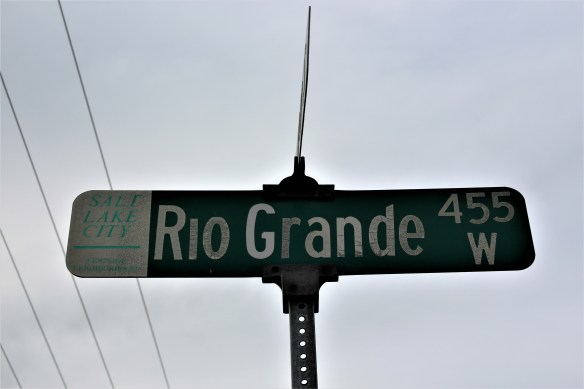
Rio Grande

The Rio Grande street sign on a grey Sunday, November 26, 2017, in Salt Lake City.

Salt Lake City District 6 Vice Chair, Charlie Luke, explained that the city, county, and state of Utah are working together on the operation, SLC is largely responsible for the “on the ground” efforts. “We can fund law enforcement, we can fund cleanup down there, we can do a lot with the zoning. That’s within our jurisdiction,” Luke said. “The county is the one who started moving money into treatment and things.” Law enforcement is arresting people who have felonies and those who sell illegal drugs, “we are not trying to arrest homeless, we are not trying to arrest addicts, we’re trying to arrest those who are preying on the homeless and the addicts,” Luke said. Cleaning up the block contributes to Phase 2’s goal of getting people help, however Phase 1 won’t officially end until June 19, 2019 according to the Operation Rio Grande website.

Odyssey House is one of the treatment facilities receiving funds from the county. It has multiple locations with inpatient and outpatient options. Odyssey House also offers “sober living” – transitional housing to help clients get back on their feet. Director of Operations at 7th Street Treatment Center and former support staff at Odyssey House, Melissa Welsh, has experienced Phase 2 first hand when people from Rio Grande first started coming in to Odyssey House. “We didn’t have enough employees to even keep up with everybody” Welsh said.

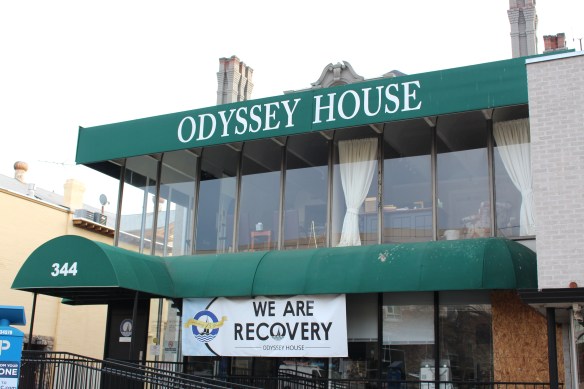
Odyssey House office building

Odyssey House office building on Sunday, November 26, 2017 in Salt Lake City.

Mary Jo McMillen, Executive Director of Utah Support Advocates for Recovery Awareness, has expressed similar concerns. “The homeless shelters are still experiencing drug use and intoxication.  The complaints I have heard are that there is not enough support staff for help with the complexities that people are dealing with.” McMillen said Operation Rio Grande was not prepared for the second phase.

Addiction has many dynamics and dimensions, Welsh said people who aren’t in treatment by their own choice are known as “compliance-based.” “They’re just trying not to go to jail,” she said. These clients are different than those in treatment by choice. “They go in there and they just bring the street into treatment, they bring the hustle into treatment, not necessarily the drug hustle but their hustle,” she said. Emily Abeyta, a Marriage and Family Therapy Master’s Degree student who is currently working on her practicum hours at Youth Care  – an adolescent inpatient treatment center – agreed with Welsh’s description. “I think that taking people off the street and dumping them in rehab is only going to be effective if that’s what they want for themselves,” Abeyta said. “The point is that you take them to treatment when they’re ready for treatment.” She knows this from being in recovery herself – with just over two years sober – and from her work and education. Since joining Youth Care she has experienced these situations repeatedly, parent’s put their kids in rehab but the child does not want to be there.

Yet, there are anomalies. A low percentage of compliance-based clients do succeed. “Some people, they don’t even know that there was help, and it’s like wow, there’s help, and then they rock it,” Welsh said. Licensed Clinical Social Worker, Lindsey MacFarlane, has also experienced this, she now works at a private practice but spent years at Wasatch outpatient. “I wish I knew what it was. If we figured it out, it would be like okay we solved addiction,” McFarlane said. McFarlane doesn’t know if what is happening downtown is the answer though she remains hopeful, “I think that there’s maybe people who will have the change that needs to occur and that they’ll get the opportunity to get help,” she said.

It is too early to tell if Operation Rio Grande’s Phase 2 will be a success or if addicts from The Block will receive and accept the help they so desperately need. Regardless, implementation of this phase was not as well thought out as addiction advocates would have liked. “There is not one size, or model, or approach, or intervention that fits for all individuals,” McMillen said. The importance of individualizing addition treatment may be something that Operation Rio Grande is only now discovering.

This slideshow requires JavaScript.

Holly Vasic Reflection Blog on “Operation Rio Grande may not be prepared, or be the answer, for homeless addicts”

The Operation Rio Grande story, “Operation Rio Grande may not be prepared, or be the answer, for homeless addicts“, idea stemmed from a discussion I overheard with a girl who worked at one of the treatment centers receiving financial disbursement from Operation Rio Grande. She was saying how awful it was because the place was not prepared when people began to come in and it negatively affected other clients. Originally I was planning to focus on the clients who were negatively affected.

I located sources by asking people that were too close to me to interview, to refer me to someone else. In an attempt to tell every side I tried to speak with someone that was an advocate for addicts, someone in government, and an addict themselves.  The biggest ethical issue and moral dilemma I faced was I am a drug addict and alcoholic myself and inherently bias. By finding sources from a variety of places I hoped to counteract that bias.  

As I interviewed people the focus of the story changed so I re-directed and was able to “make sense” of the new focus by listening to what my interviewees were telling me. The writing process consisted of me typing out all the conversations I recorded, reading through them, then I found the story. I was able to figure out an order to the story that made sense and kept it interesting by giving information upfront the reader would need to know, to understand the context, and breaking it down from there. I did not end up including an interview from a drug addict in recovery who was homeless on The Block because the one I spoke with spent time there prior to Operation Rio Grande. I felt like he couldn’t represent that side. I could not find a source who had been a success or failure from Operation Rio Grande sending them to rehab because the program is so new, but I still wanted that side represented. After reading the story I felt that because one of the clinical people is in recovery themselves that was represented without needing a separate person.

What surprised me is that the story ended up being about something else then I originally thought. At first I wanted to focus on everyone else in treatment and how they were affected by people who didn’t want to be there but then it turned into really the homeless addicts being swept up in Operation Rio Grande themselves.

I learned a lot from this experience. Being a writer at the student newspaper I found it hard to have such a long time to prepare and ended up doing my last interview about ten hours before the actual assignment was due. I discovered I do better writing on the fly and that adrenaline kicking in really motivates me, like I said I’m an addict… we do that. The other newspaper I write for, The City Journals, is a monthly paper and this experience has prepared me for future writing with them in that I can anticipate a further out deadline, letting some of that adrenaline rush go, and taking my time to get the full story.

By: Holly Vasic


Eva-Marie Putze

About Me

IMG_2002

I am a fourth year University of Utah student majoring in strategic communication with a minor in business administration. Originally from Las Vegas, I moved to Salt Lake City for my undergraduate degree. In the near future I have plans to peruse a Masters of Business Administration in Germany, where my family is from. In the past I have interned for Harper’s Bazaar, InStyle and ELLE Magazine Germany as a digital marketing strategist. As of recently I have a fashion column in Home and Table Magazine, where I update readers seasonally on the latest trends. My interests include snowboarding, painting and playing classical piano.

Click to read my story Coffee shops- reaching the minds of college students. Learn more about my writing process reflections on coffee shops and student customers.

Visit my LinkedIn here.


Girls club soccer and the advantages learnt in and throughout the game

By TIFFANY HUYETTE

SALT LAKE CITY-  There are those people in life that are special, something about them is intriguing and admirable, and you can tell that whatever their craft, they pour their heart and soul into it. One of these people is Bruce Cuppett, originally from Pipestone, Minnesota, Cuppett is a retired military veteran, soccer coach, and an important person in the development of Utah Youth Soccer Association.

“My dad worked for American Oil Company so about every two years we would move,” says Cuppett.  “I went to three elementaries, two junior highs, and three high schools.” It wasn’t always easy. “I was a trouble maker when I was in school,” Cuppett says, adding that he “walking the thin line, on the good side and the bad side,” always trying to balance the fun. Occasionally, he’d “get slapped, and then get back in line,” he says.

Cuppett finished high school in Detroit in 1964, where he began junior college and building muscle cars. He then enlisted in the army in 1966, and was on active duty until 1972. Cuppett finished college, with a degree in business management, and rejoined the military until 1999 where he retired after thirty years.

“I never played soccer when I was growing up, when I went into the service is when I learned to play soccer,” Cuppett says. After moving to Utah in 1991, Cuppett’s son Andrew tried every sport but fell in love with soccer and started playing for the American Youth Soccer Organization. Andrew had a great first year coach said Cuppett, but his second-year coach was a “flake.” Concerned, the team parents nominated Cuppett as the new coach because he was the parent who knew the most about soccer. He was unlicensed for a short time, but he soon began moving through his first licensure on his way to becoming a better coach and to understanding the youth game.

So how is it he began coaching girls? Cuppett got a call from Sparta founder Ben Vandenhazel asking him to come and coach a girls’ team. “I don’t know anything about girls” Cuppett said, but he decided to take on the challenge. Years later, Cuppett is still coaching girls soccer, “It’s a much different game, to me it’s a game that I appreciate more than the boys game. I think the girls game is about working, about possessing the ball, looking for a seem in the defense and attacking the goal. Where boys typically are win the ball, and go to the goal all the time.” He described it as a prettier game, but harder to coach. “What I tell the older girls when I work with them was ‘you wanna get into college using your brains, because if you get hurt and you’re on academic scholarship your scholarship its still there’. It doesn’t matter if you’re on crutches or whatever, if you get there going the other way, and something happens you’re usually going to lose your scholarship.”

It can be hard to persevere in the sport. “Because you’re going to lose at some point,” says Anthony Frost, Marketer at UYSA. “You’re going to have the hard days at some point, you’re going to have hard times and ya gotta keep going.”

The key is that “ya gotta love it and ya gotta work it,” says Cuppett. “I believe athletes, when they train properly become very good in society because they are good at hitting bench marks along the way, which helps develop their skills to have in life.” An athlete needs to dedicate their own time to the game, he says.

Cuppett tries to teach his players to problem-solve and to be resilient. “If you’re in the real world and ya got a great job, and ya get a new boss, and the new boss is an absolute idiot, are ya gonna throw everything away? Or are ya gonna try figure out how to work with this person and how to continue. Because you’re on a good path right now and you don’t want to go back out and start all over again.”

Friend and Administrative Director of Coaching at UYSA, Holly Gundred, commented “as a team learning how to deal with heartbreak, you learn to take that and what do you do? You apply it and move on.”

Sports, much like life, is like a roller coaster, says Cuppett. “I think sports teaches you that every day it’s a win lose situation. How well you did in practice? How well you did in a match, ya know? how well did ya feel going into it?” If he can teach his players to be introspective, that’s when Cuppett will feel like he’s done his job.


This slideshow requires JavaScript.


If your interested in reading the reflections on my story click here .


Reflection blog on girls club soccer and the advantages learnt in and throughout the game

In the beginning of pitching ideas for my enterprise story, I knew I wanted my story to be centered around athletics because that is where much of my knowledge and passion are found. I knew it would be easier to invest myself in a topic that I knew a lot about or had the motivation to learn more about. I decided to write about UYSA because growing up in Utah Youth Soccer was extremely beneficial in teaching me life skills and in teaching me how to deal with adversity.

Upon gathering information for my story from previous coaches and the Utah Youth Soccer website, I was able to get in touch with individuals from the admin side of UYSA, and eventually able to go to the new UYSA headquarters and interview a few different people. Upon meeting different people, I reconnected with a previous soccer trainer from my youth days who had both coached girls and worked on the admin side of UYSA.

I started my interviews asking each person what their specific job title was and how they had got the position they now obtained. I then asked about previous jobs and positions, and about their families. Then I went further into depth on the benefits of sports for adolescence. After the interviews I reviewed all my notes and was able to create a story. The best source for my story ended up being the man who had trained my team and other girls teams, and who also worked admin for UYSA.

The struggles I faced were mostly within getting to interview the people I was hoping to interview and within keeping my story within the word limit required. I had to find a way to both include the details I wanted and the details I needed, while also having to distinguish between what I could keep in my story and what I needed to take out. All while trying to tell a story well, intrigue readers, and fit within the word limit.

I was able to choose the focus of my story when I listened over my interviews and had to decide what would be interesting to readers of all types, and what wouldn’t be interesting. I also really wanted to tell a good story, so I had to find a point of view where I could story tell, while still being able to keep inline with my story topic. The writing process was lengthy, and the story ended up extensively exceeding the word limit. I then had to delete any parts that were not necessary, or that did not point back to the story pitch. It was a process of writing a story that would be both interesting and informative to readers, while at the same time telling a story well. I learned that I am much more of a story writer than a news writer but that it is beneficial to add brevity to whatever I’m writing.

Looking back, I am very surprised with where my story ended up going. It ended up being a feature story about a specific person and an organization. I learned much about UYSA through my interview with Bruce but also about Bruce as a person. I was able to attain life wisdom as well as coaching wisdom for young athletes and the parents of athletes.

Link to my story here and my bio here.

Black Lives Matter has taken to the streets of Utah and they’re here to stay

Story and photos by FAYE BARNHURST

SALT LAKE CITY – On Aug. 27 of this year, nearly 400 Utahns gathered on the University of Utah’s campus to protest a speech by conservative commentator Ben Shapiro. Protesters marched from the Park Building to the Behavioral Sciences Building, shouting phrases such as “Hate speech is not welcome here” and “Hey, hey, ho, ho, Ben Shapiro has got to go.” The protest was organized by Black Lives Matter Utah (BLM), an activist organization that has been making waves in the community and doesn’t plan on stopping any time soon.

“We’ve been here for years,” says Black Lives Matter Utah founder Lex Scott, “but we just didn’t have any people or press. But now Utah has discovered that we’re here, so it looks like we’ll actually get some things done.”

After the fatal shooting of 17-year-old Trayvon Martin by George Zimmerman in 2012, “#BlackLivesMatter” began to circulate on the internet. The hashtag sparked a national movement that altered the political climate of the nation and made Americans reevaluate race-relations in the United States. Since its inception, Black Lives Matter has utilized social media and direct action to raise awareness of issues facing African-Americans.

The organization has over 40 independent chapters across the country that each focus on their own regional issues. Earlier this year, the FBI categorized Black Lives Matter as a “Black Identity Extremist organization.” Local activist, Lex Scott, who was just named Utah’s “best tireless advocate” by Salt Lake City Weekly, decided to start the Utah chapter after seeing footage of Eric Garner, an unarmed black man, being choked to death by a Staten Island police officer. “I saw the video and thought ‘Okay, that’s enough. We’re going to stop this. We’re going to do something,’” says Scott.

In collaboration with Utah Against Police Brutality, Black Lives Matter Utah has held several rallies and protests calling for justice for victims of police brutality, such as Abdullahi “Abdi” Mohamed and Darrien Hunt.

“The necessity for a Black Lives Matter chapter in Utah unveils itself in the mere fact that it garners death threats to families of their organizers for the same sort of work that UAPB has been doing for years without any of the same hostility,” says Jacob Jensen, an organizer for Utah Against Police Brutality. 

Both activist groups have been pressuring local legislators to change police body camera policies. After Salt Lake issued an executive order last month that stipulates a 10-day delay on the release of police body camera footage where an officer injures or kills someone, both groups held a protest and sit-in at the Salt Lake City and Council Building to demand that the footage be released within 24 hours of the incident.  

Along with working to end police brutality, Black Lives Matter Utah also addresses other forms of racism.

“Black Lives Matter is all about inclusivity,” says TK Flory, one of the first BLM activists in Los Angeles. “Thinking about systemic oppression, economic oppression, political oppression, systems that uphold white supremacy – these affect everybody in some way, especially black people.”

One of Black Lives Matter Utah’s biggest successes in combating systemic racism is getting Steve Smith, a former Sandy City Council Member, voted out of office for making racist comments about African-Americans. The group canvassed, created a call bank, and even went on the news to get Smith removed.

The organization is also promoting its fourth annual Black Friday Black Out Boycott, to counter systemic barriers that limit black entrepreneurs. Members of Black Lives Matter will boycott all major Black Friday sales, and instead only shop at black-owned businesses. This action is intended to be a rejection of the economic racism facing black people in the United States.

In addition Black Lives Matter Utah opposes mass incarceration, the “school-to-prison pipeline,” and housing and wage discrimination. They advocate for fair and impartial juries, transparency between police and citizens, and adequate political representation for all marginalized groups of the community.

To encourage students to join and lead the movement, they have recently started working with Students for a Democratic Society, a radically progressive student-activist group on the U’s campus. 

The group already has more than 1,500 members on Facebook and is currently setting up new chapters all over the state to draw in support and gain influence in Utah. 

“Black Lives Matter Utah is important because Utah is only two percent black, which means there is just a tiny percent of black representation here, so there’s not a lot of black leadership here,” says Lex Scott. “Most perceptions of the black community come from the media and television where we are painted as unintelligent, ignorant thugs. If there’s a place that needs a Black Lives Matter chapter, Utah is the place.”

With the goal of bringing attention to the issues facing black people in Utah and pursuing equal rights for all, Black Lives Matter is a growing voice in the community.


Reflection Blog

Faye Barnhurst

IMG_9532

Faye Barnhurst lives in Salt Lake City, UT. She is a sophomore at the University of Utah, currently studying Communications, Journalism, and Studio Art. She plans to graduate with her BA in Communications in 2020.

Ms. Barnhurst has worked at LUSH Fresh Handmade Cosmetics in Murray, Utah, as a Senior Sales Ambassador and Visual Merchandising Ambassador, for the last two years. She has also done volunteer work with Vague Space, a local non-profit focusing on arts and education, as their social media coordinator.

Ms. Barnhurst is also a student-activist with the Students for a Democratic Society, a progressive student-activist group on the U’s campus. She has assisted in organizing events, hosting fundraisers, and running social media accounts for the group.

Her passions include art, music, activism, travel, and politics.


Black Lives Matter has taken to the streets of Utah and they’re here to stay

Reflection Blog

LinkedIn

Kaylee Anderson

MY STORY: 

MY BLOG:

Writing my enterprise story was my favorite part of this whole class and experience. It gave me an opportunity to combine what interests and drives me with news writing skills.

I chose to do my story on how mental health is heightened when you get to college and what you can do to help deal with it. I feel passionate about this topic and finding sources was fairly easy. I went to my personal psychiatrist because I knew she had a lot of insight about the topic. The next step was the University Counseling Center, I got in touch with the assistant director and he gave me great information for my story.

The biggest dilemma I faced while writing my story was to keep myself out of it. I feel so strongly about my topic so it was hard to keep my ideas, personal stories, and my own opinions out. I did a good job of that and only wrote about the people who I interviewed thoughts.

I started by making an outline for my story and participated heavily during the in class peer critiques. Then, I sat down one night and wrote out the whole thing in one sitting because that is how my brain accomplishes things better.

The part that surprised me the most, was how kind the people were that I interviewed, I know mental illness is a touchy subject but everyone was so willing to help my cause. I was also pleasantly surprised on how much fun I had with the story. I really enjoyed talking with people and including their thoughts to make my story flow. I had a wonderful experience with this story.

ABOUT ME:

Kaylee Anderson is a sophomore at the University of Utah studying communication with an emphasis in broadcast journalism. She also is interested in psychology and how the mind works.

Kaylee enjoys writing and traveling to places like Rome and Spain. She is a part of the Pi Beta Phi sorority on campus and plans to run for an executive position next year.

Kaylee was born and raised in Utah and graduated from Juan Diego Catholic High school with a 3.5 GPA and lettered in cheerleading.

Kaylee is passionate about mental health and hopes to raise awareness to the subject through her writing and broadcasting skills. One day Kaylee hopes she will work with a news company and be able to broadcast the news to the public.