A glimpse into online college learning at the University of Utah

Story and photos by REEDE NASSER

Instead of facing hundreds of students or a few professors, students and staff at the University of Utah have been experiencing our new normal this 2020-21 school year due to the pandemic and limiting university events to 20 people. The majority of classes at the U have gone virtual, whether through Canvas Instructure or virtual lectures through Zoom. Education has never been so different. 

The University of Utah’s coronavirus testing center, easily accessible to all students. 

Though online learning is nothing new in this day and age, the ability to sufficiently learn through a screen has become a major point of strife for the U’s students. Students have noted a few issues when it comes to solely Canvas-based classes.

“It feels even harder now, there’s no professor or teaching assistant that can reiterate the information or answer questions quickly. It takes me hours to fully understand the information presented,” said junior Shyann Brown in a Zoom interview. She is currently majoring in accounting.

Another student indicated the lack of seeing their professor in a classroom or joining class virtually takes away from the structure they are used to. Freshman Noah Martin, who is studying engineering, said without a set time to learn and see a professor, classes don’t feel as important. 
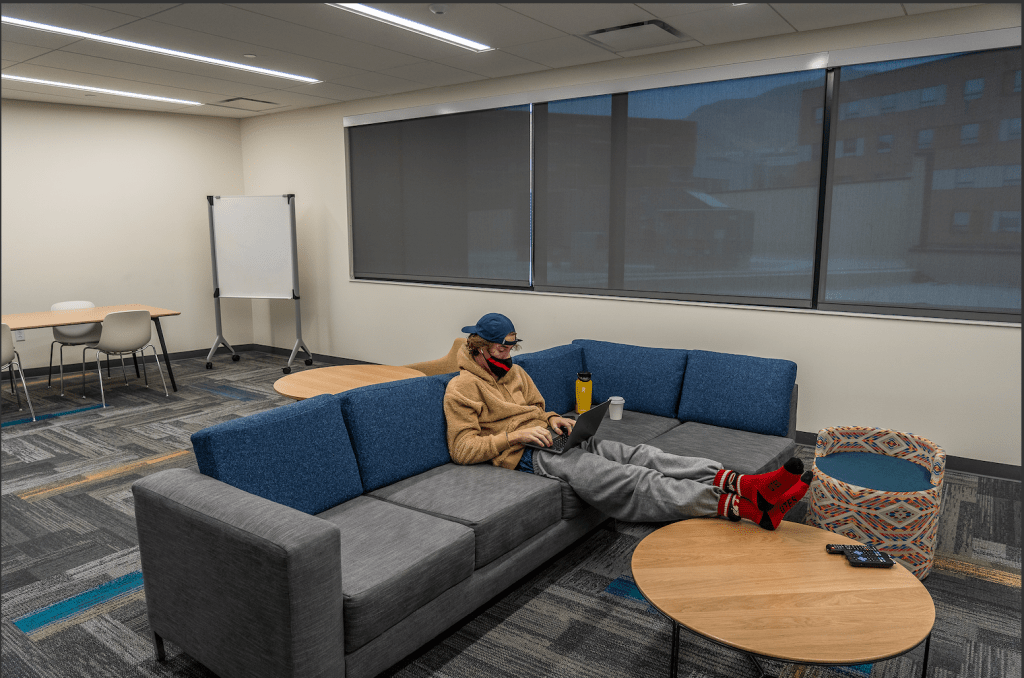
Freshman Noah Martin following residence halls guidelines and keeping his mask on while studying.

“The classes where we have to virtually come in, I’m more likely to focus on because there’s more accountability, the professor knows we’re there but when it’s a lesson I lead myself, I will push it off to the last second,” Martin said.  

On the other hand, when students are learning, some worry that they aren’t retaining any information, simply just memorizing. 

“I don’t know anyone in my classes, I have no one to talk to about what I’ve been learning,” said Matt Idlestrom, who is majoring in business. “When I was in a classroom, a lot of information I understood much more after having a conversation with my peers. It was nice to be able to review while we were learning. By the time the exam comes I don’t remember half of the unit because after the lesson I don’t have to focus on it as much.” 
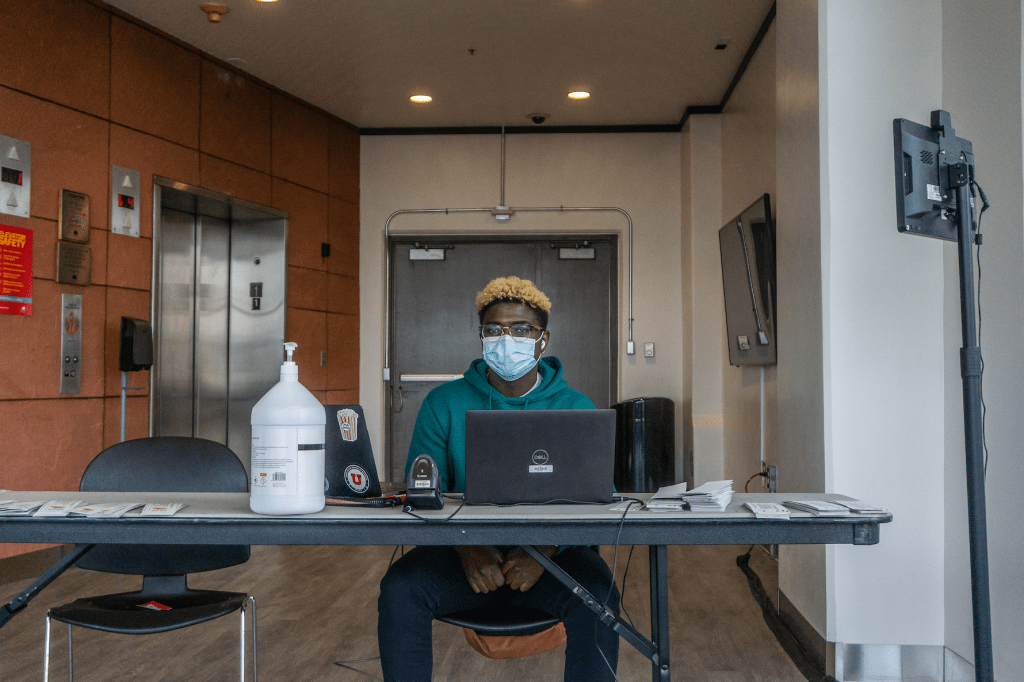
Sophomore Matt Idlestrom adhering to school guidelines by studying in a room alone and keeping his mask on. 

However, the students aren’t the only people struggling with this new form of education. Educators at the U said they too are struggling to navigate this new internet-based way of learning. They have had to restructure lessons, grading policies, learn how to use Zoom and Canvas sufficiently to instruct a class solely on those platforms, and find new ways to keep students accountable and engaged. 

Professors have mentioned multiple frustrations when it comes to this new teaching. They have observed their students keep their cameras off during class, submit assignments late, or be confused about prompts or assignment details that had not been an issue in the past. However, it seems that most instructors are frustrated when it comes to cameras being turned off. 

“[I]t’s hard to see students, it’s hard to read body language, and you know students don’t turn on their camera a lot which I find really frustrating and kind of weird,” said assistant professor, Michael Dichio in a Zoom interview. 

Instructors said they are worried that students are simply just not engaged with at-home learning. Are they really paying attention? Would they reach out if they had a question? Are they comfortable enough on a lesson before their class moves on? To answer their own questions, instructors have been creating and providing more resources than before for their students. Discussion boards, longer office hours, or midterm check-ins. Many of which their students are not utilizing to the best of their ability. 
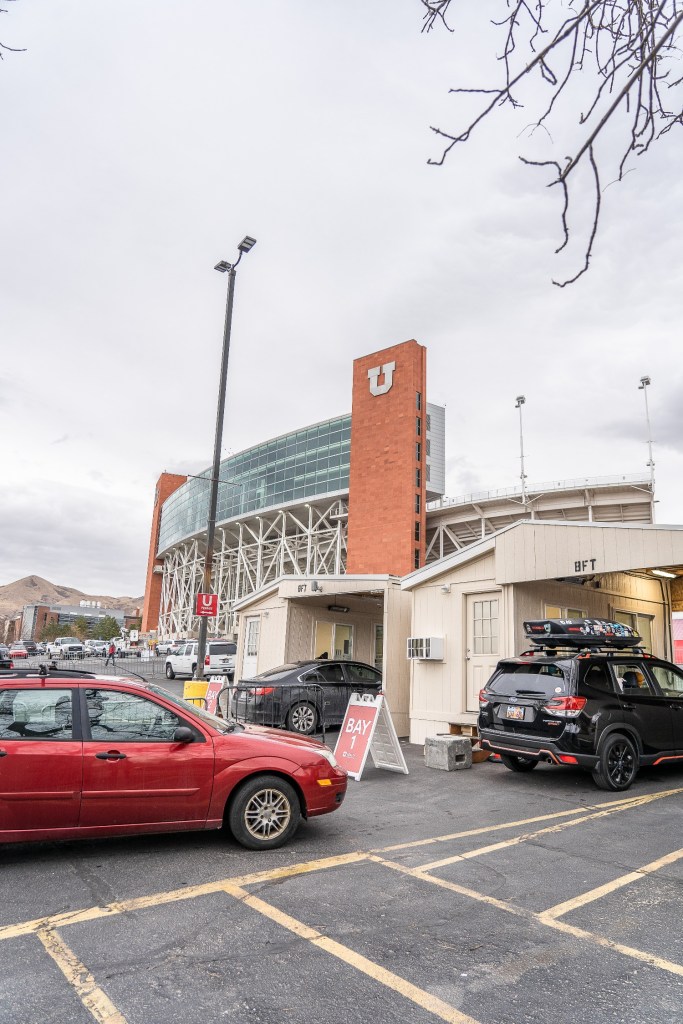
Once filled with excited students on game day, the university’s stadium is now home to the COVID-19 virus testing center. 

Based on the interviews, there seems to be a major disconnect when it comes to the U’s students and teachers. Both groups are frustrated and confused, just trying to navigate our new normal. Students need to start looking into more active participation when it comes to their classes; participating in class or using the other resources given, turning on their camera, and proactive learning. Instructors could look at starting a weekly discussion where students can interact with each other and their teachers. 

However, the positivity of the situation should be noted as well. Educators and students alike are thankful to be able to learn in times like these. “Logging on to Zoom or Canvas adds a sense of routine and normalcy to my day, something I was struggling to get before classes had started,” said senior Kate Culkin, who is majoring in political science. 
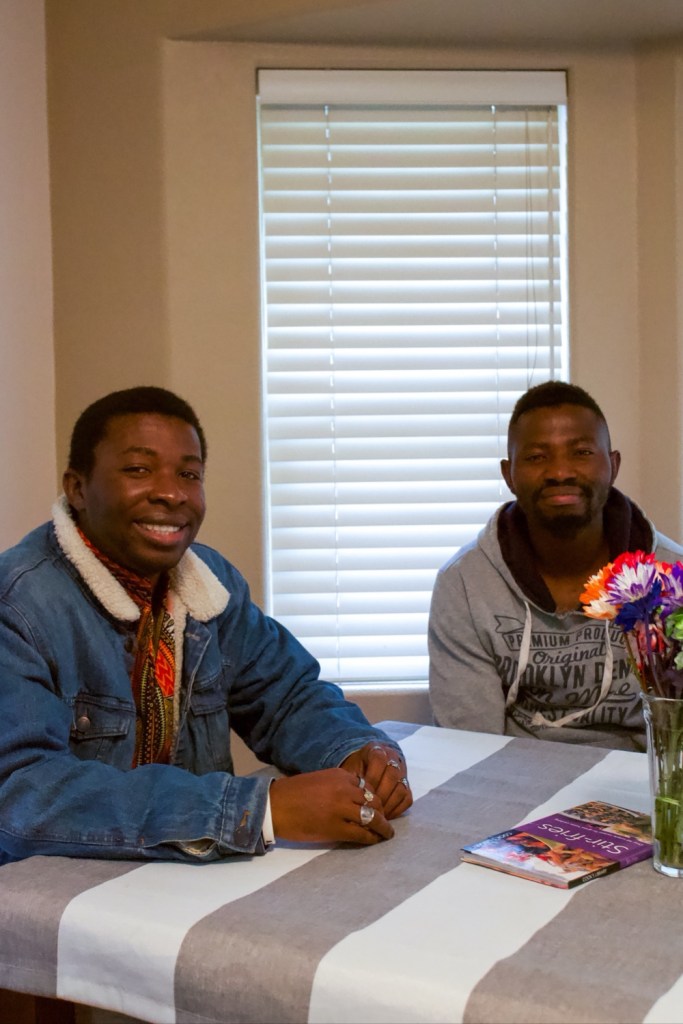
The Mbaki brothers: Studying abroad in Utah

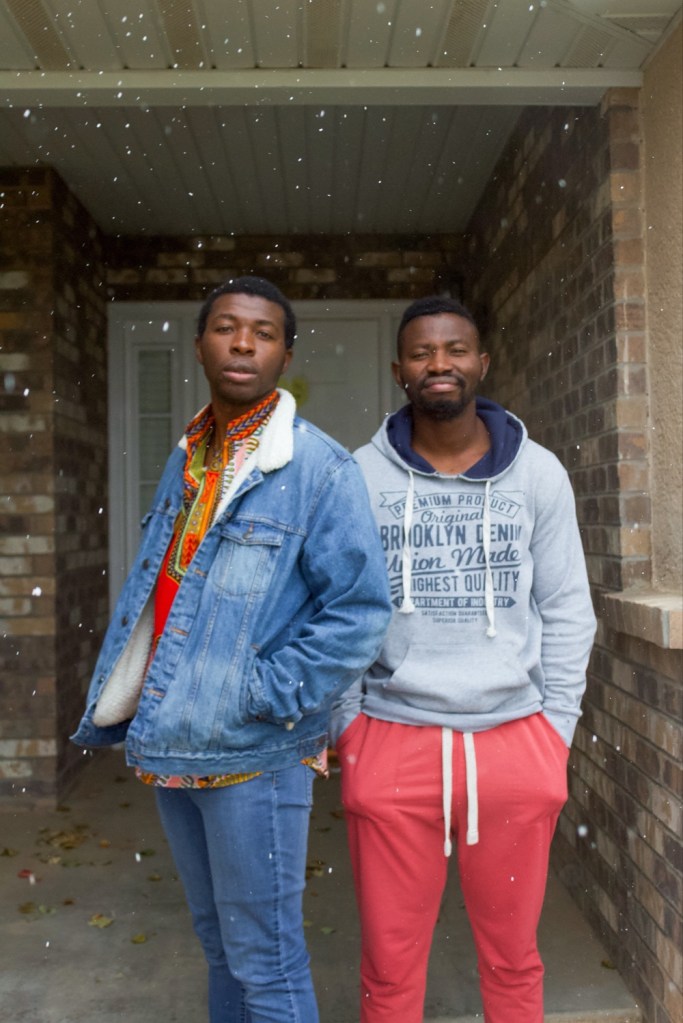
From left: Lawrence, 25, and Kevin, 23, at their home in southern Utah.

Story and photos by TAYLOR THORNTON

The idea of leaving home always intrigued Lawrence Mbaki. The world and all of its corners seemed to call him for exploration. 

It was a long flight from Cape Town, South Africa, to Salt Lake City. One deep breath reminded him that his life would be forever different.

The hot desert air was unlike what Mbaki was used to from the Mediterranean climate back home. Stepping off the plane reaffirmed that his dream to travel the world had just become a reality. 

It was a giant leap. He had never left his home country alone. It was an opportunity that he, an adventurer at heart, had to take as it came to him. However, he didn’t expect that something would threaten the progress of his international journey later on.

“I always wanted to study abroad,” Mbaki said. “The United States seemed like a very nice country where the program I wanted to study was better than elsewhere.” 

Early years in Cape Town

Mbaki had always had a passion for the performing arts. From playing pretend with his two younger siblings to participating in extracurricular activities in school, he has presented himself as a performer and a creative.

Mbaki decided to participate in evangelical work in Johannesburg a few years after graduating from high school. Bubbly and always joyful, it was not hard for him to make friends while there. Among those were several friends from the United States who later helped him find university study opportunities. 

The day finally came in early August 2019. Mbaki packed his bags and made the courageous leap for a new beginning. 

Mbaki began his educational pursuits at Southern Utah University the fall semester of his arrival. He soon reunited with his brother, Kevin, who also moved to southern Utah for school opportunities in early December 2019. 

Lawrence (pictured on the left) and Kevin Mbaki at their home in Cedar City, Utah. In the images below: Lawrence is an ambassador who helps other international students at Southern Utah University; SUU is home to international students from across the world.

“I’m only here because of Lawrence,” Kevin said in a phone interview. “I don’t really have a motive behind being here, besides the fact that Lawrence is here.”

While Lawrence has been pursuing his passion for the arts, Kevin has found a new love for computer science and security while studying abroad.

Things seemed to be going well for the brothers as the spring semester kicked into gear. Suddenly, with the coronavirus pandemic’s appearance in March 2020, a fear of returning home early from their studies abroad hung over their heads.

A contributing factor to an international student’s ability to study in the United States is the number of face-to-face credits they take per semester. The ratio of online to in-person classes can vary due to an institution’s policy. An international student, however, must be registered as a full-time student.

This requirement posed a massive problem for international students as universities and educational institutions began to close their doors and move to a fully online class schedule. 

“I was very fearful,” Kevin said. “I didn’t want to go back to South Africa.”

Fearful as they were, they took to action to maintain their education.

Lawrence has been an international student ambassador at Southern Utah University from his first semester of attendance. He and his fellow ambassadors met with the department heads to decide which course of action to take. 

Would it be best to send the students home to their mother country? Would the current and rapidly changing travel restrictions allow for such a move?

Jamie Orton is a director with the International Scholar and Student Services Office at Southern Utah University. That office has the primary purpose of advising, supporting, and providing aid to international visitors attending SUU. These services include providing students with proper travel advising, employment opportunities, immigration maintenance, and so on.

She worked directly with Lawrence and other ambassadors during this time. 

“[We] held an emergency meeting for all international students in March, right before the drastic adjustments were made due to the pandemic,” Orton said in an email interview. “We encouraged students to consult with their parents and families to make the best decision regarding staying in Cedar City or traveling back to their home country.”

It was a time of thoughtful consulting and rapid decision making for students and university leaders. After speaking with their families, half of the international student population decided to return home due to the coronavirus’s fearful circumstances.

Lawrence and Kevin were not among this group of fleeing students.

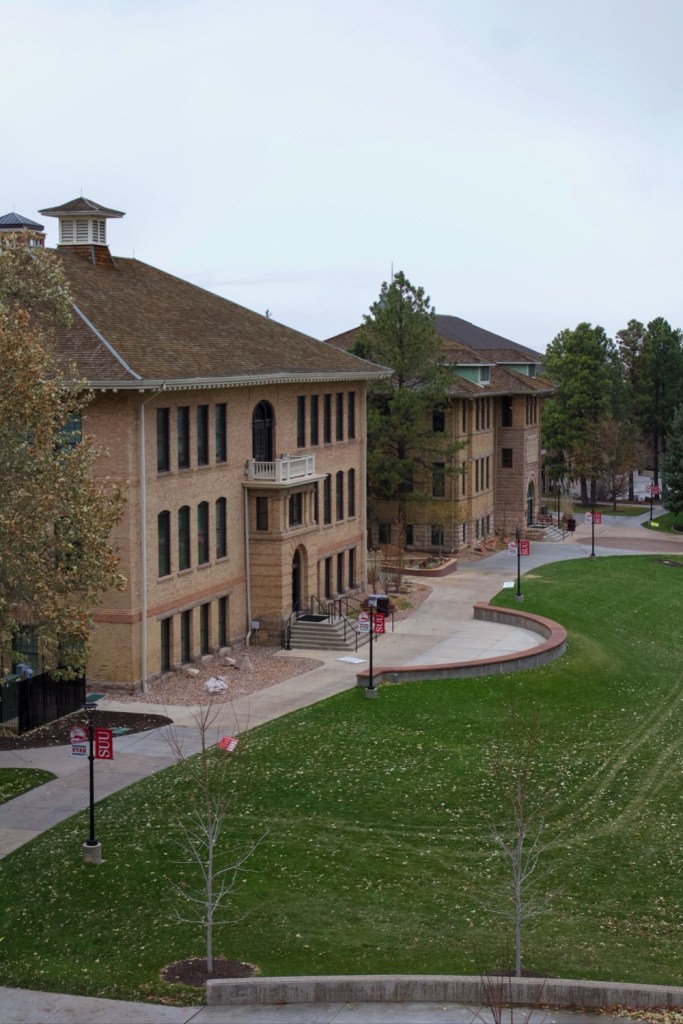
A view of SUU’s campus from on top of the student center.

As the situation continued to change, Lawrence said he and his fellow ambassadors worked with the school, in conjunction with the government, to adjust the regulations that are tied to international student visa requirements

The conditions for study set in the visa documentation, as mentioned above, stated that to stay in the country, a student must have an equivalent of nine in-person credits or more and a maximum of three online credits. 

With in-person lectures no longer available to students, the school worked to override the requirement so international students could maintain their visas.

The university succeeded in waiving these conditions after a time of uncertainty. Lawrence and Kevin said they were excited to remain at Southern Utah University.

With eased restrictions, they have both attended hybrid courses that allow them to continue their education and extracurricular activities safely.

Lawrence said he hopes to take his knowledge and experience from studying abroad and open a school for performing arts in his home town Cape Town.

Kevin is enjoying his time in the United States. He said he plans to increase his knowledge of computer science and cybersecurity and someday work in U.S. national security.

Devin Richard Dayley

MY STORY:

Utah business, Burgess Orchards, remains family-owned and -operated since its inception

MY BLOG:

When tasked with finding a subject to write about, I had a hard time. I immediately turned inward and began asking myself questions like: what do I think is interesting? Surely if I am interested in what I write about, others will be too.

I received some peaches from an orchard where my mom buys peaches every year and then the idea hit me like a ton of bricks! I could write about this orchard. I was easily able to get the contact information of the man in charge, Clark Burgess, and from there, was able to find people to talk to.

I did not have any specific ideas about what direction I wanted to take my story in. When I would think about it, I just assumed I would write about the orchard and the history of it.

When it came to my interviews, I made the conscious decision to ask questions but not steer the interviews in any certain direction. Since I had no clear direction to take my story, I figured letting them steer the interview was the best tactic.

After the interviews were done, I noticed that they must have subconsciously steered the interview toward the future of the orchard. I thought, hey, that is perfect! Instead of focusing on right now, I will keep the readers focused on the future of the orchard.

Once I had decided how to focus my story, it seemed as though everything came together. Writing the actual story was not hard. The work I had to put in before the writing was the difficult part.

ABOUT ME:

Devin is currently a part-time student at the University of Utah. With the love of cinema that he has, Devin aspires to use his knowledge of writing and journalism to be a film critic or film reviewer. He also has a passion for live theater. As such, he would love to do reviewing and critiquing in the world of theater or live art.

Coming of age in Arizona and Utah, Devin decided to change his world entirely and move to Laie, Hawaii, to attend Brigham Young University–Hawaii Campus after high school. 

After being there just six months, Devin was diagnosed with an astrocytoma, a cancerous brain tumor that required immediate surgery to excise. Leaving him with the basic functioning abilities, the next eight years of Devin’s life were dedicated to doing the therapies and things necessary to regain any lost abilities.

Utah business, Burgess Orchards, remains family-owned and -operated since its inception

Story by DEVIN RICHARD DAYLEY   

On a sunny, fall day the fallen leaves can be heard crunching underneath your boots. It is the busy time of year again, when peaches slowly go out of season and apples begin to ripen. As you look out across the land, you see nothing but shades of red, yellow, orange, and brown as the leaves shrivel and the trees prepare for winter.

For Clark Burgess — an orchardist, or grower as he calls it — this is a sight he looks forward to each year. As he takes in a breath, he thinks, “I was born to do this.”

Burgess Orchards, a family-owned business since 1914. All photos courtesy of Clark Burgess.

Being the only son in a family who owns and operates a thriving orchard in the Alpine, Utah, area, Burgess has made it his calling to take over the family business located 40 minutes south of Salt Lake City. However, he enjoys and finds satisfaction in the work.

Burgess comes from a long line of farmers who previously established Burgess Orchards as a staple of Utah. Clark, the son of Van, who was the son of Edward, who was the son of George, is the fourth generation to grow fruit in the 100-year history.

Burgess was born in 1958, and for him, there was little question in his mind that he would learn what he could and take over the family business one day. “Nothing occurred to me as something else I would do with my life,” Burgess said in a Zoom interview. “Growing up as the only boy of five kids, I knew the future of our orchard depended on me.”

“I quite enjoyed farm life,” Burgess said. ”There was no reason for me to not want to stay on the orchard.”

He studied and went through high school in the area of Utah where he currently resides. He attended American Fork High School in American Fork, a suburb of Alpine. After high school, knowing that his future was at the orchard, he decided to forego his academic future in lieu of gaining the skills required to run a successful orchard.

“I knew that I would end up back here,” Burgess said referring to not attending college. “So I didn’t see any benefit to leaving.”

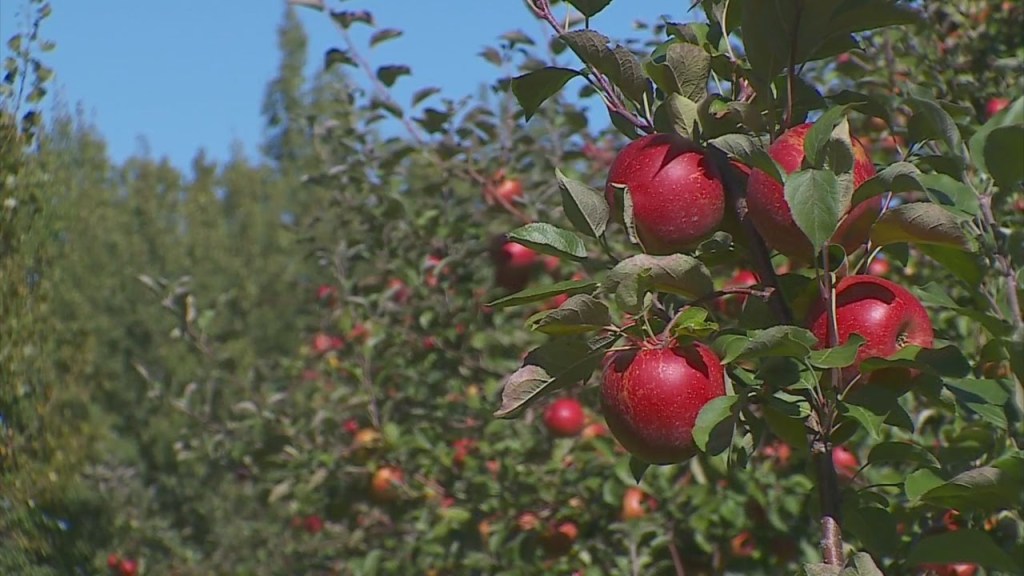
Apples have been grown since the orchard’s inception.

Clark’s wife, Dolores, is an integral part of the team that produces and harvests the fruit each year. It was her urging that led Burgess Orchards to grow peaches as well as apples. 

“I love peaches and have always loved peaches,” she said in a Zoom interview. “I was sure they would make a delightful addition to our crop.” Clark and Dolores knew each other for years leading up to their marriage, having grown up not 20 miles apart.

Peaches, in addition to apples, are grown on the orchard.

In the 108-year history of the orchard, 12 varieties of apples and eight varieties of peaches have been and are currently cultivated on 16 acres of land.

“Everyone knew about Burgess Orchards,” Dolores said. “We all knew that he (Clark) would take over one day, so it came as no surprise to me that we ended up living in the same house he grew up in.”

Clark and Dolores have four children together. 

“We don’t know, for sure, who will take over the family business in the future,” Dolores said. “We believe it’ll be our second — Matthew — but to be honest, we don’t really care. We know it’ll be in good hands no matter what.”

As the second of four children, Matthew (Matt) is on the path to take over as head grower for the business.

“I just grew up assuming that I would be in charge of continuing the tradition of running the business,” Matt said in a Zoom interview. He attended Utah Valley University (known as Utah Valley State College then), earning a bachelor’s degree in computer engineering.

Apples can be purchased during the winter months.

He describes the farm on which the fruit is grown as “self-contained,” so he hopes that he can keep working with computers while running the family business.

But Clark does not think his son will be able to hold another job.

“He will need to quit his other job to put his full attention toward the orchard,” Clark said. 

Matt said there was never any discussion on whether he would take over the family orchard. “I had been conditioned to know that it was just expected from me since I am the oldest male.”

He added, “The knowledge that the future of this beloved orchard will be in my hands one day is a heavy burden. It is a burden I feel like I can carry.”

MiaBella Brickey

MY STORY:

The experience of the coronavirus through three immunocompromised young adults

MY BLOG:

I am a young adult woman born and raised in Salt Lake City. I attend the University of Utah and am majoring in photojournalism. I am a sister, a daughter, a friend. My intersectional identity has always been pretty basic, but what can I say? I’m a white woman from Utah. There’s nothing special about me; I don’t stand out in most crowds. I’m not saying that in a pitiful way, but rather as a matter of fact. I have never experienced a struggle due to a part of my identity. Unlike millions of other individuals around me, I’ve never experienced racism or discrimination for the way I look. And while this is and will continue to be true for the rest of my life, this past year resurfaced a part of my identity I thought I had grown out of years ago.

When I was 11 years old, I died in a hospital bed in the early summer morning of June. It was quick and unexpected.

Six days prior, I walked into the emergency room hand in hand with my dad. Four months from that day, I rolled out of the hospital doors in a wheelchair, a paper-thin body covered in eight new deep-tissue scars, with one new heart pumping the blood inside my small chest. For at least six years after that, I fought to shake the new identity that had been shoved down my throat. The girl with the heart transplant.

My school was small. Really small. The kind of small that you knew everyone down to their grandma and their grandma’s dog. I wanted to return to the person I was. I wanted to go back to before. Before the floor was slept out from under my feet and before my story was broadcasted around Salt Lake City via a blog my parents made.

But the truth was, I would never be that girl again. And I knew it; I just didn’t want to accept it at first. Slowly, I rebuilt my public identity into a young, smart, strong, creative, interesting young woman. Not the small girl with the transplant.

Most people don’t know about the lifestyle change that must happen post-transplant. In the months and years following one’s transplant, they are placed on strict house arrest and are very slowly re-introduced back into their social life. Fresh transplant patients are dosed on high levels of steroids and immunosuppressant drugs, making the patient extremely vulnerable to even just the common cold. While steroids and blood thinners are weaned, and eventually struck, from one’s medical chart, a transplant patient will take immunosuppressant anti-rejection medication twice daily for the rest of their lives.

In reflection of this year and the arrival of the virus that caused COVID-19, any transplant patient is considered at high risk of infection with fatal outcomes. This reality means I am at high risk. For the first time in years, a part of my identity had resurfaced that I had once worked so hard to outshine. Now, my health safety must take a priority over social interactions once more.

With my experience as an immunocompromised individual, I feel confident stating that this community of people is underrepresented. I wanted to write this story to spread awareness around this community of people and what our lives look like now. Most people don’t understand due to a lack of awareness and education. I hope that this story brings more awareness around the adversities most immunocompromised people face today as the coronavirus threatens our lives.

I know a handful of people my age that are immunocompromised, so I figured the best way to collect sources was through a call to action on my Instagram account. I asked for the participation of immunocompromised people between ages 18-25 for an interview covering their experiences as immunocompromised young adults during COVID-19. All of the sources who participated were incredibly insightful and well-spoken on their experiences throughout the pandemic. I made sure the call to action I posted was available to everyone on my following list, so no biases existed before the interview.

Writing the story, I had to be sure that I wasn’t writing a biased story from my perspective as an immunocompromised individual. I took the same restraint while conducting my interviews and with my sources as well. Since I have my own opinions and frustrations, I had to ensure that my frustrations weren’t being communicated via my sources and that what my sources were saying was genuine.

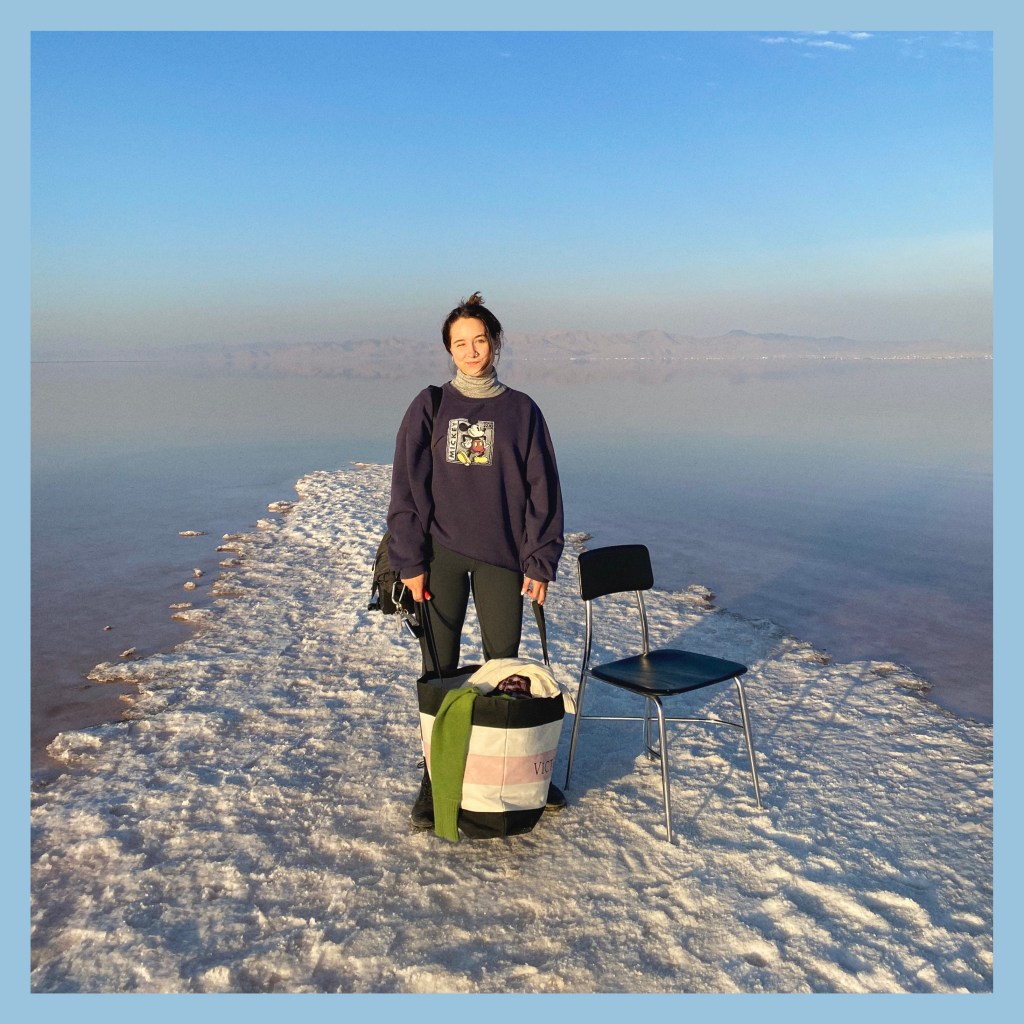
Taken at Stansbury Island, Utah.

ABOUT ME:

MiaBella Brickey was born and raised in the Sugarhouse area of Salt Lake City. She is currently attending the University of Utah for her bachelor’s degree in photojournalism. Besides styling and directing photo-shoots, MiaBella enjoys spending her time dancing to loud music, road tripping to the nearest campsite, walking her dog around her neighborhood, and hanging out with friends and family. She is passionate about her creativity and is always looking for the next project to work on. Her goal in life is to live as presently as possible, protect and defend the rights of all human beings and animals, and to create a positive impact on all who come into her life.

The experience of the coronavirus through three immunocompromised young adults

Story by MIABELLA BRICKEY

Stickers on the grocery store floor asking us to remember to social distance, hand-sanitation stations placed directly in front of every public door, and shortened business hours are lingering reminders of the already 223,000 people who have died in the United States due to the arrival of the coronavirus that caused COVID-19 in March 2020.

The Centers for Disease Control and Prevention states that wearing a mask in public may slow the spread of the virus.

Life looks differently during a pandemic, and most have come to be well versed in the new changes happening nationwide in response to the coronavirus. The precautionary changes and procedures put into action in response to it are affecting most Americans’ lifestyles and day-to-day routines.

But for three immunocompromised people, their new normal looks very different than the new normal of those with healthy immune systems.

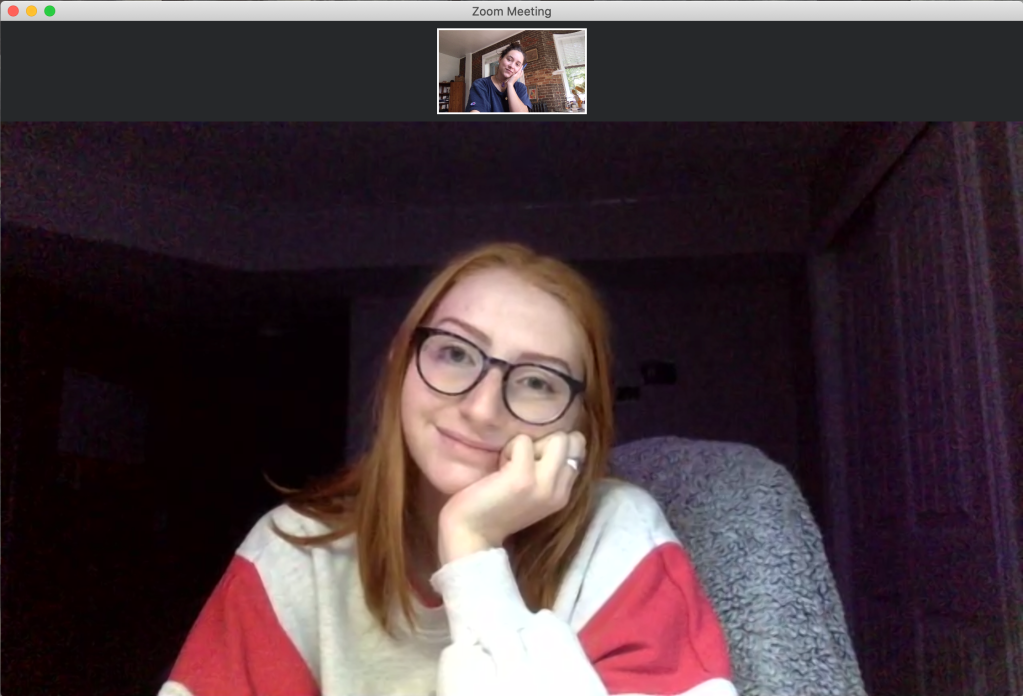
Sophie Dubois smiles for the camera over Zoom. Screenshot by MIABELLA BRICKEY

Sophie Dubois, who works for an in-home cleaning company, struggles with setting and communicating boundaries for her health-safety. She said it has been “hard to navigate.” However, in a Zoom interview she said her biggest concern is, “What if I get COVID from being at work, and then I can’t work?” Ultimately, she’s left stuck between the need for income and the need to protect her health.  

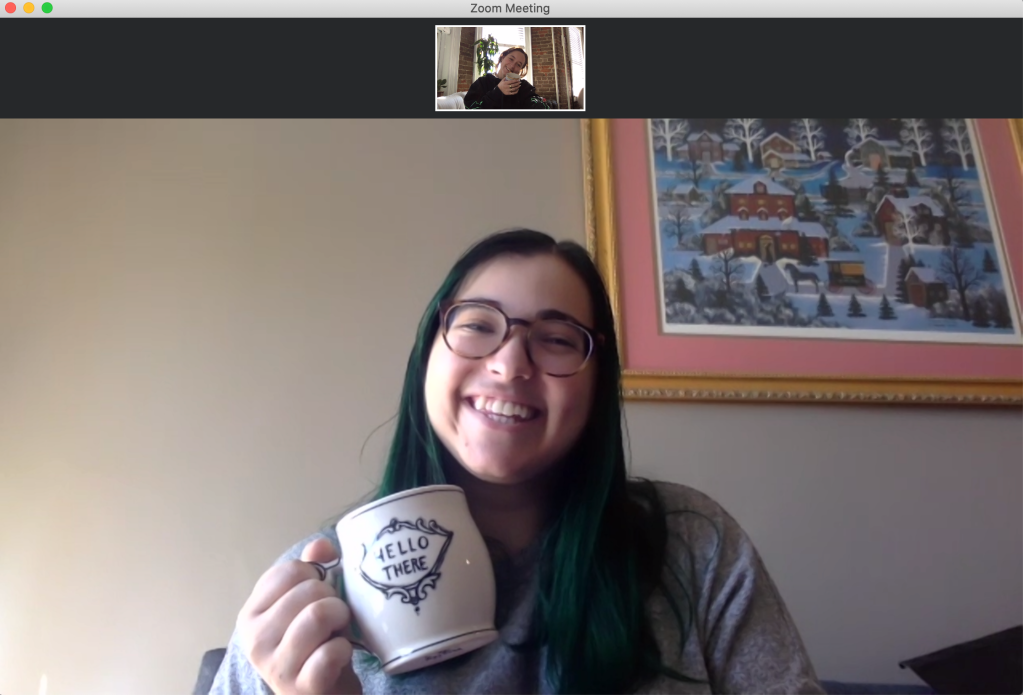
Athena Schwartz holds her coffee mug and smiles over Zoom. Screenshot by MIABELLA BRICKEY

For Athena Schwartz, who uses they/them pronouns, managing their small embroidery business and working at a separate online day job are distractions from the politically charged social media posts.

Most often, the constant stream of online posts feature Schwartz’s community, and even close friends, out and about — and more often than not — without a mask on. The notifications remind Schwartz that most people aren’t in fact practicing social distancing. This leaves them with few options other than to “avoid social media because it just makes [them] angry.”

“When you post on social media, we immunocompromised people see that, and we know that we aren’t in your thoughts,” Schwartz said in a Zoom interview.

“When people with autoimmune disorders or immunocompromised people get sick, it’s a lot scarier. Not only are we more likely to get sick in general, but we’re more likely to become fatally sick from COVID,” Schwartz said. “I once had a near-death experience because I had a UTI (urinary tract infection).”

Being a young adult holds many a responsibility, but it also comes with the excitement of reaching and celebrating significant milestones.

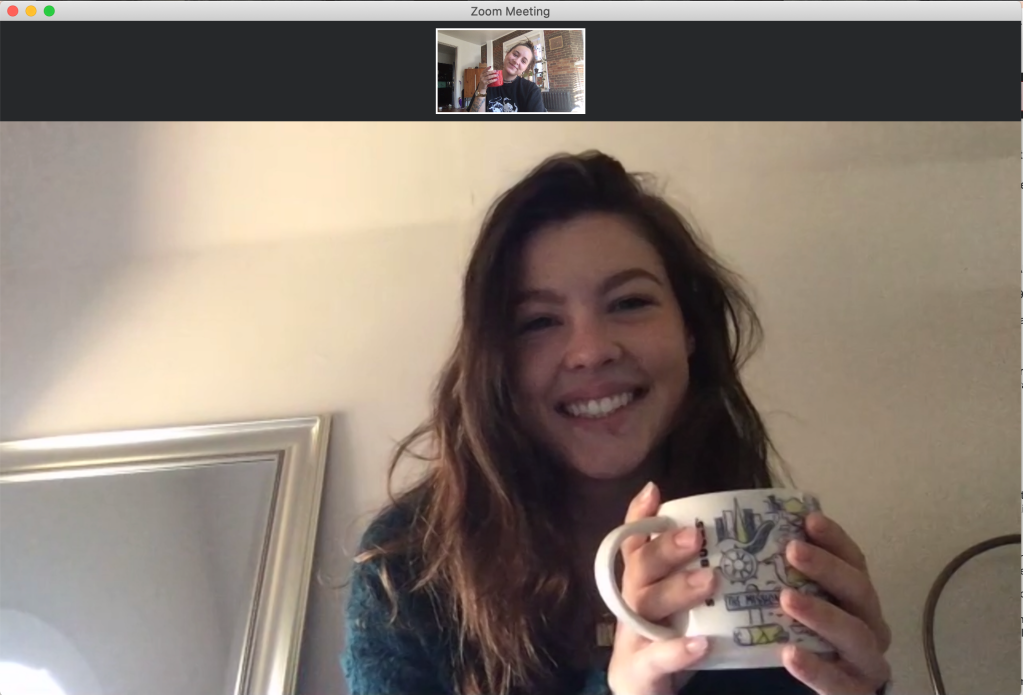
Gaeble Jones sitting in her new studio in Salt Lake City where she creates homemade rugs. Screenshot by MIABELLA BRICKEY

Gaeble Jones said her 20s are looking differently than she planned. During a Zoom interview she sighed and said, “I was expecting to graduate with money in the bank. I was expecting to have the college experience that my dad talked about and going out with friends and partying.”

Being immunocompromised has left Jones with less than her ideal college experience. Still, she’s adamant that she continues trying to live her life to the fullest potential. “I don’t want it to take any more of a toll on my mental health than it already has,” Jones said.

Friends of all three of these individuals are throwing parties, despite the already established dangers with such an activity. “Every single weekend, every single Friday, I’m here in my apartment, and they’re out there,” Jones said.

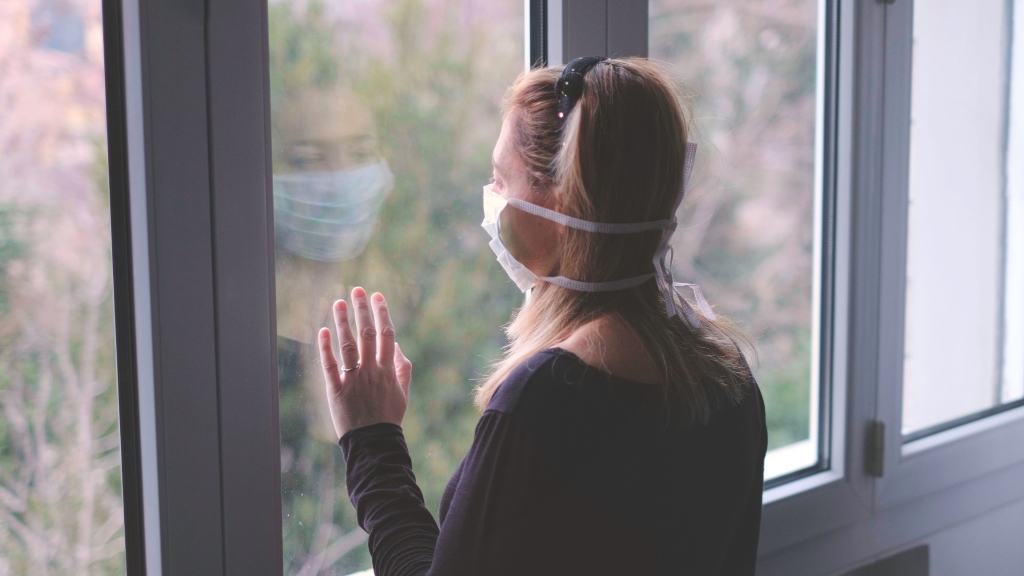
A masked young woman gazes outside from the safety of her home.

As the world tries to return to some sense of normalcy, the pursuit of one’s career is back in action for most people.

However, for any immunocompromised young adult today, their dreams and actions towards securing future opportunities are still being put on pause. Their health-safety must take priority.

“Every future change for me will be influenced by COVID. I feel so grateful that my job is all online, but that could change at any time,” Schwartz said.

The rest of the world doesn’t seem to be keen on supporting its immunocompromised population. “It just feels like everyone’s against you,” Dubois said. “It feels like nobody understands, and nobody is willing to help or make any accommodations for you.”

Schwartz described one particularly frustrating experience. “It took three months and three doctors notes showing proof of my blood tests so I could get my in-person class moved online.”

According to the Centers for Disease Control and Prevention, since the pandemic began young adults have reported having experienced “disproportionately worse mental health outcomes, increased substance use, and elevated suicidal ideation.”

Research on reported mental health rates for immunocompromised individuals is limited. According to Schwartz, Jones, and Dubois, the ability to manage their mental health becomes more challenging with each passing day. This continual theme of poor mental health contributes to a growing concern for immunocompromised young adults nationwide.

“I think it’s just a lot more real, a lot scarier, and impacts my life more than others because I have more to lose and more to worry about,” Jones said.

Schwartz added, “I think my anxiety and paranoia have gotten worse because I have to be more cautious, and I have to be more aware of everything going on around me more than I already was before.”

All three of these individuals said they felt as if they’ve been assigned the role of mom in their friend group. They are always the safe ones in social situations. “I feel like it gets annoying, and it feels annoying to ask because it once again makes me feel like I’m the bad guy,” Dubois said.

The CDC counts persons with weak immune systems as “those with HIV/AIDS; cancer and transplant patients who are taking certain immunosuppressive drugs; and those with inherited diseases that affect the immune system.”

A total number of 39,718 transplants were performed in 2019. An estimated 1.8 billion Americans will be diagnosed with cancer in 2020, and approximately 1.2 million people in the United States live with HIV/AIDS today. To put this in perspective, nearly a quarter of the world’s population lives with the daily fears and struggles that come with being an immunocompromised person.

As Schwartz bluntly put it, “Everyone knows somebody who’s immunocompromised, you may not know it, but every single time you go out, you’re probably interacting with someone who’s immunocompromised.”

They added, “Just because you don’t have to experience feeling afraid every time you go outside doesn’t mean you can’t have compassion and be consciously aware of everything that immunocompromised people are going through right now.”

A volunteer holds a swab at a local COVID-19 testing drive-through.

Makayla Harris

MY STORY:

COVID-19 and its mental effects

MY BLOG:

The most interesting stories to me are the ones where I learn about people. I noticed in my freshman year of college that I had a fascination with hearing personal stories and insider perspectives. I enjoy them because it gives me an opportunity to learn and become more aware of what is around me. This is why I decided to write a story about the perspective and experience others are facing mentally in COVID-19. I chose the mental component because usually, emotions are the hardest perspective to share because it takes a level of vulnerability, and therefore is less common, but questionably the most important topic for individuals. 

I decided to find individuals who I knew felt comfortable enough sharing personal information and in addition, were going to be completely honest in the interviewing process. I also wanted a source who had some credibility to give the readers a different perspective on the effects of COVID-19, which is why I chose a therapist in addition to a student in her 20s and a business owner in his 50s. I wanted to make this article relatable to better allow the reader to absorb and engage with the information. I figured that two ages and two different types of genders would allow for more people to relate as well as be provided the best outcome a source could give for this story. 

There were a couple of interesting obstacles in the process of making this story. I found it difficult to keep the topic in focus. There was so much information that was valuable and I would have loved to include, but it, unfortunately, steered too far away from the topic at hand. I also found it difficult to be fully engaged and remember what I wanted to ask next; perhaps a better memory could improve that obstacle. As far as currently being in a pandemic, I didn’t have an issue talking and reaching out to my sources. 

As I had mentioned previously, one of the things I struggled most with was handling the information that I had received. The best way I was able to choose what to put into the story was keeping what I wanted the audience to take out of it in mind. If the information gave a different lesson or perspective than what the nut graph described then I refrained from including it. As for what the nut graph consisted of, I asked myself what I would want to gain out of this article and what would benefit me; from there I was able to decide what the nut graph consisted of and what the focus of the story would be. 

After gathering all the information, I quickly found that I needed a more organized format to be able to write about what I had learned. I also discovered that if I could make a whole story out of quotes I would and that I needed to find a way to insert my creativity into the story to prevent myself from using too many quotes. Most importantly, however, I learned that I have a love for creative leads and that I want to work on those skills more. 

If I had more time, and endless words to write this story with, I would have included Gideon Harris’ information about COVID-19 in the future and personal development. I would have also included Mark Raleigh’s more vulnerable words of his life growing up with depression. Despite the desire to to include more information, I was pleasantly surprised at how comfortable my sources were at opening up. I knew they would be reliable but I was extremely impressed with the vulnerability and openness they presented while sharing. I am shocked every day by the amazing people that I am surrounded by and all that they are capable of, and this story validates the strength individuals have when times are less than ideal.  

ABOUT ME:

Makayla Harris is a University of Utah student who is studying to be a broadcast journalist. Previously Makayla has worked as a teacher assistant for business classes and has also partaken in helping develop start-up companies. She has skills working with Excel, Adobe Premier, and WordPress but considers her best skills to be time management, organization, and getting personal stories from individuals. 

Some of Makayla’s favorite things to do is talk with new people, hike, and read. Before Makayla knew she wanted to be a writer and broadcast journalist she once submitted a piece of creative writing into a contest for extra credit and was later announced the winner in an assembly. She says it was “an embarrassing but pleasant surprise.”

Makayla’s dream is to host her own show that consists of conversations with individuals who shed light on particular areas in their life that they believe will benefit others going through a similar situation. She hopes to accomplish this by allowing the guest to share experiences and tools learned in their most natural, authentic state of being.

COVID-19 and its mental effects

Story by MAKAYLA HARRIS 

Within a matter of weeks in March 2020, schools closed, businesses shut down, flights were banned, and hospitals were working around the clock to treat thousands of patients infected with what would soon turn into a 21st-century pandemic leading virus. Regulations have ensured that everyone young, old, healthy, or ill has ample opportunity to maintain and improve their physical health.

It is clear that when it comes to physical health, nations are doing the best they can to maintain healthy individuals. But how have regulations, quarantine, and new social norms affected individuals mentally?

Three individuals discuss their experiences this year with COVID-19. Gideon Harris, a therapist and counselor in San Antonio, Texas, said, “One of the biggest things that I am seeing is the recognition of codependence on people and unhealthy coping skills.” 

Gideon Harris is a father of four boys and is aspiring to open his own therapeutic practice. Photo courtesy of Harris.

People are now realizing that they base much of their happiness, success, and value on their peers and colleagues, Harris said in a Zoom interview. When someone is used to being complimented, recognized, and praised through social and workplace interaction, there is little reason for people to discover their own self-worth. 

Harris said the best way to begin to start finding self-fulfillment and happiness within yourself — that isn’t dependent on others — is to increase self-awareness and identify the areas that are causing you pain and why they are causing pain.

Harris reflected for a moment on the strategies he uses to help his clients discover their self-worth. A key tool is the cognitive-behavioral triangle, which illustrates a way to change thoughts (cognition) and actions (behaviors) in order to control how we feel.

“Measure your thoughts, feelings, and behaviors throughout the day,” Harris said. Next, he prompts clients to see how they can schedule their day to have more positive outcomes in their CBT triangle.

He also recommends displaying quotations around the house or in the car to help improve areas in the CBT triangle with the goal of enhancing an individual’s overall view of self-worth and fulfillment. 

Sierra Freeman, a University of Utah student, said she has struggled with feelings of fulfillment and self-worth since the outbreak.

Sierra Freeman is a junior at the University of Utah who is majoring is sociology and criminology. Photo courtesy of Freeman.

“In my case, staying at home with not a lot to do leaves me overthinking about the things I don’t like about myself — especially with the mirrors around the house, it’s easy to fixate on the parts of myself that I don’t like,” Freeman said, fidgeting with her pencil. “I also find myself having a lot more social anxiety and not being able to openly meet new people, and that really affects my self-worth.”  

However, she finds a lot of comfort in her roommates.  

Freeman took a deep breath to speak, but stopped short before answering. “I think for me, the way I deal with that is having roommates because they give me a form of companionship. I can talk to them about if I’m sad and they validate my feelings and talk through them with me. I feel a sense of community and that I’m not alone,” Freeman said in a Zoom interview.

Despite the hardships of the pandemic, she said she has experienced tremendous growth in multiple aspects of her life. 

“COVID has forced me to have alone time and be comfortable with it. It has forced me to think about who I am and what I want to be. And I know if it wasn’t for COVID I would have never given myself this alone time,” Freeman said.

Mark Raleigh is a father who spent a lot of time hiking during the summer of 2020 to remain physically active. Photo courtesy of Raleigh.

Mark Raleigh also has discovered new opportunities for growth in the pandemic.

Raleigh, a business owner in Salt Lake City, said he has hiked and climbed more this summer than during any other year in his life as he tries to find activities to do while social distancing. For example, he summited Mount Olympus, a 9,000-foot-tall peak on the east side of the Salt Lake Valley.

Being physically active and walking, working out and hiking has helped Raleigh, 58, successfully cope with the current situation. 

He said he has struggled with depression since his early 20s. “I try not to sit around,” Raleigh said in a phone interview, adding that his mom used to say that idleness “is the devil’s playground, and that is so true.”

For Raleigh, the best way of getting through hardships like COVID-19 is to “believe in yourself against all adversity and let the power of your spirit overcome mortality.” 

Rebecca Hale

MY STORY:

The new coronavirus shaves years off school communication growth

MY BLOG:

I developed my story from the new communication options that both of my sons’ schools have taken part in due to the coronavirus pandemic. As the story developed, the perspective broadened into a comparison of past and present communication. When I realized that I was not receiving information from one school, but overwhelming information from another, it had me questioning why. In this day and age, it is important to have parents informed and there are ways to make sure they receive updates through one or multiple channels of their choosing. 

My sources were located through close friends of mine. 

Richard Miller, chief executive officer of Carrier SI Inc., has been such an asset to the story as he is currently making the communication market increasingly more valuable every day. From my interview with Miller, I could sense that he isn’t quitting any time soon, and has what’s best for the clients at heart. Sharing his knowledge of what communication was, what it is now, and where it is going has me excited for schools across our nation. 

As the story developed, I became aware it would need to shift to be told effectively. Once I shifted, it became more clear what the focus would be, which made any further obstacle easier to approach and deal with. 

Larry and Florence Weir have advanced degrees and years of teaching experience. Through the interview process, I was wishful that I’d had them as teachers myself. They were vital to my enterprise story to help contrast the way communication with the way it is today.

COVID-19 didn’t pose any major problems with my story. With Miller, I met with him through a Zoom meeting, which I think for his busy schedule was probably much easier than trying to meet in person. Larry and Florence were gracious and willing to have me to their home, masked, and socially distant to go through the interview. 

Making sense of all the information gathered took longer than anticipated. It helped that I was allowed by all interviewees to record our interviews, which I did through Otter. This was an amazing option because I was able to search words, listen to the interviews again, find the focus, and supporting information. 

The writing process was a little harder than anticipated. It didn’t line up with what I originally had planned writing about. The craft of writing for me is a process of write, review, read out loud, re-write, and repeat. I enjoy writing this way because I am able to get feedback (whether I agree or disagree) and get an outside perspective on what I’m writing. 

I was surprised by how the story changed in certain areas but also how the story ultimately turned out. Also, I was surprised by the willingness of my sources to answer questions and be recorded. They are the necessary glue throughout the story. 

ABOUT ME:

Rebecca Hale has lived in Utah her whole life. While working in the dental field, she realized that she had a dream outside of dentistry, and started on her educational path. Being married with two kids, Rebecca has chosen to only do school part-time until this semester, but she has gleaned perspectives and experiences that she couldn’t have had if she had taken a different route.  

Dabbling a little in artistic venues, Rebecca became a hobbyist photographer. Eventually, for her own fulfillment, she would enjoy combining her love for traveling, photography, and amazing food into one collaboration as gratification for her soul. Rebecca is currently finishing up her senior year at the University of Utah where she is expected to graduate in the Spring of 2021. Having started so long ago on her educational journey, she is eager to be finishing this chapter of her life and is ready to start the next chapter.

The Red Door: Salt Lake City’s sleekest bar

Story and photos by MORGAN PARENT

Glasses clink together and again as they’re set on glass table tops throughout the room. The music is at the perfect volume for listening without having to shout to hold a conversation. You feel relaxed here.

This is the Red Door that faithful patrons have come to know and love.

IMG_6927Opened in October 2002, “the Red Door became the second non-smoking club in Salt Lake at a time when bars were private clubs which allowed smoking,” said Louise Hannig, the owner. “My vision was a comfortable warehouse vibe with a unique martini menu and liquor selection.”

Hannig’s vision continues to live on after 17 years. The Salt Lake City bar, located at 57 W. 200 South, specializes in craft martinis, cocktails, and ambiance. The red painted brick with subtle artwork, exposed lighting, and odd monkey in the corner give the spot an eccentric feeling, unlike any other in the city.

IMG_6926Getting the joint going was no small task. In the beginning, Hannig spent hours at the bar for eight months straight, working out the quirks and making sure it could run smoothly. Although preparing to open was occasionally challenging, the hard work and personality that went into the creation is evident.
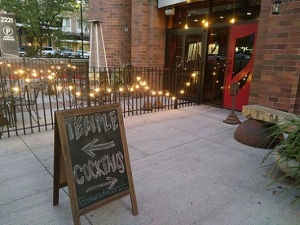
The lighting was custom-made, the tables were handmade by a local artist, and Hannig and her friends painted the brick walls.

Down to the bartender name tags, the Red Door is a full experience. Though some say the styling of the name tags was a bold choice, “it actually happened as a happy accident,” Hannig said. “We had just opened the bar, but I hadn’t planned any name tags yet. A friend who was helping me said she had her actual missionary name tag with her, so she wore it the night we opened. We took the idea from there and I used a favorite line from my favorite show as a kid, “MASH,” and tweaked the wording.”

IMG_6929
The name tags read “Sister” or “Brother” then the name of the bartender, followed by “Church of the Emotionally Tired and Morally Bankrupt.” This play on the influence of The Church of Jesus Christ of Latter-day Saints continues in the design of the A-Frame sidewalk board in front of the bar.

IMG_6919Martyn Duniho, a University of Utah graduate student, is a Red Door regular. He’s been patronizing the establishment for a few years and considers the Vesper Martini his go-to mix. “This is by far my favorite place to get a drink,” Duniho said. “The staff are excellent at what they do, and the crowd is rarely too rowdy. Weekend nights can get a little crazy, but weekday nights are just perfect.”IMG_6920

Lynnae Larsen-Jones, manager of the establishment, said those who know Red Door believe in its great drinks and mature atmosphere. Alternately, those who aren’t familiar with the bar tend to think it may be too fancy for them, there is a dress code, or it’s only for old people.

About this reputation, Duniho said he “fully agrees. The atmosphere can’t be beat, but before visiting the first time I assumed it would be a snooty kind of place.” Now he can’t imagine going anywhere else.

The people who frequent the Red Door are certainly a spread of personalities. Larsen-Jones said the people have been the most interesting part of working at the bar over the last 16 years. “Especially the couples who come in for a few drinks then start fighting with each other and want the bartender to weigh in on the argument, tell them which one is right, or play therapist. But that kind of situation isn’t super common,” she said.

“Most of the guests coming in are generally pretty alright — just weird in their own ways,” said Larsen-Jones. No matter the attitude of the customer, Larsen-Jones’ philosophy of bartending is to “be nice no matter what and don’t ruin your own night. Also, don’t worry about tips. You don’t know what’s going on for other people.”

As diverse as the individuals drinking here are, the types of cocktails are equally varied. Hannig has seen bar trends change time and again over her nearly 30 years of bartending.

IMG_6930Vodka martinis and drinks such as the Cosmopolitan and sour apple martini were very popular when the Red Door opened. Bourbon and other classic cocktails like the Old Fashioned were in vogue next, around five to seven years ago.

Gin has been the preferred drink base recently, although it was rarely ordered in a martini or craft cocktail 15 years ago. Tequila and mezcal, liquors which are typically shot, seem to be next up in the ever-evolving cocktail mix craze.

Witness to these changing trends, Larsen-Jones has adapted to each new style. No single drink tops her list of favorite drinks to make. Rather, making something up on the spot provides her the opportunity to have fun and use her knowledge of how flavors mix to create something in line with the customer’s desires.

“I don’t know how she does it, but every drink Lynnae makes is amazing,” Duniho said. “I can ask her to include a couple specific ingredients then she does her thing and hands me something delicious.”

At the end of the day, owning the bar throughout the years has been worth the effort to Hannig: “Pouring what you love to do in every drink makes a bar successful.”


Quincy Wansel

MY STORY:

MY BLOG:

My Enterprise story idea actually came as a surprise. I was not aware of the situation, and neither was anyone else — including my sources. I first went up to Miller Cafe in Lassonde Studios to interview former Chef Mark Jacson about how the menus are chosen there and he revealed the issue to me. Because I am a Black woman and advocate for Black issues, this topic sounded like a no-brainer to me. I also spoke with Chef Francine Kahindo.

Next, I thought to talk to the staff in the Dining Services. I ended up only briefly talking to Jamie Denker, the director of marketing and guest experience. I tried to talk to Mark Morrison, the director of Resident Dining, but he declined an interview and referred me back to Denker. I attempted to reach out to Andrew Fuchs, director of Union Food Operations, but he never got back to me.

From there, I decided to talk to the Black organizations on campus. I went to the Black Cultural Center and spoke with Meligha Garfield and Jatara Smith who then referred me to Cha McNeil, a social justice advocate at the Office of Equity and Diversity. They also advised that I seek out an advocate to help me with talking to the Dining Services on campus, preferably Tawanda Owens. I was able to meet with Owens, who worked with me on my story. 

eLkXG

I encountered so many issues. First, people failed to get back to me while I was on deadline. Second, Denker did not give me any useful information for my article. Last, the information that I acquired from Jacson that birthed my story was not entirely true. With the help of my sources and an extension from my professor, I was able to obtain the true information and change the outline of my story for the better. 

My focus was handed to me when Jacson told me about the issue. I knew right then and there that I had to write a story about why Soul food was not being served anymore at Miller Cafe. Bits and pieces of my story were missing until I talked to Cha McNeil who flipped the script. She gave me all the information I needed to write a story, which ended up being more about what Soul food is and cultural awareness for the chefs instead of a potential aggressor renouncing Black History Month and Soul food and getting away with it. 

The writing process of this story was difficult, seeing as though I ran into multiple obstacles during the stage of gathering information. I learned that it can sometimes feel like the world is trying to stop you from writing whatever story you are on. Things will come up, people will cancel on you, mislead you, and ignore your calls for help. Regardless of what happens, though, I learned that you must power through — or the show must go on, as people say. You have to find a way to complete your story, even if that means going off the original path to make it flow and make sense. 

There is no more information that did not make it in my story — that I know about. I wish I would have been able to contact Chef Jacson again after all of the information was presented to me. I would have liked to see what he thought of the whole thing, and to have him involved in the 2020 Black History Month celebration at the U. I wish I would have been able to meet and talk with the students who filed the original complaint on the chicken and waffles fiasco. I think it would have been very interesting to see the faces of the students and hear what they felt when they saw the food. 

It did and did not surprise me that Black students were the ones who complained about the food. With the timing of the blatant racism on campus, I was thinking that a racist student had complained instead. But, I was relieved to hear that it was Black students who posed the question of cultural awareness. There was no ill intent behind the truth of the story, and that was more satisfying to me than my original idea being completely true. 

I am proud of my story, even though it did not turn out how I expected it to at all. But, I am very excited to see the impact that my story makes for the U, and hopefully shine a light on other issues hiding in the dark.

ABOUT ME:

I am a full-time student currently at the University of Utah, and in spring 2020 will continue my academic career at Rutgers University-Camden until graduation. I am a poet, mentor, and future journalist. I aspire to use my platform to spread awareness for various issues regarding race, gender, and class, inspire people of all ages, and mentor the younger generations. Some of my hobbies include working with young poets, writing various forms of poetry, movie plots, and lyrics, cooking and creating new recipes, reading magazines and books, and analyzing films. 

Misrepresentation of Soul food at the University of Utah

Story and photos by QUINCY WANSEL

The University of Utah celebrated Black History Month in 2018 in a variety of ways. For example, the Office of Equity and Diversity hosted the Blackout, an event at the Peterson Heritage Center featuring hundreds of Black faces and a celebration of Black excellence. 

Others though, renounced Black History Month by hanging a White supremacist banner over the side of the George S. Eccles Legacy Bridge and posting hateful White supremacist posters around the campus. This is not the first time that racist posters have been found around the U, but campus police and students were quick to tear them down. 

IMG-4455

Lassonde Studios is one of the residence halls on the University of Utah campus.

Meanwhile, Miller Cafe, located inside the Lassonde Studios residence hall at the U, celebrated the month by serving an interpretation of Soul food: chicken and waffles. 

Chicken and waffles is not entirely Soul food, but more a product of different regional cuisines. 

Chicken and waffles is a product of Pennsylvania-Dutch cuisine and Soul food, according to renowned chef Tori Avey. Fried chicken was already popular in the US, but waffles were brought over by the Pilgrims during their time in Holland. The Pennsylvania-Dutch were the first documented people to experiment with chicken and waffles.

The question then becomes — what is Soul food?

According to a popular source in the culinary community, Soul food is a staple in the African American community, and has been for decades. Soul food can typically include fried or smothered chicken, fried catfish, collard greens, candied yams, okra, cornbread, and so on.

This proves that Soul food and chicken and waffles are not the same. 

The stereotype is wrong — not all Black people like fried chicken. But, fried chicken is an integral part of what Soul food is.

IMG-4457

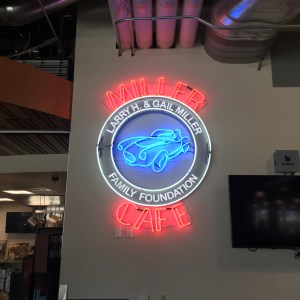
A neon sign advertises Miller Cafe inside Lassonde Studios.

Miller Cafe received an anonymous complaint about the dish. According to Mark Jacson, former chef at Miller Cafe, the people who complained said they were “offended” by the food. 

In 2018, Jacson said he was upset, and that if Mexican food and Italian food can be served, then why not historically Black food? Jacson felt that because of low Black enrollment and racist media at the U, this was another attempt from someone not in agreement with Black History Month. 

About a year elapsed without further discussion until a reporter investigated the situation. Cha McNeil, a social justice advocate at the U, said Black students living in Lassonde were the ones who filed the complaint. McNeil said the students believed Miller Cafe was “promoting a stereotype.”

By serving chicken and waffles as Soul food for Black History Month, the meal choice highlighted the stereotype that all Black people like fried chicken. After the complaint, housing at the U told Miller Cafe that “they had to take it down,” McNeil said. After the complaint, Soul food was not served at the cafe again. 

The sign above the food did not say “Soul food,” it said “chicken and waffles.” The cafe meant to advertise Soul food, but did it inaccurately. 

The students who complained then brought another issue to light — cultural awareness for chefs at the U.

By getting rid of Soul food, with the assumption that chicken and waffles is a part of that, Miller Cafe missed the opportunity to correct the misunderstanding and celebrate Black History Month.

Meligha Garfield, the director of the Black Cultural Center at the U, said diversity is a “cross-cultural collaboration including various entities to accomplish a goal.” But how can there be diversity if the goal was never accomplished? 

Jatara Smith, the Black Cultural Center’s coordinator, said the U is “outshined in the diversity sector. The university should compete and model after other institutions.”

Many colleges in this nation serve Soul food on campus regularly. For example, Howard University in Washington, D.C., has Soul Food Thursdays at its cafe, serving fried chicken, collard greens, cornbread, and more. University of Hawaii-Hilo has Soul Food for Thought Cafe, where Hawai’ian and Black cultural food share the plate.

However, in 2015, Wright State University in Ohio served Soul food for Black History Month through its dining service vendor, Chartwells — the same vendor at the University of Utah. The menu depicted photographs of historical Black figures, such as Dr. Martin Luther King Jr. and Sojourner Truth, in the background of the menu. Black students at Wright were offended because “the vendor and school had juxtaposed Black History Month with foods associated with offensive racial stereotypes,” said Alan Yuhas with The Guardian.

Fried chicken may be a staple in Soul food, but ever since the 1915 film “The Birth of a Nation,” fried chicken has been tied to the Black stereotype — along with watermelon. In an NPR interview, race and folklore professor Claire Schmidt, at the University of Missouri, said, “It’s a food you eat with your hands, and therefore it’s dirty. Table manners are a way of determining who is worthy of respect or not.” With “The Birth of a Nation” being arguably the most racist film ever made, this stereotype took off without hesitation. “[It’s] the way people eat it,” she said. 

There is no dedicated restaurant on campus that regularly offers Soul food options, but Tawanda Owens, the executive director of Diverse Student Advocacy at the U, has plans for that. Owens suggested bringing Black culturally-aware chefs to the U for Black History Month in 2020. She hopes there will be an appropriate celebration of Black excellence at the U in collaboration with the Black Cultural Center.

The recovery of Soul food at the U is underway, along with cultural awareness and the diminishment of a stereotype that has made Black History Month a challenge in the kitchen.


Bears Ears under threat of destruction after drastic reduction in size

Story and gallery by TANNER FAUST

After President Trump cut the size of Bears Ears National Monument by nearly 1 million acres, activists feared that was the beginning of the end for protected land in Utah. The monument’s size has been reduced from 1.35 million acres to 200,000 acres.

“This reduction in size poses a great threat to the native population and artifacts in the area. These are sacred lands and should not be tampered with,” said Ashley Soltysiak, the director of the Utah Chapter of the Sierra Club, in a phone interview.

The monument contains many ancient artifacts that the Native American population holds sacred. Moon House is one such artifact. It is a cliff dwelling that has been with the native population for nearly 1,000 years. The reduction to the monument put Moon House and other ancient artifacts at risk.

When President Obama expanded the land of Bears Ears in 2016, he did so with the ancient artifacts in mind. An official press release from the White House stated, “The area’s cultural importance to Native American tribes continues to this day. As they have for generations, these tribes and their members come here for ceremonies and to visit sacred sites.” 

Soltysiak said, “It feels as though this was an attempt by the Trump administration to undo as much of the former president’s work as possible.” The reduction favors economic interests over the interests of ancient artifacts and sites. 

The Utah Chapter of the Sierra Club also runs campaigns aimed at protecting these ancient artifacts. One, “keep public lands in public hands,” is directed toward stopping the increasing cuts to Utah’s public lands. The campaign runs on the basis of keeping our American history safe. 

The new bill, created by President Trump, signed also by Utah Congressman John Curtis, and Utah representatives Rob Bishop, Chris Stewart and Mia Love, would reduce the size of the monument by 85%. It would create a new monument at the same time out of the remaining land. 

The new monument, named Shash Jáa National Monument, would be created out of the remaining land in Bears Ears. The bill would open the land to three new opportunities. 

Mining, geothermic leasing, and the sale of Bears Ears would be allowed by the Utah legislature. The economic expansion of this land would allow for more industrial activities to be carried out in the national monument.

Mining sites across the world have all seen similar beginnings. Sites like Tanami mine, located in Tanami, Australia, were created on land that was once protected by the government. The Tanami mine has since led to numerous environmental problems, such as cave-ins that threaten the lives of the native population working at the mine.

Another similar event happened in the Four Corners National Park. The land was taken away from the National Park to create more power plants to supply the area with power. 

Like the Bears Ears National Monument, the Four Corners National Park was opened up to industrial activity. The Natural Resources Defense Council says this was in an attempt to solve the energy demands of the area. As the Four Corners area grew, its demands for energy became overwhelming.

This affected the native population of Navajo people. The largest effect was on local residents like Daniel Tso, a Navajo activist. Tso said, “The plants were giving off dangerous chemicals all the time. While we lived around it we were all breathing in those chemicals every day,” he said in a phone interview.

Native people all over the world have experienced a similar phenomenon. Government land grabs not only threaten the environment but the people living in the area as well. The Yanacocha mine in Lima, Peru, has an abundance of native protestors outside of its perimeter. They struggle to find the footing to overpower these industrial titans and take claim to their ancient land.

In many places around the world, industrial activities are the epicenter for conflict. Another example is the Tarkwa mine in Ghana, Africa. In 2018 the mine saw a hostile takeover as the native population violently fought to take the land back.

The controversy in Bears Ears has environmental groups worried. Like many places around the world, Bears Ears is under threat of losing important land and artifacts. The area means so much to native populations who have a rich history and priceless relics.


.


LGBTQ+U: The community at the University of Utah

Story and photos by ANDREW LURAS

Salt Lake City is known as being one of the most Mormon cities in America. And to counter the common knowledge of that, it’s also known as one of the “gayest” cities, which many people find hard to believe.

With it being known as this type of city, many different students from out of state are probably wondering how the University of Utah may reflect those values.

The conversation of the LGBTQ+ has always been around, but it’s become such a widespread debate through politicians, news, and just everyday conversation. This community is constantly fighting for its well-deserved rights in this country, as well as the freedom to walk around safely without the lingering fear of running into the many hateful people who reside within America. 

LGBTQ+ students are seeking out which colleges and universities to attend based on many differing factors such as how accepting toward them will their future campus be. With the U, at new student orientation, the staff will kindly ask you to state your name, without it even having to be your birth name, and your pronouns, such as he/him, she/her, they/them, etc.

The LGBT Resource Center is located on the fourth floor in room 409 inside the U’s A. Ray Olpin Union building. The center was founded in 2002 by Stayner Landward and Kay Harward, both retired and moved on. This was during a time when the Mormon church was “anti-gay” with many of its teachings and practices showing some distaste toward gay marriage, according to Whit Hollis, the director of the Student Union. It started out as just an LGBT student organization with weekly meetings garnering a range of 80 to 250 students. 

Hollis attended a few of these meetings. “There was a clear need for services for that group of students, faculty, and staff of course due to the sheer size of the student organization,” Hollis said. When creating the resource center, Landward and Harward found support from the student body and administration at the U but it wasn’t always like that. 

Proposition 8, also known as Prop 8, came about during 2008. It was a ballot proposition against same-sex marriage. During this time the LGBTQ+ found themselves being targeted for hate-speech and microaggressions. “They would tell us, ‘Why do you need more rights, you already have equal rights,’ which was bullshit,” Hollis said. 

“Things have definitely been better recently. There’s still these microaggressions going around but the U has improved since the resource center first started,” Hollis said. He commented on the many different locations the resource center has occupied as it’s grown. “There was a point where I had to convert a storage closet to be the center’s main room which was ironic for the gay director to put all the gays in the closet,” Hollis said as he laughed at the idea. 

“Right now it seems to be quite successful, but we all can strive to do better, no matter where we are,” Hollis said. “The U isn’t as safe as it needs to be and that we must always strive to make the U a safe campus for all students, faculty, and staff who attend or work here.”

As of February 2019, the resource center’s director is Clare Lemke, the former assistant director of the Center for LGBTQIA+ Student Success at Iowa State University. “I was looking for my next step and Utah wasn’t on my radar,” she said. “I’ve been looking for different opportunities in the West and this job came up.” Lemke had been moving in order to try to find something closer to her partner’s career. When this job opportunity appeared, she became surprised by the vibrancy of diversity in the U’s campus with the many queer and transgender people she has been able to meet on campus. 

Originally, she thought she was studying to become a professor but over time she found that working in a resource center felt more “collaborative” than being a traditional educator. Currently at the resource center there are three full time staff members and two student staff members. “All of our staff here bring a wealth of different backgrounds and personalities. It’s refreshing to see for the students who visit the center,” Lemke said. 

When it comes to the changes the U has gone through in terms of LGBTQ+ acceptance, Lemke feels as if the U “isn’t just a place you go to and leave at 5 p.m. anymore.”

Lemke finds that the U is very different from her previous institution. “I don’t think I’ve been anywhere with so much of its influence being made by the different cultures within the U.” She added, “We’re constantly striving to make the U a safe space for queer and trans students, we just want to make sure we don’t let these negative experiences an LGBTQ+ student might have affect the rest of their life here.”

One student in particular, who asked to be identified as “G,” said she had some pretty odd experiences at the U as an LGBTQ+ member. “I’m a business major and a lot of the students in those buildings in particular are pretty discriminatory towards my sexuality.”

G also said her Mormon peers have invited her to church. “They would be overly friendly at first,” she said, but she felt like they were only inviting her to change her sexual orientation.

G doesn’t know how accepting the rest of campus is, but that experience left her with much anxiety. She found it harder to reach out to many of her peers or professors about this issue but she found solace in the many other friends outside of school who were LGBTQ+ accepting. G used to go to Westminster College and she felt the transition from there to the U was “an odd experience.” G said there is room for improvement at the U and we should be looking for ways to help students have an overall great campus life.

“I’ve been to the resource center a few times,” G said. “Clare [Lemke] and the staff at the center are very helpful, though I had trouble finding it at first. If you are a part of the LGBTQ+ you should definitely check out the resource center, they’re a really great group of people, especially if you had an experience on campus like mine.”  Even with G’s experience at the U, she has decided to stay and not let it affect her pursuit of a business degree. This is just one in the many cases of what it’s like to be a student at the U who is a part of the LGBTQ+. 

As much as Salt Lake City has this good image on being an open and welcoming city to the LGBTQ+, students, faculty, and staff at the U are always working on improving upon the areas they may be lacking in. Whit Hollis believes we need to focus more on the safety of our LGBTQ+ members. And Lemke knows we must prioritize these students because the negative experiences they might have on campus may affect their education here. As Hollis, Lemke, and G have agreed on, the U should always be striving to do better in order to figure out the best way to serve its students so they can have an educational, safe, and happy experience here on campus. 


This slideshow requires JavaScript.

The startup of Simply Açaí at the University of Utah

Story and gallery by GRIFFIN BONJEAN

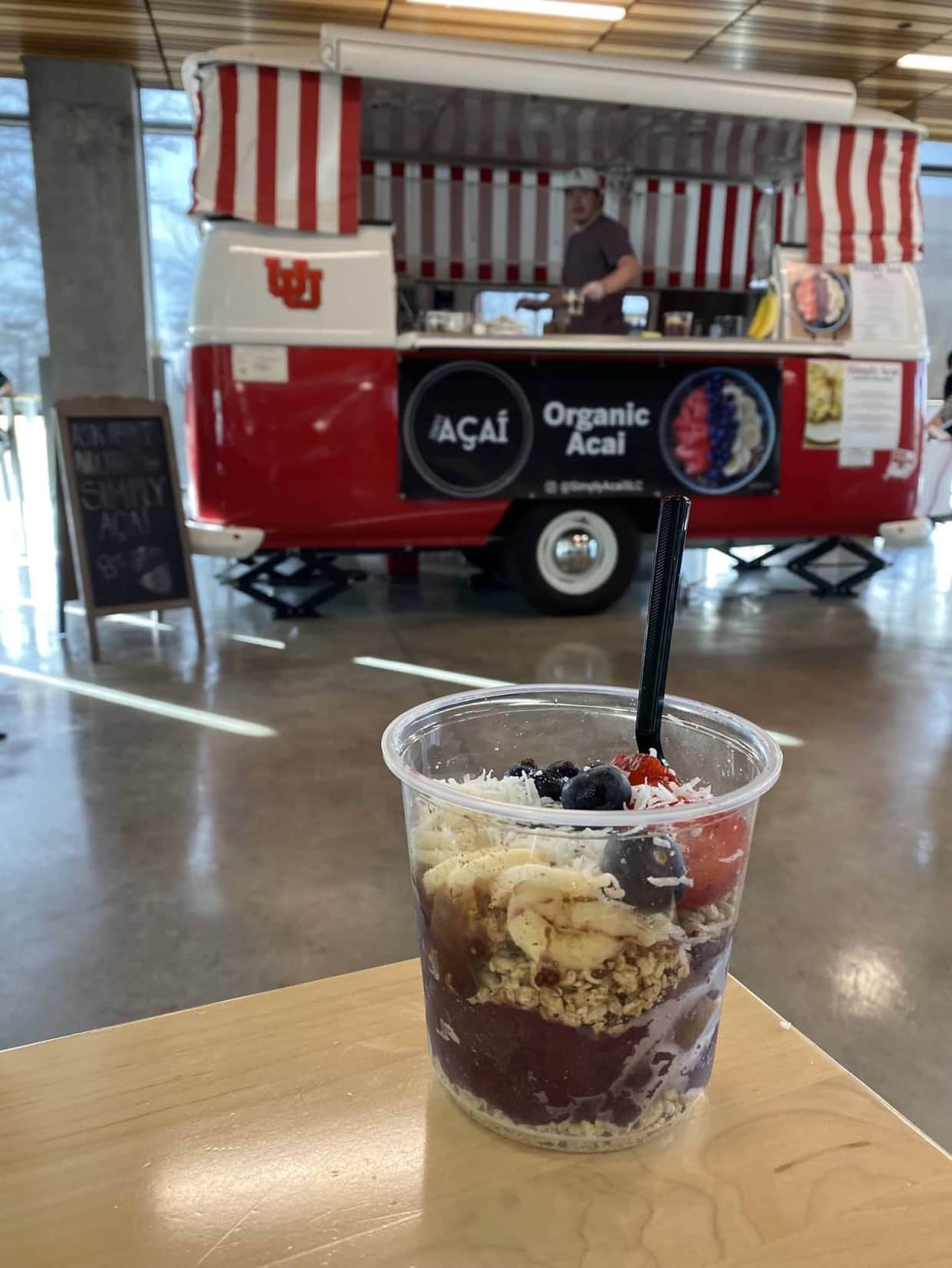
University of Utah student Seth Neelman, 23, has opened his first location for his company Simply Açaí in the Lassonde Studios building on campus. 

As a member of the Church of Jesus Christ of Latter-day Saints, he spent two years on a religious mission in Brasilia, Brazil, to help the community. 

While in Brazil, he met the friends who introduced him to açaí berries. “It was like the most amazing thing ever,” Neelman said, “and from then on out I was eating açaí like two to three times a week.” 

IMG_0828-compressed

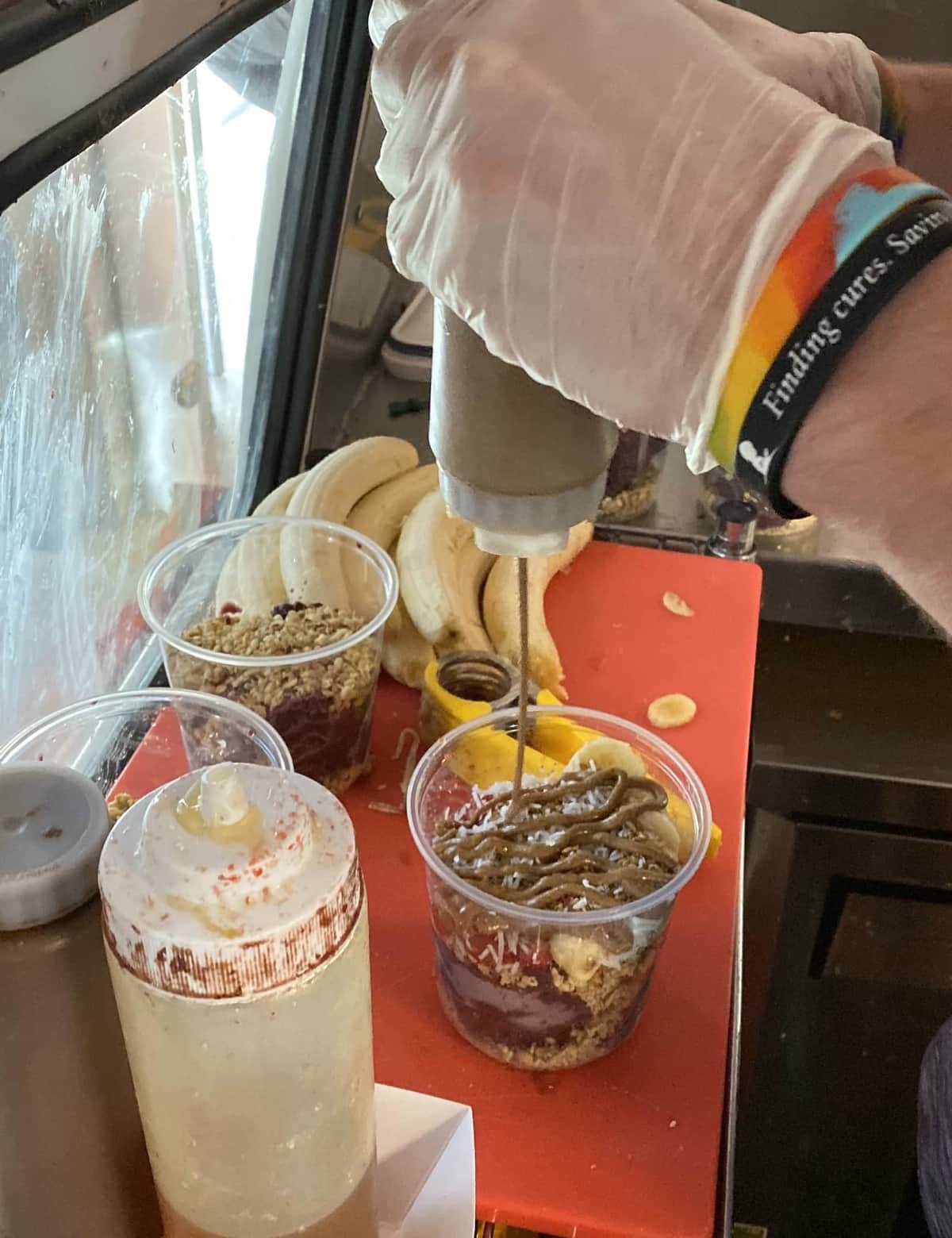
Freshly made Simply Açaí Power Bowl.

After finding his love for açaí, he later joined a summer 2019 internship with Makai Fruits. It is a company that ships hand-picked açaí berries from the Amazon Forest to customers in the US. Through the internship, Neelman got to travel to Belem, Brazil, to check the açaí harvest and factory.

Neelman also met and helped support locals in Brazil by purchasing bracelets made from the açaí berry shells. He handed them out for free after opening in Lassonde on Aug. 19, 2019. 

Neelman believes that this internship taught him information that was used to help the start of Simply Açaí. He also credits Lassonde for giving him his entrepreneurial spirit because he lived there as a freshman student. 

Being a student at the U helped him gain the ability to connect with the Lassonde Entrepreneur Institute and its food partner Chartwells Catering. Neelman wanted to stay on campus with Simply Açaí and felt that the food trailer in the Lassonde lobby would be a good place to start. 

In order to open, he had to hire employees. Neelman said, “First I started with a manager because I wanted someone that was familiar with the restaurant industry.” He wanted someone who would lead by example and enforce the rules involving cleanliness and health codes. Neelman interviewed the job candidates. He said many of the employees whom he found were references from other employees. Not only did he want to find good employees, but he wanted to create an experience where his employees could have fun and enjoy the work.

Employee Reid Lanigan feels that Neelman has succeeded in doing so. “I’ve loved it so far,” Lanigan said. “I have class after it on some days and class before it on some days so it works out well with my schedule.” 

Lanigan only works an average of three shifts a week with each of his shifts only lasting about three hours. He works Monday mornings, and Tuesday and Thursday lunch shifts. His duties are to follow the health codes as he makes food that customers order from the menu and to serve it to them. He said the company encourages employees to “try to get the food out as fast as possible and try to make sure that the food is correct.”

The menu displayed on the red and white Lassonde trailer gives students a variety of different açaí bowl options. Each item on the menu contains the pureed frozen açaí palm fruit berries. Customers are also able to choose additional toppings like dark chocolate chips, goji berries, almond butter, Nutella, and many more. 

FullSizeRender-compressed 2

Employee Reid Lanigan adding the final ingredient into a customer’s açaí bowl.

An avocado toast menu is now a new addition to the menu items that are offered to add to the different flavors. Avocado toast is an example of how businesses have to make adjustments to change. Employee Grayson Goodyear has had to deal with business changes for the company. He said, “We’ve actually started to run out a lot mid week and I’ve had to do two grocery store runs for Seth [Neelman].” The employees of Simply Açaí are adjusting as the business makes its way through its early stages.

These changes contribute to the success of the startup of Simply Açaí, and the employees face these changes to help with company success. Goodyear believes that the bosses did well with hiring their employees. He thinks this is important. “Seth has done a really good job hiring just like friendly people and people that seem inviting to the customers, and I think that creates a lot of attention,” he said. 

Goodyear believes that this attention to the relationships that are built between the friendly employees and customers contribute greatly to the success of the business. 

When it comes to the success of the business, customers returning is one of the ways to measure Simply Açaí’s success. “It started off a little slow, but after the first couple of weeks it picked up,” employee Reid Lanigan said about his first few shifts after opening. “The longer it’s been open, the more word has definitely spread.” He believes that the company continues to grow as it gets further and further away from its opening day.

As a student entrepreneur, Neelman feels that he is able to gain knowledge in the classroom that he can apply to his business. In a follow-up FaceTime interview he said, “It is kind of cool now that I’m in a lot of my management and leadership classes, like that make sense or that would work in my situation.” Neelman has started his journey toward success as a college student entrepreneur.

This slideshow requires JavaScript.


Randall Whitmore

MY STORY:

MY BLOG:

I developed my story idea because I was in a moderately severe electric scooter accident in the past. The injuries I sustained were due to the newly modified electric brakes which improperly engaged, causing the scooter to suddenly stop. The front wheel of the scooter locked up and sent me flying face first over the handlebars. A couple months later my roommate, Elan Maj, also fell on a scooter and that’s when I became very skeptical of the electric scooters and their safety.

I started to notice the lack of maintenance to the electric scooters as many of them around the city and campus have flat tires or missing components. I have also seen a number of students fall off the scooters on campus grounds and I figured this may be a larger issue. 

Locating my sources was fairly easy. I reached out on Instagram and received a lot of input from friends and family who have either crashed an electric scooter or knew someone who has. After talking to both nurses and injured riders, I decided to reach out to the University of Utah Department of Public Safety to see if this was a large issue on campus.

I went to the Public Safety office and spoke with the woman at the front desk to put me in touch with Officer Ryan Speers. The employees at Public Safety were extremely helpful and gave me a lot of great information. This was probably my best resource in regards to information pertaining to scooter accidents on campus because it included actual figures and evidence.

Initially I thought the story would consist of sources and information providing only negative feedback around electric scooters. With that said, Public Safety provided a lot of positive feedback around the scooters. This really helped my enterprise story by giving me opposing viewpoints which helped me to remain more objective. 

I encountered a couple obstacles while trying to locate my sources. It was very difficult to get in touch with Speers due to his busy schedule. I also learned a very valuable lesson regarding note taking after receiving great information from another source within Public Safety. Since I did not think I was conducting an interview, I did not collect her information nor did I record any of the information that she provided. This would have been an issue if I was unable to conduct an interview with Speers. 

The hardest part of the writing process for this piece was deciding how to organize the sections and interviews in my story. I wanted the story to be structured properly in order to keep a linear direction so it was easier to follow. Remaining objective and keeping my experiences and viewpoints out of the story was also difficult.

I was most surprised with the amount of advocates for electric scooters both on and off campus. I was shocked there have not been any reported scooter accidents on campus since they were activated in 2018. The interview took a very interesting turn due to the fact that most of my questions were positioned as if the scooters were an issue on campus. I had to think quickly to come up with new questions to take advantage of the interview with the Speers.

ABOUT ME:

Busy is my standard!

I moved to Salt Lake City in 2017 with a car full of clothes and a couple hundred dollars. I was unemployed for five months as snowboarding was my only priority. The fun halted when $97 was all that remained in my bank account. I was poor and I did not have a job nor did I have any connections outside of my fellow ski bums. My back was against the wall and I was forced to make drastic changes in order to survive.

I began working odd jobs until I found a sales position at a local tech startup company, PillPack Pharmacy. After months of excelling in a sales position, I progressed to become the corporate sales trainer. As the first sales trainer, I created and optimized the sales training program to help the company grow to 300 times larger in just over a year. 

After taking three years off of school, I realized how much I needed to finish my college degree. PillPack Pharmacy eventually sold to Amazon and I decided it was the perfect time to finish my collegiate career. I began attending classes at the University of Utah in the fall of 2018 and will be graduating in the fall of 2020.

I am a third-generation business owner and I truly enjoy the art of arbitrage. I have been buying and selling antiques, clothes, and cars for most of my adult life in order to pay for the unbearable cost of tuition.

Being an entrepreneur and a college student is extremely tough because school often keeps me from embarking on my dreams as a creator and business owner. All of my extracurricular profits help to pay for school and my living expenses; however, I find it hard to strive when the confines of the educational system keep me tethered financially.

As a 25-year-old senior I see the value in education but not at the cost of financial freedom. My eldest sister graduated from college in the fall of 2008 with nearly $60,000 in student loans. I witnessed her as she embarked on her professional journey during the midst of the recession. Debt became such a burden and I promised myself I would not make the same mistake. My plan is to finish school without accruing debt along the way.

As a communication student and journalist, I want to help other students to be their own part-time boss in order to create their own financial freedom. With my experiences, I truly feel like I can help students by making sound financial decisions and embracing the part-time hustle. I also want to help students to understand money as they enter the adult stages of their lives. I am fascinated by the global and local economy and I would love to report to students how they can leverage their money to make multiple sources of income. I would also like to share the importance of credit, loans, savings, and other financial nuances. I want to fix the way students look at money by providing entertaining and educational messages that are useful for a broad audience.

The Brighton Resort gears up for the 2019-20 ski season

Story and photos by ISA ALCARAZ

The snow falls lightly on the massive mountains that hug the Salt Lake Valley. It’s November, but the snow already finds a place on the hills, its home for the next five months. The arrival of snow this early often creates pandemonium among many locals. They scramble to crank their thermostats and shelter in, wrap themselves in blankets and simply watch from their windows.

But for some, winter’s arrival is a “call of the wild,” and the snow is a sign of the most wonderful time the year: ski season.

Skiing, snowboarding, and other snow activities act as a fundamental pillar for the tourism industry in Utah. Utah is home of the “Greatest Snow on Earth” after all. But IMG_2975what does it actually take to be a ski resort in Utah, a place with a prominent ski culture for locals and tourists?

The Brighton Ski Resort knows exactly how to get the job done.

The Brighton Resort, just 20 minutes up Big Cottonwood Canyon, features over 1,050 acres of skiable land and gets 500 inches of snowfall annually. That being said, there’s a lot of groundwork that goes into being one of the biggest ski resorts in Utah.

The Technical Side

“There are so many departments, you have your tickets department, your maintenance department, you have your lifts departments, your ski schools, and food and beverage,” said Jared Winkler, Brighton’s director of marketing, about what the pre-season looks like for the resort.

“Everyone kind of has their own set list of things to do to prepare for another season or the following season,” he said. And some departments, like ticketing and marketing, are already planning for next season. “We’re working on 2020-21 already, if you can believe that,” Winkler said.

However, some departments need less time to get ready. For example, the food and beverage and ski school departments begin only a month before it starts getting cold. Other aspects of the resort, like the ski lifts and equipment, require year-round maintenance, and are inspected all summer long.

Winkler said the biggest task for the Brighton Resort is hiring a new seasonal staff each year.

Luckily, Brighton keeps a staff of about 30 people who hold down the fort all year long. They take care of all the busy work so when that first snow hits, they’re ready to open.

“We can usually open off of a forecast,” Winkler said. “We usually will open just with a week or two’s notice, even to all of our staff.”

Due to the system and flexibility it’s developed, Brighton is traditionally the first Utah ski resort to open each year.

Utah Skis

Utah has created a prominent “ski culture,” especially for locals. They grow up skiing, and many choose to help instill the love of it in younger generations by becoming instructors.

Jayde Shepherd, a junior at the University of Utah, was a ski instructor at Snowbird for three years after finding a passion for it.

“Teaching kids how to ski was so much fun because I learned more with every class that I taught,” she said. “But also because the kids were so sweet, and I got to know most of them so personally. They trusted me and looked up to me.”

Shepherd was just 3 years old when she was first put on the slopes. After learning how to ski, she stopped going because she didn’t have anyone to go with. But many years later, she found herself up there again after being re-taught by her boyfriend at the time.

“Once we got up there it was like I had found my people and one of my passions again,” she said. The mountains became a second home to Shepherd.

“I love everything about skiing. Once I started again, I knew that I would never be able to live somewhere without mountains,” she said. “Once I became a part of the ski culture, I found a source for my identity.”

Brighton’s Culture

The Brighton Resort is the place where a love for skiing originated for many locals. And it takes pride in its uniqueness compared to the 10+ other resorts in Utah.

“Brighton is historically known to be a place where people learn to ski and snowboard,” said Winkler, director of marketing.

Brighton is home to all degrees of skiers. From beginners who are learning for the first time on a bunny hill, like Explorer, to elite experts who shred down giant trails, like Great Western, all levels have a place on the mountain.
Brighton also takes pride in the many “genres” of snow activities that are welcomed at the resort. Not just skiers and snowboarders, but snow-bikers and snow-skaters are also included.

Gavin Skirucha, a local skier and freelance ski instructor, favors the Brighton Ski Resort over other resorts in Utah for one main reason — its terrain parks, where skiers can practice and perform tricks.

“Brighton’s cool in a way that it embraces a culture of riding that other resorts are starting to reject,” Skirucha said. “Brighton’s terrain parks embrace and promote advancement in your skills as a skier, they even offer junior slope style courses for the very early skiers.”

Like Skirucha, many other skiers in Utah are looking for that extra value for the money they pay to spend the whole winter riding.

“The lift tickets are some of the cheapest in the state,” Winkler said. Brighton Resort lift tickets range from $28 to $65, while Solitude Mountain Resort charges from $72 to $105. Also, parking at Brighton is free.

These are important aspects to keeping local skiers skiing, and keeping the diversity of the riders alive at Brighton.

The Brighton Resort’s contribution to Utah’s ski culture is immense, and allows people to find the adventure and community they seek when it’s cold out.

“It’s hard to fit in in a place so dominated by religion,” said U student Shepherd. “But on the mountain, everyone is placed in a position of excitement, adrenaline, and even fear. I feel like that unifies us and makes everyone so kind to each other. It’s like we all found a common ground just for a moment.”

Get Involved

As the Brighton Resort indulges in the excitement for the big opening, it also keeps in mind the importance of helping those less fortunate during this time of the year.

On the first three Wednesdays in December, Brighton puts on charitable donation drives: a toy drive, a clothing drive, and a food drive. In exchange for donations, they offer $25 lift tickets.

The first donation drive will take place on Dec. 4, 2019.

For updates on Brighton’s charitable donation drives, and for more information about the resort, visit the website, Instagram, Twitter, or Facebook @brightonresort.

The Brighton Resort’s Majestic and Explorer lifts are now open, and staff have been greeted with many early-bird skiers, clocking in as many hours on the mountain as possible. As the deep cold creeps in and the snow begins to stick, consider taking part in the adventure. The ski season is just beginning, and plans to stay around for the upcoming five months. Six, if we’re lucky.

This slideshow requires JavaScript.

The importance of student access to sexual and reproductive health services

Story and Gallery by ASIA BOWN

Now more than ever students have ready access to sexual health resources through their campus health centers and their local Planned Parenthood center.

Young adults pursuing some form of education are in an interesting position; their school will more than likely have an office that provides sexual and reproductive health guidance and counseling. For many students living alone away from home it’s their first time exploring and attempting to maintain their sexual health, and they often do so with limited resources and guidance.

Many campuses utilize groups of students in the pursuit to provide better sexual health resources that can help students who didn’t receive proper counsel earlier in their lives. At the University of Utah, a group of students has been trained to assist other students with sexual health guidance and provide counsel through the ACES Peer Health Education program, which operates out of the Center for Student Wellness located in Suite 2100 of the Eccles Student Life Center.

Maya Jolley, a health educator at the Center for Student Wellness and creator of the ACES Peer Health Education program, says that we need to improve upon the current sex education curriculum and it should be introduced before students have the chance to develop bad habits. (Jolley said that ACES was once an acronym but is no longer used that way.)

One of the biggest misconceptions Jolley has encountered in her career as a health educator is that sexuality is a mere fraction of our lives. She explains a crucial lesson she learned from a mentor during her time in college, “Sexuality — regardless of what form it takes — is essentially a river that is constantly running through our body.” She added, “We need a strong, humane education to match the intensity of it (sexuality) in our bodies.”

Jolley’s team of student educators has organized numerous presentations on campus geared toward sex education and wellness. Linda Derhak, one of the original student leaders, describes one of her most rewarding experiences on the team wherein she partnered up with another team member to create a basic sex education presentation. According to Derhak, they included “general facts and communication pieces, or how to talk about sex with your partner.”

Elnaz Tahmassebi, another team member dedicated to providing education on sexual wellness, discussed the STI clinics her team organizes every semester, during which students have the opportunity to ask questions about their sexual wellness. “With the STI clinics,” she said, “I speak to people one-on-one and can actually see, like, a change and address their concerns and I feel like I’m making more of an individual change.”

For students who live in the school’s dorms or spend a considerable amount of time on campus, getting access to these STI clinics and other services is as easy as getting to class. But for students who don’t live on campus and don’t want to be there for anything but their classes, their city’s Planned Parenthood is another viable option, provided that there is one nearby. These centers provide comprehensive sexual and reproductive health services, like contraception, cancer screenings, STD/STI testing, and various birth control options.

In college, students have enough bills to pay and it may seem unnecessary to visit a health professional for an education that many medical and education professionals argue students should have received in grade school. This assumption is entirely false and local Planned Parenthood centers offer inexpensive sexual healthcare.

For many students, Planned Parenthood centers are their primary resources for sexual and reproductive healthcare. It’s extremely important that they have continued access to these resources because without them, they’ll resort to neglecting their sexual health and develop bad habits, like never getting tested for STDs and STIs, foregoing a cancer screening because of the high price tag, and practicing unsafe sex.

In August, it was revealed that Planned Parenthood refused Title X funds in opposition to a Trump administration rule that would prevent centers from referring patients to doctors who provided abortions. While the organization’s actual abortion numbers are erroneously exaggerated by various groups working against it, it is one of the fundamental rights people have in our country. Planned Parenthood is doing everything in its power to defend these rights and continue to provide necessary healthcare services to people across the country.

In addition to STD/STI screenings, various forms of birth control, and cancer screenings, people also have access to counsel from doctors who specialize in sexual and reproductive health. People can make appointments to discuss procedures, safe sexual behavior, and past experiences to gain a more thorough knowledge of their sexual health.

As young adults grow and mature, so should their knowledge of healthy sexual practices. Without a proper sex education, young people are more likely to engage in unhealthy sexual relationships and develop negative attitudes toward sex, which can set the course for the rest of their lives if they continue to go uneducated.

If they’ve had a proper sex education students can learn to avoid abusive relationships, recognize their boundaries and those of their partners, and engage in safe sex practices. These are important lessons to learn as they get older and begin to enter more frequently into sexual relationships. Often times, students seek guidance from trusted friends and confidants, but the information they get isn’t always dependable or even true.

“There’s a lot of bad information that young people get when they only talk to their friends because they aren’t actually talking to a professional who knows what they’re talking about,” Derhak said. By seeking help from trained professionals at school health centers or local Planned Parenthood centers, students are more likely to get accurate information that will allow them to make better decisions regarding their sexual health.

The importance of access to sexual and reproductive health services for students is still grossly underestimated in our society, though strides are being made to improve student sexual health.

rsz_maya-18

Before coming to work at the U’s Center for Student Wellness, Maya Jolley worked at Planned Parenthood. Photo courtesy of Center for Student Wellness.

rsz_rsz_img_6861

The Center for Student Wellness is located near the end of a quiet second-floor hallway to the left of the main staircase.

rsz_rsz_img_6857

The center is located in suite 2100 of the Student Life Center.

rsz_rsz_img_6860

The center advertises such services as condom sales, victim-survivor advocacy, and STI testing in its window.

rsz_rsz_img_6718

Elnaz Tahmassebi, a sophomore at the U, has found purpose in educating her fellow students about their sexual health.

rsz_rsz_img_6721

Linda Derhak was one of the first students to be recruited for the ACES Peer Health Education program.

rsz_rsz_img_6716

Derhak (left) and Tahmassebi have worked to give sex education presentations and set up free STI clinics during the spring and fall semesters.

rsz_rsz_img_6847

Located at 654 S. 900 East in Salt Lake City, this Planned Parenthood center offers inexpensive sexual healthcare to its community.

rsz_rsz_img_6848

The center’s clinic is located at the bottom of the staircase in front of the building.

rsz_rsz_img_6853

Planned Parenthood’s Metro Health Center is located at 160 S. 1000 East in Salt Lake City.


Electric scooters and skateboards on campus

Story and photos by CHRISTOPHER STENGER

Electric scooters and skateboards are everywhere on the University of Utah’s campus. These personal transporters have such a large impact on campus and anyone who walks the campus will see the hazards they have created.   

Electrical powered personal transporters are still required to follow the same rule of non-motorized personal transporters, like bikes, which include a 10 mph zone all throughout campus. When class is getting out or about to start and the sidewalks are filled with students, it makes it more difficult for those on electric scooters and skateboards to keep a consistent speed and direction without either crashing into people or forcing pedestrians off the sidewalk.

Students have bought their own personal electric scooters or skateboards to avoid having ton pay the rental cost. The electrical scooter companies require a small fee before you use every time. Companies like Lime and Bird provide electric scooters to rent for $1 with a per minute cost ranging from 25-50 cents.

According to the U’s policy code 3-232, skateboards are defined as ‘a non-motorized device consisting of two or more wheels affixed to a platform or board upon which a rider stands and which does not have steering capability similar to that of a bicycle or brakes which operate on or upon the wheels of the skateboard.” Having these electric skateboards around campus is technically violating school policy.

According to Ginger Cannon, the University of Utah’s active transportation manager, ‘The current contract prohibits Lime and Bird from deploying scooters on school property, but does not ban the operation of the vehicles.” This stops these large companies from having the ability to mass drop scooters all around campus, she said in an email interview.   

Students around campus who do not ride these electric scooters or skateboards explained that they actually do not have serious issues with these personal transporters. Alex Dasla, a senior here at the U, said, “I believe that the scooters might be more safe to use on campus than the skateboards, but still would prefer that they both stay in the biking paths instead of the walking paths.” 

People are caught off guard when an electric scooter or skateboard flies past them while walking to their classes. Since they’re electric, it’s very difficult to hear the scooter or skateboard approaching.

William Slicer, a junior at the U, explained how he was actually involved in an electric skateboard crash, as a pedestrian. Slicer believes that “they should be required to ride in the bicycle paths and only those areas when on campus because of their stealthiness and quickness.” He added, “I am just lucky I was hit onto the grass and not into another person or the concrete.” 

Lt. Terry Fritz of the U’s campus police explained that he believes that “the issue isn’t the electrical part, but it is the mode of transportation in general. I think that the human powered and electric powered scooters as equally as dangerous on our campus.” Fritz also said “he sees more bicyclist abusing the speed limit of 10 mph than of the skateboarders and scooter riders.” This happens because they do not have a set max speed and can go well above 15 mph.

Fritz explained how he thinks that with all the electrical scooters being stranded outside campus buildings, that “they’re creating not the best image for campus.” He said that “hub locations would be very helpful with correcting the bad image of the scooters stranded all over campus.” 

Cannon has been working at the U for nearly two and half years and is constantly working to improve the ways of transportation around campus. Cannon uses social media, like Twitter, to spread news of her work to improve campus mobility. Her Twitter handle is @GingerCannonU.   

Walking around campus you will see scooters scattered all around building entrances, in bike racks or even just in front of doors. Cannon says she wants to create “Mobility Hubs” for the scooters and skateboards in the near future.

These scooters and skateboards are still new to the U but are on the uprise for campus. The U will have to adapt to these electric personal transporters and work to better their operation, as people are not going to stop riding them on campus. 

This slideshow requires JavaScript.

Students in the University of Utah’s Greek life 

 Story and photos by TAYLOR SCOTT

Many people have it engrained in their mind that Greek life creates a distraction from academics. However, the Greek system at the University of Utah provides an opportunity for students to become more involved in academics and the community. Since 1909, students involved in Greek life have proven to achieve better grades and earn positions as leaders among campus organizations and clubs.

The first Greek chapter was created shortly after the University of Utah was founded in 1909. Since then, there have been 11 fraternity chapters and seven sorority chapters established on campus. Throughout past years, some people have viewed Greek life as a way for students to become distracted from academics.

While this may be the case for some students, the U’s Greek chapters have proven otherwise.

The Greek system is one of the smaller Greek organizations in the country holding 1,600 active members. With that being said, students are able to join an immediate community of students in the early stages of their college career.

Ryan Miller, assistant director of Fraternity and Sorority Life, said, “While Utah has around 30,000 students, you are joining an organization of approximately 1600 – so it brings the large campus to a more intimate space.”

Students are able to connect with the sorority and fraternity chapters to choose their top house. All the chapters on campus have their own common areas of study for students to build relationships with scholars of the same interest.

Statistics have proven that students are more successful when they are a part of such groups. “You have a more direct group watching over you, similar to athletics. Instead of having a coach watch over you, you now have your peers watching you and guiding you through the proper steps,” said Walker Nasser, president of the Interfraternity Council at the U.

Enrolling into a Division 1 university with around 25,000 students can be overwhelming for students coming directly out of high school. Students are able to build relationships both academically and socially by enrolling in Greek life. Ronnie Kaye, from Sigma Phi Epsilon, said, “Joining a house is the best thing I could have ever done. I was able to meet a ton of students who share the same interests in academics and outside of school.”

With the help of your fraternity/sorority, students are able to sync up with friends of the same major and share resources with one another. “Grades do typically go up; the average Greek GPA is 3.7 which is just above the campus average,” Nasser said.

The Greek system on campus provides many different outlets for students to become involved with the community. According to Miller, “Most of the time the Associated Students of the University of Utah president and vice president are Greek as well as student alumni boards, the Mighty Utah Student Section, and Latter-day Saint Student Association.”

Each of the 18 groups at the U have their own nonprofit organization they support every year. Students work together as a community to raise funds for their chapter’s philanthropy.

“I would look at everyone’s philanthropy as great. Beta, for example, does a lot of work with the Rape Recovery Center,” Nasser said. “Phi Delt does a lot of work with Alzheimer’s and all of their projects, Sig Chi is the leading chapter for the Huntsman Cancer Institute.”

Each chapter is able to make students aware of issues in the community and allow students from all over campus to help make a change.

Greek students are given many resources guiding them to potential job opportunities throughout the world. Students currently enrolled at the U have access to a plethora of different scholarship opportunities and connections for those eager to enter the business world. “A lot of the alums stay around the Salt Lake Valley, so if you are looking for jobs most likely there will be some connection to the fraternity and sorority community,” Miller said.

Not only does the U provide current Greek students with these benefits, there are also many alumni associations that can extend your connections worldwide after college. The creation of clubs and academic resources throughout the Fraternity and Sorority chapters has allowed students to become involved within the university and gain the resources to be successful. The relationships that are built with your brothers and sisters will continue on after college allowing you access to an endless amount of connections.

This slideshow requires JavaScript.

Hearing loss affects more than just your grandparents

Story and gallery by WILLOW GALVAN “No one thinks that hearing loss will happen to them, until it does,” said University of Utah student Dallin Wilkins, 20, while sitting at a local coffee shop. Wilkins was just 13 when he started shooting guns frequently with his dad, and without using ear protection. Unfortunately that decision, and his habit of playing loud music through his headphones, catalyzed his hearing loss at a young age. It didn’t take long for Wilkins’ hearing to quickly start to deteriorate. By the time he was 18, he depended heavily on reading the lips of those he spoke with. He also experienced an almost constant ringing in his ears. At that point, he realized it was time to see an audiologist for answers. At first, the audiologists were surprised at the amount of hearing Wilkins had lost at such a young age. However, after learning more about his habits that led to the damage, they were surprised it wasn’t worse. It was then that Wilkins underwent the process of receiving hearing aids, which he has now worn daily for over two years. Liz Hankins, director of audiology at House of Hearing, which has multiple locations across the Salt Lake Valley, said that noise exposure is one of the most common reasons for people to experience hearing loss. This could happen as a result of various activities including shooting guns, going to concerts, or working in loud environments. Younger people generally assume that older individuals are the only people to experience hearing loss to this degree. “People need to just be mindful of the fact that hearing loss doesn’t just happen to old people, it can happen to younger kids. And the problem is that once those hair cells and the hearing has been affected you just can’t get it back,” Hankins said. In fact, she said it is actually very common, with 50 million Americans experiencing hearing loss and 1 in 5 teens struggling with it as well. Hankins also recommends those struggling with hearing loss see an ear, nose, and throat physician or an audiologist immediately. If any parents are concerned with their children’s speech or language development, Hankins said these issues are likely caused by hearing loss, and it should be ruled out immediately. Hearing loss is so common that many companies are developing services with the intent to educate individuals on the issue at hand, including powerhouse company, Apple. In the Apple iOS 13 update that came out in September 2019, the Health app offers a new hearing section. Here, Apple users can read about what causes hearing loss and the different levels of hearing loss. It also includes indications of when you might be experiencing it. Some of the indications of hearing loss that are listed are: when you meet someone and it is hard to hear their name, in loud places when you miss part of conversations, and when you have ringing in your ears. The app also has a section that provides information about why hearing health matters. It shows how hearing is measured in decibels, and how you are generally in a loud environment when decibels are over 80. Aside from the Health app being updated with this new information, Apple Watches also have new technology to protect hearing health. If you have one of these devices, you can set up the Hearing app available on them. After it is set up, the app will monitor the level of noise exposure you are in, and alert you when it reaches a potentially dangerous level. Josh Hankins, a hearing care specialist who also works at the House of Hearing, said the best way to preserve your hearing is by letting discomfort be your guide. By this, he recommends that when you are in an environment that feels uncomfortably loud, you change the situation by leaving or getting ear protection. There is also a misconception when it comes to how to care for your ears. “Take care of your ears by leaving them alone,” he said. He reassures people that a little earwax is normal, and if it becomes excessive, you should seek care from a specialist. The general population uses cotton swabs to clean their ears, which is very damaging. In fact, the boxes themselves advise users not to use them in their ear canal at all. The reason that cotton swabs are so damaging is because they actually do not clean your ears. They just push the ear wax further down your ear canal, which can lead to difficulty hearing and an uncomfortable sensation. An even more detrimental consequence of using these in your ears is the possibility of bursting your eardrum, which can cause permanent damage, according to WebMD. While drinking his coffee, Wilkins said he wishes there were resources such as the Health app available to him when he was younger. He hopes that others use this information to protect their ears and take it more seriously than he did. Wilkins knows firsthand how heartbreaking it was to lose his hearing, especially when it could have been prevented. He warns others to protect their ears because once they are damaged it is irreversible. “When you have hearing loss, you aren’t just missing some words in some conversations,” he said. “You are missing time with your loved ones, you are missing out on memories, you are missing out on everything.”

Expansion of Rice-Eccles Stadium

Story and Photos by TUCKER SCOTT

In Salt Lake City, 1927 marked the first time the Utah Utes football team defeated the Colorado Mines in their first home opener in Ute Stadium. 

In 1972 The University of Utah was donated $1 million by Robert L. Rice  to create a football stadium by the name of Rice Stadium. 

Fast forward to 1997 when a Utah alumnus, Spencer Eccles announced that George S. and Dolores Dore Eccles Foundation would donate $10 million toward the construction of the new stadium. They agreed to keep the previous donor’s name along with their name as part of the new stadium called Rice-Eccles Stadium. 

They started the remodel by replacing the stadium frame with modern steel, including a concrete and glass facility. The football schedule was never interrupted by the construction as they had it built in less than 10 months. 

Since the previous rebuild of the stadium, Rice-Eccles Stadium has hosted a variety of events from concerts, super cross, monster jam, and also the 2002 Winter Olympics.

Since the last stadium expansion, Rice-Eccles Stadium has been home to the Utes for over 20 years, giving fans the experience they have always wanted. 

In 2010 the Utah Utes received an invitation to join the PAC 10 Conference, which is now the PAC 12 conference. Since joining the conference Utah has gained a larger audience that attends the football games. For consecutive years they have been selling out the stadium and only having standing room only tickets available. 

Then there was some buzz going around about another stadium expansion. Plans started to develop as the Athletics Program wanted to expand the size of the stadium by around 5,000 seats. The estimated funding for a project like this was around $35 million in donations. 

On Aug. 13, 2019, the unexpected occurred. The Ken Garff family gifted Utah Athletics the largest donation in the history of Utah Athletics. They donated $17.5 million to the renovation of the new stadium. The other amount needed will be donated by several other revenue sources.

In a recent interview with Coach Kyle Whittingham, he said, “This really cements this project and makes it an absolute reality.” Whittingham expressed his gratitude toward everybody who is helping make this stadium expansion happen. 

The number of seats that will be added will be around 5,144. The stadium currently holds a capacity of 45,800 and the Utes have sold out 57 consecutive football games. The plans are about 1,000 more stadium seating in the corners and the rest will be premium seating with terraces on each side of the goalposts, suites, loges, club seats, and rooftop seating. 

The south bowl will be enclosed allowing fans to walk around the entire stadium without having to leave the stadium.

Ron McBride, the University of Utah head coach for the football team in 1990, took a team who was barely winning five games and turned the program around. In two years he took the program to the Copper Bowl, the program’s first bowl appearance in 28 years.  McBride said that he was excited to see the tedium expansion be complete. “This has been a long time coming,” he said. “We have been needing some more room for our fans to cheer us on.” McBride still attends the games on the sideline as he watches the team take on their opponents in Rice-Eccles Stadium.

One major thing that was discussed with the designers of the stadium expansion was seats. Fans wanted more seats so they could enjoy the game and not only be in the standing room only section. 

Cade Carter, a student at the U, was late in buying his MUSS student section ticket so he has the standing room only tickets. Although he enjoys watching the games, he dislikes the fact that he has to stand the whole game. “I really enjoy watching the games and being in that type of environment, but I really dislike how much standing I have to do,” he said. “With the stadium expansion I really am excited to see how the seating will play out next year.” 

With all this excitement about the stadium being rebuilt it has everyone anticipating the final result. The stadium is set to be finished in August 2021. 

Sundance is evolving: how the Sundance Institute’s programs are encouraging artists and locals alike

Image

Story and photos by Charlene Rodriguez

The Sundance Institute has been a prominent organization for independent filmmakers and Utah culture since its creation. However, the Institute has significantly evolved. While filmmaking and collaboration remain at its core, the Institute continues to expand its reach by encouraging diversity and inclusion through its programs. 

According to the Institute’s website, the Sundance Film Festival was first established in 1978 by Sterling Van Wagenen in Salt Lake City. Yet the Institute wasn’t founded until 1981 by Robert Redford. 

 Having initially started as an organization aimed at promoting American-made films and Utah filmmakers, the Institute now extends past its local reach, offering opportunities for upcoming filmmakers from national and international backgrounds. 

Hands-On Experience 

Among the plethora of programs the Institute provides, its fellowships for young filmmakers stand out.

The Ignite Fellowship, as detailed on the Institute’s website, is a collaboration between the Institute and Adobe that is open to filmmakers between the ages of 18-24. Out of thousands of applicants, only 15 are selected for the year-long fellowship. The experience includes an all-expenses-paid trip to the Sundance Film Festival, as well as mentorship from Institute alumni professionals and access to workshops, labs and other associated programs.  

“The Sundance Ignite Fellowship is a great opportunity to learn more about the ins and outs of the industry and also be connected with other emerging filmmakers,” stated Maya Cueva, a 2019 Ignite Fellow, during an email interview.

Ignite Fellows are selected based on their submission of their one-to-eight-minute short films as well as “their original voice, diverse storytelling and rigor in their filmmaking pursuits,” according to a 2018 news release posted on the Institute’s website. 

Cueva detailed her experience attending the 2019 Sundance Film Festival: “It was an amazing experience going to films and events, being able to discuss and pitch my first feature documentary, and being able to connect with the other fellows in the program.” 

When asked how this experience has impacted her perspective on filmmaking, Cueva said, “This experience has definitely given me an opportunity to challenge the way I make documentaries and my style of filmmaking, particularly because the group of fellows do both narrative and documentaries.” 

Opportunities like the Ignite Fellowship allow young filmmakers to network and learn from professionals in the field. This has the potential to jump-start careers while providing the professional environment to further foster individual voice and style. 

Rooted in Utah

While expanding its home offices, broadening its reach and diversifying its stories, the Institute remains grounded by its Utah roots. It aims to encourage the participation of audiences of all ages through its community screening programs. 

The Filmmakers in the Classroom program began in 2000 but is now an annual opportunity for local high school students to view and later discuss a short film with the creators themselves. 

“We’re definitely doing those to bring those middle, junior high and high school students in and kind of expose them to independent films but also giving them the opportunity to meet filmmakers as well,” said Laralee Ownby, assistant director of Utah Community Programs, during a phone interview. 

Year-long programs like the Summer Film Series serve as an option for Utah locals across the state to experience independent films without having to trudge through the grueling festival traffic and crowds.“All of our year-long Utah programs are free and open to the public. That’s one thing that we want to make sure of. That we’re reaching everyone in Utah.” 

The effectiveness of these programs speaks for itself. Through an email interview, Jenny Diersen, Park City special events and economic development manager, shared statistics from previous years’ programs. 

During the 2019 Sundance Film Festival, the Institute’s Utah Community and Student programming reached a total of 11,387 people. This includes Filmmakers in the Classroom, free screenings for high school and college students and various other community screenings. The 2018 Summer Film Series reached a total of 4,113 people over the course of eight screenings. 

Elevating Art and Culture Locally 

Even outside of its own programs, the Institute continues to contribute to community programs that support the development of art and culture in Park City. Project ABC is one of these outreach efforts. 

According to the Project ABC: Arts, Beauty, Culture website, Project ABC is a Summit County initiative that focuses on the promotion, expansion and implementation of artistic and cultural opportunities for local emerging artists and individuals interested in the arts. 

This project includes recommendations for City, County, Businesses and individuals to help grow many areas of arts and culture,” Diersen said. “As arts and culture grows in our community I think it will be important to make sure we continue [to] represent our unique community, history and environment.”  

Collaborative community efforts like Project ABC ensure artistic sustainability throughout the city. Although Sundance focuses primarily on filmmaking and film production, its outreach encompass a variety of expressional styles. 

While the Sundance Institute continues to grow and develop new opportunities for upcoming filmmakers, it doesn’t lose track of its background. With its community programs reaching thousands of individuals each year and support for local artistic cultivation, the Institute keeps inspiring new generations of artists and filmmakers.

This slideshow requires JavaScript.


Art with a cause: artwork from cancer patients, caregivers, and staff at the Huntsman Cancer Institute

Story and gallery by MADISEN GATES

The Huntsman Cancer Institute stands as a gentle giant overlooking the University of Utah from the northeast corner of campus. Its massive glass structure is a symbol of excellence and elegance. The building illustrates its mission statement; “The patient first, a united effort, excellence in all we do.”

Treatment can be a stressful time for those who have cancer. The side effects for most people range from physical symptoms to emotional ones.

But what lies inside the facility is more than a treatment center for cancer patients.

For years, HCI has been a leading innovator for cutting-edge cancer research, including creative and emotional therapies.

Shelly White founded the Artist-in-Residence program in 2012 and has served as its director since then. Patients, caregivers, and HCI staff can participate in group or individual art projects every Tuesday throughout the year.  

Coming from a musical family, White said she believes that art can be both mentally and physically supportive.

She applied and was approved for a LIVESTRONG grant that offers funding for creative arts programs nationwide. She was determined to find a way to implement these benefits at HCI.

But these weekly classes are not just art workshops.

The artists leading the program each year act as mentors. Participants can learn skills in pain management and how to relieve stress. They can also spend quality time with loved ones through various art projects. These projects can include painting, mask-making, ceramics, and even designing maps. The patient is able to gain control over one aspect of their treatment – their art.

“I think a lot of the time people feel like they’re having all these things done to them that they wouldn’t choose. Surgery, chemotherapy, radiation, you wouldn’t choose those things,” White said. “And you get to make choices about ‘what do I want to get engaged in.’”

Each current artist will choose the artist for the next year to ensure the quality and engagement during these workshops. Every prospective artist can attend a session as a guest presenter. The current artist observes how the guest presenter interacts with the patients and attendees. This improves the success of the project to continue enriching the patients’ time in treatment.

Laura Wilson, the current mentor for the program, has been making art her whole life. Her favorite form of art is fine arts, which she studied at Carnegie Mellon to earn her BFA. Every artist is free to run the sessions in their own way. “People are just really happy to be here. The level of creativity here is really high,” Wilson said. “You have people dealing with very hard things, and they just free themselves.”

White said the greatest motivation to continue searching for artists to expand these projects is watching patients flourish creatively. “Seeing the whole person” develop, she said. “Giving people an opportunity for people to express themselves beyond words.”

The sessions are always kept open to allow participants more freedom while they create. There are no rules as to what a participant can or cannot create and participants are able to come and go from the art sessions in between regular treatments.

Vibrant clay tiles form a legacy piece displayed in White’s office.

A brown and red clay art piece is displayed in White’s office, which became a legacy project for one participant.


 “With some people, it’s a legacy,” White said. “There was another woman who was in her 40s who had daughters that were probably in their 20s who did this piece. It was a legacy piece because she wasn’t going to survive the cancer, but it was a really meaningful thing she could do with her daughters to make this piece.”

For most participants, the art represents much more than a fun craft project.

Caren Pinson has been attending the sessions for many years as a cancer survivor. She described her time in the Artist-in-Residence program as “life changing.”

“I have medical post-traumatic stress, from long before I moved to Utah and when I actually did first move over it was pretty bad. I didn’t ever really want to see a doctor again,” Pinson said. “But being here, this is really the safest place I’ve ever felt.”

Pinson continues to contribute many ideas to improve the program. She recalled a previous conversation with one of the HCI acupuncture specialists who said, “Huntsman hires compassion and they can teach everything else.”

Seven years later the program has flourished. In addition to the Artist-in-Residence program, a Writer-in-Residence and a music therapy program can be found on the HCI calendar throughout the year.

The programs aim to go even deeper in the upcoming years. It is the hope of the director to pair biologic researchers with participants to show the value of arts through basic science.

The emergence of these programs is a testament to the dedication of the staff at HCI. It is a giant not only in dominating the cancer treatment field, but also for the heart that lies within the walls.


Zions Bank Real Academy

Story and gallery by TANEON ROOD 

Zions Bank Real Academy, located in Herriman, Utah, has established itself as one of the best soccer academies in all of North America. The academy has been operating in Utah since 2018 and has already developed some of the greatest soccer prospects in the United States. 

Dell Loy Hansen, owner of Real Salt Lake, privately funded the Zions Bank Real Academy. The academy broke ground in August 2016 and officially opened on Feb 28, 2018, with dignitaries from the state, Real Salt Lake and Major League Soccer, including Commissioner Don Garber in attendance. Building the facilities cost $60 million. It is the largest pre engineered freestanding steel structure in North America, said Taran Meyer, senior manager of communications.

Before Zions Bank Real Academy was built, Real Salt Lake’s only academy was located in Tempe, Arizona, and started operating in 2010. 

Real Salt Lake Academy High School is a charter school located right next to Zions Bank Real Academy, which gives high school students an opportunity to play soccer at Zions Bank Real Academy if they want to. 

Real Salt Lake Academy High School and Zions Bank Real Academy fly under the same flag. While they operate differently on the school side, all soccer-related activities of the sanctioned U.S. Soccer Development Academy teams are overseen from Real Salt Lake down. However, both of them help complement each other in many different ways.

About 30% of the 163 students who attend the high school, also train and play at Zions Bank Real Academy. Real Salt Lake Academy High School uses the STEM program, to ensure that the players who attend the charter school get the highest level of education they possibly can get. 

This means that the players not only get top training and development in soccer, but also a top education to go along with it. This ends up making the academy experience for players really rewarding. 

Real Academy President Jacob Haueter has confidence in the academy and thinks it’ll help grow the amount of local soccer talent. “I see more of an opportunity for players within Utah to play at the professional level,” Haueter said.   

A few players from Utah have played for the academy and gone on to play for Real Salt Lake in the past, like Taylor Peay and Phanuel Kavita. Now the number of players coming from Utah who play for the academy continues to grow at a fast rate.  

The format that the academy uses to develop players is really similar to how European clubs develop their talent. Zions Bank Real Academy is one of the only soccer academies in North America that has player housing, so academy players can stay on campus.

Fans of Real Salt Lake might be familiar with what a “homegrown” player is. But in case some people don’t know, a homegrown player is a player who played for the academy when they were young and can later on be signed by Real Salt Lake. The homegrown player then gets signed to a homegrown contract, where they will not count against the club’s salary and will sign for a minimum amount of money. 

The homegrown system is a great way for clubs around the world to get young talent that they’ve already been developing themselves. Real Salt Lake currently has 13 homegrowns on the roster, and the numbers will keep growing in the future as the academy continues to expand.

While there have been many players in the academy who are from Utah, the academy gets most of their prospects from other states. “A majority of the academy players are from out-of-state, so it allows us to scout and recruit more and more players, which is helpful,” said Academy Goalkeeper coach Mirza Harambasic. 

Each club has its own territories for where they can choose to get their players from. If a player who is in another club’s territory wants to train and develop under Zions Bank Real Academy, they will need to ask for permission to be released from the current academy they’re with. Utah currently has two states where players can be signed, which are Utah and Arizona. Under Major League Soccer regulations, Real Salt Lake is the only club allowed to recruit youth players from Arizona. 

There are open territories where any club can sign players from, Las Vegas and Northern California being the main territories where the academy finds its out-of-state prospects. Any area within a certain mile radius where there isn’t a professional Major League Soccer club is an open area for any club in North America to find young talent. 

Eventually, some of the young prospects at the academy will become signed by the top European clubs in the world like Real Madrid of La Liga and Liverpool of the English Premier League. The academy encourages the young players to sign with European clubs if it’s the decision they’ll be the most happy with. There’s also a positive to young academy players signing in Europe, as these clubs pay money for these young players and it helps the academy get money. That is the business side of the academy, which is what helps keep it running and continuously developing talent. 

In January 2019, Taylor Booth became the first Utahn from the academy to ever be signed by a top-tier Bundesliga club in Bayern Munich, which is located in Munich, Germany. 

Harambasic added that the academy has grown and improved since expanding to Utah from Arizona, and he hopes that the academy continues to grow and become more successful going forward. However, Harambasic still thinks that the academy isn’t world-class yet. “There’s definitely still time to improve. I definitely think we’re a top-tier academy in the United States, but comparing it to a world quality academy, we’re not there yet, but I do think we’re taking the right steps to get there one day,” he said. 

This slideshow requires JavaScript.