Legalizing Medical Cannabis in Utah: Does the LDS Church Get to Decide


SALT LAKE CITY- The subject of religion influencing politics is a major discussion in Utah particularly concerning the Church of Jesus Christ of Latter Day Saints ( LDS) influence in legislation regarding legalizing medical cannabis. The LDS (Mormon) church, last year, made a statement regarding legalizing medical marijuana saying “We urge a cautious approach to legislatures”. Some Utah voters question if religious views should even be involved on the floor, and if the church should be allowed such influence (verbally); especially when it comes to the well-being of the citizens of the state.

According to the most recent census numbers, sixty percent of Utah citizens are Mormon as are 80 percent of Utah legislators.  Medical marijuana (MM) supporters are concerned that LDS legislators are making their decisions based on personal religious views. While the LDS church has made their views regarding the use of cannabis very clear,  75% of Utah voters; still favor medical cannabis and are pushing to have the vote to legalize it on the 2018 ballot. Some argue that the Utah house should be pushing legalization more because the Utah public is expressing interest, and it should be the public choice rather than the senates with possible influence from the church.

“I strongly dispute the narrative regarding poll numbers,” Rep. Brad Daw (R) said when asked about public opinion regarding legalizing medical cannabis.  He discussed how under polls he conducted [not scientific] the question asked was “what level of cannabis legalization do you support” and more people, many of those who are LDS, are in favor of carefully supervised legalization rather than a full allowance of medical cannabis,. This past February, the house passed Daw’s bill (197) that requires the state to grow medical marijuana, and allow chronically ill patients to “try it. They also completely legalized cannabinoid with 10% THC for over the counter sales. “This can benefit the people who need it, and for those who need higher THC, the bill will allow research patients under careful supervision to be allowed access”

When asked if the Church had influenced decisions made by legislatures, Daw responded by saying “Removing religious opinions from politics would be hard to do…. the people on the board are elected by Utahan’s and their belief is their belief” stating that politicians would not be elected into office if the public had an issue with their decisions and personal beliefs. While the church is not opposed to limited and monitored medical use, they do make statements that the church would prefer that there be no use of cannabis; thus possibly affecting the opinion of those in Utah Senate.  Daw explained, that we don’t want to “stifle the voice of public opinion” and the LDS church has the right to freedom of speech and to represent voters just as any other organization or citizen.

Voter Ann Cook, a non-Mormon who has lived in the state for more than 45 years, sees the idea of religion and its influence on the state differently. “The LDS church really does have control, if they just came out in favor of this, the bills would pass,” she said regarding the issue. Cook is in favor of citizens of Utah voting on this rather than the legislature, believing that the church’s opinion would primarily be removed if done in this manner. “ I myself suffer from chronic arthritic pain and had to retire because of it. I’m limited in what I can do and I deserve the right to legally try out cannabis to alleviate my pain.” Cook also added that she could make the effort to get products in states which have legalized them, but she does not feel comfortable obtaining such until they are legalized here in Utah.

“We regard cannabis medicine as a medical, scientific, and sociological matter,” According to TRUCE (Together For Responsible Use and Cannabis Education)  reps said in regard to the influence the church has had on Utah’s position on legalization. “Our LDS TRUCE members are generally of the opinion that medical cannabis use is not a doctrinal issue, and LDS patients in medically legal states are considered members in full good standing… as are members anywhere taking prescribed opioid medications.” TRUCE has been pushing for the decision to be put on the 2018 ballot, rather than putting it the hands of the legislature. This is in belief that voters will support full access to medical marijuana, and will keep religious affiliations away from the decision. TRUCE advocates that the church does not need to be “speaking with representatives” as it grants too much power of the state to the church. They are not advocating for recreational use, and that they simply wish that patients with chronic illnesses have the option to use cannabis to assist with their treatments.

The issue regarding church and state in Utah is easily a debatable subject. While some believe the LDS church has too much influence or control over Utah politics, others see the affiliation only as freedom of speech. With terminally ill patients begging to allow for the public to vote on the subject the legislature is moving slowly towards the idea, and many are concerned if the LDS church’s views regarding cannabis, could be conflicting with progression towards legalizing it for medical purposes.

Ellie Cook

MY STORY

IMG_1066_preview ABOUT ME: Ellie Cook is a 20-year-old undergrad studying Communications and Psychology at the University of Utah. She also is a writer for the humanitarian fashion magazine “Trend Prive”. She is also an animal and genocide prevention activist, as well as someone who frequently volunteers with children and animals. Ellie enjoys spending her leisure time participating in community theater and works as a model/actress for NIYA management. Ellie aspires to one day put her love of writing to work by publishing pieces aimed for teen audiences in regards to mental health, in hopes of reaching out and contributing to the well being of troubled teens.

Website

Linkedin

Paula Garcia

MY STORY: The cruelty-free cosmetics market is booming image1

MY REFLECTION BLOG

ABOUT ME:

I am a journalism student at University of Utah and a cat mom. I am passionate about feminism, social justice, music, makeup, animals, and blogging. I run a blog called Ask Nicely (https://asknicelyblog.wordpress.com) in which I cover music and lifestyle news. I am of Ecuadorean and Spanish descent.

Instagram: daydreamdoom

LinkedIn 

Joseph Coles

Since he was four years old, Joseph Coles has had a passion for sports and writing. In the mornings, Joseph would wake up, make a bowl of cereal and read the sports section. Now 21, Joseph is a writer for the Deseret News and has worked at the News since 2016, covering sporting events ranging from Utah Jazz games, to Utah gymnastics, to the Salt Lake Bees, to rodeos. Joseph is majoring in Communications, with an emphasis in journalism at the University of Utah. He has written for The Daily Utah Chronicle, the Deseret News and various sports blogs. You can follow him on Twitter at @JoeAColes.

Enterprise story

LinkedIn

K9bAIwRB_400x400

Reflections on Beekeepers’ Association story

Post by HENRY ALLEN

The Beekeepers’ Association story wasn’t my first choice; initially, I had planned to write an article about the University of Utah’s scholarships for competitive video gaming. The video gaming article didn’t pan out well – I found myself completely uninterested in the topic. During one of my writing session for the article, I ended up calling my dad to take a break, and happened to mention some of the activities I’d done with the Beekeeping Association. My dad suggested switching my topic to something involving the Association, which ended up being a much more interesting topic. There had been articles written on the club before, but none that shaped up like mine.

Locating sources wasn’t a problem because I was already part of the Beekeeping Association – contacting Quaid (the student president of the club) and Ms. Sybul (the faculty adviser) for interviews was fairly simple and seemed like a no-brainer. For my third interview, I picked a fellow member of the club (Leota) who happened to be at a club event I attended.

Quaid and Ms. Sybul were the obvious interview choices because they’re the most knowledgeable members of the club and organize everything it does. They were able to answer pretty much any question I could come up with, and their answers actually held weight because the president and adviser can speak on behalf of the club. Interviewing Leota felt right because I wanted a few quotes from a regular member of the club who was relatively new, which allowed me to get a new member’s perspective.

I didn’t encounter any noteworthy obstacles while gathering information for the story. Frankly, the hardest part was writing it all together within the word limit. After I wrote my first draft, I had to go back and trim a bit of fat. It was pretty tricky to keep the article condensed, yet engaging and informative. I did encounter an ethical dilemma: it was difficult to prevent the story from becoming an advertising piece for the club. One example is a sentence I had to cut where I talked about where the Association sold its honey and lip balm – the club member part of me wanted to include it, but it always came off as an advertisement.

Deciding my focus came easily – I wanted to write an article about the club process, but with more emphasis on the club aspect; most of the other articles focused only on the bees. “Making sense” of the information wasn’t difficult because I took a chronological approach – I discussed information and events in the order that I’d experienced them as a new member of the club.

The writing process came quickly once I’d gathered all my interviews, assets, and information. My main issue was writing something that sounded good – I’m my biggest critic.

I did have one paragraph I had to take out of the story, where I described the honey extraction process – I ended up converting portions of it to captions on pictures, but it would be fun to write out a detailed description of the process on the blog.

Frankly, I was most surprised by my own interest in the story. I had expected the interviews and writing to be a slog, but I ended up enjoying the process immensely and found that I had too much to say about the subject.

Henry Allen

About Me

pasted image 0

My name is Henry Allen and I am a Political Science and Communications double major studying at the University of Utah. I was born in Anchorage, Alaska and shortly thereafter moved to Hawaii, where I grew up on the island of Oahu in the town of Kailua. My experiences on the island shaped the person I am today – the island lifestyle is decisively different from the “mainland” United States mindset, and I like to think it allows me to approach life from an alternative direction. My dad has been an avid outdoors-man his whole life, so I grew up camping, kayaking, and hiking throughout the U.S. (albeit begrudgingly at times) with him, my mom, and my brother. It was that outdoorsy lifestyle that led me to attend the U, which my dad also attended in the 1970s. I spend most days chained to a keyboard, but I always try to find some time for the outdoors.

My Enterprise Story can be found here.

My reflection on the Enterprise Story process can be found here.

My LinkedIn profile can be found here.

Christian Gonzalez

About Me

My name is Chrinew (1 of 1)-4stian Gonzalez I am currently a student at the University of Utah, majoring in Strategic Communications with a minor in Spanish. I received my A.S. in General Studies from Salt Lake Community College. I have been employed full time with Lexington Law Firm for over five years and currently hold a position in  operations.

As I have developed my career I have gained a passion for supporting the Latin community and working with organizations such as “Communidades Unidas” a non-profit that supports Utah Latinos. My family immigrated from Mexico in the early 90’s.

Upon completion of my undergraduate degree I plan to continue my career by attending graduate school in the pursuit of an MBA. Furthermore, I plan to explore career opportunities with organizations that support our communities and strive to influence positive change within them.

https://www.linkedin.com/in/christian-gonzalez-4422a6104/

https://unewswriting.wordpress.com/2017/12/04/reflection

https://unewswriting.wordpress.com/2017/12/04/day-of-the-dead-celebrating-and-remembering-our-dead


Natalie Mumm

IMG_2470

Born and raised in Southern California, I moved to Utah in 2015 to pursue a Communication degree, focusing on the Strategic Communication sequence, with a minor in Arts and Technology at the University of Utah. I am a part of the Delta Gamma Sorority, which allows me to involve myself with the community, and the campus, in various volunteer opportunities. After graduation, my goal is to work as a social media manager for a company.

Through the course of the Arts and Technology minor, I have taken Intro to Digital Photography. This class is what initially introduced me to The Salt Lake Gallery Stroll. An assignment allowed students to attend the event, and visit a minimum of two galleries. Talking with an artist or representative of the gallery, as well as documenting your attendance with various photos was required.

I found The Salt Lake Gallery Stroll to be very amusing. I carried a goal to introduce the event to college students and young adults through my story. Hoping to enlighten individuals, and increase attendance at future gallery strolls.

Enterprise Story

Reflection Blog


Reflection Blog- Natalie Mumm

I developed my story, “Salt Lake Gallery Stroll aids making art obtainable” through the introduction of the event from one of my photography professor at the University of Utah. An assignment for the class allowed me to not only attend the event but find interest in the event as well, then leading me to indulge in the event and cover it for a news writing story. I located various sources by simply further educating myself on the event, and finding the best galleries participating, and visited them. Looking for young adults, I spoke to individuals attending, individuals working, and even artists to share their thoughts and opinions on the gallery stroll. Younger individuals were the best sources for my story because the stories purpose was to educate and encourage people to attend the event with enthusiasm about the art culture, which younger generations may lack.

Fortunately, no large obstacles, ethical issues, or moral dilemmas occurred, and the progression of the story was successful. The information obtained was easy to make sense of, as it was all information about the event, and encouraging words through interviews, making it simple to decide to focus on the encouragement of art to the public community.

The writing process become more of an exciting, rather than mandatory feeling, because of the personal interest I found in the event, and my desire to share it with those who read my article. As I took the route of my story to persuade readers to attend, another route, or story that would be entertaining would be a feature story on a, or multiple specific galleries or artists, because of how diverse and indulging they all are. However, my story was not the place for in depth biographies on artists and their galleries, I hope my story interests and persuades readers enough to go discover those said artists and galleries themselves.

Bio

Enterprise Story

Reflections on Campus Carry

By Alyssa Gum

SALT LAKE CITY— In the past few years, gun control has been a hot topic. With multiple events in the recent news involving mass shootings, I think this is an important idea to talk about. We, as consumers, see a lot of opinions about this issue but not a lot of facts. I found sources by finding relevant organizations to the campus carry debate (Students for Gun Free Schools and Students for Concealed Carry) and interviewing representatives from those organizations. I also decided to interview a student at The University of Utah to bring all of this back to home. I tried to make sense of all of the different information by comparing what the people I interviewed had to say to relevant statistics and studies. It was difficult to present both sides of this argument fairly and to make this as concise as possible, because it is such a broad topic. I interviewed Spencer Eiting, who is a student at The University of Utah who has his concealed carry permit. He talked about how he works at the university hospital and how he saw people come in who were victims of violent crimes. With this experience, he decided to research violent crime statistics in Utah. This, combined with threats from mentally unstable patients, caused him to want to obtain his concealed carry permit. I also found it interesting that although he does carry a concealed firearm to his classes most days, he thinks it is too easy to obtain a concealed carry permit in Utah. Many people who you talk to on the subject have a strong view one way or another, but he seemed to have a very moderate view.

Enterprise Story

Alyssa Gum

About Me

seniorpic2

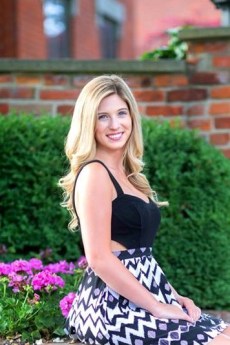
I am a sophomore at the University of Utah currently pursuing a major in Communications, with an emphasis in Strategic Communications, as well as a minor in Political Science.  I was previously Miss Teen Ohio United States, and I am now a writer for Her Campus Utah. I enjoy outdoor activities, cooking, volunteering, traveling, and writing. I am a passionate advocate for mental health and suicide prevention.

After graduation, I plan on starting my own business. I hope to inspire more women to enter into leadership positions or become their own bosses. To learn more about me, you can add me on Linkedin. 

My Stories:

Concealed Carry on College Campuses

Reflections on Campus Carry

Reflections on Illuminate

by Eylül Yel

I came across Illuminate while checking out upcoming events in Salt Lake City. It intrigued me because it was the first time an event like this was going to take place in Utah.

Once I decided that I will write an event story about Illuminate, I visited the Utah Arts Alliance website where I found in depth information about the event and the producers of the event including their contact information.

I conducted an interview with the producer of the event  to find out more information before attending the event. The interview helped me find out more about how the event was created, where he got the idea from and the obstacles he has faced along the way.

I attended the event on Nov. 10 and saw all the artwork in action. During the event, I had the chance of meeting employees from the Utah Arts Alliance as well as artists who showcased their work. I was able to talk to some of the participating artists and learn more about their craft and how they decided to participate in the event.

I conducted another interview with the executive producer after the festival to get his thought on how the event went and what his future plans are regarding Illuminate to include in my story.

While writing the final draft of the story, I used much of the information I have gathered during my interview with the producer before the event, then I put together my observations and notes from the event and included them in the story. Overall, it was an enjoyable experience to write this event story.

Seeing Salt Lake City through light art and technology

Eylül Yel

Version 2

Eylül Yel

Eylül Yel is a sophomore at the University of Utah. She is pursuing a Bachelor of Arts in Strategic Communication and minoring in International Studies. Eylül currently works at the University of Utah UKids East Village as a classroom assistant.


Eylül is the program director for one of the Bennion Center’s student directed programs, ESL Guadalupe, where she also volunteers as an English tutor for adults with immigrant English status. She volunteers for TEDx University of Utah as the event manager in an effort to help put together a TED Talk at the University of Utah in the upcoming semester.


Eylül can speak English and Turkish fluently and is currently learning Spanish. She has a strong grasp on Microsoft Office. Her interests include photography and cooking.


Eylül plans on graduating in 2020 and hopes to attend graduate school to further extend her knowledge within her field of studies. She is passionate about advertising and public relations and  would like to work in a related field in the future.

LinkedIn Profile

Seeing Salt Lake City through light art and technology

Illuminate Reflection Blog


Refection Blog – Tiffany Huyette

By Tiffany Huyette

In the beginning of pitching ideas for my enterprise story, I knew I wanted my story to be centered around athletics because that is where much of my knowledge and passion are found. I knew it would be easier to invest myself in a topic that I knew a lot about or had the motivation to learn more about, so I decided to write about UYSA. Growing up in Utah Youth Soccer was beneficial in teaching me life skills and in helping me learn to deal with adversity.

Upon gathering information for my story from previous coaches and the Utah Youth Soccer website, I was able to get in touch with individuals from the admin side of UYSA, and then eventually able to go to the new UYSA headquarters and interview a few different people. I reconnected with a previous soccer trainer who had coached girls and worked on the administrative side of UYSA.

I started my interviews asking each person their job title and how they had gotten to their current position. I asked about previous jobs and positions, and about their families. I went further into depth on the benefits of sports for adolescence. After the interviews, I reviewed my notes and was able to create a story. The best source for my story ended up being the man who had trained my team and other girls teams, and who also worked in administration for UYSA.

The struggles I faced were mostly in getting interviews and keeping my story to the word limit. How could I include the details I wanted and the details I needed, while also identifying the material I needed to take out? All while telling a story, intriguing readers, and fitting within the word limit.

I chose the focus of my story when I listened to my interviews and decided what would be interesting to readers of all types, and what wouldn’t be interesting. I also really wanted to tell a good story, so I had to find a point of view where I could story tell, while still being able to keep inline with my story topic. The writing process was lengthy, and the story ended up extensively exceeding the word limit. I then had to delete any parts that were not necessary, or that did not point back to the story pitch. It was a process of writing a story that would be both interesting and informative to readers, while at the same time telling a story well. I learned that I am much more of a story writer than a news writer but that it is beneficial to add brevity to whatever I’m writing.

Looking back, I am very surprised with where my story ended up going. It ended up being a feature story about a specific person and an organization. I learned much about UYSA through my interview with Bruce but also about Bruce as a person. I was able to attain life wisdom as well as coaching wisdom for young athletes and the parents of athletes.

For my story click here.


Reflections on Tinder

Annie Ricks

When I began thinking about story ideas, I knew from the get go that I wanted to write about something relevant in today’s society and something that I would enjoy reading. The idea of Tinder had been in my head for quite some time because I have been intrigued by its popularity in today’s society. Most everyone has used Tinder before or at least heard of it so I figured it would be a topic worth writing about. This topic of online dating apps comes up in many of my daily conversations with all types of people I meet, whether they have had negative or positive experiences with the app. Everyone has either has been or knows someone who has been successful on Tinder; however, everyone also knows someone who has had a bad experience with this app.

When I decided to write about Tinder, the first person who came to mind was my sorority sister, Erin. She has the best Tinder success story and she is very open when talking about it. She was very eager to be interviewed and was full of interesting comments about how she and her boyfriend met and how their relationship has evolved. I was surprised to learn how many people have had odd or funny encounters on Tinder. There were far more funny stories than creepy ones. I was also surprised that most individuals said they use Tinder just out of boredom or for a confidence boost, most aren’t even looking to date. The Tinder craze we see in our modern world doesn’t seem to stop growing however this raises concern for the safety of those engaging in the app. Many studies have shown that a rise in STD rates could be linked to the rise in online-dating users. Could this mean that the amount of online-dating users will start to decrease or will this craze keep on spiraling out of control? To read more about Tinder and this issue, click here.

Annie Ricks

About Annie: Annie Ricks is a Junior at the University of Utah currently studying Strategic Communications with an emphasis in Public Relations. She has a love for writing and planning, hence why her choice of career is a corporate level event planner. Her goal is to one day work for Vogue as an event planner but in the meantime is hoping to complete a PR internship somewhere on the East Coast. She has a passion for meeting new people, learning, and immersing herself in other cultures. So much that she lived in London for 4 months in 2017 and discovered that traveling is one of the most rewarding gifts you can offer yourself. In the summer of 2015, she travelled to Ecuador with Choice Humanitarian where she worked in less fortunate schools and visited local families. She is the Director of Philanthropy for her sorority and works closely with the Make a Wish Foundation. In fact, in the Fall 2017 semester, she helped raise $9,000 for the Make a Wish Foundation. Annie was also one of 35 collegiate women chosen to attend the Fall 2017 Flagship Session of the Nancy Walton Laurie Leadership Institute of Chi Omega where she was trained on how to be a resilient individual in the workplace, the home, and the community. She loves to give back wherever possible and she has a zest for life and making connections with people.

To read a sample of Annie’s writing, click here. To read her reflection blog, click here.

Processed with VSCO with a6 preset


Zane Law

zane

Originally from Newport Beach, CA, I decided to leave home and pursue a college degree. I am a third year student at the University of Utah, majoring in Strategic Communications. I currently maintain a GPA above 3.5 and plan to graduate in the Spring of 2019, heading into the field of marketing/advertising. This field has always held my interest because analyzing and appealing to the minds of consumers has felt like a game to me. I have enjoyed finding different ways to sell clothes online, pawn off my crappy lemonade as a kid, and make/sell stickers, so pursuing this on a more professional scale seemed like the right fit. Work should be something I enjoy, and I plan on doing just that!

While I do not mean to write for a career, I am still proud of the content I have produced thus far. Besides the Greek life piece, my portfolio contains a marketing campaign pitch that was accepted and used by All Seasons Resort Lodging, an article that analyses the top-grossing Korean film and its relationship to Japanese-South Korean tensions, and a story about college athletes’ battle for compensation.

In my free time I enjoy all things sports. I do not know whether I am proud of or disappointed in the fact that I have only missed the viewing of one NFL game this 2017 season. I was the running back at University High School in Irvine, CA, so football is a passion of mine. I also ran two years of track and was named MVP both years. I was extremely disappointed when I discovered that the U does not have a collegiate team. These two high school teams have shown me what teamwork and perseverance are, so using those in the workplace is something I look forward to.

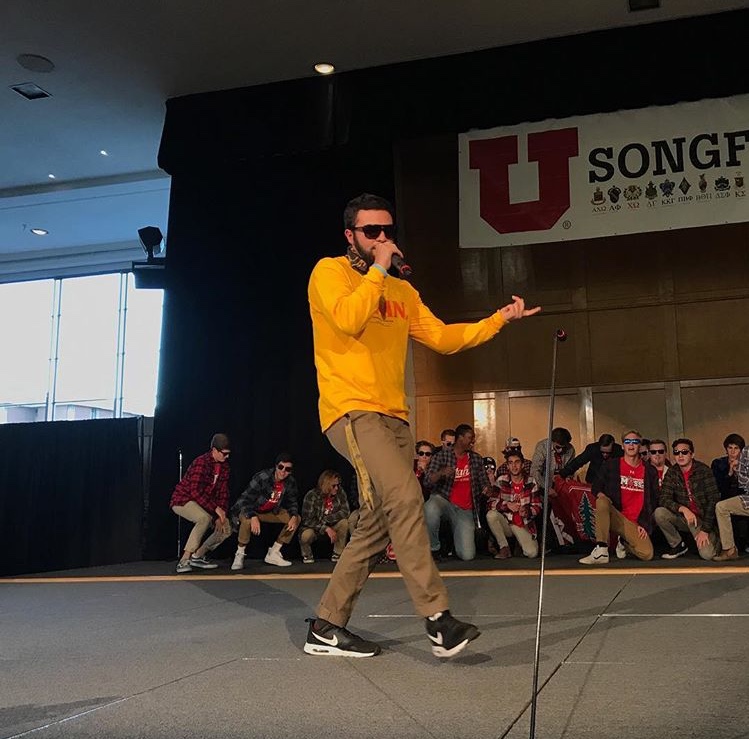
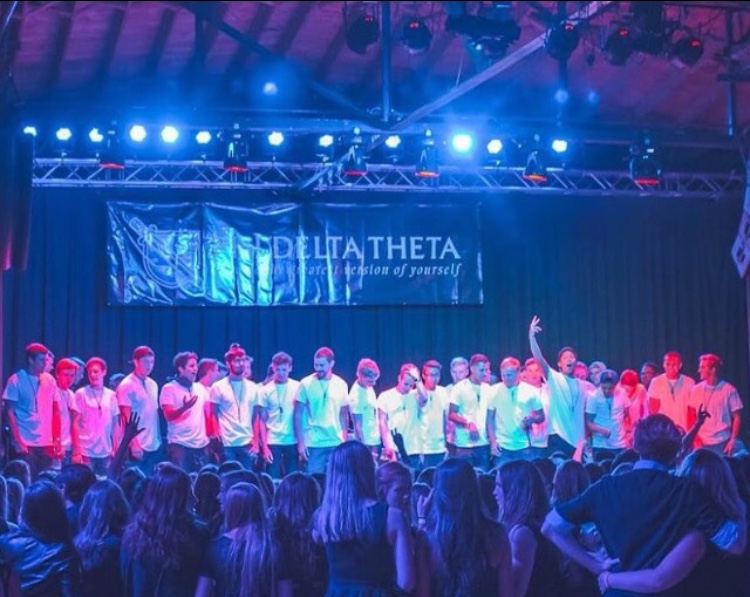
Fraternities are a valuable resource for many college men

Reflection Blog

LinkedIn Profile


Tiffany Huyette

Ice cream tiff

I am a Sophomore at the University of Utah. I am also a U employee, working for a family practice clinic full of nurse practitioners, physician’s assistants, physicians, and resident physicians. For a while I had my heart set on becoming a dietitian, that dream has since changed, and I am settled as an undeclared student for now.

I was born and raised in Utah. For the longest time, I wanted to get out of Utah, but as I’ve grown older, I’ve begun to appreciate the mountains that are our backyard and the fall leaves that turn burnt orange.

I attended Jordan High School and grew up playing soccer. After playing soccer for 13 years and following a semester of college soccer, I gave up the soccer dream, and now play for fun in coed leagues. I enjoy distance running and pushing my mental barriers. Most days you can find me in a coffee shop, coffee in hand, doing homework or chatting with a friend. Other times you may find me in a nook somewhere, reading a novel of some sort. Gilmore Girls is my favorite TV series, and brownies and ice-cream are my go to dessert.

If your interested in reading my story click here.

If your interested in reading the reflections on my story click here.

For my LinkedIn profile click here.

Zane Law- Reflection Blog

The development of my story came about in a wave of ideas. I was, at first, stuck with only statistics. The data was a large amount that was both for and against the Greek system on college campuses. The statistics outlined things such as graduation rates, GPA within the system and outside of the system, numbers on rape, alcoholism, and more. I had put all of the information into my first draft, but was told to hold back on the information that I did not enjoy reporting. I had previously thought this to be bias and was trying to remove all side-taking from my writing, but was made aware that as long as I was not blatantly trying to promote Greek life, I was fine to report upon the positives. Telling of the benefits and stories of Greek life and its members was acceptable if the information was all factual and written clearly. It was still difficult to report on the information without being biased, as I was a Greek member for two years, but I believe the way I positioned my interview quotes and statistical information was fair.

I then had to plan my attack on the interview process. My sources were among the University of Utah’s most involved Greek members, being able to show what the system is truly capable of. The IFC President, the YAF President, and a fraternity social chair were all very different positions, but all positions that they said would help them in the future. Whether it be on resumes or using the connections they made during their terms, they said their time spent was extremely valuable to them. That seemed like enough to warrant an interview. The YAF President stood out to me most, as he had just accomplished a feat that made Salt Lake City headlines. He was able to invite, with the help of alumni, Ben Shapiro to the U’s campus. This was a true testament to what fraternities and alumni support can accomplish.

During this process I truly learned to plan ahead before stepping into an interview. After my meetings with a few of the folks I was left wanting to ask o many more questions. If I had better prepared, then I could have gotten some additional information for my article. I also learned that having friends and family review your work is a priceless tool. They were able to make suggestions that I would not have thought to include. Never be afraid to ask others to read your things, kids!

Fraternities are a valuable resource for many college men

Zane Law- Bio

Meredith Searight

GarrettMeredithRecruit3 (1) 2

Meredith Searight is a sophomore at the University of Utah and is majoring in Strategic Communications. She currently works at the University of Utah Campus Store as a retail specialist. She has served as a sales associate for Monkees Boutique of Houston, was a social media and design assistant for Memorial Designs, and was a design assistant for The Owen Group Design Firm. Her primary interests include dance, swimming, snow skiing, photography, art, volunteering, interior design and graphic design.

Ms. Searight is a member of Delta Gamma, a fraternity at the University of Utah since September 2017. She is involved with their chapter’s philanthropy Friends for Sight and is certified to do vision screenings and to test for glaucoma with a tonometer. She dedicates her time generously to her local community and has even flown to Houston, TX to volunteer at the Hurricane Harvey relief shelters. When she’s not volunteering, she’s a student at the U and has a 3.6 GPA and is on the dean’s list.

Meredith Searight’s is certified in Adobe InDesign and has a strong understanding in the use of Photoshop and Illustrator; Microsoft Word, Excel and PowerPoint. She has a passion for sports and hopes to work in sports marketing and communications. She is particularly interested in working for snowboarding and ski companies. Ms. Searight has a strong work ethic, works well individually or in a team, is extremely well organized, and very creative. Meredith Searight plans on graduating in the year 2021 and will be off to accomplish great things in her career.

Zane Law- Enterprise Story

Fraternities are a valuable resource for many college men
Story by ZANE LAW

SALT LAKE CITY— College campuses across North America are hosts to hundreds of men’s fraternities. These fraternities are seen by many as misogynistic and cruel, while others view them as places to build character, a resume, and a social network. With over 6,000 chapter houses and millions of Greek members across North America, the benefits outweigh the negative image for the many joining the Greek system.

For generations, fraternities have been linked to the cultivation and development of successful men. Forty three of the United States’ 50 largest companies are run by fraternity men, with 85 percent of all Fortune 500 companies having a fraternity member CEO. According to the New Jersey Institute of Technology, Greek men also account for all but two United States presidents born since the formation of the first fraternity in 1825, 76 percent of all U.S. Congressmen and U.S. Senators, and all of the Apollo 11 astronauts.

University of Utah’s Interfraternity Council President, James Morrell, explained why he thinks this is far from coincidence. Morrell says Greek life has helped him in three core areas: networking, leadership, and academics. The people he has met through his fraternity, “have served as an invaluable resource in my life, helping me further my career options and improve my academics,” he says. A current member of Beta Theta Pi at the U, Morell says several alumni remain actively involved. Through alumni he has received several job opportunities and plenty of guidance.

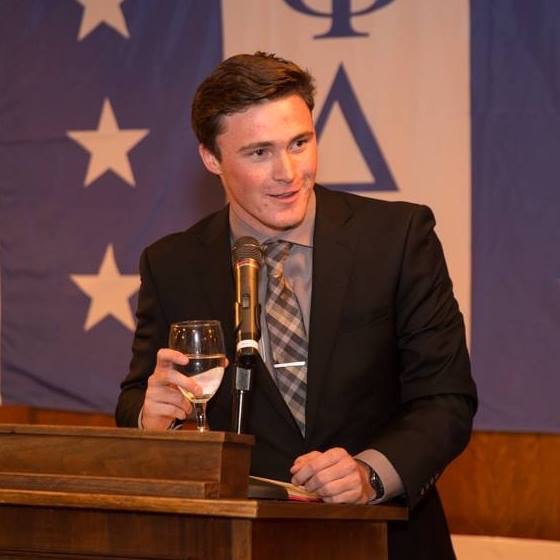
Dillon Clark, recruitment chair of Phi Delta Theta and president of the Young Americans for Freedom organization at the U, also praised his relationships with alumni. While Clark has received internship opportunities from active alumni, he credited one event in particular to the help of his older “Phis”. “I would not have been able to bring Ben Shapiro to the U without the help of alumni,” he says. The Ben Shapiro event that Clark hosted in Salt Lake City received significant media attention and hundreds of attendees. With donations from alumni that believed in his efforts, Clark was able to pool together the tens of thousands of dollars needed for the event.

Both Clark’s and Morrell’s achievements are significant in terms of resume-building, but are only a few of the things that they believe their organizations can help people achieve. Both are happy that they have support from their fellow Greeks and feel as though these people and opportunities give them an edge.

Fraternities help to hone interpersonal skills, time management, and team-building techniques, but are expensive and are not financially accessible to many. According to USA Today, the average cost per semester in a fraternity is $605, not including additional costs such as fines for absences, tardies, and other penalties. A national survey taken in 2014 by the Journal of Behavioral and Experimental Economics indicated that fraternity members are more likely to graduate on time, however, potentially saving thousands of dollars on tuition. Staff members at the U’s Fraternity and Sorority Life office even reported that that in 2016, 80 percent of all Greek life students had gone on to graduate, whereas 57 percent of non-Greek students had been able to do the same. Graduating at a faster rate translates to less tuition money spent, therefore negating much, if not all, of the per semester costs.

The North-American Interfraternity Conference also reports slightly higher Greek GPA’s than their non-Greek counterparts. Many fraternities and sororities require a minimum GPA to join and remain an active member, with chapters on the U’s campus requiring anywhere from 2.5 to 3.0. Fraternities even gather alumni donations to fund tutoring and “Chegg” accounts. Chegg is an online resource to help students with homework, rent textbooks, offers tutoring, and helps to identify scholarship and internship opportunities.

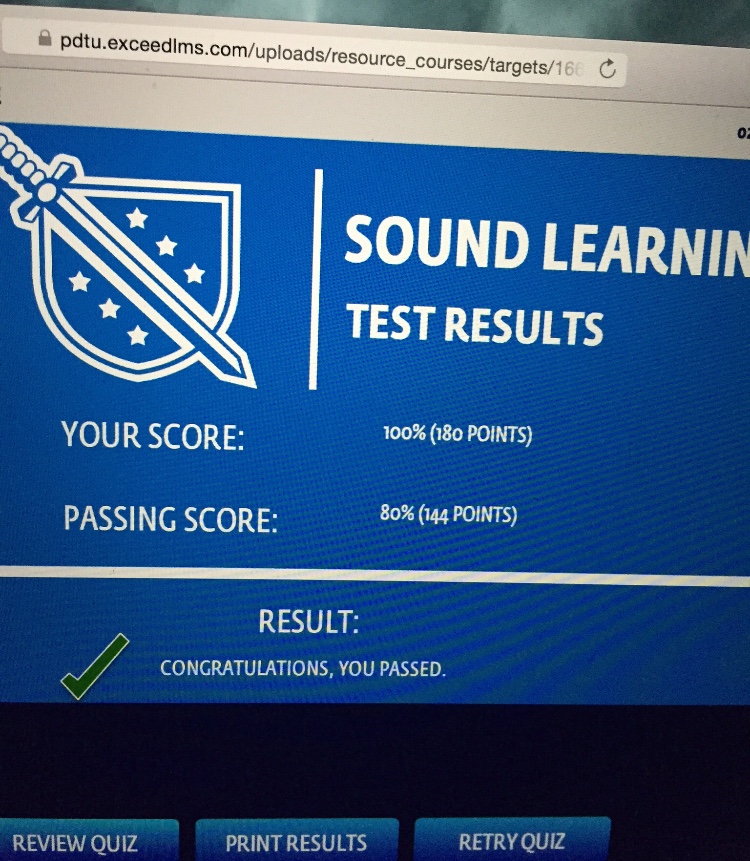
While such resources and encouragement are important, others benefit purely from having an organization that keeps them in check. “Our scholarship chairman is really on us about getting our big assignments in on time, constantly reminding us in meeting,” says Elliot Ansari, a third-year member of the Greek system. He and his fraternity brothers feel obligated to perform academically because one of their fraternity’s founding principles is “Sound Learning.”

Although personal development and social network expansion compose a large part of the good arising from Greek organizations, Greek members also participate in community service and philanthropic events. In the academic year of 2013-2014 alone, the North-American Interfraternity Conference reported four million hours of community service contributed by fraternity men. Making blankets for the homeless, writing letters to military personnel, and sorting goods at the local food bank are some of the events that the U’s fraternities and sororities do together, knocking out good deeds and creating fun memories with each other.

In terms of philanthropy, most fraternities “have two events per year and the money raised goes to a charity organization of our choice,” says Elliot Ansari. The University of Utah’s Sigma Chi chapter frequently makes the news, with the Huntsman Cancer Institute’s website praising them for raising $66,806.65 during the 2015/2016 school year.


To see the author’s thought process whilst writing this piece click here

For more about the author click here
 

Reflection Blog- Meredith Searight

While writing my enterprise story I developed my ideas by thinking of things that I’m passionate about that I knew were in Salt Lake City. When I was thinking of ideas I came across an article published in the Daily Utah Chronicle that sparked my interest. The article was about the lack of diversity in the Greek community at the University of Utah, so I started brainstorming based off of the topic of diversity in the U’s Greek system.

I located my sources by contacting the president of Delta Gamma who I knew would be a great starting point for gathering information. The Delta Gamma president was very helpful and sent me the contact list of the presidents on Greek row at the U. I was able to contact all of them and the majority of the presidents were very helpful in giving me information. I also contacted the Director of Sorority and Fraternity Life who was very helpful due to the fact she runs the whole Greek system at the U.

While writing my story, I did encounter one obstacle when trying to get all the sororities and fraternity’s presidents to email me back. In an effort to solve this problem, I simply just emailed a reminder to the presidents to try to gather more surveys. In order to make sense of all the information that I gathered, I set up my surveys in a certain format that fit the way I wanted to write my story. As for my writing process, at first it was a mess, but after getting guidance from my professor I was steered on the right path. I also learned that I do better when I narrow in my ideas for my article before I start writing.

By organizing my article in such a constructive way, I was able to get all the details I needed into the article. I was surprised to find out how respectful and welcoming the Greek system really is. I thought for sure I would hear one or two incidents of discrimination in the chapters but I never did. Overall I find myself more drawn to editorial writing after completing this assignment. I just had to struggle the whole time while writing not to stray to creating an editorial piece.


Enterprise story reflection blog

By Allison Oligschlaeger

When I set out to write my enterprise story, I set out to learn something. I didn’t want to write a story that I knew the ending to — I wanted to discover new truths through my reporting. As such, my list of potential topics looked more like a list of questions. I considered covering the snafu between the Salt Lake City Police Department and University Hospital nurse Alex Wubbels, but worried that local and national media had already canvassed the issue; I put out feelers for a story on the Antifa movement in Utah but struggled to find sources willing to go on record. Ultimately, the biggest unanswered question left on my list was, why have I seen so many new vegan restaurants popping up in Salt Lake City lately?

Just to be clear, I’m not a vegan — I’m not even a vegetarian. But I am curious to a fault. I thought this story posed a great opportunity to get nosey with local business owners (and eat some delicious food while I was at it). I chose four vegan establishments to interview, including two that have opened in the last month and two that have been slinging veggies since 2012.

The biggest ethical challenge I faced was balancing the business’s perspectives with outside insight. As my news writing professor pointed out, business owners are unlikely to tell media professionals if or when business is slow, and I wanted to make sure they weren’t overstating the success of the vegan trend. In hopes of mitigating this I reached out to the Salt Lake City Chamber of Commerce, who directed me to the Downtown Alliance. I’m not sure that their media spokesperson did much to mitigate the business owners’ enthusiasm — they gave a glowing comment on the growth of the vegan dining industry and how great it is for SLC — but I feel better knowing that an outside source could corroborate their claims.

Ultimately, I really enjoyed this foray into business reporting and appreciated the opportunity to ask questions about a personal curiosity. I think entering the reporting process without many preconceived positions on the topic allowed me to be open to many possible explanations and truths, and I hope it reduced the bias in my reporting. Best of all, I’ve found my new favorite dessert at the dairy-free bakery Cinnaholic!

Allison Oligschlaeger

IMG_6430

Allison Oligschlaeger is a freelance journalist and Communications student at the University of Utah. They began their newswriting career in high school with a weekly column for the “Teen’s Ink” section of The Davis County Clipper. Allison’s work has since appeared in The Deseret News, Salt Lake City Weekly and The Daily Utah Chronicle. They received a regional Mark of Excellence award from the Society of Professional Journalists for their coverage of the University of Utah fight song debate in 2014. Allison enjoys skiing, personal nonfiction and all things peanut butter.

You can read Allison’s enterprise story on the growth of Salt Lake City’s vegan dining scene here, their reflections on the writing process here, and their linkedin bio here.