Michael Sanchez – Bio

MY STORY 

MY BLOG

ABOUT ME   

Michael Sanchez is a transfer student from Salt Lake Community College, where he received his associates degree in communication studies. Currently, he is pursuing his bachelor’s degree in strategic communication at the University of Utah. He plans to explore a career in public relations when he graduates.

Photography is his passion. In the summer, you can find him exploring the wilderness and documenting his adventures. When he has free time he loves to volunteer, whether it be at the Sundance Film Festival or at the local food bank handing out food, he loves human interaction and getting to know people.

As of now, the fast-paced environment of broadcast news is where he works as a photojournalist for ABC4. No matter what the assignment, Michael is up to the task. Getting that perfect shot is something that fills him with pride.


This slideshow requires JavaScript.


Kate Pekuri

MY STORY

MY BLOG 

LinkedIn

ABOUT ME:

0998F3E3-6856-40FC-AF21-D83951629CAA.jpg

Kate Pekuri is a 21 year old student pursuing a degree in Strategic Communication and a minor in Business. She currently works as the Wings Team Captain for Red Bull and serves on Alpha Phi’s executive council as Vice President of Membership Recruitment.

Kate is from Boise, Idaho and came to the University of Utah 3 years ago. When she’s not in school or working, Kate enjoys spending time with her friends, skiing, and traveling.


University of Utah Alumni Association works to connect current students with alumni

By Kate Pekuri

SALT LAKE CITY–The University of Utah boasts nearly 280,000 alumni, and the Alumni Association has the massive task of managing this group of people. On their website, the Alumni Association claims they are “dedicated to forging and preserving lifelong relationships with alumni, students and the community.” Through their efforts, they work to create a sense of loyalty to the U, give to philanthropy, as well as be a central hub of campus activity. 

IMG_1880

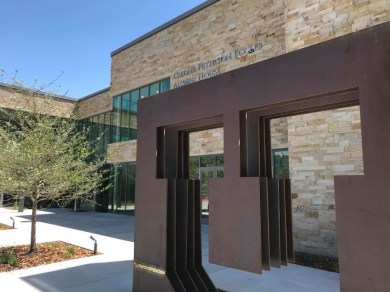
This past year, the Alumni House has undergone a complete renovation, resulting in the opening of the Cleone Peterson Eccles Alumni House. The building features ballrooms, meeting rooms, and beautiful outdoor spaces, located at the center of campus. It is often used as an activity hub, always hosting different organizations’ events. Anyone can reserve a room in the Alumni House, from a club meeting to a wedding.

Despite being a brand-new building, students often have no interaction with the Alumni House aside from picking up their MUSS passes. The Alumni Association has numerous leadership opportunities for University students such as the Student Alumni Board and the MUSS Board. The MUSS Board even has their own room in the new building complete with couches and ping pong tables where members of the board can spend their free time between classes. Students can also reap the benefits of the Alumni Association. Here, students can forge connections with professionals within the Alumni Association as well as build their own resumes.

IMG_1889

University of Utah Alumni Zac Williams served time in many organizations during his time at the U. This included ASUU, Inter-Fraternal Council, and the MUSS Board. He was also a part of homecoming royalty in 2016. “It’s been a huge part in shaping the leader I am today,” says Williams. Not only did he gain leadership skills and professional connections, but he was also a recipient of one of the Alumni Association scholarships. Williams is now in graduate school at the Southern California Institute of Architecture studying for his Masters of Architecture after receiving his undergraduate degree at the U.

One of the associations main incentives is to connect U Alumni with current U students. The main avenue of doing this is known as AlumniFire. This is a grassroots network where current students can connect with young alumni in order to find jobs, internships, or just get career advice. Karen Ashton, Manager of Marketing and Membership at the Alumni Association, is a member of AlumniFire as a mentor. Ashton says she is a believer in AlumniFire because “I can put in as little or as much time as I’d like, I can look at a couple resumes or do a full-blown mock interview with a student.” Campaigns such as this one reinforce the Alumni Association’s mission to connect students with young alumni in a natural, simple way and gives mentors a sense of making a difference.

Screen Shot 2018-11-28 at 10.31.18 AM

If alumni would rather not give up their time, there are currently eight different scholarship funds they can donate toward. These scholarships are awarded to students achievement based as well as need based.

IMG_2142

Kelsy Patrick, a University of Utah graduate in Anthropology with a health emphasis, landed a job in the healthcare field with the help of alumni. “I would not have the job I do right now if it weren’t for the connections the University has brought me” says Patrick. She explains the loyalty of the University’s alumni and their inherent desire to give back. Patrick now works at the Granger Medical Clinic while applying to Physicians Assistant schools. With the help of alumni, she now looks forward to giving back to future students.

Like many organizations on campus, the resources are there just waiting to be used. As students, it is imperative for the college experience to get out and seek new opportunities as well as focus on creating a future beyond college. The resources of the Alumni Association are just a few of thousands of resources provided to students by the University.  The University of Utah Alumni Association aids students in seeing beyond the diploma and promoting lifelong Ute pride amongst its graduates.

This slideshow requires JavaScript.

ABOUT KATE PEKURI

Parking at the U: Is is worth it?

By Michael Sanchez

SALT LAKE CITY — For students and faculty at the University of Utah, parking on campus can be a sore subject. With construction shutting down parking lots and the stressful morning rush to find available spaces, students may find themselves asking, “is parking on campus worth it?”IMG_1917

The sluggish speeds on Foothill Drive, construction blocking regular routes, the cost of parking both legally and illegally, the long walk to class after finding a spot—all of these are issues facing a person commuting to the University of Utah. The problems are easy to identify. The causes and solutions can be more elusive.  

“I think parking spots are going further and further away from the main buildings that I go to because of the amount buildings that are under construction,” says Tamara Oniani, a design student at the University of Utah. Oniani’s walk back to her car is around 10 minutes. Closer parking would make her feel safer on days when she gets out of class in the evening, she says.

Safety has been a concern at the U recently. Walking to and from class, especially at night can be a concern. According to Commuter Services, some of the A parking becomes U parking after a certain time of day. Also, there are escorts available throughout the day for students who feel uncomfortable walking to their car.

An annual parking pass for students at the University of Utah costs around $260. After paying for tuition, housing and books, students can often feel overwhelmed by the added cost of parking at the U. Additionally, employees who receive benefits from the university are allowed to purchase parking with the “A” designation. Parking in “A” designated parking will cost a faculty member around $580 a year. While this pricing may seem unfair at first glance, there are reasons why commuters pay so much to park.

“The only money that we are able to spend is what we are able to generate from fees that we impose,” says Alma Allred, Executive Director of Commuter Services. Commuter Services sets the price of parking, and collects fees to build and maintain parking across the University of Utah campus. Unlike other departments at the U, Commuter services does not receive any tax revenue or money from tuition. The department is run like a business, and it must generate money in order to operate. “We’re supposed to bring in more than we absolutely need, to fund additional construction projects,” Allred says.

The peak hours, when most people park on campus, is around 10 am — which is when the majority of classes are taken by students. This creates a problem for students with morning classes. The dash to find parking is a regular occurrence at the U.

“From my perspective it works fine,” says Raymond Olsen, a U of U staff member who commutes to campus from Logan about four times a week. “It works well for me, I get here early enough, and my secretary provides me with a day pass.”

Olsen is an anomaly when it comes to parking, but he also offered some insight on how to get better parking. “If I were trying to find parking after 8 am, it would be awful.” he says. For some students showing up to school earlier than everybody can be a good solution to finding parking. This practice can also facilitate early morning study time, or perhaps more realistically, a nap before class.

Construction projects on campus have also impacted how many parking spaces are available on campus. “We are sort of in a continual crisis mode, trying to replace parking that is taken by construction of other facilities.”  says Allred. These construction projects take months, and without a backup plan they can cause a high number of parking spaces to disappear. “On Monday we are going to lose 400 spaces,” he says. This is because of the construction of new student housing, due to our growth of the university according to Allred. 

Commuter Services must also consider their impact when they build new parking. A typical parking space in a garage cost on average $22,000 per space. Which, from the stance of Commuter Services, is not a good return on investment.

One solution Commuter Services wants to encourage is the use of public transit. Currently there are 8,000-12,000 people a day who use mass transit to commute to campus. “We want to get as many people as we can on mass transit,” says Allredy. “Every person who rides mass transit saves a parking space for somebody who has to take their car.” This solution is the most obvious answer to avoid parking on campus, but in some cases it is not the most practical.

wc: 806

This slideshow requires JavaScript.

Infographic of how many people for every one parking spot on campus for the University of Utah and surrounding states. 

The aftermath of passing Proposition 2 in Utah

CBD Oil bottled for medical use. CBD Oil was legal in Utah before Proposition 2 . Taken on January 1, 2018. (420 LightGuide)

By Araceli Haslam

SALT LAKE CITY––During the 2018 midterm elections, Utahns voted “yes” on Proposition 2. Despite a five year effort to put the bill on the ballot, however, critics of proposition 2 expressed concerns with the initiative and  began the process of a legislative solution. On December 3, a compromise bill prepared by the Office of Governor Gary Herbert and legislative leaders is expected pass in a special session of the Utah Legislature. Now, Rocky Anderson, a former mayor of Salt Lake City, has threatened to file a lawsuit to stop the compromise bill from passing.

Prior to the election, the Utah legislature passed a bill to allow for legalized possession and use of THC/CBD oil for patients suffering from intractable epilepsy. The bill didn’t include a provision for patients to acquire the drug in the State of Utah, however, until the legislature passed HB197, which authorized the regulated sale of CBD oil.

During the 2018 legislative session, the Right to Try bill — which grants access to marijuana for terminally ill patients expected to live no more than six months — was passed. HB197 calls for the Utah Department of Agriculture and Food to begin growing marijuana in Utah by January 1, 2019. The marijuana may be sold to research institutions or terminally ill patients. 

Proposition 2 is a broader bill, which makes medical marijuana available to more patients in Utah. The bill allows patients 18 and over with epilepsy, cancer, chronic pain, Crohn’s disease, autism, PTSD, Multiple Sclerosis, HIV/AIDS, Alzheimer’s disease and ALS, access to medical marijuana with a physician’s recommendation. If a patient doesn’t have one of the listed diseases they must provide evidence to a five-member board of physicians that indicates their need for medical marijuana. Under Proposition 2, the marijuana will be grown by un-taxed private facilities.

The compromise bill calls for patients under 21 years old to obtain approval from their doctor and a state appointed-panel of medical professionals, according to a report from KSL news.

Walt Plumb Jr., a local land developer and opponent of Proposition 2, expressed his concern that younger patients might have access to marijuana. “We know that someone’s brain hasn’t developed until the age of 25,” says Plumb. “We restrict tobacco use, we restrict alcohol use. It just seems insane to me that all of a sudden we would let someone as young as 18 years old go into these dispensaries and try and cure these illnesses.”  

c37ee41475

May 5, 2015 Legal marijuana growing in greenhouses in Minnesota. This shows what medical marijuana could look like growing in Utah. (Glenn Stubbe/ Star Tribune via The Salt Lake Tribune)

The compromise bill will further regulate the growth and distribution of the marijuana. “One of the problems with the substitute is you get rid of the privately-owned businesses,” said former Utah Legislator Steve Urquhart. Without private businesses the state will be in charge of running drugs, which is a violation of federal law. “It’s one thing to say ‘okay citizens if you do this, we the state won’t prosecute you.’ It’s a much different thing for the state to tell our state employees to deal drugs in violation of federal law.”

Rocky Anderson, the former mayor of Salt Lake City, has introduced yet another twist into the medical marijuana saga, threatening a lawsuit. According to Deseret News, the complaint is based upon the involvement of the Church Jesus Christ of Latter Day Saints in crafting the compromise bill. Urquhart maintains that Marty Stephens, Director of Community and Government Relations for the LDS Church, sent an email initiating the drafting of a compromise bill. 

2514910297_dcd836b19b_b

Utah State Capitol where Propostion 2 will be implemented or replaced by the compromise bill. Taken on May 22, 2008. (Soupstance/ Flickr)

Recently, Speaker of the House Greg Hughes sat down with the anti-Prop 2 side — the LDS Church and the Utah Medical Association — and the pro-Prop 2 side — the Utah Patients Coalition (who got Prop 2 on the ballot) and the Libertas Institute — to draft the compromise bill on common ground. All parties agreed to support the compromise bill, according to Deseret News. However, Urquhart believes that the church being represented in these private government negotiations, raises suspicions of the church’s influence over the new bill.  

In the wake of the agreement, Anderson sent out letters to each party involved informing them of his intent to sue if the compromise bill is pursued. Anderson’s letter claims that the church’s involvement in creating the bill violates the constitution, according to a Deseret News Report. “The Mormon Church is controlling the issue,” says Urquhart. “The Mormon Church is telling them through speakers what they’re going to pass.”

Subsequently, the Church issued a statement in response to the pending lawsuit.  “Broad community engagement was the reason a workable, beneficial and safer medical cannabis program was put together at the direction of state leadership. We stand behind and look forward to the safe, responsible and compassionate solution that will be considered by the state Legislature.” The Church reiterated that it is allowed to have political standpoints, and that their involvement comes from a place of concern for the Utah populous, the Deseret News reported. 

Anderson told the Deseret News that the lawsuit’s goal would be “stopping the session, stopping any move toward gutting the initiative.”

This slideshow requires JavaScript.


Reflection Blog: Katie Andress

by KATIE ANDRESS

Brainstorming what I wanted to cover for my enterprise story was pretty simple. A topic that I’m very passionate about immediately came to mind, as it seems to always do when I need to write or speak about something I’m interested in.

Skeleton, the sport I have competed in for the past five years and have had the best, most unique experiences in my life. Along the way, I met some great people, athletes, teammates and friends. Even though I no longer compete in skeleton, this is a community full of friendly faces that are always happy to see you succeed and to catch up with you.

So, for my story I decided to choose one of my friends, Akwasi Frimpong. I found his story inspirational because I think he was seen as the underdog in most competitions and he ended up going to the Olympics and even after, is continuing to make a name for himself and leave his mark on the skeleton community.

When thinking about sources for my story, obviously I thought about Akwasi, but I had to think about who else is associated with him and his story, so that’s where Zach Lund and Lauri Bausch came in. These are the best people to contact because I’m talking to the founder of the program, the head performance director/coach and Akwasi’s coach during the Olympics.

After interviews, I made sense of all the information I gathered by putting it into categories based on the questions asked and the answers given, also in order of the story line I was going for. Once I did that, it all came together how I wanted my story to be read.

The writing process came in bursts. Once I gathered and organized my information, I still didn’t know what I wanted to do with it or how I wanted to articulate it to the reader. So I set it aside and came back to it. Once inspiration hit, that’s when I’d write. I’d write until it became a struggle to think of something and then I’d take a break and do it all again. After it was roughly written. I went back over it to finalize the product. And I learned that’s the way I like to write as opposed to forcing it.

Overall, I think writing this story was a good experience. It not only taught me the process of writing a news story and how to conduct interviews and form a story, but it also allowed me to connect back with the skeleton community that I’ve missed a lot.


Zac Fox Reflection Blog

Not a Master Procrastinator

I developed this idea because of the recent traction most ski resorts have been getting during the summer with activities and events, and wanted to dive deeper. Writing this enterprise story was no small task. I typically pride myself on being a master procrastinator. This was not something that could have been procrastinated, here’s why.

First, you’re interviewing at least three people for one story. Sounds easy, right? Wrong. With a typical essay or story you have to write, you’re usually on your own schedule — at midnight with a cup of coffee in hand and a steady 50 words per minute. Whoever you choose to interview most likely has a life, an agenda, and a schedule of their own that probably doesn’t coincide with your own.

For example, I had just finished up a lunch interview with J.P. Goulet, the Marketing Coordinator for Powder Mountain. I interned last year under him at Powder Mountain, and knew he’d be a perfect fit for the story. After a long drive down Ogden Canyon and food properly settled in my stomach, it was very much time for a nap. I set my alarm for an hour, or so, until about 20 minutes in I get a call from Theresa Foxley, the CEO of the Economic Development Corporation of Utah. That was definitely not conducive to a great nap. I instantly shot out of bed, grabbed my notebook and began some vocal warmups to get rid of the tiredness in my voice — a nap-voice, if you will. She helped me get a view at the bigger picture, and statewide presence that the ski resort shift allows.

Despite being startled from a food-coma induced nap, talking to J.P. and Theresa was loads of fun. Writing this story taught me a lot. You would think a couple years in college would teach you not to procrastinate a huge assignment like this — and you would be right. Never procrastinate when you’re on other people’s schedules.

WC: 328

Read more about the author here.


Election Recap – What’s Next for Utah?

By Taylor Watkins

SALT LAKE CITY – Utah is an intensely partisan state with the majority of the votes going to the conservative party. In this kind of political climate, it can be challenging for constituents to find reasons to go to the polls and cast their votes. However, for many students at the University of Utah, this election cycle felt different. With a critical race in Utah’s 4th District and several progressive ballot measures, students were more motivated than ever to get out and vote.

Wyatt Hudgens, a first-year student at the U, said that he voted because, “Voting is a right that we often take for granted, and it is important to participate in the political process by electing your representatives.” Hudgens said that the non-binding Question 1 and Proposition 2 were his main motivators to vote in the midterm election.

Hudgens opposed Question 1 because he believes that gas tax should fund roads and infrastructure rather than education initiatives. Although Hudgens supported Proposition 2, he doesn’t believe that this ballot measure will have a substantial impact on Utahns until the medicinal marijuana program is expanded to a broader range of illnesses.

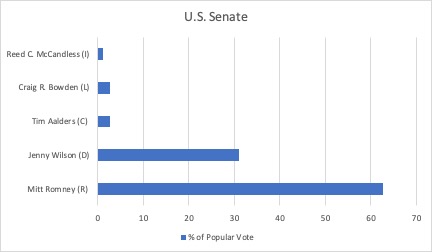
Mitt Romney will be representing Utah in the United States Senate after receiving over 62 percent of the votes. Although Romney faced many qualified opponents, despite public debates and funding, none of them managed to close the gap between themselves and Romney.

Senate

Results for the Utah U.S. Senate Election

Erin Sleater, a third-year student at the U, believes that “the election results will ignite the motivation we need to start real change within our state and country.” Sleater said that students at the U will be more motivated to vote in the future because of the different ballot measures; as well as the state and national races becoming more competitive, like the 4th District congressional race.

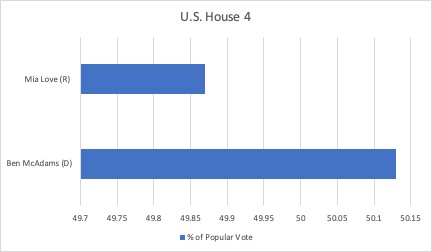
The 4th District U.S. House race was regarded as a toss-up until Ben McAdams gained a significant lead over incumbent Mia Love just last week. McAdams’ leads by a margin of 0.26 percent, just above the 0.25 percent needed to qualify for a recount.

The race between Love and McAdams was highly publicized and caught the attention of national donors and the Federal Election Commission after Love violated federal guidelines regarding campaign funding for primary elections. In Utah, candidates are not permitted to raise funds for primary elections if a primary is not expected to occur. Love admitted to improperly raising primary election funds and told the FEC that the campaign would work to refund the contributors or redistribute the money for the general election fund.

House

Results for the Utah U.S. House District 4 Election

Three constitutional amendments were proposed during this election cycle. The first, Constitutional Amendment A proposed a property tax exemption for active members of the military, this amendment passed. The second, Constitutional Amendment B, proposed a tax exemption for government-leased property, 71.62 percent of citizens voted against this amendment. Finally, Constitutional Amendment C passed, giving the legislator the ability to call a special session, limiting the power of the state executive branch.

Question 1 proposed a non-binding opinion about an increase in gas tax to fund education. Question 1 failed, with over 65 percent of constituents voting against the question.

Proposition 2, the medical marijuana initiative passed, however, legislators are working quickly to create an alternative bill to replace the ballot measure Utahns already voted on. With the proposal of the new bill, there would be more state-run pharmacies, but fewer licensed grow facilities. A special medical cannabis board would also be implemented and would require patients under the age of 21 to seek approval from the board before obtaining medical cannabis. Legislators are facing some opposition to the compromise bill because of the significant changes to the citizen ballot initiative.

The ballot measure to expand Medicaid to include people younger than 65 with incomes at or below 138 percent of the federal poverty line passed with 53.32 percent of the popular vote.

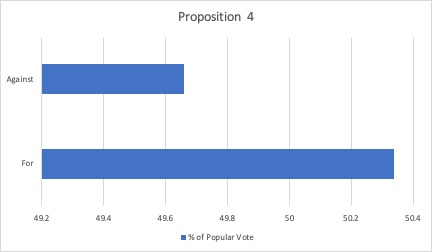
Proposition 4, the ballot measure to create an independent non-partisan redistricting seven-member redistricting commission for congressional and state legislative districts, is still a toss-up with 50.34 percent for the measure, and 49.66 percent against the measure.

4

Results for Proposition 4

Meghan Pollard, a fourth-year student at the U, majoring in Marketing said that Proposition 4 was a ballot measure that motivated her to vote. She believes that “Our voices are only heard if properly represented and loud enough, redistricting would allow for that.”

Meghan believes this election cycle is different because citizens are acting on their frustrations with the current administration and trying to create positive changes within federal and state governments. “People are angry, scared, and disheartened by the current state of the government. They rallied around that frustration and really went to work to improve their lives and the future of America.”

Voter turnout for this midterm election cycle hit a record high across the United States. Over 110 million people voted, compared to 83 million in 2014. In Congress, Republicans strengthened their control over the Senate, but Democrats picked up 29 seats and gained control of the House of Representatives.

Julianne Skrivan, a former White House Intern and current Johns Hopkins University masters student for Political Communications and Strategy, attributes voter increases to the increased publicity of the election cycle, especially with social media becoming more prominent to encourage political participation.

This slideshow requires JavaScript.

Kaeli Wiltbank Reflection Blog: Feminism in Utah

Reflections on Women in Utah recently rank more sexist than men 

by KAELI WILTBANK

I haven’t always been passionate about feminism, in fact, I used to think it was quite bogus how women were being so stubborn about their “rights.” I’m not sure when and I can’t even say what triggered the change, but I’ve recently become very passionate about women’s rights. As a member of The Church of Jesus Christ of Latter Day Saints in Utah, I’ve noticed that there are a lot of members who are very turned off by the word feminism. It’s a strange thing because I know that they would never support gender inequality and most of the members of the church are very passionate about living a life of good morals and ethics.

When I read the above-mentioned article from the Salt Lake Tribune and learned that not only is Utah one of the most sexist states in the nation but that it’s the women who are more sexist than the men, honestly I wasn’t surprised. There is an air of competitiveness among LDS women that can really be destructive.

Did you know that Utah is number six for the number of plastic surgeons per US capita? While I would love to attribute this statistic to men, I believe that it comes as a direct result of women living in a never-ending beauty pageant.

While writing this article and interviewing people, I found that others also expected no less from Utah. It didn’t come as a surprise that Utah was ranked so lowly, but some were surprised that it was women who were more sexist than men. Although, after conversing about the matter, women were able to see the destructive behavior that is present in our society.

This article was fun to write! I enjoy talking with people about feminism and it’s interesting to interview people and learn from them.


Zac Fox

MY STORY: website-bio

MY BLOG: Not a Master Procrastinator

ABOUT ME: Zac Fox is currently a fourth-year student at the University of Utah pursuing a Bachelors of Science degree in Strategic Communications, and is expected to graduate in August 2019.

In addition to completing his college career, Zac is currently the Director of Marketing and Communications at Project Embrace and the Creative and Marketing Director for  AdThing at the University of Utah. Zac had previously worked in several marketing internships in both Salt Lake City, Utah and Los Angeles, California. He had also worked for the University of Utah’s student newspaper, The Utah Chronicle, and the U’s student-run outdoor magazine, Wasatch, as the Production Manager for 3 years — leading his team to achieve over ten design awards recognized by the Society of Professional Journalists and the Utah Press Association.

When he manages to find spare time, Zac can usually be found with a camera in hand taking pictures of his environment. He likes to tell people he’s a “professional observer,” crusader for the brand bible, and hates writing about himself in the third person.

LINKEDIN: Professionally stalk me here.

Kaeli Wiltbank About Me

MY STORY: kaeliwiltbankphoto-4828

MY BLOG: Feminism in Utah

ABOUT ME: Kaeli is passionate about storytelling and advocacy. With a particular interest in gender equality and women’s rights, she dedicates much of her research and writing to that.

Along with being a writer, Kaeli is a fashion and wedding photographer who offers branding and marketing services for businesses.

She has created and shot imagery for a wide selection of clients and has a particular interest in collaborating with personal blogs, clothing lines, commercial businesses, and documenting weddings.

She is about to receive a BA in Strategic Communications from the University of Utah which will compliment her degree in Social Media Marketing from the LDS Business College.

LinkedIn


Taylor Watkins – Reflection Blog

By Taylor Watkins

Election Recap – What’s Next for Utah?

Initially, I wanted to write my Enterprise Story on the importance of voting in midterm and local elections. However, I changed my story idea and decided to write about the midterm elections and how students foresee the results impacting themselves and their peers. For the most part, I chose random sources that I had classes with, but I also wanted the results to come from a wider-range of students. I ended up interviewing three students and one professional seeking a Master’s degree in Political Communications focusing on Political Strategy and Campaigns. The best sources for my story were the students because they each gave a unique perspective on the issues they are facing and how this election impacted them.

One of the main issues I encountered while writing this story was keeping everything non-biased and trying to represent best the opinions I don’t necessarily agree with. I addressed this by maintaining a neutral tone throughout the entire article and focusing on informing the reader. I created a story with all the information I gathered by concentrating on the student perspective of the election and how the results will impact individuals.

One thing that surprised me when writing this article was how challenging it was to get started, and how long it took me to complete the project. The most challenging part was trying to decide how I wanted to present my article and what perspective of the elections I wanted to focus on. It was hard trying to write something that would attract a wide variety of audiences, especially something that would be meaningful to students.


Hollis Leja

MY STORY:

MY BLOG:

I came up with the idea for my story by brainstorming topics with my roommates. We were playing League of Legends when the topic of the University of Utah’s esports team came up. After looking up some background information on the topic and seeing that the U was the first university to do this it seemed like an awesome story.

One of the hardest parts was being able to find people to be able to interview. I was able to dig up a lot of information scattered about online, but had some difficulties originally finding people to interview.

When I was first thinking of the topic, I didn’t know what approach I was going to take with this story. I went over to the Entertainment Arts & Engineering building and met with Kenny Green, who is the head coach for the League of Legends team. He was nice enough to let me interview him. It wasn’t until after my interview with him and seeing his passion for the sport that I saw what direction I wanted to take with this story.

When I got home, I gathered all my research and the information from my interviews. I wanted to be able to link this cool story from the U to what was going on with the Worlds competition happening in South Korea. I really wanted to highlight how awesome it is that the U has a program like this and that this is something we should keep supporting.

This is the first article I have written, and I hope it will be able to show some of the great programs the U has to offer. I also hope to be able to watch the U’s esports team this year and cheer them on this spring.

If you want to support or watch the team you can do so by following the U’s esports Twitch channel.

ABOUT ME:

I have always enjoyed hearing the story of people’s lives, the events and struggles that shaped them into the people they are today. This is what has led me to pursue a degree in strategic communication. I am currently finishing my junior year here at the University of Utah and am starting to be able to see the light at the end of the tunnel.

My goal when I finish my degree is to be able to pursue a career in PR and marketing. When I’m not studying at school I work as a service adviser for Microsoft. I have been with the company for close to five years and have high hopes to be able to continue my career with them.

Outside of work and school I try my best to travel when I can and enjoy spending time with friends and family. Over the next few years I hope to be able to continue to develop my skills and live life to its fullest.

Taylor Watkins

ABOUT ME:

Taylor Watkins is a fourth-year student at the University of Utah majoring in strategic communication and political science. She is currently working as the Vice President of Media & Marketing for the Utah Panhellenic Association and is responsible for maintaining all forms of publicity for the Office of Fraternity and Sorority Life at the U.

Taylor grew up in Park City, UT and attended Park City High School. In her free time, Taylor can be found skiing at Park City Mountain Resort or spending time with her friends and family.

Taylor will be graduating from the College of Social and Behavioral Science and the College of Humanities in May 2019. After graduation, she hopes to work in marketing or public relations.

32.jpg

MY STORY: 

Election Recap – What’s Next for Utah?

MY BLOG

LINKEDIN

Reflection blog: Motorsports athletes conquering the business world

By Sicily Romano

My STORY: Motor Sports Athletes Conquering the Business World

When exploring what I wanted to write about I thought about the community I grew up in, which was the extreme sports community. I tried to tell the story of amazing athletes like people hadn’t heard before. I believe that many people think that athletes live off of their winnings and sponsorships but that’s not true for all athletes, it’s actually not true for most athletes.

My story encapsulates what these athletes do to have an income and how they have used the knowledge they have gained from the sports that athletes have competed in and the businesses they created from them. A significant part of making this story happen was securing an interview with high-profile athletes. I had hopes of interviewing five Motorsports athletes being Travis Pastrana, Andy Bell, Todd Romano, Roland Sands, and Robby Gordon, but as you could guess these athletes are extremely busy running the business and doing what they love, so I was only able to secure three interviews. I do have a conflict of interest with one of the athletes I interviewed being Mr. Romano Romano is my dad so I had to be objective with the interview I got from him, so it didn’t turn into a marketing story, which I think I did perfectly.

This story showed me that I need to take out the fluff and just get right to the point. Which can kinda be difficult? I have had minimal experience writing news articles and a lot of experience writing college essays which contain a lot of fluff usually. After finishing this article, I had to go through and take out almost 100 extra words.

While learning about these athletes, I learned about so many different types of business that I really never thought of before or even saw as options for me. The more I talked to them the more I not only saw other options of careers but a way to continue to enjoy what you love while making an income.

Kim Davison

MY STORY:

MY BLOG:

When I was thinking of topics to write about for my Enterprise Story,
I knew it needed to be something I was passionate about. I threw
around ideas of something to do with Greek life, interviewing theater
companies around town and something having to do with visual art. I
immediately realized that those were too broad. I tried narrowing
ideas down by making them more specific. I finally came to the idea of
writing an article detailing the Utah Shakespeare Competition that
happens every fall. I knew it was specific enough, but was also part
of the bigger and more widely known Utah Shakespeare Festival. I knew
that people probably knew about the festival, but probably did not
know that there was a high school competition attached to it.

I was already planning on going down to Cedar City, Utah, for the
competition with my work, so it was a perfect choice! My only worry
was that I was going to be too personally and emotionally attached to
the piece. I competed in the Shakespeare Competition for three years
and have gone back working with Youth Theatre at the University of
Utah for the last four years. I knew that if I committed to covering
the competition as a whole that I would not get tied up in my past
experiences.

The sources that I chose to use were good ones because
they varied in experience with the competition. I talked to my boss,
Penny Caywood, about her experiences with the competition and what it
has been like to take a non-traditional high school group for the last
seven years. Then I decided that the best people to interview would be
students who were attending the competition. I talked to several
students from different schools — one who it was their first year and
another who had been competing for many years. Their views were
different, but they both shared that the Utah Shakespeare Competition
had been a very positive part of their high school careers.

The writing process for this article was fun and easier than I
expected. Because I had previous knowledge about the basics of the
competition, I was able to dive in and learn more about the details. I
did gather a lot of information, and it was hard to decide what to put
in the article. But when I decided that my structure would be breaking
down and describing each element of the competition, it got much
easier to pick and choose what information actually added to my piece.
Through writing my Enterprise Story I learned that I like to
incorporate a more playful and informal tone into my writing. I’m not
sure if that is a good or a bad thing, but it is definitely a thing! I
loved writing this piece and hope that you enjoy it and check out the
Utah Shakespeare Festival and Competition in years to come!

ABOUT ME:

Screen Shot 2018-11-05 at 9.53.00 AMHi! I am Kim Davison and I am a fourth-year student at the University of Utah double majoring in strategic communications and theatre studies. I am very involved on campus and love everything about the U!

I am currently the president of an online magazine on campus called Her Campus Utah. Her Campus is written by students for students and has been one of the best parts of my college career.

I am involved in Greek life on campus and am a member of the Alpha Chi Omega sorority. I am also on the Greek Council as the vice president of events for Panhellenic. Through that position, I have planned all
of the Greek-wide events for 2018. I have also held positions on ASUU, It’s On Us, Student Media Council and more!

Here are some quick fun facts about me:
1. I love to travel and have been to over 30 countries.
2. I am very crafty and love to sew, embroider and paint.
3. I have two dogs and a cat.
4. My favorite animal is a whale.


The importance of organ donation from many points of view

Story and gallery by HANNAH COOK

It’s a choice that can save a life.

Many people in this world don’t know the importance of organ donation. They don’t understand how many people are affected by just one organ that is donated.

For Bob Daniels, receiving an organ would be a second chance at life. A chance to attend his son’s wedding. A chance to be a grandpa.

Due to genetic failure, Daniels is currently waitlisted for a kidney and has been waitlisted for one year. Daniels lives in South Weber, Utah, and is currently working for the railroad to continue to provide for his family.

Daniels and his family are doing everything they can to prolong his life,while he is on the wait list. His wife is even donating her kidney to someone in need to help move him higher up on the list.

Daniels said in a phone interview that organ donation is much more than what is done with your body once you have died. It is what gives some people a second chance at life.

“Though I am biased, I wish people knew that organ donation is not a bad thing and should actually be praised. Many are concerned with what happens with their body afterwards, but they don’t see that good that is done,” he said.

In the subject of people offering to be organ donors and if people should be forced to donate their organs after they’ve died, or if it should always be a choice, he said. “I do believe that everyone should have a choice. I just wish they would make the right choice.”

Though becoming an organ donor is a choice that each person makes, there are many logistics that play into being a donor. Intermountain Donor Services is a company that takes care of those logistics for people who are waitlisted.

Intermountain Donor Services is a nonprofit organization located in Salt Lake City that retrieves organs from a body of a person who has died. It is the only organization in Utah that can retrieve all organs. Organs that can be retrieved are the heart, lungs, kidneys, liver, pancreas and occasionally the small bowel and tissues can be taken and used in organ donation.

All organs can be used from the body of someone who has died if that person has given consent by becoming a donor.

“Organ donation affects many people. Both the recipient and the donor, both of these parties have parents, and friends, and coworkers, and neighbors that are affected by a successful transplant,” said Alex McDonald, director of public relations for Intermountain Donor Services.

Nationally, there are about 115,000 people who are waiting for a transplant. These people range in ages from newborn to 70 years old. Of those, approximately 80,000 are waiting for kidneys. McDonald said “numerically, kidneys are the most needed.”

“With a failing liver, there is no artificial way to keep a liver going. If a person needs a kidney, they can be temporarily sustained with dialysis. If a heart is needed, it can be artificially sustained, and lungs can be helped with oxygen. But there is no way to artificially represent a liver and its functions to the human body,” McDonald said.

If McDonald were to say anything to someone who was becoming an organ donor, he would tell them, “About 21 people die every day waiting for a transplant. This would equal about seven thousand and four hundred people a year, nationally, who die waiting. Utah alone has approximatively 800 people on the waitlist.”

McDonald would like anyone who is considering becoming a donor to think that no one just woke up one day and decided they wanted a new organ. They were put into this situation and now they are in need. “Would you wish someone would be a donor, so you could live? Would you be willing to do the same?” McDonald said.

A person can choose for themselves at the age of 16 if they’d like to be a donor or not. If a donor is under the age of 18, Intermountain Donor Services will honor the parents’ wishes. Some parents can’t fathom the thought, but for parents such as Kathy Shelton, it was a miracle.

Shelton is a resident of Roy, Utah. Her daughter, Heidi, lived in Salt Lake City. She died in the summer of 2014 of an accidental overdose. Kathy was able to donate her daughter’s corneas and some of the larger bones in her arms.

Organ donation is important to her because due to her daughter donating, someone is able to see again, or someone who needed a bone graft is now able to receive one. Shelton strongly believes in the benefits of organ donation and explains that organ donation is the only way that science and medicine will every advance.

Shelton’s daughter at some point actually needed a bone graft and had received one from a cadaver.

“You hear about the parents get to meet the people whose organs go to many people. Think if a person can recover eight organs that’s eight people that are affected. And eight people with parents and families and friends who get a second chance at life,” Shelton said.

Shelton is a donor herself and said she plans to donate her entire body to science. This will help doctors to be able to practice and to help the advancement of medicine.

Organ donation can touch many lives and is very important to many. You can grant someone a second chance at life. You can change the lives of thousands by just saying “Yes” to becoming an organ donor when obtaining your driver license. You can also register to become an organ donor online through Intermountain Donor Services.


Link

MY STORY: MKP_4175

  • Hale Center Theater’s new updates are raising the bar for Utah performing arts


MY BLOG: Hale Centre Theatre


ABOUT ME:  Amy Boud

I am a current Communication major at the University of Utah, and an Assistant Event Coordinator with Stadium and Arena Event Services.  My plan is to graduate and become a destination wedding planner in Park City, UT.  My husband Troy is a solar engineer, and we are the proud parents of a little Schmorky (Schitzu, Yorky, Maltese mix) puppy named Goob.  Together we hope to make the world a better place by helping the environment, and helping people to live their dreams.

Local Business Cross E Ranch Celebrates Its 50th Anniversary

Story and images by EMMA CHAVEZ

Cross E Ranch is a small local cattle ranch in the Salt Lake City neighborhood of Rose Park. It celebrated its 50th anniversary in 2018.

IMG_3934

The Great Red Barn was built in 1880.

David Hinckley purchased the land from the Jeremy family, of Jeremy Ranch Park City, in 1968. David kept the business in the family, as his son, Dalon, and daughter, Heather, are the current co-owners.  

Cross E Ranch has a long history. Dalon, 29, began working with his dad when he was just 8 years old. He explained that originally the ranch was in the business of sheep, but his father quickly turned over to cattle. “We don’t do sheep anymore because, well, we’re just not that crazy. Sheep take a lot more work and are kind of a delicate animal,” Dalon says. Instead the ranch now raises black Angus beef. That’s just fine by Dalon, though. The cows are his favorite part of the job.  
IMG_3939

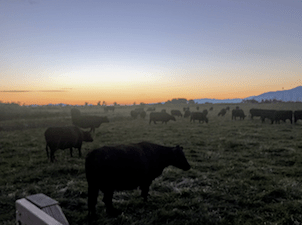
The ranch now raises black Angus beef.

“The cows keep us grounded in what we do each day,” Dalon says. The most interesting part of the ranch’s history, in fact, is its cattle brand. It is the cross E, and the namesake of the ranch. It is the oldest cattle brand still in use west of the Mississippi. It is a bit of a mystery. “We know it was used by a commander in Brigham Young’s Mormon Battalion, most likely Ethan Jeremy, but we aren’t sure,” Dalon says.

But the Jeremy family would not sell the ranch to David Hinckley unless he promised to keep using the brand, and David’s family have felt very honored and proud to be owners of such a historic brand ever since.
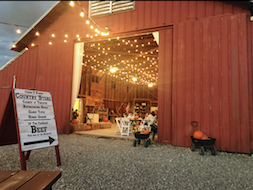
There a plenty of photo ops all over the ranch.

Running a cattle ranch is difficult work, but the hardest part isn’t the manual labor like you would think. Dalon likens being a rancher to that of a gambler, playing the highest of stakes. The nature of the business is luck. “There’s a lot of hope involved,” Dalon says. “You can gamble up to $300,000 on a crop of produce, and then you’re weather dependent.” Or in the case of a festival, “you’re hoping that in six weeks you can recuperate your investment and then make enough to make it worth it.” 

In the last 50 years, though, the stakes have increased tenfold. The entire business has changed. Dalon explained that he is now competing on a global agricultural market. His operation is now expected to be equally as efficient as a ranch that is working for a mass retailer, and shipping globally. It puts a strain on his resources.

Even more concerning has been the encroachment of development. Hundreds of acres of Dalon’s land have been bought out by the state government due to water accessibility, or shut down due to new EPA regulations. The changes began to greatly affect the business. “About seven years ago, we started losing hand over fist money, nearly $400,000,” Dalon says. “We had to completely reinvent the diversification of where our money was coming from.”

A display outside the Cross E Ranch pumpkin patch.

These changes forced the family to get creative with their revenue streams, which is how the Cross E Ranch festivals began. The ranch puts on three major festivals a year, the Summer Fun Free Days, the Baby Animal Festival and the Fall Festival. It also offers a multitude of private events, such as weddings, summer camps and corporate events.

Despite the stress the festivals cause him, Dalon says the creative aspect they bring to the job is the real fun part of the business. His goal is to constantly come up with new ways to make the farm better and more entertaining for the guests. Dalon just wants people to connect with agriculture, so he spends his time thinking of new ways to make the farm experience more accessible.

The Fall Festival, specifically, has been a major success since it started in 2014. Mother-daughter working duo Teresa and Kristal Hyde consider it their favorite festival. Kristal, who is the ranch’s event coordinator, described the Fall Festival as “fun, family, and good times.” Teresa, who helps run the ticket booth, nodded in agreement and added, “I’ve gone for the past three years before either of us worked here. They make their own doughnuts and it’s my favorite.”

IMG_3932

“There’s something for everyone.”

Of all the activities available, both Kristal and Teresa recommend the hay ride as a must-go-on when the festival next comes around, while Dalon insists everyone try the food. “There’s a doughnut shop, caramel apples, kettle corn, and a concessions shop where you can try a Cross E hamburger,” Dalon says. “There’s something for everyone.” This 2018 Fall Festival included a 14-acre corn maze, a 12-acre pumpkin patch, hay rides, slides, animals, and plenty of food. Check the Cross E Ranch website for more details on its variety of year-round festivals and activities.

Dalon is very excited with the direction the ranch is heading currently, but admits that it is expensive to change. He and his sister Heather haven’t taken a paycheck in two years. “Herding people and cows are really similar,” he said with a laugh, “but they do require different fencing. We haven’t made any money on the festivals yet because we keep reinvesting in them.” It’s quite a strenuous transition period.

An old tractor turned display on the edge of the ranch.

In the future, Dalon hopes the ranch will stay in the family. Heather has four daughters that she would like to see be involved. The siblings would both like to continue toward the direction of mixed use, with plenty of entertainment, but also maintaining the interactivity and ambience of the ranch.
How part-time job affects GPA and tips to success

Story and gallery by SEOK LEE

People work in companies and students go to college to study to get better jobs after they graduate. To study in a university, students pay lots of tuition fees to university administration. The reason why people go to college is that some jobs require a university diploma.

In other words, people want to have better jobs by investing money in college tuition like a stock market. Parents bankroll money for their child’s future and child spends time for their future. Even some students supply money by themselves without parents’ financial support.

Students have a part- or full-time job to earn money for tuition fees. Also, some students work to gain industry experience and to be a more competitive applicant in the job market. Moreover, some people work part-time to earn pocket money for themselves. These show that college students work a part- or full-time job for various reasons.

As a result of a survey with 10 college students at Marriott Library, eight out of 10 students currently have a part- or full-time job, and two students have worked a part-time job in the past, but they mention that they are now concentrating more on their studies.

More college students who are currently working answer that they work 11 to 20 hours a week. Nine out of 10 respondents to the questionnaire say that working less would lead to higher academic achievement.

They say that if they worked fewer hours, they would have more time to spend studying. Also, they respond to the questionnaire that working while attending college had somewhat negatively affected their GPA.

One respondent said that working less would not lead to higher academic achievement. He said in the questionnaire that it is only an excuse for not having time to study because of a part- or full-time job.

He points out one survey question and says if people want to get higher GPA or college success, it is essential to study a lot. The survey question that he answered was: how many hours a week do you study for classes?

According to survey results, most respondents respond that they study 11 to 20 hours per week. He said that he studies more than 30 hours per week. He said working a part -or full-time job to earn money for tuition is not a good idea.

Instead, studying hard and trying to get a scholarship is more beneficial for the future. He says that he applies for scholarships and he also accepts subsidizing financial aid in the university.

Good scholarships are needed to study hard. ASUU offers a tutoring system to all university students. It is located in the Student Services Building, third floor. ASUU provides tutoring service in its office and library. Kassidy L. Giggey, a learning specialist in ASUU’s Learning Success Center, says, “Large numbers of students use tutoring and one or two students per week come to ASUU and ask for tutoring.”

In order to get good grades while working, she suggests making a schedule and posting it where a student can see at easily. She recommends doing this for a month as a habit. When a student plans to make a schedule, she says, “It is recommended to study six or seven hours per class.”

She emphasizes, “It is regrettable that many students are not yet familiar with this program, and our office is ready to help students at any time.”

The Learning Success Center, which is located in the Student Services Building, third floor, also provides online resources to support study tips such as better note taking, study guides, time management, study skills and more. These online resources help students to study easier and better.

The Academic Advising Center, located in the Student Services Building, fourth floor, and major advisors also help students succeed in college. One academic advisor named Steve Hadley says, “Lots of students work part-time but they take over 15 credits. This is one of the reasons students get tired before graduation.”

He says, “If students have a part-time job, I advise them not to take more than 15 credit hours and if students have a full-time job, I advise them not to take more than six to seven credit hours. For a better school life, balance in work and study is needed.”

He also says, “In fact, many students want to get good grades and ask me for advice that they do not have enough time to study because of work. It is always welcome to help students so please make an appointment on the website anytime.”

The Student Success Advocate Office is in Sill Center near the Union. This program was made five years ago and it also supports students’ college success. Because it is not the old program, it has not been known to many students yet.

April Ollivier, who works in the Student Success Advocate Office, says, “Learning Success Center and Student Success Advocate Office is quite different. The ASUU tutoring system in the Learning Success Center is providing more academic skills to students but the Student Success Advocate Office gives advice to students with ordinary issues too.”

She also mentions, “Student Success Advocate Office provides texting system so they text students whether they are fine in college or not.”

According to survey results, a part- or full-time job affects GPA somewhat negatively but there are some tips to succeed in college life. Both studying hard gives success in university and engaging in clubs and activities help students succeed in college too.

University provides lots of programs for students to succeed in college life such as Learning Success Center’s ASUU tutoring system or Student Advocate Office provides. Hopefully, all students have a good university life before doing social activities after graduate.

Clara Welch

MY STORY: DSC00474Curing homelessness with a focus on the individual

MY BLOG

ABOUT ME: I’m a junior at the University of Utah studying Strategic Communications. I’m from a small town in Utah called Farr West, but love living in Salt Lake City and can’t imagine living anywhere else in Utah.

I am working towards finding a career that will help me make a difference in this world. Making meaningful connections with people is important to me and I strive to find the best in every person. I’m always looking for opportunities to learn and grown and am excited for what the future holds.

When I have free time, I enjoy playing the violin and piano, reading, listening to podcasts, and spending time with my friends and family.

LinkedIn

Laura Child

IMG-0909 (2).JPG

The “Me Too” movement and the effect on college campuses

https://www.linkedin.com/in/laura-child-852870ab/

ABOUT ME:

I’m a seasoned digital executive, leader, and strategist. I’m in an expert in strategic communications, business management, event management, and design. After receiving my Bachelors Degree in Strategic Communication at the University of Utah, I’ve been able to be a CEO of a successful commercial cleaning company, an event, and marketing manager, a financial account manager, and have had the opportunity to work on different projects and events with several different non-profit organizations.

Any project I take on, I take pride in completing it to the best of my abilities. I love a challenge and welcome them in all aspects of my life. I am the hardest worker in the room, always striving to gain additional skill sets.

In my free time, I enjoy working with non-profit organizations and traveling internationally. I am passionate about engaging in other cultures, foods, religions, and the environment. My dream would be to become a travel writer, working with National Geographic…. maybe one day.


Katie Andress

IMG_0224.JPGMY STORY: 

MY BLOG:

ABOUT ME:

I was born and raised in Mission Viejo, Calif. before moving to Salt Lake City to attend the University of Utah and pursue the sport of skeleton.

At the U, I began my educational career majoring in mechanical engineering before switching to math, business and currently I am a senior majoring in strategic communication.

While pursuing a degree I participated in the sport, skeleton for five years with the goal of going to the Olympics. Eventually I decided to stop sliding due to the high cost, time commitment and safety hazards.

LinkedIn