Reflection Blog: Spencer B

Reflection: The Future of Capital Punishment in Utah

By Spencer Buchanan

LinkedIn: Spencer Buchanan

My story regarding the death penalty was inspired by the recent a bill introduced in the Utah Legislature to repeal the death penalty. Given the historically staunch position, those on the Right take on the position I found it interesting. Two of the sources I came about came with the help of Professor Whisenant and his connections. The other two, I found from searching around campus. Professor Burbank from the Political Science and Nicholas Colemen, the President of the Utah College Republicans gave me the interesting dynamic of conservatives regarding capital punishment. The momentum behind the efforts to repeal the death penalty in Utah come from position changes within the Republican Party. Both Colemen and Burbank’s comments on the matter gave both a professional and personal insight into the matter.

Developing this came with relative ease due to the already expansive reporting and research was already done on this topic. The debate regarding capital punishment has been long fought and there is much in data and reports dating back several years. What I really wanted to focus on the changing views on it. For most the history of capital punishment, Republicans and conservatives had been strongly for it and Democrats have usually been against it. I read research as to what could explain the steep decline in support for the policy across the board and more specifically with conservatives. My aforementioned interviews with Coleman and Burbank gave this explanation.

From this experience, I have learned that you need a lot of facts, knowledge, and original sourcing to make a good story. Of the facts and interviews you do, only about 20 percent of what you do and find is used. Professor Burbank, when I met with him, gave a lot of information regarding the history, and other factors that play into the support or opposition to the death penalty but I to widdle at he had given to find what works best for the story.

Reflection Blog

University of Utah students voice their opinion on Bears Ears

By Courtney Ruttan 

April 17, 2018

    The inspiration for this story came from my passion for protecting and preserving the Earth. I was personally offended when I heard the possibility of the Bears Ears Monument shrinking. I wanted to gain more knowledge and do research on exactly what this was going to effect. Having grown up in Utah, I am so proud of all of the beauty this state has to offer.

    I wanted to focus my story on what students at the University of Utah had to say on the matter being protests broke out on campus. I was interested to see the passion that students had for the issue ranging from both sides of the issue but mainly on protecting the land.

    During the writing process, my sorry initially was a great editorial article that was very story based. I learned that this story needed to be filled with facts and evidence for my claims. It wasn’t until then that my story gained focus. I tailored my story towards the reasoning and effects shrinking Bears Ears would have. I also tried to keep my story focused on what is going on currently with the issue.

    I was surprised when I discovered several people were upset when President Obama made an executive order to protect all of the Bears Ears land. I later found out that executive orders typically have a short longevity.

    I decided to use the interviews from Hess, Hughes, and Christensen because they were able to speak the most on the topic and were educated on the issue. Each was confident in their opinion and where they stand. Christensen and Hess have both traveled to the Bears Ears Monument and were able to enjoy everything it has to offer.

    I am very happy I was able to write an article on this topic because it is very controversial in Utah. I will be interested to see if the monuments land does, in fact, decrease.

Linkedin: Courtney Ruttan     


The Future of the Capital Punishment in Utah by S. Buchanan

The Future of Capital Punishment in Utah

By Spencer Buchanan

Salt Lake City–In Utah’s 63rd Legislature an effort by Rep. Gage Froerer, R-Huntsville, sponsored HB379, a bill that would prohibit Utah prosecutors from seeking the death penalty after May 8, 2018. Effectively, it would end the use of capital punishment in the state.
“What’s interesting is that this debate is being pushed by Republicans, by conservatives. Whereas before it was an issue you didn’t discuss. This has opened the debate in many conservative states,” stated Professor Matthew Burbank of the University of Utah Political Science Department.
Professor Burbank elaborated on the debate and the changing public support for capital punishment. “We have two particular reasons for the change. One, a number of high profile cases, with DNA particularly, have led to a number of exonerations. Those have struck people.”
Since 1973 there have been more 155 exonerations nationwide according to the Death Penalty Information Center.
One of the most recent exonerations, reported by the Chicago Tribune, was former Illinois death-row inmate Gabriel Solanche, who prosecutors dropped their charges after Circuit Court Judge James Obbish overturned his conviction, finding that disgraced Chicago detective Reynaldo Guevara had lied under oath when he testified.
According to Burbank though, what has really moved the discussion regarding death penalty to the forefront has been the changing the attitudes of conservatives. “There has been a change in conservatives as to judicial practices, like mandatory sentencing, like the death penalty and it’s cost to benefit.”
A recent study prepared for the Oklahoma Death Penalty Review Commission found that seeking the death penalty in Oklahoma “incurs significantly more time, effort, and costs on average, as compared to when the death penalty is not sought in first-degree murder cases.”
The study which was prepared by Seattle University criminal justice professors Peter A. Collins and Matthew J. Hickman and law professor Robert C. Boruchowitz. The study reviewed 15 state studies of the death penalty found seeking the death penalty imposes an average of approximately $700,000 more in case-level costs than not seeking capital punishment.
According to the Salt Tribune, Utah’s own legislative analysts in 2012 estimated that a death sentencing and years of appeals cost $1.6 million more than a life-without-parole sentence. Another recent report estimated that Utah and its counties have spent almost $40 million to prosecute the 165 death-penalty-eligible cases that have been filed in the past two decades. Only two cases in that time have resulted in a death sentence.
The ability for states to actually execute prisoners has become difficult. Lethal injection has been the primary method in recent decades and is regarded as the most humane form of execution. In 2016 however, Pfizer joined over 20 American and European pharmaceutical manufacturers that had previously blocked the sale of their drugs for use in lethal injections, effectively closing the open market for FDA-approved manufacturers for lethal execution drugs.
Shifting public opinion also shows that support for the death penalty has waned greatly. According to the Pew Research Center, half of Americans (49 percent) now favor the death penalty for people convicted of murder, while 42 percent oppose it. Public support for capital punishment peaked in the mid-1990s when eight-in-ten Americans (80 percent in 1994) favored the death penalty and fewer than two-in-ten were opposed (16 percent). Opposition to the death penalty is now the highest it has been since 1972.
These practical obstacles to implementing a death sentence have shifted many of those on Right.
Nicholas Coleman, President of the Utah College Republicans, stated that younger conservatives his age seem to match the larger group and has seen the debate regarding the practicality of the death penalty in his organization.
“There are more than just a few. The thought is usually based on fiscal conservatism.” Coleman stated. He expanded saying the price to litigate a death sentence and the cost to house death-row inmates are often cited as reasons behind some conservatives’ desire to do away the death penalty.
Salt Lake County Mayor Ben McAdams, who served in the Utah Senate as a Democrat from 2009 to 2012, has watched with interest has noticed the shift among the Republicans and Conservatives he knows and works with. McAdams noted that he sees a general mistrust of government competency beyond conservatives as well that has played into this debate being opened up.
“It has been interesting to see the debate on both about how this might go.” McAdams said “As I speak to many of them, it’s more a reflection of a distrust of government. Government gets it wrong.”
Support for the death penalty though is still majority opinion among Republicans as of 2016 with 72 percent of still in support of the sentence according to Pew Research. Support is the lowest among Democrats at 34 percent while Independent support is 44 percent.
If trends continue in the same decline that has been seen the past couple decades, capital punishment may soon be a sentence of the past. And for conservatives states like Utah, it’ll be the upcoming voters and dynamic lawmakers to see that change.

Reflection on Story

LinkedIn: Spencer Buchanan


This slideshow requires JavaScript.

This slideshow requires JavaScript.

Hunter Wallin

Born and raised in Utah, Hunter Wallin is highly adaptable. With hard working characteristics, and a positive attitude he has accumulated many talents and skills. Currently attending the University of Utah, soon finishing up his Strategic Communications degree, Hunter has worked his way through college while still working full time as a warehouse manager at local company called RotoPax. Hunter is set to graduate from the U of U in the fall of 2018 and sets out to start his own future businesses.


Hunter Wallin

My LinkedIn: https://www.linkedin.com/in/hunter-wallin-bb51b7139/

University of Utah Meal Plan Story:   https://unewswriting.wordpress.com/2018/04/17/university-of-utah-required-meal-plans/

Reflection Blog:https://wordpress.com/post/unewswriting.wordpress.com/8612

Hunter Wallin- Reflection Blog

  • When I first started my news story, “University of Utah required meal plans”, there were a lot of driving factors behind it. When I first started school at the U I looked into living on campus with a group of friends. When we found out that meal plans were required while living on campus it immediately drove all of us away. While writing my story, I spoke to a few different people with different backgrounds. One of those was a longtime friend who lived on campus his first year, another was an upcoming student who also was against the requirement. I also spoke to a representative from diner services on campus. All of these were good sources because it allowed me to gain perspective from all sides of the issue. While writing this story, I found that it was really easy to write the main guideline of the story. I broke down what I wanted to write and what I wanted to report to the readers and went from there. It was basically just gathering more and more info each day until I had a well-rounded story that got the point across to the reader. I think this story really helped me create a good, effective process for more writing projects in the future. If I had to change one thing about this story I think there would be a little more research into how many students really use their meal plans and how much money is forcefully wasted by the students.


Author LinkedIn: https://www.linkedin.com/in/hunter-wallin-bb51b7139/

Sarah Terry: About Me

Story Title: Salt Lake City youth respond to revealed intentions behind Bears Ears and Grand Escalante Staircase shrinkage

Reflection Blog: Response to article 

About Me: Sarah Terry is a 20 year-old student double majoring in Art History and

Strategic Communications while minoring in Honors Ecology. She currently is the Utah Symphony | Utah Opera Public Relations / Marketing intern. Sarah plans to use her degree in Arts Administration, continuing Public Relations work for nonprofit arts organizations.

Sarah grew up in Los Angeles, California where she sang with the Los Angeles Children’s Chorus for 11 years. She moved to Utah in 2015 to attend the Honors College at the University of Utah.

When not working or in school, Sarah loves to read, be with friends, practice yoga, climb, surf, and snowboard. She can be contacted at sarahterryy@gmail.com, or on twitter at @scterrywrites.

LinkedIn Profile

Reflection Blog: Sarah Terry

By Sarah Terry
April 17, 2018

I was inspired to write my story, “Salt Lake City youth respond to revealed intentions behind Bears Ears and Grand Escalante-Staircase shrinkage” after the damning New York Times article “Oil Was Central in Decision to Shrink Bears Ears Monument, Emails Show.” The investigative staff analyzed more that 25,000 pages in total to provide rock solid evidence that indeed, the Interior Department’s intent was to source natural resources — coal, mineral, and oil — from the prior national monuments, despite Ryan Zinke promising he wanted to resize the monuments to appropriate amounts, and had nothing to do with potential coal or oil reserves.

There was a lot of information to analyze, but thankfully there were a lot of professional news sources that helped to compile and find the highlights. I did have to double check, but that wasn’t too difficult to do since most of the journals cited their sources.

Locating sources was easy; most of my friends are directly involved in at least some aspects of activism, whether that’s environmentalism or not. All of the people I asked said yes and were more than willing to go on the record.

The only real ‘moral issue’ I had writing the paper was trying to stay neutral. Obviously, I am passionate about the outdoors and its well-being. I had to do a lot of research to understand exactly why politicians and citizens were ok with the dismantling of the national parks. However, once I got into that headspace I think I was able to accurately report the most important facts.

Final thoughts:
I am thankful that I wrote about this topic! The Utah outdoor “cannon” is so vicious (for good reason) to outdoor-opposition in any form. It’s good to find direct statements from representatives so you can know exactly what they believe and hold them accountable.

It is so easy to be so blind to the positives of the opposition, especially when you’re passionate. Understanding motives helped to “de-villify” Utah politicians to an extent, but definitely not Trump’s cabinet.
Word Count: 336

LinkedIn Profile

Reflection Blog: Deaven Dell


Reflection Blog:

I wanted to learn more about a new bill in Utah regarding red lights. I have always been told that Utah drivers are the worst and I have seen some bad drivers here but are we really that bad or just different? Why would we make things more confusing by enabling people to run red lights when failure to yield is one of the leading causes of crashes in Utah? What is being done to improve the safety? What can be done? How do our regulations differ from that of other states? I believe that one person can make a difference and I would like to inform others of the real problems and how we can improve the safety of roads here in Utah

While researching more about this bill and interviewing some people I recognized that there are many causes of reckless driving. The biggest thing that I found was that speeding is a big contributor to crashes here in Utah. Personally, I am part of the problem. Everyone is always in a rush and I believe we need to make lifestyle changes to be on time. I find when I am not in a rush I am a better driver, I am calm, polite and I even slow down a ton. When I am in a rush however, I find myself irritated, speeding, and not very polite.

Writing this story was kind of hard for me to write because I am part of the problem and I didn’t want to put in my own bias on the topic. I do believe that we should have stricter laws, more law enforcement and new regulations. There are some cool things that other states are putting into place like speed capturing cameras that send tickets to those who speed by them. I thought that this was an interesting idea. Although with its own problems, it seems to be a good way to reduce people from speeding in these areas. Another interesting thing that I would like to research more that would have been cool to add to the story is automatic self-driving cars and the future development of this technology. Self-driving cars could potentially reduce cars from speeding because you could set a limit for the roads that the cars are driving and they would detect that and only go that limit. This however causes us to rely on technology more than our own reacting skills, which I think if implemented correctly could be an amazing thing for most people.

Reflection Blog: Kara Rhodes

As a Gender Studies major I have always been fascinated with career choices of females and males. Why do they want to do what they do? I decided that I would write a story on women in STEM (Science, Technology, Engineering, and Mathematics). I have never been interested in STEM but, I knew that they are difficult fields to be involved in. I located sources that I knew personally because I knew it would be the quickest response time while still being valid. I reached out on social media platforms to find people willing to be interviewed. I went researching on good ol’ google for statistics on women in STEM. These sources were the best sources for my story because they are local and they have real experience in these areas. There were a few obstacles that I had to work around because research on women in STEM is difficult to find. There were no moral issues but I had a difficult time not giving my own opinion and bias. Bringing it all together was fairly easy because the questions I chose to ask were filtered toward a few questions in mind. Why aren’t there as man women in STEM as their are men? I really enjoyed writing this story and I learned a lot about my writing as well as how to improve it. There will always be something to learn about writing and that is why I’d like to become a journalist upon graduation. STEM is such an interesting field and I wish there were more that I could contribute to letting children know that anyone can be successful in whatever they pursue.

Reflection Blog: Paula Garcia

The cruelty-free cosmetics industry is currently booming

I decided to write about a controversial issue that shouldn’t be as controversial as it actually is: animal testing in the cosmetics industry. It is controversial because people have to take a stance and convince others that animal testing in the cosmetics industry is wrong – but it shouldn’t be that way. The horrors that animals endure for reasons related to vanity are evident, and anyone can get educated about them through a simple Google search.

I work at LUSH Cosmetics and our company’s slogan or whatever is “FIGHTING ANIMAL TESTING.” They are a global leader in the fight against animal testing and have inspired and educated me deeply on the topic, which has made me passionate about it. I knew that the cruelty-free cosmetics industry would be the best topic for me to cover because of this.

I located my sources for my story by going to the root of everything – the Lush store I work at. I interviewed one of my coworkers, and a close friend of mine that used to work at the store too. Although my close friend no longer works at Lush, she is passionate about the fight against animal testing. They were the best sources for my story because they are passionate and educated about the cause.

I encountered the moral dilemma of exposing certain companies or not, but I overcame it by deciding that the wellbeing of animals is more important than the financial wellbeing of a corporation.

I was surprised by how passionate I actually am about this issue. I was also surprised by how willing the people I interviewed were to be interviewed.

Salt Lake City youth respond to revealed intentions behind Bears Ears and Grand Escalante Staircase shrink


By Sarah Terry

April 17, 2018

SALT LAKE CITY – A court-ordered release of emails between President Donald Trump and Senator Orrin Hatch’s offices reveal that oil and coal were behind the controversial shrinkage of two national monuments, a discouraging revelation to Bears Ears and Grand Staircase-Escalante supporters.

In the New York Times’ review of all 25,000 pages of released documents, the Department of the Interior focused from the start on coal, oil, and gas resources inside both monuments. In the remote Kaiparowits Plateau, an area at the heart of the prior Grand Staircase boundary, lives a deposit that the Utah Geological Survey estimated to have more than 11 billion tons of “technologically recoverable” coal.

Released email, publicly available online

Documents also reported that the Grand Staircase monument held 550 barrels of oil in tar sand deposits, worth between $2 billion and $18.6 billion.

When national monument reductions were first announced, Secretary of the Interior Ryan Zinke emphasized that his process was not aimed at any particular outcome, instead aiming to “right-size” the monuments’ land that he believed exceeded the scope of the Antiquities Act, the first legal protection of cultural and natural resources signed by President Roosevelt in 1906.

Zinke, as well as Utah Rep. Rob Bishop, even publicly rejected propositions that oil and gas existed within the bounds of Bears Ears. Rob Bishop currently chairs the House Natural Resource Committee.
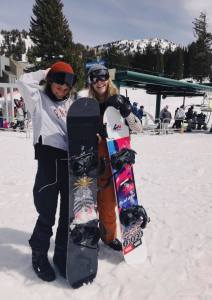
Briton Black (left,) Brighton Resort, Sarah Terry

“It’s truly despicable, but unfortunately not surprising,” says Briton Black, a 19-year-old environmental advocate with Patagonia and the Southern Utah Wilderness Alliance. “I can’t even believe that our government can just get away with outwardly lying. What kind of standards are we holding them to?”

In an email sent March 15, 2017, from the office of Utah Sen. Orrin Hatch, one month prior to the Trump administration’s review of monument boundary lines, Edward Cox, Hatch’s legislative aide, provided a map of the senator’s ideal reduced monument protections.

“The new boundary depicted on the map would resolve all known mineral conflicts for SITLA (Utah School and Institutional Trust Lands Administration) within the Bears Ears,” said the email. SITLA currently manages the 110,000 acres near the prior monument, with intentions to generate revenue from trust lands for public schools, colleges, and hospitals, steward the land, and “deposit proceeds into 12 individual permanent endowments, which are invested by…the School and Institutional Trust Funds Office.”

Trump’s new boundaries nearly parallel the map provided in Hatch’s email.

Only a sophomore in college, Black’s work with two large organizations motivates youth to have their voices heard. Black says the experiences and people she meets volunteering has given her hope for the future. “Yes, it’s annoying, it’s not ideal, but for now it’s just what we have to do. The future of Utah is in our hands, and that’s a really great thing.” Black’s concerns are shared views among many of the youth in Salt Lake City, however much of the population remains positive.

Jaya Muehlman, Argentina, Sarah Terry

“The only thing we can do right now is trying to have our voices heard,” says Jaya Muehlman, “and work hard to ensure that when our generation is in power we can do the right thing.” Muehlman is a junior in college studying biology with plans to study decline in Southern Right Whale populations after graduate school.

Orrin Hatch, Wikipedia Commons

“While some on the Left and in the media have attempted to portray supporters of this executive order as greedy energy tycoons,” wrote Hatch’s office in an official statement, “the real [beneficiaries] are Utah schoolchildren and the people of San Juan County.”

The statement continues, “Senator Hatch is grateful these emails have been released, because they make very clear that his priority in addressing the Bears Ears situation was looking out for the people of Utah, and particularly the people of San Juan County who were ignored when this monument was designated.”

Molly Davis, a 23-year-old Policy Analyst at the Libertas Institute, finds state interest in additional funds for education interesting.

Molly Davis, Utah State Capitol, Sarah Terry
“This past year was a tax surplus year,” says Davis. “It seems strange that despite having extra spending money, the state is looking for more funds in the destruction of lands that bring in millions of dollars in tourism every year.”

One positive outcome of these losses has been higher political engagement in the community, especially youth, in all kinds of different issues, not just environmental related.

Police estimated that around 8,000 people attended the recent “March for Our Lives” gun-reform protest at the Utah State Capitol, making it one of the largest rallies in Utah history. The “March Before our Lives,” a rally to support second amendment rights an hour prior to the scheduled “March for Our Lives,” drew a crowd of 1,000, the 2017 Women’s March drew approximately 6,000 participants, and an air quality march in 2014 drew a crowd of 5,000.

“The views of youth are not represented in our government, and that silencing is really bad,” says Black. “I think it’s becoming obvious that we’re not going to just sit around and wait for political figures to die off for actions to be taken.”

Total Word Count: 867
Reflection Blog
LinkedIn Profile


University of Utah students voice their opinion on Bears Ears

By Courtney Ruttan

April 16, 2018

SALT LAKE CITY — Utah civilians have been up in arms on President Trump’s decision to shrink national monuments. Bears Ears, one of the most affected in this matter, is home to several of Utah’s native tribes and most beautiful landmarks. Moreover, the land contains a history, artifacts, and archeological wonders.

    In 2014, President Barack Obama issued an executive order to create a 1.3 million-acre national monument in Utah land known as Bears Ears. He not only protected this land for its natural beauty but to protect the native tribes that inhabit the land as well.  These tribes include the Navajo, Hopi, Ute, and Zuni. Several Utahn’s were very pleased to see that this land was going to be protected — however, some believed that protecting the land was getting out of control.

    In 2017, President Donald Trump announced plans to reduce Bears Ears by 85%. In a recent New York Times article, “Bears Ears National Monument Is Shrinking. Here’s What Is Being Cut,” “Bears Ears has attracted controversy since President Obama announced in December 2016 that he would protect the 1.35 million-acre site in southeastern Utah as a national monument.”

    People travel all around the world to see everything Utah has to offer. President Trump issued a reevaluation on all National Monuments created since 1996 in search of land with unused resources. Trump has chosen Bears Ears specifically for mining and drilling of oil. Protests all over the state broke out including protests on the University of Utah campus.

    According to the article, “Trump was greeted by thousands of Utah protesters, some who blocked downtown Salt Lake City streets and faced off with police dressed in riot gear,” by the Salt Lake Tribune, “before President Donald Trump even arrived in Salt Lake City, he had a crowd waiting to tell him he’d be wrong to revise the boundaries of two national monuments in southern Utah.” The article continues, “Hundreds of people soon became thousands at the footsteps of the Capitol, most decrying the anticipated announcement that Grand Staircase-Escalante and Bears Ears national monuments would be drastically shrunken and broken into parts.”

    Sydney Hess is a recent graduate of the University of Utah and is upset with the decisions Trump is making. “I believe the land needs to be protected,” Hess says, “it is not the government’s place to take away the land for mining.”  A self-described lover of all things Utah, she enjoys traveling to the national parks, including hiking, camping, and exploring the outdoors. “Bears Ears needs to be protected. President Trump needs to look into the future,” she says.

    Dalton Hughes, a current student at the University of Utah is displeased with President Trump’s decision.  “While Donald Trump is creating a great number of jobs like he said he would, these jobs are not worth taking away Utah land. Hughes believes that we do not need the oil that can be drilled for within the land. “There are several other locations for mining and the land that contains Bears Ears needs to be protected.” Hughes is not originally from Utah; his family made the decision to move here for all the beauty Utah has to offer.

    Mat Christensen, another former graduate of the University of Utah, is not afraid to fight for what he believes is right. Mat has attended several protests in honor of protecting the Bears Ears Monument. “Everyone needs to educate themselves and take a stance on the matter. It is time we find the alternative to oil so we don’t need to drill into the land. Instead of drilling, polluting, and destroying this earth, it is time that we start to clean it up,” Christensen said.

    Utah continues to fight for the Bears Ears land. As of February 2018, the courts are in great debate over the issue. The Trump Administration is putting in a great effort to transfer the case to Utah courts. Until then, the NARF (Native Americans Right Fund) is continuing to surveillance the land ensuring there’s not detrimental damage to the land. On February 16, the courts put a public comment process into effect.  Residents of the Bears Ears boundary are very supportive for an expansion of their protected land but very opposed to taking away land.

    The public comment process period is coming to a close with less than one week left. Federal land managers have begun drawing up new land boundaries for this area. However, the case is not settled. Several issues related to reducing the size of National monuments include economic impact, culture history, science, and law. The government still has to undergo several obstacles before Utah may lose a great deal of protected land. The Trump administration continues to hold several meetings regarding this issue. University of Utah students, Native Americans, and Utahan’s alike will continue to fight for the protection of this sacred land. 

830 words        

Reflection Blog 

Linkedin: Courtney Ruttan 

9th & 9th: shop, dine, and live local

by Noelani Blueford

Reflection Blog

LinkedIn Profile

SALT LAKE CITY–10 years since an architectural rejuvenation brought a remodeled theatre, freshly paved streets, and brightly colored sculptures posed in front of hip, eclectic storefronts, Salt Lake’s 9th and 9th neighborhood is thriving. Located at the intersection of 900 East and 900 South, just east of downtown, this business district at the center of a small but busy neighborhood features a growing selection of small eateries and boutiques. The shops and neighborhood are a featured piece of Utah’s Buy Local First movement, which seeks to promote stronger communities through local business ownership. But further growth may be difficult due to conflicting interests and limited space.

The Tower Theatre is the oldest and most iconic institution still in business in the area; it originally opened in 1928. 90 years later, the Tower Theater has only risen in popularity, notably as one of the venues for the annual Sundance film festival. Additionally, the Salt Lake Film Society (SLFS), a non-profit organization dedicated to giving Salt Lake residents access to a diverse selection of film choices, was founded in 2001 with an initial mandate to restore the crumbling Tower Theater. Ten years after that restoration, the SLFS continues to provide access to non-mainstream films that reflect “the lives and cultures of everyone in our society.” The Society enjoys strong support from the community and the theater stands today as a testament to Salt Lake City’s commitment to independent film, arts, and culture in the Intermountain West.

On the newer end of the spectrum, The Stockist is a sleek specialty clothing store originally opened in 2009 under the name Fresh by siblings Helen and Ian Wade. Helen Wade is on the board of Utah’s Buy Local First movement, and remembers when the neighborhood was very different. “Back when we opened there were only maybe 3 places: Pago, Mazza, and if you wanted a sandwich you’d go to Great Harvest,” she says. As part of her work with the Local First Utah alliance, Wade has created the Buy First Movement’s Place Makers Map, which lists more than 50 local stores in the 9th and 9th area.  

Next door, The Children’s Hour is a rainbow of color, featuring shelves neatly packed with shoes and books as well as racks of brightly colored children’s garments and stuffed animals. The clothes and stuffed animals are carefully curated —owner, Diane Etherington, has been curating high-end European childrenswear, books, toys, and gifts for her shop for 31 years with the help of her daughters. Etherington said that once finished, the rejuvenation was great for her business. However, trying to work in the midst of the construction was difficult because “Everything was ripped up.”

These shops and more are tucked behind red lamp posts and lime green metal benches which line the sidewalks around the 9th and 9th neighborhood. A popular eclectic hangout for students and artists, the neighborhood is in a continual process of getting a facelift courtesy of a public-private funding initiative. Most notable are the Nine Muses, kinetic sculptures commissioned from Seattle artist Troy Pillow, which were chosen in part by Etherington and have taken up residency on the busy corners of the cross street. This rejuvenation did not end with the statues and the benches: on May 14, 2016, 900 South was dedicated Harvey Milk Boulevard, after the late LGBT civil rights leader.

The cosmetic changes on the corner of 9th and 9th have been welcomed by many in the city, however, not everyone was in favor of further development plans for the area. The Salt Lake City Planning Commission approved a Conditional Building and Site Design Review (CBSDR), a proposal for a mixed-use building in the 9th and 9th neighborhood, in February of 2017. The building plans had initially been rejected by the commission 2 years earlier, in part due to issues with inadequate parking space. Construction is now underway for the new building on the Southeast corner of the intersection at 900 South and Lincoln Avenue; this lot previously held a single-story beauty supply store and outdoor parking lot, and will now feature a 35,000-square-foot 3 story development with mixed retail and residential space.

Limited space and conflicting interests are 2 of the biggest problems 9th and 9th faces, now and in the future. Currently, construction also continues east of the cross street to continue rejuvenation of the road and sidewalks leading up the hill to East High. “The construction of 9th and 9th was already fully scheduled and underway when we opened,” says Brass Smoothies co-owner Erin Miller, “So we just don’t know anything different.” With continuing reconstruction comes rejuvenation, pushback, and more people; all of which are emblematic of the growing pains of the restored 9th and 9th neighborhood. Diane Etherington, for her part, is looking forward to it. “I have faith in this neighborhood,” she says with a smile, “Actually, I’m kind of excited about the apartment building–now that they’ve figured out the parking lot.”

Sarah Terry

MY STORY: Salt Lake City youth respond to revealed intentions behind Bears Ears and Grand Escalante Staircase shrinkage

MY BLOG:

27459496_10204441059341964_1536578359639639342_n

ABOUT ME: 20 year old Sarah Terry moved to Salt Lake City in August of 2015 from Los Angeles, CA. She currently is the Utah Symphony | Utah Opera Public Relations / Marketing intern, and is enrolled full time at the University of Utah Honors College as an Art History and Strategic Communications double major and Ecology minor. When not at work or school, Sarah can be found snowboarding at Brighton resort. She loves reading, yoga, music, art, climbing, traveling, and hanging with her friends in the Chi Omega sorority. Sarah plans to continue with Arts Administration, hoping to eventually assist in the operation of non-profit art organizations. Sarah can be contacted at sarahterryy@gmail.com, and can be followed on Twitter at @scterrywrites.

Tanner Kirk: Reflection Blog

Reflection Blog: Utah teen suicide on the rise

By Tanner Kirk

Suicide takes more teen life’s then any other drug or killer out there. On February 6, 2018 one of my best friends, Sean Carne killed himself in the garage of his own home. He had been dealing with major depression and suicidal thoughts, sadly Sean decided to end his life. Because so many of my  family and friends deal with depression, I decided to write my paper on teen suicide in hopes to raise awareness of this enormous problem. Teen suicide rates have been dramatically increasing over the past several years and it will continue to rise if something is not done about this serious issue. The community needs to come together to deal with the problem and find solutions. Social media is a recent trend and has made a huge impact on how teens feel about themselves in this day.  The research I discovered, especially with social media, has affected the wasted time I spend on the different social apps. I wrote this story in hopes to raise awareness to those who have little to know idea on truly how bad teen suicide is. Everyday teens are committing suicide, and its up to us to find a solution. If you haven’t already, please read my story: Utah teen suicide on the rise, I believe you will find it interesting and enlighten you on how serious a problem in Utah this is.

Linkedin profile click here

Noelani Blueford

Photo by Codi Shandel Kline

MY STORY: 

ABOUT ME:

Does a poor conversationalist make a for a good interviewer? You tell me.

I’ve always struggled with chatting and small talk, preferring to keep them talking so I can listen. In polite conversation, many people find this behavior a little bit rude. When it comes to interviewing, however, it’s a valuable skill.

I’m a senior at the University of Utah studying Communications. When not in classes, I work for an online used bookstore. My free time is spent playing board games and gardening.

Courtney Ruttan: About Me

 University of Utah students voice their opinion on Bears Ears

Reflection Blog: Response to My Story 

ABOUT ME: Courtney Ruttan is currently a sophomore at the University of Utah. She is studying strategic communication and plans on pursuing a career in Luxury Real Estate. Courtney was born in Glendora California and was raised in Park City, Utah. Courtney is passionate about environmental issues, health, and the economy. She enjoys spending her time with family and friends as well as enjoying the outdoors. In the summer she loves to wakeboard, go out on the boat, travel, and catch some sun rays. In the winter she enjoys snowboarding, sledding, and snowmobiling. Courtneys plans on enjoying all this beautiful life has to offer. 

LINKEDIN: Courtney Ruttan

Reflection Blog: Noelani Blueford

9th & 9th: Shop, Dine, and Live Local

By Noelani Blueford

LinkedIn Profile

As a Utah native, my chief journalistic interest is in featuring the community. I want to know about the people, the places, and the things that make Salt Lake City both function and prosper.

Among others, I have written and recorded features on vintage stores in the city, vegetable gardening in the desert, the local board gaming culture–and the thriving neighborhood of 9th & 9th.

After 4 years of high school at Rowland Hall (and a year up the street at McGillis K-8 before that), I considered myself pretty knowledgeable about the 9th & 9th neighborhood that sits on the western edge of campus. I’d had a fulfilling career as a frequent customer at Dolcetti Gelato. I saved up money to buy my boyfriend’s mother presents from The Children’s Hour. Pumpkin chocolate-chip bread from Great Harvest was my main source of sustenance during exams. In this way, I considered myself a great candidate to write up a news story celebrating ten years of the repaved streets and art installations that were put in just before my freshman year.

Sitting down with Diane Etherington, owner of The Children’s Hour, I realized just how wrong I was. Having been in the neighborhood for 30 years, Diane is an incredibly important member of what was once a very small but flourishing neighborhood community. She spent years personally cleaning up the debris left on the sidewalks by students and grocery store clientele, and even now refreshes the city trash bins on her corner weekly. She’s seen dozens of businesses come, go, and switch storefronts, all the while providing excellent service to locally-minded customers for decades. She was directly involved with the rejuvenation of the cross-street ten years ago, helping to pick the sculptures that adorn the sidewalks.

The 4 years I spent traipsing through the area between classes (and yes, probably being a litterbug) were peanuts comparatively.

For me, that’s the magic of feature writing. Knowledge about the world cannot only be gleaned from our own personal experience and the front page news. Personal experiences must be shared between people to broaden our understanding of life, and feature stories are a pretty good way to do that.

League of Utes : A Look Into U of U Esports

By Brandon Ong

SALT LAKE CITY — “It was five years ago the first time they showed up in my office and said they were interested in having scholarships for playing esports,” said AJ Dimick, director of eSports Operations at the University of Utah. “The infrastructure did not exist then. The core group of students at Crimson Gaming created one of the first grassroots gaming community and held events so big they could not be ignored. They bothered all the right people. We were able to be the first school from a Power Five conference to make a varsity esports program. ”


League of Legends (LoL) is the world’s most popular esports game, according to Business Insider. LoL is a game that puts five players against five opposing players where the main objective is to destroy the other team’s base, or “nexus.” It launched in late 2009, and since then, boasts a worldwide, monthly player base of 87,000,000. In addition, LoL has a professional scene and a following compared to traditional spectator sports like basketball and soccer. Professional teams compete in a world championship at the end of every year, with frequent, multi-million dollar prize pools. Traditional sports stadiums like Staples Center have sold out League of Legends competitors. The game doesn’t just have a professional scene, however; teams are being formed at the amateur and collegiate level.


Asset 8 SKT VS SAMSUNG GALAXY STAPLES CENTERWhile professional gaming on campus may seem abstract or even ridiculous to some, it shares several parallels with traditional sports. For example, today, student-athletes take part in leagues, like the Pac-12. They have their own training facilities, are expected to not only practice with their teammates but also to devote their own time to improve, and receive scholarship money. To keep their scholarships, they must fulfill a minimum GPA. In addition to the PAC-12, the university’s League of Legends team takes part in a larger league sponsored by the game’s creators Riot Games,  called uLoL, consisting of 300 university teams across the country. The players spend at least 12 hours a week practicing as a team and all maintain a competitive ranking of Diamond 5 — this means they must be in the top 2 percent of players in the nation in order to keep their scholarship of $1,000 a year.Since this is only the first official year of U of U Esports, the infrastructure of the team is not as well established yet, as there are only 25 esports players overall, seven of whom are League of Legends players. However, establishing an esports structure is not the only thing the U of U esports team has managed to do this year.
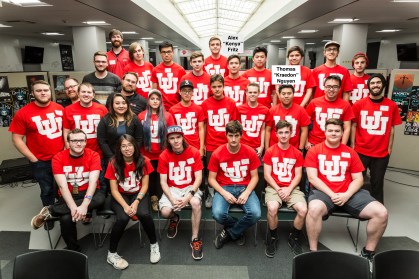
 

Besides creating the first collegiate varsity esports team, the U has teamed up with other Pac-12 universities to form the Pacific Alliance of Collegiate Gamers (PACG),“ to further the interests of collegiate esports among Pac-12 college campuses,” according to UNews, the university’s official news source. The team is also taking initiative by not only broadcasting their own games, but all the other PACG teams’ games on twitch.tv, the leading streaming service for video games in the U.S.


Although it is the offseason, the players can still be seen practicing hard in their current training facility, the Einar Nielsen Fieldhouse. “We’re expecting and encouraged to stay on the team for next year,” said Thomas “Kraedon” Nguyen, whose major is finance. He says while he enjoys the game, Nguyen also plays to retain his scholarship.

Asset #4

“Even though the game is fun to play alone, it feels good to compete and be part of a team that represents something bigger,” said Alex “Kenya” Fritz, whose major is computer science.  In their first official year as a team, they placed in the top 8 out of 70 teams in their uLoL division.


The team also has short and long-term goals they want to meet. AJ Dimick, whose role mirrors those of a traditional athletic director, says the most important goal is to expand how “we’re paying for the people for the education for the people involved.” Dimick compared the esports scholarship to a traditional athletic scholarship. While the esports students are given $1,000 a year, he estimates that traditional athletic students are given $30,000, which includes not only tuition— but money for books and room and board. He also mentioned that the program is looking to open nine more spots for scholarships next year and are looking to build an exclusive training and event facility for U of U esports. They are looking for funding through potential sponsors and the school’s athletic department.

Asset #3

Dimick’s vision for the esports team is more than just extra funding and more computers. “There are people that think the esports scene is a counter-culture to the mainstream sports culture. I find that ridiculous. I’ve been on both sides and I want to take those barriers down.”

In just the first year of U of U esports, the team has accomplished much. Esports fans will not be the only ones getting excited as the whole university community will be with them every step of the way. 

STORY GALLERY

BRANDON’S REFLECTION
BRANDON’S LINKEDIN


WORD COUNT: 848

Reflection Blog -Brandon Ong

League of Utes: A Look into U of U Esports 

by Brandon Ong

BRANDON’S LINKEDIN

A couple of months ago, we were assigned and had to present two pitches. The pitch that we liked better would be the topic of our final story. My two topics were opioids and League of Legends on the U campus. Even before I presented and after the class’s opinion (everyone heavily favored opioids), my mind was already made. It had to be about the League of Legends team at the U. The opioid pitch was only an obligatory one.

I’m an avid follower of the League of Legends esports scene. The school just formed a team and unfortunately, I’m not good enough to be a player. However, I wanted to contribute to the team by shining a light on them.

It was easy to find sources as I was acquainted with one of the interviewees, Thomas Nguyen. After I interviewed him and another player (Alex Fritz), he pointed me in the direction of AJ Dimick, the director of U of U esports.

AJ was my favorite interview out of the three. Within his first few sentences,  AJ’s passion for the school’s esports program was palpable. He talked about how proud he was of the student athletes and his ambitions for the program. However, I couldn’t include the entirety of the interview into my paper.  It would have really shown the scope of his love of the esports program.  Below is a quote I couldn’t fit into the final story.

“It’s not a coincidence that I am in the position that I’m in now. I’m a Utes fan. I can tell you who played center for the team during the 1990 season and I can tell you who backed him up and where he went to high school. I’m also a huge nerd and my job is a happy marriage of these two things”

The biggest obstacle I ran into was writing the actual paper itself. I had all of my notes compiled in front of me but still wasn’t sure how to string it altogether. The hardest thing was making sure that my story was not boring people to tears. During the pitch, I gave a brief, 15 minute run down of League of Legends. My professor said “Brandon, you threw everything but the sink at us.” With that in mind, I tried my best to explain the game itself and talk about the school’s team in an informative, non-boring way (hopefully).

Intro to Newswriting was definitely one of the harder classes I’ve taken so far. However, with this enterprise story, it was also a rewarding experience. News writing is not one of my strengths but I know that I am a better writer now than I was almost four months ago when the semester started. It was also rewarding to write about something I am so passionate about. My biggest hope is that my enthusiasm shows when people read the article.

Reflection Blog – Student Relationships with Campus Museums

April, 18th, 2018

University of Utah Student Relationships with Campus Museums and Galleries Reflection Blog

By Cristian Garcia


SALT LAKE CITY – Determining the narrate for my enterprise story, I struggled with finding a story which was both interesting to write and research, but also appealed to the student audience. Knowing that I enjoy learning and talking about art, I started with a topic in mind. After failing to gather enough information on my initial story, I shifted my narrative toward the campus museum story. I started off by reflecting on the state of art culture on campus. Moving forward I thought about the available museums and exhibits on campus such as NHMU and UMFA. After visiting the three on-campus locations, I quickly began to shape the narrative of the student relationship with the museums on campus. I knew specifically of one past volunteer at the Red Butte Gardens and started with that particular interview. I then reached out to the communications department at the three museums but was unfortunately unable to contact them through that route. Looking back, I think the story would have far stronger credibility with at least one interview from someone currently working at one of these institutions. I continued researching for interviews by talking with students in the library and the Marcia and John Price Museum Building. I found that of the ten students that I spoke with in regards to their intention to visit, only three showed a disinterest in the museums. I wrote this particular story because I believe that the museums have a lot to offer students and that it’s important to visit and reflect on that experience. After all, it is free.


Linkedin

University of Utah required meal plans

University Meal Plans are required but does this mean they actually get used?

University of Utah students pay thousands of dollars every year for a service that isn’t utilized.

04/15/2018

By Hunter Wallin

A common complaint among future and current University of Utah students are the required meal plans while living in student housing on campus. According to the University of Utah’s Housing and Dining website, these required meal plans can cost up to nearly $4,800 dollars a year on top of rent and other living costs. Despite paying roughly $19 per day throughout the school year, some students rarely, if ever, use the food provided on campus. This has many people asking why the meal plans are required and where the money from these unused meal plans is going?

REQUIRED MEAL PLANS-

Required meal plans for students living on campus are common at US universities. At the University of Utah nearly all on campus housing options available to students require a meal plan. There are also meal plans available to students living off campus. A campus meal plan ranges from $1714 a year to nearly $4800 a year. There is a large difference in options, from the amount of meals, and availability of the meals between these two plans. For example the meal plan that costs $1714 a year is only available to people living in certain housing units and only receive a total of 40 meals per semester while the $4800 option is available to most everyone and offers 21 meals per week.


WHY ARE THEY REQUIRED-

According to an article from NBC News some universities require meal plan subscriptions of all students, even those not living on or near campus where they would even be able to use the plan. According to their website the University of Utah’s intent is to help students who already have enough to worry about with school and work. One common justification for the requirement by universities is that if enough people buy the food the cost of food comes down, simple economics. It makes food affordable for everyone but requiring that cost can be unfair to students who would otherwise choose not to eat on campus.

IS IT SCARING AWAY FUTURE STUDENTS?

Max Jarman is an honor roll student and soon-to-be high school graduate. He has been looking into continuing his education by applying for his first fall semester at the University of Utah, and has saved enough money to pay for his first semester for tuition and rent. He was shocked and disappointed to hear about the meal plan requirement. “Why do they assume I want to eat on campus,” he said. Max also mentioned how he felt that they are trying to take too much control over students. For Max and many other upcoming students, this rule may cause people to avoid living on campus, furthering the University of Utah’s commuter school feel.


DO STUDENTS ACTUALLY USE THEM?

Wilson Webster, a pre engineering student, lived on campus his first year and had a mid-level meal plan. “When I was first starting school it was nice to have,” he said. He claimed that it was at first an easy way to make sure he stayed fed and had a consistent place to live. As the semester went on though the year, he fell away from using it as much. Once he started a job working evenings, he realized that it was easier to grab something quick rather than making the trip to one of he dining areas. Webster estimates he used about half of the allotted meals throughout the semester.


Courtney Ruttan, another student attending the U of U stated she rarely used her meal plan when living on campus. Courtney was fortunate enough to have financial help from her parents. “It was like they threw $3000 out the window. I would rather make my own food or grab something on the way home then eat in the dining area.,” she said.


IS THE UNIVERISTY MAKING MONEY ON UNUSED MEAL PLANS?

There is an apparent idea that the University is making money on people‘s meal plans. Via email we spoke to a representative from the University dining services, they claimed the opposite to be true. They claimed that Diner Services on campus simply charges students enough money to keep the service running and to improve upon infrastructure for student dining. Along with this, they noted that all food that isn’t purchased with student meal plans is donated to a local shelter and the campus food pantry by the university. They do this through a partnership with the Recovery Food Network, a student run organization on campus.

If you are a current student, upcoming student, or parent and have any other questions about meal plans at the U you can visit their homepage at https://housing.utah.edu/dining/ or send an email to Dining@utah.edu.


Word count 810


This slideshow requires JavaScript.


About the author:https://unewswriting.wordpress.com/2018/04/17/hunter-wallin/

Reflection Blog:https://wordpress.com/post/unewswriting.wordpress.com/8612

Author LinkedIn: https://www.linkedin.com/in/hunter-wallin-bb51b7139/

About Me: Cristian Garcia

MeAbout Me:

Cristian Garcia, a current full-time student at the University of Utah. Cristian is a communications major graduating in fall of 2018. He is a Utah native, living there for all of his life and has attended 3 major Utah universities. Cristian is interested in reporting on all things art and culture. A diverse set of perspectives is important to Cristian in reporting.


For More Info:

Reflection Blog

Linkedin

About me

Cristian Garcia’s Page

Cristian’s Stories:

University of Utah Student Relationships with Campus Museums and Galleries