All you need to know about Utah men’s basketball player Donnie Tillman

Story and photos by SAMIRA IBRAHIM

Donnie Tillman’s successful start in his first four games as a freshman paved the way for him to secure minutes in games during the rest of his collegiate basketball career.

Now a sophomore, Tillman, 19, stands at 6-foot-7 and weighs 225 pounds. He has become an immediate impact for the Utah men’s basketball. He averages 20.3 minutes per game and is ranked fifth among his team members. Tillman is an important element for the Pac-12 basketball team.

Even though his sophomore season came to an unpleasant end with the team’s overall record of 17-14 and no ticket punch to the March Madness dance, Tillman has remained grounded and is ready to get to work and prepare for next season.

“I make sure that my focus is directed toward improvement rather than all the backlash and comments about our performance this season,” Tillman said. “It just allows me to focus on becoming better and getting some future wins for our team.”

Tillman was born and raised in Detroit and is the son of Donna and Johnnie Tillman with four other siblings. Out of the four boys, Tillman is the youngest. He often looked up to his oldest brother, Bishop, who played as a Division II point guard for Wayne State University. His brother basically paved the way for Tillman and his love for basketball.

As his mother Donna was a single mother raising her boys, she was also battling illness and would often get sick. There would be instances where her epilepsy got so bad, that she needed to quit her job as poker dealer for MotorCity Casino. But she was fortunate enough that it allowed her to support her son and let him finish high school.

He and his mother received a call about an opportunity to attend and play for Findlay Prep in Las Vegas. This is a nationally-recognized high school basketball program that has produced many NBA draft picks. In less than two weeks they made the decision to drop everything and move 2,000 miles away from home in time for him to enroll in the basketball program.

“Everybody thought I was crazy for leaving everything I had known and grew up with. But I knew that this was fate and written for me and so I just had to take the leap of faith. I was also only 15 years old, so you can only imagine how scared I kinda was,” Tillman said.

He and his mother sold everything in their home and everything they owned, then took a ride and never looked back. It wasn’t necessarily easy making the move, as the road trip included many tears and fond memories that they shared along the drive.

“I was always aware of Findlay Prep but they said there are going to be a lot of differences, but it is going to be the best thing for me,” Tillman said. “It took us four days to get there, I was definitely having second thoughts and didn’t know what I got myself into.”

He played three seasons at Findlay Prep where he averaged 14.3 points, 8.0 rebounds, and shot 65 percent as a senior. Tillman had a few injuries in his first two seasons but still helped his team to a 33-4 overall standing record.

When Tillman decided to sign with the Runnin’ Utes at the end of his senior year in high school, his mother counted more than 20 scholarship offers. He was ranked as a four-star recruit by ESPN.com coming out of high school.

After committing to Utah, Tillman said people expected him to be an even better collegiate player than he was in high school. His mother also was excited about his decision to come to Salt Lake City because it offered a strong emphasis on families.

For his sophomore season at Utah, in a vote of the 12 conference coaches, Tillman was named Pac-12 Sixth Man of the Year. 

“He is a great team player on and off the court. Donnie constantly works hard and just wants what’s best for our team. I see him making it to the league for sure,” said teammate Timmy Allen.

Reflection Blog: Finding a balance when writing about harassment

By Emily Albrecht

My Story: In the Salt Lake Fire Department, it’s still a man’s world

When it comes to talking about a subject that can be as personal and volatile as sexual harassment, it’s hard to know where to begin. I have friends that work with the Salt Lake Fire Department, and I knew that there was a story to tell about the casual sexism that borders on harassment in such a male-dominated environment. I didn’t want to write a scandalous exposé of something along the lines of Harvey Weinstein, I wanted to highlight the ways that women are still seen as objects: even when they’re doing the same type of back-breaking work as the men around them.

The first and hardest part of developing this story was finding people who were ready to talk on the record. Everyone in this story has had their names changed for privacy. If they didn’t, no one would’ve been willing to come forward. I knew from hearing offhand comments that there was something there, but when your job is on the line if someone gets wind of what you’re saying, it’s quite the deterrent to speaking freely. My issue was this: I wanted a space for both the women and the men who have seen this type of behavior to tell their story, I needed it to be reputable so I didn’t look like I was making things up, and the people who gave their stories to my piece had to be protected. I struggled with how much information was too little or too much, whether I needed to focus more on reputability or safety. In the end, I came to a conclusion that defined my writing and the rest of my process: women will always be told they’re lying. Victims will never be believed by everyone, much as they may speak their truth. I had to put their safety first, and trust that people will believe the testimonies regardless of what they’re told about the speakers.

In the end, there were a lot of things that I wish I could’ve included that I couldn’t because it jeopardized the safety of my sources. For every story that’s happened to every woman on the force, there’s ten more that are incredibly personal and would give away the source in an instant to anyone who’d seen it happen. I think for some journalists, they’d err on the opposite side of me, and maybe that’s a mistake. But I stand by my decisions, and if nothing else they taught me more about myself.

In the Salt Lake Fire Department, it’s still a man’s world

By Emily Albrecht

SALT LAKE CITY — In the Salt Lake City Fire Department, women show interest but still seem to be on the outskirts of the “boys’ club” that’s been cultivated.

Part of this is historically, firefighting has been men’s work. This dynamic has real-world consequences, and those are becoming increasingly apparent. In order to survive in industries like this, women often adapt by distancing themselves from each other or trying to become ‘one of the boys,’ which furthers preexisting norms. One of the biggest issues, however, is sexual harassment. In a study by Pew Research Center, 62% of women in male-dominated fields said that sexual harassment was an issue in their industry, as opposed to 42% in female-dominated fields. In that same study, women in male-dominated industries reported 10-20% more discrimination on the basis of sex than those in other fields.

When it comes to the SLFD, it’s evident that there are stories to be told, but victims are too scared to speak openly about it. Of the five people that were approached to be interviewed for this story, only three were willing to talk and all of them did it on the condition that the interviews would be anonymous.

Liam*, a 25-year-old male firefighter, said part of it is a culture that punishes those that speak out. He’s seen many women forced to prove themselves in ways the men aren’t required to and has friends who have experienced sexual harassment or assault but don’t want to tell anyone out of fear of being “blacklisted.”

“If you haven’t had at least five years of experience, you aren’t expected to have an opinion on anything.” Even after that, he says it is nearly impossible to make real change, saying the system just “isn’t set up for it.” The men in positions of power are, for the most part, happy where they’re at. As long as they continue to benefit from the systems, Liam doesn’t have a whole lot of hope. “It’s not a system that’s based on change. There’s a lot of opposition, culturally and otherwise.”

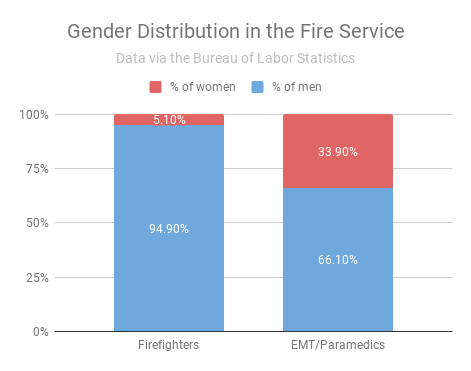
For the women in the department, it is evident they love their jobs. When so few of them are women, it is something they have to love, or it wouldn’t be worth it. The United States Bureau of Labor Statistics shows that in 2018, 33.9% of EMS personnel and 5.1% of firefighters were women. With this in mind, it’s easy to see why one EMT called it a “boys’ club” or, as Liam said, a “fraternity.”

As for the actual women in the department, they’re obviously competent and passionate about what they do. Katie*, 18, and Sarah*, 22, both work with Gold Cross as first responders, and therefore spend significant time with the firefighters on calls. Sarah feels like she’s built a rapport with the men, to the point where she’s not worried if they try anything with her because she knows she can tell them to back off, but that doesn’t mean she doesn’t notice the differences between how they treat men and women.
When new people come on to the team, especially guys, she tells them that although she’s treated nicely, she “is a female, so that changes the way they treat us.” It’s not always a “creepy” kind of nice, she emphasizes, but it doesn’t happen with the men on the team.

Image by Emily Albrecht

Aside from that, there are more concrete incidents or actions that get brushed off out of practicality. She’s there to do her job, and although they know better than to give her a hug and “leav[e] their hands on [her] lower back,” she doesn’t have the time to do anything about it. It’s a matter of picking your battles, and she finds it easier to say “no” and expect them to listen. “It makes me uncomfortable and then I just leave it alone.”

That said, there are some things that can’t help but put a woman on edge. “[I] knew a specific crew that had little nicknames for every woman at Gold Cross,” says Sarah. Even if some of them weren’t derogatory, some of them were, which left her wondering “well what on earth were they calling me?”

This uncertainty is echoed by Katie, saying “I feel like I need to be on my guard” around the firefighters. She’s happy with what she does, and doesn’t feel like she’s in a hostile environment, but that doesn’t mean she doesn’t have reservations. It’s not just about the small comments here and there that could be construed as sexual, it’s also about the attitude towards women in general.

There’s one part of the physical exam to become a firefighter that is especially difficult, says Katie, one all of the men say “when they watch it, none of the females pass.”(?) It’s this type of attitude that’s frustrating for Katie, and part of what she called the “boys’ club.” Despite her own experiences with harassment, her hopes for the future are high. “In my career, I don’t want it to be ‘cool’ to be a female firefighter. I want it to be normal, not just nine out of 400.”

*Names have been changed for privacy.

Salt Lake City: Safe or Survival for LGBT Youth?

By Kierra Cable

SALT LAKE CITY — On April 4th, The Church of Jesus Christ of Latter Day Saints revised its controversial 2015 policy that stated that those living in same sex relationships are considered ‘apostates’. According to (According to the church, apostasy is characterized as when individuals or groups of people turn away from the principles of the gospel. The church removed this policy from its records, allowing children of same sex relationships to be baptized and receive blessings. Instead of having the title of apostasy, same sex couples are now referred to as living in serious transgression.

Although serious transgression calls for definite consequences, removing the title of apostasy is a serious relief for same sex couples. However, the reversal of this policy has created a myriad of reactions toward the church.


Some angry members believe that it is too late. An article by Benjamin Knoll stated that the leading cause of death for youth ages 15-19 is suicide. His article Youth Suicide Rates and Mormon Religious Context, tackles the possibility of a correlation between suicide and LGBT youth in the LDS church. During the period of 2015-2019, the church had large numbers of members remove their names from the church role due to disagreement, anger, and even those who took their own life

Unfortunately, suicide is not the only danger toward Utah youth of Utah. An overwhelming amount of youth living in homelessness raises the question: Is this also connected to the predominantly Mormon population? 40% of the homeless youth living in the Salt Lake area identify as part of the LGBT community.


Jayme Anderson of the VOA Youth Resource Center works to house thirty to forty youth every night. The Youth Resource Center provides meals three times a day to youth ages 16-22. The Youth Resource Center It prides itself on being an accepting and safe space for anyone. The staff truly reflect their mission of creating safety for all youth who come through.

“The youth we see are generally coming from a religious background. By identifying as LGBT, the youth assume that they aren’t safe in their homes. Whether that’s true or not, we see a large amount of youth just wanting to be accepted and loved,” Anderson said, “The stigma of LGBT youth in the church has caused a large amount of youth to become homeless.”


Bryson, a youth involved at the VOA, stated that “I didn’t feel safe in my house. When they released the new policy in 2015, my parents tried their best to almost knock the gay out of me. They didn’t want me to be an apostate. They were embarrassed by me, but I can’t help that. I am going to love who I want to love even if it means getting kicked out on the streets.”


When the reversal came about, Bryson’s parents attempted to reach out to him. “I didn’t want anything to do with them. They already had their chance. The church should never have done that to us. Reversing the policy is like putting a bandaid on the situation, it’s bull shit.” Although Bryson’s story is not uncommon, it’s not concrete evidence for of a correlation between homelessness and the LDS church.


With the new revision to the 2015 policy, church leaders are hopeful that this will bring LGBT members and allies back into the church. “The church embodies love, just like our Savior Jesus Christ would” stated Mark Lewis, a bishop of a South Jordan stake, “With this new revision of policy we rely on our Prophet Russell Nelson to guide us as the church. We believe that prophets speak directly to God and if we have faith, we can be guided by that revelation. This new revelation will encourage members of the church who struggle with same sex attraction to feel at home. Our church beliefs on marriage haven’t change, but the way we include others has. I hope that every member and nonmember can be reminded that they too are a child of God.”


Since the reversal of the 2015 policy, we have seen many different responses to the church. A large congregation is in full support of Nelson’s revelation. Another portion of the church is angry that the policy was introduced in the first place.  An article by The Salt Lake Tribune entitled, ‘It hurt people’s hearts’ — How the LDS Church’s now-rescinded policy affected these LGBTQ believers and why the pain persists, shows both ends of the perspective well.

“When The Church of Jesus Christ of Latter-day Saints rescinded that policy earlier this month, anger accompanied their elation, hurt tempered their happiness, bruises scarred any healing” (Salt Lake Tribune). The battle of doctrine and gay rights continues to persist and damage as time goes on. The growth of this conflict will continue to push children out of their homes and even to take their own lives. With the possible correlation of LGBT homeless youth and religious backgrounds we can potentially anticipate an increase in numbers. As a community we can come to the aid of those who need a roof over their head and people to love them unconditionally.


Word Count: 861

LinkedIN

It’s On Us and rape culture on college campuses

Story by ALLISON COREY

After eight years of gathering data regarding sexual violence on college campuses, the Obama administration implemented It’s On Us. The organization has now reached nearly 1,000 universities and strives to rectify the country’s rape culture.

When It’s On Us came to the University of Utah, it was run by the student government. In July 2018, Christina Bargelt, 22, became acting president of It’s On Us. “I’m a survivor, and my goal is really just to help fix the things that are fixable,” Bargelt said in a phone interview. “I deserve better and so do other survivors.” Using this objective to fuel her, Bargelt has already made strides to prevent and help victims of sexual violence.

After her third and most brutal assault involving a member of the U’s Greek community, Bargelt said that it was time for her to make a change. An investigation that took longer to occur than she was initially told yielded a heartbreaking result: insufficient evidence. She then pursued a hearing that, yet again, took place almost three months late and had reached the same consensus. Bargelt took every necessary plan of action: she got a rape kit done, hired a lawyer, and had multiple other women testify on her behalf.

Despite her best efforts, Bargelt was defeated by the system. She joined part of the 33 percent of people who become suicidal within a month of their assault, and that feeling heightened when she knew that no legal action could be taken. Bargelt then decided to turn the most traumatic experience of her life into a positive one for others. “It made me lose faith and hope in this institution,” Bargelt said. “I could either wallow in self pity and hate this university, or I could take these things and grow from them so I could improve the lives of other survivors.”

Bargelt has completely transformed It’s On Us at the U. She has worked tirelessly to create relations with university administrators and many resources for victims of sexual violence. She said she forged good relationships with many of the people who helped her aftermath her assault. The Office of Equal Opportunity & Affirmative Action, the Women’s Resource Center, and other organizations have since paired up with It’s On Us. The most helpful resources for Bargelt after the assault, Victim/Survivor advocates, are now the organization’s main allies. She said, “I would not be the advocate I am today without them,” because they are an objective source that provides survivors with options. She has helped the OEO create a more transparent system, and personally speaks to roughly five new survivors each week.

Another issue with rape culture on college campuses is the discrepancy between male and female survivors. Men are often taught not to rape, and are rarely informed on resources or steps to take if they themselves are the victim. Bargelt has specifically gone to every sorority and fraternity in the U’s Greek system, and has given the exact same information about It’s On Us and rape recovery regardless of her audience’s genders. She said one of her goals as president is to destigmatize the notions surrounding male survivors.

In her mission to keep everyone, especially those involved in Greek life, informed, Bargelt gave presentations at each fraternity’s house. Ty Monroe, 19, was an avid listener when she visited his fraternity. Monroe left the Phi Delta Theta house that night with a whole new perspective. He said, “She really touched base on the fact that assaults are not specific to either males or females, it happens to both.” For some men, Bargelt’s presentations encouraged survivors to come forward. For many others, such as Monroe, the presentations offered a new viewpoint and increased acceptance for male survivors.

It is true that not as many men have experienced sexual violence as women, but that does not mean men are any less deserving of advocates. Many men are not believed or recognized once they come forward after an assault on them, and our country’s rape culture often perpetuates these notions and ostracizes male survivors.

Paul Eicker, 20, is a sophomore at the U who was raped by a girl during the fall of 2018. He said he did not press charges or seek investigation into his perpetrator because he immediately thought he would be looked down upon, called a liar, and lose support of friends and family. The fear of coming forward after an act of sexual violence is present in many survivors, but more so in men. “It took me about a month before I told anyone,” Eicker said. “People told me that I was making a big deal about nothing, and that men can’t be raped.” The reactions he got solidified his initial decision to take no further actions.

As the president of It’s On Us, Bargelt is adamant about being completely transparent in telling her story. Sexual assaults and rapes happen often on college campuses, and many people don’t know how big of a problem it is because it is rarely talked about. Bargelt is very open about her personal experience because hearing a story from another survivor frequently inspires others to come forward. Bargelt said that “part of the empowering part of being a survivor is now you have the agency to do something about it. You have the chance to give power back to yourself and you get to decide what your healing journey will be.”

In less than a year, Bargelt transformed the U into the nation’s most successful It’s On Us organization. She has laid out a 10-year plan, so even after she graduates from the U this May her legacy will live on. “I am very aggressive and do not give up on people or projects that I believe in,” she said, and she has confidence that whoever takes her place in July will maintain the positive trajectory of It’s On Us.

Traumatizing aftermath of active school shooter drills

Story and gallery by EMMA WILLIAMS

The number of school shootings broke records in 2018. Today’s youth are growing up engulfed in an epidemic of violence. According to The Washington Post, more than 187,000 students have been exposed to gun violence in school since the Columbine shooting in 1999.

Earthquake and fire drills have always been viewed by education boards as a precautionary step. Now lockdown or school shooters drills are being given the same priority.

Active shooter preparation can be extremely traumatizing for all students, especially those in younger elementary grades. School protocol and drills are leaving young students between the ages of 5 and 10 upset, ill-informed and scared to return to school.

For children in younger level schooling people carrying guns are simply “bag guys.” They don’t understand the importance of staying safe because their young minds can’t grasp the sincerity of the killer’s harm.

Madyson Skelton, second-grade teacher at Diamond Ridge Elementary School in West Valley City, says her school practices two drills each year, both “a hard and soft lockdown.” Soft lockdowns are for when there is harm in the neighborhood surrounding the school. Each classroom turns off the lights and continues teaching to keep the children calm, Skelton explains.

A hard lockdown is for when the shooter is inside the school. Skelton was taught through district training to have her students stay away from doors and windows and be quiet. Skelton is in a classroom with 28 7- to 8-year-olds.

“After the drills I can always tell what students feel anxiety,” Skelton says. The students are young and confused by the drills. They are cramped up against a wall and told to be quiet. “After the lockdown drill we talk about it with the students to let them know it was just in case of an emergency.”

Skelton says there aren’t any notes sent home to parents warning them of the day and time of the drills. “It’s always the girls who say it’s scary.” Skelton says there is always a lot of giggling and squirming during the drills.

In a hard lockdown practice drill in February, Skelton says she heard one of her students ask another student why they had to do these drills. The student answered, “This is if someone is going to shoot up the school.”

She says she hushed the student and told them the drill was to keep them and their classmates safe if someone were to come into the school. Skelton explains the concern of wondering if the children had discussed with their parents what was happening in schools all around the country or, if the chatter was a result of something they had heard from another or older student.

Barrett Brinkerhoff, a 5-year-old kindergartener at Eastwood Elementary School in Salt Lake City, says he has had two drills in his classroom this year. “We go somewhere to hide so we don’t get killed or something,” he says.

Barrett says his teachers tell the students what is happening and why it is so important to be still and quiet during the drills. Barrett says the kids in his class don’t take it seriously and tease one another during the drills. He says the teachers hush them “to keep them safe so they don’t get fired.”

According to The National Child Traumatic Stress Network , the best way to get prepared is to run successful drills. It describes using age-specific language, to send handouts home with students and reassure all student concerns. Determining who will need additional mental or physical support will help successfully execute these drills and minimize student and parent upset.

Barrett’s mother, Jessica Brinkerhoff, feels her child’s school could be making a better effort at informing parents who can prep their children. “Nothing was sent home or posted online — and I wish there would have been.”

Brinkerhoff says she doesn’t know what her school is advising students to do to stay safe during drills. After both drills Barret has come home anxious and curious. “I just tell him there is only so much we can control and that we have done all we can to keep you safe,” Brinkerhoff says.

The National Child Traumatic Stress Network advises informing parents of all specific protocol. Identify all types of drills and what each drill is helping to prevent. Conduct informal meeting so parents can ask questions to better inform their child and ease stress.

The FBI National Webpage reports 30 total active shooter incidents in 2017 across the United States, 11 being at schools. And 250 total shooter incidents from 2000 to 2017.

The solution to solving gun violence and improving mental health isn’t as simple as performing an in-school drill. Giving students of all ages the resources, regulations and information to help prevent a possible fatality is worth all the time and effort.

Remembering delicate young minds are at stake when participating in drills will help eliminate child and parent upset. Active shooter or invader drills are terrifying to people of all ages.

Photos curtsey of Madyson Skelton and Jessica Brinkerhoff

Intermountain Healthcare announces groundbreaking policy that removes pharmaceutical representatives and medication samples from Utah practices and hospitals

Story and photos by BERKLEE HAMMOND

Effective May 1, 2019, Intermountain Healthcare has prohibited industry-based pharmaceutical representatives and medication samples from entering practices and hospitals throughout Utah. 

Intermountain believes this new change will increase patient safety, refine adherence to clinical guidelines, improve prescription patterns, decrease cost of medicines and eliminate operational complexity and burden.

According to a statement by Dr. Mark Briesacher, senior vice president of Intermountain Medical Group and Medical Staff, this change has been made to fulfill Intermountain Healthcare’s vision of being “a model health system by providing extraordinary care and superior service at an affordable cost.” 

Pharmaceutical representatives received a document titled “Removal of Pharmaceutical Representatives and Medication Samples from Intermountain Clinics” issued by Intermountain Healthcare. The document explains why samples and pharmaceutical reps are no longer permitted. It also states that patients are commonly given verbal instructions about appropriate use of medication samples and side effects.

This can lead to product labeling and written patient instructions that are often inadequate. These new regulations will decrease the chance for medication errors and improve patient safety.

Intermountain plans to improve adherence to clinical guidelines by removing pharmaceutical representative visits, samples, and marketing. According to a statement released to pharmaceutical companies, Intermountain would do away with professional and social pressures and would allow physicians to make unbiased decisions on behalf of their patients. 

This document explains how these steps will improve prescription patterns for patient care. Eighty-three percent of prescription promotion is done by physicians who have been educated on drugs from pharmaceutical representative visits. 

According to a 2014 study of 150,000 physicians over a 24-month period showed the detailing impacts selective, brand-specific demand and influenced prescribers. 

Intermountain Healthcare cited numerous studies that have shown physicians were three times more likely to prescribe a generic product when samples were removed from clinics.

The Medical Group Service Line’s statement indicates the changes at Intermountain will eliminate operational complexity and burden. Storage, distribution and security of medications is challenging to manage and increases the expense on care teams.

HOW WILL THIS AFFECT THE PHARMACEUTICAL INDUSTRY?

The reason behind this decision came after leading healthcare organizations like the National Institutes of Healthand the Institute for Safe Medication Practicesrecommended against utilizing pharmaceutical representatives and samples because this has a negative impact on patient safety, care quality, and costs. 

Crystal Goodrich, a local district manager of a pharmaceutical company, explained the small steps that eventually led to the new regulations.

First, she said the changes started when Big Pharma companies agreed to discontinue distributing any type of promotional materials such as sticky notes and pens to any healthcare entity. Goodrich said, “Some rules made sense.” 

Intermountain was among the other healthcare agencies that did not want their physicians being influenced by promotional materials. 

The Big Pharma agreement, including Intermountain, later prohibited physicians from going out to dinner or to special events with representatives. Goodrich remembers, “This was when the pushback from physicians started across the industry.”

According to Goodrich, Intermountain then took restrictions to another level.  Intermountain only allowed one appointed representative from each of the pharmaceutical companies statewide to have access to any and all of Intermountain’s approximately 5,000 physicians. 

Rebecca Nixon was assigned to Intermountain Healthcare exclusively as a representative 10 years ago. Nixon only visits Intermountain’s practices and clinics.

Nixon explained the adjustment from visiting clinics from all Utah healthcare entities to going exclusively to Intermountain. She shared frustration in the lack of competition in Utah with Intermountain and lack of authority from Intermountain Healthcare physicians. 

Nixon said, “The doctors are employed by Intermountain Healthcare, they are not in charge or able to make these decisions themselves.”

She said these new policies from Intermountain Healthcare will affect her job tremendously. She is now going to be reassigned to another position due to the regulations set by Intermountain Healthcare.

As of May 1, 2019, there is a new level of restriction. If a representative enters a clinic, Intermountain Healthcare urges physicians and administrative staff to not accept any medication samples, coupons, literature, vouchers or other forms of drug marketing.

Both Nixon and Goodrich stated that physicians at Intermountain Healthcare have pushed back with these new regulations. Due to the pushback, Intermountain Healthcare has now made an exception to lifesaving medications like inhalers, blood thinners and several other medications from drug representatives.  

Intermountain Healthcare physicians will now get their education from pharmacists instead of trained pharmaceutical representatives. “This certainly concerns us,” Goodrich said. Pharmacies make more revenue from generic brands than name brands. This raises concern for patient care.

“A big concern is knowing physicians at Intermountain valued our knowledge and they can’t get it anymore,” Goodrich said. Pharmaceutical representatives spend weeks, months and years becoming trained on the medication they represent. They get trained through in-person trainings, online training and continual training by district and regional representatives that monitor the accuracy of the information distributed.

This training will now be the responsibility of each physician. They will need to take the time to educate themselves on hundreds, even thousands, of medications to provide accurate and informed education to each patient. 

According to Intermountain Healthcare’s website, this not-for-profit system has more than 5,000 physicians who are affiliated with Intermountain, including about 1,400 employed physicians in the Intermountain Medical Group who provide care to patients at more than 185 clinics and offices as well as 23 hospitals.

Teen nicotine use in epidemic proportions

by Emerald Barney

SALT LAKE CITY – Teen usage of electronic cigarettes is expanding, with 3.6 million middle school and high school-aged teens confirming their usage in a survey conducted by the National Youth Tobacco Survey (NYTS) in 2018. The overall number of users has increased by 1.5 million since 2017, making electronic cigarettes the number one teen used tobacco and nicotine product.

Electronic cigarettes, more commonly known as e-cigarettes, e-cigs, or vapes, were first introduced to the United States in 2007. Initially marketed as a safer alternative to smoking, e-cigarettes gained popularity among those trying to quit smoking. With the option to choose the nicotine levels in the products, e-cigs made cutting back on the habit a reality. After surviving bans on sales, regulations, and research, e-cigarettes have seen enormous commercial growth. Roughly 10.8 million American adults currently use e-cigarettes, with more than half of them being under 35 years old.

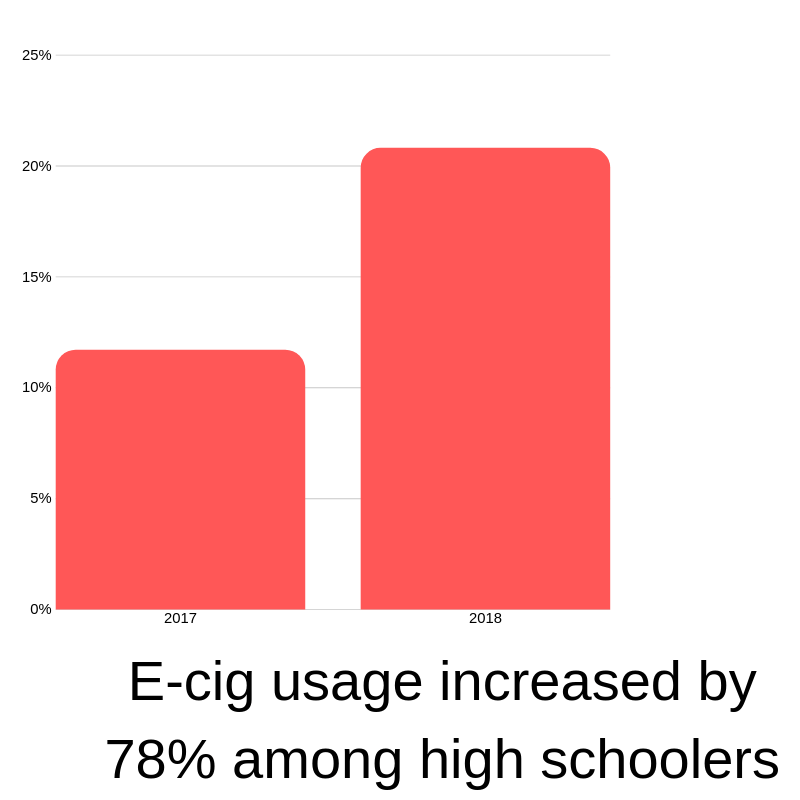
New products emerging on the market are offering smaller devices, rechargeable batteries, and new flavors. These products are appealing new consumers into the market – many of whom never smoked in the first place, creating nicotine addictions that weren’t there to begin with. Younger e-cigarette users are more likely to become addicted to nicotine and have greater difficulty quitting. They are also nearly four times more likely to start smoking cigarettes than those who do not use e-cigs. But e-cigs are becoming more popular among teens, 2018 saw a 78% increase in high school users, as it is seen as a social activity. Logan Loftis, a 19-year-old student at Utah State University does not own an e-cigarette but will vape when she’s with her friends. “People make fun of the ‘vape kids’ in high school, even though everyone does it,” she said. “It is seriously stigmatized. I think they are fun to use once in a while. They are quite comical too, but overall they can be fun to do tricks and ‘shotgun’ with friends.” Loftis recognizes the possible negative effects and is thankful she isn’t addicted to using an e-cig.

Many teens underestimate how addictive nicotine is and have low risk perceptions of products like e-cigarettes. Teens are more likely to experiment with different substances in their youth, especially if they believe that e-cigs are safer than cigarettes. Tau Mamata, 20, has been using a variety of e-cigarettes since he was 16 and purchased his own when he turned 19. “E-cigs don’t produce tar on the lungs. You’re not as likely to have lung or throat cancer,” he said.  “I just think they are overall safer, especially since you can control the amount of nicotine you inhale.” The NYTS found that 17.1 percent of teen users believe that “they are less harmful than other tobacco products such as cigarettes.”

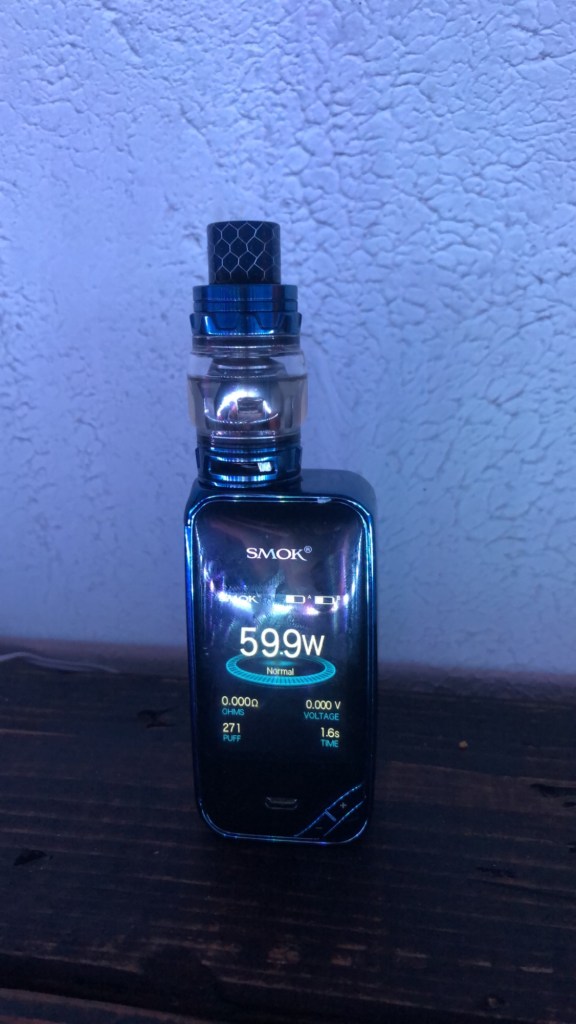
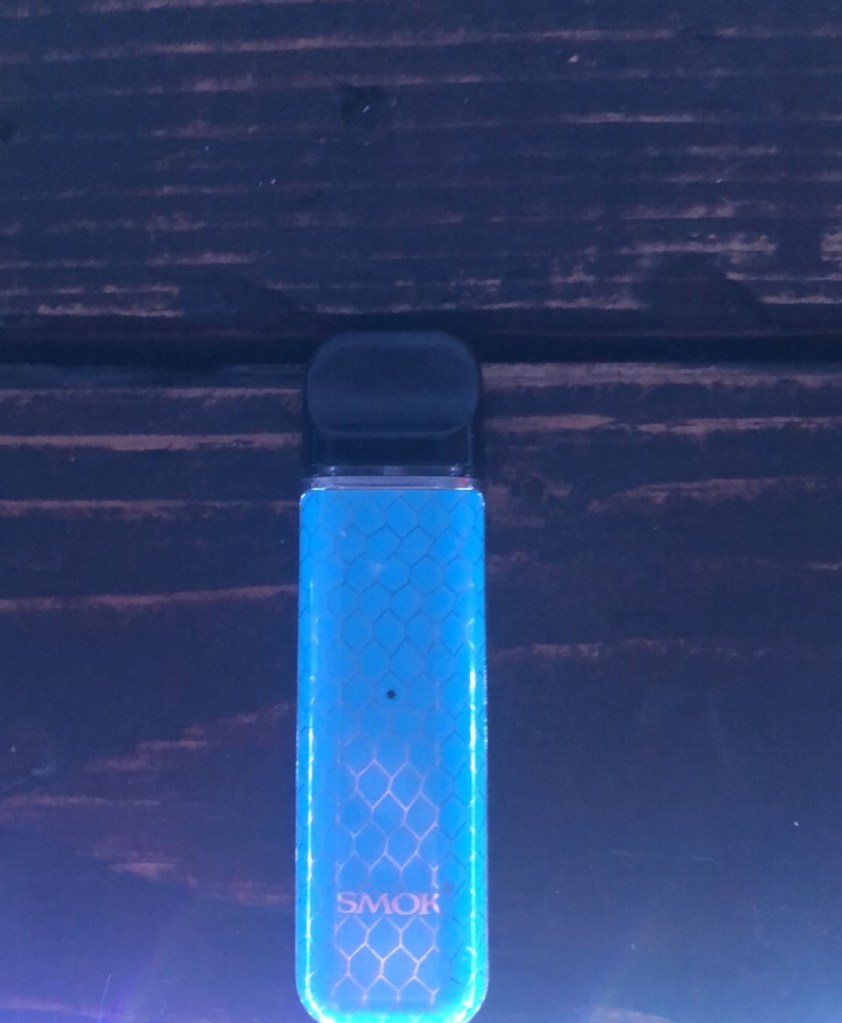
One of Tau Mamata’s e-cigarettes photographed in April 2019. (AP Photo/Emerald Barney)

E-cigarettes don’t contain the carcinogens that tobacco cigarettes do, encouraging the belief that they are the safer option. However, e-cigarettes are not without toxins. Vape aerosol can contain toxic chemicals such as formaldehyde, acrolein, and acetaldehyde – which are found in cigarette smoke and can cause irreversible lung damage. Nicotine can potentially harm adolescent brain development, particularly areas that control attention, learning, mood and impulse control.

Some brands that are popular among kids, such as JUUL, deliver especially high levels of nicotine. Users may be getting a higher concentration of toxins due to the frequency and depth of the inhalation. According to the manufacturer of JUUL, a single pod contains as much nicotine as a pack of 20 regular cigarettes. Teens are especially susceptible to addiction to nicotine. The risks and lack of research regarding long term use are at the forefront of the restrictions and regulations being proposed by the Food and Drug Administration (FDA) and state lawmakers.

The FDA has developed the Youth Tobacco Prevention Plan, targeting the prevention of youth access to tobacco products, restricting advertisements of tobacco products aimed at youth, and educating teens about the dangers of e-cigarettes. The FDA encouraged restrictions to be placed on all flavored products, excluding tobacco, mint, and menthol. The restrictions would limit flavored products to be sold in age-restricted, in-person locations, and if sold online, require strict practices for age verification. Data from the NYTS shows that 31 percent of teens who used e-cigarettes cited the availability of flavors such as candy, fruit, and chocolate as a primary reason for their continued uses of the products.

In the 2019 Utah legislative session, HB252 proposed by Rep. Paul Ray (R-Clearfield), would impose an 86 percent tax on vaping products. Ray has been trying for several years to get a tax on e-cigarettes approved to discourage teen usage. If approved, the tax could potentially generate $23.6 million each year. However, the bill failed to make it through the state senate before the 2019 session ended.

Lewie Lambros, co-owner of Vapor Dreams in Bountiful, Utah, is adamant that HB252 would be destructive to business and encourages lawmakers to enforce online sale bans. “If that bill went through it would put the vapor industry out of business,” Lambros said. “Kids have dispensable money; they don’t have bills like adults do so it’s easier for them to come up with the money.” Lambros determines that the bill would hurt business and the consumers that the products are helping. He stated that the way to eliminate teen usage to enforce punishments on teens who are caught using e-cigarettes and make access online stricter.

Teen tobacco use was nearly eradicated, but now national concern rises once again about the safety and health of the youth. Reports like those conducted by the NYTS show the concerns are justified. E-cigarettes can help encourage adult smokers to a less harmful delivery system, it just should not be at the expense of exposing a new generation to the addiction of nicotine.

Better safe than sorry: What to know before setting out

Story and photos by CAROLINE J. PASTORIUS

Avoiding avalanches is much easier than trying to survive one.

Outside of Denver, CO
Feb. 24, 2019

Many climbers, skiers, snowmobilers and outdoor enthusiasts are not aware of the proper precautions for avalanche and snow safety. The dangers of this type of recreation require more preparation and knowledge than you may think.

It’s not as simple as reading a pamphlet or set of instructions to prepare you to take on the outdoors, it’s about knowing what you are headed into and being fully prepared for and aware of the risks that come with venturing into nature.

Park City, UT |March 10, 2019

Mark Staples, director of the Forest Service Utah Avalanche Center, labels himself as an extremely experienced outdoor enthusiast and emphasizes, “There is no way to assure safety once you’re out in the wilderness. But there are ways to go about it safely, and that’s the best you can do,” Staples says in a phone interview.

Park City, UT (backcountry) | March 3, 2019

The elementary rule comes first and foremost when preparing to take on this type of terrain; do not travel alone. “Always make sure you have the proper education and tools before going into the backcountry, and make sure your partner does as well,” says Jordan Hicks from REI Cooperative. Hicks also added a helpful tip. “Make sure you have a set plan before you head out and tell somebody that plan in case you’re late coming home so they can notify authorities.”

Hicks also says to be aware of your surroundings. The cause of 90 percent of avalanches that harm a victim or members of the victim’s group is caused by their own missteps. Any foreign activity caused in a natural environment that adds weight that wasn’t there before can easily trigger downfall. A helpful way to foresee the conditions on the mountain before enduring it is to check daily aspects like the weather forecast and condition of the mountain on the day of your travel, both of which are easily accessible online. He says some red flags include unsteady snow, heavy snowfall or rain, posted warning signs, wind loading, and persistent weak layers. Avoiding avalanches altogether is much easier than trying to survive one, so take the precautions seriously.

Snacks. Water. Fuel. You can never be too prepared. Josh Alexander from Utah Ski and Golf recommends that you should “bring two times more than you expect to consume on your trip.”

Alexander also shared a story about his personal experience of being buried in an avalanche and what he learned from it. “Luckily, I was well prepared for any possible situation. I went out with a buddy of mine in the backcountry of Canada a few years back, somewhere we have never been before.” In retrospect, this was a red flag. You should never travel on unfamiliar territory when visiting it for the very first time. Alexander recommends scoping out uncharted terrain a day before riding it. Also, he mentions researching the area online to check previous travelers’ comments.

The avalanche that affected him was caused by a collision he had with a snowboarder, which produced a rush of snow and carried him about 100 yards. Being unable to breathe for that time, he saw his life flash before him.

Park City, UT |March 10, 2019

After coming to a halt, Alexander realized his friend was nowhere in sight. In fact, nothing was. It was all white. “I was completely lost, and all of my calls for help got absorbed in the snow I was buried in. I knew I had to find help but I also didn’t want to use too much oxygen, since I wasn’t sure how long I would be stuck there for.” He settled his pulse and remembered focus on what he learned to do when caught in this sort of situation.

He took a deep breath and started “swimming” against gravity to get closer to the surface of the snow pile in attempt to get any sort of signal for his avalanche beacon (a small radio that transmits a lost or dangered travelers’ location to rescue crews). He soon started transmitting his device, which was caught by his partner on the receiving end. Finally, he was located, rescued, and lives to tell the story. If the pair was not prepared for the worst-case scenario and did not hold the necessary tools, Alexander had a slim chance of survival.

There is only a 30 percent chance of escaping when buried by an avalanche. Take the lessons taught and learned in this article next time you think about getting involved in avalanche-prone territory. Always remember that you are in control of your own safety in uncharted territory.

Salt Lake City’s juicing scene is on the rise

Story and gallery by LAUREN HINKLEY

Nutritious eateries and shops seem to be on every corner in Salt Lake City, an indication that the community is becoming more health-conscious by the minute.

One of the most powerful trends of this healthy-dining movement is cold-pressed juice bars.

This form of juicing involves a hydraulic press that extracts juices from fruits and vegetables. Consumers often choose these products based on their desired mental or physical health benefits. These benefits can be determined by the ingredients included in each individual batch.

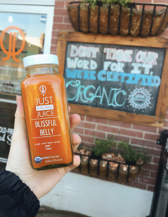
In Salt Lake City, juiceries including Vive Juicery, Just Organic Juice, and Seasons Juice Bar and Cafe are among some of the companies that are leading Utah toward better health with their nutrient-dense cold-pressed beverages.

Upon entering Vive Juicery, located at 1597 S. 1100 East, customers are greeted and welcomed into a cozy, chic atmosphere. With couch seating, ambient music, and a fun and friendly counter staff, this store is an inviting space for anyone and everyone looking to explore and be educated on the health benefits of cold-pressed juice. This is the exact vibe Brittany Shimmin, founder and CEO, had in mind when she created Vive Juicery in 2013.

“We’ve really tailored the experience to be inclusive of everyone,” Shimmin says.

Shimmin appreciates the wide variety of clientele she sees engaging with and supporting Vive’s brand and product. Even those who are just entering the world of nutrition and healthy living can find Vive to be the perfect place to start.

Sitting conveniently between two major college campuses of Salt Lake City, the juicery has become a hot spot for students of The University of Utah and Westminster College.

Many students are now turning to cold-pressed juices during the stresses of midterms and finals week. “Hearing what drinking juice has done for them opposed to a Red Bull has been really cool,” says Shimmin, reflecting on this new trend.

At the forefront of the local juice scene, Vive contributes even more to the community than just its state-of-the-art products. By sourcing its produce from local farms and gardens whenever possible, Vive is making a positive impact on the economy and sustainability of Utah.

Shimmin and the Vive team are passionate about forming relationships with the farmers who grow their ingredients. “When you can talk to the person that grew your food, you in turn will end up appreciating it more,” she says.

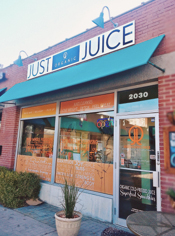
Just a few blocks away at 2030 S. 900 East sits another local juice bar, Just Organic Juice, the creation of cancer survivor, Lisa Graham.

When Graham was diagnosed with breast cancer at the age of 27, she opted out of chemotherapy and turned to nutrition to help nurture her back to health. After implementing juice into her diet, she recalls immediately seeing the benefits. She has been cancer free ever since.

Graham stated that the impacts cold-pressed juice had on her own health inspired her to start Just Organic Juice where she could show the rest of the community just how beneficial juicing can be.

“We see a lot of customers with cancer and other diseases,” Graham says. She also mentions that she has noticed a growing awareness in the importance of nutrition across the medical field.

Graham says she believes this new importance doctors are placing on nutrition has contributed to the growing popularity in her business. “More doctors are advising patients to change their diets,” she says.

With juiceries popping up all across Salt Lake City, Just Organic Juice continues to stand out from the rest by serving products that contain only 100 percent organic ingredients.

The most popular juice on the menu at Just Organic Juice is the “Giving Green.” “I could go on and on,” Graham admits as she raves about the product’s health benefits. “You couldn’t even eat that many vitamins and nutrients in a day.”

Another up-and-coming juice spot is Seasons Juice Bar. Seasons is located in Midvale at 7630 Union Park Ave. and is proudly owned and run by juice enthusiast Bobby Movarid.

When Movarid moved from Santa Monica, California, to Salt Lake City, he was driven to show Utah what cutting-edge high-quality health food and beverage really is.

Movarid says he saw what was missing around town and knew he would be the one to introduce truly good cold-pressed juices and acai to the community. That’s when he started Seasons Juice Bar and Cafe.

Movarid has used his entrepreneurial mind to curate a delicious and nutritious menu of cold-pressed juices. He says he is eager to encourage new customers to sample them.

The “Black Lemonade” remains one of the most popular juices at Seasons. This pitch-black beverage is a little intimidating at first glance but has a pleasant flavor of lemon and agave. The key ingredient is activated charcoal, a detoxifying ingredient, which is explained in the company’s juice guides and pamphlets.

Movarid has put care and attention into every aspect of the Seasons experience, from the biodegradable utensils to the complimentary water. “Our water is alkalized and purified using reverse osmosis,” he explains.

Seasons in the product of Movarid’s extensive hard work. “You gotta hustle!” he exclaims.

While the juicing scene is already flourishing, there’s no doubt it’s still growing every day. Brittany Shimmin, Lisa Graham, and Bobby Movarid are among some of the pioneers of a movement toward a healthier Utah. Through their craft, they are inspiring the community of Salt Lake City to prioritize wellness, one juice at a time.

Looking back on teens and e-cigs

by Emerald Barney

I’ve wanted to go into advertising for nearly seven years. I try and stay up to date on new advertisements as well as new regulations relating to advertising. At the end of 2018, the FDA was putting regulations on JUUL because they were putting out “fun” ads – bright colors, young actors, and new flavors. This was targeting teens in a way that was familiar, but it was for a product that was illegal for teens to use – nicotine.

When I came up with the idea, Utah legislators were thinking along the same lines up on the hill. Rep. Paul Ray wanted to impose an 86% tax on vape products, which seemed outrageous to me. I wanted to talk to him about it and the reasoning for it being so high. I also wanted to talk to vape shop owners to see how they felt about the FDA regulations and the bill proposed by Rep. Ray. The shop owner brought up a good point that if they wanted to limit teen use, they would tackle the online age verification issue as that’s where most kids are getting their products.

I also wanted to talk the people I know who use e-cigarettes, as we all grew up with this idea that drugs are bad, and they will kill you. I was curious why they started, why they continue, and what they think about the negative effects. What interested me was that every one of my friends told me they thought it was safer than smoking – as if that is the only alternative as opposed to not doing drugs.

The biggest issues I had was when I felt conflicted on what I wanted to report on. There is so much data from the FDA about how it can harm teens, but then after talking to the shop owners, I realized it isn’t their fault teens are addicted. They can’t always be the ones trying to discourage teen use and enforce it as well. I decided to make the points of both sources, strengthening the idea that no one wants teens to become addicted. The thing I found most interesting were that my friends spend anywhere from $30-$90 a month to keep up with their habits. The bill proposed by Rep. Ray stood on the idea that teens aren’t going to have that kind of money to spend, but I don’t see any of my friends stopping because of the price.

My Story: Teen nicotine use

Elise Dunaway’s Reflection Blog

By: Elise Dunaway

My original idea was a vaguer version of my final idea. I wanted to write about the connection college students feel to pop culture. In Fall 2017 I took an Introduction to Interpersonal Communication course. One of the concepts we talked about was parasocial relationships. In a parasocial relationship, one person puts in a lot of time and emotional energy into the relationship. The other party does not reciprocate because they’re a fictional character, celebrity, athlete, or other media figure. They don’t know the person exists. Writing about parasocial relationships was a more specific way to talk about my original idea, and I could still apply it to college students. 

I first emailed Dr. Julia Moore, the professor for the Introduction to Interpersonal Communication course I took. I also emailed a lot of professors from the Department of Psychology at the University of Utah who focus on social psychology. Dr. Bert Uchino, the Department Chair, emailed me back and was able to answer my questions. I reached out to a friend, Lily Chidester, so that I could also have the perspective of a college student. I think they were the best sources because Dr. Moore and Dr. Uchino had a lot of knowledge about the concept and Lily had a lot of experience with it. I feel like her comments are reflective of many college students’ experience. 

The only real obstacle I encountered was setting up interviews with my sources. I never heard back from a lot of people I emailed, but luckily heard back from Dr. Moore and Dr. Uchino. Finding data to use in my story was slightly difficult, but I ended up finding a great study that added a lot of insight to my topic.

I decided to focus on college students because they’re the audience for my article. I also think that teens and college students are more likely to experience parasocial relationships than older people due to the use and presence of social media in their lives. When doing research, I kept notes of what information I felt was the most relevant to the article I was trying to write. Having the notes kept me organized because I didn’t have to go back and scour through websites to find the information I wanted.

I approached writing this article as I did the other articles I had to write for this course. I found my topic, gathered sources, and tried to arrange the information in the most engaging and accessible way. I used quotes from my sources in places where they explained the concept better than I could. 

There were quite a few interesting details that didn’t make it in. My friend Lily was pretty in depth about how her parasocial relationships has strengthened her interpersonal relationships. I wasn’t able to include all of what she said about that. Dr. Moore mentioned that parasocial relationships can possibly help decrease prejudices. Dr. Uchino talked about how relationships can influence how long a person lives. While there haven’t been any studies done to see if parasocial relationships are part of this, Dr. Uchino guesses that a positive parasocial relationship could be good for mental and physical health. I wish I could have included everything they said, but my story would have been too long if I did.

Nothing in particular about writing this surprised me. A lot of what I learned about parasocial relationships made sense. I think it’s interesting that the concept of parasocial relationships isn’t more well-known because it’s something everyone experiences.

A look at parasocial relationships

A look at parasocial relationships

By: Elise Dunaway

SALT LAKE CITY — Many people feel attachments to celebrities or fictional characters. They treat them as if they knew them in real life. This is known as a parasocial relationship. The term was first used in 1956 by Donald Horton and Richard Wohl in their paper “Mass Communication and Para-Social Interaction: Observations on Intimacy at a Distance.” It originally referred to television figures, but has since been expanded to include celebrities, fictional characters, athletes, and other media figures.

Originally thought to mbe mostly formed only by lonely and isolated people, studies have since shown that everyone experiences parasocial relationships, regardless of how lonely they may be. In extreme cases, parasocial relationships can result in stalking or other problematic behavior, however most people treat them as they would a normal interpersonal relationship.

University of Utah freshman Lily Chidester thinks that parasocial relationships are more common today due to how prevalent social media is. Social media allows people to interact with others who have a parasocial relationship with the same figure, which then can help develop real friendships with those people.

University of Utah freshman Lily Chidester on April 7, 2019. (UNewsWriting/Elise Dunaway)

“Networking among people with a common interest is greatly amplified by social media because it increases the fanbase of the thing in question, whether that’s a fictional character, like in a book or a TV show, or a celebrity, who’s a real person, but is just one person,” Chidester said. “They can’t interact with everyone that knows them.”

Social media also increases the access people have to celebrities. People have the chance to interact with public figures, which can increase the likelihood of forming a parasocial relationship.

Logos for Instagram, Facebook, Twitter, and Snapchat, which are popular platforms for fans to interact with celebrities.
Instagram/Facebook logos: Wikimedia Commons
Twitter/Snapchat logos: Pixabay

“It seems that liking, sharing, and commenting on social media increases perceived intimacy between the person and the celebrity or character, increasing the person’s perception of their bond,” said Dr. Julia Moore, a Communication professor at the University of Utah.

Parasocial relationships offer many benefits to the person engaging in them. They provide a sense of companionship and can supplement real interactions with people. They also provide a sense of connection and community. People are able to bond with others who have a parasocial relationship with the same media figure. This gives them a group of people they can relate to.

Parasocial relationships are still relationships even though there is no reciprocation involved. People tend to get attached to celebrities they view as similar to themselves. These relationships can give people an emotional outlet. They can be themselves because there’s no expectation to meet a certain standard or act a certain way.

“The greater the intensity of the parasocial relationships, the more likely it is to have a significant impact on one’s life in terms of time spent, goals, and emotions or feelings of attachment,” Dr. Bert Uchino, the Department Chair of Psychology at the University of Utah, said.

Data showing which type of celebrities adolescents formed parasocial relationships with. (UNewsWriting/Elise Dunaway)

study done in 2017 looked at what kinds of public figures adolescents formed parasocial relationships with. It also looked at how they classified those relationships. Subjects were asked to name one celebrity they’re attached to and explain why. Their responses were then categorized into Actor, Singer/Musician, Athlete, Other, and Writer. The Other category included figures like talk show hosts and comedians. For girls and boys, actors were by far the most popular public figures to be attached to.

According to Dr. Uchino, access to actors and other public figures via social media can increase the likelihood of forming parasocial relationships. 

“It gives them yet another platform to interact with fans and often involves disclosure of personal information, which we know deepens relationship development,” he said. “It is likely that celebrities know this and are trying to foster a more devoted fanbase.”

While celebrities can’t form relationships with each individual fan, their actions on social media can encourage the fans to do so with them. Appearing to be relatable can increase a sense of connection and devotion. This can also increase how many people are part of the fanbase.

Social media may not play as big of a role in the formation of parasocial relationships with fictional characters. As they aren’t real, the characters can’t make posts or interact with fans in any way, shape, or form. The development of a parasocial relationship would then have to come from the source material and original content generated by fans.

“I have these fictional characters that I have built relations with, and particularly Harry Potter is super interesting because it’s something that was from my childhood. I’ve read the series an insane amount and basically have it memorized. It’s a huge part of me and how I define myself,” Chidester said. “It’s taught me ways to better myself as a person and the characters have taught me things about myself that definitely still could have come about in relationships with people where it was reciprocated, where they’re not fictional characters in a book.”

Popular franchises with characters people tend to form parasocial relationships with.
Star Wars/Disney logos: Wikipedia
Marvel/Harry Potter logos: Wikimedia Commons

College students can receive companionship and support from parasocial relationships. This can be very beneficial, especially when trying to balance school and having a social life.

“Parasocial relationships can be especially beneficial for college students with low self-esteem. Parasocial relationships with fictional characters or real celebrities can make people feel a sense of belonging,” Dr. Moore said. “So even though parasocial relationships are not ‘real’ in that the two people don’t actually know one another or interpersonally interact, these relationships have real effects on people, and many of these effects are positive.”

Elise Dunaway’s Reflection Blog

Campus involvement and student success

By Michael Boswell

SALT LAKE CITY— College can be a very exciting but stressful time in our lives. Senior’s in high school develop presumptions of how hard college will be. Upon arriving, and after orientation, they find out that it isn’t that bad, that they will survive. Coming from out of state, a new school, town, and area can be quite intimidating. Some of your friends will join fraternities, sororities, and clubs while they are in college, and you, well you may do nothing. Your friends are out at their events and you are sitting in your dorm room, or your house thinking about how can you make college better, you wonder how being apart of something on campus can impact your college experience.

There are many ways to get involved on campus. Whether it be joining a fraternity, sorority, or any club, there are many ways to enjoy these experiences. Though this poses the question of what are the pros and cons of being involved on campus at the U of U. Does it really better your experience or does it add to the difficulty?

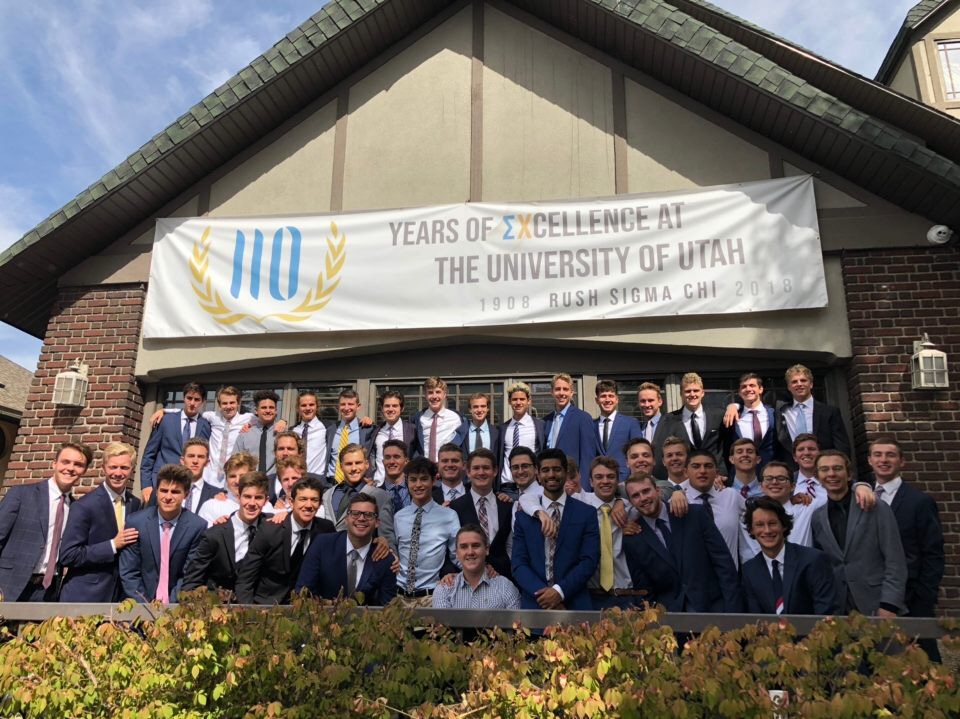
Dylan James pictured middle with fraternity brothers. (August 2018) At a Greek Week event. (Unewswriting photo/ Michael Boswell)

“There are pros and cons to everything you do.” Said Dylan James a member of Sigma Chi fraternity. “I chose to rush to better my experience. Not being from Utah, I didn’t have a lot of friends at the U. I thought it would be a great opportunity to make new friends and meet more people. Being apart of Sigma Chi makes you be accountable, you have to maintain good grades and they push you to better yourself. We also give back to the community, by holding fundraisers for Huntsman Cancer Institute. This year we were the first Sigma Chi fraternity to raise over $100,000 for the Cancer Institute. I was very skeptical to rush a fraternity, because of the movies and how they make them seem, but it has been one of the best choices I’ve ever made.”

Research has shown that joining a extracurricular organizations are beneficial to college students. They help bring students and faculty together, let students interact in a non-formal atmosphere, and allow students to strengthen their leadership and communications skills. According to a study conducted by Birkenholz “Communications skills of College of Agriculture students are enhanced through participation in student organizations and activities.” What if none of that sounds interesting to you. Maybe you aren’t a social butterfly and you enjoy your alone time. What would happen if you chose not to join a club or Greek Row. It wouldn’t be the end of the world but how could it affect or add to your college experience.

From left to right: Amanda Brandao, Cam Daley
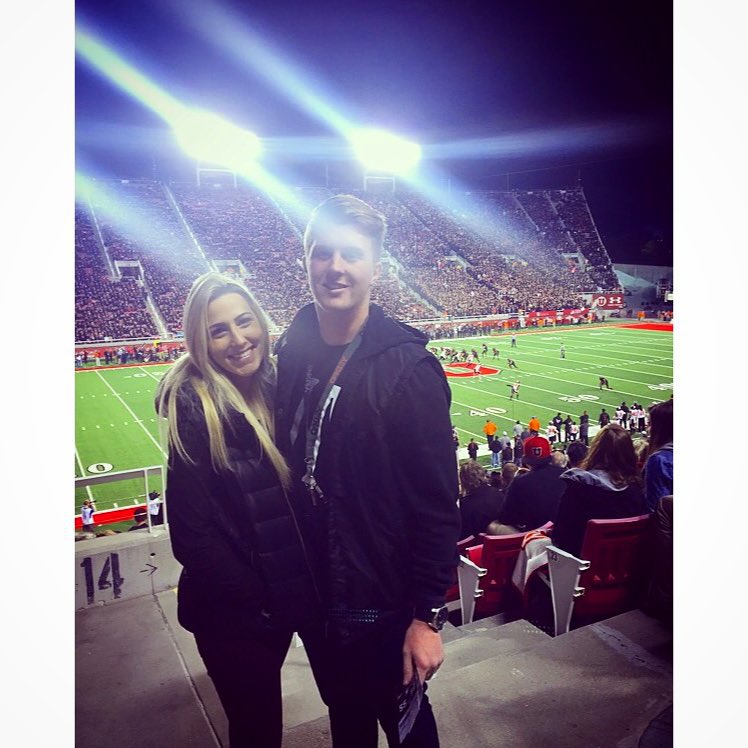
Cam Daley enjoying a football game with his girlfriend. September, 2019. (U News Writing, Michael Boswell)

“At first it was different from high school.” Said Cam Daley, a student at the University of Utah. “Since I’ve played sports my whole life and being apart of a team it was a hard transition. But since I’m not playing baseball or football anymore it makes me focus more on academics, and not the social aspect of it. Part of me would want to do it over but I am happy at where I am. My first two years I would join something but my last two I wouldn’t.” Cam also went on to talk about how his first two years he felt out of place at the U. However now he feels that his priorities are in line with school, and he feels he belongs.

In a John Hopkins University Press article it stated that, “Females and full-time students who spent more time preparing for class or otherwise engaging in academic tasks earned a higher GPA and reported higher satisfaction with their overall academic experience.” And a recent study from Ohio State University suggests that “students who work 20 hours a week or more are less likely to be involved in a student organization. Compared to students who work less than 20 hour a week, or students who do not work.”  Students who belonged to an organization felt more connected to the university, more confident, and learned problem solving skills, the article said.

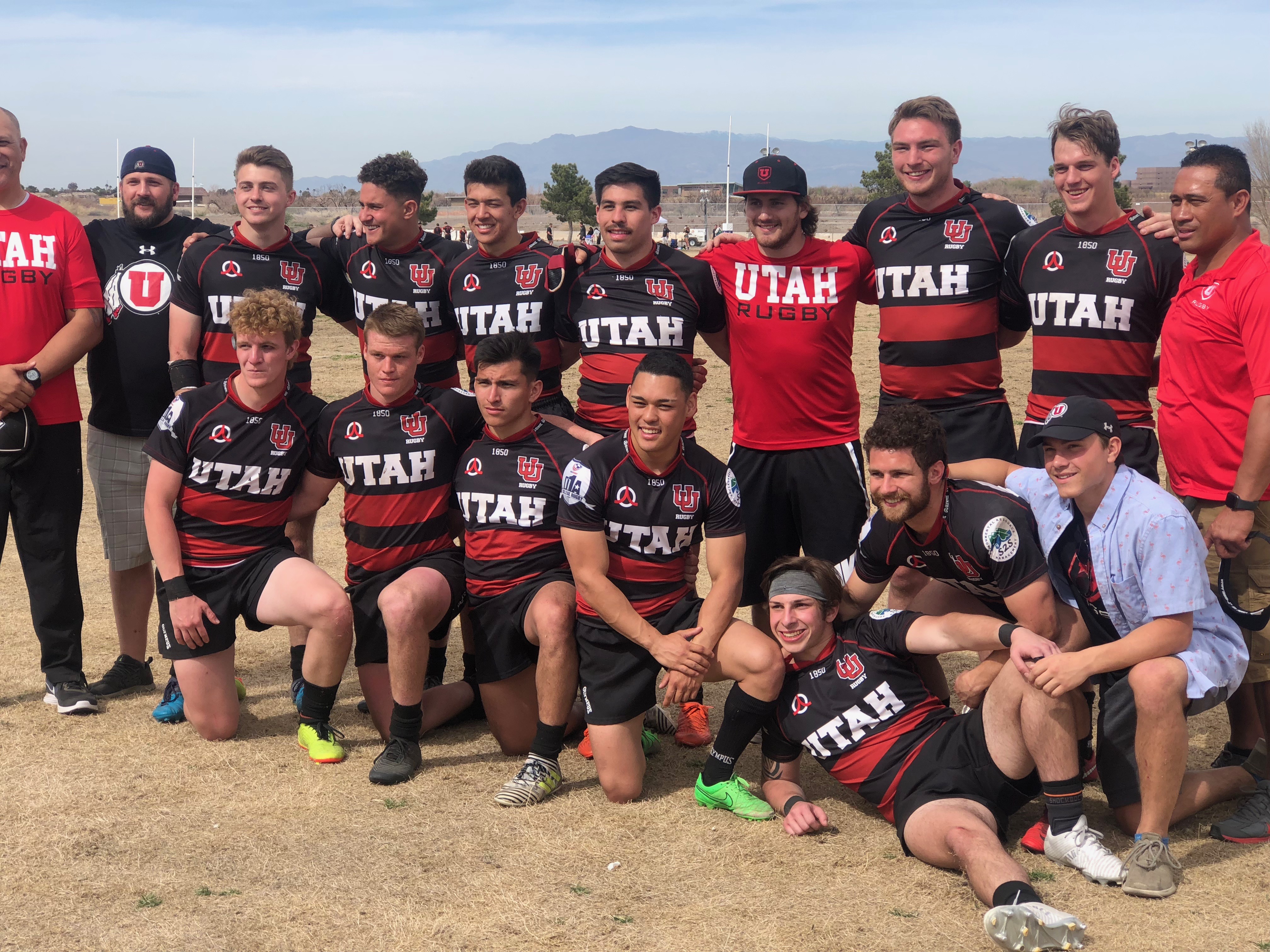
Back row left to right (Players) : Darian Power, Kelsin Pupunu, Brad Jackson, Alex Egan, Nate Nelson, Will Frantz. Front row left to right: Tim Nelson, Jason Frantz, Ezequil Garcia, Nate Asper, Michael Boswell, Teddy Arlington, Rocky Mars. University Utah Rugby takes third in Las Vegas tournament in February, 2019 (U News Writing, Michael Boswell)

It can be very hard to let go of who you used to be in high school. The person you were back then will be different than who you are today.  Some students carry on some aspects whether it be sports, or friends. Nate Nelson is apart of the University of Utah Rugby team but he also works three jobs, and is a fulltime student. “It can be hard to find a balance” said Nate Nelson. “I know this won’t last forever, so that’s why I do it now. The bonds I have created through rugby and what it has taught me will last a lifetime.”

It can be hard to determine what you want out of college, whether you want the social aspect or the academics. Your priorities can and will change throughout your college journey, but to narrow down on what is important to you will help make this journey a lot easier.  College is a great experience and should be used for its full potential. There is no right or wrong on wanting to join a club or not. The worst thing you can do, is look back on your college experience and have regrets.

Michael Boswell: Reflection on Campus involvement and student success

By Michael Boswell: Campus involvement and student success

As an incoming Freshman, I remember being scared of college. The idea of college and not knowing what was in store for me was intimidating. When we were told to write a story, this idea instantly popped into my head. Since I play rugby I was curious how my college experience differed to other students. Was it beneficial to be a part of a club or organization on campus, or was there no major impact. How could joining a club or Greek Row help or make it more difficult? Locating my sources was fairly easy. I knew a lot of people apart of on-campus organizations but little who aren’t. It was also difficult to find a study on students who aren’t apart of organizations and how their success is. They were the best sources because they have been students at the U for some time now, and understand the effects of being apart or not being apart of something on campus. My focus was to provide people with a solution. If you were thinking about joining but were scared, or maybe you weren’t how could it affect or better your college experience. My writing process was broken up into multiple days. Knocking bits and pieces out time at a time. I found this to be quite effective. My brain was able to stay fresh and process information as needed. What surprised me was how passionate people were towards what they were apart of.

The Punishment of Participating in Student Production

April 15th, 2019

By Brock Bernstein

SALT LAKE CITY — Like many university students across the United States, Cian Smyth, 20, is no stranger to a slim budget.

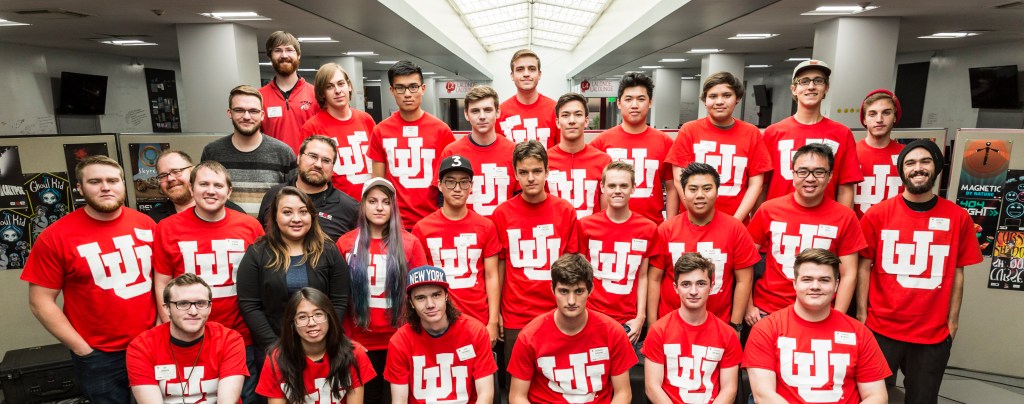
Working 28 hours a week as a director and producer for the University of Utah’s gaming production team, one would expect Smyth to be earning more than many of the team’s other members. They would be wrong. He currently earns the same amount as everyone else: absolutely nothing.

His story is just one of many among the university’s production team. Despite this, these students continue to invest their spare time into both the recording and streaming of games for Utah’s student Esports teams.

“I think a lot of students realize the grim reality of the esports industry is [that they’ll] be doing unpaid work for quite a while,” says Smyth. “I’m not happy that our production is perpetuating that.” While he acknowledges any kind of compensation lies far within the future, Smyth is just one of many voices advocating for reimbursement for the team’s efforts.

The loudest and most supportive of these voices is that of A.J. Dimick, the 40-year-old Director of Esports at the University of Utah. “Our production team is one of the most zealous, professional and talented volunteer organizations in collegiate esports,” Dimick proudly proclaimed. “They absolutely should be scholarshipped and officially part of the varsity program. What they do for the University is a service and they do it incredibly well.” While scholarships are generally based on academic or athletic merit, Dimick feels strongly that the team’s quality of work is deserving of such an award and is quick to share his frustration of a limited budget.

“I think there are always limitations to what volunteer force can accomplish relative to what could happen with additional resources,” he admitted. “What has been accomplished is remarkable and has made the argument for what we hope comes next a very reachable reality.”

AJ Dimick
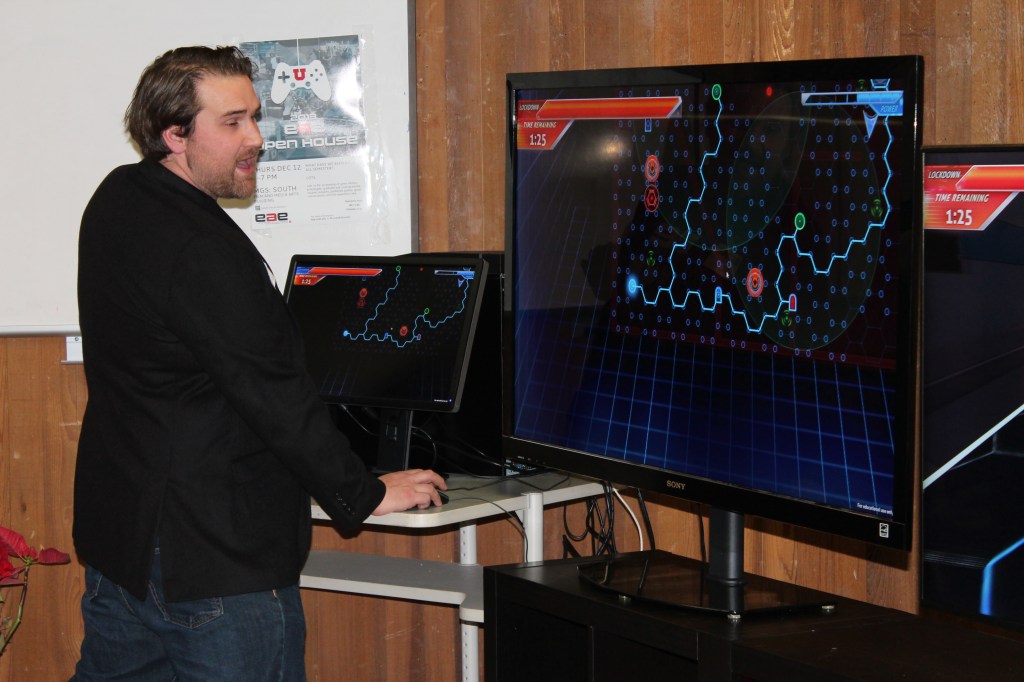
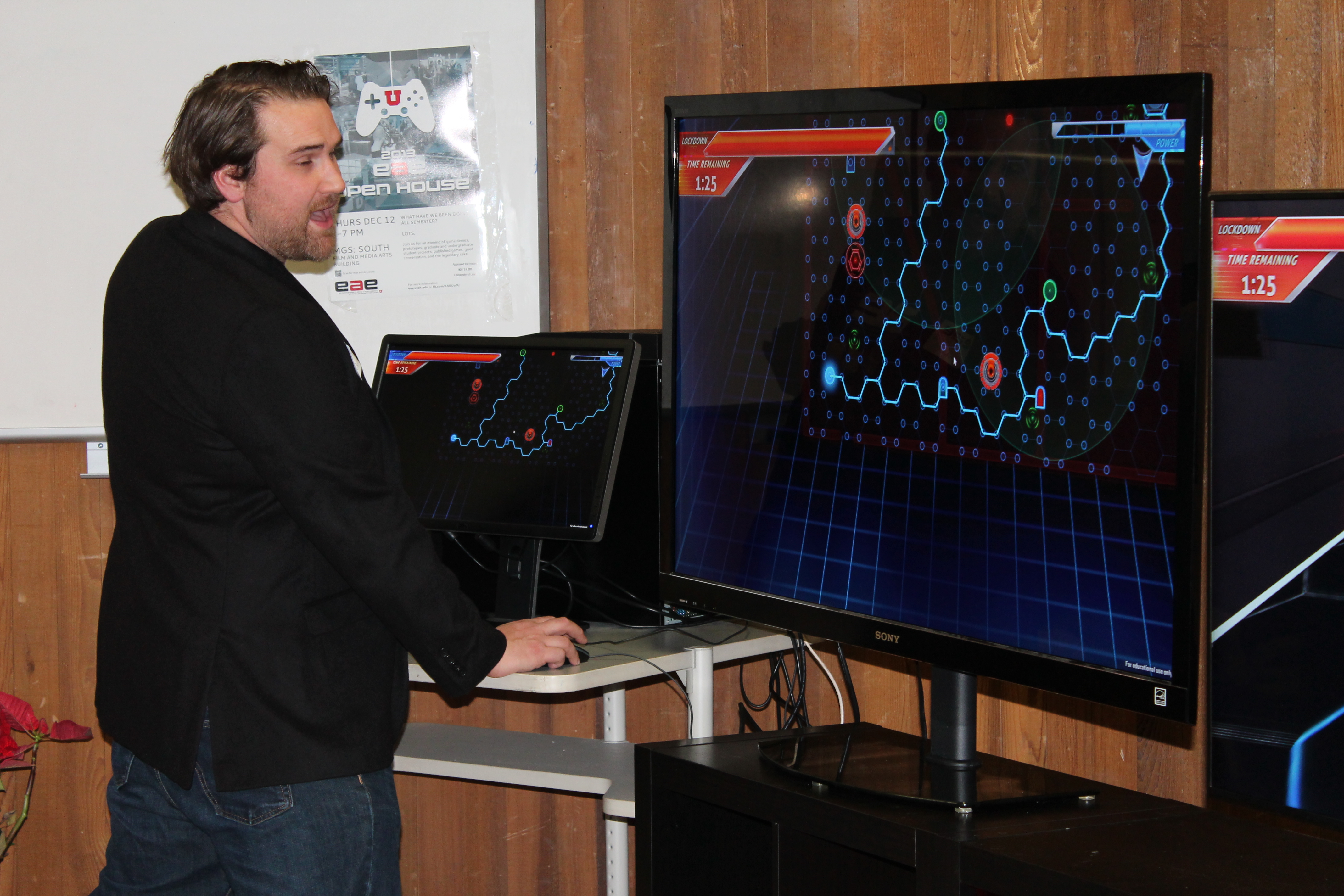
A.J. Dimick, Director of Esports for the University of Utah, showing off a game he helped to produce, Feb. 17, 2016, in Salt Lake City, Utah. Dimick speaks of the importance of gaming, promoting the U’s top ranking Entertainment Arts & Engineering (EAE) program.

According to a National Public Radio interview of Mark Kantrowitz, a recognized expert on college financing and author of Secrets to Winning a Scholarship, “less than 3/10ths of a percent of undergraduate students pursuing bachelor’s degrees have won enough money to cover their complete tuition… so most students are going to have to rely on federal grants, state grants, and money from the college itself.”

One such example would be Utah’s 21-year-old League of Legends Varsity Team Captain, James “Jayms” Tran.  The official NCSA website mentions how the University of Utah was the first Power Five school to launch a varsity esports program, having done so in 2017. Tran looks back on the time before this fondly.

“The people that you get to meet and interact with has been a really great opportunity for me, and was a reason that I played for the team in the first place,” Tran says. As he’s gotten older and looked to further his education, Tran confessed that without a scholarship he wouldn’t have been able to play for the team in 2019. “Having the scholarship allowed me to do something that I really [enjoy],” noted Tran, “which is playing competitive League of Legends. Without it, I would have to find a job in order to pay for tuition.”

While Tran doesn’t participate as a member of the production team, he remains sympathetic to their plight. “Students are attending university, and it is expensive. Not being offered money definitely hinders people’s ability to participate in production.”

U of U League Team
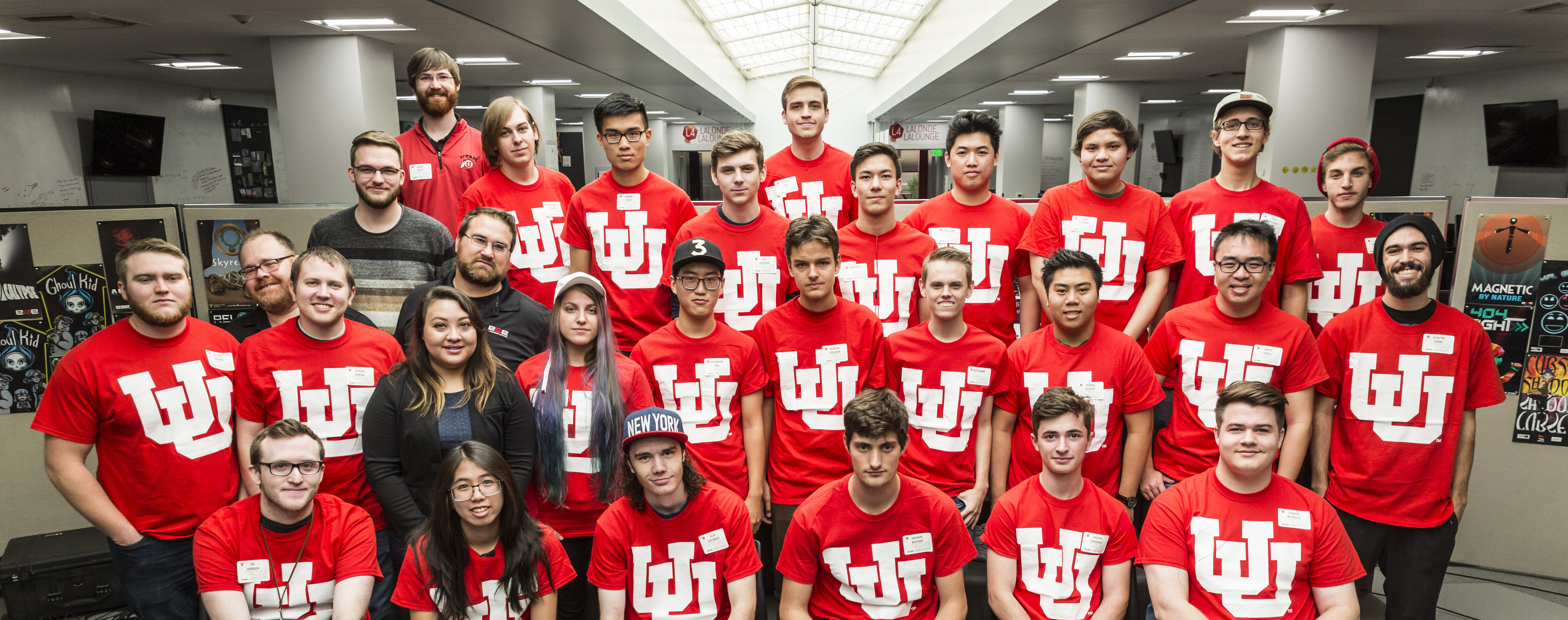
The U celebrates the founding of its first varsity esports team, Oct. 4, 2017, in Salt Lake City, Utah. This marks the first of many esports teams, with the U now including varsity teams for Rocket League, Overwatch, Hearthstone, and more.

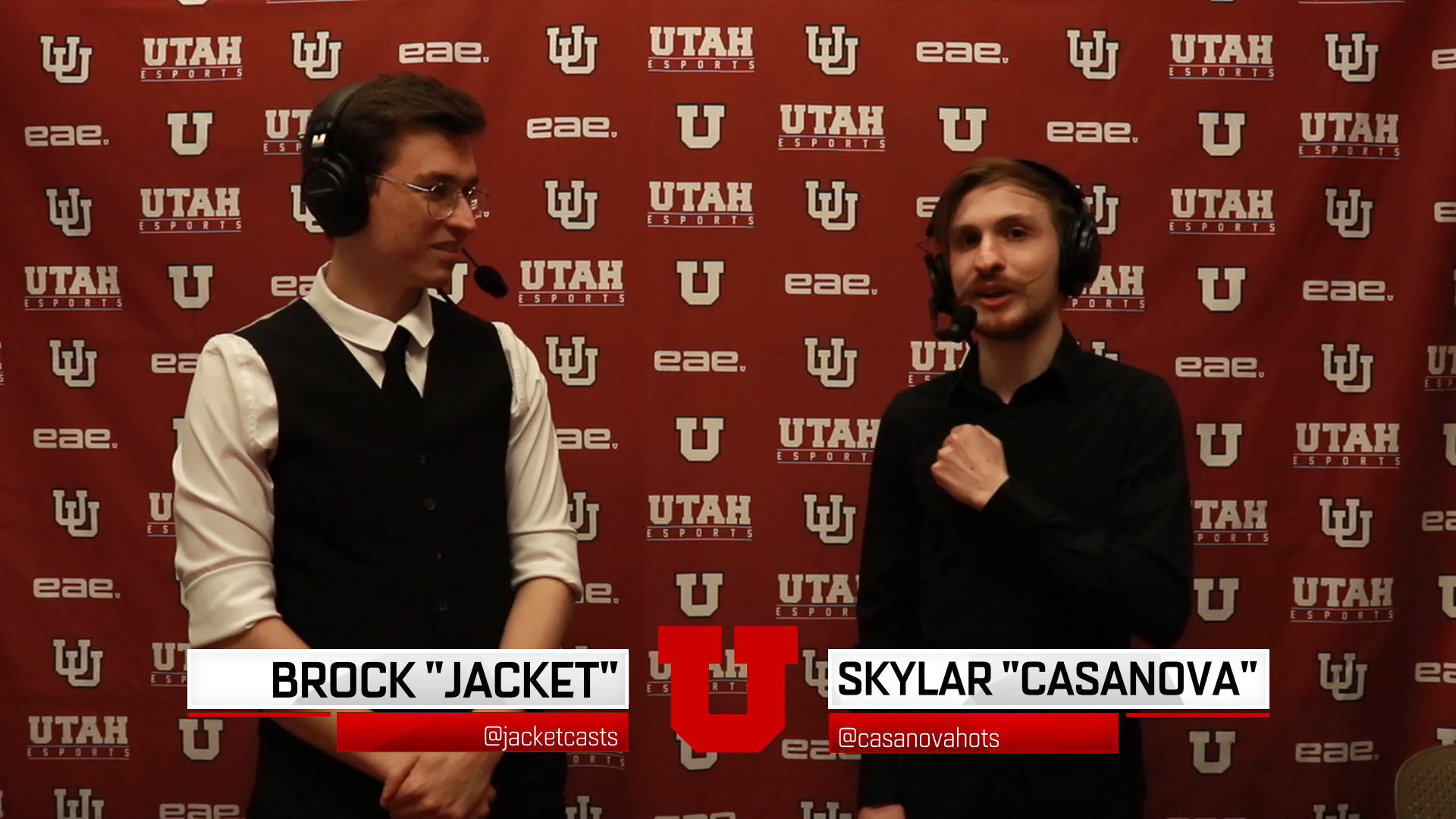
A former professional player for Blizzard Entertainment’s Heroes of the Storm, Skylar “Casanova” Mulder is well-acquainted with the amount of labor needed to put on a broadcast. “FI know how important a great production team is. What we do as pros doesn’t happen without the people behind us making it look good,” Mulder laughed. “I think having scholarships or paid positions and incentives, as well as making connections and working with industry professionals in order to train more competent production staff would be amazing.”

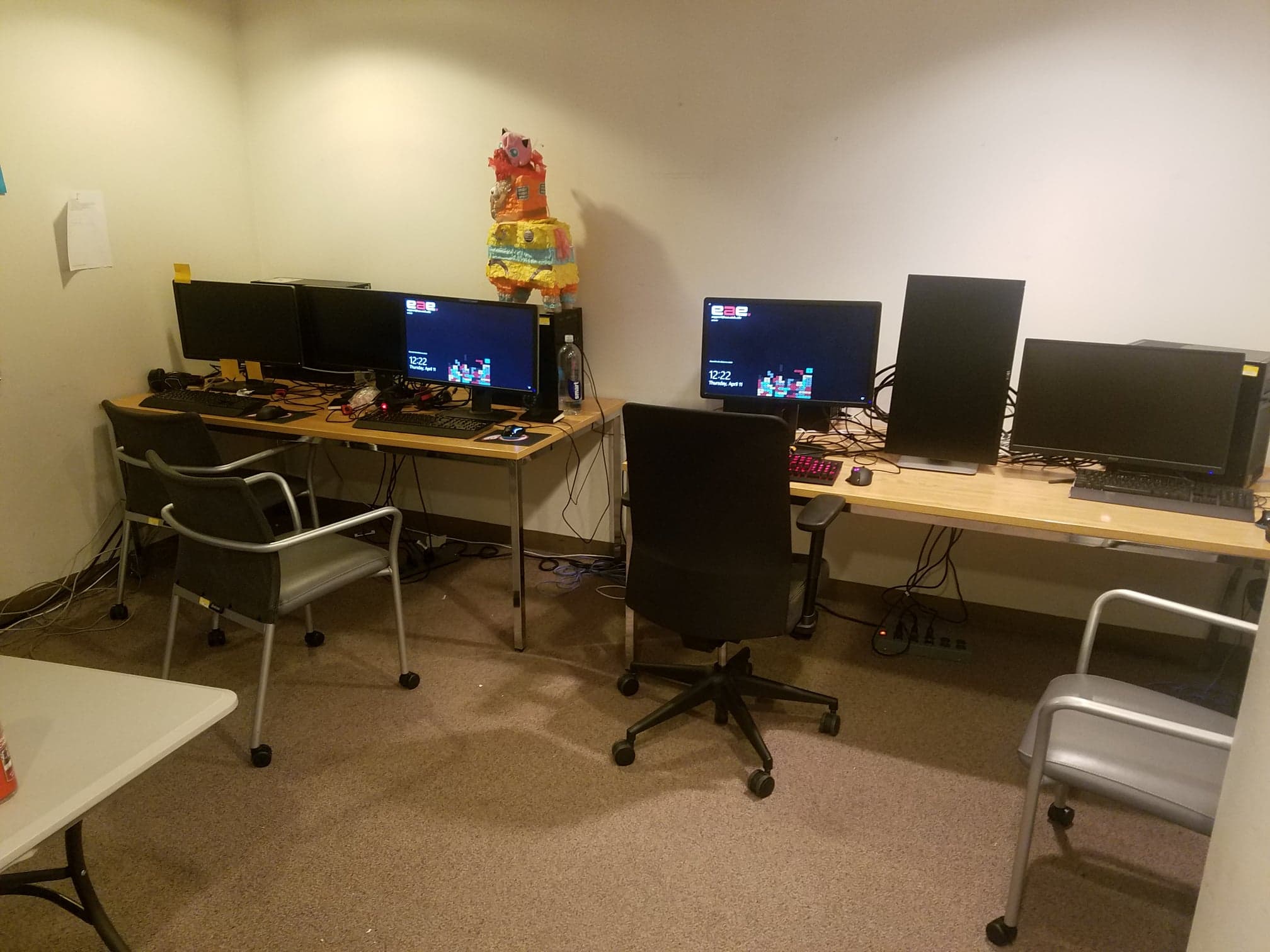
Mulder’s career was brought to a grinding halt when Blizzard announced late on December 13th, 2017, that it would be shutting down its Heroes of the Storm Global Championship esports league. Wasting no time, he has since worked as a League of Legends caster with the University of Utah, but openly expresses his disappointment with the handling of the production team.

“I think the skills required are very much worthy of a scholarship, but if they were made paid positions with internships available for students to get experience and connections in the field, I think that would be a great alternative.” While Mulder hopes to continue casting for the U, “Casanova” is forced to supplement his income through playing in tournaments for both League of Legends and Heroes of the Storm on a weekly basis.

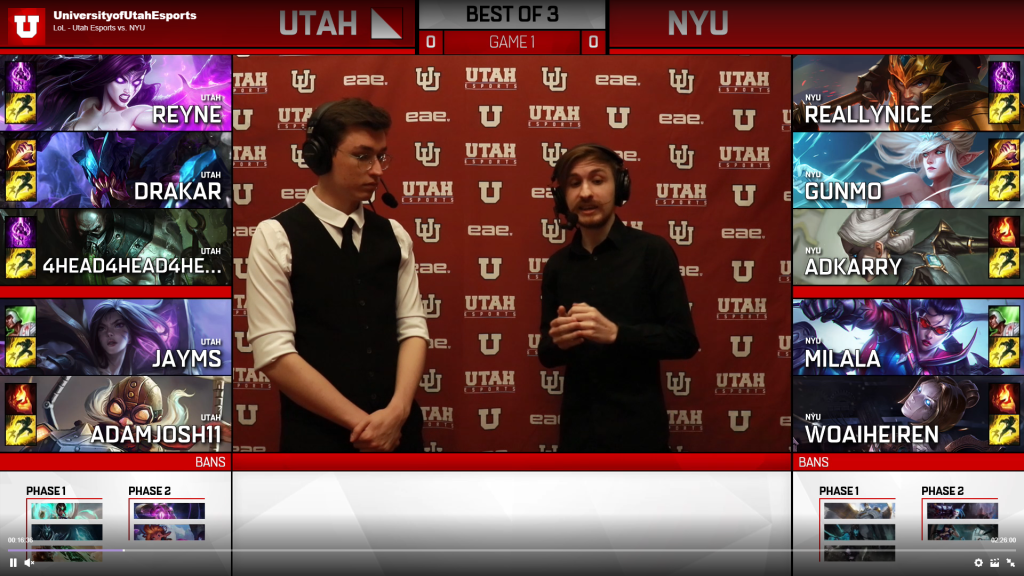
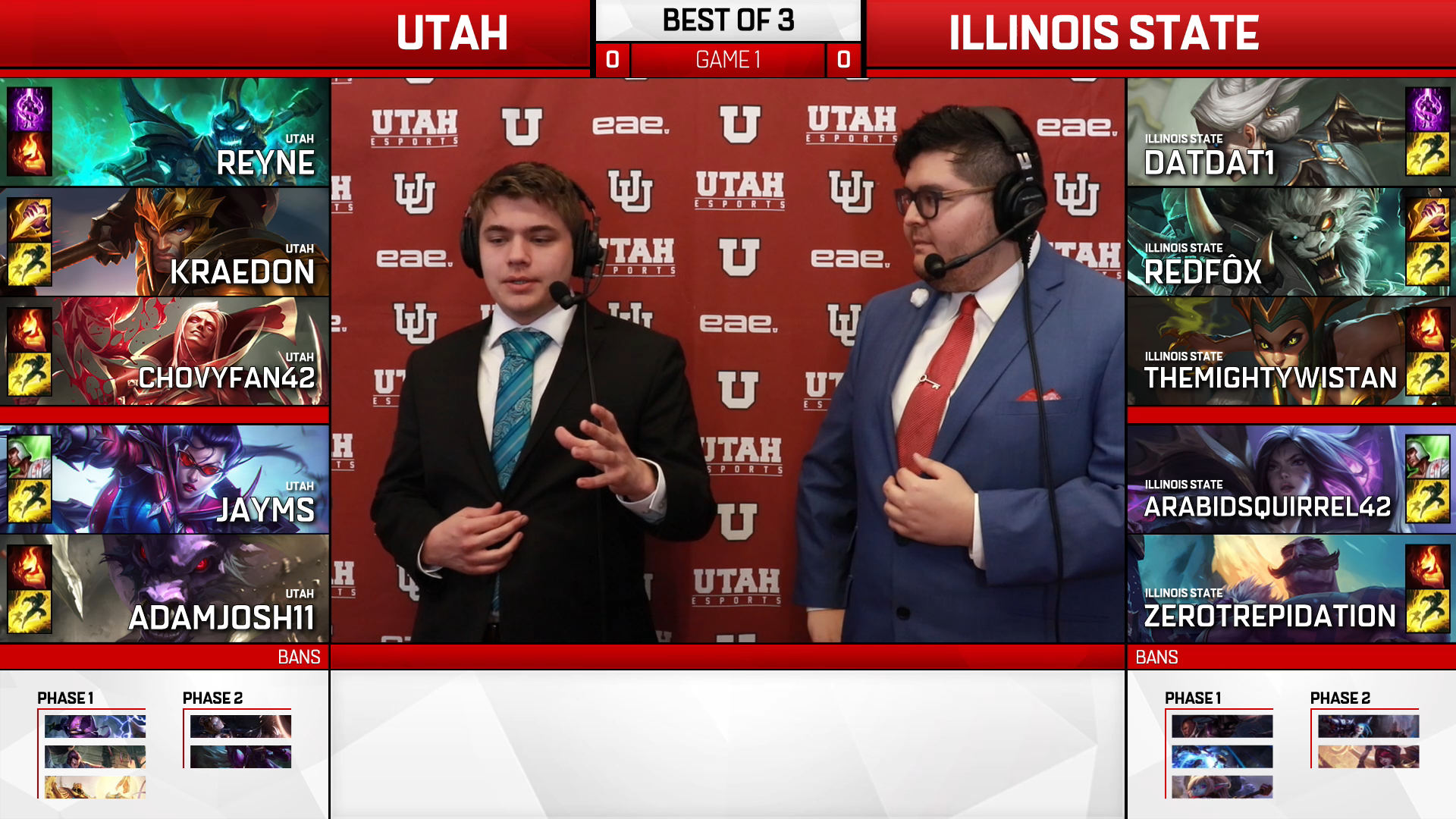
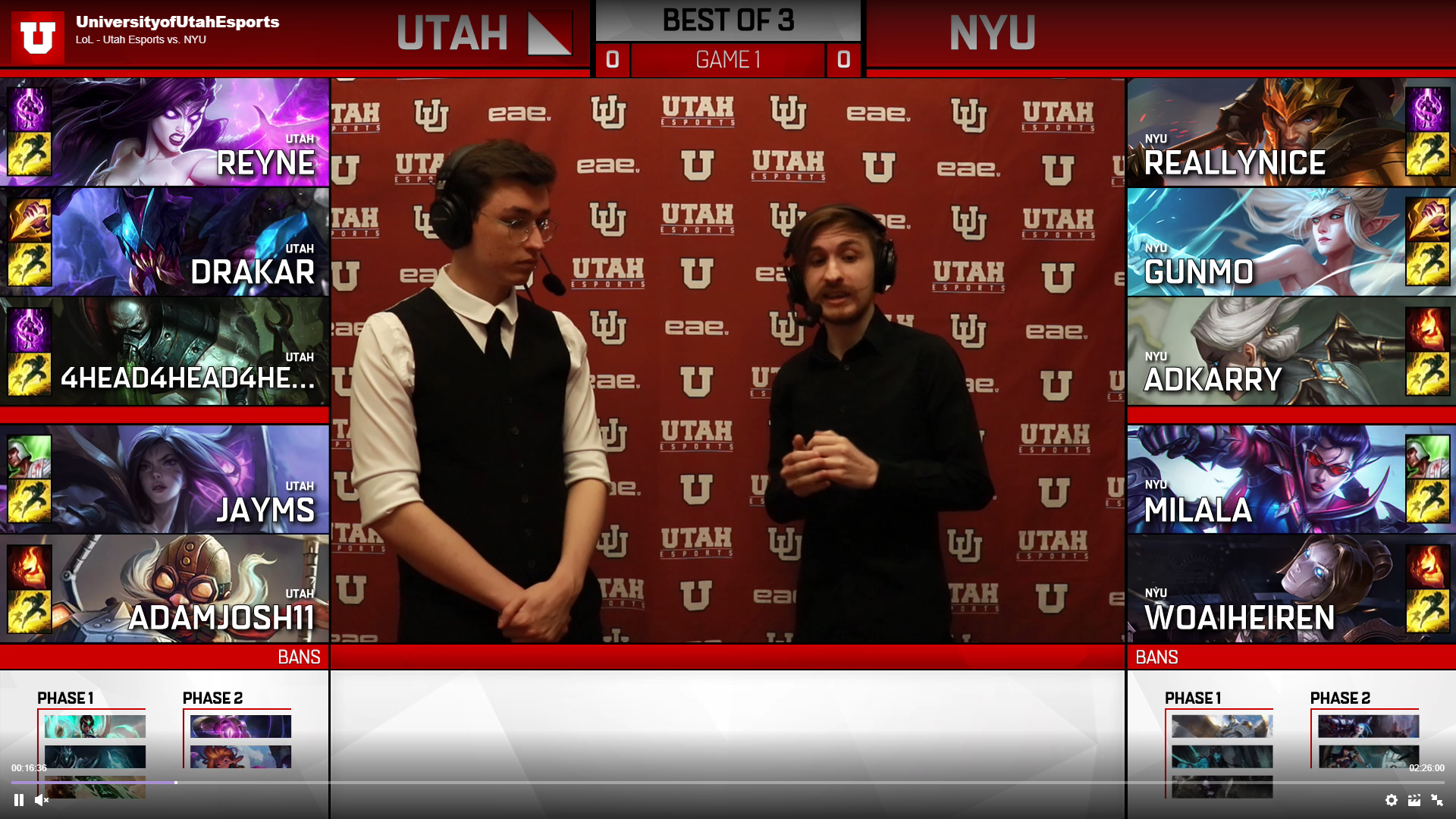
Mulder, a former professional esports player, feels right at home commentating for the U’s varsity League of Legends games, Saturday, April 6, 2019, in Salt Lake City, Utah. Here Mulder is seen breaking down the two teams’ picks and bans before the match starts.

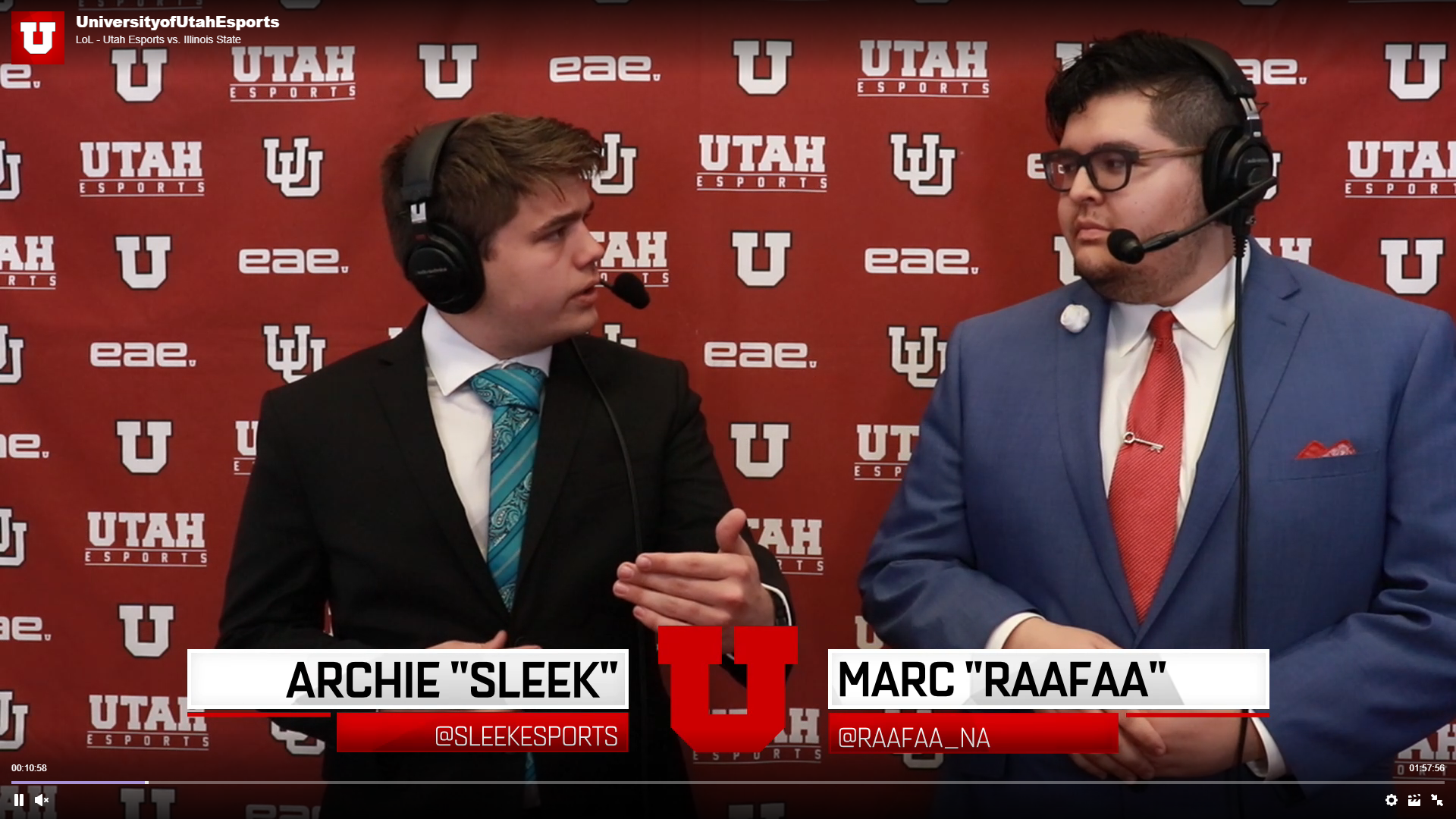
Though all members of the production team feel both pride and passion in their work, the amount of time required from each member has weighed upon even the most optimistic of the group. One such example would be Archie “LegendOfSleek” Smith, who has worked within every role possible: casting, observing, and directing whenever he’s needed. Yet even he notes of constant complaints among peers, due to the difficulty of juggling classes, actual jobs, and production. Despite his glass-half-full outlook, Smith admits just how fruitless the majority of opportunities can prove. “Esports connections are about as valuable as a lottery ticket,” says Smith. “For some people they mean everything, [but for most]: nothing.”

  • Smith broadcast

Reflection Blog

LinkedIn

Kierra Cable

My Blog:

After reading through the assignment for this class, I knew exactly the area that I wanted to study. Unfortunately, my ambition certainly outdid my experience. I have never done a project that involved using AP style. This made it increasingly difficult to write my article without having to correct multiple errors.

When I thought about what I wanted to do, I decided to talk about a very difficult topic. I currently work for the VOA at the youth resource center. This homeless shelter houses teens ages 16-22. Nearly half of these teens are part of the LGBT community. I was interested by the amount of teens that came from a religious home and then became homeless. I wanted to see if there was a specific correlation between teenagers in the LGBT community and religious homes leading to homelessness.

Finding sources for this was fairly easy, however, extremely controversial. I had access to data supplied by the VOA and point people to talk to. It was difficult to find a religious leader from the LDS church to candidly talk with me. Luckily, a good friend of mine who serves as a Bishop agreed to participate in my interview. Although I had sources to talk with, I had a hard time getting information from the religious perspective.

Overall, this project was very sensitive. I wanted to give perspective to both sides of the controversy. I learned that to do investigative journalism, you often need to intrude into dark spaces. I’ve learned that there are stories that are worth researching and boundaries that should be pushed to get that information. I am grateful for those who were willing to participate in my search.

About Me:

Kierra Cable is a senior at the University of Utah studying Strategic Communication. She will be graduating in Summer 2019. She has already begun a career with the Volunteers of America working with homeless youth in Salt Lake.

Kierra has worked in the nonprofit/ministry area for the last five years. She hopes to continue to pursue a position working with youth for the rest of her career.

Story Gallery.


Saige Hawkins

MY STORY:

Millennials are complaining about low pay but favor perks over high compensation

MY BLOG:

After I read the syllabus for this news writing class, I was super intimidated. I had never written in a news format before, and the task of pitching, writing, and publishing a story of my own seemed very daunting. I attended Park City High School where the only format you are permitted to use throughout those four years is strictly MLA for all of your assignments. Learning AP style with all the abbreviations, dashes, and short sentences was all new to me and was definitely a challenge

When I began to think of ideas for my story I was right in the middle of my internship with Backcountry, which also happened to be my first time in a human resources role. I was loving it and immersed myself in all things HR. As someone who’s about to enter the adult world and get a 9-to-5 compensation, perks and benefits packages are fresh in my mind and my peers’. It only made sense to take my professional day-to-day and merge it with the perspective of an emerging young professional.

Finding sources for this was relatively easy since I was reporting directly to the manager of perks and benefits for Backcountry at my internship. This did end up making things more intimidating because I had to ask my boss in a formal interview how she felt about compensating for lower pay with flashy perks and how that was affecting my generation. She was very cool about it and it ended up being my best interview for this project.

Overall, this project has really helped me grow as a professional hoping to enter this sometimes complicated field known as human resources, and I’m excited to apply what I’ve learned from it to my own life as my job search begins. Incorporating multiple perspectives into one article is no easy task and I have a lot of respect for those who make it look easy every single day on the job.

ABOUT ME:

Saige Hawkins is a senior at the University of Utah studying communication. She will be graduating with a bachelor’s degree in Summer 2019. She hopes to begin a career in human resources preferably with an entertainment or hospitality company.

Saige was a participant in the Disney College Program for the Spring advantage 2018 term (January-August) as a cashier for the busiest and most profitable restaurant at the Disneyland Resort. Once she graduates she plans to return to California as an HR professional for The Walt Disney Company.


Millennials are complaining about low pay but favor perks over high compensation

Story and gallery by SAIGE HAWKINS

The cost of living continues to rise and millennials are continuing to struggle to afford it. A common gripe for the cause of this is that they are not being paid appropriately. But is that really at the root of the cause? Experts in their field have noted that in order to keep up with hiring demand, flashy perks and events have become a necessity in order to maintain top talent millennials at a company.

“Most of the people we hire for our corporate office are under 40 and are more initially attracted to little perks that make their day-to-day in the office more tolerable, rather than their income.” says Erika Park, the manager of perks and benefits for Backcountry, an online outdoor retail company based out of Park City, Utah.

This is a position human resources professionals have heard more than once, and yet 18-35-year-olds are often complaining about their compensation. The most repeated comment left in Backcountry’s exit interviews was that departing employees weren’t paid enough. It is also the most common reason employees not at the corporate level were leaving Backcountry. One comment stated, “The free food and fun events are nice, but at the end of the day my paycheck didn’t reflect the work I’d put in.”

This isn’t a problem unique to Backcountry, as the cast member culture at Disneyland reflects the same thing. In Spring and Summer 2018 multiple demonstrations were held across the street from the world-famous theme park by cast members demanding a higher wage. These protests led to union representatives getting involved and beginning negotiations with the company’s leadership team for a higher hourly pay rate.

Tessa Zalfen, a Disneyland cast member for over a year, said, “No we don’t get paid that much. Most of it has to do with how many hours we get scheduled since it’s based on seniority but I don’t work here for the money. We get discounts, free admission, guest passes, and honestly I just love it here so much I don’t really mind it.” This exemplifies what the millennial generation is demonstrating, a willingness to work more for less if they’re doing something they enjoy even if it’s just the company and their values.

The next generation is displaying a sense of importance for similar values over higher pay. They are happy to be working for a company they admire so the other things don’t matter as much. This values-based employment added with the perks catered to them creates an excellent combination for compensation. If the employees already pay business to a company and will continue to do so, discounting those experiences for them allows them to feel compensated, spend more at the company, and in turn create a win-win scenario.

Corporate perks aren’t just something important to the employee life cycle. They also help draw applicants in and sell them on one job over another. “We’re very fortunate here because we offer so much in regards to activities, discounts, and the great events Erika plans. It makes my job easier because the sales pitch is already laid out for me most times,” said Donna Barker, the senior corporate recruiter for Backcountry.

Even though most of the companies that are able to offer this don’t pay as much as smaller companies, they still combine these perks with name recognition on a resume to make their company desired. “It is definitely a bigger draw for younger people just starting their careers to be somewhere recognizable,” said Park, Backcountry’s manager for perks and benefits.

Park added, “They’re more likely to take something now with less pay that will catapult them to their next opportunity than something that pays well and won’t guarantee advancement later on.”

This sentiment is echoed through Zalfen, the Disneyland cast member, who said, “I plan to stay here awhile because I want to work my way up one day and work for ABC. It’s easier to do that if I’m already here.” A foot in the door method definitely seems to be a direction the millennial generation is being steered into. Zalfen added, “From what I’ve been told, it looks better on a resume to have growth and different positions at one place than to have experience without growth at several different places.”

Corporate perks and growth potential have quickly grown to be one of the biggest factors when looking for a job in today’s market and companies don’t have a reason to change. Why spend more to pay someone for a job when they’re willing to work for less as long as you put a sparkly bow on it? Barker, the senior recruiter, added, “We might not pay as much as smaller warehouses but we don’t need to because people want to work for us before they even hear how much it pays. We attract a very niche crowd and they’ll stay if we help maintain their lifestyle, even if it isn’t through a pay check.”

Tayler Lacey talks new EP and journey to being a musician

Story and gallery by JENNA S. O’DELL

Tayler Lacey performed at The Underground at 833 Main St. in Salt Lake City on a cold March night. It is an industrial-looking building down a narrow alley. The door is marked only by band stickers. Inside, the walls are plastered with stickers and graffiti. There are small rooms that line a long dark hallway that can can be rented out to bands for practicing and performances.

It was $5 to get in this atypical venue. The room is lit with fluorescent bulbs. You can hear the sounds of musicians practicing in other rooms and the performance was unplugged.

Tayler Lacey, 22, is a Utah native who currently resides in South Jordan. At 13 he started guitar lessons. Lacey plays several instruments and admits his selection of genre influenced his choice in the ones he wanted to play.

He describes his genre as folk but credits many artists including Jack Johnson for influencing his love for acoustic music. Shakey Graves inspired him to be a “one-man band.” He enjoys the simplicity and storytelling of Bob Dylan’s lyrics and said “lyrically, Paul Simon is a genius.” 

Lacey describes writing a song as a mindset, not a mood. “I have to be by myself because it’s hard to get other people on the same wavelength.” 

Performing is Lacey’s favorite part about being a musician. His hope is to make an impact on those he’s performing for, and that they can connect with his music. With all the live performing he does, the performance anxiety he initially felt transitioned to anticipation and excitement.

“I would tell my younger self to not get discouraged and to stop comparing yourself to others,” he said. “Do it because you love it not because you want to get famous.”

During his March performance, there was a lot of interaction with the crowd which consisted of friends and local music enthusiasts. One admitted this was her first time going to the Underground and jokingly said, “I’m going to get murdered going to this place.” Lacey’s set consisted of some songs from his previous albums and from his new EP. His song “Ghosts” was a crowd favorite, everyone was singing along.

He said that this EP is different than everything else that he has out. “I think it was a very transitional time in my life. I started doing solo music again after breaking up with my guitar player. I was also moving from place to place and going through transition in relationships. I chose the name “Street Corners” because of the love of busking and hearing street performers play but also because through every change I feel Salt Lake is my home and the street corners never change.”

Tayler Lacey’s new EP “Street Corners” is available to listen to on Spotify, Apple Music, YouTube and Bandcamp. If you would like to see Lacey perform, he will be touring the Pacific Northwest Summer 2019.

Utahns finding success for personal brands and business is largely thanks to their social media presence

Story and gallery by ISABELLE CURRAN

Utah and social media. How are these two big entities related?

For the past four years, social media has become less of a memory sharing platform, and more of a business. Almost anywhere you look, there are people trying to make a brand off of themselves or otherwise enhance their growing businesses.

This phenomenon is especially apparent in Utah. Many Utahns have strong social media followings in the hundreds of thousands.

While social media might be newer and has helped more people gain success and more exposure, many top social media people in Utah started with their own blogs. Themes of such profiles and blogs range from health and wellness to fashion, art, and lifestyle.

Social media platforms are the new hub of bloggers, specifically Instagram. Instagram first came on the market in October 2010, its original purpose being a streamlined photo sharing and editing site.

Nowadays, Instagram is a balance of real-life content and advertisements, which has proved to be the secret to success. Mixing the right amount of business and personal attributes bode well with internet communities.  

One San Diego State University student, Karis Bailey, 19, who is very outwardly vocal about the Utah social media scene, says, “Many accounts I follow of Utahns are inspiring and they make me want to go and experience what they are experiencing.”

Bailey has been active on social media, specifically Instagram, for close to seven years. Around two years ago she noticed that some of the people she follows, whom she didn’t know personally, were mostly from Utah.

“These people make their followers feel almost like family members,” Bailey says. “They are all very humble and grounded individuals.”

Bailey explains that she feels as though most of the Utah-based people that she follows create authentic content that engages followers into their lives.

Some of the Instagram accounts she shared are Cara Loren (@caraloren), The Bucket List Family (@thebucketlistfamily), and The Devines (@haileydevine, @bradleydevine, @somewheredevine).

For businesses, is it wise to utilize Instagram? Even newer than the concept of social media personalities is that of making your social media profile into a business. Now, posting and reviewing products on a profile can turn a profit.

The balance of original and personal content with ads and promotions is a tricky one.

“It is all right when they genuinely like the product they are advertising but I think there is a limit to what and how much you advertise something,” Bailey says. “Pushing things on to followers is unethical but I see nothing wrong with suggesting.”

Social media in Utah serves as a large community for people to connect and share ideas with each other. A popular social media Utahn who can attest to this is Renata Stone.

Although she is a newer Utah resident, her Instagram and company success is constantly influenced and inspired by her surroundings. With over 21,000 followers, her Instagram (@renatastone) is the connection between her business, her personal images, and her followers.

After Stone and her husband bought a house together, she started making macramé pieces to decorate their house.

To transform her creative hobby into a business, Stone utilizes her website and Instagram to share her inspiration, existing creations, and allow for commission requests.

In an email interview, Stone says, “Being authentic and real is the only thing that matters.”

Providing an accurate visual representation of one’s life is an essential way to gain favor with followers and promoting loyalty.

Stone says she does not consider herself a typical Utah social media personality, but recognizes that her Instagram very much follows a theme, something very common in not only successful Instagram pages in general, but Utahn Instagram pages especially.

“I think my Instagram account is as much about me as a human (or at least what I choose to expose to the outside world) as it is about my work. I think as an artist the personal and professional go hand-in-hand —it’s almost like you are your brand,” Stone writes.

Social media platforms are not only central to personal profiles but also to enhance businesses, as Stone noted. Normal Ice Cream is a food truck that is standing its ground among retail storefronts at Trolley Square, using Instagram to do so.

The Normal Ice Cream website and Instagram profile (@normal.club) give a comprehensive overview of the products as well as the story behind it all.

Owner Alexa Norlin, who has been a pastry chef for eight years, decided the ice cream business was more her speed after working in popular Salt Lake restaurants such as The Rose Establishment, Current Fish & Oyster, Fresco Italian Cafe, Cafe Trio Downtown, Cafe Trio Cottonwood, and Faustina and Niche.

She opened the Normal Ice Cream truck and became operational in June 2017. Later the truck took up residence in Trolley Square starting in January 2018 and has been there ever since.  

Norlin praises Instagram saying, “I truly think that I would be out of business without Instagram.”

The Normal Ice Cream truck is an example of good social media marketing. The Normal team utilizes its profile to promote the business by posting photos of products, updating hours, sharing, and serving as a place to allow customers to connect with the business.

Norlin says that, “Instagram has allowed a really natural way to engage with customers on a seemingly one-to-one basis.”

She has noticed the social media Utah phenomenon, but her social media involvement is mostly consumed by being a business profile only, not a personal journal. Still, Norlin credits her business’ success largely thanks to a clear and consistent social media presence.

Utah will continue to be the house a substantial amount of popular social media figures. For those who have a business and those who wish to share their lives online, Instagram seems to be the desired platform.

Looking into the future, there is no limit to how influential social media platforms can be to people’s personal brands and the business they create.


Students turn to piracy in face of high textbook prices

Story and photo gallery by NIC NIELSEN

Downloading files illegally is nothing new. In fact, college students have been using the internet to pirate music and films for years. While this trend has been prevalent in entertainment media, it has now moved on to academics.

College students are now turning to the internet to find their textbooks. But rather than purchasing or renting from companies such as Amazon, some are opting to download complete PDFs of their required texts. With a quick Google search of the title or ISBN, students are able to download some textbooks at the risk of legal penalties in order to save hundreds and even thousands of dollars.

For University of Utah freshman Olivia Gonzales, 19, this is a popular way for her friends to save money. The chemistry major said she hasn’t participated in the trend herself, but she doesn’t blame others for wanting to save money with the prices being so high, and some professors are sympathizing as well. 

“I’m too scared of getting in legal trouble to try it, but most people I know have done this because, like, they just can’t afford really expensive textbooks on top of the ridiculous school fees,” Gonzales said. “Even my professor once sent us a link at the beginning of the semester to a PDF of the book for our class. The entire textbook.”

While students may consider receiving bootleg copies of the required texts either a miracle or unethical, U senior Kelsey Rathke, 26, has experienced something more common.

“I have had multiple classes where a teacher has a PDF chapter or two from a textbook,” Rathke, a communication major, said. “I really like those classes because, in general, they use more than one textbook, so there is variety throughout the semester, and I don’t have to pay the price for it.”

According to Policy 7-013 of the U’s research policies, copyrighted materials can only be shared to students if it constitutes a fair use, is only accessible by students enrolled in the course during that semester, and has a security measure in place to access it such as a password protection.

While some may argue students simply just don’t ever want to pay money, the cause of this trend may be a result of skyrocketing textbook prices.

In January 2018, CBS News reported that the average cost of textbooks has risen four times faster than the rate of inflation in the last decade and 65 percent of students were choosing to not purchase required texts at some point in college due to lack of affordability.

According to the National Association of College Stores, the average price of a new textbook rose from $58 to $90, an increase of over 50 percent, between the 2011-12 and 2016-17 school years. Many students have expressed that this rise in price is unjustified.

“I think they are outrageous,” Rathke said of textbook prices. “I understand that they take a lot of effort and time to build, but the newest versions of textbooks are unbelievable, and for most of them the changes are minor enough that it feels like robbery.”

Students have not been the only victims of rising prices, however. According to Shane Girton, 48, associate director of the of U’s campus store, it has been selling fewer printed books because of prices set by publishers.

“Traditional print textbook sales have declined overall due to the increase in price set by the publishers, which has forced cost-conscious students to make the choice of shopping online to find the best possible deal, utilizing e-books when possible, as they are normally up to 60 percent cheaper than print textbooks, utilizing the Campus Store rental program for their textbooks, which can save them up to 50 percent, or forgoing using a textbook at all,” Girton said in an email interview.

Girton also stated that the campus store searches for “a variety of options in providing textbook content to students so that the price can be reduced where possible.” Girton said he is aware of the textbook pirating trend, but not to what extent.

“There is a risk involved in using pirated material that the student has to accept,” Girton said.

Although more expensive, some students such as freshman Thomas Young, 18, still prefer physical textbooks and purchasing from the university bookstore. 

“I prefer a hard copy of my textbooks if I can so I can write in the book because that’s how I learn best,” the U kinesiology major said. “The campus store might be expensive, but it is still the best option to get books because most of the time they have any book that your class will need right there and you don’t have to wait to have it shipped like you would for Amazon.”

Regardless of preference, Girton recommended students contact their professors after registering to see if the textbook will actually be used for the course. While it is the easier and more affordable option, textbook piracy, as with music and film piracy, can result in academic punishment or expulsion, hundreds of thousands of dollars in fines, and possible jail time.

Salt Lake City: Home to Mormons and gays alike

Story and gallery by BENNY CARDULLO

Salt Lake City is known for stunning mountain scenery, the Tabernacle Choir at Temple Square, and the 2002 Winter Olympics. But on Jan. 10, 2019, it was also named the Gayest City in America by The Advocate magazine.

This is not the first time Salt Lake City has earned this title from The Advocate. In 2012, Salt Lake City was given the top spot on the list of the gayest cities in America, and in 2016 it made the magazine’s top-10 list.

Jimmy Kimmel quipped in 2012, “I wonder how they (The Advocate) measure this — do they walk into the local Abercrombie & Fitch and see how full it is?”

Although this is not the magazine’s procedure, the ranking process is admittedly based on non-scientific criteria. The magazine looks at the number of gay and lesbian bookstores, elected officials who are lesbian, gay, bisexual or transgender, and some edgier qualifiers such as the number of International Mr. Leather competition semifinalists and the presence of nude yoga classes.

Of course these qualifiers are more abundant in larger cities such as San Francisco, Miami, Boston, and New York. But The Advocate wanted to focus on smaller cities for this year’s list.

To explain its unconventional forms of ranking, The Advocate said, “There’s the official census with information on same-sex couples as a percentage of the population, then there’s our accounting of the gayest places in the USA — and we know the twain shan’t meet. But do we really need another article telling us that the homos gather in West Hollywood and Hell’s Kitchen?”

Utah’s LGBTQ+ advocates were pleasantly surprised by the rankings.

“Well, you know, we’re all very proud of our community here, and we’ve done a lot of growing and empowering of each other and our allies in the community,” said Utah Pride Center Executive Director Valerie Larabee in a 2012 press release after Salt Lake City was named America’s gayest city.

The Williams Institute at the UCLA School of law found that the LGBTQ+ presence in Salt Lake City is substantially growing and becoming more open and visible at a pace quicker than the rest of the United States.

Walker Boyes, a local artist who moved with his family to Utah from California, said, “Salt Lake City is an up-and-coming place. I’d rather set roots here and build connections than live in a city where no one cares about me.” Walker continued, “I also love how you walk down the street and people wave to you, I don’t get that in LA or New York.”

While many rejoice in the progress Utah has made in their relation to the LGBTQ+ community, many still feel there is a long way to go.

Sean Edwards, who moved to Utah from Princeton, New Jersey, 12 years ago, said, “While I have felt very well-received in the LDS and Utah community, I feel like there’s still work to be done.” However, Edwards and his husband, Matt Doane, are still members of the predominant religion of Utah, the Church of Jesus Christ of Latter-day Saints, and plan to raise their future children in the faith.

“I feel like by having my family here, or our family here, we can continue to embrace diversity as a community, and I think that’s important,” Edwards said, “I think successful societies and successful communities and successful people are people who really know how to work with and get along with and collaborate with other people who are different than them. If I’m going to be an advocate for our community here I need to be willing to raise my family here.”

According to a 2013 study by Gary J. Gates, a distinguished scholar for the Williams Institute, Salt Lake City is “the gay parenting capital of the United States.” Gates’ data reveals that among couples of the same sex in the Salt Lake City area, more than one in four are rearing children.

Nicole Dicou, a former employee at Equality Utah, is getting ready to raise her baby girl in Salt Lake City with her wife Natalie. Dicou said, “My wife and I want to raise our child in Utah because we grew up here and call it home. We are close to our family here, love the mountains, and enjoy all that the state has to offer.”

Dicou added, “We can’t wait to welcome our little girl to this beautiful place.”

The most sustainable and ethical diet for people and the planet

Story and photo gallery by CAMILLE AGLAURE

With so much talk concerning diet in the media, many people find it difficult to know what to eat. What foods are ethically sourced and grown? What foods truly promote human health? What foods support the health of the planet? These are all questions that are fogging up the minds of so many people.  

One thing that Thunder Jalili, Ph.D., and a professor of nutrition and integrative physiology, and Anne Pesek Taylor, registered dietitian, at the University of Utah can both agree on is that, generally speaking, a healthier plate is one with more plants and less overly processed foods and added sugar. 

Pesek Taylor said in an email interview that balanced nutrition needs to account for individual food preferences, lifestyle factors, and include a variety of food groups so it can be maintained long-term. Pesek Taylor referred to the University of Utah’s Healthy Eating Plate, an adaptation of the government’s MyPlate created in 2011, as a useful guide to good health.

What does this mean for meat and dairy, though?

Studies like the popular health book “The China Study” and documentaries like “What the Health” and “Cowspiracy”detail the harmful effects to humans and the environment that come with the consumption of animal-based foods. Jalili said he believes that the absolute exclusion of animal-based foods is not necessarily vital. However, regarding meat, “a little still means a little,” he said. 

Jalili said the maximum recommended intake of red meat is 100 grams per day while the maximum for processed meat is 50 grams. “Once a day is still a lot,” he said, and as far as human health is concerned, many studies indicate that there is, in fact, a decrease in mortality rate among those who maintain a vegan and vegetarian diet. When considering environmental health, there is slightly more to be taken into account when writing out your grocery list.

As more media attention surrounds the question of climate change versus animal agriculture, many organizations and communities are reevaluating the importance of animal-based foods, particularly meat, in a standard, western diet. 

“Raising cows is an environmental disaster,” Jalili said. With animal agriculture accounting for 91 percent of rainforest deforestation, according to The World Bank, and more greenhouse gas emissions than the entire transportation sector, according to the United Nations, Jalili said he believes that it is time for groups of people, like nutritionists, to not focus on health alone, but the bigger picture. “It’s just responsible,” he said. 

So, is a universal vegan diet the solution?

In the opinion of Christy Clay, Ph.D., an associate professor at Westminster College who teaches courses on subjects including biology, ecology, and environmental studies, “a homogenous, universal diet is exactly what has caused so many problems in our current food system.”

Clay said she believes that the current food system has created a monster of unequal distribution of foods, the elimination of native crops and variation, and potentially the loss of culture and professions. 

“We’re not understanding the limitations and values of local resources,” Clay said, as she explained the harms in seeking mainstream foods that do not naturally occur locally. Clay used the example of quinoa, a grain that grows in the Andes that is now exported to Western countries more than it is provided for locals who have depended on the grain in their diets for centuries. To be truly sustainable and ethical, Clay maintained that “diets should be bio-regional.”

For Clay, the ethical question of which foods to eat is not as simple as drastically lowering our consumption of meat. Rather, “there’s a whole dismantling of a current food system that needs to happen,” Clay said as she painted a picture of just how disrupted our way of eating has become. 

So, where do we begin?

Clay suggested that the first action to take is having the conversation about “how broken our food system is.” This consists of poor income for those in the agriculture industry, the cost and precarious nature of leasing land to farmers, a decline in community gardens, and loss of interest in crops that have fallen out of the mainstream.

“What does it look like to say we actually value this profession?” wondered Clay as she additionally suggested encouraging communities to be a space for local gardening. Already, there are a number of organizations working to do just that, including Green Urban Lunch Box, which goes from school to school, educating children on the value of local gardening while furthermore educating local farmers. 

Making a difference in your community requires collective action to encourage local agriculture and farming. Clay suggested gardening out of your own backyard. If you live in an apartment complex, ask your landlord or property owner about creating a roof garden. Clay also suggested engaging with other community gardens and protecting land to be used for local farming. Getting back in touch with a farm-to-table way of eating is imperative for a sustainable diet. Rekindling a healthy and community-based relationship with food is the best way for individuals to eat ethically, healthily, and in an environmentally friendly way. 

New marketing strategies help a local business grow

Story and photos by PAMELA SMITH

 Salt Lake City is made up of many local businesses that are run by friends, neighbors, and others in the community. These businesses help the local economy prosper. But it can be daunting competing against large corporations.

Highlighted is one local business in the Salt Lake area that has made a name for itself with little marketing — until now, when it recently changed its marketing strategies in order to grow and stay competitive.

Sacred Energy is a crystal, meditation and energy shop, located on 261 E. 4500 South in Murray. Owner Janet Wall started the company in 2016 and it has only prospered since then. She has taken the store from one location to three in just a few short years.

Being a spiritual person, Wall was constantly traveling to Phoenix to take classes and learn about the various types of energy work and uses for various crystals. Wanting to create a classroom closer to home, she thought up the idea of Sacred Energy. But, working a 9-5 job made it nearly impossible to start a business.

Three years ago, she asked the spirits to lay her off of her administrative assistant job so that she could open up Sacred Energy and help others learn this spiritual practice. Over the past three years, the store has flourished with the help of her husband, customers, and energy workers, the people who do tarot reading and run the classes. Wall says opening this business has impacted her life and “changed her world completely.”

The shop’s main location sells crystals, jewelry and healing books, and offers a variety of energy work such as sound baths, crystal healing chamber, Reiki, card readings, and aura pictures. The other two locations are energy healing retreats for people to rent and hold weekend getaways and more intimate customized classes.

Being a small business, Wall has only used Facebook and word of mouth to market the shop. Although these marketing strategies have brought her lots of customers, more crystal shops are popping up and she has had to hire a woman to work on the media presence and make her stand out.

Wall says that Google, Instagram and Twitter are a few of the media platforms she plans on having her media person use for the shop.

Sacred Energy’s website will give you full details for all the events, activities, and items you can purchase, as well as bios for the energy workers.

The moment you walk into Sacred Energy you are overtaken with a positive and calm atmosphere. The staff welcomes everyone with smiles and a helping hand to find what you need. Wall wants to know that everyone who enters into Sacred Energy has a purpose or reason for walking in. She is truly there to help people and isn’t in it for the money.

Customers who walk in bring a different kind of energy. She says that she loves to watch people grow spiritually and enjoys building relationships with them.

Erica Blewett has been going to Sacred Energy for almost three years. She heard about it through a friend and now also continues to inform her friends of the relaxed environment it provides. She has gone to other crystal stores, but none have quite the same atmosphere as Sacred Energy.

Wall says Sacred Energy is set apart from other stores such as Dancing Crane, Lotus, and Turyeas because of the “good energy you feel when you walk in and our high-quality crystals.” Although she doesn’t believe in competition, she says “there is a purpose for each business.”

Sacred Energy’s motto will surely draw in all who want to find self-awareness and feel like they are a part of a community: “To provide high rejuvenation products and services to our community; that offers spiritual awareness, growth, and transformation. Within the peaceful retreat and home away from home, clients enjoy a variety of alternative, holistic, and spiritual interpretations and modalities, all within an unbiased and loving environment.”

Crystal healer and Reiki master Michael Eakett is one of 11 energy workers who teach at Sacred Energy. He teaches mediation and he says, “It has changed my life for the better.”

Eakett was not on a “good path.” Sacred Energy gave him a place to go and be a part of a community. He promotes himself by business cards, word of mouth, and Facebook. With his way of marketing, he brings in many customers for the shop who want to grow in their spirituality.

“I want to help people be the best they can be.” he says. “I know that if I don’t meditate daily I get lost. Hopefully I can just teach people the power of mediation.”

With all the large corporations taking over, Sacred Energy seems to be keeping up by revamping the way it markets itself. Watch for posts on Twitter and Instagram.