Category Archives: Student-Journalists
Natalie Freeze
MY STORY:
MY BLOG:
When considering topics for my enterprise story, I was inspired by Grist, a non-profit news organization that devotes time and attention to covering environmental policies and explaining complicated issues. I love watching their videos and reading their daily newsletter. This is where I got a lot of my foundational information to craft my story.
I chose to write about the revised recycling standards because it is something so relevant and important, yet I didn’t see many articles written about it. Once I had completed some background research about the recycling issues in the United States, I turned to my interview sources. This helped me narrow my focus from a national issue to a state issue and finally to a campus concern.
I also knew that I wanted to get a student perspective as well as professional opinions. For my influential interviews, I talked to Ashlee Yoder who works directly with the sustainability department of the Salt Lake Valley Landfill. She was a great resource because every day she sees the consequences of not recycling. I hadn’t thought about this before, but those who work with the landfill are some of the biggest advocates for proper recycling.
Josh James was also a great contact because he oversees recycling on campus. He gave me great insight into what the University of Utah is currently doing to improve the waste management system on campus and how China’s restrictions have impacted it’s policies and procedures.
I also interviewed a student studying environmental sustainability at the U. Sophie Morton was helpful because we were able to talk about what challenges we see with recycling on campus. A student’s perspective was important because they are the ones who are making daily decisions about recycling and she was also able to direct me to some great articles about this topic.
A challenge for me was coordinating the landfill tour because it took communicating weeks in advance about dates and times that could work and then finding a friend who was willing to drive us there as I do not have access to a car. Overcoming these challenges was well worth it in the end, and seeing the Salt Lake Valley Landfill in person was so interesting and different from what I expected. I was surprised that it did not smell bad at all!
Finally, after researching about recycling and interviewing my three sources, I was ready to write. I wanted to keep it as clear and simple as possible, so that anyone reading my story could understand the issue, why it matters, and what they can do to make a difference. Keeping this framework in mind, I made sure that I concluded my story with action steps and optimism.
ABOUT ME:
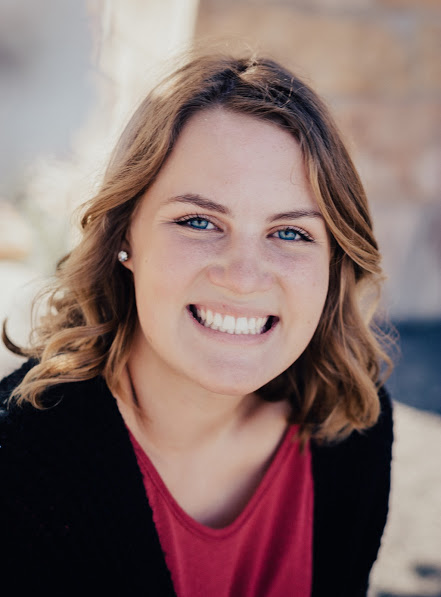
Growing up, I had this strange dream of being a pharmacist. But only if I could work at Walgreens. It all began in the back seat of a mini-van, waiting in the drive-thru lane of Walgreens picking up a prescription with my mom. The line was taking forever, and my mom was not satisfied with their speed of service. She was frustrated that there was only one pharmacist working. So naturally, I decided right then and there to become a pharmacist. But not just any pharmacist, a Walgreens pharmacist.
Thirteen years later, and sorry mom, but I don’t think that is the plan anymore. After graduating from Lone Peak High School in Highland, Utah; I chose to further my education by joining the Honors College at the University of Utah. Freshmen year, I had no idea what I wanted to spend the next four years of my life studying, but I knew that I had a passion for humanities. From world geography to art history, I wanted to focus on human interactions and connections.
After taking a major exploration course last fall, I discovered my passion for the field of communication. I am currently finishing my sophomore year here at the U, and I am looking forward to studying abroad this summer in Patagonia, Argentina. I am planning to graduate in the spring of 2021 with a major in Health Science Environment and Risk Communication and the Ecology and Legacy Integrated minor. I hope to either continue my education in grad school or start a career working with a nonprofit or some sort of social marketing agency.
Nic Nielsen
MY STORY:
Students turn to piracy in face of high textbook prices
MY BLOG:
I will admit that I had a difficult time when tasked with coming up with a story idea. It wasn’t until I saw a student pull up a PDF of his textbook in class that I realized I wanted to write on the trend of pirating textbooks. I instantly began doing research on textbooks and was shocked to see just how much new textbook prices have increased in the last decade. I knew this was something students would care about, so I began to ask around campus at the University of Utah.
I interviewed a handful of students, but the topic was sensitive. After all, downloading PDFs of copyrighted textbooks is illegal, so no one would want to go on record saying they’ve actually done it. When I met Olivia Gonzales in the campus library, she was very open about how her friends and even previous teachers have been pirating textbooks. While she wouldn’t give any names, I knew this was going to be the best on-record source about the popularity of the trend.
I came across Thomas Young on a UTA TRAX Red Line train and was instantly intrigued by the stack of textbooks in his hands. He allowed me to interview him, and he provided an interesting point of view on the subject of my story. I was surprised to learn that, although he was unhappy about the price increase, he still preferred to have a physical copy. Because his views differed from everyone else that I interviewed, I knew he was an important source for my story.
Shane Girton was also a fantastic source due to his knowledge of textbooks and his position at the U’s campus store. He provided great information on the process of selling books back to the store, something I originally wanted to discuss in my story, but I decided not to include it because it took away from the focus of pirating textbooks.
The biggest surprise for me was learning from Girton that publishers set the prices of textbooks at the bookstore. Many of the students I interviewed were under the impression that the bookstore chose the prices, as was I, so this information felt important to share.
Once I had the statistics and quotes that I planned to use, putting the story together was easy. Doing the research first was extremely helpful because if I didn’t know about the textbook price increase or the statistics about students choosing to not purchase textbooks, the quality of my interviews would not have been as high. Through writing this story I learned a lot, and I hope readers will too.
ABOUT ME:
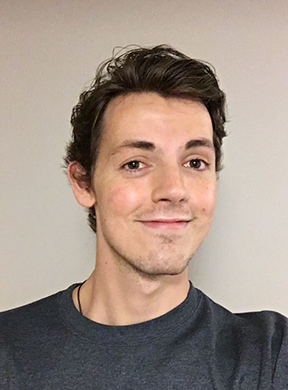
Nic Nielsen is a communication major at the University of Utah following a strategic communication sequence. He is expecting to graduate in December 2019 and plans to pursue a career in marketing and advertising. Currently, he works as a marketing consultant and as a marketing intern for Intermountain Healthcare. In the future, he hopes to help small businesses grow by creating marketing strategies and working with them to build stronger social media presences. Ultimately, his goal is to start his own business by opening a restaurant in Southern California.
In his spare time, Nic works as an actor, something he has been passionate about his whole life. He has worked on local productions, commercials for companies such as Amazon Audible and Klymit, shows such as Disney’s “Andi Mack,” and the A24 horror film “Hereditary.” Along with acting, Nic also enjoys screenwriting and has written a 10-episode season for a half-hour comedy that he hopes to get produced. His other hobbies include surfing, hiking, running, and anything else that keeps him on his feet and moving. Due to his love for the ocean, he actively promotes ocean conservation and is a member of the Surfrider Foundation.
Jenna S. O’Dell
MY STORY:
Tayler Lacey talks new EP and journey to being a musician
MY BLOG:
Live performances has always been my favorite way to listen to music. The combination of musicians’ energy, multiple musicians and instruments playing together and stage lighting, creates something so magical and captivating. Because I go to so many concerts, I’ve considered writing a music blog about my experiences.
I’ve known Tayler Lacey for over a year. I’ve been to many of his shows and we’ve had many discussions about different ways for him to promote his music. When presented with this project I thought this would be a great way for me to get started on music writing and reviews and for him to get some exposure.
Initially I was afraid that I wouldn’t have been able to complete this story. At the time he wasn’t performing as frequently as I had remembered. Fortunately there was one performance just a few days before the first deadline.
Lacey was a lot of fun to interview. Seeing Tayler perform was the first time I’ve been to an acoustic show in a few years. He was super eager to meet with me and talk to me about his new EP. He was happy to share information with me and was detailed about his songwriting process and story.
ABOUT ME:
I am a University of Utah junior studying Strategic Communication. I’m originally from a small town in Connecticut where I received my Associate of Arts in Marketing and Sales from Northwestern Connecticut Community College.
I’ve been involved in the performing arts since I was 4 years old, studying dance, music and theater and I had an internship opportunity working in the marketing department of The Warner Theatre in Torrington, Connecticut. With the performing arts being a big part of my life, I was inspired to work toward a career in the music industry.

Pamela Smith
MY STORY:
New marketing strategies help a local business grow
MY BLOG:
Coming up with an idea for an enterprise story ideas was difficult. I had to think about the things I was interested in and if others would be interested in them as well. I finally settled on how local businesses are marketing themselves to stay competitive. I used businesses that I knew about and have frequently visited. Locating my sources was easy since I had been there before.
I found it difficult to set up interviews with all three of my originally planned sources and in the end I only interviewed one of the owners about her business, one of her customers, and an employee.
Speaking with the owner of this company gave me insight on how to take a small business and make it grow. When i had first talked to her about doing an interview she made it clear that I may not like the answers she gave me, but I proceeded with the interview anyway. I found it easy to connect with her and have a conversation openly and without feeling awkward. During the interview, there were no distractions and we were able to talk about the business and her personal life as if we had known each other for awhile.
After reading over my notes I had written, I tried to put them in a storyboard order so that I could show my audience about her marketing strategies and give insight on her business. I tried to incorporate quotes when necessary that really emphasized what she talked about.
Throughout the writing process I kept having to reword things and try to remember not to add my opinion into it. I learned that I am not the best journalistic writer because I do have a lot of opinions on things and it is difficult for me to not include them. Writing my whole enterprise story was a learning experience for me because I had to learn to write in AP, cite sources in-text, and not include my opinion.
Just remember that when you are writing, write about something that you find interesting and make sure to write it in a new perspective not written about before.
ABOUT ME:

I am a junior at the University of Utah, getting my degree in strategic communication with an emphasis in marketing. I received my associate degree from Dixie State University in spring 2016 and then continued going for my bachelors for a couple more semesters. After deciding that Dixie was not the school for me I moved back to Salt Lake City. I took a year off to work and travel and then started at the U in fall 2018.
I love attending the University of Utah because of its diverse culture and its access to all the mountains. I am super passionate about any outdoor activity such as hiking, climbing, camping, and boating, just to name a few. Living so close to campus has helped me interact with the unique culture of campus and surrounding Salt Lake area and grow into a more open independent person.
I have been working for the U for about two years in facilities management. I started as an assistant buyer and recently took a job as an administrative assistant. I also work weekends for The 5K Color Run. With this job, I get to travel to various states inside the U.S. and help put this event on for thousands of people. Both of these jobs have given me experience with managing inventory, money, and people and given me the opportunity to go to school and travel.
Isabella Buoscio

MY STORY:
Mental Health Help for College Students
MY BLOG:
This story came to me because of my own experience in college with anxiety and depression. I have found that, in college, what were previously manageable disorders have become more of a burden. I went through a very dark period that led me to transfer schools from the University of Wisconsin-Madison, 3,000 miles from home, to the University of Utah, 30 miles from home. Therapy and talking about my own issues have taught me to cope with these experiences and led me to want to help others accept their own plights and do the same.
One source I went to is a person whom I talked to many times when I first transferred home to the University of Utah. Annmarie Flock is a trusted source I could go to when I needed help. I knew she was knowledgeable about what goes on during sessions and what practices are put into play to deal with disorders. I knew she would add to my story by giving readers facts from a trusted source.
My next two sources are two people whom I know currently attend therapy. One is a friend of a friend and the other happens to be one of my closest friends. I knew Zoe Baukman slightly in high school. She was a grade younger than me. I also knew her significant other, whom I did not enjoy. When I heard about her struggle, I knew she would be a good person to talk to about why therapy can help. Addi Poddska and I talk at length about why everyone should go to therapy and how people should accept that everyone is a little messed up. I went to her first when my story idea came to me. She offered to do an interview right away. I thought she would be a good source because she is more of the typical anxiety/depression case, where multiple things add up in college giving her stress.
One obstacle I encountered was figuring out how much of Zoe’s story to put in. I wanted the readers to know what she had gone through, but I also wanted to respect Zoe’s privacy. For this reason, I had to sort through her interview and make sure I was wording things to protect Zoe.
I knew my focus of the story was going to be why and where you can receive therapy at the University of Utah. I do not think enough students utilize this service. It is much less expensive than a private therapist and the therapists all have experience with students. They are equipped to help. From there I knew I needed a ‘why’, so I wanted to find sources readers could relate to and maybe take inspiration from.
I learned that I write best when I outline everything I am going to say. I also freak out about the assignment until it is actually done, part of my anxiety coming into play. I often need to dump everything in my brain on a page and leave it for a couple of days then come back to the story and clean it up. It takes LOTS of cleaning up.
ABOUT ME:
Isabella Buoscio grew up in Park City, Utah, before attending the University of Wisconsin-Madison for freshman year of college. She started off studying dance but felt more drawn to other forms of creative art, such as film and writing. During this year she learned a lot about mental health and how her peers handled it. During the summer between freshman and sophomore year, she decided to transfer home to the University of Utah to benefit her own mental health. Since then she has become passionate about helping others who are struggling and coaxing them to try therapy. She is studying communication arts, specifically video production and marketing.
She would love to run a large-scale campaign on mental health awareness in college one day. For now, she will continue taking classes and spending her free time hanging out with friends in the beautiful state of Utah.
Greg House
MY STORY:
Comics create common ground in Salt Lake City
MY BLOG:
Comic books are something I have been interested in for a while now. Near the end of 2018, I wrote a paper on inclusivity and representation in the medium. Research for that paper led me to be more curious about the communities of people who read and bond over comic books.
After establishing myself as a regular presence at my local comic book store, Black Cat Comics, I got to know Greg Gage, the owner, and Taylor Hoffman, his employee. The three of us had a few conversations over a couple of weeks about different stories I could write about the community as a whole, but through the lens of one store.
Hoffman and Gage were the best people I could have talked to for this story because, while they both have a vested interest in keeping the store running, they are also huge fans of comics themselves. Our interviews often got sidetracked into mutual tangents about what makes one character so great or why a particular writer did so well with a franchise. Those tangents were what allowed me to get the best quotes that I used for my story.
One anecdote that didn’t make it into my story has stuck out in my mind. Hoffman told a story about how a particular issue of a Superman comic spoke to her on a personal level and it is something that she revisits regularly when she hits hard times. Part of the reason that didn’t make it to the final draft was that she told me this after the main interview had taken place and I wasn’t recording her anymore.
The focus wasn’t super clear until after I spoke with Greg about the story and went home to sit on it for a while. I wanted it to be more than an advertisement for a local shop and something that people who don’t read comic books could enjoy and understand as well.
ABOUT ME:

Growing up, I always wanted to be a comedian. Telling stories and making people happy have always made me feel good about myself.
Shortly after I graduated high school, I enlisted in the US Navy and spent five years as a mass communication specialist. It was a great job that had me working with cameras, radio studios, and in various public affairs settings. While in the Navy, I was stationed in Japan and Guam. While those duty stations are as different as two places can be, I was able to travel all around Southeast Asia, which sparked a love of travel in me. Since getting out of the military, I have traveled to Morocco, Spain, Portugal, and England.
After my contract with the Navy ended, I moved to Salt Lake City. As soon as I moved here, I started my education as an education major at Salt Lake Community College before transferring to the U as a Strategic Communication Major.
After I finish my degree, I’d like to work as a public affairs specialist with the Department of Veterans Affairs while doing documentary work on the side.
Camille Aglaure
MY STORY:
The most sustainable and ethical diet for people and the planet
MY BLOG:
For my story, I knew immediately that I wanted it to pertain to health. I figured that any new information I could gain would only fuel the fiery passion I have for nutrition, holistic medicine, and environmental health.
After some debate, I finally settled on the specific question of what kind of diet is the most sustainable? I’ll be honest, I initially went in with some bias. As someone who follows a mostly vegan diet, I have become increasingly aware of the damaging effects animal products have on the human body, as well as on the environment. Because of this, I was sure that, while likely enlightening, any interviews I conducted with my sources were probably going to confirm my current opinions. I felt as though I could write the story without even consulting any outside, professional sources. Well, after my interviews, I quickly discovered how wrong I was in my assumption.
In my first interviews with Dr. Thunder Jalili, Ph.D., and Anne P. Taylor, registered dietitian, I was enlightened on the fact that although the average western diet should drastically reduce intake of animal-based products, it is not necessary to cut it out entirely. Already, with that detail alone, my perspective was forced to shift if I wanted to be as accurate to my sources as possible.
My most significant interview to shift my perspective, though, was the one I conducted with Christy Clay, Ph.D., on the ecology and ethics of a universal diet. I chose to interview Dr. Clay because of her background in the study of local agriculture, ecology, and environmental studies. About five minutes into the interview, I knew that my question was entirely wrong. She enlightened me on how damaging the implementation of any universal behavior can be to regions and cultures. She explained to me the importance of diets being bio-regional, instead of universally the same.
Were it not for the interviews, I would have written a completely different story that would have never touched on the ecology of food systems, how damaged our current food system is, or how we, as members of our community, can potentially restore it to one that is ultimately most sustainable for everyone.

ABOUT ME:
I grew up in Park City, Utah my whole life until 2014 when I moved to Salt Lake City. Although I would consider myself much better suited for warm weather, I’ve developed an incredible adoration for the snow-capped mountains, diverse landscapes, and varied seasons in which I was enveloped my entire life.
When I first started attending the University of Utah, I was pursuing a degree in mechanical engineering. After completing a couple semesters, my passion for what I was studying had faded and had changed its course toward subjects that would allow me to better explore creative and colorful aspects of my mind.
With a passion for sociology and marketing inherited to me by my parents in similar professions, I dove into a Communications major the day before the deadline to drop classes. Two days into my entirely new schedule of classes, I knew that I had made the right decision.
What I found so immediately fascinating about Communications studies was how much I found it to be a demonstration that human beings are incredibly complex yet predictable. I found it beautiful that Communications highlights the fact that we are all connected to one another through human experience and the similar ways we perceive things.
Currently, my passions include – but are not limited to – cooking, health & nutrition, holistic medicine, mental health, sociology, and being in nature as much as possible.
As I embark on my career journey, I hope to be able to apply my passions to the work I do while simultaneously finding a way to make my work meaningful to myself and other people. To me, the most important way to be fulfilled in what I do for a profession is to know that I am able to help make other people’s lives better and potentially make the world a better place.
Isabelle Curran
MY STORY:

MY BLOG:
My story idea came from a long term interest in social media and the things I’ve noticed while living in Utah for the past two years. I had noticed a correlation between media success and users in Utah before I had even lived here, so my fascination only grew once I was in the middle of it all. I had high hopes of reaching out and connecting with people I really wanted to talk to, but it wasn’t as easy as that. As can be expected, many of the popular Utah social media users whom I was hoping to interview were very busy with their work, which entails lots of travel and tight scheduling.
Even though it was hard to get interviews, I was able to recognize how their travels are their jobs, so it makes sense that they are busy. The interviews I did hold were contacts made through networking. I got a lot of suggestions of people to reach out to from other people I had contacted, which was very helpful. The three sources I ended up with were very interesting and helped to develop my story. I was able to get multiple different perspectives and learn something new from each of them as well. Since I struggled to get sources, the focus was the biggest issue I had after that. My original format wasn’t going to work with the interviews I had then acquired. So to refine my story, I sifted through the information I had gathered and made sure to keep considering the two major themes of Utah and social media.
Once I had enough information, writing came pretty easily. I knew what I wanted to say and what quotes and interview material I planned on including. This article process gave me a lot of respect for reporters and journalists because articles aren’t easy tasks, especially doing multiple stories under tight deadlines. I now have a new ice cream place to enjoy and know where to get new home decor. I’m really glad I stuck with my story idea as I feel like I learned a lot about new people and their businesses in Utah.
ABOUT ME:
I am currently a sophomore at the University studying Strategic Communications. I was born and raised in California, which I love and miss everyday when I am away from it. However, I have been visiting Utah for the past fifteen years, so I do consider it my second home.
I have always loved the creative arts. Photography and dance have been passions of mine ever since I was little. As I got older I became well versed in social media very quickly and like to use it to show my photos and designs. I hope to use this interest and my schooling to pursue a career in media marketing and content creation. Some dream positions would be working for a sports team or a media company such as GoPro or Havas Media Group.
Benny Cardullo
MY STORY:
Salt Lake City: Home to Mormons and gays alike
MY BLOG:
As an LGBTQ+ member of the Salt Lake community, I was pleasantly surprised to hear the news that Salt Lake City was named the Gayest City in America by The Advocate magazine. Salt Lake City can feel so small, especially among the LGBTQ+ community, but this article helped me look at my home with new eyes.
While writing my story, I sought to interview people from different families and backgrounds who call Utah their home. I first spoke with Walker Boyes, a young artist who moved to Utah over a year ago. He provided a youthful perspective and insight into Utah’s art scene. I then spoke with Nicole Dicou. She and her wife Natalie are preparing to start their family with their daughter Marigold in Salt Lake City. Then I contacted Sean Edwards, who attends the Church of Jesus Christ of Latter-day Saints weekly with his husband, Matthew. These people provided me insight into why people move to Utah and/or stay in Utah, why they build their families here, and how they are affected by the state’s predominant faith.
I had to be sensitive to not insert my own views and opinions as I wrote this story, seeing as it personally affects me and my life. To counter this, I relied highly on research and interviews as I sought to connect LGBTQ+ Utahns’ stories to the available data regarding Utah’s LGBTQ+ population.
As I listened to people’s stories and perspectives on their life here in Utah, the story naturally took shape and eventually led to the focus on family, a common value shared among many of Utah’s residents. From this experience, I learned that the story is always there waiting to be uncovered. It’s the reporters job to tell the truth in a way that is accessible to a broad audience.
As I wrote this story, I learned that Utah has the highest percentage of LGBTQ+ individuals with children, most of whom came from previous, heterosexual marriages. Fascinated by the relationship between Utah’s strong LGBTQ+ presence and religious environment, I will continue to learn and report the delicate but resilient relationships that exist between the state’s faith and LGBTQ+ population.
ABOUT ME:

“Maybe a specialist is only a coward, afraid to look out of his little cage. And think what any specialist misses—the whole world over his fence.” –John Steinbeck, East of Eden
I am powered by a gypsy soul and the desire to discover the “world over [my] fence.” “A jack of all trades, master of none,” I have never allowed school to get in the way of my education as I have developed a wide array of skills and passions that have allowed me to explore and unfold the world around me.
I am most at home when I’m not at home, having spent years of my life living abroad and interacting with the different people, places, and cultures of the world (having visited over 40 different countries). I am energized as I learn from people of different races and ethnicities, social and economic backgrounds, and religious upbringings. This energy is the driving force behind my work as I strive to share the unique stories and perspectives each of us possess to unify us as a global community.
My next step in life leads me to Paris, France, as I complete my BA in Strategic Communication from the University of Utah. While in France, I will study French and prepare my application for a master’s of management from London Business School. I plan to use my degrees and life experiences to promote prosperity among developing nations through the use of co-impact sourcing and microfinancing.
Elise Dunaway
My Story: A look at parasocial relationships
My Blog: Elise Dunaway’s Reflection Blog
About Me:
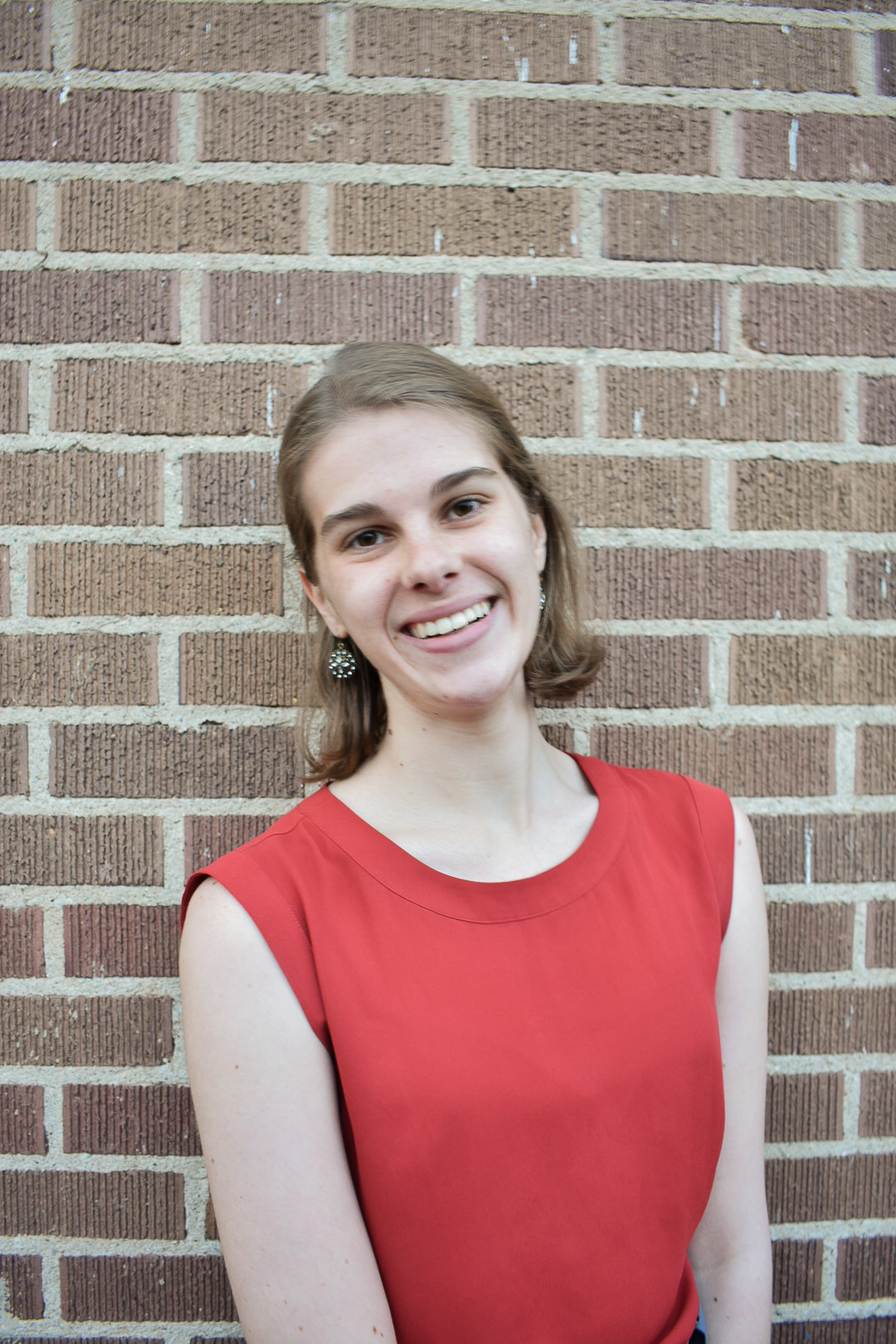
Elise Dunaway is currently a sophomore at the University of Utah. She is majoring in Strategic Communication and minoring in Theatre. After graduation, she wants to work at a public relations firm. Elise enjoys collaborating with others and is excited to work on PR campaigns and other projects in the future.
In her free time, Elise likes to read mystery novels, spend time with family and friends, listen to music, and knit. She also likes to travel and has a goal to visit every National Park in the United States. She has currently visited seven—Zion, Arches, Grand Canyon, Yellowstone, Grand Teton, Great Basin and Haleakalā.
Emerald Barney
My Story: Teen nicotine use
My Blog: Looking back on teens and e-cigs
About Me:
I am a 20-year-old sophomore at the University of Utah pursuing a Bachelor of Science degree in Strategic Communications. I am expecting to graduate in August of 2020 after completing an internship throughout the summer. In addition to academics, I work as an Educator at lululemon in Salt Lake City.
I am from Bountiful, Utah and grew up with three older sisters who are more like my three best friends.
When the weather allows, I spend most of my time outdoors in one of Utah’s five national parks, exploring the Cottonwood Canyons, or relaxing on the beach at Bear Lake.
LinkedIn: Emerald Barney
Emily Albrecht

My Story: In the Salt Lake Fire Department, it’s still a man’s world
My Blog:Finding a balance when writing about harassment
About Me: Two years into my undergraduate degree at the University of Utah, I’ve begun to realize that writing will always be an essential part of whatever I do. This isn’t just by necessity, although writing is integral to just about everything. The real reason is that I love writing. I always have, and I always will. I don’t think I’ll ever be able to change that. My two most involved hobbies at the moment are writing for the Utah chapter of the collegiate magazine Her Campus and my newly-minted food blog, Pancakes and Porridge.
I’m currently pursuing a double major in English and Strategic Communication. Although my current plan is to go into copy writing and advertising, my ideas of the future are always shifting. I like to stay open to new opportunities and new ideas. My mantra is that I’m still so young and the world is changing so much, there’s no reason to put myself in a box too early.
Katherine Schumann
The idea for my story came to me when I was spending time at home visiting my brother after his torn ACL surgery. My brother is a professional Nordic combined athlete and I knew that with that connection I could get special access to his team of surgeons, coaches and teammates in order to write an in-depth story.
The biggest obstacles when writing my story was to keep it non-personal because I was writing about my brother. I really had to separate the way that I know he feels about his injury and stick to the facts and the interviews, challenging myself. When interviewing everyone it was easy to make sense of all the information into a story. They are all Stephen’s team of doctors and coaches and they all know the same story so all the information from the interviews was cohesive. The focus became on my brother’s recovery as an athlete and how it happens differently being a professional athlete and how it affects the athletes themselves.
The writing process was very straightforward there were clear guidelines to the assignment. The biggest struggle for me with writing is, I love to tell stories but putting them on paper with the correct grammar has always been hard for me. This process has taught me how to properly research and execute a story for publication and pushed me to learn AP style and better my writing. I’m surprised by how much I enjoyed the process of researching and writing this enterprise story and how much I learned.
Katherine Schumann
MY STORY:
MY BLOG:
The idea for my story came to me when I was spending time at home visiting my brother after his torn ACL surgery. My brother is a professional Nordic combined athlete and I knew that with that connection I could get special access to his team of surgeons, coaches and teammates in order to write an in-depth story.
The biggest obstacles when writing my story was to keep it non-personal because I was writing about my brother. I really had to separate the way that I know he feels about his injury and stick to the facts and the interviews, challenging myself. When interviewing everyone it was easy to make sense of all the information into a story. They are all Stephen’s team of doctors and coaches and they all know the same story so all the information from the interviews was cohesive. The focus became on my brother’s recovery as an athlete and how it happens differently being a professional athlete and how it affects the athletes themselves.
The writing process was very straightforward there were clear guidelines to the assignment. The biggest struggle for me with writing is, I love to tell stories but putting them on paper with the correct grammar has always been hard for me. This process has taught me how to properly research and execute a story for publication and pushed me to learn AP style and better my writing. I’m surprised by how much I enjoyed the process of researching and writing this enterprise story and how much I learned.
ABOUT ME:
 Katherine Schumann grew up in Salt Lake City and attended East High School, home of her favorite kids’ movie “High School Musical.” Then she attended the college of her hometown, the University of Utah. While attending college she started as a business major and then found communication to be a better fit for her future.
Katherine enjoys communicating with people around her, including communicating through social media and creative ways. She used her creative abilities in her previous internships with Fuel Marketing and the Utah Sports Commission to create blog posts, social media posts, graphics and promotion. “Communicating in creative ways and creating content to get messages across has truly become my passion.”
In her free time, she spends time with her family and friends and enjoys all that the outdoors has to offer in Utah, including camping, hiking and skiing. Traveling for joy and for service Katherine spent a month in India and in Thailand on humanitarian trips with the programs Youthlinc and YMAD. She also spent a month abroad in Europe during the summer of 2017.
Katherine is looking to finish up her degree from the University of Utah Department of Communication and then getting a certificate from Parsons. Katherine is hopeful for what the future has to offer after college.
Reflection Blog: Laura Child
The “Me Too” movement and its impact on college campuses
As the Me Too social movement has become more prevalent in the last two years, I thought it would be a great topic to write my enterprise story on. I have become passionate about inequality issues surrounding women’s rights and wanted to learn more about how this movement has effecting women. Our enterprise story was supposed to be tied to the University of Utah so I thought that putting an emphasis on how sexual assault affected college campus’ would be my main focus. I hoped to provide a background on the movement and how it has affected universities and their safety protocols when dealing with sexual misconduct.
In order to find my story content, I wanted to provide on campus resources, statistics, and personal experiences. I was able to interview some of our campus advocates and understand some of their hopes as sexual assault counselors. By talking to them, I was also able to gain a better understanding about how we can prevent these assaults on campus. Unfortunately, I wasn’t able to interview anyone that had had a personal experience to share with the story. I felt like this was going to be a stretch as this information is so sensitive. There were a lot of different angles I wanted to include within the story which helped shaped my story beginning with the history of the movement to how we can improve our own safety at universities.
As I wrote this story, I was surprised by some of the statistics I came across. It has become such a significant issue that is in constant need of safety improvements. I wish I was able to connect with more of the police force on campus and individuals who have gone through their own personal experiences. I felt like I was able to create an interesting, educational piece which has allowed me to be more educated on the issue.
Cheyenne Peterson

My Story: Causes to college student stress and helpful resources at the U
About Me: Cheyenne Peterson is a third year student at the University of Utah, studying Communication with a emphasis in Journalism and obtaining an entrepreneurship certificate. Cheyenne’s aspirations are to become a pro-staff for Bass Pro Shop and host/co-host an outdoor channel television series.
Cheyenne currently works with a company called Hybridlight, as a sales representative and on product design. She travels, giving trade show demonstrations and educating customers on the company’s products.
Cheyenne Peterson Reflection Blog
My Blog: When I sought out for what I wanted to write for my enterprise story, I originally was set on some business related stories, but I realized that none of the topics were sticking with me and I began to stress. So I thought, why not just write it on stress and how stress can impact students on campus? I’m sure there’s other students who feel the same way.
I believe that my story can be educational and informing, to those who need to know where they can go for resources, when dealing with stress. I also believe that it is a relatable story, hence why I used two students view on their stress during the college season.
Gathering information for my story was quite easy, since it is such a relatable topic. I had interviewed two students, a doctor, and a health coach. I started each interview with what their current status was (student, doctor, etc). I then asked what experiences they have had with stress and how they believe they can maintain stress. I asked if they knew of any resources available to help with stress, as well.
I choose to write more about the students stories on how stress had affected them, due to believing that students want to be heard and I wanted other students to be able to relate. I then furthered my writing to where to go if needed assistance to stress. Later, I wrote a short discussion on how stress can make existing issues more chronic like diabetes.
Reflecting on my writing, I noticed it went a different direction than what I was going for, but that’s the beauty of writing.
My Story: Causes to college student stress and helpful resources at the U
About Cheyenne Peterson
Causes to college student stress and helpful resources at the U
Story and photos by: Cheyenne Peterson
SALT LAKE CITY — You must get straight A’s. You must work to pay off your student debt. You must land a good, six-figure job. And you must do this, all while rubbing your stomach and patting your head. It seems like college these days is the recipe for a physically and mentally drained college student.
Many students attend the University of Utah determined to accomplish and do great things. But when stressors appear, life can become overwhelming. In many ways it can be very harmful to a students’ success.
Taylor Dewey, a junior at the University of Utah, has experienced the chasm that is college stress. It occurred while traveling home from a three-month summer study abroad in Bali, Indonesia. Dewey’s friends and family warned her that she would experience reverse culture shock, what they believed to be worse than culture shock. She didn’t really believe it would happen to her, but after just a week to adjust to America at the beginning of her next semester of college, it came.
“Not only was there a 14-hour time change, but I had different priorities in Bali than I do in America.” Dewey started a new semester believing she would be motivated to succeed, but that was not the case. She soon realized that the opposite was true. Dewey believes that her body didn’t have enough time to adjust to the stress of culture shock. She isolated herself from her family and friends, which was followed by depression.
“It (depression) really just came out and I realized that I needed help when I got back from Bali. The stress from adjusting back to America, triggered me into a depressive state, says Dewey. “I lowered my school work motivation and started failing my classes. That wasn’t normal for me. I even lost motivation to even eat, shower, and other things like that. It really was not good.”
Trevor James, a senior at the University of Utah, also experienced abnormal stress while working two jobs and studying biomedical engineering. “I was doing research and I was also working at the Cheesecake Factory, about 20 hours a week, so I never really had a day off,” he says. “I had to work the weekends and I would get off really late, then I would have to work at the research lab before school, really early.”
The pattern was unhealthy and unsustainable. “I wasn’t getting enough time for sleep and when I was getting ready for sleep, I would get really stressed about how I was going to have to get up in a few hours.” The stress left him unable to sleep. Even when he found the time for five or six hours of planned sleep, he says, “I would only end up falling asleep for three or four of them.”
James did this for a few months until he realized he was doing too much. James knew he would be better off if he didn’t do so much and decided to quit his job at the Cheesecake Factory.

Salt Lake City, Utah. The Health Wellness Center (HWC) located in the University of Utah’s Student Life Center.
According to the Anxiety and Depression Association of America (ADAA), 85 percent of the 20 million American college students, have been overwhelmed with how much work load they have and 30 percent of these college students have had stress effect their school work.
Located at the University of Utah Student Life Center, the Center for Student Wellness, offers a variety of services for students including individual well sessions. Health educator Jenna Templeton explains what happens during a individual wellness session.
“This is a one-on-one conversation with a coach that we assign to you, about any determined goals that you would like to achieve, whether it is on healthy behaviors to how to manage stress.” Templeton suggests that students overwhelmed with stress take these into consideration; do something you enjoy everyday, set limits and say no to requests that you don’t have time for or would be too stressful. Accept that you can’t control the uncontrollable, and learn and practice relaxation techniques.
The Center for Student Wellness is open Monday through Friday, from 8:00 am to 5:00 pm. Appointments with a wellness coach can be scheduled via email at wellness@sa.utah.com or phone (801) 581-7776. Wellness coaches will need time to prepare for your appointment, so walk in appointments are not recommended.

Contact information for the University of Utah Counseling Center.
Another great resource is the University Counseling Center, where you can just walk in for an appointment or call (801) 581-6826. Trevor James, after his stress overload, attended the University’s Counseling Center and says the it gave him a moment to talk to someone and take a moment to “just breathe.”
When stress becomes routine over long periods of time, it can begin to manifest itself physically. Stress can make existing problems worse like depression, cardiovascular risk, and diabetes — and when you’re sick it will be harder to recover.

Salt Lake City, Utah. The Health Wellness Center (HWC) located in the University of Utah’s Student Life Center. 
The Health Wellness Center (HWC) pamphlet, with their services provided listed. 
Contact information for the University of Utah Counseling Center. 
30 percent of 85 percent of college students, who are overwhelmed, are impacted by stress. 
James studying for finals, under stress. 
Rebecca Murphy a student who is overwhelmed by stress. 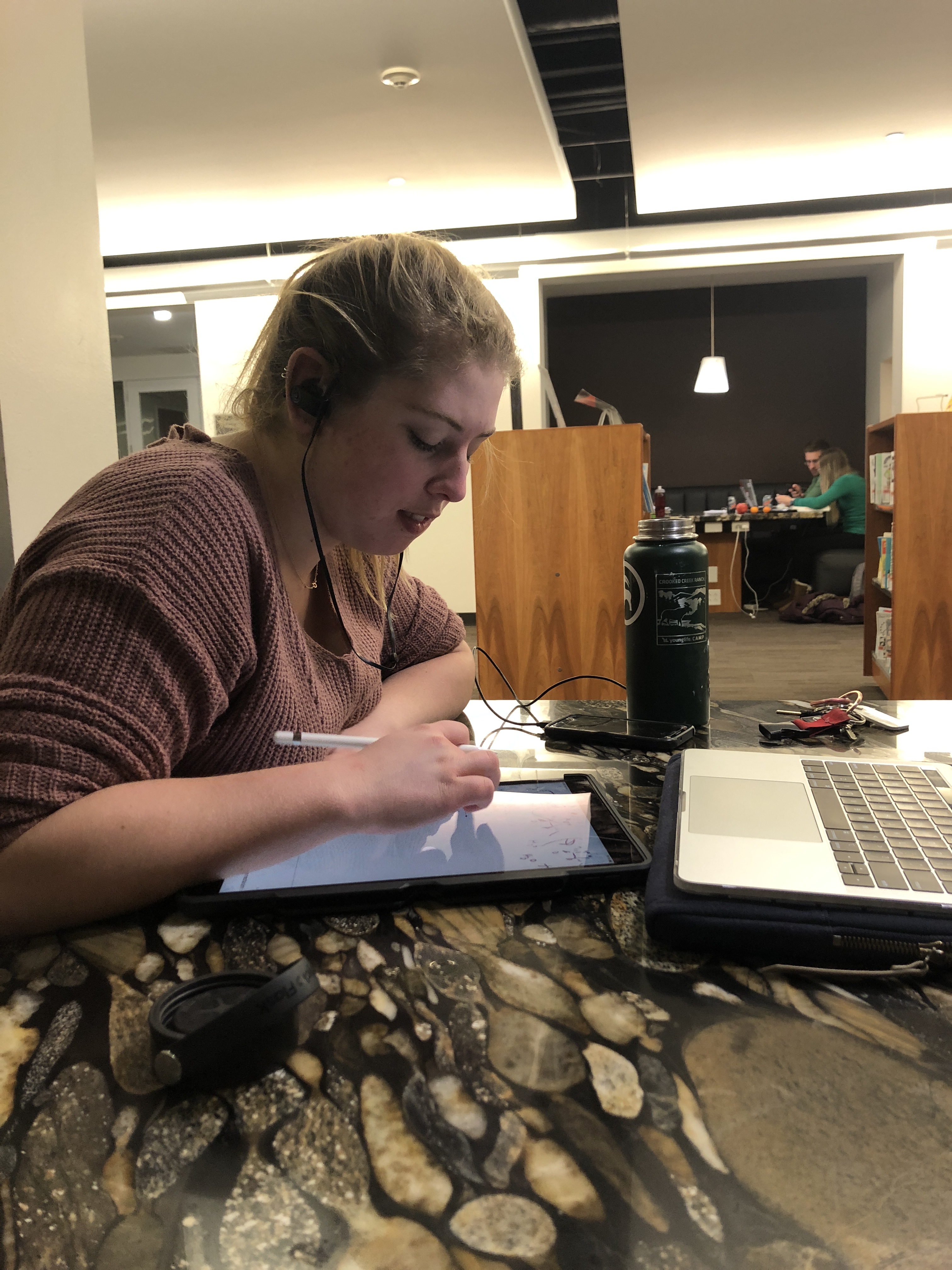
Dewey studying for finals, under stress. 
Students need 7 – 9 hours of sleep a night. Pictured Leo the puppy. 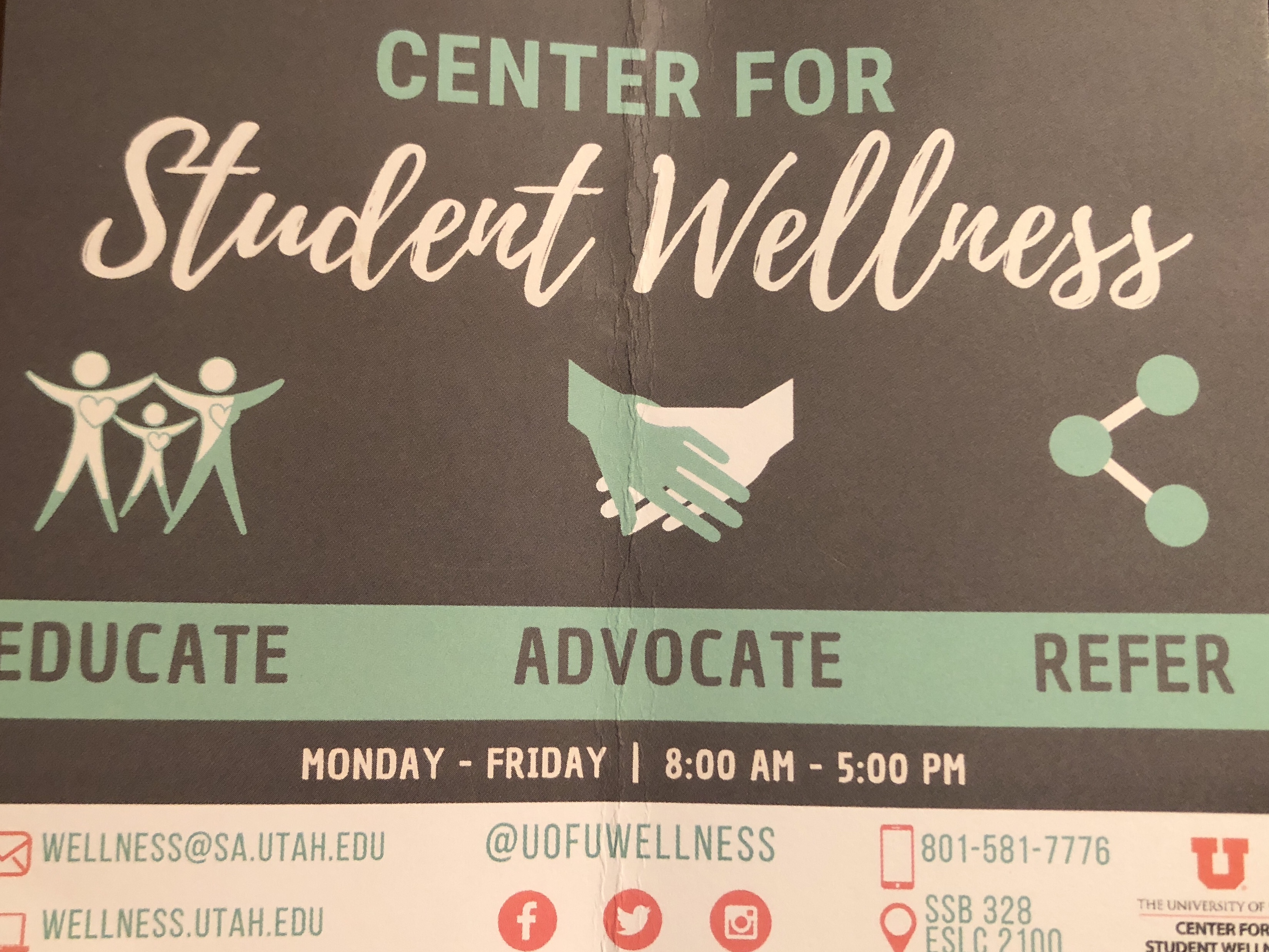
The Health Wellness Center (HWC) pamphlet, with hours open. 
The Center for Students Wellness is located in Student Life Center at the University of Utah.
Sky-high insulin prices leave type 1 diabetics worried for the future
By Alex Stein
SALT LAKE CITY — Type 1 diabetics are struggling to make ends meet due to price increases of Insulin over the past several years. Some Insulin has risen over 700 percent the past 20 years, making it hard for many diabetics to afford the proper amount of medication needed each month.
Not only are Insulin prices rising each year, the cost of other vital supplies for diabetics to maintain a healthy and functioning life are also on the rise. The basic necessities include a meter to check blood glucose levels, test strips, syringes, two types of insulin — most common ones being Humalog/Novolog and Lantis, and an emergency glucagon pen. Some diabetics, who can afford more advanced technology to monitor their diabetes, also use two different types of machinery:

An Insulin Pump — An insulin-delivering device that distributes insulin through a small tube or cannula.
.
.
.
.
.
.

A CGM — Continuing Glucose Monitor. This device monitors blood glucose levels continuously and also is able to detect the direction in which the blood glucose is trending. It also can alert the diabetic before they have a severe low or high.
.
.
.
.
..
.
These devices are considered a luxury to the diabetic community due to the sky-high price tag that comes along with them. Savannah Ward, a 22-year-old college student at Brigham Young University has been a diabetic for 19 years. At age four, Savannah was able to go on the pump which in return helped her manage her uncontrolled diabetes. From age 4 – 11 she continued using the pump in hopes that her family’s insurance would continue to provide coverage. “ I was on shots for a really long time. It’s hard to take care of yourself, and I didn’t want to until I got the pump.”
Unfortunately, Ward’s worst nightmare came true, when at age 11 her insurance no longer covered her pump, making it too expensive to continue using it. From age 11 – 21 Ward had to manage her unruly diabetes with injections and vials of insulin multiple times a day.
“ My mental and physical health was compromised because of it. I was always stressed out about my blood sugar numbers and then when they were high or low I would get depressed and anxious which also has an effect causing me to take more insulin which would stress me out more because we couldn’t afford to buy any more insulin.”
The cost of caring for diabetes without insurance coverage is distressing. “It’s a vicious cycle that just keeps going when you have to worry about if you get to pick up your order of insulin each month and hope that your insurance will still cover your expenses.”
Sadly, Savannah Ward is one of many that struggles each month with managing the costs of being a diabetic. Thousands of Americans also deal with the mental and emotional burdens that come from trying to pay for their supplies month to month.
Nurse Practitioner Ann Haynes has been strictly devoted to diabetes for six years now, although she has been practicing medicine since 1989. “Up to 80 percent of diabetics ration their insulin” says Haynes, explaining that there are significant risks that come with doing so.
“When diabetics ration their insulin they then have uncontrolled diabetes because of it. They risk going into Diabetic Ketoacidosis, and if not treated right away they can either go into a coma or die.” The risk that comes with saving insulin throughout the month comes with major consequences and complications don’t stop there.
Haynes explains that having prolonged uncontrolled diabetes puts major stress on the body’s organs and many diabetics are at risk for kidney failure and blindness because of it. She also explains that having a lot of variety in your blood sugar can result in amputation of extremities like toes, fingers, feet, hands, and whole arms or legs.
Although prices have drastically increased, there may be light at the end of the tunnel thanks to an up-and-coming drug company. Dan Liljenquist, the Chief Strategy Officer at Intermountain Healthcare, was fed up with medication shortages and overpriced drugs that many people need in order to survive. He and some of his colleagues developed an idea for a non-profit generic drug company called Civica Rx, expected to hit the market in early 2019. “We felt that unless we acted and did something that it would not resolve on its own,” he says. According to Liljenquist, the generic drug companies continue to monopolize the market by increasing the prices and restricting the supply which causes shortages of vital drugs and medication.
While insulin isn’t one of the drugs that will be part of the Civica launch, Liljenquist is aware of dilemma that diabetics are facing.
.
“Our priority is making sure essential medications are available and affordable to everyone, that’s very much on our minds. Given the complexity of insulin and the other needs, we aren’t starting with it but we certainly are aware of it and our patients deal with that every day.”
.
Civica Rx or similar efforts could be the solution for diabetics across the country in dire need of help. Hopefully, in the next few years, diabetics will see a dramatic decrease in insulin prices allowing them to receive the proper dosage of medication without having to worry about if they will have enough each month.

Diabetes Supplies 
Upclose: Diabetes Supplies 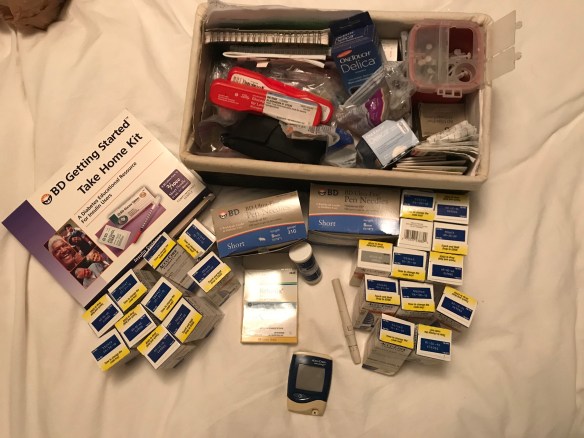
Diabetes Supplies 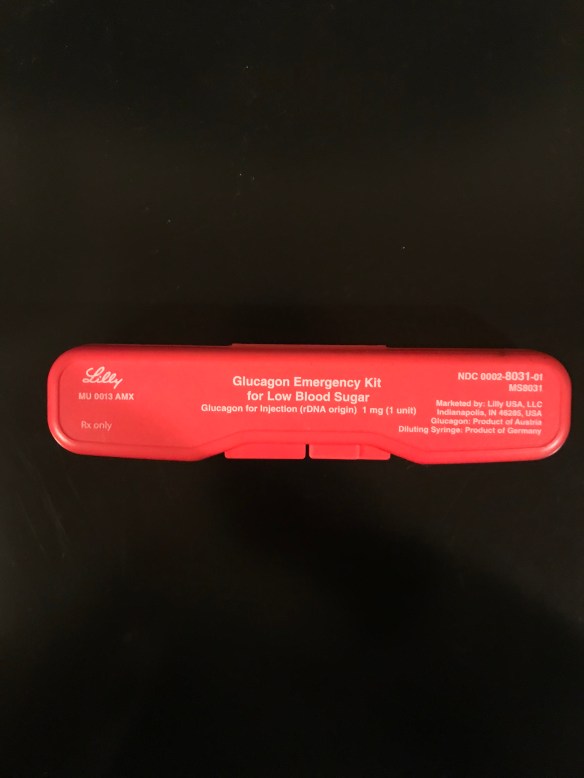
Glucagon Kit 
Glucagon Kit 
Blood Glucose and Pump Meter 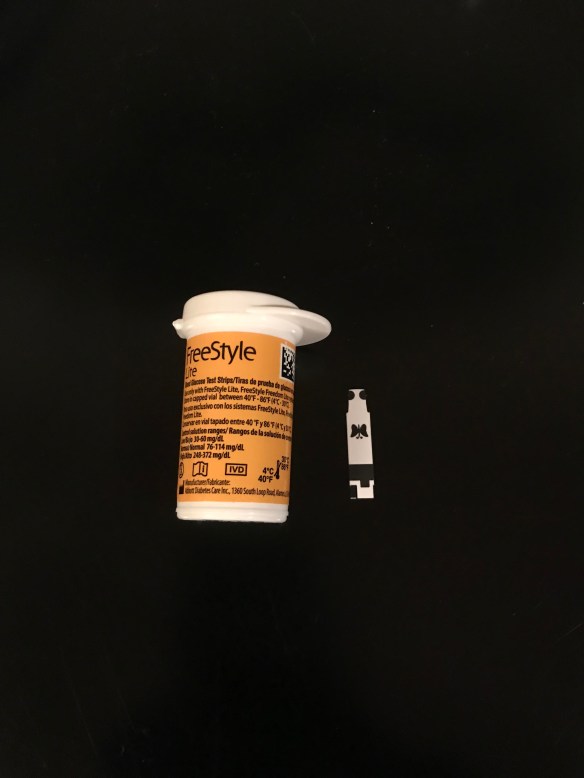
Test Strip Bottle and Test Strip 
Syringe and Insulin (Humalog) 
Daily Diabetes Supplies
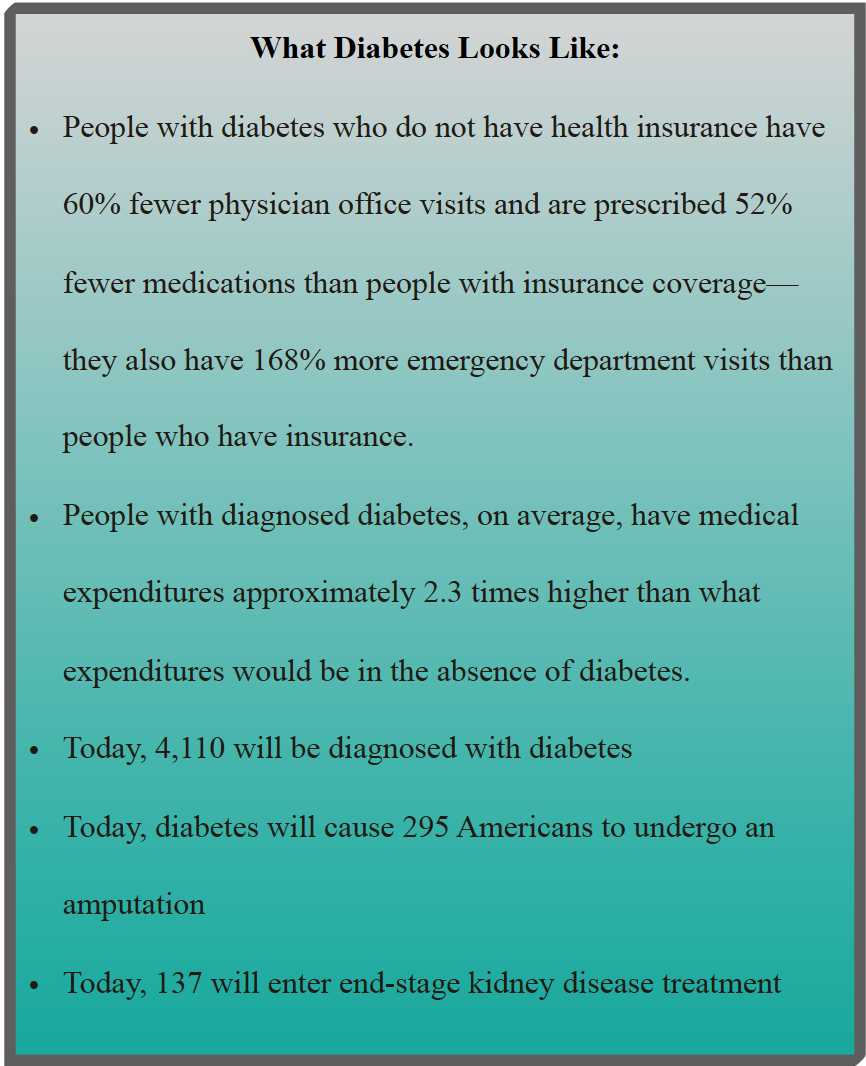
The Cost of Diabetes. (2018, April 30). Retrieved from http://www.diabetes.org/advocacy/news-events/cost-of-diabetes.html
Ransom, E. (2018, September 4). #Coverage2Control: JDRF Advocacy to Lower Insulin Prices. Retrieved from https://www.jdrf.org/capital/2018/09/04/coverage2control-jdrfadvocacy-to-lower-insulin-prices/
Social media has become a keystone in profitability for startups
Social media has become a keystone in profitability for startups
SALT LAKE CITY— Thousands of companies have found success marketing through social media and keeping their operations online. It may be the era where physical locations are no longer needed.
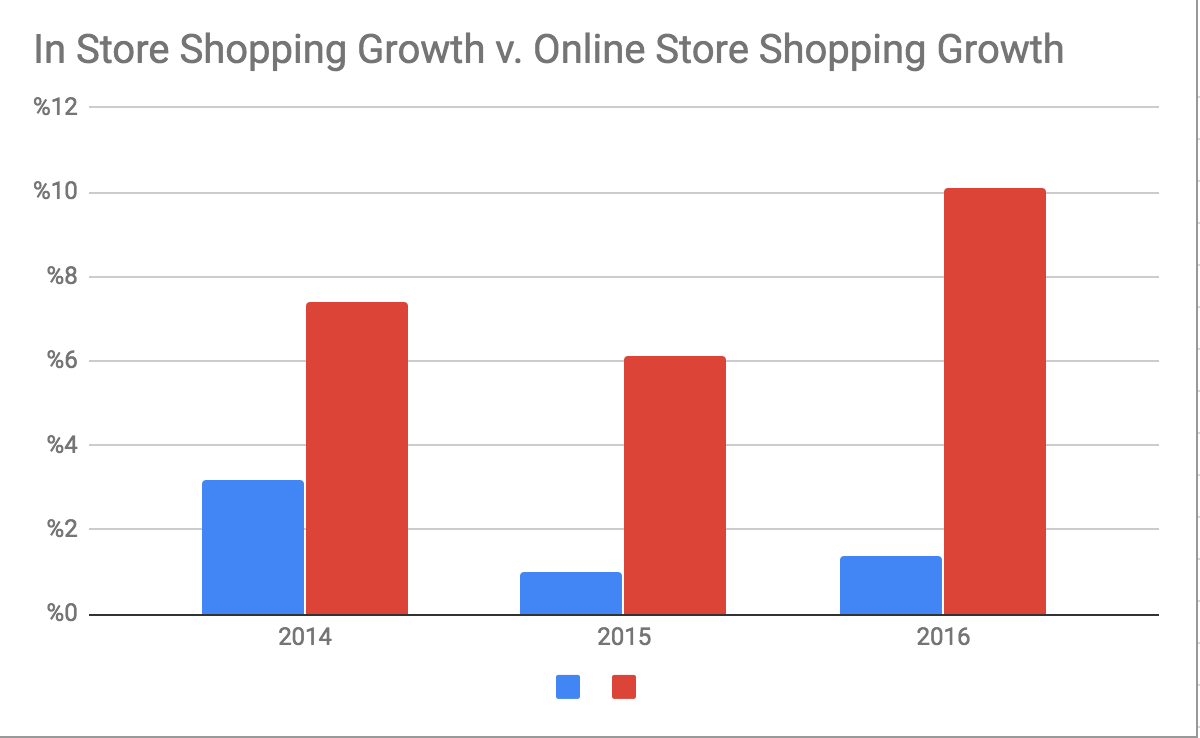
There are approximately 2.34 billion users of social media worldwide, Pew Research Center reports. In the United States alone, daily social media users are estimated to exceed 221 million people by 2021, and will revolutionize how companies market themselves. It is free and provides millions access to content provided through media platforms like Facebook, Instagram, Snapchat and Twitter.
Instagram has payed out over $1 billion to celebrities and “fashion influencers” who market themselves and products from a variety of businesses. Social media is now a center-point in marketing strategies for businesses all over the world, with access to a billion users who spend an average of two hours each-day scrolling through content. Instagram has become a dominant platform for many fashion startups, because it allows them to lower overhead costs and maximize customer interaction.
Taking advantage of these mediums, Giorgio Verdi, a custom suit company that operates through Instagram and Facebook, has created a large following. The company was founded in 2017 by Ronnie Green and Giorgio Cuellar, two former students at University of Utah dedicated to providing unique and high-quality Italian fabrics.

Founders of Giorgio Verdi, Ronnie Green and Giorgi Cuellar
Through the remote nature of Instagram, Giorgio Verdi is able work all over the world without the need for a physical location. This is important since Cuellar lives in Dallas, Texas, and Green lives in San Diego, California. One of the greatest benefits for Giorgio Verdi operating through social media is being able to save money on building a headquarters. This has allowed them to focus on working with clients remotely. Some of their most high-profile clients — and an example of their influence in the online market — are Olympic swimmer, Ryan Lochte, professional skateboarder, Nyjah Huston, the Dallas Cowboys, and various MLS soccer players.
Among the benefits of social media marketing for Giorgio Verdi—the ability to interact with their clients on a personal level. They are able to make impressions on thousands of their followers in their target audience which has also built their success as an online company.
“You know what, the easiest way to target our direct demographic is not through traditional marketing avenues, it’s directly through social media,” says Green. “When we first started marketing we decided that we wanted to target young new athletes and young professional who are starting at financial firms, guys that are young and want to look good, who wear suits everyday. So, really the only option that we had was through Instagram.”
Giorgio Verdi communicates with clients by searching for young athletes that are moving to new cities, sending them direct messages, promoting their suits and giving discounts directly to those who provide free advertising by posting photos of their newly tailored suits.
Social media marketing is unlike most traditional methods of marketing, with direct messages and the ability to target desired demographics, it’s easy to influence other followers because all the marketing is done in one spot, when a customer posts a picture of a product, they are distributing that content to their friends who fit into similar demographics. It’s essentially a trickle down effect and heavily increases brand awareness.
“Social media marketing has been huge because it is so intimate and people are taking a chance on us,” says Cuellar. “It has really shown previous clients what we have done, whether that’s celebrities or athletes, it builds a lot of credibility. As a young company it really boosts consumers’ confidence when they can see people that inspire them and can purchase these products right on their phone. We don’t want to be out of reach with our consumers and social media allows us to have a conversation with our customers and really makes them feel included in what we are doing.”
Instagram stories have been a successful marketing tool for companies like Giorgio Verdi by allowing them to show their clients how they create and design products. It also allows consumers to get an honest perspective on how those products are made.
“With a social media-type business, if you have a product that you are pushing, it’s all about finding who your typical consumer is,” says Chad Hernandez, founder of Cash & Co, a children’s hat company operated online. “Ninety-nine percent of people that follow that person share similar interests. It’s also important to consider your followers, they’re just like people walking in your store, but with social media it’s so easy to catalog and display your work and get your product out in the market.”
Hernandez believes that operating online has several distinct advantages. “I feel like there’s going to be a day and age where there will be no stores. With the rising cost of real estate it’s really an advantage to be purely online and why not cut costs if you can. It’s been huge for us not to have overhead costs and as a small business other companies purchase our products and put them in stores for us.”
Online companies are finding success by cutting costs and focusing budgets on social media while lowering overhead costs, meanwhile stores like Sears and Toys ‘R Us are closing doors for good. The ability to compete in a market where consumer can purchase a wide variety of goods with a single touch is invaluable. Online businesses are paving the way for the future of commerce.
MY LINKEDIN:
https://www.linkedin.com/in/courtland-schwerdt-5463749b/
MY BLOG:
Courtland Schwerdt: Reflection Blog
MY STORY:
MY BIO:
MY LINKEDIN:
MY BLOG:
Thinking about what I wanted to write about for my enterprise story I knew I wanted to write about something that I’m passionate about and would be informational to my audience. My story centers around two subjects that I think applies to a lot of college students, startups and social media. A critical component for this story is developing interesting leads to interview. I immediately thought about my two best friends that I did summer sales with four years ago. In 2017, they created a startup company, Giorgi Verdi, a custom-suit company that markets purely through social media. Originally my story was going to investigate if the Lassonde Institute and the David Eccles School of Business have incorporated social media marketing into their curriculum. The sources that I wanted to interview are the two founders of the suit company and one marketing director of the Lassonde Institute. When dealing with finding sources to develop my story I really learned about how different sources can affect the development of the story. I encountered a huge obstacle when trying to follow through with my sources. One of the key interviewees for my story was unable to work with my deadline. I was unable to contact someone from one of the business schools, so I had to come up with a third interviewee, fast. Coming up with a different source for my story, totally changed what I was going to write about. I actually think this was pretty cool about creating story because finding a new source changed my story completely. Instead of interviewing someone from the university about social media and its inclusion in the academic curriculum. I decided to interview another company that operates through social media. I decided to change my story and focus on how social media has saved startups huge costs in marketing and how it has contributed to their success. I also wanted to write about the benefits that a company can have when purely operating out of social media. It was really cool working with what I had developing my story.
Pumpkin Nights Influences the Lives of Artistic professionals
Pumpkin Nights influences the lives of artistic professionals
Three artists and an event organizer, illustrate the impact that the event Pumpkin Nights can have in the life of an artistic professional
By Tyson Zullo
SALT LAKE CITY — Since 2016, Pumpkin Nights has been an organization dedicated to showcasing local artists via a very unique medium. Pumpkins, (most of them artificial) of all different shapes and sizes are used, not only to showcase the superb talent of local artists, but to create a memorable experience for their audiences. Pumpkin Nights is held in four cities: LA, Auburn, Denver, and Salt Lake City.
“I’ve done a few things building up to this,” says Toby Draper, who became associated with the Pumpkin Nights organization last year. “I’ve done tech jobs before I was an

A giant Octopus which is located in “Pirate Land” is being displayed, November 3rd, Salt Lake City, Utah. The artists Toby Draper and Katie Kasen assisted in the production of this artwork.
account executive. Now it’s hard to describe exactly what I do, but it’s definitely more fulfilling,” says Draper. This year Draper participated in the Pumpkin Nights production of the Giant Octopus and both of the Pirate ships.
Being affiliated with Pumpkin Nights has played a significant role in Drapers’ artistic career, “It’s mainly helped me with my creativity, I’ve really learned how people interact with the things that you build,” he said.
Katie Kasen, also became involved last year through her sister Chelsea Kasen who is both one of the founders of Pumpkin Nights. While she was studying at BYU Katie was offered a job to work with the organization, and she decided to take a semester off studying. This year Kasen was tasked with the Styrofoam projects, and the nine foot giant Jack-O-Lynn. “I was able to use so many of my artistic skills, but at the same time develop more, there is so much that they don’t teach you in school.” she said.
This experience inspired Katie to change her major from chemical engineering to graphic design. Since then she was interviewed by BYU radio, and engaged in a freelance project for a local haunted house. “Pumpkin Nights has been a milestone in my career,” she said.

The Friendly Spider is being displayed, November 3rd, 2018, Salt Lake City, Utah. Artist Katie Kasen assisted in the production of this artwork.
Alysa Orton graduated with a degree in illustration from BYU and became involved with the Pumpkin Nights project via a graphic design internship. “When I was in school I never thought that I would be working on Pumpkins” she said. Orton mainly worked on the owls, and the Day of the Dead sector. Along with working at Trader Joe’s, Orton would work two days a week at Pumpkin Nights, and she relished the experience. “It was really cool to have two days a week where I could be surrounded by a lot of creative people.”
Orton believes her portfolio has been “boosted” having participated in this event. Rather than just drawing, she was given the opportunity to be trained in, and utilize sculpting tools. “I had to learn how to simplify, which is such a big thing in design.”
As an event organizer, Chelsea Kasen has been involved for two years. At first she was seeking to start an event in Manhattan, but then she teamed up with John Tanner, and they decided to create an event inspired by Jack-O-Blaze in New York. Planning this event requires a full year, and before the event ends, the organizers are already planning for next year.
“As the event is going, I am thinking about what other markets we will go into next year,”

A Mariachi Pumpkin is being displayed at the “Dia de los Muertos” sector, November 3rd, Salt Lake City, Utah. Artist Alysa Orton assisted in the creation of this artwork.
says Chelsea Kasen. The organization utilizes feedback from participant surveys to develop future plans, and as an event organizer Kasen not only works on the product, but sets up guides for current and future event directors.
The artists who work at this event, possess the skills to implement the vision, however they have never done it on such a large scale. “Working here they are forced to streamline processes, think of better ways to do things, use cheaper materials, and figure out how to make something last for a while,” says Chelsea Kasen. Not only does Pumpkin nights showcase the talent of these artists, it also focus its efforts on recruiting other industrial design companies such as TEA, a company that specializes in global networking for artists.

The main entrance to the event Pumpkin Nights, November 3rd, Salt Lake City, Utah.
Pumpkin Nights is much more than it appears to be on its surface. Artists who engage in the vision of the organization are presented with opportunities that challenge their abilities to think critically, work well with a team, and become more efficient. Pumpkin Nights not only focuses on showcasing local artists but training them as well; helping them reach new heights both in their knowledge and artistic abilities.
It is an unforgettable experience which enchants its audience, and provides the artists an opportunity to truly “do something that is meaningful,” says Draper.
WC: 883
Tyson Zullo Reflection Blog
Reflection Blog
When I learned that the primary mission of the organization Pumpkin Nights was to showcase local artists, I was really fascinated with the idea. It drove me to ask questions such as “To what extent does this organization go, to aid the artists in achieving recognition?” and “How has being affiliated with the organization Pumpkin Nights, benefited the artists?” I began to look at this organization through a new scope, and I was suddenly overcome with a desire to discover the answers to these questions and learn the truth for myself. I decided to tell the untold story, of how Pumpkin Nights has made an impact in the lives of artistic professionals.
On the website there is no direct number that can be used to contact an event organizer, fortunately however the company does have a section on their Instagram page that contains the contact information of the participating artists. Via direct messenger, I was able to message artists Toby Draper, Katie Kasen, and Scott Hard. I never heard back from Hard, however Draper and Kasen responded immediately, they were very supportive with this story, and they referred me to their fellow colleague Alyssa Orton, and an event organizer, Chelsea Kasen.
I strongly feel that these sources were the best for this story in particular, because they all have experienced the benefits of being affiliated with this organization on a first-hand basis. It was so fascinating how each of the artists were able to provide diverse angles on the story, and have benefited from their association with this organization in their own unique way. The most remarkable thing that I was able to learn while writing this story is, Pumpkin Nights not only strives to help local artists gain recognition, but they also train, and help these artist develop the necessary skills in order to take their artistic careers to new heights.
Tyson Zullo
My Story: Pumpkin Nights influences the lives of artistic professionals 
About Me: Born, and raised in Salt Lake City Utah. I Enjoy, Hiking, Boating, and spending time with my family.
Experienced Guest Services Coordinator with a demonstrated history of working in the non-profit industry. Skilled in communication, analysis, adaptability, teamwork, and critical Thinking. Strong operations professional, who is currently pursuing a Bachelor of Science degree focused in Strategic Communication at the University of Utah.
 U NewsWriting