Courtland Schwerdt

MY STORY:

 MY BLOG:

My Reflection Blog

ABOUT ME:

43D47867-DE64-45F0-8C6A-FC3A2FC2B887

Courtland Schwerdt, 23, from Lindon, Utah. Currently a Senior at University of Utah, studying Strategic Communications.

I’m currently a Senior at the University of Utah graduating this fall. I am majoring in Communications studying Strategic Communications. I’m very passionate about entrepreneurship and sales. Some of my personal interests are sports, hiking and video games. My favorite sport is baseball and I’m a huge San Francisco Giants fan. I grew up playing baseball and played first-base at Timpanogos High School in Orem, Utah. Four years ago, when I graduated high school, I began selling pest control door-to-door in Sacramento, California. I have never had more fun in a job because I got to work and negotiate with people everyday. That summer I was the top performing and youngest sales representative to ever work for Alterra and lead our branch to be the second most profitable territory in the nation. After two years of selling for various companies I started my own pest control company with my brother-in-law in St. George, Utah. I currently serve as the President of Sales and oversee the sales training, hiring and managing of all employees. It has been an amazing ride working in sales and have gained a passion for hard work and setting personal goals. As of 2017, we are the fastest growing pest control company in Southern Utah and are the #1 reviewed company on Google in that region. Throughout my life I’ve always wanted to make a difference in peoples’ lives and am very interested in using my sales experience to work in healthcare or finance.

LINKEDIN:

https://www.linkedin.com/in/courtland-schwerdt-5463749b/

Tinker’s Cat Café, a coffee bar with a twist

Story and gallery by JOLIE BELL

Coffee. Conversation. Cats. What do they have in common? They are integral to a new local small business.

Tinker’s Cat Café is the first of its kind in Salt Lake City. A novelty in the United States, cat cafés are popular in other parts of the world, particularly Asia. In fact, the very first cat café opened in Taipei, Taiwan, and soon turned into a sensation in Japan. Cat cafés are a twist on a traditional coffee shop. In addition to coffee, tea and goodies, people also pay to socialize with felines.

Lisa Boone is the owner of Tinker’s Cat Café, located at 302 E. 900 South. Boone saw her first cat café while watching late night television. The idea intrigued her and soon she developed plans to open an establishment of her own. She decided to name her café after her childhood pet, Tinker, who lived to be 22.

“It was all from Tinker, he shaped how I thought about cats,” Boone said. Along with petting cute kitties, the café serves a variety of specialty drinks including coffee, hot chocolate, Italian soda, and tea. It also sells pastries from other local businesses.

The cats themselves come from Salt Lake County Animal Services and are spayed/neutered and vaccinated. One aspect that is unique about Tinker’s is many of the cats may be adopted. In fact, more than 80 adoptions have occurred since it first opened the doors in 2017.

The adoption process is simple. If someone decides to adopt, an employee meets with them and discusses their history with cats. If it is the person’s first time ever owning a cat or if they have other animals in their home, the employees explain what the future pet owner needs and how to care for the cat. There is a $40 adoption fee per cat.

Adoption isn’t for everyone. Boone understands not everyone has the funds or a suitable home for pets. The café fills the need for those who love animals and she feels the café is a positive experience for both the people and felines.

“It’s a win-win,” Boone said. “Especially for the timid cats because they can socialize and get used to an environment.” The cat room, adjacent to the café, is open and without cages. This allows patrons to show them affection while they are living at Tinker’s, which can help the cats come out of their shell.

Not every cat is up for adoption. For some, Tinker’s becomes home. One cat has been at Tinker’s since it opened. He stays to help the new cats acclimate to the surroundings by sitting with the newly acquired timid cats.

“We are not sure what cat magic he has,” Boone said with a laugh.

Throughout the year, Tinker’s acquired several regular customers. Sarah Murtagh is one. Murtagh said she loves the calm environment and has made friends with other kindred spirits.

“When I was going through a rough time in my life, the café was where I found therapy,” Murtagh said. She bought an unlimited pass for the cat room to visit her furry friends as often as she could. Eventually her living situation changed and allowed her to own a pet. Once Obsidian (Obi for short) crawled into her lap at the café, she knew they were a perfect match.

Not everyone is looking to adopt. Some are interested in something new and fun to do. Ally Jelitto, a University of Utah student, visited the shop on a whim after noticing the café driving through town.

“I felt fancy drinking a latte while petting a cat in my lap,” she said in a phone interview. “I’d go back more, but if I do I might go home with five cats,” she said, chuckling.

Recently Boone began organizing special events at Tinker’s such as Cat & Paint, Yoga, and Crochet with Cats. Boone has more event ideas on the horizon, such as trivia or game nights.

The paint and crochet classes offer a coffee, hot chocolate or tea and an hour in the cat room with an instructor. The yoga class is an hour and allows an extra half hour to play with the felines. The curious cats will sit on the yoga mats, play with people’s hair and bat around the balls of yarn.

Reservation spots fill up quickly to spend time with the cats. Or, customers may walk in (if there’s room). The cost is $8 an hour and $4 a half hour in the cat room. Tinker’s offers an unlimited monthly pass for $50 or an unlimited annual pass for $600. The café also provides a children’s hour for kids 8 and under from 5 to 6 p.m. on Wednesdays. It is $6 each for children and parents.

The café hours are 9 a.m. to 7 p.m. Tuesday-Thursday, 9 a.m. to 7 p.m. Friday- Saturday, 11 a.m. to 8 p.m. Sunday. Tinker’s is closed on Mondays. The cat room opens at 11 a.m. and closes the same time as the café does.

Boone is looking forward to another year of business and to continuing to foster a community location where people can connect. Success has its price, however. As the felines leave for their forever homes, it can be difficult for Boone and her employees who become attached to them.

“It’s bittersweet,” Boone said. “However, I’m happy they are going to good homes.”

This slideshow requires JavaScript.


To act, or not to act … There is no question at the Utah Shakespeare Competition

Story and photos by KIM DAVISON

Shakespeare Festival Shakespeare Statue Cedar City small

Next year’s Utah Shakespeare Festival season is full of classics like “Hamlet,” “Macbeth,” and “Twelfth Night.”

Every year, when the leaves begin to crunch, the air starts to feel crisp and the sounds of students reciting Shakespeare fill the hall of every junior and senior high school, it means that it is time for the annual Utah Shakespeare Competition. Young thespians from far and wide make their way south through Utah’s red rock to Cedar City, ready to take the stage. These kids love what they do and cannot wait to share it with the world.

The main element that makes the Shakespeare Competition so special is that it is part of the large and well-known Utah Shakespeare Festival. The competition, held at Southern Utah University, celebrated its 42nd year in 2018. Fox 13 Salt Lake City stated, “The competition is the largest scholastic Shakespeare competition in the country, and this was a record-breaking year with nearly 3,600 students from 123 schools in seven states and the U. S. Virgin Islands.”

The different sections of the competition include large ensemble scenes, duo/trio scenes, minstrels, dance and technical elements, all separated by divisions based on the school size.

Shakespeare Festival Ensemble Practice small

Troupes are able to bring props, set pieces, masks and more to make their scenes stand out from the other schools’.

Each school puts together an ensemble scene to perform at the competition. This is by far the element that takes the students and their director the most time and preparation. Penelope Caywood, the artistic director of Youth Theatre at the University of Utah, said she thinks that “competition is great motivation” for her students.

Some schools rehearse for a few weeks, others for months. The ensemble scene needs to be perfect and show the theater program and students in the best possible light. Scenes can be chosen and performed from any Shakespeare play, but some have a higher degree of difficulty than others. This can be a large factor in deciding which scenes to take to competition because they need to be challenging and have a competitive edge. This is similar to a gymnast selecting certain elements based on their degree of difficulty.

Shakespeare Venus and Adonis small

Some schools choose to perform Shakespeare works that are not his traditional plays, like epic poems and sonnets.

The Shakespeare performed at the competition is unlike any other Shakespeare you will see. Because the ensemble groups are restricted to 10-minute scenes, they have the ability to take creative liberties with the themes they highlight. There are scenes that use a “Game of Thrones” or “Harry Potter” theme or some that choose to tackle political issues of today using Shakespeare’s words to drive their points home.

The students have a chance to let their individual and small group talents shine in the monologue/duo and trio scene competition. For this event, the students do most of the work on their own time. They rehearse outside of school to hone their craft and give the best performance they can. These competitions have lots of rules and are strictly timed at two or five minutes depending on the event, but are worth it if they want to show off their Shakespeare chops!

All of the musically talented students from schools all over the country come to compete in the Utah Shakespeare Competition’s madrigal and minstrel contest. There are no separate divisions, which makes the events far more competitive. Participants prepare songs from Shakespeare’s time and perform with either vocals, a mix of vocals and instruments, or just instruments.

Shakespeare Penny - group 2 small

Penelope Caywood, the artistic director of Youth Theatre at the University of Utah, giving her dance ensemble some last-minute tips before the performance.

There is also a dance competition, which is a great place for seasoned dancers to show their technique and for new dancers to learn and improve their dancing abilities. Peyton Lozano, a senior from Skyline High School in Granite School District, has competed for three years. “It’s a big bonding experience,” she said. “We do really cool shows every year. It’s also the one time in the year that we get to dance. It’s not just about performing Shakespeare as it’s traditionally done.”

For students who are interested in theatrical elements other than performing Shakespeare, side competitions are options. Each school brings an improvisational team to Southern Utah University. Improv is difficult but fun when done well. It is the art of making up scenes and dialogue on the spot. It’s usually funny and the kids who compete are talented and quick on their feet.

Another option is the Technical Olympics. Students interested in stage management, costume design, lighting, sound, and hair/makeup get to put their skills to the test. Because each element is timed and the students compete as a team, the Technical Olympics gets extremely competitive and is exhilarating to watch.

Shakespeare Dance Trophy small

Trophies and certificates are given to the winners of the competitions. Some students even receive scholarships to Southern Utah University.

This is a competition, after all, so the students get the chance to win awards in any of the categories. A sweepstakes award is given to the group that has the most wins overall. The competition is split up into different divisions based on school size and age. Max Brown, a junior from Judge Memorial High School in Salt Lake City, talked about his first experience at the Utah Shakespeare Competition. “It was all very fun,” he said. “It was nice to be recognized for all of our hard work! It’s cool to put a lot of effort into something and then have other people who weren’t involved in the process also think that it is good.”

Shakespeare Ensemble Rehearsal small

An ensemble working on its scene where each member of the cast portrays a different personality trait of Ophelia from Shakespeare’s “Hamlet.”

Shakespeare’s writing has the ability to impact people of all ages and backgrounds. His work helps students find ways to talk about and deal with issues that can be otherwise difficult or uncomfortable. Caywood, with the U’s Youth Theatre, said, “We’ve talked about so many current issues through Shakespeare, whether it’s the #MeToo movement, immigration, whether it’s racism, rape and other kinds of abuse. There have been so many things that we have been able to talk about with these high schools students as we are processing and getting ready for the show. I don’t know of another time in the year that we get to address some of those issues and talk about Shakespeare at the same time. He’s so timely.”


The plant revolution: anti-inflammatory, anti-meat

Story and gallery by JEN CHUN

Plant Based Utah, a collaborative organization that utilizes specialists to educate people about a plant-based lifestyle, held the 2nd Annual Plant Based Nutrition Symposium on Oct. 13, 2018, at the Salt Palace Convention Center in Salt Lake City. Doctors and health experts were invited to give lectures about a plant-based diet.

Annually, many Americans die because of chronic diseases such as cancer, stroke, heart disease, and diabetes. According to 2017 data of the Centers for Disease Control and Prevention, 635,260 people died because of heart disease and 598,038 died of cancer. These two are the most fatal chronic diseases that threaten Americans’ health.

The problem is people do not know how to make healthy meals for themselves. Nutritious food is easily available, but consumers are having a tough time selecting ingredients for a healthy diet.

“One option is a plant-based diet,” said Patrick Olson, an orthopedic surgeon at the Rosenberg Cooley Metcalf Clinic in Utah.

Plant-Based Diet (PBD) is a diet that consists of minimally processed food. It focuses on consuming natural products that people can grow such as vegetables, fruits, whole grains, nuts, seeds, and herbs. PBD does not include any animal products, which is eco-friendly to the earth as well.

“PBD is the most anti-inflammatory diet you can get,” Olson said.

He said plants are the primary source of anti-inflammatory phytonutrients. Not only do plants lower cholesterol and blood pressure, but they also change gene expression and lengthen telomeres. Maintaining a plant-based dietary pattern is helpful for lowering obesity rates.

Lucy Mower, a second-year graduate student at the University of Utah’s Department of Nutrition and Integrative Physiology, said PBD promotes good health. She said PBD emphasizes the consumption of certain foods that are associated with heart benefits. “Eating vegetables, whole grains, and legumes are beneficial to the heart,” she said. Mower explains that “a lot of them have fiber which maintains or lowers the cholesterol level.” She added that components of vitamins and minerals control high blood pressure and bad cholesterol, known as LDL. “Having a PBD is helpful to break the vicious cycle of” America’s daily diet, Mower said.

Additionally, Mower emphasized the importance of research before starting PBD. She said PBD is challenging because it can be a big transition of one’s diet pattern. She said she won’t recommend specific PBD to people unless they do prior research or have background knowledge of plant-based nutrition. She emphasized the importance of discipline in building one’s PBD by researching, planning, and reading a nutrition label.

“To do a healthy PBD, it is significant to know one’s needs,” she said. She recommends considering the food groups seriously when looking for alternatives — replacing animal oil to vegetable oil — which should provide enough carbohydrate, protein, and fat to the body.

Zuri Vasquez, 18, and a student at the U has been doing PBD for five years. Her natural environment and family history — diabetes — influenced her to start PBD. “I don’t consume any animal product because I grew up with chickens and cattle in Idaho and I could not even imagine to harm them,” she said. She supports local farmers’ markets as well.

Meat-based diets stimulate climate change. According to the website PETA, making one hamburger needs as much fossil fuel as it takes to drive a small car 20 miles. Meat-based diet requires massive water, fossil fuel, and trees, which cause drought, air pollution — methane gas — and depletion of the ozone layer — carbon dioxide.

On the other hand, PBD is sustainable and has a lower environmental impact because it does not contain any animal product. “Having a PBD is promoting a huge impact on not only our planet’s health but also all its inhabitants,” Olson said.

Vasquez said having PBD is realistic and inspiring. She said it has become more accessible and sustainable since the increase of markets featuring whole food and grains. By eating healthy vegetables, fruits and nuts, she has gained more energy and improved cognitive abilities. “I feel strong and motivated because of the belief that I am doing something good,” she said.

She advised beginners of PBD to “start little by little.” Rather than changing the whole diet at once, gradually eliminating one thing a time, such as limiting animal products once a day, will be beneficial in adjusting to the plant-based meal. “It is a good investment to think about a longer period for my body and the earth,” Vasquez said.

Heber Rivera has been a chef for 15 years and has done PBD for four years now. He runs a business based on whole food and plant-based meals called “Chef Heber.” Before he started the business, he was in charge of catering to 23 different hospitals for Intermountain Healthcare. “Chef Heber” provides catering, artisan bread, and personalized meal delivery, services in which all the food is cooked by plant-based nutrition.

“Our catering is unique because it is built to the needs of customers,” he said. The artisan bread is made from 100 percent whole wheat and five other plant-based ingredients without any preservatives or sweeteners. He crafts pre-cooked plant-based meals to meet every dietary need. He delivers the food twice a week, which makes it easier for people to access and maintain the PBD.

Rivera aims to offer natural and nutrient-based meals without oil, sugar, or any chemical seasonings. “Ideally, we wanted to help people live better,” he said. He said it is hard for modern people to access healthy meals. He is trying to help as many people as possible by collaborating with different retail stores at reasonable prices.

According to the website, Plant Based Utah’s mission is, “We strive to advance our health and lifestyle culture through the sharing of evidence-based information and initiatives promoting whole food, plant-based nutrition.” This organization is helpful for learning about PBD.

At the symposium, the professionals emphasized that changing habits is crucial in PBD. Nowadays, people are too used to consuming processed and fast foods. Ayesha Sherzai and Dean Sherzai, who are neurologists and co-directors of the Alzheimer’s Prevention Program at Loma Linda University, described the habit pathway as a cycle that continues toward mindfulness, which brings healthy behavior and eventually, success. They pointed out that the “mindfulness” is the most important stage to form a good eating habit. The website Healthy Minds Initiative shows a lot of helpful resources and programs for a healthy lifestyle.

In addition, Dr. Brooke Goldner, who is an expert in healing chronic disease with Plant-Based Nutrition, suggested making a green plant-based smoothie daily. Her book “Green Smoothie Recipes to Kick-Start Your Health & Healing” and the website called smoohieshred.com  contains various delicious and healthy recipes of green smoothies. Moreover, she runs the website called Goodbye Lupus for further information and tips for healthy eating and wellbeing.

One of the greatest scientists, Albert Einstein, said, “Nothing will benefit human health and increase the chances for survival of life on Earth as much as the evolution to a vegetarian diet.” The plant-based diet could be the revolution of health needed for every individual.


An nonprofit’s initiative to educate Utah about child abuse

Story and images by ALLISON PFERDNER

The statistic — one in five Utah kids will be sexually abused before they turn 18 — is one of the first things you’ll see when you visit Prevent Child Abuse Utah’s website. Prevent Child Abuse Utah, or PCAU, is a nonprofit organization that seeks to educate children and parents throughout the state in hopes of lowering Utah’s child abuse rate, which is three times the national average.

Child abuse statistics are framed and hung in the organization’s offices in Salt Lake City.

PCAU has developed an age-appropriate curriculum and staff go into K-12 schools to teach children how to recognize abuse and empower them to report it.

As the community outreach program administrator for PCAU, Gwen Knight trains adults to recognize abuse, understand the reporting laws in Utah, and support the students once they report. Knight said that according to research, once adults are taught to recognize abuse and report it, they are more likely to want their children to learn about it as well.

This is Gwen Knight in her office at PCAU’s headquarters in Salt Lake City.

This brings up the topic of how PCAU brings awareness to its organization and how it gets into schools to teach its curriculum. Through community outreach programs, booths at the PTA Convention, and the many presentations PCAU does throughout the state, schools will reach out to PCAU to learn more about having the nonprofit come teach its curriculum in specific schools.

While many schools want the organization to teach its curriculum, other schools are difficult to get into. Knight provides a few counterpoints for some of the common reasons why schools say no. First, schools use the excuse of not having time for the classes. Knight said, “It only takes 30 minutes and if a child is dealing with abuse, they aren’t focusing anyway.” Second, schools don’t want their communities to perceive that their schools have children being abused in them. However, research shows that abuse happens in every demographic.

This is Safetysaurus, the puppet mascot, which is used to teach children in schools.

Parents have the opportunity to review the curriculum before it is taught and if they don’t approve, they are able to indicate that they don’t want their child to participate. The age-appropriate curriculum covers every kind of abuse including sexual, emotional, neglect, and physical abuse. It teaches children that their bodies belong to them.

PCAU is a statewide organization with community partners in Box Elder, Cedar City, the Uintah Basin, Tooele, Park City, and the Wasatch area. It trains people in each of these areas on its curriculum. This helps the nonprofit reach more people.

This organization also provides a program called Parents as Teachers in Davis County. Staff go directly to the homes of pregnant women and families with kids up to the age of 5. They provide instruction on how to raise healthy children by teaching about nutrition, sleep, safety, and discipline.

PCAU’s Certificate of Charter is displayed on the front desk in the Salt Lake office.

Rebecca Virgo, the Parents As Teachers Program administrator, says that other than reaching out to households, the program gets referrals from hospitals as well as families contacting them. The program has a list of stressors that staff pay attention to in order to know who they should reach out to. Some of these stressors are: military families, incarcerated parents, teen parents, and any type of illness present in the home.

Virgo said the biggest challenge of going into homes and working with the families is the observation that “helping is not always helpful.” When some parents receive help, they often don’t feel like they are seen as capable or trustworthy. It is more important for the visiting staff to connect the family with resources that will assist them rather than doing all the work for the parents.

A pinwheel is the symbol for preventing child abuse in America.

The staff’s main goals when they work with families are to facilitate connection, help them achieve goals, and to supply them with a wide range of parenting skills. “Your story that you grew up with doesn’t have to be your story for your children,” Virgo said.

The program is helping 120 families right now and is looking to expand to help 45 more in the near future. Due to the labor-intensive nature of this program, it can’t expand too far but Virgo suggests an alternative to families who want the extra help.

If you text utfamily to 27448, you can subscribe to Bright by Text, which sends out messages to parents of children prenatal to 5 years old. The messages contain helpful information based on the age of the child on things like child development, health and safety, and tips.

In both of these programs, Community Outreach and Parents as Teachers, Prevent Child Abuse Utah is spreading awareness and making a difference in children’s lives around the state.

As the assistant to the executive director, Ashley Workman urges everyone “not to underestimate the importance of what we do.”

“You can never teach this information too much,” Workman said.

So much growth has already happened in PCAU and the communities it works with and so much more can happen, Workman said. She wants parents to “not be surprised by the fact that the majority of abusers are people the child trusts because it’s unfortunately common.”

Workman’s plea to parents is: “If they run into a child that’s been abused, beg them to support the child.”

Prevent Child Abuse Utah’s logo on the main wall in the office.

Local rock climbers are inspired by Alex Honnold’s mental toughness

Story and photos by McKENZIE NICOL

Ascending 3,000 feet of sheer granite is no easy task. Most would deem it impossible.

Rock climber Alex Honnold proved the impossible to be possible as he ascended El Capitan in Yosemite National Park without safety ropes on June 3, 2017. His triumph, depicted in a 2018 documentary, is impacting the sport of rock climbing by pushing the limit of where risk lies.

Climbing up the Free Rider route in just under four hours, Honnold has achieved one of the greatest physical tasks conceived in the human mind.

Fellow climber Tommy Caldwell was the first to free climb (a style of climbing with ropes only for safety, not aid) the Dawn Wall of El Capitan in 2015. In a National Geographic story published in October 2018, he called Honnold’s ascent the “moon landing” of free soloing.

Honnold’s “moon landing” is quite possibly the most incredible physical performance of humankind​, and the physical achievement is just the beginning of the victory. Honnold holds an astounding ability to control fear and remain determined and clear headed.

National Geographic quoted Honnold as saying, “[Fear is] only hindering my performance, so I just set it aside and leave it be.”

Honnold’s ascension is helping local climbers to see an obvious representation of what it means to really compartmentalize fear and overcome difficulty and stress through grit and mental toughness.

In the heart of Salt Lake City, the climbing team at the University of Utah is training to compete in the collegiate national climbing tournament April 27 and 28, 2019. Ben Roa is in his fourth year at the U and is president of the team. He expressed his amazement and admiration of what Honnold has achieved.

“It is the single most impressive athletic feat that any human has ever done,” Roa said. “The fact that Honnold has done it is astounding.”

He explained that climbing is 80 percent mental and 20 percent physical. It is all in the head. “He compartmentalizes fear and fatigue and it is really impressive,” Roa said.

Roa said he enjoys the constant challenges that rock climbing presents mentally and physically. He said he has several “projects” – or routes – that he is working on in Big Cottonwood Canyon that require “great mental effort.”

“The cooler stuff is always the harder stuff,” Roa said. “It might be a little dangerous because people can be like, ‘Oh wow, I can do it.’” He described that setting goals and knowing your limits is an important part of getting better.

“The goals never stop. That’s one of my favorite things,” Roa said.

Joel Zerr, another climber and employee at Momentum Climbing Gym in Salt Lake City, gave some insight on Honnold’s accomplishment. He said, “[The] level that he’s pushing is on the edge of the risk. Mistakes can happen. It’s a different thing and it’s really impressive.”

Zerr recognizes the immense psychological control that is required to rock climb and why many people, rock climber or not, are drawn to what Honnold has done.

“People can relate to him because you can obviously see the anomaly of what he did. It draws attention and it inspires,” Zerr said.

Zerr explained that he does not feel that pushing those boundaries of risk is completely necessary. It is possible to push oneself in any aspect, not just rock climbing, and it does not need to have such dire consequences. He said he challenges himself mentally and physically, but not in the same way Honnold does.

Managing stress, pressure, and fear are factors of Zerr’s daily climbing life. Whether in the gym or on a wall outside, it feels “real” to be up there and trying to work out the best way to maneuver to the top. Mental sharpness and control are essential.

Isaac Baker, a rock climber from Bountiful, Utah, suggested the idea that rock climbing brings a new edge to life.

“Being on the wall not only gives you a new perspective of life, but a new way of living. Climbing is not a hobby, it’s a lifestyle,” he said.

Baker has been rock climbing for seven years and can see the effects of needing to be mentally sharp on the wall in his everyday life. He said he loves challenges and tackling any sort of project with the mindset of pushing himself to his limits.

Rock climbers all around can add their story to that of Baker’s in saying that the sport has changed their life. Following Honnold’s journey and studying his mental game shows us that his is no exception.

Being the first to free solo a beast like El Capitan, Alex Honnold has set the stage for pushing the limits of what humans can do physically and mentally.

This slideshow requires JavaScript.

Healthcare: what’s in the price when you’re seen by a provider?

Story and images by BRADEN ROLLINS

Whether you go to the doctor to ensure your health shouldn’t be a decision you have to make. Unfortunately, rising healthcare costs are forcing individuals to choose between other expenses and healthcare.

Many face the daunting prospect of healthcare cost. But what contributes to the cost and why are some at a disadvantage as compared to others?

Stories of healthcare costs frequent the news and media attribute one of the causes of high costs to doctors offices themselves.

Trying to decipher why healthcare costs are so high can be difficult. However, speaking with employees at a local doctor’s office and their experience with rising cost may shed light on the subject for some.

Jordan Meadows, a small family practice located in West Jordan, provides services such as physicals, blood draws, weight checks, vaccinations and other basic medical services.

Debra Bowen, the general manager of the clinic, discussed factors that contribute to the price of healthcare in the office such as payroll, collections, supplies, utilities, and other miscellaneous expenses.

Keeping quality employees is difficult in today’s economy due to the unemployment rate being so low. And with major corporations offering higher pay for similar jobs, Bowen said it is difficult for smaller clinics to compete for labor.

Bowen said more than half of the expenses to the clinic is for payroll and if they were to significantly raise wages the patient prices would increase significantly as a result. So keeping the balance between quality employees and wages is a constant problem.

Another problem faced by the clinic is outstanding balances on patients’ accounts, which are usually sent to collections. Some patients receive treatment but delay paying for it at the time of service for various reasons. Many of these unpaid accounts can come from patients who have been treated and have since felt better and no longer feel payment is necessary, Bowen said.

Medical supplies are a major cost to the clinic. Bowen said most of the cost comes from sterile equipment for examination, followed by supplies and tests to diagnose different ailments. The most expensive of the supplies are vaccinations. The use of supplies is carefully monitored so only things that are needed are ordered to reduce waste and overstock of unneeded supplies.

While rising costs are affecting most Americans, Bowen acknowledged low-income individuals and families without insurance are particularly impacted. Jordan Meadows offers cash patients a reduced price for their care while barely breaking even on the cost to the clinic.

These individuals are faced with the decision to pay a high insurance deductible or pay out of pocket. Some coverage is minimal due to the plan selected by the patient.

Bowen said these policies, known as catastrophic insurance, have high deductibles such as $5,000, which most patients would not meet in their plan year, so they choose to pay out of pocket. 

This makes treating these patients difficult, especially those who have chronic care needs such as diabetes. Some patients will come in for their initial visit, but don’t return for follow-up appointments due to the price, which can sometimes cost over $100.

Though prices can still be considered high for cash-only patients, Bowen said they are negligibly higher than the prices set by government Medicare programs. Legally the clinic cannot charge lower prices than Medicare without it being considered fraud.

John Neilsen, a family nurse practitioner, said he and the clinic assist patients by reducing prices whenever possible for cash patients, and suggesting alternatives treatments and helping them find discounts on medications.

Neilsen said it is difficult at times when the patient cannot afford their care, but it’s even more difficult when the patient has the ability to pay but chooses not to afford their healthcare due to extravagances in their lives.

A main focus of the clinic is putting people first and doing what it can to help individuals struggling to pay for services by working with each one on a individual basis.

Mariana Alvarado, the receptionist who was assisting patients, said she has dealt with many patients who can’t afford the healthcare.

Many of the patients who have no insurance or poor insurance are notified before they are seen by the provider of the price of the visit. She says it’s difficult when patients are agitated by prices. But she said she does her best to calm them and explain why services are priced as they are.

Alvarado agreed with one of her co-workers. “Being a smaller clinic we develop relationships with our patients,” she said, “and do what we can to help each patient with staying healthy while helping them afford treatment.”

Jordan Meadows provides healthcare at prices that are manageable for the majority of its patients who have good insurance. But the clinic is willing to work with those who are in positions of financial stress or have poor insurance.

While basic healthcare could be considered relatively expensive as compared to other necessities, the breakdown of expenses to your doctor’s office, especially those of smaller practices, add up to and contribute to the final price of the service provided.

This slideshow requires JavaScript.

A local business woman’s ability to lead

Story and Gallery by KOWHAI ANDERSON

Professional ambition is expected of males, while only optional for females. For one Utah businesswoman, she has chosen to use her professional success to make an impact on her employees, community, friends and family.

Stacy Kelly is the owner of Construction Material Recycling, a Utah based company founded in 2004. Her company specializes in construction and excavation. Its services include rotomilling, heavy hauling and crushing.

At Canyons Resort, Construction Material Recycling is building two new ski runs, bridge embankments and roads for new houses. They handle construction on Interstate 80 through Parley’s Canyon. They recently finished road work at Bear Lake, and construction in American Fork.

Kelly is in charge of 25 employees, all male. She said every worker is OK with working for her. In fact, some are honored. Kelly said, “Each employee looks out for me and makes sure I am taken care of. This is due to the type of employer I am. I believe you need to be kind.”

“I think this is something women understand better than men,” Kelly stated. “There needs to be a little bit of compassion.”

Kelly shows this in the way she treats her employees. For example, she gives each of her employees heartfelt birthday cards, filled with loving words and numerous gift certificates. She believes if compassion exists, any leader can have a more dynamic team.

“It’s the little things you think about doing for someone, whether that be work, school, family, friends, whatever,” Kelly said, “it’s those little things that put the icing on the cake to seal the relationship.”

Originally, Kelly didn’t see herself building a career in the construction industry. However, those closest to her felt she would thrive. So, she obtained her contractor’s license, which can only be rewarded after passing a difficult exam.

“I cried all morning the day of the test,” Kelly stated. “I didn’t want to do this … I went to the testing center, and saw a lot of females there as well. I assumed they were all there for the same exam, feeling relief. Turns out, the majority of the women were going in for a cosmetology exam.”

Kelly passed the test with an 81 percent. For Kelly, this was the beginning of her journey in the industry of construction. She realized it would not be an easy road.

“It’s been an adventure,” Kelly said. “I enjoy doing what I’m doing, but it takes a lot of strength. People don’t believe you are doing it because you are a lady, and my main competition was the worst. Still can be today. He would say to me, when we would see each other at conferences or in the business field, ‘Um, why aren’t you doing scrapbooking like my wife? That’s where you should be!’”

While building the company, it was difficult for Kelly to balance being a business owner and a mother. She still finds it difficult, and says it has been her biggest challenge.

Kelly is a mother to nine children; four with her current husband and five adopted.  

“In the beginning, it was easier,” Kelly said on being a mother. “At the time I had my ex-husband who was part of it. So, we are working together. Now my current husband is not part of the business. He works out of town, which has made balancing everything for me a lot harder.”

For Kelly, her kids have always been part of the business. She includes them in everything she does and has given them the opportunity to work for her once they reach the legal age of 18.

In 2008, Kelly moved to Coalville, Utah. Her company was based in Salt Lake, but moved north to the small town in 2014. It’s been easier for Kelly to have the business close to home. It allows her to be near family. Her kids are able to visit the office, which to them, feels like a second home.

The best part of being a business owner is the freedom to support her children in their activities.

She also loves the ability she has to serve those around her due to self-reliance. Kelly said she enjoys the process of creating, helping and supporting her community.

In Coalville, there is a 4-H program, which helps children develop life skills. Kelly has had the opportunity to fund this. If the children are putting forth effort to work hard, she will support them.

Kelly credits her success to a few key individuals. Ed Hansen, a man who is like a father to her, has helped her find direction. Cody Thorn, her partner in the business, has been there every step of the way. Dave Nicholson, a friend from her Entrepreneur Organization forum (a global business network which engages leading entrepreneurs to learn new skills), has helped her realize she can move forward even when things get difficult. He has been a big influence on Kelly.

“Stacy is incredibly hardworking. She loves her family and the people she works with,” Nicholson said.

Kelly stated, “Dave is the one who saw the light in me and said ‘you can do this.’”

Philip Anderson, a member of her EO forum, describes Stacy as “a woman with a heart of gold. She will do anything for anyone.”

The biggest lesson Kelly has learned in business is to never take anyone for granted.

“It doesn’t matter who they are in your company, your family, or your friendship circle, everybody has a purpose,” Kelly said. “We are all on a compass. We can go a million different ways, but as long as we stay focused and centered, then anything is possible.”

IMG-0641

A rotomill machine chewing up an old road, thus allowing the material to be recycled for new pavement. Photo courtesy of Stacy Kelly.

IMG-1801

A visual of the moral compass Kelly and her employees follow. Photo by Kowhai Anderson.

IMG-2640

A rotomill machine paving a road in Provo, Utah. Photo courtesy of Stacy Kelly, owner of Construction Material Recycling.

IMG-0632

An excavation machine being used to create a pathway to a home in Park City, Utah. Photo courtesy of Stacy Kelly.

graph (3) (1)

This chart shows the percentage of privately held firms by females and males. Infographic created by Kowhai Anderson, using data from the National Association of Women Business Owners.

graph (4)

A 2018 statistic from pewresearch.org showing the percentage of labor force among the U.S. population. Infographic created by Kowhai Anderson.



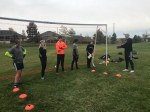
Goalkeeping done right, from TIP Goalkeeping

Story and gallery by JOSH LUDLOW

The first Saturday of October at 8 a.m. was cold. According to the car’s outdoor temperature gauge it was in the high 40s. Freedom Hills Park in Centerville, Utah, sits just under the east mountain side. With rain falling the night before, the grass was spongy and wet. Feet were soaked within a few steps on the soggy surface. At this time, and place, goalkeepers from across the Salt Lake Valley gathered to hone their skills.

Brian Simmons, the head of TIP (technique, insight, power) Goalkeeping, is the man running the training program. As the young high school goalkeepers arrive, subtle moans are heard about the hour of day, temperatures, and lack of sleep. Simmons quickly gets them into action to start the morning training session with a few warm-up routines.

Soon enough the goalkeepers are diving on the ground, in the air, and even forward attacking the ball. Simmons directs the efforts of these young players in a positive direction. He provides needed correction but also positive reinforcement when a player correctly executes a save.

The session runs about an hour with much of the allotted time at an intensive work rate. At the end, footprints and cut marks are visible from where the goalkeepers worked as the grass is torn to shreds. Final comments are made by Simmons and then everyone departs till next week’s session.

Simmons discussed TIP and what the inspiration was behind the idea by saying that, “There was a lot of demand for goalkeeper training where I am based in Davis County, Utah. I was asked over and over about what training I could offer, so after holding training sessions sporadically I decided to formalize TIP so that I could be a consistent resource for the goalkeeping community as well as the average coach.”

TIP Goalkeeping provides young goalkeepers the opportunity to train at a higher level than a typical club team practice would provide. The high intensity, demand for excellence, and positive feedback make these trainings invaluable for the goalkeepers.

“TIP was officially founded in 2017, though TIP trainers have been active for about a decade,” Simmons said.

Another TIP trainer, Cole Palmer, also said, “I am not sure of the exact time I started with TIP but I believe the first camp that Brian and I did was in the summer of 2017.”

As a relatively new company in a heavily concentrated soccer playing community, TIP found its niche. The opportunity to work with parents and athletes away from the club teams has given the young goalkeepers formalized training. Whereas at the club levels, goalkeepers are treated as just another field player.

Craig Waldron, a parent of one of the athletes, described the training TIP provides. “I think TIP is different from other trainings because of how personal they make it for each keeper. They also have a very good trainer to athlete ratio so there is a lot of personal help with each of the athletes. And trainers that truly want to make better goalkeepers.”

The success of TIP, when broken down, is about the values it represents. Simmons said, “Our aim is to help keepers learn and develop the skills necessary to become great goalkeepers and people…. So many goalkeeping principles can be applied to life, and at the end of the day, we care very much that our athletes develop as people in all facets of life.” TIP goes further than teaching athletes how to properly be a goalkeeper. It instills values that these young players will one day look back on and realize they were already developing by attending these training sessions.

Ideally, the training sessions are there to assist in bringing a sense of accomplishment and improvement. Specific instruction is delivered from Simmons and Palmer on how to execute a desired movement, perform the technique correctly, and how to improve what the athlete already knows.

Palmer said, “I think the biggest difference that I have seen is getting kids genuinely excited about training. I have never seen kids show up to training and say they also have a game or even two after but at TIP I see that all the time. It seems like they show up excited and ready to go.”

TIP is also giving back to the community. Once a year, TIP hosts a training session for free to anyone. All that is asked from those who attend is a donation, which will be given to someone or a place in need. This past summer of 2018 TIP was able to raise “$330 to support Eumer, a boy living in Ethiopia,” Simmons said. The next year TIP is hoping to raise even more money to benefit someone or something.

TIP brings goalkeeping to a completely different level. With multiple trainers, athletes, and philosophies involved, these young players are receiving the skills necessary to enhance their playing abilities and life. Simmons said it best: “I want TIP to be THE authority on goalkeeping in the state of Utah.”


Young entrepreneur brings delicious activity to downtown Logan

Story and images by MEGAN GILSON

After days of searching for a new job, unable to meet the required qualifications, a frustrated college student decided he would create his own.

The 22-year-old Utah State University student, Austin Jensen, is the founder and owner of Logan Food Tour, a culinary walking tour in the heart of downtown Logan.

For those who are unfamiliar with the concept of a food tour, Jensen described it as “the best way to experience the city and its local restaurants. We dive into the food scene, visiting restaurants and trying their best menu items. As we walk around, we share the history of the downtown area, creating a unique, and delicious experience.”

Logan Food Tour features four of Logan’s best local restaurants — Pollo Azteca, Stacked Pancakes, The Factory Pizzeria, and The Crepery. Ranging from authentic Mexican cuisine to traditional Sicilian-style pizza, each restaurant serves quality, made-from-scratch dishes.

Many ask Jensen if his idea was inspired by his passion. He always replies, “I wouldn’t say that I’m passionate about food, or about historical tours, but I am passionate about fulfilling the needs of the people around me. In the end, I think that’s what being an entrepreneur is all about.”

In the spring of 2018, Jensen noticed a vast amount of students with a shortage of fun things to do on the weekends. “Logan is a small town, and frankly, there is a lack of local events and cool activities,” he said. “I wanted to build something that would solve the age old question ‘what should we do tonight?’”

A few months later, Jensen was caught up in the frustration of trying to find a job that would give him some relevant job experience for his future career. “I found that every job that sounded remotely interesting and helpful for my future required experience and a degree. So finally, I realized that if no one was willing to give me the experience I need, then I’m just going to gain it myself.”  A few weeks later, Logan Food Tour was born.

The road to building any business isn’t easy, and Logan Food Tour was no exception. Jensen put in countless hours building the website, studying up on historical facts, and finding great restaurants to work with.

After all the logistics were in place, Jensen spent weeks advertising the tours. He handed out fliers and cards on campus and started advertising on social media. After a few weeks, he finally saw his hard work pay off when he booked his first tour.

“On the first tour, I was a ball of nerves,” Jensen recalled. “I was worried about guiding the tour, remembering all of the facts and stories, making sure the participants got enough food and keeping people entertained. It turned out I was nervous for no reason. I felt totally in my element, telling stories and cracking cheesy jokes, and the restaurants absolutely delivered with huge samples of delicious food.”

Jensen felt great after his first tour and couldn’t wait for the next ones. He loved helping his guests create new memories, while introducing them to great, local food.

“One of the most rewarding parts is helping local business gain more traction, and attract new customers,” Jensen said. “We have deals with each of the restaurants, they prepare a sample plate of food for our participants, and through our own advertising efforts, we promote their restaurant. It’s mutually beneficial and allows each of us to succeed.”

Alicia Lopez, owner of Pollo Azteca, said, “When the food tour group comes in, people on the street notice my restaurant. They look in my windows and wonder what is going on and why there are so many people. This encourages them to come in and try the food.”

It is seeing the positive impact that Logan Food Tour has on restaurants like Pollo Azteca, the first stop on the food tour, that motivates Jensen to continue working hard and building his business.

Food tour participant Kyle Horton said, “It’s like the ultimate date night! It takes dinner and a movie to a whole new level. We learned cool stories and facts about the place we live, tried new delicious restaurants we had never been to, and left absolutely stuffed.”

When asked about his long-term plans for Logan Food Tour, Jensen said, “I don’t expect to stay in Logan running the tours for the rest of my life, though it would be the funnest career ever. Ideally, in a few years, I will pass down the business to another USU student. At the end of the day, I want to be able to provide someone with valuable experience and give them the chance that no one gave me.”

Jensen has learned more about business in the past three months than he has learned his entire college career. Jensen said the experience has been “eye-opening and invaluable.”

He offers this advice to other students: “Don’t wait until things seem easy, because I don’t think they ever will be. Gaining the experience you need is about doing challenging things now.”

NO BLACK OUTLINE LOGAN

Photo courtesy of Austin Jensen


Braden Rollins

MY STORY:

MY BLOG:

Gathering information and creating a story for the masses to consume can be quite the experience. I found many obstacles in my first foray into the world of journalism that required me to adapt and learn in order to succeed.

Finding interesting story ideas can prove frustrating. And finding a subject that is timely and relevant to the majority can be difficult. I may search for story subjects by observing commentaries that were already occurring in the media. Once I chose a subject I broke it down to find an aspect that has not been or barely covered by other media.

The second most difficult aspect of journalism was locating sources who were willing to be interviewed on my chosen subject. You can come across possible sources but they may refuse to go on record or refuse to speak with you altogether.

Once I found a knowledgeable source willing to go on record much of the stress of gathering information is alleviated. Interviewing sources was fairly painless because I did my best to prepare questions related to my story and did research into how that person relates to it.

My interview process consisted of having a prepared outline at hand during the interview. When I had permission to record an interview I kept note of the time in the interview key points are brought up so I could reference information in my recording with ease later on.

After organizing my collected information I list my facts from most important to least important like an inverted pyramid. This way the most pertinent information is presented first and will hopefully keep the reader’s attention through the story.

Writing like a journalist has also helped me learn to write more concisely as opposed to wordy essays I’ve written for other classes

In the end, it comes down to continuously practicing and using the many skills required to be a good journalist.  

ABOUT ME:

1Having lived in the Salt Lake Valley my entire life, I have an affinity for Utah. Though I love visiting new places outside the state I am very much a homebody and will probably stay in Utah into the distant future.

In my final years of study at the University of Utah, I greatly enjoy my classes in strategic communication and look forward to exploring the many opportunities my degree will open for me.

Though I work full time along with my studies at the University of Utah I enjoy exploring my hobby of photography as an activity outside of what is required of me by my job and school. I also greatly enjoy reading novels, whether they be adventure, nonfiction, sci-fi, or horror. believing that reading is one way to distance myself from our digital world.

All of my success so far would not have been possible without the support of my amazing wife. She helps maintain our household while I am busy at work and school. Once finished with school I look forward to bettering my family’s situation.

Megan Gilson

MY STORY:

MY BLOG:

I saw this article as an opportunity to introduce the world to something new. I only had two requirements for my topic: I wanted it to be exciting and inspiring.

Initially, I happened upon my story by mere chance. One weekend, I was searching for something fun to do and I came across Logan Food Tour. It’s not everyday you find something new to do in Logan, so I was intrigued.

I was first interested in what the business does and the experience it provides. I was scooped up in excitement of the idea, and was confident it would make a good story. As I pursued the idea, I hoped that there was something inspiring beneath it all.

To start, I decided there is no better source than the creator, so I reached out to the owner of Logan Food Tour, Austin Jensen. Throughout the interview we discussed what the business is and how it came to be, and how he ended up where he is.

Later, I was able to meet with one of owners of the restaurants that Logan Food Tour works with, and talk to one of the participants. This gave me two different perspectives about what Logan Food Tour is offering and how it has impacted them.

I was left with a lot of great information but most of all, I felt inspired. I knew I had found the component that the story was missing.

Jensen, instead of his business, became my focus.

Even with a clear idea in my mind of how I wanted everything to play out, the writing process was harder than expected. I found myself struggling to find a balance between the excitement of the business and the inspiring story of the owner. I learned that both were important, and tried to adequately tell the stories of each one.

After meeting with Jensen, he invited me to participate in one of the food tours. It absolutely exceeded my expectations. I could see Jensen’s passion as he guided the tour, and I felt like I was part of each restaurant’s story. It really was the ultimate experience. Plus, the food was excellent and as promised, by the end, I was stuffed.

I find, time and time again, that I am always surprised by the ambition of entrepreneurs, and Jensen was no exception. He was determined to grow through experience, even if that meant starting from scratch.

Throughout this experience, I ended up gaining a lot more than a story I was proud of.  I made new friends, ate great food, and felt inspired to pursue my own dreams.

ABOUT ME:

56307872204__BB65FAA9-BAFD-413E-B13A-22E517CE88E5I am a junior at the University of Utah pursuing a degree in strategic communication with a minor in business. I grew up in Salt Lake City, but I moved to Logan this summer after marrying my husband.

I love writing and design and hope to incorporate both in my future career. I am currently engaged in freelance work, helping start-up companies with logo and website design. I have loved creating relationships with new businesses and developing new skills through my work.

When I’m not working or doing homework, I enjoy boating, watching movies and traveling.

McKenzie Nicol

MY STORY:

MY BLOG:

Usually I develop my stories out of things that I have a desire to learn more about. I love learning and expanding my knowledge base. I also have a passion for people and finding out their stories. Everyone has a story, and every story holds incredible potential.

For the rock climbing piece, I have several personal connections with many local rock climbers, being a beginner myself. Isaac Baker is a good friend whom I worked with while I was living in Romania. Ben Roa is actually a friend of a friend in my news writing class. I met Joel Zerr at the climbing gym when I was asking around for advice on the story. All of these individuals were more than willing to talk about rock climbing and the impact it has had in their lives, giving great insights and ideas about the subject. They are the best sources for this story because they are all local and heavily involved in rock climbing.

I did not encounter any sort of ethical or moral issues with the rock climbing story. It was a little tricky finding time to meet with Joel because he is busy setting routes for several gyms along the Wasatch Front. But we worked out scheduling and ended up being able to meet.

Making sense of all the information that I gathered was hard at first because there were so many good ideas to sift through. There is so much you can learn and take from rock climbing. It is all a big metaphor. But one common theme that I couldn’t shake was the mental side of rock climbing. It is intriguing and inspiring, and something that I love to talk about, and it was easy to decide to write about it.

I did a lot of thinking to begin the process. I have a hard time if I just sit down and write. I need time to process and develop. At some point I have to just write words on the paper, and then return to them after I have thought about it more before I can write a good draft. After that I comb it over and make adjustments that are desperately needed.

I wish I could include more details about the actual logistics of climbing. They are so interesting and give you a deeper understanding of the technique behind everything. But having focused more on the mental side of the story, I did not feel that a lot of the technicalities fit in.

It was surprising how easy and natural it was to talk to the sources about something that they are all passionate about. It was not awkward at all and the conversation just flowed. I don’t know why, but I was expecting the actual interviewing to be a little bit tougher. But it wasn’t, and I was pleasantly surprised.

Rock climbing is such a cool sport with so much symbolism and metaphor. I feel like you could write any sort of story out of it. It has taught me a lot in my own life and is such a personal journey. My hope is that everyone who reads this story will be inspired to dig a little deeper within themselves.

ABOUT ME:

IMG_2508

I am a student at the University of Utah studying strategic communication. I love videography and have a passion for telling stories through the lens. I am always seeking out adventure and new experiences because the best way to learn about life is to live it. I love rock climbing, backpacking, hammocking and anything to do with the outdoors. I lived in Romania and the Republic of Moldova for 20 months. I speak Romanian fluently and am now tackling Russian. I love challenges and pushing myself to my limits.

“How do you see the world?” is a question that has shaped me ever since I started thinking about it two years ago. It came to me as I was roaming the streets of Chisinau, Moldova, pondering on all of the lives that were going on around me. Each one so different than my own. Each an individual who sees the world in a completely unique light and has so much to offer the world in a way that no one else can. My goal in life is to get an understanding of how others view the world and tell stories through the lens.


Jen Chun

MY STORY: IMG_4679

MY BLOG:

During the three years of living in the United States, the biggest cultural shock was a food. The country that I love is facing a severe health problem: chronic disease. Indeed, it becomes an issue that modern people tend to have fast food daily. However, the “real problem” is that people do not know how to compose their own dish. As a person who is from an Asian country, which has a healthy food culture, I always wanted to share and inform the way how to eat healthily. Since my mom is doing a plant based-diet, I thought it will be a great source to develop it for my story idea. Also, I hoped this opportunity becomes a great chance to motivate myself to eat in a more healthy way.

I had to do some research before pitching the idea because I only had basic information about plant-based diet (PBD). It was not so hard to collect data or sources because PBD has become a trend among “healthy eaters.” For more profound information and reviews, I have reached out to three people who study or work in health fields. Lastly, I attended the 2nd Annual Plant Based Nutrition Symposium on Oct. 13, 2018. At the symposium, I learned some practical tips on how to make my own plant-based meal.

I tried my best to provide facts and professional knowledge to inform the public. I aimed to provide as much information as I can to educate people. This has made me do a lot of online-based research, meet people for an interview, and attend the symposium for further and deeper information. It was interesting to listen to people’s anecdotes or personal thoughts about PBD. At the symposium, I  learned a lot of productive tips from the lectures of doctors and health specialists. I am sure that my sources are beneficial enough for my story.

Indeed, it was challenging to contact organizations. I have sent several emails and made phone calls for an interview, but none of them responded to me. My initial plan was to interview Plant Based Utah, an organization, and Seasons Plant Based Bistro, a PBD restaurant, because it seemed helpful for the readers to recommend accessible places that people can visit. Unfortunately, they did not answer to me. I had to find other available people, a Ute who does PBD and a chief who cooks PBD, for an interview. Contacting was the hardest part of the whole process.

As I mentioned earlier, I wanted to inform people. My goal of the story is to motivate the public to eat in healthy and therefore, to change their lifestyle. For a logical understanding of the readers, I put some helpful statistics and source about plant-based nutrients. I focused on stating why and how having PBD could become a key to well-being. Inserting professionals or experienced person’s point of views give more credibility and motivation to the readers as well.

The writing process was not easy for me at all. It was my first time to write a journalistic article. I had a hard time to follow AP rules, correct grammar error, and organize paragraphs. Sometimes, I had to push myself into the situations. These experiences trained me to become a professional journalist.

Fun fact is that after I came back from the symposium, I have tried to make my own green smoothie. I borrowed a blender from one of my good friends and put grape, salary, lemon, and honey into the binder with some ice. Surprisingly, the taste was good enough. I would love to have a green smoothie every morning for breakfast.

One thing that surprised me was that there are some restaurants in Utah that provide plant-based dishes with ingredients such as vegetables, fruit, and seeds. I was not aware of any plant-based restaurants until Professor Mangun has told some of them to me. I am planning to visit one of the restaurants with my vegetarian friends in the near future.

I hope the readers feel informed and motivative by my article. I want to deliver a message that eating healthy is as important as exercising. I do not expect everyone to have PBD but at least feel inspired and therefore, starting to have a healthy life cycle. As a journalist, it was the fascinated moments to challenge my writing skills. However, I am glad that I could earn some advanced skills in news writing.

ABOUT ME:

“I will never forget the audience’s enthusiastic cheering sound at the Gang Neung Curling Center.”

Jen is from South Korea and is an only child of a lovely family. She is a lucky girl since she was young. Her parents are supportive enough to provide more chances to travel or go abroad for studying. So far, Jen has visited over 20 countries and currently she is studying in the U.S. since the high school. From the experiences of living abroad, she learned to accept the variety of culture. Jen loves to make new friends from all over the world and enjoys to communicate with them. She is an adventurous, independent, and brave person. Her courage and global background influenced her to get more interest in the communications field as well.

During the 2018 Winter Olympics, Jen was there at the scene of the history. It was the first time holding a Winter Olympics for her home country. She could not believe in herself that she is watching the actual curling games at the stadium to work as a spotter. It was a moment of her dream came true. While two months, she could experience the real-world, hands-on experience with cutting-edge technologies which have enhanced her understanding of the system of broadcasting. The internship experience at Olympic Broadcast Service (OBS) promoted her to discover passion and courage in communications.

Currently, Jen is a junior at the University of Utah. She is majoring in strategic communication and has a great interest in PR and marketing. She is learning a lot of creative and practical communication skills from the courses at the U. She enjoys her learnings and college life at the U.

Jen is hoping to find more opportunities of internship in the future. She is eager to practice and perform in professional communications fields to become a better marketer. She will never stop to explore and challenge herself to improve.

Jolie Bell

MY STORY:

MY BLOG:

When I first learned about the Enterprise Story assignment, I instantly knew my topic should be about Tinker’s Cat Café. I visited the café a couple of times and participated in one of its Cat and Paint nights. It is a fairly new business many Salt Lake City locals did not know about. While the community knows about Best Friends Animal Society and other local shelters, I believe people should know about every option for adopting a pet.

I first contacted Lisa Boone, the owner of Tinker’s Cat Café, the main source for my story. She was very kind to meet with me in person for an interview. Tinker’s is a second home and family to her as she passionately described her business. Afterward, Boone helped me find a regular customer who also adopted a cat from Tinker’s.

Sarah Murtagh is a daily visitor at Tinker’s. She described her own personal story of her relationship with Tinker’s. Her interview was integral to my story because it exemplified how Tinker’s could be a therapeutic and unique destination to visit.

My third interview was with Ally Jelitto. She is one of my peers in the modern dance program and agreed to a phone interview over fall break. Jelitto mentioned she really enjoyed her first visit to Tinker’s. I believe including a University of Utah student would be beneficial to my story since the audience would be mostly U students. She was a relatable source to the average person who would visit Thinker’s Cat Café on occasion.

After collecting my information and conducting interviews, it was difficult for me to organize my story into a cohesive piece. I made multiple drafts in the process to find the right fit for all of the pieces. I decided to focus on the basis of what a cat café is and what Tinker’s has to offer to the community. It is a new trend that has recently begun in the United States, so it would be beneficial to the readers to explain it first.

The writing process was a challenge for me. I have never taken a news writing class before or written journalistic stories. My experience in writing has mostly been research papers and creative stories in the past. It was difficult in the beginning using AP Style and the AP Stylebook. However, the unique format of news articles and interviewing skills became significant tools in my writing that I would continue to use in the future.

ABOUT ME:

10580222_897623063585606_6421814116935731614_n

I have been dancing since I was 3 years old.

My performance history has ranged from performing in the National Tour of the “Wizard of Oz” to being a back-up dancer to working as a Cherion Records recording artist. I grew up studying many forms of dance such as tap, jazz, ballet, hip-hop and modern. Since I was young, I knew I wanted to become a professional dancer. I moved to Utah from Albany, New York, in 2016 to pursue an undergraduate degree in modern dance at the University of Utah.
I wanted to expand my art in a new medium of writing, so I now have a minor in strategic communication. I hope to combine my knowledge from both fields to support and enhance my dance career. After performing for some time, I would like to take an administrative position in a dance company.

Porter L. Anderson

MY STORY:

MY BLOG:

My writing process for this piece was done almost completely in my head. Coming up with the original idea I looked for topics that I believe needed to be addressed. From there I keep that thought in the back of my mind and mull over the different approaches I could have towards the topic and the ways that I could write the piece. Once I have the topic and the direction I want to go with my writing I keep an eye out for first-hand accounts that can be used for sources in the article. I thought it would be really interesting to see from the side of those who were running the program to those who came with their families and got to participate in the program. My sources were fairly easy to get an interview with because my piece wasn’t exactly controversial and only displayed them and the library in a good light.

Overall the hardest thing I think was narrowing down the information I got from interviewing people at the library. I had talked to multiple translators but, didn’t want to include all of them and I talked to probably a dozen patrons of the program and only needed one that I thought represented the group best. The thing that surprised me the most about writing this article and getting all this info from people is that it was almost entirely positive. I thought that with the large variety of people that I interviewed that at least a few would give some issues about the program or think that it was still too little attention being given to the Chinese patrons. Only one of my sources stated anything slightly negative and he was more just calling my attention to the fact that the program had a few Chinese characters that were written incorrectly. Writing this piece was much more smooth than I thought it might be. I was able to talk to the administration people that I wanted to and had very little resistance from the patrons I asked questions. I knew my piece would depend on interviews more than anything else so I am extremely happy with how willing people were to help with the article.

ABOUT ME: 

profile

As a student majoring in journalism at the University of Utah, Porter Anderson looks forward to the career in journalism that he could have. He sets his sights on reporting stories from the gaming world and other sections of entertainment. He is expected to graduate in 2019 and will move from his job as a community outreach intern at the Family History Library in downtown Salt Lake.

Anderson has written two books, one of which has been published called “Built By Fear,” which is meant to be a tool for those struggling with social anxiety and other fears. He has a tremendous amount of passion for helping people through writing and tries to find as many ways to help people as possible.

Anderson has taken this passion for helping others and put it into his passion project, a website called Ureshii Outlet. He built the site as a place for people to come and share uplifting stories from their lives in an attempt to add a little more brightness and positivity to the world.

Prior to studying at the University of Utah, in 2014, Anderson spent two years living in Japan as a missionary for the Church of Jesus Christ of Latter-day Saints. During this time he taught English to the people of Japan and spent time learning the language from the local people. This time proved critical to his development in the field of journalism. Seeing more of the world gave a new perspective to the number of people that need to be educated about certain topics and even need help in different aspects of their lives.

Hannah Cook

fullsizeoutput_906My STORY:

MY BLOG: 

My story was all about organ donation. I developed my ideas by brainstorming with my family, when we realized that this subject being near to my heart, with my father being a two-time liver recipient. I knew how much that this topic meant to me and my family and I wanted to share that importance with everyone else.

I knew that this was a topic that is greatly important and also one that most people aren’t properly educated or informed on.

With the topic being something that I have dealt with firsthand, I knew the type of people who are usually affected by a transplant.

I located my sources by knowing that a transplant coordinator is needed for each transplant case. I also thought about how it would be interesting to hear the story of organ donation by two people who have been affected by it: a waitlisted patient and a parent of a donor. Each have been affected two completely different ways and their points of view were why they were the best sources for my story.

The main dilemma that I had with my story was trying to keep my personal feelings of the topic out of my story. This story needed to be free of any biased information to really show the importance of the topic. I made sense of all of the information that I gathered and decided I wanted my information to focus on the importance of organ donation.

My focus was set on each of my interviews felt about organ donation, as well as statistics that supported the case. Getting to know what organ donation meant to many different parties in the situation was crucial to my story, to help inform the readers what it means to different people in a donation scenario.

The writing process of my story was tedious, and I learned that the interviewing process can be difficult and take more time than you might think. I was shocked after my first interview, but it got easier after time. I received more information in my story than I could have ever asked for. Many details didn’t even make it to my story.

A detail that surprised me and that didn’t make it to my story is that not one person on the waitlist thought that they’d be there. Often times a person can appear to be a picture of health physically but have failing organs. No one thinks that organ failure will happen to them, and it still does. It is important for people to know what someone with failing organs goes through to help see the importance of organ donation and that is exactly what my story delivered.

ABOUT ME: 

I’m your typical girl next door: work all day, homework all night, and as much fun as I can possibly fit in on the weekends.

I grew up in Syracuse, Utah, and graduated from Syracuse High School. I have lived in Utah my entire life. I always knew that I wanted to attend the University of Utah, as my family has always been major Ute fans.

When I am not at school or work I spend my free time spending as much quality time with my family as possible. We love to go to dinner and movies, and of course watching the Utes play.

I have always worked hard all through school and have been very dedicated to be successful.

My dreams seem average but mean so much to me. Though I work hard at work and in school, my dreams always go back to my future. I dream of being the best wife and mom, and making sure that my family will have everything that they could ever need.

I am working diligently toward my degree for the satisfaction of having my education, and to land a job that I love.

My dreams are to have a job that I love and having an adorable family that I am able to go on many adventures with.

I am currently on the downward slope of my junior year at the University of Utah. I will graduate with my bachelor’s degree in Fall of 2019 with a communication major with an emphasis in strategic communication. I am eager to finish my education so that I can further my career in public relations.

My time at the University of Utah has been everything that I ever dreamed of. I have made memories that I will forever cherish, and I can’t wait to see what my last year will bring.

Virginia Hill

MY STORY:

MY BLOG:

When writing the Enterprise Story, it was interesting to see how the story developed into something more than just facts and timelines. Wish Week, a philanthropic week hosted on campus by Chi Omega, turned out to be more than just a week with scheduled events and a specific agenda.

The best way to bring life to my story was through interviewing people and really hearing their experiences and opinions. When locating sources, it was easiest to reach out to the people I knew in the Chi Omega sorority and ask them who would be best to interview for this story. These recommendations ended up being perfect for the story, they were all part of planning the Wish Week and therefore thought passionately about the topic and had a lot of information to give.

After everything needed for the story was gathered, it was typed up as noted and then sorted through, deleting things that were deemed unnecessary and highlighting things that were most important.

Once that was done, compelling the information into an interesting story that would keep the audience engaged wasn’t very hard. This was due to a large amount of relevant information gathered and its interesting nature.

ABOUT VIRGINIA:

Processed with VSCO with c1 presetVirginia Hill is a student at the University of Utah graduating Spring 2019 with a Bachelor of Science in  Strategic Communication with a minor in Multidisciplinary Design.

Virginia has a strong background in marketing. A summer internship at McgarryBowen’s New York offices set her on a successful track in marketing, particularly with design and art.

Since then, she has been working in O.C. Tanner’s marketing department working on designing and building their corperate and jewelry store websites.

She intends to work in the world of marketing and product design. By pairing the two disciplines she has provided herself with a platform for which she can think strategically about products and design in a way that can meet the needs of a market.

Seok Lee

  1. MY STORY:

MY BLOG:

I developed my story ideas by beginning to think how students have hard time to work part-time and study together. The reason why I wanted to focus on that was because I personally had a hard time while I did a part-time job and study for my courses in the university. Also, I wonder other students might have hard time too so I wanted to encourage University of Utah students to succeed in college life without burnout.

I located one of my sources through one class called COMM 3710. In this class, me and my classmates made a survey questions about how part or full-time job affects student college life. However, this class required only the result of a survey and made a graph about it.

I found the best sources for my story because each one showed great information that lots of students do not know. I did not encounter any obstacles, ethical issues or moral dilemmas.

I decided my focus to the university students. I gathered surveys that 10 students did for me. Also, I focused on tips to succeed in college so I gathered interview notes for my story too.

I learned more about how to write a better interview notes while I did interviews to others. Tips about writing interview notes, recording is one of a great tip for me not to miss details.

What surprised me in their interviewing process was that all interviewees did nice to me because before I did interviews to people, I thought that I bothered their times so I felt sorry when doing interviews. However, all of them do nice with smile.

The overall lesson I learned from my interviews that lots of students burn out because of work and study. Also, all advisors, staffs in the university or other people want all students do well in college.

ABOUT ME:

I am from South Korea and I arrived in Salt Lake City in 2011. I wanted to study art, especially music and drawing in the university. Personally, I wanted to study art near Hollywood which is in Los Angeles and Broadway which is in New York City. Unfortunately, the tuition fees in LA and NY are too expensive for me. So, I decided to study in the University of Utah which is near to Las Vegas and the tuition fee is cheaper than other universities that I wanted to study.

Seok LeeWhile I studied in the U, I supposed to study art as a major but I wanted to study more about cross culture. The main reason was that learning cross culture might be helpful when I make or sell my art pieces to others.

While I studied in the U on 2011, I joined one band called “Romantico” and did several performances in small clubs or bars in Salt Lake City and Las Vegas. Me and my crew members performed around 80 times. However, I hurt my vocal cords so it was difficult to sing so I quit my band and went to military in South Korea frin 2012 to 2014.

After I finished serving my military duty, I started to do an internship in one of the Korean broadcasting companies as music director and producer. So, I came back to Salt Lake City in 2016.

When I came back to Utah, I changed my mind. Instead of becoming a musician, I planned to become a music director in a company and I interviewed in several companies and I passed so I plan to work after I graduate in fall 2018. Overall, my major is communication. I have lots of experiences about music performing and I am a senior in the university which means I am going to graduate in fall 2018.

Contact:

sucxes_u0759952@hotmail.com

My LinkedIn

URL: https://www.linkedin.com/in/seok-lee-549448153/?locale=en_US

Riley Spear

MY STORY:

MY BLOG:

I developed my enterprise story idea through my target audience, being university students. Social media is targeted toward university-aged students, and educating them and creating awareness on how businesses use social media to advertise would be interesting.

I located my first business source, Beauty Industry, through a friend. However, I had never met Paige Johnson, the woman I interviewed. My second and third source, The Hut Group and STEM, I found through googling startup companies in Salt Lake. These companies were one of the few I heard back from after emailing businesses with a wide social media platform, therefore being suitable for my topic.

The three sources I selected for my topic were the best choices because they all use social media, specifically Instagram to advertise their products. The three individuals I interviewed had positions dealing with social media, and gave me feedback I felt was important for my audience to know.

An obstacle I came by was with my third interview with STEM. While I managed to gather enough information, it was a difficult interview. It really forced me to use all the techniques we’ve read in class to push my interviewee to give me critical information that would benefit my story. In the end, she was able to help a lot and I am confident with her as my third source.

Luckily with the questions I prepared all of the information I gathered would have fit into my topic. The issue was deciding which was the most influential, and I chose the aspects I did out of what I thought were most crucial to know to my target audience.

I separated my writing process into the three interviews I did, choosing a space in my story for each of the interviews and forming the story around their responses. After the interviews, the writing came easy because I based the opening and closing off of what I received from them. I realized then just how important the interviews are in creating a good story, to a great story!

I have a few quotes I didn’t add into my story directly from my sources I feel could be interesting to add into my blog. However, they aren’t the best ones; those were in my story. Below, I’ve included something interesting I gathered from Jasmine Reynolds with The Hut Group:

“Instagram marketing is used in an assortment of aspects, whether it is to bring awareness of a cause or to advertise and sell products. It has drastically changed the game from billboards, and TV commercials to a free platform being used by billions.”

An aspect through this whole process of creating my story was how once I became comfortable with the people I interviewed, how much they wanted to engage. At first I felt as if I was an annoying student who had begged for an interview. However, two of my sources were more than happy — excited even — to give me the information I needed to create my piece.

ABOUT ME:

1610807_10203591191740793_8009901870086539677_nRiley Spear grew up in Madison, Wisconsin, until moving away to attend the University of Utah in Salt Lake City, after she graduated high school. She is currently taking classes to fulfill her degree in journalism, and will graduate in the spring.

In her free time, she is involved in Make-A-Wish philanthropy through her Chi Omega sorority. Through her sorority’s involvement and fundraising, members have been able to grant several wishes to children who suffer from cancer. It has been a rewarding experience to her, and she has made friends for life through it.

At her time at the university thus far Riley has completed a study abroad program in London, England, and performed an internship in Melbourne, Australia, through the Hinckley Institute of Politics. She has been able to fulfill her passion of traveling through both of these experiences.

In London, Riley studied digital multimedia, and through her internship in Australia she managed all social media accounts for her company and wrote blogs. This is one of the reasons she chose to focus on social media advertising, specifically Instagram, for her enterprise story.

The company she interned for revolved around global technology energy. Through her interviews she was offered new, and different viewpoints from beauty and health companies.

After graduation Riley plans to travel and see as much of the world as she can. Afterward, she plans to find a career in journalism, creative writing, or in public relations.

Reginald Hodnett

MY STORY:

MY BLOG:

When Professor Mangun told the class that we would be writing an enterprise story I immediately knew what I wanted my story to be about. I chose to write my story on Rachel Wiener, who is a personal friend and a talented chef.

The reason I chose to do a story on her was that I knew that the restaurant where she worked was doing a complete rebranding of its menu and an incremental design overhaul. I knew Wiener would be the point person who would be making the major decisions regarding the front of the house and back of the changes. So, I felt this would be an interesting topic because I enjoy food and design.

The J&G Grill at Deer Valley is a destination restaurant because of its cuisine but also because it’s attached to a hotel as well its proximity to the mountains.

I had never interviewed anyone before, so it was nice that my first one was with a friend. I didn’t let her or my other sources know what questions I was going to be asking them. I think that was good because it set a professional tenor regarding my interview. It was a fun experience but also a different one because you’re asking behind-the-scene information that in some cases their culinary team wasn’t quite ready to divulge to the public yet.

I was told things off the record that I promised wouldn’t be a part of my story.

The creativity and execution have to be perfect because a lot is riding on Wiener’s vision regarding returning guests and new guests alike. The dynamics of my story revolve around food, specifically, what is Wiener trying to convey with her new menu, and how will these changes enhance her guest’s dining experience? I wanted to understand what sets her culinary concepts apart from other restaurants.

Overall, getting a chance to see how decisions on a large scale are made and the process by which a company starts with just bullets points on a page that spring to life or are negated was fascinating to learn and observe. Food and design are two ways to communicate new concepts and ideas artistically. Surprisingly, I was left with the impression that diners don’t have the full picture of what it takes to ensure that their dining experience is memorable.

ABOUT ME:

0I have lived in Los Angeles, New York and now in Utah. Traveling has given me an appreciation for different cultures and an understanding to accept people the way they are. I’m forever the optimist and enjoy helping others.

The importance of family can’t be overstated. It’s the reason I am the way I am. I can’t thank them enough for always being in my corner, cheering me on.

Currently, I am finishing my junior year at the University of Utah. I am graduating in the spring of 2019 with a degree in strategic communication. I like the different aspects of branding, marketing, and advertisement.


Allison Pferdner

MY STORY:

MY BLOG:

Choosing to write about Prevent Child Abuse Utah was an easy decision for me because it is an organization that is so motivated to do good and I wanted to learn as much as I could about it. The way I discovered it was through my aunt, who does volunteer work for PCAU and Operation Underground Railroad.

Due to my aunt’s involvement in these organizations, she was able to put me in touch with the community outreach program administrator, Gwen Knight. Knight was kind enough to suggest a few other people whom I could interview. I believe they were great sources because they are heavily involved in the success of their respective programs and they also believe so strongly in PCAU. When speaking with them, I could tell that they were passionate about what they were doing.

The topic of child abuse is a sensitive topic and should not be taken lightly. At the same time, it is something that needs to be discussed due to the severity of its impact in Utah and everywhere else in the world. I tried to be empathetic and respectful of the things I learned through this process and while I can’t relate to anyone who has gone through something like child abuse, I know that there could be someone who reads my story who can. I wanted my story to be sympathetic toward them as well.

My sources were also great because they provided me with so much information. It was hard to narrow it down to just the specifics of the two programs I talked about, Parents as Teachers and teaching in schools. I felt like those were the two most important things I could write about because of their direct impact on the communities they work with.

This writing process was very interesting because it was the first time I have done something like this. Of course, I had a general idea of what I wanted to write about but I was constantly pulled in different directions after each interview.

PCAU has so many learning opportunities on the website. I would recommend to anyone interested in learning more about this organization to visit the website and take some of the online courses geared toward your age group.

It was a great opportunity learning more about Prevent Child Abuse Utah and I hope anyone who reads my story is able to understand the importance of what PCAU does here in Utah.IMG_031E9FBEC29A-1

ABOUT ME:

I was born and raised in Sandy, Utah, five minutes away from a handful of hikes in the Wasatch mountains. Some of my passions include playing tennis, hiking and reading. I also love traveling and hope to go to Iceland and Switzerland one day.

I am currently a junior at the University of Utah studying communication. Choosing to earn my college education at the U was an easy decision for me because I love Salt Lake City, I have always wanted to be in the MUSS, and the campus is absolutely beautiful. It has been everything I dreamed to be able to study here.

While trying to decide on a major without any real idea of what career I would like to pursue after getting my bachelor’s degree, strategic communication stuck out to me and I have enjoyed it ever since. Learning how to write, speak and critically think better has been helpful and exciting.

As of right now, consistently trying new things and obtaining a wide variety of useful skills are two of my main focuses in hopes of stumbling on something that I would love to build a career out of.


Emma Chavez

MY STORY: Local Business Cross E Ranch Celebrates its 50th Anniversary

MY BLOG:

My enterprise story merely started with a conveniently timed event, but the focus soon shifted into a piece on the importance of supporting small local businesses.

I came across Cross E Ranch two years ago while looking for a nearby pumpkin patch and have attended their Fall Festival every year since. While buying this year’s tickets at the beginning of October, I discovered it was the ranch’s 50th anniversary, and immediately wrote it down as a possibility for my story.

I was lucky enough to get in touch with one of the owners, Dalon Hinckley, who was my main source. He was able to give me a full history of the Cross E Ranch, as it was originally owned by his dad.

Dalon answered all my basic questions, but he offered up even more stories and information that made it so easy to form my story. He was the reason I redirected my attention to the business aspect of the ranch. He detailed how the business has changed in the past fifty years, and how he had to creatively overcome the obstacles.

The writing process was hard, as I expected, but it was not hard for the reasons I had expected. I ended up with so much information, that I didn’t know what to cut out. That has never happened to me before. I also had a problem shifting my story focus. I was originally just going to cover the Cross E Ranch Fall Festival as a current event, but my interview with Dalon led me a different direction. I struggled with trying to focus on both, rather than letting my obvious true topic lead the story.

In the end I learned so much from writing this article. I was intimidated by this assignment at the beginning of the semester, but I really enjoyed the whole process. I feel that my writing has improved, and I gained interview experience at the same time.

The biggest lesson I learned is to not force the material into an originally conceived topic. Some stories will lead you.

ABOUT ME:

IMG_3885I am 22 years old, born and raised in Salt Lake City. I started my college journey at Utah Valley University, where I spent two years earning an associate degree in Dance Education before transferring to the University of Utah. This is now my third year at the University of Utah, and I am set to graduate in the Spring of 2019 with a degree in Strategic Communication.

I love writing, but my true focus is in brand creation and design. My hope is to work for a business involved in the arts, and get back to my roots as a dancer.

When I am not in school or working, I spend my free time with my family and boyfriend. I can also be found reading, at a yoga studio, or doing my own or a friend’s makeup at any given time.

Claire Hillard

MY STORY:

MY BLOG:

This article was a particularly interesting one to research and develop. I chose to write about natural remedies for stress relief because it is a topic that interests me but is outside of my comfort zone. I don’t think I know a single person who doesn’t feel stress and some people struggle with it more than others. Partially for my own benefit, I wanted to know what sort of non-pharmaceutical options are available for those who experience regular stress and anxiety.

Contacting the best sources was surprisingly simply. All it took was one phone call or email and everyone seemed happy to help. People really do love sharing their passions. I think the people I chose to interview were perfect for the piece. Dr. Knorr is a naturopathic doctor who specializes in natural remedies for all sorts of ailments. Josh Williams is a clinical herbalist who regularly helps prescribe herbs for people with anxiety. I chose Mia Gallardo as my final interviewee because I felt it added to the story to showcase a person who practices some of the treatments the two professionals recommended.

Writing this article was an interesting experience. The answers I received in the interviews were fascinating and not what I was expecting. I was expecting the article to end up in a sort of Buzzfeed style and name the various recommendations from the two professionals. However, natural medicine is not black and white. There isn’t just one answer or one herb to solve a person’s problems.

Because of the nuances in natural medicines, I had to pivot my intention for the article. Instead of focusing on products a person can use, I focused more on their general advice for those with stress. It raised a few ethical issues in not wanting to give blanket advice that may not help some. While the products they recommended were interesting, I didn’t want to give the assumption that by reading this article, a person could self-medicate and solve all their problems.

I think the hardest part of putting this story together was having to cut out so much material. My shortest interview lasted 35 minutes and my longest was about an hour. There was so much material and I learned so much. When I wrote my first draft of the article, it was more than double the desired length. I ended up having to cut out more than half of the original content — some of which were my favorite bits of information. There were just so many interesting details that I didn’t want to leave out.

As a writer trying to keep an interesting, useful and concise article, I chose the information I thought would fit best together and be most easily absorbed. While this wasn’t easy, it was a good process to experience.

Writing this article was a wonderful experience. I made really neat connections with three new people. I learned some things that I was able to apply to my own life. I even purchased some Ashwagndha for myself to see if it helped. It was a great learning experience in working on my writing as well as gaining useful knowledge.

IMG_2282ABOUT ME:

I’m in my third year of my undergraduate education at the University of Utah. I am studying strategic communication and minoring in business. Both in school and in my personal life, I am fascinated by the impacts of nature, kindness, and positivity on the mind.

My interest in strategic communication began when I discovered a connection between psychology and marketing. I think human behavior and cognition is fascinating and wanted to find a way to incorporate this into a profession. I was a creative child and everything seemed to fit together.

As of now, my dream career is to do marketing or advertising in the outdoor industry. Because I am a huge outdoor adventurer, I know the outdoor industry well and know how to appeal to the market.

For me, home is on an inflatable sleeping pad under the stars. When I’m not studying for finals, I spend most of my time in the Utah desert. Some of the most impactful moments in my life have happened while surrounded by good company and towering red cliffs. I camp, rock climb, canyoneer, raft rivers, and do just about anything outdoors. I am a self-care enthusiast and an eternal optimist.

Spencer K. Gregory

MY STORY:

MY BLOG:

I have always been passionate about capturing the story.

I have been a volunteer student leader at the Bennion Center for about two years. As I have been able to serve my community and local students in their service journey, I have been able to develop a desire to increase in my own civic engagement and awareness and strive to help others learn the same.

Photography has always been my passion. I was the photography team leader on the communications team at the Bennion Center. Over time, I have developed to be the design team leader over the graphic designers as I focus on the media developed for the TV monitor screens in the Union building.

Although I have not always been actively a part of direct service, I believe my efforts have primarily been to help increase awareness of the active participants of the Bennion Center. This has helped me to develop skills dealing with graphic design development, photography, and videography.

My desire for this project was to apply the skills I have learned from my involvement at the Bennion Center into developing and capturing the story of the Bags to Beds program.

Bags to Beds has been such a great program that has done so much good for the community, and I wanted to capture the story of how it started and developed into the unique program that it is. It offers solutions to two community problems, homelessness and plastic waste.

Kaitlin McLean has been an inspiration to so many individuals, and I believe that we can all have a great impact as we strive to look for ways we can get actively engaged in our local community to make a positive change.

ABOUT ME:

I strive for civic engagement and community awareness.Professional Photo (Spencer Gregory)

I grew up loving to explore and create. My favorite things to do were playing with Legos or traveling outside. As I have grown up, I continue to love exploring what I can do to engage myself more in the community.

Throughout my whole life, I have been interested in photography, writing and design. I always try to see how I can portray the story in the best way. Whether it’s an event I’m trying to promote, a product I’m trying to capture, or a story about someone’s life, I make sure to portray to the best of my ability to create something intriguing.

I now major in strategic communication with a multidisciplinary design minor and an arts technology major. I plan to strive to enhance my skills to continue to develop as an active part in my community.