Survival Guide: Roomies 101

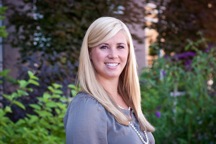
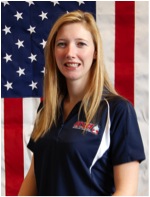
Janell Hann offers tips for living with roommates. Photo courtesy of Hann.

Story by KELLY WOLFE

“Hell is living with other people.”

That expression may particularly be true for college students, who often find that living with roommates can be a challenging experience.

Just ask Janell Hann, who moved to Salt Lake City from New York in 2003. During her undergraduate years at the University of Utah, she says, “I experienced everything from goody two-shoes to the downright odd and unexplainable.”

After having lived with 19 different “roomies,” she knows a few tricks of the trade that will help you cope with whatever living situation you are currently in.

“The first thing you’ve got to know,” Hann says, “[is that] communication is huge. It’s pretty much everything. If you can’t communicate with others … your living situation will be unbearable, [especially] if you can’t express yourself in a constructive way.”

To help facilitate communication Hann suggests having a house meeting once a month. At these meetings problems are presented and everyone tries to give a solution. This turns a confrontation between two people into a house issue. Hann says these meetings “can create a sense of peace in the home.”

She explains that roommates should express thoughtfully the things that are going well in the apartment in addition to the things that need improvement. “No one wants to [be] singled out or attacked,” she says. “Just don’t forget to let people know how you feel.”

Hann believes that telling your roommates how you are feeling in a calm, non-threatening way will make everyone happier, because it won’t feel like a war zone every single time you come home. “If there is any contention in your home, it will cause stress in all aspects of your life,” she says.

Second, Hann suggests that roommates write things such as birthdays, concerts, vacations and when bills are due on a jumbo whiteboard calendar. She says that writing things down for everyone in the apartment to see creates a sense of unity.

The third thing Hann recommends doing is making a cleaning chart. In her apartment it was called “Club Cindersoot,” in honor of Cinderella. Every month she and her roommates would rotate responsibilities.

“Put each person in charge of one room in the house,” she says. “Make clear rules as to what each person is to do, such as doing your own dishes, or who’s mopping the floors and scrubbing the toilet.”

But what happens when you’re living with a Gremlin?

Don’t worry, you are not alone.

Hann recalls having a roommate who never did her dishes. So Hann made a sign to post above their kitchen sink that read, “Contention is of the devil, not doing your dishes causes contention, don’t be the devil’s advocate.” But the problem continued.

Frustrated, Hann and her roommates took it to the next level. “One afternoon … we took her empty laundry basket and filled it up with all [of] her nasty dishes, then put them on her bed,” she said.

Katherine Veeder, a resident advisor at the University of Utah, says it is the small things that can flare up and cause problems, such as differences in schedules, or one person coming home late and turning on all the lights while the other person is sleeping.

She says it is vital to be upfront about different problems, while not being passive-aggressive or angry.

Many people may find it scary to talk to a roommate about a particular problem.

Veeder, who acts as a mediator for her residents, says it helps to find a neutral, common space to discuss conflicts. “It can be really intimidating to approach someone, especially if you’re in their space, for instance, their bedroom.”

When confronting your roommate about a particular issue, she says “it’s really important to understand where [they] are coming from before you … accuse them of … doing [something] terrible.”

Veeder says sometimes it can be hard to adjust to living with a roommate, especially for freshmen, because they tend to go from the “it’s all about me” mentality to having to be conscientious of other people’s lifestyles.

She recommends doing things that will create a sense of community. Students in her house are required to take part in formal activities such as group dinners and a monthly educational program. However, Veeder and her residents end up doing a lot of other things, including watching movies and going out to dinner. They have even gone laser tagging, because it helps residents in her house get to know one another better.

Veeder says that for people who have never lived with a roommate, it can be a difficult transition. Things will work out better when picking a roommate if you know about their living style: what their schedule is, when they wake up and go to bed, and even when they like to shower. “It’s [the] little things like that that can make all the difference,” she says.

Kelly Wolfe

MY STORIES:

MY BLOG:

Every time I sit down to write it seems as though my mind goes completely blank. Every thought just floats away, which generally speaking means I am entranced by a shiny object or some other form of distraction (cough, cough, Facebook). So to be perfectly honest, I had never ever read a blog until last week while on a reconnaissance mission for my own blog.

I am in no way God’s gift to journalism but like many, I have most definitely experienced a change of heart toward news writing. I pride myself on being a very opinionated person — go ahead and blame it on me being from New Jersey, because heaven knows we always have something to say about everything. So naturally I struggled writing my Slice of Life, Enterprise, and well let’s face it, every assignment because I had to learn to “write myself out of it.”

What a wonderful learning experience this has been. I feel as though my writing has grown by leaps and bounds. Not only was I given creative liberties over my story ideas, I found a love for news gathering.

I want to write about things that I feel are important, such as the everyday grind of life and how people deal with the same issues I am having. For my stories I thought, “Well maybe, just maybe there are others who are going through the same trials as me. I wonder how they’re dealing with the cards life has dealt them?”

I drew from my own experiences and picked the ones I felt needed to be heard; the experiences that everyone could relate to. I will admit I have struggled a lot during my perpetual stint as a college student, so if through my articles I can help my fellow students deal with the pressures and stress they are feeling, then I am up for the challenge.

After I picked my topics, I needed to go out and talk to people. Boy was I nervous! I don’t know why, I mean, I spent 18 months of my life talking to complete strangers on the streets of a foreign country, in a foreign language, and yet I clammed up when it came time to interview someone I had never met before. What an anomaly.

So when I went and sat down with a woman whom I had never met before for my first face-to-face interview, I was completely freaking out. I pulled out my tape recorder and thought, “What the heck did I get myself into?!” I was sure that I would forget the few questions I had scribbled down.

Wonder of wonders: As she spoke, a million questions flooded my mind and the interview went splendidly. As I switched the tape recorder off, I swear my heart skipped a beat because I was so excited! I couldn’t wait to go and get more interviews.

To all those reading this, beware, this class has created an interviewing monster out of me, and you just might be my next victim.

ABOUT ME:

I am a super senior studying strategic communication (the fancy title for public relations) with a minor in German. Hopefully I’ll graduate soon; I’m keeping my fingers crossed.

I hail from the great state of New Jersey, where we know what real bagels taste like, and have never pumped our own gas. I have been a die-hard Yankees fan all my life, and say things like “cawfee” instead of “coffee.”

I had the opportunity to serve a mission for my church in beautiful Switzerland. I learned to speak German there and developed a love for “extreme” hiking, stinky cheeses and heavenly chocolate.

I don’t exactly know where life is going to take me, but I am sure excited to find out.

From Yugoslavia to America

Story and photo by MIA MICIC

“It has always been my lifelong dream to open my own deli and market,” Elvir Kohnic said. But those dreams came crashing down when the war broke out in the former Yugoslavia.

That war shattered the lives of thousands of people. Many lives were lost, homes were destroyed, families were ripped apart. The war broke out in 1991 because of religious groups, which divided Yugoslavia into three new countries. Today, those countries are known as Bosnia, Croatia and Serbia. This war caused many people to leave and move to new places all over the world. Many families moved to the United States. Among those individuals were Elvir and Zeljka Kohnic.

The Kohnic family now calls Salt Lake City home.

Originally from Sarajevo, the couple immigrated to the United States in 1997. When they moved to Salt Lake City, they didn’t know anyone here, and didn’t know a single word of English. But they knew they couldn’t go back home.

“At that point reality sank in and we realized that this was our new home,” Elvir said in his native language, Serbo-Croatian. Even though they were far away from home, Elvir was not going to give up on his goal of owning his own deli and market.

Being in a new place and away from home made Elvir just fight that much more to open his own deli and market.

“The reason why I wanted to open my own market is so that I can share the cuisine and culture of the Mediterranean and Europe with everyone in Salt Lake City,” Elvir said.

Finally, in 2007 Elvir’s dream came true. He opened his own deli and market and named it Mediterra Mercato Deli and Market.

“It was probably one of the best days of my life because I had worked so hard for this all of my life,” Elvir said.

In the end, all of his hard work paid off. “I was so proud of him for achieving his goal,” Zeljka said with a big smile on her face. Being able to open his own market taught Elvir to never give up and to fight for what you want.

Mediterra, located at 3540 S. State St., has a very casual atmosphere that is perfect for dining with friends, family and co-workers. The restaurant offers a lot of authentic Bosnian food such as dolmas (stuffed grape leaves with rice and vegetables), sarma (stuffed cabbage with rice and meat), burek pita, (thin, flaky dough filled with meat), sirnica (thin, flaky dough filled with cheese), and spanakopita (thin, flaky dough filled with cheese and spinach), and also their most popular dessert, baklava. Also available are pizza, paninis, pastries, crepes, salads, soups and coffee.

“I like when I see people come in and enjoy some lunch and coffee with their friends,” Elvir said.

Mediterra sells imported products and ingredients from Eastern and Western European countries, including Croatia, Serbia, Bosnia, Macedonia, Germany, Denmark, Italy and Greece. Customers may purchase different types of cheeses, oils, meats, peppers, soups, dairy products, chocolates, jams, teas, coffee and European drinks.

The interior of Mediterra makes patrons feel like they are in a European country. European music plays in the background and the walls are decorated with images from Europe. The couple try to incorporate as much of their culture as possible in their market.

“As I look back on my life through the years I have learned to never take anything for granted, and I feel very lucky that we got out of Yugoslavia safely and that we were given a fresh start in the United States,” Elvir said.

Elvir and Zeljka’s story proves that with determination many things can be achieved.

“We wish to cherish the past and look forward to the future,” Zeljka said.

Today, Elvir and Zeljka have a 13-year-old daughter, Sara, and live a normal life. He runs the deli and store full time, Monday through Sunday. Zeljka has another job but she comes and helps Elvir after she gets off work. They don’t deny that they have had many struggles to get where they are now, but if anything this has just made them stronger individuals.

“Sometimes I sit and think to myself about everything and can’t believe what people in Yugoslavia had been through and where we are today, and I am just so thankful for this opportunity,” Elvir said. “I got to make my dream come true of opening my own market. Sometimes it is really hard to believe.”

Miraz Rasoul

MY STORIES:

MY BLOG:

Every time when I approach writing a story, I begin by focusing on a topic that is timely and interesting. I usually pick something that interests me because I know I will have more fun during the writing process and get a better story in the end. However, I also focus on what most audiences would be attracted to reading as well, because every writer writes with a specific audience in mind, so it’s very important.

When I was brainstorming for my profile story, I had many interesting ideas, but I did something very different from what I’ve ever done before. For my profile story, I went back to a story from the past that I had heard because it had moved and inspired me in many ways. I decided to write about Nermin Darwish and her family, who moved to the United States from Syria in 2001. It’s an incredible story that deserves to be heard and receive recognition.

Darwish’s family are friends of my parents, so I had no problem setting up a time to interview them and begin my research in more detail. They were a great source because she and her husband were exceptionally cooperative during the whole process; they did not mind sharing very personal information. One of the obstacles I faced when writing my story was that I had gathered a lot of information which made it difficult for me to create a focus during the writing process. In the writing process, I had the most trouble with finding my focus and organization; I had to cut out a lot of background information.

Overall, I had a great time writing my profile story. Every step of the process was rewarding because I felt that I could really see my progress. I was very surprised at how well it all came together at the end. I am very proud of my story.

ABOUT ME:

I am currently a third-year student at the University of Utah. I have plans of getting a bachelor’s degree in mass communication with an emphasis in public relations and advertising. I hope to someday work for a company where I work closely with the public. I am also interested in maybe working for a nonprofit organization helping to make an impact in the world.

Mia Micic

MY STORIES:

MY BLOG:

Before I start writing my stories I always brainstorm ideas that I feel will grab the audience’s attention and that will be interesting to read.

Once I have my story idea I think of who will be the best source for my article in order to provide the most knowledgeable information so I can write the best story I can.

When I came up with my idea for my profile story I thought it would be an interesting story for people to read because it showed someone’s struggles and that they were able to achieve what they wanted with determination. I was able to locate my sources easily because they are family friends but through this interview I was able to learn so much more about them that I didn’t know before.

For this interview I had to interview them in a different language, so my biggest problem that I ran into was translating everything from Serbo-Croatian to English when I was writing. At times it was very difficult for me to translate the exact meanings and words between the two languages. In the end they gave me a lot of good information that I was able to use in the article, which made writing it much easier than I expected.

After I was done with the interview I had to decide what information I was going to use and in what kind of order I wanted everything to be in. My biggest struggle that I encountered while writing this story was that I kept making all the paragraphs much longer than they needed to be. With my finished product I learned how to eliminate unnecessary information and make the paragraphs shorter. In the end I realized the shorter the paragraphs the better, and it’s easier to understand and read.

I was satisfied with my ending result of my story. I enjoyed writing it, and it helped me learn new things about those who I interviewed as well about myself when it comes to my writing skills.

ABOUT ME:

I am 20 years old and currently I am a junior at the University of Utah. I am majoring in mass communication with an emphasis in public relations, advertising and marketing.

After I graduate I hope to pursue a job in public relations. I love being around people and meeting new ones.

Marissa Huntsman

Photo by Chelsea Nicole Hart

MY STORIES:

MY BLOG:

A new student of the Department of Communication at the University of Utah, I began my first class in the major with some apprehension and unease. Recalling thoughts of “is there really journalism anymore in the world or is it all over?”

One source of constant struggles is to create stories that spark interest in a widely arranged audience but still reporting the news.

I began my ideas by focusing on my interests; after all there are many different aspects of journalism. One of my main interests regards teens and the legal system. My enterprise story mainly features methods used to combat teen drug use. This interest grew out of my own involvement during high school with the local police station and creating a group of students to regulate their peer’s actions.

I knew many of the administrators from my local high school whom I could potentially interview and also many at my hometown police station. However, I didn’t want to be limited by sticking with sources I knew prior to this class. An important aspect of the class was learning how to find and interview sources that you had no previous connection with. The most effective method I found was to combine email and voicemail. I started with sending an email to the desired source explaining my interest and requesting a period of time to conduct the interview. If the email went unanswered for 48 hours, I followed up by calling and leaving a voicemail due to the fact that police officers are rarely at their desks. I found this to be the most effective way in finding sources.

ABOUT ME:

I am a strategic communication major set to graduate from the University of Utah in the Spring of 2013. A native to Utah and the oldest of three children, I have attended two other universities. The first was Southern Utah University and the latter was Utah Valley University. It was at SUU, during my involvement in Alpha Phi, a women’s fraternity, and SUU’s Student Association where I realized that the area of public relations and event planning were my main interests, not political science. The events that I have assisted with planning and executing include Welcome Week and Homecoming Week, activities for the entire student body at Southern Utah University.

Lauren Berg

MY STORIES:

MY BLOG:

While developing my news articles I was faced with many obstacles and challenges that were entirely unexpected. Although I was new to writing news articles, I have been interested in writing and have been writing for a very long time. I was surprised with the struggles I had when it came to trying to write in the AP style and format.

Finding a topic to write about and getting the information needed to write the stories was the simple part of the writing process for me. I did find struggles with actually interviewing sources, though. I felt like I prepared my questions and researched to the best of my ability. Although, if the person I was interviewing wasn’t interested in being interviewed, I felt like I had difficulty getting a good amount of quality information. The best sources were those who have been involved with the topic for a while. Not only did they seem more passionate, but much more informed on the subject.

My passion for writing greatly helped the increasing progress of my news article writing, along with the constant practice of writing in AP style during class. Throughout the course of my news writing class I have slowly become more interested with the journalism aspect of communication. My focus has always been on the strategic communication, public relations/event planning side, and still is, but I am now more open minded toward the journalistic side as well as the process that goes into getting a story.

ABOUT ME:

I am a 21-year-old student currently enrolled at the University of Utah. I am in the process of taking classes to pursue my future goal of becoming a public relations or event planning professional. I transferred in Fall 2011 from the University of North Dakota to not only broaden my group of professional connections, but to obtain a better degree (the communication program at UND was beginning to dwindle).

Although I currently don’t have much experience under my belt, I am very passionate about communication and strive to improve my professional experience within the mass communication world.

Sharing a love of books

Story and photos by LISA HENDRY

In the center of Salt Lake City, on the corner of 15th and 15th, crammed between houses is a bookstore that could be missed in an ill-timed blink of an eye.

As you walk through the old faded blue door of The King’s English, you hear the gentle tinkle of a bell and enter into a world of literature. No structured shelves or chain-store uniformity can be found here, just wall upon wall of titles and spines, in differing colors and textures. Books. People crowd in and out of the narrow hallways, say hello to the familiar faces or settle into worn wicker chairs adorned with blankets for a nice place to read.

Paul Rose is a local resident and frequent customer of The King’s English. On a Monday evening, he can be found wandering the store with his son in a stroller looking for a new book. Rose is one of the many Salt Lake residents who has become acquainted with the bookstore and is on a first-name basis with all the booksellers.

“It’s nice that we live in walking distance, but we spend far more money here than we should,” Rose said. “Our son likes books, I like books, and we read a lot.”

It is not only the books that attract people to this local bookstore, but also the friendly environment and commonality book lovers find within its walls. They all share the enthusiasm that comes with recommending a favorite book to others and the adventure and excitement of a new read.

Among the familiar faces is Anne Holman, who as manager of The King’s English spends her days sharing her love of books with others.

For Holman, books have always been a major part of her life. Growing up, Holman’s father worked in a retail company called Skaggs and his job took him all over the West. From Salt Lake to Phoenix, Denver and Dallas, Holman spent her childhood moving from place to place, always with a book in tow.

“Even if I didn’t know anybody in a new town I always had a book or I could always go to the new library; and that was always the first thing I did,” Holman said. “It’s where you want to spend your time.”

Holman’s love of books continued into college as she attended the Miami University in Ohio while her family lived outside of Cincinnati. Sparked by her enthusiasm for reading, she majored in English literature.

Finally, Holman stumbled back to the place where she was born: Salt Lake City. Although she had frequently moved around, the feeling of home seemed to ring truer for Holman in Salt Lake than anywhere else. Holman was looking for a part-time job. She discovered The Kings English, an independent bookshop that was established in 1977 by Betsy Burton as a safe haven for readers. The shop was known for its vast selection of children’s books and involvement in the community. Holman took the job. It was a perfect match.

“I was one of those people who said my dream job is to work for a bookstore,” Holman said. “I never did that coming out of college because I didn’t think you could make a living out of it. I was delighted to find out that it’s a great industry and a lot of people make a living doing it. So I feel like it was a happy accident.”

Now manager of The King’s English Bookstore, Holman has worked there 13 years and has become part of its legacy. In such a small company, everyone does everything, Holman said. Even as a manager she takes out the trash, answers phones and helps out on the floor.

Holman’s main focus is planning events and book signings. As part of its local charm, The King’s English hosts book signings of Utah’s many local authors, readings on the patio, an annual New Year’s Day sale and in September 2011 threw a party for its 34th anniversary.

The bookstore has seen many successful turnouts and returning authors to its events. Acclaimed children’s author Lemony Snicket has visited Salt Lake multiple times for book signings. His signings were met by hordes of eager fans, and went as late as 2 a.m. as Snicket would laugh, sing and play the piano for his readers. Local authors such as Shannon Hale, author of “The Goose Girl” series, have also made several appearances at The King’s English. It is these events that make the book business worthwhile to Holman and bring out the very best of books.

“These are the real celebrities,” Holman said. “And this is what literature does. It transforms people into who they want to be.”

Holman gets to see and participate in this transformation every day as a bookseller. By engaging with the books she sells and the people who come in the store, she helps readers become who they want to be.

In her book, “The King’s English,” founder Betsy Burton explains the joys of a bookseller. “We’re natural born matchmakers, and the truth is that most of us would do anything to sell a book,” Burton wrote. “But not just any book, and not just to make a buck. … The real pleasure in bookselling comes in pairing the right book with the right person. That’s what drives us as we look. Listen, assess, and ask questions … until bingo! We come up with a match.”

Halee Cram

Photo by Stephanie Simons

MY STORIES:

MY BLOG: 

Interviewing Chad Lewis and learning more about him was a great experience for me. Getting an appointment with him is no easy task, considering he is a very busy man with many people demanding his time. He was very gracious to find time for me and welcomed me into his office at BYU to discuss his past and future.

The biggest challenge I faced when writing this story was narrowing down the information. Lewis is such an interesting person with many experiences to share. I wanted to make sure that I presented him adequately and told his story the way that he would like for it to be told. Many people know about his NFL career, but don’t have a concept of his charity work or the big family that he is responsible for. Talking to him helped me to realize that fame does not change who you are, unless you let it. He has adhered to his values and passed them along to his children and many other individuals. He is an inspiring individual.

ABOUT ME:

My name is Halee Cram and I am a student at the University of Utah, majoring in communication. I want to be the next big thing in broadcast journalism. The news of the world interests me and I love to learn. I want to expand my education and become the best person that I can be. I hope to make a difference in the world of journalism by being an ethical reporter who remembers her audience. I am ambitious, self-motivated and have a knack for finding interesting and important things to pass on to my friends, family and those who read my works or follow me on social media.

University of Utah alumnus finds path to desired career proves difficult

Chris Jex supporting the Utes at the 2010 Maaco Bowl in Las Vegas, Nev.

Story and photo by JACOB W. MAXWELL

Chris Jex, 28, a 2011 graduate of the University of Utah, has had difficulty transitioning from student into his desired career path.

One week before he graduated in August, he was hired by Fanzz online apparel stores, Larry H. Miller Corporation’s online sports apparel and merchandise retail company.

“Working in online and new media marketing is something I enjoy,” Jex said.

But it isn’t his dream job.

For Jex, his formative years were spent mastering the guitar, online gaming and skipping school. In 2001, he decided to pursue higher education. He received his GED diploma later that year, and started at Salt Lake Community College in 2002. He graduated in 2006 with his associate degree in general studies.

He entered the University of Utah in 2007 knowing that he wanted to major in political science.

In the summer before graduating with a Bachelor of Arts in both political science and economics, Jex decided he would start working toward his career path and forego graduate school for the time being.

Unemployed and with graduation approaching, Jex began to feel the burden of repaying his student loan debt, affording his living expenses and finding a well-paying job during this recession. This forced Jex to put his career plans to work in finance or the public sector on hold, and look for a job he knew that he could get quickly.

He had worked for five years for Mrs. Fields, an online retailer for baked goods. When he saw a job listing for the Larry H. Miller Corp. that was relevant to his prior work experience, Jex jumped at the opportunity to apply.

He adds descriptive captions to online items such as jerseys, hats and key chains for the website. He was quickly promoted after only a few weeks on the job to run an online marketing team.

Jex said his promotion came with only a slight increase in pay and the responsibility of managing a team of five people in which he is still paid hourly.

Many graduates, like Jex, hope those four years of schooling and thousands of dollars will reap them the financial rewards of a well-paying job in the field that they had studied.

A study of 571 men and women who graduated between 2006 and 2010 from four-year colleges found that 53 percent were employed full-time, 14 percent were still looking for full-time employment and almost half were working in jobs that don’t require a degree.

The report, published in May 2011, measured how prepared college graduates were to enter the job market. Graduates also were asked how much of their education was financed. Researchers at the Edward J. Bloustein School of Planning and Public Policy at Rutgers University concluded that this generation exhibits a “diminished expectation of financial success.”

Dana Sowby, associate director for the Career Services at the U, said that “a degree doesn’t get you a job. It’s a foundation you base your career on.”

For example, Sowby feels that Jex’s education provided him with that foundation by teaching him critical thinking skills.

Sowby is a firm believer that there are plenty of jobs out there waiting for U students to fill. Over the past 20 years, she has made sure that U students who seek the center’s help are prepared to enter the workforce.

The center helps students and alumni choose a career path, write resumes and find internships. The staff also hold mock interviews to help individuals prepare for a real-life situation.

Sowby recommends that current students take advantage of internships to explore career options and determine whether they are on the right course. “Take internships during school. Internships are critical, but not required,” she said.

The Rutgers report found that students who took advantage of internships during school saw a median income of $34,680, which was $6,680 more than those who chose to not participate in them.

“Internships give students a chance to implement their knowledge, gain real-world experience, network and add to a resume,” Sowby said.

Jex never took an internship while in school.

He is still strongly considering graduate school to further his education and hasn’t yet taken advantage of the Career Services to help jump-start his career path.

But Sowby suggested that Jex find relevant work experience first. “Not finding a job isn’t the right reason to enter graduate school,” she said.

She said both political science and economics are great majors. However, she feels that having a degree alone isn’t enough.

“You need to take it a step further and apply your knowledge,” Sowby said.

Jex feels that there already have been many opportunities to apply his university training with his current job at Fanzz. He is grateful to the Larry H. Miller Corp. for employment in this rough economy, even though it’s not his dream job.

So what’s next for Jex?

“My long-term goals are to have the flexibility and options to pursue an eventful and fulfilling career in an increasingly diverse job market,” Jex said.

Two Utah women tell how they survived domestic violence

Story and slideshow by CHELSEA EBELING

Baffled, afflicted, and despondent, Khloe James sat hugging her knees to her chest with tears streaming down her face in the corner of her room, paralyzed by shock.

“This didn’t just happen … not to me … I’m not that girl … this didn’t just happen,” she repeatedly told herself.

But it did happen, and she was that girl. James, who is using a pseudonym to protect her identity, fell victim to domestic violence that night in 2007 when her on-again, off-again boyfriend of two years raped her while he was high on methamphetamine.

“He was always very possessive, controlling and manipulative, even pulling a gun out once, but he never actually got physical until that night,” James said.

She suffered in silence for the next year, not telling anyone what had happened. “I didn’t think anyone would believe me if I told them because he was my boyfriend,” James said. She even continued dating him until he went to jail for unrelated charges in 2008.

“When he finally went to jail I looked at it as my escape. He wouldn’t be able to stalk me, call me and convince me to get back together with him,” James said.

This story is frighteningly common. One in every four women will experience domestic violence in her lifetime, and most of those cases are never reported to the police, according to statistics by the National Coalition Against Domestic Violence.

Many victims know what is happening is wrong, but for various reasons still stay with the perpetrator. “It’s easy for somebody outside of the situation to say what should be done, but you never know what you’d really do until it happens to you,” said Asha Parekh, the director of the Family Justice Center in Salt Lake City.

For Chelsea Waters, that statement was all too true. Mistreatment was her reality for four years while dating her then-boyfriend. “We had a really quick-paced relationship,” Waters said. “Things got serious one month in.”

Their passion quickly turned from romance to violence. “We got in arguments a lot, even about the littlest things,” Waters said. “He called me every name in the book.”

Those small arguments turned physical after a month of dating when Waters’ boyfriend tackled her to the ground and repeatedly slapped her during a disagreement. After realizing what he had done, Waters’ boyfriend came to her crying and apologized for his actions, and swore he’d never do it again. But within hours she was attacked for a second time.  “After that door was open it was never closed,” Waters said about the abuse.

Subsequently, arguments were no longer disagreements but full-blown attacks. “Things were bad, but I stayed because I loved him and saw the best in him,” Waters said. “He was extremely affectionate, you know, bringing me flowers for no reason … I forgave him quickly.”

But it was that forgiving nature that got her into more trouble. Three years into their relationship, and shortly after their son was born, Waters’ boyfriend asked to borrow her car keys to go somewhere with his friend while they were in the middle of moving. Her refusal led to one of the worst altercations of the relationship.

“I was very calm and told him he could take the car after we were done packing,” Waters said. But her boyfriend didn’t like that answer and told her to come inside with him while they left his friend outside. With his hands behind his back, Waters’ boyfriend asked once again if he could borrow the car. When she told him no for the second time, her boyfriend pulled out a roll of duct tape he had been concealing and told her that he was going to kill her.

He taped her hands together then punched her repeatedly in the face, pushed her, kicked her in the stomach and pounded her head against the floor. “I knew his friend was right outside the door and I kept screaming thinking he would come in and help me, but he never did,” Waters said.

What made things worse is that their son was just a few feet away from where Waters was beaten. “Looking up and seeing my son crying in front of me was my breaking point,” Waters said. She had been beaten before, but not like this. She didn’t want her son to live this way and she certainly didn’t want him to witness her death.

Waters might have been killed that day, had her mother not come over to check on things. Her mom called the police and her boyfriend was arrested shortly after the call was made. Waters was taken to the hospital and treated for a fractured jaw, a serious concussion, a fractured eyebrow and cheekbone, broken ribs, and a broken nose. She was also blinded in one eye for three days after the attack due to an eye contusion.

Despite her injuries, Waters went back to her boyfriend and even spoke on his behalf during the court case in an effort to get the charges of abuse dropped. It wasn’t until a few months later when she met someone new that she finally left him.

“Meeting someone that treated me good was the only thing that got me to finally leave,” Waters said.

The Family Justice Center website notes, “For an abused woman, leaving the relationship is never a single act. It is always a continuous process.” It’s not always a matter of making a decision; often it has to do with safety and finances.

Whatever the reasons for staying may be, the time has to be right and support is crucial. “It takes a lot of time and patience until someone finally is ready to leave,” Parekh said. The best thing to do is to let the victim know that they are loved, supported, that they deserve better and it’s not their fault.

The struggle isn’t over once women decide to get out of the relationship either. Sometimes that’s the hardest and possibly the most dangerous part. “The danger can increase when a victim decides to leave the relationship because the abuser may feel like he is losing control over her. They may take drastic measures to maintain that control,” Parekh said.

In order to minimize danger, it is recommended that abused women contact resources to set up an exit plan. The Family Justice Center has staff members who can help create a safety plan and get victims in touch with counselors, law enforcement, lawyers, career counselors, and other personnel who can help with the transition.

James and Waters are the few lucky ones who were able to get out of an abusive relationship without getting help. Waters says she is finally getting closer to “normal” and can actually talk about what happened. “I have to work on it every day, but … I’m healing,” Waters said.

In hindsight James contributes getting out of that relationship as the start of her happiness and hopes her story might help influence other potential victims to be cautious about who they’re dating. “Leaving that relationship was by far the best decision I’ve ever made,” James said. “I wish I had known there were people out there who could’ve helped me and told me I’m not the only one this has happened to.”

This slideshow requires JavaScript.

For more help:

The first step in fighting back against domestic violence is to know what it actually is. The National Coalition Against Domestic Violence defines it as “the willful intimidation, physical assault, battery, sexual assault, and/or other abusive behavior perpetrated by an intimate partner against another.”

Knowing the signs of an abusive person could potentially save your life or the life of someone you love. The YWCA lists 14 signs of domestic abuse.

Tom Crowell

MY STORIES:

MY BLOG: 
Strategic communication is not just public relations. When I decided on my major here at the University of Utah, I didn’t know that. I had a loose idea that it was a sort of “umbrella program” that encompassed an assortment of subjects in the communications field, but I wasn’t aware of how vast that umbrella was. For my profile story, I decided to go straight to a reliable source and interview my professor for strategic communication, Jakob Jensen.

The main reason I chose to do a story on my major is because I plan on having a career in a field it covers. I was also impressed by Jensen’s teaching style early in the semester and decided since he is new to the university it would be good to introduce him and tell part of his story. However, I ran into obstacles more than once. One of those obstacles was deciding on a good focus for my story. Which direction should I take? What parts of his profession/life do I want to focus on? I had the subject; I just needed to narrow things down.

I also had difficulty locating a second source. There were a lot of questions about my focus to begin with, and that added to the uncertainty of another source. After submitting my story once, it became boldly apparent I needed another source. Fortunately, my news writing professor was able to suggest someone who could add credibility to my budding story and help define my focus at the same time. Things eventually worked out, as they usually do.

Writing the story was also an adventure. More than once my mind hit a wall and got stuck in neutral. In more than one college English course, lengthy papers are the norm. It’s the complete opposite in news writing. You have to make the determination on what is newsworthy based on your target audience and how you can get that audience to retain interest in your story. In some ways it is more difficult than a paper you write for an English 101 class, but due to the editing and polishing process you gain confidence in your work and take pride in knowing it’s worthy of being published for others to read.

ABOUT ME:

I was born in Tacoma, Wash., and grew up nearby in Port Orchard. I am the third child out of four and the only blond. I graduated from South Kitsap High School in 1999 and nine months later served a two-year LDS mission in Las Vegas, Nev.

Following my mission, I had no idea about what I wanted to do for a career. At the time, I had little interest in getting an education and drifted from job to job in the retail sector. In 2004, I started working at Puget Sound Naval Shipyard in Bremerton, Wash., as a marine pipe fitter helper. I knew within the first week of starting there that I didn’t want that field as my career, but stayed there for nearly four years because it paid well. In 2008 I finally walked away from the money and security of government employment to pursue an education.

At first I took one night class at Tacoma Community College to get acclimated to the classroom environment again. I didn’t do so well and decided that if I wanted to be a student, part-time status would not do. I was also in need of a change of scenery. I made up my mind to move to Utah and attend LDS Business College for my associate’s degree. While I was earning that degree I could evaluate my options for my undergraduate. Brigham Young University, Utah State University, and the University of Utah were my three main choices. At first, BYU was the frontrunner because it had a public relations program, but then I looked into the U once more and discovered something called “strategic communication.” After reading about the major and sequence, I quickly made a decision to apply.

In my free time I enjoy watching and playing sports, watching good movies, or spending time with family and friends. My favorite vacation spot is Southern California and I also enjoy the occasional short road trip.

If there’s one life lesson I have learned it is to never settle for doing something you don’t enjoy just for the sake of a paycheck, no matter how good you are at it. Find something you’re good at, make sure you like it and strive to inspire others to do the same.

Jakob Jensen: Swim instructor to strategic communication professor

Story and photo by TOM CROWELL

Jakob Jensen, an assistant professor of strategic and health communication at the University of Utah, never imagined himself in the classroom.

Jensen was born and raised in the tiny copper mining town of Circle, Mont. He remained there until it was time to pursue higher education at Concordia College in Morehouse, Minn., since there were no colleges or universities anywhere near his hometown.

After receiving his bachelor’s degree in political science and East Asian studies, Jensen earned his master’s degree in communication at the University of Illinois. He received his doctorate in communication from the same university in 2007.

Like most college students, Jensen had a job while going to school. He first worked for Sprint as a communications specialist. His primary responsibility was to retain the business of Sprint’s corporate clients and make sure they were happy with the services they were being offered. Following his time at Sprint, he went to work for grocery distributor Supervalu in its human resources division and eventually became the director of HR for the entire company.

Jensen did not plan on remaining in corporate employment, though. While he was working on his doctorate, he was offered an assistant professor position in 2007 with Purdue University teaching health communications. Teaching wasn’t his first choice of employment, but someone noticed it might be a good fit for him while he was a swimming instructor in his hometown. He remained at Purdue until 2011, when he and his wife decided it was time to move west.

Professor Jakob Jensen.

David Vergobbi, an associate professor of communication at the U who chaired Jensen’s search committee, shed some light on the process of hiring new faculty members. To be considered for tenure-track positions at the U, a candidate needs a doctorate and to be adept in three specific areas: teaching, service and research. A secondary specialty is also required for employment; Jensen’s is health communication. Pointing out Jensen’s qualifications, Vergobbi said, “He is the complete package.”

Jensen was driven toward academia by a desire to help people, especially his students. It is not uncommon for him to point out certain items during lectures that students will be tested on and reemphasize those items throughout the unit of focus. He will also give his students bits of advice on how to become successful in strategic communication, including getting involved in the community, joining the PRSSA chapter on campus and applying for and participating in internships. As Jensen puts it, “I want you to succeed, I want you to do well.”

In addition to his responsibilities at the university, Jensen is also a family man. He has been married to his wife, Robin, also an assistant professor at the U, since 2001 and together they have a 5-month-old son, Jor.

Megan Sweeney

Photo by Darren Soloman

MY STORIES:

MY BLOG:

Power, passion and promises

Words are powerful. Depending on how they are structured in a sentence the same word can mean two completely different things.

Writing has been used since the beginning of time to tell a story. When you combine imagination with words that are overly rich they have the ability to create a vivid image for the reader — you’ve achieved success as a writer.

I began writing because my emotional state combined with my life experiences became so overpowering that I realized I needed an outlet. That’s when I started blogging.

What I didn’t realize was how many people would take notice or even care about my thoughts.

Frankly, I don’t make sense to myself sometimes but literally taking the thoughts out of my head and putting them in a concrete form on paper cleared my head and allowed me to focus.

That focus is what enabled me to achieve my dreams of representing the USA. The blog allowed all of my followers to partake in a small part of my journey into the 2010 Winter Olympic Games.

Over the past year and a half of retirement life’s challenges have taken on a different role. Rather than providing readers what I like to call a “cupcake” read, I tend to throw raw emotion on the paper. While most laugh at my life epiphanies, they find something to relate to.

Everyone has a story. Your life experiences have made you into the person you are today. Those stories are what I strive to tell.

People’s determination, resilience and ardor for life amaze me. I have an overpowering curiosity. My tendency to randomly walk up to strangers and ask them questions may not be the most kosher in some cultures and that has been my biggest obstacle: realizing that sometimes, people don’t want to talk.

My favorite interviews are with people who are explaining their passion. I took that focus and centered my enterprise piece on The Junior League of Salt Lake City.
The League provides its members with more than a network of women.

It gives women a sense of accomplishment. It gives them a sense of fulfillment that a day job may not be able to provide. The League enables them to feel a part of something bigger than their neighborhood, their church, town, city, or state.

Passion is what drove Amanda Bird of the United States Bobsled and Skeleton Federation (USBSF) to retire her dreams of being an Olympic athlete and transition into the role of the storyteller. That is why I wanted to write a profile on her.

Bird now has the ability to combine her life’s passions of writing and athletics to share intimate and personal stories with the world.

Passion is a peculiar noun comprised of seven letters but carries so much weight with it. It can drive us mad because it pulls on human emotion.

Passion can drive us to accomplishment and success. It can also drive us into a downward spiral of negativity due to an overwhelming sense of frustration.

I believe truly great writers are the ones who can sense that slippery slope and yet turn around, grab hold of the muddy earth and fight their way back to the top.

I will make it my mission as a writer to fight. I will continue seeking and learning about people’s stories.

I will be practical in my writing to ensure that the authenticity of each individual’s voice shines through the work.

I want to make it my goal to be punctual and responsive to those who have given me the courtesy of occupying their precious time. My priorities will lie with the individual over any preconceived notion I may have pertaining to the direction of my piece.

While I have a voice, I would not have a story were it not for people’s willingness to share their passions with me.

And I will be grateful for the opportunity to share those intimate moments, topics and emotions with the world.

I hope to utilize my passion for words to paint the world in brilliant and colorful stories.

ABOUT ME:

At 25 years old I have accomplished an athletic career and have since gone into retirement. This was only to push the reset button and play a different movie in life.

After competing for the US Luge team at the 2010 Winter Olympics, I decided to dedicate my life to education and career. So I packed up my car, picked up my best friend and we drove west for four days until I got to Utah.

I’m currently enrolled in the Department of Communication at the University of Utah and I am also the marketing coordinator at inContact Inc.

I’m an extremely motivated and dedicated person with a passion for life. I plan to eventually move back east to be closer to my family but the opportunities I have found in Utah inspire me to sit tight for the time being.

Sharing the Olympic dream: The storytellers of US Bobsled and Skeleton

Story by MEGAN SWEENEY

What’s the story of the storyteller? Meet Amanda Bird.

Amanda Bird, marketing and communications manager for USBSF, was a member of the US National Skeleton team.  Photo provided by AMANDA BIRD

Her current title is marketing and communications manager for the United States Bobsled and Skeleton Federation (USBSF). She makes it her career to share those unknown stories of the less than 300 athletes who compete every four years in the Winter Olympic Games.

Bird says her favorite part of the job is relating those elite athletes to the public vs. focusing on the finish times ad medals around their necks. She was a former skeleton athlete for more than 10 years. She would hurtle herself face first down an ice chute, at speeds exceeding 70 mph. However, she discovered there was “more than showing up to train.”

Being an athlete is more than lifting weights, eating right and training hard. It also entails being a stand-up citizen, a semi-professional marketer and a savvy salesperson.

These revelations in place, Bird started to simultaneously compete and blog. After graduating from the University of Albany with a master’s degree in English, she began her career at the Albany Times Union of upstate New York as one of the initial bloggers.
With her skills as a writer and her passion for the sport of skeleton her dream of “marrying her two passions” became a reality.

Sometimes, though, reality can be harsh. Transitioning from the Albany Times Union to the USBSF was difficult. Within her first week with the organization, she had to write a press release about the death of Captain Brian Freeman, her former teammate and a member of the US Army Reserves World Class Athlete Program, who had been killed in Iraq.

She was tested again when 2010 Olympic athletes John Napier and Christopher Fogt decided to take a leave of absence from sliding in order to serve in the Middle East. “It’s difficult and emotional to go on and off the record,” Bird said in a telephone interview.

It isn’t all negative though. Bird has the opportunity to make a difference in athletes’ lives. She gets to share details about two-time Olympian Eric Bernotas of USA Skeleton. Bird wrote about the triumphant comeback of Noelle Pikus-Pace after she was hit by a bobsled in Calgary, Canada, which postponed her Olympic dreams and made her determination grow stronger for the 2010 Games.

Bird also wanted to shed light on the transitional athletes such as Bree Schaaf who started her career as a skeleton athlete and moved on to become a 5th-place finisher in the 2010 Olympic Games for the women’s bobsled team. She yearned to expose the struggles of Olympic gold medalist Steven Holcomb who pilots the No. 1 sled for USA men’s bobsled. Despite being almost legally blind, he challenged the odds by positioning himself as one of the most prominent bobsled drivers in the world.

Bird’s positive movement was enhanced within the federation in the form of negotiating contracts with sponsors such as Under Armour. This provided more athletes with national team clothing.

She was challenged by the prospect of attaining additional sponsors in order to provide the USBSF athletes funding so that they weren’t paying out of pocket to travel and race on the international circuit.

Athletes such as Erin Pac and Elana Meyers are recipients of those sponsorships. They’re also the subjects of Bird’s most memorable and favorite story she ever wrote. It began on Feb. 24, 2010, at the Whistler Sliding Centre in Whistler, Canada.

From the moment the team of two women crossed the finish line and stepped off the ice, Bird accompanied them. The trio made their way through mix zone after press conference after meet-and-greet. Then, finally (two days later), ended up at the medals plaza to receive their bronze medal in the awards ceremony. After all was said and done, Pac and Meyers turned to Bird and thanked her.

“Amanda was awesome during that entire experience!” Meyers wrote in an email. “It was great to have a familiar face with us and someone to share that moment with. She really helped make winning the medal that much more special — and we were super excited to share all our experiences with her.”

Meyers also wrote, “Having Bird definitely changed our relationship. She has shared moments with me that I’ve only shared with Erin. It was a magical experience.”

Bird agreed. “In the end it was so special that I felt I needed to share it with the world. The ride of emotion was almost indescribable,” she said.

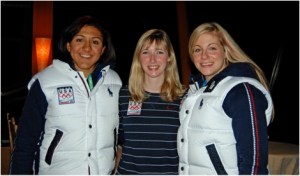
From left: Elena Meyers, Amanda Bird and Erin Pac. Photo provided by AMANDA BIRD

While reporting on passion creates a good read, one major issue for Bird in dealing with the media today comes from an athlete’s ability to share through social media.

The USBSF is known for being one of the last sports announcing its Olympic team. Explaining the long, drawn out and complicated process to “outsiders” might be worse than trying to decipher ancient Egyptian hieroglyphics.

In a single tweet an athlete can tip off a reporter without even knowing. One tweet or status change that may be as simple as a smiley face followed by “20XX Here We Come!” can trigger an irreparable Google effect.

However negative social media can be, its power can extend into other avenues of Bird’s job and actually help her sponsorships.

The reason athletes look like a walking billboard on a regular basis is due to the support they receive from sponsors. A single tweet or picture of a bobsled or skeleton athlete raving about the upgraded car rental that Budget gave them for vacation goes beyond a plug to their fans.

It can result in athletes receiving Range Rovers to drive around Europe for the entire six-month season.

Another obstacle that can be difficult to overcome are time zones. This is particularly challenging when one is trying to balance both a personal and professional life. Being awake at 2 a.m. to catch results from the first heat of a bobsled race in Cesana, Italy, doesn’t allow for sleep but Bird’s fiancé, Jason Hartman, understands.

He was the former strength and conditioning coach at the Lake Placid Olympic Training Center.

Hartman has worked closely with most of the athletes of the USBSF. He has a personal and emotional investment in these athletes as well and this enables him to realize that the stories Bird has to report on are more important than sleep.

At some point, an athlete transitions from competing as a hobby to competing as a career. This makes Bird’s career one of status and prominence. She is responsible for the visibility and livelihood of the athletes who represent the USBSF.

Many look to achieve her portfolio and have the ability to report on such stories as she does. In order to get there she believes that being able to communicate clearly and fully express a thought is more valuable than anything. Bird believes that practice makes perfect and she says no matter what you’re writing about, just write.

Every story Bird reports on she executes like a racer would: with a purpose and a passion.

Lauren W. Deane

Photo by Walsh Photography

MY STORIES:

MY BLOG:

Love is the feeling of the plastic keys underneath my warm fingertips while my eyes are rapidly scanning across the computer screen. My mind swirls with unanswered questions and ideas for my story. There is a need I have to bring justice and help to those without voices. It’s all felt in the blood, the pumping adrenaline that courses through my veins and pushes my story.

That is how I feel when writing but the process is what makes me a successful writer. In this blog I will outline my story ideas, my sources, and problems I had and how I decided my focus.

All of my story ideas, thus far, have come from experiences I have had in my life. My first story idea this semester was about the NBA lockout and its impact on American players participating and employed overseas. I was first inspired by the idea when my brother graduated in 2010 from Oregon State University after playing basketball in the PAC-10 (at that time, now it’s the PAC-12). My brother finished school and was thinking of going overseas to play professionally. We talked about all of Daniel’s options and after a while, the conversation moved to his friends currently employed oversees. He then talked about how the lockout was affecting these friends overseas. I knew that was a side to the story I had never heard and it was one I wanted to expose.

My next idea was to talk to “unspoken heroes” for our class’ enterprise story. I am a waitress and one experience I had with a customer pushed my rage and need to tell the story. Waitresses, for the most part, earn an hourly wage of $2.25 an hour. This customer came over to me and gave me a $1 tip on a $45 bill. He said he needed to “sneak me my tip” behind his wife’s back because she didn’t believe in “free rides.” This statement infuriated me, it also pushed the story.

I located my sources in many ways — mostly, out of personal experience. I knew someone, who knew someone, who knew something. Out of these interviews I could attain other names, numbers and emails. If I needed more, I would try the Internet. The sources changed depending on which story I was telling. For the NBA lockout story, I knew the two interviewees, Kellen McCoy and Daviin Davis, because we all had played basketball at Weber State University in 2008-2009. The groups of people I am currently interviewing for the enterprise story came from my work at the Eating Establishment, from a person in class who gave me a resource to interview for another point of view and from walking up and down Main Street in Park City and going into restaurants and asking for the manager.

The only moral dilemmas I found in my stories was when I was asking Davis about his pay cut and the benefits included from his playing years.

The hardest part for me in my lockout story was the focus. There was so much of the story that I wanted to tell and I couldn’t address it all. I found with others’ input and a little kick in my own ass, I could pick which point to tell and stay on it. I am finding I am having a hard time with the focus on the enterprise story as well. I believe with multiple drafts and input from family and friends I can figure out what angle to address and what focus to take.

The reason why I write is because of the process; I love it all, except the editing. Every time I write, it reminds me that I love the craft and writing, period. I definitely had epiphanies about my desired career in journalism through this class. All the assignments and stories remind me about how much I love to write and learn and how to improve my craft.  Another thing I learned is I can be an incredible writer, but I also have moments when I completely suck at writing. I learned what actions and situations create the differences of when I suck at writing and when I am in my literate flow. Usually I am absolutely awful when the television is on or I am distracted. I need complete silence and a space I can speak out loud without being self-conscious in order to perform.

ABOUT ME:

Lauren Whitney Deane was born to Patrice Marie Wahlen-Deane and Gregory Steven Deane on Aug. 29, 1989, in Salt Lake City, Utah. She lived in Salt Lake City until she finished second grade. Then her mother, father and brother, Daniel Deane, moved to Park City, Utah. She attended Judge Memorial Catholic High School until her sophomore year.  In Lauren’s junior year she transferred to Park City High School in order to be closer to her home and to attend a better academic high school.

Lauren graduated from Park City High School on June 4, 2008. During her high school years she was a tri-sport athlete. She lettered as a varsity athlete in basketball three years running. She earned multiple school, region and state awards in her three years playing basketball. Lauren also lettered four years in volleyball, three years in track and field and one year in softball.

On April 16, 2008, she signed a letter of intent to play basketball at the Division One institution Weber State University (WSU). She studied communication with an emphasis in journalism at WSU. She spent two years as a Weber State Wildcat and in 2010 transferred to play basketball in Canada while attending the University of Calgary (U of C). At the U of C she was an arts major with an interest in social media. After playing in Canada for a year, Lauren returned to Park City to finish her degree and work.

She is currently finishing her degree in communication at the University of Utah and working three jobs. She is employed as a waitress at The Eating Establishment and Fuego Bistro and as an assistant coach for the Park City High School women’s basketball team. In the future she hopes to be empolyed as a journalist or anchor for a television news network.

Chelsea Ebeling

MY STORIES:

MY BLOG:

When class first started and I heard we were going to do two stories I thought to myself, “that’s no big deal.” Then as I continued to read the syllabus I noticed some crucial information: the aforementioned stories were to be written with in-person interviews included. Whoa, whoa, whoa, wait … what?

To say I was stressed would be quite an understatement, and the stress only continued to build as the story deadlines drew closer. It wasn’t interviewing people that worried me, it was the preparation.

Before an interview you have to have an outline of what your story is going to be in order to gather questions that will back up your story. It’s that kind of preparation that about made me lose all my hair.

My enterprise story is probably my most intimidating beat to date. I’m not only writing about domestic violence, which is heavy in itself, but I’m including true stories from people who have lived through that horrific life. I definitely feel that I’m not only aiming for a good story, but I’m also obligated to those individuals to tell their story in a way that they are proud.

Luckily, Salt Lake City has a chapter of the YWCA and I was able to call a few directors there who put me in contact with the director of the Family Justice Center. She was able to lead me to sources of information about domestic abuse as well as give me some insight about what she does and about the people who seek help there.

The next few sources were the most daunting. Domestic violence awareness holds a special place in my heart, and one of the reasons for that is because I have some close friends who have experience with it. It’s always nerve wrenching when you’re involved with such a loaded topic, but thankfully my friends are really open about what happened in their past. They wanted to help spread awareness and possibly help prevent others from getting in situations like theirs by telling their stories.

I’m hoping that my story will do this topic justice because this process has taught me a lot. I’ve learned about warning signs of abuse, who’s more at risk, and where to turn for help. If just one person walks away learning something from my story that’s enough for me.

ABOUT ME:

William Ernest Henley once wrote, “I am the master of my fate: I am the captain of my soul.” This quote has always resonated with me. I’ve noticed how easy it is to fall into the status quo and do what is expected of you. I consider myself a free spirit and curiosity drives me, so doing what everyone else does just wouldn’t satisfy me. I like the idea of being in control of what I do and having something different to attend to each day. I want to experience different occupations, I want to interact with people from different backgrounds, and I certainly don’t want to miss out on anything. What can I say, I’m a people person and staying cooped up alone in an office just wouldn’t suit me. That is why communication seemed to be the perfect fit. I’m currently declared as a strategic communication major with a business minor and should graduate sometime in 2013. So bring it on world, I’m ready to experience everything this life has to offer.

Local man brings family entertainment to the Hogle Zoo and Willard Bay for the holidays

Story and photographs by CHELSEA EBELING

Clyde “Sonny” Gilbert set a strict rule for his 2011 entertainment projects: be successful.

December 2011 will mark the ninth year for Gilbert’s Fantasy at the Bay light park at Willard Bay State Park in Willard, Utah. It’s also the fourth year for Zoo Lights at Utah’s Hogle Zoo  in Salt Lake City. And for the first time, Gilbert opened an all-inclusive Halloween light park at Willard Bay in October 2011.

After having three light parks under his belt, one might say Gilbert has met his goal. But his success didn’t come without lots of dedication and hard work.

Sonny Gilbert and wife LeAnn at Fright at the Bay

Gilbert was born in Brigham City, Utah, but raised about 20 miles south of there in Ogden. He didn’t return to Brigham City until later in his life. As a teenager, Gilbert’s priorities were focused more on skipping school than actually attending classes. After high school Gilbert planned on being a barber for a career, but was set off track by painting and doing bodywork for cars, passions that he carried from his childhood into his adult life.

In 2002 Gilbert went to Branson, Mo., for vacation and visited the Port of Lights, a Christmas light park. While walking through the park he noticed how much business the lights attracted.  Custom car work hadn’t allowed Gilbert to save as much money for his retirement fund as he would have liked. Seeing all the people at the light park gave him a new idea about how he was going to acquire that money. After examining the craftsmanship of the lights he thought to himself, “I could build this stuff.”

Once Gilbert returned home, he developed plans about where he wanted to create a light park. He then hired a local artist to get ideas for the characters he would build. After everything was approved by Willard Bay, he got a second mortgage on his house in order to finance the project. It took him a year to build the lights for the park and in late November 2003 he opened Fantasy at the Bay.

Fantasy at the Bay is a Christmas-themed light park that has animated winter characters built out of lights throughout it. The park includes everything from a reindeer flight school showing the successes and failures of Santa’s reindeer-in-training to snowmen and snowwomen having snowball fights. Spectators have the option of driving through the park on car paths lined with sparkling lights and hidden speakers playing Christmas music, or taking a ride on the carriage pulled by horses.

For the convenience of customers, Fantasy at the Bay includes a heated room at the beginning of the lights where Santa is awaiting visitors and a concession stand to purchase some treats or hot cocoa.

These days families are spending less and less time together and Gilbert’s light parks are becoming tools to help bring people back together. “It’s so nice to get away from stress and escape into the fantasy and spirit of the holidays with my family,” said Debbie Bouck, a visitor of the Fantasy at the Bay.

After seeing how well the Christmas light park did, Gilbert wondered where else he could expand his talents. He had gone to the Denver Zoo in Denver, Colo., where he saw lights incorporated into the zoo. That visit influenced Gilbert to approach the Hogle Zoo in 2006 about doing something similar there during Christmas time. The zoo agreed and contracted with Gilbert stating that as long as he created animals that were currently there he was free to create his masterpieces. The first Zoo Lights premiered on Dec. 1, 2007.

Zoo Lights features more than 100 animated safari animals placed in between thousands of illuminated trees with Christmas lights strung along them. Gilbert will be allowed some creative freedom for the first time in December 2011. He’s premiering some newer animal lights this year, but is keeping what they are a secret until they are set up in the park.

Animated light display at Fright at the Bay

Also new this year was Fright at the Bay, a Halloween-themed family entertainment area at Willard Bay. Gilbert set up animated light characters depicting witches stirring pots with children in them, skeletons and other scary creatures all along the park to entertain the whole family.

“There’s something for everybody,” Gilbert said. “There’s the lights for parents to entertain their small kids while their teenagers can go be freaked out in the tent and shoot each other in laser tag.”

Speakers playing Halloween music were set up along the car paths for extra effect. A tractor-pulled hay ride that took visitors through the lights was also available. The park included concessions to quench hunger and thirst, a haunted tent, face and pumpkin paintings, haunted mazes and an area designated for laser tag.

Creating these light parks and doing what he loves makes him happy. “I never was educated, so people telling me how good I do is a motivation for me to succeed,” Gilbert said. “If you’re not happy what else is there?”

Jessica Anderson Lee

Photo by Retrospect Photography

MY STORIES:

MY BLOG:

The experience of writing a news article was a completely new concept for me. Along with originating interesting and detailed ideas, I wasn’t quite sure how to define what makes a topic appealing to others. I decided to make the task less daunting by asking myself a few simple questions. What topics interest me? What topics of conversation do students commonly talk about? And the last, can you name concepts or programs that faculty have spoken about on campus?

My first idea came out of pure luck. I practically stumbled right into it while attending a class for innovation scholars at the University of Utah. We were given the chance to tour the Marriott Library and learn about different projects it sponsors for students on campus. One in particular caught my attention. It is called the “U and You” project, which is located in the Digital Scholarship Lab and had just been introduced.

This new program is ingenious and inventive. It includes both the interests of students and staff on campus. The idea is to give students the opportunity to record their individual stories while attending the University of Utah. After the stories have been digitally recorded, they will then become transcribed into a social networking website and archived at the library for students in the years to come. It also has great potential to shape University of Utah policy and can give administrators a better idea of individuals attending the university.

This program touched on several of my questions for story ideas and definitely piqued my interest. The next step became tackling my fear of the interviewing.

Once I had contacted the appropriate students and advisors involved with the “U and You’ program, I made sure to read as much as possible regarding interviewing skills. My main concern was that the information would come up short.

But once I had completed the interviews, asking several follow-up questions, I found that it wasn’t lack of information that would be a struggle but keeping my own opinion out the article.

Once again I stumbled upon new problems I hadn’t anticipated.

I believe that with each new story journalists investigate, they face new problems and emotions that can feel unexpected. It’s been a great learning experience for me to tackle these issues as I trudge down the path to becoming a better communicator.

ABOUT ME:

Jessica Anderson, 24, is a communication student at the University of Utah in Salt Lake City, Utah. She transferred to the U in August 2011 from Salt Lake Community College and is enjoying the new experience.

She is currently involved at the University of Utah as an innovative scholar and received an internship for the 2011-2012 academic year working in the student recruitment office. As a recruitment intern she has had the opportunity to explore and learn about several different departments, majors and activities available on campus.

Jessica is an avid traveler and has recently just moved back to Utah from Washington, D.C., where she and her husband, Jon, were able to explore the East Coast and its rich diversity. In the summer of 2012, they plan to attend a study abroad program in Siena, Italy, where they will take language intensive classes.

As much as she loves getting away, Jessica loves a variety of activities that Utah has to offer: concerts in Deer Valley, the Sundance Film Festival, snowboarding in Park City and boating at Bear Lake. But she said, “Nothing beats the feel and sound of a crowd at Utah football game, GO UTES!”

Sheryl Cronin

Picture by Lynda Cronin

MY STORIES:

MY BLOG:

For my enterprise story I chose to write about The Don’t Ask Don’t Tell policy change within the U.S. Armed Forces that took place in September 2011. I have always been an avid supporter of the LGBT community and I thought that this topic was a significant event that was taking place and dear to my heart.

I interviewed three different individuals; one man who dated another man who was in the Army while the Don’t Ask Don’t Tell policy was still in effect as well as two other men who are currently on individual ready reserve with two separate branches.

I came across some interviewing issues when I realized that the men didn’t want to talk about their feelings or opinions about homosexuality… at least not the straight men I interviewed. If I had more time to find more willing interviewees, I most definitely would have.

Brian Robbins was one of the more interesting people out of my three, even though he didn’t say much. I was unaware that he might be leaning towards the homophobic side of this situation. I was able to dig a little deeper and find some quotes and real information from his experiences that I could use in my story.

I was able to use Derek Kjar’s interview the most; we had a good rapport. He was willing to tell me everything he felt and saw happen while he was in this relationship with a military man.  I think this combination of people worked well for my story. Each of them had very different sides to this story.

I would love to have been able to interview more people for an article like this. I did have a woman lined up to interview but it fell through. Women tend to be more receptive to detailed communication that would have been another perspective to add to the mix.

ABOUT ME:

Sheryl is a senior at the University of Utah studying communication and anthropology. She will be graduating this December 2012. She received her Associate of Science at the Salt Lake Community College in 2008. She has worked in retail and customer service for seven years.  She has recently acquired an internship in event planning at the Utah Kids Club. She plans on going into the event planning field after she graduates.

Sarah Minen’s massage business in Salt Lake City

Story and photos by SHERYL CRONIN

Exterior view of Sarah Minen's office.

Young entrepreneurs often do not do as well as they expected in this economy. But businesswoman Sarah Minen has made her personal career successful with a growing clientele.

She recently moved her business Sarah Minen LMT from her home into an office in downtown Salt Lake City at 24th South and 600 East. Her new office is more spacious and more professional looking for her clients.

One of Minen’s clients, Chris Nizzardini, has been seeing her for three years. He said the massage room in her house was very nice. She was able to transform the room into a professional atmosphere for massage, but he says that the new office is more like an official place of business.

Interior of new office.

Minen says she is more likely now to socialize with her clients before and after the massage because she doesn’t have her roommates there to make things awkward.

Minen, 26, grew up in a small town, Tracy, Calif., and moved to Salt Lake City in her teens. Raised by two professionally successful parents, they instilled their work ethic within her and her siblings.

Minen was always interested in the profession of massage but was discouraged by her parents because they did not feel that it was an adequate career. She ended up getting an associate degree in sociology at Dixie College in southern Utah to try to please her parents, but she still felt that she wanted to do massage.

After obtaining a school loan and a small loan from her sister, Minen was able to enroll in the Utah College of Massage Therapy in 2007. She obtained her massage license while attending school only part time for one year and graduated in 2008. She was able to pay off the loans while still in school by working in restaurants as a server to make ends meet.

While in massage school she said she was taught how to market herself. At first it was really difficult to sell herself to others. She said it has become easier for her and has been beneficial as a self-employed young adult.

In a few of her past massage jobs she has been a manager, which also contributed to the transition into managing her own business.

“I love to help people feel better,” she said. One of her most memorable clients was a woman who was suffering from daily migraines that were so severe she could not work. The woman had come to her for three sessions and the migraines had disappeared.
“I feel that I changed her life,” Minen said.

Most massage therapists have a specialty massage and every year there are conferences around the country where the therapists go to learn about new types of massage. Minen’s specialties are deep tissue and trigger point.

Deep tissue is a type of massage in which therapists use their fist or elbow that work to get to the deeper muscles. With this technique the therapist must massage very slowly to mold the muscle. This method works the muscles that are not normally reached with a regular massage.

Trigger point massage is a method that focuses on particular points on the body that the therapists lean on with their elbow. When leaned on for a long enough time the muscle will release its tension.

Trigger point and deep tissue are both really good techniques to use on athletes. Minen was thankful that those two methods were the first she learned to do because they were the most useful to her athletic clients.

Minen said Utah is a great place for massage because of the number of outdoor athletes. The mountains in the Salt Lake area bring in a lot of clientele. Many of her clients run, ski, bike, snowboard, and there are even some triathletes who see her for sports-related muscle issues.

Some of the physical effects from doing massage can be carpal tunnel and disk degeneration. Minen said that eventually she would like to have her own business with her own employees to avoid the risk of getting carpal tunnel after working with her hands for so long.

One of the greater benefits of not being employed by a salon or chiropractic clinic is the hours. She only has to work about 20 hours a week. She keeps all of the profit instead of having to give a portion of it to a company she works for. This was one of her main goals to accomplish from being self-employed.

Minen’s business looks like it will continue to grow and provide her with a fulfilling career. She’s glad she did not listen to her parents when it came to her career. “I would choose this same career if I could do it all again,” Minen said.

Rikki Allie

Photo by Frank Langheinrich

MY STORIES:

MY BLOG:
Time is a valuable resource and during my story I was shown just how much time is really needed. As I began to plan for my interview, I found that I had to navigate my own time constraints while also being extra attentive to the time of my interviewee.

Planning, recording, interpreting and putting the story into a coherent story takes an incredible amount of time management skills.

I started to map out due dates, work schedules and school schedules. Those three things did not mesh well together. Planning interviews was a little complicated; both my sources have lives of their own.

But both sources were very accommodating and helpful. Charisse Hunter was willing to go to dinner at Salt Lake City Pizza and Pasta. This made it easy because it was both a very calming and neutral setting but also the interview was not rushed because one of us had to be somewhere.

Dylan’s interview was completely different but I was grateful that he was willing to take time out of his day to sit down with me for even a few minutes. I met with him in between classes one day and since we both had to go to class right after the interview I was trying to get as much done as I could in the short amount of time I had.

This proved to be a problem. I didn’t have all the information I needed and had to clarify a few things later in the week while trying to interpret what he told me. This ended up taking more time in the end. Calling back sources and clarifying took more time than following up during the first interviews would have taken.

The main thing that I learned through this whole class is that follow up and time are the two most important things in journalism. You can never have enough time and you need to always follow up, ask question after question, even if it doesn’t seem relevant at the time. Because, if you spend more time on trying to follow up later you just waste what little time you do have to write, rewrite and polish.

ABOUT ME:

I wish I could say that I have always known what I wanted to be when I grew up.

When I was little I remember looking at my mom and saying, “I want to be a nurse.” That was the only thing I wanted to do, until I was about 10 or 11 years old. Then I started watching the emergency and trauma reality shows on television. As the images of blood and trauma flashed across the screen and my stomach turned at the sights, both my mom and I knew that nursing was definitely out of the question! I didn’t really think about my future career again until late into my junior year of high school.

During my junior year, I started to research potential careers. Facebook, Twitter and YouTube were just entering their prime, and I really enjoyed the new medium for personal professional communications. At first, like nursing, it sounded perfect, until I realized that it would be spending more time at a desk than out talking to people. I am a talker and sitting behind a desk was not what I wanted to do with the rest of my life. My mother said I should try doing public relations. Once I started to look at the opportunities and what I would be doing I knew that public relations was where I wanted to be.

I am now into my third year of classes at the University of Utah and will be finishing in December 2012 with a BA in mass communication and a minor in economics. I have great support and encouragement from my mother and my father, both graduates of the U.

I am only 20 years old and have a lot of time on my hands. I love the idea of travel. I can’t wait until I am done with school so I can go see the world. After enjoying some “me time,” I look forward to a long and happy career in a public relations role, ideally as part of the entertainment industry.

Charisse Hunter: ‘My dream is to live in the sky, not on land’

Story and photo by RIKKI ALLIE

Charisse Hunter next to a single engine plane.

Charisse Hunter is a 27-year-old woman from West Valley, Utah, who describes herself as a prospective pilot. In a recent interview, she discussed her seemingly unconventional path to becoming a pilot.

Her journey to becoming a pilot did not necessarily emerge on her own accord. “I was a bad child and my parents sent me to flight school for at-risk teens when I was 15 years old,” Hunter said.

“I didn’t want to fly,” she said.

During her time at the William “Bill” Campbell Chapter of the San Francisco Bay area Tuskegee Airmen, Inc. flight school, Hunter learned basic flight skills and was able to experience flight for the first time. World War II veterans mentored and guided troubled teens by sharing their own stories of breaking through the color barrier in order to earn respect and be considered pilots.

While at the flight school Hunter’s eyes were opened to the possibilities available to her as a potential pilot and so began her love for flying.

Due to airline requirements Hunter could not start off flying planes. She started out at Pinnacle Aviation Academy in San Diego, Calif. She was dispatcher for the flight scheduling and helped with the international flight students. “I helped them through their courses and got them scheduled for flight hours,” Hunter said.

In the male dominated career of flying, Hunter felt like that the majority of men she was dealing with did not agree that she could handle being a pilot.

“It didn’t matter what I was trying to do. It seems like every instructor that I was dealing with didn’t agree with me being inside the plane,” Hunter said.

She took private lessons while living out in California.

Hunter received her private pilot license in 2002 once she had 120 hours of flying. She could fly single-engine planes over land. She is not yet rated to fly over the ocean.

Between 2002-2005, Hunter was able to get 370 hours of flying time and received her commercial piloting license for multi-engine planes.

She also earned a rating license for instrument planes after completing about 100 hours of flying time. That means she can navigate both single- and multi-engine planes using the instruments, rather than having to rely on visual references to the ground or sky.

In 2006, while working at becoming a pilot in California, Hunter met Franklin Lewis, a member of the U.S. Navy. She said she couldn’t help falling for him. He was sweet, funny, and he had the uniform.

“I have a thing for a guy in a uniform, what can I say. I couldn’t resist,” Hunter said, jokingly.

Lewis moved to Utah when he was offered a job at the University of Utah. Hunter stayed behind in California.

“The long distance thing just was not working out,” Hunter said. “I would fly out in a private plane every few weeks but it was expensive, $2,000, one way.”

After two and a half years, Hunter moved to Utah to be with Lewis. They have been together for five years and are planning a wedding in October 2012.

Hunter is now attending Utah Valley University and anticipates completing her bachelor’s degree in aviation science in 2013. By then, many commercial pilots who learned to fly during the Vietnam War will have reached 65, the mandatory retirement age, which will create a higher demand for pilots.

Her long-range plans include working at a regional airline for three to five years. She then wants to work for Southwest Airlines  for 10 to 15 years. Finally, she hopes to work as a pilot for FedEx, which pays $180,000 per year.

However, recently Hunter experienced a temporary setback. A plane operator in Huntington Beach, Calif., had been using her radio operation license. She hopes to resolve this problem soon so she can apply to American Eagle, a regional carrier for American Airlines, or SkyWest Airlines.

Hunter said she isn’t able to fly as often as she would like. But she is hoping to take to the sky with an old friend, Dylan Whitmore. He just moved from California to go to school at Westminster College for a degree in aviation management.

“Chae (Charisse) is a strong headed woman and a great pilot,” Whitmore said. “I keep telling her I want to go flying with her but, she is always so busy. Hopefully, I can finally get up in the sky with her again.”

NBA lockout has complicated playing opportunities for WSU alumnus Daviin Davis

Kellen McCoy playing in 2010 for Sweden.

Story by LAUREN DEANE
Photos provided by KELLEN McCOY and DAVIIN DAVIS

The NBA’s 2011 lockout has forced former Weber State University (WSU) basketball star Daviin Davis to consider alternate playing options in overseas competition.

“The lockout has had a huge impact on American players overseas,” said Kellen McCoy, a 2009 WSU graduate who is now coaching at Emporia State University in Kansas.

“My friend D-Will (Daviin Davis) is still overseas playing, he is having a really hard time finding a job even though he just got off a great season,” McCoy said in a telephone interview. McCoy used to play for Boras Baskets in Sweden’s first league in 2010-2011.

According to Eurobasket.com, Davis had an impressive season playing for Finland last year. He averaged 11.7 points and 4.4 rebounds per game. On top of that, he was awarded a starting position in five season games and came off the bench with significant minutes in all the other matchups. Even after being so successful in the 2009-2010 season, he is still facing the dilemma of not getting signed overseas this season.

The overseas season started in mid-October 2011. “It was the end of September and I wasn’t getting any offers to play [overseas],” Davis said in a Skype interview. “Most teams do all the signing weeks before the season begins so they can start practicing and molding the team. The teams from the division I was in last year had no interest in me.”

Davis said because of the lack of interest shown in him, he had to attend multiple tryouts for different teams all over Europe. Some of them were in better divisions — overseas play is grouped similar to the NCAA’s three separate divisions — and some were not. Although he was sending out game tapes, no one had an interest in hiring him. So he went to Latvia in hopes of getting signed. He was finally signed by Valmiera in Latvia.

The reason why Americans playing overseas are being impacted so much by the NBA lockout is because there are set rules for each team and division. Each team is only allowed to sign two American players per season for its squad. Also, contracts for Americans are written for one year only. This is to ensure the two players signed are the absolute best competitors the team can commit to that season.

Davis said the main players from the NBA who are signing contracts oversees right now are “the bench riders,” or practice players. Practice players are participants on the team who do not play a key role during games against their opponents. They generally don’t get very much, if any, playing time. However, they are vital to any team because they make the key players better and are ready to play in case of an unexpected injury. Another key role they play is to practice as an element of the scout team — players pretend to be their opponents during practice to make sure the key players get repetition defending their opposition and attacking their future opponent’s weaknesses.

The teams and NBA players will agree to sign year-long contracts overseas. The coaches abroad are using this year with the ex-NBA players to enhance the skill of their local and long-term athletes. “People get better by practicing and competing against an opponent that is at a higher skill level than they are,” McCoy said. “The coaches in Europe will be using the lockout to benefit their program.”

Daviin Davis shows his skill while playing for Finland.

The advantage to the NBA players signing overseas is they can stay in shape to get back on an NBA team when play returns. McCoy said these two reasons are why both the overseas teams and ex-NBA players are benefiting from the lockout.

According to ESPN.com, 63 confirmed contracts had been signed between European teams and last year’s NBA players as of Oct. 26. “These bench riders are impacting the availability for jobs in Europe and are making a lot of athletes unemployed,” Davis said.

Davis went to more then a dozen tryouts this year in an attempt to get signed abroad. “Unfortunately, no one else [would] sign me, so I had to take a contract with Latvia this year.”

Latvia is in a lower division, has less talent and will provide him with less money and benefits than he had last season. Davis said it is the “worst” team he has competed for since starting his professional career in 2009-2010. Even though the team isn’t as good, he said he still felt “relieved and blessed” that Latvia decided to sign him on Oct. 4, 2011.

McCoy said his friends in the NBA have told him the negotiations between the players and owners are still at a standstill.

“The owners are on first base and the players are on third. There is no way they are going to come to any kind of conclusion soon,” McCoy said. “This will cause the bigger and better players to sign overseas as well [as the bench riders] and will completely change the overseas dynamic.”

Davis has played four games this season with the Latvian team, Valmiera. He came off the bench with significant minutes in the first two games and earned a starting position in the last two. Overall, Davis has averaged 27.5 minutes, 6.75 points, 3.5 rebounds and one block.

“I am looking forward to another great year no matter what team I am with. I will use this year to get better and improve the weak points in my game,” Davis said. “I am glad to finally be on a team, but I can’t wait for the lockout to end so my friends can get jobs overseas again and I can play on the teams I am talented enough to compete for.”

Carly Szemerey

Photo by Lifetouch

MY STORIES:

MY BLOG:

When I enrolled for this class I couldn’t wait. When I learned about the slice-of-life profile that we were going to be working on this semester, I was very excited!  When I learned that we had to interview people that we didn’t know, well, let’s just say I wasn’t as excited.

Don’t get me wrong — I love meeting new people, talking to them and learning new things but deciding whom to interview and how to contact them were the questions that popped into my mind and would not leave.

After pondering story ideas and interviews, I decided that the only way to get over this mental block was to just jump right in and start my fieldwork, so that is exactly what I did. Luckily it was the perfect solution.

As I started interviewing my sources and focusing on my profile story about a breast cancer awareness game put on by an individual who was a high school senior at the time, I began to become quite fascinated with the whole process. I was becoming comfortable with the contacting and interviewing processes and after a while I couldn’t wait to contact more sources whom would benefit the readers of this article.

While interviewing the source who organized the game I became impacted by what this man had to say. He was such a selfless person that just wanted to help a cause. I left the interview that day wanting to be more helpful toward the people around me. Safe to say this was not in the realm of things that I thought I would be leaving this interview with but I’m so glad I did.

This story was a lot of fun to report on. I had a great time and was able to figure out some things about my own life thanks to this article. I now know that I love reporting and news writing. I also learned that there is so much out there to learn and I know I can’t learn it all, but I wouldn’t mind trying.

ABOUT ME:

I am a sophomore at the University of Utah and plan to graduate in 2014. I am double majoring in mass communication and exercise and sport science. Even though these two majors don’t seem to complement each other all that well, they are both passions of mine.

I am one of those people who loves to be involved and meet new people. I want to try as many things as I can in life which is why I am currently on the route that I am in school. Both of these majors offer me completely different perspectives and experiences that I can’t choose just one to pursue.

Traveling is my No. 1 favorite thing to do. I am an avid traveler and have taken many vacations in my day. Learning about different cultures and people’s way of living is so fascinating to me, so after graduation I plan to take some time and move to Ireland for a couple of months. Following this I will travel around Europe and visit as many places as I possibly can.

My family and friends mean the world to me and I can’t begin to thank them enough for supporting me through my endeavors. They have helped me through so much and I couldn’t be luckier to have them in my life.