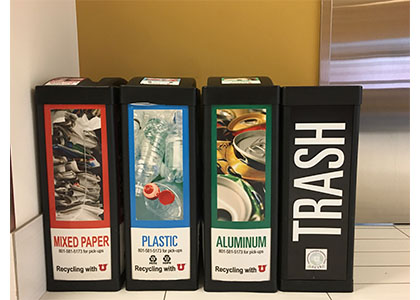
It’s time to rethink recycling

Story and photo gallery by NATALIE FREEZE

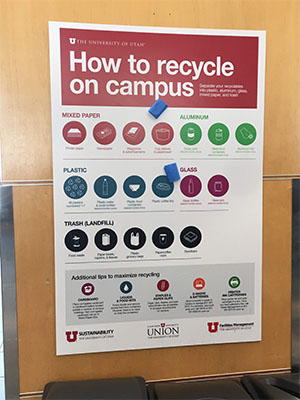
Did you know that the United States is the No. 1 trash-producing country in the world? While the U.S. accounts for only 5 percent of the global population, we are producing 40 percent of the world’s waste. I may not be a math major, but that just does not add up. Garbage is a global issue, and recycling has often been praised as the universal solution, but today we need to rethink how we recycle.

In the 1970s, a new push for green movements through government-backed initiatives raised public awareness and engagement through conservation efforts. In other words, recycling became a household mission. Earth Day was also first recognized on April 22, 1970. When recycling was a new and foreign concept, officials were desperate to get people to change their behavior and get into the habit of recycling. That was almost fifty years ago. Now, in 2019, it’s time to rethink how we recycle and raise the bar.

Since China has raised its recycling standards, we need to raise and match our recycling habits to continue to make a difference. In July 2017, China declared that it no longer wants to be the recipient of other countries garbage. The waste trade boosts economies of poor countries, but as China has grown in population and wealth, they no longer want to be held responsible for garbage duty. The declaration went into effect in January 2018, but before that China had been taking almost half of the United States recyclables.

Since last January, China has stopped accepting dozens of recyclable materials, like plastic and mixed paper, unless they meet strict rules around quality and contamination. Incoming recycling must be clean and perfectly sorted, a standard that is near impossible to meet.

In reaction to these new policies, the University of Utah has had to scale back recycling programs on campus. Joshua James, the waste management and recycling program manager here at the U said, “Now we are stuck at a point where we can only recycle plastics 1 and 2, and on top of that, it needs to be clean.” Many college students don’t understand these changes or what “clean” means, making these requirements extremely difficult to meet.

Recycling is not a lost cause, but we do need to make some essential changes to what we recycle. Aspiration recycling, also known as “wish cycling”, is no longer acceptable. This is when you are not actually sure if your coffee cup or pizza box is recyclable, but you toss it in the blue bin anyways because you care about the planet. James said, “It’s a feel-good thing, but if you put the wrong thing in there it ruins it for everyone.”

Aspirational recycling actually wastes more resources than simply sending it straight to a landfill. The energy consumed taking the trash to a facility, sorting it out as non-recyclable, and then sending it a landfill is wasteful and unnecessary. It can also damage the quality of other recyclable items that it touched, condemning those items to live in a landfill as well. Simply put, when in doubt throw it out.

Quality over quantity is key as recycling is becoming even more relevant for Salt Lake City. Once the Salt Lake Valley Landfill is full, that’s it, so it is increasingly urgent to filter what is necessary to be sent to the landfill. “The majority of our landfill is paper, which ironically is also the most recyclable material,” said Ashlee Yoder, the sustainability manager with Salt Lake County. “Not if, but when this landfill is capped off we will have to start sending our waste to other counties.”

So now what?

Sorting waste into the correct bin, whether it’s compostable, recyclable or just plain trash, is essential to combat excessive waste. But ultimately, it comes down to reducing our consumption. James said, “Stop depending on recycling. Reduce, reuse, recycle is in that order for a reason; recycling is the last resort after you have reduced and reused.”

Buying less is probably the easiest way to live a greener, more sustainable lifestyle. Resist the urge to buy trendy clothes and shoes that won’t ever be worn. Stop taking a giant stack of napkins when you only need one. Invest in metal straws and reusable bags and glass containers for leftovers. Both James and Yoder emphasized the need to take responsibility for our trash and consciously think about the choices we are making.

Sophie Morton, a sophomore at the U studying environmental sustainability, adds that every little bit matters. “Some people say that refusing one straw doesn’t make a difference, but if a hundred people or a thousand people start to make little changes we will start to see serious change.”
Mental Health Help for College Students

Story by ISABELLA BUOSCIO

Anxiety and depression are not uncommon mental disorders. However, some college students do not have the tools or are not comfortable dealing with these disorders. According to a report by the American Psychological Association <https://www.apa.org/monitor/2017/09/numbers>, “61 percent of college students seeking counseling report anxiety, while 49 percent report depression.”

While anxiety and depression are prevalent in the student population, there is still a negative stigma around going to therapy to get help. With the rise of social media, it seems others have perfect lives and are happy always. Apps like Instagram and Snapchat are only snapshots of the best moments of someone’s life. The viewer is not seeing what is going on behind the scenes.

It’s hard to admit you need help. Whether its fear of confronting the issue, fear of being judged by the therapist or society, or fear of diagnosis there always is an excuse for not going to therapy. There is nothing wrong with needing help to deal with complex emotions. Therapy can be a beneficial thing for everyone, especially college students.

In a phone interview, Annmarie Flock, a licensed Summit County therapist, says during her sessions she tries to meet the patient “where they are at without judgment.”

“I try helping them find the words to define what is wrong,” she says, “then address how they can get through the immediate crisis and help them build the tools to deal with it over time.”

She suggests ways of coping such as medication, meditation, physical activity, changing behavior patterns, breathing exercises, finding a support system, mantras, living in the present, having a plan for when things are really dark and, most important, making an agreement to not hurt self or others.

“It’s natural to roll through dark periods, sometimes things work, and you grow out of them, some things work in different situations. The goal of therapy is to give the patient the tools to be able to safely handle the situation on their own,” Flock says.

Zoe Baukman, a first-year student, came to the University of Utah while being in a harmful relationship with her previous significant other. She said, “The situation developed negatively enough that my mental health was affected.” The stress of dealing with the person while trying to adjust to starting college was too much for her to handle.

Baukman continued, “I was in a really dark place for the first couple months of school. I had a difficult time making friends because I was so busy talking to this person, the emotional stress got too much for me and I felt trapped.” It was when Baukman started missing classes and assignments that she decided to seek guidance. Her mom could tell she was struggling and scheduled an appointment with a local therapist.

She was scared to go because she didn’t feel comfortable opening up to a stranger. Baukman confessed, “I was shaking as I walked into my appointment.” When she sat down with the trained mental health professional, she realized how toxic her situation was. She remembers crying the entire first session due to finally accepting she needed help. “I knew I needed help in the back of my mind, but I didn’t know how to get it,” she confessed.

However, therapy isn’t only for people dealing with previous trauma. Addi Poddska, a second-year student, goes to therapy to have someone to talk to. “Talking to someone who doesn’t know me in my social circles is nice because I don’t have to worry about judgment from my peers.” “I am not the type to cry but I usually end up crying in my sessions, it feels good,” Poddska joked.

Poddska goes to therapy to talk about pressure with friendships, struggles with her family and anxiety about getting into medical school. She admitted, “I go once a month to let myself accept my fears and doubts. It’s like a cleanse, I feel more focused after I go.”

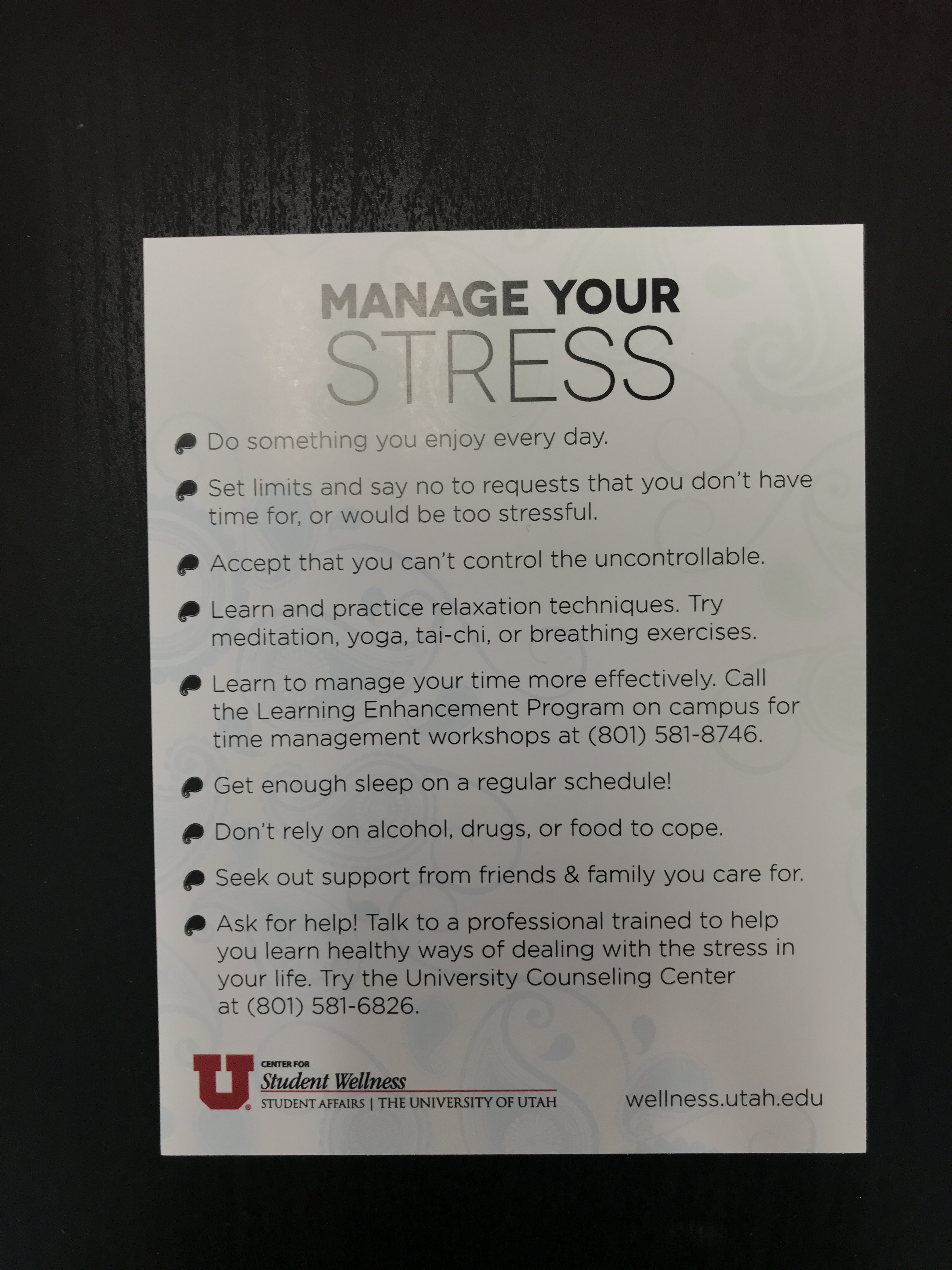
For those not wanting to pay for expensive therapy, the University of Utah offers a University Counseling Center. According to the center’s mission statement < https://counselingcenter.utah.edu/>, “We provide developmental, preventive, and therapeutic services and programs that promote the intellectual, emotional, cultural, and social development of University of Utah students.” The center provides individual counseling, group counseling, couple’s counseling, psychiatric medication services, a mindfulness center, and crisis services.

As for price, the website states, “The first counseling session (“intake appointment”) is free as you and your intake counselor consider the fit between your goals and the Center’s services.” From there, individual counseling, medication, and management cost $12 a session, group counseling and workshops costs $5 a session, and couples counseling costs $30 a session.

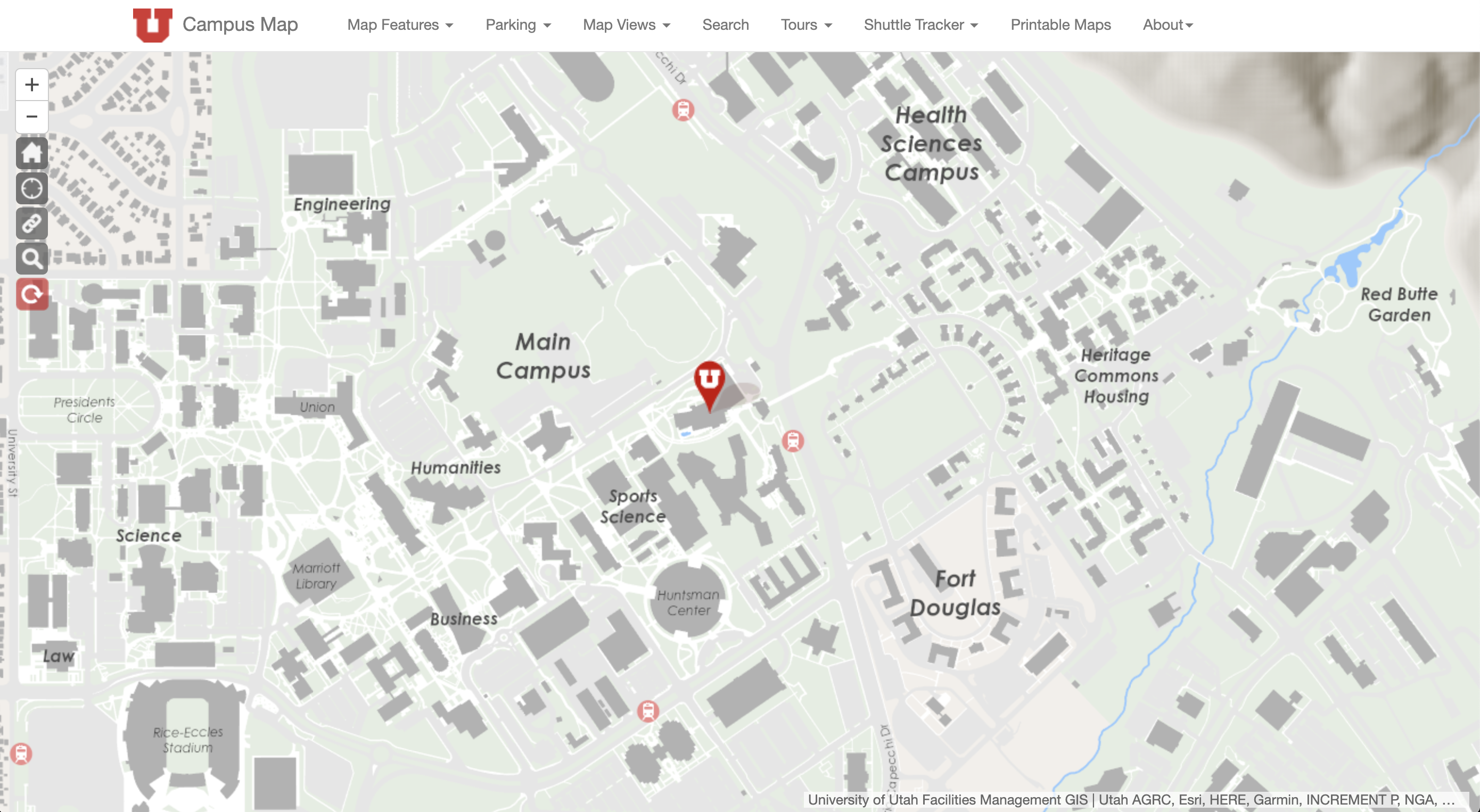
All the sessions are treated confidentially. As the website says, “The fact that you are receiving counseling services, as well as the specific content of your UCC counseling, assessment, or psychiatric record(s), is confidential.” To get started, you can schedule an intake by calling 801-581-6826 or by going to the center in Room 426 of the Student Services Building.

Screen Shot 2019-04-22 at 11.55.10 AM

Campus map showing where the Student Service building is located.

This is a video featured on the University of Utah Counseling Center’s homepage. It explains what a student can expect for the first appointment with the center!
<https://counselingcenter.utah.edu/>

Reflections on the film industry in Utah

by Ryan Michaud

While developing this story, I had to think about what it was that I truly wanted to write about.  A few different things came to mind. The one I settled on is a feature story about the film industry in Utah. Now that I had developed the idea, it was time to get some information. I was fortunate enough to know someone who works in Park City T.V. He allowed me to interview him about Sundance Film Festival. After this interview I got in contact with another individual who works in building movie sets in Utah. This gave me another view on the film industry some of the down sides to it. Once I had a decent bit of information, I realized how little I actually understood about this topic.  Having one person tell me one thing and another with a completely different view on the same topic. Having multiple sources helps eliminate the bias. I have learned a lot about news writing while working in this piece. Before this I have never done writing in this form, with a background in creative writing it has been a drastic change in writing styles. It was hard to adapt, constantly checking the AP style guide to double check all if the rules, and even now I still find myself struggling. Something that surprised me while working on this was how big the film industry in Utah really was, from movie stars at Sundance, to hiring students as extras in movies. The amount of money that goes into the making theses films is incredible, they pay their employees handsomely but it comes with a cost. Long shifts and living in hotels for weeks at a time during final days of production. The film industry is incredible, its amazing the extent we go to for the enjoyment we receive while watching screens at home.

Comics create common ground in Salt Lake City

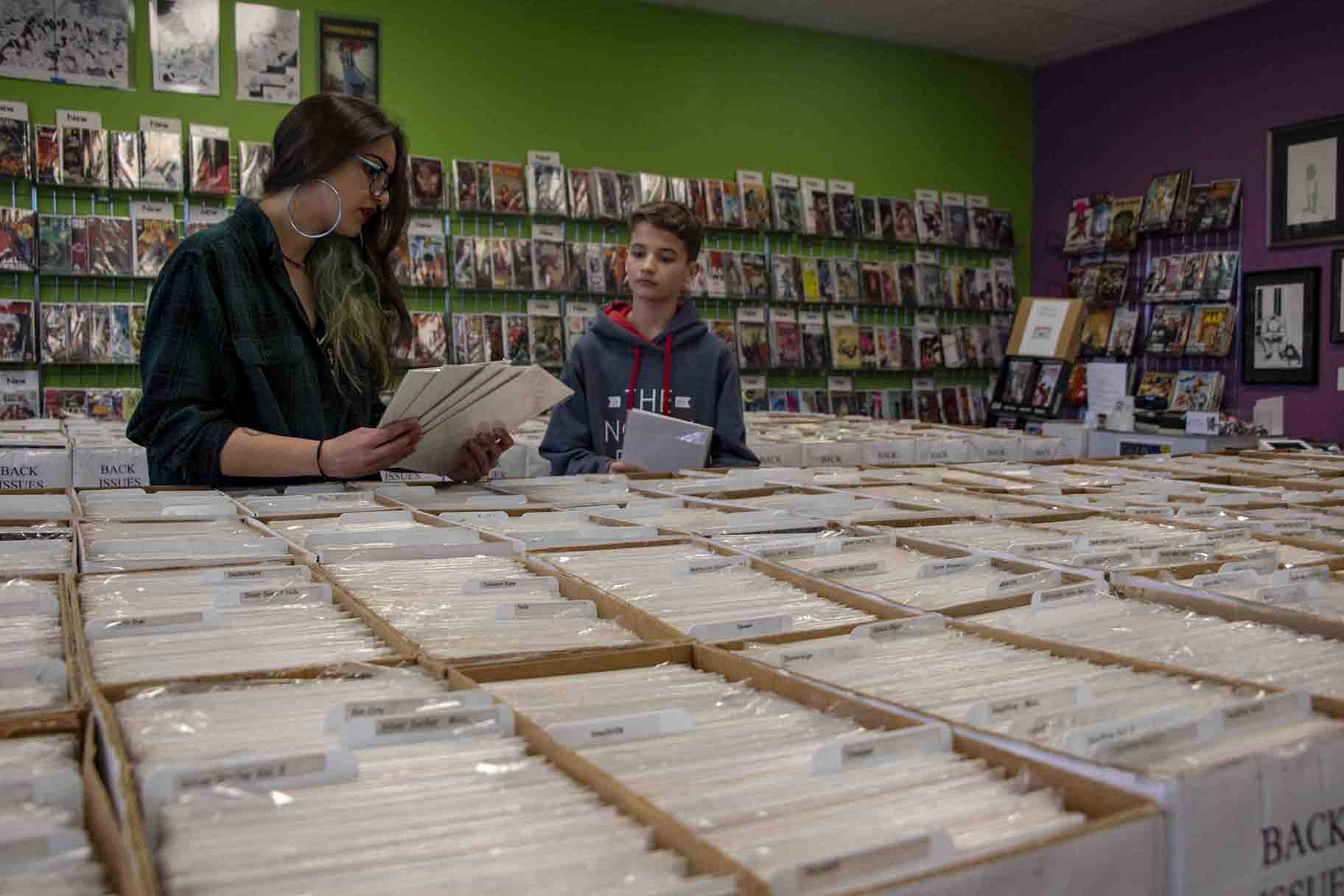
Story and photo gallery by GREG HOUSE

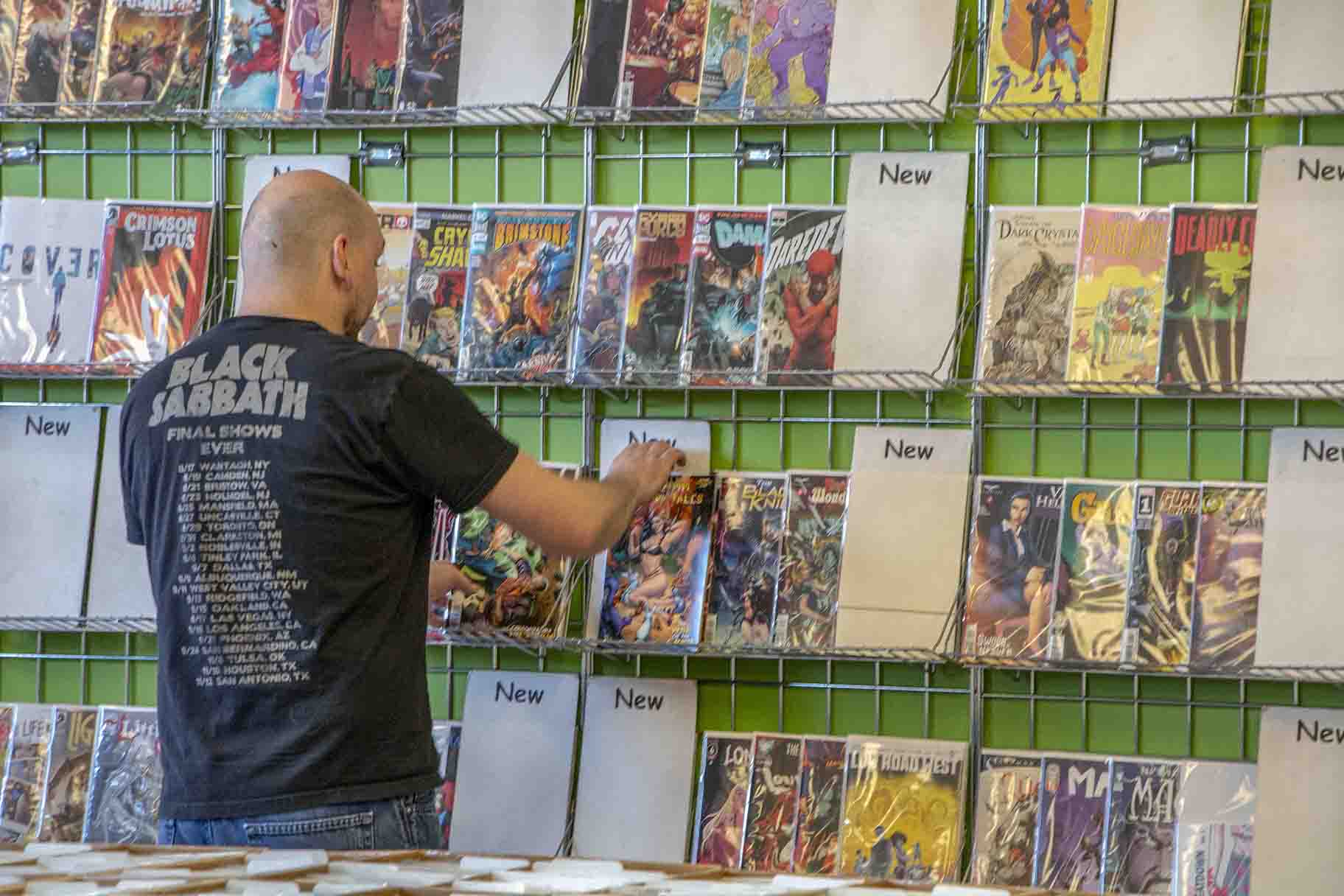
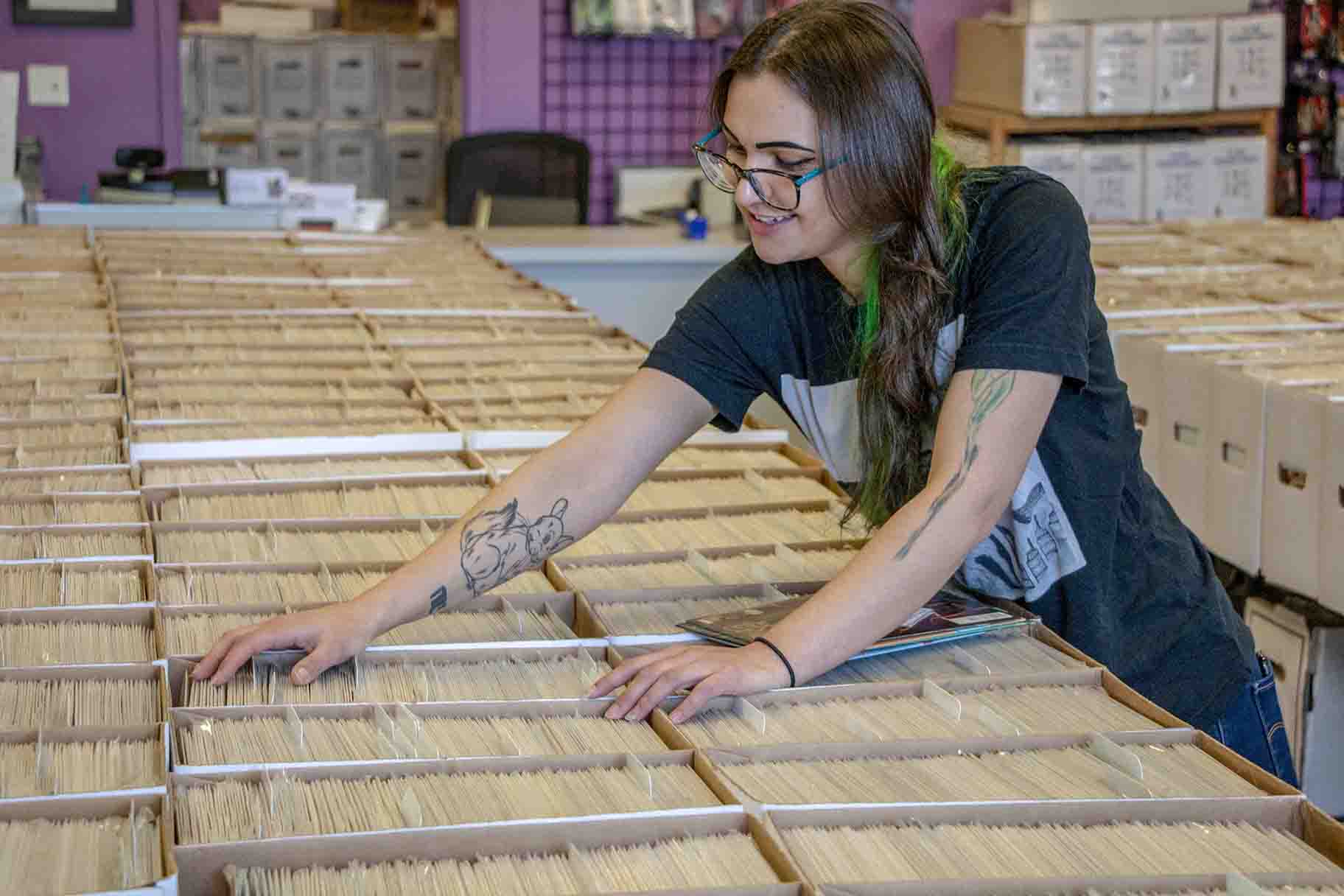
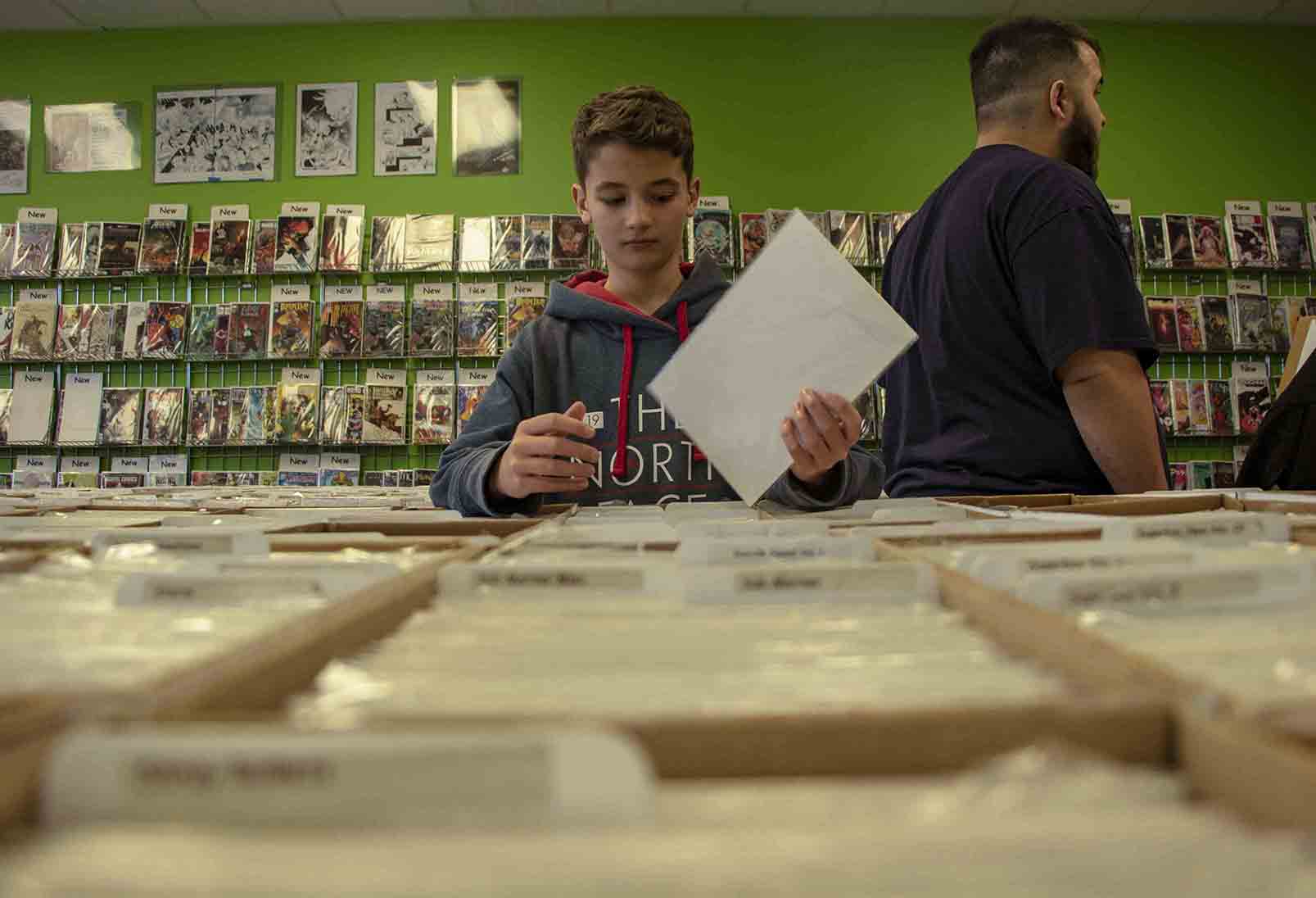
It’s Wednesday and for those in the know, that means new editions of their favorite comic books are hitting the shelves at Black Cat Comics, located at 2261 Highland Drive in Salt Lake City.

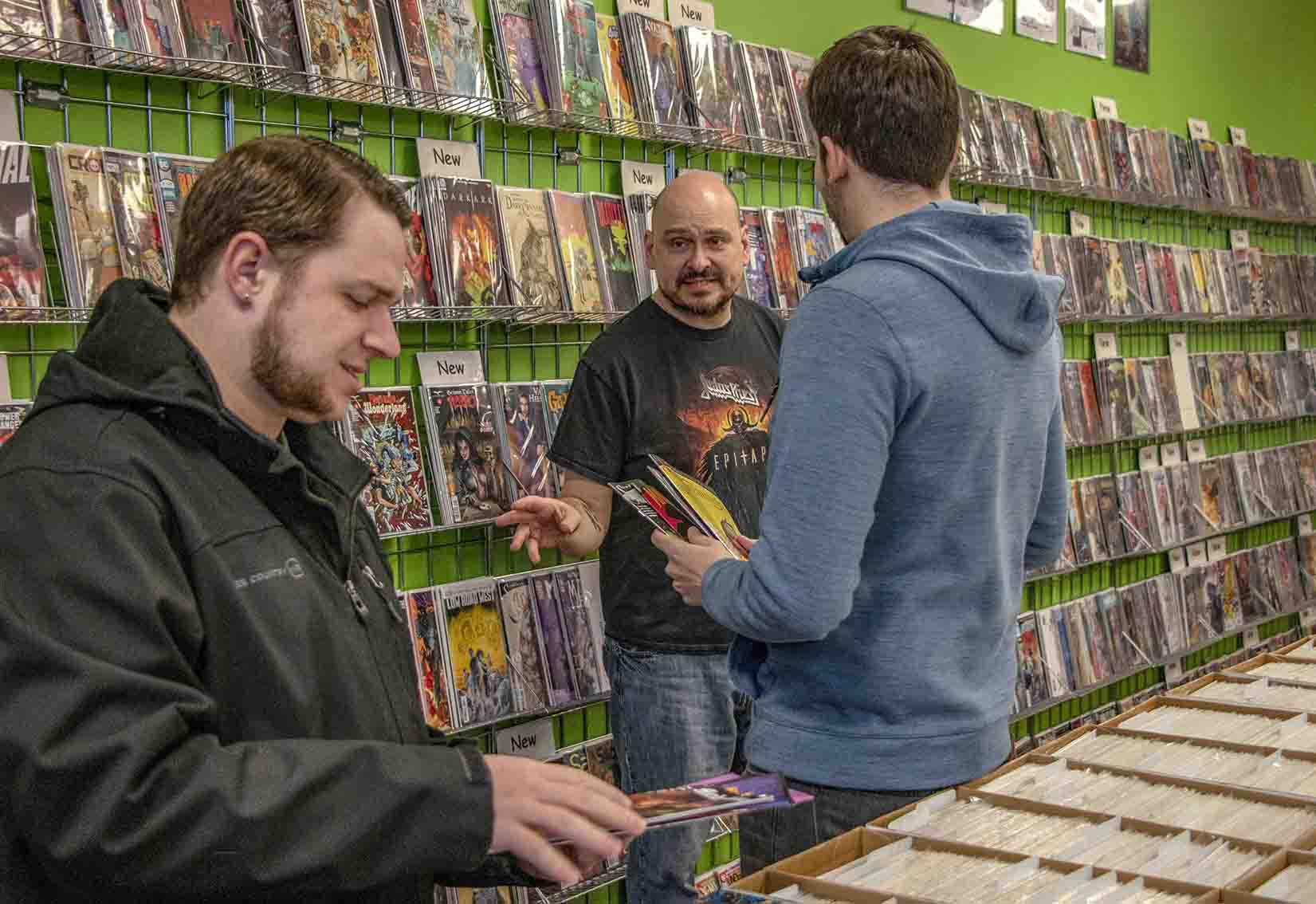
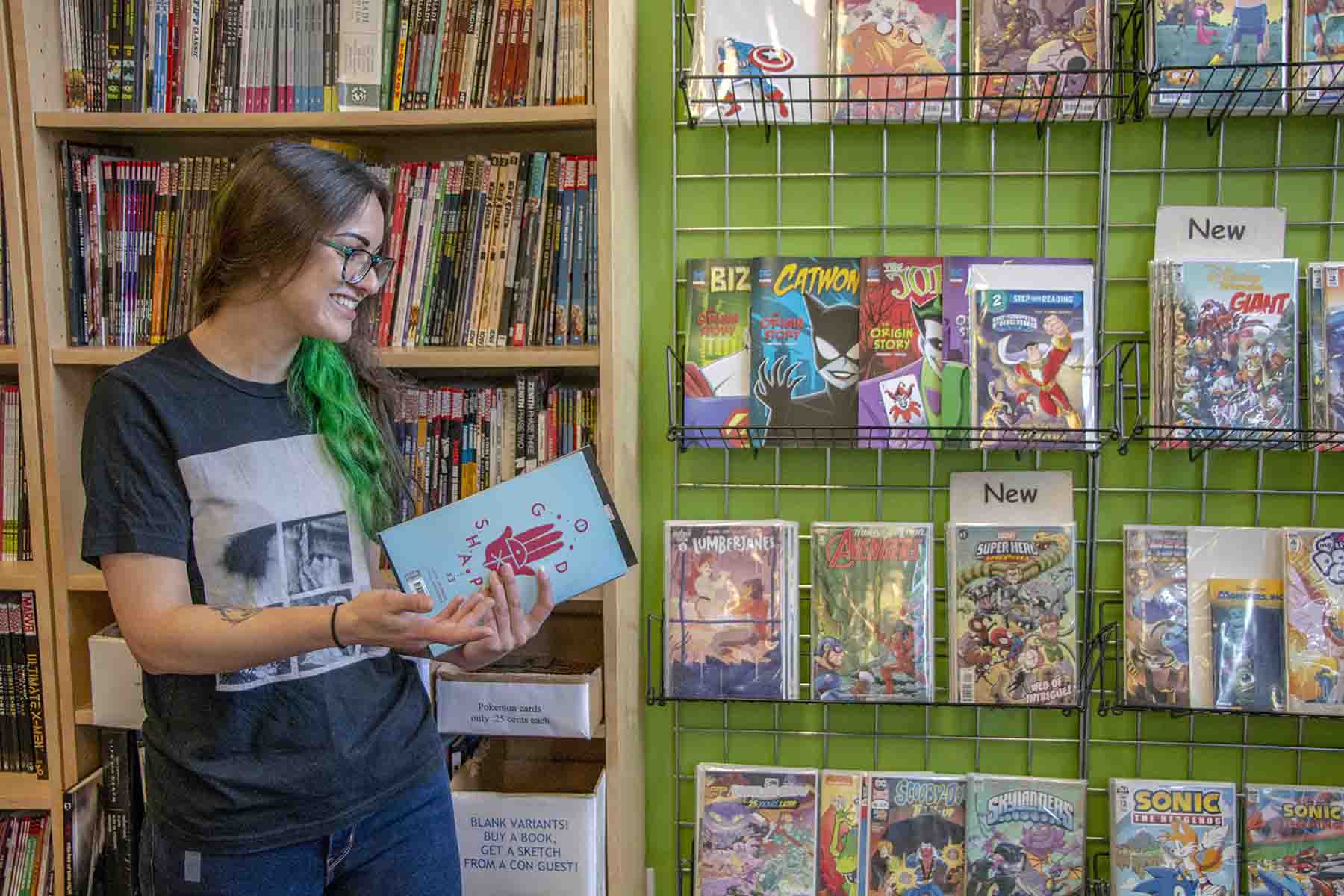
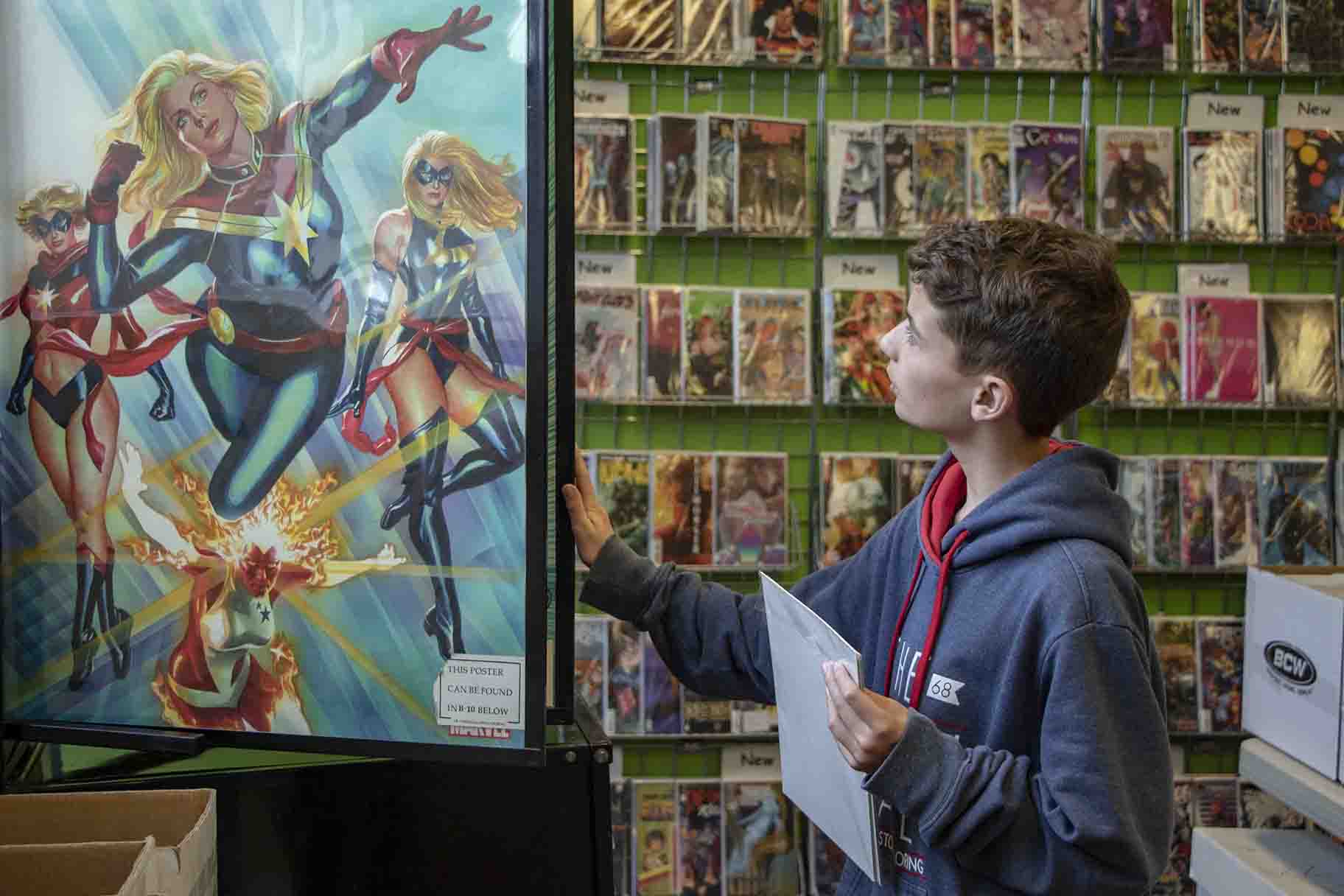
The walls of Black Cat Comics are brightly colored, seeming to come from the comics that line its shelves. Customers walk in and out throughout the day and Greg Gage — the man behind the operation — greets many of them by name, often with a prearranged stack of new arrivals set aside for the customer to purchase.

Gage grew up reading comic books, but gradually stopped as he got older.

“I kind of got back into them on a whim,” he said. “I picked up a couple of books I used to read and was like ‘God, this is cool,’ and after that, it was over.”

Gage reintroduced himself to comics as a young adult and he saw that the stories being told were not just the shallow, fun superhero romps he remembers from his childhood.

“There’s some real, honest-to-God literature in here,” he said. “It’s not just people jumping around like idiots punching people. There’s more to this than I thought.”

When he decided to open his own comic book store in 2004, he knew that creating a welcoming environment for his customers and hiring employees who understood that were both key ingredients for this business, which celebrated 15 years in business in May 2019.

With such a wide selection to choose from, there are many reasons why fans like Kyle Jackson keep reading comic books.

“I like reading a lot of different titles that show characters who are something to aspire to,” he said. “Not that I think I can learn to have superpowers, but the people underneath the masks are what is great to me.”

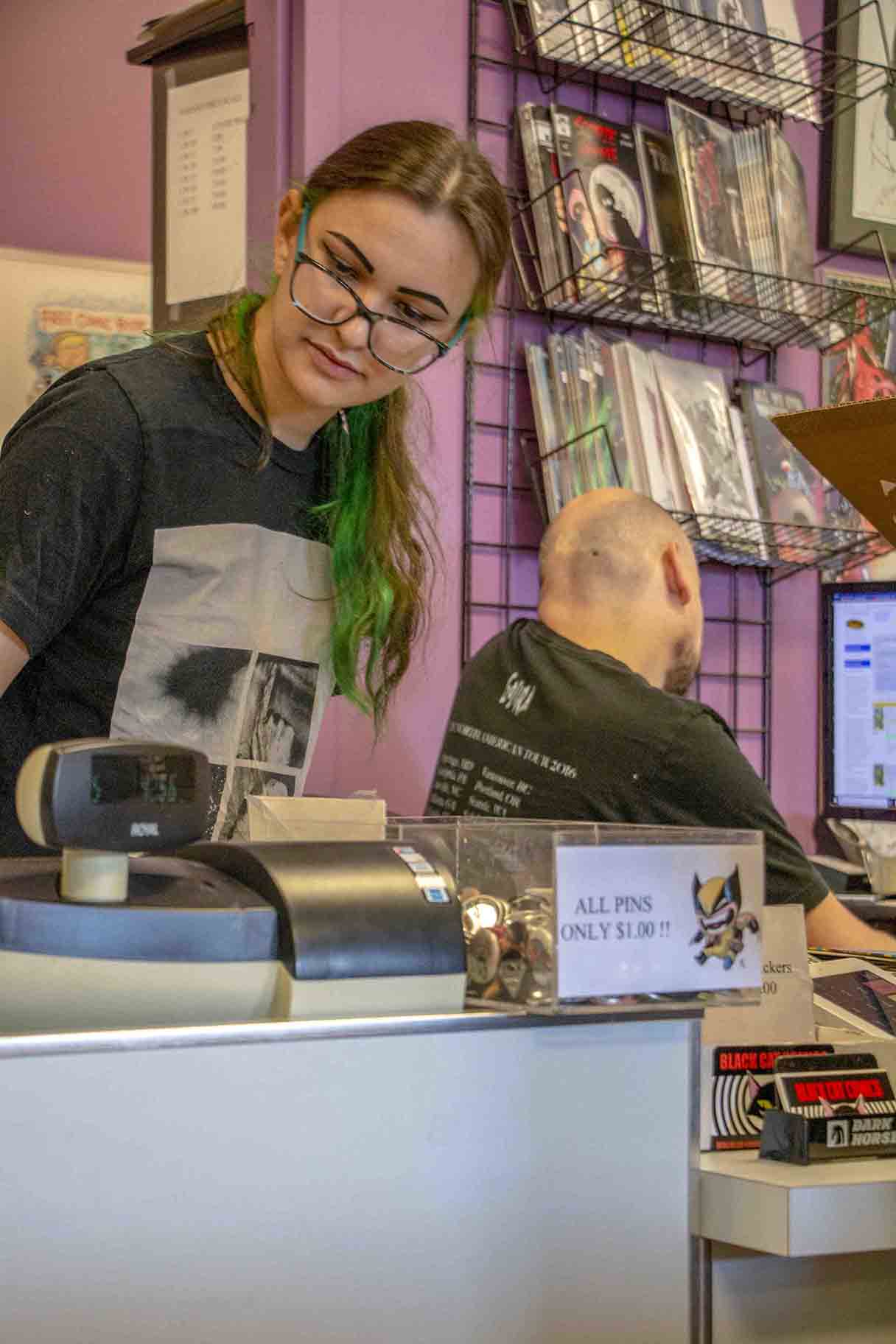
Taylor Hoffman used to shop at a different comic book store. But, after feeling like her reading choices were being judged by some of the employees, she started shopping at Black Cat Comics. She said she found the sense of community she was looking for.

“I immediately felt so much better, like I had a place to go,” she said. “After I graduated college, I kept coming by until Greg hired me and started paying me to stick around and talk about comics.”

As an employee at Black Cat Comics for more than five years, Hoffman tries to make sure that even younger readers feel like equal members of the community.

“I just love picking out things for little kids,” she said. “Especially younger girls because I wish I had that when I was a kid.”

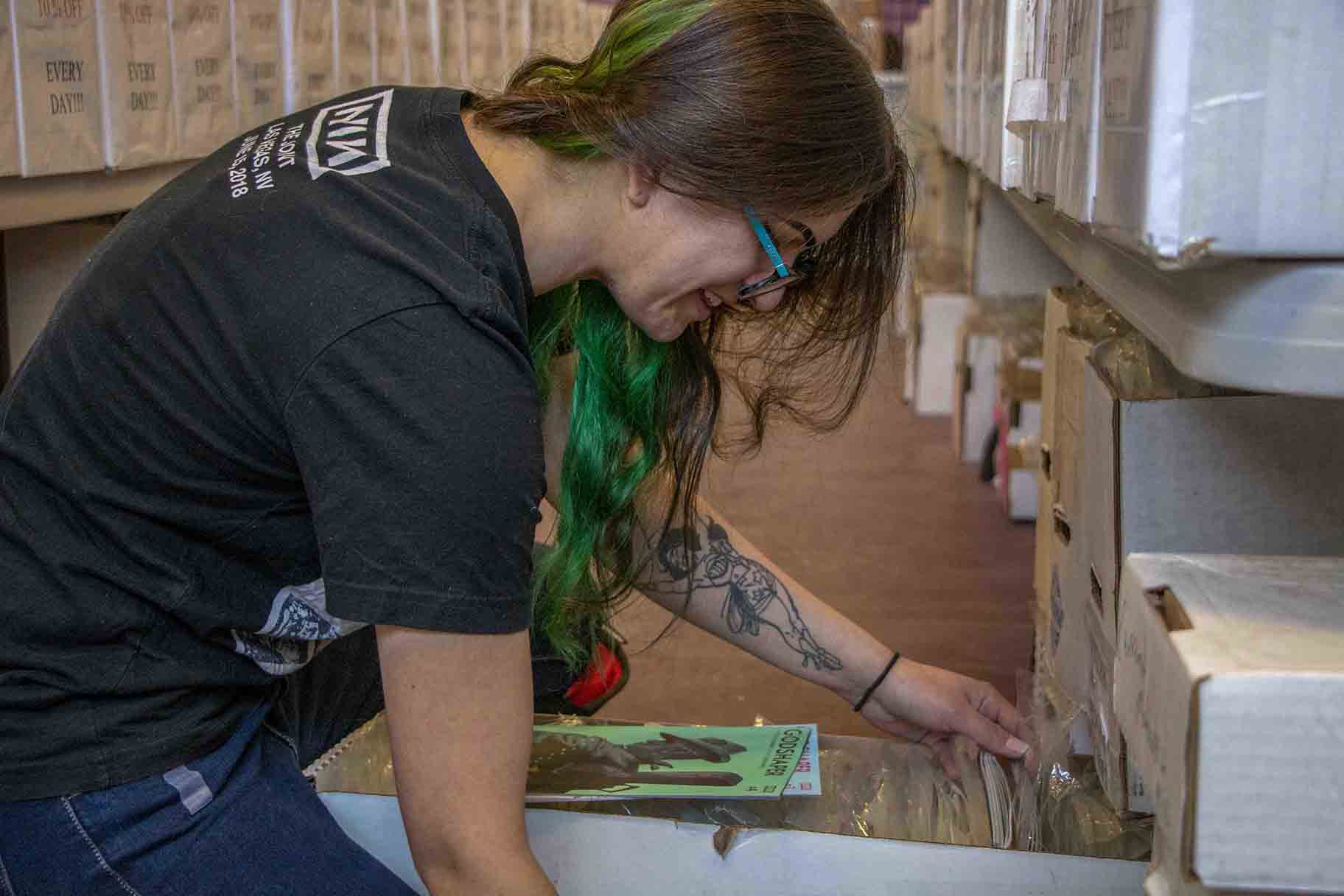
Over the years, Hoffman has seen some of the store’s regular customers come in with their newborn babies and as those babies grow up she starts to recommend comics for them as well as their parents.

The all-ages section of Black Cat Comics is home to books featuring characters from Saturday morning cartoons as well as child-friendly versions of heroes who might otherwise be considered too violent.

“This is my baby,” she said, motioning to the all-ages section of the store. “I try to read all of these so I know how to talk to the kids who come in.”

It isn’t hard to see why a child would enjoy a weekly trip to the comic book store and Hoffman thinks comics can be an educational tool for them as well.

“Comics are such a great medium for younger kids to get into the habit of reading because there’s the picture books without as many words and then they graduate into [books with] more speech bubbles,” she said.

However, comic books are not just a children’s medium any more. A wide variety of heroes means there is a character for everyone, especially with the bigger publishers like Marvel Comics, who are pushing for more diversity in their mainstream lineup of characters.

Whether it is a young woman of color taking over the mantel of Ironman, now Ironheart, or a revelation that the X-Men team member known as Iceman has come out of the closet as a gay man, diversity plays an increasingly important role in today’s comic book landscape.

Sina Grace, who wrote the now concluded Iceman series for Marvel said on a public Instagram story post about writing inclusive stories, “To my knowledge, no publisher puts something out simply cuz it’s LGBTQ friendly,” he wrote. “Even Iceman, the reasoning was: there’s a story to be told about a man dealing with a secret he’s kept for 10+ years, not THAT he’s gay.”

When Gage first opened his store, he wanted to create a place where everyone can feel welcomed, regardless of their identity or background.

“Inclusivity makes more people feel more welcome in this space,” Gage said, “and that’s what I want, both from a business standpoint and a community standpoint.”

Samira Ibrahim

MY STORY:

All you need to know about Utah men’s basketball player Donnie Tillman

MY BLOG:

I have always been a fan of watching sports and attending games since I was a little kid. My love for sports has just continued to develop as I grew older, and has formed a special place in my heart. When I decided that I wanted to major in communication, my direct interest for an emphasis was in journalism — sports writing to be exact. I read as much of the textbooks, even watched and took notes on many well known commentators for the NBA and NFL.

Screenshot 2019-04-17 09.52.25

It was Colin Kaepernick’s story that had inspired me to write a biography on an athlete. With all the commotion going on with him protesting by kneeling for the national anthem, it truly has brought much focused attention on sports entertainment. What I found to be a beautiful intriguing message was the Nike campaign that was made for Kaepernick. The campaign was made to give a brief understanding to the general public of his situation and background. It allowed for them to understand why he was doing what he was doing, and brought insight to the valuable player. And that is what inspired me to write about a student athlete in order for the audience to understand his background better to become more engaged.  

Thankfully we live in a generation where it has become more accessible to communicate and reach out to individuals rather than the past. I used the best source which is the social media platform to reach out to Donnie Tillman and ask if he would like to be interviewed for this story. Tillman so kindly agreed to work with me and set aside some time, despite the fact that he was busy with March Madness approaching. We took the time to meet on a Saturday and Sunday afternoon to be able to conduct an interview to write this story. Tilman brought his teammates to join in for the interview to help out with the process.

Fortunately, I got lucky with an easy interview process and even shared many laughs with the guys. They are great devoted individuals who inspire me with their aspirations. It was easy for me to “make sense” of all the information I had gathered from Tillman, as he and I related on many things in life. We both were raised in lower-economic neighborhoods that challenged us with many adversities. This interview allowed us to be grateful for how far we have come in life and how far we will go.

The process of conducting a story and constructing it to be suitable for the UNews writing page was a bit overwhelming for me at first. But once I just set aside all of the judgments, anxiety, and fear of doing this, I was completely comfortable in my skin. Once I realized how much I enjoyed this and the subject of the matter, it then became easy for me to be motivated to write this story. What had surprised me thoroughly in conducting this story was how much I had felt at ease doing it. I thought this would be a tedious and hard assignment, but it indefinitely ended up being one of my favorites in my college career.

ABOUT ME:

My name is Samira Ibrahim. I was born in Jeddah, Saudi Arabia, but came to America to get receive an education and build a career. I’ve lived in Los Angeles, but went to high school in Utah in the city of Saratoga Springs. My hobbies include dancing, working out, and going on lovely hikes. I have been a dancer since middle school, and am self-taught but have been a part of clubs, organizations and teams. I am a communication major with an emphasis in strategic communication. I have a twin sister who comes to school with me here at the University of Utah. I plan to graduate in the Spring of 2020.

Salwa Ibrahim

MY STORY:

Our campus, your safety, their services

MY BLOG:

As of lately, safety on campus has become one of the main topics here at the University of Utah. Being a university enrolling over 30,000 students and faculty, campus can feel a bit overwhelming at times. It is unfortunate that within my four years studying here, tragic events have occurred on campus. I wanted to research and write about our safety resources that we have on campus that ensure our well-being and feeling safe at all times. I had the opportunity to interview an on-campus police officer who provided me with all the information we need about safety. It was amazing how willing the officer was to answer any questions I had and he directed me to all the resources that we have access to. I was surprised and learned so much from him about all the help and tips the department provides to maintain a safe environment.

I interviewed in-person which allowed me to feel what the officer was saying rather than a phone call, this benefited my writing. I was able to craft more expression because of how passionate he is doing his job. We should all feel safe at all times, especially while we are all together in this learning environment. I was surprised to learn that all security are on-call all hours of the day, every day throughout the year. There are many resources on campus that can range from 24/7 safety escort security, rape advocates, mindfulness and covered therapy. We are lucky to have amazing resources, and I hope my article helps and informs you about our resources well.

ABOUT ME:

Salwa Ibrahim is currently a senior attending the University of Utah. She is earning a bachelor of arts degree in Communication. As a student, she enrolled in CoOMM 1610- Intro to News Writing and gained first-hand experience in news writing and research. Salwa enjoys drawing, music, and the outdoors in her free time.

Emma Johnson

MY STORY:

Traumatizing aftermath of active school shooter drills

MY BLOG:

For as long as I can remember I’ve always had a special connection to news. I grew up in a home where local and national happenings were a common topic of conversation. In the 6th grade I participated in a program called “Biztown,” a program created for students to help familiarize themselves with the professional workforce. In preparation we had to fill out a questionnaire explaining what we liked doing, our strengths, weaknesses etc.

At the age of 12 most of my friends wanted to be professional dancers, accountants like their fathers or interior designers, all I wanted to do was talk about the news. I finally made the connection that that I could make news my career and I’ve been working at it even since.

My mother always said “If you have a job you love you never work a day in your life.” I love being a journalist, its something I am passionate about and something that challenges me everyday. In Intro to News Writing this semester I was challenged by coming up with sources and topic ideas. I was able to improve my gathering skills and work on mastering my idea focus.

I was able to strengthen my overall writing and story developing this semester. Learning and developing skills that helped me come up with story ideas eased the stress of the class. Discovering some useful sties and places to go for ideas is a skill I have developed that will greatly help me throughout my journalistic career.

ABOUT ME:

University of Utah communication and journalism student graduating in May. Working as an assignment desk editor at ABC4 News Utah. Lover of news writing. Dedicated news junkie. After graduation, I plan on staying at ABC4 and working toward my goal of becoming a multimedia journalist.

Berklee Hammond

MY STORY:

Intermountain Healthcare announces groundbreaking policy that removes pharmaceutical representatives and medication samples from Utah practices and hospitals

MY BLOG:

I developed my story idea from a close family member who has been affected by Intermountain Healthcare prohibiting samples and representatives. This story intrigued me because these changes could affect this family member’s livelihood. Every year since these changes, people in the pharmaceutical industry have been getting laid off because of Intermountain’s new policies. 

I located my sources by networking with contacts in the pharmaceutical industry. They then referred me to Intermountain Healthcare’s specific contacts. I reviewed websites, as well as documents that were distributed to the pharmaceutical industry.

My sources were knowledgeable and affected by the changes. They all had firsthand knowledge of the timeline and reasons for the new policies. The Intermountain Healthcare contacts were involved in creating the policies and materials that were distributed to representatives during the time of the announcement.

Researching and gathering information for this story was more difficult than I anticipated. Many sources were careful with their words and opinions regarding their feelings about the new policy. Several declined to comment because they were afraid they might receive backlash from their individual company as well as Intermountain. I was able to work around this because they referred me to an official statement about the changes from Intermountain Healthcare.

The document released by Intermountain Healthcare called “Removal of Pharmaceutical Representatives and Medication Samples from Intermountain Clinics” helped me decide my focus. There were so many angles that I could take with the overall topic with the changes in the last 10 years regarding Big Pharma guidelines. There were changes happening around the time of my story and that is how I decided my focus. I wanted my story to be news-worthy and time relevant. 

The writing process was overwhelming at first. I made an outline and thought through my process and this helped it become manageable. I thought I would be more intimidated to speak to my sources, but I developed my questions and the interviews came naturally. I felt like I asked insightful questions.

It surprised me learning about the amount of work that the doctors are going to have to put in because of this policy change. I know how much training my family member had to go through so they were able to educate physicians on certain drugs. Intermountain is the largest healthcare provider in the state and this change is going to affect a lot of people.

ABOUT ME:

A goal should scare you a little, and excite you a lot. — Joe Vitale

I have set many goals in life, some are scary and all are exciting. However, obtaining my degree in Communication and a career in marketing and public relations is on the top of my list.

I am a junior at the University of Utah working toward my degree in Strategic Communication. I have been adding important and useful skills and knowledge to my arsenal in preparation for “real life” upon graduation.

I have enjoyed my time at the U as a student and collegiate cheerleader. I love traveling and visiting different stadiums during football season. My experience has also been growing through knowledge gained in various internship opportunities.

When I’m not on campus I enjoy spending time with my dog Stormie, going to the gym, reading, traveling and anything outdoors. 

Allison Corey

MY STORY:

It’s On Us and rape culture on college campuses

MY BLOG:

When I started writing my story, I was unsure where exactly to go with it because rape is such a broad topic. After interviewing Christina Bargelt, however, the story practically wrote itself. Bargelt gave me thoughtful answers to questions that were personal, and borderline intrusive. Bargelt’s complete transparency is one of many reasons that I have the utmost respect for her. After Bargelt gave me so much information about It’s On Us and sexual abuse, I was easily able to find new people to interview and I knew exactly what I wanted to write about.

I primarily found my sources through the Greek community. Each of my sources is involved in different aspects of Greek life. Bargelt is in my sorority, Kappa Kappa Gamma, Ty Monroe in Phi Delta Theta, and Paul Eicker in Sigma Nu. Eicker was a friend of mine before this process, but I did not know Bargelt or Monroe very well. The way I found Monroe may not have been the most typical when finding interviewees. I was walking through my dorm when I saw his fraternity flag hanging on his door, so I took a chance and asked him questions. These were the best sources for my article because they are involved in the two main things that I talked about: Greek life and It’s On Us.

I focused mainly on the aspects that I find to be most important: Informing people of their options and the differences in treatment of male and female survivors. I wish I could have gone more in depth about Bargelt’s assault and the aftermath because her story is so empowering.

I did face a moral dilemma while writing the story. Eicker was apprehensive to give his name for my piece because he was scared to share his story. I told him that I would not include anything he was not comfortable with, and I am thankful that he gave me permission to share his story. Even though he claims that he no longer cares about anonymity, I still felt that I was doing wrong by including his name.

Initially, writing a story in which I had free rein to talk about anything I wanted was daunting. Once I began writing and interviewing, however, my mindset completely changed. My passion for Bargelt’s cause grew tenfold, and I thoroughly enjoyed writing this piece. I’m thankful to have inspiring women like Bargelt in my life, and I hope one day I can be somebody who others look up to as well.

ABOUT ME:

I grew up in Long Beach, California, where I was spoiled with warm weather year-round, a 15-minute commute to some of the most beautiful beaches in the world, and a two-hour drive to Big Bear Mountain. In 2018, I graduated from Los Alamitos High School, a public school of roughly 3,200 students that is on the border of Long Beach and Los Alamitos.

Growing up, I lived in a very sports-oriented household, specifically baseball. My father played baseball at California State University, Long Beach, and helped bring his team to the College World Series in 1989. Shortly after, he met my mother in a co-ed slo pitch softball league. My parents’ passion for sports kindled my love for them as well. From the ages of 5 to 17, I played softball, soccer, basketball, lacrosse, and flag football.

I am now a freshman studying communication at the University of Utah in hopes of becoming a force to be reckoned with within the sports journalism and broadcasting field. Ever since I was a child and found out that I could not become a Major League Baseball player, I’ve been enamored with the idea of working, rather than playing, for the MLB.

The brief time I have spent at the U has given me everything I could have asked for and more. The leap of faith I took in moving out of a home that I have always lived in, and moving to a new state with completely different weather, sights, and opportunities. Knowing that I live among some of the most incredible national parks in the nation has been a sobering experience, and I cannot wait to see what these next three years have in store for me.


Caroline J. Pastorius


MY STORY:

Better safe than sorry: What to know before setting out

MY BLOG:

It was a long process of trial and error before I came to my final enterprise story topic. I wanted to write about something I was unfamiliar with, and something that had a lot of substance. Something that would guarantee a variety of sources, especially ones that could provide me with personal experiences. I settled on avalanche safety, since it is a relatable topic that significantly affects people in our area and also something I don’t know much about. In the end, I aimed to provide my audience with the most important points to remember for outdoor enthusiasts to assure safety.

To get a better grasp on this topic, I scoped out local outdoor recreation companies and asked if anyone was willing to answer questions revolving around outdoor recreation safety. To my surprise, I found the most fitting interviewees for my enterprise story. I made sure to ask questions in my interview that were based on what has personally worked for them to avoid accidents on the mountain. With the information I collected, I created a story made up of what I think were the most useful tips and tricks that I learned from them. Although all of this new information was overwhelming at times, I think I successfully honed in on the most important things to remember.

ABOUT ME:

There is nothing quite as rewarding as playing a significant role in your community.

I had this mindset instilled in me as a child. I’ve always had a passion to benefit my community in any possible way, and from a young age I had a strong attraction and desire to be an active member of any organization I was a part of.

This mindset has stuck with me throughout my childhood and into adulthood. From it, I’ve learned great communication skills and developed prominent character and confidence in myself. I’ve also learned that practice makes perfect, which is why I continue to work on these skills at the University of Utah. I am a second-year student, studying Communication, Political Science, and Entrepreneurship. Although I love each of these subjects for different reasons, they’re all similar in the fact that they each function as a predominant facet of our community.

In a world where any ordinary person can make a significant impact on the community in which they reside with a little motivation and encouragement, I want to persuade them to understand the importance of doing so by being an example.


Lauren Hinkley

MY STORY:

Salt Lake City’s juicing scene is on the rise

MY BLOG:

Holistic health and nutrition have been interests of mine for as long as I have been buying and cooking my own food. I believe that food is fuel and I have always made an effort to stay educated and well-informed so that I am able to power my body the most efficient and healthy way possible. I love cold-pressed juice and have experienced the benefits of it first-hand over the past year that I have worked at Pulp Lifestyle Kitchen, a local health food eatery that also produces and sells cold-pressed juice.

This story was an opportunity for me to further my knowledge on the craft, and also explore a niche of Salt Lake City that sincerely interests me. The goal of this story is to put these companies and others like them on the radar and show people what Salt Lake City has to offer in terms of wholesome local businesses.

I reached out to the owners of three local juiceries around Salt Lake to get together and talk about their businesses and all things juice. I got to chat, eat, drink and really take in the whole experience of each store. The conversations flowed more naturally than I ever expected. I knew I was going to have a difficult time not being able to include it all in my story. Narrowing down the information was by far the hardest part.

My experience at each store was also completely unique and I didn’t want to compare them to each other. Transitioning between each place in my story was challenging because I wanted to do it without mentioning them in terms of one being better than the other.

Telling this story improved my writing and interviewing skills and also furthered my knowledge of cold-pressed juicing. I hope that my reflection on my experiences with these local businesses will enlighten readers as well.

ABOUT ME:

From the time I first started exploring and learning about marketing and advertising, I knew it would be the perfect career path for me. Marketing involves creative, visual, and social methods to communicate and persuade a population to buy or support a product or action. As someone who thinks and operates both logically and creatively, marketing engages and excites both sides of my brain, allowing me to utilize all of my strengths.

I believe the best marketing is done by people who feel a personal connection to the mission and identity of their company. Some things I am passionate about include sustainability, nutrition, and holistic living. I hope that one day I will work for a company that promotes similar values and interests to mine. I also strive to conduct marketing practices that are organic, sincere, and beneficial to my community and the clientele that it reaches.

I have gained experience in marketing through several internships in social media and public relations. Most of the work I do is digital content creation whether that be graphics, photography for social media, or blog posts. I pride myself on always creating visually stimulating, persuasive, and engaging content.

I am a lover of people, art and humanity. I always see the glass as half full and believe that a positive attitude can open infinite doors for a person, both professionally and in their own self-discovery. I strive to live a peaceful, healthy, and fulfilling life and I find my purpose in helping others do the same.

Natalie Freeze

MY STORY:

MY BLOG:

When considering topics for my enterprise story, I was inspired by Grist, a non-profit news organization that devotes time and attention to covering environmental policies and explaining complicated issues. I love watching their videos and reading their daily newsletter. This is where I got a lot of my foundational information to craft my story.

I chose to write about the revised recycling standards because it is something so relevant and important, yet I didn’t see many articles written about it. Once I had completed some background research about the recycling issues in the United States, I turned to my interview sources. This helped me narrow my focus from a national issue to a state issue and finally to a campus concern.

I also knew that I wanted to get a student perspective as well as professional opinions. For my influential interviews, I talked to Ashlee Yoder who works directly with the sustainability department of the Salt Lake Valley Landfill. She was a great resource because every day she sees the consequences of not recycling. I hadn’t thought about this before, but those who work with the landfill are some of the biggest advocates for proper recycling.

Josh James was also a great contact because he oversees recycling on campus. He gave me great insight into what the University of Utah is currently doing to improve the waste management system on campus and how China’s restrictions have impacted it’s policies and procedures.

I also interviewed a student studying environmental sustainability at the U. Sophie Morton was helpful because we were able to talk about what challenges we see with recycling on campus. A student’s perspective was important because they are the ones who are making daily decisions about recycling and she was also able to direct me to some great articles about this topic.

A challenge for me was coordinating the landfill tour because it took communicating weeks in advance about dates and times that could work and then finding a friend who was willing to drive us there as I do not have access to a car. Overcoming these challenges was well worth it in the end, and seeing the Salt Lake Valley Landfill in person was so interesting and different from what I expected. I was surprised that it did not smell bad at all!

Finally, after researching about recycling and interviewing my three sources, I was ready to write. I wanted to keep it as clear and simple as possible, so that anyone reading my story could understand the issue, why it matters, and what they can do to make a difference. Keeping this framework in mind, I made sure that I concluded my story with action steps and optimism.

ABOUT ME:

Growing up, I had this strange dream of being a pharmacist. But only if I could work at Walgreens. It all began in the back seat of a mini-van, waiting in the drive-thru lane of Walgreens picking up a prescription with my mom. The line was taking forever, and my mom was not satisfied with their speed of service. She was frustrated that there was only one pharmacist working. So naturally, I decided right then and there to become a pharmacist. But not just any pharmacist, a Walgreens pharmacist.

Thirteen years later, and sorry mom, but I don’t think that is the plan anymore. After graduating from Lone Peak High School in Highland, Utah; I chose to further my education by joining the Honors College at the University of Utah. Freshmen year, I had no idea what I wanted to spend the next four years of my life studying, but I knew that I had a passion for humanities. From world geography to art history, I wanted to focus on human interactions and connections.

After taking a major exploration course last fall, I discovered my passion for the field of communication. I am currently finishing my sophomore year here at the U, and I am looking forward to studying abroad this summer in Patagonia, Argentina. I am planning to graduate in the spring of 2021 with a major in Health Science Environment and Risk Communication and the Ecology and Legacy Integrated minor. I hope to either continue my education in grad school or start a career working with a nonprofit or some sort of social marketing agency.

Nic Nielsen

MY STORY:

Students turn to piracy in face of high textbook prices

MY BLOG:

I will admit that I had a difficult time when tasked with coming up with a story idea. It wasn’t until I saw a student pull up a PDF of his textbook in class that I realized I wanted to write on the trend of pirating textbooks. I instantly began doing research on textbooks and was shocked to see just how much new textbook prices have increased in the last decade. I knew this was something students would care about, so I began to ask around campus at the University of Utah.

I interviewed a handful of students, but the topic was sensitive. After all, downloading PDFs of copyrighted textbooks is illegal, so no one would want to go on record saying they’ve actually done it. When I met Olivia Gonzales in the campus library, she was very open about how her friends and even previous teachers have been pirating textbooks. While she wouldn’t give any names, I knew this was going to be the best on-record source about the popularity of the trend.

I came across Thomas Young on a UTA TRAX Red Line train and was instantly intrigued by the stack of textbooks in his hands. He allowed me to interview him, and he provided an interesting point of view on the subject of my story. I was surprised to learn that, although he was unhappy about the price increase, he still preferred to have a physical copy. Because his views differed from everyone else that I interviewed, I knew he was an important source for my story.

Shane Girton was also a fantastic source due to his knowledge of textbooks and his position at the U’s campus store. He provided great information on the process of selling books back to the store, something I originally wanted to discuss in my story, but I decided not to include it because it took away from the focus of pirating textbooks. 

The biggest surprise for me was learning from Girton that publishers set the prices of textbooks at the bookstore. Many of the students I interviewed were under the impression that the bookstore chose the prices, as was I, so this information felt important to share.

Once I had the statistics and quotes that I planned to use, putting the story together was easy. Doing the research first was extremely helpful because if I didn’t know about the textbook price increase or the statistics about students choosing to not purchase textbooks, the quality of my interviews would not have been as high. Through writing this story I learned a lot, and I hope readers will too.

ABOUT ME:

Nic Nielsen is a communication major at the University of Utah following a strategic communication sequence. He is expecting to graduate in December 2019 and plans to pursue a career in marketing and advertising. Currently, he works as a marketing consultant and as a marketing intern for Intermountain Healthcare. In the future, he hopes to help small businesses grow by creating marketing strategies and working with them to build stronger social media presences. Ultimately, his goal is to start his own business by opening a restaurant in Southern California.

In his spare time, Nic works as an actor, something he has been passionate about his whole life. He has worked on local productions, commercials for companies such as Amazon Audible and Klymit, shows such as Disney’s “Andi Mack,” and the A24 horror film “Hereditary.” Along with acting, Nic also enjoys screenwriting and has written a 10-episode season for a half-hour comedy that he hopes to get produced. His other hobbies include surfing, hiking, running, and anything else that keeps him on his feet and moving. Due to his love for the ocean, he actively promotes ocean conservation and is a member of the Surfrider Foundation. 

Jenna S. O’Dell

MY STORY:

Tayler Lacey talks new EP and journey to being a musician

MY BLOG:

Live performances has always been my favorite way to listen to music. The combination of musicians’ energy, multiple musicians and instruments playing together and stage lighting, creates something so magical and captivating. Because I go to so many concerts, I’ve considered writing a music blog about my experiences. 

I’ve known Tayler Lacey for over a year. I’ve been to many of his shows and we’ve had many discussions about different ways for him to promote his music. When presented with this project I thought this would be a great way for me to get started on music writing and reviews and for him to get some exposure. 

Initially I was afraid that I wouldn’t have been able to complete this story. At the time he wasn’t performing as frequently as I had remembered. Fortunately there was one performance just a few days before the first deadline.

Lacey was a lot of fun to interview. Seeing Tayler perform was the first time I’ve been to an acoustic show in a few years. He was super eager to meet with me and talk to me about his new EP. He was happy to share information with me and was detailed about his songwriting process and story.

ABOUT ME:

I am a University of Utah junior studying Strategic Communication. I’m originally from a small town in Connecticut where I received my Associate of Arts in Marketing and Sales from Northwestern Connecticut Community College. 

I’ve been involved in the performing arts since I was 4 years old, studying dance, music and theater and I had an internship opportunity working in the marketing department of The Warner Theatre in Torrington, Connecticut. With the performing arts being a big part of my life, I was inspired to work toward a career in the music industry.

Pamela Smith

MY STORY:

New marketing strategies help a local business grow

MY BLOG:

Coming up with an idea for an enterprise story ideas was difficult. I had to think about the things I was interested in and if others would be interested in them as well. I finally settled on how local businesses are marketing themselves to stay competitive. I used businesses that I knew about and have frequently visited. Locating my sources was easy since I had been there before.

I found it difficult to set up interviews with all three of my originally planned sources and in the end I only interviewed one of the owners about her business, one of her customers, and an employee.

Speaking with the owner of this company gave me insight on how to take a small business and make it grow. When i had first talked to her about doing an interview she made it clear that I may not like the answers she gave me, but I proceeded with the interview anyway. I found it easy to connect with her and have a conversation openly and without feeling awkward. During the interview, there were no distractions and we were able to talk about the business and her personal life as if we had known each other for awhile.

After reading over my notes I had written, I tried to put them in a storyboard order so that I could show my audience about her marketing strategies and give insight on her business. I tried to incorporate quotes when necessary that really emphasized what she talked about.

Throughout the writing process I kept having to reword things and try to remember not to add my opinion into it. I learned that I am not the best journalistic writer because I do have a lot of opinions on things and it is difficult for me to not include them. Writing my whole enterprise story was a learning experience for me because I had to learn to write in AP, cite sources in-text, and not include my opinion.

Just remember that when you are writing, write about something that you find interesting and make sure to write it in a new perspective not written about before.

ABOUT ME:

I am a junior at the University of Utah, getting my degree in strategic communication with an emphasis in marketing. I received my associate degree from Dixie State University in spring 2016 and then continued going for my bachelors for a couple more semesters. After deciding that Dixie was not the school for me I moved back to Salt Lake City. I took a year off to work and travel and then started at the U in fall 2018.

I love attending the University of Utah because of its diverse culture and its access to all the mountains. I am super passionate about any outdoor activity such as hiking, climbing, camping, and boating, just to name a few. Living so close to campus has helped me interact with the unique culture of campus and surrounding Salt Lake area and grow into a more open independent person.

I have been working for the U for about two years in facilities management. I started as an assistant buyer and recently took a job as an administrative assistant. I also work weekends for The 5K Color Run. With this job, I get to travel to various states inside the U.S. and help put this event on for thousands of people. Both of these jobs have given me experience with managing inventory, money, and people and given me the opportunity to go to school and travel.

Isabella Buoscio

MY STORY:

Mental Health Help for College Students

MY BLOG:

This story came to me because of my own experience in college with anxiety and depression. I have found that, in college, what were previously manageable disorders have become more of a burden. I went through a very dark period that led me to transfer schools from the University of Wisconsin-Madison, 3,000 miles from home, to the University of Utah, 30 miles from home. Therapy and talking about my own issues have taught me to cope with these experiences and led me to want to help others accept their own plights and do the same.

One source I went to is a person whom I talked to many times when I first transferred home to the University of Utah. Annmarie Flock is a trusted source I could go to when I needed help. I knew she was knowledgeable about what goes on during sessions and what practices are put into play to deal with disorders. I knew she would add to my story by giving readers facts from a trusted source.

My next two sources are two people whom I know currently attend therapy. One is a friend of a friend and the other happens to be one of my closest friends. I knew Zoe Baukman slightly in high school. She was a grade younger than me. I also knew her significant other, whom I did not enjoy. When I heard about her struggle, I knew she would be a good person to talk to about why therapy can help. Addi Poddska and I talk at length about why everyone should go to therapy and how people should accept that everyone is a little messed up. I went to her first when my story idea came to me. She offered to do an interview right away. I thought she would be a good source because she is more of the typical anxiety/depression case, where multiple things add up in college giving her stress.

One obstacle I encountered was figuring out how much of Zoe’s story to put in. I wanted the readers to know what she had gone through, but I also wanted to respect Zoe’s privacy. For this reason, I had to sort through her interview and make sure I was wording things to protect Zoe.

I knew my focus of the story was going to be why and where you can receive therapy at the University of Utah. I do not think enough students utilize this service. It is much less expensive than a private therapist and the therapists all have experience with students. They are equipped to help. From there I knew I needed a ‘why’, so I wanted to find sources readers could relate to and maybe take inspiration from.

I learned that I write best when I outline everything I am going to say. I also freak out about the assignment until it is actually done, part of my anxiety coming into play. I often need to dump everything in my brain on a page and leave it for a couple of days then come back to the story and clean it up. It takes LOTS of cleaning up.

ABOUT ME:

Isabella Buoscio grew up in Park City, Utah, before attending the University of Wisconsin-Madison for freshman year of college. She started off studying dance but felt more drawn to other forms of creative art, such as film and writing. During this year she learned a lot about mental health and how her peers handled it. During the summer between freshman and sophomore year, she decided to transfer home to the University of Utah to benefit her own mental health. Since then she has become passionate about helping others who are struggling and coaxing them to try therapy.  She is studying communication arts, specifically video production and marketing.

She would love to run a large-scale campaign on mental health awareness in college one day. For now, she will continue taking classes and spending her free time hanging out with friends in the beautiful state of Utah.

Greg House

MY STORY:

Comics create common ground in Salt Lake City

MY BLOG:

Comic books are something I have been interested in for a while now. Near the end of 2018, I wrote a paper on inclusivity and representation in the medium. Research for that paper led me to be more curious about the communities of people who read and bond over comic books.

After establishing myself as a regular presence at my local comic book store, Black Cat Comics, I got to know Greg Gage, the owner, and Taylor Hoffman, his employee. The three of us had a few conversations over a couple of weeks about different stories I could write about the community as a whole, but through the lens of one store.

Hoffman and Gage were the best people I could have talked to for this story because, while they both have a vested interest in keeping the store running, they are also huge fans of comics themselves. Our interviews often got sidetracked into mutual tangents about what makes one character so great or why a particular writer did so well with a franchise. Those tangents were what allowed me to get the best quotes that I used for my story.
One anecdote that didn’t make it into my story has stuck out in my mind. Hoffman told a story about how a particular issue of a Superman comic spoke to her on a personal level and it is something that she revisits regularly when she hits hard times. Part of the reason that didn’t make it to the final draft was that she told me this after the main interview had taken place and I wasn’t recording her anymore.

The focus wasn’t super clear until after I spoke with Greg about the story and went home to sit on it for a while. I wanted it to be more than an advertisement for a local shop and something that people who don’t read comic books could enjoy and understand as well.

ABOUT ME:

Growing up, I always wanted to be a comedian. Telling stories and making people happy have always made me feel good about myself. 

Shortly after I graduated high school, I enlisted in the US Navy and spent five years as a mass communication specialist. It was a great job that had me working with cameras, radio studios, and in various public affairs settings. While in the Navy, I was stationed in Japan and Guam. While those duty stations are as different as two places can be, I was able to travel all around Southeast Asia, which sparked a love of travel in me. Since getting out of the military, I have traveled to Morocco, Spain, Portugal, and England. 

After my contract with the Navy ended, I moved to Salt Lake City. As soon as I moved here, I started my education as an education major at Salt Lake Community College before transferring to the U as a Strategic Communication Major.

After I finish my degree, I’d like to work as a public affairs specialist with the Department of Veterans Affairs while doing documentary work on the side.


Camille Aglaure

MY STORY:

The most sustainable and ethical diet for people and the planet

MY BLOG:

For my story, I knew immediately that I wanted it to pertain to health. I figured that any new information I could gain would only fuel the fiery passion I have for nutrition, holistic medicine, and environmental health. 

After some debate, I finally settled on the specific question of what kind of diet is the most sustainable? I’ll be honest, I initially went in with some bias. As someone who follows a mostly vegan diet, I have become increasingly aware of the damaging effects animal products have on the human body, as well as on the environment. Because of this, I was sure that, while likely enlightening, any interviews I conducted with my sources were probably going to confirm my current opinions. I felt as though I could write the story without even consulting any outside, professional sources. Well, after my interviews, I quickly discovered how wrong I was in my assumption.

In my first interviews with Dr. Thunder Jalili, Ph.D., and Anne P. Taylor, registered dietitian, I was enlightened on the fact that although the average western diet should drastically reduce intake of animal-based products, it is not necessary to cut it out entirely. Already, with that detail alone, my perspective was forced to shift if I wanted to be as accurate to my sources as possible. 

My most significant interview to shift my perspective, though, was the one I conducted with Christy Clay, Ph.D., on the ecology and ethics of a universal diet. I chose to interview Dr. Clay because of her background in the study of local agriculture, ecology, and environmental studies. About five minutes into the interview, I knew that my question was entirely wrong. She enlightened me on how damaging the implementation of any universal behavior can be to regions and cultures. She explained to me the importance of diets being bio-regional, instead of universally the same. 

Were it not for the interviews, I would have written a completely different story that would have never touched on the ecology of food systems, how damaged our current food system is, or how we, as members of our community, can potentially restore it to one that is ultimately most sustainable for everyone.

ABOUT ME:

I grew up in Park City, Utah my whole life until 2014 when I moved to Salt Lake City. Although I would consider myself much better suited for warm weather, I’ve developed an incredible adoration for the snow-capped mountains, diverse landscapes, and varied seasons in which I was enveloped my entire life.  

When I first started attending the University of Utah, I was pursuing a degree in mechanical engineering. After completing a couple semesters, my passion for what I was studying had faded and had changed its course toward subjects that would allow me to better explore creative and colorful aspects of my mind. 

With a passion for sociology and marketing inherited to me by my parents in similar professions, I dove into a Communications major the day before the deadline to drop classes. Two days into my entirely new schedule of classes, I knew that I had made the right decision. 

What I found so immediately fascinating about Communications studies was how much I found it to be a demonstration that human beings are incredibly complex yet predictable. I found it beautiful that Communications highlights the fact that we are all connected to one another through human experience and the similar ways we perceive things. 

Currently, my passions include – but are not limited to – cooking, health & nutrition, holistic medicine, mental health, sociology, and being in nature as much as possible. 

As I embark on my career journey, I hope to be able to apply my passions to the work I do while simultaneously finding a way to make my work meaningful to myself and other people. To me, the most important way to be fulfilled in what I do for a profession is to know that I am able to help make other people’s lives better and potentially make the world a better place. 

Isabelle Curran

MY STORY:

MY BLOG:

My story idea came from a long term interest in social media and the things I’ve noticed while living in Utah for the past two years. I had noticed a correlation between media success and users in Utah before I had even lived here, so my fascination only grew once I was in the middle of it all. I had high hopes of reaching out and connecting with people I really wanted to talk to, but it wasn’t as easy as that. As can be expected, many of the popular Utah social media users whom I was hoping to interview were very busy with their work, which entails lots of travel and tight scheduling.

Even though it was hard to get interviews, I was able to recognize how their travels are their jobs, so it makes sense that they are busy. The interviews I did hold were contacts made through networking. I got a lot of suggestions of people to reach out to from other people I had contacted, which was very helpful. The three sources I ended up with were very interesting and helped to develop my story. I was able to get multiple different perspectives and learn something new from each of them as well. Since I struggled to get sources, the focus was the biggest issue I had after that. My original format wasn’t going to work with the interviews I had then acquired. So to refine my story, I sifted through the information I had gathered and made sure to keep considering the two major themes of Utah and social media.

Once I had enough information, writing came pretty easily. I knew what I wanted to say and what quotes and interview material I planned on including. This article process gave me a lot of respect for reporters and journalists because articles aren’t easy tasks, especially doing multiple stories under tight deadlines. I now have a new ice cream place to enjoy and know where to get new home decor. I’m really glad I stuck with my story idea as I feel like I learned a lot about new people and their businesses in Utah.

ABOUT ME:

I am currently a sophomore at the University studying Strategic Communications. I was born and raised in California, which I love and miss everyday when I am away from it. However, I have been visiting Utah for the past fifteen years, so I do consider it my second home.

I have always loved the creative arts. Photography and dance have been passions of mine ever since I was little. As I got older I became well versed in social media very quickly and like to use it to show my photos and designs. I hope to use this interest and my schooling to pursue a career in media marketing and content creation. Some dream positions would be working for a sports team or a media company such as GoPro or Havas Media Group.


Benny Cardullo

MY STORY:

Salt Lake City: Home to Mormons and gays alike

MY BLOG:

As an LGBTQ+ member of the Salt Lake community, I was pleasantly surprised to hear the news that Salt Lake City was named the Gayest City in America by The Advocate magazine. Salt Lake City can feel so small, especially among the LGBTQ+ community, but this article helped me look at my home with new eyes.

While writing my story, I sought to interview people from different families and backgrounds who call Utah their home. I first spoke with Walker Boyes, a young artist who moved to Utah over a year ago. He provided a youthful perspective and insight into Utah’s art scene. I then spoke with Nicole Dicou. She and her wife Natalie are preparing to start their family with their daughter Marigold in Salt Lake City. Then I contacted Sean Edwards, who attends the Church of Jesus Christ of Latter-day Saints weekly with his husband, Matthew. These people provided me insight into why people move to Utah and/or stay in Utah, why they build their families here, and how they are affected by the state’s predominant faith.

I had to be sensitive to not insert my own views and opinions as I wrote this story, seeing as it personally affects me and my life. To counter this, I relied highly on research and interviews as I sought to connect LGBTQ+ Utahns’ stories to the available data regarding Utah’s LGBTQ+ population.

As I listened to people’s stories and perspectives on their life here in Utah, the story naturally took shape and eventually led to the focus on family, a common value shared among many of Utah’s residents. From this experience, I learned that the story is always there waiting to be uncovered. It’s the reporters job to tell the truth in a way that is accessible to a broad audience.

As I wrote this story, I learned that Utah has the highest percentage of LGBTQ+ individuals with children, most of whom came from previous, heterosexual marriages. Fascinated by the relationship between Utah’s strong LGBTQ+ presence and religious environment, I will continue to learn and report the delicate but resilient relationships that exist between the state’s faith and LGBTQ+ population.

ABOUT ME:

“Maybe a specialist is only a coward, afraid to look out of his little cage. And think what any specialist misses—the whole world over his fence.” –John Steinbeck, East of Eden

I am powered by a gypsy soul and the desire to discover the “world over [my] fence.” “A jack of all trades, master of none,” I have never allowed school to get in the way of my education as I have developed a wide array of skills and passions that have allowed me to explore and unfold the world around me.

I am most at home when I’m not at home, having spent years of my life living abroad and interacting with the different people, places, and cultures of the world (having visited over 40 different countries). I am energized as I learn from people of different races and ethnicities, social and economic backgrounds, and religious upbringings. This energy is the driving force behind my work as I strive to share the unique stories and perspectives each of us possess to unify us as a global community.

My next step in life leads me to Paris, France, as I complete my BA in Strategic Communication from the University of Utah. While in France, I will study French and prepare my application for a master’s of management from London Business School. I plan to use my degrees and life experiences to promote prosperity among developing nations through the use of co-impact sourcing and microfinancing.

Elise Dunaway

My Story: A look at parasocial relationships

My Blog: Elise Dunaway’s Reflection Blog

About Me:

Elise Dunaway is currently a sophomore at the University of Utah. She is majoring in Strategic Communication and minoring in Theatre. After graduation, she wants to work at a public relations firm. Elise enjoys collaborating with others and is excited to work on PR campaigns and other projects in the future.

In her free time, Elise likes to read mystery novels, spend time with family and friends, listen to music, and knit. She also likes to travel and has a goal to visit every National Park in the United States. She has currently visited seven—Zion, Arches, Grand Canyon, Yellowstone, Grand Teton, Great Basin and Haleakalā. 

LinkedIn Profile

Emerald Barney

My Story: Teen nicotine use

My Blog: Looking back on teens and e-cigs

About Me:

I am a 20-year-old sophomore at the University of Utah pursuing a Bachelor of Science degree in Strategic Communications. I am expecting to graduate in August of 2020 after completing an internship throughout the summer. In addition to academics, I work as an Educator at lululemon in Salt Lake City.

I am from Bountiful, Utah and grew up with three older sisters who are more like my three best friends.

When the weather allows, I spend most of my time outdoors in one of Utah’s five national parks, exploring the Cottonwood Canyons, or relaxing on the beach at Bear Lake.

LinkedIn: Emerald Barney

Emily Albrecht

My Story: In the Salt Lake Fire Department, it’s still a man’s world

My Blog:Finding a balance when writing about harassment

About Me: Two years into my undergraduate degree at the University of Utah, I’ve begun to realize that writing will always be an essential part of whatever I do. This isn’t just by necessity, although writing is integral to just about everything. The real reason is that I love writing. I always have, and I always will. I don’t think I’ll ever be able to change that. My two most involved hobbies at the moment are writing for the Utah chapter of the collegiate magazine Her Campus and my newly-minted food blog, Pancakes and Porridge.

I’m currently pursuing a double major in English and Strategic Communication. Although my current plan is to go into copy writing and advertising, my ideas of the future are always shifting. I like to stay open to new opportunities and new ideas. My mantra is that I’m still so young and the world is changing so much, there’s no reason to put myself in a box too early.

LinkedIn Profile

Katherine Schumann

The idea for my story came to me when I was spending time at home visiting my brother after his torn ACL surgery. My brother is a professional Nordic combined athlete and I knew that with that connection I could get special access to his team of surgeons, coaches and teammates in order to write an in-depth story.

The biggest obstacles when writing my story was to keep it non-personal because I was writing about my brother. I really had to separate the way that I know he feels about his injury and stick to the facts and the interviews, challenging myself. When interviewing everyone it was easy to make sense of all the information into a story. They are all Stephen’s team of doctors and coaches and they all know the same story so all the information from the interviews was cohesive. The focus became on my brother’s recovery as an athlete and how it happens differently being a professional athlete and how it affects the athletes themselves.

The writing process was very straightforward there were clear guidelines to the assignment. The biggest struggle for me with writing is, I love to tell stories but putting them on paper with the correct grammar has always been hard for me. This process has taught me how to properly research and execute a story for publication and pushed me to learn AP style and better my writing. I’m surprised by how much I enjoyed the process of researching and writing this enterprise story and how much I learned.