Speeding, Utah Driver’s bad habit or lack of punctuality?

Speeding, Utah Driver’s bad habit or a lack of punctuality?

By: Deaven Dell

April 17th 2018


SALT LAKE CITY–Many Utahns believe that the drivers in Utah are the worst, but residents in other states also believe this about their own state. With accidents being the 4th leading cause of death in America, safety and prevention is huge concern for government officials. In Utah, when looking at the numbers there seems to be a huge speeding problem.

Amelia Wolfgramm, Public Health and Health Promotion professional, believes the cause of reckless drivers is their constant need rush to get where they are going. When talking about drivers she said, “I think Utah drivers aren’t as considerate as other drivers out of state. I think it can be attributed to the rush mentality we live up to” in Utah “we’re always in a rush” said Wolfgramm, “Mistakes I often see are attributable to risky driving. Speeding is also a huge factor in risky driving that leads to a lot of confusion for other drivers and can even lead to probable death.” Unfortunately, Wolfgramm like many Utahns recognizes the riskiness of speeding still feels like she is part of the “problem” and finds herself driving risky also in order to be on time.

According to the Utah Department of Public Safety Highway Safety Office, speeding was the number one cause of death in 2016 Utah car crashes. This would be explained by the rushed behavior of Utah Drivers.


Crash Summary (Utah 2016)

Leading Causes of All Crashes


  1. Followed Too Closely (24%)
  2. Failed to Yield (20%)
  3. Speed (15%)
  4. Failed to Keep in Proper Lane (13%)
  5. Distracted Driving (9%)


Leading Causes of Death

  1. Speed (37%)
  2. Unrestrained Occupants (28%)
  3. Failed to Yield (16%)
  4. Drunk Driving (13%)
  5. Overcorrected (11%)


A new Utah red light bill has caught the attention of many reporters and Utah residents the past couple of months. The bill would allow Utah drivers to run red lights. Other states, including Pennsylvania, have put into place similar bills allowing people to run red lights or proceed through a red light if it is clear.

Denise White, Utah resident and mother of three, does not think that the passing of this bill would be wise. “People are constantly running stop signs and cutting it way too close when they think they can make it before another car” she thinks that this bill would cause too much confusion. “Many people who are going through a green light will not be prepared for someone to be passing in front of them. That may cause more accidents because they will just keep going at their rate of speed and a car could pull out at the stop and  be going too slow for them to avoid being hit.”

However, Ken Ivory, the bill representative, said the bill would still require drivers to come to a full stop, but allows them to proceed if no other vehicles, bicycles or pedestrians are nearby. It would essentially convert a red light into a stop sign. “This is a safe-on-red bill. It’s not a run-a-red-light bill,” said Ivory. But could this lead to more problems? Out of the 62,471 motor vehicle crashes that occurred in Utah in 2016, 20% of them were caused by failure to yield.

White just recently reported an accident which occurred at her own home in Salt Lake City, a young driver with a learners permit ran through White’s fence “confusing the gas from the break”. “I spoke with a police officer after a driver with a permit drove through our fence. The young driver was confused about gas and break” said White, she believes that children are not getting enough instruction, “That is something that should be done in drivers ED or with a trained professional. The officer said that they have so many crashes because new drivers haven’t had proper instruction. They are being taught by parents who have bad habits, have been driving so long they don’t know the laws or don’t even take the time to properly teach their children as is required.” As a parent, White is very concerned about the safety of her children. She has two children driving and is very concerned with the number of fatal accidents on our Utah roads.. White did not allow her children to drive on the freeway for the first year of driving for fear of speedy drivers.

In 2016, there were 11,508 speed-related crashes which occurred in Utah which resulted in 5,550 injured persons and 105 deaths. Out of those crashes, drivers aged 15-24 years had the highest percentage of total speed-related crashes.


Technology advancing Utah’s music scene

Story by JAGER CHYNOWETH

Utah is known for its surreal landscapes and access to outdoor activities. What many wouldn’t know is that the Beehive State is emerging as a prominent music scene, especially for hip-hop artists.

For years, Utah’s culture and the hip-hop scene were at opposite ends of the spectrum. This has proved to be a difficult hump for Utah emcees and producers to overcome. But technology is helping to raise the profile of the local music scene.

As advancements in technology continue to increase, it is not so far-fetched that even Utah could become a big name in music. But it also poses the risk of a glut of artists vying for listeners’ attention.

Chandler Paulson, a local producer known as Channy P, credits technology for helping him become an emerging producer.

At 14, his introduction to music creation started when he and his little brother were given a $100 gift certificate for Christmas. They decided to spend it on a music-making software called Mixcraft.

With this software, he was able to transform from a high school freshman with no musical background to a college senior who has begun producing and making beats for a large number of different rappers and singers in Utah.

“Tech advancement has given me the tools to learn the different components and aspects necessary to compose sounds that are sonically pleasing, without the hassle of learning to play instruments,” he said.

In turn, this allowed him to fast-track his knowledge of music theory. Technology has generated a new way for producers to read music by adding shortcuts with preset chords and progressions that are built into the software itself. This informed Channy P on how professional quality music should sound and be created.

Music making programs have become an essential piece in creating quality music regardless of someone’s knowledge of music. Channy P says that all digital audio workstations, or DAW, like FL Studio, Pro Tools, Logic Pro and Ableton, are the starting point for making music today. He insists that meeting and working with other producers benefits each other as they watch and learn how someone else operates their DAW and makes music.

The current producer scene is not large, but it is quickly growing. Channy P said that a lot of rappers, bands and musicians in Utah are now turning to local producers who understand the components needed to build a song, to learn how to make higher quality sounding music.

With the continuance of emerging music technology, schools like Salt Lake DJ and Production, or SLDP, have created courses which teach you how to maneuver a DAW. Another local producer, Mad$haw, who works closely with Channy P, is a product of these classes.

For Mad$haw it all started with a music foundation class in March 2017. After four months in the course, he accelerated to an advanced class which taught him how make music using the software Ableton. After finishing the six-month course, Mad$haw enrolled in a weekly advanced mastering class. Before taking this class he had no musical involvement.

“With music technology advancing it has given someone like me, with little musical background, the ability to quickly learn how to make music,” Mad$haw said.

The course taught him how to make, mix and master beats. Although he is still learning music theory, he is able to compose his own melodies and chord progressions using Ableton with no issues. He insists that there would be no way for him to jump into a music career so late in life if it was not for this technology.

Even though advancements in musical technology have lowered the bar for making music, it has also led an oversaturated music scene. Channy P says that the biggest problem is that anyone thinks they can produce or be an artist without actually putting in the time to learn and understand how music is really made. Also, there are free music streaming services available that make it easier to release new songs.

Videos posted to Youtube also teach people how to mimic certain sounds that were created by popular producers, which has diluted some producers creative edge.

“An authentic producer understands the music making components regardless of what genre or sound he or she is trying to achieve,” Channy P said. “Hip hop is becoming extremely saturated and it is even harder to find good producers who know the correct terminology and have an understanding of music theory in general.”

Although oversaturation could be a looming problem for Hip hop, Channy P is grateful for streaming services like SoundCloud to promote his own music. He’s obviously not alone.

“SoundCloud has grasped the attention of today’s youth making it a gateway for artists like me to display my art and gain a fan base quickly,” said local rapper Madgi.


This slideshow requires JavaScript.

Jager K Chynoweth


IMG_7088

MY STORY: Technology advancing Utah’s music scene


BLOG: 

This news story brought with it its own struggles, but definitely helped me to become better and smarter writer. My original topic idea was to address the opioid crisis in Utah and how marijuana legalization may alleviate the problem. I quickly found out that I bit off a little more than I could handle with article’s time requirements and my everyday responsibilities. I struggled to get in contact with interviewees, and when I did I had a lot of rain checks and no shows.

I quickly changed topics and settled with a topic closer to home. My idea for my topic on advancing music technology and its correlation with the rising hip-hop scene in Utah came from friendships with a few of Salt Lake’s local producers and rappers.

I knew my friends would be great sources for my article because a lot of their rising success can be attributed to the technological advancements happening in music today. After switching topics, my interviewing and writing process went very smoothly. It was a topic I was interested in and I felt like I could help bring attention to Utah’s growing music scene.

I definitely noticed that the writing process goes a lot smoother for me when I have strong knowledge of the topic at hand. I was able to achieve this by doing my own outside research on the topic and then conducting thorough interviews that I later reanalyzed. After experiencing all the turmoil with the first topic, it was a relief to see the outcome I had with my current story.

BIO:

Jager Kole Chynoweth is enrolled as a student at the University of Utah. He is majoring in Strategic Communication, while focusing on digital marketing and advertising. When he is not in school or working he loves to hike and backpack Utah’s amazing landscapes with his husky.

Kara Rhodes

MY STORY: Processed with VSCO with c1 preset

  • Women in STEM underrepresented in Utah but begin to rise in the field

MY BLOG: Reflection 

ABOUT ME: 

Kara is a University of Utah Student graduating Spring 2019 with two B.S. degrees–in Communication and Gender Studies. Kara has a passion for making a positive change in the ever changing world today. Journalism assists her by making her Gender Studies degree applicable to the world. Kara began her love for writing by reading all the Junie B. Jones novels and creating a blog in her adolescent years that dramatically explained why boys didn’t like her.

When Kara is not studying at the University she is participating in every yoga opportunity that she can. Licensed with a 200 HR YTT (Yoga Teacher Training), Kara is passionate about yoga. Music, fashion, and film are other hobbies that Kara enjoys talking, writing, and speaking about. She dreams of leaving her home state, looks at dog videos on Instagram, and reads books she wishes to understand.

LINKEDIN:

Utah is Remodeling the Revolving Door of Justice

Story by RYAN FINLAYSON

Implementation of the new risk assessment tool at county jails statewide will begin in May 2018. The Utah Supreme Court ruling allows judges to use a statewide risk assessment tool to determine if a person who has been recently arrested can be released from custody with the use of the Utah Human Service Code. As a society, we forget the people who will be impacted by certain laws and procedures. Collectively our society assumes the current system is working correctly. Unforeseen consequences can affect a person after their incarceration such as losing their occupation, car and housing. The current system favors the wealthy and deems someone’s guilt before the trial begins. The current protocol of determining if a person is eligible to be released from state custody in Utah is changing.

The practice of bail bonds provides those that can afford the bail amount a fair shake in trial. If that person is unable to acquire the funds, then they must stay in jail while fighting a criminal charge. Dylan Johnson has had his due process taken from him, because of his inability to pay his bail bond, according to his attorney. He lost his home, occupation and car because of being incarcerated until he was able to appear in front of a judge. After his incarceration he was placed on state supervision and his probation officer issued him a violation for not having an occupation. Once he received the violation, he received a jail sentence and lost his opportunity for employment. This failure in the judicial system has created a vicious cycle that has taken control of Johnson’s life for nearly a decade.

Johnson’s perspective on the bail bond system is negative, he states “The process doesn’t consider other factors that needs to be examined during the determination of an individual’s release from custody. The determination of an individual’s release from incarceration shouldn’t be based on a monetary criterion”. Johnson prides himself in the man he is today stating “I strive to make every day to be better than my last.” The current system allows an individual that has been charged with murder the ability to be released from custody that same day, but those with minor offenses who lack the bail amount will remain in custody.

Implementation of the new risk assessment tool will help judges weigh the decision of whether an individual accused of a crime should remain in jail. June 2017 Chief Justice Matthew Durant gave his opinion to represent the concurring decision of the Utah Supreme Court, despite objections from Utah lawmakers. Utah lawmakers objected to the judicial ruling by emphasizing the damage to the bail bond industry and the potential to release violent criminals.

Advocates for the new risk assessment tool have argued that the current bail bond policy only allows due process to those who can afford the bail amount. The new risk assessment tool provides Utah judges more information to decide on an individual’s eligibility for release. The risk assessment focuses on nine variables used to determine the conditions of release are met. These include an individual’s age at the current arrest, current violent offenses, pending charges at the time of the current offense, prior misdemeanor convictions, prior felony convictions, prior violent conviction, prior failure to appear at pretrial in the past two years, and prior failure to appear at pretrial dating older than two years. The listed variables provide Utah judges information to determine whether an individual’s release from state custody is a public concern, or the possibility the individual will not appear at their pre-trial hearing.

Durrant noted while ruling in favor of the Utah Human Service Code “The clear consensus of those without financial stake is that reliance on monetary conditions of release should be reduced, and that validated risk information should be provided to judges”

The risk assessment tool includes a series of possible conditions while being released such as drug testing and ankle monitor. Bail can currently be implemented to ensure the defendant’s appearance at their trial by paying a smaller bond to a bail bondsman or can be issued cash only bail depending on the presiding judge’s discretion. The bail bond industry’s practices have placed a value on freedom that some citizens simply can’t afford. A bail bond places a dollar amount to be paid before being release from jail based on the crime charged by the defendant.

In October 2017 state Senate President Wayne L. Niederhauser and House Speaker Gregory H. Hughes sent letters to Durrant expressing policy issues, emphasizing that other states which have implemented similar risk assessment tools have done so by passing laws, not through the courts. The Utah Supreme Court upheld previous rulings on the new statewide policy involving the release of defendants that were recently arrested from state custody using a new risk assessment tool. Utah’s legislative branch  cries foul over the Supreme Court ruling.


Ryan Finlayson


This slideshow requires JavaScript.

Continue reading

Sexual assault kit catch up game has brought change in Salt Lake

Utah Department of Public Safety, other organizations focus efforts on making up for lost time as House Bill 200 aims to help prevent future backlogs 

Story by MALLORY BELL

While Salt Lake City has taken the lead in Utah to clear its backlog of untested rape kits, the rest of the state has a lot of catching up to do.

As part of a nationwide effort to improve sexual assault investigations by gathering and analyzing crime evidence and other data, Utah launched an initiative in October 2017 to tackle the issue.

Despite funding from New York City’s District Attorney’s Office to help start the program, Utah still lags far behind other states in testing rape kits for DNA evidence.

The process of testing a rape kits DNA evidence takes up to two years for non-priority cases in Utah, while other states can complete the process within 30 days.

Up to this point, Utah as a state has received three grants for the initiative. One from the district attorney office in New York, and the other two from the nationwide Sexual Assault Kit Initiative, or SAKI, program. The plan is to now request another SAKI fund and see how quickly and efficiently agencies in the state can complete the backlogged kits. The Utah Department of Public Safety is in charge of helping all agencies across the state complete the process correctly.

SAKI is a nationally acknowledged project beginning with New York District Attorney’s office back in 2003. New York decided to then distribute the remaining funds throughout the nation.

Since the project’s beginning in Utah, the Department of Public Safety along with Utah law enforcement have been able to send thousands of kits to private crime labs to expedite the process. The initiative is moving forward in the Salt Lake County, and now officials are trying to help the rest of Utah get up to speed. 

“Not all agencies in Utah have currently submitted all of their backlogged kits so far,”said Lauren DeVries, victim advocate for the Utah Department of Public Safety. “We actually have to do an inventory of the entire state to see how many kits each agency has.” 

DeVries said there are 2,200 kits that have currently been submitted and a total 2,700 kits throughout the state of Utah. To test the remaining 500 kits they first need to be located, and accounted for, which requires training, new guidelines and additional employees — all of which calls for more time and funds. The Utah Department of Public Safety hopes to receive a grant that will cover the majority of costs for the remainder of the project.

In the past, the kits and evidence of a sexual assault case were not viewed as important in solving the crime. The physical gathering of evidence became obsolete as the  testimonies of the perpetrator and victim were often not consistent, causing these cases to be ignored. Nonconsensual contact can be difficult to determine, meaning these cases were not pursued for practical reasons.

“There have been a lot of kits that have been destroyed,” DeVries said, explaining that if police thought the case wouldn’t be prosecuted they’d throw them out to make room for other evidence. “There is value in submitting these kits, and I don’t think we realized the value in it, until recently.” 

Now that the backlog testing is mostly completed, the state is looking for ways to implement major improvements into how sexual assault is investigated.

Changes in police departments have been mandated to ensure that the the kits are consistently being tested to prevent future backlog. Changes include law-enforcement training, and putting new processes in place for the victims’ rights and kit testing. House Bill 200, which goes into effect on July 1, will require every kit to be tested within a specified amount of time. It will also allow the victim to track their kit and be informed of each step of the testing.

State Senator Todd Weiler, R-Bountiful who sponsored the Senate version of House Bill 200, described the law as “a way that the state can show that we care about domestic violence, we care about sexual assault. … The victims that do come forward will be treated with respect and taken seriously.”

Current amendments aim to avoid future backlogs and problems with the kits. Lawmakers like Weiler want victims to feel like they are being heard and ultimately see justice through the use of collected evidence.

Utah Coalition Against Sexual Assault have been involved with SAKI along the way and have played a big part in writing the bill.

Turner Bitton, executive director of the Utah Coalition Against Sexual Assault, is excited about the bill and the partnership it brings.

“I think one of the most important pieces of House Bill 200 was that it provided new resources to law enforcement,” he said. “Law enforcement in many cases have been leaders in this work to move SAKI forward.”

Limited funds in the past presented various issues, such as understaffing of specialists who process assault kits, and training for current employees, which contributed to the backlog. Kits collected before 2018 have been sent directly to a private crime lab which has increased both process efficiency and fund expenditures.

With the passage of House Bill 119 and House Bill 200 crime labs have seen an increase in funding that law enforcement and crime labs receive.

“It was actually a two- to three-year effort to get more funding to hire more of the forensic scientists who actually go through and do the testing on the rape kits. We’ve also opened a new crime lab with more space,” Weiler said. “We just needed more warm bodies of qualified people to actually do the testing of the kits.”

The Department of Public Safety, Utah Coalition Against Sexual Assault and the Utah State Senate all hope that these changes will help victims see that concerted efforts are being made with their individual cases. Officials also want it known that change is coming to help future cases.

“I don’t know that things will change over night with this bill taking effect in July, but what I would say is, this is the final piece of funding that we needed, to guarantee that moving forward all of the backlog of rape kits will be wiped out and that they will be tested in a timely manner in the future,” Weiler said.

For more information on the Sexual Assault Kit Initiative, please visit:

https://publicsafety.utah.gov/sexual-assault-kit-initiative-saki/

Victims that are looking for help and resources can turn to UCASA and find details at

UCASA.org/resources


This slideshow requires JavaScript.


Luke Fortune

IMG_0534

Reflection

When choosing a topic for my enterprise story I looked at all the things I enjoyed doing and took a deeper look into some of the important issues facing them. One of the larger issues here in Utah has to do with land management and the reduction of public lands. I had previously heard that a large trade show that showcases all the different activities I enjoy chose to leave Utah due to their poor decisions surrounding their land. I chose this as my topic and researched further the impacts that the show leaving might have on Utah and the people who spend their time in the outdoors.

To get sources for this story I looked at all the different people and businesses that were very vocal of their discontent toward Utah’s decisions. I then chose a few of them and reached out to individuals within the companies. I also looked to some professors at the U that had some insights on the economic impacts of the leave and what that might entail. I ran into some issues when contacting sources but simply due to the fact that most of who I reached out to never actually responded. I was contacting businesses that were not located in Utah and people who worked out of state so it was impossible for me to be pushy and visit them face to face to get an interview. I did, however, get some interviews and it worked out in the end.

The overall writing process was another challenge for me due to the fact I was learning a whole new style of writing and I had to write in a way that sounded natural. I have always written in an essay format and never had to change so it was definitely challenging for me to get comfortable with the new writing style. Overall I think being the first news story I have done I think it went fairly well. I definitely have some things to do differently in the future but it was a good learning experience.

Bio

Luke Fortune is currently a student at the University of Utah studying Strategic Communications with a minor in Business. Luke is 21 years old and he is in his third year of college with plans to graduate in May 2019.

Outdoor Retailer show says bye-bye to Utah, but does the Beehive State care?

Annual shows have new home but its departure from Utah may have less impact than you think. 

Story by LUKE FORTUNE

A tourist staple and economic driver for 20 years, the renowned Outdoor Retailer shows, which brought the outdoor industry’s blue-chip businesses and top athletes to the Wasatch Front, no longer calls Utah home.  

In 2017, the shows’ organizers, citing opposition to reducing Bears Ears National Monument and other land management policies by federal and state officials, announced their decision to leave Utah for Colorado.

“We chose Denver because of Colorado’s long-term commitment to protecting and nurturing public lands,” Marisa Nicholson, director of the Outdoor Retailer trade show, said.

While the departure has left a black mark on the Beehive State outdoor recreation industry and image, how much of a hole it will leave in Utah’s economy is unclear. Nate Furman, a University of Utah professor in the parks, recreation and tourism department, said it’s more of a lost opportunity that will affect Salt Lake City in the short term.

“In the long term, I don’t think that it will have major effects, as the gravity of national politics will drown out any effects of whether or not the show is held on the western margin of the Rocky Mountains or the eastern margin,” Furman said.

The Outdoor Retailer shows have drawn tens of thousands of tourists and athletes from around the world who come for the latest in outdoor equipment and to sample the state’s recreational offerings.

The trade shows pulled out of Utah in protest after the Trump administration and Utah politicians chose to shrink two controversial national monuments. Along with the proposed reduction of Bears Ears by 85 percent, Grand Staircase-Escalante National Monument is slated to be cut in half. As a proponent of public lands, the trade shows’ leadership took a stand in protest, as did many companies that attend the convention.

Outdoor industry stalwarts, including California-based retailers Patagonia and The North Face, met with Utah Gov. Gary Herbert after President Trump’s the decision to reduce Bears Ears and Grand Staircase-Escalante National Monument. The companies ultimately decided that moving the show from its longtime home of Utah would be the best choice for their industry as a whole. 

“I say enough is enough,” Yvon Chouinard, Patagonia’s founder, said in a statement. “If Governor Herbert doesn’t need us, we can find a more welcoming home. Governor Herbert should direct his Attorney General to halt their plans to sue and support the historic Bears Ears National Monument.”

Over the past 20 years, Outdoor Retailer has brought 40,000 visitors annually to Utah during their twice-yearly shows, which run for three days at a time. Additionally, the shows have brought $45 million in consumer spending.

While these numbers may seem large, the loss hardly puts a dent into Utah’s roughly $13 billion tourism economy. The outdoor recreation industry brings in $12.3 billion in consumer spending a year as well as $737 million in state and local tax revenue, according to the Outdoor Industry Association. While Utah as a whole will most likely see little impact, local businesses may see mixed outcomes, depending on their size.

Smaller companies may have a harder time as they relied on the increased sales the shows brought, but shouldn’t be hit too hard, said Sunn Kim, the retail store manager at local Utah company Backcountry.com.

With annual revenue of $634.54 million, Backcountry.com makes most of its sales online, allowing it to weather the shows’ departure with little impact on its bottom line. The company has a small retail shop that may be affected by the departure.

I believe the departure of [Outdoor Retailer] will have a more immediate impact on Utah’s outdoor industry and economy,” Kim said. “I believe that smaller businesses focused on tourism will suffer, but this impact will only be temporary.” 

City hopes Murray Theater, historic hostess to the stars, can return to glory

Story and photos by VICTORIA TINGEY 

She’s hosted Judy Garland and Adele. Wrestlers and ballerinas. But after being down on her luck and threadbare, the time has come for the storied Murray Theater to be great again. The plans to restore the historic building have the city reaching for the future.

IMG_7315.JPG

Murray City Theater-Neon Sign

Murray City purchased the 79-year-old structure with the purpose of rehabilitating it into a cultural arts facility, and bringing the building — which was placed on the National Register of Historic Places in 2001 — back to life.

Built during the Great Depression, the theater, which is located on 4961 South State St., opened in October 1938 and soon hosted live bands and film productions. The first film was “Alexander’s Ragtime Band” with Tyrone Power and Ethel Merman. Show prices were 20 cents for matinees. 

“The facility captures the vision of a broad array of cultural facilities which are distributed throughout Utah,” Kim Sorensen, the Murray City Parks and Recreations director, wrote in an email.

The building’s unique design catches people’s eyes as they enter the city. This structure stands apart because of its age, architecture and charm.  

IMG_7258

View inside of Murray Theater from the balcony

“The façade is an excellent example of Art Moderne complete with rounded corners, horizontal windows and a vertical marquee that serves as a landmark along heavily traveled state street,” Sorensen said.

When asked how this structure will enhance the community, Sorensen addressed that because this facility would provide year-round indoor space, and programming options will expand significantly. It will provide a venue for both small professional and amateur ensembles made up of members from local orchestras and band organizations.

IMG_7280

Layout of Murray Theater hung up in the Foyer

As the city looks at the plans to refurbish this structure, they are trying to look what will help create a long lasting concept that will draw people as it once did. 

Jeff Martin, city facilities manager, said, “The City has asked for an assessment about the theater that includes: asking the community how to best utilize the space and what costs and upgrades will be needed to meet the community’s needs.”

The building was bought by the City in 2016. Their plans were to be able to repurpose this building so that they could positively enhance the downtown area of Murray.

“It’s not everywhere that a historic theater is owned and operated by a city, and one where they are actively looking to renovate and provide a fresh venue to their citizens,” Martin stated.

IMG_7297

Detailed architecture in the front entrance of the Theater

The architecture helps to emphasize the old rustic feel when walking into the building. This building has played a big role in the history of Murray and they believe that it can still add value to maintaining cultural entertainment  and historic identities within the community.

Community members and visitors see the special features that add character to the city.  

“When working, the neon sign on the front of the building puts out bright vibrant colors that light up the surrounding block. It really attracts your attention as you’re passing by,” Martin said.

IMG_7248

Old piano located on Murray Theaters center stage

There are other unique features about the building that Martin indicated including that there is an air handler that provides cooling and heating for the main theater room. The original fan is up to 6 feet in diameter and approximately 6 feet long. They included that the original motor still drives the belts that turn a large pulley to operate the fan that still works to this day.

They believe companies that create neon signage is a dying industry. It is harder to find people who can make repairs to the glass work involved and components to keep it operating. The color and light output that comes from these types of signs is really unparalleled. The city officials believe that these building gives a sense of how far the City has come.

IMG_7245

View of the Theater from the stage

“As I have worked with these buildings, some visitors came to watch movies at the theater when they were kids. While others attended events and concerts. Those memories tie into future generations and connections to build upon. It adds another aspect of how Murray is unique to its surrounding entities,” Martin said.

The reinvestment in the building is going to add to improvement of properties that run through State Street, an important corridor for the Wasatch front because of it’s big transportation roadway. Any enhancements that will be made will better the community at large. There have even been long term plans by state representatives to try to create more reinvestment in properties on state street because of it.

“This project will help revitalize our downtown area which is in dire need. It will be a catalyst to get things going, drum up the old history of Murray!” said Susan Nixon, the Associate Planner of Murray.

The city administrators are confident that the enhancement of the Murray theater will be an important catalyst for redevelopment of the downtown of Murray. It will add value to the social and cultural elements of the community. This project will bring the past into the future and make the area of Murray vibrant again.


Is Social Media Reality Ruining our Actual Reality?

Story By EMILIE NIELSEN 

As cellphones become central to modern living, cyberbullying has replaced spitballs and hallway taunting as the torture-du-jour for students and teenagers.

With social media sharing the “best version” of yourself some have taken it to an extreme and started using editing apps to change the shape or look of an image.

The federal Centers for Disease Control and Prevention have reported a large rise in mental health issues, including anxiety, stemming from teenagers’ use of social media. This anxiety can be substantial enough to create everyday issues such as absence from school or the ability to complete basic tasks.

“I don’t feel comfortable going to school. I don’t feel as welcome or that I don’t have enough friends as the others,” Estelle Andreasen, 13, said.” Everyone I know has at least 500 followers. I don’t even have 100.”

Her anxiety was manageable until she got social media and now she skips school at least twice a week.

That anxiety is part of a larger issue of teenage insecurity and low self-esteem that some suggest is caused by Instagram and other social media.

Debbie Perry, a high school counselor who has been a high school counselor for 25 years, said one of the saddest parts of social media and smartphones she’s seen over the years is the risk that anyone and everyone can be bullied online.

“There has been such a large amount of people coming in over the last few years talking about the online bullying they have been receiving,” she said. “As a Counselor, we work on trying to make it a safe place at school with less use of phones to lower the ability of online bullying for our students.”

Another thing she said that she sees as a counselor is people bullying themselves because they aren’t thin enough or they didn’t go on fun spring or fall breaks like all their friends or classmates. There is also the fact that students go along with peer pressure more often due to social media.

This spurs anxiety in teenagers that they don’t have as exciting or interesting lives as their peers and they shouldn’t post to their social media accounts, even if they’re just sharing their “best face.”

Annie and Emma Black are 13-year-old twins in seventh grade. They just got their first phones for their birthday.

“I was so excited to have a phone,” said Annie. “I wanted so badly to be able to talk to my friends and be able to use Instagram!”

Their mom Amber Black is worried about Annie’s use of her phone. She and her husband feel as though they are constantly taking it away to get her to work on homework. Emma, however, won’t go on her phone until she is done with her homework.

“Annie is a little more troublesome, she wants to be on her phone all day and ignore her responsibilities,” said Amber.

“Emma, on the other hand, could care less about what is going on, on her phone. She rarely even gets on her phone when she is home and doesn’t want to ruin her grades due to her phone,” Amber added.

There are educational benefits of having access to cell phones in schools, including research and communicating with teachers and classmates.  But it can also be a huge distraction.

Multi-tasking while working on homework and looking at social media may distract teenagers, prolonging the time to complete assignments or not retaining the information they’re learning.

Deanne Kapetanov, principal at Mueller Park Jr. High in Bountiful, said multiple teachers take away phones from students every day. Students also sneak into the bathroom to respond to texts, look at Instagram or Snapchat their friends.

“It is hard to see the students be more focused on their phones walking to and from classes and spending their free time looking at social media or texting friends instead of actually spending time with each other,” Kapetanov said.

Developing social skills have also lagged in teenagers because they don’t spend time face to face. The teens and pre-teens are having a harder time making friends with others, Kapetanov said. This is creating a major risk factor for depression, suicide and other mental health issues – all issues that come along with social media.

This slideshow requires JavaScript.


Utah Cops Struggle to Enforce Texting and Driving law

Story by BECCA CARR

The Utah state law that bans texting while driving is just too hard to enforce.

At least, that’s what police say.

Utah has some of the strictest laws on texting and driving in the country. State law prohibits any texting – including sending, receiving, reading or writing messages while driving.  Violators can be ticketed for that violation alone – even if they’re otherwise driving safely. But, state law enforcement says that’s easier said – or written – than done. 

Along with parent groups and the auto insurance industry, state police supported a proposed state law, HB64, that they say would have made it easier for them to enforce the law by banning the use of handheld cellphones while driving. But in February 2018 state lawmakers spiked the bill.

Many police officers have a hard time with enforcement because it is hard to differentiate what use the person behind the wheel is using their cell phone for.

“I rarely enforced it because it was hard to enforce,” Jeremy Horne, who was a highway patrol officer for over 10 years, said.

In order to actually give a person a citation for texting and driving, a police officer must see the person sending the text. This is hard to do because many times the roads and different lane sizes make it hard tell if the person is in violation of texting while driving,  Farmington, Utah, police Detective Sgt. Eric Johnson said.

Police officers like Johnson say they have a hard time determining if a driver is using an app, texting, GPS or other functions. Michael Rapich, superintendent of the Utah Highway Patrol, told The Salt Lake Tribune that the bill could make it easier to enforce these laws. 

“We are very concerned with procedural justice,” said Provo Police Chief Rich Ferguson.

Under Utah law drivers can talk on the phone, report a medical emergency, report a safety hazard, report criminal activity and view GPS or navigation devices, including apps.

Horne, the former Utah highway patrol officer, said that in the case of a car accident, the person involved or responsible will rarely say if they were using their cell phones at the time of the accident, so the number of reported accidents caused by distracted driving is often higher than what reports say. Utah records show that in 2016, distracted driving caused 5,748 crashes, 3,303 injuries and 27 deaths.

Since the law went into effect in 2009,  the number of citations has been modest. These numbers can be traced back to the common belief among police in these areas that administering a ticket won’t make a difference.

The Utah Highway Patrol reported 780 people were pulled over in 2015 for being on their phones. Of the 780 drivers pulled over, only 256 people ended up receiving a citation, and the rest were let off with a warning.

In Salt Lake City, 1,300 drivers were pulled over after the revision of the law in 2014. Of these, 937 received warnings while only 380 received a citation. But not every county issues as many citations. For example, only three citations were issued in Iron County.

Audrey Emery, a senior at the University of Utah, said that when she’s behind the wheel, she restrains herself from being on her phone. However, if she wants to change songs or needs to respond to a text message she typically will do so.
“When I’m driving I always have the thought in my head that I shouldn’t be using my phone, this is dangerous,” she said.

Officers have discretion to issue a warning or a citation for violating cellphone use law.  Many of these officers would prefer to talk to drivers and use the law as a teaching instrument rather than handing out citations.

Since the law was revised in 2014, the number of crashes in Salt Lake City has dropped. From May 2013 to May 2014, the number of crashes caused by texting and driving was 140, which fell in 2015 to 126. Giving out more warnings and less tickets seems to be the right direction.

“It benefits to provide education and understanding on texting and driving and how it can impact our lives,” Johnson, the Farmington police detective, said.

Processed with VSCO with a5 preset

Utah lawmakers killed a proposed law in February 2018 that would have prohibited the use of cellphones while driving. Above, the State Capitol. Photo by Becca Carr


Processed with VSCO with a6 preset

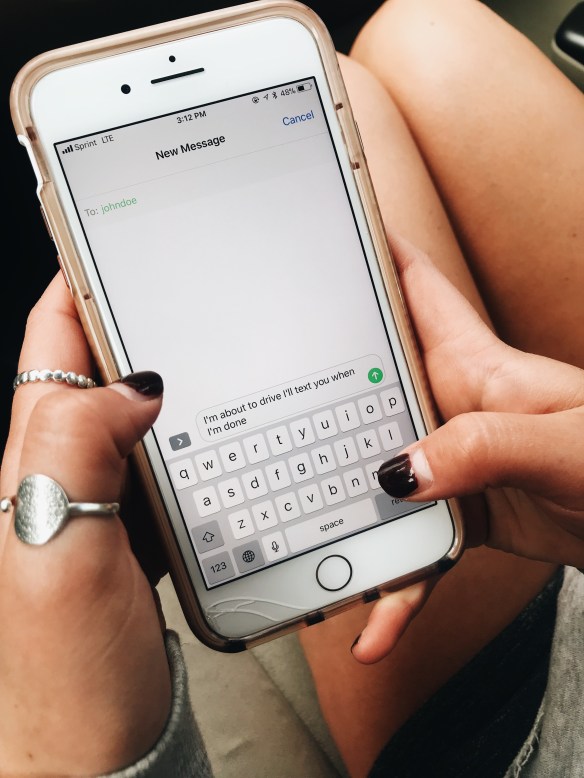
Missy Reaveley sends a text to her friend John, telling him that she can’t talk because she is driving. Photo by Becca Carr

Processed with VSCO with a5 preset

In Salt Lake County, the number of citations for texting while driving dropped from 2014 to 2015. Abovek Scott Matheson Courthouse in Salt Lake City. Photo by Becca Carr

Processed with VSCO with a5 preset

A Salt Lake County Sheriff’s deputy watches traffic outside the Scott Matheson Courthouse building in downtown Salt Lake City. Photo by Becca Carr


Fate of old Holladay’s Old Cottonwood Mall still up for debate

Story by CALI FELTS

After years of planning, the fate of Holladay’s Old Cottonwood Mall is still up for debate.

The town of Holladay is currently in the middle of a debate over real estate developer Ivory Homes and Woodbury Corporation’s third proposal to build a residential and commercial area to cover the empty land where the mall once stood. 

Holladay city planners have been wondering what to do with the Old Cottonwood Mall, which was built in 1962, for a decade. Real estate developers had planned to demolish and rebuild Cottonwood Mall. For much of that time the mall stood mostly empty, except for a Macy’s Department Store, which finally left the site in 2017.

Since 2008, much of the lot has been sitting there empty waiting for either the proposed new mall to be built or for a different plan to be introduced. In 2017, Salt Lake City real estate developer Ivory Homes and Woodbury Corporation, which manages commercial real estate, tried to come up with a solution for the empty lot. They proposed to build a housing unit as well as an enclosed shopping area and restaurants.

But getting Holladay on board has been a challenge. Holladay residents have shouted down two of Ivory’s plans since last November. Holladay city officials have said that the buildings are too high and would cover Mt. Olympus.

Residents have said that the development would also crowd the area with traffic and more people. They even have an Instagram, @iloveholladay, and a website advocating against the new development.  

Other Holladay residents like Harrison Creer want something done with the space. Creer supports the concept of doing something with the mall so it’s not a place where “high school kids go to mess around and do dumb stuff.”

“I am not a huge fan on the idea Ivory [Homes] wants to do for [the old Cottonwood Mall site], but it would be nice to have the eyesore gone,” he said.

In March, Ivory Homes and Woodbury Corporation released their third proposal for the remodel of the Old Cottonwood Mall land after hearing the complaints of the Holladay residents.

In a joint statement posted online the company said, “We heard you Holladay! Ivory Homes and Woodbury Corporation have made substantial changes to the original plans to develop the former Cottonwood Mall site in order to accommodate this great community.”

Developers have lowered the height of the proposed buildings, decreased the amount of homes, increased the size of the lots, expanded its commercial spaces and added more open space.

“We will do all this while maintaining Holladay’s unique feel and charm,” the companies said.

Cinda Taylor, a representative from Ivory Homes, in an interview highlighted the economic benefits for Holladay if the development goes through. She explained how Holladay needs the revenue generated the short and long-term investment this development would bring.

Taylor also explained how the new development would create a ‘Halo Effect’ for the city. This means that not only would it benefit the businesses being built in this development but surrounding businesses as well from the new residents, local workers and the ‘regional draw’ Holladay will have.

As a visual marker, Ivory Homes floated balloons to show how high the buildings would be. But not everyone is impressed. The balloons had completely covered the view of Mount Olympus which the residents did not appreciate.

It makes me so sad to have a visual of what could potentially change the face of our quiet neighborhood forever,” Suzy Rasch, a Holladay resident, said.

Rasch has been an outspoken opponent of the redevelopment of the mall. She’s used social media to make her point and protested at Holladay Planning Commission meetings with signs, including one that read “Not this plan, High Rise? High Traffic.”


This slideshow requires JavaScript.

Ironically, the owners of Ivory Homes and Woodbury Corporation both live in Holladay near the Old Cottonwood Mall. The owners could not be reached for an interview.

Another Holladay resident, Cristie Briggs, says after going to a presentation for the new development her opinion has completely changed.

“I used to be 100 percent against but after seeing the newest plan and the way it was presented, I really loved it,” she said, adding that she liked the way the buildings look in drawings of the plans.

Building a ‘Cvlt’-Like Following   

Story by EVERETT OLSEN

Screen Shot 2018-04-11 at 6.22.17 PM

 OCDope Serenades the audience to her hit single “Pull You Under” Screenshot of video by Everett Olsen

Sweaty bodies pack the small Salt Lake City concert hall. It’s Saturday night at the Goldblood Collective, and the energy in the room is electric. This isn’t the first time that the local rap collective “The Peoples Cvlt” has opened the show here before, but no one in the group expected a crowd like this.

Mad$haw co-producer of the collective, yells over only five feet away.

“Do you see this? This is nuts there must be 100 people in here!”

The small venue overflowed with enthusiasm as the group paraded the stage readying the audience for their final performance of the night. Mad$haw raises the microphone to his lips.

“When I say Peoples, yall’ say Cvlt,” he cries out. “Peoples!”

“Cvlt!” The crowd energetically echos, then again.

“Peoples!

“Cvlt!”

“Now everybody sing along if you know this one, it’s called “Pull You Under,” off of our new mixtape! This will be our last song of the night thank you Salt Lake City!”

The crowd quiets in anticipation as OCDope, one of two female vocalists present in the group, takes center stage microphone in hand. With a confidence large enough for the whole collective, OCDope delivered a performance that mesmerized the crowd, wrapping up the groups most successful show to date.

Salt Lake City certainly isn’t known for its production of Hollywood rap stars, or any sort of celebrities for that matter. Yet scattered throughout the Salt Lake Valley is a network of independent artists all chasing the same dream. A dream planted in the mind of every kid who has ever turned on their car radio.To make millions of dollars and perform for thousands of people.

The Peoples Cvlts’ story is not another boring overtold narration of overnight success. This group serves as a realistic and practical demonstration of how to make the most of granted opportunities, establish a presence in a local niche, and use various tools to build a loyal supportive fanbase.   

Before all 13 independent artists met and decided to make records together, Riley Teague or Teague recalls the day when Max first approached him with a radical new idea.

“He said he was sick of the 9—5 grind and wanted to start making music and taking classes for producing.”

Teague explained it only took a few short months before Mad$haw

“Took off and started getting a lot better.”

Mad$haw continued to dedicate himself to this new passion setting aside time from his job and family to work on instrumentals and production each week.

While attending his weekly production class Mad$haw met another producer Sean Motta or 4K. The two young producers quickly hit it offand began working together on instrumentals each wednesday in Mad$haw’s basement studio.

Vocal artists like Teague and Kiefy Kush another Cvlt member started working with the two producers while slowly introducing in other artists. Teague remembers how it all started like it was yesterday.

“I started inviting friends that I knew could rap then it took off. We started meeting up weekly and making songs ”

While slowly growing and improving the collective continued to meet each Wednesday evening. Many members would come directly from school or the job to meet up, relax, and express themselves creatively.


Screen Shot 2018-04-11 at 6.33.52 PM.png

 The Peoples Cvlt, shown above, during an album cover photo shoot. Photo courtesy of Jade Larson


It’s low key, and is kind of a nice stress-free environment,” 4K explains. “There aren’t any expectations. I think that’s why our music turns out so well, because we enjoy the circumstances under process of making it at Mad$haw’s studio.”

Kiefy Kush, a Salt Lake rapper who has been making music for 15 years, shared one reason he believes the collective has had such early success in a market typically sodifficult to penetrate.

“With there being so many diverse creatives in one collective, we have the ability to produce, provide and promote much more efficiently than if it were just one person juggling everything,” Kush said.

Screen Shot 2018-04-11 at 6.37.38 PM.png

 Kiefy Kush catching a vibe. Photo courtesy of Jade Larson

With the release of their debut 14 song mixtape “Cvlt Tape 1,” The Peoples Cvlt averages 1,486 streams per song released on their soundcloud page. An impressive figure considering the recent founding of the group.

Outside of making the music, the collective is constantly networking and plotting their next moves towards breaking out. In the past month The Cvlt has gotten on the ticket of two much more high profile concerts, in hopes to expand and capture their ever growing audience.

The first is Redfest, an annual concert put on by the University of Utah for its student body. The headliners of this show are big names in Hip-Hop like the Migos and Amine, the concert will be held April 15. The show nearly sold out with in the first week of being announced.  

The next event is a three-day music festival held at the Bonneville Salt Flats early in june this year. This event will feature a number of artists performing on multiple stages. Both of these opportunities should bring along hundreds of new ears and potential fans for the expanding Peoples Cvlt.

This Salt Lake based collective has served as the perfect reflection of what it means to work together week in and week out, seize opportunity, and produce a collaborative sound that is pleasing to the ear. With each artist still chasing the same dream of exposure, The Peoples Cvlt will continue to grind on until they don’t need to remind others of the name.


Screen Shot 2018-04-11 at 6.41.43 PM.png

 Mad$haw, Father Cactus, and 4K. Photo courtesy of Jade Larson

“It’s hard to break out of the Salt Lake scene, like, really hard,” producer 4K said. “I don’t think anyone’s ever done it. We’re going to be the first ones to break out, though. I know it. I’m going to make sure it happens.”

Everett Olsen

IMG_3990

Blog: 

The idea for my enterprise story originally stemmed from my experience at “The Peoples Cvlt’s” third concert, hosted inside the Goldblood Collective. I happened to be one of the only 20 or so people in the audience for the group’s first show. Seeing the rapid progression in the number of fans the group had gained for this performance, immediately had me asking myself, “How?”  

After I had decided on my topic and the angle I was going to work, it was time to reach out to members of the groups for interviews. I first reached out to Max Bradshaw or Mad$haw, a friend from high school who happened to be co-producing for the group. While Mad$haw himself preferred to stay behind the scenes, he gladly introduced me to the other producer, Sean Mota (4k), as well as other group members Teague and Kiefy Kush.

I wanted to make sure for this story I captured the setting properly for my interview, to get the most intuitive and honest answers I could from these creatives. To do so I stopped into Mad$haw’s basement studio on a Wednesday night, the night the group meets and collaborates each week. Although I came to the house ready as a journalist, I chose to put this on the back burner, and simply talk with the group members casually building rapport until I felt ready to get down to business.  I think in doing so I was able to capture much more natural and honest responses from these artists.

Bio:

Everett Olsen is a junior at the University of Utah studying communication. After an intensive two-year search for a major, Everett has found an outlet for his voice though journalistic writing and reporting. Born in Salt Lake City, Everett developed a love for the outdoors as well as a profound passion for music. He plans to cover more stories and events that parallel these personal passions, as they seem to yield his best writing.

Becca Carr


IMG_3858

MY STORY

Utah Cops Struggle to Enforce Texting and driving law 

MY BLOG

While looking for a topic to do my story on I started off with a Google search. I looked at local cities and came across a Salt Lake Tribune article about lawmakers killing a bill on texting and driving that could save lives. I then started to focus on the police and what the double standard was for them using cellular devices. From doing my interviews I moved my story more in the direction that because the law in place for texting and driving is so hard to enforce is it worth even having.

At first, I was nervous that I wouldn’t be able to connect to the people I needed to interview. I then started to think about people I knew and family connections, using sources that I could reach out to. I then got in contact with Rich Ferguson and Eric Johnson. Rich is Chief of Police while Eric is Detective Sargent. By talking to them I asked if they had anyone I could talk to that was a Highway Patrol Officer. I then called Jeremy Horne who was a Highway Patrolman for 10 years. After I had my main interviews I decided that it would benefit my story by having someone giving their opinion and thoughts about texting and driving, so I took it to campus and found Audrey Emery, a senior at the University of Utah.

I think the sources I got were the best I could have gotten for my story. I found police officers that are high in ranking and also found a specific officer that worked as a highway patrolman. I also think that information that I looked us about specific laws in place and looking up different counties news I found great information that benefited my story.

The main obstacle that I faced was looking for interviews. I didn’t know where to start because I knew I had to talk to people in high-ranking positions. But after I talked to a family member and got my resources together, it was smooth sailing from there.

I got a lot of information about police and the double standard, thoughts on texting and driving, how the law is enforced and so on. These questions gave me a lot of information that I had to narrow down. I narrowed it down to how and why police officers enforce the particular law of texting and driving along with what the solution can be for texting and driving. I decided these as my main focus because this is what most of my interviews focused on and what seemed more important.

The writing process was a little bit difficult to start. I have never written a news article and had never interviewed someone before, so the task was scary. As I started the process I started to become comfortable with talking to people and asking questions. I also had to learn how to narrow down information and make sure what I was writing down was correct and okay to quote.

I think what surprised me most through this whole process and story was that law enforcement doesn’t even enforce the law against texting and driving because it’s so difficult to detect the particular use.

ABOUT ME

I currently live in Salt Lake City, Utah where I am a Junior at the University of Utah. I am a communications major with my focus in strategic communications. As I continue to pursue my degree in communications – focusing on advertising, branding, marketing, and public relations – I hope to gain on-the-job experience that will help in my career. By doing so, I would ideally get a job with a respectable cosmetic company where I can work with the marketing or public relations team. Although the focus of my major is not journalism, I have found an interest in it and have piece of work that I am excited about.

Alexis Lefavor

image-73

Blog

I used to love Ichiban Sushi but in recent news I found out they were closed down by the health department. I noticed that they were popping up everywhere. I have noticed recently that sushi has been a trend. It can be really expensive! Ichiban Sushi has sushi that is advertised for half off. My story talks about how they opened back up. I want to make local sushi lovers aware of this restaurant. I also want to make people aware of the health department’s website. They are required to post all of the health inspections at established restaurants. I was not aware of this until I started doing my story.

I used Yelp and Facebook to find my sources. I read many reviews positive or negative. Many of the negative reviews matched some of the reasons that lead up to the closing of the restaurant.  I interviewed people who left these reviews and asked about their experiences. I also interviewed somebody from the health department to figure out how they run the inspection.

As I got more information from my sources, I felt I was really able to write my story. The information I received is what guided my story and made the focus. The hardest part of this was trying to find people to interview. I also reached out to the Sandy Ichiban for comment and didn’t receive anything from them. I was hoping to incorporate into my story how they were planning on making sure they were able to stay open and not face another closure. I think it’s really important for restaurants to ensure that their customers feel safe eating there, especially anything with raw meat.

About Me

My name is Alexis Lefavor. I am a junior at the University of Utah majoring in Communication. I hope to graduate by Summer 2019. My focus is strategic communication. I have always been interested in marketing, branding and public relations. I hope to find myself somewhere in one of these fields in the future.

Mallory Bell

MY BLOG:

I have always had an interest in criminal justice and the judicial system. I decided to research the Sexual Assault Kit Initiative in Utah and find out what the future was for Sexual Assault Kits for my story.

My sources included employees of Utah’s Department of Public Safety, state senators and local organizations who helped write the upcoming bills. They were the best sources for this story because they gave me a variety of information while being employed by different entities. I was able to gather information from each source about the new bill, the part they played in helping the victims and helping to get the bill passed. I did encounter ethical or moral dilemmas while trying to find other sources that could give me information from the victims side. The sources I did have weren’t able to give me names or information about victims because it went against their advocacy.

I made sense of the information gathered by researching the topics that my sources were speaking to even more on my own. I also listened to the interviews that I recorded multiple times so that I was sure I understood the points they were trying to get across.

I made a plan for my story, and organized my ideas more after each person I spoke to or each thing I learned. I learned that being organized and having really great, well-thought questions helped get the information I needed. I learned a lot about the national initiative SAKI, but wasn’t able to include every detail. I thought it was interesting to find out where each state was in their project and how long it took them to get through the backlog. I was very surprised at some of the facts about how kits were handled in the past, such as kits being thrown away because it seemed unsolvable.

I ended up enjoying learning about my topic more than I even thought I would. I saw many opportunities and avenues for volunteering as I spoke with the different government organizations.

0.jpg

ABOUT ME:

My name is Mallory Bell and I am a communication major at the University of Utah. I enjoy being able to show my creativity through painting, fashion, and writing. I grew up in Salt Lake City, and I was excited to quickly move to new places and learn new things. I moved to New York City, and returned home to complete my associates at Salt Lake Community College in fashion merchandising.

I love to constantly learn to be a better communicator in my personal and professional life. I also love to be with my family and friends, and especially in the outdoors. I love to hike, rock climb, ski and swim.

Victoria Tingey

Me 1Blog:

When I was coming up with ideas for story topics, I tried to think of something interesting that would grab the reader’s attention and also create a subject that could hold true meaning. As I ran through a couple ideas, I remembered our old Murray Theater located on the corner of downtown State Street. This is a building that truly captures the charm and history of Murray. It has an old-fashioned neon sign that welcomes people as they drive by. There is such an appeal about the building that has held so many memories for citizens of our city. It was used for great live entertainment, shows, concerts and also hosted Judy Garland and more recently Adele.

I was able to locate my sources by speaking with city developers directly in charge of the downtown area projects and gain their insight on the building. It was helpful to get information from their perspective and understand their thoughts on the building. They were the best sources to be able to communicate with because they have all of the information on the building. They are the people who are directing the project to reestablish the building.

I didn’t really encounter any issues during this project. Everything ran pretty smoothly. I was able to get information right from the start. They were all willing to speak to me and help me contribute to this story. I was given a lot of information so there was a lot that I wanted to make sure to include for this story. I wanted to maintain though focus of repurposing the building and finding out the history as well. I wanted to make my story unique and informative on what people have to look forward for this future of this unique building. I wanted to capture the essence of what it stands for and what it means to Murray.

The writing process was interesting because I gained new insights and knowledge. It was fun to put my story together. I feel like I learned so much on the special qualities of the building during this process. There were details that I had to leave out of the story to make sure that it met the requirements, however, I did include as much detail as possible.

I would say the most surprising aspect of my story was that I found out so much new information on the building. It was amazing how much history was a part of it that really added so much character to the Theater. I loved being able to learn more about it and piece together information. There are so many great qualities about this downtown theater. I believe it is important to keep as much history alive in our local cities and try to repurpose building that keep our city alive and unique. I really appreciated the opportunity that I had to research information and create a story out of the Murray Theater. It was such a wonderful experience. I appreciate the Murray city directors who took time out of their day to let me ask them questions and teach me more.

This was a great opportunity and I have grown to love this special little theater with so much character and charm even more so. This city definitely has an exciting future!

About Me:

My name is Victoria Marie Tingey and I am a student at the University of Utah. My plan is to graduate in Strategic Communications and later get a job in marketing or Public Relations. I love the University of Utah and I am grateful to the opportunity to attend. I plan to graduate in the spring of 2019.

I have a passion for learning and setting new goals for myself. I love to write and learn skills. I grew up playing tennis in high school. I love to travel and learn about new places. History has also been an interest of mine as well. I also love photography and the outdoors. I am proud to be from Utah. I enjoy having all four seasons within our state.

I am excited to learn and to be able to broaden my views and perspectives on writing. I love to accomplish things and better myself every day.


Women in STEM underrepresented in Utah but begin to rise in the field

April 17, 2018

Women in STEM underrepresented in Utah but begin to rise in the field

By Kara D. Rhodes

SALT LAKE CITY- Science, Technology, Engineering, Mathematics (STEM) has generally been a place for males in the past but the in recent years females have started to make a change. Utah women are on the rise at the local Universities and STEM related jobs.

The rise of women in these fields is becoming more noticable but has yet to become equal with men in STEM. According to the U.S. Department of Commerce, men filled 76 percent of STEM jobs while women are at 24 percent as of 2017. Women are 47 percent of the workforce and only 24 percent of them are in STEM related fields. Throughout early education and following into the ACT male and females are head to head. Half of high school graduates showed interest in STEM majors and careers. 

A recent update in 2017 gave the same information in this figure.

22041938_1557222884368626_1472723404792142076_o

Cambria Hobbs

Cambria Hobbs, a Utah native who works for a software company, feels she is less likely to be taken seriously than her male colleagues. “There is a very masculine expectation for the way we approach our work, and every day it’s a battle for me to prove that there is another way it can be done.” Hobbes says the gender gap is closing slowly in STEM and she encourages more women to study or work in field. “Women have so much to offer in these fields and we need each other to break through these gender barriers that a lot of people don’t even think exist,” she says.

Gender discrimination is something most women face on a daily basis. A study shows that a science faculty rated material from applications of their students without knowing who was male or female but assigned different names from their actual sex. The materials did not differ from applicant both male and females had the same qualifications. Members of this faculty rated male applicants higher than their female counterparts as more qualified for that job position. The sex of the faculty did not waver the reponses men and women both voted the same. Further analysis showed that the female students were less likely to be hired for that position. The results of this particular study show that it was culture that played the biggest role in how faculty chose males for the job. 

Processed with VSCO with b5 preset

University of Utah.


Kelsy Rhodes, a Math/Statistics major at Utah State University, has yet to step into the STEM workplace but has experience in the classroom. Rhodes has not encountered any gender bias in the classroom setting but would love to see more women in STEM positions at her school such as, Science Senator, research positions, SI instructors, and TA’s. When asked if she believed the gender gap was closing, Kelsy stated, “I think that more women are choosing to study STEM majors, but that they are still predominantly male.” She believes this is because women may be afraid to step into an area that they believe they’ll be less accepted. Kelsy, like Cambria, encourages women to study STEM because “There’s an irrational stigma that men can handle the course load and long study hours, but many women feel it might not work out for them. If a female is interested in the subject and works hard then they are fully qualified and prepared to get a STEM degree.”  

15822771_1165572983498508_2126945703506654787_n

Kelsy Rhodes.

Influences by society have a significant role in the way women view STEM-related fields. There are many things being done to close the gender gap. Starting with students in lower grade schools. Girls in 4th-8th grade can participate in an annual “Girl Start” conference that offers discovery of STEM related careers. “The SciGirls Seven” is a PBS television show that encourages girls to join STEM. Early exposure seems to be the best pathway in showing young girls that STEM is a field that they can participate in as well as enjoy. Utah has a local STEM action center and its mission statement is, “The STEM Action Center is Utah’s leader in promoting science, technology, engineering and math through best practices in education to ensure connection with industry and Utah’s long-term economic prosperity.” Its website has multiple sources for those females who are interested in more information on STEM.

Processed with VSCO with b1 preset

Zane Yarbrough.

Zane Yarbrough, a computer-engineering and physics major at the University of Utah. Zane stated, “As a male in STEM I fully recognize a gender gap in STEM majors.” He believes that the gap is slowly starting to shrink because stereotypes are starting to be ignored. What once was a masculine set of majors and jobs is now becoming something that anyone can do.

“Gender roles are being thrown out the door,” he says, insisting that anyone interested in STEM should study it, regardless of their gender.


Deaven Dell

MY STORY: Utah Speedy Drivers 

fullsizeoutput_8f3

MY BLOG

ABOUT ME: 

I am a Junior at the University of Utah studying Strategic Communication BA. I work full time at the Jewish Community Center here in Salt Lake as an Aquatics Supervisor. I love swimming, hiking and biking. I have a passion for music and dancing and enjoy expressing myself through creative outlets. I love connecting with other people and learning new ideas. I am very active in my church and enjoy connecting with my inner spiritual self through prayer, scripture study and attending church meetings.

LINKEDIN


Reflection Blog: Spencer B

Reflection: The Future of Capital Punishment in Utah

By Spencer Buchanan

LinkedIn: Spencer Buchanan

My story regarding the death penalty was inspired by the recent a bill introduced in the Utah Legislature to repeal the death penalty. Given the historically staunch position, those on the Right take on the position I found it interesting. Two of the sources I came about came with the help of Professor Whisenant and his connections. The other two, I found from searching around campus. Professor Burbank from the Political Science and Nicholas Colemen, the President of the Utah College Republicans gave me the interesting dynamic of conservatives regarding capital punishment. The momentum behind the efforts to repeal the death penalty in Utah come from position changes within the Republican Party. Both Colemen and Burbank’s comments on the matter gave both a professional and personal insight into the matter.

Developing this came with relative ease due to the already expansive reporting and research was already done on this topic. The debate regarding capital punishment has been long fought and there is much in data and reports dating back several years. What I really wanted to focus on the changing views on it. For most the history of capital punishment, Republicans and conservatives had been strongly for it and Democrats have usually been against it. I read research as to what could explain the steep decline in support for the policy across the board and more specifically with conservatives. My aforementioned interviews with Coleman and Burbank gave this explanation.

From this experience, I have learned that you need a lot of facts, knowledge, and original sourcing to make a good story. Of the facts and interviews you do, only about 20 percent of what you do and find is used. Professor Burbank, when I met with him, gave a lot of information regarding the history, and other factors that play into the support or opposition to the death penalty but I to widdle at he had given to find what works best for the story.

Reflection Blog

University of Utah students voice their opinion on Bears Ears

By Courtney Ruttan 

April 17, 2018

    The inspiration for this story came from my passion for protecting and preserving the Earth. I was personally offended when I heard the possibility of the Bears Ears Monument shrinking. I wanted to gain more knowledge and do research on exactly what this was going to effect. Having grown up in Utah, I am so proud of all of the beauty this state has to offer.

    I wanted to focus my story on what students at the University of Utah had to say on the matter being protests broke out on campus. I was interested to see the passion that students had for the issue ranging from both sides of the issue but mainly on protecting the land.

    During the writing process, my sorry initially was a great editorial article that was very story based. I learned that this story needed to be filled with facts and evidence for my claims. It wasn’t until then that my story gained focus. I tailored my story towards the reasoning and effects shrinking Bears Ears would have. I also tried to keep my story focused on what is going on currently with the issue.

    I was surprised when I discovered several people were upset when President Obama made an executive order to protect all of the Bears Ears land. I later found out that executive orders typically have a short longevity.

    I decided to use the interviews from Hess, Hughes, and Christensen because they were able to speak the most on the topic and were educated on the issue. Each was confident in their opinion and where they stand. Christensen and Hess have both traveled to the Bears Ears Monument and were able to enjoy everything it has to offer.

    I am very happy I was able to write an article on this topic because it is very controversial in Utah. I will be interested to see if the monuments land does, in fact, decrease.

Linkedin: Courtney Ruttan     


The Future of the Capital Punishment in Utah by S. Buchanan

The Future of Capital Punishment in Utah

By Spencer Buchanan

Salt Lake City–In Utah’s 63rd Legislature an effort by Rep. Gage Froerer, R-Huntsville, sponsored HB379, a bill that would prohibit Utah prosecutors from seeking the death penalty after May 8, 2018. Effectively, it would end the use of capital punishment in the state.
“What’s interesting is that this debate is being pushed by Republicans, by conservatives. Whereas before it was an issue you didn’t discuss. This has opened the debate in many conservative states,” stated Professor Matthew Burbank of the University of Utah Political Science Department.
Professor Burbank elaborated on the debate and the changing public support for capital punishment. “We have two particular reasons for the change. One, a number of high profile cases, with DNA particularly, have led to a number of exonerations. Those have struck people.”
Since 1973 there have been more 155 exonerations nationwide according to the Death Penalty Information Center.
One of the most recent exonerations, reported by the Chicago Tribune, was former Illinois death-row inmate Gabriel Solanche, who prosecutors dropped their charges after Circuit Court Judge James Obbish overturned his conviction, finding that disgraced Chicago detective Reynaldo Guevara had lied under oath when he testified.
According to Burbank though, what has really moved the discussion regarding death penalty to the forefront has been the changing the attitudes of conservatives. “There has been a change in conservatives as to judicial practices, like mandatory sentencing, like the death penalty and it’s cost to benefit.”
A recent study prepared for the Oklahoma Death Penalty Review Commission found that seeking the death penalty in Oklahoma “incurs significantly more time, effort, and costs on average, as compared to when the death penalty is not sought in first-degree murder cases.”
The study which was prepared by Seattle University criminal justice professors Peter A. Collins and Matthew J. Hickman and law professor Robert C. Boruchowitz. The study reviewed 15 state studies of the death penalty found seeking the death penalty imposes an average of approximately $700,000 more in case-level costs than not seeking capital punishment.
According to the Salt Tribune, Utah’s own legislative analysts in 2012 estimated that a death sentencing and years of appeals cost $1.6 million more than a life-without-parole sentence. Another recent report estimated that Utah and its counties have spent almost $40 million to prosecute the 165 death-penalty-eligible cases that have been filed in the past two decades. Only two cases in that time have resulted in a death sentence.
The ability for states to actually execute prisoners has become difficult. Lethal injection has been the primary method in recent decades and is regarded as the most humane form of execution. In 2016 however, Pfizer joined over 20 American and European pharmaceutical manufacturers that had previously blocked the sale of their drugs for use in lethal injections, effectively closing the open market for FDA-approved manufacturers for lethal execution drugs.
Shifting public opinion also shows that support for the death penalty has waned greatly. According to the Pew Research Center, half of Americans (49 percent) now favor the death penalty for people convicted of murder, while 42 percent oppose it. Public support for capital punishment peaked in the mid-1990s when eight-in-ten Americans (80 percent in 1994) favored the death penalty and fewer than two-in-ten were opposed (16 percent). Opposition to the death penalty is now the highest it has been since 1972.
These practical obstacles to implementing a death sentence have shifted many of those on Right.
Nicholas Coleman, President of the Utah College Republicans, stated that younger conservatives his age seem to match the larger group and has seen the debate regarding the practicality of the death penalty in his organization.
“There are more than just a few. The thought is usually based on fiscal conservatism.” Coleman stated. He expanded saying the price to litigate a death sentence and the cost to house death-row inmates are often cited as reasons behind some conservatives’ desire to do away the death penalty.
Salt Lake County Mayor Ben McAdams, who served in the Utah Senate as a Democrat from 2009 to 2012, has watched with interest has noticed the shift among the Republicans and Conservatives he knows and works with. McAdams noted that he sees a general mistrust of government competency beyond conservatives as well that has played into this debate being opened up.
“It has been interesting to see the debate on both about how this might go.” McAdams said “As I speak to many of them, it’s more a reflection of a distrust of government. Government gets it wrong.”
Support for the death penalty though is still majority opinion among Republicans as of 2016 with 72 percent of still in support of the sentence according to Pew Research. Support is the lowest among Democrats at 34 percent while Independent support is 44 percent.
If trends continue in the same decline that has been seen the past couple decades, capital punishment may soon be a sentence of the past. And for conservatives states like Utah, it’ll be the upcoming voters and dynamic lawmakers to see that change.

Reflection on Story

LinkedIn: Spencer Buchanan


This slideshow requires JavaScript.

This slideshow requires JavaScript.

Hunter Wallin

Born and raised in Utah, Hunter Wallin is highly adaptable. With hard working characteristics, and a positive attitude he has accumulated many talents and skills. Currently attending the University of Utah, soon finishing up his Strategic Communications degree, Hunter has worked his way through college while still working full time as a warehouse manager at local company called RotoPax. Hunter is set to graduate from the U of U in the fall of 2018 and sets out to start his own future businesses.


Hunter Wallin

My LinkedIn: https://www.linkedin.com/in/hunter-wallin-bb51b7139/

University of Utah Meal Plan Story:   https://unewswriting.wordpress.com/2018/04/17/university-of-utah-required-meal-plans/

Reflection Blog:https://wordpress.com/post/unewswriting.wordpress.com/8612