Zac Fox

MY STORY: website-bio

MY BLOG: Not a Master Procrastinator

ABOUT ME: Zac Fox is currently a fourth-year student at the University of Utah pursuing a Bachelors of Science degree in Strategic Communications, and is expected to graduate in August 2019.

In addition to completing his college career, Zac is currently the Director of Marketing and Communications at Project Embrace and the Creative and Marketing Director for  AdThing at the University of Utah. Zac had previously worked in several marketing internships in both Salt Lake City, Utah and Los Angeles, California. He had also worked for the University of Utah’s student newspaper, The Utah Chronicle, and the U’s student-run outdoor magazine, Wasatch, as the Production Manager for 3 years — leading his team to achieve over ten design awards recognized by the Society of Professional Journalists and the Utah Press Association.

When he manages to find spare time, Zac can usually be found with a camera in hand taking pictures of his environment. He likes to tell people he’s a “professional observer,” crusader for the brand bible, and hates writing about himself in the third person.

LINKEDIN: Professionally stalk me here.

Kaeli Wiltbank About Me

MY STORY: kaeliwiltbankphoto-4828

MY BLOG: Feminism in Utah

ABOUT ME: Kaeli is passionate about storytelling and advocacy. With a particular interest in gender equality and women’s rights, she dedicates much of her research and writing to that.

Along with being a writer, Kaeli is a fashion and wedding photographer who offers branding and marketing services for businesses.

She has created and shot imagery for a wide selection of clients and has a particular interest in collaborating with personal blogs, clothing lines, commercial businesses, and documenting weddings.

She is about to receive a BA in Strategic Communications from the University of Utah which will compliment her degree in Social Media Marketing from the LDS Business College.

LinkedIn


Taylor Watkins – Reflection Blog

By Taylor Watkins

Election Recap – What’s Next for Utah?

Initially, I wanted to write my Enterprise Story on the importance of voting in midterm and local elections. However, I changed my story idea and decided to write about the midterm elections and how students foresee the results impacting themselves and their peers. For the most part, I chose random sources that I had classes with, but I also wanted the results to come from a wider-range of students. I ended up interviewing three students and one professional seeking a Master’s degree in Political Communications focusing on Political Strategy and Campaigns. The best sources for my story were the students because they each gave a unique perspective on the issues they are facing and how this election impacted them.

One of the main issues I encountered while writing this story was keeping everything non-biased and trying to represent best the opinions I don’t necessarily agree with. I addressed this by maintaining a neutral tone throughout the entire article and focusing on informing the reader. I created a story with all the information I gathered by concentrating on the student perspective of the election and how the results will impact individuals.

One thing that surprised me when writing this article was how challenging it was to get started, and how long it took me to complete the project. The most challenging part was trying to decide how I wanted to present my article and what perspective of the elections I wanted to focus on. It was hard trying to write something that would attract a wide variety of audiences, especially something that would be meaningful to students.


Hollis Leja

MY STORY:

MY BLOG:

I came up with the idea for my story by brainstorming topics with my roommates. We were playing League of Legends when the topic of the University of Utah’s esports team came up. After looking up some background information on the topic and seeing that the U was the first university to do this it seemed like an awesome story.

One of the hardest parts was being able to find people to be able to interview. I was able to dig up a lot of information scattered about online, but had some difficulties originally finding people to interview.

When I was first thinking of the topic, I didn’t know what approach I was going to take with this story. I went over to the Entertainment Arts & Engineering building and met with Kenny Green, who is the head coach for the League of Legends team. He was nice enough to let me interview him. It wasn’t until after my interview with him and seeing his passion for the sport that I saw what direction I wanted to take with this story.

When I got home, I gathered all my research and the information from my interviews. I wanted to be able to link this cool story from the U to what was going on with the Worlds competition happening in South Korea. I really wanted to highlight how awesome it is that the U has a program like this and that this is something we should keep supporting.

This is the first article I have written, and I hope it will be able to show some of the great programs the U has to offer. I also hope to be able to watch the U’s esports team this year and cheer them on this spring.

If you want to support or watch the team you can do so by following the U’s esports Twitch channel.

ABOUT ME:

I have always enjoyed hearing the story of people’s lives, the events and struggles that shaped them into the people they are today. This is what has led me to pursue a degree in strategic communication. I am currently finishing my junior year here at the University of Utah and am starting to be able to see the light at the end of the tunnel.

My goal when I finish my degree is to be able to pursue a career in PR and marketing. When I’m not studying at school I work as a service adviser for Microsoft. I have been with the company for close to five years and have high hopes to be able to continue my career with them.

Outside of work and school I try my best to travel when I can and enjoy spending time with friends and family. Over the next few years I hope to be able to continue to develop my skills and live life to its fullest.

Taylor Watkins

ABOUT ME:

Taylor Watkins is a fourth-year student at the University of Utah majoring in strategic communication and political science. She is currently working as the Vice President of Media & Marketing for the Utah Panhellenic Association and is responsible for maintaining all forms of publicity for the Office of Fraternity and Sorority Life at the U.

Taylor grew up in Park City, UT and attended Park City High School. In her free time, Taylor can be found skiing at Park City Mountain Resort or spending time with her friends and family.

Taylor will be graduating from the College of Social and Behavioral Science and the College of Humanities in May 2019. After graduation, she hopes to work in marketing or public relations.

32.jpg

MY STORY: 

Election Recap – What’s Next for Utah?

MY BLOG

LINKEDIN

Women in Utah recently rank more sexist than men

Story and photos by KAELI WILTBANK

SALT LAKE CITY — Utah has recently been ranked the second most sexist state in the United States. Leading the pack of sexist attitudes is . . . well, surprisingly, it’s women. In a study done by economists at the University of Chicago, Northwestern University and National University Singapore, questions such as “Are men better suited emotionally for politics than are most women?” and “It is much better for everyone involved if the man is the achiever outside the home and [the woman] takes care of the home and family” were asked.

ARSEJ5B5MNESHCTVRLPYBSJE2UImage from Washington Post

The study showed that the queen bees of Utah held their position as No. 2, while the men dropped, granted, still quite low, but to No. 5 in the ranking of most sexist states. Yes, that means the women of Utah are more sexist than the men.

“You experience inherent sexism every day in Utah and I think a lot of it is stuff that you

kaeliwiltbankweb-4978

Real queens fix each other’s crowns.

don’t really notice,” says Becca Rettenberger, Operations Manager at a Salt Lake City-based marketing agency, Friendemic. Rettenberger continues to explain how our communities, our workplaces, our homes are all tainted with gender inequality and have been for as long as we can go back in the textbooks. Unfortunately, we’ve become so accustomed to swimming in it that we can hardly distinguish what gender inequality looks and feels like.

“From a business standpoint, I can list several different instances where I was working alongside other women or reporting to women,” says Rettenberger, “it was very much not an ‘I’m up here and I’m going to pull you up here as well so you have a voice at the table, it was a stay in your lane conversation the majority of the time.”

Why did Utah rank so high in the study on gender inequality? 

Rachel Griffin, a professor at the University of Utah who specializes in race and gender studies, says there exists an inherent sexism in Utah.  “It’s not just gendered, it’s power-laden with religion.”

The strong presence of The Church of Jesus Christ of Latter-day Saints must be considered when analyzing the results of the study. “Akin to every major religion we have, Mormonism is deeply anchored in patriarchy,” says Griffin. “Feminism offers a critique of patriarchy, and most people aren’t a fan of being critiqued.”

kaeliwiltbankphoto-6584

Mother’s arms hold more than they realize.

Whitney Baggaley is a University of Utah graduate and stay at home mother. She is also a member of The Church of Jesus Christ of Latter Day Saints. “It’s such a social church. If every woman at church is a stay at home mom, there are a lot of social pressures surrounding that,” she says. 

Not only is Utah a very religious state, but it’s also a very conservative state. Still, this can’t simply be regarded a red vs blue issue. Typically conservative states such as Wyoming and Alaska led the country in gender equality. That’s right, these conservative states pay the same salary for the same job, regardless of gender. People feel valued in their workplace, regardless of their gender. There are equal opportunities for both men and women to lead the company meeting. n these conservative states, all of these rights and opportunities are offered, regardless of gender.

“Utah is the land of extremes,” says Baggaley, where stay at home mothers are extremely passionate about their role as wives and mothers, and the working women and the women in politics are equally passionate about what they do. Perhaps such an extreme spectrum anomaly creates an atmosphere where women have a hard time supporting other women who don’t do things the same way as them.

At an event hosted by the Communications Department at The University of Utah, Dialoguing Across Differences, a small group of community members discussed how to approach polarizing topics, such as politics, religion, and sex. The conversation turned towards discussing intentions. Perhaps you’re standing in line at the grocery store and someone in front of you takes a step backward, stepping on your toes. Did the person intend to step on your toes? Probably not. Nevertheless, those good intentions don’t take away the pain of your toes being crushed. Until we get the courage to tap our linemate on the shoulder and say “Excuse me, you’re stepping on my toes. That hurts,” the person may not see how their actions are affecting those around them.

There’s something to be said about intentions, they are a powerful driving force behind our thoughts and actions. While Utah is filled to the brim with well-intended women, perhaps we need to take a step back and see who’s toes we may be stepping on. No matter which side of the feminism line we stand on, there seems to be discord among the women of the state. How powerful a force we could be if we realized the pain we may be causing others by our good intentions, then found the courage to join together in mutual support, regardless of differences.

Reflection Blog

This slideshow requires JavaScript.

Sicily Romano

Image

MY STORY: Motorsports athletes conquering the business world

MY BLOG: Writing Motorsports athletes conquering the business world

ABOUT ME:

Sicily

Sicily Romano, 17 years old, Junior at the University of Utah, Strategic Communications Major

I’m currently a Junior at the University of Utah and will hopefully be graduating in the spring of 2020 with a degree in Strategic Communications . I have always had a high interest in sales and marketing and working in the strategic communications degree has just made me fall in love with it that much more. Before college I was a professional ski racer, I spent more time skiing than anything else which made me grow up in a very untraditional way. From skiing I got to travel and experience a lot of the world but with everything I gained I lost even more. I never got the normal high school experience, my friends were also my competition which made it difficult for all of us to get along and balancing school and my competition schedule was near impossible. So, come my senior year of high school I ultimately decided that ski racing was no longer for me and come January I would go to college to pursue my dreams of working in marketing. It was the best decision I ever made. Now in college I havent given up sports completely, I am on the U of Us club wake board team because I just couldn’t let the competitive side of me go. Being on the wake board team has helped me create so many amazing memories in college and meet so many unique people. I currently work full-time as a food runner at Ruth’s Chris steak house in Park City. though this isn’t the sales job I want it has taught me how to interact with any type of person and create an interpersonal conversation with every guest I meet.

Linkedin: Sicily Romano


Reflection blog: Motorsports athletes conquering the business world

By Sicily Romano

My STORY: Motor Sports Athletes Conquering the Business World

When exploring what I wanted to write about I thought about the community I grew up in, which was the extreme sports community. I tried to tell the story of amazing athletes like people hadn’t heard before. I believe that many people think that athletes live off of their winnings and sponsorships but that’s not true for all athletes, it’s actually not true for most athletes.

My story encapsulates what these athletes do to have an income and how they have used the knowledge they have gained from the sports that athletes have competed in and the businesses they created from them. A significant part of making this story happen was securing an interview with high-profile athletes. I had hopes of interviewing five Motorsports athletes being Travis Pastrana, Andy Bell, Todd Romano, Roland Sands, and Robby Gordon, but as you could guess these athletes are extremely busy running the business and doing what they love, so I was only able to secure three interviews. I do have a conflict of interest with one of the athletes I interviewed being Mr. Romano Romano is my dad so I had to be objective with the interview I got from him, so it didn’t turn into a marketing story, which I think I did perfectly.

This story showed me that I need to take out the fluff and just get right to the point. Which can kinda be difficult? I have had minimal experience writing news articles and a lot of experience writing college essays which contain a lot of fluff usually. After finishing this article, I had to go through and take out almost 100 extra words.

While learning about these athletes, I learned about so many different types of business that I really never thought of before or even saw as options for me. The more I talked to them the more I not only saw other options of careers but a way to continue to enjoy what you love while making an income.

Motor Sports Athletes Conquering the Business World

Andy Bell competing In freestyle motocross

Story by Sicily Romano

SALT LAKE CITY — In motorsports, winnings, and sponsorships don’t generate enough income for athletes to sustain their lives. Subsequently, these athletes compete and accomplish things in sports that some can’t even fathom, all while conquering the business world.

Andy Bell, formerly a freestyle motocross rider, knew from a young age that he wanted to own his own company. “I started racing FMX (freestyle motocross) in 1999 till about 2004,” he says. While riding FMX, Bell saw his first business opportunity. “A lot of athletes, when they are at the top, act too cool for school,” he says. “I saw the opportunity to not only befriend all the athletes but the promoters as well.”

When promoters wanted athletes at their event, Bell realized that he could broker the deal. He leveraged the friendships and connections made as an athlete to start his own production company. “Even while competing, I was never interested in just being an athlete, I knew I wanted to do more,” says Bell.

After several years on Nitro Circus, Bell tried to work as a stuntman, but stunts weren’t bringing enough income. He decided he needed to make something else work.  “I knew nothing about production, other than being in front of the camera,” says Bell. Still, he started his own company with a plan to create 3-D content around action sports “because, at the time when you went into stores and looked at 3-D TVs, all they had for content was, like flowers opening.” Though Bell’s original idea for 3-D videos got sidetracked, his production dream came true when Travis Pastrana asked him to star in a webisode for Red Bull called “On Pace with Pastrana.”

IMG_5718.jpg

Travis and Andy Bell on set for On Pace with Pastrana

Bell asked Pastrana if they had a production company yet. One thing led to another and Bell was a producer. After two seasons producing “On Pace with Pastrana,” with Red Bull, Bell expanded his business, using his connections from “Nitro Circus” and as an FMX rider. He contacted Toyota, told them about Sweat Pants Media (his production company) and immediately started producing content for them.

Recently Bell traveled to Canada to produce Toyotas TRD pro commercial, which will showcase Toyotas’ new vehicles expected to hit the market later this year. The commercial will be shown in February at the Chicago auto show.

Bell is one of the many athletes who has taken their love of motorsports and created businesses. Travis Pastrana has done amazing things through the connections and knowledge gained from competing in motorsports. Pastrana started in motocross which because of his success MX, opened additional opportunities.

23578_107812875925817_5759213_n

Travis Pastrana Jumping Over a plane

Pastrana has always been a daredevil. “(Producer) Gregg Godfrey sent me a Sony 2000 camera and Final Cut Pro 3 to edit on,” he says, “Everyone was coming over to learn backflips that summer. I documented everything and helped build jumps to make their dreams and nightmares come true.”

That was how “Nitro Circus” began. Pastrana has been able to help other athletes make their dreams, or in his word’s “nightmares,” come true. Not only did he created “Nitro Circus,” but he has started a two-event series around it — “Nitro Circus World Games” and “Nitro Circus Live.” Pastrana hosts 70 plus live shows a year, and although his primary business is producing spectator events, he still gets to ride motocross and race cars.

Todd Romano has also created a business by leveraging his knowledge and connections. Romano started out racing mountain bikes in college and soon realized that the guys beating him on bikes were also racing motocross. His sponsors, Specialized and Fox, supported his switch to MX (motocross) where he found his competition racing something even bigger and faster: off-road cars.

Romano discovered a market for aftermarket products for off-road vehicles, specifically side by sides. His first company was Dragon Fire Racing, which sold aftermarket products for (RHINOS). Later,  he sold Dragon Fire and opened Finish Line Marketing, a business to help other motorsports companies with everything from basic business strategy to marketing.

FullSizeRender

Todd Romano Jumping Wild Cat XX. Glamis Califronia

Romano has many lucrative connections with sponsors and companies he’s met. He’s been successful pitching himself and his company, leading to partnerships with industry leaders like Hawk Performance. Romano was contracted by Hawk to help grow their company through improved marketing and smoother business operations. Currently, Romano is working with Textron where he has partnered with Robby Gordon to design and produce the Wild Cat XX. He also owns a company that sells aftermarket products for new Textron vehicles called Speed Side by Side.

These are not the only athletes to create business out of the knowledge they have gained from competition, and their success goes to show, you don’t have to give up on your dream to make an income.

Wc 917


This slideshow requires JavaScript.


Kim Davison

MY STORY:

MY BLOG:

When I was thinking of topics to write about for my Enterprise Story,
I knew it needed to be something I was passionate about. I threw
around ideas of something to do with Greek life, interviewing theater
companies around town and something having to do with visual art. I
immediately realized that those were too broad. I tried narrowing
ideas down by making them more specific. I finally came to the idea of
writing an article detailing the Utah Shakespeare Competition that
happens every fall. I knew it was specific enough, but was also part
of the bigger and more widely known Utah Shakespeare Festival. I knew
that people probably knew about the festival, but probably did not
know that there was a high school competition attached to it.

I was already planning on going down to Cedar City, Utah, for the
competition with my work, so it was a perfect choice! My only worry
was that I was going to be too personally and emotionally attached to
the piece. I competed in the Shakespeare Competition for three years
and have gone back working with Youth Theatre at the University of
Utah for the last four years. I knew that if I committed to covering
the competition as a whole that I would not get tied up in my past
experiences.

The sources that I chose to use were good ones because
they varied in experience with the competition. I talked to my boss,
Penny Caywood, about her experiences with the competition and what it
has been like to take a non-traditional high school group for the last
seven years. Then I decided that the best people to interview would be
students who were attending the competition. I talked to several
students from different schools — one who it was their first year and
another who had been competing for many years. Their views were
different, but they both shared that the Utah Shakespeare Competition
had been a very positive part of their high school careers.

The writing process for this article was fun and easier than I
expected. Because I had previous knowledge about the basics of the
competition, I was able to dive in and learn more about the details. I
did gather a lot of information, and it was hard to decide what to put
in the article. But when I decided that my structure would be breaking
down and describing each element of the competition, it got much
easier to pick and choose what information actually added to my piece.
Through writing my Enterprise Story I learned that I like to
incorporate a more playful and informal tone into my writing. I’m not
sure if that is a good or a bad thing, but it is definitely a thing! I
loved writing this piece and hope that you enjoy it and check out the
Utah Shakespeare Festival and Competition in years to come!

ABOUT ME:

Screen Shot 2018-11-05 at 9.53.00 AMHi! I am Kim Davison and I am a fourth-year student at the University of Utah double majoring in strategic communications and theatre studies. I am very involved on campus and love everything about the U!

I am currently the president of an online magazine on campus called Her Campus Utah. Her Campus is written by students for students and has been one of the best parts of my college career.

I am involved in Greek life on campus and am a member of the Alpha Chi Omega sorority. I am also on the Greek Council as the vice president of events for Panhellenic. Through that position, I have planned all
of the Greek-wide events for 2018. I have also held positions on ASUU, It’s On Us, Student Media Council and more!

Here are some quick fun facts about me:
1. I love to travel and have been to over 30 countries.
2. I am very crafty and love to sew, embroider and paint.
3. I have two dogs and a cat.
4. My favorite animal is a whale.


Link

MY STORY: MKP_4175

  • Hale Center Theater’s new updates are raising the bar for Utah performing arts


MY BLOG: Hale Centre Theatre


ABOUT ME:  Amy Boud

I am a current Communication major at the University of Utah, and an Assistant Event Coordinator with Stadium and Arena Event Services.  My plan is to graduate and become a destination wedding planner in Park City, UT.  My husband Troy is a solar engineer, and we are the proud parents of a little Schmorky (Schitzu, Yorky, Maltese mix) puppy named Goob.  Together we hope to make the world a better place by helping the environment, and helping people to live their dreams.

Cool Runnings 2.0: Ghana and Skeleton in the Olympics

by KATIE ANDRESS

SALT LAKE CITY— Ghanaian skeleton athlete, Akwasi Frimpong, became the first skeleton athlete from Ghana to compete in the Winter Olympics in 2018. Today he, along with several former U.S. skeleton coaches and athletes, is forming Ghana’s first Bobsled and Skeleton Federation. Just like the Jamaican bobsled team before him, Akwasi Frimpong is pushing the boundaries of the Olympic status quo.

Frimpong’s goal is the modern-day version of the 1988 Jamaican bobsled team memorialized in “Cool Runnings,” a 1993 movie about the Jamaican team’s road to qualifying and competing in the 1988 Winter Olympics. Thirty years later, Akwasi Frimpong is walking down the same path.

A sprinter on the Dutch 4×100 team, Frimpong had aspirations of being an Olympian since he was 17-years-old. Unfortunately, he missed qualifying for the 2012 Summer Olympics in London. Later, the Netherlands bobsled team recruited him due to his sprinting ability. After making the bobsled team in 2012, he competed and narrowly missed qualifying for the 2014 Winter Olympics in Sochi, being named as the alternate brakeman. In November 2016, his coach convinced him to try skeleton.

IMG_2104 2.JPG

A scenic view from the top of the Lake Placid, N.Y. track in the fall. AP Photo/Katie Andress

Similar to bobsled, skeleton athletes slide on their stomach, headfirst on a large, lunch-tray style sled. Top athletes reach speeds of over 80 m.p.h., sliding through approximately 15 curves on a mile-long ice track.

After deciding to become a competitive skeleton slider, Frimpong then had to decide what nation to represent; The Netherlands, where he began his track and bobsled career, or his birth country, Ghana. “I was 30 and realized that I had not done anything for the country where I was born and this was a huge opportunity for me to go after my dreams of becoming an Olympian.” The only logical choice would be to compete for his birth country, Frimpong concluded. He also hoped that by doing so, he would inspire the youth of Ghana to venture beyond the comfortable and dare to dream.

Frimpong qualified for the 2018 Winter Olympics in PyeongChang, South Korea; making him the first athlete from Ghana to represent skeleton in the Winter Olympics. There, he was aided by Lauri Bausch, a coach for the U.S. team who occasionally helped coach athletes from smaller nations on the side. Bausch has been a coach for the U.S. team since 2015, after a hamstring injury ended her own six-year skeleton career.

“Akwasi has a charm about him that is attention-getting which aided him in sharing his unique upbringing and efforts to represent his birth country and continent,” says Bausch. “He is positive and hardworking, and does much to stay connected especially to the youth of Ghana and is not just focused on himself.”

Frimpong ended up being an unexpected hit among the fans. He didn’t really expect to receive as much attention as he did. “I was honored to touch the hearts of millions of people all over the world to dare to dream and to go after their wildest dreams,” he says.

After returning to Utah, where he currently lives with his family, Frimpong set out to accomplish his next goal: start the Ghana Bobsled and Skeleton Federation and bring Ghanaian athletes to the Winter Olympics.

Frimpong has hosted multiple skeleton clinics in Ghana to introduce and inspire Ghanaian youth. He hopes they’ll be inspired to try the sport. Meanwhile, he held a combine event in Salt Lake City to recruit potential skeleton athletes with Ghanaian roots.

Recently, the developing Federation appointed former U.S. skeleton coach, Zach Lund, as the head performance director. Lund competed for 11 years on the U.S. skeleton team before switching over to coaching for the last eight.

Lund decided to join Ghana after philosophical differences with the U.S. program and is excited for the burgeoning Ghanaian Federation. “Akwasi came to me with his vision for the Ghana program. His vision was inspiring and felt like something that was bigger than just skeleton,” Lund says.

Lund hopes to turn Ghana into a sliding sports “powerhouse,” which is not out of the realm of possibility. Not only was Lund an Olympian, he also coached U.S. athletes to three Olympic medals. Moreover, he intends to do more than just go fast.

Lund and Frimpong both want to make history, and that’s what he likes most about Akwasi. “Instead of trying to inspire a continent, we are trying to bring diversity into a sport and Olympic movement that lacks.” There are not nearly enough African nations involved in the Winter Olympics, he says.
IMG_7384.jpeg

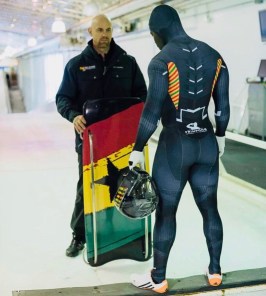
Zach Lund and Akwasi Frimpong are standing at the starting line preparing for a run. Frimpong was competing in his first race of the season on November 7, 2018 in Whistler, Canada. AP Photo/Akwasi Frimpong

That’s what special about the Olympics, bringing nations together, big and small, on one stage to compete. “It’s not about the nation winning medals,” Lund said in an interview with GhanaWeb, a website all about Ghana. “It’s about being with people who are there for the right reasons. The Olympics are about bringing people together.”

The number of countries that have competed in the Winter Olympics have steadily been on the rise. According to olympic.org., the 1972 Olympics in Sapporo, Japan,  had 35 competing countries, growing to 92 now in the most recent 2018 PyeongChang Winter Olympic Games. These figures however, don’t compete with the Summer Olympics. During the 1972 Summer Games in Munich, 121 countries competed, which increased to 207 during the Rio Olympics in 2016.

Lund hopes the creation of the Ghanaian Bobsled and Skeleton Federation will be the beginning of other African countries competing. “It’s about the small nations being on the same playing field with the larger nations, competing against them,” says Lund. “That’s what I love about the Olympics.”

This slideshow requires JavaScript.

Reaching out to China’s past

Story and gallery by PORTER L. ANDERSON

The Family History Library in downtown Salt Lake City has for many years been a free and open facility where visitors can come and conduct research about their ancestors. The library is the largest genealogical library in the world and attracts people from all walks of life to travel to Utah just to take part in the work that takes place there.

Recently the library has implemented a new interactive activity for those visitors who come from China. “The Genealogical Society of Utah and the Family History Library have always been working to build an open and informative experience for visitors of our great state,” said Yvonne Sorenson, the library’s administrative representative.

The Family History Library is located on Temple Square, which is the most visited tourist site in all of Utah. Temple Square is a large plot of land with many different facilities that are owned by The Church of Jesus Christ of Latter-day Saints, a Christian church that has a strong following in Utah.

The interactive experience that can be found on the main floor of the Family History Library is meant to be the first look into genealogical work for those who haven’t had much experience before. Visitors are guided by the volunteers that work in the library to several different stations where they are able to learn about famous relatives, facts about their birth, interesting stories about ancestors, and so much more.

The newly remodeled main floor has been open for almost two years but just recently the administration decided to create an experience specifically for Chinese guests who couldn’t take part in the regular activities due to lack of Chinese records in the library.

“We realized that so many international visitors would come to visit Temple Square but, we would often have to turn them away from our interactive activities. We wanted to help reach out to these people in any simple way we could to help the guests get excited about family history work while making them feel welcome to our facilities,” Sorenson said.

The Chinese experience has been in place for almost three months and the results have been nothing short of amazing. One of the translators for the library, Charles Garrett, said, “It is so amazing to see these wonderful people come to the library and be so excited to see that they can learn simple things like the origin of their last name. They just seem to light up and get excited to learn more about their families.”

While the program is still in the testing phases it remains very simple but, with the results that have been observed over the past few months, the administration of the library is really excited to continue building on the experience. “I would love to see the experiment we have created grow to a more substantial point,” Garrett said when asked how he felt about the future of the program.

While the future of the program seems bright, no concrete plans have been made to improve the activities or even keep them up and running after the test period is over at the end of the year. The patrons of the library are very inspired by the activity and seem genuinely excited to revisit the library if they were to visit Utah again.

“This was very interesting for me because it taught me a lot of information about myself that I didn’t know. I only wish the building had the materials for me to do more searching into my past,” said Li-Wei Chen, a visitor who is traveling from Shanghai.

This is the exact result that the library administration was hoping to see from these visitors. “We were hoping that we could build the excitement that we see the locals get when visiting but, we’re a little short on resources to do it. I think the team in charge of the program has done a wonderful job creating this experience and I hope that we decided to put more effort and keep the program for the long-term,” Sorenson said.

The library has access to thousands of genealogical resources but few of those are Chinese, which makes the program that much more impressive. The program being added for the long-term would be a great addition to the library but would also help the state of Utah as well. Creating global attractions like the Family History Library builds the state’s reputation as a place that welcomes all visitors.

With the inclusion of the Chinese experience in the Family History Library, it shows that the LDS church is aware of the importance it holds in building tourism and attending to the growing international attention that Utah is getting.

Sorenson added, “We want to continue to create a global experience here that can be enjoyed by all. The journey may be difficult and we may struggle to find a way but, we are determined to help all find the joys that genealogical work can bring to an individual.”

How part-time job affects GPA and tips to success

Story and gallery by SEOK LEE

People work in companies and students go to college to study to get better jobs after they graduate. To study in a university, students pay lots of tuition fees to university administration. The reason why people go to college is that some jobs require a university diploma.

In other words, people want to have better jobs by investing money in college tuition like a stock market. Parents bankroll money for their child’s future and child spends time for their future. Even some students supply money by themselves without parents’ financial support.

Students have a part- or full-time job to earn money for tuition fees. Also, some students work to gain industry experience and to be a more competitive applicant in the job market. Moreover, some people work part-time to earn pocket money for themselves. These show that college students work a part- or full-time job for various reasons.

As a result of a survey with 10 college students at Marriott Library, eight out of 10 students currently have a part- or full-time job, and two students have worked a part-time job in the past, but they mention that they are now concentrating more on their studies.

More college students who are currently working answer that they work 11 to 20 hours a week. Nine out of 10 respondents to the questionnaire say that working less would lead to higher academic achievement.

They say that if they worked fewer hours, they would have more time to spend studying. Also, they respond to the questionnaire that working while attending college had somewhat negatively affected their GPA.

One respondent said that working less would not lead to higher academic achievement. He said in the questionnaire that it is only an excuse for not having time to study because of a part- or full-time job.

He points out one survey question and says if people want to get higher GPA or college success, it is essential to study a lot. The survey question that he answered was: how many hours a week do you study for classes?

According to survey results, most respondents respond that they study 11 to 20 hours per week. He said that he studies more than 30 hours per week. He said working a part -or full-time job to earn money for tuition is not a good idea.

Instead, studying hard and trying to get a scholarship is more beneficial for the future. He says that he applies for scholarships and he also accepts subsidizing financial aid in the university.

Good scholarships are needed to study hard. ASUU offers a tutoring system to all university students. It is located in the Student Services Building, third floor. ASUU provides tutoring service in its office and library. Kassidy L. Giggey, a learning specialist in ASUU’s Learning Success Center, says, “Large numbers of students use tutoring and one or two students per week come to ASUU and ask for tutoring.”

In order to get good grades while working, she suggests making a schedule and posting it where a student can see at easily. She recommends doing this for a month as a habit. When a student plans to make a schedule, she says, “It is recommended to study six or seven hours per class.”

She emphasizes, “It is regrettable that many students are not yet familiar with this program, and our office is ready to help students at any time.”

The Learning Success Center, which is located in the Student Services Building, third floor, also provides online resources to support study tips such as better note taking, study guides, time management, study skills and more. These online resources help students to study easier and better.

The Academic Advising Center, located in the Student Services Building, fourth floor, and major advisors also help students succeed in college. One academic advisor named Steve Hadley says, “Lots of students work part-time but they take over 15 credits. This is one of the reasons students get tired before graduation.”

He says, “If students have a part-time job, I advise them not to take more than 15 credit hours and if students have a full-time job, I advise them not to take more than six to seven credit hours. For a better school life, balance in work and study is needed.”

He also says, “In fact, many students want to get good grades and ask me for advice that they do not have enough time to study because of work. It is always welcome to help students so please make an appointment on the website anytime.”

The Student Success Advocate Office is in Sill Center near the Union. This program was made five years ago and it also supports students’ college success. Because it is not the old program, it has not been known to many students yet.

April Ollivier, who works in the Student Success Advocate Office, says, “Learning Success Center and Student Success Advocate Office is quite different. The ASUU tutoring system in the Learning Success Center is providing more academic skills to students but the Student Success Advocate Office gives advice to students with ordinary issues too.”

She also mentions, “Student Success Advocate Office provides texting system so they text students whether they are fine in college or not.”

According to survey results, a part- or full-time job affects GPA somewhat negatively but there are some tips to succeed in college life. Both studying hard gives success in university and engaging in clubs and activities help students succeed in college too.

University provides lots of programs for students to succeed in college life such as Learning Success Center’s ASUU tutoring system or Student Advocate Office provides. Hopefully, all students have a good university life before doing social activities after graduate.

Clara Welch

MY STORY: DSC00474Curing homelessness with a focus on the individual

MY BLOG

ABOUT ME: I’m a junior at the University of Utah studying Strategic Communications. I’m from a small town in Utah called Farr West, but love living in Salt Lake City and can’t imagine living anywhere else in Utah.

I am working towards finding a career that will help me make a difference in this world. Making meaningful connections with people is important to me and I strive to find the best in every person. I’m always looking for opportunities to learn and grown and am excited for what the future holds.

When I have free time, I enjoy playing the violin and piano, reading, listening to podcasts, and spending time with my friends and family.

LinkedIn

Katie Andress

IMG_0224.JPGMY STORY: 

MY BLOG:

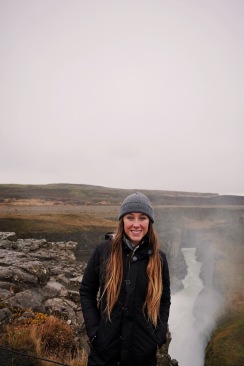
ABOUT ME:

I was born and raised in Mission Viejo, Calif. before moving to Salt Lake City to attend the University of Utah and pursue the sport of skeleton.

At the U, I began my educational career majoring in mechanical engineering before switching to math, business and currently I am a senior majoring in strategic communication.

While pursuing a degree I participated in the sport, skeleton for five years with the goal of going to the Olympics. Eventually I decided to stop sliding due to the high cost, time commitment and safety hazards.

LinkedIn

Braden Rollins

MY STORY:

MY BLOG:

Gathering information and creating a story for the masses to consume can be quite the experience. I found many obstacles in my first foray into the world of journalism that required me to adapt and learn in order to succeed.

Finding interesting story ideas can prove frustrating. And finding a subject that is timely and relevant to the majority can be difficult. I may search for story subjects by observing commentaries that were already occurring in the media. Once I chose a subject I broke it down to find an aspect that has not been or barely covered by other media.

The second most difficult aspect of journalism was locating sources who were willing to be interviewed on my chosen subject. You can come across possible sources but they may refuse to go on record or refuse to speak with you altogether.

Once I found a knowledgeable source willing to go on record much of the stress of gathering information is alleviated. Interviewing sources was fairly painless because I did my best to prepare questions related to my story and did research into how that person relates to it.

My interview process consisted of having a prepared outline at hand during the interview. When I had permission to record an interview I kept note of the time in the interview key points are brought up so I could reference information in my recording with ease later on.

After organizing my collected information I list my facts from most important to least important like an inverted pyramid. This way the most pertinent information is presented first and will hopefully keep the reader’s attention through the story.

Writing like a journalist has also helped me learn to write more concisely as opposed to wordy essays I’ve written for other classes

In the end, it comes down to continuously practicing and using the many skills required to be a good journalist.  

ABOUT ME:

1Having lived in the Salt Lake Valley my entire life, I have an affinity for Utah. Though I love visiting new places outside the state I am very much a homebody and will probably stay in Utah into the distant future.

In my final years of study at the University of Utah, I greatly enjoy my classes in strategic communication and look forward to exploring the many opportunities my degree will open for me.

Though I work full time along with my studies at the University of Utah I enjoy exploring my hobby of photography as an activity outside of what is required of me by my job and school. I also greatly enjoy reading novels, whether they be adventure, nonfiction, sci-fi, or horror. believing that reading is one way to distance myself from our digital world.

All of my success so far would not have been possible without the support of my amazing wife. She helps maintain our household while I am busy at work and school. Once finished with school I look forward to bettering my family’s situation.

Megan Gilson

MY STORY:

MY BLOG:

I saw this article as an opportunity to introduce the world to something new. I only had two requirements for my topic: I wanted it to be exciting and inspiring.

Initially, I happened upon my story by mere chance. One weekend, I was searching for something fun to do and I came across Logan Food Tour. It’s not everyday you find something new to do in Logan, so I was intrigued.

I was first interested in what the business does and the experience it provides. I was scooped up in excitement of the idea, and was confident it would make a good story. As I pursued the idea, I hoped that there was something inspiring beneath it all.

To start, I decided there is no better source than the creator, so I reached out to the owner of Logan Food Tour, Austin Jensen. Throughout the interview we discussed what the business is and how it came to be, and how he ended up where he is.

Later, I was able to meet with one of owners of the restaurants that Logan Food Tour works with, and talk to one of the participants. This gave me two different perspectives about what Logan Food Tour is offering and how it has impacted them.

I was left with a lot of great information but most of all, I felt inspired. I knew I had found the component that the story was missing.

Jensen, instead of his business, became my focus.

Even with a clear idea in my mind of how I wanted everything to play out, the writing process was harder than expected. I found myself struggling to find a balance between the excitement of the business and the inspiring story of the owner. I learned that both were important, and tried to adequately tell the stories of each one.

After meeting with Jensen, he invited me to participate in one of the food tours. It absolutely exceeded my expectations. I could see Jensen’s passion as he guided the tour, and I felt like I was part of each restaurant’s story. It really was the ultimate experience. Plus, the food was excellent and as promised, by the end, I was stuffed.

I find, time and time again, that I am always surprised by the ambition of entrepreneurs, and Jensen was no exception. He was determined to grow through experience, even if that meant starting from scratch.

Throughout this experience, I ended up gaining a lot more than a story I was proud of.  I made new friends, ate great food, and felt inspired to pursue my own dreams.

ABOUT ME:

56307872204__BB65FAA9-BAFD-413E-B13A-22E517CE88E5I am a junior at the University of Utah pursuing a degree in strategic communication with a minor in business. I grew up in Salt Lake City, but I moved to Logan this summer after marrying my husband.
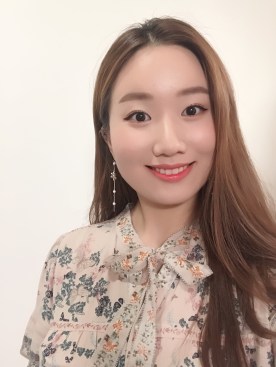
I love writing and design and hope to incorporate both in my future career. I am currently engaged in freelance work, helping start-up companies with logo and website design. I have loved creating relationships with new businesses and developing new skills through my work.

When I’m not working or doing homework, I enjoy boating, watching movies and traveling.

McKenzie Nicol

MY STORY:

MY BLOG:

Usually I develop my stories out of things that I have a desire to learn more about. I love learning and expanding my knowledge base. I also have a passion for people and finding out their stories. Everyone has a story, and every story holds incredible potential.

For the rock climbing piece, I have several personal connections with many local rock climbers, being a beginner myself. Isaac Baker is a good friend whom I worked with while I was living in Romania. Ben Roa is actually a friend of a friend in my news writing class. I met Joel Zerr at the climbing gym when I was asking around for advice on the story. All of these individuals were more than willing to talk about rock climbing and the impact it has had in their lives, giving great insights and ideas about the subject. They are the best sources for this story because they are all local and heavily involved in rock climbing.

I did not encounter any sort of ethical or moral issues with the rock climbing story. It was a little tricky finding time to meet with Joel because he is busy setting routes for several gyms along the Wasatch Front. But we worked out scheduling and ended up being able to meet.

Making sense of all the information that I gathered was hard at first because there were so many good ideas to sift through. There is so much you can learn and take from rock climbing. It is all a big metaphor. But one common theme that I couldn’t shake was the mental side of rock climbing. It is intriguing and inspiring, and something that I love to talk about, and it was easy to decide to write about it.

I did a lot of thinking to begin the process. I have a hard time if I just sit down and write. I need time to process and develop. At some point I have to just write words on the paper, and then return to them after I have thought about it more before I can write a good draft. After that I comb it over and make adjustments that are desperately needed.

I wish I could include more details about the actual logistics of climbing. They are so interesting and give you a deeper understanding of the technique behind everything. But having focused more on the mental side of the story, I did not feel that a lot of the technicalities fit in.

It was surprising how easy and natural it was to talk to the sources about something that they are all passionate about. It was not awkward at all and the conversation just flowed. I don’t know why, but I was expecting the actual interviewing to be a little bit tougher. But it wasn’t, and I was pleasantly surprised.

Rock climbing is such a cool sport with so much symbolism and metaphor. I feel like you could write any sort of story out of it. It has taught me a lot in my own life and is such a personal journey. My hope is that everyone who reads this story will be inspired to dig a little deeper within themselves.

ABOUT ME:

IMG_2508

I am a student at the University of Utah studying strategic communication. I love videography and have a passion for telling stories through the lens. I am always seeking out adventure and new experiences because the best way to learn about life is to live it. I love rock climbing, backpacking, hammocking and anything to do with the outdoors. I lived in Romania and the Republic of Moldova for 20 months. I speak Romanian fluently and am now tackling Russian. I love challenges and pushing myself to my limits.

“How do you see the world?” is a question that has shaped me ever since I started thinking about it two years ago. It came to me as I was roaming the streets of Chisinau, Moldova, pondering on all of the lives that were going on around me. Each one so different than my own. Each an individual who sees the world in a completely unique light and has so much to offer the world in a way that no one else can. My goal in life is to get an understanding of how others view the world and tell stories through the lens.


Jen Chun

MY STORY: IMG_4679

MY BLOG:

During the three years of living in the United States, the biggest cultural shock was a food. The country that I love is facing a severe health problem: chronic disease. Indeed, it becomes an issue that modern people tend to have fast food daily. However, the “real problem” is that people do not know how to compose their own dish. As a person who is from an Asian country, which has a healthy food culture, I always wanted to share and inform the way how to eat healthily. Since my mom is doing a plant based-diet, I thought it will be a great source to develop it for my story idea. Also, I hoped this opportunity becomes a great chance to motivate myself to eat in a more healthy way.

I had to do some research before pitching the idea because I only had basic information about plant-based diet (PBD). It was not so hard to collect data or sources because PBD has become a trend among “healthy eaters.” For more profound information and reviews, I have reached out to three people who study or work in health fields. Lastly, I attended the 2nd Annual Plant Based Nutrition Symposium on Oct. 13, 2018. At the symposium, I learned some practical tips on how to make my own plant-based meal.

I tried my best to provide facts and professional knowledge to inform the public. I aimed to provide as much information as I can to educate people. This has made me do a lot of online-based research, meet people for an interview, and attend the symposium for further and deeper information. It was interesting to listen to people’s anecdotes or personal thoughts about PBD. At the symposium, I  learned a lot of productive tips from the lectures of doctors and health specialists. I am sure that my sources are beneficial enough for my story.

Indeed, it was challenging to contact organizations. I have sent several emails and made phone calls for an interview, but none of them responded to me. My initial plan was to interview Plant Based Utah, an organization, and Seasons Plant Based Bistro, a PBD restaurant, because it seemed helpful for the readers to recommend accessible places that people can visit. Unfortunately, they did not answer to me. I had to find other available people, a Ute who does PBD and a chief who cooks PBD, for an interview. Contacting was the hardest part of the whole process.

As I mentioned earlier, I wanted to inform people. My goal of the story is to motivate the public to eat in healthy and therefore, to change their lifestyle. For a logical understanding of the readers, I put some helpful statistics and source about plant-based nutrients. I focused on stating why and how having PBD could become a key to well-being. Inserting professionals or experienced person’s point of views give more credibility and motivation to the readers as well.

The writing process was not easy for me at all. It was my first time to write a journalistic article. I had a hard time to follow AP rules, correct grammar error, and organize paragraphs. Sometimes, I had to push myself into the situations. These experiences trained me to become a professional journalist.

Fun fact is that after I came back from the symposium, I have tried to make my own green smoothie. I borrowed a blender from one of my good friends and put grape, salary, lemon, and honey into the binder with some ice. Surprisingly, the taste was good enough. I would love to have a green smoothie every morning for breakfast.

One thing that surprised me was that there are some restaurants in Utah that provide plant-based dishes with ingredients such as vegetables, fruit, and seeds. I was not aware of any plant-based restaurants until Professor Mangun has told some of them to me. I am planning to visit one of the restaurants with my vegetarian friends in the near future.

I hope the readers feel informed and motivative by my article. I want to deliver a message that eating healthy is as important as exercising. I do not expect everyone to have PBD but at least feel inspired and therefore, starting to have a healthy life cycle. As a journalist, it was the fascinated moments to challenge my writing skills. However, I am glad that I could earn some advanced skills in news writing.

ABOUT ME:

“I will never forget the audience’s enthusiastic cheering sound at the Gang Neung Curling Center.”

Jen is from South Korea and is an only child of a lovely family. She is a lucky girl since she was young. Her parents are supportive enough to provide more chances to travel or go abroad for studying. So far, Jen has visited over 20 countries and currently she is studying in the U.S. since the high school. From the experiences of living abroad, she learned to accept the variety of culture. Jen loves to make new friends from all over the world and enjoys to communicate with them. She is an adventurous, independent, and brave person. Her courage and global background influenced her to get more interest in the communications field as well.

During the 2018 Winter Olympics, Jen was there at the scene of the history. It was the first time holding a Winter Olympics for her home country. She could not believe in herself that she is watching the actual curling games at the stadium to work as a spotter. It was a moment of her dream came true. While two months, she could experience the real-world, hands-on experience with cutting-edge technologies which have enhanced her understanding of the system of broadcasting. The internship experience at Olympic Broadcast Service (OBS) promoted her to discover passion and courage in communications.

Currently, Jen is a junior at the University of Utah. She is majoring in strategic communication and has a great interest in PR and marketing. She is learning a lot of creative and practical communication skills from the courses at the U. She enjoys her learnings and college life at the U.

Jen is hoping to find more opportunities of internship in the future. She is eager to practice and perform in professional communications fields to become a better marketer. She will never stop to explore and challenge herself to improve.

Jolie Bell

MY STORY:

MY BLOG:

When I first learned about the Enterprise Story assignment, I instantly knew my topic should be about Tinker’s Cat Café. I visited the café a couple of times and participated in one of its Cat and Paint nights. It is a fairly new business many Salt Lake City locals did not know about. While the community knows about Best Friends Animal Society and other local shelters, I believe people should know about every option for adopting a pet.

I first contacted Lisa Boone, the owner of Tinker’s Cat Café, the main source for my story. She was very kind to meet with me in person for an interview. Tinker’s is a second home and family to her as she passionately described her business. Afterward, Boone helped me find a regular customer who also adopted a cat from Tinker’s.

Sarah Murtagh is a daily visitor at Tinker’s. She described her own personal story of her relationship with Tinker’s. Her interview was integral to my story because it exemplified how Tinker’s could be a therapeutic and unique destination to visit.

My third interview was with Ally Jelitto. She is one of my peers in the modern dance program and agreed to a phone interview over fall break. Jelitto mentioned she really enjoyed her first visit to Tinker’s. I believe including a University of Utah student would be beneficial to my story since the audience would be mostly U students. She was a relatable source to the average person who would visit Thinker’s Cat Café on occasion.

After collecting my information and conducting interviews, it was difficult for me to organize my story into a cohesive piece. I made multiple drafts in the process to find the right fit for all of the pieces. I decided to focus on the basis of what a cat café is and what Tinker’s has to offer to the community. It is a new trend that has recently begun in the United States, so it would be beneficial to the readers to explain it first.

The writing process was a challenge for me. I have never taken a news writing class before or written journalistic stories. My experience in writing has mostly been research papers and creative stories in the past. It was difficult in the beginning using AP Style and the AP Stylebook. However, the unique format of news articles and interviewing skills became significant tools in my writing that I would continue to use in the future.

ABOUT ME:

10580222_897623063585606_6421814116935731614_n

I have been dancing since I was 3 years old.

My performance history has ranged from performing in the National Tour of the “Wizard of Oz” to being a back-up dancer to working as a Cherion Records recording artist. I grew up studying many forms of dance such as tap, jazz, ballet, hip-hop and modern. Since I was young, I knew I wanted to become a professional dancer. I moved to Utah from Albany, New York, in 2016 to pursue an undergraduate degree in modern dance at the University of Utah.

I wanted to expand my art in a new medium of writing, so I now have a minor in strategic communication. I hope to combine my knowledge from both fields to support and enhance my dance career. After performing for some time, I would like to take an administrative position in a dance company.

Porter L. Anderson

MY STORY:

MY BLOG:

My writing process for this piece was done almost completely in my head. Coming up with the original idea I looked for topics that I believe needed to be addressed. From there I keep that thought in the back of my mind and mull over the different approaches I could have towards the topic and the ways that I could write the piece. Once I have the topic and the direction I want to go with my writing I keep an eye out for first-hand accounts that can be used for sources in the article. I thought it would be really interesting to see from the side of those who were running the program to those who came with their families and got to participate in the program. My sources were fairly easy to get an interview with because my piece wasn’t exactly controversial and only displayed them and the library in a good light.

Overall the hardest thing I think was narrowing down the information I got from interviewing people at the library. I had talked to multiple translators but, didn’t want to include all of them and I talked to probably a dozen patrons of the program and only needed one that I thought represented the group best. The thing that surprised me the most about writing this article and getting all this info from people is that it was almost entirely positive. I thought that with the large variety of people that I interviewed that at least a few would give some issues about the program or think that it was still too little attention being given to the Chinese patrons. Only one of my sources stated anything slightly negative and he was more just calling my attention to the fact that the program had a few Chinese characters that were written incorrectly. Writing this piece was much more smooth than I thought it might be. I was able to talk to the administration people that I wanted to and had very little resistance from the patrons I asked questions. I knew my piece would depend on interviews more than anything else so I am extremely happy with how willing people were to help with the article.

ABOUT ME: 

profile

As a student majoring in journalism at the University of Utah, Porter Anderson looks forward to the career in journalism that he could have. He sets his sights on reporting stories from the gaming world and other sections of entertainment. He is expected to graduate in 2019 and will move from his job as a community outreach intern at the Family History Library in downtown Salt Lake.

Anderson has written two books, one of which has been published called “Built By Fear,” which is meant to be a tool for those struggling with social anxiety and other fears. He has a tremendous amount of passion for helping people through writing and tries to find as many ways to help people as possible.

Anderson has taken this passion for helping others and put it into his passion project, a website called Ureshii Outlet. He built the site as a place for people to come and share uplifting stories from their lives in an attempt to add a little more brightness and positivity to the world.

Prior to studying at the University of Utah, in 2014, Anderson spent two years living in Japan as a missionary for the Church of Jesus Christ of Latter-day Saints. During this time he taught English to the people of Japan and spent time learning the language from the local people. This time proved critical to his development in the field of journalism. Seeing more of the world gave a new perspective to the number of people that need to be educated about certain topics and even need help in different aspects of their lives.

Hannah Cook

fullsizeoutput_906My STORY:

MY BLOG: 

My story was all about organ donation. I developed my ideas by brainstorming with my family, when we realized that this subject being near to my heart, with my father being a two-time liver recipient. I knew how much that this topic meant to me and my family and I wanted to share that importance with everyone else.

I knew that this was a topic that is greatly important and also one that most people aren’t properly educated or informed on.

With the topic being something that I have dealt with firsthand, I knew the type of people who are usually affected by a transplant.

I located my sources by knowing that a transplant coordinator is needed for each transplant case. I also thought about how it would be interesting to hear the story of organ donation by two people who have been affected by it: a waitlisted patient and a parent of a donor. Each have been affected two completely different ways and their points of view were why they were the best sources for my story.

The main dilemma that I had with my story was trying to keep my personal feelings of the topic out of my story. This story needed to be free of any biased information to really show the importance of the topic. I made sense of all of the information that I gathered and decided I wanted my information to focus on the importance of organ donation.

My focus was set on each of my interviews felt about organ donation, as well as statistics that supported the case. Getting to know what organ donation meant to many different parties in the situation was crucial to my story, to help inform the readers what it means to different people in a donation scenario.

The writing process of my story was tedious, and I learned that the interviewing process can be difficult and take more time than you might think. I was shocked after my first interview, but it got easier after time. I received more information in my story than I could have ever asked for. Many details didn’t even make it to my story.

A detail that surprised me and that didn’t make it to my story is that not one person on the waitlist thought that they’d be there. Often times a person can appear to be a picture of health physically but have failing organs. No one thinks that organ failure will happen to them, and it still does. It is important for people to know what someone with failing organs goes through to help see the importance of organ donation and that is exactly what my story delivered.

ABOUT ME: 

I’m your typical girl next door: work all day, homework all night, and as much fun as I can possibly fit in on the weekends.

I grew up in Syracuse, Utah, and graduated from Syracuse High School. I have lived in Utah my entire life. I always knew that I wanted to attend the University of Utah, as my family has always been major Ute fans.

When I am not at school or work I spend my free time spending as much quality time with my family as possible. We love to go to dinner and movies, and of course watching the Utes play.

I have always worked hard all through school and have been very dedicated to be successful.

My dreams seem average but mean so much to me. Though I work hard at work and in school, my dreams always go back to my future. I dream of being the best wife and mom, and making sure that my family will have everything that they could ever need.

I am working diligently toward my degree for the satisfaction of having my education, and to land a job that I love.

My dreams are to have a job that I love and having an adorable family that I am able to go on many adventures with.

I am currently on the downward slope of my junior year at the University of Utah. I will graduate with my bachelor’s degree in Fall of 2019 with a communication major with an emphasis in strategic communication. I am eager to finish my education so that I can further my career in public relations.

My time at the University of Utah has been everything that I ever dreamed of. I have made memories that I will forever cherish, and I can’t wait to see what my last year will bring.

Virginia Hill

MY STORY:

MY BLOG:

When writing the Enterprise Story, it was interesting to see how the story developed into something more than just facts and timelines. Wish Week, a philanthropic week hosted on campus by Chi Omega, turned out to be more than just a week with scheduled events and a specific agenda.

The best way to bring life to my story was through interviewing people and really hearing their experiences and opinions. When locating sources, it was easiest to reach out to the people I knew in the Chi Omega sorority and ask them who would be best to interview for this story. These recommendations ended up being perfect for the story, they were all part of planning the Wish Week and therefore thought passionately about the topic and had a lot of information to give.

After everything needed for the story was gathered, it was typed up as noted and then sorted through, deleting things that were deemed unnecessary and highlighting things that were most important.

Once that was done, compelling the information into an interesting story that would keep the audience engaged wasn’t very hard. This was due to a large amount of relevant information gathered and its interesting nature.

ABOUT VIRGINIA:

Processed with VSCO with c1 presetVirginia Hill is a student at the University of Utah graduating Spring 2019 with a Bachelor of Science in  Strategic Communication with a minor in Multidisciplinary Design.

Virginia has a strong background in marketing. A summer internship at McgarryBowen’s New York offices set her on a successful track in marketing, particularly with design and art.

Since then, she has been working in O.C. Tanner’s marketing department working on designing and building their corperate and jewelry store websites.

She intends to work in the world of marketing and product design. By pairing the two disciplines she has provided herself with a platform for which she can think strategically about products and design in a way that can meet the needs of a market.

Seok Lee

  1. MY STORY:

MY BLOG:

I developed my story ideas by beginning to think how students have hard time to work part-time and study together. The reason why I wanted to focus on that was because I personally had a hard time while I did a part-time job and study for my courses in the university. Also, I wonder other students might have hard time too so I wanted to encourage University of Utah students to succeed in college life without burnout.

I located one of my sources through one class called COMM 3710. In this class, me and my classmates made a survey questions about how part or full-time job affects student college life. However, this class required only the result of a survey and made a graph about it.

I found the best sources for my story because each one showed great information that lots of students do not know. I did not encounter any obstacles, ethical issues or moral dilemmas.

I decided my focus to the university students. I gathered surveys that 10 students did for me. Also, I focused on tips to succeed in college so I gathered interview notes for my story too.

I learned more about how to write a better interview notes while I did interviews to others. Tips about writing interview notes, recording is one of a great tip for me not to miss details.

What surprised me in their interviewing process was that all interviewees did nice to me because before I did interviews to people, I thought that I bothered their times so I felt sorry when doing interviews. However, all of them do nice with smile.

The overall lesson I learned from my interviews that lots of students burn out because of work and study. Also, all advisors, staffs in the university or other people want all students do well in college.

ABOUT ME:

I am from South Korea and I arrived in Salt Lake City in 2011. I wanted to study art, especially music and drawing in the university. Personally, I wanted to study art near Hollywood which is in Los Angeles and Broadway which is in New York City. Unfortunately, the tuition fees in LA and NY are too expensive for me. So, I decided to study in the University of Utah which is near to Las Vegas and the tuition fee is cheaper than other universities that I wanted to study.

Seok LeeWhile I studied in the U, I supposed to study art as a major but I wanted to study more about cross culture. The main reason was that learning cross culture might be helpful when I make or sell my art pieces to others.

While I studied in the U on 2011, I joined one band called “Romantico” and did several performances in small clubs or bars in Salt Lake City and Las Vegas. Me and my crew members performed around 80 times. However, I hurt my vocal cords so it was difficult to sing so I quit my band and went to military in South Korea frin 2012 to 2014.

After I finished serving my military duty, I started to do an internship in one of the Korean broadcasting companies as music director and producer. So, I came back to Salt Lake City in 2016.

When I came back to Utah, I changed my mind. Instead of becoming a musician, I planned to become a music director in a company and I interviewed in several companies and I passed so I plan to work after I graduate in fall 2018. Overall, my major is communication. I have lots of experiences about music performing and I am a senior in the university which means I am going to graduate in fall 2018.

Contact:

sucxes_u0759952@hotmail.com

My LinkedIn

URL: https://www.linkedin.com/in/seok-lee-549448153/?locale=en_US