Courtland Schwerdt

MY STORY:

 MY BLOG:

My Reflection Blog

ABOUT ME:

43D47867-DE64-45F0-8C6A-FC3A2FC2B887

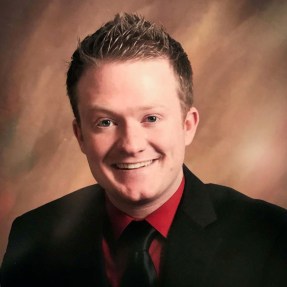
Courtland Schwerdt, 23, from Lindon, Utah. Currently a Senior at University of Utah, studying Strategic Communications.

I’m currently a Senior at the University of Utah graduating this fall. I am majoring in Communications studying Strategic Communications. I’m very passionate about entrepreneurship and sales. Some of my personal interests are sports, hiking and video games. My favorite sport is baseball and I’m a huge San Francisco Giants fan. I grew up playing baseball and played first-base at Timpanogos High School in Orem, Utah. Four years ago, when I graduated high school, I began selling pest control door-to-door in Sacramento, California. I have never had more fun in a job because I got to work and negotiate with people everyday. That summer I was the top performing and youngest sales representative to ever work for Alterra and lead our branch to be the second most profitable territory in the nation. After two years of selling for various companies I started my own pest control company with my brother-in-law in St. George, Utah. I currently serve as the President of Sales and oversee the sales training, hiring and managing of all employees. It has been an amazing ride working in sales and have gained a passion for hard work and setting personal goals. As of 2017, we are the fastest growing pest control company in Southern Utah and are the #1 reviewed company on Google in that region. Throughout my life I’ve always wanted to make a difference in peoples’ lives and am very interested in using my sales experience to work in healthcare or finance.

LINKEDIN:

https://www.linkedin.com/in/courtland-schwerdt-5463749b/

Braden Rollins

MY STORY:

MY BLOG:

Gathering information and creating a story for the masses to consume can be quite the experience. I found many obstacles in my first foray into the world of journalism that required me to adapt and learn in order to succeed.

Finding interesting story ideas can prove frustrating. And finding a subject that is timely and relevant to the majority can be difficult. I may search for story subjects by observing commentaries that were already occurring in the media. Once I chose a subject I broke it down to find an aspect that has not been or barely covered by other media.

The second most difficult aspect of journalism was locating sources who were willing to be interviewed on my chosen subject. You can come across possible sources but they may refuse to go on record or refuse to speak with you altogether.

Once I found a knowledgeable source willing to go on record much of the stress of gathering information is alleviated. Interviewing sources was fairly painless because I did my best to prepare questions related to my story and did research into how that person relates to it.

My interview process consisted of having a prepared outline at hand during the interview. When I had permission to record an interview I kept note of the time in the interview key points are brought up so I could reference information in my recording with ease later on.

After organizing my collected information I list my facts from most important to least important like an inverted pyramid. This way the most pertinent information is presented first and will hopefully keep the reader’s attention through the story.

Writing like a journalist has also helped me learn to write more concisely as opposed to wordy essays I’ve written for other classes

In the end, it comes down to continuously practicing and using the many skills required to be a good journalist.  

ABOUT ME:

1Having lived in the Salt Lake Valley my entire life, I have an affinity for Utah. Though I love visiting new places outside the state I am very much a homebody and will probably stay in Utah into the distant future.

In my final years of study at the University of Utah, I greatly enjoy my classes in strategic communication and look forward to exploring the many opportunities my degree will open for me.

Though I work full time along with my studies at the University of Utah I enjoy exploring my hobby of photography as an activity outside of what is required of me by my job and school. I also greatly enjoy reading novels, whether they be adventure, nonfiction, sci-fi, or horror. believing that reading is one way to distance myself from our digital world.

All of my success so far would not have been possible without the support of my amazing wife. She helps maintain our household while I am busy at work and school. Once finished with school I look forward to bettering my family’s situation.

Megan Gilson

MY STORY:

MY BLOG:

I saw this article as an opportunity to introduce the world to something new. I only had two requirements for my topic: I wanted it to be exciting and inspiring.

Initially, I happened upon my story by mere chance. One weekend, I was searching for something fun to do and I came across Logan Food Tour. It’s not everyday you find something new to do in Logan, so I was intrigued.

I was first interested in what the business does and the experience it provides. I was scooped up in excitement of the idea, and was confident it would make a good story. As I pursued the idea, I hoped that there was something inspiring beneath it all.

To start, I decided there is no better source than the creator, so I reached out to the owner of Logan Food Tour, Austin Jensen. Throughout the interview we discussed what the business is and how it came to be, and how he ended up where he is.

Later, I was able to meet with one of owners of the restaurants that Logan Food Tour works with, and talk to one of the participants. This gave me two different perspectives about what Logan Food Tour is offering and how it has impacted them.

I was left with a lot of great information but most of all, I felt inspired. I knew I had found the component that the story was missing.

Jensen, instead of his business, became my focus.

Even with a clear idea in my mind of how I wanted everything to play out, the writing process was harder than expected. I found myself struggling to find a balance between the excitement of the business and the inspiring story of the owner. I learned that both were important, and tried to adequately tell the stories of each one.

After meeting with Jensen, he invited me to participate in one of the food tours. It absolutely exceeded my expectations. I could see Jensen’s passion as he guided the tour, and I felt like I was part of each restaurant’s story. It really was the ultimate experience. Plus, the food was excellent and as promised, by the end, I was stuffed.

I find, time and time again, that I am always surprised by the ambition of entrepreneurs, and Jensen was no exception. He was determined to grow through experience, even if that meant starting from scratch.

Throughout this experience, I ended up gaining a lot more than a story I was proud of.  I made new friends, ate great food, and felt inspired to pursue my own dreams.

ABOUT ME:

56307872204__BB65FAA9-BAFD-413E-B13A-22E517CE88E5I am a junior at the University of Utah pursuing a degree in strategic communication with a minor in business. I grew up in Salt Lake City, but I moved to Logan this summer after marrying my husband.

I love writing and design and hope to incorporate both in my future career. I am currently engaged in freelance work, helping start-up companies with logo and website design. I have loved creating relationships with new businesses and developing new skills through my work.

When I’m not working or doing homework, I enjoy boating, watching movies and traveling.

McKenzie Nicol

MY STORY:

MY BLOG:

Usually I develop my stories out of things that I have a desire to learn more about. I love learning and expanding my knowledge base. I also have a passion for people and finding out their stories. Everyone has a story, and every story holds incredible potential.

For the rock climbing piece, I have several personal connections with many local rock climbers, being a beginner myself. Isaac Baker is a good friend whom I worked with while I was living in Romania. Ben Roa is actually a friend of a friend in my news writing class. I met Joel Zerr at the climbing gym when I was asking around for advice on the story. All of these individuals were more than willing to talk about rock climbing and the impact it has had in their lives, giving great insights and ideas about the subject. They are the best sources for this story because they are all local and heavily involved in rock climbing.

I did not encounter any sort of ethical or moral issues with the rock climbing story. It was a little tricky finding time to meet with Joel because he is busy setting routes for several gyms along the Wasatch Front. But we worked out scheduling and ended up being able to meet.

Making sense of all the information that I gathered was hard at first because there were so many good ideas to sift through. There is so much you can learn and take from rock climbing. It is all a big metaphor. But one common theme that I couldn’t shake was the mental side of rock climbing. It is intriguing and inspiring, and something that I love to talk about, and it was easy to decide to write about it.

I did a lot of thinking to begin the process. I have a hard time if I just sit down and write. I need time to process and develop. At some point I have to just write words on the paper, and then return to them after I have thought about it more before I can write a good draft. After that I comb it over and make adjustments that are desperately needed.

I wish I could include more details about the actual logistics of climbing. They are so interesting and give you a deeper understanding of the technique behind everything. But having focused more on the mental side of the story, I did not feel that a lot of the technicalities fit in.

It was surprising how easy and natural it was to talk to the sources about something that they are all passionate about. It was not awkward at all and the conversation just flowed. I don’t know why, but I was expecting the actual interviewing to be a little bit tougher. But it wasn’t, and I was pleasantly surprised.

Rock climbing is such a cool sport with so much symbolism and metaphor. I feel like you could write any sort of story out of it. It has taught me a lot in my own life and is such a personal journey. My hope is that everyone who reads this story will be inspired to dig a little deeper within themselves.

ABOUT ME:

IMG_2508

I am a student at the University of Utah studying strategic communication. I love videography and have a passion for telling stories through the lens. I am always seeking out adventure and new experiences because the best way to learn about life is to live it. I love rock climbing, backpacking, hammocking and anything to do with the outdoors. I lived in Romania and the Republic of Moldova for 20 months. I speak Romanian fluently and am now tackling Russian. I love challenges and pushing myself to my limits.

“How do you see the world?” is a question that has shaped me ever since I started thinking about it two years ago. It came to me as I was roaming the streets of Chisinau, Moldova, pondering on all of the lives that were going on around me. Each one so different than my own. Each an individual who sees the world in a completely unique light and has so much to offer the world in a way that no one else can. My goal in life is to get an understanding of how others view the world and tell stories through the lens.


Jen Chun

MY STORY: IMG_4679

MY BLOG:

During the three years of living in the United States, the biggest cultural shock was a food. The country that I love is facing a severe health problem: chronic disease. Indeed, it becomes an issue that modern people tend to have fast food daily. However, the “real problem” is that people do not know how to compose their own dish. As a person who is from an Asian country, which has a healthy food culture, I always wanted to share and inform the way how to eat healthily. Since my mom is doing a plant based-diet, I thought it will be a great source to develop it for my story idea. Also, I hoped this opportunity becomes a great chance to motivate myself to eat in a more healthy way.

I had to do some research before pitching the idea because I only had basic information about plant-based diet (PBD). It was not so hard to collect data or sources because PBD has become a trend among “healthy eaters.” For more profound information and reviews, I have reached out to three people who study or work in health fields. Lastly, I attended the 2nd Annual Plant Based Nutrition Symposium on Oct. 13, 2018. At the symposium, I learned some practical tips on how to make my own plant-based meal.

I tried my best to provide facts and professional knowledge to inform the public. I aimed to provide as much information as I can to educate people. This has made me do a lot of online-based research, meet people for an interview, and attend the symposium for further and deeper information. It was interesting to listen to people’s anecdotes or personal thoughts about PBD. At the symposium, I  learned a lot of productive tips from the lectures of doctors and health specialists. I am sure that my sources are beneficial enough for my story.

Indeed, it was challenging to contact organizations. I have sent several emails and made phone calls for an interview, but none of them responded to me. My initial plan was to interview Plant Based Utah, an organization, and Seasons Plant Based Bistro, a PBD restaurant, because it seemed helpful for the readers to recommend accessible places that people can visit. Unfortunately, they did not answer to me. I had to find other available people, a Ute who does PBD and a chief who cooks PBD, for an interview. Contacting was the hardest part of the whole process.

As I mentioned earlier, I wanted to inform people. My goal of the story is to motivate the public to eat in healthy and therefore, to change their lifestyle. For a logical understanding of the readers, I put some helpful statistics and source about plant-based nutrients. I focused on stating why and how having PBD could become a key to well-being. Inserting professionals or experienced person’s point of views give more credibility and motivation to the readers as well.

The writing process was not easy for me at all. It was my first time to write a journalistic article. I had a hard time to follow AP rules, correct grammar error, and organize paragraphs. Sometimes, I had to push myself into the situations. These experiences trained me to become a professional journalist.

Fun fact is that after I came back from the symposium, I have tried to make my own green smoothie. I borrowed a blender from one of my good friends and put grape, salary, lemon, and honey into the binder with some ice. Surprisingly, the taste was good enough. I would love to have a green smoothie every morning for breakfast.

One thing that surprised me was that there are some restaurants in Utah that provide plant-based dishes with ingredients such as vegetables, fruit, and seeds. I was not aware of any plant-based restaurants until Professor Mangun has told some of them to me. I am planning to visit one of the restaurants with my vegetarian friends in the near future.

I hope the readers feel informed and motivative by my article. I want to deliver a message that eating healthy is as important as exercising. I do not expect everyone to have PBD but at least feel inspired and therefore, starting to have a healthy life cycle. As a journalist, it was the fascinated moments to challenge my writing skills. However, I am glad that I could earn some advanced skills in news writing.

ABOUT ME:

“I will never forget the audience’s enthusiastic cheering sound at the Gang Neung Curling Center.”

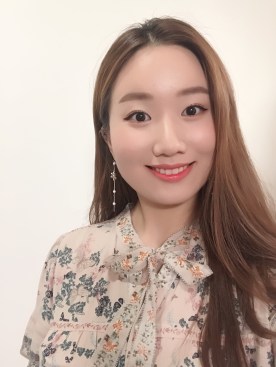
Jen is from South Korea and is an only child of a lovely family. She is a lucky girl since she was young. Her parents are supportive enough to provide more chances to travel or go abroad for studying. So far, Jen has visited over 20 countries and currently she is studying in the U.S. since the high school. From the experiences of living abroad, she learned to accept the variety of culture. Jen loves to make new friends from all over the world and enjoys to communicate with them. She is an adventurous, independent, and brave person. Her courage and global background influenced her to get more interest in the communications field as well.

During the 2018 Winter Olympics, Jen was there at the scene of the history. It was the first time holding a Winter Olympics for her home country. She could not believe in herself that she is watching the actual curling games at the stadium to work as a spotter. It was a moment of her dream came true. While two months, she could experience the real-world, hands-on experience with cutting-edge technologies which have enhanced her understanding of the system of broadcasting. The internship experience at Olympic Broadcast Service (OBS) promoted her to discover passion and courage in communications.

Currently, Jen is a junior at the University of Utah. She is majoring in strategic communication and has a great interest in PR and marketing. She is learning a lot of creative and practical communication skills from the courses at the U. She enjoys her learnings and college life at the U.

Jen is hoping to find more opportunities of internship in the future. She is eager to practice and perform in professional communications fields to become a better marketer. She will never stop to explore and challenge herself to improve.

Jolie Bell

MY STORY:

MY BLOG:

When I first learned about the Enterprise Story assignment, I instantly knew my topic should be about Tinker’s Cat Café. I visited the café a couple of times and participated in one of its Cat and Paint nights. It is a fairly new business many Salt Lake City locals did not know about. While the community knows about Best Friends Animal Society and other local shelters, I believe people should know about every option for adopting a pet.

I first contacted Lisa Boone, the owner of Tinker’s Cat Café, the main source for my story. She was very kind to meet with me in person for an interview. Tinker’s is a second home and family to her as she passionately described her business. Afterward, Boone helped me find a regular customer who also adopted a cat from Tinker’s.

Sarah Murtagh is a daily visitor at Tinker’s. She described her own personal story of her relationship with Tinker’s. Her interview was integral to my story because it exemplified how Tinker’s could be a therapeutic and unique destination to visit.

My third interview was with Ally Jelitto. She is one of my peers in the modern dance program and agreed to a phone interview over fall break. Jelitto mentioned she really enjoyed her first visit to Tinker’s. I believe including a University of Utah student would be beneficial to my story since the audience would be mostly U students. She was a relatable source to the average person who would visit Thinker’s Cat Café on occasion.

After collecting my information and conducting interviews, it was difficult for me to organize my story into a cohesive piece. I made multiple drafts in the process to find the right fit for all of the pieces. I decided to focus on the basis of what a cat café is and what Tinker’s has to offer to the community. It is a new trend that has recently begun in the United States, so it would be beneficial to the readers to explain it first.

The writing process was a challenge for me. I have never taken a news writing class before or written journalistic stories. My experience in writing has mostly been research papers and creative stories in the past. It was difficult in the beginning using AP Style and the AP Stylebook. However, the unique format of news articles and interviewing skills became significant tools in my writing that I would continue to use in the future.

ABOUT ME:

10580222_897623063585606_6421814116935731614_n

I have been dancing since I was 3 years old.

My performance history has ranged from performing in the National Tour of the “Wizard of Oz” to being a back-up dancer to working as a Cherion Records recording artist. I grew up studying many forms of dance such as tap, jazz, ballet, hip-hop and modern. Since I was young, I knew I wanted to become a professional dancer. I moved to Utah from Albany, New York, in 2016 to pursue an undergraduate degree in modern dance at the University of Utah.

I wanted to expand my art in a new medium of writing, so I now have a minor in strategic communication. I hope to combine my knowledge from both fields to support and enhance my dance career. After performing for some time, I would like to take an administrative position in a dance company.

Porter L. Anderson

MY STORY:

MY BLOG:

My writing process for this piece was done almost completely in my head. Coming up with the original idea I looked for topics that I believe needed to be addressed. From there I keep that thought in the back of my mind and mull over the different approaches I could have towards the topic and the ways that I could write the piece. Once I have the topic and the direction I want to go with my writing I keep an eye out for first-hand accounts that can be used for sources in the article. I thought it would be really interesting to see from the side of those who were running the program to those who came with their families and got to participate in the program. My sources were fairly easy to get an interview with because my piece wasn’t exactly controversial and only displayed them and the library in a good light.

Overall the hardest thing I think was narrowing down the information I got from interviewing people at the library. I had talked to multiple translators but, didn’t want to include all of them and I talked to probably a dozen patrons of the program and only needed one that I thought represented the group best. The thing that surprised me the most about writing this article and getting all this info from people is that it was almost entirely positive. I thought that with the large variety of people that I interviewed that at least a few would give some issues about the program or think that it was still too little attention being given to the Chinese patrons. Only one of my sources stated anything slightly negative and he was more just calling my attention to the fact that the program had a few Chinese characters that were written incorrectly. Writing this piece was much more smooth than I thought it might be. I was able to talk to the administration people that I wanted to and had very little resistance from the patrons I asked questions. I knew my piece would depend on interviews more than anything else so I am extremely happy with how willing people were to help with the article.

ABOUT ME: 

profile

As a student majoring in journalism at the University of Utah, Porter Anderson looks forward to the career in journalism that he could have. He sets his sights on reporting stories from the gaming world and other sections of entertainment. He is expected to graduate in 2019 and will move from his job as a community outreach intern at the Family History Library in downtown Salt Lake.

Anderson has written two books, one of which has been published called “Built By Fear,” which is meant to be a tool for those struggling with social anxiety and other fears. He has a tremendous amount of passion for helping people through writing and tries to find as many ways to help people as possible.

Anderson has taken this passion for helping others and put it into his passion project, a website called Ureshii Outlet. He built the site as a place for people to come and share uplifting stories from their lives in an attempt to add a little more brightness and positivity to the world.

Prior to studying at the University of Utah, in 2014, Anderson spent two years living in Japan as a missionary for the Church of Jesus Christ of Latter-day Saints. During this time he taught English to the people of Japan and spent time learning the language from the local people. This time proved critical to his development in the field of journalism. Seeing more of the world gave a new perspective to the number of people that need to be educated about certain topics and even need help in different aspects of their lives.

Hannah Cook

fullsizeoutput_906My STORY:

MY BLOG: 

My story was all about organ donation. I developed my ideas by brainstorming with my family, when we realized that this subject being near to my heart, with my father being a two-time liver recipient. I knew how much that this topic meant to me and my family and I wanted to share that importance with everyone else.

I knew that this was a topic that is greatly important and also one that most people aren’t properly educated or informed on.

With the topic being something that I have dealt with firsthand, I knew the type of people who are usually affected by a transplant.

I located my sources by knowing that a transplant coordinator is needed for each transplant case. I also thought about how it would be interesting to hear the story of organ donation by two people who have been affected by it: a waitlisted patient and a parent of a donor. Each have been affected two completely different ways and their points of view were why they were the best sources for my story.

The main dilemma that I had with my story was trying to keep my personal feelings of the topic out of my story. This story needed to be free of any biased information to really show the importance of the topic. I made sense of all of the information that I gathered and decided I wanted my information to focus on the importance of organ donation.

My focus was set on each of my interviews felt about organ donation, as well as statistics that supported the case. Getting to know what organ donation meant to many different parties in the situation was crucial to my story, to help inform the readers what it means to different people in a donation scenario.

The writing process of my story was tedious, and I learned that the interviewing process can be difficult and take more time than you might think. I was shocked after my first interview, but it got easier after time. I received more information in my story than I could have ever asked for. Many details didn’t even make it to my story.

A detail that surprised me and that didn’t make it to my story is that not one person on the waitlist thought that they’d be there. Often times a person can appear to be a picture of health physically but have failing organs. No one thinks that organ failure will happen to them, and it still does. It is important for people to know what someone with failing organs goes through to help see the importance of organ donation and that is exactly what my story delivered.

ABOUT ME: 

I’m your typical girl next door: work all day, homework all night, and as much fun as I can possibly fit in on the weekends.

I grew up in Syracuse, Utah, and graduated from Syracuse High School. I have lived in Utah my entire life. I always knew that I wanted to attend the University of Utah, as my family has always been major Ute fans.

When I am not at school or work I spend my free time spending as much quality time with my family as possible. We love to go to dinner and movies, and of course watching the Utes play.

I have always worked hard all through school and have been very dedicated to be successful.

My dreams seem average but mean so much to me. Though I work hard at work and in school, my dreams always go back to my future. I dream of being the best wife and mom, and making sure that my family will have everything that they could ever need.

I am working diligently toward my degree for the satisfaction of having my education, and to land a job that I love.

My dreams are to have a job that I love and having an adorable family that I am able to go on many adventures with.

I am currently on the downward slope of my junior year at the University of Utah. I will graduate with my bachelor’s degree in Fall of 2019 with a communication major with an emphasis in strategic communication. I am eager to finish my education so that I can further my career in public relations.

My time at the University of Utah has been everything that I ever dreamed of. I have made memories that I will forever cherish, and I can’t wait to see what my last year will bring.

Virginia Hill

MY STORY:

MY BLOG:

When writing the Enterprise Story, it was interesting to see how the story developed into something more than just facts and timelines. Wish Week, a philanthropic week hosted on campus by Chi Omega, turned out to be more than just a week with scheduled events and a specific agenda.

The best way to bring life to my story was through interviewing people and really hearing their experiences and opinions. When locating sources, it was easiest to reach out to the people I knew in the Chi Omega sorority and ask them who would be best to interview for this story. These recommendations ended up being perfect for the story, they were all part of planning the Wish Week and therefore thought passionately about the topic and had a lot of information to give.

After everything needed for the story was gathered, it was typed up as noted and then sorted through, deleting things that were deemed unnecessary and highlighting things that were most important.

Once that was done, compelling the information into an interesting story that would keep the audience engaged wasn’t very hard. This was due to a large amount of relevant information gathered and its interesting nature.

ABOUT VIRGINIA:

Processed with VSCO with c1 presetVirginia Hill is a student at the University of Utah graduating Spring 2019 with a Bachelor of Science in  Strategic Communication with a minor in Multidisciplinary Design.

Virginia has a strong background in marketing. A summer internship at McgarryBowen’s New York offices set her on a successful track in marketing, particularly with design and art.

Since then, she has been working in O.C. Tanner’s marketing department working on designing and building their corperate and jewelry store websites.

She intends to work in the world of marketing and product design. By pairing the two disciplines she has provided herself with a platform for which she can think strategically about products and design in a way that can meet the needs of a market.

Seok Lee

  1. MY STORY:

MY BLOG:

I developed my story ideas by beginning to think how students have hard time to work part-time and study together. The reason why I wanted to focus on that was because I personally had a hard time while I did a part-time job and study for my courses in the university. Also, I wonder other students might have hard time too so I wanted to encourage University of Utah students to succeed in college life without burnout.

I located one of my sources through one class called COMM 3710. In this class, me and my classmates made a survey questions about how part or full-time job affects student college life. However, this class required only the result of a survey and made a graph about it.

I found the best sources for my story because each one showed great information that lots of students do not know. I did not encounter any obstacles, ethical issues or moral dilemmas.

I decided my focus to the university students. I gathered surveys that 10 students did for me. Also, I focused on tips to succeed in college so I gathered interview notes for my story too.

I learned more about how to write a better interview notes while I did interviews to others. Tips about writing interview notes, recording is one of a great tip for me not to miss details.

What surprised me in their interviewing process was that all interviewees did nice to me because before I did interviews to people, I thought that I bothered their times so I felt sorry when doing interviews. However, all of them do nice with smile.

The overall lesson I learned from my interviews that lots of students burn out because of work and study. Also, all advisors, staffs in the university or other people want all students do well in college.

ABOUT ME:

I am from South Korea and I arrived in Salt Lake City in 2011. I wanted to study art, especially music and drawing in the university. Personally, I wanted to study art near Hollywood which is in Los Angeles and Broadway which is in New York City. Unfortunately, the tuition fees in LA and NY are too expensive for me. So, I decided to study in the University of Utah which is near to Las Vegas and the tuition fee is cheaper than other universities that I wanted to study.

Seok LeeWhile I studied in the U, I supposed to study art as a major but I wanted to study more about cross culture. The main reason was that learning cross culture might be helpful when I make or sell my art pieces to others.

While I studied in the U on 2011, I joined one band called “Romantico” and did several performances in small clubs or bars in Salt Lake City and Las Vegas. Me and my crew members performed around 80 times. However, I hurt my vocal cords so it was difficult to sing so I quit my band and went to military in South Korea frin 2012 to 2014.

After I finished serving my military duty, I started to do an internship in one of the Korean broadcasting companies as music director and producer. So, I came back to Salt Lake City in 2016.

When I came back to Utah, I changed my mind. Instead of becoming a musician, I planned to become a music director in a company and I interviewed in several companies and I passed so I plan to work after I graduate in fall 2018. Overall, my major is communication. I have lots of experiences about music performing and I am a senior in the university which means I am going to graduate in fall 2018.

Contact:

sucxes_u0759952@hotmail.com

My LinkedIn

URL: https://www.linkedin.com/in/seok-lee-549448153/?locale=en_US

Riley Spear

MY STORY:

MY BLOG:

I developed my enterprise story idea through my target audience, being university students. Social media is targeted toward university-aged students, and educating them and creating awareness on how businesses use social media to advertise would be interesting.

I located my first business source, Beauty Industry, through a friend. However, I had never met Paige Johnson, the woman I interviewed. My second and third source, The Hut Group and STEM, I found through googling startup companies in Salt Lake. These companies were one of the few I heard back from after emailing businesses with a wide social media platform, therefore being suitable for my topic.

The three sources I selected for my topic were the best choices because they all use social media, specifically Instagram to advertise their products. The three individuals I interviewed had positions dealing with social media, and gave me feedback I felt was important for my audience to know.

An obstacle I came by was with my third interview with STEM. While I managed to gather enough information, it was a difficult interview. It really forced me to use all the techniques we’ve read in class to push my interviewee to give me critical information that would benefit my story. In the end, she was able to help a lot and I am confident with her as my third source.

Luckily with the questions I prepared all of the information I gathered would have fit into my topic. The issue was deciding which was the most influential, and I chose the aspects I did out of what I thought were most crucial to know to my target audience.

I separated my writing process into the three interviews I did, choosing a space in my story for each of the interviews and forming the story around their responses. After the interviews, the writing came easy because I based the opening and closing off of what I received from them. I realized then just how important the interviews are in creating a good story, to a great story!

I have a few quotes I didn’t add into my story directly from my sources I feel could be interesting to add into my blog. However, they aren’t the best ones; those were in my story. Below, I’ve included something interesting I gathered from Jasmine Reynolds with The Hut Group:

“Instagram marketing is used in an assortment of aspects, whether it is to bring awareness of a cause or to advertise and sell products. It has drastically changed the game from billboards, and TV commercials to a free platform being used by billions.”

An aspect through this whole process of creating my story was how once I became comfortable with the people I interviewed, how much they wanted to engage. At first I felt as if I was an annoying student who had begged for an interview. However, two of my sources were more than happy — excited even — to give me the information I needed to create my piece.

ABOUT ME:

1610807_10203591191740793_8009901870086539677_nRiley Spear grew up in Madison, Wisconsin, until moving away to attend the University of Utah in Salt Lake City, after she graduated high school. She is currently taking classes to fulfill her degree in journalism, and will graduate in the spring.

In her free time, she is involved in Make-A-Wish philanthropy through her Chi Omega sorority. Through her sorority’s involvement and fundraising, members have been able to grant several wishes to children who suffer from cancer. It has been a rewarding experience to her, and she has made friends for life through it.

At her time at the university thus far Riley has completed a study abroad program in London, England, and performed an internship in Melbourne, Australia, through the Hinckley Institute of Politics. She has been able to fulfill her passion of traveling through both of these experiences.

In London, Riley studied digital multimedia, and through her internship in Australia she managed all social media accounts for her company and wrote blogs. This is one of the reasons she chose to focus on social media advertising, specifically Instagram, for her enterprise story.

The company she interned for revolved around global technology energy. Through her interviews she was offered new, and different viewpoints from beauty and health companies.

After graduation Riley plans to travel and see as much of the world as she can. Afterward, she plans to find a career in journalism, creative writing, or in public relations.

Reginald Hodnett

MY STORY:

MY BLOG:

When Professor Mangun told the class that we would be writing an enterprise story I immediately knew what I wanted my story to be about. I chose to write my story on Rachel Wiener, who is a personal friend and a talented chef.

The reason I chose to do a story on her was that I knew that the restaurant where she worked was doing a complete rebranding of its menu and an incremental design overhaul. I knew Wiener would be the point person who would be making the major decisions regarding the front of the house and back of the changes. So, I felt this would be an interesting topic because I enjoy food and design.

The J&G Grill at Deer Valley is a destination restaurant because of its cuisine but also because it’s attached to a hotel as well its proximity to the mountains.

I had never interviewed anyone before, so it was nice that my first one was with a friend. I didn’t let her or my other sources know what questions I was going to be asking them. I think that was good because it set a professional tenor regarding my interview. It was a fun experience but also a different one because you’re asking behind-the-scene information that in some cases their culinary team wasn’t quite ready to divulge to the public yet.

I was told things off the record that I promised wouldn’t be a part of my story.

The creativity and execution have to be perfect because a lot is riding on Wiener’s vision regarding returning guests and new guests alike. The dynamics of my story revolve around food, specifically, what is Wiener trying to convey with her new menu, and how will these changes enhance her guest’s dining experience? I wanted to understand what sets her culinary concepts apart from other restaurants.

Overall, getting a chance to see how decisions on a large scale are made and the process by which a company starts with just bullets points on a page that spring to life or are negated was fascinating to learn and observe. Food and design are two ways to communicate new concepts and ideas artistically. Surprisingly, I was left with the impression that diners don’t have the full picture of what it takes to ensure that their dining experience is memorable.

ABOUT ME:

0I have lived in Los Angeles, New York and now in Utah. Traveling has given me an appreciation for different cultures and an understanding to accept people the way they are. I’m forever the optimist and enjoy helping others.

The importance of family can’t be overstated. It’s the reason I am the way I am. I can’t thank them enough for always being in my corner, cheering me on.

Currently, I am finishing my junior year at the University of Utah. I am graduating in the spring of 2019 with a degree in strategic communication. I like the different aspects of branding, marketing, and advertisement.


Allison Pferdner

MY STORY:

MY BLOG:

Choosing to write about Prevent Child Abuse Utah was an easy decision for me because it is an organization that is so motivated to do good and I wanted to learn as much as I could about it. The way I discovered it was through my aunt, who does volunteer work for PCAU and Operation Underground Railroad.

Due to my aunt’s involvement in these organizations, she was able to put me in touch with the community outreach program administrator, Gwen Knight. Knight was kind enough to suggest a few other people whom I could interview. I believe they were great sources because they are heavily involved in the success of their respective programs and they also believe so strongly in PCAU. When speaking with them, I could tell that they were passionate about what they were doing.

The topic of child abuse is a sensitive topic and should not be taken lightly. At the same time, it is something that needs to be discussed due to the severity of its impact in Utah and everywhere else in the world. I tried to be empathetic and respectful of the things I learned through this process and while I can’t relate to anyone who has gone through something like child abuse, I know that there could be someone who reads my story who can. I wanted my story to be sympathetic toward them as well.

My sources were also great because they provided me with so much information. It was hard to narrow it down to just the specifics of the two programs I talked about, Parents as Teachers and teaching in schools. I felt like those were the two most important things I could write about because of their direct impact on the communities they work with.

This writing process was very interesting because it was the first time I have done something like this. Of course, I had a general idea of what I wanted to write about but I was constantly pulled in different directions after each interview.

PCAU has so many learning opportunities on the website. I would recommend to anyone interested in learning more about this organization to visit the website and take some of the online courses geared toward your age group.

It was a great opportunity learning more about Prevent Child Abuse Utah and I hope anyone who reads my story is able to understand the importance of what PCAU does here in Utah.IMG_031E9FBEC29A-1

ABOUT ME:

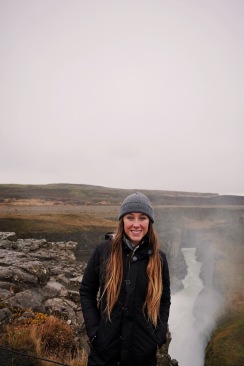
I was born and raised in Sandy, Utah, five minutes away from a handful of hikes in the Wasatch mountains. Some of my passions include playing tennis, hiking and reading. I also love traveling and hope to go to Iceland and Switzerland one day.

I am currently a junior at the University of Utah studying communication. Choosing to earn my college education at the U was an easy decision for me because I love Salt Lake City, I have always wanted to be in the MUSS, and the campus is absolutely beautiful. It has been everything I dreamed to be able to study here.

While trying to decide on a major without any real idea of what career I would like to pursue after getting my bachelor’s degree, strategic communication stuck out to me and I have enjoyed it ever since. Learning how to write, speak and critically think better has been helpful and exciting.

As of right now, consistently trying new things and obtaining a wide variety of useful skills are two of my main focuses in hopes of stumbling on something that I would love to build a career out of.


Emma Chavez

MY STORY: Local Business Cross E Ranch Celebrates its 50th Anniversary

MY BLOG:

My enterprise story merely started with a conveniently timed event, but the focus soon shifted into a piece on the importance of supporting small local businesses.

I came across Cross E Ranch two years ago while looking for a nearby pumpkin patch and have attended their Fall Festival every year since. While buying this year’s tickets at the beginning of October, I discovered it was the ranch’s 50th anniversary, and immediately wrote it down as a possibility for my story.

I was lucky enough to get in touch with one of the owners, Dalon Hinckley, who was my main source. He was able to give me a full history of the Cross E Ranch, as it was originally owned by his dad.

Dalon answered all my basic questions, but he offered up even more stories and information that made it so easy to form my story. He was the reason I redirected my attention to the business aspect of the ranch. He detailed how the business has changed in the past fifty years, and how he had to creatively overcome the obstacles.

The writing process was hard, as I expected, but it was not hard for the reasons I had expected. I ended up with so much information, that I didn’t know what to cut out. That has never happened to me before. I also had a problem shifting my story focus. I was originally just going to cover the Cross E Ranch Fall Festival as a current event, but my interview with Dalon led me a different direction. I struggled with trying to focus on both, rather than letting my obvious true topic lead the story.

In the end I learned so much from writing this article. I was intimidated by this assignment at the beginning of the semester, but I really enjoyed the whole process. I feel that my writing has improved, and I gained interview experience at the same time.

The biggest lesson I learned is to not force the material into an originally conceived topic. Some stories will lead you.

ABOUT ME:

IMG_3885I am 22 years old, born and raised in Salt Lake City. I started my college journey at Utah Valley University, where I spent two years earning an associate degree in Dance Education before transferring to the University of Utah. This is now my third year at the University of Utah, and I am set to graduate in the Spring of 2019 with a degree in Strategic Communication.

I love writing, but my true focus is in brand creation and design. My hope is to work for a business involved in the arts, and get back to my roots as a dancer.

When I am not in school or working, I spend my free time with my family and boyfriend. I can also be found reading, at a yoga studio, or doing my own or a friend’s makeup at any given time.

Claire Hillard

MY STORY:

MY BLOG:

This article was a particularly interesting one to research and develop. I chose to write about natural remedies for stress relief because it is a topic that interests me but is outside of my comfort zone. I don’t think I know a single person who doesn’t feel stress and some people struggle with it more than others. Partially for my own benefit, I wanted to know what sort of non-pharmaceutical options are available for those who experience regular stress and anxiety.

Contacting the best sources was surprisingly simply. All it took was one phone call or email and everyone seemed happy to help. People really do love sharing their passions. I think the people I chose to interview were perfect for the piece. Dr. Knorr is a naturopathic doctor who specializes in natural remedies for all sorts of ailments. Josh Williams is a clinical herbalist who regularly helps prescribe herbs for people with anxiety. I chose Mia Gallardo as my final interviewee because I felt it added to the story to showcase a person who practices some of the treatments the two professionals recommended.

Writing this article was an interesting experience. The answers I received in the interviews were fascinating and not what I was expecting. I was expecting the article to end up in a sort of Buzzfeed style and name the various recommendations from the two professionals. However, natural medicine is not black and white. There isn’t just one answer or one herb to solve a person’s problems.

Because of the nuances in natural medicines, I had to pivot my intention for the article. Instead of focusing on products a person can use, I focused more on their general advice for those with stress. It raised a few ethical issues in not wanting to give blanket advice that may not help some. While the products they recommended were interesting, I didn’t want to give the assumption that by reading this article, a person could self-medicate and solve all their problems.

I think the hardest part of putting this story together was having to cut out so much material. My shortest interview lasted 35 minutes and my longest was about an hour. There was so much material and I learned so much. When I wrote my first draft of the article, it was more than double the desired length. I ended up having to cut out more than half of the original content — some of which were my favorite bits of information. There were just so many interesting details that I didn’t want to leave out.

As a writer trying to keep an interesting, useful and concise article, I chose the information I thought would fit best together and be most easily absorbed. While this wasn’t easy, it was a good process to experience.

Writing this article was a wonderful experience. I made really neat connections with three new people. I learned some things that I was able to apply to my own life. I even purchased some Ashwagndha for myself to see if it helped. It was a great learning experience in working on my writing as well as gaining useful knowledge.

IMG_2282ABOUT ME:

I’m in my third year of my undergraduate education at the University of Utah. I am studying strategic communication and minoring in business. Both in school and in my personal life, I am fascinated by the impacts of nature, kindness, and positivity on the mind.

My interest in strategic communication began when I discovered a connection between psychology and marketing. I think human behavior and cognition is fascinating and wanted to find a way to incorporate this into a profession. I was a creative child and everything seemed to fit together.

As of now, my dream career is to do marketing or advertising in the outdoor industry. Because I am a huge outdoor adventurer, I know the outdoor industry well and know how to appeal to the market.

For me, home is on an inflatable sleeping pad under the stars. When I’m not studying for finals, I spend most of my time in the Utah desert. Some of the most impactful moments in my life have happened while surrounded by good company and towering red cliffs. I camp, rock climb, canyoneer, raft rivers, and do just about anything outdoors. I am a self-care enthusiast and an eternal optimist.

Spencer K. Gregory

MY STORY:

MY BLOG:

I have always been passionate about capturing the story.

I have been a volunteer student leader at the Bennion Center for about two years. As I have been able to serve my community and local students in their service journey, I have been able to develop a desire to increase in my own civic engagement and awareness and strive to help others learn the same.

Photography has always been my passion. I was the photography team leader on the communications team at the Bennion Center. Over time, I have developed to be the design team leader over the graphic designers as I focus on the media developed for the TV monitor screens in the Union building.

Although I have not always been actively a part of direct service, I believe my efforts have primarily been to help increase awareness of the active participants of the Bennion Center. This has helped me to develop skills dealing with graphic design development, photography, and videography.

My desire for this project was to apply the skills I have learned from my involvement at the Bennion Center into developing and capturing the story of the Bags to Beds program.

Bags to Beds has been such a great program that has done so much good for the community, and I wanted to capture the story of how it started and developed into the unique program that it is. It offers solutions to two community problems, homelessness and plastic waste.

Kaitlin McLean has been an inspiration to so many individuals, and I believe that we can all have a great impact as we strive to look for ways we can get actively engaged in our local community to make a positive change.

ABOUT ME:

I strive for civic engagement and community awareness.Professional Photo (Spencer Gregory)

I grew up loving to explore and create. My favorite things to do were playing with Legos or traveling outside. As I have grown up, I continue to love exploring what I can do to engage myself more in the community.

Throughout my whole life, I have been interested in photography, writing and design. I always try to see how I can portray the story in the best way. Whether it’s an event I’m trying to promote, a product I’m trying to capture, or a story about someone’s life, I make sure to portray to the best of my ability to create something intriguing.

I now major in strategic communication with a multidisciplinary design minor and an arts technology major. I plan to strive to enhance my skills to continue to develop as an active part in my community.

Josh Ludlow

MY STORY: Goalkeeping done right, from TIP Goalkeeping

MY BLOG:

For many weeks I wondered what I was going to write my enterprise story on. I debated in my head whether I should write a story on a restaurant I really enjoy, a business I am interested in or a person who has an interesting story. But as I continued to think about what I enjoy doing, the thought came to me to contact my old friend Brian Simmons about his goalkeeping start-up company.

Brian and I had worked together when I was in high school playing as goalkeeper for the team. He was my goalkeeper coach. We became close friends and had stayed in touch off and on throughout the years following my high school career. I remembered he had said something once about starting up some goalkeeping deal with high schoolers. So I contacted him and asked about it.

When I asked Brian about what he had been doing with his small business he said to come and see. He invited me to one of the Saturday morning sessions, which started at the ripe time of 8 a.m. Upon attending I was able to gather contact information for those whom I could interview for details about TIP Goalkeeping. Watching the session was enjoyable and provided more insight into what was happening at TIP than actually interviewing. They even let me kick a few soccer balls at the kids who were training.

When I left the field I couldn’t have felt more confident about the story I was going to put together. I had details of the environment, the type of training that was happening and a better grasp on what could make the story enticing. I want to thank Brian for letting me come and let me see what good he is doing for those he works with.  

ABOUT ME:

The sport world carries my heart — especially college football and the international sport of soccer.

IMG_20180317_143950 (1)I have always had a ball at my feet since I can remember. I began playing at the age of 5 in the local recreation league. I was not the best on the team but I enjoyed playing. Later on I learned that I was pretty good at playing goalkeeper. I stuck with that all throughout high school and was offered to play at a few colleges. I turned the offers down.

Playing, however, sparked something I have come to love: coaching and teaching the younger generation what I wished I had known about correct technique and form. I currently coach for a club in Davis County.

I am a student at the University of Utah where I am studying communication. However, that will be changing come the next semester as I pursue my dream of studying sports psychology.

It is my hope that one day, I will be able to look back through my life and be able to say that I was able to help people.

Kowhai Anderson

MY STORY:

MY BLOG: 

When the Enterprise Story was introduced, I knew exactly what I wanted to write about. My goal was to interview a successful female business owner and capture their story. In the words of Sheryl Sandberg, CFO of Facebook, “Today in the United States and the developed world, women are better off than ever.” For my project, I hoped to find a woman who exemplifies these encouraging words. I wanted to find a woman who is passionate about what she does and uses her success to better the lives of the people around her. In my search, I found Stacy Kelly, the owner of Construction Material Recycling.

For this project, I had to step outside of my comfort zone. A wallflower is a noun I would use to describe myself. Reaching out and contacting someone I was unfamiliar with, asking if I could visit their business and take an hour out of their day for an interview, was an intimidating thought. I fortunately conquered my fears and successfully reached out to Kelly. I am thankful I did, as it was an honor to interview her. She was welcoming, honest and vulnerable. I was moved by Kelly’s story of strength and compassion. Additionally, I got to speak with two of Kelly’s close friends who are also successful entrepreneurs. Their words of admiration and respect were inspiring.  

unnamed

As I began combing through the information I gathered, I decided I wanted the focus of my article to be on Kelly. I organized the story in a chronological order, filled with quotes to make the story more personal. In the process of writing this article, I realized the value of creating a timely narrative. Interviewing a successful businesswoman is an opportunity I’m thankful to have had.

ABOUT ME: 

Kowhai Anderson is studying to receive her bachelor’s degree at the University of Utah. She is a declared communication major with an emphasis in strategic communication. Her aspirations include building a career in advertising, marketing and public relations. Anderson is an avid reader with a passion for photography, live music, film and fashion.


Alex Stein

MY STORY: 

MY BLOG:

Processed with VSCO with a6 preset

ABOUT ME: 

Alex Stein is currently a Senior at the University of Utah, pursuing a double major in Strategic Communications and Psychology. Some of her career interests include social media marketing, PR, event planning, and advertising. She grew up in Seattle, Washington where she graduated from Tahoma Senior High School. Some of Alex’s hobbies include being a member of the College Fashionista program, actively participating in the Type I Diabetes community,  and spending time doing photography and videography.

Check out my LinkedIn

Does the air we breathe cause disabilities?

Story by NICOLE CARDWELL

For decades, Utah has dealt with bad air due to inversions. Research shows that the air has improved over the years, but that does not mean it has and cannot directly affect the public health according to Rebecca Steve, a doctoral student at the University of Utah.

So, what’s being done and who’s in charge?

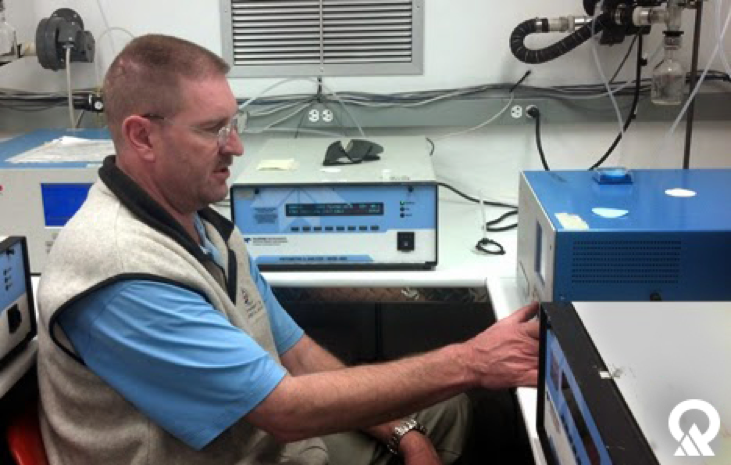
To be able to answer these questions, we first must know how the air is measured and what is considered bad air. This is where Bo Call, Manager of Air Monitoring for the Division of Air Quality, from State of Utah Environmental Quality, comes into place. Call is an expert at what he does and looks over a team of around 15 people.

Picture1

Photo courtesy of Utah Department of Environmental Quality. Bo Call checking monitoring equipment at the Air monitoring Center chase station.

The Environmental Protection Agency has a standard level that must be met across the nation. If the air quality index (AQI) is over the standard, they monitor changes that need to be made to lower the AQI. These standards change whenever the science changes or is more advanced and is checked every five years. Currently that standard is 35 AQI. Anything over the standard is considered harmful to human health or a danger to the public.

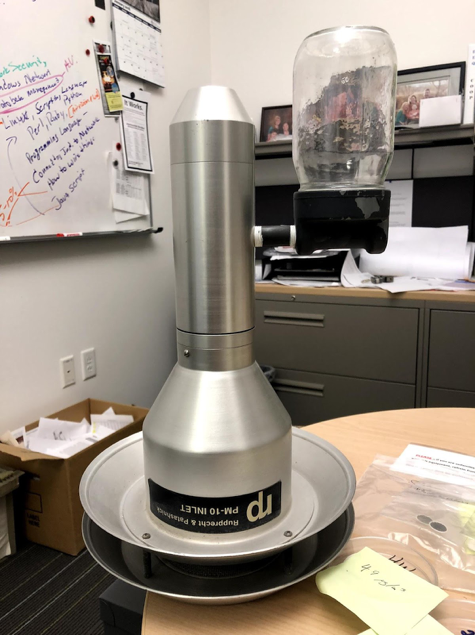
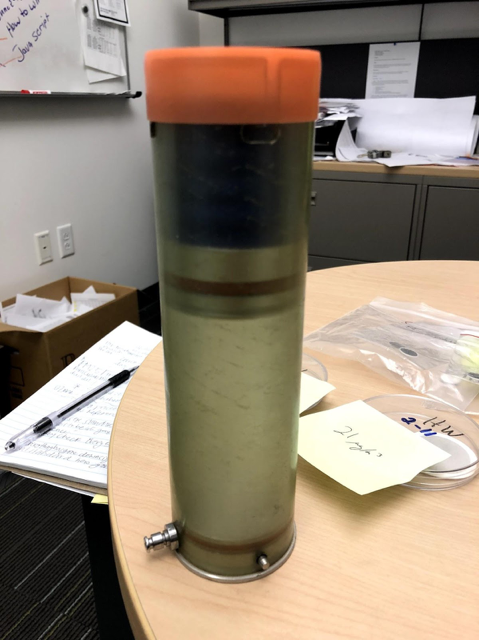
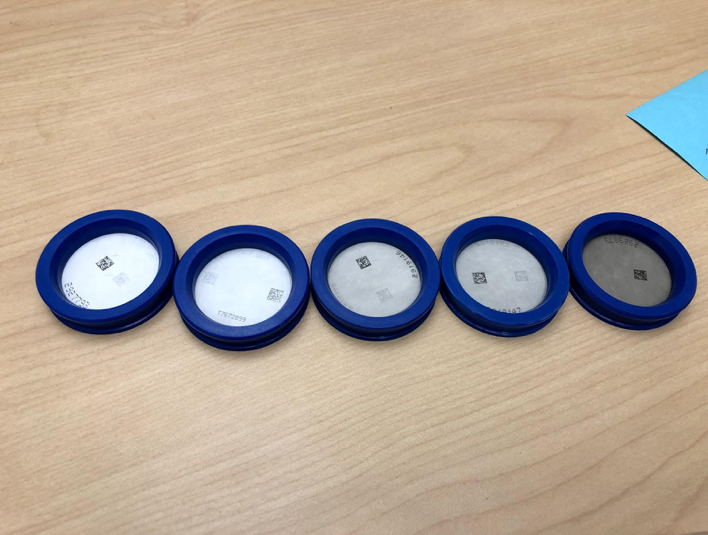
There are stations spread out around the more populated areas in Utah and these stations are shelters that look and act like sheds. They protect the machines that receive information through filters. These machines filter all the particles in the air and clean out all the bugs and trash that gets caught in them. They run for 24 hours and, after collecting all the air particles, assigned employees remove a small circular container with the filter and take it back to the labs. Although this is very helpful, there are also more automatic ways of collecting data through computer systems and servers that run hourly.

Picture2

Machine that intakes filters above stations

After Call had shared this information with me I asked what the data was like over the years and if the air had gotten worse or progressed.

Picture3

Tube where filters go through to be retreated and processed.

“Everything has gone down significantly, but standards have gone down as well,” Call said.  He also added that 70 percent of air pollution is not emitted by humans but is caused naturally from the earth’s atmosphere.

Picture4

Filters show clean air on the left and gradually progress to low or bad air quality.

Call stated, “we control most of our bad air, in many ways.” Although there are many things that can be done differently for better air, few people are aware and very little view this as an environmental alarm.

Picture5

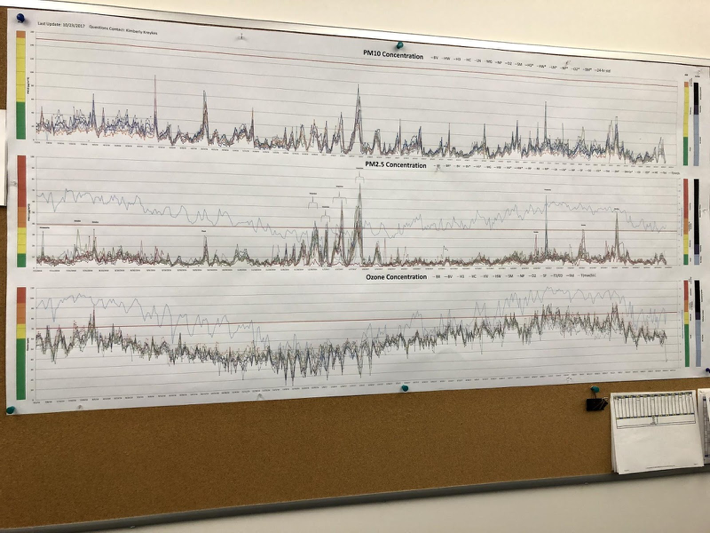
This PM2.5 chart from 2016-2017 shows peaks indicating inversions and spikes caused by Utah citizens.

Better air means change, and change is not easy when Utah has a booming economy and one of the largest growing populations in the United States. Utah relies on industries and businesses that produce our products and are consumed by most. Politicians and the government have a hand in almost everything, including how much research is funded. Change is costly and will take years. Politicians run by votes and will do what it takes to make sure they are elected as our leaders.

Rebecca Steve, PhD student at the U, tackles this problem daily. She oversees a group of students that are trying to prove a direct correlation between bad air, diseases, deformities and death. These findings can change lives and future generations.

Steve is a cancer survivor. She lost a brother to cancer three years ago. She is five years cancer free and, because of what she has been through, she has decided it is time to stand up and have a voice in a real possibility that can be proven.

Picture6

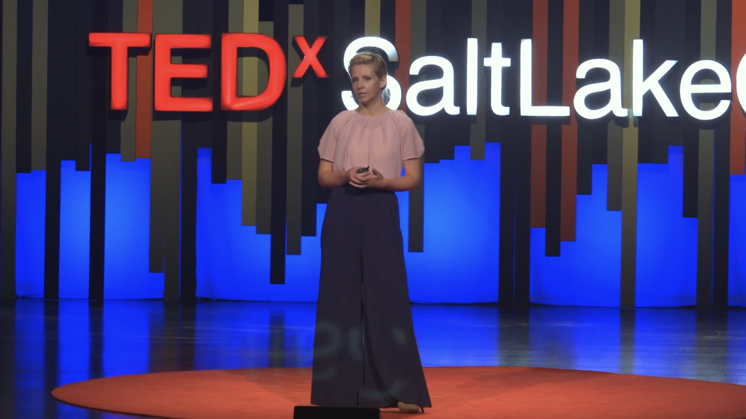
Photo courtesy, TED talk Salt Lake City Rebecca Steve is asked to share on TED her journey and goals with Utah air.

After a long, tiring year, Steve will be receiving confidential records and files of the Utah population database within the next month. These records require extensive background checks. She will not only be able to see where everyone is currently living, but she will also be able to branch out and see where their parents and grandparents lived. Steve will compare air quality records and data to where people are living to find a correlation and pattern. She will be able to see how the environment impacts genes drastically and can influence health outcomes. This event will be a breakthrough for humanity. Scientists will be able to more directly find a correlation between air, dirt, dust, water and our health.

“We carry germs that can contaminate our offspring. This could potentially impact generations to come,” Steve states. She is trying to prove that the air we intake can cause germs to reach our bloodstreams. Bloodstreams can directly impact placentas and babies in the womb. With this information she will specifically show that low air quality can cause diseases such as autism and stillbirths.

“When we make a connection through ancestral exposures and environmental impacts, we will see that genes can drastically influence health outcomes,” said Steve. In order to progress, there must be careful monitoring of health effects. There are small changes and policies that Utah citizens should commit to, such as public transportation, carpools, idle free cars and lowering thermostats at home. This will have an impact on children, their grandchildren and great grandchildren. It’s no longer a matter of staying inside. Utah is at risk if there are no changes made individually and as a population.

Alex Hale

Bntr0yrCAAAr4T1

Photo by Dawni Angel

MY STORY:

MY BLOG:
Above all, I wanted to write about a topic involving the U that I am invested in. I stumbled across a news article about the NCAA’s potential involvement in eSports and immediately latched onto the idea. I enjoy watching eSports competitions, I know that the U’s varsity eSports team is making a big impression on the scene, and I quickly learned that the NCAA’s involvement with eSports is a hot-button topic for a lot of people.
To locate sources, I went straight to the U’s eSports program. I interviewed the director of operations of eSports, the head League of Legends coach, and a student athlete. I was actually surprised to learn about how passionately they support the NCAA’s involvement, because I encountered a lot of skepticism during my online research process.
Since their opinions favor the NCAA, I wanted my focus to be why they think the NCAA would be such a positive addition to collegiate eSports here at the U. I feel very lucky that A.J. Dimick and Kenny Green, two of my interviewees, have both participated in the world of traditional sports and gaming at both a professional and student level. That made them excellent sources, since they can pull from both ends of the spectrum to form their opinions. A.J. Dimick even gave a presentation at the NCAA Board of Governors meeting last Fall about why the NCAA should embrace eSports from the perspective of a large college.
One thing I’d like to do to further develop this story that I wasn’t able to do this time is also interview someone involved with traditional sports at the U and see if they have an opinion on the matter. But that might be a whole other story!

ABOUT ME:
I am Strategic Communication student at the University of Utah with emphases on branding and social media marketing. I have always been passionate about geek culture and one day hope to work for Crunchyroll, an anime streaming service. Currently, I am a marketing events intern for FanX Salt Lake Comic Convention. In my spare time, I enjoy cosplay and watching anime.

MY LinkedIn


BRADY MCCARTHY

IMG_1848Reflection Blog:

Coming up with an idea for my enterprise story was not very hard. I just thought of topics I might enjoy writing about, and what would be relevant. After less than a minute I came across the idea of writing about the current media transition in the snowboarding industry. When I went home for winter break, I learned that my home mountain Seven Springs wouldn’t be producing their web edits anymore. They were doing it to pursue a heavier social media presence, and at first I was upset. After noticing that Think Thank was putting out content throughout the season instead of their typical full movie, I soon realized the snowboarding community as a whole was going through a media shift.

To locate my sources I contacted a few friends that work in the snowboard industry and ride for a few companies to see if they were down to let me interview them on the current media situation. Luckily they were all happy to help me out and share some knowledge. I also contacted a few people I didn’t know, such as Justin “Stan” Leville, to  get some opinions from their perspective.

Choosing my sources was relatively easy. I tried to get well-rounded perspectives from different people in the snowboarding industry. I contacted Ian Macy, who produces content for a few different companies and ski resorts, to get a filmer’s opinion on the media shift because he is the one standing behind the camera filming stuff.

I also tried to get an opinion from a riders perspective, because they are the ones actually being filmed for the content produced. To get a rider’s perspective I contacted my friend Cameron Dunmyer, who rides for Oakley and Gnu Mid-Atlantic. I also quoted one of the riders from the DC video series I was talking about in my paper, Brady Lem, because in the video he gave his opinion on starting to film street so early in the season.

Lastly, I contacted “Stan” because he runs a snowboarding news show, “Last Resort,” where he shares his opinion on subject matters within the snowboarding community in a satirical way. I thought having his opinion would be important because many people watch his show, and he is one of the voices of the snowboard community.

The presentation of snowboard media has been a controversial topic for as long as I can remember. I knew going into the story that I wanted to write something neutral that focused more on the factual side of things, as I didn’t want to offend anyone. Instead of focusing on what the best way to portray snowboarding media is, I just focused on how it is being portrayed and how it is different from the past.

Over the course of my research, I gathered an insane amount of information regarding how the snowboard industry is today, how it was, why it changed, what’s better for business, how it’s going to be in the future, if it’s a good or bad thing and many other opinions. I would have loved to write a longer paper that involved all of these topics listed — and many more — but it would have been confusing for the reader if they were not an active member in the snowboard community.  To keep it simple, I focused on what the media used to be, what it is today, unbiased factual reasons about why it changed, and how it could possibly be in the future, making sure not to offend anyone in the process.

My rough draft was hard to put down on paper because I had an overwhelming amount of information, prior knowledge and an opinion of my own, so I wasn’t sure what to include in the story. After finally figuring that out, putting words on paper became relatively easy. The hard part has been editing and figuring out AP Style. Because I have very little background other than participating in class, I struggle to notice when my AP Style isn’t correct, and therefore don’t realize to look it up and fix it. I also struggled with quote placement, but after realizing my faults I added more quotes and fixed the positioning of them to make the story a more enjoyable read.

The most surprising thing about writing the enterprise story was how willing people were to give me their opinion, even though they didn’t have to and wouldn’t benefit from it in any way. Part of me believes that was what made the experience such a great one. It allowed me to get out of my comfort zone and think about something that is such a major part of my life in a different light. It forced me to think about it not only from one perspective or opinion, but in a way that everyone could understand, relate to and feel unbiased about. Writing the enterprise story was a great experience, and I am glad I picked the topic that I did.

Bio:

Brady McCarthy is a first-year student at the University of Utah. He is 19, and a Pennsylvania native. He plans to attend business school with a focus on marketing. His favorite activities include snowboarding, skateboarding and doing anything fun with his friends.


Sandy Restaurant Reopens, Nobody Has Gotten Sick…Yet

Story by ALEXIS LEFAVOR

A Sandy restaurateur with a series of health-code violations has reopened his Asian fusion restaurant weeks after the county shut it down after inspectors found nearly three-dozen infractions. But the restaurateur still faces challenges to ensure that his patrons don’t get sick after eating there.

In February, the Ichiban Sushi & Asian Cuisine, located at 109 W. 90th S. in Sandy, had its permit suspended after Salt Lake County Health Department inspectors found violations that exceeded risk levels by fifteen-fold during a routine health inspection.

Inspectors noted that “multiple floor drains in the kitchen were not draining properly and were backed up with waste water,” and “sewage remnants are present from backed up floor drains,” according to a report posted on the department’s website.

Other violations included fish not being stored at the proper temperature, and areas where the wall paint was in such disrepair that chips could have fallen in uncovered food.

The owner of the Sandy restaurant, Leming Lin, did not respond to a request for comment through the restaurant’s Facebook page.

Ichiban had a follow-up inspection on March 2 and later had its permit reinstated, according the health departments website. An inspection was done at the time and was marked with five critical violations.

The violations found during the subsequent inspection included cans that were dented severely, possibly adulterated food and areas around the back door showing signs of cat litter.

Nicholas Rupp, the county health department’s spokesman, said restaurant closures aren’t taken lightly. Once an establishment is closed its owners are required to meet with the health department the next day and prepare a corrected plan of action, he said. Sometimes restaurants can be closed for weeks at a time to fix the violations. A restaurant can close and reopen twice within a calendar year without penalties, depending on severity.  

The Sandy Ichiban was placed at the health department’s highest risk level – four – because sushi and other offerings served can possibly cause food borne illnesses. As a restaurant opens the health departments categorizes it by a risk level between one and four. Risk level four restaurants are inspected three to four times a year, as well as any time that a customer complains, Rupp said. These levels are determined by three main factors: food items served, food handling and the volume of people they serve in a day.

The county identifies two types of violations—critical and non-critical. These are presented on a point scale. Non-critical violations are worth one point and critical are worth up to six points, and the in-between of the two violations is three points.

According to the recent inspection report, Ichiban had 31 critical violations. More than half of those violations were three-point violations, and nearly the rest were six points. One was rated at 100 points — the worst level – which is rarely given.

When it comes to raw fish, customers should be ensured that their food is being handled and prepared properly. Jessica DeAlba, a recent visitor at the restaurant, said she had a horrible experience. She said she have eaten someplace else.

Though the sushi may be cheap it might not be the best option.

Ichiban has several locations across Salt Lake County. But inspections come down to each individual restaurant, no matter the owner or whether it’s a part of a chain. “The owner can’t be present at every location every day,” Rupp said. Ultimately, it’s the manager of the location’s job to ensure good practices by the employees. The purpose of proper restaurant sanitation is to safeguard public health by ensuring customers are provided with food that is safe and unadulterated.

DeAlba said that she never looked at the health inspections before going to Ichiban, but now she does for every new restaurant she visits.

“I do not ever plan on ever going back there,” she said. “I remember the restaurant was very dirty, the booth seats were falling apart, the food came out warm and the strong smell of feces and cleaning chemicals affected the taste of everything.”

Wendy Hobbs, another recent visitor, had a five-star experience. In her Facebook review she said, “Prices were unbelievably cheap. Will definitely come again.”

Before speaking with a reporter she had not noticed the cleanliness issues at the restaurant. Like other people, Hobbs had heard about – and visited – Ichiban through word of mouth.

“I’m glad they shut down. Good food or not,” she said. “These guidelines are in place for a reason. And it’s the responsibility of the owners/management that they are up to code.”

Health inspections are available to the public. For more information, go to their website


This slideshow requires JavaScript.

Beyond the water cycle: Life and environmental lessons from a former BLM director

Story and Photos By: JAKE PHILLIPS 

Patrick Shea’s beard was wet.

It was an oddly fitting picture of the former director of the Bureau of Land Management, who despite being out of government for 20 years, has water on his mind a lot these days. It was a rainy Thursday morning, and Shea, 70, was strolling to class.

Not on the University of Utah campus, where he’s been a research professor of biology and taught a class on urban streams for years, but at a local elementary school.

Every Thursday morning Shea teaches a class on water to fourth graders at Rose Park Elementary School in Salt Lake City. He arrived to a roomful of damp students who had just returned from recess.

As their teacher, Hannah Dolata, instructed her students to find their seats, Shea dried off his bushy white beard. He asked them what they had learned the previous week. The students couldn’t wait to tell him about the written equation they’d learned that showed how much water they used when showering or teeth brushing.

One student proudly exclaimed that if he brushed his teeth with the water running for three minutes and showered for 10 minutes he would have had used 52 gallons of water in the process.

“I try to conserve water every day because my grandma complains about the water bill,” said Valentine, 9.

Shea then asked the students what they should do after wetting their toothbrushes.

“Turn off the water!” the students yelled in unison.

While most elementary school students learn about the water cycle, Dolata’s fourth-grade class at Rose Park Elementary School is getting a much more in-depth education about water and how it affects them. With Utah’s less-than-abundant water supplies and growing population, water conservation has become more important than ever.

Salt Lake is winning water conservation fight

Around 33 percent of Utah is considered to be true desert, meaning the state receives 5 to 8 inches of precipitation annually, according to Utah’s Comprehensive Weather Almanac. The heavily populated Wasatch Front receives around 15 inches of precipitation annually.

Along the Wasatch Front, Salt Lake City appears to be winning in its fight to conserve water. According to the 2014 Salt Lake City Water Conservation Master Plan, conservation has exceeded expectations and the overall trend is a reduction in water use in the area. Classroom programs like Shea’s are crucial in these efforts, the city’s Department of Public Utilities said.

Yet, with climate change and other environmental concerns an increasing reality to students both in childhood and their future adulthood, it’s especially important to teach children today about ways to address these issues, Dolata said.

While Salt Lake City has responded to calls to conserve water, planners expect the city will need to do more in the future. According to a University of Utah study conducted in 2017, the state population is expected to grow from 3.2 million to 3.9 million by the year 2030, an increase of about 22 percent.

If Salt Lake residents continue to use water at the same rate they did in 2000 Salt Lake City’s water usage is expected to increase by 23 percent by 2030, according to the Salt lake City Department of Public Utilities.

Shea asked the students about where the water they use every day comes from. He explained the majority of water in Utah comes from snow in the canyons. Then the children attempted to name some of the canyons near Salt Lake.

The class’ homework assignment was to look at the weather and to document whether it was an accurate report.

“The biggest problem for you growing up is figuring out what is true and is not true,” Shea said.

A different kind of ‘water bucket’ challenge

Shea wasn’t totally out of his element. It had been five years since he had last taught elementary students about proper water usage.

The daughter of a colleague, who Shea worked with on state water laws, was teaching fourth graders and challenged the research professor to speak to her class.

Hesitant at first, Shea said he’s come to enjoy the experience.

“The students are like sponges and want to learn more,” he wrote in an email.  

A few weeks later, the professor was back, this time leading a field trip to a water treatment plant up Big Cottonwood Canyon. With Shea was Jacob Maughan, treatment plant operator, who led a tour of the plant and explained how the facility purifies water to make it potable. From there, the energetic children then returned to their bus and traveled to City Creek Canyon.

At City Creek Canyon, a popular biking and hiking destination for Salt Lake residents, the students were met by John Wells, who manages the city’s watershed operations. With students trailing behind, Wells led the class on a walk up a winding, paved canyon road while explaining why it’s important to protect the watershed.

He told students that dogs are not allowed in the canyon to protect the water quality in the streams that the city depends on. As the students fidgeted and chatted, Dolata, their teacher, stressed the importance of showing students the real-life connection to the water cycle.

“In fourth-grade science they’re learning about Utah science and start to connect what they’re learning to the world,” she said. They “see themselves as scientists.”

IMG_1402

Hannah Dolata and her class overlook a water storage unit and the Salt Lake Valley.
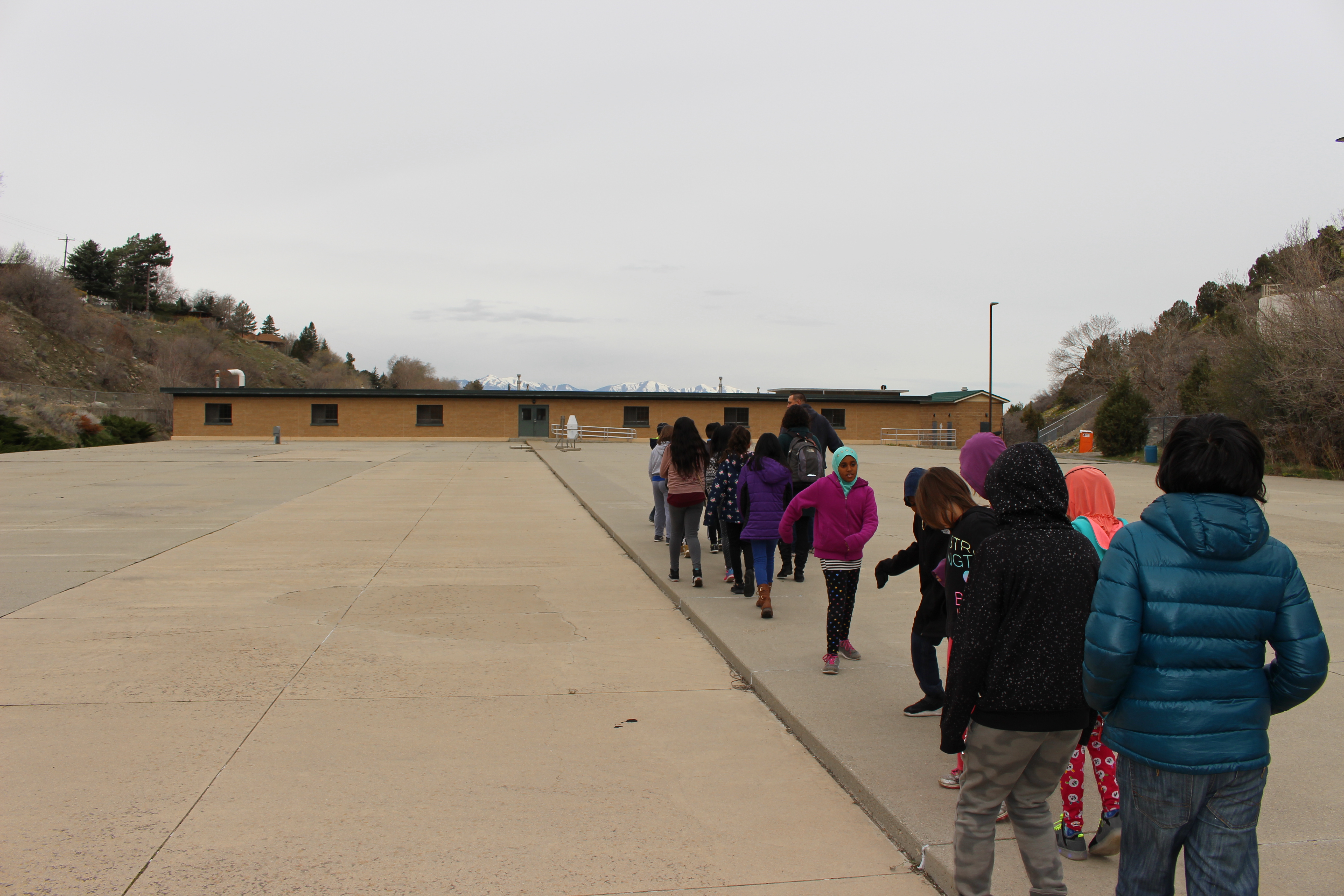
IMG_1395

Dolata’s class walk across a concrete platform that serves as water storage at the Big Cottonwood Water Treatment Plant.
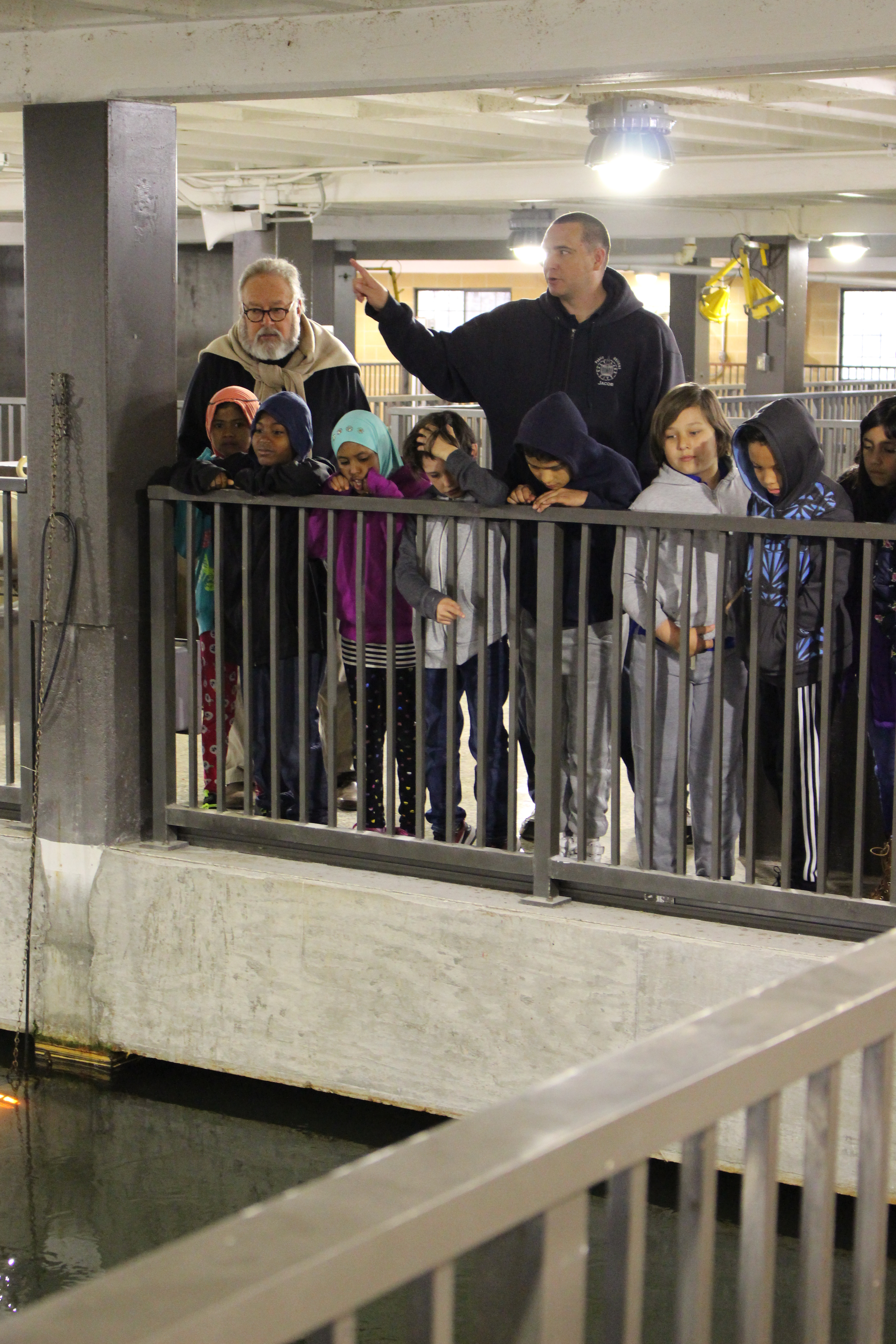
IMG_1391

Patrick Shea looks on as Jacob Maughan explains how snowmelt is cleaned and transformed to drinking water.
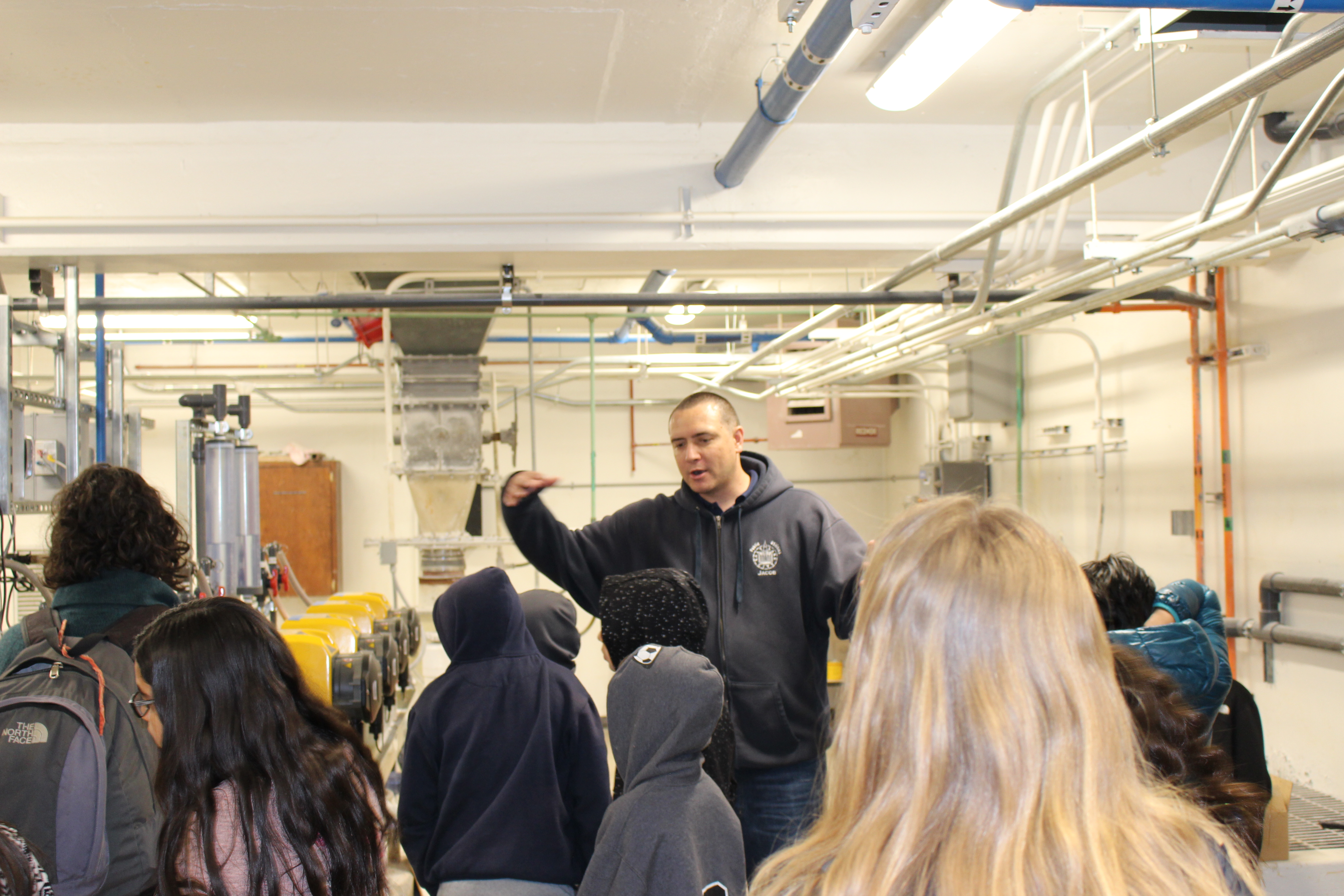
IMG_1387

Maughan telling the students what chemicals are added to unclean water to make it potable.

IMG_1376

Maughan advises students to be cautious in his lab, because there are dangerous chemicals present.
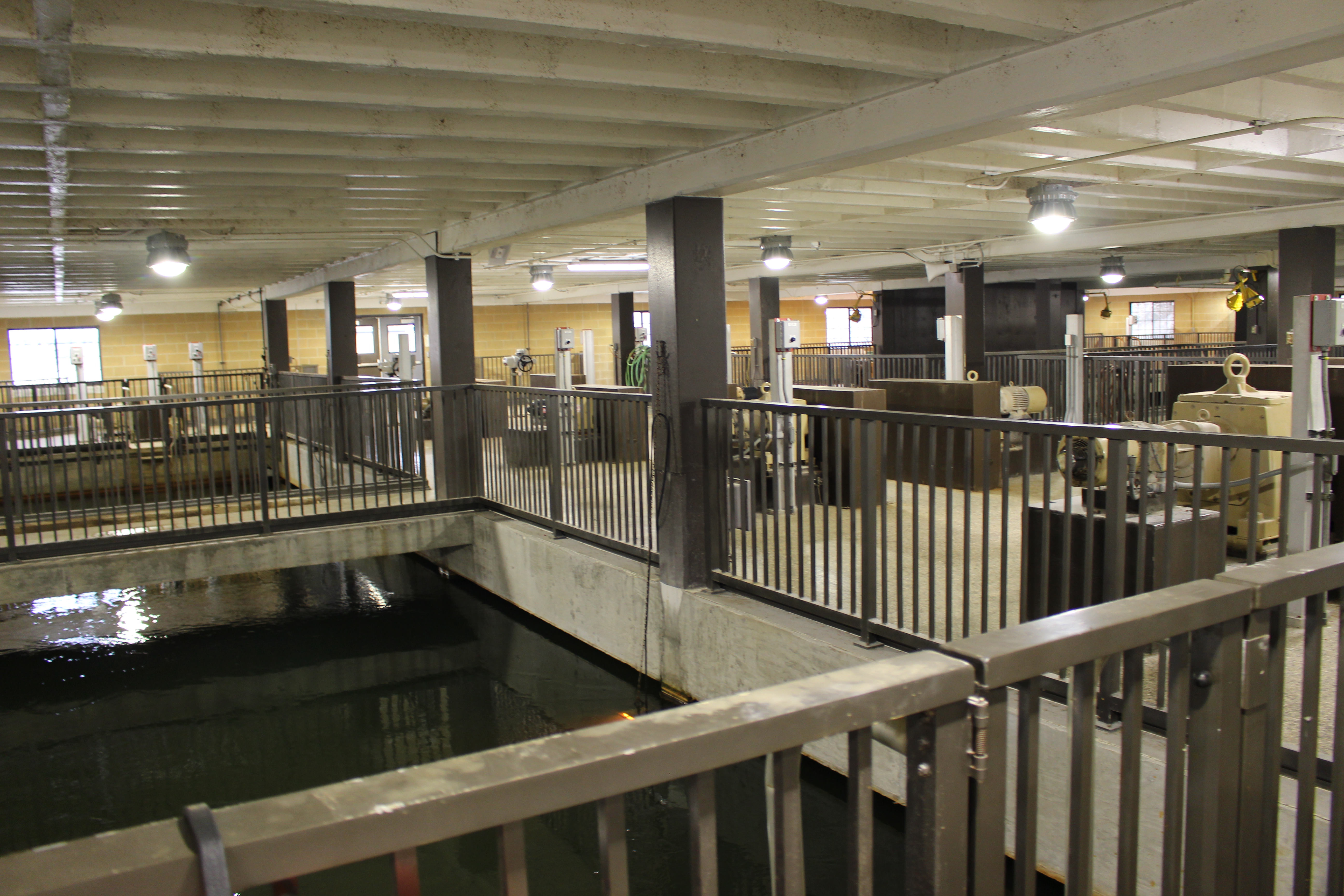
IMG_1380

IMG_1396

IMG_1400

Dolata and her class watch water spill over a weir used to control water flow and filter out solid matter.
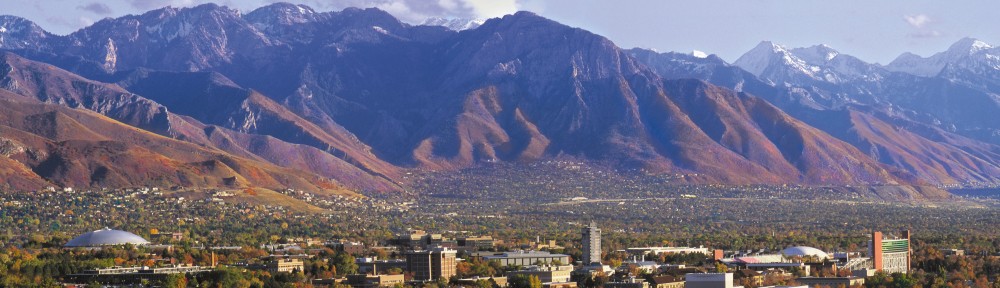
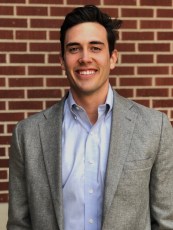
The Women Behind the Silver Screen

SALT LAKE CITY, (April 24, 2018) — In light of recent allegations against Harvey Weinstein and movements like #MeToo and #TimesUp finally bringing public attention to the marginalization of women in the film industry, institutions like the Sundance Institute are creating programs to help even the playing field for female filmmakers.

While these initiatives are presenting new opportunities for women, there is some concern that this reactionary response will become a band-aid solution to the broader issue of sexism in the film industry. The women leading these movements are determined that this will not end with a conversation, it must evolve into action. They acknowledge that change on such a large scale, especially when it is so institutionalized, demands time, conscientiousness, and ongoing effort. “I am hopeful, I have a lot of hope in the #Metoo and #TimesUp movements,” says Dr. Sarah Sinwell, a professor at the University of Utah. “I believe with celebrities coming out and telling their stories it enables other people to tell their stories. I believe that by putting money and funding and resources behind these kinds of institutions and what, for instance, McDormand talked about with inclusion riders and all those sorts of things that the general public is aware, not just the movie going public or not just the women, female film directing interested–people public. So many people are aware of this and I think that the constant publicity and the constant discussion and the way it’s entering schools and non-profit spaces and the way it’s kind of not just about those celebrity experiences but that it’s framing all these other contexts. I think that is why it may move into a space beyond this present one.”

Solutions must go beyond simply honoring the women who are already making films, and must take into account the inequality in resources and opportunities women face in making films in the first place. A study released by Women In Film in collaboration with Sundance found that even with the recent shift to more progressive attitudes toward female filmmakers very little actual change in the film industry has taken place.


“Currently, the presence of women behind the camera in popular films is infrequent at best. Assessing 250 of the top-grossing U.S. movies of 2011, one study found that only 5% of directors, 14% of writers, and 25% of producers were female. These statistics have fluctuated very little since 1998, seeming to suggest that the traditional Hollywood economic model or power-structure is a leading impediment to access for women filmmakers.”

-Exploring the Barriers and Opportunities for Independent Women Filmmakers Phase I and II Research By: Stacy L. Smith, Ph.D., Katherine Pieper, Ph.D. & Marc Choueiti

This slideshow requires JavaScript.


The nominations at the Sundance Film Festival this year reflect their efforts for greater representation but, while higher than mainstream Hollywood representation, only 37% of the 122 films presented at the Sundance Film Festival were made by women. “What that says to me is that they are working harder to try to be more inclusive of women but we’re still not even at the 40 percent,” says Sinwell. “So, the numbers are growing, but they’re still not high enough, and I think that’s an issue not just of Sundance but I think it’s across the board that there’s not enough women directors, there’s not enough women directors getting high budgets like male directors, there’s not enough women directors working in a variety of locations and a variety of production companies.”

Sundance Stat Image

37% of the 122 films at the 2018 Sundance Film Festival were made by women.

­­One often proposed solution to the problem of unequal representation of women in film festivals is the creation of separate categories for women and there are festivals created specifically to honor women in film, however some believe that this could lead to further marginalization or othering of women in film. “I think we need to value both, I think we need to value festivals that are specifically focused on women, that talk about the ways they value women, that incorporate women and that are inclusive of women and I think we need to promote quality filmmaking and make sure that women are a part of that narrative, of the general quality filmmaking or Sundance independent filmmaking narrative as well,” says Sinwell. “This is actually something that comes up a lot when people hear I’m teaching the Women Directors class, they say ‘why do we need a Women Directors class, isn’t that excluding all these other categories right?’ But I always remind people the reason we need it is because there are so few women that are talked about in general film history classes or intro to film classes, that the class is made necessary because the lack of women in our history textbooks and cinema kind of classes general classes.” Lois Brady